La Conference
Internationale sur la
     Regulation
  Tunis Mars 2018
←
→
Page content transcription
If your browser does not render page correctly, please read the page content below

La Conference
Internationale sur la
Regulation
Tunis Mars 2018
Connecting communities
around the world since 2006.
Who we are
• For us, it all started with the belief that no matter how
  far people venture, the should always be able to
  connect with their family and friends back home.
• Lycamobile was founded in 2006, but since then a
  number of other businesses have been created,
  leading to the establishment of Lyca Group. All
  businesses share the same aim - to connect
  communities across the globe.
• We now offer products and services across
  Telecommunications, Entertainment, Travel,
  Healthcare, Media, Technology, Financial Services,
  Marketing and Hospitality.
• Our core values of trust, accessibility and connectivity
  run across all our businesses.

 A new customer joins
 our Group every second.
Group aims

• The Lyca Group will become synonymous with
  trust, accessibility and connectivity.
• A Lyca Group product or service will be available
  anywhere in the world.
• We will diversify our sector offering even further
  so that no matter what people need to feel better
  connected, Lyca can help.
• Lycamobile will become the largest operator in the
  mobile sector.
• Lyca’s Gnanam Foundation will continue to
  develop to ensure support is provided to displaced
  and vulnerable communities worldwide.

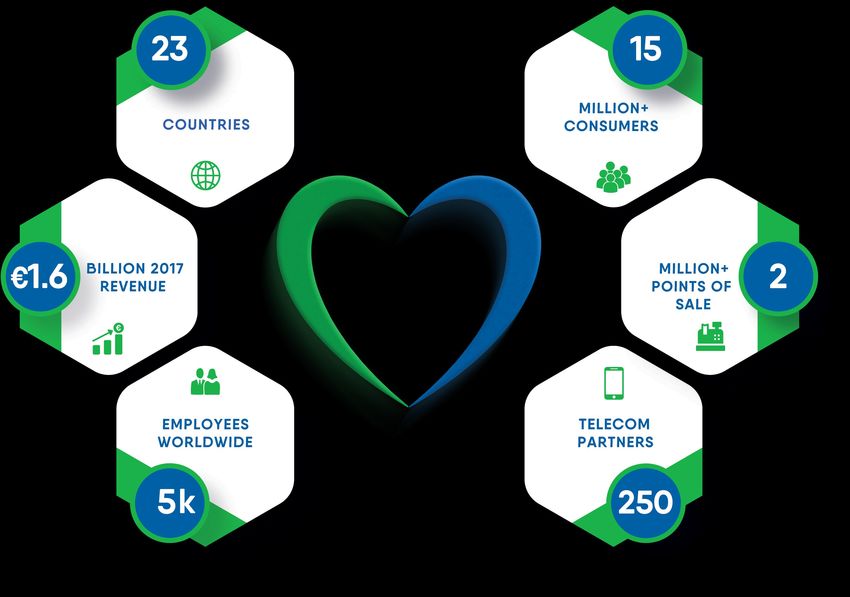
Lycamobile key facts

                       Lycamobile has grown
                       significantly over the
                       course of 11 years. We
                       now have over 15
                       million consumers, and
                       have partnered with
                       some of the world’s
                       leading businesses,
                       recruiting some of the
                       best talent available on
                       the way.

                                            5
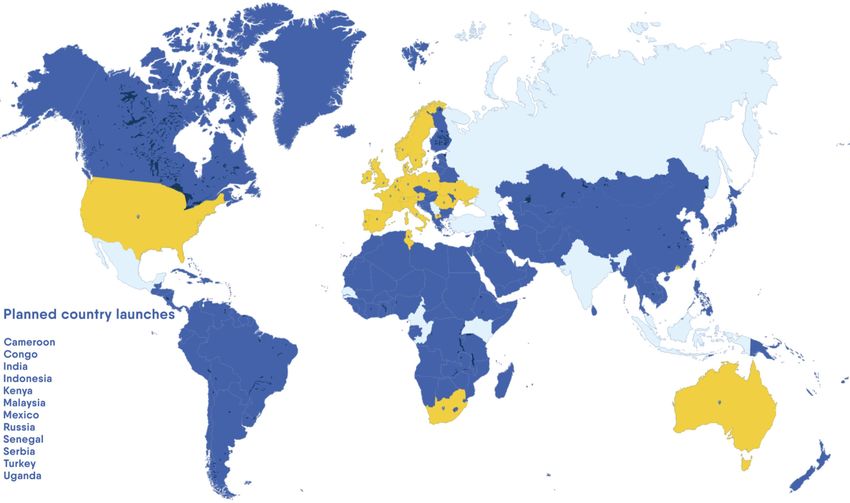
Lycaworld   Lycamobile operates in 23 countries across five continents

                   Planned country launches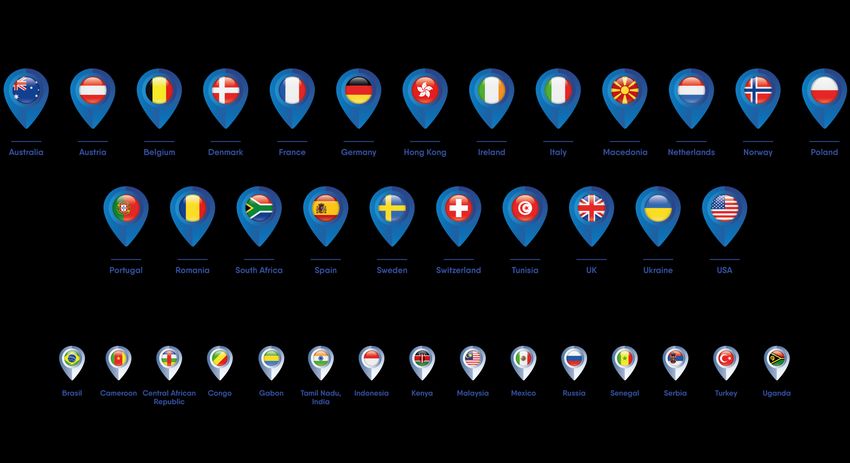
Mobile subscribers and data users
                                                                              5.9
                                                                  6

                                                                         5                            5
• There were 5 billion unique subscribers in 2017,                5
  with this number expected to grow to 5.9 billion by
  2025.
• This is a CAGR of 2.1%.                                         4
• In 2017, there were 3.3 billion mobile internet                                             3.3

                                                        Billion
  users.
                                                                  3
• By 2025, there is expected to be 5 billion – a
  CAGR of 5.3%
                                                                  2

                                                                  1

                                                                  0
                                                                      Unique subscribers   Mobile internet users
                                                                                                           2017      2025

                                                                                                          Source: GSMA8MWC 2018
Population penetration                                                                    Growth in population penetration

• Unique subscriber penetration and                                                                        41.50%
                                                                                                                                62.80%
                                                     Asia Pacific                                                                     72.70%
  mobile internet subscriber penetration                                                                                          66.70%
  are both forecast to grow across the
                                                                                                                    51.30%
  world.                                                  MENA                                    35.90%
                                                                                                                                   67.70%
                                                                                                                               62.20%
• In Sub-Saharan Africa, unique
  subscriber penetration will grow from                                                                               51.70%
                                                                                                                                          72.30%
                                                             CIS                                                                                  82.40%
  44.4% in 2017 to 51.9% in 2025.                                                                                                                80.30%
• Mobile internet subscriber penetration                                                                                                    72.10%
                                                                                                                                                      81.90%
                                                         Europe                                                                                          87.60%
  will rise from 21.1% to 40.3% over the                                                                                                               85.30%
  same period.
                                                                                                   40.30%
• The Middle East and North Africa will       Sub-Saharan Africa                  21.10%
                                                                                                            51.90%
  see a 15.4% rise in mobile internet                                                                  44.40%
  subscriber penetration, to 51.3%.                                                                                                          72.90%
                                                                                                                                                     80.40%
                                              Northern America                                                                                         85.60%
• Asia Pacific’s mobile internet subscriber                                                                                                           83.60%
  penetration is predicted to grow from                         0.00%    10.00%   20.00%      30.00%       40.00%     50.00%     60.00%    70.00%       80.00%     90.00% 100.00%
  41.5% to 62.8%.                                               Mobile internet subscriber penetration 2025          Mobile internet subscriber penetration 2017
                                                                Unique subscriber penetration 2025                   Unique subscriber penetration 2017

                                                                                                                                                              Source: GSMA9MWC 2018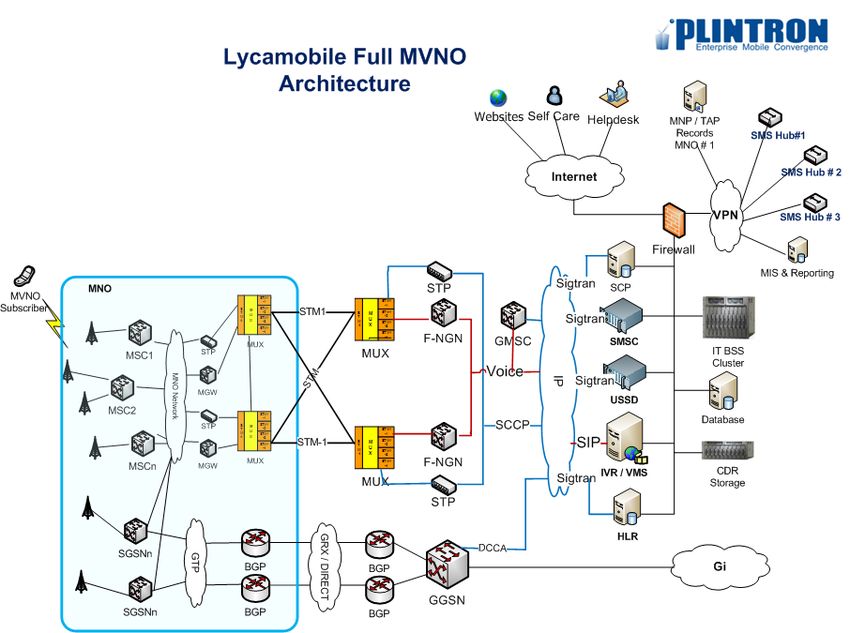
Global mobile device forecasts
                                                                        Smartphone share of total connections

• Basic and featurephones made up 1/3        100%
  of all connections (2.6bn) in 2017.
• This will half by 2025 as users migrate    90%

  to smartphones.                            80%
• Smartphones are set to account for ¾ of
                                             70%
  devices by 2025.
• There will be 800 million data-only        60%
  devices, such as tablets, dongles, MiFi
  and others.                                50%

• Northern America will have a 91%           40%
  smartphone share of total connections
  in 2025, closely followed by Europe with   30%
  81%.
                                             20%

                                             10%

                                              0%
                                                    Northern   Europe     Asia Pacific   Latin America   CIS    MENA          SSA
                                                    America
                                                                                                                       Source: GSMA10
                                                                                                                                    MWC 2018
                                                                                          2017    2025
Global mobile device forecasts
                                                                        Smartphone share of total connections

• Basic and featurephones made up 1/3        100%
  of all connections (2.6bn) in 2017.
• This will half by 2025 as users migrate    90%

  to smartphones.                            80%
• Smartphones are set to account for ¾ of
                                             70%
  devices by 2025.
• There will be 800 million data-only        60%
  devices, such as tablets, dongles, MiFi
  and others.                                50%

• Northern America will have a 91%           40%
  smartphone share of total connections
  in 2025, closely followed by Europe with   30%
  81%.
                                             20%

                                             10%

                                              0%
                                                    Northern   Europe     Asia Pacific   Latin America   CIS    MENA          SSA
                                                    America
                                                                                                                       Source: GSMA11
                                                                                                                                    MWC 2018
                                                                                          2017    2025
Global 5G connection forecasts
• In 2019, there will only be 1 million 5G
connections.
• By 2025, this will grow to 1.2 billion.
• China alone will dominate with 392
million, while Europe boasts 212 million
and the US 191 million.
Source: GSMA12
MWC 2018Mobile connections and data
• Global mobile connections will grow
from 7.8 billion (2017) to 9 billion (2025)
– excluding cellular M2M.
• This is a CAGR of 1.9%
• Global penetration rate will grow from
103% to 110% from 2017 to 2025.
• 2G and 3G will decline from more than
2/3 of total connections in 2017 to less
than 1/3 in 2025 as 4G networks
become increasingly widespread.
• 5G coverage will roll out rapidly to cover
40% of the global population by 2025.
• 5G will account for almost 1 in 7
connections (14%) by 2025.
Source: GSMA13
MWC 2018Internet of things
• There will be 25 billion IoT devices globally in 2025.
• For consumers, this includes wearable tech,
connected vehicles, smart homes and TVs and more.
• For industries, this will include smart cities and
buildings, and will reach utilities, manufacturing, fleet
management, retail and more.
• Consumers will see a rise from 4.6 billion connections
in 2017 to 11.4 billion in 2025.
• Industries will see a rise from 2.9 billion connections
in 2017 to 13.7 billion in 2025.
• Asia Pacific will see 10.9 billion connections in 2025,
Europe 5.6 billion, North America 5.8 billion, Latin
America 1.3 billion and the Middle East & Africa 1.4
billion.
Source: GSMA14
MWC 2018Revenue outlook
• Annual mobile revenues will reach $1.1 trillion in 2025.
• In developed markets, this will rise from $648 billion in 2017 to $651
billion in 2025 – a CAGR of just 0.1%.
• Whereas developing markets will see a CAGR of 1.2% - a rise from
$403 billion to $443 billion.
• In 2025, the annual revenue of the US will be $6 billion higher than in
2017.
• China’s will be $18 billion higher than in 2017.
• An additional 160 million connections in China will drive $15 billion
increase in recurring revenues, offsetting marginal decline in ARPU.
• Operators in Europe will successfully monetise mobile data by
offering larger data bundles at a higher tariff.
• Fixed-mobile convergent bundles will help reduce churn and combat
price declines in Europe.
• Due to the EU implementing the ‘roam like at home’ scheme, some
markets will benefit from in-bound roaming volumes.
Source: GSMA15
MWC 2018MVNO industry
1252 72 97%
Average mobile penetration
Total number of MVNOs Countries rate in the world
with at least
992 260 128% 11%
1
Average mobile MVNOs share in
Independent
MVNOs
MVNOs owned
by MNOs
MVNO penetration rate the EU mobile
in operation in Europe market
Source: GSMA16
2015Global MVNO growth
Japan
Total 2%
EUROPE (representative sample, not exhaustive) JCI (largest MVNO)
• Germany 20% • France 13%
• Netherlands 15% • Spain 9%
• Norway 16% • Italy 5% Hong Kong
• UK 14% • Czech Republic
Total 8%Global MVNO growth
CIS
2%
SSA
1%
Latin America
3%
Asia
Europe Pacific North America MENA
59% 13% 11% 1%
International
10%
18MVNO categories
4% 10% 3%
11% Business
Telecom
26% 38% Media/entertainment
21% Sub-brands 23% Retail
Migrant
MVNO Roaming
Discount
8% 16% Cellular M2M
8% 8%
12% 11% Lycamobile specialises in the
Migrant, Roaming and Business
categories.
19Key success factors Growth & Create and Boost the growth of Encourage the production industrial stimulate a Internet service of phones, tablets and development competitive market providers other devices Public & private Increase Diversifying offers Increased use of Reduced costs for the interests innovation & choices mobile consumer
Lycamobile Tunisia

• Lycamobile Tunisia launched in October 2015 on the Tunisie
  Telecom network – one of the biggest networks in Tunisia.
• Thanks to TT’s support, we have continued to grow since our launch.
• Our strong relationship with TT allows us to help them reach niche
  segments and therefore expand upon their own customer base.
• The size of Tunisia’s diaspora around the world was estimated at
  more than 1.2m people in 2012, including over 660,000 Tunisians
  resident in France, 189,000 in Italy and 86,000 in Germany.
• After significant investment in recent decades, the North African
  country has one of the most well-developed telecoms infrastructures
  in the region.
• As a result Tunisia has some of the highest take-up rates of any
  country in Africa, with a mobile penetration rate of 132% and an
  internet penetration rate of 49%.
Network architecture

Lycamobile installs all technology required to integrate
with the host MNO. The MNO simply needs to provide
the airtime and network interconnection.
Global on-net network architecture
Lycamobile growth strategy

• Become the largest operator in the mobile
  sector.

• Serve over 50 million customers by 2020.

• Launch in a minimum of 20 new countries within
  four years.

• Expand further into new and existing territories,
  namely Sub-Saharan Africa, Latin America,
  Southeast Asia and the Middle East.

                                                      Launched
                                                      Launching
CONTACT US
Head Office: +44 (0) 207 536 6450
CSR: csr@lycagroup.com
Lyca’s Gnanam Foundation: info@gnanam-foundation.org
Press: lyca@hawthornadvisors.com
For all other enquiries, please visit lycamobile.comYou can also read


