INF529: Security and Privacy In Informatics - Prof. Clifford Neuman Privacy and Social Networks - Computer Security Classes
←
→
Page content transcription
If your browser does not render page correctly, please read the page content below

INF529:
 Security and Privacy
    In Informatics

Privacy and Social Networks

 Prof. Clifford Neuman

                              Lecture 8
                              1 March 2018
                              OHE 100C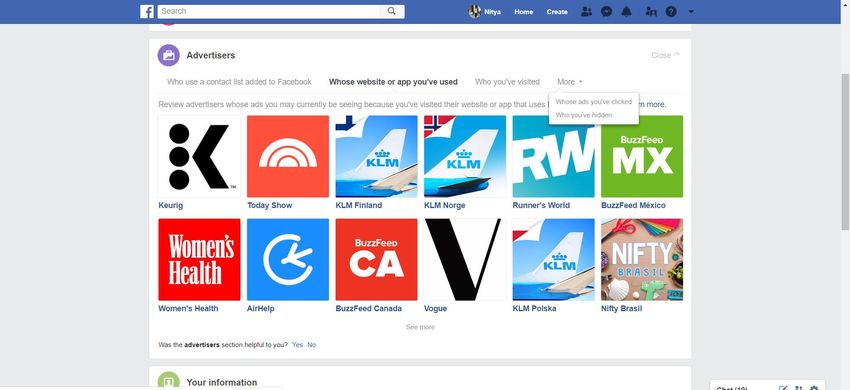
Course Outline
•   What data is out there and how is it used
•   Technical means of protection
•   Identification, Authentication, Audit
•   The right of or expectation of privacy
•   Government and Policing access to data – February15th
•   Mid-term, Then more on Government, Politics, and Privacy
•   Social Networks and the social contract – March 1st
•   Big data – Privacy Considerations – March 8th
•   Criminal law, National Security, and Privacy – March 22nd
•   Civil law and privacy – March 29th (also Measuring Privacy)
•   International law and conflict across jurisdictions – April 5th
•   The Internet of Things – April 12th
•   Technology – April 19th
•   The future – What can we do – April 26th
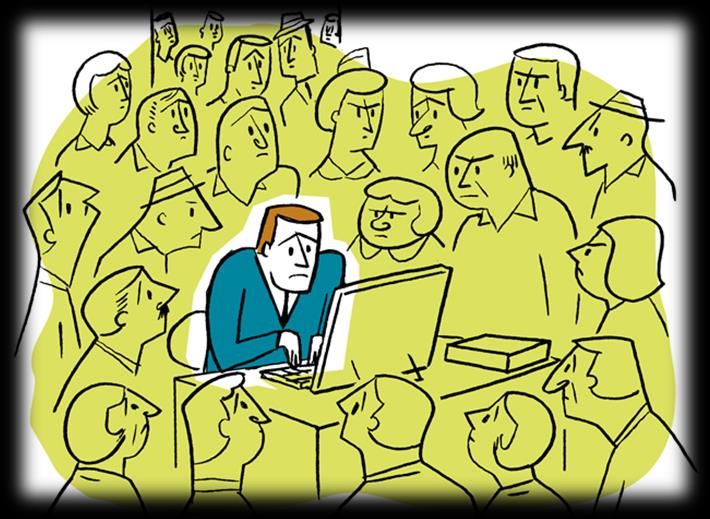
This Week: Social Networks
Class Discussion on Social Networks

Three student presentations (integrated discussion):
• Nityai Harve
• Deepti Siddagangappa
• Chloe Choe

Next Week: Big Data & PII Monetization
 Big Data
 • Jacqueline Dobbas - Location Data
 • Kavya Sethuraman

 Monetization of PII
 • Faris Almathami - Privacy vs. Marketers and
   Advertisers

 Class discussion on Big Data and Monetization.
New Readings

• [CAS] Cloak and Swagger: Understanding Data
  Sensitivity Through the Lens of User Anonymity.

• [Levemore] Saul Levemore, "The Offensive
  Internet: Speech, Privacy, and Reputation"

• [Nissenbaum] Helen Nissenbaum, "Privacy in
  Context: Technology, Policy, and the Integrity of
  Social Life"
Social Networks and Social Media
Services that Enable us to:
   – Share our thoughts and experiences
   – Record intricate details of our lives
   – Create communities of like minded individuals
   – Manage our relationships with others online.

   The intersections of technology with social interaction.

   Bulletin Boards, AOL, Myspace, Facebook, Twitter,
   Instagram, SnapChat, and many related services.
   But also includes email and the rest of the web.
Threat Vectors – Social Media

Our use of social media – dissemination
Others use of social media – retrieval
Monitoring and surveillance of Social Media
False information in social media
Reputation and permanence
Many forms of impersonation
Inferences from network analysis
Social Engineering through Social media

What we Post

Pay careful attention to what you post through social
media.
   We include much information we might
   otherwise think of as private.
   We think it is going to only our friends
   We think it is ephemeral
Remember what information is out there:
   Fortune Teller
How Our Data is Used

Surveillance through Social Media

Social Media Surveillance Could Have a Devastating
Impact on Free Speech. Here's Why.

Surveillance through Social Media – Good or Bad
• FBI’s near-brush with suspect in Florida
   school shooting draws scrutiny
What is “actionable”.
Is this prosecuting “pre-crime”
FACEBOOK AND IT’S MISTAKES
         NAME: NITYA MOHINI HARVE
           USC ID: 7992-0968-14
              March 1, 2018
WHY PEOPLE STARTED USING FACEBOOK? User Friendly Nature Better Interface Source of Information Entertainment Find Old Friends Sharing Options No Competition
EXPECTATION OF PRIVACY FROM FACEBOOK
My private data is shared only when I give my consent via opting in rather than opting
out
My private data is stored in a “trusted” location with strong security mechanisms in
place
If my data is sent to third party companies, it shouldn’t be personally identifiable.
Should be anonymized as much as possible to remove any possibility of linking.
CCPA
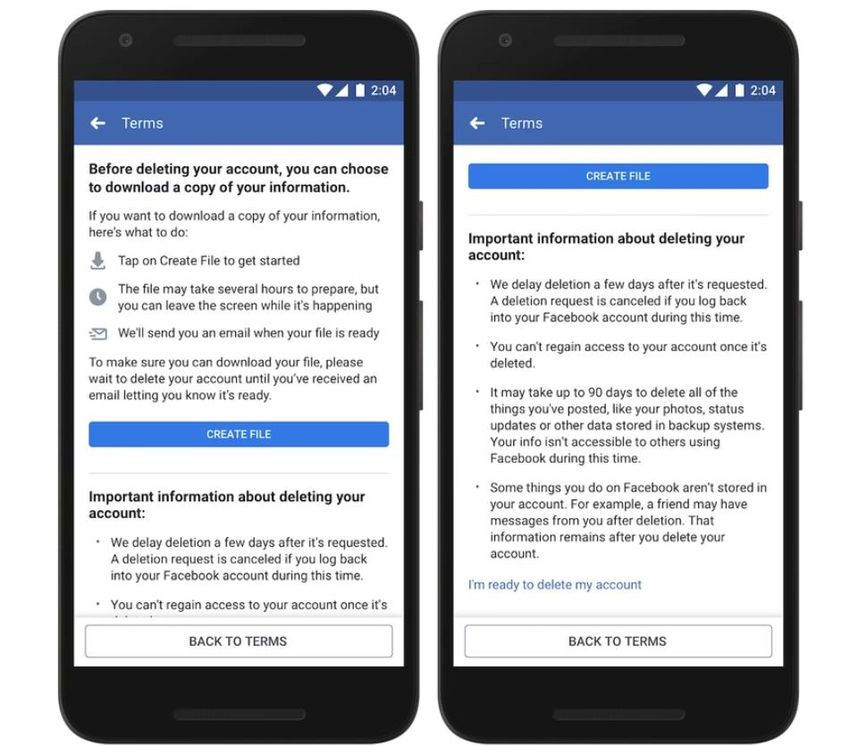
I should know what data has been collected, be able to access the data and use cases
of the data being collected
GDPR
Facebook shouldn’t sell my PII data without consent.
Only data relevant to supporting the functionality of Facebook is collected
I should have the right to delete any data that has been collected about me/from me
and it should be truly deleted from the data storage
I should be informed immediately if my data has been leaked in a breach
Only people who are my friends can view the data I post publicly
My personal messages are not viewed by anyone apart from me and the recipientWHAT DATA IS COLLECTED BY FACEBOOK?
Device information
Device attributes
Things that you and others do and
Device operations
provide
Identifiers
Information and content you provide
Device signals
Networks and connections
Data from device settings
Your usage
Network and connections
Information about transactions
Cookie data
made on our Products
Information from partners
Things others do and information
that they provide about you Advertisers, app developers, and publishers can send us
information through Facebook Business Tools they use,
including our social plug-ins (such as the Like button),
Facebook Login, our APIs and SDKs, or the
Facebook pixel. These partners provide information
about your activities off Facebook—including
information about your device, websites you visit,
purchases you make, the ads you see, and how you use
their services—whether or not you have a Facebook
account or are logged into Facebook.Facebook’s Data Use Policy
2013 : 2015 :
“We use the information we “Information from third-party partners - We receive
receive about you in connection information about you and your activities on and off
with the services and features we Facebook from third party partners, such as information from
provide to you and other users like a partner when we jointly offer services or from an advertiser
your friends, our partners, the about your experiences or interactions with them.
advertisers that purchase ads on
Facebook companies - We receive information about you from
the site, and the developers that
companies that are owned or operated by Facebook, in
build the games, applications, and
accordance with their terms and policies.
websites you use.”
Sharing With Third-Party Partners and Customers - We work
with third party companies who help us provide and improve
our Services or who use advertising or related products,
which makes it possible to operate our companies and
provide free services to people around the world.”MAJOR PRIVACY ISSUES ENCOUNTERED
SO FAR
CAMBRIDGE ANALYTICA – MARCH 2018
A BUG CHANGED PRIVACY SETTINGS OF UP TO 14 MILLION USERS – JUNE 2018
FACEBOOK INADVERTENTLY INTRODUCED THREE VULNERABILITIES IN ITS VIDEO
UPLOADER – SEPTEMBER 2018
DATA BREACH EXPOSES USER PHOTOS – DECEMBER 2018
FACEBOOK GAVE TECHNOLOGY COMPANIES SPECIAL ACCESS TO USER'S DATA WITHOUT
ANYONE ELSE KNOWING – DECEMBER 2018MAJOR PRIVACY ISSUES ENCOUNTERED
SO FAR
FACEBOOK vs SIX4THREE – December 2018
Whitelisting agreements with companies to maintain access to friends’ data after policy
changes stopping it.
Reciprocity – “Full reciprocity means that apps are required to give any user who
connects to FB a prominent option to share all of their social content within that
service (i.e. all content that is visible to more than a few people but excluding 1:1 or
small group messages) back to Facebook.”
Facebook used Onavo to conduct global surveys of the usage of mobile apps by
customers, and apparently without their knowledge.FACEBOOK’S ATTEMPTED REDEMPTION
Allowing users to take control of the ads shown to them
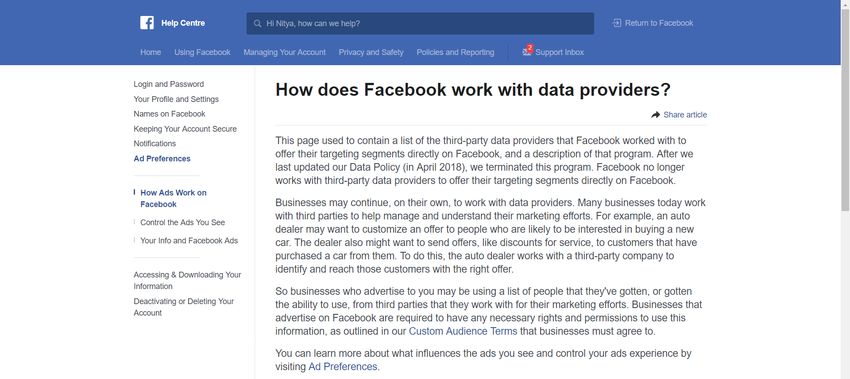
Facebook no longer works with third-party data providers to offer their targeting
segments directly on Facebook.
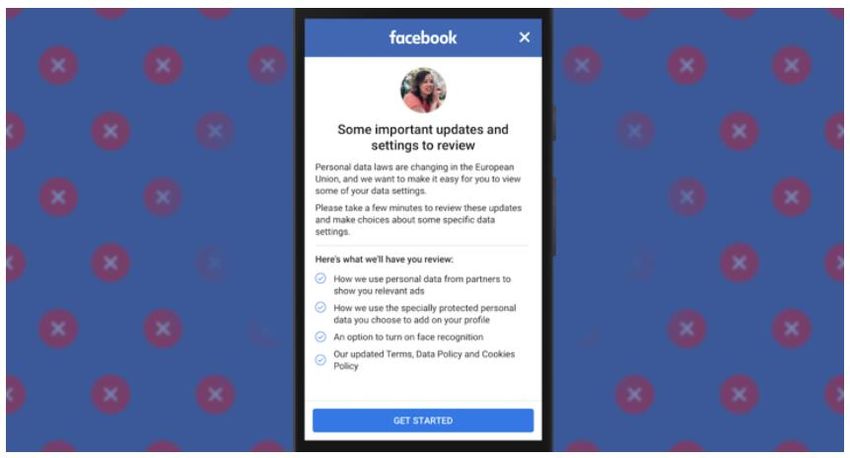
Facebook pledged to make changes to its data policies and introduces new measures to
make its privacy controls easier to find and use.
Facebook announced an update made to its data policy to “better spell out what data
we collect and how we use it in Facebook, Instagram, Messenger and other products,”
as well as additional updates to restrict data access on the site. Facebook also asks
users to review their privacy settings.
Facebook announced a program called the Data Abuse Bounty to “reward people who
report any misuse of data by app developers.”
Facebook introduced plans to build a feature called “Clear History” that will allow
users to have more information about and control over personal data usage from third-
party applications.
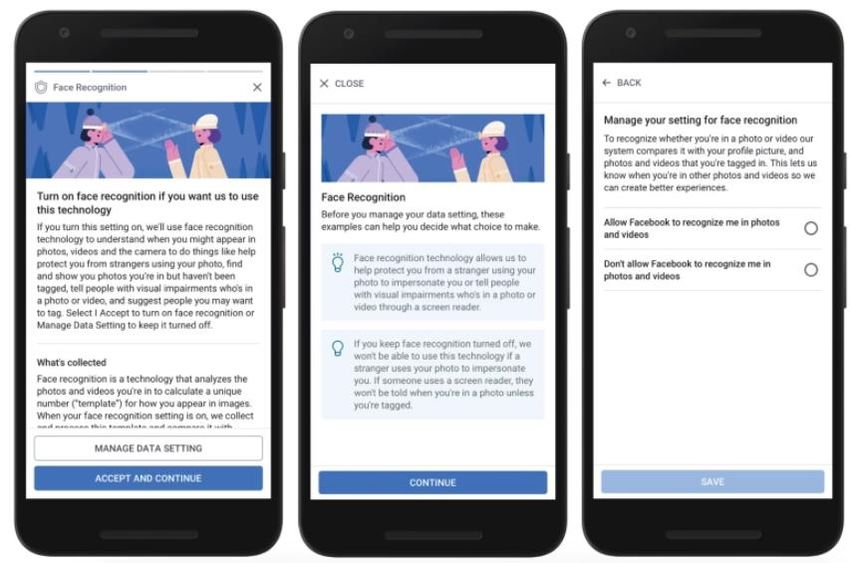
Facebook introduced a customized message onto individuals users’ News Feeds with
detailed explanations about their chosen privacy settings.HOW USER’S CAN MANAGE WHAT DATA HAS BEEN STORED ABOUT THEM
WHY PEOPLE STILL USE FACEBOOK?
“Because everyone else uses it”
“It's an easy and convenient way to keep in touch with my friends and family
and share photos and videos with people.”
“First, I have a number of acquaintances whose lives I like to be updated
about but do not want to "chat on the phone" with to find that information.
Secondly, Facebook is the way I login to a lot of other places I don't want to
give up.”
“I have always assumed that every service I use is trying to store and analyse
my information, and unless they're stalking me or somehow stealing from my
bank account... I don't care. It's free and I can keep in touch with my
relatives overseas.”
“I don’t even have an email or phone number for my old college roommate
but can contact her via Facebook.”REFERENCES
https://www.technotification.com/2015/01/why-facebook-is-so-popular.html
https://www.nytimes.com/2018/06/07/technology/facebook-privacy-bug.html
https://www.facebook.com/privacy/explanation
https://www.wired.com/story/facebook-security-breach-50-million-
accounts/?fbclid=IwAR1wjL5U93G4uScl1AqvxXXWHU_WlI07ovqovhZ4mvBM6riP8-D3uC8p-54
https://www.nytimes.com/2018/03/19/technology/facebook-cambridge-analytica-explained.html
https://techcrunch.com/2018/09/28/everything-you-need-to-know-about-facebooks-data-breach-affecting-50m-users/
https://www.parliament.uk/documents/commons-committees/culture-media-and-sport/Note-by-Chair-and-selected-documents-ordered-from-
Six4Three.pdf
https://www.theguardian.com/news/2018/mar/17/cambridge-analytica-facebook-influence-us-election
https://www.businessinsider.com/facebook-documents-six4three-case-published-british-parliament-2018-12
https://www.facebook.com/help/494750870625830?ref=dp
https://www.kctv5.com/news/more-privacy-problems-for-facebook/article_37e3c1a8-03d7-11e9-9e64-f3e82585864d.html?fbclid=IwAR1LDC-
kSwcEnHDBUDdpZGOlidrpL8JsY-yeV6XwbDTTgcbnKlDfxotSCNs
https://www.theverge.com/2019/2/26/18241985/facebook-clear-history-launch-2019-ad-targeting-privacy-
tool?fbclid=IwAR0SksVj3Yaww_lb4T5lNAdZHi9xfVO43LuIFJe6bWZu0pGbPXvAgwS2UWA
https://www.chicagotribune.com/business/national/ct-facebook-privacy-policy-20180325-
story.html?fbclid=IwAR2jsa1cS0tQbtJfyudlhmArIzeenOnFbi40ScLrbQn9pq-jivR5TjAt4Mg
https://www.theverge.com/2018/12/5/18127230/facebook-data-documents-parliament-deals-zuckerberg
https://tech.co/news/facebook-data-breach-exposes-user-photos-2018-12
https://techcrunch.com/2018/04/17/facebook-gdpr-changes/
https://www.digitaltrends.com/social-media/terms-conditions-facebooks-data-use-policy-explained/
https://www.counterextremism.com/blog/updated-tracking-facebook%E2%80%99s-policy-changes
https://www.cbsnews.com/news/facebooks-promises-for-protecting-your-information-after-data-breach-scandal/Deepti Siddagangappa
Privacy Concerns
Potential Threats
Case Study
▪ United States v. Drew
▪ Arizona Spammers
▪ F1 driver robbed
▪ 30 years jail for Facebook post
▪ Mind reader reveals his secret- Social networking is the practice of expanding the number of one's business and/or social contacts by making connections through individuals, often through social media sites such as Facebook, Twitter, LinkedIn and Google+.
Rapid growth of social network sites spawns a new area of network security and
privacy issues1.The Privacy Act of 1974 (a United States federal law) states: "No agency shall disclose any record which is contained in a system of records by any means of communication to any person, or to another agency, except pursuant to a written request by, or with the prior written consent of, the individual to whom the record pertains [subject to 12 exceptions].”
Freedom of information Act
Information disclosed is compatible with the purpose
For members of an agency.
Statistical research
Law Enforcement Agency
Health or safety of individual
requested by House of Congress
Court order
Government Accountability office
Debt Collection Act
National Archives and Records
Third party if it is meant for statistical research and not
“individually identifiable”.2. Companies - Privacy settings page - Instagram, Twitter and Facebook
Identity Theft Pre Teens and Early teens Sexual Predators Stalking Unintentional fame Employment Online Victimization Surveillance
▪ United States v. Drew ▪ Arizona Spammers ▪ F1 driver robbed ▪ 30 years jail for Facebook post ▪ Mind reader reveals his secret
The Communications Decency Act of 1996 currently exempts websites
and internet service providers from liability relating to information
posted by third party users, even if it is used for criminal purposes. It also
protects them from liability for refusing to disclose the identities of
anonymous posters who use the websites for criminal or fraudulent
activities.
Jury convicted a Missouri woman who had created a false MySpace entry
of violating the Computer Fraud and Abuse Act (CFAA)
Defendant, Drew, had created a fake MySpace profile of a teenage boy,
“Josh,” and used it to “friend” and develop an online relationship with one
of her daughter’s friends, teenager Megan Meier.
After several months of online correspondence, “Josh” lashed out at
Meier. Shortly after receiving a message from “Josh” that the world
would be a better place without her, Meier committed suicide. Scammers look for targets on facebook.
Scanners than contact targets as government
officials.
Then push some more information and claim tax
on their behalf.
Targets- unemployed
Data Retrieved- sensitive informationUK Formula one driver Jenson Button had his
house robbed at St Tropez, France.
- How could the robbers have found their
location ?
- Key lesson- Ensure social media privacy
settings are set to your personal requirements. 48 year old Man sentenced for 30 years of jail for insulting Thailand Monarchy through facebook posts. Sentenced in Bangkok Military court under a rule known as injured majesty .Anyone who insulted the King, Queen, or heir would face imprisonment for 15 year each. Man admitted to defaming the monarchy in 6 different posts. Original sentence was 60 years but on admission of guilt reduced to 30 years. Lesson – Take a moment to consider everything that you are posting to your social media accounts.
Dave is an extremely gifted psychic who finds out
specific financial information. This video reveals
the magic behind the magic, making people
aware of the fact that their entire life can be
found online. And by doing so urging everybody
to be vigilant.
Tips for using online banking more safely can be
found at http://safeinternetbanking.be https://www.youtube.com/watch?v=F7pYHN9iC9I&feature=youtu.be
https://www.hongkiat.com/blog/bizarre-facebook-crimes/
https://www.socialmediatoday.com/news/social-media-privacy-and-scams-3-
recent-cases-that-highlight-the-need-to/454720/
https://nakedsecurity.sophos.com/2015/08/07/facebook-tax-refund-scam-
earns-arizona-woman-6-years-in-jail/
https://en.wikipedia.org/wiki/Privacy_concerns_with_social_networking_servic
es
https://www.reddit.com/r/IAmA/comments/1ndvop/im_joe_lipari_the_nyc_co
median_turned_terror/Cambridge Analytica and Facebook— A Case Study Chloe Choe INF 529 March 1, 2019
Agenda History of Facebook and Data Collection 2016 Election and Cambridge Analytica Aftermath Policies, Issues, and Implications What can you do?
History of Facebook 2003: Mark Zuckerberg started FaceMash at Harvard University. 2006: Opened registration broadly. 2007: Facebook ad platform and Pages. Advertising partnership with Microsoft. Beacon program that launches user Facebook activity on other sites. 2009: Surpasses MySpace as largest social network. 2010: Open Graph API. 2011: Federal Trade Commission (FTC) settlement for deceiving and violating privacy policies.
2011 FTC Violation
December 2009: Facebook changed website so certain information that
was private turned public (i.e. Friends List) without consent or warning.
Third-party apps had access to unnecessary amounts of personal data.
PII is toxic waste!
“Friends Only” did not prevent data from being shared to third-party apps.
“Verified Apps” didn’t actually certify these apps.
Broke privacy policy of not sharing information with advertisers.
Deleted accounts’ data still accessible.
Did not comply with U.S. – EU Safe Harbor Framework when claiming it did.Facebook Settlement with FTC No misrepresentations about privacy or security of consumers. Required consent before changing privacy preferences. No access to data 30 days after deleting account. Comprehensive privacy program to address risks and protect consumers’ information. Obtain independent, third-party audits certifying it has privacy program in place that meets FTC order every two years.
Cambridge Analytica and the 2016
Election
Kogan sold 50 million user data (users and friends) to Cambridge
Analytica.
Ted Cruz, Ben Carson, and other Republicans hired Cambridge Analytica
for data.
“When you think about the fact that Donald Trump lost the popular vote
by 3m votes but won the electoral college vote, that's down to the data
and the research.“ – Alexander Tayler, Cambridge Analytica data head.
Targeted users with bespoke messages.How did Facebook get involved?
2010: Facebook launched OpenGraph to third party applications, which
allowed the third party applications to access large amounts of user data
and friend data.
2013: Aleksandr Kogan launched “thisisyourdigitallife” which was an
application which prompted users to answer questions about their
psychological profile.
300,000 users participated.
2014: Facebook changed its rules so that friend data cannot be accessed
without their permission. Aleksandr Kogan of Cambridge Analytica did not
comply and delete previously acquired data.
December 2015: Facebook told Cambridge Analytica to delete all data.
Did not follow up to confirm.Aftermath of Cambridge Analytica
Kogan claimed he was doing everything in accordance to Facebook
policy, according to Cambridge Analytica staffer Christopher Wylie [4].
Facebook fined $650k over scandal [6].
Cutting off applications’ access to your data after three months if inactive [7].
Disclose information of advertisers and what is an ad [7].
New initiative to conduct “independent, credible research about the role of
social media in elections, as well as democracy more generally” [7].Policies, Issues, and Implications
The ethics of research.
Data being used way beyond how it is expected.
Deep neural networks being more accurate at detecting sexual orientation than
humans [9].
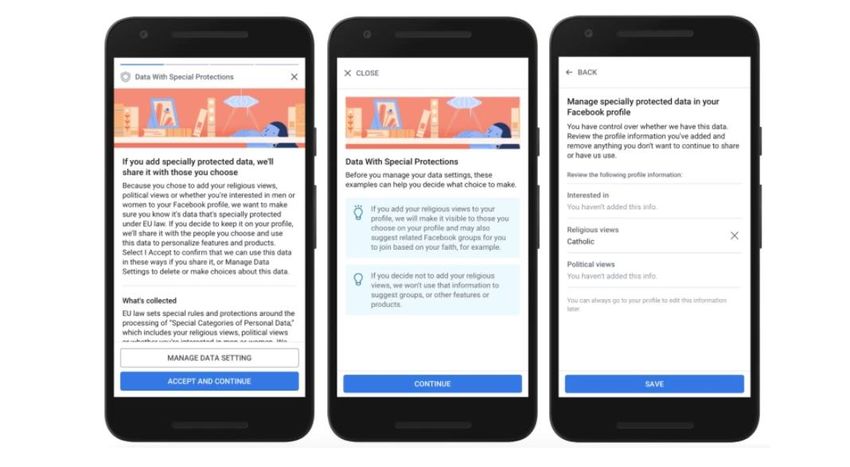
General Data Protection Regulation (GDPR): A policy enacted by the EU.
Ensures that an individual consumer’s data is stored and managed in a
regulated manner.
Asking for data often not practical for millions of users.
Researchers should put good of users first.What can you do? (Facebook) Shared settings Myself, friends, public, etc. Check which applications you are currently sharing data to and what exactly you are sharing. Millions of applications that you may have shared with even in middle school! Search engine settings Delocalize Facebook from all other applications “Log In with Facebook” Encrypt messages
Information Facebook Has About You
Information Facebook Has About You
What can you do? (General)
Always ask: Why do they need this information? What will this be used for?
Do you really need to sign up for this application?
Release as little information as possible.
As a future potential employee in the tech sector: protect users!
Don’t gather information if you don’t absolutely need it.Bibliography [1] https://www.theatlantic.com/business/archive/2012/02/the-history-of-facebook-as-a- facebook-timeline/252390/ [2] https://www.ftc.gov/news-events/press-releases/2011/11/facebook-settles-ftc-charges-it- deceived-consumers-failing-keep [3] https://home.bt.com/tech-gadgets/internet/social-media/how-to-set-up-facebook- privacy-settings-11363802641202 [4] https://money.cnn.com/2018/03/20/technology/aleksandr-kogan-interview/index.html [5] https://www.entrepreneur.com/article/313110 [6] https://www.forbes.com/sites/emmawoollacott/2018/10/25/facebook-fined-645150- over-cambridge-analytica-scandal-and-is-told-its-getting-off-lightly/#1a39888c2c34 [7] https://www.cbsnews.com/news/facebooks-promises-for-protecting-your-information- after-data-breach-scandal/ [8] https://www.nature.com/articles/d41586-018-03856-4 [9] https://psycnet.apa.org/doiLanding?doi=10.1037%2Fpspa0000098 [10] https://www.npr.org/2018/03/21/595535935/cambridge-analyticas-role-in-trump-s-2016- campaign-raises-potential-legal-flags [11] https://www.theguardian.com/commentisfree/2018/mar/22/us-politics-data- cambridge-analytica-russia-trump
Thank you! Questions?
SOCIAL NETWORKS
              - ADVERTISEMENTS, COOKIES AND USER SAFETY
(SELECTED SLIDES FROM LAST YEAR)

                                   Kirthana Ramesh Selvam
Advertisements and Cookies First-Party Cookies • Cookies are small files that travel back and forth between the browser and the server • They are stored in our hard disks and will be accessed by the servers of the websites that we are return to • In short, it makes it easy for the server to recognize that its us returning to the same site again • Mainly used to provide a ‘tailored’ online experience for the user • No Personally Identifiable Information
Advertisement and Cookies
Third Party Cookies
• These are the problematic ones

• These cookies directly flow to the Ad displaying
 companies

• These Ad serving companies can know what ads you
 have seen through your browser

• This will make sure that the user doesn’t see repeated
 ads and will try to improve effectiveness of the campaign
Tinder
• Formally, Tinder is a location-based social search app,
 according to Wikipedia

• You can swipe right or left to like or dislike a person

• Users are allowed to communicate with each other only if
 both parties swipe right

• This sounds safe… right?
Tinder’s Privacy Policy
• Even tinder collects cookies for targeted advertisement

• Your information from Tinder’s sister companies, which
 are a part of the Match Group that owns Tinder is taken
 and used by Tinder

• As stated in the policy, data will be retained as long as
 Tinder needs it for legitimate business purposes
How much data does Tinder have about a
single user?
• Any guesses?
                 Just 800 pages!
800 pages of data • Personal data • All conversations and their locations • General interests, like, dislikes, etc. • Facebook likes • Links to instagram photos • Age ranks of partners we are interested in • Complete Facebook friend list • Education information • The percentage of white/black men you have matched • Which words you use the most • How much time someone spends looking at your profile
Exodus Privacy Report for Tinder
• The following trackers’ signatures have been found in
  Snapchat:
       - Google Ads
       - Facebook Ads
       - Flurry, LeanPlum
• Out of all the Android permissions, a few things that
  caught my eye:
        - android.permission.GET_TASKS
        - android.permission.BLUETOOTH

• https://reports.exodus-privacy.eu.org/reports/54
Things to learn • All those 800 pages were because of voluntary disclosure of information • On social networking platforms, especially on something like Tinder, users are lured to disclose information, without realizing its consequences • As discussed in this class, the best way to keep our data safe is to not provide it in the first place! • What would happen if Tinder gets hacked? • Just imagine the amount of data that would be exposed. Tinder now has approx. 50 million users
Tinder’s Security flaw
• Checkmarx, an application security company found out
  that Tinder doesn’t use HTTPS to transmit pictures
• This enables hackers in the same network as the user to
  sniff it and even replace it with some other picture
• The adversary can also know if you swiped right or left for
  a particular profile and also if there is a match, by
  examining the lengths of the data chunk (374 bytes/ 278
  bytes/ 581 bytes)

• Proof of concept video:
 https://www.youtube.com/watch?v=ZBTL1bmJ9o8&feature=youtu.be
Linkability and Targeted Surveillance
• Disclosing too much information about ourselves in the
  social media can make it easy for adversaries to spy on
  us
• If we don’t take care about how we expose our location
  information, our phone numbers, e-mail addresses, there
  are chances that we could become victims to targeted
  surveillance
• This can only be avoided when people become more
  aware about the entire concept of privacy!
Social Media as Evidence
•   Profiles
•   Lists of friends, group memberships
•   Chat logs
•   Photos, videos
•   Tags, GPS locations
•   Check-ins, login timetables
•   Tweets/re-tweets, direct messages, status updates,
    wall comments, activity streams, blog entries, etc.
False information in Social Media
• Tweets from hacked accounts can affect markets,
cause panic, or instigate conflict.
• False Tweet on AP News Feed
• Pro-Gun Russian Bots Flood Twitter After
Parkland Shooting
• Cyber Bullying includes
• the electronic posting of mean-spirited messages
about a person (as a student) often done
anonymouslyReputation in Social Media
• Industry around managing social
• Article 5 Tools to monitor your online
• Reputation.com
• Search result manipulation
• False product and business reviews
• How to improve accuracy
•?Implications EFF Discussion Must balance privacy and free expression rights.
Impersonation in Social Media

Catfishing
    lure (someone) into a relationship by means of a
    fictional online persona.
Terms of Service of Social Media Sites
    Is violation a criminal act – MySpace
Can one choose who they are:
    Rushdie Runs Afoul of Web’s Real-Name Police
Similar issues for Online Investigations
The Social Network
Friend graphs disclose information about social structure
Used for investigation of criminal activites
Used in organizational research
How The NSA Uses Social Network Analysis To Map
Terrorist NetworksSocial Engineering via Social Media
Assumption – Your Friends are Your Friends
Social media can be used to gather information enabling
someone else to pose as your friend
To get you to satisfy a request
To get you to open an attachment
Malicious code will often spread through Social Media.
(dorkbot)
Cyber security sleuths warn about a new malware
circulating in social mediaHow Does Information Become
Public?
• A user Posts the information himself.
• Certain Information may be publicly visible by
default.
• A social network can change its privacy policy
at any time without a user’s permission.
• Approved contacts may copy and repost
information – including photos – without a
user’s permission, potentially bypassing privacy
settings.
Who Can Access Information?
• Third Party Applications may access the
information without your knowledge.
• Behavioral Advertising.
• Government and Law Enforcement for
investigations, data collection and surveillance.
Material prepared by
(INF529 Students spring 2016)What Laws Protect the User’s Information Online?
• Electronic Communications Privacy Act: This Law, if
updated would strengthen the requirements
needed for governmental access to the data
stored on a server by necessitating a search
warrant
• Children's Online Privacy Protection Act : This Law
requires that websites directed at children under
13 must limit their data collection and usage in
certain ways. There are also limitations on the
information that can be sent to advertisers.
• California Online Privacy Act :This Law requires
any website that collects personally identifiable
information on California consumers to
conspicuously post an online privacy policy.
Material prepared by
(INF529 Students spring 2016)So, What about • Confide Wired, February 15, 2017
Current Events - Facebook
TECH & MEDIA A European data privacy office has 15 open investigations. Ten are about Facebook -NBC News 2/27/19
    The Ireland Data Protection Commission has 15 ongoing investigations of multinational tech companies, 10 being
    related to Facebook and its subsidiaries, WhatsApp and Instagram. These cases stem from consumer complaints
    that seek to determine the privacy implications of how Facebook uses its customer data for behavior analysis and
    targeted advertising. Overall, total consumer complaints related to privacy have increased 56% from 2018,
    demonstrating a new mobilization from consumers to tackle data transparency and understand how big companies
    are using their data. -Jacqueline Dobbas

Facebook’s promised Clear History privacy tool to launch later this year following delay 2-26-2019 - Verge
     This article speaks about Facebook's new privacy tool, allowing user to clear browser history. This could be a way
     to clear off the cookies and history collected by Facebook for its third party applications like ads.This tool would be
     included by this year end. -- Deepti

Facebook’s promised Clear History privacy tool to launch later this year following delay - The Verge 02/26/2019
     Facebook plans to release a Clear History tool that was promised in May of last year. The tool, which is to be
     made available later this year, is considered by Zuckerberg as a move to win back users trust after the Cambridge
     Analytika data leak. Releasing such a tool will undoubtedly leave a huge impact on Facebook ad business and
     how they generate revenue. -Abdulla Alshabanah

                                                                            87
Current Events - Facebook
Popular Apps Cease Sharing Data with Facebook - Wall Street Journal 2/24/19
Last week, the WSJ shared that several health apps were sharing personal user information with Facebook by
utilizing Facebook's SDK. Since that report was released, health apps such as Flo Period and Instant Heart Rate:
HR Monitor have updated their apps to stop sharing their user's personal data and have requested that Facebook
delete that data. -- Brianna Tu
Facebook planned to spy on Android phone users, internal emails reveal - ComputerWeekly 2/22/19
Leaked documents revealed that Facebook was planning to use its Android app to target potentially single
individuals (through their relationship status on FB) with dating services ads. Facebook was also planning to target
its users with political advertisements and use its Android app to retrieve competitive data about how rival apps
used its Facebook functions. Other revealed discussions involved how Facebook could extract user data from
independently developed applications by incentivizing the developers with access to their users' Facebook data.
-- Aaron Howland
Facebook reportedly gets deeply personal info, such as ovulation times and heart rate, from some apps CNBC(Originaly
WSJ) 2/22/2019
Facebook receives personal sensitive data from other famous apps on the user phone.
Facebook used "custom app events" to send data like ovulation times and homes that users had marked as
favorites on some apps. -- Fumiiko Uehara
88Current Events - Google
Senate demands Google CEO answer for hidden Nest microphone - CNET 2/27/2019
The article discusses about how Google had failed to mention that there was a microphone in their Nest security
devices in any of there specifications for the device. Google says this was an error and also that they never turned
the microphone on. The article further talks about the dangers of this, highlighting the fact that consumers should
know exactly what kind of hardware is in their devices so they can take measures to maintain personal privacy.
~Ahmed Qureshi
Google sets April 2 closing date for Google+, download your photos and content before then USA TODAY – 2/2/2019
Google+, which was launched as a competitor to Facebook in 2011, will be shut down and deleted its service on
April 2 of this year. A few months after Facebook’s Cambridge Analytica incident, Google+’s customer information
was leaked due to a security bug. Google’s reputation suggests that the reason for Google+’s service shut down is
due to a decrease in usage. – Sophia Choi
89Current Events
TokTok fined for children privacy violation
Federal Trade Commission (FTC) announced that the famous app/service TikTok is fined about 5.7M USD for
violating children's privacy laws. TikTok allegedly illegally collected personal information from children by not
obtaining their parents’ permission before they signed up. 13 years or below shouldnt ideally be on a social media
platform Yet a large percentage of Musical.ly users were under the age of 13. This $5.7 million fine is the largest
civil penalty ever in a children’s privacy case. The violation is glaring because TikTok is a social media popular
among teens and and it ended up breaching childrens' privacy laws. Further actions are expected on this if things
escalate. -- Kavya Sethuraman
https://techcrunch.com/2019/02/27/musical-ly-tiktok-fined-5-7m-by-ftc-for-violating-childrens-privacy-laws-will-update-
app-with-age-gate/
The TikTok video-creating and sharing application is facing a hefty fine for its violation of U.S. Children's Privacy
Laws. The app requires users to enter personal information upon the creation of an account and collects this data -
for users under the age of 13, this is not permitted without parental consent. As a result, the app is making
changes to provide a more restricted experience for younger users. -- Ann Bailleul
Instagram is leading social media platform for child grooming 03/01/19
Instagram's platform use accounts for a third of the cases of child grooming. A fifth of the victims were 11 years old
and younger. Numerous groups have called out various social media platforms for failures of child safety, data
protection, and spread of misinformation. - Chloe Choe
90Current Events
Fake LinkedIn Job Offers used for Backdoors – Security Intelligence 2/27/19
This article explains how users are being tricked into downloading the “More_eggs” backdoor. User’s in industries
that take online payments are the primary targets. Users are tricked into downloading Word documents that will
begin to download the malware as soon as macros are enabled. This malware can then be used to download
malware of different variety. -Jairo Hernandez
Could hackers 'brainjack' your memories in future? - 2/19/2019 BBC
The US Defence Advance Research Projects Agency (DARPA) is attempting to work on "wireless and fully
implantable neural interface" to restore memory loss in soldiers caused by traumatic brain injury. The article
explains that this effort can lead to future threats of hackers "brainjacking" someone's brain by erasing or
overwriting memories or controlling neurostimulators of patients with Parkinson's disease and altering the
configurations. It would also be possible for them to steal credit card information and PIN numbers as these
information can be obtained by analyzing someone's brainwaves. -- Yulie Felice
The Australian Parliament’s Anti –Encryption Law Opening Doors to Potential Cyber Attacks eHackingNews 02/28/2019
This article discusses a recent law that been approve by Australian Parliament giving national intelligence and law
enforcement agencies access to end-to-end encrypted communication. It was vocally opposed by many cyber and
technology organizations; however, the bill still passed. -- Joseph Mehltretter
Thailand passes controversial cybersecurity law that could enable government surveillance
The bill was criticized for vagueness and the potential to enable sweeping access to internet user data. One clause
to search and seize data and equipment in cases that are deemed issues of national emergency. The citizens fear
that the law could be weaponized by the government to silence critics. – Louis Uuh
91Current Events
Can Social Media Be Saved? - Kevin Roose – New York Times 3/28/18
Our growing discomfort with our largest social platforms is reflected in polls. One recently conducted by Axios and
SurveyMonkey found that all three of the major social media companies — Facebook, Twitter and Google, which
shares a parent company with YouTube — are significantly less popular with Americans than they were five
months ago. The primary problem with today’s social networks is that they’re already too big, and are trapped
inside a market-based system that forces them to keep growing. Facebook can’t stop monetizing our personal data
for the same reason that Starbucks can’t stop selling coffee — it’s the heart of the enterprise. -- Gene Zakrzewski
Four in 10 people have deleted a social media account in the past year due to privacy worries - CNBC Lucy Handley 6/18/18
Privacy concerns and the circulation of fake news are contributing to people's distrust of content on social
platforms, said the study by public relations consultancy Edelman. Context was also seen as important by people
surveyed, with 48 percent saying it's a brand's fault if its advertising appears next to hate speech or violent
content.The Cambridge Analytica data leak and Russian-produced fake news that undermined the 2016 U.S.
Presidential Election have contributed to people's concerns. -- Gene Zakrzewski
Apple fixes Group FaceTime privacy issue with iOS 12.1.4, macOS Mojave supplemental update
Feb 7, 2019 · Apple has released an update to iOS bringing it up to 12.1.4, and a supplemental update to macOS
Mojave with both updates re-enabling Group FaceTime by fixing a security hole that potentially allowed others to
listen in to private conversations without the user's permission.- Helena Salimi
92Current Events
Social Media Post Revealing NATO Activities - New York Times 2/21/2019
In a NATO training exercise, researches were able to discover and gain key information about NATO soldiers via
Instagram, and Facebook, giving them timely information on the dates of the exercises, and the movements of
battalions. They used both publicly posted pictures and post on social media by soldiers along with fake
accounts/pages to get this information from their targets. The article also states that Russia has recently voted to
block troops from using smartphones and posting about their military service. Would this be a beneficial stance for
NATO to take as well? - Lance Aaron See
Nato Group Catfished Soldiers To Prove A Point About Privacy - WIRED 02/18/19
A NATO research group, the Strategic Communications Center of Excellence (StratCom), conducted a catfishing
operation to see how much information they could tease out of US military personnel. The researchers set up
phony Facebook pages and invited military personnel to join closed Facebook groups.
In addition to social engineering, this study looked at fraudulent page, profile and group detection and removal by
Facebook. - Sevanti Nag
TWITTER IS SECRETLY HOLDING ONTO DELETED DIRECT MESSAGES - Independent 02/18/19
A researcher accidentally found out that Twitter keep direct messages between users after they are deleted.
Twitter's privacy policy state that when an account is deactivated, the data will be deleted after 30 days. However,
it is possible to restore the account after that period which indicate that Twitter indeed keeps the messages and
data. Log data that Twitter collects like IP address and browser type is kept for a maximum of 18 months, the
policy states. Abdullah Altokhais
93Current Events
A New Data Protection Bill Aims to Tackle Racial Ad Targeting - Fortune 2/28/2019
Known as the DATA Privacy Act, a bill introduced by a senator in Nevada, Catherine Cortez Masto, authorizes the
Federal Trade Commission to outline specific definitions of discriminatory practices in online advertising and data
collection. The bill is especially relevant as investigations have found that advertisers are able to exclude racial
groups from viewing specific ads. The practices of discrimination against people are based on on race, gender,
sexuality, etc. The DATA Privacy Act will require businesses to provide users with opt-in and opt-out consent
options, according to a press release obtained by Fortune. – Mindy Huang
Nevada senator takes on racial ad targeting in new privacy bill - The Verge 02/28/2019
Senator Catherine Cortez Masto is introducing a bill that would explicitly bar platforms like Google and Facebook
from serving targeted ads that discriminate against protetcted groups, particularly by race, sexual orientation or
gender. This Act will put in specific definitions for discriminatory behavior in targeted ads and increase FTC's civil
penalty authority for violation of these rules. Facebook was found to allow discriminatory targeting in 2016 and
removed several ad categories in response. A year later, it was found that it is still possible to have discriminatory
ads on Facebook. --Anupama
What the U.S. Can Learn From the EU’s Privacy Laws - Adweek 3/1/2019
Considering GDPR being the biggest privacy topic of 2018. The California Consumer Privacy Act (CCPA) has been
taking similar GDPR steps in its roadmap, but the important concern is if it will be as successful as GDPR. Many
US publishers have taken the shortcut and blocked EU traffic, and their websites are unavailable for EU citizens. If
similar restrictions in the US are officially published and require such enforcement, what will those publishers do? -
Faris Almathami
94You can also read


