Intelligent Transport System KSRTC, Mysore - N. Manjunatha Prasad, IAS Managing Director, KSRTC
←
→
Page content transcription
If your browser does not render page correctly, please read the page content below
Intelligent Transport System
        KSRTC, Mysore

                N. Manjunatha Prasad, IAS
               Managing Director, KSRTC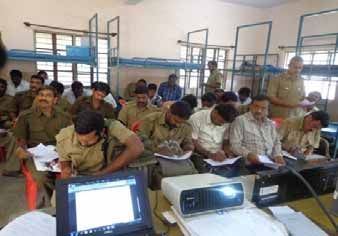
Project Scope and Solution
CCS / Data Centre                            PIS Display Boards
 9 Application / Database Servers                    9 Shelters - 2” 2 Line – 59

9 Network Firewall / Routers / Switches              9 Shelters – 2” 4 Line - 63

9 Video Wall                                         9 Platforms – 4” 4 Line – 45

   Applications                                      9 Terminals – 10 Line – 20
   ¾ ITS                                             9 Terminals – 16 Line – 6
        ¾ ETA                                        9 TOTAL - 193
        ¾ MIS Reports                                  Commuter Benefits
   ¾ GIS                                               ¾ Commuter Portal
   ¾ EMS                                               ¾ SMS

   Power                                               ¾ IVRS
    9 DG Set – 82.5                       In-Bus Equipments
      KVA
                                          9 Vehicle Mounted Units (VMU) - 500
    9 UPS – 20 KVA x 2
                Training                  9 In-Bus Displays – 500
                 9 Crew Training          9 Voice Announcement System
                   9 Officials Training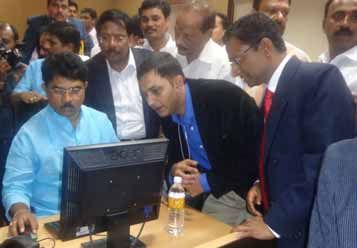
Project Progress : Data Centre and Control Station
• Data Centre
    • Servers
        • Communication Server
        • Database Server
        • Application Server
        • All Servers are configured in Cluster mode for fault tolerance    Servers

        • Network & Firewall components
    • 5 Mbps Internet Connectivity x 2 for redundancy
    • 2 x 20 KVA online UPS for failover
    • 85 KVA Diesel Generator Backup
• Central Control Station
    • Video Wall in Control Room
    • Dispatcher Workstations                                              Video Wall
    • Access Control

                      Completed & Operational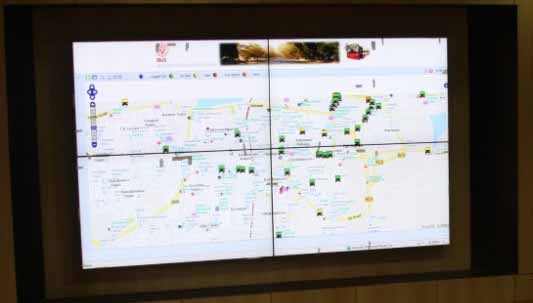
Project Progress– Applications
• Core Applications
   • ITS & GIS - Tested & Deployed
• Commuter Related applications
   • SMS & IVRS – Tested & Deployed
    SMS – 98700 11012                                 GIS Map with Buses

     IVRS - 18004255220
   • Commuter Portal – Tested & Deployed – http://mitra.ksrtc.in
• EMS – System Factory Acceptance Testing (SFAT) in Progress

         Kannada Portal   English Portal      Dynamic Status Report
Project Progress– Field Equipments
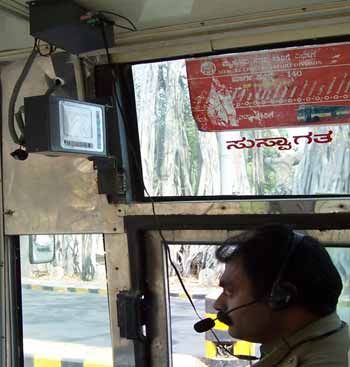
• In-Bus Equipments – Installation completed in 420 buses
   • VMUs, In-Bus Display and Audio Announcements
• 10 line & 16 line Display Boards
   • 24 out of 26 Installations Completed
• 2 line & 4 line Display boards
                                                               2 line Display Board
   • 157 out of 161 installations Completed
   • 6 boards reserved for Environment Tests

                                                                       VMU Screen

         10 line Display Board         16 line Display Board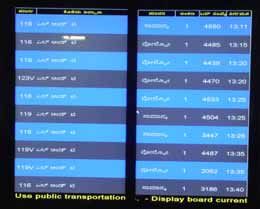
Project Progress– Deployment
• Training
- 1493 crew members Trained
- Depot Managers and Traffic Inspectors Trained
- Includes Class Room Training, In-Bus
demonstration and a visit to Control Room with                    Class Room Training

informative Training Manual

• Route Deployment – Geo Fencing, field survey
and validation completed for all 342 routes
• ETA – Enabled for all the routes.
• ETA Algorithm is under observation and SFAT inIn-Bus Equipment Demonstration
progress
• Audio recording of Bus Stop names completed for
          2400 bus stops in English & Kannada

                                        Training Slide - Sample
Project inauguration

        Sri. R. Ashoka, Hon’ble Dy.Chief Minister and
        Minister for Home and Transport, Govt. of
        Karnataka inaugurated the ITS system on
        17-November-2012 at Mysore City.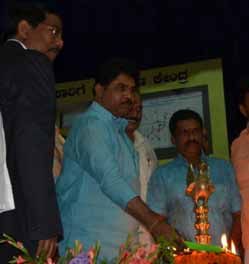
Implementation Challenges
y Introduction of ITS in KSRTC for the first time
y Lack of domain Knowledge & dependence on consultants
y Multi-level monitoring, co-ordination and correspondences    GIS Software

y World      bank procurement practices – Goods and Services,
    Consultancy Services
y   Financial Management – Different funding agencies, JnNURM and
    GEF, Formalities, Utilization Certificates, Auditing Norms, Fund Flows
    etc
y   Infrastructural Assistance – Bus shelters and CCS.
y   Acceptance by Bus Drivers – Drivers are feared that they are being
    scrutinized
y   Meeting commuter expectations - Real Time PIS Display, SMS
    queries, Commuter friendly website, Help Desk Management etc.
y   Synchronizing Technology and Consulting domains
y   20% of the buses already had the in-bus display board. They were
    replaced by ITS in-bus display boards.
Implementation Challenges
y Availability of buses for installation of equipments – Available only in
Night Time
y Installation of In-bus equipments – different types of buses,
placement of batteries / VMU / cabling issues
y Route Validation – Form 4 v/s. Actual Stops are different which lead
to multiple iterations of validation
y Trip non-Adherence to the last stop by drivers – Welcome and
Thank You announcements are added for commuters which can
also help drivers to identify trip start and end
y Security of Equipments at bus stops – Additional measures taken to
ensure safety of equipments, Insurance
y Ambiguity in RFP – PIS fonts, GIS map requirements, UPS capacity,
Location of PIS
y Time gap between DPR preparation, RFP Preparation and Contract
Award – Many developments & changes
y Availability of GPRS signal throughout the city to get the real time
information from buses.Implementation Approach
y Building Knowledge Base – In-depth study, thread-bear discussions,
consultations
y Multi-lateral Co-ordination – City Administration, PMU, WB,
Consultants, State Govt. etc.
y Acquaintance with WB Procedures – Finance, Procurement
y Team Work – KSRTC, Vendor, Consultants etc
y Detailed Project Planning and Documentation
y Sound Management Review Techniques – Weekly Meetings,
Monthly Steering Committee Meetings, Field visits, Adhoc meetings,
consultations with PMC etc.
y Comprehensive Training Program
Crew taking a Quiz
during trainingLessons Learnt
y Acquaintance with World Bank Procedures
y Identification and Construction of bus shelters
y Ensuring power supply at bus shelters
y Placement of PMC and M&E services in time
y Exposure to the crew about the system in advance Video wall in CCS
y Location and designing of CCS
y Budgeting of project components should have practical approach
y Value of detailed implementation plan and in-depth
documentation
y Practical approach to installations, software development,
processes and solutions etc.
y Constant filed visits and continuous improvements
y Scope clarity from different stakeholder perspectives needs
to be finalized at the beginning of the projectUser Satisfaction Survey • The M&E Consultants of KSRTC carried out baseline Commuters’ Survey comprising of 2960 commuters on random sampling in Mysore City • Survey was conducted at 180 locations across Mysore city • The parameters analyzed in this survey are: • commuters’ socio-economic background • usage segmentation • information availability • travel time and cost • perception of safety of using KSRTC buses and • commuters’ shift reasons.
User Satisfaction Survey
 Ratings of KSRTC bus services
User Satisfaction Survey
• 62.9 % of say that travel time of the bus was good without much
delay in reaching the destination commuters use KSRTC buses all
the days of a week and 65 % of them walk to bus stops
• 43.1 % of commuters get information on bus schedules from
other people and 37.9 % of commuters rely on their own
experiences
• The information regarding the bus fares is not provided
anywhere. The only source from which the commuters get the
information is the conductor.
• 95% of commuters are aware of environment pollution
User Satisfaction Survey
• 85 % of commuters wait for more than 2 minutes at the bus stop
out of which 36 % wait for 2-5 minutes 40 % wait for 5-15 minutes,
and 9 % wait more than 15 minutes
• 84 % of commuters say that travel time of the bus was good
without much delay in reaching the destination
• 45 % of commuters say that use of environment friendly vehicles
will minimize the environment pollution and 36 % of commuters
say that travelling by public vehicles will minimize the pollution
• 72 % of commuters indicated that they notice bunching of buses
at bus stops sometimes
User Satisfaction Survey
•34% of commuters use private buses, 25 % use tempo, 23% use
auto, 7 % use taxi and 4% ask for lift as an alternate mode of
travel to KSRTC bus service.
•25.8 % and 23.9 % of commuters’ trip purposes are work and
education respectively
• 62.8 % of commuters would like to get bus schedule information
at bus stops
•62 % of commuters are using KSRTC buses for more than 3
years and 8 % of commuters are using KSRTC bus from less than
6 months.
User Satisfaction Survey
Monitoring and Evaluation – Plan of Action
Sl.                  Description                          Timeline
No

1     Compare Performance of KSRTC before    Continuous and intermittent input
                                             till end of February 2015
      ITS and after ITS
2     Compare socio-economic parameters of   Continuous and intermittent input
                                             till end of October 2014
      KSRTC commuters before and after ITS
3     Perform impact assessment using        Intermittent input till end of
                                             January 2015
      performance indicators
4     Conduct temporal surveys               March 2013, September 2013,
                                             March 2014 and September 2014
5                                            Half Yearly
      Compare with benchmark and previous
      temporal surveys
Monitoring and Evaluation – Plan of Action
Sl. Description Timeline
No
6 Half Yearly
Analyze the data, test hypothesis and draw
inference
7 Half Yearly
Compare with service level benchmark, and
suggest policy implications
8 Prepare temporal study report Half Yearly
9 Prepare comprehensive M&E report March 2015Financial Progress
Financial Progress (in Rs. Crore)
!
"
! #
Financial Progress
(
)
)* (in Rs. Crore)
!
$%
&'#
'&
"
" ( ) #
#
) % *
'
+ ,
-+
" ( "
' ."/0 /1" 2 % *
#$% & &'& && '& &&&Financial Progress
) ! (in Rs. Crore)
)$)" ! (
Financial Progress
$ 3 % #
#
#
$ 3 4 5
'# '
$1 6 % 7 5 #
#
' '
( &+ ', ,
4/
' &
'#
&
-.
/$ 0&0&1 '
',Financial Progress y The amount received also includes the payment of Rs. 3.10 Crore towards complete implementation of Innovative Environment System (IES) Project as part of JnNURM scheme. y KSRTC has submitted third installment claim to MoUD y KSRTC has sought release of balance funds from World Bank y KSRTC expects major payments in this quarter as bills have been raised from ITS Vendor, M&E and PMC Services
Requests from KSRTC for Consideration

• Consultancy services- budget v/s financial proposal

KSRTC has already procured Consultancy Services for Project
Management Consultancy and Monitoring and Evaluation Consultancy.
KSRTC will be engaging CSOA consultancy services. We request to
release funds to the extent of contracts finalised.
You can also read


