INTERNATIONAL COMPETITION FOR
NATIONAL LIBRARY OF KOREA
DATA PRESERVATION CENTER,
PYEONGCHANG
DESIGN COMPETITION GUIDELINE
←
→
Page content transcription
If your browser does not render page correctly, please read the page content below
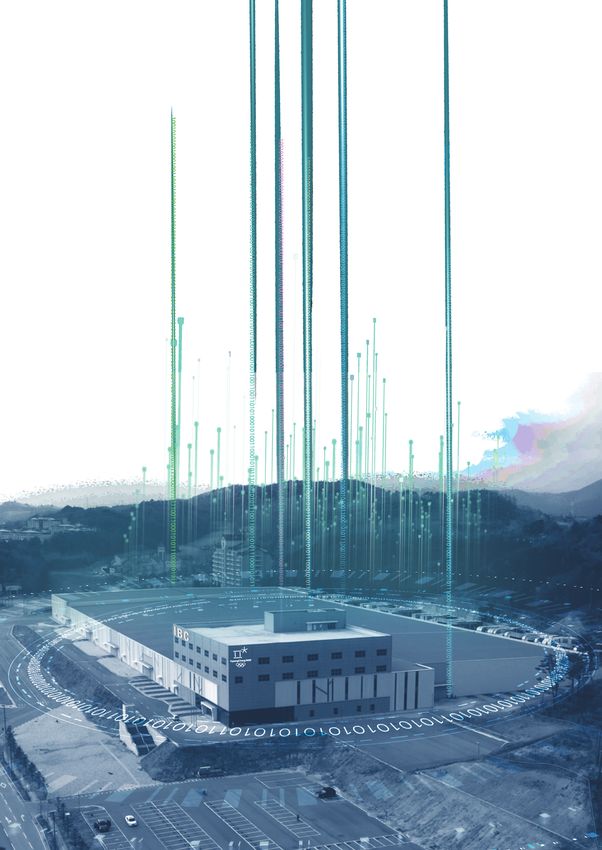
INTERNATIONAL COMPETITION FOR NATIONAL LIBRARY OF KOREA DATA PRESERVATION CENTER, PYEONGCHANG DESIGN COMPETITION GUIDELINE
Contents
Chapter 1. General Regulations4
1. Competition Title 4
2. Objectives of the competition 4
3. Competition Brief 4
4. Competition type 5
5. Official Languages and Measuring Units 5
6. Competition organization 5
7. Schedule 6
8. Eligibility and Registration 7
9. Site Visit 8
10. Inquiries and Answers 8
11. Submission of Entries 9
12. Technical Committee members and operation 9
13. Jury members and operation 10
14. Evaluation Criteria and Process 10
15. Announcement of Evaluation Results 12
16. Awards 13
17. Conditions after winning the competition 13
18. Copyright and use and return of entries 14
19. Dispute 14
Chapter 2. Design Guideline15
1. Background of the design competition 15
2. Concept and prospect of National Library
of Korea Data Preservation Center 15
3. Design brief and Site 16
4. Design Guideline 23
Chapter 3. Guideline of Submission Entries31
1. Submission Entries and Guideline 31
2. Format of PIN and Panel Numbering 33
3. Reference materials 36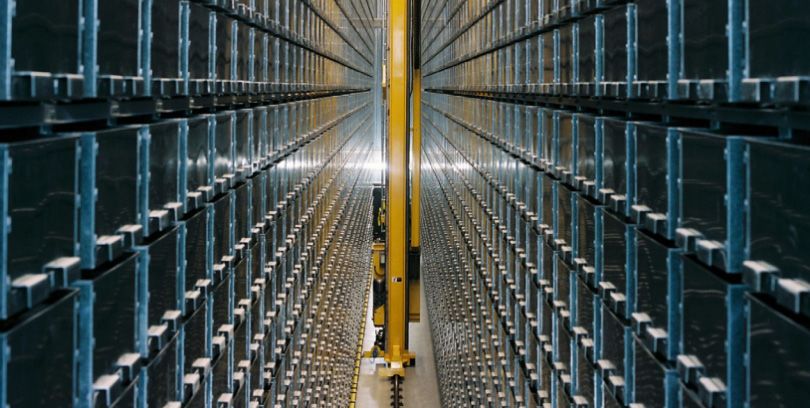
Chapter 1. General regulations 4
Chapter 1.
General
regulations
1. Competition Title
International Competition for National Library of Korea Data Preservation Center, Pyeongchang
2. Objectives of the competition
National Library of Korea Data Preservation Center, Pyeongchang is to be built to prepare for
saturation of National Library’s capacity through the utilization and remodeling of currently neglected
International Broadcasting Center (IBC) of the 2018 PyeongChang Winter Olympics, and to secure
long-term reliable preservation space and permanent preservation of national documents by
establishing preservation environment for various media and high-tech restoration system.
Accordingly, the international design competition seeks to obtain a creative and feasible optimal
design that fits the status and role of National Library of Korea Data Preservation Center.
3. Competition Brief
• Ordering Organization: The National Library of Korea, Ministry of Culture, Sports and Tourism
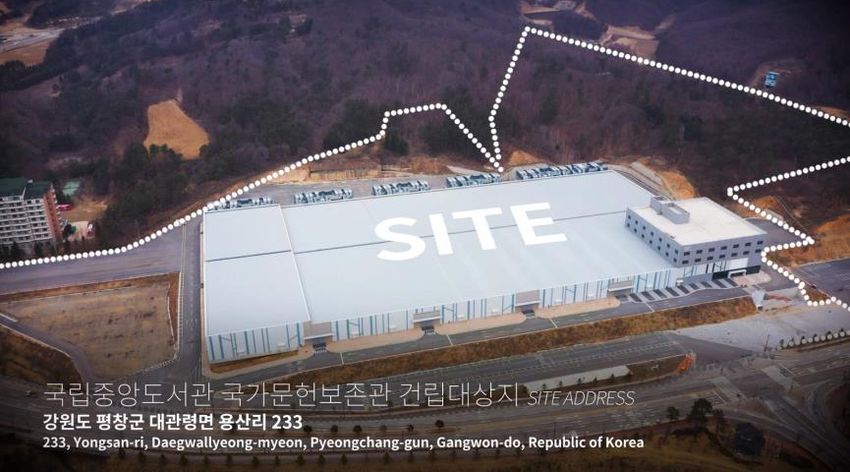
• Location: 233 Yongsan-ri, Daegwallyeong-myeon, Pyeongchang-gun, Gangwon-do, Former
International Broadcasting Center (IBC) of Pyeongchang Winter Olympics
• Structure: Steel frame (Currently: Permitted as a temporary building)
• Site area: 145,297㎡
• Special-Purpose Area: Planned Control Area
• Special-Purpose Zone: District Unit Planning Zone (Currently: Tourism Complex, Winter Olympics
special zone)
• Total floor area: 51,024㎡ in total,
※ 1st phase area 37,246㎡ (Four-floor building) (can be changed within ±5%)
• Use: Library in the category of education and research facilities
• Estimated construction cost: 41,058 million KRW (including VAT)
- Total construction cost includes architecture, civil engineering, landscaping, mechanical
equipments, electricity, communication, firefighting, waste treatment, demolition, etc and it covers
development charges and facility charges too.
※ Exhibition work, bookshelf in the library is to be ordered separately
• Estimated design cost: 2,710 million KRW (including VAT)
- Including interior design cost (excluding exhibition space), related subsidiary
service promotion cost, authentication costs, geological survey cost, etc.
- Excluding authentication commission
- Excluding design of automated storage facilities in storage stack
• Design period: 10 months after the contract of design service is signed (including licensing period
and holidays)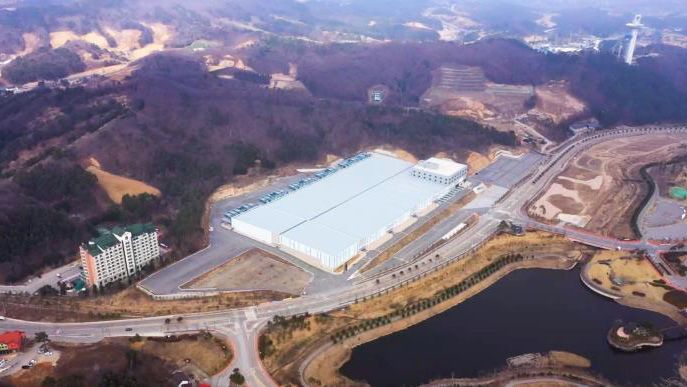
International Competition for National Library of Korea Data Preservation Center, Pyeongchang Design Competition Guideline 5
4. Competition type
4.1. Open competition for Korean and overseas architects (including corporations)
5. Official Languages and Measuring Units
5.1. Official Languages
5.1.1. The official languages of this competition are Korean and English. All official documents will
be distributed in Korean and English, and should there exist any conflict of interpretation
between Korean and English version, Korean version will take priority. But all submitted
drawings and documents should be written in English.
5.2. Measuring Units
5.2.1. All measuring units should use metric system.
5.2.2. The dates and times mentioned in regulations, guidelines, and Q&A of the competition should
use Korean standard time. (GMT+09)
6. Competition Organization
6.1. Promoter
6.1.1. The promoter is The National Library of Korea, Ministry of Culture, Sports and Tourism,
The promoter should be responsible for financing the design competition and oversee all
related matters. The promoter approves the decision of the jury and is in charge of follow-up
measures for the outcome of the design competition and the contract.
6.2. Steering Committee
6.2.1. A Steering Committee is to be organized and operated for the smooth functioning of the
competition.
6.2.1.1. Steering Committee members
• Cho, Young Joo (Director General, National Library of Korea)
• Lee, Kwi Bok (Director, National Library of Korea)
• Song, Ha Yub (Professor, Chung-Ang University - PA)
• Park, Yeol (Professor, KwangWoon University)
• Eun, Dong Shin (Chairman, EGA Group)
• Choi, Jung Mann (Chairman, Passive House Institute Korea)
• Oh, Dae Seok (Managing Director, Passive House Institute Korea)
Chapter 1. General regulations 6
6.2.2. The Steering Committee will provide data and information produced during the competition
period on the official website (www.nlpc-compe.org), and participants are obligated to
confirm this. Otherwise the participant is responsible for any disadvantage.
6.2.3. Participants
must promptly notify the steering committee of any changes in their information
such as the contact during the competition period. Otherwise, the participant is responsible
for any disadvantage.
6.3. Competition Management Team
6.3.1. The competition management team will proceed with the competition in compliance with
design competition schedule and regulations. The professional advisor will supervise
registration, Q&A, and submission of entries for the entrants, organize a technical committee
to conduct technical review, and assist the entire process of the evaluation.
6.3.2. The promoter will appoint professional advisor (PA) as follows in order to facilitate functioning
and management of design competition.
• Professional Advisor: Song Hayub (Professor, Chung-Ang University)
7. Schedule
7.1. Timeline of the competition with all relevant deadlines
7.1.1. The schedule is as follows.
Schedule Date and Time Note
Announcement April 29, 2021(Thu)
April 29, 2021(Thu) ~
Registration Registration to be made through official website
May 21, 2021(Fri) 17:00
May 10, 2021(Mon) 10:00 ~ Inquiries to be registered on Q&A bulletin board system
Inquiry Submission Period
May 14, 2021(Fri) 17:00 after signing in official website
Response to Inquiries May 25, 2021(Tue) To be uploaded on official website
Entry Submission Jul 27, 2021(Tue) 10:00~17:00
Technical Review Jul 29, 2021(Thu)
1st Jul 30, 2021(Fri)
Evaluation
2nd Aug 03, 2021(Tue)
Announcement of Result Aug 05, 2021(Thu) To be announced on official website
7.1.2. The schedule may be partially changed according to the circumstances of the promoter and
the government's quarantine guidelines, and the changes will be announced through the
official website.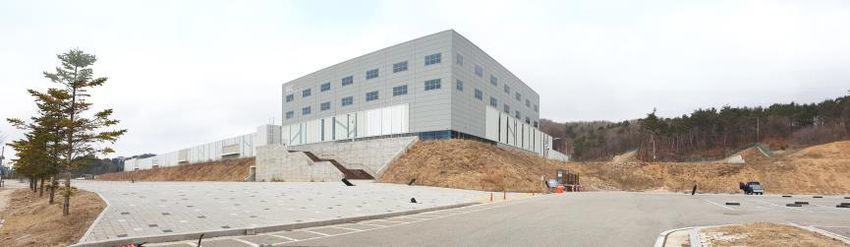
International Competition for National Library of Korea Data Preservation Center, Pyeongchang Design Competition Guideline 7
8. Eligibility and Registration
8.1. Eligibility
8.1.1. As of the date of the announcement, a certified architect pursuant to 'Architects Act' of the
Republic of Korea or the law of other countries may participate in the competition.
8.1.2. As of the date of the announcement, a certified architect pursuant to the law of other
countries can not participate on one’s own in the competition, unless the architect has not
opened a certified architect office yet.
8.1.3. In
the case of co-participation, each participant should be qualified according to 8.1.1 or
8.1.2 and up to three people are allowed to co-participate. A certified architect pursuant to
'Architects Act' of the Republic of Korea must be designated as the representative. Even if
the office of the representative and co-participant is a joint representative, one of the joint
representatives shall be designated as a participant.
8.1.4. If an entrant is registered as a representative and a joint participant, the entrant cannot
participate in other joint team participating in this design competition.
8.2. Participation restrictions
8.2.1. Employees and immediate family members of the competition promoter
8.2.2. Jury
members (including reserve juror), employees of the company to which the jury member
belong and their immediate family
8.2.3. P rofessional Advisor (PA), employees of the company to which PA belongs and his immediate family
8.2.4. Architect offices or architects whose business registration is cancelled, suspended,
disqualified, or temporarily closed as of the date of announcement
8.2.5. Companies that fall under the following conditions cannot participate.
8.2.5.1. If the jury member has served as an executive or employee at the company within
the last 3 years (including outside director)
8.2.5.2. Architects who are working on a service or research contract with the jury member
as of the date of announcement
8.3. Registration period and method
8.3.1. Period: April 29, 2021 (Thu) 10:00 ~ May 21, 2021 (Fri) 17:00
8.3.2. Method: Online Registration by filling out the basic information in the entry registration section
of the official website of the competition (www.nlpc-compe.org)
8.3.3. All participants can browse the provided reference materials when approved by administrator
after registration. The provided reference materials cannot be used for any other purpose
other than the design competition, and this is to be confirmed through the consenting
procedure of 'Consent to use of provided data and consent to use of personal information'
during registration process on the website.
Chapter 1. General regulations 8
8.3.4. After registration, the representative cannot be changed, and the change of a joint participant
member must be registered by 17:00 on May 21, 2021 (Fri) through the registered account on
the website.
9. Site Visit
9.1. On-site brief
9.1.1. In accordance with the government's quarantine guidelines, on-site brief is omitted.
9.1.2. However, considering the aspect of remodeling, a site visit is planned as follows.
9.2. Site Visit
9.2.1. Schedule: will be posted on the official website, and may change according to the government's
quarantine guidelines and the number of participants.
9.2.2. How to apply: Apply on the official website for site visit, and the number of attendee must be
registered.
9.2.3. Number of tours: 3 people per each entrant team (up to 20 people including promoter staff
are allowed during the same time)
9.2.4. Visit duration: 50 minutes per team, tour time will be posted separately on the website after application.
※ Details will be posted on the website later.
10. Inquiries and Answers
10.1. Schedule
10.1.1. Inquiry Submission Period: May 10, 2021(Mon) 10:00 ~ May 14, 2021(Fri) 17:00
10.1.2. How
to submit inquiry: Post on ‘Inquiries and Answers’ board of official website
www.nlpc-compe.org
10.1.3. Response
to Inquiries: May 25, 2021(Tue), Response will be posted on Inquiries of official
website
10.2. Notice
10.2.1. Answers to inquiries are to be posted collectively on the official website, and individual
answers are not provided.
10.2.2. Inquiries
must be submitted through the official website (www.nlpc-compe.org), and
inquiries by e-mail or telephone are not accepted.
10.2.3. Inquiries
which are not directly related to the guidelines for design competition will not be
responded.
International Competition for National Library of Korea Data Preservation Center, Pyeongchang Design Competition Guideline 9
10.2.4. Answers to inquiries are regarded as additions or revisions to the competition guidelines, and
if the content of inquiries and answers conflicts with previously presented content such as
the design competition guidelines, the content of the inquiries and answers will be applied.
10.2.5. Entrants are responsible for any disadvantage when they don’t confirm inquiries and answers.
11. Submission of Entries
11.1. Date and method of submission
• Submission by personal delivery: Jul 27, 2021 (Tue) 10:00~17:00
• Submission per post (including EMS) : Only entries arriving by Jul 27, 2021 (Tue) 17:00 will be
accepted, and the entries that arrives after the deadline will not be received. To avoid unexpected
delays or payment of customs duties, No Commercial Value should be indicated.
11.2. Where to submit entries
• The location will be annouced on the official website later.
11.3. Notice
•All submissions must arrive in one package, and the organizer is not responsible for any loss or damage
caused by packaging problems. All entries must be submitted in one package, and the ordering
organization is not responsible for any loss or damage caused by the packaging problems of entries.
•An entrant can only submit one entry, and if it is confirmed that an entrant has submitted
duplicate entries, the entrant will be disqualified.
• Submitted entries cannot be revised, changed, or supplemented.
12. Technical
Committee members and operation
12.1. Organization of Technical Committee
12.1.1. The technical committee for technical review is composed of architectural experts
in architecture, structure, and environment, and library experts, and the number and
organization is determined by the steering committee according to the number of entries.
12.1.2. Professional Advisor will participate in technical review and support operation and review.
12.2. Operation of Technical Committee
12.2.1. The technical committee reviews whether the submitted entries comply with the
competition guidelines and the quantitative requirements of the guidelines, and prepare a
report on the results of the technical review.
12.2.2. P rofessional Advisor (PA) should report the results of the technical review to the jury committee.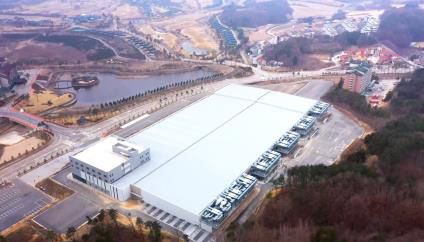
Chapter 1. General regulations 10
13. Jury
members and operation
13.1. Jury members
13.1.1. The jury committee consists of five jurors and one reserve juror as the following list.
No. Name position / company Speciality Note
1 Kim, Sung Min Vice President / EGA ACM Architects
Professor / School of Architecture, Seoul National University
2 Kim, Jin Wook
of Science and Technology
3 Kim, Hye Lim President / HYUNSHIN Architects & Engineers Architectural Jury member
4 Woo, Eui Jung CEO / Metaa Architects & Associates Design
Professor / School of Architecture & Building Science,
5 Daniel Valle
Chung-Ang University
1 Kim, Myung Sun Professor, Division of Architecture, Sunmoon University Reserve juror
13.2. Operation of the jury committee
13.2.1. The jury committee opens with the attendance of jury members and Professional Advisor (PA).
13.2.2. The jury committee appoints the chairman of the jury at the first meeting, and decides on
the evaluation criteria and process.
13.2.3. The jury member who do not participate in the evaluation will lose qualification as jury
member, and the reserve juror will succeed to the qualification.
14. Evaluation
Criteria and Process
14.1. Technical evaluation criteria
• The main review items during the technical review include the following.
• Deductions and elimination are subject to review criteria and methods of the jury.
Items Details
Violation • Violation of relevant laws (direct/egress stairs, evacuation distance, building line, attached parking
of the law lot, landscaping area, etc.)
• Exceeding the allowable gross area
• Omission of main programs
• Concerns on excess over the estimated construction cost due to excessive design
Violation
of the • Exceeding the standard number of design description and drawing plates
guidelines
• Omission of the content required in the guideline e.g. sections
• Omission of requilred drawings and documents
• Structure that cannot be remodeled
Other • Other decisions made by the jury during the main evaluationInternational Competition for National Library of Korea Data Preservation Center, Pyeongchang Design Competition Guideline 11
14.2. Evaluation Criteria
14.2.1. Main evaluation criteria are as follows.
Items Details
• Land use and planning
• Convenience of using facilities and spaces
Site
• Appropriate circulation of pedestrian and vehicle
• Suitable design of landscape and outdoor space
• Appropriate planning of preservation, management, office, and amenities
• Innovative planning of specialized spaces for reading, experience, and exhibition
Spatial design
• Efficient connection and utilization of indoor and outdoor spaces
• Economically feasible planning considering future expansion
Landscape and • Harmony with surrounding natural scenery of Pyeongchang tourist area
harmony with • Excellence in the elevation design plan
surroundings • Appropriate planning of color and materials
• Rational approach of remodeling
• Rational and feasible construction cost for maintaining and changing the existing structure
Technical • Excellent eco-friendly design techniques
planning • Appropriate planning for Zero Energy Certification and Green Building Certification
• Preservation environment maintenance by media and excellent security and disaster prevention
technology
14.3. Evaluation Process
14.3.1. The evaluation process is decided through the resolution of the jury.
14.3.2. The evaluation begins with a description of the competition background and guidelines by
Professional Advisor (PA).
14.3.3. During
the evaluation, the technical review results report submitted by the Technical
Committee is confirmed and reflected in the evaluation after discussion and resolution of
the jury.
14.3.4. Presentation
(2nd evaluation) of entrants’ works will be conducted for 5 or less finalists
after the first evaluation, and the venue and time will be announced later.
14.3.5. If submissions are fewer than 5, the first evaluation may be omitted.
14.3.6. The chairman of the jury prepares a judging report that includes the reasons for the
selection of the winning work, evaluation process and contents. The jury members sign the
completed report and submit it to the orderer.
14.4. Presentation process
14.4.1. Finalists
who have passed the first evaluation should give a presentation at the second
evaluation.
14.4.2. Finalists of the second evaluation should submit a separate presentation file (PDF) to official e-mail
by 12:00 on August 02, 2021 (Mon). However, the presentation file can contain only the contents
included in submitted drawing plates and design description, and entrants are responsible for any
problem such as font copyright in the submitted file. (Video clips are not allowed)Chapter 1. General regulations 12
14.4.3. In
principle, 15 minutes presentation and 15 minutes Q&A session will be assigned for
each finalist, but if the jury committee makes a separate decision, it will be followed
accordingly.
14.4.4. The number of presentation attendee is limited to three or less, including one presenter,
and only the employee of the representative company can be the presenter. (The presenter
should submit employment certificate on the day of announcement)
14.4.5. The presentation can be made in Korean, and the competition promoter will provide
simultaneous interpretation in English. Questions can be asked in Korean or English, and
simultaneous Korean-English interpretation will be provided.
14.4.6. Interpretation
time for the presentation is not included in the presentation time, but
simultaneous interpretation time for Q&A is included in the inquiry time, and the entrant
cannot raise an objection to any delay caused by the interpretation.
14.4.7. The jury committee will decide turns of presentation by lot after the first evaluation.
14.4.8. The presenter and the attendee must attend the designated place by the time appointed
by the promoter on the day of the evaluation, and the finalist who do not attend the
presentation will be excluded from the presentation list.
14.4.9. If the presenter makes any act that may disrupt fair presentation, such as expressions
that violate anonymity, comparison with other entries, explanation of contents that are
not included in submitted presentation file, and timeout, the chairman of the jury may
immediately stop the presentation.
14.5. Disqualification
14.5.1. If the submitted document contains any false information, for example, entrant's
qualifications.
14.5.2. If the jury committee determines disqualification for violation of the guidelines.
14.5.3. If the entrant is the case of restrictions on participation in 8.2.
14.5.4. If the submitted entry is proved to have imitated other’s work or have already been
submitted to another design competition.
14.5.5. If the entry is opened to the public (including online, offline and related media) before the final
result of evaluation is announced.
14.5.6. If the entrant damages fairness and anonymity by making contact with the jury member in
advance.
15. Announcement
of Evaluation Results
15.1. Announcement of Results
15.1.1. Evaluation
results will be posted on the official website according to the schedule after the
evaluation finishes, and only winners will be notified individually.International Competition for National Library of Korea Data Preservation Center, Pyeongchang Design Competition Guideline 13
15.1.2. The announcement date can be changed depending on circumstances of the promoter, and
the change will be notified on the official website.
16. Awards
16.1. Awards and design service contents
16.1.1. Awards to the winners are as follows.
Rank Awards and Proceedings with the Design Project(Taxes and duties included)
1st Place Winner(1 entry) Certificate of merit and basic and working design
2nd Place Winner(1 entry) Certificate of merit and 50 million KRW
3rd Place Winner(1 entry) Certificate of merit and 30 million KRW
Runners-up(2 entries) Certificate of merit and 10 million KRW per each team
16.1.2. The winner may not be selected by the jury committee depending on the quality of the entries, and
the awards may vary depending on the evaluation results and the project progress.
16.1.3. The representative will receive the compensation.
16.2. Invalidation of Winning
16.2.1. Even
after the awards are announced, the winner that is proved to have violated any
significant issue corresponding to disqualification 14.5 can be eliminated by the decision
of reconvened jury committee with a majority attendance of the jury members.
17. Conditions
after winning the competition
17.1. Compensation and conditions for competition winner
17.1.1. The winner as the preferred bidder has preferred bidder status to negotiate the basic
and detailed design contracts (hereinafter referred to as the contracts) with the ordering
organization and if competition winner is not selected, the ordering organization may re-
announce the ‘International Competition for National Library of Korea Data Preservation
Center, Pyeongchang’.
17.1.2. The winner must sign a contract within 10 days from the date of the announcement of the
results of the design competition in accordance with the relevant laws and regulations of
the Republic of Korea. However, depending on the circumstances of the organizer and the
project progress conditions, the contract conclusion period may be adjusted in consultation
with the contract party.
17.1.3. If the winner gives up the design right or faces a situation where he or she cannot
perform the design due to unavoidable circumstances such as ‘invalidation of winning’,
the next runner-up becomes the preferred bidder, and in this case, the total amount of the
compensation paid to the next runner-up should be returned.Chapter 1. General regulations 14
17.1.4. Design
contracts should be made in compliance with relevant laws and regulations, such
as the 「Act on Contracts to which the State is a Party」. The contract is written in Korean,
based on the task order in accordance with the regulations of the National Library of Korea.
17.1.5. The architect of the design should make sure of completing the design within the range of
estimated construction cost.
17.2. Contractor's design service scope
17.2.1. Details of task follow the task guideline at the time of the service contract.
18. Copyright
and use and return of entries
18.1. General Parameters
18.1.1. Entrants must ensure that the submitted entries do not infringe on the exclusive right of the
third party's intellectual property rights (if the third party's intellectual property rights are
used, a document certifying the authority for use such as the third party's consent must
be attached.), and entrants are responsible for any problem related to intellectual property
rights, and all damages to the ordering organization or other third parties, and should
compensate for the expenses incurred to the ordering organization. Infringement of other
people's copyright can cause invalidation of winning.
18.1.2. All rights (including copyright and ownership) of the entries remain with the entrant. If
necessary, the ordering organization may transfer or obtain a license for use of the entries,
and in this case, a separate agreement with the participant shall be made.
18.1.3. However,
the ordering organization can use the entry for non-profit and public interest
purposes such as reproduction, exhibition, distribution, rental, public transmission, and
creation of secondary works for publication, for the purpose of exhibition, public relations,
and business plan establishment without separate compensation and consultation with the
entrant. The submission of entries is regarded that the participant has agreed to the term.
18.1.4. Other
copyright-related individual issues shall be subject to the copyright laws and
regulations.
18.1.5. Submitted
entries, excluding winning works, will be notified of the return period, and
submitted works that are not returned until the deadline of the return period will be
voluntarily processed by the ordering organization.
19. Dispute
• The Design Competition shall be held pursuant to relevant laws and regulations of Korea and for
any dispute over the competition, it shall be mediated or decided by the court of jurisdiction in the
relevant region of the Republic of Korea.International Competition for National Library of Korea Data Preservation Center, Pyeongchang Design Competition Guideline 15
Chapter 2.
Design
Guideline
1. Background of the design competition
1.1. Project Background
1.1.1. Social background
• By establishing National Data Preservation Center, National Library of Korea seeks to play
its role as a national library and improve permanent preservation of national documents
through their systematic preservation, restoration management and distribution.
• National Library of Korea endeavors to pass down knowledge and cultural heritage to
future generations, provide information without time and space limit through digitalization,
reduce information gap and lay the foundation for academic development through scientific
preservation and management of library resource.
1.1.2. Functional background
• As a representative library of Korea since its opening in 1945, National Library of Korea
has played a major role in guaranteeing the right of equal access to various media
and information for all, but is facing lack of storage due to continuous accumulation of
materials.
• Accordingly, National Library of Korea promotes the establishment of National Data Preservation
Center to secure a stable storage space for national documents and create preservation
environment for each media type in response to diversification of information media in order to
provide permanent preservation of national documents.
1.1.3. Economic background
• Looking at the symbolic aspect of the project, the project is a successful example of using
the symbol and idle facilities of 2018 PyeongChang Winter Olympics. To be more precise,
it is expected that the project will bring about economic benefits including construction
cost reduction, prompt process and shortening of construction period by utilizing unused
facilities, revitalization of the local economy through job creation in Gangwon-do province
and securing experts in the field of data preservation and restoration.
2. Concept and prospect of National Library of Korea Data Preservation Center
2.1. Prospect of National Data Preservation Center
• Leap forward and become “National Library for preservation of national documents that
remembers and inherits the lives of Korean people”
•Implementation of innovative architecture and storage system to establish a smart management system for
national documents and knowledge resources
• Spread and sharing of new knowledge and culture contents through re-creation of knowledge
information and dataChapter 2. Design Guideline 16
2.2. Value of National Data Preservation Center
2.2.1. Symbolic meaning
• Renovation into National Data Preservation Center by using Olympic facilities for the first
time in Korea
• Reinforcement and complementation of National Library of Korea’s function as a national
data center through establishment of National Data Preservation Center
• Comprehensive preservation and representative preservation center of various domestic
libraries and archives’ documents
2.2.2. Conservation of national knowledge and culture
• Capacity to perform core functions of national preservation library by creating long-term
and expandable preservation and restoration management system of the new concept for
national knowledge and information resources
• Reinforcing crisis management capabilities and establishing a foundation for permanent
preservation management against disasters such as fires and earthquakes and usage
damage through distributed preservation of national documents
• Development of knowledge information media and establishment of permanent preservation
system for digital resources such as online data
2.2.3. Hyperconnectivity of Knowledge
• Minimizing the information gap among the public and preparing ground for academic
development by providing information without time and space constraints through
digitalization of national documents.
• Responding to new information knowledge circulation methods such as data sharing,
opening and utilization through systematic digital preservation as well as physical collection
of knowledge and information resource
2.2.4. Creativity
• Provision of opportunities for re-creation of knowledge content through exhibition planning
that shows the combination of traditional materials and digital technology
• Creating new industries for local community by developing and operating complex culture
creation, education, practice, and tour programs
3. Design
Overview and Site
3.1. Design Overview
• Project Title: International Competition for National Library of Korea Data Preservation Center,
Pyeongchang
• Ordering Organization: The National Library of Korea, Ministry of Culture, Sports and Tourism
• Location: 233 Yongsan-ri, Daegwallyeong-myeon, Pyeongchang-gun, Gangwon-do, Former
International Broadcasting Center (IBC) of Pyeongchang Winter Olympics
• Structure: Steel frame (Currently: Permitted as a temporary building)International Competition for National Library of Korea Data Preservation Center, Pyeongchang Design Competition Guideline 17
• Site area: 145,297㎡
• Special-Purpose Area: Planned Control Area
• Special-Purpose Zone: District Unit Planning Zone (Currently: Tourism Complex, Winter Olympics
special zone)
• Total floor area: 51,024㎡ in total,
※ 1st phase area 37,246㎡ (Four-floor building) (can be changed within ±5%)
• Use: Library in the category of education and research facilities
• Estimated construction cost: 41,058
million KRW (including VAT)
- Total construction cost includes architecture, civil engineering,
landscaping, mechanical equipments, electricity, communication,
firefighting, waste treatment, demolition, etc and it covers
development charges and facility charges too.
※ Exhibition work, bookshelf in the library is to be ordered separately
• Estimated design cost: 2,710 million KRW (including VAT)
- I ncluding interior design cost (excluding exhibition space), related subsidiary
service promotion cost, authentication costs, geological survey cost, etc.
- Excluding authentication commission
- Excluding design of automated storage facilities in storage stack
• Design period: 10 months after the contract of design service is signed (including licensing period
and holidays)
3.2. Design Scope
• Design scope site: Inside of the site boundary line in the provided reference materials
• Design scope of building: Exterior change can include the entire building permitted as a temporary
building, and the area of the facility is limited to the area suggested in the guidelines and within
the range of phase 1. However, creative proposals are allowed within the range of the proposed
construction cost.
• Design competition proposal must present a master plan that includes the scope of the 2nd phase
of development.
• The design scope of the facility interior is limited to the scope of the 1st phase suggested in the
proposal by the promoter, but the preferred bidder should include the entire building including the
exterior for all other administrative treatments such as licensing when carrying out the design
after signing a contract.
• When reinforcement of foundation slab structure is required according to provided reference
materials, it must be included in the design scope as the construction must be completed at the
same time for the 1st and 2nd phase development areas, and the construction cost must not
exceed the total planned construction cost.Chapter 2. Design Guideline 18
3.3. Site Circumstances
3.3.1. Aerial photograph of the site
[Figure 1] South Aerial View
[Figure 2] North Aerial View [Figure 3] West Aerial View
[Figure 4] East Aerial View [Figure 5] NE Aerial ViewInternational Competition for National Library of Korea Data Preservation Center, Pyeongchang Design Competition Guideline 19
3.4. Site Circumstances
3.4.1. Topography and natural environment
• Pyeongchang-gun is located in the center of the Taebaek Mountains, with an average altitude
of more than 600m. Odaesan, Gyebangsan, Hwangbyeongsan and Daegwanryeong are
located in the north, and the Charyeong Mountains diverges from Odaesan in the west, which
makes a sloping terrain toward the south from high three sides, east, north, and west.
• The site is surrounded by mountains to the northeast and slopes to the southwest.
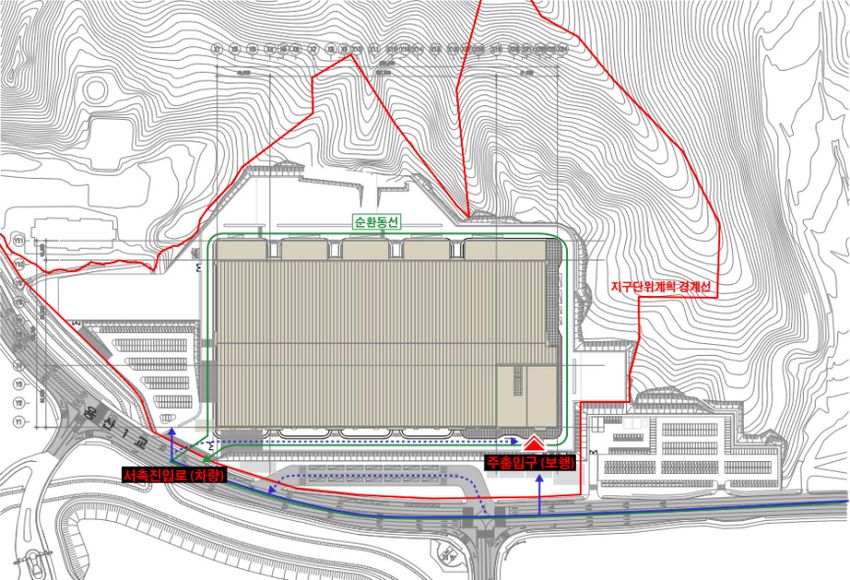
[Figure 6] Site Plan
[Figure 7] Cross-section
[Figure 8] Longitudinal cross-sectionChapter 2. Design Guideline 20
3.4.2. Adjacent roads and outdoor circulation
• As the site is in contact with Solbong-ro and Yongsan 1 Bridge, smooth traffic flow is
expected without congestion.
• It is expected that the Namjakgolcheon Stream, Alpensia Resort, and Yongpyeong Resort
located in the south of the site can contribute to the expansion of public transportation
networks, increase in the effect of attracting guests and enhancement of convenience.
• As there is a crosswalk on the road facing the main entrance of the site, it is expected that
the flow of pedestrians will be concentrated.
Circulating Route
Boundary of District
Unit Plan
Yon
gsa
n1
Bri
dg
e
Main entrance
West entrance (vehicle) (pedestrian)
[Figure 9] Current status of outdoor circulation
[Figure 10] Panoramic view of the SW side, west approach (vehicle)
[Figure 11] Panoramic view of the SE side, main entrance to the south side (pedestrian)International Competition for National Library of Korea Data Preservation Center, Pyeongchang Design Competition Guideline 21
3.4.3. Outside of the existing building
• The exisiting building is composed of prefabricated panels of steel structure, and has not
been used since the Winter Olympics.
[Figure 12] SW Aerial View [Figure 13] NE Aerial View
[Figure 14] SW view [Figure 15] SE view
[Figure 16] South vehicle circulation [Figure 17] South main entrance (pedestrian)
[Figure 18] NE exterior and vehicle circulation [Figure 19] NW exterior and vehicle circulationChapter 2. Design Guideline 22
3.4.4. Inside of the existing building
• Existing air conditioning facilities are in a state of shutdown, and only the minimum amount
of power required for maintenance is being supplied.
[Figure 20] 1F Lobby [Figure 21] 1F Corridor
[Figure 22] 1F Former Broadcast Studio-1 [Figure 23] 1F Former Broadcast Studio-2
[Figure 24] 2F Office Lobby [Figure 25] 3F Office
[Figure 26] 4F Office [Figure 27] RoofInternational Competition for National Library of Korea Data Preservation Center, Pyeongchang Design Competition Guideline 23
4. Design Guideline
4.1. Basic direction
4.1.1. Symbolism of National Data Preservation Center
• The National Data Preservation Center should be a creative platform emphasizing the core
preservation role of the representative knowledge and cultural heritage of Korea and its
functionality and symbolism as a data processing center.
• The National Data Preservation Center contains symbolism of the world first zero-energy
building retrofit rather than simple reuse of idle buildings left after the Winter Olympics, and
the proposal should realize these ideals.
4.1.2. Function and re-creation as a national knowledge and information resource platform
• The National Data Preservation Center is a space for data processing and re-creation rather
than data backup. Therefore, the space should be planned to accommodate these ideas.
• Considering flexibility of indoor space and expandability of outdoor space, it is necessary
to secure flexibility and expandability of space in preparation for functional change and
expansion of the storage stack in the future, and to determine book stack layout according
to the prediction of the amount of storage.
• In the building, preservation library and the reading, exhibition, administration,
management, etc. should be planned as a spatial layout to allow efficient management and
operation through an organic relationship with each other.
• Each facility should enable automatic management such as office automation (OA) and
integrated security system (IS) from electricity, communication, mechanics, disaster
prevention, and furniture, and should meet functions such as preservation, data restoration,
digital archive, and data center.
• The indoor environment, such as the temperature and humidity of each media storage
stack, must be maintained in accordance with the relevant laws of Cultural Properties,
Materials, and Records in Korea, and secure comfort of office space.
4.1.3. Visible library and regional connectivity
• National Data Preservation Center should be a library that includes specialized spaces such as
reading, exhibition, experience, and creation in order to spread culture, improve local image, and
play a role as a tourism resource beyond its preservation function.
• Automated facilities in National Data Preservation Center should meet required functions
and be utilized as exhibits, and be created as a cultural space linked to the local tour course
by opening visually.
• In addition to the basic unit space, spaces to improve the utilization rate of citizens,
such as leisure and rest facilities for local residents should be reviewed in National Data
Preservation Center, so that it can play a role as a center for local culture. For this purpose,
outdoor space plan is needed.Chapter 2. Design Guideline 24
4.1.4. Safety and convenience by reusing existing facilities
• The project is a successful case of remodeling and utilizing idle facilities, and the situation
of existing buildings must be carefully reviewed, and, in particular, it should be designed so
that it does not disrupt structure, fire prevention, firefighting, and waterproofing, as it must
perform the function of preserving various important and special media.
• Since the space has to accommodate more than 600 staffs with countless various
preservation media, their convenience must be considered deeply, and the interior and
exterior spaces for a comfortable working environment must be organically linked with
functional circulation.
4.2. Design guidelines
• All distributed reference materials are opinions and research results of individual service agencies,
and they are only for reference, without guaranteeing the appropriateness of the related content by the
ordering organization. Thus the entrant must present a plan to meet the current conditions of site and
building. This commonly applies to all disciplines, including structure.
• If it is concluded that the proposal can not be realized because of significant difference from the
current conditions of building and site, even after the preferred bidder is selected and the contract
is made, it is attributable to the winner. And when it is impossible to proceed normally within the
estimated construction cost budget, the winner should present an appropriate and reasonable
alternative to it. However, if the proposed alternative deviates from the intention of the proposal and
examination, all responsibility for this lies with the winner.
4.2.1. Present Conditions
• The area of proposed programs is limited to the space of the 1st phase suggested in the
reference materials, but within the scope of the proposed construction cost, the entrant can
put forward a proposal in a free and creative way.
• However, the plan of this competition should be proposed as a complete master plan that
includes the 1st and 2nd phases, and the application of the gross floor area in the later
phase of licensing and approval will cover the entire building.
4.2.2. Outdoor space planning
• An outdoor experience space linked to the National Data Preservation Center can be
planned, and the organic relationship should be considered in connection with the
surrounding landscape in the planning of outdoor space.
• It is necessary to consider the convenience of pedestrian access to the building from the
outdoor space.
• The number of parking on the site should be planned in accordance with mandatory
number of parking spaces and should take into account visitors, buses, handicapped
persons, unloading and emergency parking.
• The change from an existing temporary building to a general building should meet various
related laws and regulations, such as landscaping area and sewage treatment plan.International Competition for National Library of Korea Data Preservation Center, Pyeongchang Design Competition Guideline 25
• A creative plan that match the natural scenery of Pyeongchang including nearby tourist
complexes should be provided.
• Outdoor space plan that can serve as a landmark for revitalizing the local economy should
be provided.
2nd Phase 1st Phase
[Figure 28] Phased spatial area
4.2.3. Floor Plan
• A floor plan and section plan should be provided to meet efficiency and function of space utilization,
and preservation of national documents in the storage stack.
• Based on the reference materials provided, the masterplan should meet stack layout and
area of storage stack and consider expansion in the future.
• A circulation plan that can utilize the automated system for classifying, returning, and
storing books and articles linked to the storage stack as a visual element of another exhibit
and tour should be reflected, and the composition and method should be proposed in a
creative way.
• The proposal should secure structural stability reflecting appearance and design and the
storage space should be easily accessible by vehicle and separated from the viewing
circulation.
• Equipment spaces such as machine room and electrical room should be arranged efficiently
for the purpose of control and management.
• Inside and outside buildings and parking lots should be prepared for safety accidents to
prevent data damage and leakage.
• Convenience and comfort of working staff should be considered in the planning of office
space.Chapter 2. Design Guideline 26
4.2.4. Elevation plan
• People may recognize it as a facility for simple preservation purposes rather than a cultural
facility due to a massive and monotonous box-shaped mass of National Data Preservation
Center, and it is required to plan creative elevation.
• The proposal should meet the current laws, such as insulation and fire-resistance
conditions, as well as artistic purposes.
• While the existing building and structure should be considered, but a reasonable and
functional plan within the construction cost budget can be proposed if changes are needed
to achieve the purpose of the competition.
4.2.5. Circulation plan and parking plan
• Major circulations such as user for each facility, employee, and data entry and exit traffic
should be planned to integrate and separate as necessary.
• Pedestrian circulation should be planned to be safe and smooth in consideration of the
relationship with vehicle traffic including parking lots on the site.
• Egress and entry circulation should be planned to enable quick and efficient response in
case of fire or emergency.
• Attached parking should be planned to have more than 30% of the statutory parking lot
as expanded type, and to facilitate access and turnover of large buses and large vans in
consideration of the locational conditions of the site.
• 10 or more business parking spaces for vehicles carrying and entering data, should be
placed near the loading dock.
• Location and number of electric vehicle charging facilities in accordance with 『ACT ON
PROMOTION OF DEVELOPMENT AND DISTRIBUTION OF ENVIRONMENT-FRIENDLY MOTOR
VEHICLES』 should be planned.
4.2.6. Eco-friendly plan and energy saving plan
4.2.6.1. The proposal should meet the certification plan below.
• Green building certification excellent grade or higher
• Zero energy building certification grade 5 or higher
• Barrier-Free (BF) certification superior grade or higher
•The mandatory ratio of renewable energy should follow the decision at the time of approval.
However, the certification plans should present items that reflect regional characteristics
and environment of Pyeongchang.International Competition for National Library of Korea Data Preservation Center, Pyeongchang Design Competition Guideline 27
4.3. Detailed Design Guidelines
4.3.1. Specific space programs
Category Specific program Area(㎡) Ratio(%) Note
Director’s Office 50 0.13 1 person
Contents Creation Room 1 150 0.40 10 persons
Contents Creation Room 2 1,456 3.91 208 persons
Contents Creation Room 3 1,988 5.34 284 persons
Planning & Management
311 0.83 40 persons
Office Division office
Electronic Media Restoration Room, A/V Media Restoration Room, Digital Forensic
Electronic A/V Material
577 1.55 Analysis Room, Microfilm material preservation & Restoration Treatment Room,
Restoration Room
Media Conversion Room
Office Area Digital Preservation
269 0.72 19 persons
Division Office
Conference Room 740 1.99 1 large room, 3 medium rooms, 1 small room
complementary Storage 24 0.06
facilities Stack room 20 0.05
Amenities Amenities 453 1.22 Male/Female lounge, Gym etc.
Other Server & Operation Room 392 1.05 1 Server room, 1 operating room (4 persons)
Library 900 2.42
Reading Area Coworking Space 480 1.29
Service Preparation Room 170 0.46
Common Space 2,960 7.95
-
Subtotal 10,940 29.37
HM 9,660 25.94 ※ Classified by typology
ASRS 2,130 5.72 Entrants can propose bookshelf type and required area creatively in
consideration of the amount of storage (however, the total area is limited to
within ±5%)
※ Classified by function
- Low temperature storage (0℃)
- Rare bookstore (advanced science facility)
Library Area
※ Classified by type
Extinguishing Gas 2,200 5.91 - Book library
- Non-book library (newspapers, drawings, pictures, etc.)
- A/V material library
- Electronic media library
- Administration museum library
※ Rest space for librarians should be secured
Restoration Research Division Office 227 0.61 20 persons
Preservation & Management Division Office 605 1.62 43 persons
Preservation Repair & restoration room, Studio, Editing room, Dry cleaning room, Mechanical
& Book Restoration Room 605 1.62
restoration treatment room
Restoration
Area Deacidification Room 480 1.29 2 Deacidification devices
Sterilizing Room 380 1.02 2 Sterilizing devices
Amenities 503 1.35 Restaurants, canteen, clinic room, security office, cleaner’s lounge
Loading Dock 630 1.69
Loading Dock
Other Area Arrangement Room 670 1.80
Exhibition Room Exhibition Room 700 1.88 excluding exhibition works
Common Area 7,516 20.18
-
Subtotal 26,306 70.63
Total 37,246 100.0
※ Entrants can change areas of specific programs of office area and Preservation & Restoration Area freely the total area within ±20% of
the standard area, and total floor area should stay within ±5%.Chapter 2. Design Guideline 28
4.3.2. Library area
4.3.2.1. Choice of book stacks layout
• Book stacks layout should be adopted by comprehensively considering various
items such as spatial conditions, types of data to be held, and economic conditions.
• Entrants should propose creatively storage methods and formats such as HM
(Harvard Method) and Automatic Storage (ASRS) by carefully reviewing storage
volume, but should arrange to achieve organic linkages between each space and
also should consider expandability for the future.
[Figure 29] View of manual high-density stacks (Source: Studio jaed website)
[Figure 30] View of automatic high-density stacks (Source: DEMATIC Brochure)
• In addition, a reasonable space plan must be presented by examining the
interference with mechanical and electrical facilities according to each storage
method.
• The size and number must be decided in consideration of the type and amount of
holding materials.International Competition for National Library of Korea Data Preservation Center, Pyeongchang Design Competition Guideline 29
4.3.2.2. Stack structure
• A system such as double wall structure and double entrance door may be taken
into account so that stably maintain the optimal storage environment for each
medium by establishing a comprehensive air conditioning system such as constant
temperature & humidity, air pollution, and air supply by increasing the insulation
and shielding effect.
• Effective and excellent fire-fighting system should be applied in order to minimize
the possibility of damage to documents.
• It is necessary to design to facilitate management by RFID recognition gates at the
entrance to the stack for tracking the movement path of important documents and
managing the history. (network and power, etc.)
4.3.2.3. Quantity of holding materials by medium
Category Total
Books 11,789,875
Papers
Nonbook materials (map, etc) 408,173
Magnetic medium 1,231,945
Optical medium 732,057
Audiovisual·Electronic media Photosensitive medium 7,927
Plastics (records, etc.) 10,037
museum collections 5,809
Total 14,185,822
4.3.3. Loading dock/Arrangement room
• The facility should be designed to allow vehicle access and easy loading and unloading, and
it should face the outside air so that dust can be inhaled and discharged as the process of
receiving documents makes dust.
• To facilitate unloading work, the parking lot size should be larger than the example below.
Vehicle Aisle
8,500mm
Parking lot length
8,500mm
Parking Forklift
lot width width
3,000mm 1,651mm
• Arrangement room is used for a series of works such as attaching tags, sorting, packaging
into a storage box, loading onto book truck and ASRS picker robot, and it is necessary
to make sure efficient performance of the works, and to secure temporarily storage for
documents.Chapter 2. Design Guideline 30
4.3.4. Preservation & Restoration Area
• Preservation & Restoration Area should be placed adjacent to stack room, and office,
restoration rooms, and research & development room should be adjacent to each other.
• Restoration rooms should be organically linked with Deacidification Room, Sterilizing Room,
and Restoration R&D Room, and space layout should be intuitive and efficient.
• Mass preservation treatment areas such as Deacidification Room and Sterilizing Room
should be adjacent to Stack Room and loading dock, and should be divided from
Restoration rooms.
• Book Restoration Room should have a separate data storage room.
• Electronic A/V Material Restoration Room should be adjacent to the computer room in order
to high-speed process digital conversion.
4.3.5. Exhibition Space
• Exhibition space allows to create a synergy effect with books equipped with digital curation
and humanities lab provided by the National Data Preservation Center, and can hold
exhibitions visually related to automated document storage system, so that the operation
itself makes the place with a hamony of exhibitions and tours.
• In addition, in consideration of future ordering of additional exhibition space, it should be planned
to be changeable without interfering circulation of users.
4.3.6. Office Area
•General office circulation of staffs should be separated from circulation of general
audiences. A separate entrance to National Data Preservation Center for staffs should be
provided and it is required to minimize unnecessary safety management by making a single
entrance.
• Employee's work space must be connected to the entire area in the building, and circulation
should be functional. In addition, a connection to the public or exhibition area is required,
and it should be planned to prevent visitors from going backwards along staff circulation.
• In addition, due to the nature of National Data Preservation Center, it is necessary to plan
a circulation to restrict access of the public as well as the general staff to the space for
documents that must be preserved.
• As there are no rest and convenience facilities nearby the facilities, it should prepare proper
space divisions and conditions for a comfortable working environment.
4.3.7. Central control room
• For safety management in the building, it should be placed in a place of easy approach but
the access of general public is denied.
• It should be designed so that operating facilities can be monitored and controled in the
control room.
• Emergency communication networks of related organizations should be established to be
ready for natural disasters and emergencies.You can also read


