International developments in relation to road safety performance indicators - Wouter Van den Berghe, Vias institute Western Balkan Technical ...
←
→
Page content transcription
If your browser does not render page correctly, please read the page content below
International developments
   in relation to road safety
    performance indicators
      Wouter Van den Berghe, Vias institute

Western Balkan Technical Committee in Road Safety
             June 17, 2020 (online)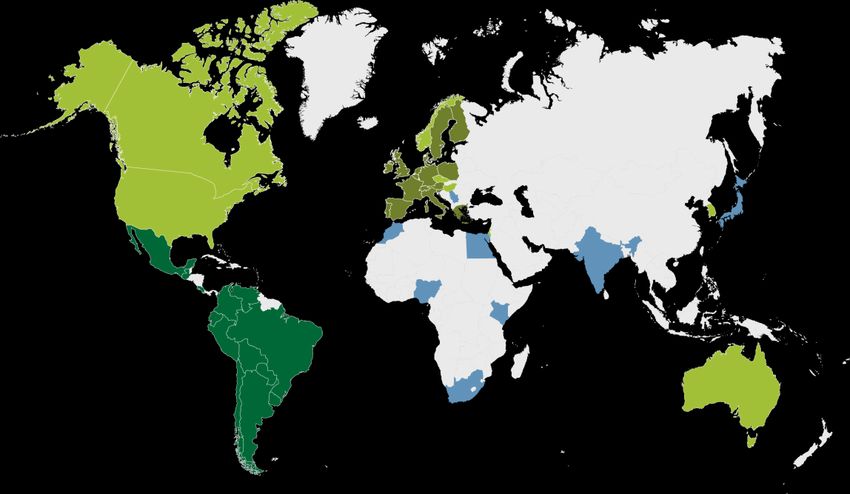
What is Vias institute?
•   General information
     • Located in Brussels, Belgium
     • About 130 staff, most of which are involved in road safety
     • Previously called “Belgian Road Safety Institute”
     • Different departments: research, consulting, training, communication, rehabilitation, fitness to
        drive and communication
     • Active member of international associations such as IRTAD, ETSC, UNSRC, FERSI, HUMANIST,
        CORTE, TPI, ICTCT, EuroRAP, CARE and CIECA

•   Experience with KPIs
      • Roadside measurements and generation of KPIs since 20 years (speeding, drunk driving,
        seatbelt use, child restraints, distraction, fatigue, drugs)
      • Attitude measurements since 20 years, leading to indicators based on self-reported behaviour
      • Initiator and coordinator of the ESRA initiative (involving 60 countries)
      • Expert advice to UN/WHO and European Commission

17 June 2020 / Slide 2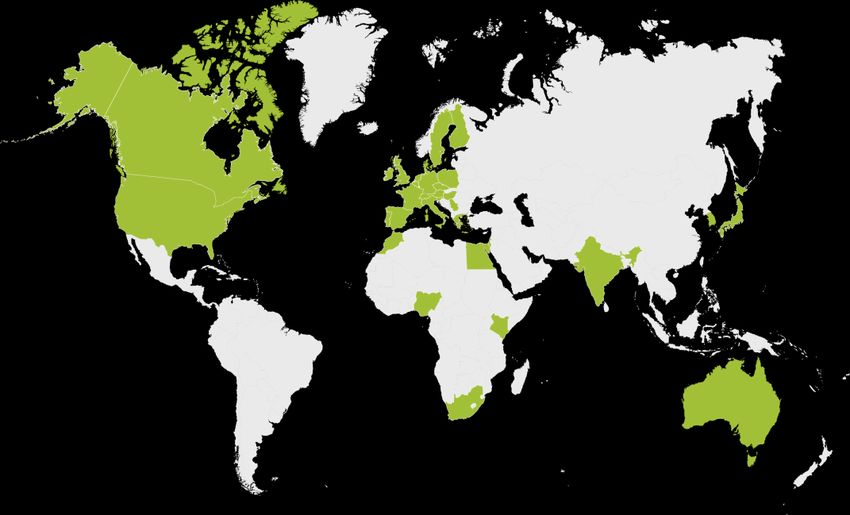
Who am I?
•   The past
      • Two degrees in Engineering from Ghent University (Belgium)
      • Professional career as a researcher, manager, trainer and advisor – nationally and
         internationally
      • Involved with design and use of performance indicators since over 20 years
      • Author of a book on performance and quality indicators (in Dutch: ‘Het Juiste Cijfer’)

•   The present
      • Research Director at Vias institute (research team of +/- 25 researchers)
      • Involved in several European projects such as SafetyCube, Skillful, ESRA, ..
      • President of the Humanist research network on human factors in transport
      • Author of the UNRSC Guidelines on global targets in road safety
      • Expert for the European Commission on design of KPIs
      • European proposal coordinator for the Baseline project for the EC
      • Project Director of ESRA

17 June 2020 / Slide 3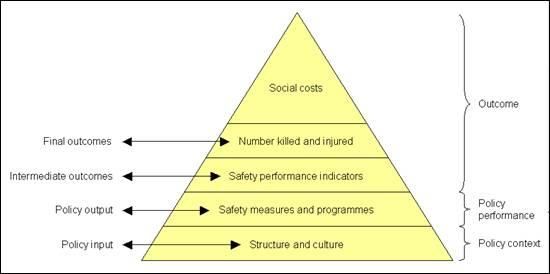
Terminology
•   Terminology
      • KPIs = “Key Performance Indicators” (used by EC)
      • Others use the term “safety performance indicators” (SPIs) or just ‘indicators’
      • A KPI or an SPI is a number that provides information about a particular process or situation

•   Use in road safety
      • In principle, KPIs can be designed and monitored at all levels of the road safety pyramid
                         Share of the cyclist population that is required to wear a helmet (e.g. all children)
                         Percentage of cyclists who are legally obliged to wear a helmet
                         Number of head injuries that could have been avoided by wearing a cyclist helmet

      •    In road safety the terms KPIs or SPIs in general refer to the contributory factors of road
           safety such as the behaviour of road users, vehicle safety and infrastructure
                         Percentage of vehicle drivers exceeding the speed limit on rural roads
                         Percentage of the vehicle fleet with a 5-star EuroNCAP rating
                         Percentage of the primary road network that is above X in the safety rating

17 June 2020 / Slide 4
The road safety pyramid

17 June 2020 / Slide 5
Concepts and terminology
•   Effective use of KPIs requires
      • to design relevant ‘yardsticks’ : in what dimensions will we measure the phenomenon
      • to use appropriate measurement methods
      • to set appropriate targets
      • to monitor the evolution of the KPI values towards the targets

•   Difference between national and international indicators
      • A national indicator measures the performance at national level
                         The percentage of car passengers not wearing a seatbelt in Serbia

      •    An international indicator can be
            • a weighted average of national indicators
                         The percentage of car passengers not wearing a seatbelt in the Western Balkans
             •   a meta-indicator
                         The number of countries in the Western Balkans where over 90% of car passengers
                         is wearing a seatbelt

17 June 2020 / Slide 6
Developments at the level of the United Nations 17 June 2020 / Slide 7
The United Nations Voluntary Global Targets
           Need for a global status on the contributory factors to road safety

 Push from United Nations, in particular the WHO (World Health Organisation)

              Strong support from UNRSC, the UN Road Safety Collaboration

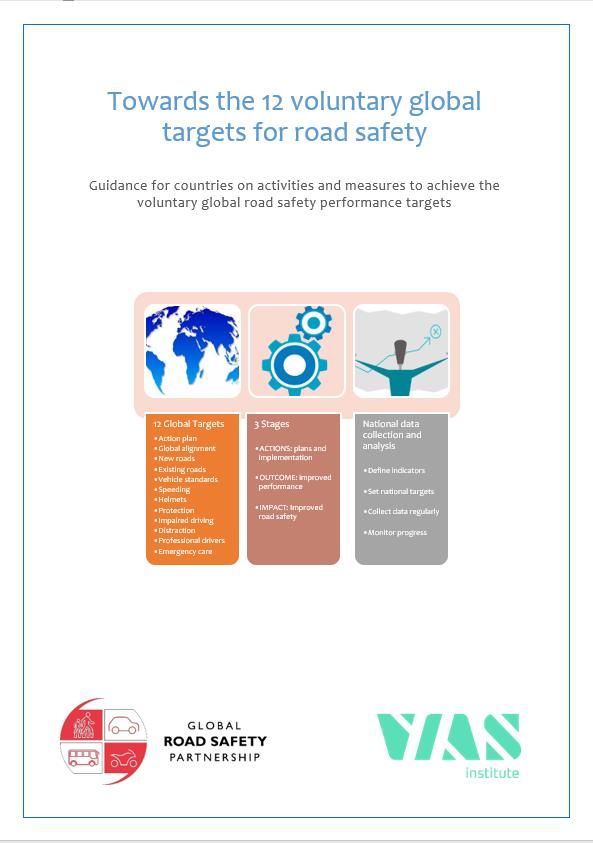
                         End result: 12 global targets, 32 associated indicators

                                 Need for guidance to Member States

17 June 2020 / Slide 8
Short name Full name of the target
By 2020, all countries establish a comprehensive multisectoral national road safety action plan with
1 National action plan
time-bound targets.
2 Global alignment By 2030, all countries accede to one or more of the core road safety-related UN legal instruments.
By 2030, all new roads achieve technical standards for all road users that take into account road
3 New roads
safety, or meet a three star rating or better.
By 2030, more than 75% of travel on existing roads is on roads that meet technical standards for all
4 Existing roads
road users that take into account road safety.
By 2030, 100% of new (defined as produced, sold or imported) and used vehicles meet high quality
Vehicle safety standards, such as the recommended priority UN Regulations, Global Technical Regulations,
5
standards or equivalent recognized national performance requirements.
6 Speeding
By 2030, halve the proportion of vehicles travelling over the posted speed limit and achieve a
reduction in speed-related injuries and fatalities. 12
7
Motorcycle
helmets
By 2030, increase the proportion of motorcycle riders correctly using standard helmets to close to
100%. targets
Vehicle occupant By 2030, increase the proportion of motor vehicle occupants using safety belts or standard child
8
protection restraint systems to close to 100%.
By 2030, halve the number of road traffic injuries and fatalities related to drivers using alcohol,
Driving under
9 and/or achieve a reduction in those related to other psychoactive substances.
the influence
By 2030, all countries have national laws to restrict or prohibit the use of mobile phones while
Distraction by
10 driving.
mobile phone
Professional By 2030, all countries to enact regulation for driving time and rest periods for professional drivers,
11
drivers and/or accede to international/regional regulation in this area.
By 2030, all countries establish and achieve national targets in order to minimize the time interval
Timely
12 between a road traffic crash and the provision of first professional emergency care.
emergency care
17 June 2020 / Slide 10Guidance document for countries 17 June 2020 / Slide 11
Underlying concept: 3 stage logic

        [ACTIONS]                                   [IMPACT]
       Implement              [OUTCOME]
                                                    Measurable
       appropriate             Improved          difference in the
      measures and        performance of the     final outcome of
      interventions       contributing factors      your actions

  (e.g. set appropriate
   speed limits; raise      (e.g. reduction in    (e.g. reduction in
 awareness about risks     mean travel speeds)   speed-related fatal
  of speeding; enforce                           and serious injury
   speed limits; build                                 crashes)
    roads with speed
   calming measures)

17 June 2020 / Slide 13
Example: DUI and distraction
Action Outcome Impact
• Policy and legislation on drink driving management (DUI limits, Drivers comply with Reduction in the number
enforcement, awareness) DUI alcohol limits of road injuries and
• Policy and legislation on drug impaired driving management Drivers do not use fatalities due to alcohol
psychoactive use by drivers
• Enforcement of DUI limits and other alcohol related legislation
Driving substances before Reduction of road injuries
under the • Enforcement of drug impaired driving laws
driving and fatalities due to
influence • Implementation of data systems on driving under the influence psychoactive substance
of alcohol and/or other psychoactive substances use by driver
• Regular public awareness activities on driving under influence of
alcohol and psychoactive substances
• Policy and legislation on the use of mobile phones while driving Drivers are not Reduction in the number
(phone mode, awareness, enforcement) distracted by mobile of road injuries and
Distraction • Enforcement of mobile phone legislation phones while driving fatalities caused by
by mobile distraction from mobile
• Implementation of data systems on distraction by phone
phone phone use
• Regular public awareness activities on the distracting effects of
mobile phone use
17 June 2020 / Slide 14How can this be measured?
Action Outcome Impact
Existence of legislation specifying legal maximum blood alcohol % of vehicle drivers complying Number of road injuries and
concentration (BAC) levels with alcohol DUI limits fatalities due to illegal alcohol
level of driver
Existence of legislation specifying legal maximum levels of psychoactive % of vehicle drivers declaring
substances to have drunk alcohol over the Number of road injuries and
legal limit before driving (in the fatalities due to psychoactive
Existence of legislation specifying enforcement of BAC limits and other
last 30 days) substance level of driver
DUI legislation
Driving % of vehicle drivers declaring Proportion of alcohol
Number of drivers checked for compliance with alcohol DUI limits
under the to have used psychoactive consumption as a
Number of drivers tested for pyschoactive substance use substances before driving (in contributing factor within the
influence the last 30 days) total number of road injuries
Existence of data systems on driving under the influence of alcohol
and/or other psychoactive substances and fatalities
Existence of data systems on road injuries and fatalities caused by Proportion of driver-
impaired driving psychoactive substance use
as a contributing factor within
Budget spent on public awareness activiites related to driving under the total number of road
influence of alcohol and psychoactive substances injuries and fatalities
Existence of legislation on the use of mobile phones while driving % of vehicle drivers that are Number of road injuries and
using their mobile phone fatalities due to distraction by
Existence of legislation on enforcement of mobile phone use while
driving (handheld) while driving mobile phone
% of vehicle drivers declaring Proportion of distraction by
Number of drivers checked for compliance with mobile phone legislation
Distraction to have used their mobile phone as contributing factor
by mobile Existence of data systems on distraction by phone phone for phoning while driving within the total number of
phone Existence of data systems on road injuries and fatalities caused by in the last 30 days road injuries and fatalities
distraction by mobile phone % of vehicle drivers declaring
Budget of public awareness activities on the distracting effects of mobile to have used their mobile
phone use phone for texting while driving
17 June 2020 / Slide 15
in last 30 daysDevelopments at EU level 17 June 2020 / Slide 17
The development of eight European KPIs

                          KPI = Key Performance      Definition of eight KPIs
                                 Indicator           • Long discussions with experts
                                                     • No consensus on
                           Equivalent to “Safety       infrastructure
                          Performance indicator”

                          No target values for the
                                 indicators             EU Member States
                                                       expected to provide
                           2020 or 2021 will be       data for 2020 or 2021
                             baseline value

17 June 2020 / Slide 18
List Indicator Definition
of
1 Speed Percentage of vehicles travelling within the speed limit
Percentage of vehicle occupants using the safety belt or child
EU 2 Safety belt
restraint system correctly
KPIs 3
Protective Percentage of riders of powered two wheelers and bicycles
equipment wearing a protective helmet
Percentage of drivers driving within the legal limit for blood
4 Alcohol
alcohol content (BAC)
5 Distraction Percentage of drivers NOT using a handheld mobile device
Percentage of new passenger cars with a EuroNCAP safety
6 Vehicle safety
rating equal or above a predefined threshold
Percentage of distance driven over roads with a safety rating
7 Infrastructure
above an agreed threshold
Time elapsed in minutes and seconds between the
emergency call following a collision resulting in personal
8 Post-crash care
injury and the arrival at the scene of the collision of the
emergency services
17 June 2020 / Slide 19Example of specifications for “distraction by mobile phone” 17 June 2020 / Slide 20
Call for tender going on

                             • 50% subsidy for the data collection
 Support for collection of
                             • Maximum 320 000 euro granted per Member
    data for the KPIs
                               State

                             • Only addressed to Member States (public
        Very special type      authorities)
           of tender         • Interested Member States have to form a
                               consortium

                             • Announcement at meetings of the EU High
  Belgium is coordinating      Level Group
                             • Vias institute will be the coordinator

17 June 2020 / Slide 21
Current status
Proposal Project coordination
• Call published 6th of March • Focus on administrative and
• Deadline for submissions: financial issues
10th of July • Methodological advice and
• About 20 Member States analysis
interested • Expert groups per KPI
• Member States need to • give methodological advice
decide on the KPIs to include to Member States
• Collection of administrative • interpret/analyse data
documents (tedious !) provided by Member States
17 June 2020 / Slide 22ESRA 17 June 2020 / Slide 23
ESRA initiative
International network
• Coordinator: Vias institute
• 60 countries – 6 continents
• Website: www.esranet.eu

Aim & objectives
• Provide scientific support for road safety policy at national and international levels
• Make internationally comparable data available on the current road safety situation in
    countries all over the world
•   Develop a series of reliable, cost-effective and comparable road safety performance
    indicators
•   Develop time series on road safety performance
ESRA2 methodology 48
Online panel survey – identical method & questionnaire
Coordinator: Vias institute
ESRA2: 48 countries
• Total sample N > 45 000
• ≥1000 road users per country
• Representative sample of the national adult population (18+)
Quota for gender*age (18-24, 25-34, 35-44, 45-54, 55-64, 65+), regional spread monitored (UN, 2019)
• 62 national language versions
• 28 questions (>300 variables)
• LOI = 20 min
Funding: partners’ own resources (or sponsors)
Calculation of weighted regional and national meansESRA2 main topics & themes
(over 300 variables collected)
support for road self-reported acceptability of
safety policy behaviour in safe and unsafe
measures traffic traffic behaviour
attitudes, towards subjective safety
involvement in
safe and unsafe and risk
road crashes
traffic behaviour perception
enforcement of vehicle 2 bonus questions
traffic laws automation (new) (new)
Contextual data from
▪ external databases
▪ expert surveyThank you for your attention!
For more information:
wouter.vandenberghe@vias.be
17 June 2020 / Slide 28You can also read


