INVESTIGATION OF MAGNESIUM ALLOYS MACHINABILITY
←
→
Page content transcription
If your browser does not render page correctly, please read the page content below
INTERNATIONAL JOURNAL OF ELECTRONICS; MECHANICAL and MECHATRONICS
                    ENGINEERING Vol.2 Num.3 pp.(261-268)

           INVESTIGATION OF MAGNESIUM ALLOYS
                     MACHINABILITY

              Berat Barıs BULDUM1, Aydın SIK2, Iskender OZKUL3

    1
     Mersin University, Advanced Technology Education, Research and Application Center Mersin
                                    barisbuldum@mersin.edu.tr
                2
                 Gazi University, Faculty of Industrial Arts Education, 33480 Ankara
                                         aydins@gazi.edu.tr
                        3
                         Aksaray University, Faculty of Engineering, Aksaray
                                      iskender@aksaray.edu.tr

Abstract: Magnesium is the lightest structural metal. Magnesium alloys have a hexagonal lattice structure,
which affects the fundamental properties of these alloys. Plastic deformation of the hexagonal lattice is more
complicated than in cubic latticed metals like aluminum, copper and steel. Magnesium alloy developments have
traditionally been driven by industry requirements for lightweight materials to operate under increasingly
demanding conditions. Magnesium alloys have always been attractive to designers due to their low density, only
two thirds that of aluminium and its alloys [1]. The element and its alloys take a big part of modern industry needs.
Especially nowadays magnesium alloys are used in automotive and mechanical (trains and wagons) manufacture,
because of its lightness and other features. Magnesium and magnesium alloys are the easiest of all metals to
machine, allowing machining operations at extremely high speed. All standard machining operations such as
turning, drilling, milling, are commonly performed on magnesium parts.

Keywords: Magnesium alloys, Lightweight metal, Machinability

1. INTRODUCTION                                                than aluminum and has bigger tensile strength
                                                               than steel. That is the reason for its necessary
Magnesium is the lightest of all design metals.                metallurgy using.
It’s light in weight just like a plastic material
and also tough like a metal. It’s high specific                Magnesium and magnesium alloys are
toughness and rigidity, good machinability,                    nonferrous metals with low density, good
castability and weldability with known                         ductility, moderate strength and good corrosion
methods are maked it attractive for industry.                  resistance. When used an alloying agent, they
The use of magnesium, which is the latest                      can improve the mechanical, fabrication, and
metal of our age, is increasing in parallel with               welding characteristics of aluminum. Some
the advances in industry and technology. Due                   magnesium and magnesium alloys are used as
to its lightness, durability and long life, its                lightweight materials in vehicles such as cars
usage is increasing in the industries. [2]                     and trucks [4]. These magnesium alloys have a
                                                               relatively low density and can help improve
During the last years the application of                       fuel efficiency.
magnesium and its alloys were grown many                       Magnesium and its alloys has been used for a
times in kinds of industry. This is due to                     wide variety of applications, namely from the
numerous characteristics of the metal regarded                 reason of their low density and high strength–
to herein, which permit its use both as a                      to–weight ratio.
structural element, and as a chemical addition                 Low inertia, which results from its low density,
to other metal alloys [3]. The metal is lighter                is advantageous in rapidly moving parts. The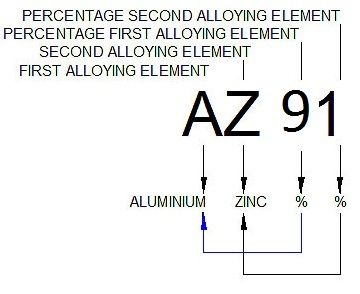
INVESTIGATION OF MAGNESIUM ALLOYS MACHINABILITY
                           Berat Barıs BULDUM, Aydın SIK, Iskender OZKUL

use of materials with low specific weight is an                   However magnesium shows high potential to
effective way of reducing the weight of                           substitute conventional materials. Magnesium
structures. Magnesium alloys are used                             alloys should be used in applications where
lightweight metallic materials as they offer a                    low mass and high specific properties are
number of different interesting mechanical and                    required. According to the combination of
thermal properties. [5-9]. Despite being the                      specific Young’s modulus and high specific
lightest structural metal, magnesium alloys                       strength magnesium alloys show similar or
exhibited poor machining at low temperatures                      even better values than aluminum and many
due to their hexagonal closed-packed crystal                      commercial steels (fig.2) [14].
structure, consequently required them to be                       It also has considerably low melting
processed at elevated temperature. Their highly                   temperature of 649 0C, slightly lower than that
affinity to oxygen lead them to an easy                           of aluminum. Magnesium alloy is one of the
oxidation [10].                                                   lightest materials and is attractive in many
Magnesium with its good strength to weight                        applications such as aircraft engines, airframes,
ratio is one of the candidate materials to realise                helicopter components, cars, light trucks,
light weight construction, but it has to compete                  automotive parts, computers and so much more
with various other materials [11]. So the                         [10]. Mg alloys, like other alloys with
different light metals have to compete not only                   hexagonal closed-packed (HCP) crystal
with each other, but also with polymers and                       structures [16], are much more workable at
steels. Materials selection is thereby                            elevated temperatures         than at room
determined by economical issues as much as                        temperature. The advantages of Mg, among
by materials and components characteristics or                    other, tougher than plastic, better damping
properties [12].                                                  capacity as compared to cast iron and
                                                                  aluminum, electromagnetic interference (EMI)
                                                                  shielding than that of plastic, heat dissipation
                                                                  much higher than that of plastics, absorb
                                                                  vibration energy effectively and recyclability
                                                                  [17].

Figure 1. Number of scientific articles, values
    are from Cambridge Scientific Abstracts
  database, were termed AZ91 or AZ31 in the
                                                                    Figure 2. Comparison of specific Young’s
                  abstract [13]
                                                                    modulus and strength of different materials
The uses of magnesium alloys have been
                                                                                      [14]
increasing recently so scientific studies are
becoming increasingly important. Given in
Figure 1, number of scientific articles which
have terms AZ91 or AZ31 in the abstract.

                             Table 1. Physical properties of Mg, Al, and Fe [15]
      Property                                                     Magnesium        Aluminium        Iron
      Crystal structure                                                  hcp             FCC            Bcc
      Density at 20°C (g/cm3)                                           1,74             2,70          7,86
      Coefficient of thermal expansion 20–100°C (×106/C)                25,2             23,6          11,7
      Elastic modulus [Young’s modulus of elasticity] (106 Mpa)        44,126           68,947        206,842
      Tensile strength (Mpa)                                       240 for (AZ91)   320 for (A380)      350
      Melting point (°C)                                                650              660           1536

                                                                                                                262
INVESTIGATION OF MAGNESIUM ALLOYS MACHINABILITY
Berat Barıs BULDUM, Aydın SIK, Iskender OZKUL
2. METALLURGY OF MAGNESIUM In the last decade, the AZ series cast
ALLOYS magnesium alloys, especially the AZ91 alloy,
Magnesium (Mg), its atomic number is 12, is have been extensively studied and used for
the lightest among the metals for structural some structural components of automobiles,
application. Magnesium is the lightest of all aircraft, and computers, because of high
the engineering metals, having a density of specific strength and good castability [16-19].
1.74 g/cm3. It is 35% lighter than aluminum Commercial cast magnesium alloys for
(2.7 g/cm3) and over four times lighter than automotive applications are AZ and AM series
steel (7.86 g/cm3). The physical properties of alloys (AZ91D, AM50A, and AM60B). These
Mg, Al and Fe are given in Table 1. alloys are excellent combination of mechanical
Magnesium is the eighth most common properties, corrosion resistance, and die-
element. It is produced through either the castability. However, they have poor creep
metallothermic reduction of magnesium oxide resistance above 125±C [20], which make
with silicon or the electrolysis of magnesium them inadequate for major powertrain
chloride melts from seawater. Each cubic applications.
meter of the sea water contains approximately 2.1. Magnesium – Aluminum
1.3 kg (0.3%) magnesium [15]. Aluminum is one of the most important
Magnesium alloys names are often given by alloying elements in magnesium. Several
two letters following by two numbers. Letters systems contain Al up to 10 mass %, e.g., AZ,
tells main alloying elements (A = aluminum Z AE, AM and AS. Figure 4 shows the Mg-Al
Table 3. Some magnesium cast and wrought alloys typical composition (wt%)
Alloy From* Al Zn Mn Si RE Zr Th
AM60A CD 6 >0.13
AZ31B WB+WS 3 1 0.3
AS41A CD 4 0.3 1
AZ80A WB 8 0.5 0.2
AZ91B CD 9 0.7 >0.13
AZ91D** CD 9 0.7 0.2
EZ33A CS 3 3 0.8
HK31A WS 0.7 3
*CS – sand casting; CP – permanent mold casting; CD – die casting; WS – sheet or plate; WB – bar, rod, shape, tube or wire
** High-purity alloys
= zinc, M = manganese, S = silicon). Numbers system. Al is one of the few metals that
tells nominal compositions of main alloying dissolve easily in magnesium. Above the
elements respectively. Marking AZ91 mean solubility limit Mg17Al12, a brittle intermetallic,
magnesium alloy where is roughly 9 weight precipitates out. The solubility limit of
percent aluminum and 1 weight percent zinc. aluminum at the eutectic temperature is 11.5
Shown in figure 3. Exact composition should at.% (12 mass %) and falls to about 1% at
be confirmed from the standards. room temperature. Consequently, the Mg17Al12
plays a dominant role
Table 2. Convention for alloy elements
designation
Letter Alloying Elements
A Aluminum
C Copper
E Rare earth metal
H Thorium
K Zirconium
L Lithium
M Manganese
Q Silver
S Silicon
Y Yttrium
Figure 3. Marking magnesium alloys Z Zinc
263INVESTIGATION OF MAGNESIUM ALLOYS MACHINABILITY
Berat Barıs BULDUM, Aydın SIK, Iskender OZKUL
in determining the properties (Fig. 5). The and ductility [23,24–27]. Mechanical
commercial alloys based on Mg-Al involve properties of magnesium are listed in Table 3.
further alloying additions of zinc, e.g., AZ91, Its dynamic modulus of elasticity is 45 GPa
AZ81 and AZ63 [21]. and its static modulus of elasticity is 43 GPa.
3. MECHANICAL PROPERTIES AND
APPLICATIONS
Magnesium-base products are available in a
wide range of mechanical properties. As with
metal manufactures in general, the tensile and
other properties of the magnesium materials
depend upon the composition, condition
(whether cast or wrought), details of
fabrication, heat treatment, and other factors.
For the same composition, some mechanical
properties vary considerably with the type of
product [28]. Accordingly, it is important to
define the kind of material as well as the alloy
composition. Also, the direction in which the
test specimen is taken in relation to the
Figure 4. Phase diagram of Mg-Al binary direction of fabrication and the thickness of the
alloy [21] product are factors which influence strength
and other properties.
In engineering design, the more important
mechanical properties which ordinarily may
come under consideration may include the
following:
Tensile yield and ultimate strength,
Elongation,
Shear strength,
Compressive yield strength,
Hardness,
Impact resistance, and
Endurance limit.
While magnesium sheet is considered a growth
product for the 21st century - with its light-
weight and high-strength qualities - the uptake
of magnesium sheet has been hindered by
Figure 5. Magnesium – rich section of Mg-Al expensive and difficult conventional
system [21] production processes. Magnesium sheet has a
Besides low density, magnesium based variety of applications where light weight and
materials exhibit good specific mechanical quality finish is at a premium like automotive
properties, machinability, castability, industry and personal electronics (cameras,
weldability, thermal stability, damping and MD players) [29]. The latest method to process
resistance to electromagnetic radiation [23]. magnesium alloy is Thixomolding. It is based
However, as magnesium has low ductility, on material flow in a semi solid state to
modulus of elasticity and limited strength and achieve thin wall, high density, and complex
creep resistance at elevated temperature, it shaped components. The material is kept at
cannot be extensively applied in structural room temperature and is heated in a controlled
applications [22–24]. Therefore, magnesium is environment before injection into a mold.
rarely used in its pure form. Instead, it is Thixomolded components can be found in the
usually alloyed with other elements like automotive, electronics, power tool, computer
aluminum, zinc, silver and zirconium to and recreational industries. Parts include
improve its properties like corrosion resistance television housings, PDA covers, eyeglass
264INVESTIGATION OF MAGNESIUM ALLOYS MACHINABILITY
Berat Barıs BULDUM, Aydın SIK, Iskender OZKUL
Table 3. Mechanical properties of magnesium at 20 0C [28] (* in 50mm ** with 500kg load, 10mm
diameter ball)
Tensile Tensile yield Strength Compressing yield Elongatio Brinell
Strength, MPa (0,2%), MPa Strength (0,2%), MPa n hardness **
*%
Sand cast, 90 21 21 2-6 30
thickness 13mm
Extrusion, 165-205 69-105 43-55 5-8 35
thickness 13mm
Hard rolled sheet 180-220 115-140 105-115 2-10 45-47
Annealed 160-195 90-105 69-83 3-15 40-41
frames, steering wheels and hand drill Many of interior magnesium components
components[30]. include instrument panel, seat frames, steering
Today high-grade car wheels of magnesium wheel and others.The most popular world
alloy we called 'mag wheels'. Due to low production involves roof panels, hood, rear
weight, good mechanical and electrical deck lid, wheels, oil pan, starter/alternator and
properties, magnesium is widely used for so on. One really needed magnesium area is
manufacturing of mobile phones, laptop automotive industry and technologies [31].
computers, cameras, and other electronic Fuel saving advantages of magnesium used in
components [36]. So, electronic devices of the vehicles gives it a large popularity. The data
metal are very important, too. Also the use of indicate that the overall weight savings could
magnesium alloys in aerospace is increasing, be of around 10%. In turn, this weight saving
mostly driven by the increasing importance of would lead to a fuel saving of the order of 20-
fuel economy and the need to reduce weight. 30% without drastic changes in design.
Advantages of magnesium are something Passenger car produces on average around 150
necessary for the modern industry and g/km spend gasses, but by magnesium
metallurgy and they become from special technology that uses up energy is around 100-
magnesium characteristics. For example the 120 g/km. Considering the large number of
automotive industry has crossed the doorstep vehicles around, we can say that weight saving
from using magnesium in a protected could help to keep cleaner the atmosphere and
environment, predominantly interior to hold the global warming better. That would
applications to an unprotected environment. be done because of weight saving lead to a
[29]. Today you can see growing popularity of significant reduction of carbon dioxide
magnesium die casting, particularly in the released to the air [30-33].
automotive field.
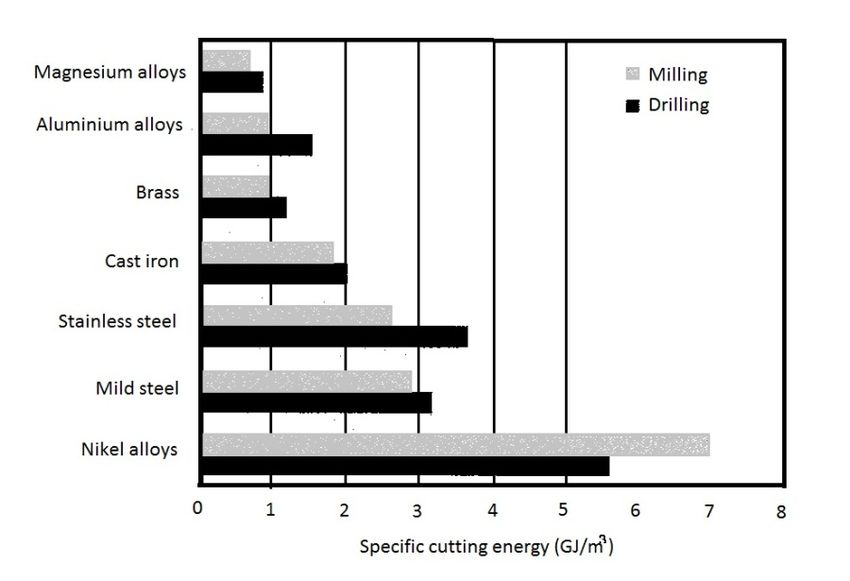
Figure 6. Values of specific power consumption (net), Esp, for a variety of metals as determine for
drilling and milling [34]
265INVESTIGATION OF MAGNESIUM ALLOYS MACHINABILITY
Berat Barıs BULDUM, Aydın SIK, Iskender OZKUL
4. MACHINABILITY increase chip clearance. This leads to higher
Magnesium has very good machining abilities speeds, decreased distortion, lower power
like sawing, punching, drilling, milling, consumption, and smoother finish. Tapping are
turning compared to other metals. The specific adequate if production quantities are small and
cutting power is low and the surface is if high-quality tapping is not required. When a
excellent and the chips are short. Magnesium large number of parts or close tolerances are
and magnesium alloys are the easiest of all involved, standard taps must be modified, or
metals to machine, allowing machining taps designed especially for magnesium must
operations at extremely high speed. be used. Sawing Magnesium can be cut with
Magnesium is the fastest machining metal and hand or power saws. Because only low cutting
it has a high thermal conductivity. Advantages pressure is required, large cuts can be taken.
of it are, long tool life, the tool stays sharp for Hence, the saws must have large chip spaces
long time, low power consumption, about 55% for a free cutting action. Too small a chip
lower than for aluminum alloys, reduction of space rapidly loads the teeth and causes the
machining time because of the high speeds, saw to ride over the work. Grinding is seldom
short chips an excellent surface.The cutting necessary to grind magnesium, because
energy for machining of magnesium is lower machining produces good finishes. Surface
than for other materials as illustrated by figure roughness measurements of 0.075 to 0.125 μm
6. The lower power requirements for have been produced on magnesium machined
machining magnesium alloys permit the use of with diamond-tip tools. Counterboring
deeper cuts and higher feed rates, and thus magnesium should have a narrow margin of
permit fast and efficient machining, as approximately 0.38 mm with adequate relief
compared to other metals. Magnesium and cleaning angles, allow adequate chip space
machining is normally done without any and eliminate rubbing. Die threading for
coolant. If when necessary to use coolant, a magnesium should have approximately the
light mineral oil will suffice. Never use water same cutting angles as taps. A cutting edge
based coolant because of the risk of any relief of 0.10 mm is generally recommended,
reaction with the chips during storage. High- although there are applications, which that
speed tools or carbide tipped tools are require extremely good surface finishes and
preferred for the machining of magnesium. It is high accuracy.
important to keep the cutting tool sharp to
avoid from much heat [35]. The experiences 5. CONCLUSION AND SUMMARYUse
with diamond tools are excellent but the costs a lower cutting speed when compared to
are relatively high. It is necessary to store cutting aluminum. The workpiece temperature
machined products under dry conditions and goes up with an increase in cutting speed and
when there is a chance of condensation, extra also smaller undeformed chip thickness. In
protection is needed. Machines should be kept other words, the slower the machining speed
clean and the turnings should be stored in steel and the larger the chips, the lower the
bins [37]. Turning, a typical lathe tool has a workpiece temperature will be. Due to this
large relief angle (100 to 150). A larger back reason, some companies have modified
rake often causes feeding of the tool into the woodworking tools for machining magnesium
work. In some plants, 00 back rake is used to so as to achieve larger chips and lower fire
break chips and prevent curling. This practice hazard. The cutting tools used should have
is seldom recommended, as it increases relief and clearance angles that are sufficiently
roughness of the machined surface and large to prevent unnecessary cutting tool-
increases power consumption. The side rake workpiece friction, thus lowering the heat
may vary from 00 to about 100. Drilling generated during the cutting process.
Magnesium alloys can be easily drilled with Experiments were carried out using
twist drills made of any high-speed steel. thermocouples mounted into the workpiece to
Milling cutter for magnesium should have monitor the workpiece temperature during
fewer teeth than conventional cutters used for machine. Despite the fire hazards, as
steel or other metals - preferably only one-half competition from overseas low-cost production
to one-third as many. The larger chip space bases intensifies, and magnesium becomes
and the heavier cut resulting from the smaller increasingly used in electronics products, most
number of teeth reduce frictional heat and
266INVESTIGATION OF MAGNESIUM ALLOYS MACHINABILITY
Berat Barıs BULDUM, Aydın SIK, Iskender OZKUL
machining job shops could very well find 3, pp. 201-212. 1998.
machining of magnesium a niche worth [13]http://en.wikipedia.org/wiki/File:Scientific_artic
pursuing. les_AZ91_AZ31.png 08.03.2012.
[14]. C. Blawert, N. Hort and K.U. Kainer
REFERENCES “Automotive Applications of Magnesium And Its
[1] L. Duffy, “Magnesium Alloys”, Magnesium Alloys”, Trans. Indian Inst. Met. Vol.57, No. 4, pp.
Alloys Magnesium Alloys Materials World, Vol 4. 397-408, August 2004.
No.3,pp. 127-30, 1996. [15] M. K. Kulekci, “Magnesium and its alloys
[2] A. Şık, “Sürtünme karıştırma kaynağı ile applications in automotive industry”, Int J Adv
birleştirilen magnezyum levhaların mekanik Manuf Technol 39:851–865, 2008.
özelliklerinin incelenmesi”, SAÜFBE, Vol 14., No [16] P. Cavaliere and P. P. De Marco, “Materials
2., 134-140, 2010. Characterization 58”, The Japan Institute of Metals,
[3] M. Mabuchi, T. Asahina, H. Iwasaki, and K. 226–232, 2007.
Higashi, “Muter. Sd. Technol”, vol. 13, pp. 825-32, [17] B. L. Mordike, T. Ebert, “Magnesium –
1997 applications – potential”, Journal of Material
[4] M. Mabuchi, M. Nakamura, K. Ameyama, H. Science Engineering A 302, pp. 37-45, 2001
Iwasaki, and K. Higashi, “Mater. Sci. Forum”, vols. [18] R.W. Cahn, C.X. Shi and J. Ke, “Structure and
304-306, pp. 67-72, 1999. Properties of Nonferrous Alloys” Beijing, Science
[5] M. Avedesian, H. Baker, “ASM Specialty Press, Beijing, 1999.
Handbook- Magnesium and Magnesium Alloys”, [19] H. Watanabe, H. Tsutsui*, T. Mukai, K.
ASM International, Ishikawa, Y. Okanda, M. Kohzu, K. Higashi,
USA, 3-84, 1999. “Grain Size Control of Commercial Wrought Mg-
[6] J.R Davis, “Metals Handbook, Desk. Edition, Al-Zn Alloys Utilizing Dynamic Recrystallization”
Second Edition”, ASM International, The Materials Materials Transactions, The Japan Institute of
Information Society, USA, 560- 564, 1998. Metals Vol.42 No.7 pp.1200-1205, 2001
[7] L. Ptáćek, “Magnesium alloys- present state of [20] C. Suman, “SAE Technical Paper No.910416”,
development and exploitation”, Proceedings of Warrendale, PA, Society of Automotive Engineers,
conference METAL 2001, Ostrava - Hradec n. 1991.
Moravicí, 1-12, 2001. [21] E. Horst, L. Mordike, B. Friedrich,
[8] K.A. Dahle, Z.C. Lee, M.D. Nave, P.L. Schaffer, “Magnesium technology: metallurgy, design data,
D.H. Johnson, “Development of the as-cast applications” Springer Science & Business, 84-86,
microstructure in magnesium-aluminium alloys”, 2002.
Journal of Light Metals 1 , 61-73, 2001. [22] F. Moll, K.U. Kainer, in: K.U. Kainer (Ed.),
[9] L. Čížek a,, M. Greger , L.A. Dobrzański , I. “Magnesium Alloys and Technology”, Wiley-VCH,
Juřička , R. Kocich , L. Pawlica , T. Tański, Weinheim, pp. 197–217, 2003.
“Mechanical properties of magnesium alloy AZ91 at [23] M. Paramsothy, Q. B. Nguyen, K. S. Tun, J.
elevated temperatures”, Journal of Achievements in Chan, R. Kwok, J. V. M. Kuma, M. Gupta, “The
Materials and Manufacturing Engineering, Volume ability of cast composite technology to enhance
18, Issue 1-2, September–October, 2006. ductility of wrought magnesium and alloys”,Archive
[10] H. Mohd Ruzi, M. Norhamidi, S. Abu Bakar, International Journal of Materials Research - Issue
R. J. Khairur, M.N. Nor Hafiez, A. Sufizar, I.I 2011/01
Mohd Halim, Murtadhahadi, “A Review of [24] A. Martin and J. Llorca, “Mechanical
Workability of Wrought Magnesıum Alloys, behaviour and failure mechanisms of a binary Mg-
Advanced Manufacturing”, Research Group’09 6%Zn alloy reinforced with SiC particulates,”
Seminar 3, 2009 . Mater. Sci. Eng. A, 201, 77-87, 1995.
[11] H. WESTENGEN, “Magnesium alloys for [25] W. Westengen, “Magnesium: Alloying, in:
structural applications; recent advances”, Colloque K.H.J. Buschow, R.W. Cahn, M.C. Flemings, B.
C7 suppliment au Journal de Physique 111, Volume Ilschner, E.J. Kramer, S. Mahajan, P. Veyssiere”,
3, 1993. Encyclopedia of Materials: Science and
[12] D. Eliezer, E. Aghion and F. H. (Sam) Froes, Technology, Elsevier, pp. 4739–4743, 2008.
“Advanced Performance Materials,” Magnesium [26] S.F. Hassan, K.F. Ho, M. Gupta, “Increasing
Science, Technology and Applications, Vol. 5, No. elastic modulus, strength and CTE of AZ91 by
reinforcing pure magnesium with elemental
267INVESTIGATION OF MAGNESIUM ALLOYS MACHINABILITY
Berat Barıs BULDUM, Aydın SIK, Iskender OZKUL
copper”, Mater Lett, 58, pp. 2143–2146, 2004
[27] K. Hirai, H. Somekawa, Y. Takigawa, K.
Higashi, “Mater. Sci. Eng. A 403”, 276–280, 2005.
[28]http://www.magnesium.com/w3/databank/index
.php?mgw=153 08.03.2012
[29] M. Mabuchi, K. Ameyama, H. Iwasaki, and K.
Higashi: “Acta Mater”, vol. 47 (7), pp. 2047-57,
1999.
[30] H. Watanabe, T. Mukai,
K.Higashi,“Microstructural factors affecting
superplastic properties in magnesium-based
composites” Metallurgical and Materials
Transactions A Volume 32, Number 4, 923-929,
2007
[31] Y. N. Wang and J. C. Huang, “Transition of
dominant diffusion process during superplastic
deformation in AZ61 magnesium alloys”,
Metallurgical and Materials Transactions A Volume
35, Number 2, 555-562, 2007
[32] H. Watanabe, H. Tsutsui, T. Mukai, K.
Ishikawa, Y. Okanda, M. Kohzu, K. Higashi
,“Superplastic Behavior in Commercial Wrought
Magnesium Alloys”
Magnesium Alloys 2000, 350-3, 171-176 ,2000
[33 ] J.K. Solberg, J. Torklep, O. Bauger, and H.
Gjcstland: Mater. Sei. Eng. A, 1991, vol. 134A, pp.
201-07
[34] W.F., Smith, “Society of Manufacturing
Engineers, forces at the cutting tool, tooling and
manufacturing engineers handbook” McGraw-Hill,
vol. , machining, pp 1-19, 2004.
[35] W.F., Smith, “Structure and properties of
engineering alloys, second edition”, McGraw-Hill,
ISBN 0-70-112829-8, 1993.
[36] I.J., Polmear, “Light alloys: metallurgy of the
light metals”, Third edition, Arnold, London, ISBN
0-340-63207, 1995.
[37] K.U. Kainer, “Magnesium alloys and
technology”, Dmg, Wiley-Vch, ISBN 3-527-30256-
5, 2003.
[38] N. Tomac, K. Tønnesen, F. O. Rasch, “Safe
Machining of Magnesium”, Advanced
manufacturing systems and technology: 4. Dec.
1997.
[39] A. Spicer, J. Kosi, C. Bullups and J. Pajek,
“Machining Magnesium With Water Base
Coolants”, SAE Paper 910415, 1991.
[40] M. Videm, R.S. Hansen, N. Tomac and K.
Tønnesen, “Metallurgical Considerations for
Machining Magnesium Alloys”, SAE Technical
Paper 940409, 1994
[41] Machining Magnesium, Magnesium electron
datasheet 254, 2011.
268You can also read


