Environmental Product Declaration - XPS Insulation Board, 60 psi Atlanta, Georgia - SCS Global Services
←
→
Page content transcription
If your browser does not render page correctly, please read the page content below

Environmental Product Declaration
XPS Insulation Board, 60 psi
Atlanta, Georgia

                  Kingspan Insulation LLC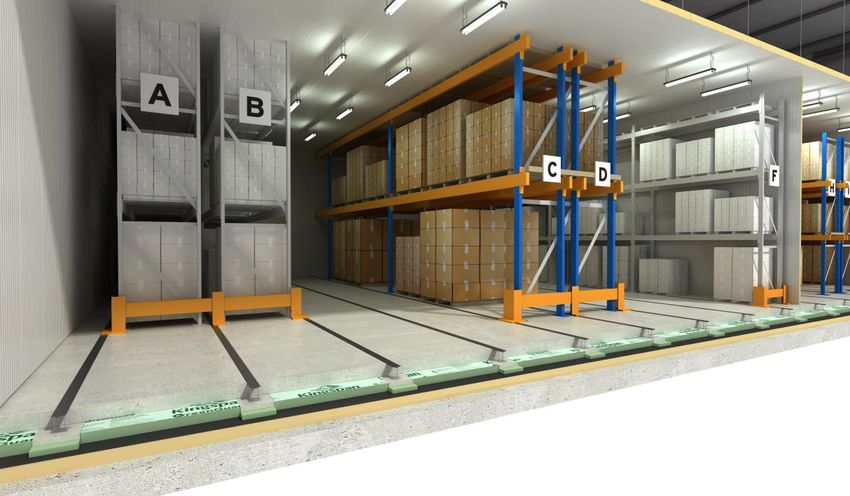
Kingspan Insulation|
           Environmental Product Declaration
                                                    XPS Insulation Boards, 60 PSI

            Declaration Owner
            Kingspan Insulation LLC
            2100 Riveredge Parkway, Suite 175
            Atlanta, Georgia, USA 30328
            1-800-241-4402 | www.kingspaninsulation.us | info@kingspan.us

            Products
            XPS Insulation Board, 60 psi
                 o    Standard
                 o    Low-GWP

            Functional Unit
            1 m² of insulation with a thickness required for an average thermal
            resistance RSI = 1 m²K/W maintained for 75 years

            EPD Number and Period of Validity
            SCS-EPD-07177
            EPD Valid July 1, 2021 through June 30, 2026

            Product Category Rule

            PCR Guidance for Building-Related Products and Services Part A: Life
            Cycle Assessment Calculation Rules and Report Requirements.
            Version 3.2. Sept. 2018

            PCR Guidance for Building-Related Products and Services Part B:
            Building Envelope Thermal Insulation EPD Requirements. Version 2.0.
            April 2018

            Program Operator
            SCS Global Services
            2000 Powell Street, Ste. 600, Emeryville, CA 94608
            +1.510.452.8000 | www.SCSglobalServices.com

© 2021 SCSglobalServices.com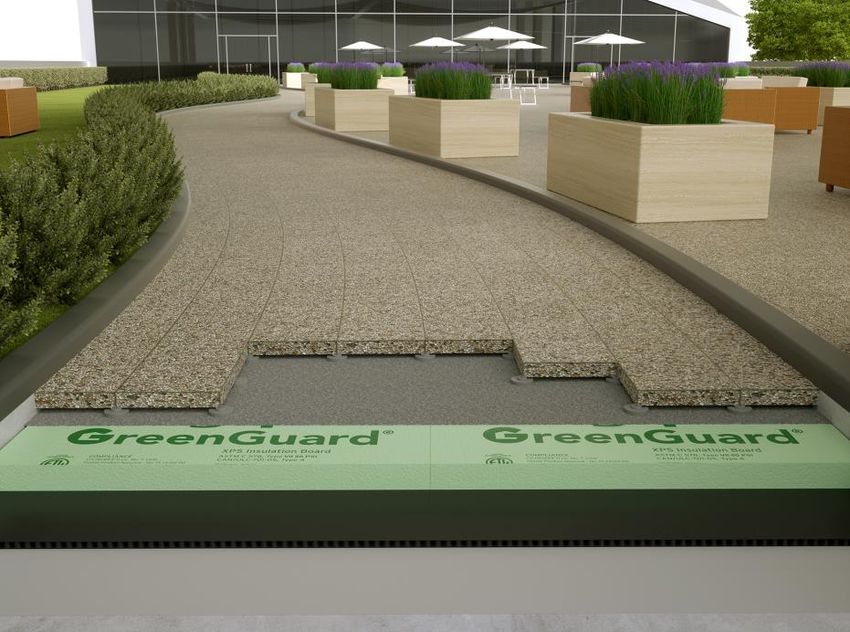
Kingspan Insulation|
    Environmental Product Declaration
                                                        XPS Insulation Boards, 60 PSI

                 Declaration Owner:       Kingspan Insulation LLC
                            Address:      2100 Riveredge Parkway, Suite 175 Atlanta, Georgia, USA 30328
               Declaration Number:        SCS-EPD-07177
         Declaration Validity Period:     July 1, 2021 through July 30, 2026
                            Product:      XPS Insulation boards, 60 psi
                 Program Operator:        SCS Global Services
              Declaration URL Link:       https://www.scsglobalservices.com/certified-green-products-guide
                   LCA Practitioner:      Gerard Mansell, PhD., SCS Global Services
                      LCA Software:       OpenLCA 1.10
      Independent critical review of
     the LCA and data, according to                                             ☐ internal                                         ☒ external
          ISO 14044 and ISO 14071

                       LCA Reviewer:
                                                                                 Thomas Gloria, Ph.D., Industrial Ecology Consultants
                              Part A      PCR Guidance for Building-Related Products and Services Part A: Life Cycle Assessment Calculation
             Product Category Rule:       Rules and Report Requirements. Version 3.2. UL Environment. Sept. 2018
          PCR Review conducted by:        Lindita Bushi, PhD (Chair); Hugues Imbeault-Tétreault, ing., M.Sc.A.; Jack Geibig
                              Part B      PCR Guidance for Building-Related Products and Services Part B: Building Envelope Thermal
             Product Category Rule:       Insulation EPD Requirements. Version 2.0. April 2018
      Part B PCR Review conducted         Thomas Gloria (chair), Industrial Ecology Consultants; Christoph Koffler,
                                 by:      thinkstep; Andre Desjarlais,Oak Ridge National Laboratory
        Independent verification of
         the declaration and data,
                                                                                ☐ internal                                        ☒ external
      according to ISO 14025 and the
                                PCR

                         EPD Verifier:

                                                                                 Thomas Gloria, Ph.D., Industrial Ecology Consultants

                                          1. About Kingspan ...................................................................................................................... 2
                                          2. Product..................................................................................................................................... 2
                                          3. LCA: Calculation Rules........................................................................................................... 5
                                          4. LCA: Scenarios and Additional Technical Information ................................................11
              Declaration Contents:
                                          5. LCA: Results ...........................................................................................................................13
                                          6. LCA: Interpretation ..............................................................................................................17
                                          7. Additional Environmental Information............................................................................18
                                          8. References.............................................................................................................................19

      Disclaimers: This EPD conforms to ISO 14025, 14040, 14044, and 21930.

      Scope of Results Reported: The PCR requirements limit the scope of the LCA metrics such that the results exclude environmental and social
      performance benchmarks and thresholds, and exclude impacts from the depletion of natural resources, land use ecological impacts, ocean
      impacts related to greenhouse gas emissions, risks from hazardous wastes and impacts linked to hazardous chemical emissions.

      Accuracy of Results: Due to PCR constraints, this EPD provides estimations of potential impacts that are inherently limited in terms of
      accuracy.

      Comparability: The PCR this EPD was based on was not written to support comparative assertions. EPDs based on different PCRs, or
      different calculation models, may not be comparable. When attempting to compare EPDs or life cycle impacts of products from different
      companies, the user should be aware of the uncertainty in the final results, due to and not limited to, the practitioner’s assumptions, the
      source of the data used in the study, and the specifics of the product modeled.

      In accordance with ISO 21930:2017, EPDs are comparable only if they comply with the core PCR, use the same sub-category PCR where
      applicable, include all relevant information modules and are based on equivalent scenarios with respect to the context of construction works.

………..…………………………………………………………………………………………..…………………………………………………………………………………………………….……………
1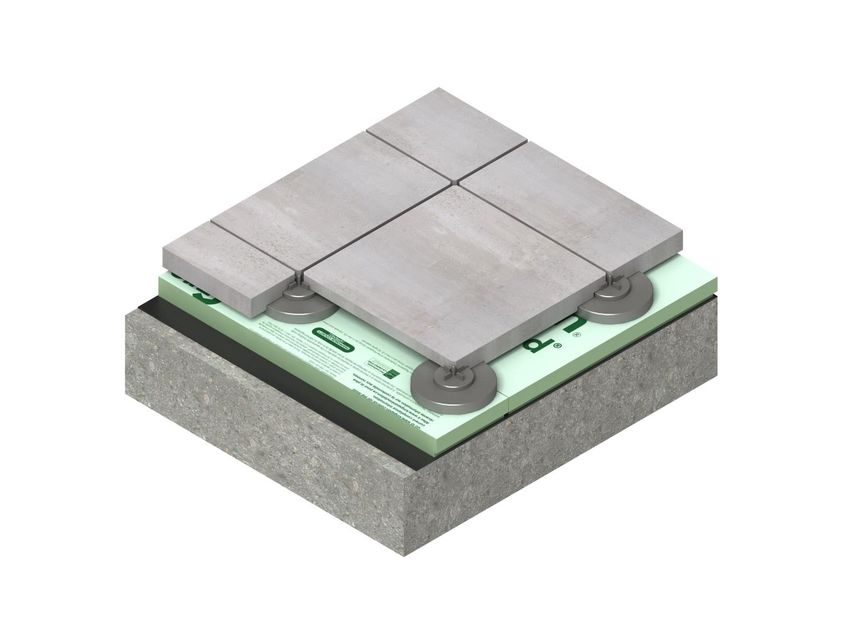
Kingspan Insulation |
                                                    Environmental Product Declaration
                                                                                                       XPS Insulation Boards, 60 PSI

1. About Kingspan
Kingspan Insulation LLC, headquartered in Atlanta, GA, is a leading manufacturer offering high-performance insulation,
building wraps, and pre-insulated HVAC ductwork.

Kingspan XPS insulation and housewrap products are standards in the industry, while newer product lines are among the
most thermally efficient and technologically advanced insulation material available.

Kingspan Insulation LLC products are suitable for both new build and renovation in a variety of applications within both
residential and non-residential buildings.

2. Product
The products include extruded polystyrene insulation boards manufactured at the company’s production facility in
Winchester, VA. The products are constructed from polystyrene plastics and various blowing agents sourced from various
local and regional suppliers. A product with a standard blowing agent and a low-GWP blowing agent are included.

            Product                                                          Product Details

                                  Kingspan GreenGuard® Type VII XPS Insulation Board comprises closed–cell extruded polystyrene
                                  (XPS) with a minimum compressive strength of 60 psi. It has high water resistance and R–value of
                                  5.0 per inch of thickness. It is available in a square edge board or a drainage channel board.
                                  Excellent for low–temperature freezer floors, cold storage facility floors, ice rinks, parking decks.
     GreenGuard® Type VII
      XPS Insulation Board        Kingspan GreenGuard® GG60-LG XPS Insulation Board comprises closed–cell extruded
                                  polystyrene (XPS) with a minimum compressive strength of 60 psi. It has high water resistance and
                                  R–value of 5.0 per inch of thickness. It has a formulation resulting in a GWP of less than 50. It is
                                  available in a square edge board or a drainage channel board. Excellent for high load floor and
                                  roofing systems, ice rinks, roadways as well as plaza and parking decks.

2.2 Application

The Kingspan XPS insulation board products provide the primary function of thermal insulation intended for various
commercial and residential building applications.

2.3 Technical Data

Technical specifications and product performance testing results for the products are summarized in Table 1. Detailed
product characteristics can be found at the manufacturer’s website (www.kingspaninsulation.us).

 ………………………………………………………………………………………………..…………………………………………………………………………………………………………………
  © 2021 SCSglobalServices.com                                                                                                            2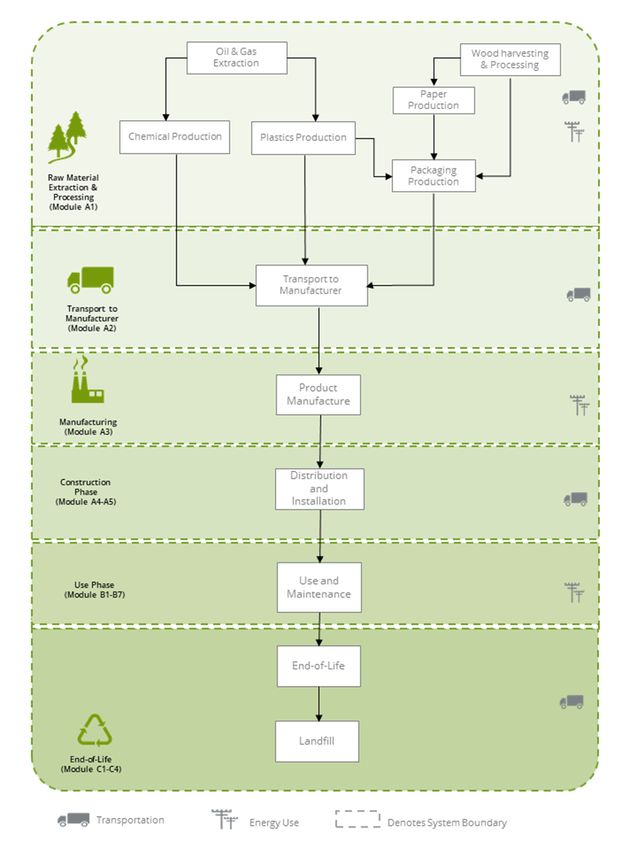
Kingspan Insulation|
    Environmental Product Declaration
                                                   XPS Insulation Boards, 60 PSI

Table 1. Technical specifications for the XPS 60 psi Kingspan insulation board products.
                           Property                            Test Method                                    Result
                                                                  General
                                                                                                        1½, 2, 3 (in)
    Nominal Thickness
                                                                                                 38.1, 50.8, 76.2, 101 (mm)
                                                                                                          2 ft , 4 ft
    Nominal Board Width
                                                                                                    00.610 m, 0.711 m
                                                                                                             8 ft
    Nominal Board Length
                                                                                                           2.44 m
    Edge Profile                                                                                     Square or Shiplap
    Property Type                                               ASTM C578                                     VII
                                                                                                              40 psi
    Compressive Strength, Min. (@10% deflection)               ASTM D1621
                                                                                                             276 kPa
    Water Absorption, Max. (% by volume)                        ASTM C272                                       0.1
                                                                 ASTM E96
    Water Vapor Permeance (perm)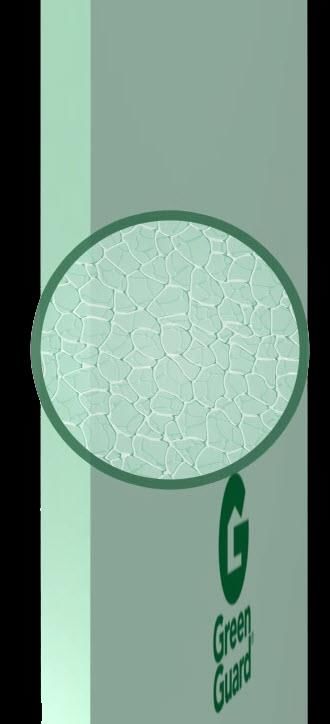
Kingspan Insulation |
                                                        Environmental Product Declaration
                                                                                                      XPS Insulation Boards, 60 PSI

Table 3. Material content for packaging for Kingspan XPS insulation board products , per functional unit.
                                                   Standard - PSI 60                            low GWP - PSI 60
              Material
                                             kg/m2                     %                   kg/m2                   %
 Corrugated                                 6.10x10⁻³                  72%               6.10x10⁻³                 72%
 Plastic                                    2.40x10⁻³                  28%               2.40x10⁻³                 28%
 Total Packaging                            8.50x10⁻³               100%                 8.50x10⁻³               100%

2.5 Manufacture

The products include extruded polystyrene insulation boards manufactured at the company’s production facility in
Winchester, VA. The products are constructed from polystyrene plastics and various blowing agents sourced from various
local and regional suppliers

Resource use at the production facility is allocated to the product based on product mass as a fraction of facility
production (mass-based allocation).

2.6 Environment and Health during Manufacture

No environmental or health impacts are expected during the manufacture of the product.

2.7 Product Processing/Installation

Typical installation is accomplished using hand tools.

2.8 Packaging

The Kingspan products are packaged for shipment using corrugated board, plastic wrap and wood pallets.

2.9 Condition of Use

No special conditions of use are noted.

2.10 Environment and Health during use

No environmental or health impacts are expected due to normal use of the products.

2.11 Reference Service Life

Once installed, the products are expected to last for the lifetime of the building. For the present assessment, a reference
service lifetime (RSL) equal to the estimated building service lifetime (ESL) is assumed for each product. Based on this
assumption, no product replacements are required over the 75-year ESL.

2.12 Extraordinary Effects

No environmental or health impacts are expected due to extraordinary effects including fire and/or water damage and
unforeseeable mechanical destruction.

2.13 Further Information

Further information on the product can be found on the manufacturers’ website at www.kingspaninsulation.us.

 ………………………………………………………………………………………………..…………………………………………………………………………………………………………………
  © 2021 SCSglobalServices.com                                                                                                        4
Kingspan Insulation|
Environmental Product Declaration
XPS Insulation Boards, 60 PSI
3. LCA: Calculation Rules
3.1 Functional Unit
The Kingspan XPS insulation board products provide the primary function of thermal insulation. According to ISO 14044,
the functional unit is “the quantified performance of a product system, for use as a reference unit.” According to the PCR,
the functional unit applicable to the insulation products, is 1 m2 of insulation with a thickness required to provide a thermal
resistance (R-value ) of 1 m²K/W and maintained for 75 years. As the Kingspan products achieve an R-value of 5 °F-ft2-
hr/Btu per inch thickness of product, the required thickness for the functional unit is 1.134 inches (2.88 cm).
Table 4. Functional unit and reference flows for the XPS insulation board products.
Reference
Thickness to Reference flow
Product Name Functional Unit Service Life
Achieve FU (m) (kg/m2)
(years)
1 m² of insulation with a thickness
Standard - PSI 60 required for an average thermal 0.0288 1.17 75
resistance RSI = 1 m²K/W
1 m² of insulation with a thickness
low GWP - PSI 60 required for an average thermal 0.0288 1.16 75
resistance RSI = 1 m²K/W
………..…………………………………………………………………………………………..…………………………………………………………………………………………………….……………
5Kingspan Insulation |
Environmental Product Declaration
XPS Insulation Boards, 60 PSI
3.2 System Boundary
The scope of the EPD is cradle-to-grave, including raw material extraction and processing, transportation, product
manufacture, product delivery, installation and use, and product disposal. The life cycle phases included in the EPD scope
are described in Table 5 and illustrated in Figure 1.
Table 5. The modules and unit processes included in the scope for the Kingspan products.
Module Module description from the PCR Unit Processes Included in Scope
Extraction and processing of raw materials; any reuse
of products or materials from previous product
Extraction and processing of raw materials for the insulation
A1 systems; processing of secondary materials; generation
board components.
of electricity from primary energy resources; energy, or
other, recovery processes from secondary fuels
Transport of component materials to the manufacturing
A2 Transport (to the manufacturer)
facilities
Manufacturing of products and packaging (incl. upstream unit
A3 Manufacturing, including ancillary material production
processes*)
A4 Transport (to the building site) Transport of product (including packaging) to the building site
Impacts from the installation of product are assumed negligible.
A5 Construction-installation process
Only impacts from packaging disposal are included in this phase
There are no impacts from the use of the insulation in a
B1 Product use
building setting.
Maintenance of products over the 75-year ESL, including
B2 Product maintenance periodic cleaning. Impacts from product maintenance are
assumed negligible
B3 Product repair The products are not expected to require repair over its lifetime
No product replacements are required over the 75-year ESL of
B4 Product replacement
the assessment.
The products are not expected to require refurbishment over
B5 Product refurbishment
their lifetime
There is no operational energy use associated with the use of
B6 Operational energy use by technical building systems
the product
There is no operational water use associated with the use of the
B7 Operational water uses by technical building systems
product
Demolition of the product is accomplished using hand tools
C1 Deconstruction, demolition
with no associated emissions and negligible impacts
C2 Transport (to waste processing) Transport of the product to waste treatment at end-of-life
The products are disposed of by landfilling or incineration which
C3 Waste processing for reuse, recovery and/or recycling
require no waste processing
Disposal of the product in a municipal landfill. The release of
C4 Disposal blowing agents encapsulated in the product are included in this
phase.
D Reuse-recovery-recycling potential Module Not Declared
………………………………………………………………………………………………..…………………………………………………………………………………………………………………
© 2021 SCSglobalServices.com 6Kingspan Insulation|
Environmental Product Declaration
XPS Insulation Boards, 60 PSI
Figure 1. Flow diagram representing the major unit operations in the life cycle of the Kingspan XPS insulation board products.
………..…………………………………………………………………………………………..…………………………………………………………………………………………………….……………
7Kingspan Insulation |
Environmental Product Declaration
XPS Insulation Boards, 60 PSI
3.3 Estimates and Assumptions
▪ The Winchester, Virginia facility is located in the RFCW eGRID EPA NERC sub-region. An Ecoinvent inventory
dataset was modified to reflect the eGRID energy mix for RFCE to estimate resource use and emissions from
electricity use at the Virginia facility.
▪ Electricity and resource use at the production facility were allocated to the insulation products based on the
mass of the product and annual production data for 2020 provided by the manufacturer.
▪ Primary data for upstream material components were not available. Representative LCI datasets from the
ecoinvent database were used as appropriate.
▪ Life cycle inventory data were not available for the low-GWP blowing agent. An ecoinvent dataset for organic
chemicals was used as a surrogate dataset.
▪ The low-GWP version products utilize a blowing agent for which the GWP is reported to be < 1.0 kg CO 2e/kg. As
no more specific data were available, a value of 1.0 kg CO 2e/kg is assumed for the current assessment.
▪ For end-of-life, disposal of the product packaging is modeled based on 2018 statistics for municipal solid waste
generation and disposal in the United States, from the US Environmental Protection Agency. These data provide
recycling rate estimates for packaging and containers.
▪ The product is assumed to be disposed in a landfill at end-of-life. Blowing agents used in manufacturing and
encapsulated in the product are assumed to be released to the atmosphere when disposed of in a landfill. The
global warming potentials (GWPs) for the blowing agents used in the insulation board products are from the US
EPA1.
▪ For final disposal of the product and packaging materials at end-of-life, all materials are assumed to be
transported 20 miles by diesel truck to either a landfill, incineration facility, or material reclamation facility (for
recycling). Datasets representing disposal in a landfill and waste incineration are from Ecoinvent.
▪ Modeling of recycled materials follows the recycled content method (also known as 100-0 method or cut-off
method) whereby only the burdens of reprocessing the waste material are allocated to the system from the use
of the recycled material.
It should also be noted that LCIA results are relative expressions and do not predict impacts on category endpoints, the
exceeding of thresholds, safety margins or risks.
The PCR allows for the results for several inventory flows related to construction products to be reported as “other
parameters”. These are aggregated inventory flows, and do not characterize any potential impact; results should be
interpreted taking into account this limitation.
1
https://ww2.arb.ca.gov/resources/documents/high-gwp-refrigerants; https://www.epa.gov/sites/production/files/2014-
11/documents/notice25substitutefoams.pdf
………………………………………………………………………………………………..…………………………………………………………………………………………………………………
© 2021 SCSglobalServices.com 8Kingspan Insulation|
Environmental Product Declaration
XPS Insulation Boards, 60 PSI
3.4 Cut-off criteria
According to the PCR, processes contributing greater than 1% of the total environmental impact indicator for each impact
are included in the inventory. No data gaps were allowed which were expected to significantly affect the outcome of the
indicator results. No known flows are deliberately excluded from this EPD.
3.5 Background Data
Primary data were provided by Kingspan for the Winchester, Virginia manufacturing facility. The sources of secondary LCI
data are the Ecoinvent database.
Table 6. Data sources for the Kingspan XPS insulation board products.
Data Publication
Component Dataset
Source Date
PRODUCT
Plastics
polystyrene production, general purpose | polystyrene, general purpose |
EI v3.7 2020
Cutoff, S/RoW
polystyrene production, expandable | polystyrene, expandable | Cutoff,
Polystyrene resins EI v3.7 2020
S/RoW
polystyrene production, high impact | polystyrene, high impact | Cutoff,
EI v3.7 2020
S/RoW
EI v3.7;
Recycled PS Recycled GPPS | polystyrene, general purpose | Cutoff, S/RoW 2020
SCS
Blowing Agents
tetrafluoroethane production | tetrafluoroethane | Cutoff, S/GLO EI v3.7 2020
chemical production, organic | chemical, organic | Cutoff, S/GLO EI v3.7 2020
CBI
methyl formate production | methyl formate | Cutoff, S/RoW EI v3.7 2020
chemical production, organic | chemical, organic | Cutoff, S/GLO EI v3.7 2020
Other EI v3.7 2020
chemical production, organic | chemical, organic | Cutoff, S/GLO EI v3.7 2020
limestone production, crushed, washed | limestone, crushed, washed |
EI v3.7 2020
Additives Cutoff, S/RoW
titanium dioxide production, sulfate process | titanium dioxide | Cutoff,
EI v3.7 2020
S/RoW
PACKAGING
containerboard production, linerboard, kraftliner | containerboard, linerboard
Corrugated EI v3.7 2020
| Cutoff, S/RoW
polypropylene production, granulate | polypropylene, granulate | Cutoff,
Plastic
S/RoW
Wood EUR-flat pallet production | EUR-flat pallet | Cutoff, S/RoW EI v3.7 2020
RESOURCES
EI v3.7; 2020;
Grid electricity Electricity, medium voltage, per kWh – RFCW/RFCW
eGRID 2018
heat production, natural gas, at boiler modulating >100kW | heat, district or
Natural gas EI v3.7 2020
industrial, natural gas | Cutoff, S/RoW
heat production, light fuel oil, at industrial furnace 1MW | heat, district or
Fuel oil EI v3.7 2020
industrial, other than natural gas | Cutoff, S/CA-QC
heat production, propane, at industrial furnace >100kW | heat, district or
Propane EI v3.7 2020
industrial, other than natural gas | Cutoff, S/RoW
TRANSPORTATION
transport, freight, lorry 16-32 metric ton, EURO4 | transport, freight, lorry 16-
Road transport EI v3.7 2020
32 metric ton, EURO4 | Cutoff, S/RoW
Rail transport market for transport, freight train | transport, freight train | Cutoff, S/US EI v3.7 2020
transport, freight, sea, container ship | transport, freight, sea, container ship |
Ocean transport EI v3.7 2020
Cutoff, S/GLO
………..…………………………………………………………………………………………..…………………………………………………………………………………………………….……………
9Kingspan Insulation |
Environmental Product Declaration
XPS Insulation Boards, 60 PSI
3.6 Data Quality
The data quality assessment addressed the following parameters: time-related coverage, geographical coverage,
technological coverage, precision, completeness, representativeness, consistency, reproducibility, sources of data, and
uncertainty.
Table 7. Data quality assessment for the Kingspan Insulation product system.
Data Quality Parameter Data Quality Discussion
The most recent available data are used, based on other considerations such as data quality and
Time-Related Coverage: similarity to the actual operations. Typically, these data are less than 5 years old (typically 2016).
Age of data and the minimum length All of the data used represented an average of at least one year’s worth of data collection, and up
of time over which data is collected to three years in some cases. Manufacturer-supplied data (primary data) are based on annual
production for 2020.
Geographical Coverage: The data used in the analysis provide the best possible representation available with current
data. Electricity use for product manufacture is modeled using representative data for the US.
Geographical area from which data
Surrogate data used in the assessment are representative of global or European operations.
for unit processes is collected to
Data representative of European operations are considered sufficiently similar to actual
satisfy the goal of the study
processes. Data representing product disposal are based on regional statistics.
Technology Coverage: For the most part, data are representative of the actual technologies used for processing,
Specific technology or technology mix transportation, and manufacturing operations.
Precision: Precision of results are not quantified due to a lack of data. Data collected for operations were
Measure of the variability of the data typically averaged for one or more years and over multiple operations, which is expected to
values for each data expressed reduce the variability of results.
The LCA model included all known mass and energy flows for production of the insulation
Completeness: products. In some instances, surrogate data used to represent upstream and downstream
Percentage of flow that is measured operations may be missing some data which is propagated in the model. No known processes or
or estimated activities contributing to more than 1% of the total environmental impact for each indicator are
excluded.
Representativeness: Data used in the assessment represent typical or average processes as currently reported from
multiple data sources and are therefore generally representative of the range of actual processes
Qualitative assessment of the degree
and technologies for production of these materials. Considerable deviation may exist among
to which the data set reflects the true
actual processes on a site-specific basis; however, such a determination would require detailed
population of interest
data collection throughout the supply chain back to resource extraction.
Consistency:
Qualitative assessment of whether The consistency of the assessment is considered to be high. Data sources of similar quality and
the study methodology is applied age are used; with a bias towards Ecoinvent v3.7 data where available. Different portions of the
uniformly to the various components product life cycle are equally considered.
of the analysis
Reproducibility:
Qualitative assessment of the extent
to which information about the
Based on the description of data and assumptions used, this assessment would be reproducible
methodology and data values would
by other practitioners. All assumptions, models, and data sources are documented.
allow an independent practitioner to
reproduce the results reported in the
study
Sources of the Data: Data representing energy use at Kingspan’s manufacturing facility represent an annual average
and are considered of high quality due to the length of time over which these data are collected,
Description of all primary and
as compared to a snapshot that may not accurately reflect fluctuations in production. For
secondary data sources
secondary LCI data, Ecoinvent v3.7 LCI data are used.
Uncertainty related to materials in the products and packaging is low. Actual supplier data for
Uncertainty of the Information: upstream operations were not available and the study relied upon the use of existing
representative datasets. These datasets contained relatively recent data (Kingspan Insulation|
Environmental Product Declaration
XPS Insulation Boards, 60 PSI
3.7 Period under review
The period of review is calendar year 2020.
3.8 Allocation
Manufacturing resource use was allocated to the products based on product mass as a fraction of annual facility
production (mass-based allocation). Impacts from transportation were allocated based on the mass of material and
distance transported.
The product system includes some recycled materials, which were allocated using the recycled content allocation method
(also known as the 100-0 cut-off method). Using the recycled content allocation approach, system inputs with recycled
content do not receive any burden from the previous life cycle other than reprocessing of the waste material. At end-of-
life, materials which are recycled leave the system boundaries with no additional burden.
3.9 Comparability
The PCR this EPD was based on was not written to support comparative assertions. EPDs based on different PCRs, or
different calculation models, may not be comparable. When attempting to compare EPDs or life cycle impacts of products
from different companies, the user should be aware of the uncertainty in the final results, due to and not limited to, the
practitioner’s assumptions, the source of the data used in the study, and the specifics of the product modeled.
4. LCA: Scenarios and Additional Technical Information
Delivery and Installation stage (A4 - A5)
Distribution of the product to point of sale is included in the model, based on primary data received from the
manufacturer. The average transportation distance to the installation site was based on a weighted average of shipments
over calendar year 2020 for the products and is estimated as 960 kilometers via diesel truck. Transportation parameters
for modeling product distribution are summarized in Table 8.
Table 8. Product distribution parameters, per functional unit.
Transport Parameter Standard - PSI 60 Low GWP - PSI 60
Diesel truck – Fuel utilization (L/100 km) 18.7 18.7
Diesel truck – Capacity utilization (%) 76% 76%
Diesel truck – Distance (km) 960 960
Gross mass of products transported (including packaging)1 (kg) 1.19 1.17
The impacts associated with the product installation are assumed negligible. The impacts associated with packaging
disposal are included with the installation phase as per PCR requirements.
………..…………………………………………………………………………………………..…………………………………………………………………………………………………….……………
11Kingspan Insulation |
Environmental Product Declaration
XPS Insulation Boards, 60 PSI
Table 9. Installation parameters for the Kingspan products, per functional unit.
Parameter Standard - PSI 60 low GWP - PSI 60
Ancillary materials - -
Net freshwater consumption (m3 ) - -
Electricity consumption (kWh) - -
Product loss per functional unit (kg) negligible negligible
Waste materials generated by product
negligible negligible
installation (kg)
Output materials resulting from on-site
na na
waste processing (kg)
Corrugated 6.10x10⁻³ 6.10x10⁻³
Mass of packaging
Plastic 2.40x10⁻³ 2.40x10⁻³
waste (kg)
Wood 0.00 0.00
Biogenic carbon contained in packaging (kg
1.12x10⁻² 1.12x10⁻²
CO2)
Direct emissions (kg) - -
Use and Maintenance stage (B1 - B2)
No impacts are associated with the use of the products. Impacts from routine cleaning and maintenance of the products
are assumed negligible.
Repair stage (B3)
Repair of the product is not relevant during the lifetime of the product; results for this sta ge are reported as zero.
Replacement stage (B4)
No product replacements are required over the 75-year ESL of the assessment.
Refurbishment stage (B5)
Product refurbishment is not relevant during the lifetime of the product.
Building operation stage (B6 – B7)
There is no operational energy or water use associated with the use of the product.
Disposal stage (C1 - C4)
The disposal stage includes removal of the products (C1); transport of the products to waste treatment facilities (C2); waste
processing (C3); and associated emissions as the product degrades in a landfill or is burned in an incinerator (C4). It is
assumed the insulation board products are landfilled at end-of-life. No emissions are generated during demolition (C1)
while no waste processing (C3) is required for landfill disposal. Blowing agents released at end-of-life are accounted for in
the disposal stage C4.
Transportation of waste materials at end-of-life (C2) assumes a 20 mile (~32 km) average distance to disposal, consistent
with assumptions used in the US EPA WARM model. The recycling rates used for the product packaging are based on
regional statistics regarding municipal solid waste generation and disposal in the United States for 2018, from the US
Environmental Protection Agency. The relevant disposal statistics used for the packaging are summarized in Table 10 and
Table 11. For material not recycled, 80% are assumed landfilled and 20% incinerated.
………………………………………………………………………………………………..…………………………………………………………………………………………………………………
© 2021 SCSglobalServices.com 12Kingspan Insulation|
Environmental Product Declaration
XPS Insulation Boards, 60 PSI
Table 10. Recycling rates for product packaging materials at end-of-life.
Material Packaging Recycling rate (%)
Recycling Rates
Plastic 14.6%
Paper & Pulp 75%
Wood 26.1%
Disposal of Non-recyclables
Landfill 80.0%
Incineration 20.0%
Table 11. End-of-life disposal scenario parameters for the Kingspan XPS insulation board products.
Parameter Standard - PSI 60 low GWP - PSI 60
Assumptions for scenario development Landfill Landfill
Collection process
Collected with mixed construction waste (kg) 1.17 1.16
Recovery n/a n/a
Disposal Recycled (kg) - -
Landfill (kg) 1.17 1.16
Incineration (kg) - -
Removals of biogenic carbon (kg CO2 eq)1 n/a n/a
1
Excludes Packaging
5. LCA: Results
Results of the Life Cycle Assessment are presented below. It is noted that LCA results are relative expressions and do not
predict impacts on category endpoints, the exceeding of thresholds, safety margins or risks.
Table 12. Life cycle phases included in the product system boundary.
Benefits and
loads
Construction
Product Use End-of-life beyond the
Process system
boundary
A1 A2 A3 A4 A5 B1 B2 B3 B4 B5 B6 B7 C1 C2 C3 C4 D
Raw material extraction
Operational energy use
Reuse, recovery and/or
Operational water use
recycling potential
Waste processing
Deconstruction
and processing
Refurbishment
Manufacturing
Construction -
manufacturer
Replacement
Maintenance
Transport to
installation
demolition
Transport
Transport
Disposal
Repair
Use
X X X X X X X X X X X X X X X X MND
X = Included in system boundary | MND = Module not declared
………..…………………………………………………………………………………………..…………………………………………………………………………………………………….……………
13Kingspan Insulation |
Environmental Product Declaration
XPS Insulation Boards, 60 PSI
The following impact indicators, specified by the PCR, are reported below:
TRACI 2.1 Impact Category Unit
Global Warming Potential (GWP) kg CO2 eq
Ozone Depletion Potential (ODP) kg CFC 11 eq
Acidification Potential (AP) kg SO2 eq
Eutrophication Potential (EP) kg N eq
Smog Formation Potential (SFP) kg O3 eq
Fossil Fuel Depletion Potential (ADPfossil) MJ Surplus, LHV
These impact categories are globally deemed mature enough to be included in Type III environmental declarations. Other
categories are being developed and defined and LCA should continue making advances in their development, however the
EPD users shall not use additional measures for comparative purposes.
The following inventory parameters, specified by the PCR, are also reported.
Resources Unit Waste and Outflows Unit
RPRE: Renewable primary resources used as
MJ, LHV HWD: Hazardous waste disposed kg
energy carrier (fuel)
RPRM : Renewable primary resources with energy
MJ, LHV NHWD: Non-hazardous waste disposed kg
content used as material
NRPRE: Non-renewable primary resources used as HLRW: High-level radioactive waste,
MJ, LHV kg
an energy carrier (fuel) conditioned, to final repository
ILLRW: Intermediate- and low-level
NRPRM: Non-renewable primary resources with
MJ, LHV radioactive waste, conditioned, to final kg
energy content used as material
repository
SM: Secondary materials MJ, LHV CRU: Components for re-use kg
RSF: Renewable secondary fuels MJ, LHV MR: Materials for recycling kg
NRSF: Non-renewable secondary fuels MJ, LHV MER: Materials for energy recovery kg
EE: Recovered energy exported from
RE: Recovered energy MJ, LHV MJ, LHV
the product system
FW: Use of net freshwater resources m3 - -
Modules B1, B2, B3, B4, B5, B6, and B7 are not associated with any impact and are therefore declared as zero. In addition,
module C1 and C3 are likewise not associated with any impact as the products are expected to be manually
deconstructed. Additionally, as the products do not contain significant amounts of bio-based materials, biogenic carbon
emissions and removals are not declared. Module D is not declared. In the interest of space and table readability, these
modules are not included in the results presented below.
………………………………………………………………………………………………..…………………………………………………………………………………………………………………
© 2021 SCSglobalServices.com 14Kingspan Insulation|
Environmental Product Declaration
XPS Insulation Boards, 60 PSI
Table 13. Life Cycle Impact Assessment (LCIA) results for the Kingspan XPS 60 psi Standard products over a 75-yr time horizon. Results
reported in MJ are calculated using lower heating values. All values are rounded to three significant digits.
Impact Category A1 A2 A3 A4 A5 C2 C4
TRACI
3.74 9.93x10⁻² 0.779 0.189 8.34x10⁻³ 4.76x10⁻² 91.5
GWP (kg CO2 eq)
3.9% 0.10% 0.81% 0.20% 0.01% 0.05% 95%
2.05x10⁻⁷ 2.13x10⁻⁸ 6.42x10⁻⁸ 4.39x10⁻⁸ 1.94x10⁻¹⁰ 1.11x10⁻⁸ 4.07x10⁻⁹
ODP (kg CFC-11 eq)
59% 6.1% 18% 13% 0.06% 3.2% 1.2%
1.34x10⁻² 7.33x10⁻⁴ 4.69x10⁻³ 8.55x10⁻⁴ 5.63x10⁻⁶ 2.74x10⁻⁴ 1.09x10⁻⁴
AP (kg SO2 eq)
67% 3.7% 23% 4.3% 0.03% 1.4% 0.54%
3.12x10⁻³ 1.38x10⁻⁴ 2.89x10⁻³ 2.10x10⁻⁴ 1.17x10⁻⁴ 3.53x10⁻⁵ 1.70x10⁻²
EP (kg N eq)
13% 0.59% 12% 0.89% 0.50% 0.15% 72%
0.165 1.91x10⁻² 5.08x10⁻² 2.07x10⁻² 1.53x10⁻⁴ 7.79x10⁻³ 2.39x10⁻³
SFP (kg O3 eq)
62% 7.2% 19% 7.8% 0.06% 2.9% 0.90%
12.1 0.194 0.835 0.399 1.79x10⁻³ 9.83x10⁻² 4.09x10⁻²
FFD (MJ eq)
88% 1.4% 6.1% 2.9% 0.01% 0.72% 0.30%
Resources
0.983 2.34x10⁻² 0.563 3.15x10⁻² 1.04x10⁻⁴ 2.44x10⁻³ 6.68x10⁻³
RPRE (MJ)
61% 1.5% 35% 2.0% 0.01% 0.15% 0.41%
0.00 0.00 0.00 0.00 0.00 0.00 0.00
RPRM (MJ)
0.00 0.00 0.00 0.00 0.00 0.00 0.00
NRPRE (MJ) INA INA INA INA INA INA INA
NRPRM (MJ) INA INA INA INA INA INA INA
0.119 0.00 0.00 0.00 0.00 0.00 0.00
SM (kg)
100% 0.00% 0.00% 0.00% 0.00% 0.00% 0.00%
RSF/NRSF (MJ) Neg. Neg. Neg. Neg. Neg. Neg. Neg.
RE (MJ) Neg. Neg. Neg. Neg. Neg. Neg. Neg.
0.199 1.26x10⁻³ 6.27x10⁻² 1.99x10⁻³ 1.03x10⁻⁵ 2.10x10⁻⁴ 4.03x10⁻⁴
FW (m3)
75% 0.48% 24% 0.75% 0.00% 0.08% 0.15%
Wastes
1.72x10⁻⁵ 3.86x10⁻⁶ 5.91x10⁻⁶ 7.43x10⁻⁶ 3.34x10⁻⁸ 1.77x10⁻⁶ 5.40x10⁻⁷
HWD (kg)
47% 11% 16% 20% 0.09% 4.8% 1.5%
0.105 4.78x10⁻² 3.53x10⁻² 0.134 8.54x10⁻³ 3.10x10⁻³ 1.17
NHWD (kg)
7.0% 3.2% 2.3% 8.9% 0.57% 0.21% 78%
3.58x10⁻⁶ 1.06x10⁻⁷ 1.23x10⁻⁵ 1.48x10⁻⁷ 5.02x10⁻¹⁰ 1.08x10⁻⁸ 3.56x10⁻⁸
HLRW (kg)
22% 0.66% 76% 0.92% 0.00% 0.07% 0.22%
2.17x10⁻⁵ 8.98x10⁻⁶ 6.48x10⁻⁵ 1.85x10⁻⁵ 8.05x10⁻⁸ 4.64x10⁻⁶ 1.75x10⁻⁶
ILLRW (kg)
18% 7.5% 54% 15% 0.07% 3.9% 1.5%
CRU (kg) 0.00 0.00 0.00 0.00 0.00 0.00 0.00
0.00 0.00 0.00 0.00 6.34x10⁻³ 0.00 0.00
MR (kg)
0.00% 0.00% 0.00% 0.00% 100% 0.00% 0.00%
MER (kg) Neg. Neg. Neg. Neg. Neg. Neg. Neg.
EE (MJ) Neg. Neg. Neg. Neg. Neg. Neg. Neg.
INA = Indicator not assessed | Neg. = Negligible
………..…………………………………………………………………………………………..…………………………………………………………………………………………………….……………
15Kingspan Insulation |
Environmental Product Declaration
XPS Insulation Boards, 60 PSI
Table 14. Life Cycle Impact Assessment (LCIA) results for the Kingspan XPS 60 psi low-GWP products over a 75-yr time horizon. Results
reported in MJ are calculated using lower heating values. All values are rounded to three significant digits.
Impact Category A1 A2 A3 A4 A5 C2 C4
TRACI
3.64 0.115 0.779 0.187 8.34x10⁻³ 4.71x10⁻² 0.480
GWP (kg CO2 eq)
69% 2.2% 15% 3.5% 0.16% 0.90% 9.1%
5.71x10⁻⁸ 2.50x10⁻⁸ 6.42x10⁻⁸ 4.35x10⁻⁸ 1.94x10⁻¹⁰ 1.09x10⁻⁸ 4.03x10⁻⁹
ODP (kg CFC-11 eq)
28% 12% 31% 21% 0.09% 5.3% 2.0%
1.18x10⁻² 8.10x10⁻⁴ 4.69x10⁻³ 8.46x10⁻⁴ 5.63x10⁻⁶ 2.71x10⁻⁴ 1.08x10⁻⁴
AP (kg SO2 eq)
64% 4.4% 25% 4.6% 0.03% 1.5% 0.58%
1.92x10⁻³ 1.54x10⁻⁴ 2.89x10⁻³ 2.08x10⁻⁴ 1.17x10⁻⁴ 3.49x10⁻⁵ 1.68x10⁻²
EP (kg N eq)
8.7% 0.70% 13% 0.94% 0.53% 0.16% 76%
0.142 2.07x10⁻² 5.08x10⁻² 2.05x10⁻² 1.53x10⁻⁴ 7.70x10⁻³ 2.37x10⁻³
SFP (kg O3 eq)
58% 8.5% 21% 8.4% 0.06% 3.2% 0.97%
12.6 0.228 0.835 0.395 1.79x10⁻³ 9.72x10⁻² 4.04x10⁻²
FFD (MJ eq)
89% 1.6% 5.9% 2.8% 0.01% 0.69% 0.29%
Resources
0.519 2.55x10⁻² 0.563 3.12x10⁻² 1.04x10⁻⁴ 2.42x10⁻³ 6.66x10⁻³
RPRE (MJ)
45% 2.2% 49% 2.7% 0.01% 0.21% 0.58%
0.00 0.00 0.00 0.00 0.00 0.00 0.00
RPRM (MJ)
0.00 0.00 0.00 0.00 0.00 0.00 0.00
NRPRE (MJ) INA INA INA INA INA INA INA
NRPRM (MJ) INA INA INA INA INA INA INA
5.15x10⁻² 0.00 0.00 0.00 0.00 0.00 0.00
SM (kg)
100% 0.00% 0.00% 0.00% 0.00% 0.00% 0.00%
RSF/NRSF (MJ) Neg. Neg. Neg. Neg. Neg. Neg. Neg.
RE (MJ) Neg. Neg. Neg. Neg. Neg. Neg. Neg.
0.169 1.41x10⁻³ 6.27x10⁻² 1.97x10⁻³ 1.03x10⁻⁵ 2.07x10⁻⁴ 4.01x10⁻⁴
FW (m3)
72% 0.60% 27% 0.83% 0.00% 0.09% 0.17%
Wastes
4.58x10⁻⁶ 4.46x10⁻⁶ 5.91x10⁻⁶ 7.35x10⁻⁶ 3.34x10⁻⁸ 1.75x10⁻⁶ 5.39x10⁻⁷
HWD (kg)
19% 18% 24% 30% 0.14% 7.1% 2.2%
5.15x10⁻² 5.98x10⁻² 3.53x10⁻² 0.133 8.54x10⁻³ 3.06x10⁻³ 1.16
NHWD (kg)
3.6% 4.1% 2.4% 9.1% 0.59% 0.21% 80%
9.12x10⁻⁷ 1.16x10⁻⁷ 1.23x10⁻⁵ 1.47x10⁻⁷ 5.02x10⁻¹⁰ 1.07x10⁻⁸ 3.55x10⁻⁸
HLRW (kg)
6.8% 0.86% 91% 1.1% 0.00% 0.08% 0.26%
1.01x10⁻⁵ 1.06x10⁻⁵ 6.48x10⁻⁵ 1.83x10⁻⁵ 8.05x10⁻⁸ 4.59x10⁻⁶ 1.73x10⁻⁶
ILLRW (kg)
9.2% 9.6% 59% 17% 0.07% 4.2% 1.6%
CRU (kg) 0.00 0.00 0.00 0.00 0.00 0.00 0.00
0.00 0.00 0.00 0.00 6.34x10⁻³ 0.00 0.00
MR (kg)
0.00% 0.00% 0.00% 0.00% 100% 0.00% 0.00%
MER (kg) Neg. Neg. Neg. Neg. Neg. Neg. Neg.
EE (MJ) Neg. Neg. Neg. Neg. Neg. Neg. Neg.
INA = Indicator not assessed | Neg. = Negligible
………………………………………………………………………………………………..…………………………………………………………………………………………………………………
© 2021 SCSglobalServices.com 16Kingspan Insulation|
Environmental Product Declaration
XPS Insulation Boards, 60 PSI
6. LCA: Interpretation
The interpretation phase conforms to ISO 14044 with further guidance from the ILCD General Guide for Life Cycle
Assessment. The interpretation included the use of evaluation and sensitivity checks to steer the iterative process during
the assessment, and a final evaluation including completeness, sensitivity, and consistency checks, at the end of the study.
With the exception of the Global Warming (GWP) and Eutrophication Potential (EP) impact indicators, the contributions to
total indicator impacts for the Standard XPS insulation boards are dominated by the raw material extraction and
processing stages followed by product manufacturing. Product distribution is generally the next highest contributor while
contributions from the remaining life cycle stages are minimal. Both the GWP and EP impacts are dominated by the
disposal stage. The release of the standard blowing agents at end-of-life account for over 95% of the overall GWP impacts,
while the relatively high EP impacts are due to the decomposition of the waste in a landfill.
With few exceptions, most notably the Eutrophication Potential, the contributions to total indicator impacts for the low-
GWP XPS insulation boards are dominated by the raw material extraction and processing stages followed by product
manufacturing. Product distribution is generally the next highest contributor while contributions from the remaining life
cycle stages are minimal. The benefits of using a low-GWP blowing agent in the XPS insulation boards is clearly evident
when evaluating these results, particularly for the Global Warming Potential impacts
Figure 2. Contribution analysis for the Kingspan XPS insulation board products – TRACI 2.1.
………..…………………………………………………………………………………………..…………………………………………………………………………………………………….……………
17Kingspan Insulation |
Environmental Product Declaration
XPS Insulation Boards, 60 PSI
7. Additional Environmental Information
Kingspan understands its impact on the environment, both in terms of the role its products can play in optimizing energy
efficiency, and the responsibility the company has with a global footprint of over 159 manufacturing facilities and over
15,000 employees. Kingspan seeks to operate as sustainably as possible throughout its supply chain.
Planet Passionate is Kingspan’s ambitious 10-year global sustainability strategy that will impact on three big global issues:
climate change, circularity, and protection of our natural world. Through Planet Passionate Kingspan will contribute to the
world’s renewable energy mix, reduce carbon emissions, divert waste from landfill, conserve water, provide upcycling
solutions for plastic waste and help clean the world’s oceans and protect biodiversity.
The strategy is made up of 12 ambitious targets, addressing the impact of Kingspan’s business operations and
manufacturing on the four key areas of energy, carbon, circularity and water, with commitments by 2030 to include:
o Energy: powering 60% of all Kingspan operations directly from renewable energy with a minimum of 20% of this
energy generated on manufacturing sites (up from 5.3% today). This will include install solar PV on all wholly
owned facilities.
o Carbon: achieving net zero carbon manufacturing and a 50% reduction in product CO2 intensity from primary
supply partners.
o Circularity: upcycling of 1 billion PET bottles per annum into insulation products plus zero company waste to
landfill across all sites.
o Water: harvesting 100 million liters of Kingspan’s water usage from rainwater with a goal of five active ocean
clean-up projects by 2025.
o Waste: target of zero company waste sent to landfill.
………………………………………………………………………………………………..…………………………………………………………………………………………………………………
© 2021 SCSglobalServices.com 18Kingspan Insulation|
Environmental Product Declaration
XPS Insulation Boards, 60 PSI
8. References
1. Life Cycle Assessment of Kingspan Extruded Polystyrene (XPS) Insulation Boards. SCS Global Services Report.
Prepared for Kingspan. June 2021.
2. ISO 14025:2006 Environmental labels and declarations – Type III environmental declarations – Principles and
Procedures.
3. ISO 14040: 2006 Environmental Management – Life cycle assessment – Principles and Framework
4. ISO 14044: 2006/AMD 1:2017/ AMD 2:2020 Environmental Management – Life cycle assessment –
Requirements and Guidelines.
5. PCR Guidance for Building-Related Products and Services Part A: Life Cycle Assessment Calculation Rules and
Report Requirements. Version 3.2. UL Environment. Sept. 2018
6. PCR Guidance for Building-Related Products and Services Part B: Building Envelope Thermal Insulation EPD
Requirements. Version 2.0. April 2018.
7. ISO 21930: 2017 Sustainability in buildings and civil engineering works — Core rules for environmental product
declarations of construction products and services.
8. SCS Type III Environmental Declaration Program: Program Operator Manual. V10.1 May 2021. SCS Global
Services.
9. Tool for the Reduction and Assessment of Chemical and Other Environmental Impacts (TRACI). Dr. Bare, J.,
https://www.epa.gov/chemical-research/tool-reduction-and-assessment-chemicals-and-other-environmental-
impacts-traci
10. Ecoinvent Centre (2020) ecoinvent data from v3.7. Swiss Center for Life Cycle Inventories, Dübendorf, 2020,
http://www.ecoinvent.org
11. US EPA. Advancing Sustainable Materials Management:2018 Fact Sheet Assessing Trends in Materials
Generation and Management in the United States. November 2020.
https://www.epa.gov/sites/production/files/2020-11/documents/2018_ff_fact_sheet.pdf.
………..…………………………………………………………………………………………..…………………………………………………………………………………………………….……………
19For more information, contact:
Kingspan Insulation LLC
2100 Riveredge Parkway, Suite 175
Atlanta, Georgia, USA 30328
1-800-241-4402 | www.kingspaninsulation.us | info@kingspan.us
SCS Global Services
2000 Powell Street, Ste. 600, Emeryville, CA 94608 USA
Main +1.510.452.8000 | fax +1.510.452.8001
© 2021 SCSglobalServices.comYou can also read


