IRISH WHISKEY - IrishFood Magazine
←
→
Page content transcription
If your browser does not render page correctly, please read the page content below

I S S U E 4 2018

                     IRISH WHISKEY

                                                B U OYA N T O U T LO O K F O R I R I S H W H I S K E Y
               U N I Q U E O F F E R I N G F R O M I R E L A N D ’ S C R A F T W H I S K E Y I N D U S T RY
    S P I R I T E D P E R F O R M E R JA M E S O N D R I V E S I R I S H W H I S K E Y R E N A I S SA N C E

  B L O C KC H A I N A N D               RESEARCH AND                              MINISTERIAL
T H E F O O D I N D U S T RY           DEVELOPMENT FOCUS                         MISSION TO CHINA

www.irishfoodmagazine.com EDITORIAL
issue 4 201 8
At times, consumer food consumption patterns can appear Meanwhile, our Irish whiskey focus provides an overview of the
contradictory. They want convenient food-on-the-go and, at the renaissance of the ancient tradition and craft of whiskey-making. Today,
same time, they want natural, clean-label products. Delivering innovation is also playing its part in the revival of the industry with
products that deliver on all of these requirements, and more, creative ageing processes delivering unique whiskey expressions that are
has seen high levels of innovation within the industry and it capturing the imagination of the burgeoning global whiskey market.
remains central to the Irish agri-food agenda. As always, we have the latest news and insights from the Irish agri-food
In our research and development focus, we highlight some of the industry.
exciting innovation initiatives that are currently underway within the
industry. We also explore the future of innovation in our interview with Enjoy!
Deloitte about the role of blockchain technology in the food industry.
One of the opportunities blockchain presents is greater transparency
along the food chain, which could be an important advantage for Ireland,
which has a strong global reputation for high-quality production systems. Editor
ISSUE
7 2017
ISSU
E 6 2017
DA IR
GYE&R M
ISSU
E 5 2017
FOLLOW ON
IN GR
UK MED AN
A IE
ISS
UE
RK
4 2017
M
SESBUA
NT EST
AES TVR
VIEW AND DOWNLOAD
ISS
UE
KRE T
3 201
AE
7
MF I DODO
IN
AILG E
ISS
UE
2 201
AB
TWITTER @IrishFoodMag
7
D IT Y S
ISS
UE
E
1 20
LE
17
AS
PREVIOUS EDITIONS T
FOR MORE UPDATES ON IRELA
N D AT
FI EUR
OF AT
IRISH O PE
INVES
TMEN
S U S TA T I N DA
INABI I RY N
LITY S BO UTRIT
C H E MR D ION
E GAB I IA
NO
S UGTRLO
IRELAND’S AGRI-FOOD
K E R RYG INU
SENSU
O DDAT IREL
S VID AND
O LD L A-E DO AT ANU
N AT I O AU N RPI VPEONRT U GA
NAL F WH C IHRE S RES NITIE
HUB L OOD
CRA ISK I H NE PONS HE
ABP AUNC EY BW E EP
www.irishfoodmagazine.com
DRIV HED F TTB FREO S E TO AT U
WITH ES F RRAD CO N ND UCTS
GAG B RP
S U S TA O RWA R D E EWM I S S TIN E S IUN G E R
A EU
ROP IN JA PA
N A N D E R SI O N T O IRUEE SAS I A K CO M A N X I T
E
ON E A NA B I L I AC T I S O U TA N D L ATO S H OW
N D DAT NSU Y
IREL PERTY VE E H KO R DEIAS F O RR MER
SPE
CTIV ORI C ASTTI L R IIR S S
V&FEDFTA
S
G I N O GAW
A N D/ N AG T S
INT
EMRAN F O CK
U T E EAM E
IRSDN T L E TO
LER CR ISE FXA XPNRO N
I AT US RAD
– GR NMFDI
N I S L-W E AID
S D EDIT
WN I RHE GS ODRT L UGN P
EIN U S S IEMAEF O S UCCC
N TA E
I OI
N IANL U SEDA N INN I N N BSEC
OVAT
OT
H! E
E N
M TEERT
A DV IG R EI O O
GMSA R
FN SOUR I OI D E X S S T I A L
AND DRINKS INDUSTRY
IN N GT
TFEO
OD
RV TA KNE TS APP EM RIC
B S IR
N H
AC EH N I R E I S HPEPG
IWA N PO
I E-W:
SAF DA
RD R
R E C OVA L R S E EGE IEV R RT SG R RT S
Y ILN
E M NSD M E N ’ SE E N
TA S DDO S A
BE T ORD
A M O RYD
R 20 FOR UPBELA F O O D -E NUTSSTA
16c C Y EMAR CO
B K EE
YE - AART I A C P REIR RYG E KS
SU S SEN INA -OP
AR REHCY EO VAT O L D T T A
S TA
HC
S OATRY
FLABIL
FO HE I E NCE
E X M E AT TEIAND
R E O E L ITY
XP RD FO AB A H AV
O RT INN CU EL PEO
IR ECH B OI L I AN
OV S LRT N F TTRY TA ’S
S AT
ION
AND
E RL AU O L O GY A D RG
I RFEO C BO
RD S N
ATC H E E ME
L US BIA TS
IS
FD AND L AUG U L
BR S
I D EXI SIO
ES
- A CE
LEB T BAR NC FO N
TIN FOO R AT OM HES OD
AT D A RO ING E TER 20
IO
N UN IRI 17
SC D TH SH
IEN E WO F O O
SU CE RL D
PP AN D
O RT D R
INN ESEA
OV RC
AT H
IO
N
To subscribe to FREE digital editions of , email info@irishfoodmagazine.com
Editor: Oonagh O’Mahony Published by:
IFP Media, Castlecourt, Monkstown Farm,
Contributors: Bernie Commins, Bernard Potter, Shauna Rahman
Glenageary, Co. Dublin, A96T924, Ireland.
Design: Barry Sheehan Production: Ciarán Brougham, Michael Ryan t +353 1 709 6900 e info@ifpmedia.com
Advertising Executive: Robert Kane Chief Executive: Rebecca Markey
Accounts: Gill Curtin Administration: Sue Nolan Publisher: David Markey www.ifpmedia.com
www.irishfoodmagazine.com
Copyright IFP Media 2018. PUBLISHING COMPANY OF THE YEAR 2016
No part of this publication may be reproduced in any material form without
the written permission of the publishers.
ISSUE 4 2018 3
Issue 4 2018

                                           conten
                                                                                    6   News
                                                                                        •
                                                                                        •
                                                                                              Keogh’s Crisps seals first-class deal with Emirates Group
                                                                                              Minister launches online international market-access tool
                                                                                        •     Over 200 food buyers attend Bloom
                                                                                        •     New strategy for Ireland’s €1.15bn seafood sector launched
                                                                                        •     Top 15 growth markets identified and analysed
                                                                                        •     Ornua announces appointment of John Jordan as chief executive designate

                                                                                                                New kid on the block

                                                                                                                                                         14
                                                                                               speaks with Joseph McManus, management
                                                                                    consultant, Logistics and Supply Chain, Deloitte, about
                                                                                    the potential role of blockchain in the food industry and
                                                                                                     its application in Ireland’s beef industry

                                                              17                   18
                                                                                               focus
                                                                                               R E S E A R C H & D E V E LO P M E N T

                                                                                            Tasty technology
                                                                                            As digital innovations
                                                                                            continue to influence the way
                                                                                                                             22                   Maximising the
                                                                                                                                                  value of R&D
                                                                                                                                                  Research & Development (R&D) tax
                                                                                            we lead our lives, Teagasc is                         credits can potentially save Irish food
   www.irishfoodmagazine.com

                                                                                            leading the way in adopting                           companies significant money. David
                                                                                            and investigating how the                             Leydon, head of food and agribusiness,
                                                                                            latest technologies can                               and Robert Johnson, senior tax

                                        focus                                               advance food innovation                               specialist with IFAC, give an overview

                                                                                   20                                        24
                                                                                            At the 'shoalface' of                                 Healthy appetite
                                                                                            innovation                                            for food innovation
                                                                                            John Fagan, head of research                          At this year’s Dublin Food
                                                                                            and development at BIM                                Chain event, up to 40
                                                                                            recently spoke to                                     food and drink producers
                                                                                            about innovation within the                           showcased their products
   @IrishFoodMag

                                                                                            industry, its role in adding                          including some new
                                                                                            value to the sector, and                              start-ups and up-and-
                                                                                            innovative projects currently                         coming, innovative Irish
                                                                                            in development                                        entrepreneurs

                                     R E S E A R C H & D E V E LO P M E N T
                                                                              17

   4                           ISSUE 4 2018
nts
29                            focus
                            WHISKEY

        focus
                                           30      Buoyant outlook for Irish whiskey
                                                   Figures from the International Wines & Spirits Record (IWSR) show that
                                                   the Irish whiskey category continues to perform strongly in global markets

                                           32
                                                   Irish whiskey: where ancient tradition meets modern tastes
                                                   Jack McGarry, co-founder of The Dead Rabbit Grocery and Grog in New York City,
                                                   which was named best bar in the world in 2016, talks to        about the diversity
                                                   of Irish whiskey and growing taste for the spirit

          IRISH WHISKEY
                                   29
                                           34      Spirited performer Jameson drives Irish whiskey renaissance
                                                   Simon Fay, international marketing director at Irish Distillers, shares his insights on
                                                   the continued success of Jameson, the world’s best-selling Irish whiskey brand, and the
                                                   dramatic revival of the overall Irish whiskey category

            A thirst for tradition                                                       Craft culture

                                              36                                                                38
        spoke to Stephen Teeling, sales                  Ireland’s craft whiskey industry is delivering many
 and marketing director, Teeling Whiskey                      exciting flavours for whiskey lovers. Here, we
  Company, about the future of the brand                     provide a taste of what the country has to offer

26       Reflecting on six years
         of Origin Green
         Rory McDonnell, head of
         Strategic Insight and Planning,
                                               42
                                               The value of lean
                                                                                                            44
                                                                                                   On a mission:
                                                                                               Ministerial-led agri-food
         Consumer and Market Insight           Robert Hernan, senior lean                   trade mission visits China
         at Bord Bia highlights key            specialist, Competitiveness                            and Hong Kong
         findings from Bord Bia’s Global       Department, Enterprise
         Sustainability Research               Ireland, says lean journeys are

28                                                                                                                   50
                                               long and businesses “need a                 Spotlight On...
         Glanbia leads                         lot of serious, relentless focus”
                                                                                      Irish food start-ups set for
         bioeconomy research                   but believes the rewards are
                                                                                       sales of €50m with Food
                                               worth it in the long-term
         Glanbia's international business                                                 Academy Programme
         is leading bioeconomy research

                                           46
         that will explore the potential to
                                                                Success at sustainable
         convert waste by-products from
                                                                sourcing event
         the dairy industry into high value
                                                                Over 500 global food buyers
         biobased products, including
                                                                participated in the seventh
         biodegradable plastics
                                                                Marketplace International in
                                                                Dublin in April.

                                                                                                                           ISSUE 4 2018      5
N E WS                                                                                      @IrishFoodMag           www.irishfoodmagazine.com

                                                                                     Pictured at Marketplace International in the RDS, Dublin, are: Tom
                                                                                     Keogh, Keogh’s Crisp with Enda Corneille, country manager, Emirates.

    M A J O R C O N T R AC T C O U P FOR IR ISH CR ISP PRODU CER

    Keogh’s Crisps seals first-class
    deal with Emirates Group
    Irish crisp producer, Keogh’s Crisps, has secured a major       The Keogh family has been producing potatoes on the family farm in north
    contract with Emirates, the largest international airline       Dublin for approximately 200 years and launched its potato brand in 2007.
    in the world. The deal will see an estimated one million        “The idea for Keogh’s Crisps was born around then,” says Tom Keogh,
    bags of Keogh’s Crisps being served onboard annually.           managing director of Keogh’s Crisps. However, the crisps weren’t launched
    The premium Irish brand will be available to first-class        until 2011. Since then, Tom says, the brand has seen steady growth. “I think
    passengers and was selected by the Emirates Group               we have been the fastest-growing Irish brand for all those years. Overseas, we
    following a blind tasting of 15 different brands, of which      have seen great growth. The quality difference in our product seems to always
    Keogh’s came out on top. The Irish-made crisps will be          ring through, no matter what territory we go to.”
    served onboard Emirates flights around the world as             Tom says winning the blind-taste test reflects the high esteem in which the
    part of the airline’s first-class hot sandwiches and snacks     brand is held. “It was a blind taste and quality test across 15 global brands
    service and as an accompaniment to drinks.                      and we were selected as number one. That speaks realms in itself. We put
    The announcement was made at Marketplace International,         everything we can into our product. It’s a good quality product and to be
    Bord Bia’s (the Irish Food Board) food buyer event in Dublin.   recognised globally in this regard is fantastic.”
    Keogh’s Crisp flavours selected by the Emirates Group           Enda Corneille, country manager for Emirates in Ireland said: “Emirates is very
    include Irish Mature Cheddar, Shamrock and Sour Cream,          particular about the origin and quality of the food served onboard and caters to the
    and Lightly Salted, with seasonal variations such as            palates and preferences of its passengers. Having Keogh’s served to our first-class
    Roast Turkey and Stuffing being introduced onboard for          customers is testament to the quality and taste of the crisps being produced at the
    Thanksgiving and Christmas.                                     north Dublin farm.”

6           ISSUE 4 2018
AC C O U N TA N C Y | P L A N N I N G | A DV I C E

 Whether you’re looking to access funding,
 export to new markets or seize on a new
 opportunity – our approach means that we
 have the expertise and access to independent
 solutions at every stage.

 Find out how our national team of advisors can
 help your food business to plan for the future.
 Call our Head of Food & AgriBusiness - David Leydon
        (087) 9908227
        @ Ifac_FoodAgri
        davidleydon@ifac.ie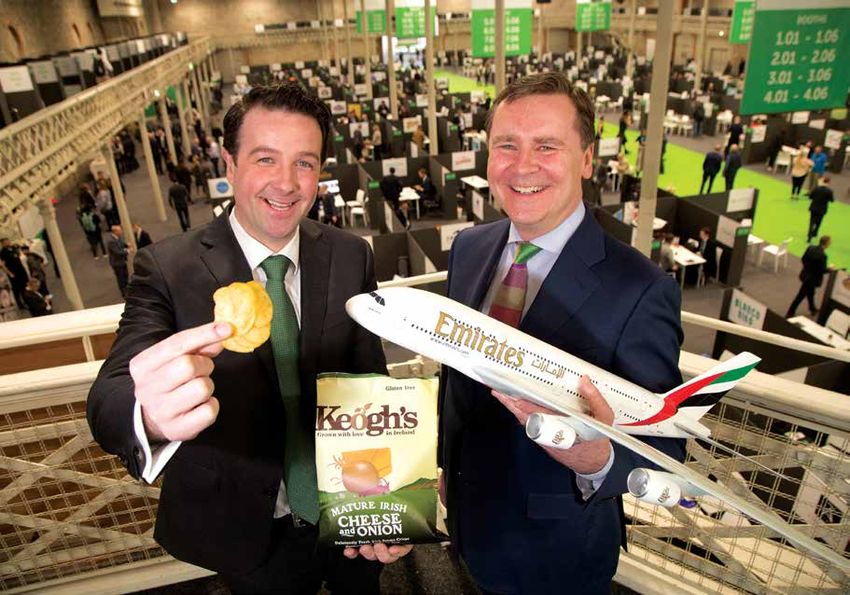
N E WS                                                                                                                                                                                             @IrishFoodMag        www.irishfoodmagazine.com

    O N L I N E I N T E R N AT I O N A L M A R K E T AC C E S S I N F O R M AT I O N P O RTA L

    Minister launches online
    international market access tool
    Minister for Agriculture, Food and the Marine, Michael Creed,                                                                                                                The portal, initially, will provide information across some of the major
    recently launched an online international market access                                                                                                                      agricultural export sectors of dairy, meat, seafood and live animals. It will
    information portal. The portal has been developed as part of a                                                                                                               be reviewed on an ongoing basis and additional categories added as the
    seven-point action plan on intensifying international market                                                                                                                 need is highlighted.
    access, which is a key pillar of the Department of Agriculture,                                                                                                              The information provided includes certification arrangements, exporter
    Food and the Marine’s Brexit response measures, as well as the                                                                                                               terms and conditions, individual country trading statistics and the typical
    market development theme of the Food Wise 2025 strategy.                                                                                                                     products exported to individual markets. This information will be updated on
    “It is useful to reflect on the fact that Irish food products are                                                                                                            an ongoing basis where there are changes in trading certifications or where
    exported to around 180 destinations all across the world,”                                                                                                                   new markets become open to export. The portal also contains specific email
    Minister Creed said. “Agri-food exports totalled €13.7 billion in                                                                                                            addresses per sector where further information may be requested.
    2017, an increase of 11 per cent on 2016 levels, according to                                                                                                                “This portal will be a very valuable tool for our producers and exporters.
    the CSO. This represents a very wide range of commodities and                                                                                                                As a major part of our ongoing response to the challenges posed by Brexit,
    products.” The Minister continued: “Therefore, this new online                                                                                                               our market access efforts continue to progress across a range of areas. As
    portal provides a one-stop-shop for detailed market access and                                                                                                               new markets are opened or certification conditions are changed, this will,
    export information on open agri-food markets around the world.”                                                                                                              of course, be reflected by the necessary changes to the web portal.”

                                                                                                                                                                                                                               Save
           *Save 15% off the on-site rate by ordering your visitor badge at www.sialparis.com

                                                                                                                                                                                                                            15%
                                                                                                                                                                                                                       on your ba
                                                                                                                                                                                                                                  dge until
                                                                                                                                                                                                                        20/09/20
                                                                                                                                                                                                                                   18*

                                                                                                                                                                                                     Paris
           Conception:

                                                                                                                                                                                                     The world’s largest food
                                                                                                                                                                                                     innovation exhibition
                www.stockfood.com

                                                                                                                                          For any questions contact our agent:
                                                                                                                                          Promosalons (UK) Ltd – Ariane JACOBS
                                                                                                                                          Tel: 020 8216 3106                                         W W W. S I A L PA R I S . C O M
                © Images by

                                                                                                                                          Email: ariane@promosalons.co.uk
                                                                                                SIAL, a subsidiary of Comexposium Group                                                                           #SIALParis

8                                                                       ISSUE 4 2018
N E WS                                                                             @IrishFoodMag       www.irishfoodmagazine.com

        TWELFTH YEAR FOR BLOOM AS GROWTH OF FESTIVAL CONTINUES

        OVER 200 FOOD BUYERS ATTEND BLOOM
        Bloom marked its 12th year in operation this June with an estimated
        120,000 people attending over five days. Originally launched by Bord Bia
        (the Irish Food Board) as a promotional vehicle for Irish horticulture, Bloom       Pictured at the launch of BIM's new statement
        has grown to become a highlight of Ireland’s festival calendar, with show           of strategy for 2018-2020, are: Chairman, Kieran
        gardens, food, music, talks and demonstrations throughout the festival.             Calnan; Minister for Agriculture, Food and the
                                                                                            Marine, Michael Creed; and, Jim O’Toole, CEO, BIM.
        As well as the show gardens, around which the festival centres, the Bloom
        food village is also a huge attraction for visitors.
                                                                                          B I M TO C A P I TA L I S E O N S E A F O O D D E M A N D
        For the fifth year, Bord Bia held a Bloom Trade Breakfast, which welcomed
        over 200 food and beverage buyers to the event to meet with suppliers.
        The opportunity provides a unique platform for one-to-one contact
        between buyers and suppliers who showcase what's new this year.
                                                                                          New strategy for
        Buyers arrived for breakfast where they were addressed by Tara McCarthy,          Ireland’s €1.15bn
                                                                                          seafood sector
        Bord Bia CEO. Following this, they visited the food village before it was
        opened to the public. Buyers were welcome to stay on site as long as their

                                                                                          launched
        schedule allowed.
        Retail and foodservice buyers from Ireland, Northern Ireland and the UK
        attended. They represented many well-known names, including Tesco,                Bord Iascaigh Mhara (BIM), the agency
        Musgrave Retail Partner's Ireland, Dunnes Stores, Aldi, Lidl, Sodexo,             responsible for leading the development of the
        Compass, Harrods, Ocado, Amazon, Sainsbury's and Asda, providing a                Irish seafood sector, recently unveiled its new
        wide breath of channel opportunities for suppliers.                               Statement of Strategy Enabling Sustainable
        This year, more than 100 tantalising stalls showcased an abundance of             Growth 2018-2020.
        Irish food and drink products. The Food Market showcased nearly 70                The new strategy aims to enhance the
        innovative smaller-scale Irish producers of farmhouse cheeses, preserves,         competitiveness of the Irish seafood sector to
        baked goods, confectionary, juices and so much more, including a number           capitalise on the growing demand for seafood,
        of new, leading-edge brands; the Love Irish Food pavilion featured up to          both domestically and internationally. In doing
        15 stalls belonging to members of this campaign organisation; the Fresh           so, the strategy is also expected deliver on the
        Food Market, dedicated to Bord Bia Quality-Assured meat, poultry and              development objectives of Food Wise 2025 and the
        fish, as well as fruit and vegetables, was tended by nearly 20 producers          sustainability objectives of the Common Fisheries
        selling and providing information to the public. Meanwhile, The Bloom Inn         Policy. According to BIM, the new strategy reflects
        featured 24 Irish drink producers, up from 14 last year, with several new         the challenge of growing market uncertainty and
                                                                                          places greater emphasis on product differentiation,
        drinks launched at Bloom, including Glendalough Distillery’s ‘Ginteresting’
                                                                                          value creation and profitability.
        series of summer botanical gins. As a perfect complement to the drinks on
        offer, The Bloom Inn showcased a range of Irish farmhouse cheeses hosted          Outlining the focus of the strategy BIM’s CEO, Jim
                                                                                          O’Toole said: “It is both an exciting and uncertain
        by CÁIS (the Association of Irish Farmhouse Cheese Makers).
                                                                                          time for the Irish seafood industry. As the sector
                                                                                          continues to face significant challenges, BIM’s
           Origin Green                                                                   strategy is designed to focus on enabling Ireland’s
        In a tribute to the pioneering work of Bord Bia in creating Origin Green          seafood industry benefit from services in key
        — the world's first food and drink sustainability programme operating             strategic areas that will drive future growth. The
        on a national scale — the centrepiece of the Floral & Nursery Pavilion for        strategy will ensure Ireland’s diverse sector is
        Bloom 2018 was a ‘living’ installation by garden designers Oliver and Liat        best placed to take advantage of the domestic and
        Schurmann. The semi-circular walls, made from wheatgrass, barley, cress           export growth potential by creating value across
        and micro-greens, enclosed a miniature town to communicate the role               the supply chain, from catch to consumer. In BIM,
        Origin Green plays at community level.                                            we have a dedicated workforce with a high level of
        Meanwhile, The Sustainable Seafood Garden, by multi-award winning,                technical expertise that will work closely with this
        Clogherhead-based designer Andrew Christopher Dunne in conjunction                valuable industry to implement and achieve our
        with Bord Iascaigh Mhara (BIM), was the overall winner at Bloom. The              strategic objectives by 2020.”
        garden was designed to highlight Ireland’s seafood and coastal heritage.          Five strategic priorities have been identified in
        The show garden also doubled as a kitchen, hosting some of Ireland’s              the strategy, which will underpin the delivery of
        top seafood chefs who tantalised taste buds with freshly prepared,                BIM services, they comprise: sustainability, skills,
        sustainable seafood dishes.                                                       innovation, competitiveness and leadership, which
                                                                                          will all operate within the framework objective of the
                                                                                          Common Fisheries Policy and Food Wise 2025.

10        ISSUE 4 2018
Teagasc Food Research
The leading provider of Research & Technology for Irelands Food Industry
Ashtown Centre (Dublin 15)
Expertise Support in:
• Food Training and Consultancy
• Innovation/NPD Management
• Meat Processing and Cereals
Technologies
• Marine Bioactives and Seafood
Technologies
• Food Analysis
Moorepark Centre (Cork)
(incorporating Moorepark Technology Ltd.)
Innovative Solutions in:
• Food Rheology and Microstructure
• Ingredient Technology
• Emulsions, Gels and Foams
• Spraydrying/Powder Technology
• Dairy Processes
• Nutraceuticals, Microbial Systems
Contact: Mr. Mark Fenelon
Email: mark.fenelon@teagasc.ie
Tel: +353 (0)25 42355
Contract Research and Pilot Plant Services available from both centres
Call us today on
+353 (0)599170200
or visit www.teagasc.ieN E WS
Minister for Agriculture, Food and the Marine Michael
Creed and Tara McCarthy, CEO, Bord Bia, release
findings of new in-depth reports into international
markets for Irish food and drink exports.
P R I O R I T I S I N G M A R K E T S : O P P O RT U N I T I E S F O R G R OW T H
Top 15 growth markets
identified and analysed
Minister for Agriculture, Food and the Marine, Michael Creed, recently Launching the reports, Minister Creed commented on the growth
released the findings of new, in-depth reports into international markets of Irish food and drink exports, which reached almost €13 billion
for Irish food and drink exports. ‘Prioritising Markets: Opportunities for last year. “Notwithstanding this significant success, we must, in
Growth’, commissioned by the Department of Agriculture, Food and the the light of Brexit, intensify our efforts further to diversify those
Marine and coordinated by Bord Bia (the Irish Food Board), identifies the international markets that offer the best potential for growth.”
15 markets by sector that are likely to present growth opportunities over the
Exporters will find up-to-date information on international market size
next five to 10 years.
and trends; analysis of sectoral levels of self-sufficiency; competitor
These reports offer concise overviews of 75 in-depth studies conducted across a details; price-point data; and information on technical issues related
range of priority markets, representing the most detailed and broad-ranging study
to trading with each individual country. The track record of the Irish
of international opportunity ever undertaken on behalf of the industry. Over 180
industry’s performance to date in each market is also assessed.
markets were screened using macro-economic and sector-specific criteria for
each category – meat, dairy, prepared consumer foods, beverages, and seafood. Bord Bia CEO, Tara McCarthy, said: “Bord Bia recognises that
sustainable performances internationally by Irish companies
Based on the report outputs, Bord Bia, on behalf of the Irish meat industry, will
require high levels of strategic insight and preparedness and
now move to conducting further analysis on five markets across Asia and Mexico.
A similar approach will be undertaken with the dairy industry, with analysis solely the Irish food and drink sectors are increasingly adopting a
focused on Asia. The seafood industry’s top markets for further analysis are structured approach, driven by data. The resources to pursue
across a number of continents, while the focus for beverages is the US, the EU, this path, provided by Bord Bia and the Department, have
and Asia. Key markets chosen for prepared consumer foods are most likely to be never been more focused.”
in the Middle East and the EU. The market prioritisation analysis will be reviewed annually.
12 ISSUE 4 2018www.irishfoodmagazine.com @IrishFoodMag N E WS
NEW CEO FOR ORNUA
ORNUA ANNOUNCES APPOINTMENT OF JOHN JORDAN AS CHIEF EXECUTIVE DESIGNATE
The Board of Ornua, Ireland’s largest exporter of Irish dairy of marketing director of Consumer Foods at Ornua,
products, has announced the appointment of John Jordan responsible for the strategic direction and development
as chief executive designate. John will assume the role of of the Ornua brands portfolio and, preceding that, held a
chief executive on June 30. He will succeed Kevin Lane who variety of senior commercial roles within the organisation
announced his resignation as CEO in December 2017. both in the corporate office and within international
John is currently CEO of Ornua Foods Europe, Middle East subsidiaries.
Africa and Asia, where he has successfully developed long- John holds an MSc in Business Administration from
term strategies to grow Ornua’s consumer sales portfolio. Trinity College Dublin, an MSc in Environmental
His role includes the regional development of Ornua’s iconic Resource Management from University College Dublin
brand portfolio including Kerrygold and Pilgrim’s Choice, as and a BSc in Biotechnology from Dublin City University.
well as working with Ornua’s retail partners to develop new Welcoming the appointment, Aaron Forde, chairman
opportunities in the private-label sector of the market. of Ornua said: “I am delighted to announce John’s
John was previously CEO at DPI Speciality Foods, a appointment as the next chief executive of Ornua. This
division of Ornua and the third-largest specialty food follows a comprehensive selection process led by a board
distributor in the US. Prior to this he held the position subcommittee."
Blockchain is
in our nature
From farm to fork, blockchain is
transforming our economy for
the benefit of farmers, producers,
retailers, customers and other
stakeholders.
At our EMEA Blockchain Lab
in Dublin, we have unrivalled
experience working with Irish
public and private sectors to launch
the latest blockchain innovations
that are advancing Irish business at
home and abroad.
Deloitte.ie
© 2018 Deloitte Ireland LLP. All rights reserved.
ISSUE 4 2018 13I N T E RV I E W @IrishFoodMag www.irishfoodmagazine.com
speaks with Joseph McManus, management
consultant, Logistics and Supply Chain, Deloitte,
about the potential role of blockchain in the food industry
and its application in Ireland’s beef industry
Every couple of years a new technology validated based on network consensus. Each to look at what you are doing at the moment
emerges that has the potential to change block, which includes a timestamp, is linked to and whether blockchain is applicable. Does
the way we do business and live our the previous block via a cryptographic hash. it help? Then it’s about looking at different
lives. The rate of change has excelled “The visibility the blockchain provides use cases and developing proof of concepts.
exponentially since the dawning of the helps in the identification of rogue actors, I think everyone needs to be aware of it, no
World Wide Web in 1991. Blockchain is wherever they exist. So, if you have people matter what industry you’re in.”
now being described as a technology that operating outside your standards, policies Deloitte recently published a research
could ‘change the world’. and procedures, it will highlight them and paper on the potential role of blockchain
you can take corrective action.” For example, in Ireland’s beef industry titled Beefing
Building blocks if a farmer posts to the blockchain that the up Blockchain. Joseph explains that the
So, what is blockchain and how would it apply animal’s health plan and or diet plan is in research aimed to identify challenges the
to the food industry? Joseph describes it as: accordance with industry standards and it is industry faced and look at ways blockchain
“decentralised, distributed ledger technology”. later discovered this was not the case there is could respond to those. “There were
a clear line of traceability. “You can see who five challenges: Brexit; costs; regulation;
Blockchains can be public or private –
signed off on that and necessary steps can be safety and traceability; and consumer
accessed by an agreed consortium. “Farmers;
taken to improve ethical practices.” trends. Consumer trends is an important
vets; abattoirs; processors; packers; customs
Joseph says blockchain can also benefit factor because it is shaping the industry.
controls; retailers; the authorities who oversee
auditors within a system. “It makes their lives The purchase drivers of consumers are
quality; and the Department of Agriculture,
much easier because they can see what’s starting to move away from price, taste and
Food and the Marine; that would be what
going on. It means they are not sitting through convenience and moving towards health and
we call a consortium blockchain that links
hours of paperwork, which can get lost. wellness, social impact, safety, experience
the entire industry. Everyone is in it for the
Everything that’s posted on the blockchain and transparency. Consumers are becoming
purpose of sharing information.”
is immutable. It allows easier auditing to more conscious in that space. According
Each person who contributes to the chain to a recent survey in the US, 75 per cent of
occur and allows anyone who might not be
uses a private key to sign the data they upload. conducting business in line with industry consumers don’t trust product labels to be
This unique code is based on cryptography, standards to be identified. Blockchain can truthful, so blockchain can help to bridge
with the private key being used to digitally also be used to create a trusted and secure that gap as well.”
sign the transaction. A corresponding public solution where the certifying body can store Joseph says there are lots of potential uses for
key, known to other members of the network, and share quality assurance certificates.” blockchain in the food industry, but believes
allows them to validate the information that supply-chain traceability is possibly one of the
has been contributed to the chain. Exploring blockchain most prominent opportunities.
“What’s great about it is that it is “It’s an exponential technology that will hover
decentralised, so there is no single owner of around for a while, building awareness and Smart contracts
information and nobody can tamper with it or then it will take off.” Joseph believes people Another potential of blockchain technology
manipulate it. The fact that it is immutable will need to begin looking at blockchain now, is the development of smart contracts, which
prevent that from happening. Once a block is educating themselves about its capabilities are digitally coded contracts that self-execute
cast onto the chain, it is there forever. That’s and exploring potential uses in their once contract conditions have been met.
why, when you look at it from a traceability businesses and supply chains. “Having They work on the basis of ‘if this happens,
point of view, there is so much potential.” awareness is key. Should everyone adopt it? then that happens’. “You could use this within
Once a block of data is added to the chain, it is No. It comes down to every use case. You have the supply chain where prices might change
14 ISSUE 4 2018@IrishFoodMag www.irishfoodmagazine.com I N T E RV I E W
and this has to be captured across the supply
chain. The smart contract enables changes
to input terms of the contract to be reflected
across the supply chain. You can also use it
whereby, if a supplier sends goods to me the
contract will automatically issue payment to
them upon receipt of order.”
Using blockchain and smart contracts for
trade finance can reduce time to market
TODAY
by eliminating manual processing of paper Technologies are now connecting
documents. Joseph says blockchain will ensure
the silos of the linear supply chains
consistency in the order process, enable full
transparency in the delivery and ownership
of the order and enable real time review and
approval of documents. Having all parties
connected to the blockchain (buyer, seller, port
authorities, customs, shipping lines, hauliers
and financial institutions) will create greater
transparency and faster decision making.
The smart contract's ability to automatically
execute payments removes the need for trusted
intermediaries to verify transactions and allow
two parties to transact directly with each other.
Food-chain traceability
Blockchain technology is already gaining
traction in the food industry with Carrefour
introducing a chain for its free-range
Carrefour Quality Line Auvergne chickens
TOMORROW
in 2018. The French retail giant intends The connectivity between supply chain
rolling out similar systems for eight more members will create a dynamic and integrated
animal and vegetable product lines, such
as eggs, cheese, milk, oranges, tomatoes,
set of Digital Supply Networks
salmon and ground beef steak.
Joseph believes blockchain offers a point
of differentiation for the food chain and
could present an opportunity to highlight
Ireland’s unique selling points. “The reason
for writing this beef paper was to look at the
sustainable measures and quality assurance
that are already in place. I have family in the
industry and the work they do on the farm
is very much centred around sustainable
and ethical farming practices.
“The idea is that this would give the consumer
the opportunity to scan a QR code on a food
pack and be able to see details relating to the
product's journey to the shelf as well as the
animal’s life cycle in a digital format, similar
to a website or through an augmented reality
experience.” Joseph says the consumer doesn’t
need to see every detail within the chain,
however important data can be provided
ISSUE 4 2018 15I N T E RV I E W @IrishFoodMag www.irishfoodmagazine.com
If you put Irish beef on the shelf with a blockchain
solution against an international competitor that
doesn’t use it, I would hedge my bet that a neutral
consumer concerned about food quality, safety and
traceability will opt for the Irish steak.
It gives that security to the consumer but
also enables visibility of each actor within
complex supply chains.
and presented to them in an attractive way,
offering greater reassurance in products.
“If you put Irish beef on the shelf with a
blockchain solution against an international BEYOND OUR IMAGINATION
competitor that doesn’t use it, I would hedge
my bet that a neutral consumer concerned Anthony Day, COO, Deloitte EMEA Blockchain Lab, says blockchain
about food quality, safety and traceability will technology “is only limited by our imagination”.
opt for the Irish steak. “This is just the next horizon of technology that allows things to be done
It gives that security to the consumer but also easier, faster and more securely. The challenge is twofold, helping people
enables visibility of each actor within complex to understand the potential and then to imagine the potential features,
supply chains.” functionality or jobs that this could help with.”
In some instances, blockchain technology is being used to track products in
Educating industry transport, monitoring temperatures and relaying that information in real
Deloitte says interest in blockchain is coming
time. This then allows feedback to be transmitted to those handling the
from all industries, including the food industry.
product, who can adjust the temperature immediately.
Deloitte has been working on Blockchain
Another example Anthony highlights is the potential of blockchain
101, educating clients on what it is. For those
technology to help market Irish produce. “I could see a great customer
with greater knowledge of the technology,
experience opportunity through augmented reality. The customer holds the
Deloitte has been looking at proof of concepts
phone over a QR code on the product label and it shows you data on the
or use cases. “If there is a particular case
that people want to pursue, we can produce screen. Simple examples are pricing or ingredients. But, I would like to see
a working prototype and go live and build the images of the farm, showing where the cattle are raised, the green grass of
blockchain for them in a matter of weeks. Ireland and giving them a real sense of where their food is produced.”
We have worked with a number of clients This is just the tip of the iceberg, according to Anthony. “Blockchain is just
in the area of certification. We developed a the platform but you pair it with smart phones, internet of things (IoT),
blockchain solution to secure the certificate devices or automated, tracking supplies, farm vehicles, trucks and the ability
issuance process in business assurance. to create predictive information based on what you see on the data.
The solution delivered a trusted and secure Blockchain is just one part but, when combined with these, the potential is
solution to enable the client to store and share endless.”
certification for their customers and their
customers’ customer.
16 ISSUE 4 2018focus
R E S E A R C H & D E V E LO P M E N T
17T E AG A S C @IrishFoodMag www.irishfoodmagazine.com
Tasty
technology:
Teagasc explores
advanced food innovation
As digital innovations continue to influence the way
we lead our lives, Teagasc, the State agency providing
research, advisory and education for Ireland’s agri-food
industry, is leading the way in adopting and investigating
how the latest technologies can advance food innovation
Dr Mark Fenelon, head of Teagasc’s Food in the Insight Centre for Data Analytics,
Programme, says it is a very exciting time Dublin City University, use biomechanics
for the food industry as adoption of the to accurately mimic actions of people from
latest digital/robotic developments has different geographic areas around the world.
the potential to deliver higher quality and Norah says this is a new use for robotics in
more consistent products. the food sector, created by the development
of the seven-axis robots, which have greater
Robot revolution maneuverability and capabilities than five or
In a world-first piece of research, Teagasc six-axis robots. “Five-axis robots just do one
is using robotics to develop a platform role, whereas our robot is multifunctional. It
for the measurement of the rehydration has two grippers and can pick up a bottle and
properties of powders. Teagasc has a spoon and mimic human actions; but doesn’t
have the same subjectivity of humans.”
introduced a seven-axis robot that can
mimic the movements that humans use to
Get inside your bread
reconstitute powders, such as milk powders.
Think virtual reality is all fun and games?
The robot enables controlled rehydration Teagasc is proving the technology can have
of the powder consistently across batches much broader appeal. In another world- ‘what it’s like to be inside your bread’.
of products, facilitating measurements free first, Teagasc is using virtual reality to see Dr Deirdre Kennedy, microstucture
from variability due to human intervention. inside our food and examine how it looks technologist, and Dr Eimear Gallagher,
Cameras on the robot arms can take a digital on the inside. The technology will enable head of Food Quality and Sensory
image of unrehydrated powder particles and food manufacturers identify key structural Science at Teagasc, explain that bread is
translate these into objective numbers for the components that contribute to high-quality a good match for the technology due to its
operator to use for comparative purposes. foods. It works by producing a 3D image large, dense structures. However, Teagasc
Dr Norah O’Shea, research officer, Teagasc, stack, such as a CT scan or suitable is also using this to examine powders,
says this approach can ensure consistent microscope. This provides layers of images, cheeses and many other foodstuffs. “For
product quality. “Before the product leaves the sometimes in the thousands, that build to example, if you want to compare a gluten-
site, the robot performs the rehydration test create a virtual image, bringing the food to free bread with a non-gluten-free bread, or
and determines whether the product quality life in 4D. Using gaming equipment, with a fat-filled powder versus a non-fat-filled
is optimal. It ensures that the food producer a headset and controllers (on your hands), powder. Typical microscopes look at the
can achieve the same functional properties you can virtually grab the piece of bread, surface, maybe a few microns of depth,
consistently, and that the product rehydrates cheese, etc, stretch it, go inside it and look but if we can visualise complete structures
in the same way each time.” The research at at the structures, holes and particles. That in 3D, then it can become a completely
Teagasc will, in collaboration with scientists allows a person to understand, for example, immersive experience.”
18 ISSUE 4 2018www.irishfoodmagazine.com @IrishFoodMag T E AG A S C
identify microbes, bacteria and fungi that
are present in soil or raw and processed
foods, and, importantly, examine their genes
to see which of them are potentially health
promoting, which produce toxins, and
which are spoilage microbes. Bioinformatic
analysis is used to do this. “It reaches
everything from soil to society,” says
Paul Cotter, head of Food Biosciences,
Teagasc. “From the soil you can see what
microbes are present, how they contribute
to plant growth, or which pathogens kill
plants and how best to control those. It’s
relevant for determining which microbes
are responsible for causing mastitis in
cattle, which microbes contribute to feed-
conversion efficiency in pig meat or hen
production due to microbes, or greenhouse
gas reduction from ruminants. When you
get closer to the consumer you can look at
the food processing environment to see how
microbes cause contamination, which are
good microbes that you want to introduce
Augmenting the food industry to fermented food to make it as healthy as
Another big area of research underway at possible.” Paul says this can allow producers
Teagasc is augmented reality. “This is one of introduce microbes that react positively in
the most exciting developments in the world the gut and support metabolic functions.
at the moment,” says Mark, explaining that One body of research in this area looked at
the technology has potential at a number of the gut microbiota of the Irish rugby team.
points along the food chain. For example, It found the rugby team’s gut microbes are
wearing augmented reality goggles, a worker different to the general public. “They are
in a processing hall could gather additional a lot healthier and more diverse and we
information on equipment or process. are taking those lessons to try to develop
Furthermore, real-time visuals can be sent foods for other athletes, but also to take the
to a third-party, in a remote location who, in lessons from that and apply them to people
turn, could use the augmented reality to draw who don’t exercise a lot to make their guts
The research project is still new; however, on the image being seen in the goggles by healthier by giving them the right kind of
Deirdre says it will have an important role the worker on-site. nutrition or getting them involved in different
to play in food-sensory research, identifying “So, if you were in Singapore and I was in a exercise regimes.”
whether, for example, bread with air in it is lab, you could see what I see and you could
springy or spongy. “The ultimate objective will draw on the screen to highlight things to me.” A brave new world
be to compare sensory data with the physical At a consumer level, Mark says, augmented Mark says the groundbreaking research that
characteristic of the food. reality could be used to provide nutritional data is under way at Teagasc is hugely significant
“On the dairy powder side, we may be about the food they are eating. Teagasc is also for the Irish food industry, which exports 80-
able to observe how particles interact with researching the impact environmental factors 90 per cent of what it produces. The primary
each other, over time, and how air and the have in food sensory testing, by changing the focus is on ensuring and improving the
environment impact their stucture. This settings in which consumers are eating their quality and safety of products and, with these
could be a useful tool for monitoring the food, all using augmented and virtual reality. innovative technologies, Teagasc is gaining
quality of products during storage.” Utilising greater insight into the behaviour of our foods
imaging software to differentiate between Digital DNA in different environments, their reactions in
fat and protein is also a long-term objective DNA sequencing technology, which is used diverse processes and human consumption
for the project and will provide more for human genomes, has been adapted for and digestion. Mark believes this is a huge
applications for the dairy industry. microbial analysis. This allows Teagasc to moment in the evolution of the food industry.
ISSUE 4 2018 19FOCUS www.irishfoodmagazine.com
processors are currently investing in on-board
super-chilling systems to reduce the core
temperatures of whitefish to around -1oC.
This helps to slow down the spoilage process
and extend on-board shelf-life and quality.
Excellent on-board quality ensures maximum
shelf-life down the line in both processing
facilities and on the shelf,” he explains.
Ultimately, the aim is to see if some of these
innovative technologies can be adapted for
Irish waters and conditions.
“For example, there can be a lot of long-
line fishing for cod in Iceland, with large
At the
vessels targeting a small number of species
‘shoalface
of large fish, such as cod and haddock. By
comparison, in Ireland, we have a vibrant
whitefish sector targeting a broad range of
species such as hake, haddock and whiting.
of innovation
We are currently investigating scales super-
chilling equipment suitable for Irish whitefish
vessels. "Work is underway to determine
whether this technology is worth investing
in and whether it extends the catching,
Ireland’s seafood agency, Bord Iascagh Mhara (BIM) recently unveiled production and sales windows by extending
a new corporate strategy for the period 2018-2020. It identifies five shelf-life. We are trying to see if such
priorities that will underpin the delivery of BIM services: sustainability, technologies can give us extra time on-board,
in the factory and on the shelf, which can help
skills, innovation, competitiveness, and leadership. John Fagan,
the Irish seafood sector to transport product
research and development department at BIM recently spoke to further and maximise sustainable catching
about innovation within the industry, its role in adding value and processing," says John.
to the sector, and innovative projects currently in development
Supporting the industry
Exploring new technologies and working closely
with knowledge providers to test and validate
“Innovation is something that BIM automation technologies, packaging new technologies, on behalf of clients, is key
is passionate about. Foodwise 2025 technologies and value-added technologies for BIM in supporting the industry to be more
– the 10-year strategy for the Irish to add further value to raw materials, innovative, according to John.
agri-food sector – identified innovation differentiate product offerings and automate “BIM has an extensive network of processing,
as a key driver to expand the raw operations,” John says. packaging and ingredients technology
materials base, to add further value to “We are an island nation and raw suppliers. BIM also trials new technologies at
the seafood sector and make it more seafood can be quite perishable, so international test centres and in-factory with key
competitive,” John explains. recent investments have been targeting clients. In 2017, numerous technology visits
new solutions to transporting perishable were conducted with major whitefish, salmonid,
Currently, that sector is proving to be very
products, such as live crab, for long pelagic and shellfish clients to explore new
buoyant indeed, having recorded its third
distances. This will extend shelf life and technologies and several working prototypes
consecutive year of growth in 2017, rising in convenience of raw seafood and prepared were developed and tested on the market,” he
value by 6.4 per cent year-on-year to €1.15 consumer foods products and will ensure explains.
billion, according to recent figures published maximum use of all raw material and
by BIM. Exports are strong, but investing sustainable processing." Building innovative links
in new technology to deliver innovative BIM is building links with Irish State
solutions is what is helping to strengthen International waves agencies, such as Teagasc (which provides
and sustain the industry. BIM has been closely monitoring innovative research, advisory and education in
“Over the last decade, the seafood technologies in catching and processing agriculture, horticulture, food and rural
processing sector has invested heavily sectors internationally, according to John. development in Ireland), and universities
in new technology, including process “Norwegian, Icelandic and Faroese and third-level institutions.
20 ISSUE 4 2018www.irishfoodmagazine.com @IrishFoodMag FOCUS
Did you know?
Up to 120kg per tonne of fish mince can
be separated from around fish bones and
ongoing trials are assessing the potential for
incorporation into prepared consumer foods, ready-meals
“BIM is working to identify industry
knowledge gaps and needs, scan and reformed fish cakes. Sustainable use of the entire fish
internationally for potential market-ready or shellfish is possible with numerous markets
solutions and engage key knowledge for high-end product both in the
providers to test and validate whether human and pet foods sectors.
these solution work. Wider food industry
knowledge from, for example, the meat and
dairy sectors can be applied to the seafood
sector and huge expertise is available within
Ireland and internationally,” says John.
Associated to this, BIM is actively involved in
an EU-funded project called Food Heroes,
which is investigating opportunities to
maximise the use of whitefish and salmon.
FISHING FOR INNOVATIVE IDEAS IN ICELAND
“Processing can result in up to 35-50 per
cent by-product including head, bone, skin BIM hosted the 47th West European Fish Technologists Association (WEFTA)
and gut. BIM is working with international conference in Dublin last October, bringing together 208 international experts
partners to explore trends in related food across every field of seafood R&D. BIM coordinated an industry day and
industries for product utilisation.” selected commercially-relevant R&D presentations in conjunction with key
What is considered by-product here in invited speakers from industry and 70 Irish seafood companies attended.
Ireland – dried fish heads and bones – is BIM also launched a new seafood R&D project aimed at industry-wide
highly valued in other countries and very initiatives allowing further research into innovative processing and ingredients
popular in African and Asian markets. technologies from Irish raw material.
“BIM is exploring drying and reformimg BIM used some of its key international contacts to coordinate a whitefish
technologies for recovered fish mince and and salmonid technology benchmarking visit to Iceland in March 2018. Over
opportunities to utilise skin for gelatine via the course of three days, 12 Irish whitefish and salmonid processors had the
various R&D projects in conjunction with
opportunity to see new equipment and technologies in commercial facilities,
third level institutes.”
such as HB Grandi, Iceand. The group visited four of the top whitefish processing
BIM also operates a graduate placement
facilities in Iceland and saw 15 new innovative technologies currently not in use
programme, in conjunction with major
in Ireland. These Irish companies represented a significant percentage of the
third-level institutions, helping to train highly
skilled graduates in seafood technologies Irish processing base in Ireland and approximately €100 million in turnover. It
via its Seafood Innovation Hub. was a valuable trip for the industry as a whole.
Trends Actions
• Significant opportunities exist to automate Irish whitefish and salmonid
A commitment towards sustainable and
responsible practices is a prerequisite in filleting, portioning and packaging. A number of Irish processors who
all markets and a growing number of Irish attended the recent BIM-led Iceland visit are currently exploring
seafood companies and fishing vessels are opportunities to test new solutions via BIM’s Seafood Innovation Hub and at
committed to the Origin Green programme. international test sites.
“Origin Green enables Ireland’s food • BIM has commenced an R&D project to investigate chilling technologies
industry to set and achieve measurable on-board and in-factory, and the subsequent benefits throughout the cold
sustainability targets, establishing a chain, in terms of shelf-life and quality.
baseline for continuous improvement. • Major international seafood companies are closely aligned with R&D
BIM is actively involved in many local and
partners and have dedicated in-house R&D staff and expertise. BIM has
international collaborative projects related
multiple R&D funding streams available to facilitate investigation of
to the marine and coastal environment,
industry-wide issues and ongoing projects, including: health and wellness
responsible fishing and aquaculture, and
ingredients from mussels and fish by-products; development of baits for the
the sustainability of seafood supplies within
the economic, social and environmental shellfish sector; and opportunities for fish by-products in the pet food sector.
dimensions." BIM is actively engaged with representative industry platforms to determine
Environmental sustainability is one area additional knowledge gaps and opportunities to add further value.
where, in partnership with BIM and Bord
Bia, the seafood sector has made huge
strides across a wide range of aspects.
ISSUE 4 2018 21FOCUS @IrishFoodMag www.irishfoodmagazine.com
Maximising the
value of R&D
Research & Development (R&D) tax credits can potentially save Irish food
companies significant money. David Leydon, head of food and agribusiness,
and Robert Johnson, senior tax specialist with IFAC, give an overview
Healthy food, which is convenient and Funding R&D materials required for the R&D, payments
produced sustainably, is a significant As Irish food companies invest in R&D there is to sub-contractors and universities (subject
trend that Irish food companies are taking an opportunity to offset a portion of the costs by to limits) and even costs incurred on a
note of. Add to this the growth of online submitting an R&D tax claim. It is important to building used for R&D purposes. The credit
shopping, the speed at which the market note that by availing of R&D tax credits a company is applicable for all stages of innovation and
is evolving, the drive for compostable is not precluded from applying and drawing here are some practical examples
and recyclable packaging and a picture down grant funding for innovation from Bord Bia of relevant activity:
emerges of a sector where companies (the Irish Food Board) or Enterprise Ireland, for
must innovate and invest in R&D to be example.
successful.
What is the R&D Tax Credit?
Consumer insights An R&D tax credit is an additional tax credit
IFAC clients are involved in either true equalling 25 per cent of the relevant R&D costs
innovation or renovation – tweaking an of a company. In order for the costs to be eligible
existing range by improving flavour or for an R&D credit, the costs must be incurred in
introducing a new SKU, for example. For a a qualifying R&D activity. A qualifying activity is
smaller company, developing partnerships systemic research into an approved field of science
with a chef can be a good way to build using theoretical or applied research. Another
innovation into the business. Some of the activity is experimental development that seeks to
most innovative businesses are working very resolve a scientific or technological uncertainty and
closely with their sales and marketing team to make a scientific or technological advancement.
glean customer insights from the market and Experimental development is the activity most of
some of their key tips include: our food clients are engaged in.
In this context, a company needs to
• Clearly define the customer or consumer
be able to demonstrate that the
need. Why would they buy this product? improvement they are trying to
• For true innovation, do not be confined by make is novel or not available in the
what can be done in the factory today. public domain. This is particularly
• When moving from research in the kitchen relevant to food companies that are
to developing the factory process, make no trying to improve their products in
assumptions and focus on proper line trials line with competitors where existing
at all stages. For example, when successful improvements may not be available
innovators are changing from one grade of in the public domain.
box to another, they never have the attitude The relevant costs allowable include
that “it’ll be grand”. They trial everything to all direct costs in the R&D, a
ensure that it will work in practice. limited number of indirect costs, the
22 ISSUE 4 2018You can also read


