ISAAC REGIONAL COUNCIL - PURE PEOPLE POWER
←
→
Page content transcription
If your browser does not render page correctly, please read the page content below

ISAAC REGIONAL COUNCIL
2020 Local Government Quadrennial
Elections – Information Session

                                    PURE PEOPLE POWER
PURE PEOPLE POWER

Overview of Information Session

•   What is means to be a Councillor
•   Explaining the Election Process
•   Overview of Isaac Region & Council
•   Councillor obligations and entitlements
•   Councillors job in practice
•   Our Vision
PURE PEOPLE POWER

BEING A COUNCILLOR
PURE PEOPLE POWER

Role of Local Government

Local government plays an important role in community
governance and is a forum for local decision-making, charged with
ensuring good rule and government of its local government area.

As a local government, Council must be accountable, effective,
efficient and sustainable and consistent with the local
government principles contained in the Act
PURE PEOPLE POWER

Local Government Principles
s4(2) of Local Government Act 2009 (LGA)

(a) transparent and effective processes, and decision-making in the
    public interest; and

(b) sustainable development and management of assets and
    infrastructure, and delivery of effective services; and

(c) democratic representation, social inclusion and meaningful
    community engagement; and

(d) good governance of, and by, local government; and

(e) ethical and legal behaviour of councillors and local government
    employees.
PURE PEOPLE POWER

Working as part of a team
• Council works as a team – representing the overall public interest of the
  whole local government area
   • Respect & listen to others position
   • Allow fair and open debate

• You require flexibility, patience, willingness to learn, leadership,

• You must be accountable to the community and participate in planning
  for the current and future needs of the Isaac Region area

• Three distinct teams you will work with:
   1. Mayor & Councillors
   2. Elected Members & Executive Leadership Team (ELT)
   3. Elected Members, Executive Leadership Team & Staff

PURE PEOPLE POWER

Making decisions
• Council is required to make strategic decisions for the Isaac Region.

• Individual councillors have no personal or individual authority to act, or
  make decisions, on behalf of Council.

• Councillors do all or most of their legally-effective decision making in
  council meetings as part of a group:
   • Council resolutions
   • Committee recommendations
   • Workshop consensus

• Decisions are taken by a majority vote
   • The Mayor and each councillor at the meeting has an equal vote
   • once a majority decision is taken by council, you should not seek to
     undermine the decision because you did not personally vote in
     favour of it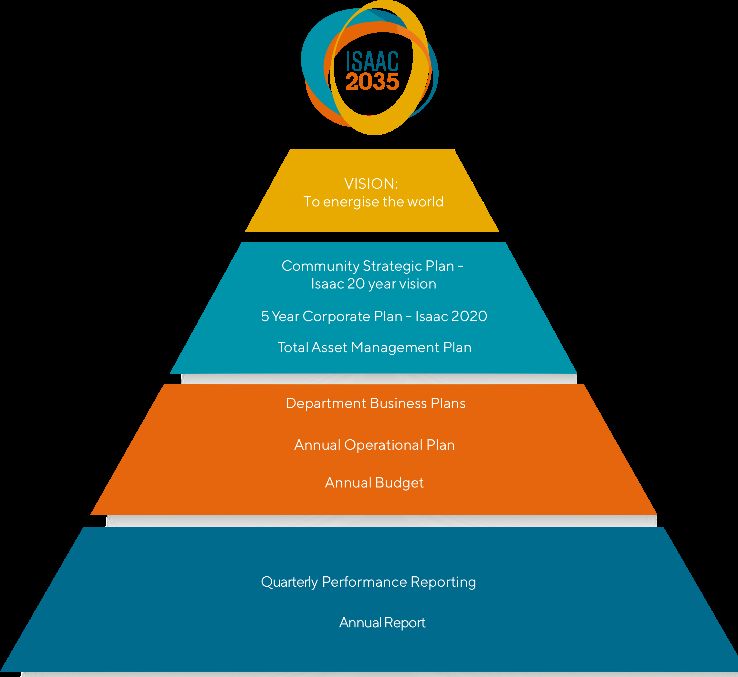
PURE PEOPLE POWER

Representing the community

• Your fundamental role as a councillor is to serve and represent the
  interests of your community as a whole.

    • In the event of a conflict between the public and private interests of
      you or your related persons, the overall public interest must prevail
    • More on this later
PURE PEOPLE POWER ELECTION PROCESS
PURE PEOPLE POWER

General Information
• The Local Government Elections are run by the Electoral Commission of
  Queensland (ECQ) run the elections, not Council

• The ECQ appoint a Returning Officer to run the elections on their behalf

• You can visit https://www.isaac.qld.gov.au/council-elections-2020 which
  provides a range of links to relevant information on the 2020 Local
  Government Elections
PURE PEOPLE POWER

General Information
• For more information on being a candidate or nominating, you can contact
  the ECQ or the Returning Officer

•   Please note that:
• All candidates must complete mandatory training which is available on the
  Department of Local Government, Racing and Multicultural Affairs
• https://www.dlgrma.qld.gov.au/so-you-want-to-be-a-councillor.html
•
• Nominations must be made in person and on the approved form

• Nominations close at midday, Tuesday 3 March 2020 (no late nominations will be
    accepted)

• Term is four years and concludes March 2024 – at the next local
  government elections
PURE PEOPLE POWER Who is a suitably qualified to be a candidate • You are a citizen aged 18 or older; • You reside in the Local Government Area; • You are enrolled on the electoral roll for the Local Government Area; and • You are not a disqualified person.
PURE PEOPLE POWER

Who is a disqualified person
S153 of the LGA

(1) A person can not be a councillor—

     (a) after the person is convicted of a treason offence, unless the person is pardoned
         of the treason offence; or

     (b) for 10 years after the person is convicted of an electoral offence; or

     (c) for 7 years after the person is convicted of a serious integrity offence; or

     (d) for 4 years after the person is convicted of an integrity offence; or

     (e) for the remainder of the term before the next quadrennial elections, if the person
         has been dismissed as a councillor (under section 122 or 123).

Further detail is available on each of the above in the LGA s153
PURE PEOPLE POWER
Post Election Period
• Following the close of votes the Returning Officer will do a
count of all Divisions and Mayor ballot papers
• The official count process can take up to 10 days for postal
votes to be returned. Election results for individual councils will
be declared progressively.
• Following the Returning Officer declaring the successful
candidate, there is a series of actions that the CEO will
facilitate:
NEXT STAGES INCLUDE
Declaration of Office of new Councillor
Within 1 week of Vote a Deputy Mayor
declaration
Hold the first Council meeting – election representatives on
internal and external committees
Councillor Induction/Orientation/TrainingPURE PEOPLE POWER
Declaration of Office
A councillor must not act in office until the councillor makes the declaration
of office (s169(1) of the LGA)
This is a small ceremony where you make your Declaration Oath:
‘I, (insert name of councillor), having been elected/appointed as a
councillor of the (insert name of local government), declare that I will
faithfully and impartially fulfil the duties of the office, in accordance
with the local government principles and code of conduct under the
Local Government Act 2009, to the best of my judgment and ability’PURE PEOPLE POWER
Other responsibilities
• Councillor Induction/Orientation
• Register your Interests
• Within 30 days of taking office
• Participate in Council statutory meetings
• Possible training opportunities
We will guide you through all of these processesPURE PEOPLE POWER ABOUT COUNCIL
PURE PEOPLE POWER

Economic, geographic and demographic profile

Council represents the largest mining region in Queensland and governs
17 unique communities, from our agricultural areas, the coalfields to the
coast. One of our highest priorities is advocating at state and federal level
for solutions to issues impacting Isaac communities.

Due to Council’s vast area (over 58,000 square km), there are seven
Administration offices throughout the region, located at Clermont, Dysart,
Glenden, Middlemount, Moranbah (main office), Nebo and St Lawrence.
PURE PEOPLE POWER

Economic, geographic and demographic profile
PURE PEOPLE POWER

Economic, geographic and demographic profile

[1] REMPLAN Economy, July 2019, [2] Australian Bureau of Statistics 2017, [3] QGSO, Bowen Basin Population Report, 2019, [4] REMPLAN Economy, July 2019, [5] QGSO, Bowen Basin Population
Report, 2019, [6] QGSO, Bowen Basin Population Report, 2019, [7] QGSO, Bowen Basin Population Report, 2019, [8] Queensland Government Open Data Portal, Production of saleable coal by district
and type. Accessed July 2019
PURE PEOPLE POWER

Isaac Region
PURE PEOPLE POWER

Isaac Region
PURE PEOPLE POWER

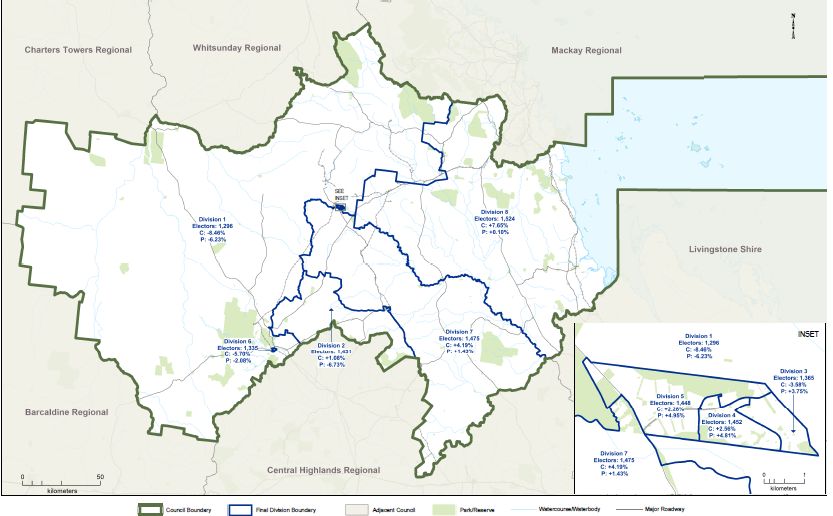
Electoral Structure
PURE PEOPLE POWER

Organisational Structure
                                                          Mayor

        Deputy Chief Executive
         Officer (Temporary)                 Chief Executive Officer                    Coordinator – Executive Support

                                              Gary Stevenson PSM
            Senior Advisor

 Director Corporate,             Director Engineering &            Director Planning,              Director Water & Waste
Governance & Financial               Infrastructure                 Environment &                       Gary Murphy
       Services                          Vacant                   Community Service
    Darren Fettell                                                Jeff Stewart-Harris

                                                                             CGFS -   Corporate, Governance & Financial Services
                                                                             E&I -    Engineering & Infrastructure
                                                                             PECS -   Planning, Environment & Community Service
                                                                             WW -     Water & Waste
PURE PEOPLE POWER
Strategic and Operational Framework
• 20 Year Community Strategic Plan Isaac 2035 (adopted 4/2015) followed by the
5 Year Corporate Plan Isaac 2035 forms a blueprint for the future of the Isaac
region outlining our strategies towards enabling strong, vibrant, diverse and
sustainable communities for our people.
• The 5 Year Corporate Plan uses the key themes from Isaac 2035 to identify
clear goals, strategies and performance indicators to show how we will achieve
our vision for the future
• Our Annual Operational Plan is a short-
term strategy outlining how our
organisation will work towards achieving
the goals set out in our 5 Year Corporate
Plan.
• Each year we also adopt a Budget which is
carefully aligned to the above key planning
documents, to ensure we continue to meet
the needs of our communitiesPURE PEOPLE POWER
Financial & Operational Status
Total Revenue $111 million
Total Operating Expenditure $108 million (inc depreciation)
Total Capital Expenditure $69 million
Interest & Redemption Repayments $2.3 million
Total Non Current Assets $1.087 billion
Total Non Current Liabilities $29.5 million
Total Full Time Equivalents (FTE’s) 464
Total Staff 441* (48 vacancies)
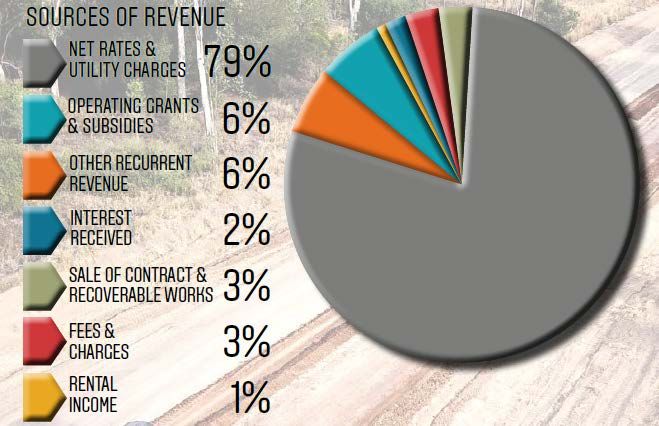
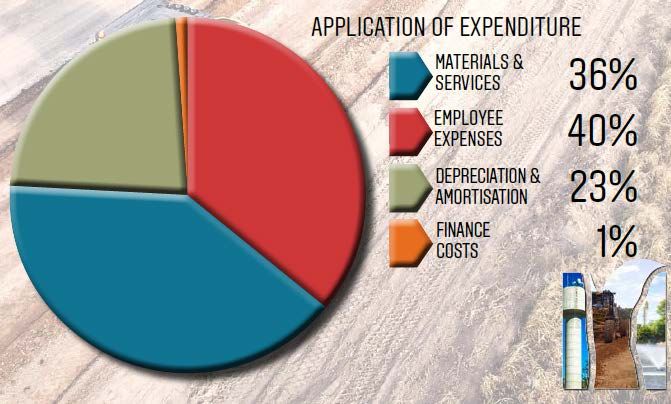
*e.g. job share (two people for one FTE) & includes fixed term employees that to not make up FTE countPURE PEOPLE POWER Sources of Revenue & Application of Expenditure For more information on the Council budget visit - https://www.isaac.qld.gov.au/about-council/budget-2019-20
PURE PEOPLE POWER

2019/20 Budget/Capital Projects

  Please refer to the Budget documents available on Councils website

  www.isaac.qld.gov.au/about-council/budget-2019-20

  2019-20 Budget – Focused on the Fundamentals
PURE PEOPLE POWER

COUNCILLORS STATUTORY OBLIGATIONS
AND ENTITLEMENTS
PURE PEOPLE POWER

Local Government in Qld – Key Legislation
• Local Government Act 2009 (LGA)
    • Local Government Regulations 2012 (LGR)
•   Animal Management (Cats and Dogs) Act 2008
•   Building Act 1975
•   Planning Act 2016
•   Environmental Protection Act 1994
•   Information Privacy Act 2009
•   Integrity Act 2009
•   Land Act 1994
•   Public Health Act 2005
•   Public Sector Ethics Act 1994
•   Transport Infrastructure Act 1994
•   Water Act 2000
PURE PEOPLE POWER Executive & Administrative Arms • As the executive arm, the Mayor and Councillors make local laws and determine policy and other matters at a strategic level. Mayor and councillors are responsible for setting the overall direction of the local government. • The administrative arm is headed by the Chief Executive Officer (CEO). The CEO implements the decisions of the executive arm and manages the day to day operations of the local government
PURE PEOPLE POWER

Role of Councillors

• The fundamental role of each councillor is to represent the
  interests of their local government area. Once elected,
  councillors are, individually and collectively, bound by:

    • The purpose and principles of local government

    • The statutory responsibilities of councillors

    • Any obligations under the LGA
PURE PEOPLE POWER
Responsibilities of a Councillor
s12 of LGA
(1) A councillor must represent the current and future interests of the residents of the local
government area.
(2) All councillors of a local government have the same responsibilities, but the mayor has
some extra responsibilities.
(3) All councillors have the following responsibilities—
(a) ensuring the local government—
(i) discharges its responsibilities under this Act; and
(ii) achieves its corporate and community plans; and
(iii) complies with all laws that apply to local governments;
(b) providing high quality leadership to the local government and the community;
(c) participating in council meetings, policy development, and decision making, for the
benefit of the local government area;
(d) being accountable to the community for the local government’s performance.
(5) A councillor who is not the mayor may perform the mayor’s extra responsibilities only if the
mayor delegates the responsibility to the councillor.
(6) When performing a responsibility, a councillor must serve the overall public interest of the
whole local government area.
Not included above:
(4) Refers to the responsibilities of the MayorPURE PEOPLE POWER
Responsibilities of Councillors
• A major focus of local government operations is the emphasis placed on
financial sustainability and accountability. Councillors need to embrace their
responsibilities of financial management of the council as a priority
• Councillors are responsible for the financial oversight of its local government
operations.
• This Act requires councils to establish a system of financial management and
establish and maintain a series of financial planning and accountability
documents, such as
an annual budget,
a general purpose financial statement,
a long term financial forecast,
an asset register,
an annual report,
a 5 year corporate plan,
an annual operational plan,
a long-term (i.e. 10 year) financial plan and
a long-term (i.e. 10 year) asset management planPURE PEOPLE POWER
Additional roles of the Mayor
• In addition to chairing and presiding over council meetings the mayor
has some extra responsibilities under section 12(4) of the LGA:
(a) leading and managing meetings of the local government at which the mayor is the
chairperson, including managing the conduct of the participants at the meetings;
(b) leading, managing, and providing strategic direction to, the chief executive officer in
order to achieve the high quality administration of the local government;
(c) directing the chief executive officer in accordance with a resolution, or a document
adopted by resolution, of the local government;
(d) conducting a performance appraisal of the chief executive officer, at least annually, in
the way that is decided by the local government (including as a member of a committee,
for example);
(e) ensuring that the local government promptly provides the Minister with the information
about the local government area, or the local government, that is requested by the
Minister;
(f) being a member of each standing committee of the local government;
(g) representing the local government at ceremonial or civic functions.PURE PEOPLE POWER
Councillor Entitlements
• Under the LGA the Local Government Remuneration and Discipline Tribunal
(the Tribunal) makes an annual determination about the amounts of
remuneration payable to mayors, deputy mayors and councillors in each
category of local government
• As a general rule the local government must pay the maximum amount set by
the tribunal
• the local government can decide to pay less than the maximum
remuneration but not more
• Isaac is a category 3 local government
2019-20 2020-21
(to apply from
1/7/2020)
Mayor $130,584 $133,196
Deputy Mayor $81,615 $83,247
Councillor $69,372 $70,759
• Reimbursement of reasonable expenses directly related to discharging your
duties
• Smart Phone, laptop/tablet, stationery, access to printers etcPURE PEOPLE POWER
Ethical Behaviour/Conflicts of Interest
A key role of a Councillor is to make decisions that will affect the Community
Ethical decision making and behaviour are paramount – is it the right thing to do, is
it consistent with legislation and policy, can actions be justified, consider if you have
a conflict of a personal or material nature
Conflicts of interest principles applies where a matter is to be discussed at a
meeting of a local government, or any of its committees; and the matter is not an
ordinary business matter.
Is your conflict material, real or perceived?
Ask yourself,
do I stand to gain a benefit or suffer a loss on this decision (material
personal interest); or could it be reasonably seen as a conflict a between
my personal interests and the public interest that has a conflict of interest
in the matter (real); or could reasonably be taken to have a conflict of
interest in the matter (perceived).PURE PEOPLE POWER What are your responsibilities if you have a conflict of interest? A Councillor and their related parties (spouse & other close dependents) must complete a Register of Interests Form this should be updated as required or at least annually You are required to disclose any personal interests which may influence your voting at local government and committee meetings. These can be material, real or perceived. They must be dealt with in a transparent and accountable way
PURE PEOPLE POWER

Other disclosures
•   Registers of interest
     • As a Councillor you are required to make all your activities and financial
        interests publicly known.
     • This also includes declaring the interests of people related to you,
        including your children
     • This must be done within 30 days of your declaration
     • This information is accessible to the public (published on Councils
        Website)

•   Electoral gifts
      • When in office you must declare any gift you receive.
      • A gift is the transfer of money, other property or other benefit (without
         consideration or substantially less than full consideration) or a loan of
         money or other property made on a permanent or indefinite basis, other
         than an overdraft facility.
      • It must be satisfied there can not be the perception of a conflict of interest,
         financial or otherwise, by receiving the gift
PURE PEOPLE POWER
Other disclosures
• Don’t forget as a candidate you have mandatory discloarue requirements, for
example a Bank account, etc
• Contact your returning officer or ECQ for more informationPURE PEOPLE POWER
Access to/release of information
• A councillor must not improperly use information acquired as a councillor to
gain, directly or indirectly, a financial advantage for themselves or for someone
else or to harm the local government. Breaching this provision attracts a
substantial penalty (i.e. either a fine or imprisonment and loss of office
• A councillor must not release information that the councillor knows, or should
reasonably know, is information that is confidential to the local government.
• A breach of this provision is deemed to be misconduct and will ultimately be
referred either a regional conduct review panel or the Local Government
Remuneration and Discipline Tribunal.
• Council is bound by the principles of the Right to Information Act 2009 and
Information Privacy Act 2009 (Qld)COUNCILLOR INDUCTION PURE PEOPLE POWER Crime & Corruption Commission (CCC) • The CCC’s purpose is to fight major crime and reduce corruption in the public sector • Local Government is a unit of public administration and therefore comes within the scope of the CCC’s operations • Councillors need to be aware that their actions as members of a LG can be subject to scrutiny
COUNCILLOR INDUCTION                                                                PURE PEOPLE POWER

Office of the Independent Assessor

•   The Office of the Independent Assessor commenced on the 3 December 20187 as the
    new body to receive, assess, investigate and prosecute complaints about councillor
    conduct in Queensland
     • Established as a result of Local Government Reform – Belcarra Report

•   Central function the Office of the Independent Assessor to educate councillors about
    the complaints process and to offer training and information to avoid them being the
    subject of complaints

•   Resources for Councillors - https://oia.qld.gov.au/office-of-the-independent-
    assessor/resources-for-councillors.html

            Call 1300 620 722
            email OIAcomplaints@oia.qld.gov.au
COUNCILLOR INDUCTION PURE PEOPLE POWER
Integrity Commissioner
The Queensland Integrity Commissioner is a statutory office holder and officer of
Queensland Parliament.
The role of the Integrity Commissioner involves:
• Providing confidential advice on ethics and integrity matters to a person, or a class of
person nominated by a Minister or Assistant Minister- including all Queensland Mayors
and Councillors
• Regulating lobbyist activity and maintaining the lobbyists register.
• Raising public awareness of ethics and integrity matters.
• Standard setting on ethics and integrity matters at the request of the Premier
All requests for advice must be made in writing and should contain sufficient information
to allow the Integrity Commissioner to evaluate the issues concerned.
Email: integrity.commissioner@integrity.qld.gov.au
By post:
PO Box 15290
CITY EAST QLD 4002PURE PEOPLE POWER COUNCILLORS JOBS IN PRACTICE
PURE PEOPLE POWER

Committee/Council Structures - Meetings
• Local Government is required to meet once a month
• Council historically has met on the 4th Tuesday of each
  month (this will be a decision of the new Council to confirm the meeting cycle)
• Historical arrangements included:
   • Four Standing Committees consider reports and provide
     recommendations for Council's consideration
       • Standing Committees support the organisational
         structure
       • Each Councillor is on at last two (2) Committees
• Other types of meetings include Advisory Committees,
  Budget Meetings, Strategy Workshops
• There are meeting protocols
    • Standing Orders & Meeting Procedures
PURE PEOPLE POWER
Monthly Meeting Timetable
Historical arrangements
2nd Week of Month Tuesday – Standing Committees
9am-12pm: PECS
1pm-4pm: GCFS
Wednesday – Standing Committees
9am – 12pm: E&I
1pm-4pm: W&WW
3rd Week of Month Tuesday – Strategic Planning
Wednesday – Workshops (if required)
4th Week of Month Tuesday – Council Meeting
• Standing Committees require attendance by Members as per the
Terms of Reference for each, however all Councillors are welcome
• Council Meetings require all Councillor attendance, unless
absence has been approved by the MayorPURE PEOPLE POWER Other time commitments • Divisional/Community Meetings • 2020/21 Budget meetings/workshops • Reading Agendas – Preparing for Meetings • Strategic Workshops • Industry meetings • Constituent enquiries • Large area to cover • And much more
PURE PEOPLE POWER

ISAAC REGIONAL COUNCIL VISION
PURE PEOPLE POWER

Isaac's Vision
•To energise the world.

Isaac's Vision Statement
•Helping to energise the world.
•A region that feeds,
•powers and builds communities.

Isaac's Mission
•To feed, power and build communities.
PURE PEOPLE POWER

THANK YOU

  Nominations Close Midday, Tuesday, 3 March 2020
You can also read


