Japan 2050 Low Carbon Navigator - Japanese version of the UK 2050 Pathways Calculator
←
→
Page content transcription
If your browser does not render page correctly, please read the page content below
Institute for Global Environmental Strategies

           Japan 2050 Low Carbon Navigator
           Japanese version of the UK 2050 Pathways Calculator

                                                    10 February 2015
                            Xin Zhou, Leader of Green Economy Area
                 Institute for Global Environmental Strategies (IGES)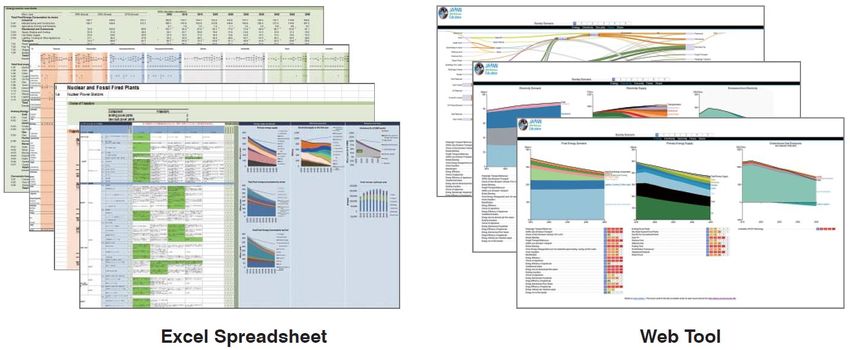
Outline
Background on energy situation and climate policy;
How was the tool developed;
Model framework and data;
Role of business for enabling sustainable lifestyles
Scenarios setting;
Major differences from the UK 2050 Calculator;
Launch of Japan 2050 Low Carbon Navigator;
Application and outreach;
Major results;
Challenges and way forward.
2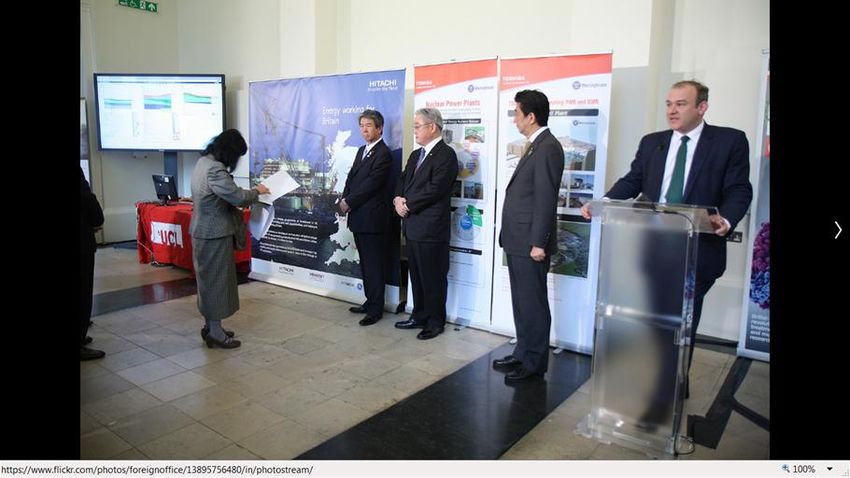
Background: Energy situation

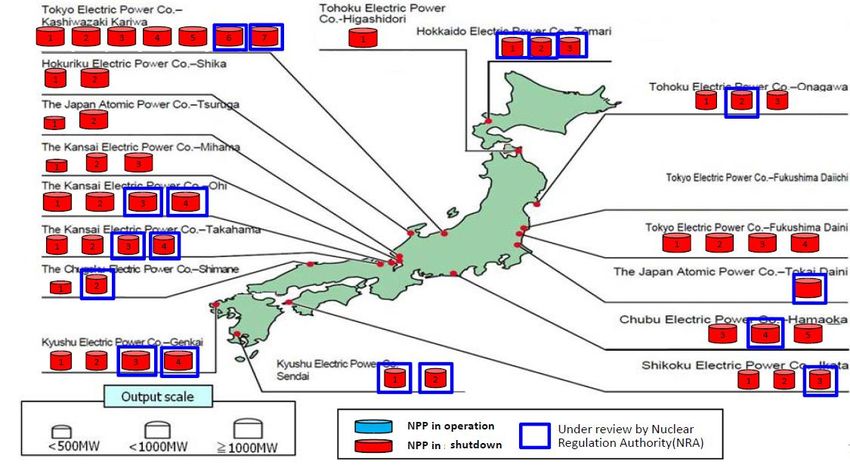
                                     Nuclear power plants in Japan

                                             Role of business for enabling sustainable lifestyles

High dependency on overseas fossil
      fuels for power supply

                                                                            Source: METI, 2014

                                                                                               3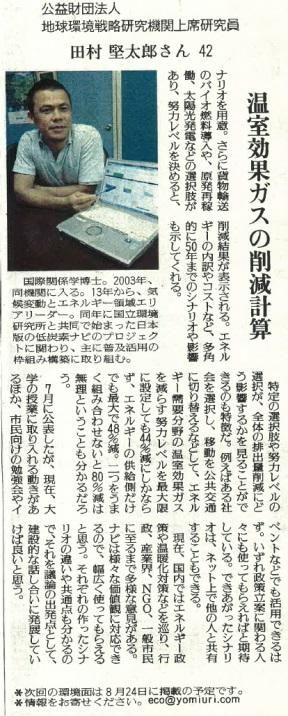
Background: Energy policy
The 4th Strategic Energy Plan (April 11th, 2014)
Basic viewpoints of energy policy (3E + S);
Energy mix will be announced soon Role of business for enabling sustainable lifestyles
Nuclear as an important base-load power source, restart of NPPs;
Promotion of high efficient and low-carbon coal power generation;
Expansion of renewable energy (13.5% by 2020 and 20% by 2030).
Electricity System Reform
Introduction of energy management system for energy
conservation
4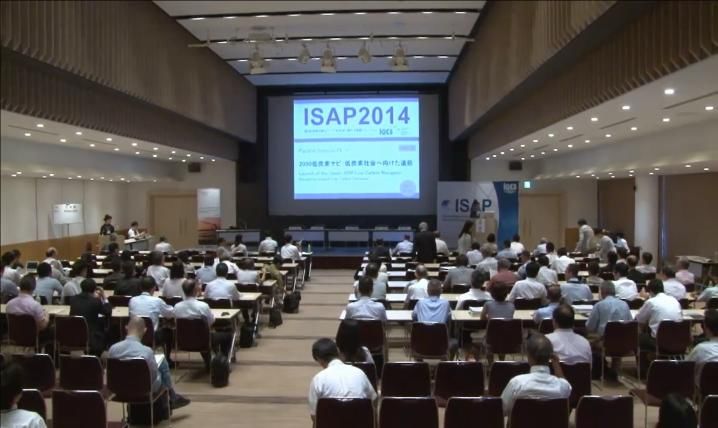
Background: Climate policy
Mitigation target setting
Kyoto target: 8.4% reduction from 1990 achieved against 6% target;
2020 target: -3.8% from 2005 vs. -25% from 1990 (CPH pledge)
Post 2020 target: Under discussion
Role of business for enabling sustainable lifestyles
2050 target: 80% reduction from current levels (4th BEP)
Policy measures
FIT for renewable energy;
Carbon tax;
Tokyo emissions trading system
Building Low Carbon Society
Visions of Low Carbon Society 2050
Source: MOEJ
5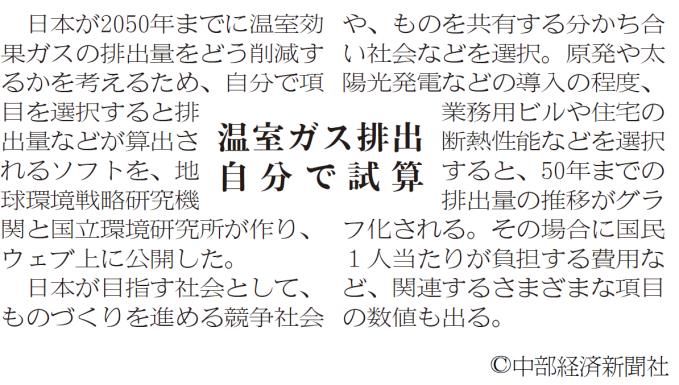
How was the tool developed:
Initiation

    Initiated by IGES through Dr. Nishioka and IGES
    President Mr. Mori in early 2013;
    Started in May 2013;
                                        Role of business for enabling sustainable lifestyles

    Jointly developed by IGES and NIES;
    Launched in July 2014;
    Facilitation by the British Embassy Tokyo and
    technical support from the UK DECC;
    Financial support from the Ministry of the
    Environment of Japan.

                                                                                          6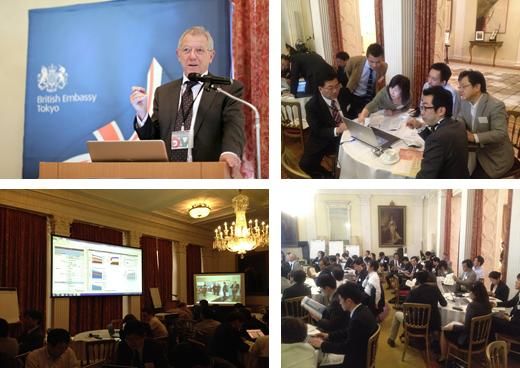
How was the tool developed:
Team and working mechanism

    Overseas           Team                       Domestic

                Advisor: Dr. Nishioka
                                                    2 Expert
                                        Role of business        meetings
                                                         for enabling sustainable lifestyles
   British
Embassy Tokyo                                      Individual interviews
                 Technical team
  UK DECC        (Major 4 persons)                   Technical review:
                                                          IEEJ

                                                   Database: LCS proj
                  Outreach team                           Web tool:
 Overseas         (Major 3 persons)                      outsourced
 Calculators                                             Feedbacks

                                                     Media coverage

                                                                                          7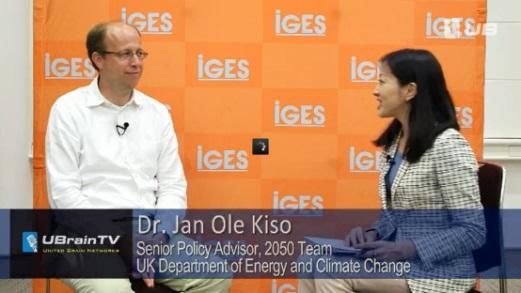
Japan Low Carbon Navigator

Two versions: the Excel model and the Web Tool.
  Excel model: http://www.2050-low-carbon-navi.jp/web/en/ (English version)
  Web Tool: http://www.2050-low-carbon-navi.jp/ (Japanese version)
         http://www.en-2050-low-carbon-navi.jp/ (English  version)
                                                     Role of business for enabling sustainable lifestyles

                                                                                                       8
Model Framework

                  9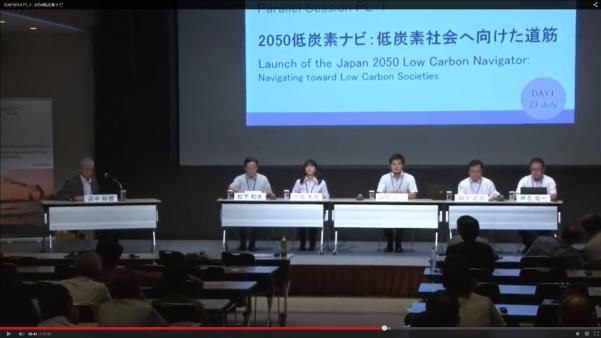
Data sources

    Japan Low Carbon Society 2050 project;
    Energy Cost Committee Report/Energy and
    Environment Council;
                                         Role of business for enabling sustainable lifestyles

    Post-2013 Mitigation Policy and Countermeasure
    Committee (2011-2012)/MOEJ;
    Other organizations (METI, WWF Japan, Kiko
    Network, etc.)
    Other sources (IEEJ, internet, etc.)

                                                                                          10
Scenario setting: Five society
scenario
R&D
MIJ
Role of business for enabling sustainable lifestyles
SB
RI
Share
11Scenarios setting: Level of efforts
The Low Carbon Navigator sets out four or five (renewable energy
and nuclear power) trajectories reflecting the whole range of
potential future scenarios.
Role of business for enabling sustainable lifestyles
12Major differences from the UK
2050 Calculator?
Initiated by IGES, a public interest corporation type of institute;
Named as Japan 2050 Low Carbon Navigator;
Japan’s specific data on scenario setting and technology
specifications; Role of business for enabling sustainable lifestyles
Uniqueness in setting the five society scenarios for 2050
reflecting future social and economic development;
Level setting ranging from no efforts to high level of efforts (from
L1 - L4) with an additional L5 for physical /technological limits;
Treatment of energy oversupply compared with demand levels;
Approach of expert meetings and individual interviews.
13Launch events
Visit of Japan Prime Minister Abe to the UK, 1 May 2014
Joint Statement by the Governments of the
United Kingdom and Japan on the occasion of
Role of business for enabling sustainable lifestyles
the visit of Prime Minister Abe to the UK on 1
May 2014.
…..Related to the increase in the scope for further
cooperation and information sharing on policies, “the
deployment of the 2050 Pathways
Calculator (which) can be used to engage a range of
audiences in discussion on the challenges and
opportunities of the future energy system” was included.
Source: British Embassy Tokyo, GOV.UK
14Launch events
Pre-launch at the British Embassy Tokyo, 12 May 2014
• VIPs: Mr. Junichi Shiraishi, Vice-
Minister for Global Environmental
Affairs of MOEJ, Sir David King, UK Role of business for enabling sustainable lifestyles
Foreign Secretary’s Special
Representative for Climate and Mr.
Richard Oppenheim, Head of Climate
Change and Energy at the British
Embassy Tokyo.
• 50 participants from governmental
organizations, academia, NGOs,
business sector, media and foreign
embassies in Tokyo.
• Interactive trial workshop.
Source: British Embassy Tokyo, IGES
15Launch events
Launch at 2014
International Forum for
Sustainable Asia and the
Pacific (ISAP), 23 July 2014 Role of business for enabling sustainable lifestyles
Presentations
Panel discussions
Media interviews
Demonstration corner
More than 100
participants
Source: United Brain Networks, You Tube.
16Application and outreach
Media coverage;
University debates on energy and
climate change;
Governmental organizations; Role of business for enabling sustainable lifestyles
Distribution through international
workshops, academia conference,
networks, etc.
Feedbacks from
users.
17Key messages
Many chances exist to achieve the maximum reductions: 87% from
1990 levels under share society scenario;
CCS technologies: critical to achieve 80% reductions in 2050;
Without nuclear, 80% reductions can be achievedRoleinof2050 if renewable
business for enabling sustainable lifestyles
energy fully expanded together with massive adoption of CCS;
Renewable energy: more expensive in the short run but not the case if
oil price upsurge in the long run;
Keeping all at L1s, 9% reductions to be achieved due to population
downward trend by 2050;
Shift to different types of society will substantially influence the
emission levels, in particular the share society;
An economy-wide integrated approach is necessary to achieve the
80% long-term target.
18Challenges and way forward
Challenges:
Limited workers with multiple tasks;
International team and barriers in Japanese communication;
Weak in outreach. Role of business for enabling sustainable lifestyles
Way forward:
Strengthening outreach activities and grasp the chances of
domestic INDC target setting;
Development of the simplified version (My 2050 Calculator) ;
City level low carbon navigator.
19Join us to explore your own pathways by
using the Low Carbon Navigator!
For information:
Web Tool: http://www.en-2050-low-carbon-navi.jp/
Excel version: http://www.2050-low-carbon-navi.jp/web/en/
Contact us and share your opinions and ideas:
E-mail: ge-info@iges.or.jpYou can also read


