Jellyfish Filter System Inspection and Maintenance Information
←
→
Page content transcription
If your browser does not render page correctly, please read the page content below
Jellyfish™ Filter System
                         Inspection and Maintenance Information

Jellyfish™ Inspection and Maintenance
Regular inspection and maintenance are proven, cost-effective ways to maximize water
resource protection for all stormwater pollution control practices, and are required to
insure proper functioning of the Jellyfish filter system. Inspection of the Jellyfish filter
system is easily performed from the surface, while proper maintenance requires a
combination of procedures conducted from the surface and with worker entry into the
structure. The Jellyfish filter system’s patent pending technology has no moving parts,
keeping the process simple.

Please refer to the following information and guidelines before conducting inspection and
maintenance activities.

When is inspection needed?
   • Post-construction inspection is required prior to putting the Jellyfish filter system
       into service.
   • Routine inspections are recommended during the first year of operation to
       accurately assess the sediment and floatable pollutant accumulation, and to ensure
       that the automatic backwash feature is functioning properly.
   • Specifically for New Jersey installations, regulations require all BMPs to be
       inspected a minimum four times per year and after every storm with greater than
       one inch of rainfall.
   • Inspections should also be performed immediately after an oil, fuel or other
       chemical spill.

When is maintenance service needed?
   • For optimum performance, the unit should be cleaned out once the sediment depth
       reaches 12 inches of accumulation. Generally, the minimum cleaning frequency is
       once annually, although the frequency can be based on historical inspection results.
   • Filter cartridges should be cleaned and re-commissioned, or replaced, every 12
       months or when the automatic backwash feature no longer functions, whichever
       occurs first. The automatic backwash function will be disabled if the filter
       cartridges become saturated with sediment. This saturated condition is indicated if
       the backwash pool contains more than 3 inches depth of water after 12 or more
       hours of dry weather have elapsed since the most recent rainfall/runoff event.
   • The unit should be cleaned out immediately after an oil, fuel or chemical spill.

What conditions can compromise the Jellyfish filter system’s performance?
   • If sediment accumulates beyond 12 inches in depth, filter cartridge life and
       sediment removal efficiency may be reduced.
   • If filter cartridges become saturated with sediment, the system may not provide
       filtration treatment at the designed water quality flow rate, and unfiltered water
       may bypass the filter cartridges.

                                               1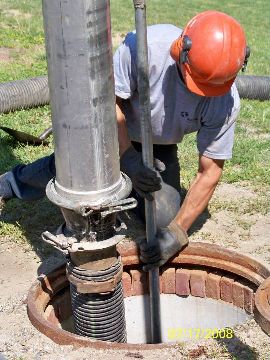
•   If an oil spill(s) exceeds the oil capacity of the system, subsequent spills may not be
       captured and may cause fouling of the filter cartridges.
   •   If debris clogs the inlet of the system, removal efficiency of sediment,
       hydrocarbons, and gross pollutants may be reduced.
   •   If a downstream blockage occurs, a backwater condition may occur in the system
       and removal efficiency of sediment, hydrocarbons, and gross pollutants may be
       reduced.

What training is required?
The Jellyfish filter system is inspected and maintained by professional vacuum cleaning
service providers with experience in the maintenance of underground tanks, sewers and
catch basins. Since some of the maintenance procedures require manned entry into the
Jellyfish structure, only professional maintenance service providers trained in confined
space entry procedures should enter the vessel. Service provider companies typically
have personnel who are trained and certified in confined space entry procedures
according to local, state, and federal standards.

For typical inspection and maintenance activities, no specific supplemental training is
required for the Jellyfish filter system. Information provided in this document or the
Jellyfish Filter System Operation and Maintenance Manual (provided to the system owner)
contains sufficient guidance to maintain the system properly.

What equipment is typically required for inspection?
   • Manhole access cover lifting tool
   • Oil dipstick or sampling tool
   • Sediment probe
   • Flashlight
   • Camera
   • Data log
   • Safety cones and caution tape
   • Hard hat, safety shoes, safety glasses, and chemical-resistant gloves

How is the Jellyfish filter system inspected?
   • The Jellyfish filter system can be inspected from the surface through the standard
        surface manhole access cover or custom doors.
   • Sediment and oil depth inspections are performed with a sediment probe and oil
        dipstick. Sediment and oil depth are measured through the 30-inch diameter
        maintenance access pipe.
   • Visual inspection for floatable pollutant accumulation such as litter and
        hydrocarbons is also performed by shining a flashlight into the 30-inch diameter
        maintenance access pipe.
   • Visual inspection of the backwash pool (6-inch high kidney-shaped or oval-shaped
        weir) should also be performed to check for standing water in the pool. If at least
        12 hours of dry weather have elapsed since the most recent rainfall/runoff event
        and the backwash pool contains more than 3 inches of water, this condition
        indicates that the filter cartridges are saturated with sediment and should be
        cleaned or replaced.

                                              2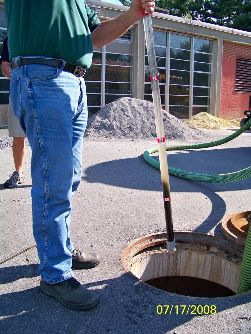
•   Inspections also involve a visual inspection of the internal components of the system
       for obvious damage.

What equipment is typically required for maintenance?
   • Vacuum truck equipped with water hose and jet nozzle
   • Small pump and tubing for oil removal, if necessary
   • Manhole access cover lifting tool
   • Oil dipstick or sampling tool
   • Sediment probe
   • Flashlight
   • Camera
   • Data log
   • Safety cones and caution tape
   • Hard hats, safety shoes, safety glasses, chemical-resistant gloves, and hearing
       protection for service providers
   • Gas analyzer, respiratory gear, and safety harness for specially trained
       personnel if confined space entry is required
   • Replacement cartridges are required if manual cleaning and re-commissioning of
       existing cartridges is not possible or adequate to restore proper system function.
   • Jellyfish Cartridge Backflush Pipe

How is the Jellyfish filter system maintained?
   • The Jellyfish filter system can be maintained through the standard surface manhole
        access cover. All access covers should be removed to provide additional light and
        ventilation. If custom doors were installed instead of frames and covers, open all
        doors
   • Insert the oil dipstick or sampling tool into the 30-inch diameter maintenance access
        pipe. If oil is present, pump off the oil layer into separate containment using a
        small pump and tubing. Some maintenance service providers may elect to use the
        vacuum hose if the oil amount is small.
   • Maintenance cleaning of accumulated floatable litter and sediment is performed
        with a vacuum hose inserted through the 30-inch diameter maintenance access
        pipe.
   • Using the vacuum hose, decant the water from the lower chamber to the sanitary
        sewer, if permitted by the local regulating authority, or into a separate
        containment tank.
   • Remove the sludge from the bottom of the unit using the vacuum hose.
   • For larger Jellyfish systems, (8-ft, 10-ft, 12-ft diameter), complete sediment
        removal may be facilitated by inserting a water hose with jet nozzle through a
        hole in the cartridge deck where a filter cartridge has been removed. Use the
        water jet to break up sediment on the bottom of vessel that is farthest from the 30-
        inch diameter maintenance access pipe. Rinse this sediment toward the
        maintenance access pipe for easy vacuum removal.
   • To access the cartridge deck for manual cleaning or replacement of filter
        cartridges, descend the ladder that is built into structure’s sidewall, observing all
        precautions for safe and proper confined space entry. Note that the cartridge

                                             3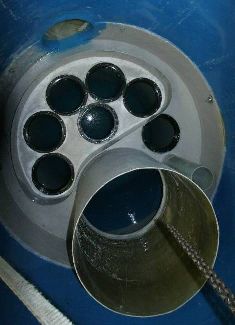
deck may be slippery. Care should be taken to avoid stepping directly onto the
        cartridge heads or onto the backwash pool weir.
    •   A manual backflush of the cartridges is recommended to remove a high
        percentage of accumulated sediment from the filtration tentacles, restore flow
        capacity, and extend the service life of the cartridges. A Jellyfish Cartridge
        Backflush Pipe (12-inch diameter x 3-feet length threaded plastic pipe with
        flapper valve) may be purchased from Imbrium Systems that allows each cartridge
        to be selectively backwashed using water that is supplied from either (a) the
        previously decanted water stored in a vactor truck compartment; (b) clean water
        from a separate water truck delivered to the site; or (c) water from a nearby fire
        hydrant or other clean water source.
    •   Manual backflush procedure: Twist the threaded lid on the cartridge head
        counter-clockwise to remove the lid and expose the tentacle holes. Carefully screw
        in the threaded Jellyfish Cartridge Backwash Pipe over the exposed tentacle
        holes. Do not over-tighten. Fill the Pipe with water (approximately 16 gallons). Pull
        the cord to open the flapper valve and backflush the water through the cartridge.
        Refill the Pipe and backflush a second time. The full Pipe contents should drain
        within approximately 20 seconds to remove a high percentage of accumulated
        sediment and restore the flow capacity of the cartridge. Remove the Pipe and re-
        install the lid hand-tight.
    •   Inspection of cartridge after manual backflushing: After manually backwashing the
        first cartridge, a visual inspection of the filtration tentacles is recommended. With
        the threaded lid removed, lift the cartridge (using the lifting loops in the cartridge
        head) so that most or all of the filtration tentacle bundle is exposed. If upon visual
        inspection the degree or nature of any remaining sediment accumulation on the
        tentacles shows that the manual backwash was not effective, provisions must be
        made to replace all the spent cartridges with new cartridges as soon as possible.
        To re-commission a cleaned and regenerated cartridge, or to install a new
        cartridge, place the cartridge into the cartridge hole and re-install the threaded
        lid hand-tight to secure the cartridge.
    •   New cartridges are lightweight (less than 20 pounds), and can be easily lowered
        down to a worker on the cartridge deck. Care should be taken not to bend or
        otherwise damage the tentacles during the handling and installation procedures.
    •   For maximum safety, it is recommended that each spent cartridge be removed and
        replaced one at a time, such that there is never more than one cartridge hole
        exposed. Removable cartridge hole cover plates can be purchased from Imbrium
        Systems if required.
    •   Remove spent cartridges from the vessel.
    •   After cartridge service has been completed, the backflush water may be removed
        by vacuum hose.
    •   Re-fill the lower chamber with water where required by the local jurisdiction.
.
What is required for proper disposal?
   • Disposal requirements for recovered pollutants and spent filter cartridges may
        vary depending on local guidelines. In most areas the sediment and spent filter
        cartridges, once dewatered, can be disposed of in a sanitary landfill. It is not
        anticipated that the sediment would be classified as hazardous waste.

                                              4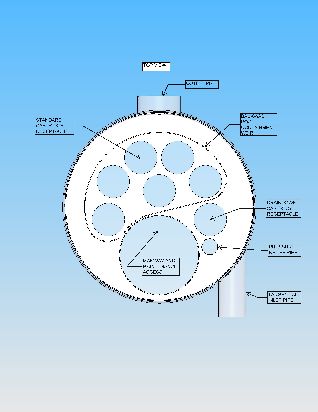
What about oil spills?
   • Petroleum-based pollutants captured by the Jellyfish filter system
       (oil/chemical/fuel spills) should be removed and disposed of by a licensed waste
       management company.
   • Although the Jellyfish filter system captures virtually all free oil, a sheen at the
       outlet does not mean the unit isn’t working. A rainbow or sheen can be visible at
       oil concentrations of less than 10 mg/L (ppm).

What factors affect the costs involved with inspection/maintenance?
   • Inspection and maintenance costs are based on unit size, cartridge count,
       sediment/oil/hazardous material loads, transportation distances, tipping fees,
       disposal requirements and other local regulations. Maintenance costs are
       anticipated to be substantially lower in instances where dirty cartridges are
       manually cleaned and re-commissioned rather than replaced with new cartridges.

                                            5
System schematic and component functions
Below is a schematic of the Jellyfish filter system with key components identified and their
functions briefly described (6-ft diameter system is depicted).
Jellyfish™ Filter System
Vessel
Maintenance Access A vertically-oriented, precast
Pipe concrete cylinder is separated into
Access for removal of upper and lower chambers by the
sediment and floatable by cartridge deck. Vessels are available
vacuum hose. in 5 sizes ranging from 4 to 12 ft in
Inspection point for oil diameter.
and floatable litter
accumulation.
Backwash Pool Weir
Pressure Relief Pipe An enclosed weir forms a pool of filtered
Ensures influent water during a storm event. This pool
continues to receive provides automatic backwash self-cleaning
pretreatment in the event of the cartridges as the runoff event
of total occlusion of the subsides.
filtration tentacles.
Untreated Stormwater Filtered Effluent
Draindown Cartridge Cartridge Deck
During the automatic The deck contains Jellyfish
backwash, the displaced cartridges, allowing the
water from the lower filtration tentacles to be
chamber exits through extended into the lower
this cartridge. chamber. Oil and floatable litter
are trapped beneath the deck
outside the filtration zone.
Separator Skirt
A pretreatment channel is
formed between the
vessel wall and the
separator skirt. The
pretreatment zone
isolates oil, floatable litter
and coarse sediment from
the filtration zone. A Monteco Company
The Jellyfish filter system has no moving parts to wear out and therefore maintenance
activities are generally focused on pollutant removal and filter cartridge service.
6Lightweight Jellyfish filter cartridges are easily inserted into and removed from the
cartridge deck by hand. The top view schematic (above right) and top view photo (below
right) depict the 6-ft diameter system. Note the 6 standard cartridges enclosed by the
kidney-shaped backwash pool weir. A single draindown cartridge is located outside the
weir.
The depth of sediment and oil can be measured from the surface by using a sediment
probe or dipstick tube equipped with a ball check valve and inserted through the 30-inch
maintenance access pipe. This large port provides convenient access for inspection and
vacuum removal of water and pollutants.
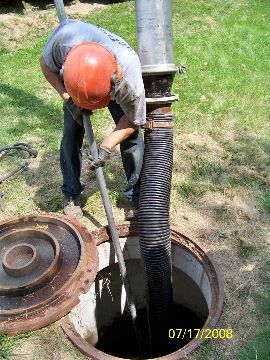
7A maintenance worker stationed on the surface uses a vacuum hose to evacuate water,
sediment, and debris from the system.
The benefits of regular inspection and maintenance are many – from ensuring maximum
operation efficiency, to keeping maintenance costs low, to the continued protection of
natural waterways – and provide the key to the Jellyfish filter system’s long and effective
service life.
Ordering Replacement Parts
Jellyfish filter cartridges, cartridge hole cover plates, Jellyfish Cartridge Backflush Pipes
(for manual backflushing), and other system components can be ordered by contacting:
Imbrium Systems Corporation
1-888-279-8826
www.imbriumsystems.com
(revised 5-29-09)
8You can also read


