JUICE (JUpiter ICy moons Explorer)
←
→
Page content transcription
If your browser does not render page correctly, please read the page content below
JUICE (JUpiter ICy moons Explorer)

                                    JUICE Science Themes
                                    • Emergence of habitable worlds
                                      around gas giants
                                    • Jupiter system as an archetype for
                                      gas giants

                                    Cosmic Vision Themes
                                    • What are the conditions for planet
                                      formation and emergence of life?
                                    • How does the Solar System work?

JUICE concept
• European-led mission to the Jovian system
• JGO/Laplace scenario upgraded with two Europa flybys and
  high-inclination phase at Jupiter
• Model payload is the same as it was on JGO/Laplace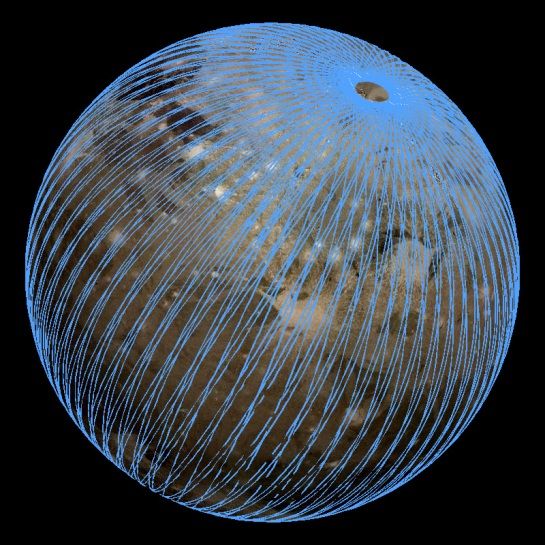
Liquid water

JUICE versus JGO/EJSM-LAPLACE : what has changed?                                           JUICE
 How does JUICE compare to the previous Jupiter Ganymede Orbiter ?
 •       Priorities and objectives are similar
 •       Ganymede remains the top priority and deserves an orbiter
 •       Two Europa flybys have been added
 •       The Callisto phase has been modified to allow for the exploration of the unknown high
         latitudes of the jovian system

 How can we keep all former JGO objectives and also add 2 Europa flybys ?
     •    Increase of radiation exposure balanced by
            –   Moderate increase of shielding mass by ~50 kg
           – Higher component tolerance (up to 30 krad)
     •    Minor additional ΔV required for the additional mission options
            –   Higher Jupiter latitude with Callisto gravity assists
            –   Europa flybys
     •    Increased dry mass feasible due to
            –   Higher launch capability
            –   Longer interplanetary transfer (reduction of ΔV)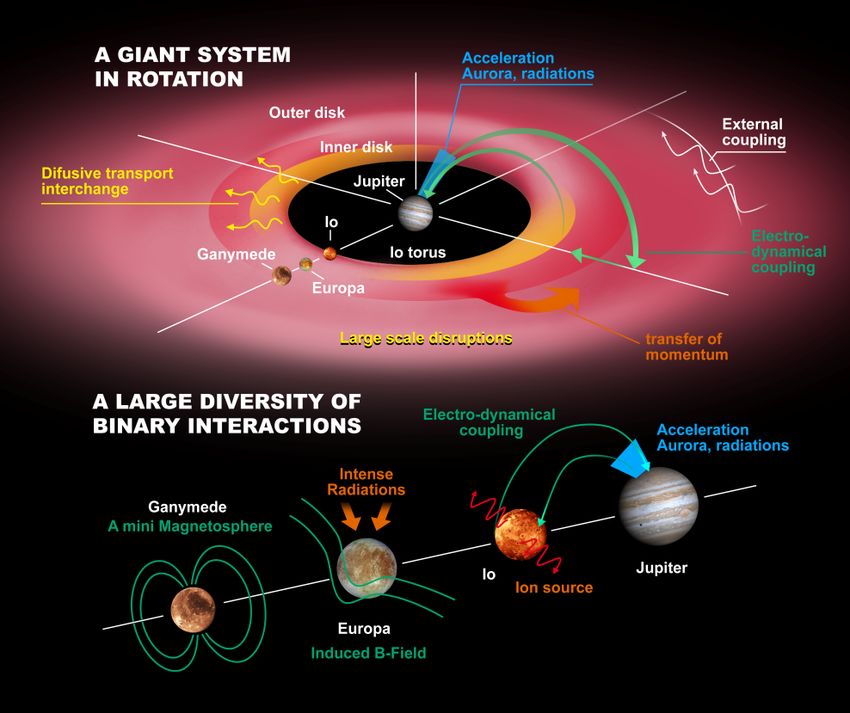
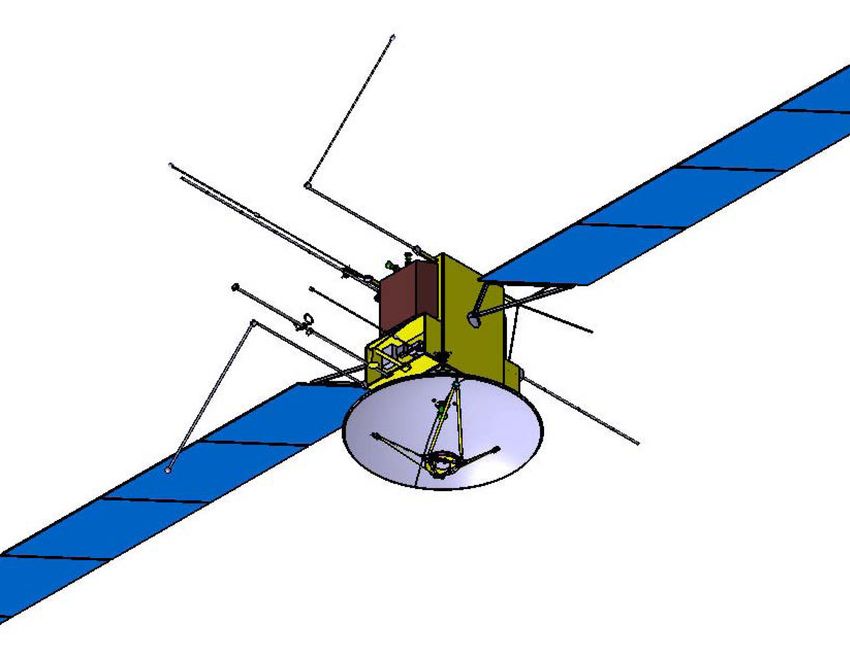
JUICE

•   Dry mass ~1900 kg, propellant mass ~2900 kg

•   High    v required: 2600 m/s

•   Model payload 104 kg, ~120 – 150 W            Option 1

•   3-axis stabilized s/c

•   Power: solar array 60 – 70 m2, 640 – 700 W

•   HGA: >3 m, fixed to body, X & Ka-band
                                                    Option 2

•   Data return >1.4 Gb per 8 h pass (1 ground
    station)
                                                                Option 3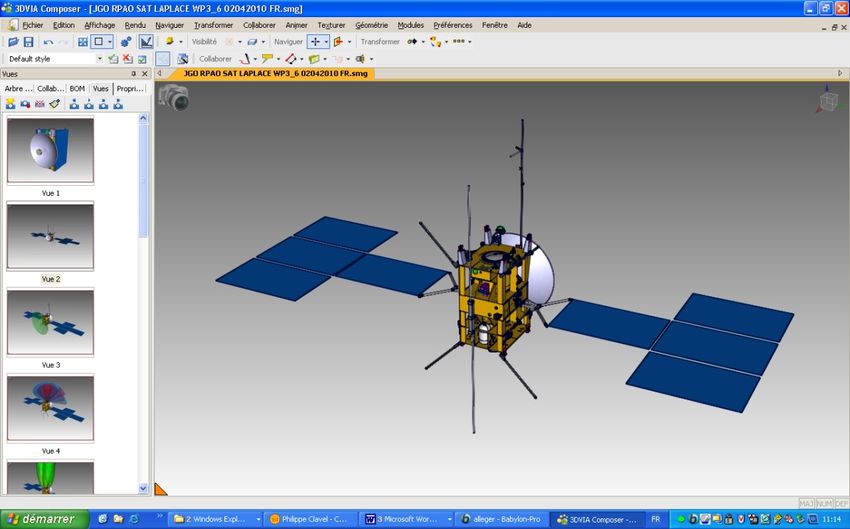
JUICE

Imaging
                       JUICE Model Payload
Narrow Angle Camera (NAC)                  10 kg
                                                                                   LA   WAC   NAC

                                                                                                    PPI-INMS
Wide Angle Camera (WAC)                    4.5 kg
Spectroscopy                                                                                           SWI

Visible Infrared Hyperspectral Imaging
                                           17 kg
Spectrometer (VIRHIS)
UV Imaging Spectrometer (UVIS)             6.5 kg                           UVIS            Option 3
                                                                                   VIRHIS

Sub-mm Wave Instrument (SWI)               9.7 kg
                                                                                              Option 1
In situ Fields and Particles
Magnetometer (MAG)                         1.8 kg
Radio and Plasma Wave Instr. (RPWI)        11.2 kg
Particle and Plasma Instr. - Ion Neutral   18.2 kg
Mass Spectr. (PPI-INMS)                                    Option 2
Sounders & Radio Science
Laser Altimeter (LA)                       11 kg
Ice Penetrating Radar (IPR)                10 kg         Model payload is based on
Radio Science Instrument (JRST+USO)         4 kg     heritage: BepiColombo, Juno, Mars Express,
                                                      Double Star, Venus Express, Rosetta, Dawn,
                               Total mass: 104 kg                    Cassini, etc…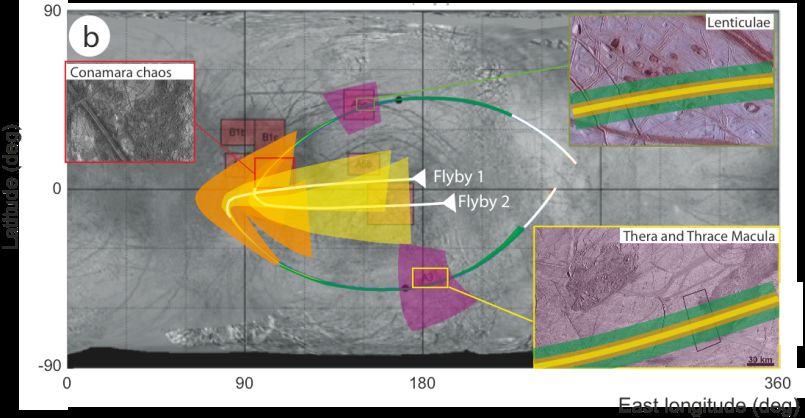
JUICE

     JUICE
Launch
            Mission     Profile
                June 2022
                                – phase 2
         – in the (August
                   Jupiter
                    2023)
                              system
Interplanetary transfer       7.6 years
(Earth-Venus-Earth_Earth)     (8 years)
Jupiter orbit insertion and   11 months
apocentre reduction with
Ganymede gravity assists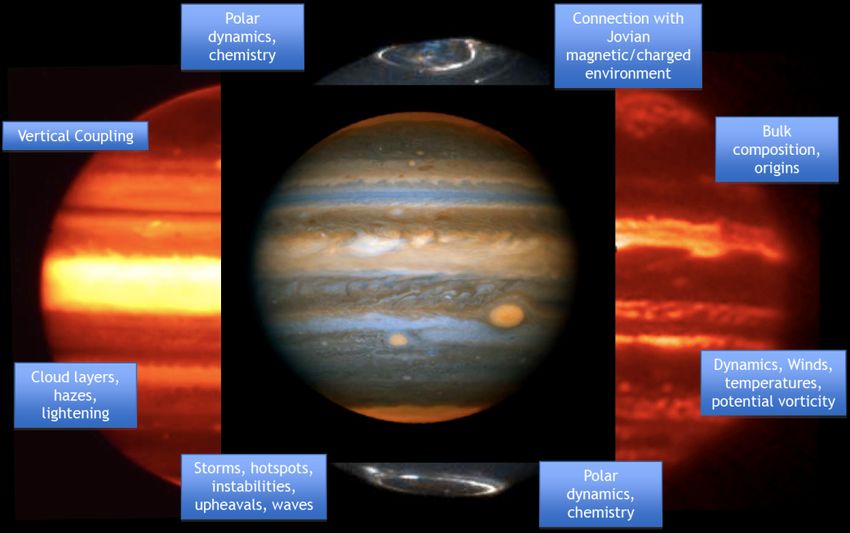
JUICE

Launch                        June 2022
Interplanetary transfer        7.6 years
(Earth-Venus-Earth_Earth)
Jupiter orbit insertion and   11 months
apocentre reduction with
Ganymede gravity assists
2 Europa flybys                 36 days

                                                                                      Europa

                                 East longitude          90            180           270
                                 Altitude         1000   2000   3000   4000   5000   6000   7000   8000 km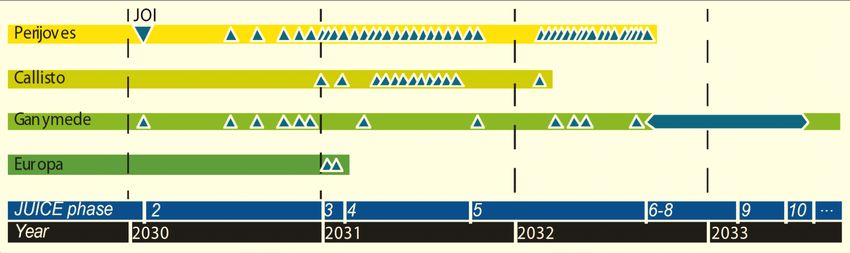
JUICE

Launch
       JUICE            Mission     Profile
                            June 2022
                                            –  phase 4
                –   Callisto
Interplanetary transfer
(Earth-Venus-Earth_Earth)
                                 +   high
                             7.6 years
                             (8 years)
                                          latitudes
Jupiter orbit insertion and   11 months
apocentre reduction with
Ganymede gravity assists                  Callisto
2 Europa flybys                 36 days
Reduction of vinf               60 days
(Ganymede, Callisto)
Increase inclination with      200 days              Jupiter
10 Callisto gravity assists                           Pole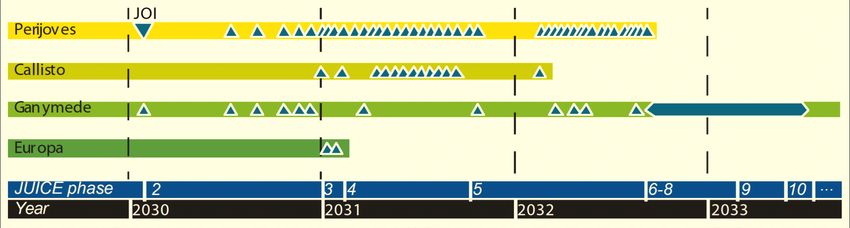
JUICE

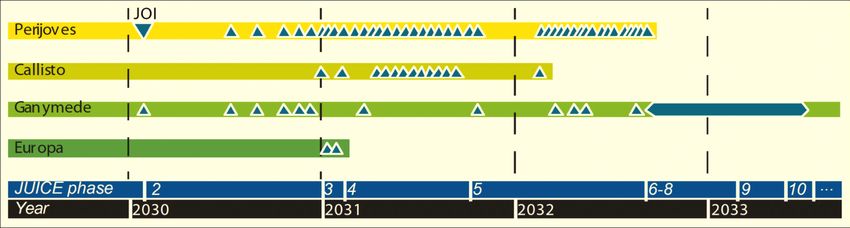
        JUICE Mission Profile – phases
Launch
Interplanetary transfer
                        5-10 -7.6Ganymede
                             June 2022
                                 years
(Earth-Venus-Earth_Earth)
Jupiter orbit insertion and    11 months
apocentre reduction with
Ganymede gravity assists
2 Europa flybys                  36 days
Reduction of vinf                60 days
(Ganymede, Callisto)                                   7
Increase inclination with 10    200 days
Callisto gravity assists
Callisto to Ganymede           11 months
Ganymede (polar)
 10,000x200 km & 5000 km        150 days       9-10
 500 km circular                102 days   6               8
 200 km circular                 30 days
Total mission at Jupiter         3 years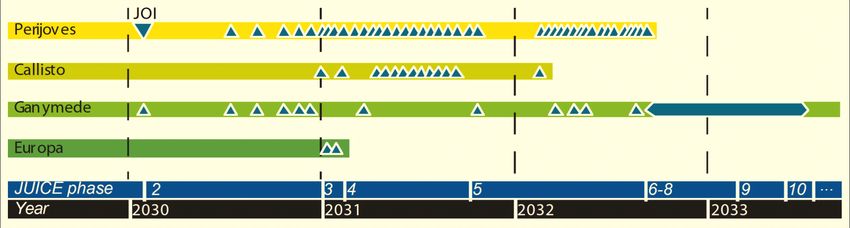
JUICE

JUICE is technically feasible

JUICE is ready to go: No
need for critical technology
identified

JUICE is compatible with
programme constraints
Liquid water

Characterise GANYMEDE as a planetary object and possible habitat                              JUICE
 WHY GANYMEDE ?                                     HIGHLIGHTS
 •       Largest satellite of the solar system      •   First orbiter of an icy moon
         (bigger than Mercury)                      •   First european-led mission to the outer system
 •       A possible habitat                         •   First opportunity to explore the combination
 •       An intrinsic magnetic field embedded in        of 3 magnetic fields at a planetary scale
         the Jovian magnetosphere                   •   Necessary step forward 30 years after Galileo
 •       Richest crater morphologies in the solar
         system
 •       Best example of water-rich exoplanets
 •       A laboratory to study the Laplace
         resonance

     JUICE OBJECTIVES
     •   Characterise the extent of the ocean and its relation to the deeper interior
     •   Characterize the ice shell
     •   Determine global composition, distribution and evolution of surface materials
     •   Understand the formation of surface features and search for past and present activity
     •   Characterize the local environment and its interaction with the jovian magnetosphere
Liquid water
Study CALLISTO as a remnant of the early Jovian system JUICE
WHY CALLISTO? TO BE REMEMBERED
• Best place to study the impactor history Twelve flybys for science
through time in the outer system
• Differentiation – still an enigma Two years of remote observations
• The only known example of a non
habitable but ocean-bearing world The Callisto phase is also a requirement for
• The witness of early ages reaching the still unexplored high latitudes of
the Jovian system.
JUICE OBJECTIVES
• Characterise the outer shells, including the ocean
• Determine the composition of the non-ice material
• Study the past activityLiquid water
Explore EUROPA’s recently active zones JUICE
WHY EUROPA ? TO BE REMEMBERED
• Attractive moon to study the habitability New investigations as compared to Galileo
in the solar system One flyby is already enough – Two provides a
• Possesses a « salty » ocean in contact back-up
with the rocky mantle One year of remote observations in addition to
• May be an active world the 2 F/B
JUICE will tell us:
• If the liquid composition is comparable
to our oceans
• How thick is the crust in chaos regions
• If liquid reservoirs exist
• If the moon is still active
JUICE OBJECTIVES
• Determine the composition of the non-ice material, especially as related to habitability
• Look for liquid water under the most active sites
• Study the recently active processesLiquid water Characterise the Jovian magnetosphere JUICE Why Jupiter’s Magnetosphere? • Largest object in our Solar System • Biggest particle accelerator in the Solar System • Unveil global dynamics of an astrophysical object HIGHLIGHTS • will study the • Study dynamics of magnetosphere in and out of the magnetodisc • Determine the electrodynamic coupling between the planet and the satellites • Assess global and continuous acceleration of particles JUICE OBJECTIVES • Characterise the magnetosphere as a fast magnetic rotator • Characterise the magnetosphere as a giant accelerator • Understand the moons as sources and sinks of magnetospheric plasma
Liquid water

Characterise the Jovian atmosphere                                                             JUICE

 WHY JUPITER?
 •       A paradigm for exoplanetary systems

 •       The largest window into the evolution
         of the primordial nebula

 •       Unresolved questions in the field of
         atmospheric dynamics and chemistry

 HIGHLIGHTS
 •       First direct measurements of atmospheric circulation in the middle atmosphere
 •       Complement and extend Juno’s (2016+) investigation of deep interior
 •       Long approach + 2 year baseline of tour-phase observations, includ. access to high latitudes
 •       Exploration from the dynamic weather layer to the upper thermosphere

     JUICE OBJECTIVES
     •    Characterise the atmospheric dynamics and circulation
     •    Characterise the atmospheric composition and chemistry
     •    Characterise the atmospheric vertical structure
Liquid water JUICE Assessment JUICE
You can also read


