JULY 2019 - Sarlines Railway Books
←
→
Page content transcription
If your browser does not render page correctly, please read the page content below
JULY 2019

                    To order: www.sarlinesbooks.com.au
Bob’s Railway had two launch events. The first was at Peterborough on Wednesday 8 May and the
second was at the National Railway Museum on Sunday 12 May

OTHER RAILWAY DOGS
At the book launch events, the question has been asked several times, regarding other famous
railway dogs, both in Australia and overseas. I have pursued this line of enquiry and have no
doubt that in Australia, Bob was without peer. There was a railway dog called “Boofhead” at
Temora in the NSW Riverina in the 1960s but he did not achieve widespread notoriety during his
lifetime. In the 1930s “Jerry” was a driver’s dog who became well-known to travellers on the
narrow-gauge (2 ft. 6 in.) Gembrook line. People seem keen to compare Bob with W.A.’s “Red
Dog” who was the subject of a book and film. I’m sorry, “Red Dog” admirers, but “Red Dog’s”
story doesn’t come anywhere near Bob’s.

In the rest of the world there have been three railway dogs, when measured by the notoriety they
achieved, that stand shoulder to shoulder with Bob. In Japan there was “Hachiko” who was not a
railway dog in the sense that he rode the trains, but he was a railway-station dog. His master was
a professor and each day he would go with his master to the Shibuya station. His master died and
for 9 years, 9 months and 15 days, he continued to go to the station. The people of Tokyo were so
moved by his loyalty that they had a statue erected at the station while “Hachiko” was still alive.
More recently there has been a statue of the Professor and “Hachiko” erected at the University of
Tokyo. There have been movies about “Hachiko”.

                                                        In the US there was a dog called “Owney”
                                                        who accompanied the mail bags on the
                                                        railroads. He became the mascot of the
                                                        Postal service. He was depicted on a US
                                                        postage stamp in 2011. His train-riding
                                                        adventures were about the same era as
                                                        Bob, although, to be pedantic Bob was 3 or
                                                        4 years ahead of “Owney”. There is no
                                                        statue of “Owney”, but after his death in
                                                        1897, his skin was stuffed and he was put
                                                        on display in a glass case which is now in
                                                        the Smithsonian Institute.

                                                        In the 1950s there was a dog in Italy
called “Lampo” who was a compulsive train-traveller but would only go by passenger train. No
matter where he travelled, he always returned to Campiglia station and its assistant station-
master Elvio Barlettani. He became famous in his own lifetime following his return to Campiglia
after being lost for months. There are many similarities between the stories of Bob and “Lampo”.
There are two statues of “Lampo”. The first is a marble sculpture that was erected at the
Campiglia station.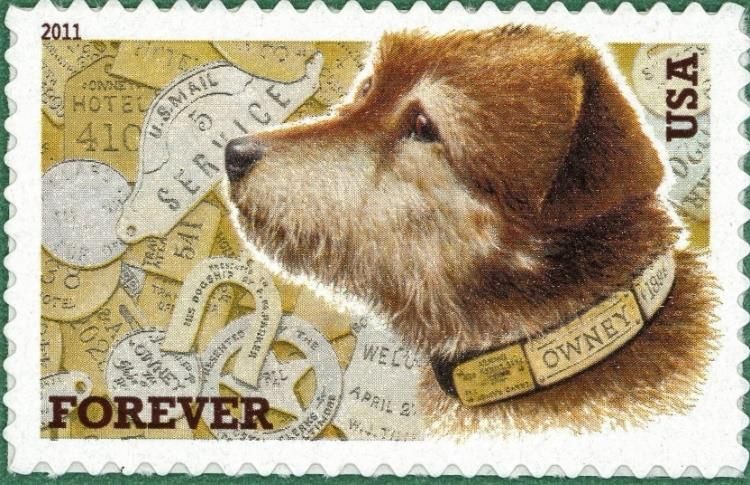
The second is a bronze replica that resides in a private garden in
                              Sydney’s Blue Mountains. This second statue was commissioned by
                              an Australian called Col whose travels had landed him, quite
                              accidentally, at Campiglia. He was moved by the story displayed on
                              a board near the ticket office that he set out to have the bronze
                              replica. He made a global search of sculptors and selected Lena
                              Toritch of Utah to do the bronze version.

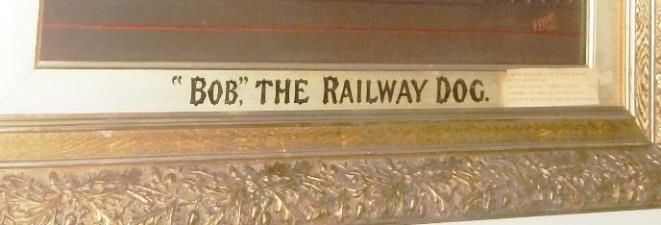
PAINTINGS OF “BOB, THE RAILWAY DOG” BY F. ABBOTT.
The Hindmarsh Historical Society kindly had one of their committee, Trevor Porter, bring the
painting of Bob that had originally been above the door of the AFULE office in Trades Hall, to the
event at the National Railway Museum.

When I had photographed it at the Hindmarsh Museum it had been in an awkward position and
                                              was poorly lit, and I was unable to clearly see
                                              the artist’s insignia and date. At the National
                                              Railway Museum, it was mounted
                                              (appropriately, I thought as both were dear to
                                              the enginemen of Peterborough/Terowie) on
                                              Garratt No. 409. The insignia was F. Abbott
                                              1898, which was 3 years after Bob had died.

                                                   I had been aware that there was a similar, but
                                                   smaller, painting at Terowie, and negotiations
                                                   resulted in one of the Terowie Community
                                                   bringing the painting to the Peterborough event.
                                                   The painting was in poor condition with some
                                                   abrasion and flaking of the paintwork but was
                                                   obviously a replica of the larger painting. It was
                                                   in a plain frame. There was no insignia or date,
                                                   but these could have been obscured by the frame.
The artist had incorporated the title of the painting on the tender. I have sought some information
from the Terowie community regarding the history of their painting. About that era there was an
F. Abbott in Terowie. In 1889 Terowie established an annual Art Exhibition with one of the
awards going to F. Abbott.

WIRE SCULPTURE OF “BOB”
It is said that when Bob died, he was skinned and there was a plan to have his skin stuffed and
placed in a glass cage. There is uncertainty whether the stuffing ever happened, but the National
Railway Museum now has a wire-sculpture of Bob, along with his famous collar in a glass display
case. The wire sculpture has been produced by Barbara Parry of Peterborough. It involved 140
hours of work by Barbara. It is not the first “wire Bob” that Barbara has done, but it is the only
one that is on public exhibition. She had previously done a “wire Bob” for a fund-raising event.
That sculpture is now privately owned.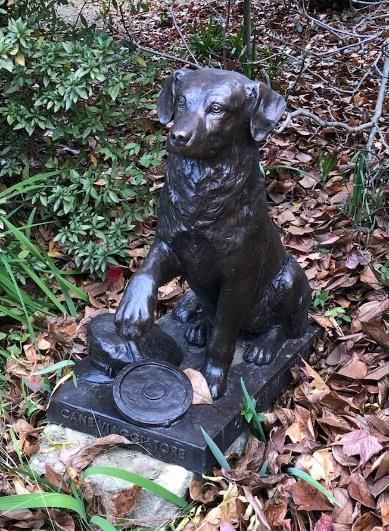
Barbara Parry with “Bob’”

                                             The display comes with a series of audio narratives
                                             about Bob that have been recorded by former ABC
                                             identity, Bill Mudie, based on some of the stories
                                             included in Bob’s Railway.

                                             Even in death, Bob has continued to generate stories

                                             Wayne Kitchener said that as a kid, growing up in the
                                             Norwood area in the 1950s the local barber’s shop
                                             was on The Parade. The barber was Len Bell, and on
                                             display in the Len’s shop was a photograph of Bob,
                                             the railway dog. What was particularly striking to
                                             Wayne was that Len’s hair-style was parted in the
                                             middle and just like Bob’s.

THE BOOK ON THE “OVERLAND”
The next book will be on the “Overland”, although I am not sure that will be the title. Some years
ago, Bill Callaghan published a book called “The Overland Railway” which was less about the train
and more about the railway corridor between Adelaide and Serviceton. I am contemplating a title
that avoids confusing the two books. I will be dealing with the train, and it will be as much about
the Victorian side as the SA side.

There will be a chapter in the “Overland” book that chronicles “incidents and accidents”. That is
nearly complete. There will also be a chapter that deals with some of the more frivolous
happenings – folklore stories. I am keen to hear of those stories.

Then, in about September 2021 there will be a book dealing with the Break of Gauge. It will be
timed to coincide with the centenary of the 1921 Royal Commission on the break of gauge, which
achieved very little. My original plan had been to confine this book to the South Australian
situation but it will look at the national situation.

Naturally I will be seeking photographs relating to both books.

There has been confusion regarding the naming of the Overland, when it occurred and the
derivation of the name itself. The SAR, in Weekly Notice 44 of 1935 announced that the name
would apply henceforth. But Victorian sources consistently refer to it as having happened in 1926.
Some sources mention 1936 but that appears to have been the year that the streamlining of the
500Bs (with the exception of 506) occurred. What happened was that in 1926 the Victorian
Railways Commissioners decided to give names to some of their trains, and in the list was the
“Overland”. But it seems that in their haste they overlooked the fact that South Australia should
have been consulted. Chief Commissioner Webb appears to have been not impressed, and nothing
further was heard of the “Overland” for another 9 years. There has been no offer of explanation,
either in 1926 or 1935 of the origin or significance of the name.

Bob Sampson at the National Railway Museum kindly forwarded a copy of “Bob’s Railway” to
Museum Patron, Hon. Tim Fischer who has sent the following:

Dear John,

You have a right to be very proud of your book “Bob’s Railway” which is a very colourful but also
scholarly work mainly re SAR and South Australia rail development, my congratulations and best
wishes.

There is a good market for rail books of this nature, my “Steam Australia” book has just gone to a
third reprint , unreal and now through 6,000 copies sold thanks to the photos and all support
from the National Library.

May I wish you the best through this burst of winter, maybe time to return to warmer Pichi Richi
Railway region and all its delights. Cheers, Tim Fischer.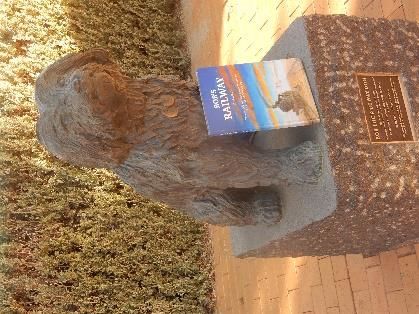
From the Collection of Stuart Hicks
                                                             c1907.

                                                              In mid-July we ventured into western
                                                              Victoria gathering material for the
                                                              “Overland” book. We called in on
                                                              Stuart Hicks at Kaniva. Stuart has an
                                                              “Overland” Twinette car that is the
                                                              centrepiece of his “Overland” Museum
                                                              at Kaniva. A timber-bodied
                                                              “Overland” sleeping car Pekina is also
                                                              part of the collection. Stuart has the
                                                              Twinette car fully enclosed in a shed
and is in the process of extending the cover to include Pekina. There are many items of
memorabilia in the collection. Presently the “Overland” Museum is not open to the public, and
Stuart is not yet ready to set an opening date. Both Stuart and myself are working towards doing a
book-launch of the “Overland” book about September 2020 at Kaniva.

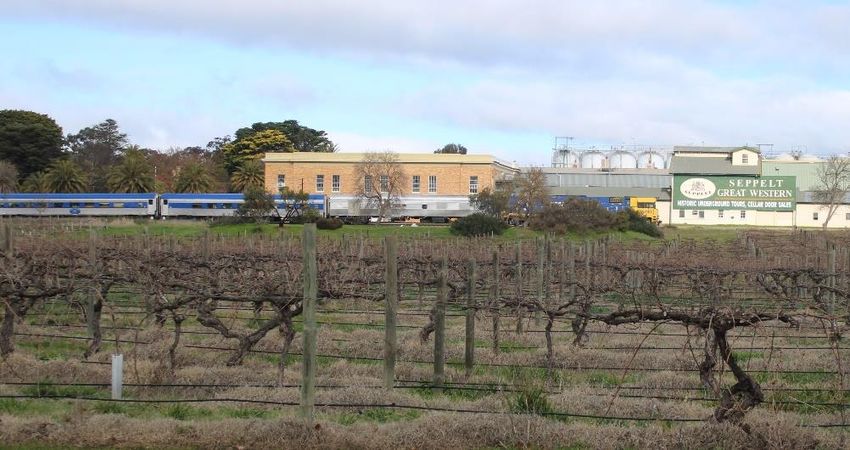
                                                                          Great Western
                                                                          Champagne Cellars
                                                                          between Ararat and
                                                                          Stawell.

                                                                          NR 101 with the west-
                                                                          bound “Overland”
                                                                          Tuesday 16 July.

RETAILERS OF “BOB’S RAILWAY”
National Railway Museum – Port Adelaide; Meg’s Bookshop – Port Pirie: Steamtown Rail Heritage
Centre – Peterborough; Orient Express – Unley; Clare Regional History Group; The Railfan Shop –
Mont Albert – Vic.; OpenBook-Howden – Paul St. St Marys SA.

Library Supplier: ALS Library Services – Edwardstown.

There is an 8-page synopsis of Bob’s Railway on the website.

www.sarlinesbooks.com.au

John Wilson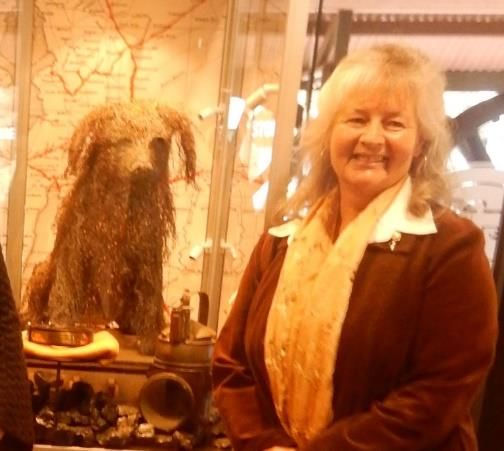
You can also read


