Koala Conservation and Habitat Management Plan - Join us online: Ipswich City Council
←
→
Page content transcription
If your browser does not render page correctly, please read the page content below
Koala Conservation and
      Habitat Management Plan

Join us online:

                      Ipswich.qld.gov.au
   1893 Floods

                  3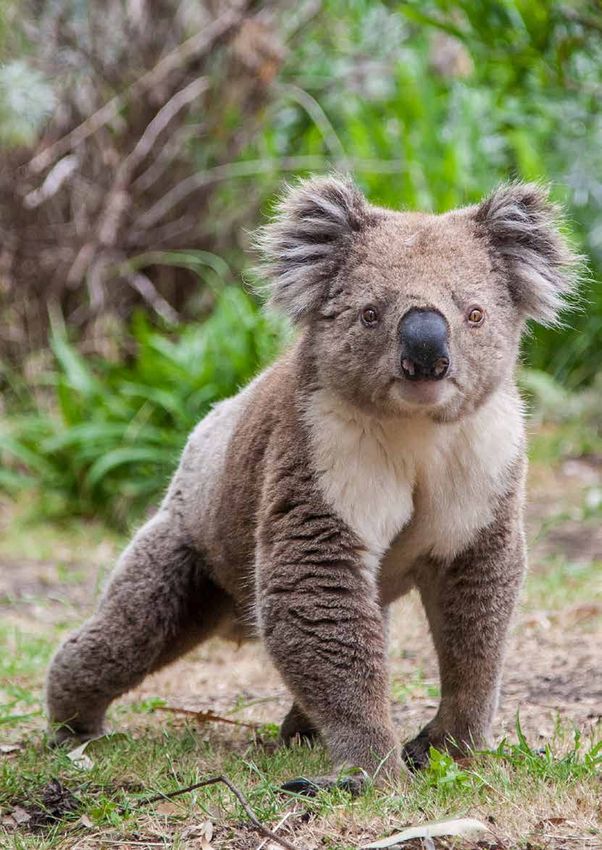
Giant by M Fox
Enviroplan Photographic Competition Entrant

                                              4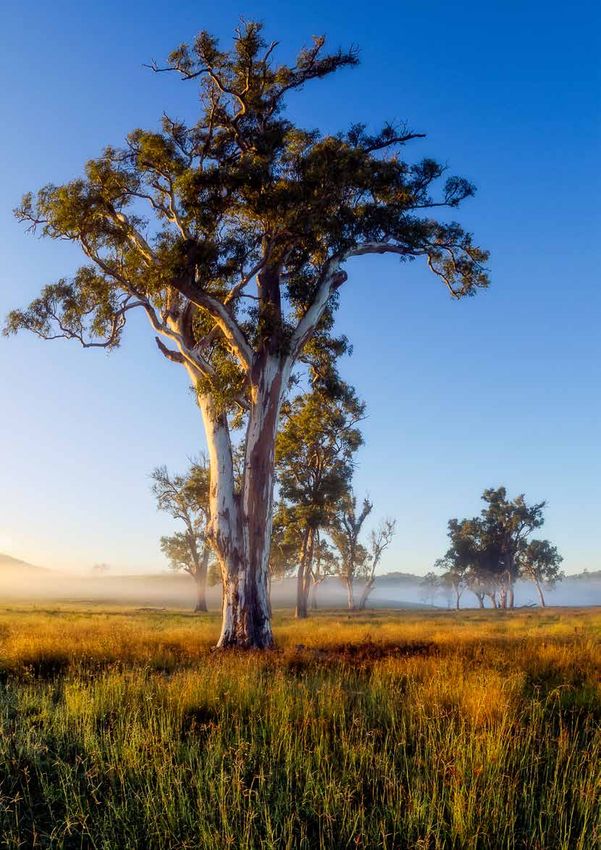
Contents

Executive Summary......................................................... 3               6.0 Monitoring Program.............................................. 35
                                                                                           6.1 Monitoring Schedule....................................................35
1.0 Introduction............................................................. 4
                                                                                                 6.2 Reporting............................................................35
      1.1 Vision ..................................................................5
      1.2 Objectives.............................................................5         7.0 Literature Review and Gap Analysis....................... 37
      1.3 Purpose................................................................5               7.1 Existing Data.......................................................37
      1.4 Legislative Setting...................................................5                7.2 Presence/ Absence Koala Surveys..........................38
      1.5 Koala Expert Panel and State Koala                                               		           7.2.1 WRSMCE Survey........................................38
		Policy Reviews........................................................5                  		           7.2.2 FGCE Survey.............................................38
      1.6 Institutional Arrangements......................................6                		           7.2.3 Purga Survey.............................................38
      1.7 Plan Life and Review..............................................6              		           7.2.4 Urban Parks Survey....................................38
                                                                                                 7.3 Assessment of Activity Levels.................................39
2.0 Koalas in Ipswich..................................................... 7
                                                                                                 7.4 Threat Analysis....................................................39
3.0 Opportunities and Existing Tools............................ 10                        		7.4.1 Roads.......................................................40
      3.1 Private Landholder Partnerships.............................10                   		7.4.2 Dogs........................................................41
      3.2 Tools for Mitigating Threatening Processes.............10
                                                                                           Appendix A:
		           3.2.1 Reducing Road Mortality............................10
                                                                                           OWAD Presence/Absence Survey Results....................... 43
		           3.2.2 Reducing Dog Predation.............................10
      3.3 Education Program..............................................11                Appendix B:
      3.4 Citizen Science....................................................11            OWAD Koala Activity Survey Results.............................. 47
      3.5 Land Acquisition..................................................11
                                                                                           Appendix C:
      3.6 State and Federal Offsets.....................................11
                                                                                           The Koalas Of Ipswich: Opportunities, Threats And
4.0 Koala Management Areas (KMAs).......................... 12                             Future Viability. Taken From Bussey And Ellis (2016)...... 51
      4.1 Development of KMAs.........................................12
                                                                                           Appendix D:
      4.2 Types of KMAs.....................................................12
                                                                                           Genetically Distinct Clades Within South East
		           4.2.1 Urban Consolidation Areas (UCA)..............13
                                                                                           Queensland. Taken From Lee Et Al. 2010)..................... 52
		           4.2.2 Core Habitat Areas (CHA)..........................13
		           4.2.3 Priority Rehabilitation Area (PRA).................13                   Appendix E:
		           4.2.4 Impact Mitigation Area (IMA)......................13                    Overall Strategy Map And Priority Areas Map From
      4.3 Overview Map.....................................................13              The Ipswich City Council Nature Conservation
                                                                                           Strategy 2015.................................................................. 53
5.0 KMA Management Actions..................................... 16
      5.1 Key Management Actions for Urban                                                 Appendix F:
		Consolidation Areas............................................16                        Hot Spots For Road Mortality Identified In Ipswich.
      5.2 Key Management Actions for Core Habitat Areas...18                               Data Credit To IKPS....................................................... 54
		           5.2.1 White Rock – Spring Mountain CHA ...........18
		5.2.2 Flinders-Goolman CHA.............................21                                References ................................................................... 55
		           5.2.3 Woolshed CHA.........................................22
                                                                                           Glossary		 ................................................................... 56
		           5.2.4 Hiddenvale CHA.......................................24
      5.3 Key Management Actions for Priority
		Rehabilitation Areas.............................................26
		           5.3.1 South Ripley PRA........................................27
		           5.3.2 Purga PRA.................................................28
		           5.3.3 Pine Mountain PRA....................................29
		           5.3.4 Mount Mort PRA........................................30
		           5.3.5 Mount Walker and Ebenezer PRA................32
      5.4 Impact Mitigation Areas.......................................33
      5.5 Additional Considerations for KMAs......................34

                                                                                       1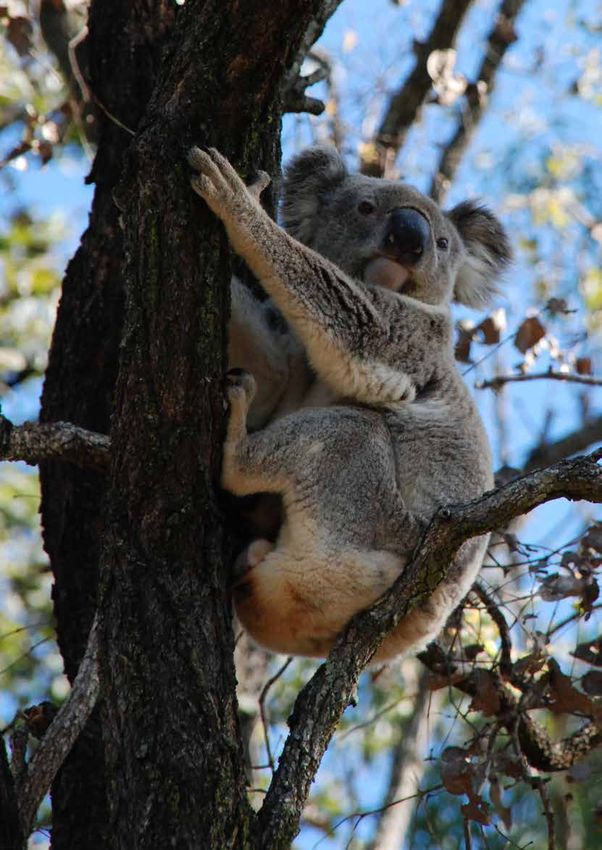
2

Executive Summary

The protection of native flora and fauna and their habitats              result from this investigation has been the creation of Koala
is identified as one of the top two environmental priorities in          Management Areas (KMAs) which form the backbone and key
Advance Ipswich. The koala specifically is one of three fauna            strategic direction for the plan. KMAs represent geographic
species selected to be an Iconic Species in the Ipswich Nature           areas of priority for Council in managing and conserving local
Conservation Strategy 2015 (NCS). The Koala Conservation                 koalas and illustrate the types of actions and management
and Habitat Management Plan is one of the key planning                   necessary to achieve the vision and objectives of the plan.
documents in implementing the objectives of the NCS.
                                                                         There are four types of management areas that were identified
Koalas are widespread throughout Ipswich and historic records            and are referred to in the plan, including:
indicate that several large and significant populations exist            • Urban Consolidation Areas
scattered across the local government area (LGA). Work by                • Core Habitat Areas
Bussey and Ellis (2016) highlights the significance of the Ipswich       • Priority Rehabilitation Areas
koala population due to its high numbers, genetic health and             • Impact Mitigation Areas.
potential as a source population for surrounding areas. With the
                                                                         Management actions have been assigned to each KMA type
continued decline of koala numbers on the Koala Coast and
                                                                         and have been designed to align with the unique features and
other areas east of the M1, the koalas in Ipswich, Logan, the
                                                                         circumstances of each area, such as the level of threat from
Scenic Rim and Lockyer Valley are beginning to be recognised
                                                                         dogs (wild and domestic), road mortality or the current level
as significant in their own right. As an iconic species under the
                                                                         of conservation management. To implement management
NCS, koalas are a priority focus for conservation planning.
                                                                         actions Council will use a number of available tools to protect,
Koalas are also significant for their cultural value, legal status
                                                                         enhance, manage and increase koala habitat across the city.
and conservation significance multiple levels of government. In
combination, these factors make koalas a suitable species to             Key management tools used in the plan include:
act as a flagship species to protect native vegetation and fauna         • Enviroplan land acquisitions
habitat for numerous other native fauna.                                 • private landholder partnerships
                                                                         • Council’s environmental education program
As a result of the koala’s wide distribution across different land
                                                                         • Council’s existing pest and weed management programs
tenures and variety of threats, Council has identified a set of
                                                                         • partnerships with other local conservation organisations and
prioritised actions for conservation of the species in Ipswich. In
                                                                            government entities
developing this plan, a spatial investigation and targeted survey
                                                                         • regional coordination between Council and other local
work was undertaken to highlight areas of the city as priorities
                                                                            governments in South-east Queensland.
due to their known populations, existing and future level of
threat and opportunity for regional and local connectivity. The

                                                                     3
1. Introduction

Three local fauna species have been recognised through                communities. The habitat protected for koalas can also be
the Ipswich Nature Conservation Strategy 2015 (NCS) as                habitat for many other rare, threatened and common species of
priorities for conservation planning due to their iconic nature       birds, mammals and other terrestrial fauna.
and elevated levels of threat. The koala (Phascolarctos
                                                                      Council has close to 6,500 hectares of eucalypt and other
cinereus) is one of the three species, along with the platypus
                                                                      native forest purchased and managed for the purpose of
(Ornithorhynchus anatinus) and brush-tailed rock wallaby
                                                                      conservation which forms Council’s Natural Area Estate (NAE)
(Petrogale penicillata) which is Council’s faunal emblem.
                                                                      network. The NAE can provide safe haven for koalas and other
There are numerous reasons for Council to undertake koala
                                                                      species, away from the threat of urban development or other
conservation initiatives. One of the key drivers is habitat
                                                                      land use pressure. Notably, White Rock – Spring Mountain
protection across a range of different land uses and vegetation
                                                                      (WRSMCE), Mt Grandchester (MGCE) and Flinders – Goolman
                                                                      (FGCE) Conservation Estates form major parts of the NAE
                                                                      comprising bushland habitat suitable for koalas.

                                                                      The Ipswich Planning Scheme works with compact urban form
                                                                      to reduce the impacts of urban sprawl on natural areas. It
                                                                      recognises that Koalas are also still prevalent in many urban
                                                                      areas, surviving in often small and disconnected remnants of
                                                                      bushland. Suburbs including Collingwood Park and Goodna
                                                                      have recorded koala sightings and present opportunities for
                                                                      long term protection despite a history of urban development.
                                                                      Koalas are also abundant in many rural areas of the city,
                                                                      including Ebenezer, Amberley, Mt Forbes and Purga. The koalas
                                                                      in these areas appear to be well adapted to fragmented and
                                                                      patchy landscapes provided there are no major movement
                                                                      barriers, such as linear infrastructure like roads.

                                                                      Ipswich koala populations are noted as being significant on
                                                                      a regional scale due to their high population size and genetic
                                                                      uniqueness. It is believed that the koalas within Ipswich act
                                                                      as a source population for some of the surrounding Local
                                                                      Government Areas (LGA). As koalas continue to rapidly decline
                                                                      on the Koala Coast, the conservation of koalas in Ipswich
                                                                      becomes of paramount importance on a regional level.

                                                                      Areas of Ipswich are currently undergoing large scale urban
                                                                      development with other areas earmarked for industrial
                                                                      development and investigation. These developments are being
                                                                      driven by population growth in South-east Queensland through
                                                                      the western corridor and are identified as areas for growth in the
                                                                      South-East Queensland Regional Plan 2009-2030. Areas such
                                                                      as Ripley Valley, Springfield and some parts of Ebenezer, all of
                                                                      which support or have potential to support koala populations,
                                                                      are likely to see extensive clearing associated with urban
                                                                      and industrial development in the future. These development
                                                                      pressures are likely to place koalas and other species that are
                                                                      reliant on the same habitat types under threat. Flow on effects
                                                                      from urban development such as impenetrable barriers (roads
                                                                      and housing), vehicle collisions and attacks from domestic and
                                                                      wild dogs will compound the pressure on the species.

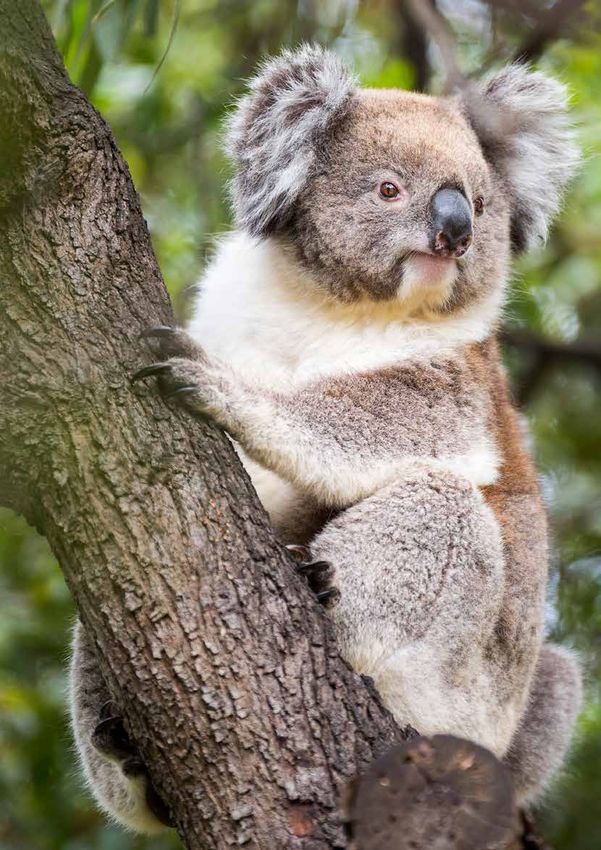
Which Tree Next? by L Oliver
Enviroplan Photographic Competition Entrant

                                                                  4
1.1 Vision                                                             The conservation significance of koalas is also recognised in
The vision for the conservation and management of koalas in            the SEQ Regional Plan 2009-2031 where it states that it is
Ipswich is to:                                                         important to recognise the need to enhance koala populations
                                                                       in the region through the protection, management and the
                                                                       achievement of net gains in bushland koala habitat, and by
“Protect, enhance, manage and                                          managing conflict with urban development.

increase the local koala population                                    Under the Sustainable Planning Act 2009 there are several
                                                                       policies that apply directly to koalas. These are the single
and koala habitat in Ipswich”                                          State Planning Policy (SPP) and the SEQ Koala Conservation
                                                                       State Planning and Regulatory Provisions (SPRP). The single
                                                                       SPP includes mapped koala habitat as a Matter of State
1.2 Objectives                                                         Environmental Significance (MSES), meaning that any clearing
                                                                       of this habitat may require an assessment for Significant
To achieve this vision, the following objectives have been
                                                                       Residual Impact. Similarly the SPRP defines zones in which any
identified:
                                                                       clearing of koala habitat will also require the same assessment.
• Increase the amount and connectivity of koala habitat in rural
   Ipswich to reduce fragmentation of essential habitat.               Under these policies, actions determined as having a significant
• Protect and improve habitat value within large areas of intact       residual impact may require an area of land to be protected
   koala habitat, including the Natural Area Estate.                   or revegetated by a proponent to offset the initial impact. The
• Enhance and protect key habitat corridors to maintain or             delivery mechanisms used to offset removal of koala habitat and
   increase regional and local connectivity.                           other MSES are administered by the State Environmental Offsets
• Understand, identify and reduce the impact of major threats          Act 2014 and associated regulations. Koala offsets can also be
   to koalas across all areas of Ipswich.                              required for controlled actions assessed under the EPBC Act.
• Implement mechanisms to increase community engagement
   in koala conservation, monitoring and citizen science.
• Direct suitable mitigation measures through planning and             1.5 Koala Expert Panel and State Koala
   development assessments.                                                Policy Reviews
                                                                       This plan was completed with understanding that the
                                                                       State Department of Environment and Heritage Protection
1.3 Purpose
                                                                       have formulated an Expert Panel that will soon make
The protection of native flora and fauna and their habitats            recommendations on the future direction for koala policy in
is identified as one of the top two environmental priorities in        South-east Queensland. At the stage of developing this plan
Advance Ipswich.                                                       Ipswich City Council are unaware of the specific direction that
                                                                       EHP will take, however it is likely that it will influence koala
The Koala Conservation and Habitat Management Plan is
                                                                       management in Ipswich. Ipswich City Council has shared
also one of the key documents to be delivered in line with the
                                                                       a draft version of this plan with EHP to highlight Council’s
NCS, where the koala was selected as one of the five iconic
                                                                       local priorities and will continue to collaborate with the
flora and fauna species of Ipswich. Koala habitat extends
                                                                       Department and Expert Panel to ensure cohesion between
across the majority of Ipswich giving koalas a significant local
                                                                       approaches. Areas potentially influenced by the Expert Panels
profile, allowing koalas to be used as a flagship species for
                                                                       recommendations include:
broader biodiversity outcomes. In addition, koalas have legal
                                                                       • Council’s Planning Scheme
requirements for management and protection, hence this plan’s
                                                                       • the SEQ Regional Plan
high priority in Council’s Iconic Species Program.
                                                                       • relevant koala policy’s and provisions including the State
                                                                          Planning Policy and State Planning Regulatory Provisions
1.4 Legislative Setting                                                • Nature Conservation Act 1992 (relating to release and care
Koalas are protected under State and Commonwealth                         for orphan or injured koalas)
legislation, listed as ‘vulnerable’ by the Commonwealth                • Koala Habitat Values Mapping and distribution modelling.
Environmental Protection and Biodiversity Conservation Act
1999 (EPBC Act) and the Queensland Nature Conservation Act
1992 (NCA).

                                                                   5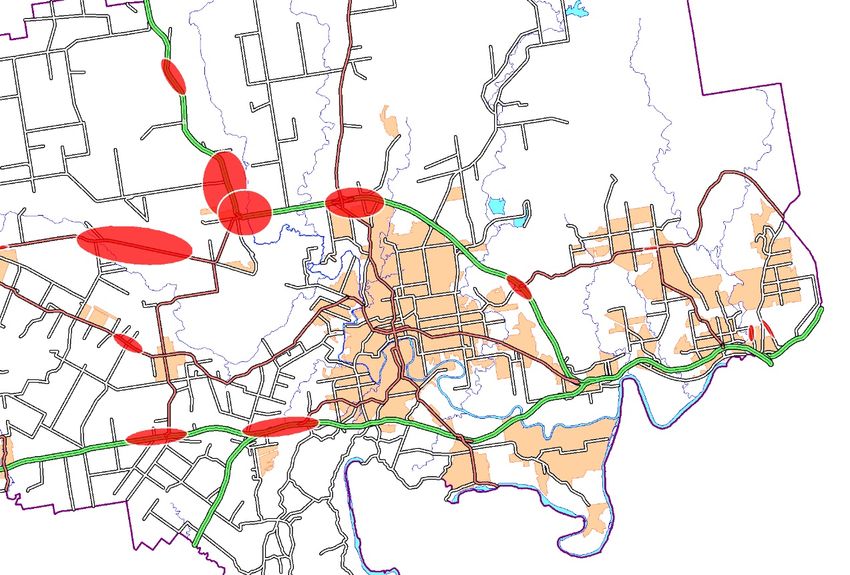
1.6 Institutional Arrangements                                              Non-Government Organisations including
Koala conservation has a range of stakeholders. It is necessary to          Wildlife Care Groups
identify key stakeholders up front and outline their individual roles       • Coordinate with Council on trends and observations identified
and responsibilities in the context of this plan and its delivery.            in the local koala population
                                                                            • Provide expert advice and education to the community
Federal Government                                                          • Keep detailed records of koala incidents (road kill etc) to
• Administration of the Environment Protection and Biodiversity               assist planning and conservation decision making
  Conservation Act 1999 under which the koala is a Matter of
  National Environmental Significance.
• Assessment and approval of referrals, including approval of               1.7 Plan Life and Review
  koala offsets and other mitigation measures.                              The vision of this plan sets long term objectives for managing
                                                                            koala populations and their habitat. Many of the objectives are
State Government
                                                                            ongoing and will require long periods of time and dedication to
• Creation and delivery of koala policy and planning under the
                                                                            achieve. As such the vision for this plan is 25 years.
   Nature Conservation Act 1992.
• Regional coordination and strategic direction/prioritization of           The plan will occur in 5 yearly stages with a review every 5
   conservation initiatives in SEQ.                                         years based on the success of implementation, new knowledge,
• Funding support for koala conservation initiatives in priority            changes to legislation of policies and monitoring results.
   areas.                                                                   In order to complete a review every five year the following
• Coordinate regional monitoring and assessment of                          schedule will be followed:
   population trends.                                                       • Monitoring completed by the end of the 4th year of adoption.
• Delivery of habitat mapping and other decision support tools.             • Review of findings and revision completed by the middle of
                                                                               the 5th year.
Neighbouring Local Governments
                                                                            • Revised plan presented to Council for adoption in the second
• Collaboration on cross boundary koala conservation efforts.
                                                                               half of the 5th year.
• Recognition of key habitat areas and biodiversity corridors
                                                                            • Implementation of new revised 5 year plan commencing in
  and reflection of these in respective planning schemes.
                                                                               the 6th year.
• Co-funding of priority projects and monitoring.

Research Institutions
• Identification of key management problems and targeted
  research in attempt to solve these.
• Sharing of knowledge regularly and proactively with other key
  stakeholders.

                                                                        6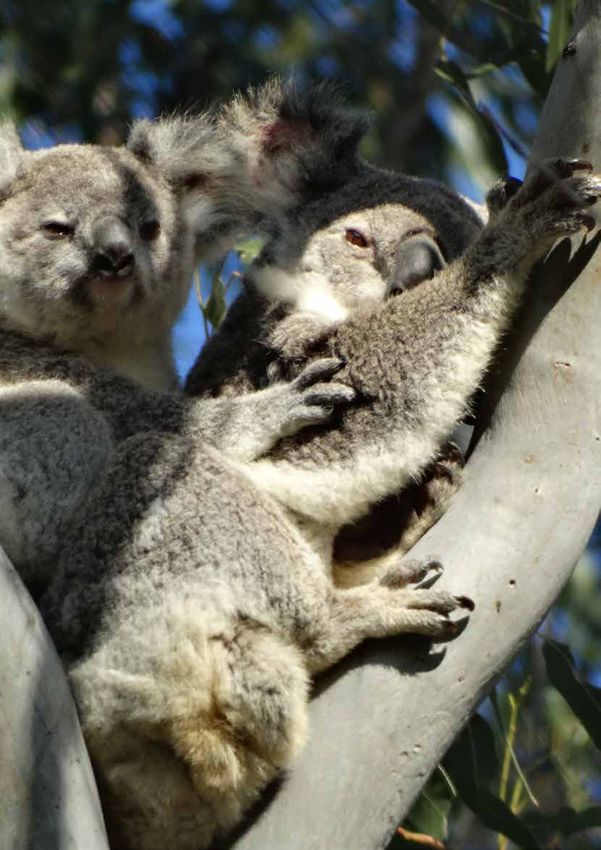
2.0 Koalas in Ipswich

                                                                                                                    Lazy Sunday by G Passier
                                                                                                  Enviroplan Photographic Competition Entrant

The koala is an arboreal marsupial that relies almost entirely         All available evidence suggests that koala home ranges are
on trees from the genus Eucalyptus in a variety of dry and wet         large in Ipswich and thus expected to have a lower population
sclerophyll forests and woodlands. Koalas spend the majority           density per unit area. Whilst a census of the entire koala
of their time in trees, occasionally coming down to disperse or        population in Ipswich is not feasible given the size of the LGA,
change trees. Although they prefer to stay in large patches of         Bussey and Ellis (2016) used all available evidence including
bushland, koalas can often be found in riparian corridors, in          scat and other records as a proxy for known koala distributions
strips of roadside vegetation and even in isolated gum trees           across the LGA to generate an estimate of koala numbers.
in grazing paddocks. Their versatility means that retaining            Appendix C displays the results from Bussey and Ellis (2016). In
some degree of connectivity across landscapes is crucial to            summary, the authors under a conservative estimate predict that
the successful conservation of the species locally and obvious         Ipswich hosts a koala population in excess of 4,000 individuals.
movement barriers should be avoided or mitigated. It also              This estimate is expected to be lower than the true number of
disproves the popular myth that koalas require large corridors         koalas, due to the calculations being mostly based on Regional
of vegetation to move through a landscape, rather it suggests          Ecosystems (RE) and not accounting for non-RE habitat that
that koalas can move through open space provided they are              also has resident koalas. These findings indicate that the koala
supported by suitable shelter trees and can move from patch            population in Ipswich is important on the regional scale and
to patch.                                                              Bussey and Ellis (2016) suggest that they may have potential to
                                                                       be listed as significant under the EPBC Act.
While studying in the Mutdapilly area, White (1994) found that
koala movements of greater than 2km at a time were common              Work by Lee et al. (2010) and Kjeldsen et al. (2015) suggests
and animals were frequently recorded moving through grazing            that the koalas within the Ipswich and Beaudesert area are
paddocks, stopping in isolated paddock trees. White (1994)             genetically distinct from those on the Koala Coast. Lee et al.
also found that Ipswich koala’s home range was larger than             (2010) also found that koalas in the Esk area are genetically
their Koala Coast counterparts, although this is highly variable       distinct from the cluster in Ipswich and Beaudesert, suggesting
based on the level of intactness or fragmentation in a landscape       that the Warrego Highway is a permanent barrier for koala
(Dique et al. 2003). In the Mutdapilly area for example, male          movement and has been for some time (See Appendix D).
home ranges were around 8km² in size, whilst female home               The uniqueness and high genetic diversity within the Ipswich
range was around 3.5km² (White,1994).                                  koala population provides further evidence that it is significant

                                                                   7
Koalas often
don’t need large
tracts of remnant
vegetation
to be present
and can often
be found in
smaller patches
of bushland
and even cattle
shade trees.

 Pastel Morning by S Gardner
 Enviroplan Photographic Competition Entrant

                                               8
on a regional scale. Genetic variation is crucial in a koala Dog attacks also occur and are most frequently reported in
population as it affects the ability to resist disease, successfully urban areas. This is mostly comprised of domestic dogs in
reproduce and adapt to threatening processes. Within Ipswich suburban backyards, and whilst domestic dog attacks appear
and the surrounding populations (especially south through to less of threat than road strikes, it is likely that the true number
Beaudesert) it is of paramount importance to conserve habitat goes underreported. The influence of wild dog predation and
connectivity to sustain current levels of gene flow crucial to the rural and bushland areas of Ipswich is largely unknown. Section
genetic variation and resilience in the population. 7 provides detailed analysis of the available threat data.
Koala populations also face a range of threats across the Another important threat that is often overlooked is the risk
Ipswich LGA. Several areas of the city are ear-marked for urban of actions being unable to effectively modify the public’s
and industrial development, hence land clearing remains a key behaviour. Many programs have been implemented across SEQ
threatening process. Master planned areas such as Springfield aimed at modifying behaviour in relation to reducing road kill,
and Ripley Valley are in the middle of their development creating friendly backyards and reducing domestic dog attacks.
cycle, whilst other future urban or industrial areas are at an While some have produced positive results, the majority have
investigation stage and won’t be developed for some time. In been unsuccessful at influencing people’s behaviour. This plan
these areas there are opportunities to minimise the impact to therefore strives to take learnings from both the successes and
local koala populations through proactive investigation. failures of previous initiatives attempting in SEQ.
Secondary impacts from road strikes, fragmentation and dog In summary, analysis of local knowledge, available data and
attacks are also evident in several areas across the city. Detailed published literature illustrates the habit and distribution of
sighting records from Ipswich Koala Protection Society have koalas in Ipswich. The key pieces of knowledge have been
allowed these records to be mapped and analysed spatially, combined to create a series of key principles to be used in koala
highlighted hotspots of threats. Major highways appear to have conservation decision making. These are as follows.
a significant impact on the species locally and in some cases
creating a permanent barrier.
Guiding Principles
Koalas can disperse more than 2km at a time often through a matrix not considered suitable habitat.
Koalas frequently change trees and require suitable ground cover to move between them.
Koalas frequently use trees within corridors but don’t show any association with using corridors for movement and dispersal.
The facilitation of corridors in developed landscapes as koala habitat is important for sustaining urban populations.
Reducing stress caused by threatening processes is critical in maintaining genetically health and disease free populations.
Ipswich koalas are known to have larger home ranges and therefore occur at lower densities than other areas of SEQ.
The density and distribution across a landscape is highly variable and dependent on soil nutrition, vegetation type and condition, soil
type, parent rock material and drought resilience of food trees.
93.0 Opportunities and Existing Tools
To ensure the goals and outcomes of the plan are achieved, • up to $3000.00 in grant funding for predator exclusion
Council has a variety of available tools and mechanisms that fencing (applications will be assessed against specific criteria
can be used to facilitate koala habitat protection and threat and on ground assessments made by a Council Officer)
mitigation. These tools are diverse and flexible, meaning that • access to newsletters, workshops and more.
koala conservation outcomes can be achieved across the variety
of land uses and tailored to site specific requirements. This Where appropriate, the KCA should be advertised and promoted
section goes into detail around what these tools are and how to landholders in key strategic locations identified in this plan.
they can contribute to koala conservation outcomes in Ipswich.
3.2 Tools for Mitigating Threatening
3.1 Private Landholder Partnerships Processes
A key tool for delivering outcomes is the ability to conserve
3.2.1 Reducing Road Mortality
koala habitat on private land. Council currently offers six types
In many areas, such as highly urbanised and major transport
of partnerships to landholders including Land for Wildlife (LfW)
corridors, there is a varying risk of road kill to koalas and other
and numerous types of Volunteer Conservation Agreements
native fauna. A more detailed threat analysis in Section 7
(VCAs). All of the existing partnerships are focused on protecting
identifies several areas around the city where high incidences
intact bushland over one hectare with the exception of Habitat
of road kill occur, including the Cunningham Highway and
Gardens which is suited to small urban backyards. Partnerships
Warrego Highway. Vehicle strikes in suburbia are less common
are designed to provide incentives and advice to landholders
than on major highways although there are certain areas where
with high biodiversity on their property, with aim of retaining and
suitable actions would benefit local populations.
improving values.
A number of strategies are available to Council and other
Private landholder partnerships can be used to protect and
organisations to attempt to reduce the impact the road kill
enhance koala habitat through the offered incentives, which are:
hotspots are having on the species, including:
• rezoning land to Rural E under the ICC Planning Scheme
• fauna sensitive road design
• increased weed control rebate to control weeds the may
• exclusion fencing
impact koalas such as lantana or vine weeds
• speed reducing road design
• Grant funding available for threat management including
• innovative road and wildlife signage
weed control and vertebrate pest management.
• increased advertisement of suitable wildlife carers in case of
• Land Management payments available to large properties.
emergency
Koala Conservation Agreement • installation of suitable fauna passage infrastructure in road kill
This partnership is the newest of the six and offers a unique hotspots
opportunity to assist landholders that don’t meet the requirement • retrofitting existing fauna infrastructure or culverts to be koala
for intact bushland and require rehabilitation. This agreement friendly.
offers specialised support for Koalas within Ipswich. The Koala
Conservation Agreement is available to landholders whose 3.2.2 Reducing Dog Predation
property has habitat suitable for Koalas or has potential to Other key threats that need additional attention in urban areas
restore habitat to support iconic species (specifically Koalas). are the high abundance of domestic dogs. Many domestic dog
These habitat values can be identified through the SPP Koala attacks go unrecorded and the true number of incidents is likely
Habitat Mapping as well as the Ipswich Nature Conservation to be higher than indicated by existing historical records (see
Strategy 2015. The integration of conservation with other land Section 7). Education will be the key tool in reducing impact of
use types such as grazing is an important outcome of this domestic dog attacks using the relevant strategies outlined in
agreement, there is an emphasis on exclusion zones for the Section 3.3.
purpose of habitat rehabilitation and species protection. This
Council has an existing pest management program that targets
agreement is ideally suited to properties of 10,000m2 (1ha) and
wild dogs on Council land. Although wild dogs are primarily a
above, and includes:
threat in Council’s NAE and other rural areas, it is important
• Ipswich City Council’s annual Nature Conservation Grant
not to underestimate the number and impacts of wild dogs in
• up to $800 Environmental Weed Control Rebate annually
urban areas. Where the impact of wild dogs is recognised,
• a maximum of 500 free trees for the first 12 months, followed
additional control programs can be delivered on Council land
by 200 free trees annually
and working with adjoining landholders.
103.3 Education Program 3.5 Land Acquisition
The significance of the Ipswich koala population on a regional Council has purchased close to 6,500 hectares of bushland
and even state wide level is not well known amongst the habitat under the Ipswich Enviroplan levy. The funds collected
community and many underestimate the total number of koalas through this levy are used through the Enviroplan Acquisition
in the LGA. Likewise many residents are unaware of koalas Program which provides a structured and strategic framework for
living in bushland near their property. purchasing land. Land purchased under the program is acquired
for the primary purpose of biodiversity conservation using the
As urban development encroaches on these areas the risk following criteria:
of domestic animal escapees rises greatly. To prevent this, • the environmental significance of the site or connecting sites
education and awareness for new residents on responsible dog • connectivity of the site to current or future conservation estate
and cat ownership are of importance, especially where urban • level of priority as defined in the Nature Conservation Strategy
development and koala habitat come into conflict. • the level of threat to the environmental significance of the site
The following educational initiatives will be delivered through • nature based recreation opportunities offered by the site
this plan: • the cultural heritage values of the site
• comprehensive education packages • the benefit to the community if the site was purchased
• awareness of how to best report koala sightings • the ultimate cost of the purchase (capital and recurrent costs)
• updated and interactive information on Councils website • protection and improvement of koala habitat is a strong
• dog awareness and responsible pet ownership consideration when assessing both environmental significance
• interpretive koala signage in strategic locations and connectivity.
• innovative road safety signage
• displays and educational material in the Queens Park
3.6 State and Federal Offsets
Environmental Education Centre
Offsetting impacts under the State Environmental Offsets
• Habitat Gardens Workshops (koala friendly backyards).
Act 2014 and EPBC Act can have positive outcomes for
koala conservation if done appropriately and strategically.
3.4 Citizen Science Offsets present an opportunity to protect additional patches
Ipswich as a whole is excellent at reporting on koala sightings (be of koala habitat with funding and support that was otherwise
they healthy, injured or deceased). However, there are a number not available. In Ipswich organisations such as Cherish the
of other tools for reporting koala sightings which don’t feed Environment Foundation are key deliverers of koala offsets and
into an appropriate database and occasionally koala sightings this plan will be used by this organisation to deliver suitable and
go completely unrecorded. As any data of this sort is extremely strategic offsets.
valuable and has a number of uses, it is important to ensure any In general, offsetting for koalas should follow these guiding
koala sightings and data go into the correct databases. Council principles:
will actively promote Ipswich Koala Protection Society (IKPS) as • Offsetting should not be used to allow an unsuitable
the best avenue for recording sightings. IKPS data also feeds into development to go ahead.
the state Wildlife Online database and becomes available in all • Offsets should never be considered as a substitute for existing
development and other planning decisions. habitat and populations.
There is also opportunity to use citizen science to proactively • Offsets should preferably be used to enhance or increase the
monitor trends in koala populations across the city. Citizen amount of pre-existing habitat rather than attempt to create
run population censuses have been conducted on numerous habitat from scratch.
occasions across the country at different spatial scales. Ipswich • Offsets requiring revegetation components should be
has previously had poor representation in these types of census delivered on areas of previously high quality koala habitat, as
largely due to lack of advertising on behalf of Council. Any indicated by the SPP Koala Habitat Values Mapping.
future Queensland or National census will be actively advertised
by Council to present an opportunity to undertake a yearly
assessment of trends and numbers. Data obtained from census
should be communicated back to the community through a
report and through media publicity.
114.0 Koala Management Areas (KMAs)
Hello Down There by R Skidmore
Enviroplan Photographic Competition Entrant
4.1 Development of KMAs also aided in identifying which tools and strategies are likely to
Ipswich has a diverse range of land uses and management be the most effective:
requirements vary considerably. Koalas are widespread across • Planning scheme zoning and other planning legislation.
Ipswich, and over 3,000 sightings recorded since 1997 has • Historic data provided by Moggill Hospital and State
illustrated where the hotspots and important populations are. Government (Section 7).
These sightings have been invaluable in spatially investigating • Knowledge gained through koala survey work (Section 7).
where healthy populations are, where dog attacks and • Strategic considerations within Councils NCS (Appendix E).
disease have been prevalent, and where there are hotspots • Current land use and level of protection.
for road mortality. • Level of threat and other influencing trends (Section 7).
Council has conducted additional survey work to confirm Council is aware that the State Government are in the process
koala presence, including assessment of both presence and of reviewing habitat models of the koala at the time of the
relative activity levels across many Council parks and reserves. KMA’s initial configuration. Depending on the outcome from the
Most notably, Council’s NAE had very little evidence of koala model review KMA’s can be adjusted with the presentation of
presence, despite having suitable habitat. Council surveys and new information.
Biodiversity Assessment work throughout 2015 have confirmed
that koalas are present in the NAE and are prevalent in:
• Purga Nature Reserve 4.2 Types of KMAs
• Flinders-Goolman Conservation Estate Four different types of KMA have been developed for this plan
• White Rock – Spring Mountain Conservation Estate. and are as follows:
• Urban Consolidated Areas (UCA)
For the purpose of prioritisation, Council has created a spatial
• Core Habitat Areas (CHA)
representation of the current koala conservation scenario
• Priority Rehabilitation Areas (PRA)
and management requirements across Ipswich. Areas of
• Impact Mitigation Areas (IMA)
differing management requirements have been labelled Koala
Management Areas (KMAs). The following factors have been
considered when investigating areas of the city and determining
their level of priority for koala conservation. These factors have
124.2.1 Urban Consolidation Areas (UCA) landscape level. Actions for PRAs include a variety of mechanisms
UCAs have the potential to provide long term refuges for and tools to help facilitate rehabilitation in these areas. In
koalas, despite being located within the urban footprint. UCAs addition, the PRAs identified in the plan mirror the Priority
are likely to be somewhat fragmented and have a high level of Rehabilitation Areas mapped in the NCS (See Appendix E).
threats due to being located within urbanised areas. Throughout
the urban footprint there are numerous sizeable areas of koala PRAs are predominantly located on privately owned land
habitat protected through planning scheme zoning, parks and making them ideal areas for attracting new conservation
reserves or undevelopable sites. Whilst these areas can often partnerships, as there are already many Voluntary Conservation
be fragmented there is potential to increase connectivity in key Agreement (VCA) and Land for Wildlife (LfW) members actively
areas. In developing UCAs, areas mapped as Urban Nodes and contributing to retention and rehabilitation of koala habitat.
Urban Corridors under the NCS were consolidated into areas Areas with a high proportion of land in a VCA should be
suitable for koala conservation. recognised as important locations for long term conservation of
koalas and koala habitat.
In UCAs the focus will be in conserving local koala populations
by mitigating present threats such as:
• road crossing and vehicle strikes 4.2.4 Impact Mitigation Area (IMA)
• domestic and wild dog control There are areas of the Ipswich LGA that are earmarked for
• habitat fragmentation and edge effect future urban development, including Greater Springfield and
• landscape level connectivity. Ripley Valley. Koalas are known to exist in these areas and
sporadic historical records have been confirmed in several
4.2.2 Core Habitat Areas (CHA) areas that are likely to be developed in the near future. These
CHAs occur in locations where koalas are known to be present areas are likely to develop in a mosaic pattern with several large
along with a high level of protection through zoning, land developments already nearing completion and others in very
acquisition and active management. Threats are likely to be early stages. Impact Mitigation Areas have been identified for
minimal in these areas and as act as ‘hubs’ for conserving the purposes of this document as either master planned urban
koala populations in the long term. All of the CHAs in this plan development, future urban or investigation areas.
are substantial in size, building primarily around Councils NAE,
thus attempting to protect and manage areas that are large The koala’s high consideration in the Queensland planning
enough to support multiple breeding populations. legislation means that there are numerous opportunities to
minimise the impact on the Ipswich koala population and achieve
The CHAs mirror the mapped core habitat from Council’s some positive outcomes from these impact mitigation areas.
NCS as they are both based on the large areas of remnant
bushland along with a high level of planning protection. All of Retention of linear open space corridors through urban areas
the CHAs in this plan also fall within Priority Conservation Areas can also help mitigate impacts. This can be achieved through
recognised under the NCS. For more information on the NCS planning decisions as well as through the development
and its contents refer to Appendix E. assessment process. If these are to be effective, these corridors
need to ideally be wider than 100m (McAlpine et al. 2006)
4.2.3 Priority Rehabilitation Area (PRA) and link back into existing parks, reserves and remnant habitat
Many rural areas of Ipswich have limited large, connected tracts patches that are large enough to maintain koala populations in
of remnant vegetation, primarily in areas of Rural A and Rural the long term. Koalas are known to temporarily persist in small
B zoning. Yet koalas often don’t need large tracts of remnant strips of vegetation all across SEQ and direct linkage to other
vegetation to be present, and can often be found living in larger patches of vegetation may allow pockets of koalas to
smaller patches of bushland and even cattle shade trees. This is persist in the long term.
particularly the case in the central southern and south-western
areas of Ipswich where the vegetation is highly fragmented,
yet a few scattered pockets of Eucalyptus tereticornis dominant
4.3 Overview Map
communities still support koala populations.
Based on spatial analysis of factors listed in Section 4.1 and
Many of the koalas found in these areas are likely to be transient KMA types in 4.2 the Ipswich LGA has been split into a variety
and will require larger patches of habitat to have a sustained of KMA’s and displayed as a whole in Figure 1.
long term population. These areas present opportunities for
increasing the quality and quantity of koala habitat on a
13Figure 1: Koala Conservation and Habitat Management Plan Overview Map
1415
5.0 KMA Management Actions

5.1 Key Management Actions for Urban                                  with the exception of Rhonda Road Reserve and Bailey Street
    Consolidation Areas                                               Reserve in the north-western corner of the UCA. Further
                                                                      assessment of activity levels in December 2015 provided
                                                                      additional evidence that these two parks are currently not
Location Description
                                                                      used by koalas. However, the activity level surveys also went
One UCA has been identified across parts of the suburbs of
                                                                      on to prove that Redbank Rifle Range had high levels of koala
Redbank, Collingwood Park and Bellbird Park. In total the
                                                                      activity as did all of the parks and reserves adjoining or semi
mapped area for the UCA is over 1400 hectares. This UCA has
                                                                      connected to Redbank Rifle Range, including Goupong Park,
been selected due to large parts of the area being protected
                                                                      Banjo Paterson Park, Tofa Mamao A Samoa Park, Church Street
as parks or zoned for conservation. Central to the UCA is the
                                                                      Reserve and Ric Nattrass Environmental Park (See Appendix B).
state owned Redbank Rifle Range which is over 140 hectares
in size and currently zoned for Conservation. Due to its size         Key Threats
and shape, Redbank Rifle Range has the potential to be an             Given the urban setting, the area has a high level of threats
urban hub for koalas in the long term. The UCA also contains          including roads, habitat fragmentation, poor connectivity, illegal
a number of other Council owned parks and reserves with               vehicle usage, domestic and feral dog predation, and arson.
differing levels of connectedness and fragmentation. Many of          Given the high level of threat the area has been studied in
the parks and reserves with the area also contain high quality        considerable detail by Council. Through that process, specific
koala habitat and form corridors along Goodna and Six Mile            locations and actions have been recommended that will assist in
Creek respectively.                                                   minimising risk to local koala populations.
Koala Presence                                                        Table 1 identifies and prioritises these actions and also splits
A number of studies have been conducted in the area to                them into broader categories of action type.
investigate the current status of the local koala populations.
Koala presence was confirmed in all of the parks and reserves,

Figure 2: Snapshot of Redbank and Collingwood Park Urban Consolidation Area.

                                                                 16
Table 1: Key management actions for implementation of the Redbank and Collingwood Park UCA
Actions Priority Timing
Develop educational material to promote koala friendly backyards and other koala Design by December 2017,
High
conservation issues in the UCA. delivery by June 2018
Conduct periodic cool burns in Redbank Rifle Range to reduce risk of severe wildfire
Program commenced by
decreasing canopy health and direct koala mortality. Successful implementation depending High
June 2018
on confirmation of ownership of the property.
Identify locations for the installation of innovative and effective road management tools to
High June 2018
help reduce the impact of roads on koala movement.
Assess and determine why koalas appear to be absent from Bailey Street Reserve and
High June 2017
investigate management actions in accordance with the findings.
Confirm the ownership and management of Redbank Rifle Range with
High June - December 2018
State Department of Lands.
Assess the impact of wild dogs in Redbank Rifle Range and conduct trapping and control
Program commenced by
program where necessary. Successful implementation depending on confirmation of Medium
June 2018
ownership of the property.
Control Lantana camara in Tofa Mamao A Samoa Park and Banjo Paterson Park Medium June 2018
Conduct further surveys immediately east of Seymour Park to determine whether Koalas are
Medium June 2018
utilising that area.
Provide signage in existing dog off-leash areas in Goodna, Collingwood Park and Bellbird
Park to make dog owners aware of the presence of Koalas in the area, asking owners to be
Medium June 2018
mindful and in control of their dog if there is a Koala in or near the dog park and to report
any sightings.
Increase habitat values and connectivity along the powerline easement in Banjo Patterson
Medium June 2020
Reserve and Gibbs Avenue Transmission Reserve.
Prioritise properties west of Ric Nattrass Environmental Park, along Eric Street Goodna for
Medium Ongoing
acquisition or other tools for habitat protection.
Target increased participation in the Habitat Gardens Program within the UCA. Medium December 2017
Into the Hills, Rosewood by S Wilson
Enviroplan Photographic Competition Entrant
175.2 Key Management Actions for Core key identified locations is also a focus. As all of these areas are
Habitat Areas predominantly vegetated and providing suitable habitat, some of
the other major threats such as vehicle strikes and physical road
Table 2 below identifies and lists the key management actions for
barriers are rarely an issue.
CHAs identified in Figure 1. These include the:
• White Rock – Spring Mountain (WRSM) The remainder of Section 5.2 analyses each CHA, including why
• Flinders – Goolman (FG) it was selected, what the local scenario is and what is known
• Woolshed (WS) about the koalas in each specific CHA. All of the individual
• Hiddenvale (HDV). CHAs are addressed using the key management actions listed
in Table 2 below. Additional actions will be identified and
For CHAs, actions are focused primarily on reducing the risks highlighted where they are locally specific and not within the
for individual koalas from predation and fire impacts within the broader CHA table (Table 2).
NAE. Ensuring that habitat quality is protected and enhanced in
Table 2: Key management actions for implementation in all mapped Core Habitat Areas.
Actions Priority WRSM FG WS HDV Timing
Conduct ongoing trapping programs targeted at wild dog control
High 3 3 3 Ongoing
within the NAE.
Conduct a prescribed burn program (3-5 burns a year) aimed at
fuel reduction to guard against canopy scorch or koala death during High 3 3 3 Ongoing
uncontrolled or inappropriate fires.
Ensure appropriate dog on-leash signage is located within each CHA June
High 3 3 3
and scheduled patrols are addressing off-leash domestic dogs. 2018
Provide input into the Development Application process where actions
High 3 3 3 3 Ongoing
are likely to affect core koala habitat and/or regional connectivity.
Include considerations and/or provisions to protect koalas within the
June 2017 +
NAE during prescribed burning program. Monitor local koalas both High 3 3 3
Ongoing
pre and post burns to investigate relationships and trends with fire.
Liaise and work with neighbouring property owners to coordinate
approaches to koala threat management and rehabilitation of High 3 3 3 Ongoing
koala habitat.
Establish a prioritised list of sites and actions aimed at increasing December
High 3 3 3
koala habitat quality to complement the CWP. 2017
Create a list of suitable release sites for koalas within the NAE and June
Medium 3 3 3 3
advertise the list with relevant parties. 2017
Conduct annual assessments of habitat condition including Yearly
Medium 3 3 3
assessment of tree recruitment, tree disease and defoliation. (Summer)
Install signage informing people of where to report sightings of
Medium 3 3 June 2018
healthy koalas and injured koalas.
Adopt key guidelines from ‘Planning Guidelines for Koala
Conservation and Recovery’ (McAlpine et al. 2007) as a best practice June
Medium 3 3 3
for all works and recreational development undertaken in the NAE 2019
and through the Conservation Works Program.
Identify key patches of koala habitat within the NAE. Assess these for June
Medium 3 3 3
habitat quality in accordance with McAlpine et al. (2007) Guideline 4.1. 2019
Continue local government koala conservation working group
to coordinate and partner in regional management. Priority local
Medium 3 3 3 3 6 Monthly
governments are Logan City Council, Scenic Rim Regional Council
and Lockyer Valley Regional Council.
185.2.1 White Rock – Spring Mountain CHA Key Threats
Location Description Managing threats to the CHA and WRSMCE specifically will
The White Rock-Spring Mountain CHA is formed largely by become critical in the future, as the estate is expected to become
WRSMCE which Council manages for the primary purpose fringed by urban development. The largest impacts will come
of conservation. WRSMCE is over 2,600 hectares in size, from Springfield on the eastern and north-eastern boundaries
protecting a mix of dry and wet Eucalypt forest types along with of the CHA as well as developments in Redbank Plains to
small patches of rocky heath vegetation. The estate supports the north. Whilst there is also development intended for the
a high diversity of terrestrial flora and fauna species, along western side in Ripley Valley, the impact will be lessened by a
with important vegetation communities that provide habitat for strip of conservation zoning running adjacent to the boundary
significant wildlife. The native vegetation plays a critical role as a of the estate. Threats to koalas within the estate are ongoing
habitat link in a recognised bioregional wildlife corridor known and management programs within the estate will require
as the Flinders Karawatha Corridor. This corridor allows for sustained effort. Such threats include feral dog predation, lack
fauna movement, migration and transference of genetic diversity of domestic dog compliance, weed infestation, illegal vehicle
within the region. access, increased visitor presence, poor fire regimes and risk of
hot wildfires. Locally the most significant threats to koalas are
Koala Presence predation by wild dogs and direct mortality through wildfire.
Sightings of koalas are limited within the CHA, due to the limited
human presence and no previous koala studies. Survey work As the borders to WRSMCE become increasingly encroached by
conducted in mid-2015 confirmed that koalas are present across urban development, koalas may become displaced. White Rock
the conservation estate with the majority of evidence found along – Spring Mountain presents a viable option for release of koalas
the western boundary. As part of a BioCondition project funded that are taken into care or move as a result of development.
by Council, the Queensland Herbarium has several confirmed In addition, movement solution and fauna exclusion fencing
sightings of koalas across the estate. When combined with fire for koalas is likely to be conditioned through EPBC Act Offset
history mapping it appears that the current evidence suggests Requirements for any area of interface between the estate and
that koalas are more common in areas that were not affected residential development. As such, it is important to monitor what
by severe wildfire in 2012. The validity of these findings is impact this fencing is going to have, as well as any movement
inconclusive as negative survey results do not mean that koalas solutions or passages.
are truly absent from an area.
Rock Faces by K Smith
Enviroplan Photographic Competition Entrant
19Figure 3: Snapshot of White Rock Spring Mountain CHA.
205.2.2 Flinders-Goolman CHA Key Threats
Location Description Predation from wild dogs and foxes on koalas are also key
The Flinders-Goolman Conservation Estate (FGCE) CHA is threats in this area, along with the risk of severe wildfire. These
similar to the WRSM CHA in that it is largely comprised of a impacts are mitigated through Councils management programs
sizeable conservation estate. FGCE is 2,200 hectares in size and with the estate. To reduce the impact on koalas within the entire
contains a range of vegetation types, from vine scrub thickets CHA, consistent cross boundary approaches to targeted pest
to rocky peaks and dry sclerophyll forests. FGCE forms the start animal and fire management should be prioritised.
of the Flinders Karawatha Corridor (FKC) and is connected
to hundreds of hectares of connected bushland to the south
in Logan and Scenic Rim, as well as forming a direct link to
WRSMCE. FGCE is bordered by several landholders who are
engaged in conservation management, including Queensland
Trust for Nature (QTFN), RAAF, Ivory’s Rock Conference Centre,
Sporting Shooters Association of Australia and several other
private landholders.
The eastern boundary of the CHA borders Ripley Valley and
South Ripley which will be developed for urban residences
in the next few decades. Koala populations within the CHA
may become more fragmented and isolated, putting a strong
emphasis on the importance of the South Ripley PRA as an
important link in the FKC.
Koala Presence
This CHA is also similar to WRSM in that its large size creates a
sampling bias, where highly suitable areas have limited koala
records due to their remoteness and distance from high visitor
areas. Surveys in the winter of 2015 confirmed that koalas
are present and active throughout large portions of the estate,
including on the slopes of large mountain peaks such as Flinders
Peak. BioCondition monitoring in late 2015 detected multiple
koalas in the estate. There has also been evidence of koalas
within some vine scrub vegetation in the southern parts of FGCE,
although these animals are likely to be moving between two
separate patches of Eucalypt forest. Harding’s Paddock, in the
north of the estate is also used as a release point by IKPS and
koalas are often recorded in the picnic area. It is unclear whether
these animals are the same individuals that have been released
from temporary care or are resident wild koalas.
Contrary to WRSMCE, the majority of koala evidence has been
in areas of the estate affected by severe wildfire in 2012. This
may indicate that koalas in this area have begun to come back
Figure 4: Snapshot of Flinders – Goolman CHA.
into burnt areas earlier in this estate or that the fire in FGCE was
not as severe.
215.2.3 Woolshed CHA Key Threats
Location Description Whilst wild dogs are frequently seen in the estate, they do not
The Woolshed CHA is located in rural Ipswich close to the border seem to be any more abundant than in other areas of the NAE.
with Lockyer Valley Regional Council and encompasses sections It is anticipated that as more of MGCE becomes rehabilitated,
of Woolshed, Grandchester and The Bluff. Within the CHA, local food resources will increase and koalas will become more
Council owns Mt Grandchester Conservation Estate (MGCE), prevalent in the area.
and along with numerous LfW and VCA properties, the majority
Additional Actions
of the area is under some form of conservation management.
The true value of the Woolshed CHA as key koala habitat is still
MGCE is made up of 984 hectares of former grazing land unclear. As such, it is important to assess the success of offset
and is around 50% remnant vegetation. Rehabilitation in plantings and other rehabilitation efforts. Therefore, the following
the conservation estate is ongoing and has been assisted by additional local actions will be implemented in addition to Table
various biodiversity and koala offsets. There is also a cluster 2 and monitoring requirements in Table 5:
of landholders in conservation partnerships with Council, • Conduct 6 monthly scat searches in offset planting sites to
together making up around 327 hectares of land managed monitor the use and movement of koalas in these areas.
for conservation at The Bluff to the east of the estate. Several • To give koalas the greatest chance of establishing a resident
other properties within the CHA are highly suitable as population in MGCE, further tools to undertake revegetation
biodiversity and koala offset areas, especially where there is to increase food and shelter resources should be investigated.
potential to expand MGCE.
Koala Presence
Koalas have been recorded in the area, including several in
MGCE in 2015. Scat surveys found minimal evidence of koala
usage throughout the estate with only 2 out of 14 searches
finding indication of presence. This is surprising given that the
surrounding landscape is largely intact.
22You can also read


