Belgian National Adaptation Plan - Climat
←
→
Page content transcription
If your browser does not render page correctly, please read the page content below

Belgian National
Adaptation Plan

               1
                   2017-2020
CONTENT

      1. Introduction                            2. Climate change                        3. Impacts and vulnerabilities in Belgium

            p. 3                                        p. 10                                               p. 13

   4. Adaptation planning                        5. National actions
at regional and federal level                                                                6. Monitoring and implementation

           p. 17                                        p. 20                                               p. 33

                                Annex | p. 35   References | p. 39     Colophon | p. 40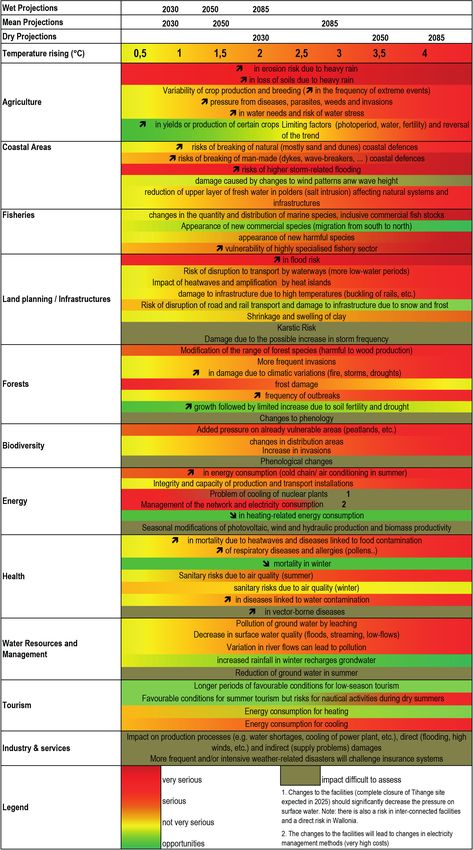
3
    1. Introduction

                      123rf/Paul Aniszewski
Adaptation
                                ge
                to climate chan

                                                                                                                                                  “Mitigation

                              C     limate change is a major global challenge    emissions progressively until 2050 , consist-
                                                                                                                    1                   aims to avoid the unmanageable
                                    that requires a twofold solution: adapta-    ently with the long-term objective to limit            and adaptation aims to manage
                              tion and mitigation are two complementary          global warming to 2°C in comparison to pre-                   the unavoidable.”
                              approaches for tackling climate change (see        industrial levels.
                              box).                                                                                                          (Laukkonen et al., 2009)
                                                                                 Mitigation has the potential to reduce climate
                              Many impacts can be avoided, reduced or            change impacts. However, even the most strin-
                              delayed by mitigation actions to reduce            gent mitigation efforts cannot avoid impacts
                              greenhouse gas emissions. Most early actions       caused by current and future climate change,
                              undertaken in the field of climate policy at in-   which makes adaptation action essential to re-
                              ternational, European or national level focused    duce the damage of these unavoidable impacts.
                              on mitigation. EU leaders have committed to
                              move towards a low-carbon economy and have         This plan proposes a set of national measures
                                                                                                                                   Aa
                              endorsed targets for reducing greenhouse gas       focused on adaptation to climate change. ■                  Adaptation versus mitigation

                                                                                                                                  a. Mitigation: Human intervention to reduce
                                                                                                                                     or help to reduce the sources of greenhouse
                                                                                                                                     gases [2].

                                                                                                                                  b. Adaptation: The process of adjustment to
                                                                                                                                     current or expected climate change and
                                                                                                                                     its effects. In human systems, adaptation
                                                                                                                                     seeks to moderate or avoid harm or exploit
                                                                                                                                     beneficial opportunities. In some natural
                                                                                                                                     systems, human intervention may facilitate
1
                                                                                                                                     adjustment to the expected climate and its
    For 2050, the EU has                                                                                                             effects [4].
endorsed the objective of
reducing its greenhouse gas
emissions by 80-95% com-
pared to 1990 levels.

                                                                                           4
Legal
                 context

International level

T   he    United     Nations
    Convention on Climate Change
                                Framework

(UNFCCC) was adopted at the “Rio Earth
                                                       2001 : the Least Developing Countries work
                                                      programme was set up to help these countries
                                                      to deal with problems associated with adap-
                                                                                                       ◗◗ support to developing countries;
                                                                                                       ◗◗ institutions: establishment of an Adaptation
                                                                                                          Committee to promote the implementa-
Summit” in 1992 in order to limit global              tation to climate change (inter alia support        tion of enhanced action on adaptation in
warming and reduce its consequences.                  for the preparation of National Adaptation          a coherent manner under the Convention,
                                                      Programmes of Action - NAPAs).                      and the creation of regional and national
Besides their commitment to mitigate climate
change by reducing greenhouse gas emissions,           2006 : the Nairobi work programme on im-           centres and networks;
the parties to the UNFCCC are also required           pacts, vulnerability and adaptation to climate   ◗◗ principles such as accordance with the
to adopt measures to minimise the nega-               change was adopted. Its objective is to assist      Convention, country-driven approach,
tive effects of climate change (adaptation).          Parties, to improve their understanding and         gender sensitivity, participation and trans-
Furthermore, the countries listed in Annex II         assessment of impacts, vulnerability and ad-        parency, guidance by science & local
to the Convention must ‘assist the developing         aptation to climate change and to help them         knowledge and adaptation mainstreaming;
country Parties that are particularly vulnerable      make informed decisions on practical adapta-     ◗◗ stakeholder engagement.
to the adverse effects of climate change in meeting   tion actions and measures to respond to cli-
costs of adaptation to those adverse effects.’        mate change.                                      2015 : Article 7§9 of the Paris Agreement
                                                                                                       provides for Parties to engage, as appropriate, in
Many important steps have been taken in the            2010 : the Cancun Adaptation Framework          adaptation planning processes and implement
development of the adaptation regime under            (CAF) is established. Activities under the CAF   actions, including the development or
the UNFCCC. The key milestones are indi-              relate to the following five clusters:           enhancement of relevant plans, policies and/
cated below:                                          ◗◗ implementation of adaptation activi-          or contributions.
                                                         ties and information channels, National
                                                         Adaptation Plans (NAPs) and a work pro-
                                                         gramme to consider approaches to address
                                                         loss and damage;

                                                                5
European level
I n 2007, the European Commission organ-
ised a wide-ranging consultation through-
out the EU through a green paper “Adapting
In April 2013, the European Commission
adopted the EU strategy on adaptation to cli-
mate change, which sets out a framework and
European Regulation 525/2013 (mechanism
for monitoring and reporting greenhouse gas
emissions and for reporting other informa-
to climate change in Europe – options for EU mechanisms for taking the EU’s preparedness tion relevant to climate change) provides that
action”. Following this consultation, in April for current and future climate impacts to a Member States shall report to the Commission
2009 the Commission published the white new level. no later than March 2015 (and every four
paper “Adapting to climate change: Towards years thereafter) with information on national
The EU strategy focuses on three key objectives:
a European framework for action” which “en- adaptation planning and strategies, outlining
courages the further development of National ◗◗ promoting action by Member States; implemented or planned actions to facilitate
and Regional Adaptation Strategies with a view ◗◗ enhancing ‘climate-proofing’ action at EU adaptation to climate change.
to considering mandatory adaptation strategies level;
The European Commission will assess progress
from 2012”.
◗◗ better informed decision-making. made by Member States in 2017.
National level
B elgium adopted its second National
Climate Plan (2009-2012) in 2008, con-
taining a section dedicated to adaptation.
In 2010, Belgium adopted its National
Adaptation Strategy which describes the main
climate change impacts, the existing adapta-
◗◗ improve consistency between existing ad-
aptation activities in Belgium (evaluation
of the impacts of climate change, vulner-
The third objective of the plan is to initiate a tion responses, a roadmap to a future National ability to climate change and adaptation
National Strategy for Adaptation. It also states Adaptation Plan (NAP) and several policy measures already implemented);
the following: “Belgium will assess the possibility guidelines for the further development of ad- ◗◗ improve communication at national,
of developing an adaptation plan on the basis of aptation policy. The Strategy has 3 objectives: European and international levels;
the acquired experience”.
◗◗ initiate a process for the preparation of a
national action plan. ■
6
g
 Decision-makin
    in Belgium                                                                                                          It is important to stress the specificity
                                                             by law. They intervene on an equal footing                 of the Belgian context: competences
                                                             but in different areas.                                    are either exclusively attributed to the
                                                          ◗◗ the middle tier comprises the 10 provinc-                  federal or regional level, or shared be-

B   elgium is a federal State composed of three
    language-based communities (the Flemish
Community, the French Community and the
                                                             es. They act within the framework of the
                                                             federal, community or regional powers and
                                                                                                                        tween these two entities. The federal
                                                                                                                        level is also responsible for competences
                                                             are subordinate to all higher authorities.                 that are not expressly attributed to the
German-speaking Community) and three re-
gions (the Flemish Region in the North, the               ◗◗ the lowest tier of the structure comprises                 regions or the communities. The posi-
Brussels-Capital Region in the centre and the                the municipalities (589 in all), which are                 tion taken up by Belgium at European
Walloon Region in the South), each with its                  the level of power closest to the citizen. Like            or international level is constructed on
own executive and legislative bodies.                        the provinces, they are subordinate to the
                                                                                                                        the basis of input from all these entities.
                                                             higher authorities. Depending on the area
Constitutional reforms and the regionali-                                                                               When we speak about ‘national level
                                                             of power being exercised, they are therefore
sation of the State have led to a three-tiered               accountable to the Federal Government,                     policy documents’, we mean those that
organisation:                                                the community or the region. They are                      are adopted and supported together by
◗◗ the upper tier comprises the federal State,               financed and controlled primarily by the                   the various entities responsible.
   the communities and the regions, all equal                regions.

                      Federal                                                 Regions                                                Communities
 Broadly speaking, responsible for:foreign affairs,    Responsible for areas related to occupation of a 'terri-   Responsible for matters related to 'persons': cul-
 the army, large energy infrastructures and nucle-     tory': economy, employment, agriculture, water poli-       ture, education, languages and matters that can be
 ar energy, economic regulation, the judicial sys-     cy, housing, public works, energy, transport (with the     'personalised': health policy (preventive and cura-
 tem, public finances, social security, State-owned    exception of the national railway, SNCB/NMBS),             tive medicine) and assistance to individuals (child
 companies (such as Belgian Railways), substan-        environment, town and country planning, rural              protection, social assistance, family assistance, re-
 tial parts of public health and home affairs, …       revitalisation, nature conservation, credit, foreign       ceiving immigrants, etc.).
                                                       trade, and provincial, municipal and inter-municipal
                                                       administration.
 Also responsible for scientific research and inter-   Also responsible for scientific research and interna-      Also responsible for scientific research and
 national relations in the above-mentioned areas.      tional relations in the above-mentioned areas.             international relations in the areas under their
                                                                                                                  authority.

                                                                     7
Various coordination bodies have been set
up to harmonise and create synergy between
the climate policies pursued by the Federal
Government and the three regions:
The Coordination Committee for Interna
tional Environmental Policy (CCIEP)
CCIEP is the main body responsible for coor-
dinating Belgian international environmental
policy. The CCIEP was established and became
fully operational in 1995. It systematically re-
views the relationship and overlaps between
international agreements, and is responsible
for coordination and consultation activities
to ensure vertical and horizontal integration
regarding environmental policy. It also makes
decisions regarding Belgium’s international en-
vironmental policy. The Adaptation Working
Group under the CCIEP monitors and dis-
cusses European and international decisions in
relation to adaptation which may have nation-
al consequences or carry obligations (such as
the EU Strategy on Adaptation).
of climate policy. Its central responsibilities are nent secretariat and thematic working groups
The Directorate-General Coordination
implementing and monitoring the National which are mandated by the National Climate
and European Affairs (DGE) plays a pivotal
Climate Plan, monitoring and adapting the Commission to address different issues. An
role, providing coordination for monitoring
Plan’s policies and measures, collecting and Adaptation Working Group was created under
Belgium’s European policy, and consulting and
exchanging data and preparing mandatory re- the NCC. This group brings together adapta-
collaborating with the partners of the federal
ports. The National Climate Commission can tion operators from the regional and federal
and federated entities. It approves Belgium’s
also advise the CCIEP regarding international governments (the NCC Adaptation Working
positions for meetings of the Council of the
policy on climate change and greenhouse gas Group and the Adaptation Working Group
European Union.
emissions. It is made up of four representatives under CCIEP are composed of the same ex-
The National Climate Commission (NCC), per entity (four for the federal government and perts). Its responsibilities include drafting this
established in 2003, is responsible for a number four for each of the three Regions), appointed National Adaptation Plan.
of tasks related to the national implementation by their governments. It is assisted by a perma-
8
The NCC Adaptation Working Group was
                     mandated to draft this NAP in order to:
                     ◗◗ provide clear and concise information about
                        Belgian adaptation policies (at regional and
                        federal level) and their implementation;
                     ◗◗ identify national adaptation measures that
                        will strengthen cooperation and develop
                        synergies between the various governments
                        (federal, regions). ■

    Michel Dethier

9
123rf/beketoff
2. Climate change
        10
As stated by the IPCC in its 5th assessment re- With the Paris Agreement, the international
port (2013): “Warming of the climate system community has fixed a goal of “holding the
is unequivocal, and since the 1950s, many of increase in the global average temperature “More knowledge is always good, more ac-
the observed changes are unprecedented over to well below 2 °C above pre-industrial lev- tion would be even better. When the alarm
decades to millennia. The atmosphere and els and pursuing efforts to limit the temper- goes off, many just hit the snooze button.
ocean have warmed, the amounts of snow and ature increase to 1.5 °C above pre-industrial This does not work anymore when it comes
ice have diminished, sea level has risen, and levels”. However, the ‘Nationally Determined to climate. It's time to wake up and bring
the concentrations of greenhouse gases have Contributions’ (NDC) of the Parties to the action to the scale needed. […]”
increased. […] Most aspects of climate change Paris Agreement, in their present state, do not IPCC Working Group II launch,
will persist for many centuries even if emis- allow this objective to be reached. Even if fully Connie Hedegaard, March 2014.
sions of CO2 are stopped. This represents a implemented, those commitments will limit
substantial multi-century climate change com- temperature increase to between 3.0°C (con-
mitment created by past, present and future ditional commitments) and 3.2°C (uncondi-
emissions of CO2.” tional commitments) by 21001.
Climate change is already occurring and more In Europe, 2014 was the hottest year on record.
impacts are expected for the future. To be The analysis of the values observed indicates
ready to adapt to these impacts, we have to that the annual (January to December) mean
understand the processes underway in order to temperature for Europe reached 11.22˚C,
project what will happen in the future. which is nearly 0.17˚C above the previous re-
cord set in 2007. The Top 10 warmest years
According to the IPCC’s 5th Assessment
were all in the past 15 years, with 1989 the only
Report, the earth’s combined land and ocean
exception, at fifth place (Climate Indicator
surface temperature shows a warming of 0.85
Bulletin, EURO4M project2).
[0.65 to 1.06]°C for the period 1880-2012,
and the number of hot days and nights has
increased over most land areas. Sea level rise
since the mid-19th century has been greater
than the mean rate over the previous 2,000
years.
1
UNEP (2016). The Emissions Gap Report 2016. United
Nations Environment Programme (UNEP), Nairobi.
2
http://cib.knmi.nl/mediawiki/index.
php/2014_warmest_year_on_record_in_Europe
11In Belgium, a large amount of climate mod-
elling work has already taken place and will ◗◗ A hotter climate: all the projections show an increase of temperature in all seasons (1.5°C to
continue in the future. The publication of a 4.4°C for winter and 2.4°C to 7.2°C for summer by 2100).
number of climate change simulations1 has
provided valuable information. Key elements
from the latest climatic projections are pre- ◗◗ Increased seasonality of precipitation: precipitation is expected to decrease in summer (up to
sented below: -25% by 2100) and increase in winter (up to 22% by 2100). Results for annual precipitation
are contrasted: either a decrease or an increase depending on the model used.
◗◗ More extreme events: heavy rains in winter and heavy thunderstorms in summer are expected
to be more frequent and/or more intense, and heat waves are expected to be more frequent in
summer.
◗◗ A fall in the average summer precipitation, in combination with greater evaporation, will
cause the lowest river flows to fall during dry summers by more than 50% by the end of the
21st century. As a result, the risk of a serious water shortage also increases.
◗◗ The sea level at the Belgian coast may rise by 60 to 90 cm by 2100 with a worst-case scenario
of 200 cm.
◗◗ Expected increase in the phenomenon of heat islands in urban areas. ■
1
See references 5, 8, 9, 10 11 and 12 of this plan; see also
Ntegeka V., Willems P., 2009. “CCI-HYDR Perturbation
Tool: a climate change tool for generating perturbed time
series for the Belgian climate”, Manual version January 2009,
K.U.Leuven – hydraulics Section & Royal Meteorological
Institute of Belgium, 7 p. (click here); Brouwers, J.,
Peeters, B., Willems, P.,Deckers, P., DeMaeyer, Ph.,
DeSutter, R., en Vanneuville, W. (2009),‘Klimaatverandering
en Waterhuishouding’, pp. 283-304 in: Van Steertegem, M.
(red.), Milieuverkenning 2030. Flanders Environment
Agency.
12123rf/Rene Van Den Berg
3. Impacts and vulnerabilities in Belgium
13A s climate change accelerates, severe im-
pacts are anticipated for natural eco-
systems (including substantial losses of
biodiversity). Furthermore, future climate
Sectors
change is projected to slow down economic
growth, erode food security, and increase glob-
al inequalities.
Impact, vulnerability and adaptation assess
V arious sectors will face very different impacts. A brief
description of the major impacts and vulnerabilities
is given in table 1 for the various sectors affected by climate
ments have been conducted at regional and change in Belgium (the table is adapted from the different
federal level. This was the first step before regional vulnerability studies mentioned above). The top
developing the regional and federal adaptation of the table gives an idea of the uncertainties surrounding
plans. The climatic projections used in these this data by using different projections: wet, mean or dry1.
assessments were similar and coherence was Detailed information on sectoral impacts can be found in
ensured. However, studies conducted by the the regional and federal adaptation plans (table 2 indicates
different authorities focused on different which sector is tackled at regional, federal and national
aspects, in relation to their own specificities level).
(e.g. sea level rise in Flanders, urban area in
Brussels, impact on forestry in Wallonia and Climate change will affect multiple sectors, with possible 1
The “wet” climate projection
results in an increase in the level of
other specific aspects at Federal level). The waterfall effects. Different sectoral and inter-sectoral adap- precipitation, leading to high run-
tation measures have been identified at national, federal and off discharges, high water levels in
results of these studies conducted by the rivers, flooding, high soil water and
different authorities can be consulted on their regional level. The identification of key sectors was based groundwater levels in winter.
The “mean” projection scenario has
respective websites (LNE, Bussels Environment, on risk and vulnerability assessments as well as competence an intermediate position in terms
sharing between the different entities in Belgium. ■ of rising temperatures and rainfall
AwAC, BELSPO, Climatechange.be) or in the change.
Circle 2 ERA-net infobase (http://infobase. The “dry” climate projection results
in low river flows, low soil water and
circle-era.eu/search.jsp). ■ groundwater levels during dry sum-
mer periods and faster warming.
14Table 1
Summary of the main impacts and their expected severity in Belgium (adapted from regional impact assessment studies).
The top of the table gives an idea of the uncertainties surrounding this data:
the change in temperature will be of varying speed and extent depending on the projection used.
15Table 2. Sectors/thematic areas addressed in federal,
regional and national adaptation action plans
Federal Flanders Wallonia Brussels National
Agriculture ✓ ✓
Biodiversity ✓ ✓ ✓ ✓
Built environment ✓ ✓
Coastal areas ✓
Crisis management ✓ ✓ ✓
Energy ✓ ✓ ✓
Environment ✓ ✓2 ✓
Fisheries ✓
Forests ✓ ✓ ✓
Health ✓ ✓ ✓
Infrastructures ✓1 ✓ ✓
Industry & services ✓
Research ✓ ✓ ✓
Tourism ✓ ✓
Transport ✓ ✓
Water management ✓ ✓ ✓
International cooperation ✓3 ✓ ✓
Transversal issues ✓ ✓ ✓ ✓
1
The Federal contribution to the National Adaptation Plan addresses transport infrastructures.
2
The Walloon plan addresses environment through its sections on water, forests and biodiversity, but
does not contain a separate section as such.
3
The Federal contribution to the National Adaptation Plan addresses transnational cooperation un-
der ‘Crisis management’). The full list of the measures of the different plans is provided in the
annex.
123rf/Gudella
16De Vlaamse Waterweg nv
4. Adaptation planning
at regional and federal level
17T he regional governments and the feder-
al government have adopted adaptation
plans, each in their own area of competence:
In the VAP, adaptation to climate change must
be cost-effective in the broadest sense of the
term. This means that the costs of adaptation
At Brussels level
must be lower than the costs of the damage On 2 May 2013, the Brussels-Capital Region
prevented, taking into account a number of adopted its Air-Climate-Energy Code (known
possible uncertainties. But it will often be dif- as COBRACE) which, as its name indicates,
At Flemish level ficult to determine these costs with adequate includes all the Region’s policies with an im-
certainty. The timely implementation of ad- pact on climate, air quality and energy manage-
In 2013, Flanders adopted the Flemish
aptation measures will cost much less than ment. It serves as a legal basis for its Integrated
Climate Policy Plan. It includes a section on
suffering the effects of climate change without Air-Climate-Energy Plan which was adopted
adaptation known as the Flemish Adaptation
preparation or taking late and more draconian on 2 June 2016 and includes a section on ad-
Plan (VAP). An English summary is available.
action. The measures must therefore be taken aptation. The Brussels-Capital Region already
This plan focuses on how the Government of at the appropriate time. has thematic plans which include adaptation
Flanders intends to respond and when it will measures.
One important starting point in the Flemish ad-
act.
aptation policy is that of improving resilience. In 2017, it adopted a new regional water
The primary goals are: For certain adaptation challenges, Flanders management plan for the period 2017-2021
will make use of ecosystem services. These (which follows its first plan from 2012). This
1. understand the Flemish vulnerability to cli-
and other adaptation measures will be robust plan includes an integrated and global ap-
mate change;
no-regret measures, will be one of the drivers proach to all the challenges related to water
2. improve Flanders’ ability to defend itself of technological innovation and will include management. It provides, inter alia, measures
against the effects of climate change. the sustainability principle. to stimulate sustainable water use and to restore
The current pursuit of these goals could be de- the Region’s hydrographic water network. This
The VAP mainly has a regional focus. The de- plan also includes measures to prevent and
scribed as the “climate reflex”. This reflex in-
partments maintain responsibility for the ac- manage flood risks. Preventive measures can
volves screening existing and newly developed
tions in their policy domain and will bear the help ensure that the built environment is bet-
policies against the climate scenarios (goal 1),
cost of these actions using their usual financial ter adapted to increased precipitation, both in
and where necessary, adapting them (goal 2).
resources. Local adaptation policy is in the terms of improved soil infiltration and short-
Together with the secondary goals, this forms start-up phase. In 2015, Flanders published a term water retention on plots of land (limits in
the basis for defining actions. Actions must be first 2013 – 2015 progress report on climate built-up areas, choice of permeable materials,
cost-effective. change, including a section on adaptation. plants and green roofs, etc.). The Region has
adopted the “Forêt de Soignes” management
plan which includes measures to preserve or
improve the forest’s regenerative capacity and
help it adapt to environmental change.
18This national adaptation plan identifies specif-
At Walloon level At federal level ic adaptation measures that need to be taken
at national level in order to strengthen coop-
In January 2014, the Walloon government The Federal contribution to the National eration and develop synergies between the dif-
adopted its “Climate Decree” giving a le- Adaptation Plan was adopted on 28 October ferent entities (federal, regions) on adaptation.
gal framework to climate policy in Wallonia. 2016.
The main implementation instrument is the The process which led to the identification of
This contribution identifies federal adaptation these measures was based on an analyse of:
“Air-Climate-Energy Plan” which contains
actions to meet the following needs in a trans- ◗◗ the measures contained in the adaptation
a specific section on adaptation. This section
versal way: plans (three regions and the federal) to
summarises the impact and vulnerability assess-
ments and sets out detailed adaptation actions ◗◗ build capacity, in order to assess, antici- identify the gaps and/or the opportunities
in several sectors. Water management (through pate and respond to the risks associated for synergies
the PLUIES plan against floods and the flood with climate change impacts (increased ◗◗ the EU adaptation framework (in particu-
portal), forest management and monitoring knowledge) lar the EU Adaptation Strategy and its ac-
guidelines (through the Forest Code & the companying documents)
Observatory of forest health) and agricultural ◗◗ anticipate and mitigate risks and maximize
the potential benefits of climate change. ◗◗ a study exploring first drafts of national
advice (by the scientific cell GISER working
adaptation actions which can be imple-
together with municipalities and farmers) are More information is available on the climate
mented jointly by the federal and regional
some examples of these actions. The draft plan website of the Federal Public Service Health,
authorities.
was submitted to a public survey in summer Food Chain Safety and Environment (http://
2014 and was adopted in April 2016. More in- www.climatechange.be). Based on this analyse, the Adaptation Working
formation is available on the Walloon Agency Group of the NCC identified a set of meas-
for Air & Climate Website (www.awac.be). ures. Their relevance and feasibility were ana-
At national level lysed, in consultation with the relevant sectoral
These plans and contribution identify the experts, following criteria such as the oppor-
different adaptation actions that will be tak- tunity for implementation (focusing on the
en by each specific region and by the federal integration of adaptation into planned sectoral
government. projects/process), the national added-value
(meaning that the measures are beneficial to
all four entities) and the urgency of action. ■
19123rf/skyfish555
5. National actions
20M ost adaptation initiatives will be under-
taken by local, regional or federal au-
thorities in the context of their own climate
Measure 1
policy. National measures aim to complement
Development of high resolution
these measures by promoting greater coordi-
nation and information-sharing between the
authorities.
The National Adaptation Plan describes na- climate scenarios for Belgium
tional measures for the next few years, covering
the period 2017-2020.
Budget. — €1.2 M for 2 years (BRAIN budget, 2014 call)
For each national measure, information is giv- Entity responsible for the measure. — NCC
Timing. — 2017
en on:
◗◗ the entity(ies) in charge (e.g. responsible
for implementation and financing – where Goal. — These new climate scenarios must different timescales and geographic scales for
needed)1; be based on the latest information (emission our country. For users, uncertainties have to be
scenarios, RCPs- Representative Concentration quantified as well as possible.
◗◗ the actors involved in the implementation
Pathways - and models) available in the IPCC
(non-exhaustive list - consultations with report (AR5) and CORDEX2 and adapted to Currently, three types of climate scenario exist
all relevant stakeholders will take place as the general needs of potential users in Belgium. in Belgium: those developed by RMI (Aladin
appropriate); These scenarios can then be used as the nation- high resolution model), those developed in the
al reference for future impact and vulnerability framework of the CCI-HYDR project (SSD
◗◗ an initial estimation of the budget (where programme) with RCMs (regional climate
assessments.
appropriate); models) from the EU project PRUDENCE
◗◗ the planning. ■ Description. — Climate scenarios play a key and those developed in the framework of the
role in the development of the adaptation MACCBET project (CCLM - COSMO-
1 policy. Climate Limited-area Modelling) (SSD
The designation of "re-
sponsible entities" does not programme).
interfere with competence The magnitude of climate change in Belgium
sharing. will differ according to the regions and the sea- These scenarios do not take into account
2
Cordex is an inter- sons, and will depend on future emissions of the new scenarios used in the 5th IPCC
national initiative for the greenhouse gases. Assessment Report (the RCP – Representative
global coordination of
climate downscaling in- Concentration Pathways) and their integration
itiatives at regional lev- In order to best anticipate the future impacts in the international context, such as Cordex
el (Regional Climate of climate change and to assess risks for the
Downscaling) to enable and ISI-MIP-2.
better regional assessments different sectors, it is important to have coher-
relating to climate change ent, high resolution climate scenarios, adapt- At federal level, a ‘scenario platform’ was creat-
impacts and adaptation to
this phenomenon. ed to the needs of the different sectors, with ed in 2013, bringing together the most impor-
21tant scientific players in the field to exchange As stated in the National Adaptation Strategy
information and develop coherent scenarios. “centralised and coordinated initiatives are need-
ed, especially in the areas of monitoring, research
In Flanders, the VMM (Flanders Environment and the sharing of information, to make these re-
Agency) financed the development of new sce- sults understandable for policy use.”
narios which will take into account the latest
IPCC findings (AR5). Actors involved. — BELSPO, scientific insti-
tutions and universities involved in the devel-
The development and further refinement of opment of regional climate scenarios (RMI,
coherent climate scenarios for Belgium, which KULeuven, UCL, ULg, VITO, BIRA-IASB,
take into account the needs of potential users ORB-KBS, KMMA-MRAC), representatives
as far as possible, will serve as a reference in from Federal and regional administrations and
Belgium for the impact and vulnerability as- other stakeholders/potential users.
sessments in the different sectors.
Indicator. — Use of the results by the scien-
Justification of the national character. — tific community, climate service providers and
The creation of national climate scenarios users and policy makers (at different levels);
will provide more coherence at national level. contribution to the CORDEX, an interna-
These scenarios contribute to the development tional initiative which is providing global coor-
of the national knowledge base. It will make dination of Regional Climate Downscaling for
optimum use of the work done in the different improved regional climate change adaptation
Belgian universities and research centres and and adaptation assessments. ■
bring together the existing information (e.g.
former climate projections, historic RMI re-
cords, etc.)
Michel Dethier
22Measure 2
◗◗ service: through a dialogue with stakehold-
ers (public service and corporate world), the
CCE will share authoritative science-based
information that is directly usable for de-
Development of a roadmap veloping policies and the appropriate good
practices in the areas of mitigation and
adaptation.
for a Belgian Centre of Excellence A feasibility study, conducted in 2014-early
2015, has provided recommendations on the
on Climate development of such a centre of excellence.
These recommendations will be used to exam-
ine how such an initiative can be realised. A
roadmap for its possible implementation will
Budget. — For the development of the roadmap: no specific budget needed. be developed by BELSPO in concert with the
Entity responsible for the measure. — NCC scientific institutions and the relevant regional
Timing. — Roadmap: 2017. and federal players.
Justification of the national character. —
This centre will provide a structure for col-
Goals. — Define the process for the develop- This would facilitate networking between lecting scientific expertise and knowledge at
ment of a centre of excellence on climate Belgian research teams in different institutions, national level and providing information on
between national and regional service initia- the expected impacts of climate variability
Description. — Belgian scientific expertise on tives, and between domestic and international and climate change in Belgium. It will initiate
climate is scattered over different universities research programmes including European pro- a dialogue with users and serve as a centre of
and scientific institutions. A structural inter- grammes. Regional climate service providers reference to support the Federal and regional
action between the different research entities could benefit from the data and information agencies and service providers that advise fed-
needs to be created in order to better capitalise provided to them. eral, regional and local public authorities and
on this expertise both at national and interna- economic players, including downstream cli-
tional level. A Climate Centre of Excellence could have a mate services.
Such an initiative would make it possible to twofold role: Actors involved. — BELSPO, Federal and
conduct state-of-the-art scientific research on ◗◗ research: encourage high level applied and regional research institutions, regional agen-
climate and related environmental and eco- fundamental research on climate and earth cies, decision-makers on the different policy
nomic issues, and to collect, summarise and system sciences (including socio-economic levels (climate policy and scientific policy),
disseminate cutting-edge objective and au- aspects) through synergies between feder- stakeholders.
thoritative information on a broad spectrum al and regional research institutions and
of climate-related issues. universities. Indicator. — Finalisation of the roadmap. ■
23Measure 3 The target groups are administrations (feder-
al-regional-local), businesses, NGOs, citizens
and the academic sphere.
Development of a national online The platform will link to other relevant plat-
forms (ex: EU Climate-ADAPT/biodiversity
clearing house mechanism/adaptation plat-
platform for climate adaptation forms of other countries).
Justification of the national character. — his
platform will make it possible to gather infor-
Budget. — €12,000 – 25,000 + man-hours for updating (covers the creation, maintenance, hosting and updating
mation on the expected impacts of climate
of the website.) change in Belgium and the adaptation actions
Entity responsible for the measure. — NCC taken (or planned). It will be the national link
Timing. — 2017-2018 between the European (and international)
level and the federal, regional and local levels
(levels of concrete action). If regional/federal
platforms exist (or will exist), the national plat-
form will provide the necessary links. It will be
Goal. — To create a national database to share of information are possible (general for the lay listed on the Climate-ADAPT web portal as
and give access to all the information available person, greater detail for “professionals”): the entry point for Belgium. The development
dealing with climate change impacts, vulnera- ◗◗ relevant strategy documents (National of a national web portal is one of the indicators
bility assessments and adaptation in Belgium Adaptation Strategy, regional and federal selected by the European Commission score-
(research projects, best practice, guidance, action plans); board to evaluate the level of Member States’
plans and programmes...). ◗◗ climate scenarios; preparedness for climate change.
Description. — As stated in the National ◗◗ vulnerability and impact assessments;
NB: several European countries have already
Adaptation Strategy (NAS) “making the in- ◗◗ existing studies and reports related to
developed a similar national adaptation web
formation available for end users through a climate adaptation;
platform (Austria, Denmark, Finland, France,
climate information system is an important ◗◗ monitoring data; Germany, Hungary, Ireland, Netherlands,
consideration”. ◗◗ disaster risk management/crisis Norway, Poland, Spain, Sweden, Switzerland,
management; UK).
To increase public awareness in general and the ◗◗ how to communicate on adaptation,
involvement of professionals in particular, in- vulnerabilities and uncertainties; Actors involved. — FPS Public Health, Food
formation must be transparently available and ◗◗ raising awareness among specific target Chain Safety and Environment (“Climate
experiences need to be shared easily. groups, for example mayors; change” unit)/LNE/AWAC/ Environment
Brussels / BELSPO – scientific institutions/
A central online platform will be created where ◗◗ results of research programmes related to
KMI/other administrations, stakeholders.
both general information on climate adapta- climate adaptation, discussion for a;
tion is provided for the general public and spe- ◗◗ best practice; Indicator. — Creation of the platform; num-
cific information is centralised. Different levels ◗◗ … ber of visits/statistics. ■
24Measure 4
Strengthening sectoral coordination
at national level
Budget. — €10,000 (price of one symposium per year)
Entity responsible for the measure. — NCC
Timing. — Continuous
Goal. — Setting up of an integrated vertical This coordination may take the form of the- Justification of the national character. —
and horizontal coordination structure. matic round tables. Every year, a specific will Coordination of the sectoral initiatives taken
be addressed and the relevant actors (involved at regional/federal level.
Description. — Inter-sector taskforces exist at at federal, regional, provincial and local lev-
regional and federal levels (or are being creat- els) will be invited. Sectoral coordination in Actors involved. — Regional/federal/local
ed). Coordination also exists between region- terms of adaptation to climate change may sectoral authorities, stakeholders, scientists
al and federal institutions. It seems useful to be strengthened on the following themes in
strengthen horizontal and vertical coordina- Indicator. — number of symposiums organ-
particular: transport, disaster management,
tion by bringing together sectoral experts from ised; number of participants; satisfaction of
health, energy, agriculture, etc.
the local, regional and federal entities to ex- participants. ■
change expertise, projects in development, etc.
25Description. — Future climate conditions
Measure 5 may affect the invasive behaviour of alien
species. These must therefore be taken into
account when assessing the risks associated
with invasive species through the use of an as-
Take climate change into account sessment protocol and the subsequent listing
of priority species. Climate change considera-
tions will be included in these risk assessments
in risk analysis for invasive through the “Harmonia +” protocol to ensure
that risks linked to present and future climate
alien species (in the medium term) will be considered. This
will be explicitly stated in the new version of
the Harmonia + protocol.
The list of invasive alien species in Belgium1
Budget. — /
will be re-evaluated and adapted, if needed.
1
Not applicable in the Entity responsible for the measure. — Interministerial Conference for the Environment
framework of plant protec- (through its Invasive Alien Species working group) At European level, a regulation on invasive al-
tion policy (existence of a Timing. — 2017-2018
harmonised EU list of pests ien species was adopted in September 20142
of plants). and entered into force on 1st January 2015.
2
Regulation (EU) N° This legislation seeks mount a comprehen-
1143/2014 of the European
Parliament and of the sive response to invasive alien species so as to
Council of 22 October
2014 on the prevention protect native biodiversity and the ecosystem
and management of the
Goal. — The goal is to reflect the influence of the establishment of invasive species as well services, as well as minimise and mitigate the
introduction and spread of
invasive alien species. climate change on invasive alien species in the as qualitatively and quantitatively modify impacts that these species can have on human
3
The draft new regu- tools that support decision-making regarding their impacts. health and the economy. The legislation fore-
lation on Animal Health
these species. Indeed, climate change can facil- sees three types of intervention: prevention,
includes provisions on
animal diseases, the new itate the arrival and spread of invasive species ◗◗ climate-induced stress in an ecosystem early warning and rapid response, and man-
regulation on protective
through different processes: can facilitate the establishment of invasive agement. A list of 37 invasive alien species of
measures against pests
of plants provides rules species concern to the Union was recently drawn up
for pests of plants, and ◗◗ new species that may become invasive will with Member States based on risk assessments
Directive 2001/18/EC on ◗◗ adaptation responses such as adaptive man-
the deliberate release into appear/move northwards due to climate and scientific data3. It should be noted that
the environment of genet- change. agement in forestry and agriculture (intro- this list is dynamic and will consequently come
ically modified organisms duction of new species/speculations better
and repealing Council to include more species.
Directive 90/220/EEC sets ◗◗ interactions between species will change adapted to future climate change) may cre-
out the regime applicable (presence/absence of predators, relation- ate new pathways for the introduction of In the framework of adaptive management,
to genetically modified
organisms. Therefore, the ships with symbiotic hosts, interactions invasive species. where new species (better adapted to
new regulation on invasive with competitors, etc.), which can facilitate future climate conditions) are introduced
alien species is in line with
but does not overlap with intentionally, a preventive risk assessment
these Union acts and does needs to be carried out in order to identify the
not apply to the organisms
targeted by those acts. potential impacts of with their introduction.
26For species that satisfy the risk assessment and
are therefore introduced, detailed monitoring
must take place through field trials (post-entry Measure 6
evaluation).
Justification of the national character. —
Consideration of adaptation in the instru- Evaluate the impact of climate
ments developed at federal level and used in
the three regions and at a federal level to estab-
lish their policy.
change on the security of the energy
Actors involved. — Federal and region-
al authorities/Belgian biodiversity platform,
supply and the energy transport
CABAO (climate information, medium term:
by 2050), CIMES (via the “Environment and and distribution infrastructures
Health” unit for human health issues)
Indicator. — Number of assessments of inva- Budget:. — To be discussed in CONCERE
sive species that take climate change into ac- Entity responsible for the measure. — CONCERE
count. ■ Timing. — 2018-2019
Goal. — To guarantee the security of the elec- tween these different authorities. The members
tricity supply by developing knowledge about of this working group will be experts from the
the impacts of climate change on this sector authorities, the relevant sector and research in-
and by raising awareness of threats caused by stitutions. This study will provide recommen-
climate change. dations for measures to improve the sector’s
resilience against the potential negative conse-
Description. — A proposal will be put for- quences of climate change.
ward for a joint stud supported by a work-
ing group under CONCERE. The goal will Justification of the national character. —
be to assess the impact of climate change on Mixed competences, cross-border impacts
the security of the energy supply and energy
Actors involved. — CONCERE/BELSPO/
transport and distribution infrastructures in IWT/ELIA/ Network Manager /FEBEG/
order to strengthen the coherence between the universities/stakeholders…
regional governments and the federal govern-
ments; this will be done by coordinating and Indicator. — Creation of a working group
improving energy knowledge within and be- and launch of a study. ■
27Measure 7
Evaluation of the socio-economic Budget. — €70,000
Entity responsible for the measure. — NCC
impacts of climate change in Belgium
Timing. — 2018
Goal. — To carry out a global analysis of the ground. This joint analysis may also be based A joint study will guarantee national coher-
socio-economic impacts of the climate change on the new climate scenarios developed at na- ence with regard to the scenario-based hypoth-
to determine Belgium’s level of readiness to tional level. esis and to the sectors for which the entities are
tackle climate change and identify the sectors, responsible.
businesses and categories of workers that will Justification of national character. — It is
be the most affected and in which way. important to know the level of preparedness Actors involved. — NKC/NCC (CABAO),
and to evaluate the impacts of the threat of cli- stakeholders
Description. — A joint study will be conduct- mate change in Belgium as well as in particular
ed to analyse and evaluate the socio-econom- sectors, so that greater attention can be paid to Indicator. — Results of the socio-economics
ics impacts of climate change in Belgium. The these sectors. impacts analysis. ■
existing regional studies will be used as back-
123rf/beketoff
28Measure 8
Take climate change impacts and adaptation needs
into account in the framework of the future National
Environmental Health Action Plan (NEHAP)
Budget. — /
Entity responsible for the measure. — National health and environment unit
Timing. — 2017
Goal. — To reflect the strong links between It aggravates environmental problems by caus- The interrelations between health, the environ-
climate change and health in environmental ing droughts, heatwaves, floods, storms and ment and climate change will be taken into ac-
and health policy. forest fires and by encouraging new or more count, from an adaptation perspective, in the
virulent forms of disease (human, animal or national environment and health plan. This
Description. — The document ‘Adaptation to plant). measure will be based on the existing literature
climate change impacts on human, animal and on climate change and health (IPCC reports,
plant health’ [14] published by the European Since health and well-being are also closely WHO publications, European Environment
Commission highlights the main effects of linked to socio-economic factors (income, Agency, European Commission, climate sce-
climate change on human, animal and plant housing, employment, education, lifestyle, narios, risks assessments, etc.).
health and describes the potential evolution of etc.), the effects of climate change will probably
European Commission action to tackle these accentuate health inequalities within and Justification of national character. —
impacts. between countries, increase the vulnerability NEHAP is a comprehensive tool for planning
of low-income groups and groups such as and implementing environmental health ac-
Climate change affects human health direct- children, persons working outside the home, tions at national level.
ly (heatwaves, extreme climate events, etc.) the elderly and those already sick.
1
Available at:
and indirectly (forced migration, increasing Actors involved. — NCC (CABAO),
http://europa.eu/ amount time spent outside, increased use of The European Environment and Health Action stakeholders
legislation_summaries/ cooling systems, etc.). Plan 2004-20101 specifically addressed climate
public_health/health_ change and human health under Action 8 and Indicator. — Percentage of climate-related
d e t e r m i n a n t s _
foresaw the identification of emerging environ- projects identified in the NEHAP. ■
e n v i r o n m e n t /
l28145_fr.htm. ment and human health issues. No follow-up
programme has been set up on this issue.
29Measure 9
Education and awareness-raising
among health professionals
on the subject of climate change impacts
Budget. — €45,000 (for the whole project, budget approved in 2014)
Entity responsible for the measure. — National health and environment unit
Timing. — From 2017 (recurrent)
Goal. — Increase awareness among health A Belgian study has estimated that the addi- Justification of national character. — This
professionals of the short- and long-term im- tional cost of the increase in diseases due to measure allows responsibilities to be shared
pacts of climate change on health systems and higher temperature could be more than one between the regions, the communities and
health care provision. million Euros in Belgium [19]. the federal level in the context of the National
Environment and Health Action Plan.
Description. — At global level, climate change A project to train health professionals in health
is expected to cause approximately 250,000 and the environment (basic training, ongoing Actors involved. — Communities, higher ed-
additional deaths per year between 2030 and training, certifications), will make it possible ucation, INAMI, health professionals
2050; 38,000 due to heat exposure among the to train new students and qualified profession-
als (“Environment and health professionals”) Indicator. — Number of persons registered
elderly, 48,000 due to diarrhoea, 60,000 due
in the close links between the environment for the training modules; degree of integration
to malaria, and 95,000 due to childhood mal-
and health. In this context, the impacts of cli- into basic education programmes. ■
nutrition (WHO).
mate change on health and environment will
The European ClimateCost project has esti- be specifically addressed in certain training
mated that 1,500 additional deaths per year e-modules, such as those on health and society
will be caused in Belgium in 2050 by the heat. or infectious diseases.
30Measure 10
Promote transnational cooperation
on adaptation
Budget. — /
Entity responsible for the measure. — NCC
Timing. — 2017-2018
Goal. — To facilitate transnational cooper- The EU Adaptation Strategy stresses the need A Benelux partnership will be investigated, in
ation on adaptation, covering both interna- to consider cross-border issues in national ad- particular to analyse cross-bounder risks and
tional cooperation between (neighbouring) aptation policies as well as in impact and vul- the knock-on risks from the transport, energy,
countries and cross-border cooperation among nerability assessments. health and crisis management sectors.
countries with shared cross-border resources
(e.g. water, protected areas) or other shared Transnational adaptation cooperation already Justification of national character. — Cross-
interests. exists on the ground, e.g. in cross-border riv- border issues (such as coastal management, cri-
er basins (International Commissions of the sis management, disaster risk reduction, etc.)
Description. — Transnational cooperation Meuse and the Escaut) or catchment manage- call for transnational alliances.
aims to increase the cross-border coherence of ment areas covering several countries, in the
adaptation policies, but can also be a way to area of biodiversity conservation, etc. as well Actors involved. — To be determined
learn and exchange good practice. as in Interreg programmes (e.g. Scaldwin, Indicator. — Number of projects on transna-
AMICE, future cities). tional cooperation. ■
31Measure 11 wildfires, the actors responsible for preventa-
tive measures (such as forest and nature man-
agement units) are involved in the works in the
Coordination of preventative, working groups from the outset.
This will help to decrease the number of emer-
planning and management measures gency situations, and to minimise the damage
to humans and nature when they do occur.
Encouraging the parties involved to take pre-
in the event of emergency climate ventative measures against wildfires (for ex-
ample inspections by fire brigades prior to
change situations
opening a new nature reserve) or floods will
help to reduce environmental damage.
The Federal Public Service Internal Affairs/
Directorate-General Crisis Centre will work
Budget. — / with the relevant authorities to take the nec-
Entity responsible for the coordination of the measure. — The Federal Public Service Internal Affairs essary preventative measures each time new
(Directorates General Crisis Centre and Civil Security) action/emergency plans for the management
Timing. — Continuous (as of 2017) of emergency situations are prepared. The
Governors of provinces will also be encouraged
to focus on this prevention aspect when devel-
Goal. — In the short term, the aim is to achieve Description. — Climate change will prob- oping their emergency and response plans.
greater consistency between the management ably increase the frequency and seriousness Justification of national character. —
and prevention measures for climate-related of certain emergency situations. The proce- Preventative measures and crisis management
action/emergency (and response) plans and dures necessary to manage these situations are do not come under the responsibility of the
their coordination, at federal, regional, provin- worked out within the context of emergency same administrations. Coordination is thus
cial and local level, by involving the competent plans (Royal Decree of 16 February 2006). It required to link preventative measures to the
authorities for preventative measures in pre- is vitally important to also link preventative planning phase. Concrete examples of matters
paratory working groups from the beginning. measures to this planning phase. for which this type of coordination is very use-
In the medium term, the aim is to ensure that When putting together emergency and re- ful are wildfires and floods.
climate-related incidents and disasters such as sponse plans and/or action plans on the prepa- Actors involved. — The federal and/or re-
wildfires and floods occur less frequently. If ration and management of emergency climate gional authorities, Governors of provinces and
these incidents do occur, the aim is to reduce change situations, it is necessary to make the local authorities depending on the issue
the damage to people, the environment and link between the prevention aspect and the
infrastructures by taking preventative meas- relevant federal, regional and provincial au- Indicator. — Number of files where there is
ures and ensuring good crisis management. thorities and discuss the preventative measures a link between prevention and crisis manage-
required. In concrete terms, with respect to ment. ■
32You can also read


