Leveraging Science for Lifetime Medicine - KOL Symposium & Pipeline Update 26 January 2021
←
→
Page content transcription
If your browser does not render page correctly, please read the page content below

Leveraging Science for
Lifetime Medicine

                         KOL Symposium & Pipeline Update
                         26 January 2021
Safe Harbor and Disclaimer Statement
This presentation contains forward-looking statements about our expectations, beliefs or intentions regarding, among other things, our product development efforts, business, financial condition, results of
operations, strategies or prospects. In addition, from time to time, we or our representatives have made or may make forward-looking statements, orally or in writing. Forward-looking statements can be identified
by the use of forward-looking words such as “believe,” “expect,” “intend,” “plan,” “may,” “should” or “anticipate” or their negatives or other variations of these words or other comparable words or by the fact that
these statements do not relate strictly to historical or current matters. These forward-looking statements may be included in, but are not limited to, this presentation, various filings made by us with the SEC, press
releases or oral statements made by or with the approval of one of our authorized executive officers. Forward-looking statements relate to anticipated or expected events, activities, trends or results as of the date
they are made. Because forward-looking statements relate to matters that have not yet occurred, these statements are inherently subject to risks and uncertainties that could cause our actual results to differ
materially from any future results expressed or implied by the forward-looking statements. Many factors could cause our actual activities or results to differ materially from the activities and results anticipated in
forward-looking statements, including, but not limited to, the factors summarized below.
These factors include, but are not limited to, the following: the timing and cost of Galmed's pivotal Phase 3 ARMOR trial, or the ARMOR Study or any other pre-clinical or clinical trials; completion and receiving
favorable results of the ARMOR Study for Aramchol or any other pre-clinical or clinical trial; the impact of the COVID-19 pandemic; regulatory action with respect to Aramchol or any other product candidate by the
FDA or the EMA; the commercial launch and future sales of Aramchol or any other future products or product candidates; Galmed's ability to comply with all applicable post-market regulatory requirements for
Aramchol or any other product candidate in the countries in which it seeks to market the product; Galmed's ability to achieve favorable pricing for Aramchol or any other product candidate; Galmed's expectations
regarding the commercial market for NASH patients or any other indication; third-party payor reimbursement for Aramchol or any other product candidate; Galmed's estimates regarding anticipated capital
requirements and Galmed's needs for additional financing; market adoption of Aramchol or any other product candidate by physicians and patients; the timing, cost or other aspects of the commercial launch of
Aramchol or any other product candidate; the development and approval of the use of Aramchol or any other product candidate for additional indications or in combination therapy; and Galmed's expectations
regarding licensing, acquisitions and strategic operations. More detailed information about the risks and uncertainties affecting Galmed is contained under the heading "Risk Factors" included in Galmed's most
recent Annual Report on Form 20-F filed with the SEC on March 12, 2020, and in other filings that Galmed has made and may make with the SEC in the future.
These statements are only current predictions and are subject to known and unknown risks, uncertainties and other factors that may cause our or our industry’s actual results, levels of activity, performance or
achievements to be materially different from those anticipated by the forward-looking statements. Given these uncertainties, you should not rely upon forward-looking statements as predictions of future events.
All forward-looking statements attributable to us or persons acting on our behalf included in, but not limited to, this presentation speak only as of the date hereof and are expressly qualified in their entirety by the
foregoing. We undertake no obligations to update or revise forward-looking statements to reflect events or circumstances that arise after the date made or to reflect the occurrence of unanticipated events. In
evaluating forward-looking statements, you should consider these risks and uncertainties.
This presentation shall not constitute an offer to sell or the solicitation of an offer to buy, nor shall there be any sale of these securities in any state or other jurisdiction in which such offer, solicitation or sale would
be unlawful prior to registration or qualification under the securities laws of any such state or other jurisdiction.
Important Disclaimer regarding Amilo5-MER
Research of Amilo-5Mer is currently being conducted under a research and option agreement with Yissum, the tech transfer company of the Hebrew University. Under the agreement, Galmed has been granted an
exclusive option to negotiate and enter into a definitive license agreement with Yissum for Amilo-5Mer upon certain pre-agreed upon terms and such other terms to be agreed upon. Galmed plans to exercise its
option if the planned Phase 1a first-in-human study is successful, however there can be no assurance that Galmed will enter into a definitive license agreement or that it will be on terms favorable to Galmed. If
Galmed does not enter into a definitive license agreement, then Galmed will not have the ability to continue the development and potential commercialization of Amilo-5Mer.

2

Program               Speakers
                      Opening Words:    Allen Baharaff, Galmed CEO

Aramchol for NASH &   Introduction:     Dr. Liat Hayardeny - Brück , Galmed CSO
Fibrosis
                      Presenter:        Prof. Arun Sanyal, MD
                                        Virginia Commonwealth University Medical Center

Amilo5-MER            Presenter MoA :   Dr. Liat Hayardeny - Brück

                      Presenter IBD:    Prof. Shomron Ben-Horin, MD
                                        Tel-Aviv University, Sheba Medical Center

Q&A                   Moderator:         Dr. Corey Davis, LifeSci Advisors

                                         Prof. Arun Sanyal, MD
                                         Prof. Scott Friedman, MD
                                         Icahn School of Medicine at Mount Sinai
                                         Prof. Shomron Ben-Horin, MD
Galmed at a Glance
• Clinical stage biopharma company with two lead assets in development
  o Aramchol - in Phase 3 for NASH and fibrosis
  o Amilo-5MER - Phase 1-ready for acute and chronic inflammatory conditions including IBD

• Aramchol has potential to be a backbone therapy for NASH and fibrosis
  o Positive Phase 2b data from ARREST study (n=247) with Aramchol
  o Phase 3 ARMOR study Open Label segment with Aramchol (n=150) ongoing
  o NEW P1 DATA – have informed decision to transition ARMOR to Aramchol Meglumine
  o Plan to introduce Aramchol Meglumine into double-blind registrational segment of
    ARMOR by Q4/2021
• Histology data expected in Q4 2021 from ARMOR Open-label segment with Aramchol
  300mg BID (53% greater exposure than 600mg QD)

 4
Galmed Development Team – Small, Experienced and Highly Efficient
Liat Hayardeny-Brück Ph.D., MBA, Chief Scientific Officer +21 years experience in drug   Yossi Caspi, Ph.D., Senior Director Drug Development
development                                                                              +34 years of CMC experience, former Chief Scientific Officer at Chemagis (Perrigo API)

Prof. Ran Oren, M.D. Previously headed the Institute of Gastroenterology and Liver       Muhammad Safadi, Ph.D., CMC and drug delivery systems development leader
Diseases at Hadassah Ein Kerem Hospital, Jerusalem, Israel                               +18 years CMC and drug delivery systems development leader Teva Pharmaceutical

Prof. Shomron Ben-Horin, M.D. Chief of the Gastroenterology Department and               Eliezer Falb Ph.D., LL.M.,- Organic Chemistry and patents specialist
Director of the inflammatory bowel disease (IBD) at Sheba Medical Center, Israel. A      +20 years In process development of small molecules and nucleosides drugs.
member of the scientific committee of the European Crohn’s and Colitis Organization      Doron Shinar Ph.D., NCS specialist
                                                                                         + 30 years, former head of Teva Pharmaceuticals NCS
Prof. David Naor - Professor of immunology, Hebrew University, faculty of Medicine.
Amilo-5MER originator                                                                    Jonathan Yovell, MD, MBA- Senior Medical Director
Prof. Avi Livneh, M.D. Professor of Medicine, Tel-University, FMF specialist.            Shai Feinsod- Head Clinical Affairs
Prof. John Posner - Internal medicine specialist In clinical pharmacology. Lecturer in   Noemi Gershon M.Sc., GMP – CMC QA Director
King’s College London.                                                                   + 23 years of experience in chemical synthesis and process development
Tali Gorfine, MD. PhD- Executive clinical consultant                                     Dalia Medini – Green Ph.D – Analytical Advisor                                           +
                                                                                         20 years experience in analytical development
Shaul Kadosh- Biostatistical & Clinical Research Consulting
                                                                                         Darya Tsvirkun Ph.D., - Project Leader Medicinal Chemistry and Nanotechnology
Yossi Gilgun-Sherki, PhD, MBA- Executive clinical consultant
                                                                                         Bella Shusterman M.Ph., - Phase 1 Leader DMPK
                                                                                         Yelena Mostinsky Ph.D., - Project Leader Medicinal Chemistry

                   Big Pharma Experience and Intellect –> Biotech Efficiency
5
Galmed’s Pipeline
                        Product description
    Product candidate                                                   Potential indications           Stage of development      Worldwide commercial rights
                        (dosing frequency)

    Aramchol Acid       SCD1 modulator 300 mg BID                       NASH and Fibrosis                Phase 3                                  *

    Aramchol
                        SCD1 modulator                                  NASH and Fibrosis
    Meglumine

                                                                        NASH, Fibrosis and
                                                                                                         Pre-clinical/IND ready
    Aramchol /ASC-41    SCD1/THR-ß-agonist                              Patients with elevated
                                                                        cholesterol
                                                                                                         Pre-clinical/IND ready
    Aramchol /MBT**     SCD1/microbiome modulator                       NASH and Fibrosis

                                                                                                         Phase I / IND Ready
    Amilo-5MER          Selective immuno-modulator                      IBD

                                                                                                                                  Licensing to potential
    Amilo-5MER          Selective immuno-modulator                      Other indications
                                                                                                                                  partners

6                            * South Korea rights licensed to Samil Pharma    ** MBT - Microbiome-Based Technology
Why Aramchol Meglumine?

• Aramchol’s direct antifibrotic mechanism of action combined with its ability to
  reduce liver fat has potential to be a backbone therapy for NASH and fibrosis
• Aramchol meglumine is a new salt form of Aramchol with an improved target
  product profile and 2035 IP protection
    ARREST Ph2b           ARMOR Ph3 Open Label                       ARMOR Ph3 Registrational
    Aramchol 600mg        Aramchol 300mg                             Aramchol Meglumine 300mg
    QD                    BID (53% greater exposure than 600mg QD)   QD

• Aramchol Meglumine clinical development plan is designed to create value with low
  development risk based on the Ph2b and the Open Label safety and efficacy data.
• Significant clinical and regulatory milestones expected in H2 2021

7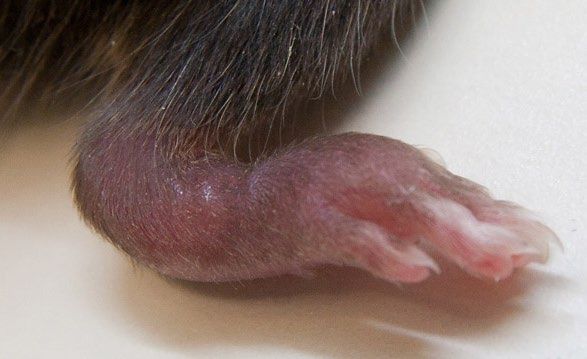
• Aramchol – Meglumine

• ARMOR Ph3 - Open-Label Segment

• Microbiome for NASH & Fibrosis

      Introduction:

      Presenter: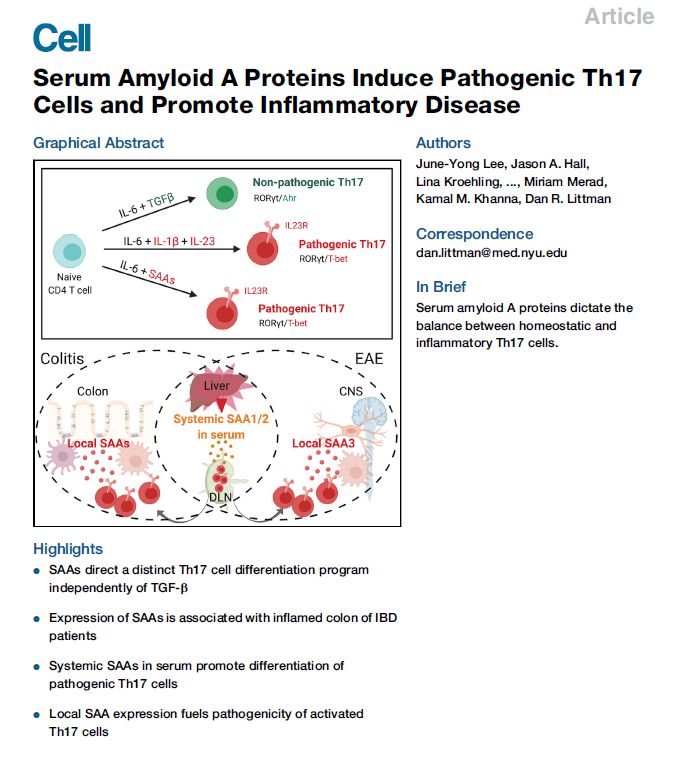
Data Support FDA Approval of Change to Aramchol Meglumine
 • Aramchol is the active moiety that is measured in plasma following administration
   of Aramchol Meglumine.
 • Meglumine is present as a class I counterion in many other oral pharmaceutical
   products. It is listed in the FDA Inactive Ingredients Database with unrestricted use
   recommendation and no safety concerns 1.
 • The last five-year drug approval database contains 61 pharmaceutical salts.
 • Galmed is planning a Type C meeting in Q2 2021 to discuss the plan for transition
   from Aramchol to Aramchol Meglumine in the registrational part of ARMOR phase
   3 study.
 • All nonclinical- and clinical safety and efficacy data with Aramchol expected to
   support the use of Aramchol meglumine in Phase 3.

   1 Bharate SS. Recent developments in pharmaceutical salts: FDA approvals from 2015 to 2019. Drug Discovery Today., 2020.
   https://doi.org/10.1016/j. drudis.2020.11.016                                                                              9
New Data: Pk Results of Twice Daily Administration for 10 Days of
         Aramchol and Aramchol Meglumine in human

                      AUCss 0-12h
                150
                          ****
                                    Aramchol
AUC [µg*h/mL]

                100                 300 mg BID
                                    Aramchol Meglumine
                50
                                    383 mg BID

                                    **** P < 0.0001

                 0

                  Less Aramchol meglumine dose is needed for same exposure of Aramchol
Aramchol Meglumine – Better Than Aramchol and Yet the Same
• Aramchol Meglumine circulates as Aramchol.
• Galmed intends to target the desired exposure of Aramchol 300 mg BID
currently used in the open label part of ARMOR.
• Less Aramchol meglumine dose is needed for same exposure of Aramchol
in the blood, In the pivotal study we plan to dose once daily Aramchol
Meglumine:
Less API for same exposure (significant COGs advantage).
Better compliance of patients (known in the literature 40-60% higher
adherence compare to BID)1.
• Aramchol Meglumine higher solubility results in homogeneity in blood
11
levels.
1. Laliberté F, et al., Impact of once-daily versus twice-daily dosing frequency on adherence to chronic medications among patients with venous thromboembolism. Patient. 2013;6(3):213-224.• ARMOR Ph3 - Open-Label Segment
• Microbiome for NASH & Fibrosis
Presenter:ARMOR Ph3 - Open-Label Segment: Efficacy kinetics, Safety and PK
• The ARMOR protocol was amended to include an Open-Label segment to evaluate the safety, PK
and kinetics of histological outcome measures and Non-Invasive Tests (NITs) associated with NASH
and fibrosis
Long-term follow-up
150 patients NITs and Histology phase
1:1:1
Group A: Biopsy at 24W Aramchol 300mg BID Aramchol 300mg BID
Group B: Biopsy at 48W Aramchol 300mg BID Aramchol 300mg BID
Group C: Biopsy at 72W Aramchol 300mg BID Aramchol 300mg BID
(Visit every 12 weeks)
Visits Schedule
Screening biopsy Week 24 or 48 or 72 biopsy
Fibroscan every 24 weeks
Microbiome at Baseline, weeks 4, 12, 24, 48 and 72
Biomarkers at Baseline, weeks 12, 24, and every 24 weeks thereafter
*End of Study (EoS) - Is defined based on the Double-Blind
13 part
13Open-Label Segment: Rationale, Objective, Population
Rationale:
Aligned with the advancement of the Aramchol meglumine program, the Open Label segment will allow an
informed decision on:
• Initial histology data with higher exposure and potential for improved efficacy
• Characterizing the kinetics of histological outcomes and NITs (of 24, 48 or 72 weeks) for Aramchol
• Long-term safety and data on the kinetics of histological outcomes and NITs in support of regulatory submissions
Objectives:
• To evaluate the safety and PK of twice daily administration (BID) of Aramchol 300mg in subjects with NASH and fibrosis
• To explore the kinetics of histological outcome measures and Non-Invasive Tests (NITs) associated with NASH and
fibrosis for the treatment duration of 24, 48 and 72 weeks
Population:
• The Open-Label Part will enroll in 50 selected sites which are less affected by the COVID-19 pandemic
• The study population includes a broader population: subjects with NASH and liver fibrosis stage 1-3 (F1 capped at 30
subjects), subjects with NASH who may or may not be overweight and subjects with NASH who may or may not have
T2DM or be pre-diabetic
14Open-Label Segment – Study Groups • All subjects will receive Aramchol 300mg BID • A total of 150 subjects, including those already randomized to Aramchol 300mg BID or placebo, will be randomized in a ratio of 1:1:1 to receive Aramchol 300mg BID according to the below grouping: • Group A: The post-baseline liver biopsy will be conducted at week 24 • Group B: The post-baseline liver biopsy will be conducted at week 48 • Group C: The post-baseline liver biopsy will be conducted at week 72 • A 2nd post-baseline liver biopsy sample will be collected for subjects whose post-baseline liver biopsy at week 24 or 48 or 72 does not show at least 1 stage improvement in fibrosis (fibrosis non-responders). The 2nd post-baseline liver biopsy sample will be collected 1 year later 15
Open-Label Segment - Methodologies
 • Frequent study visits include imaging (Fibroscan), Biomarkers (ProC3, ELF and
   others) and Microbiome profile
 • The central biopsy reading procedures, DMC and adjudication committees for
   the Open-Label Part are the same as those of the Randomized, Double-Blind,
   Placebo-Controlled Part
 • 1st data assessment (expected in Q4 2021) when approximately 50 patients
   have undergone the post-baseline liver biopsy
 • Next assessments will occur at a time when approximately 2/3 and all subjects
   have undergone the post-baseline liver biopsy

16
The Open Label Segment will de-Risk Aramchol’s Clinical Development
Program

     Activity                                      Result

                                                   1. Provide data on efficacy (magnitude of effects) and safety for
     Using 300mg twice daily - higher exposure
                                                      the higher exposure regimen

                                                   1. Facilitate and shorten duration of recruitment
     Broader Population including also:
                                                   2. Provide data on other patient populations, safety and
     F1, Non diabetes, Different BMI
                                                      efficacy.

                                                   1. Identifying responders as early as 24 weeks
     Efficacy kinetics 24-72 weeks
                                                   2. Correlation between histology, biomarkers and fibroscan
     Including Histology, biomarkers and imaging
                                                      may be used to predict treatment response in the future.

17
Amilo5-MER
Amilo-5MER Highlights
Amilo-5MER is a Differentiated, Specific and Selective Immune-Modulator 1
• Amilo-5MER is a specific amino acid sequence, homologue to the human CD44 variant which displays an efficient anti-inflammatory effects
• Amilo-5MER is a penta-peptide that prevents Serum Amyloid A (SAA) polymerization and aggregation
• Prevention of SAA polymerization and aggregation results in shut down of chronic inflammation

SAA is a validated target for the treatment of chronic inflammation
• SAA concentration in serum rise rapidly in response to acute stimuli such as infection and trauma
• Elevation of SAA is a main cause of inflammation as well as a common bio - marker
• SAA is effective in enhancing chronic inflammation only in its aggregated form

Pursuing multiple large indications
• Prominent improvement of clinical symptoms, histological features and reduction of pro-inflammatory cytokine secretion in animal models
• Inflammatory Bowel Disease (IBD)2, potential for COVID-19 - Acute Respiratory Distress Syndrome (ARDS) – By Galmed
• Rheumatoid Arthritis (RA), Multiple Sclerosis (MS), Other SAA related indications - Out-license opportunities

Established manufacturing process and IP protection beyond 2034

1 David Naor, et al., J. Clin. Invest. 111:1211-1220 (2003). Doi:10.1172/JCI200317100
2. David Naor, et al., A HUMAN-DERIVED 5-MER PEPTIDE (MTADV), WHICH RESTRICTIVELY ALLEVIATES THE PRO-INFLAMMATORY ACTIVITY OF SERUM AMYLOID A (SAA), SUBSTANTIALLY AMELIORATES IBD PATHOLOGY: NEW POTENTIAL DRUG (MTADV) AND THERAPEUTIC
 TARGET CANDIDATE (SAA) FOR IBD, Inflammatory Bowel Diseases, Volume 26, Issue Supplement_1, January 2020, Pages S3–S4,

19
The Mechanism By Which Amilo-5MER Interferes With Chronic
           Inflammation – Interferes With SAA Involvement

                                                       SAA Monomers
                                                                               Amilo-5MER – Interferes with
                                                                               inflammatory vicious cycle by
                                                                               prevention of SAA aggregation

           Pro Inflammatory Cytokines ↑
              Inflammation & Tissue
                    Destruction
                                                              SAA Aggregates

                                                                      Interference with SAA Aggregates Results in
        Infection / Stimuli
                                                                         Down Regulation of Pro Inflammatory
                                                                                  Cytokines Secretion
                                          Macrophage

20
Amilo-5MER Prevents SAA Aggregation, The Main Cause of
Chronic Inflammation
Video recording of nanoparticle tracking analysis of SAA*
WITHOUT Amilo-5MER Number of SAA aggregates above a
certain size counted in defined
frame as function of time
WITH Amilo-5MER
* Research work performed in collaboration with Prof. Mary Cowman from New York University
2122 Lee et al., 2020, Cell 180, 79–91 January 9, 2020 ª 2019 Elsevier Inc.
https://doi.org/10.1016/j.cell.2019.11.026Amilo-5MER Significantly Reduces Plasma Pro-Inflammatory Cytokines in
LPS-induced Mice Model – the Gold Standard of Systemic Inflammation
IL-6 IL-1β
6×10 5 8×10 3
LPS induction of inflammation in mice is a
[pg/ml, mean +/- SEM]
[pg/ml, mean +/- SEM]
4×10 5 6×10 3
unique model to provide evidence on the 2×10 5
**
*** 4×10 3
anti - inflammatory effects of a compound 6×10 4
2×10 3
which is not related to a certain animal 4×10 4
1×10 2
model and direct to indications accordingly. 2×10 4
0 0
1h 3h 1h 3h
INFγ TNFα
1.5×10 3 5×10 3
[pg/ml, mean +/- SEM]
[pg/ml, mean +/- SEM]
4×10 3
Peptide Blood collection 1×10 3
3×10 3
SC Injections Cytokine measurement
2×10 3
5×10 2
1×10 3
Hours: -1 0 1 2 3 0 0
1h 3h 1h 3h
LPS- IP injection
(0.005mg/kg) Vehicle Amilo-5MER 3.5 mg/kg Dexamethasone
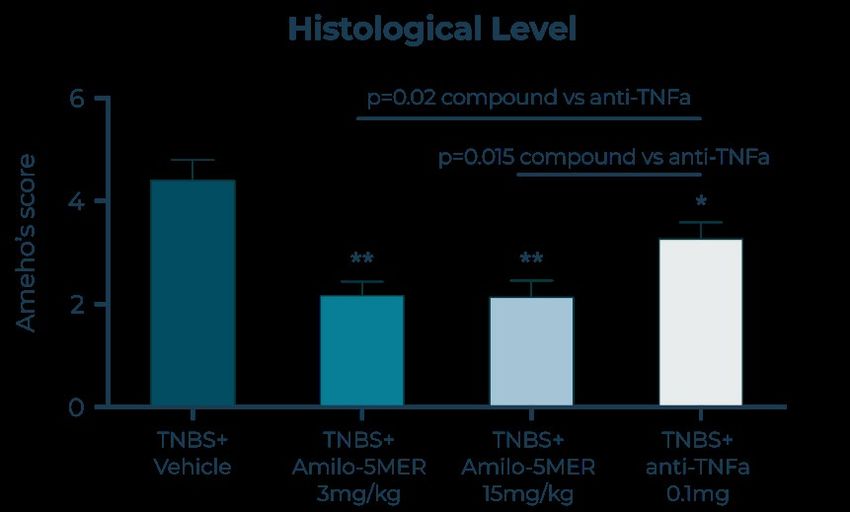
23Amilo-5MER Significantly Affects Histopathological Hallmarks in IBD animal
model (TNBS)
Colonic mRNA levels of IL‐ 6 & IL‐ 1β
* : PAmilo-5MER Significantly Affects Clinical Symptoms in RA
(collagen induced arthritis animal model)
Collagen-induced arthritis (CIA) is the animal CIA Sick C57BL/6 Mouse 9 Days after Amilo-5MER treatment
model of Rheumatoid Arthritis. CIA Sick C57BL/6
mice were treated daily (8 injections) for 9 days by
Amilo-5MER (3.5mg/Kg 70μg/ml). Results
demonstrate shrinking of the footpad swelling
(measured by Micro-caliper Electronic Archimedes
device) indicating that the joint inflammation was
suppressed.
Protocol:
Peptide Injections (SC):
1 2 3 4 5 6 7 8 9 10 Days after disease onset
3 weeks 1-3 days
Assay under
blind manner
Immunization with collagen Boost: Collagen Onset of disease
(200μg/mouse) and CFA (200μg/mouse) and
CFA
25Amilo-5MER Restores the Normal Anatomy of the Inflamed Joint
4.5
Average Inflammation Score
4
PAmilo-5MER Demonstrates Therapeutic Effects in MOG and PLP
Induced EAE Models in Mice
Protocol: Amilo-5MER
2 days 3 days 5 6 7 8 9 10 11 12 13 14 15 16 17 Peptide Injections:
Demonstrates Anti
PLP EAE model Inflammatory Effects in
PLP/ MOG EAE boost
MOG EAE model
Major MS Experimental
Models – Oral and in
induced EAE
Paralysis
Measurement
27 Treatment ModePreclinical Safety Studies in Support of First-in-Human Study
Completed
Maximum Tolerated Dose (MTD) studies in mice and CNS Safety
dogs • No adverse effects on behavior, body posture, body temperature, motor
functions and response to stimuli were noted in the Functional Operational
• 7 day MTD in mice at doses up to 1000 mg/kg, in dogs up to 200 mg/kg: No
Battery of tests in mice
adverse effects were noted
• 28-days in mice at doses up to 175 mg/kg, an in dogs at doses up to 24 Genotoxicity
mg/kg: No adverse effects were noted
• No potential for genotoxicity was seen in the reverse mutation assay in
Cardiovascular Safety bacteria and no chromosomal damage was seen in the chromosomal
aberration assay in human peripheral blood mononuclear cells
• No inhibition of the potassium hERG channel were noted in an in-vitro
system Secondary Pharmacology - Off Target Binding
• No adverse effects on the cardiovascular system (ECG, blood pressure and • Amilo-5MER at 10 μM showed no significant interaction with a large list of
heart rate) in dogs known pharmacological molecular targets
Respiratory Safety
• No adverse effects on respiratory rate, tidal volume, and minute volume
were noted in mice
28Clinical Development Plan for Mild to Moderate Ulcerative Colitis
Serum Amyloid A (SAA) is Elevated in the Site of Inflammation (biopsies);
 Active IBD Patients Compared to Healthy Individuals
                                  SAA levels in biopsies
                            70
     Relative mRNA levels

                            60
                            50                                         Expression of SAA in intestinal
                            40
                                                                       tissue biopsies were assessed :
                            30
                            20
                                                                       2 UC and 1 CD active mucosal
                            10                                         inflammation, CD with mucosal
                            0                                          healing (=no active
                                  CD        CD       UC      Healthy
                                 active   mucosal   active             inflammation)
                                          healing

      Expression of SAA is associated with inflamed colon of IBD patients
      and have distinct systemic and local functions in active IBD.
30
Mild to Moderate Ulcerative Colitis
Galmed is aiming to develop Amilio-5MER in mild to moderate ulcerative colitis (UC)
• Most UC cases are mild to moderate*
• Not all patients are responsive to treatment
? Third line
Severe UC
IFX, CsA, surgery
?
• Some adverse event even with 5ASA ∽50% UNMET NEED
Unresponsive Mod-Severe UC
Second line treatment
• Failed 5ASA = ‘tipping point’ for escalation Mod-Severe UC
Steroids, IMMs, Biologics, Jak,
∽50% UNMET NEED
Unresponsive Mild-Mod UC
MMX-Budesonide?
Ko et al, 2019- AGA Clinical Practice Guidelines on the Management of Mild-to-Moderate
5 Amino-salicylic Acid (5ASA) oral/topical
*
Ulcerative Colitis; 3
** https://www.fda.gov/files/drugs/published/Ulcerative-Colitis--Clinical-Trial-Endpoints-
Guidance-for-Industry.pdfMild to Moderate Ulcerative Colitis
Galmed is aiming to develop Amilio-5MER in mild to moderate ulcerative colitis (UC)
• UC is more anatomically focused and endoscopically accessible
• UC clinical studies have better-defined, regulatory-based endpoints** compared to CD
• The advantages of Amilo-5MER in UC are the following:
• It has a unique MoA, and potential higher efficacy compared to ASA and other drugs
• It is developed as an oral/easy to use drug administered at home with minimal adverse events
and a favorable risk-benefit ratio
• It could be provided as monotherapy or in combination with other drugs
* Ko et al, 2019- AGA Clinical Practice Guidelines on the Management of Mild-to-Moderate Ulcerative Colitis;
** https://www.fda.gov/files/drugs/published/Ulcerative-Colitis--Clinical-Trial-Endpoints-Guidance-for-Industry.pdf
32Amilo-5MER - Clinical Development Plan (CDP) - Phase 1 • Phase 1a study in healthy volunteers planned initiation in Q1 2021. • Pre-IND meeting with the FDA planned for Q3 2021. • 6 weeks Open-label Phase 1b PoC trial to study the safety and efficacy of Amilo-5MER in 20 active UC patients (10 mild-to moderate and 10 moderate-to severe) planned for Q4 2021. Topline data expected in Q2 2022 • Primary Endpoint Clinical response: Reduction from Baseline in the Mayo Score at Week 6 • Key Secondary Endpoints Clinical remission* at Week 6 Endoscopic improvement** at Week 6 Serum amyloid A (SAA), C-reactive protein (CRP) and Fecal calprotectin levels at Week 6 Improvement in histologic score 33
Amilo-5MER, Planned Phase 2 & 3 CDP
• Phase 2 randomized, double-blind, placebo-controlled, multi-center trial will be performed in a specific
  UC population (i.e., mild-to moderate or moderate-to severe), provided a meaningful clinical response
  is achieved in MS in at least 3/10 patients in any of the UC subpopulations explored in Phase 1b.
                                       3 doses Amilo-
     1st Stage - Dose Range Finding   5MER & Placebo
                                           1:1:1:1

                                                        2 doses Amilo-5MER & Placebo
     2nd stage - Maintenance

                                                                                       Follow up
     3rd stage - Follow up

                                           12 w                    40 w                  12 w

• Phase 2 will enroll 220-250 patients. Overall study duration 24 months. The sample size for the Phase 3
  (2 studies) will be calculated based on the effect size seen in phase 2, and patients will be treated for
  52 weeks. Overall study duration 24 months.

34
2021, The Year of Change
H1 2021
• Submission of 2 new INDs (Aramchol Meglumine & Amilo5-MER)
• Data from Aramchol Meglumine Regulatory bioequivalence and food effect studies
• Meeting with FDA for approval of Aramchol Meglumine NCE development program
• In-vitro and in vivo data from Aramchol / ASC41 (THR-ß-agonist) combination study
• Data from Amilo5-MER SAD & MAD Phase 1 study in healthy volunteers
H2 2021
• Data from Amilo5-MER Phase 1b study inflammation bio-markers
• 1st histology readout from ARMOR Phase 3 Open Label segment
• Meetings with FDA on Amilo5-MER Phase 2/3 study CDP
• Transition to ARMOR Ph3 double blind part, cross referencing all currently available data
from Aramchol’s IND
35THANK YOU
You can also read


