LIVE WEBINAR Evaporative Emission Regulation & Testing - Patrick Ulmerich - AVL
←
→
Page content transcription
If your browser does not render page correctly, please read the page content below
AVL Emission Test Systems

LIVE WEBINAR
                                            Patrick Ulmerich
Evaporative Emission Regulation & Testing   Michael Scheytt
 Public
Daniel Baumann, IT

            Patrick Ulmerich, Dipl.-Ing. (FH)
            Application Manager

            Since 1994 working in Emission business
            Engagement of EVAP Applications started in 1999

            Michael Scheytt, Dipl.-Ing.
            Product Manager

            Since 1997 working in Emission business
            Engagement in EVAP Applications started in 2012

emission.marketing@avl.com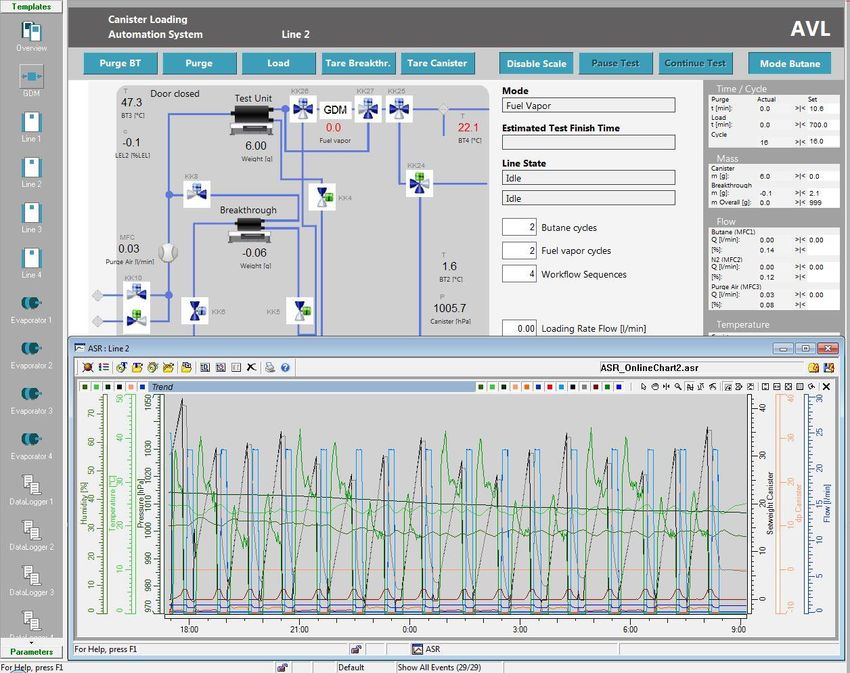
Challenges

                                        WLTP/1066
                                                     RDE
                                          §                                        EVAP
                                                                                                                      CO2

Public | emission.marketing@avl.com                 Live W e binar - EVAPORATIVE EMISSIONS | Patrick Ulmerich / Michael Scheytt | 11. Se ptember 2018 |   3
Emission Legislation

                                       Introduction and Overview

                                       New Regulations and Requirements

                         Evaporative
                          Emissions    System Solutions and Trends

                                       Summary

Public | emission.marketing@avl.com        Live W e binar - EVAPORATIVE EMISSIONS | Patrick Ulmerich / Michael Scheytt | 11. Se ptember 2018 |   4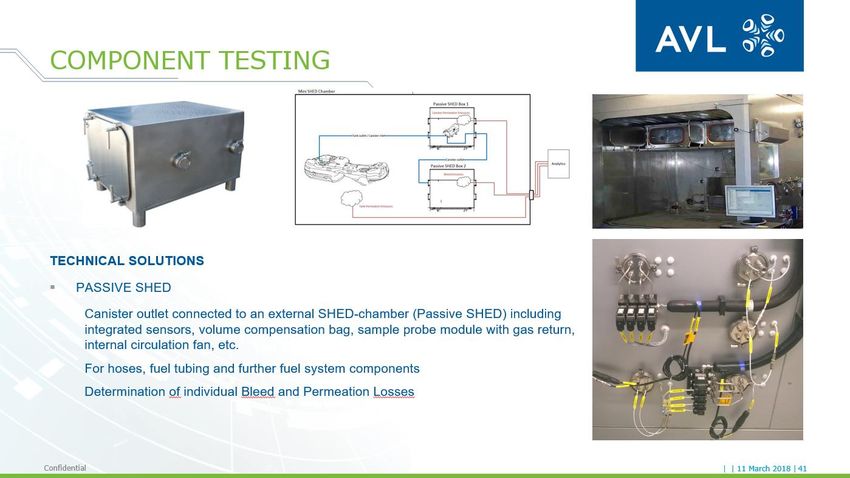
Legislation: Passenger cars 2018 – 2025 (expected)
                       North America                                         Europe                                                                       Russia and Eurasia
                       EPA Tier 3                                            Euro-6d                                                                          Euro-5 or equivalent
                       C ARB LEV III
                                                                                                                                                                    South Korea
                                                                                                                                                                 EPA Tier-3 / Euro-6

                                                                                                                                                                             Japan
                                                                                                                                                                               PPNLT

                                                                                                                                                                              China
                                                                             Morocco
                                                                                       Algeria
                                                                                                                  Egypt
                                                                                                                                                                            C hina 6b
                       Mexico                                                                                                                                                 India
                       EPA Tier 2 / C ARB LEV II                                                                                                                            Bharat VI
                       Euro-4 or equivalent                                                      Nigeria

                                                                                                                                                                              ASEA
                       Brazil                                                                                                                                         Euro-4 or prior
                                                                                                                                                                       or equivalent
                       PROC ONVE L6

                       Chile
                       EPA Tier 2 / Euro-5                                                                 S-Africa

                       Argentina
                                                                                                                           Iraq, Oman                                 Australia
                       Euro-5 or equivalent                                      Africa                                   Saudi Arabia                             New Zealand
                                                                                 Euro-4, prior                              Euro-4, prior                      Euro-6 or equivalent
                                                                                 or equivalent                              or equivalent

Legend:         US based          US / UN-EC E     UN-ECE based   UN-ECE based                     UN-ECE based               Laboratory     R e al Driving       R DE Monitoring or
                                                                                                                                                                                                EVAP
                le gislation      le gislation     EU-0 …4        EU-5 … 6c                        EU-6d                      te sts         Em issions           de fe at device chasing

     Public | emission.marketing@avl.com                                                            Live W e binar - EVAPORATIVE EMISSIONS | Patrick Ulmerich / Michael Scheytt | 11. Se ptember 2018 |   5
EVAP TEST SEGMENTATION
FACILITY OVERVIEW AND STRUCTURE
                   SHED
                                                                       Soak Area          Soak Area
                                                        SHED             14°C               23°C
                  SHED                  Gasoline
                                                                               Soak Area             Soak Area
                                                                                 38°C                  20°C                            COP            Durability

                      DIURNAL          ORVR
                                                                                                                                     Pre-Con
                                                                                                                                        &                R&D
                                                                                                                                     Stability

                                                                   Testing Facility
                          HOT         RUNNING
                          SOAK         LOSS                                            Baking 50°C
                                                    RL-SHED                                                                                            Fuel Station
       CD                SHED

                                                   Chassis Dyno                                Preparation                      Workshop                               Gasoline

                                                                                                                                                                         E85

                                                                                                                                                                         E10

                                                        Chassis Dyno

Public | emission.marketing@avl.com                                          Live W e binar - EVAPORATIVE EMISSIONS | Patrick Ulmerich / Michael Scheytt | 11. Se ptember 2018 |   6
EVAPORATIVE EMISSION TEST TYPES
Canister Conditioning & CANLOAD SYSTEMS
EVAP Test Preparation Testing or
Diurnal Bleed Emission Hot Soak ORVR Point Source Running-Loss Test Component
Test Test Puff-Loss Test Test / Spit back Test PF Canister Testing
Test Determination Aging
RL-SHED
SHED SHED SHED Gasoline
SHED SHED /
SHED SHED Midi CANLOAD CANLOAD
Chassis Dyno Chassis Dyno
Evaporative THC Like Diurnal test, but Evaporative THC-Emissions after Onboard Refueling Evaporative THC Evaporative THC Testing of
emissions “over the bleed emissions Sealed aTanks
vehicle was driven (engine is Vapor Recovery test 20w aging
emissions during Canister
emissions during Aging Components of
the day” while the System
(openings of the fuel Test
still hot) and tested determines fuel process
driving the vehiclewith driving the vehicleGWC
300 cycles OEM Suppliers
vehicle is parked system) are analyzedbased on 12h
Transfer timing (chassis dyno TC vapor THC SHEDdyno
on a chassis 24h followed
on a chassis by 5
dyno, such as Fuel
24h, 48h, 72h separately by a DiurnalCycle
VV/VT-SHED) required emissions coming measurement
are measured at which cycles
is buildofinto
BWC Tanks or
separate small Passive out of the tank by after
points, where 3w and 20w
the SHED chamber Canisters
SHED within the new fuel being evaporated THC
VV/VT-SHED chamber pumped into it might be emitted
Public | emission.marketing@avl.com Live W e binar - EVAPORATIVE EMISSIONS | Patrick Ulmerich / Michael Scheytt | 11. Se ptember 2018 | 7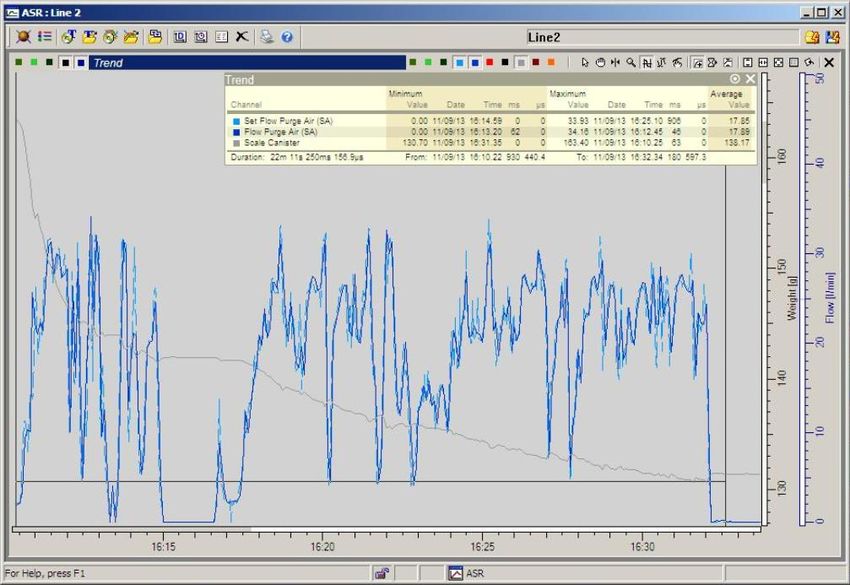
EVAP PRODUCT PORTFOLIO

                                                     VV/VT-
                                                     SHED

                                       Point
                                      Source                         FUELLOAD

                                           RL SHED            CANLOAD

Public | emission.marketing@avl.com                           Live W e binar - EVAPORATIVE EMISSIONS | Patrick Ulmerich / Michael Scheytt | 11. Se ptember 2018 |   8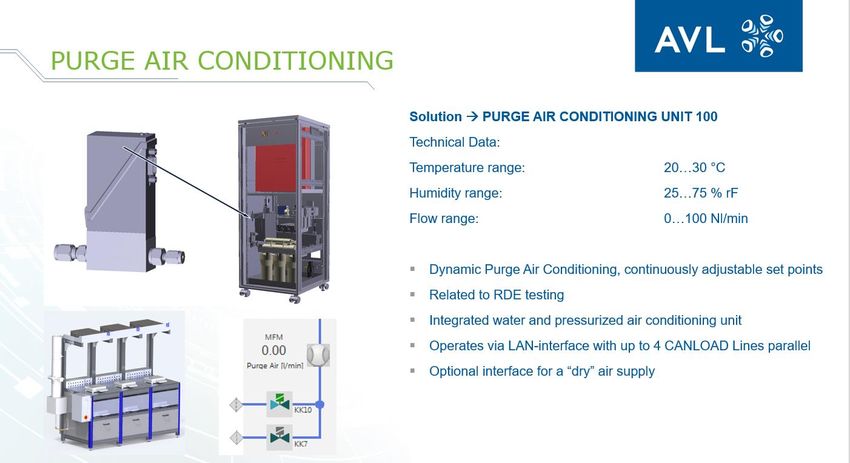
EVAP APPLICATION: LD VEHICLES
Unit Under Test            SHED Chambers                                  Sampling and Test Devices                                           Analytics                                     Conditioning Devices

                                                 Chassis Dyno

      UUT
                   SHED     Variable  Passive     Running       Heating     Running    ORVR     Spit-Back    Point     THC        CH4      Ethanol      NH3      iCal   iCal   C anister   with Fuel   Purge Air   Fueling
                                                                                                                                                                                                                             Fuel Cond.
                  Chamber Vol. / Temp Chamber   Loss SHED       Devices     Loss CD   Devices    Devices    Source   Analysis   Analysis   Analysis   Analysis   GDU    CFO     C ond.       Vapor      Cond.      Station

      EU                     ✓                                                                                           ✓                                       ✓      ✓        ✓           ✓           ✓          ✓           ✓

      USA                    ✓          ✓          ✓             ✓           ✓         ✓         (✓)         ✓           ✓                   ✓                   ✓      ✓        ✓           ✓           ✓          ✓           ✓

      Japan                  ✓                                                                                           ✓                                       ✓      ✓        ✓           ✓           ✓          ✓           ✓

      China                  ✓          ✓                        ✓           ✓         ✓                                 ✓                                       ✓      ✓        ✓           ✓           ✓          ✓           ✓

      Brazil       ✓         ✓                                   ✓                                                       ✓                   ✓                   ✓      ✓        ✓           ✓           ✓          ✓           ✓
      Korea                  ✓                                                                                           ✓                                       ✓      ✓        ✓           ✓           ✓          ✓           ✓

                       ✓      R f with FID (100% Ethanol)                         ✓      R e quire d                 ✓   O ption or Alternative                         ✓      Unde r discussion
  Public | emission.marketing@avl.com                                                                           Live W e binar - EVAPORATIVE EMISSIONS | Patrick Ulmerich / Michael Scheytt | 11. Se ptember 2018 |              9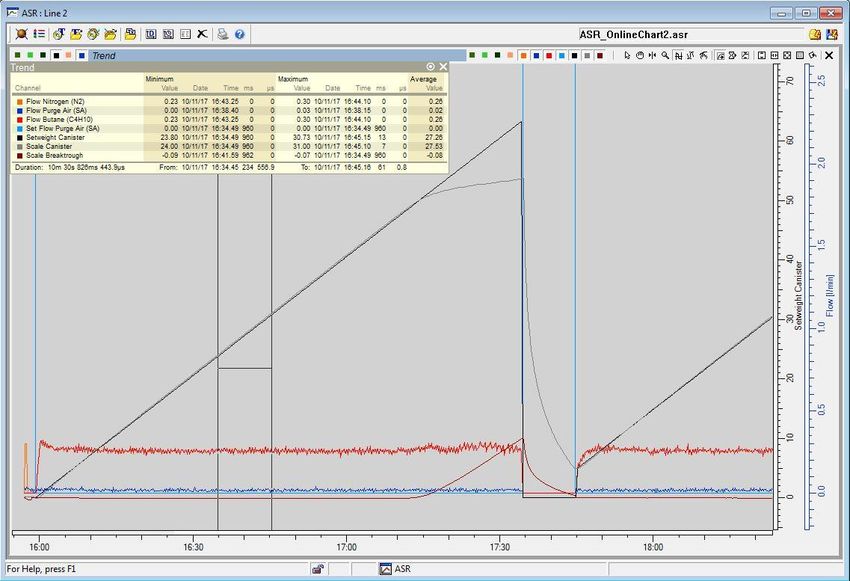
Emission Legislation

                                       Introduction and Overview

                                       New Regulations and Requirements

                         Evaporative
                          Emissions    System Solutions and Trends

                                       Summary

Public | emission.marketing@avl.com        Live W e binar - EVAPORATIVE EMISSIONS | Patrick Ulmerich / Michael Scheytt | 11. Se ptember 2018 | 10
China GB 6a for Light Duty Vehicle
▪ Definition of a test type IV and VII
▪ Mix of EU and US regulation with more and more individual
elements
CHINA 6 ▪ Aggressive implementation time schedule
▪ New test cycles and workflows
▪ Reduced emission limits
▪ New testing and facility requirements
Public | emission.marketing@avl.com Live W e binar - EVAPORATIVE EMISSIONS | Patrick Ulmerich / Michael Scheytt | 11. Se ptember 2018 | 11CHINA 6 – TIME SCHEDULE
23/12/2016: China GB 6a final version release
Implementation time schedule
New Type Register
6a 2019.01.01 2020.01.01
6b 2022.01.01 2023.01.01
RDE 2022.01.01 2023.01.01
Public | emission.marketing@avl.com Live W e binar - EVAPORATIVE EMISSIONS | Patrick Ulmerich / Michael Scheytt | 11. Se ptember 2018 | 12CHINA 6 – OVERVIEW
▪ Aligned to GTR-15 Requirements e.g. temperature conditioning for prep-drive cycle
procedure and vehicle soak
▪ New emission limits 0.7g/test (HS+D, ORVR 0.05g/l)
▪ New temperature level Hot-Soak temperature set point 38°C
High temperature prep-drive cycle 38°C
▪ Increased test duration Diurnal test procedure adjusted from 24h to 48h
Public | emission.marketing@avl.com Live W e binar - EVAPORATIVE EMISSIONS | Patrick Ulmerich / Michael Scheytt | 11. Se ptember 2018 | 13CHINA 6 – INFORMATION
Specific EVAP pre-conditioning drive cycles focusing on “worst-case” scenario canister purge
CD HOST Automation system requirement – EVAP specific prep-cycles
Public | emission.marketing@avl.com Live W e binar - EVAPORATIVE EMISSIONS | Patrick Ulmerich / Michael Scheytt | 11. Se ptember 2018 | 14CHINA 6 – INFORMATION
High temperature Soak
Temperature setting point: 38°C ± 2°C
w Requires additional soak or baking enclosures – simplified temperature
o conditioning (Can be done in a standard VT-SHED as well)
r
k High temperature chassis dyno driving cycle
f Temperature setting point: 38°C ± 2°C
l
o
Investment for RL-SHED or
w Climate Chamber TC required !
High temperature Hot Soak Test (SHED)
Temperature setting point: 38°C ± 2°C Standard VT-SHED Operation
(Temperature during test: 33°C ~ 41°C) (Hot-Soak 38°C)
Public | emission.marketing@avl.com Live W e binar - EVAPORATIVE EMISSIONS | Patrick Ulmerich / Michael Scheytt | 11. Se ptember 2018 | 15CHINA 6 – ORVR REQUIREMENTS ▪ ORVR test procedure very similar to the existing US procedure ▪ Introduce the 2nd generation of the AVL FUELLOAD ▪ Providing additional ORVR fan for optimized and high dynamic analytical response ▪ Enhanced ORVR bag adapters and fuel nozzle interfaces Public | emission.marketing@avl.com Live W e binar - EVAPORATIVE EMISSIONS | Patrick Ulmerich / Michael Scheytt | 11. Se ptember 2018 | 16
WLTP EVAP News

                                       ▪      Linked to GTR-15
                                       ▪      Effective control of evaporative emission replacing UNR-83

                              GTR-19   ▪      Long-term canister aging process
                                       ▪      Real fuel vapor aging
                                       ▪      Fuel tank conditioning and aging
                                       ▪      Adressing sealed tank systems

                                       ▪      EU, Japan will implement it in 2019 (EURO 6d-temp-EVAP)

Public | emission.marketing@avl.com        Live W e binar - EVAPORATIVE EMISSIONS | Patrick Ulmerich / Michael Scheytt | 11. Se ptember 2018 | 17
GTR-19 INFORMATION Public | emission.marketing@avl.com Live W e binar - EVAPORATIVE EMISSIONS | Patrick Ulmerich / Michael Scheytt | 11. Se ptember 2018 | 18
GTR-19 – SOAK REQUIREMENTS
DIFFERENT SOAK DEMANDS FOR DIFFERENT WORKFLOWS
SOAK 20 20°C ± 2°C
SOAK 23 23°C ± 3°C
May requires additional SOAK areas, SHED
functionality or conditioning container
“Tail pipe SOAK” solution
SOAK -7°C
SOAK 14°C New SHED temperature settings for SOAK
SOAK 23°C procedures and combined SOAK/Diurnal
test templates required
Public | emission.marketing@avl.com Live W e binar - EVAPORATIVE EMISSIONS | Patrick Ulmerich / Michael Scheytt | 11. Se ptember 2018 | 19GTR-19 – VEHICLE CONDITIONING
BAKING FUNCTION FOR VEHICLES OR VEHICLE COMPONENTS
High temperature request of e.g. 50°C or higher…
Additional baking containers or enclosures required
Public | emission.marketing@avl.com Live W e binar - EVAPORATIVE EMISSIONS | Patrick Ulmerich / Michael Scheytt | 11. Se ptember 2018 | 20GTR-19 – VEHICLE PREPARATION
DRAINING AND REFUELING PROCEDURE FOR SEALED TANK SYSTEMS
Refueling temperatures 18°C ± 2°C
Volume 15% ± 2%
Volume 40% ± 2%
FUELLOAD function with flexible setpoint adjustment for
temperature and volume.
Additionally, a special draining circuit with on-board tank and
facility interface is integrated.
Public | emission.marketing@avl.com Live W e binar - EVAPORATIVE EMISSIONS | Patrick Ulmerich / Michael Scheytt | 11. Se ptember 2018 | 21GTR-19 INFORMATION
CANISTER CONDITIONING - PURGE
New additional EVAP-specific pre-conditioning cycles. The phases are coming from the WLTC phases, but the
sequence is different compared to the WLTC test runs for tail pipe emissions.
WLTC
EU EVAP
Purge quality control requirement
▪ Validation of the purge quality
20°C ± 2°C
23°C ± 3°C
Public | emission.marketing@avl.com Live W e binar - EVAPORATIVE EMISSIONS | Patrick Ulmerich / Michael Scheytt | 11. Se ptember 2018 | 22GTR-19 – TEMPERATURE SIMULATION
DIURNAL TEMPERATURE SIMULATION
Creating a new customized
SHED/SHEDCon test template assigning a
new or updated temperature profile (LUT)
Public | emission.marketing@avl.com Live W e binar - EVAPORATIVE EMISSIONS | Patrick Ulmerich / Michael Scheytt | 11. Se ptember 2018 | 23GTR-19 INFORMATION PF
DETERMINATION OF PERMEABILITY PF
PF Permeability Factor
▪ Additional VV/VT-SHED Midi / Mini
DATA LOGGER for tank rigs and components
Temp.
▪ Additional SOAK enclosures with
stationary temperature conditioning
(40°C) – Container Solutions
▪ Default setting worst case (120mg/d)
▪ PF = HC20w – HC3w
Public | emission.marketing@avl.com Live W e binar - EVAPORATIVE EMISSIONS | Patrick Ulmerich / Michael Scheytt | 11. Se ptember 2018 | 24GTR-19 INFORMATION
DIURNAL SHED VEHICLE TESTING & CALCULATION
Enhanced workflow, 48h Diurnal Test including a
more complex and new final calculation
Old calculation New calculation
MHS +MD1 < 2g (Total) MHS + MD1 + MD2 + PF + PF < 2g (Total)
HS = Hot Soak
D = Diurnal (Instead of reducing the Limit they modify the calculation same effect)
Public | emission.marketing@avl.com Live W e binar - EVAPORATIVE EMISSIONS | Patrick Ulmerich / Michael Scheytt | 11. Se ptember 2018 | 25GTR-19 – PUFF-LOSS SIMULATION
CANISTER LOADING WITH PUFF-LOSS SIMULATED MASS
Available standard function of CANLOAD – simulation of dynamic
loading rates
Public | emission.marketing@avl.com Live W e binar - EVAPORATIVE EMISSIONS | Patrick Ulmerich / Michael Scheytt | 11. Se ptember 2018 | 26TESTING – DYNAMIC LOADING
BUTANE/N2 BASED DYNAMIC LOAD SIMULATION
Puff-Loss simulation,
sealed tank systems
(flow reduction ~
depressurization)
Screenshots shows set flow [l/min] vs. real flow [l/min] combined with canister weight [g] response
Public | emission.marketing@avl.com Live W e binar - EVAPORATIVE EMISSIONS | Patrick Ulmerich / Michael Scheytt | 11. Se ptember 2018 | 27GTR-19 – SEALED TANK SYSTEMS
PUFF-LOSS SHED TEST PROCEDURE
SHED, SHEDCon requires a new test template, new
sequence and report
Remote access port for ECU-control
Public | emission.marketing@avl.com Live W e binar - EVAPORATIVE EMISSIONS | Patrick Ulmerich / Michael Scheytt | 11. Se ptember 2018 | 28GTR-19 – CANISTER CONDITIONING
PURGE FLOW MEASUREMENT AND SIMULATION
CANLOAD dynamic purge function available…
Public | emission.marketing@avl.com Live W e binar - EVAPORATIVE EMISSIONS | Patrick Ulmerich / Michael Scheytt | 11. Se ptember 2018 | 29DYNAMIC PURGE QUALITY
ASCII-FILE BASED FLOW SIMULATION (e.g. 1Hz Data) According to CARB Regulation
Maximum flow validation
set flow 16.39 l/min
real flow 16.36 l/min
Max. difference: -0.03 l/min (-0.2%)
Average flow result (37 min.) validation
set flow 5.03 l/min
real flow 5.09 l/min
Max. difference: +0.06 l/min (+1.2%)
Public | emission.marketing@avl.com Live W e binar - EVAPORATIVE EMISSIONS | Patrick Ulmerich / Michael Scheytt | 11. Se ptember 2018 | 30GTR-19 AUX. CANISTER PREPARE
BREAK-THROUGH CANISTER CONDITIONING
Standard parallel process during the UUT canister purge
Public | emission.marketing@avl.com Live W e binar - EVAPORATIVE EMISSIONS | Patrick Ulmerich / Michael Scheytt | 11. Se ptember 2018 | 31GTR-19 – CANISTER CONDITIONING
CANLOAD BALANCE REQUIREMENT – RESOLUTION / ACCURACY
New Required Accuracy ±0.02 g
Actual CANLOAD Standard equipped with 0.01g balances
Upgrade available for existing systems
The new set of standard balances also improves the Gravimetric Loading-Control of the
CANLOAD system.
Both balances are having the same resolution and accuracy.
Public | emission.marketing@avl.com Live W e binar - EVAPORATIVE EMISSIONS | Patrick Ulmerich / Michael Scheytt | 11. Se ptember 2018 | 32GRAVIMETRIC LOADING CONTROL
▪ A specific algorithm realizes a
gravimetric control operation during the
canister loading process.
▪ Using the online-weight information's,
MFC flow rates, temperature and the
target set point the automatic
gravimetric control guarantees a highly
accurate loading procedure.
▪ Volume compensation of tubing and
system parts
▪ PI-Control is available for both
operation modes:
✓ Butane / N2
✓ Fuel Vapor / N2
Public | emission.marketing@avl.com Live W e binar - EVAPORATIVE EMISSIONS | Patrick Ulmerich / Michael Scheytt | 11. Se ptember 2018 | 33GTR-19 INFORMATION
FUEL VAPOR CANISTER AGING AND STABILISATION
Combined test system setup
Butane + Fuel
Fuel vapor/N2 stabilization (300 cycles) followed by
5 cycles Butane/N2
BWC validation (statistical evaluation)
Public | emission.marketing@avl.com Live W e binar - EVAPORATIVE EMISSIONS | Patrick Ulmerich / Michael Scheytt | 11. Se ptember 2018 | 34COMBINED TESTING – BUTANE / FUEL VAPOR
System provides combined testing of canister –
butane/N2 and fuel vapor/N2 loading within 1
test project.
Start-up selection between Butane or Fuel
possible
Defined by 3 individual settings for high flexibility
of testing by using
▪ Butane Cycles
▪ Fuel Vapor Cycles
▪ Workflow Sequences
Calculation of the overall cycles:
Butane and fuel cycles will be added and
multiplied with the amount of sequences
Public | emission.marketing@avl.com Live W e binar - EVAPORATIVE EMISSIONS | Patrick Ulmerich / Michael Scheytt | 11. Se ptember 2018 | 35HOW TO CONTROL 50:50 MIXTURE?
REGULATED STANDARS FOR VAPOR MIX
GTR-19 Procedure
§5.1.3.1.1 After the temperature conditioning test and vibration test, the canister shall be aged with a
mixture of Type 1 E10 market fuel as specified in paragraph 5.1.3.1.1.1. of this annex and nitrogen or air
with a 50 ± 15 percent fuel vapour volume. The fuel vapour fill rate shall be kept between 60 ±
20 g/h. The canister shall be loaded to the corresponding breakthrough. Breakthrough shall be
considered accomplished when the cumulative quantity of hydrocarbons emitted equals 2 grams.
CARB Bleed Emission Test Procedure
§III.D.12.1.2. Carbon Canister System Purge/Load Cycling with Fuel Vapor. The carbon canister system
shall be cycle aged no less than 10 cycles using the gasoline referenced in section III.D.12.1.1 by loading
the canister system to 2-gram breakthrough with either a mixture of fuel vapor and nitrogen
(50 ± 15 percent fuel vapor by volume) or a mixture of fuel vapor and air (50 ± 15 percent fuel vapor
by volume), at a fuel vapor fill rate of 40 to 80 grams per hour. Each loading is followed by purging
the canister system with 300 canister bed volume exchanges at 0.8 cfm.
▪ How to control and measure the fuel vapor/N2 mixture?
▪ Is it possible to combine it with an efficiency parameter for the fuel exchange
management?
Public | emission.marketing@avl.com Live W e binar - EVAPORATIVE EMISSIONS | Patrick Ulmerich / Michael Scheytt | 11. Se ptember 2018 | 36PROBLEM STATEMENT
What is required to verify the 50±15% (vol.) fuel vapor
concentration in the mixture?
▪ Direct measurement is difficult due to variation in vapor
properties caused by fuel weathering
rvapor = f(temperature, mass lost)
▪ Mass concentration is a more direct measurement but does not
satisfy §III.D.12.1.2
Public | emission.marketing@avl.com Live W e binar - EVAPORATIVE EMISSIONS | Patrick Ulmerich / Michael Scheytt | 11. Se ptember 2018 | 37AVL SOLUTION FOR FUEL VAPOR MIX
Solution kit for
online validation
Public | emission.marketing@avl.com Live W e binar - EVAPORATIVE EMISSIONS | Patrick Ulmerich / Michael Scheytt | 11. Se ptember 2018 | 38TEST DATA EVALUATION ▪ Data reliability is better than expected ▪ Time alignment is important for online calculations (concentration) ▪ Optimized GDM handling ensures the accuracy and reliability (purge, pre-condition, calibration) Public | emission.marketing@avl.com Live W e binar - EVAPORATIVE EMISSIONS | Patrick Ulmerich / Michael Scheytt | 11. Se ptember 2018 | 39
GDM CONCLUSIONS
▪ Use of Fuel Vapor requires heating of “Loading Components” to prevent condensation
▪ Heated evaporator, heated transfer line, heated enclosure, heated canister
▪ Incorporation of Gas Density Meter (GDM) allows for direct online validation of 50 ± 15 %
volumetric fuel vapor concentration
▪ Automatic quality checks during purge of canister (N 2, Air, Butane)
▪ Automatic calibration routine before and drift check after test sequence
▪ AVL has developed a canister loading system that is able to validate Fuel Vapor Concentration
according to regulatory requirements
▪ Can be used with multiple fuel types
▪ GDM calibration method ensures accuracy
▪ System provides a fuel optimized consumption mode ensuring 50:50 fuel vapor mix by
minimized fuel consumption
Certification fuel is expensive!
Public | emission.marketing@avl.com Live W e binar - EVAPORATIVE EMISSIONS | Patrick Ulmerich / Michael Scheytt | 11. Se ptember 2018 | 40Emission Legislation
Introduction and Overview
New Regulations and Requirements
Evaporative
Emissions System Solutions and Trends
Summary
Public | emission.marketing@avl.com Live W e binar - EVAPORATIVE EMISSIONS | Patrick Ulmerich / Michael Scheytt | 11. Se ptember 2018 | 41TECHNOLOGY: 2025 (AVL Prediction 3/2018 Scenario ”Medium”)
Hydrogen Fuel Cell Fuel Cells: limited to specific markets
Battery Electric Vehicle BEV: Dependent on infrastructure, incentives and city access
Plug-In Hybrid: CAFE and city access as major driver
Full Hybrid: 60 up to 650V Technology
ICE / Electric Motor
Mild Hybrid:
• 48 V in various configurations P0 – P4
• Power Increase 15 20 30 kW
• ICE utilizes synergies
ICE:
• Significantly higher effort for emission compliance (RDE,
China6, SULEV xx, …),
Internal Combustion Engine • “Zero Impact Emission Concepts” starting
• Increasing share turbocharging + Rightsizing,
• Advanced boosting, exhaust energy recuperation, full map
stoichiometric, EGR
• E-fuels and E-gas increasing
Public | emission.marketing@avl.com Live W e binar - EVAPORATIVE EMISSIONS | Patrick Ulmerich / Michael Scheytt | 11. Se ptember 2018 | 42TECHNOLOGY: Global Powertrain mix
USA EU China
▪ Majority will remain with ICE ▪ Strong trend to mild electrification ▪ Strong trend to electrified powertrain and
▪ Almost 100% Gasoline market ▪ Plug-in will depend very much CAFE and BEV by political and legislation reasons
city access requirements ▪ China sees Electromobility as a major
▪ Diesel will be replaced by Gasoline ICE driver to promote Chinese automotive
industry
▪ Almost 100% Gasoline ICE
Legend:
Mild Hybrid Plug-In
ICE Full Hybrid BEV FCEV
(incl. 48V) Hybrid
Public | emission.marketing@avl.com Live W e binar - EVAPORATIVE EMISSIONS | Patrick Ulmerich / Michael Scheytt | 11. Se ptember 2018 | 43Much More R&D Effort…
US GTR-19 CHINA 6a
TIER 3 / LEV III (WLTP EVAP)
+100% +200%
Canisters BWC designed:
Canisters BWC designed:
▪ 2day diurnal
▪ 2day diurnal
▪ Volume 1l 2l
▪ ORVR R&D
Canisters BWC designed: ▪ Volume 1l 3l work
▪ 3day diurnal R&D
DIURNAL required
▪ ORVR work
▪ Volume 4l required
DIURNAL ORVR
HOT SOAK
DIURNAL ORVR
HOT SOAK S
OEM‘s have to manage 3 different fuel storage system
concepts and designs
HOT
SOAK
RUNNING
LOSS
▪ The exended version for US (EPA, CARB)
▪ China version with capability for further modification
▪ Smaller and simplified version for EU
Public | emission.marketing@avl.com Live W e binar - EVAPORATIVE EMISSIONS | Patrick Ulmerich / Michael Scheytt | 11. Se ptember 2018 | 44Much More Testing Effort…
New regulation, workflows and new fuel storage concepts require more planning effort and time.
Assumption:
Canister Durability Duration in total Canister Aging 305 Cycles Canister BWC = 200 gr
Testing (step1) about 8 days Method (step2) about 52 days Volume = 3l
Parallel processing possible
Fuel Storage Duration in total
System Rig Test min. 142 days
Preparation Workflow – Canister aging & Fuel storage rig test
EVAP Emission Workflow
Current EU Duration in
EVAP Test total about
52 h
New EU Duration in
EVAP Test Increased effort 2 d 3 d total about
76 h
New EU Duration in
EVAP Test
SealedTank
Increased effort 2 d 4 d total about
94 h
Public | emission.marketing@avl.com Live W e binar - EVAPORATIVE EMISSIONS | Patrick Ulmerich / Michael Scheytt | 11. Se ptember 2018 | 45EMISSION LIMITS & TRENDS Global trend of emission limit reduction with the consequence of a modified focus in: ▪ Higher importance of detection limits ▪ Data reliability and quality ▪ Workflow management ▪ Testing process accuracy Public | emission.marketing@avl.com Live W e binar - EVAPORATIVE EMISSIONS | Patrick Ulmerich / Michael Scheytt | 11. Se ptember 2018 | 46
HOW TO HANDLE LOWER LIMITS?
…provides a high accurate                                                                                                      …controls the fully automated
measurements including                • AMAi60 SA                                               • Workflow                     test sequences, provides
reference interfaces for gas            SHED                                                      Control                      GUI, data handling,
divider and CFO devices               • Gas Supply                                                                             processing and reporting
…detailed analysis of gas
supply required

                                                      Analytics       Automation
                                                      SHED FID         SHEDCon

                                                      Reference           System
                                                       Devices            Design

                                                                                                • Materials
…allows us to calibrate,                                                                        • Probe                        …provides analytical valve
check and simulate various                                                                                                     matrix for C3H8 injection and
concentration levels with the         • iCAL CFO LE                                               Handling                     multiple sample point
highest possible reliability                                                                                                   selection
Public | emission.marketing@avl.com                               Live W e binar - EVAPORATIVE EMISSIONS | Patrick Ulmerich / Michael Scheytt | 11. Se ptember 2018 | 47
PROPANE INJECTION PROCEDURE
ZERO/SPAN
ZERO/SPAN Check
Adjust C3H8 Injection
Sample
CFO Bypass/Stabilisation
▪ Fully automated propane injection using a iCAL CFO LE device
▪ System response shows mixing quality and analytical dynamic of the FID as well
Public | emission.marketing@avl.com Live W e binar - EVAPORATIVE EMISSIONS | Patrick Ulmerich / Michael Scheytt | 11. Se ptember 2018 | 48PROPANE INJECTION MASSES
Summary:
With the new calibration method we will
have a possibility to inject a propane mass of
20mg for emission simulation.
(Standard iCAL CFO-LE 100 mg)
▪ Injection Duration 60 s
▪ Injection Flow Rate of 20 (10) sml/min
Injection Mass 40 (20) mg
Public | emission.marketing@avl.com Live W e binar - EVAPORATIVE EMISSIONS | Patrick Ulmerich / Michael Scheytt | 11. Se ptember 2018 | 49TYP. ACCURACY MIDI SHED 15 - EXAMPLE
Analytical system reading
▪ Reading difference of FID 0.05 ppmC
MIDI SHED
▪ Volume SHED = 15 m³
▪ Volume BAG = 780 l
▪ Pressure and temperature reading for initial and final
measurement identical
Summary:
Resolution A change of 0.01 ppmC results in a mass change of about 0.085 mg
A change of 0.05 ppmC results in a mass change of about 0.43 mg
(Fuel System Limit is 54mg CARB or PF-Default 120mg)
Public | emission.marketing@avl.com Live W e binar - EVAPORATIVE EMISSIONS | Patrick Ulmerich / Michael Scheytt | 11. Se ptember 2018 | 50TYP. ACCURACY FS SHED 50 - EXAMPLE
Analytical system reading
▪ Reading difference of FID 0.05 ppmC
FS SHED
▪ Volume SHED = 50 m³
▪ Volume BAG = 3900 l
▪ Pressure and temperature reading for initial and final
measurement identical
Summary:
Resolution A change of 0.01 ppmC results in a mass change of about 0.277 mg
A change of 0.05 ppmC results in a mass change of about 1.39 mg
(LD lowest limit - CARB HS+2D is 300mg)
Public | emission.marketing@avl.com Live W e binar - EVAPORATIVE EMISSIONS | Patrick Ulmerich / Michael Scheytt | 11. Se ptember 2018 | 51BACKGROUND LEVELS
RL……….Magnum…..…….…Maxi………….. FullSize………………Midi…………… Mini……………Micro………..Passive
(Trucks/SUVs - LD Vehicles - Motorcycles - Tanksystems - Canisters - Bleed)
35 mg……….10 mg….………8-10 mg………….. 7-9 mg………………5-6 mg…………… 2-5 mg ……………0-3 mg
Public | emission.marketing@avl.com Live W e binar - EVAPORATIVE EMISSIONS | Patrick Ulmerich / Michael Scheytt | 11. Se ptember 2018 | 52US SPECIFIC REQUESTS AND UPGRADES
CANLOAD
Function
SHED
Function
Public | emission.marketing@avl.com Live W e binar - EVAPORATIVE EMISSIONS | Patrick Ulmerich / Michael Scheytt | 11. Se ptember 2018 | 53ADDITIONAL SHED TESTING ▪ Target are fuel storage and supply components, e.g. tubing, adapters, pumps, etc. ▪ Specific R&D setup for individual evaporation determination ▪ Advanced application for MC, SORE, etc. Public | emission.marketing@avl.com Live W e binar - EVAPORATIVE EMISSIONS | Patrick Ulmerich / Michael Scheytt | 11. Se ptember 2018 | 54
DATA ACQUISITION – SOAK AREA
                             Soak Area                                                                                    Soak Area
                                                                       DATA LOGGER
              iGEM Charge Meter                                                   T, rF, p_baro                                 CANLOAD System

                                         E
                                             E
                                                 E
                                                     DATA LOGGER
                                                        For vehicle data
                                                      ( T_oil, T_coolant)

                                      Hybrid vehicles require both !
Public | emission.marketing@avl.com                             Live W e binar - EVAPORATIVE EMISSIONS | Patrick Ulmerich / Michael Scheytt | 11. Se ptember 2018 | 55
SHED FUNCTION DEMANDS
Diurnal SOAK 23°C
BAKING 50°C SOAK 14°C Standard Procedure
Advanced Procedure
Advanced Procedure
Bleed PUFF-LOSS
Advanced Procedure
RL-Test
ORVR
LEAK CHECK
Advanced Procedure
SOAK 20°C
Standard Procedure
SOAK 38°C
Hot Soak Standard Procedure
DBLT
Public | emission.marketing@avl.com Live W e binar - EVAPORATIVE EMISSIONS | Patrick Ulmerich / Michael Scheytt | 11. Se ptember 2018 | 56SYSTEM CERTIFICATION & DOCUMENTATION
Market is sensitized !
Is the system compliant according to the actual regulation?
How can I prove and argue the compliance? Is the calibration and annual service documented and stored?
How about ISO 17025? Solutions & Concepts available?
Dakks Calibration? Ready for regulation audits?
Public | emission.marketing@avl.com Live W e binar - EVAPORATIVE EMISSIONS | Patrick Ulmerich / Michael Scheytt | 11. Se ptember 2018 | 57EVAP WORKFLOW / FACILITY INTEGRATION
Optimized workflows, device networking, facility interfaces, data links (pre- and post data)
Public | emission.marketing@avl.com Live W e binar - EVAPORATIVE EMISSIONS | Patrick Ulmerich / Michael Scheytt | 11. Se ptember 2018 | 58Emission Legislation
Introduction and Overview
New Regulations and Requirements
Evaporative
Emissions System Solutions and Trends
Summary
Public | emission.marketing@avl.com Live W e binar - EVAPORATIVE EMISSIONS | Patrick Ulmerich / Michael Scheytt | 11. Se ptember 2018 | 59SUMMARY – HOW AVL CAN SUPPORT?
APPLICATION ORIENTED FUNCTIONALITY REQUESTED
Complete support of the entire Evaporative workflow
▪ Automation software and
▪ Hardware devices plus
▪ Application know how training
Supporting global emission legislations
▪ USA EPA and CARB
▪ EU Legislation old and up-coming Euro-6temp-EVAP
▪ UN-Regulation support UN-Reg No. 83 and UN-GTR-19
▪ China-6a and b
Advanced functionality for
▪ R&D work, simulation
▪ Efficiency - workflow
Complete support of the entire test facility workflow
▪ Evaporative emission tests
▪ Chassis Dyno Tailpipe emission testing
▪ Vehicle preparation, Soak, …
▪ ….
Public | emission.marketing@avl.com Live W e binar - EVAPORATIVE EMISSIONS | Patrick Ulmerich / Michael Scheytt | 11. Se ptember 2018 | 60SUMMARY
▪ The supplier with the most complete
EVAP portfolio
▪ The only one with a focus on analytical
analysis
▪ The most integrated EVAP automation
system into the entire workflow of test
facility (Tailpipe and EVAP emissions)
Public | emission.marketing@avl.com Live W e binar - EVAPORATIVE EMISSIONS | Patrick Ulmerich / Michael Scheytt | 11. Se ptember 2018 | 61SHED TESTING SOLUTIONS & TRENDS
Since the initial start of evaporative emission rules 1970 in California, the regulation trends and demands did not change much in the last decades. In the last 2-3
years, the awareness of the entire evaporative testing capabilities changed.
Various reasons e.g. new test sequences, stricter emission limits, additional CO2 targets, bio-fuels and new vehicle drive technologies forces the OEM’s and
component manufacturers to invest into new equipment and testing solutions. Know-how, long-term experience and a complete product and solution portfolio is
key to achieve best test data quality, reliability and global correlation targets.
Traditional Standard Testing Setup Newest Testing Solutions & Trends
Single device supplier Global solution partner providing a complete product and application portfolio
System design on demand of OEM or homemade Industrialized standard products fulfilling global demands in terms of safety and operation standards
solution
Local supplier Global accountable partners for sales, service and application support
Supplier trained by customer Development partnership with specific testing expertise between supplier and customer
Development try & error Simulation services and R&D partner for e.g. flow and temperature simulation for vehicle and UUT
Single test report Trends Vehicle testing and certification workbook Entire workflow data and test results including information of soaking,
fueling, canister conditioning, prep-cycles, Hot-Soak + Diurnal testing, etc.
Manual single test operation and data handling C entralized data and workflow management
Hard-coded test sequence Flexible and dynamic test configuration with multiple template and stencil database
Fixed volume SHED VV/VT-SHED including an additional volume reduction BAG for improvement of the analytical response up to 25%
Manual refueling operation Remote controlled automatic ORVR test procedure with online-data validation
Supplier of environmental chambers Expert in analytical emission testing, long -term experience in FID technologies with clear understanding of the
relationship and dependencies between exhaust emission and evaporative emission testing (thermal management
of vehicle - depends on C D test cell design)
Personnel attention during test runs required Unmanned operation 24/7, un-limited days (long-term diurnal testing)
Public | emission.marketing@avl.com Live W e binar - EVAPORATIVE EMISSIONS | Patrick Ulmerich / Michael Scheytt | 11. Se ptember 2018 | 62CANISTER TESTING SOLUTIONS & TRENDS
Beside the general various market trends(see SHED Testing Solutions & Trends), the RDE (Real Drive Emissions) discussion “bei ng more
realistic” are pushing the entire testing and simulation environment to higher level of flexibility and functionality to fulf ill future demands of -
vehicle and device testing, certification and development.
Local emission levels and problems are forcing governments to modify or create their individual legal emission regulation tar gets (e.g. China,
Beijing) with possible consequences like:
✓ Extended temperature and humidity simulation (canister purge air) ✓ Advanced module testing e.g. fuel storage leak check procedure (acc. EPA
✓ Dynamic (acc. Drive cycles) canister purge procedures (not just stationary) §1066.985)
✓ Dynamic load simulation (not just stationary) ✓ OBD validation and simulation functions
✓ Combined canister stabilization and conditioning procedures ✓ Long-term durability testing and in-use test cases
✓ Real vapor conditioning (instead of synthetic gas conditioning - C4H10 / ✓ Online data calculation and validation(not just cyclic results)
N2) ✓ Specific R&D tools and functions for example
✓ Improved accuracy, repeatability and control modes, Adv. PID loading ▪ hybrid flow simulation
control f(RVP, T, Q, m) ▪ pressurized tank systems – puffer control
✓ Additional COP demands ▪ purge control simulation and test, boost pump interfaces
▪ purge efficiency interface, pulsed inline heater control
Actual testing setups covering most of the actual legal requirements but are they ready for future technologies, testing trends and emission visions?
Public | emission.marketing@avl.com Live W e binar - EVAPORATIVE EMISSIONS | Patrick Ulmerich / Michael Scheytt | 11. Se ptember 2018 | 63Thank You
www.avl.com
emission.marketing@avl.comYou can also read


