Lyrebird Tales - Birdlife Australia
←
→
Page content transcription
If your browser does not render page correctly, please read the page content below
Lyrebird Tales
      Volume 27 Number 1 March 2018

Three Months on the Road
                                       by Dace Fitton
On a fine day in late May 2017 we left with our friends and
our homes on wheels for a trip that was to take nearly three
months. We travelled through three states and the Northern
Territory. There were many highlights and many new ticks
and great sightings of some lovely birds. We negotiated the
Western Ring Road and then drove through the Western
district, the sky and horizon country and crossed the border
to South Australia. I enjoyed seeing the bird life change from
our customary birds to the birds of the drier country. Our
first stop was near Keith, just over the Victorian border; a
farm stay, complete with a friendly camel. It was lovely to
see the small flock of Musk Lorikeets in the gum trees. At our
next stop, just outside Port Augusta we saw White-browed
Babblers. They were foraging in the dirt and small, straggly
shrubs, surprisingly unworried by the people and caravans
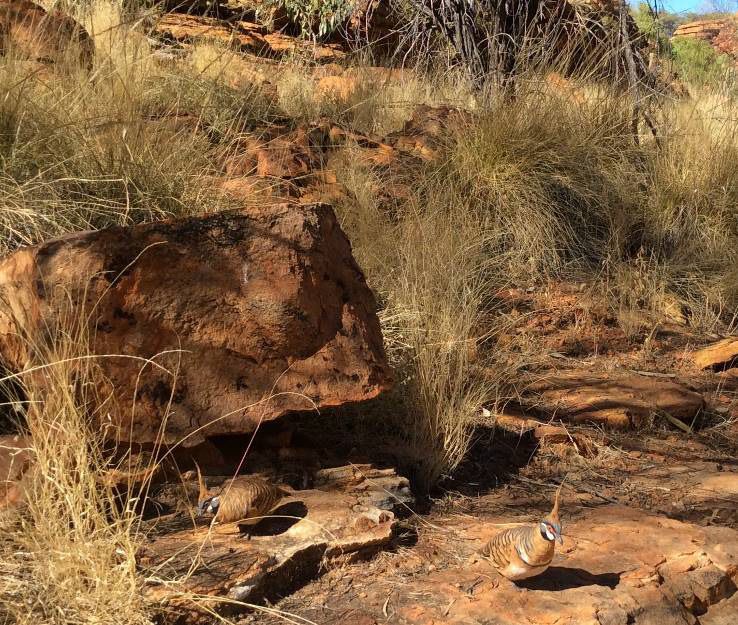
around them. A special moment at our next camp, Lake Hart,       Spinifex Pigeons at Kings Canyon photo © Dace Fitton
was hearing the calls of the Crested Bellbirds in the morning.
                                                                 We left Kings Canyon, headed off to Alice Springs. The town
We also got good view of one later on as it scurried around
                                                                 was buzzing. The Finke Desert Race was on in a few days’
while we were having our breakfast. There were some
                                                                 time. We were lucky to get a campsite and could only book
Australian Pipits, plenty of Singing Honeyeaters and Black
                                                                 for a few days. The caravan park was full of motorbike crews,
Kites overhead.
                                                                 getting ready for the big race. The Desert Park at Alice
A few days later we arrived at Uluru, a vision of silky          Springs was another must see, bird of the day for me was
sandstone in various shades of oranges, browns and reds.         the Dusky Grasswren that was in the dry grasses around the
There had been rain previously and there was good green          cages and I also loved seeing the young Crimson Chats in the
growth around the base. We walked around (not on the rock)       car park.
and saw Galahs, Crested Pigeons, Magpie Larks, White-
                                                                 High on my list was to see a Western Bowerbird. I had heard
plumed and Singing Honeyeaters, Zebra Finches, Willie
                                                                 that there was a bower in the Olive Pink Botanical Gardens.
Wagtails, Rufous Whistlers and Splendid Fairy-wrens. Other
                                                                 The gardens were founded by Miss Olive Muriel Pink, who
good sightings around Uluru were a Black-breasted Buzzard,
                                                                 was an outspoken advocate for Aboriginal rights and a
Diamond      Doves,    Spiny-cheeked   Honeyeater,    Little
                                                                 botanical artist. The gardens were founded in 1956 and
Woodswallow, Australian Kestrel, Pied and Grey Butcherbird
                                                                 opened to the public in 1985.
and Little Crow. At night in the campground, I could hear a

                                                                  Contents
Southern Boobook calling.

After leaving Uluru, we headed off to Kings Canyon
(Watarrka), where we stayed at Kings Creek Station, a             1 – 5. Three Months on the Road by Dace Fitton
working cattle/camel station. We got up early the next day        5. Committee. Notice of AGM. Interesting Sightings
and walked the Kings Canyon Rim Walk. It was a wonderful
                                                                     Book launch of ‘Reserve for a bird’
hike, a six kilometre circuit with spectacular 360 degree
views and amazing rock formations. I had another first, the       6 – 11. Reports of Meetings and Outings
Spinifex Pigeons, plenty in the car park and more on the          12. Calendar of events
walk. They were a lovely sight. Also saw some Grey-headed
and White-plumed Honeyeaters, a Hooded Robin, many
Zebra finches, Crested Pigeons, Galahs, Magpie Lark, Willie
Wagtail, Little Crow, Australian Kestrel and Wedge-tailed
Eagle.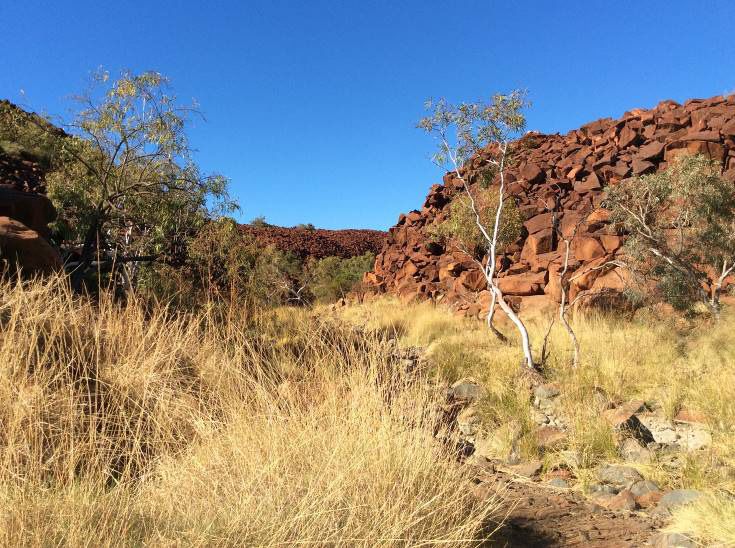
Lyrebird Tales

The garden has over 600 Central Australian plant species and
more than 80 bird species have been observed here. First we
found an old bower, but it looked unused. We continued
walking, and quite near the front gate saw a bower
underneath a thick bush. There were two bowerbirds. One
looked young, quite fluffy. Among other birds we saw were
the ubiquitous Galahs, Yellow-throated Miners, Black Kites,
Crested Pigeons, Australian Ringneck, Magpie Lark, Hooded
Robin, Singing and White-plumed Honeyeaters, Grey-
crowned Babblers, Black-faced Cuckoo shrike, and Pied
Butcherbirds. As well as bird watching, we enjoyed the walk
around the gardens and had an excellent coffee at the
tearooms.

                                                               Yellow Waters, Kakadu                photo © Dace Fitton

                                                               We all enjoyed the cruise so much we did it again the next
                                                               morning. There was a special offer, at a reduced price for the
                                                               second cruise, so again we got up in the dark. We had a
                                                               different boat driver/guide and we went to other parts of the
                                                               billabong and the second trip was every bit as interesting as
                                                               the first. As well as seeing many of the birds from the
                                                               previous day we also saw Rajah Shelducks, Black-necked
                                                               Storks, (on a nest), Brolgas, Bar-shouldered Dove, Green
                                                               Pygmy-geese, Hardheads, Peaceful Doves. We also saw
                                                               brumbies grazing nearby.

                                                               In the afternoon we went to look at the ancient aboriginal
 Yellow Waters Billabong Cruise      photo © Dace Fitton       rock art, in the Burrungkuy (Nourlangie) area. We were
                                                               having a cuppa at a picnic ground on the way back when I
Another highlight of the trip was the early morning Yellow
                                                               saw an unusual bird, took out my binoculars and there in a
Waters Billabong cruise, through the wetlands in the Kakadu
                                                               tree was a Yellow Oriole – another new tick. The traditional
National Park. The start was early, 6.45am and we got up
                                                               owners were burning off and there was a strong smell of
before light. But it was worthwhile, watching the sun coming
                                                               smoke in the air. As we drove around small fires burned close
up on the billabong while we waited for the boat journey to
                                                               to the road. On the morning we left I walked round the camp
begin.
                                                               ground and was pleased to see a Leaden Flycatcher before
First I saw a Rufous Night-heron (there were many) and         the cloud of mosquitoes forced me to retreat and we quickly
Magpie Geese flying overhead. There were also many egrets      packed up.
– Great, Intermediate and Cattle Egrets and Australian
Darters. We had the good fortune to see three types of
Kingfishers – first the Azure, darting around, low, just above
the water, then a Forest Kingfisher and finally we saw the
tiny Little Kingfisher. We had good views before it flew off.
Interspersed with seeing birds, we also saw a good many
crocodiles. They posed well for the photographers and we
were glad to be in the safety of the boat. Among my
favourite sightings was that of the Comb-crested Jacanas;
another first. Watching them treading on the lilies was a
delight, as was the sight of a male bird with 6 tiny legs
protruding from his feathers. Eventually he allowed his 3
fluffy chicks to emerge. The boat driver said there had been
4 chicks the week before, but now there were only three. We
also had good views of a White-bellied Sea-eagle. There were
very many Wandering and Plumed Whistling-ducks, Pied and
Black Cormorants, Masked Lapwings, Sulphur-crested
                                                                Zebra Rock Mine, Lake Argyle         photo © Dace Fitton
Cockatoos, Magpie Larks, Little Corellas, White-faced and
Pied Heron, Glossy Ibis, Willie Wagtail, Rainbow Bee-eater A few days later found us at the Zebra Rock Mine Caravan
and Red-tailed Black Cockatoos.                                Park. The park is in the Northern Territory, not far from the

  2   Lyrebird Tales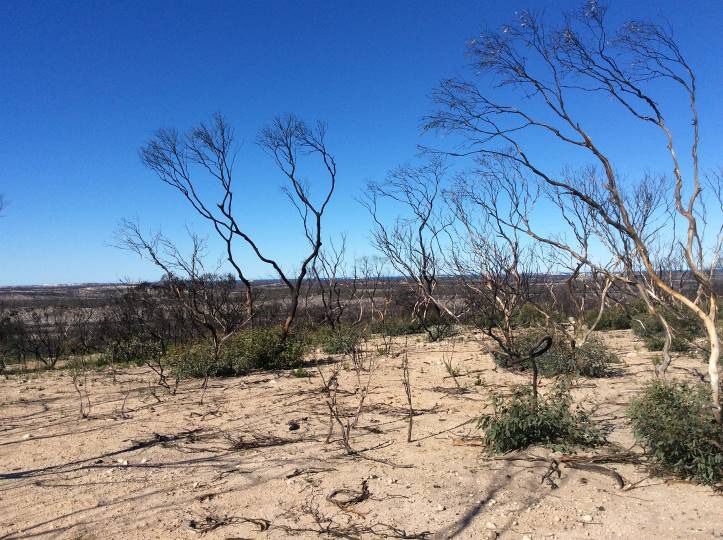
Lyrebird Tales

Western Australian border. We really enjoyed the stay.          Black Cockatoos were a lovely sight. When we arrived I saw a
Peaceful surroundings, friendly and helpful caravan park        Mistletoe bird, then Magpies, Great Bowerbirds, Little
owners and staff and the memory of the sunset cruise. The       Corellas, Grey Shrike-thrush, Torresian Crows, Willy-Wagtail,
caravan park is not far from the eastern side of Lake Argyle    Rainbow Bee-eaters, Rufous Whistler and Double-barred
and this part of the lake has wetlands and is wonderful for     Finches.
bird life. Among the birds seen on the cruise and around the
                                                              The road to the Bungle Bungles was extremely corrugated
park were Peaceful Doves, Little Friarbirds, Willie Wagtails,
                                                              and so we decided to take a four wheel drive bus day trip.
Galahs, Torresian Crows, Great Bowerbirds, Magpie Larks,
                                                              We were very glad we made the decision. There had been
Black-faced Cuckoo-shrikes, Rufous Whistler, Long-tailed and
                                                              heavy rain earlier and the first creek crossing claimed a few
Double-barred Finches, (Gouldian Finches have been seen
                                                              cars while we were staying at Mabel Downs. The bus driver
here, but I did not see any) Yellow-tinted Honeyeater, White-
                                                              said that she had to drive straight through; if you veered left
winged Triller, Red-tailed Black Cockatoo, Paperbark
                                                              there were big holes in the creek bed. The sight of cars
Flycatcher (many around the store/café), White-bellied
                                                              making the return journey on the back of a semi trailer was a
Cuckoo-shrike, Black-winged Stilt, Glossy Ibis, Bar-
                                                              sobering sight. The bus bumped its way over the road to the
shouldered Dove, Rajah Shelduck, Pacific Black Duck,
                                                              Bungle Bungles. It was like one and a half hours of driving
Whiskered Tern, Magpie Goose, Masked Lapwing, Straw-
                                                              over a gigantic washboard – a very good decision to leave
necked Ibis, Intermediate, Cattle and Great Egrets, Darters,
                                                              the car behind and to take our van would have been
Osprey (on nest), Little and Pied Cormorants, White-breasted
                                                              unthinkable. There was not a big bird list for the day, but the
and Black-faced Woodswallows, White-bellied Sea-eagle,
                                                              driver sighted a young Bush Stone-curlew on the road. Then
Sulphur-crested Cockatoo, many Budgerigars, Sacred
                                                              it slowly hopped into the trees and bushes on the roadside.
Kingfisher, Diamond Dove, Black and Whistling Kites,
                                                              There was also a beautiful male Red-backed Fairy-wren near
Pelicans.
                                                              the information centre and White-winged Trillers and a
Kununurra was also an excellent place for birds and also White-quilled Rock Pigeon on the Cathedral Gorge walk, not
bats. The flowering tree above us in the caravan park far from the car park.
attracted a big cloud of fruit bats. They would descend at
dusk, shriek and noisily feed from the blossoms. Luckily they
quietened down during the night and then left, giving a few
noisy squawks in the morning The birds seen included Grey-
crowned Babblers, Rufous-throated, Yellow-tinted and Brown
Honeyeaters, Black-faced and White-breasted Woodswallows,
Red-tailed Black Cockatoos, Double-barred Finches, Pied
Butcherbirds, Scarlet-winged Parrot, Purple Swamphen,
Green Pygmy-goose, Comb-crested Jacana, and at the Lily
Creek Lagoon about 12 Crimson finches was a memorable
sighting.

We also visited Parry Lagoons Nature Reserve, on the way to
Wyndham; a very remote and a beautiful oasis. The birds we
saw in this area were Peaceful and Bar-shouldered Doves,
Sulphur-crested Cockatoos, Grey-crowned Babblers, Magpie
Larks, Rufous-throated and Yellow-tinted Honeyeaters,
Straw-necked and Sacred Ibis, Whistling Kite, White-necked      Broome                             photo © Dace Fitton
Heron, Black-breasted Buzzard, Crested Pigeon, Blue-faced
Honeyeater, Willy Wagtail, Australian Kestrel, Rainbow Bee-     Headed further into Western Australia and finally arrived at
eaters, Sacred Kingfisher, Diamond Doves, Australasian          Broome. Visiting the Broome Bird Observatory was a must.
Grebe, Black-winged Stilt, Black-fronted Dotterel, Pelican,     The drive in was bumpy and slow. By the time we arrived it
Masked Lapwing, Intermediate Egret, Pied Heron, Australian      was past the best time for observing, but a long sit at the
Darter, Whiskered Tern, Comb-crested Jacana, Hardhead,          shade-house, with a cup of coffee was worthwhile. The water
Plumed and Wandering Whistling-duck, Little Black               bowls attracted Double-barred and a few Long-tailed Finches,
Cormorant, Eurasian Coot, Pacific Black Duck, Black-tailed      Yellow White-eye, White-gaped, Brown and Rufous-throated
Native-hen, Rajah Shelduck and Green Pygmy-goose. On the        Honeyeaters, Rainbow bee-eaters. A walk to the sea and we
back road en route to Wyndham, we saw Australian                saw Pelicans, Eastern Reef Egrets, Great Egrets, Black-faced
Pratincoles. At Wyndham a Brahminy Kite flew overhead, its      Cuckoo-shrike, Black-winged Stilt, Pied Oystercatchers, Gull-
chestnut plumage bright in the sunlight.                        billed Terns, Silver Gulls and Sacred Ibis.

We made our way to Mabel Downs Station Caravan Park. On         Tours of the Observatory were booked out for the next few
the way saw Peaceful Doves, Magpie Larks, Whistling Kites,      days, but we were fortunate enough to be able to book for
Rufous-throated Honeyeaters (on the ‘bat’ tree before we        the next Tuesday. We had a wonderful afternoon, led by our
left), Blue-faced Honeyeaters, Straw-necked Ibis and            guide and driver, John. We drove through the Observatory
Intermediate Egret, Australian Darter and the Red-tailed        and went into the neighboring property, Roebuck Plains

                                                                                                            March 2018   3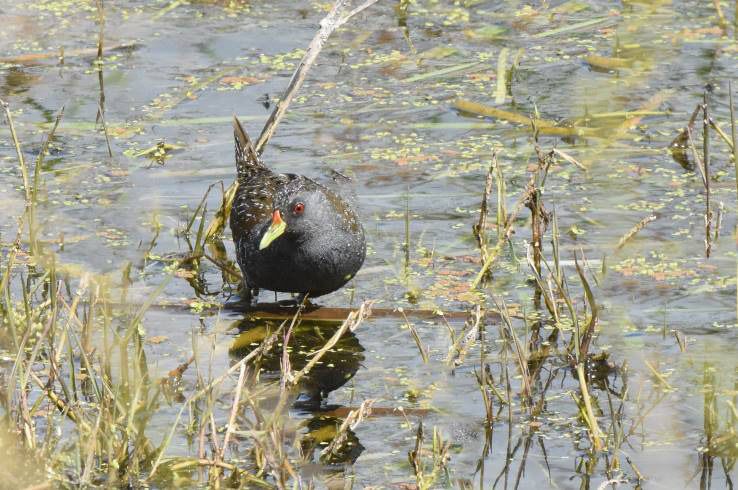
Lyrebird Tales

Station, followed tracks until we reached claypans, stopping White-breasted Woodswallow, Magpie Goose, and the ever
for birds sightings as we went. We saw a Magpie, a bird present Willie Wagtails.
common in the south, but not so common near Broome.
Whistling Kite, Magpie Larks, Straw-necked and Glossy Ibis,
Black-faced Cuckoo-shrike, Willie Wagtails, a Red-backed
Kingfisher, Australian Pipits scurried by us, White-bellied Sea
Eagle, Spotted Harrier, Brolgas, Australian Kestrel, Brown
Quail, Brown Songlark, Horsfield’s Bushlark, many Australian
and one Oriental Pratincole. The latter was a surprise; most
of his or her mates had already flown north. Red-capped
Plovers, Swamp Harrier, Pelican, Masked Lapwing, Black
Swan, Grey Teal, Plumed and Wandering Whistling-ducks,
Hoary-headed Grebe, Great Egret, Red-kneed Dotterel,
Yellow Chat – what a beautiful bird! Black-winged Stilt, Pink-
eared Ducks, Black-necked Stork, Pacific Black Duck, Curlew
Sandpiper, White-necked Heron, Eurasian Coot, Hardhead,
Gull-billed Tern, Cattle Egret, Common Greenshank, Red-
necked Avocet.

                                                               Francois Peron National Park           photo © Dace Fitton

                                                               We reached Perth in late July and were there for 6 days. In
                                                               the caravan park in the Swan River valley where we stayed I
                                                               saw a flock of Carnabys Black Cockatoos, probably around
                                                               ten plus. It was a beautiful sight.

Burrup Peninsular near Karratha      photo © Dace Fitton

                                                               Eyre Bird Observatory                  photo © Dace Fitton

                                                               One of the big highlights of our trip was the visit to the Eyre
                                                               Bird Observatory. The bird observatory is around one and a
                                                               half hours drive from Cocklebiddy, the last section of the
                                                               drive is strictly high clearance four wheel drive only. There
                                                               had been a storm the week before and a section of the track
                                                               was completely washed out – huge deep impassable ruts.
                                                               Fortunately we were able to bypass that section. We had a
                                                               very comfortable two nights’ stay in the beautiful old
                                                               Telegraph Station building. There were many New Holland
                                                               Honeyeaters, Welcome Swallows, a flock of about 12 Major
Near Exmouth                         photo ©Dace Fitton        Mitchell Cockatoos, saw one White-faced Heron flying over in
                                                               the morning, White-eared Honeyeaters, many Silvereyes,
We headed south west, mainly around the coast, with an         Grey Butcherbird, Australian Ravens and Fan-tailed Cuckoos
interesting excursion to Marble Bar and then 50 kilometres     were already calling. After seeing a few females, I eventually
away, to Corunna Downs, an airbase, secret in the World War    saw a male Blue-breasted Fairy-wren, in full plumage. Just
2 times. I enjoyed seeing the Spinifex Pigeons, Diamond        lovely! There were also Weebills, Red Wattlebirds, Brown-
Doves, Zebra Finches, Singing Honeyeaters, Australian Pipit,   headed Honeyeaters, Caspian Terns, Black-winged Stilt,

  4   Lyrebird Tales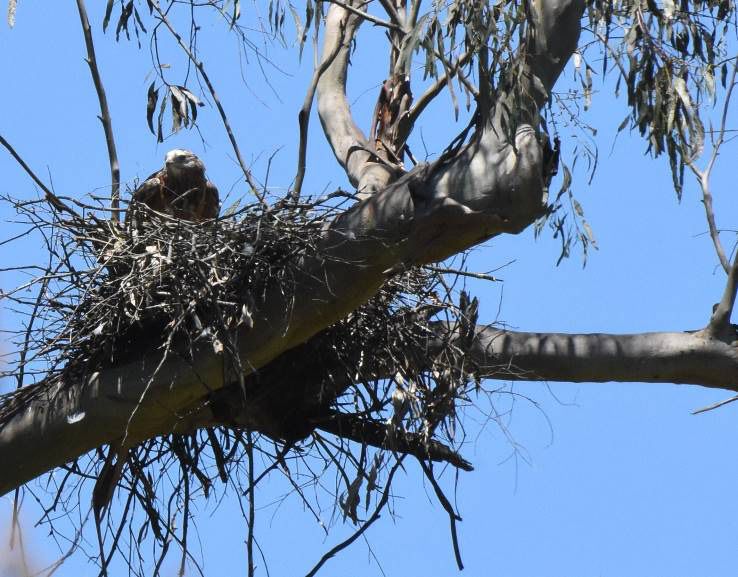
Lyrebird Tales

Pied Cormorant, Pacific Gulls, Red-capped Plovers, White- Interesting Sightings
browed Babblers, Golden (Western) Whistlers, Tree Martins
and Silver Gulls.                                             6-9/11/17 Koel (Eastern) - Montrose Rd. Montrose (X2), Dick
                                                              Wellington
Our final stop on the way home was I woke up in the
morning to the familiar calls of the Kookaburras, Magpies and 13/11/17 Powerful Owl calling at dawn - Mt. Evelyn, Lin
Little Ravens. A Grey Shrike-thrush scurried around, Sulphur- Bullen
crested Cockatoos overhead. It had rained heavily overnight,    13/11/17 Olive-backed Oriole; 2 Adults + 2 baby Tawny
but the rain had ceased and now it was quite cold. So I put     Frogmouths - Healesville. Maggie Smith
on a warm scarf, gloves and went for a short walk. A few
Eurasian Coots were on a rain filled depression. A Pelican      12/11/17 Eastern Whipbird -Toolangi garden (first in 17
flew overhead, Red Wattlebirds called and there were a few      years) Manfred Hennig
Brown Treecreepers, Superb Fairy-wrens, Galahs, a few           1/11/17 Sacred Kingfisher, Cicada Bird - Badger Creek,
flocks of noisy White-browed Babblers, New Holland              Graeme George
Honeyeaters, Eastern Rosellas. The bird of the morning
however, was the Southern Scrub-robin scratching around         8/11/17 Rufous Whistler - Badger Creek, Graeme George
near the track I was on. I came upon it quietly and it stayed   12/11/17 Rufous Songlark - Doon Rd Yarra Junction, Graeme
for a while and I had a good look.                              George
Other birds were Jacky Winters (always good to see), White- 20/11/17 Common Koel – Mooroolbark, P. Fowler
plumed Honeyeaters, Emus, Wood Ducks, of course a Willie
Wagtail and Little Corellas. And the next stop was home, December 2017.
after around, 17,000 kilometres and nearly three months 3 Wedge-tailed Eagles – Cockatoo, Alan Murphy
away we arrived tired but very happy.
                                                            Large-billed Scrub Wren – Toolangi, Manfred Hennig

                                                                Little Wattle Bird and 3 Satin (Green) Bower Birds –
 BirdLife Australia Yarra Valley Branch                         Healesville, Alma Mitchell
       P.O. Box 1172, Healesville Vic. 3777                     1/1/ 18 Latham’s Snipe – Hull Rd Wetlands, V & P Fowler
 email: yarravalley@birdlife.org.au                             9/1/18 Spotless Crake – Lillydale Lake, V & P Fowler

 Committee                                                      Dec/Jan, Grey Fantail progressive photos (videos) of nest
                                                                building and feeding Chum Creek Glenn Mawson
 Convener: Glenn Mawson
                                                                Out of the Yarra Valley
 Deputy-Convener: Manfred Hennig
                                                                28/12/17 Cicadabird (2), Brush Cuckoos – Upper Buffalo
 Secretary: Alma Mitchell
                                                                River, V & P Fowler
 Treasurer: Maggie Smith
                                                                30/12/17 Lyrebirds (19) in groups of 1, 2, & 3 - Road
 Librarian: Linda Bullen                                        through ash forest between Noojee and Baw Baw, Michael
                                                                Feller
 Conservation Officer: Michael Feller
                                                                1/1/18 Grey fantails (2) attacking a Fan-tailed Cuckoo finally
 Other Members: Jim McMinn
                                                                chasing the cuckoo away - in alpine forest near Mt. Erica
                                                                (Baw Baw), Michael Feller

Notice of Annual General Meeting 2018                           Book launch             ’A Reserve for a Bird’
The AGM of BirdLife Yarra Valley will be held on Tuesday 8                  ‘‘A Reserve for a Bird celebrating fifty years
May at 7.45 p.m. in the Badger Creek Hall Meeting Room.                     of a reserve declared for the conservation of
Nominations will be received for all positions on the                       the Helmeted Honeyeater at Yellingbo’ by
Committee before or at the meeting.                                         Jeff Dickinson was launched on December
Agenda: To confirm the Minutes of the 2017 A.G.M.; Reports                  8th at Yellingbo Nature Conservation
from the Convener and Treasurer; Election of Committee for                  Reserve. Crowds attended the launch which
2018-2019. Any other business for which 14 days’ notice is                  included friends of the Helmeted Honeyeater
required.                                                                   and pupils from the Macclesfield Primary
                                                           School who are very much involved in the Helmeted
                                                           Honeyeater program. There were many speeches by VIPs
Correction                                                 and presentations of complimentary copies of the book by
                                                           the local member James Merlino, Deputy Premier and
December 2017 Lyrebird Tales page 7
                                                           Minister for Education. There was also a historic display in the
Mongolia Warbler should read Magnolia Warbler              Parks Victoria work shed.

                                                                                                             March 2018   5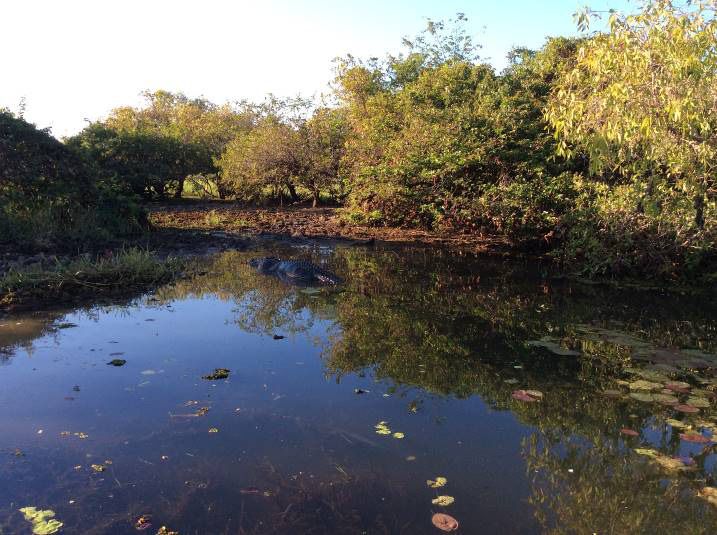
Lyrebird Tales

Reports of Meetings and Outings
Tuesday 10 October - Meeting: Bird Trip to Bowra and
Kilcowera Stations – Peter & Valerie Fowler

Peter and Valerie visited Bowra Station for the first time in
August this year and talked about their experience. They
visited different areas of the property each day looking for
various bird species. Valerie remarked that some areas were
suffering badly from the drought. They were delighted to
have many wonderful views of Major Mitchell Cockatoos both
in camp and at various waterholes. A highlight was a small
flock of Bourke’s Parrots seen at dusk on the first evening as
this was a target species they wanted to see. They were
delighted to see this bird species several times over their
stay. Searching for other species was more frustrating such Looking for Banded Lapwings             photo © V. Fowler
as the Chestnut-breasted Quail Thrush and Hall’s Babbler;
neither was seen by them before leaving the property. They
found some birds extremely flighty such as the Chestnut-
crowned Babblers but had good birdwatching of many other
species never the less.

Their favourite spot was visiting the black tank in early
mornings and evening when numerous bird species came for
a drink. A kangaroo visiting for a drink had its ear cleaned by
a Willie Wagtail and Emus quenched their thirst too. The
birds did not seem bothered by the bird observers and
photographers sitting under the surrounding bushes, but
were irked by a photographer using a camouflage rain cape
as a hide as the edges of the material kept lifting in the slight
breeze and the glass of his huge camera lens reflected the
light. On the last morning Peter and Valerie found two Tawny
                                                                  View of the You Yangs from WTP photo © V. Fowler
Frogmouths and later a dark form of the Brown Falcon along
the road leading to the front gate.                               the vicinity. On the pond to our right was a large flock of
They were disappointed to leave the property after only a few feeding Red-necked Avocets. We drove around the pond to
days and would have liked to spend more time birdwatching our left where there were several White-headed Stilts,
there. They continued onto Kilcowera Station seeing two Masked Lapwings and White Ibis. Two Glossy Ibis flew over
Brolgas on the way. Valerie elaborated on their visit to and landed in the pond and several large flocks of Straw-
Kilcowera (see article in September 2017 Lyrebird Tales) necked Ibis circled overhead. A Red-kneed Dotterel appeared
showing more images of the property and birds. They had a on the far side of the pond amongst the rocks and in the
quick visit to Currawinya National Park where they finally saw water were numerous Hoary-headed Grebe and Australasian
the Hall’s Babbler. Returning towards home they saw a good Grebe. We saw three different waders here: Curlew
sized flock of Cockatiels perched on a wire and in adjacent Sandpipers, Red-necked Stints and Sharp-tailed Sandpipers;
trees.                                                            which were still partially showing their breeding plumage.

After the talk several members shared information about
their trips to Bowra Station with the group.

Saturday 14 October – Outing to Western Treatment
Plant

The weather was a perfect with a light wind, mainly clear
skies and a temperature of 17°celcius. Our first stop was to
look for the Banded Lapwings; one was soon spotted in the
far distance but was hard to identify in the haze until a cloud
momentarily passed over the sun and the bird turned, giving
us a clear view. Next we looked for the Brolgas but
unfortunately they were gone.

We continued on to the sewerage ponds where we saw the
brand new bird hide (which had only just opened) in the
distance. There were also many vehicles and birdwatchers in Spotted Crake                            photo © P. Fowler

  6   Lyrebird Tales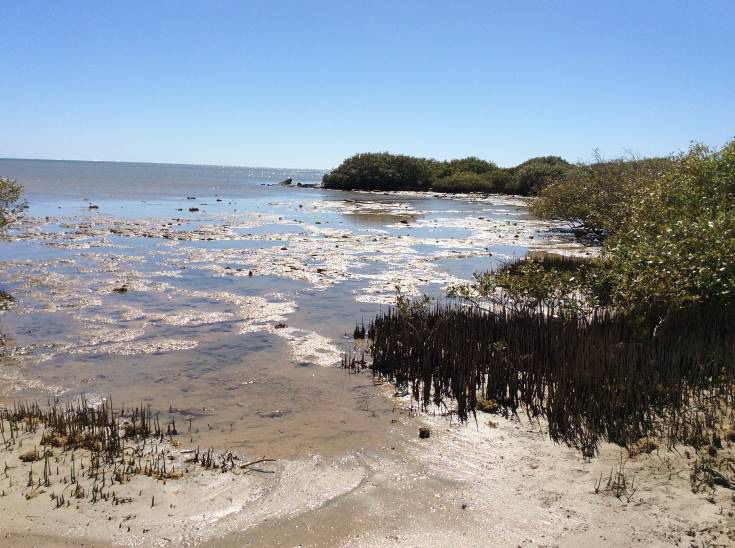
Lyrebird Tales

We were delighted to see a Spotted Crake in the distance
which allowed us to creep up for a closer view to the delight
of the photographers. We then saw a Baillon’s Crake and
several more Spotted Crakes nearby. Hawking over the water
and most other ponds were hundreds of Whiskered Terns.

On another pond we saw lots of Black Swans; some were still
making their nests whilst others had up to five cygnets of
varying maturity. Along the tracks we saw Australian Pipit,
Skylark, small flocks of White-fronted Chats and Golden-
headed Cisticola. Little Grassbirds were constantly calling but
only offered us brief glimpses.

At lunchtime near the coast there were many birds perched
on the rocks: Crested Tern, Pacific Gull, Silver Gull, Little
Black Cormorant and Pied Cormorant. There was a
                                                                  Lake Borrie                        photo © V. Fowler
continuous wave of flocks of Red-necked Stints arriving
perhaps from the end of their migration south. As many            Raptors seen at WTP: Black-shouldered Kite, Black Kite,
migrating waders were missing we could only presume they          Whistling Kite (numerous), Spotted Harrier, Swamp Harrier,
hadn’t arrived yet.                                               Wedge-tailed Eagle and Brown Falcon.

                                                                  Unfortunately we had to leave at 3pm to return the bus but I
                                                                  think we would all agree that we had a wonderful day with
                                                                  excellent views of most species. We saw 76 bird species and
                                                                  one Tiger Snake (thankfully from inside the bus).

                                                                  We thank Glenn for organising the bus and trip to the
                                                                  Western Treatment Plant and for his careful driving.

                                                                  Wednesday 25 October– Outing to Lake Mountain

  Red-necked Stints                     photo © P. Fowler

                                                                        Spotted Pardalote      photo © Michael Feller

                                                             The day started ominously with rain and thick clouds and the
                                                             weather radar indicated that there were a couple more
                                                             patches of rain following the morning’s falls, but Manfred’s
                                                             trips always go, so 6 of us set off, some with relatively low
  Coastal Birds                        photo © V. Fowler
                                                             expectations. By the time we reached the Lake Mountain
We continued on to other ponds seeing a Pied Oystercatcher, resort carpark the rain had stopped and the cloud had lifted,
Great Egret, Little Egret, several Black-tailed Native-hens, and a Superb Lyrebird had crossed the road in front of us, so
Common Greenshank, Grey Teal, Chestnut Teal, Australian expectations rose a little. Five minutes after getting out of
Shoveler, Hardhead, Musk Duck and Cape Barren Goose.         the cars, expectations rose a lot as the shrubby area beside
                                                             the carpark was alive with bird calls and birds flitting around.
At Lake Borrie many of the dead trees have fallen over but
there were still thousands of Pink-eared Ducks, Grey Teal, We had not planned to check out the shrubby area and the
Chestnut Teal and Australian Pelicans; many were perched track to the toboggan area, but the quantity of bird calls and
on nest boxes.                                               birds dictated a visit. We were not disappointed. Silvereyes,

                                                                                                              March 2018   7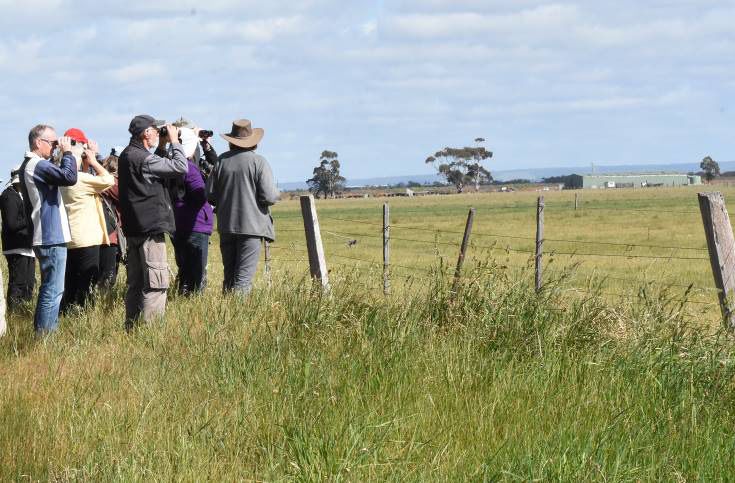
Lyrebird Tales

       Striated Pardalotes      photo ©Michael Feller              White-eared Honeyeater        photo © Michael Feller

                                                                   Little or Australian Ravens (an unresolved difference of
                                                                   opinion), and a White-throated Treecreeper. A small group of
                                                                   Crimson Rosellas flew past and a small lake sported a Pacific
                                                                   Black Duck. At the end of the circuit, back at the resort, male
                                                                   and female Flame Robins also obligingly posed for photos and
                                                                   an Australasian Pipit foraged on the ground, while a group of
                                                                   Welcome Swallows foraged overhead. Warren’s notepad with
                                                                   its bird id app was extremely useful in verifying calls of
                                                                   several species.

                                                                   Lunch was then had before we drove back to the Bjarne K.
                                                                   Dahl Memorial Boardwalk for a short walk. A few birds were
                                                                   seen, including the ubiquitous Flame Robin, but nothing new
Crescent Honeyeater           photo © Michael Feller               to add to our species list, so we drove further back to the
                                                                   ticket booth area for another stop, now down into the tall
Crescent Honeyeaters, Flame Robins, Spotted Pardalotes,            forest Alpine Ash zone. The forest there was alive with
White-eared   Honeyeaters,    White-browed    Scrubwrens,          numerous Golden Whistlers, a couple of Superb Lyrebirds, a
Eastern Spinebills, Grey Fantails, and Red Wattlebirds             couple of Eastern Whipbirds, and Brown Thornbills. Down at
dominated, although their calls were in danger of being            Marysville we added Australian King Parrots, Sulphur-crested
drowned out by those of many Pied Currawongs.                      Cockatoos, Australian Wood Ducks, and Purple Swamphens
After an hour in this area, we began the planned trip, which       to our tally.
involved a circuit walk along the ski trails, following the Echo   This trip greatly exceeded my expectations, both for bird
Flat trail to The Camp junction then the Snowgum and Home          sightings and photography. A total of 33 species was seen or
trails back. Regeneration from the 2009 Black Saturday fire        heard (29 on Lake Mountain), including 6 species of
was impressive, the only sign of the fire being the dead           honeyeaters: Crescent, White-eared, New Holland and
snowgum trunks which rose above a sea of green                     Yellow-faced Honeyeaters, Red Wattlebird and Eastern
regenerating snowgums and flowering shrubs, of which               Spinebill. Michael Feller
yellow Alpine Phebalium and Mountain Hickory Wattle
dominated. The red endemic Lake Mountain Grevillea also            Saturday 11 November – Coranderrk Bushland Survey
displayed some flowers. It was still too early for the flowers     Blue skies, sunshine and lush green vegetation; Coranderrk
of the herbaceous plants, however. During this circuit a few       Bushland looked at its best. We were pleased to welcome
patches of sun appeared which enhanced the beauty of the           Warren, Ian and Colin who had not visited the property
trip. Pied Currawongs and Flame Robins dominated, with             before. As we assembled outside the bush hut we
about 20 Robins being sighted while only one Scarlet Robin         immediately started to observe numerous bird species flying
was heard. On a previous October trip Manfred found as             about including Tree Martins, Rainbow Lorikeets, Long-billed
many Scarlet as Flame Robins. The highlight of this circuit        Corellas, White-plumed Honeyeaters and White-eared
was the number of birds posing obligingly for photographs.         Honeyeaters; it looked to be a promising start to the day.
These birds included Striated and Spotted Pardalotes, White-       Walking along the track to the lake we saw Crimson and
eared Honeyeaters, and Flame Robins, although Pied                 Eastern Rosellas, Superb Fairy Wrens, White-browed
Currawongs and Crescent Honeyeaters were also obliging. In         Scrubwren, Purple Swamphen, numerous Yellow-faced
the distance we heard a Grey Currawong, Fan-tailed                 Honeyeaters and heard Sacred Kingfishers and a Shining-
Cuckoos, Grey Shrike-thrushes, Laughing Kookaburra,                bronze Cuckoo.

  8   Lyrebird Tales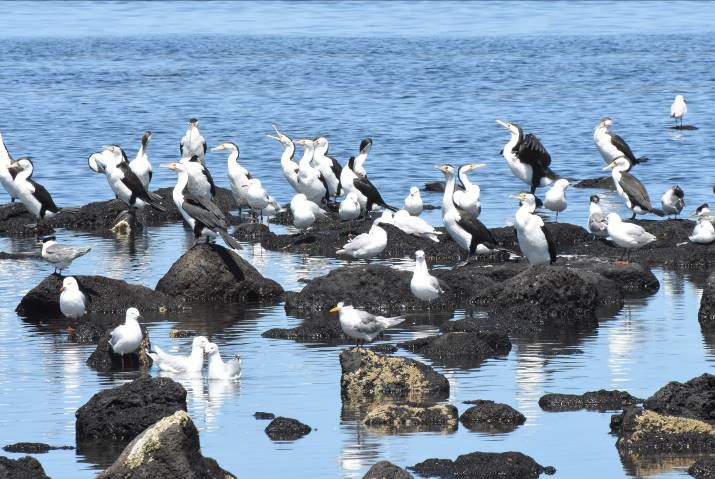
Lyrebird Tales

Little Black & Little Pied Cormorants photo © V.Fowler

The water in the lake was fairly high and the surrounding
bushes had grown considerably since our last visit. Several      Square-tailed Kite at Coranderrk photo © V. Fowler
dead trees in the vicinity had either fallen down or been
                                                                 Tuesday 14 November – Meeting – My birding Year
removed. Birds on the lake were: Blue-billed Duck (4), Black
                                                                 2016 – Sonja Ross
Duck, Hardhead (15), Grey Teal, Chestnut Teal, Eurasian
Coot (63), Hoary-headed Grebe (8), Australasian Grebe (2),       In 2016 Sonja took several trips overseas birdwatching as
Little Black Cormorant, Little Pied Cormorant, Australian        well as travel throughout Australia. She also focussed on her
Darter (2), Purple Swamphen (5), Dusky Moorhen (1) and           local patch and favourite birdwatching sites around
Two Black Swans with four large cygnets. Perched on several      Melbourne; Mullum Mullum Creek, 100 Acres and Serendip.
logs were some Long-necked Turtles. Walking alongside the        When taking photos of birds Sonja tries to capture that
lake we saw Australian Reed Warblers and a small bird with a     special or unusual image showing immature or breeding
red head which disappeared before it was identified (possibly    plumage, bird behaviour (sometimes in a series of shots), or
a Scarlet Honeyeater).                                           a bird with its prey. Sonja started her 2016 year
                                                                 birdwatching locally.
We started to see raptors: Collared Sparrowhawk, Swamp
Harrier, and Brown Goshawk. We saw a white bird perched in      In February 2016 Sonja went to Sri Lanka where she took
a tree on the far side of the lake; it was being harassed by a  up the challenge of identifying new bird species which were
Pied Currawong and when it flew it was chased by several        often hidden in the undergrowth or high in the canopy and
small birds. It was identified as a white morph of a Grey       learning their calls. She found birdwatching easier in the
Goshawk. A short time later we saw a Grey Goshawk (grey         gardens surrounding the hotels where she stayed and at
morph).                                                         water    sources.    Sonja   described   the   difficulty of
                                                                photographing some species such as Asian Paradise
We observed a minute’s silence for Remembrance Day with a
                                                                Flycatchers which have very long tails and the constantly
chorus of bird calls in the background and a White Ibis
                                                                moving Pale-billed Flowerpeckers.
circling overhead. We continued along the track listening to
Yellow Robins and seeing numerous Grey Fantails, White- Some of the birds Sonja saw in Sri Lanka were: Yellow
browed Treecreepers, several honeyeaters including White- Bittern, Black-hooded Oriole, Sri Lanka Hanging Parrots,
naped Honeyeaters. At the bridge over the creek two Sacred Alexandrine Parakeet, Sri Lanka Blue Magpies, Green-billed
Kingfishers were perched and Silvereyes called, alas no Coucal, Yellow-billed Babbler, Ashy Drongo, Asian Brown
Rufous Fantails were seen. Birdwatchers at the front of the Flycatcher, Oriental Magpie Robin, Red-vented Bulbul, Black
group saw a Goanna then a Scarlet Robin, Fan-tailed Cuckoos Bulbul,       Scaly-breasted Mannikin, Purple Sunbird, Yellow
(3) and a Shining-bronze Cuckoo called.                         Wagtail, Green Imperial Pigeon, Black Eagle, Legge’s Hawk
                                                                Eagle and White-breasted Sea-eagle. Waterbirds were:
As it was getting late we retraced our steps to the bush hut
                                                                Garganey, Great Egret, Indian Pond Heron, Black-crowned
rather than doing the extra loop following the fence line. We
                                                                Night-heron, Grey Heron, Little Egret, Little Cormorant,
stopped to look at a large nest high in a gum tree which we
                                                                Lesser Whistling Duck, Painted Stork, Purple Heron and
had seen earlier. Whilst we watched an adult raptor on the
                                                                Kentish Plovers. Waders included: Little Stints, Common
nest stood up and turned enabling it to be identified as a
                                                                Redshanks, Ruddy Turnstones and Marsh Sandpiper.
Square-tailed Kite. It is wonderful to see this bird nesting in
Coranderrk Bushland.                                            Sonja enjoys seeing Woodpeckers when she travels overseas
                                                                and was captivated by a pair of Flamebacks commenting that
A total of 68 bird species was counted for the morning with
                                                                in the late sun they had the appearance of having been
444 birds recorded. We thank Glenn for leading the walk.
                                                                touched by flames. Sonja showed photos of the two Sri
                                                                Lankan Thick-knees, The Indian Thick-knee and the Greater
                                                                Thick-knee and we were surprised how similar they were to
                                                                                                             March 2018   9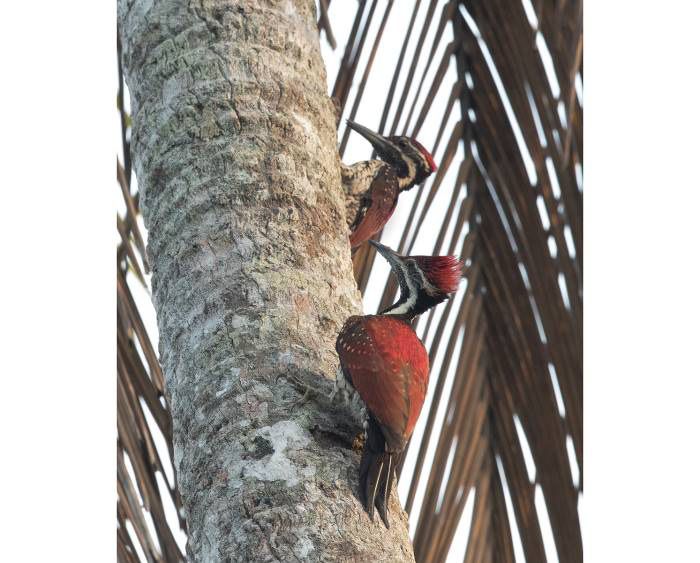
Lyrebird Tales

the Australian Beach and Bush Stone-Curlews. Sonja said Sri
Lanka had beautiful reptiles too and showed us some images
of a few.

                                                                      Chiming Wedgebill         photo © Sonja Ross

                                                              They headed to Perth and the south-west then across the
                                                              Nullarbor adding; the S.W. form of Australian Ringneck,
                                                              Baudin’s Black-cockatoo and an Elegant Parrot. Along the
                                                              coast at Eucla there were many cormorants and terns. A
 Lesser Goldenback Woodpeckers photo © Sonja Ross
                                                              quick visit to the Arid Lands Botanic Gardens in Port Augusta
In July Sonja and her husband took a trip up north through produced Yellow-throated Miner and White-winged Fairy-
the centre of Australia where they had a mixture of cold, wrens.
wet and sometimes windy weather which was disappointingly
not conducive to birdwatching and bird photography. But still
Sonja was able to capture some images of birds: Major
Mitchell Cockatoo, Spiny-cheeked Honeyeater, Australian
Ringneck and Spinifex Pigeon. Further north in Darwin and
Kakadu she added: Rainbow Bee-eaters, Green Pygmy
Geese, Plumed Whistling-duck, Straw-necked Ibis and Little
Bronze-cuckoo photos. Sonja successfully found and
photographed several Hooded Parrots in Pine Creek as well
as a young Blue-faced Honeyeater, White-breasted
Woodswallows and Grey-crowned Babblers. They continued
their travels to Nitmiluk National Park, Kununurra and the
Gibb River Road photographing: Brown Goshawk, Red-
winged Parrot, Blue-faced and Rufous-throated Honeyeaters,
Yellow Oriole, Black-necked Stork, Black-breasted Buzzard
and Jacky Winter.                                             Gentoo Penguin with chicks         photo © Sonja Ross

Sonja said Winjana Gorge was a special place with Double-      Also in 2016 Sonja had a trip to South Georgia and the
barred Finch, Varied Lorikeets and Great Bowerbirds; we saw    Antarctic Peninsular which started in the Falkland Islands
several images of this bird tidying up its bower and a visit   with one of the first birds a Flightless Steamer duck and
from a female. Sonja counted 40 Freshwater Crocodiles at       ducklings. Sonja then sailed down to South Georgia where
Winjana (it was a huge increase since an earlier visit) and    she saw many seabirds including Slender-billed Prion and
she had good fun trying to photograph one of the crocodiles    Cape Petrel. Birds on South Georgia were: South Georgia
catching a Flying Fox as it came in for a quick drink.         Cormorant, Giant Petrel, Skua, Arctic Terns, South Georgia
                                                               Pipit, South Georgia Pintail and Snowy Sheathbill. South
Highlights from Broome were Ospreys and a dark Reef Egret.     Georgia was dominated by King Penguins with their chicks
Sonja was surprised to discover that the Western Australian    (cute photos) and also Macaroni Penguins; Sonja explained
Galahs had a pink, not white, crest and paler eye-ring, than   the perils they face bringing up their young. On the Antarctic
eastern ones. At Monkey Mia Sonja saw the Grasswrens but       Peninsular birds were: Adele, Gentoo and Chinstrap
was unable to photograph them but instead captured images      Penguins,
of White-browed Babblers and Chiming Wedgebills which she
had heard often.                                                Continuing onto Chile hundreds of Albatross mainly Black-
                                                                browed Albatross were seen. In Puerto Natales birds were:
At Numbung National Park she took pictures of White-backed Black-throated Siskin and Dark-bellied Cinclodes, Chiloe
Swallows entering nest holes and a Kestrel with a lizard in its Wigeon, Crested Ducks, Coscoroba Swans, Black-necked
beak perched on one of the formations.                          Swans and nearby a Rhea. In Magellan Straight: Magellanic
                                                                Penguins, South American Terns, White-rumped Sandpipers

  10   Lyrebird Tales
Lyrebird Tales
and Chilean Skuas. In Torres Del Paine National Park: Upland Spinebill, White-browed Scrubwren, Australasian Grebe, Little
Geese, Chilean Swallow, Patagonian Sierra-finch, Southern Black Cormorant, Chestnut Teal and Silvereye.
Caracara, and Tufted Tit-tyrant. Lake Ducks, Chilean
Flamingo, American Kestrel, Andean Condor, Southern
Lapwing Black-chested Buzzard-Eagle, Cinerous Harrier,
Long-tailed Meadow-larks, Black-faced Ibis, Chimango
Caracara, a Rufous-tailed Plant-cutter, Austral Blackbird,,
Austral Thrush, Austral Blackbird, Austral Parakeet, Brown-
hooded Gull, Striped Woodpecker and Rufous-collared
Sparrow, Southern House-wren. In the Lake District of Chile:
Peruvian Pelican, Hudsonian Godwit, Whimbrel, Red Knots,
Magellanic and Humboldt Penguins. In the area near
Santiago: Chimango Caracara, Cocoi Heron, Black Vulture,
Great Grebe and at nearby Vina del Mar: Turkey Vulture,
Peruvian Boobies, Inca Terns, Franklins Gulls Black
Skimmers. Sonja showed us stunning photos of the Atacama
Desert scenery and birds: Andean Flamingos, Puna Plover,
Black-hooded Sierra-Finch, Plumbeous Sierra-finch Red- Black-faced Cuckoo-shrike on nest photo © V. Fowler
backed Sierra Finches, Giant Coots, Black-billed Shrike-
Highlights were: A Black-faced Cuckoo-Shrike sitting on a
Tyrant, Rufous-naped Ground-Tyrant, Burrowing Owl,
nest, a Laughing Kookaburra feeding young at a hollow and a
Canyon Canastero, Ochre-naped Ground-Tyrant, Andean
Spotted Pardalote going into a hollow in the bank of the
Avocets and Puna Flamingos which had arrived from Bolivia
Watts River.
to breed.
We managed to complete the golf course survey and total
bird species counted were 52. Thanks Manfred for leading the
walk.
Saturday 9 December – Christmas Break Up at
Maroondah Reservoir Park
We met at the rotunda near the Watts River for our
Christmas break up. We were pleased to see some members
who had been absent for some time as well as some new
faces.
We started our walk by looking along the Watts River for
Azure Kingfisher and Rufous Fantail which are usually present
in the summer but sadly they were absent. We followed the
Andean Flamingo in flight photo © Sonja Ross river along the flat where we saw a reasonable sized flock of
Gang Gangs. We paused at the bridge over the Watts River
Sonja’s last photographed birds for 2016 were a Silver Gull
but instead of following our usual route to the lookout, we
and Australasian Grebe at Banyule Flats on New Year’s Eve.
continued following the river seeing Common Bronzewings
Sonja said It wasn’t one of her more successful years and several species of parrots. Reaching the base of the dam
photographically, but I think anyone who heard her wall it was surprising that no water was gushing over the
wonderful talk and saw her short video clips and awe- spillway despite the recent heavy rains; apparently the dam
inspiring bird images would love to capture just even a few of had only been less than 75% full before the rains which only
her shots. Thank you Sonja, what a wonderful 2016 you had lifted the level about 1%. We then climbed the stairs to the
and we hope you will share more of your adventures with us top of the dam wall where we saw Black Duck on the water
in the future. and Wood Ducks on the edges. Continuing on our circular
walk the more energetic birdwatchers took a higher route to
Wednesday 22 November – RACV Country Club
the rest of the group seeing Silvereyes, Brown and Striated
Healesville Survey
Thornbills and Grey Fantail. On the way back to the rotunda
After warm overnight temperatures and the forecast to Sulphur-crested Cockatoos and Crimson Rosellas were seen.
exceed 30°+ Celsius we planned to shorten the survey if it Whilst the group was enjoying lunch and a catch up several
became too hot. We were pleased to be joined by two visitors White Ibis and a Black Duck were feeding in a puddle on the
from England and tried to show them many bird species. grass nearby.
Unfortunately many birds were hiding or missing such as the
We thank Glenn for arriving extra early to reserve the
Tawny Frogmouth, Cuckoos, Reed Warbler, Buff-banded Rail
rotunda and for leading the walk.
and various raptors. We heard Olive-backed Orioles Rufous
Whistler and Sacred Kingfisher but did not see them.
We had good views of Golden Whistler, Yellow Robin, Eastern
March 2018 11Lyrebird Tales
BirdLife Yarra Valley
email: yarravalley@birdlife.org.au
Postal address: Birdlife Australia, Yarra Valley Branch, P.O.
Box 1172, Healesville, Vic. 3777.
Meetings are held in the Badger Creek Hall Meeting Room at
7.45 p.m. Badger Creek Rd. Badger Creek (next to CFA).
Melway Edn 39 278 F8..
Calendar July to September 2018
Meetings and Outings automatically cancelled on days
of Total Fire Ban in the Central and North-central Fire
Districts. (Central unless notified otherwise) Basic Dates only. Check June newsletter for further
Calendar April to June 2018
details
July
April
Tuesday 10 - No Meeting – winter recess
Tuesday 10 - Meeting – Speaker Bruce Quin, subject:
Update of the Helmeted Honeyeater program Saturday 14 – Outing to Heritage Wetlands Wonga Park at
9.30 a.m. Directions: Meet at car park end of Lower
Saturday 14 – Outing to Murrindindi Scenic Reserve at 9.30 Homestead Rd. Melways Edn 39 279 B4
a.m. Directions: Follow the Melba Hwy from Yarra Glen to
Glenburn. After a further 6-8 kilometres turn right at a sign Wednesday 25 - Outing to Lillydale Lake, Lilydale at 9.30
“To Murrindindi Scenic Reserve 9 Kilometres”. Follow this a.m. Directions: Meet at car park near toilet block.
road which later becomes Wilhelmina Falls Rd. The last Melway Edn 39 38 G7.
August
kilometre is on good gravel. Turn left at first camping/picnic
spot. (North-central Fire District)
Saturday 11 – Outing to The Hundred Acres, Park Orchards
Tuesday 24 April – Outing to Westerfolds & Candlebark
9.30 a.m. Directions: Meet at Domeney Reserve Car Park
Parks Templestowe at 9.30 a.m. Note change of day &
Knees Rd, Park Orchards. Melway Edn 39 35 E9.
date. (This replaces the usual Wednesday outing,
which is on Anzac Day) Directions: Melway Edn 39 33 F1 Tuesday 14 – Meeting – Speaker TBA
access from Fitzsimons Lane, meet at canoe launch car park
Wednesday 22 – Outing the Yellingbo Nature Conservation
nearest to river.
Reserve, Yellingbo at 9.30 a.m. Directions: From Macclesfield
May Rd turn into Shield Rd. Meet at picnic area. Melway Edn. 39
305 F12 To be confirmed, check June newsletter
Tuesday 8 - Meeting AGM. Speaker - Chris Doughty
subject: A day in Kaziranga National Park, N.E India. September
Saturday 12 - Survey in Coranderrk Bushland at 9.30 a.m. Saturday 8 - Outing to Kurth Kiln Regional Park Gembrook
Directions: Gate 1 Badger Avenue, Badger Creek, opposite at 9.30 a.m. Directions: Melway Edn 39 page 14 R10. If
Fleay Rd, Melway Edn 39 278 F10. Gate will close at 9.30am coming from Lilydale on the Warburton Highway turn right
sharp. just before Woori Yallock on to the Healesville-Koo-Wee Rup
Rd. After approx. 10 kms turn left into Beenak Rd and follow
Wednesday 23 - Outing to RACV Healesville Country Club at
to Kurth Kiln Picnic and camping area.
9.30 a.m. Directions: Healesville-Kinglake Road, Healesville.
Melway Edn 39 269 J12. Meet at 1 car park just inside the Tuesday 11 – Meeting – Speaker TBA
st
entrance on the right.
Wednesday 26 – Outing to Botanic Gardens Cranbourne
June 9.30 a.m. Directions: Entry from Ballarto Rd and follow to
Visitor Centre car park. Melway Edn 39 133 F10. Bus or
Saturday 9 – Outing to One Tree Hill & Sugarloaf Reservoir, carpooling may be available, check June newsletter.
Christmas Hills at 9.30 a.m. Directions: Entrance from
Eltham-Yarra Glen Rd, entrance is almost opposite driveway
with white stones. Melway Edn 39 265 C12. Look out for
Birdlife sign on right if coming from Yarra Glen.
No Meeting - Winter recess
Wednesday 27 – Outing to Birdsland Reserve Tecoma /
Belgrave Heights at 9.30am. Directions: Melway Edn 39 84
C1. (Off Mt Morton Rd, Belgrave Heights)
12 Lyrebird TalesYou can also read


