M-BUS-2 LORAWAN CONVERTER - User Manual - IOT VEGA
←
→
Page content transcription
If your browser does not render page correctly, please read the page content below
LORAWAN CONVERTER

M-BUS-2
User Manual

www.vega-absolute.ru
M-BUS-2 / User Manual

Document Information
Title                                        M-BUS-2 LoRaWAN converter
Document type                                Manual - Translation from Russian
Document number                              V02-MBUS2-01
Revision and date                            08 – 03 February 2021

This document applies to the following products:

Product name                                 Type number
End devices                                  M-BUS-2

Revision History

Revision    Date          Name     Comments
01          20.12.2017    KEV      Document creation date

                                   Supported connected devices list, transparent mode is
02          06.04.2018    TII
                                   not supported, minor changes
                                   Changes in the device logic, frequency plans are added,
03          10.08.2018    KEV      changes in the communication protocol, in technical
                                   characteristics, new supported meters are added
                                   Typo in specification is fixed, list of supported heat
04          06.11.2018    KEV
                                   meters is refreshed

                                   Changes in the communication protocol, in
                                   specification, settings by the air described, added
05          01.07.2019    KEV
                                   “Marking” part, communication periods changed, device
                                   AppEui changed
                                   We corrected the table with ID settings and some minor
06          15.04.2020    KEV
                                   changes
                                   Settings packet type changed to 00, Landis Gir removed
07          14.09.2020    KEV
                                   from the list of supported devices
                                   The number of warranty packets is changed, we remove
08          03.02.2021    KEV
                                   AppEui number from specification

2                                                                    Revision 08 - 03 February 2021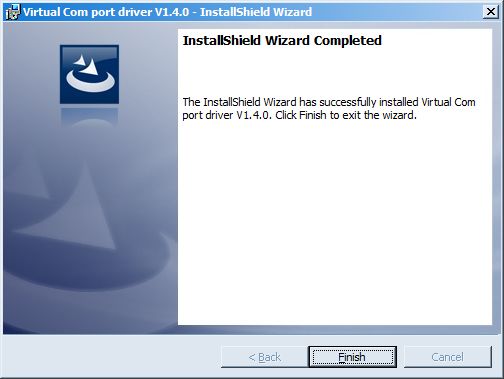
M-BUS-2 / User Manual

CONTENTS
INTRODUCTION ......................................................................................................................................................................... 4
1 DESCRIPTION AND OPERATION ......................................................................................................................................... 5

   Device description ................................................................................................................................................................. 5

   Comunication and data collection algorithm .................................................................................................................. 5

   Functional ................................................................................................................................................................................ 6

   Marking ..................................................................................................................................................................................... 6
2 SPECIFICATION ....................................................................................................................................................................... 7
3 OPERATION .............................................................................................................................................................................. 8

   Contacts ................................................................................................................................................................................... 8

   Initial startup ............................................................................................................................................................................ 9

   Converter operation in the independent poll mode of the metering devices ........................................................ 10

   Connecting via USB ............................................................................................................................................................. 11
4 VEGA LORAWAN CONFIGURATOR ................................................................................................................................... 13

   Interface of the application ................................................................................................................................................ 13

   Connection to the device ................................................................................................................................................... 14

   “Device info” tab ................................................................................................................................................................... 15

   “LoRaWAN settings” tab ...................................................................................................................................................... 17

   «MBUS-2» TAB ...................................................................................................................................................................... 21
5 COMMUNICATION PROTOCOL ........................................................................................................................................ 23

   Converter M-BUS-2 transmits the following types of packets ................................................................................... 23

   Converter M-BUS-2 receives packets of the following types ..................................................................................... 25
6 STORAGE AND TRANSPORTATION REQUIREMENTS ................................................................................................... 27
7 CONTENT OF THE PACKAGE ............................................................................................................................................. 28
8 WARRANTY ............................................................................................................................................................................. 29

Revision 08 - 03 February 2021                                                                                                                                                             3
M-BUS-2 / User Manual

INTRODUCTION
     This manual is designated for M-BUS-2 device (hereinafter – device, converter)
manufactured by Vega-Absolute OOO and provides information on powering and activation
procedure, control commands and functions of the device.

       This manual is targeted at specialists familiar with installation work fundamentals for
electronic and electrical equipment.

                To provide the stable radio between the gateway and the end device it
                is recommend avoiding the device installation in the places which are
                barriers for the radio signal getting through like a reinforced floors and
                walls, a basement, an underground facilities and wells, a metal case etc.
                The necessary stage for the network deploying including a big quantity
                of end devices is a radio planning work with nature experiments

      Vega-Absolute OOO reserves the right to make changes to the manual related to the
improvement of equipment and software, as well as to eliminate typos and inaccuracies,
without prior notice.

4                                                                      Revision 08 - 03 February 2021
M-BUS-2 / User Manual
1 DESCRIPTION AND OPERATION
DEVICE DESCRIPTION
The device M-BUS-2 is designed for reading of values from metering instruments via
M-BUS interface and further accumulating and transmitting of this data to the LoRaWAN
network.
Converter M-BUS-2 can be used for any utilities’ meters and industrial equipment with
M-BUS interface including water-, electricity-, and heat meters. M-BUS-2 may operate in the
independent poll mode of some metering devices. Supported devices list:
• Heat meter «Teplouchet-1»
• Heat meter «STE 21 «Berill»
• Heat meter «Danfoss Sonometer 500»
• Heat meter «ELF-M Teplovodomer»
• Heat meter «WESER Heat Meter»
• Heat meter «Kamstrup Multical 801»
• Heat meter «Kamstrup Multical 402»
The converter is powered by a 6400 mAh built-in battery.
For the correct functioning of the converter in the independent poll mode,
it is recommended to connect one-model counting devices to one converter
If you simultaneously use different models of metering devices with a single
converter, the correct functioning of the converter is not guaranteed
COMUNICATION AND DATA COLLECTION ALGORITHM
The readings collecting from the meter with a configurable period from 5 minutes to
24 hours. The readings stored in the device memory and transmitting during the next
communication session with the LoRaWAN network.
The adjustable data transfer period can be from 5 minutes to 24 hours. Data
transferring in random point in time during set period. At the next communication session, the
device starts sending accumulated packets with readings, from the earliest to the latest.
With the "Confirmed uplinks" option turned on, the device will send the next packet
only after receiving a confirmation of the delivery of the previous one. If such confirmation
has not received after the fulfilled in the settings uplink number of transmissions, device
completes the communication session until the next one according to the schedule. In this
case, the device continues to collect data according to the data collection period and store it
in memory. Non-transmitted packets remain in the device memory until the next
communication session.
Revision 08 - 03 February 2021 5M-BUS-2 / User Manual
With the "Confirmed uplinks" option turned off, the device just sends all accumulated
packets to the network in order from the earliest to the latest. There are no checks of package
delivery in this mode. There are no non-transmitted messages in the device memory.
The internal clock is set automatically when device connected to the "Vega LoRaWAN
Configurator" via USB, also adjustable via LoRaWAN.
FUNCTIONAL
M-BUS-2 converter is A class device (LoRaWAN classification) and has the following
features:
o ADR support (Adaptive Data Rate)
o Sending of confirmed packets (configurable)
o Temperature measurement by the internal temperature sensor
o Charge measuring of the built-in battery (%)
MARKING
Device marked with sticker that contain the next information:
o Device model;
o DevEUI;
o Month and year of manufacture;
o QR-code containing DevEUI for automatized count.
Sticker located in three places – on device case, in factory certificate and on the packing
box.
Besides, there is an additional sticker located on the packing box and contains:
o Information about firmware version;
o QR-code containing DevEUI and keys for device registration in network via OTAA
method.
6 Revision 08 - 03 February 2021M-BUS-2 / User Manual
2 SPECIFICATION
Main
M-BUS interface 1
Quantity of connecting M-BUS devices up to 10
USB-port mini-USB, type B
Operating temperatures -40…+85 °С
LoRaWAN
LoRaWAN class A
Quantity of LoRa channels 16
Frequency plan RU868, EU868, IN865, AS923, AU915,
KR920, US915, KZ865, custom (EU868
based)
Activation type ABP or OTAA
Communication period 5, 15, 30 minutes, 1, 6, 12 or 24 hours
Data collection period 5, 15, 30 minutes, 1, 6, 12 or 24 hours
Memory amount for storing packets 50 packets
Antenna connector SMA
Sensitivity -138 dBm
Radio coverage in restrained urban conditions max 5 km
Radio coverage within line of sight max 15 km
Transmitter power by default 25 mW (configurable)
Maximum transmitter power 100 mW
Power
Built-in battery 6400 mAh
Warranty number of packets sent by the 10 000
device, not less
Case
Housing dimensions 102 х 95 х 28 mm
Ingress protection rating IP54
Mounting with screws
Revision 08 - 03 February 2021 7M-BUS-2 / User Manual
3 OPERATION
CONTACTS
Converter has 12 contact pairs which are M-BUS interfaces. Converter provide
connection up to 10 M-BUS devices. You can choose any 10 contact pairs. Wherein 1-2
contacts are M-BUS- (bot row), and 13-24 contacts are M-BUS+ (top row).
In order to increase the battery life, the physical level of the M-BUS interface is switch on
(supply voltage is applied to the outputs MBAS +, MBAS-) just before meter polling with a
programmable delay (the delay value is depends on the type of connected meter). The delay is
introduced for initializing own meter interface and its preparing for receiving data from the
converter. When the polling is complete, the physical M-BUS level is turned off.
There is SMA connector for an external antenna connection on the board.
SMA connector for
an external
LoRaWAN antenna
connection
8 Revision 08 - 03 February 2021M-BUS-2 / User Manual
INITIAL STARTUP
The M-BUS-2 converter is powered from the built-in battery. In case of disconnect
battery, you need to connect the battery to the one of the two power connectors on the board.
Power connectors
The converter supports two activation methods in the LoRaWAN network - ABP and
OTAA. Select one of the methods using “Vega LoRaWAN Configurator” application (See part 4).
1. ABP. After pressing the start button, the device immediately starts working in the
"Active" mode.
Revision 08 - 03 February 2021 9M-BUS-2 / User Manual
Press the start
button located on
the board
2. OTAA. After pressing the start button, the device makes three attempts to connect to
the network within the set frequency plan. After the activation in the LoRaWAN network is
confirmed, the device sends a signal (LED flashing for 5 seconds) and switches to the "Active"
mode. If all attempts fail, the converter will continue to accumulate data and will attempt to
connect to the network every 6 hours.
To transfer the device from the "Active" mode to the "Storage" mode, you can use the
long press of the start button (more than 5 seconds).
Before connecting the device to the network, make sure that its registration
data is entered in the network - Device EUI, Application EUI and Application
Key for OTAA, or Device address, Application session key and Network
session key for ABP
CONVERTER OPERATION IN THE INDEPENDENT POLL MODE OF THE METERING
DEVICES
In the independent poll mode, the converter periodically and consistently polls the
metering devices at their secondary addresses. The addresses of the polling devices are writting
to the converter using the "Vega LoRaWAN Configurator" application. In case of a successful
poll, the data transferred by the metering device is accumulated in the configurator memory
10 Revision 08 - 03 February 2021M-BUS-2 / User Manual
and sent to the LoRaWAN network in accordance with communication period. The
communication period can be set to 1, 6, 12 or 24 hours in the "Vega LoRaWAN Configurator"
application while converter connected to a computer.
CONNECTING VIA USB
The device M-BUS-2 adjusted with the "Vega LoRaWAN Configurator" application (See
part 4).
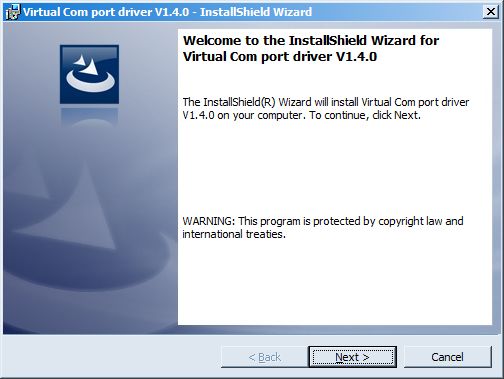
Before connecting the device to the computer for the first time, you must install the
driver for the COM port stsw-stm32102, which can be downloaded from iotvega.com. After
running the executable file VCP_V1.4.0_Setup.exe, the installer window will appear:
Revision 08 - 03 February 2021 11M-BUS-2 / User Manual
In this window, you need to click Next, then Install, and then the installation will begin.
When the installation is completed successfully, the following screen appears:
After pressing Finish the driver is ready for operation, - it is possible to connect the
converter via USB.
12 Revision 08 - 03 February 2021M-BUS-2 / User Manual
4 VEGA LORAWAN CONFIGURATOR
The "Vega LoRaWAN Configurator" application (hereinafter referred to as the
configurator) is intended for setting up the device via USB.
The configurator has two modes of operation - "Simple" and "Expert". In the "Simple"
mode, only basic settings are available. In the "Expert" mode, the basic settings, advanced
settings and the ability to check the coverage area of the signal from the gateways are available.
Next, the work of the application is considered in the “Expert” mode.
INTERFACE OF THE APPLICATION
The "Vega LoRaWAN Configurator" application does not require the special installation.
When the executable file is launched, the window for working with the application appears.
The menu on the left allows you to switch between the “Simple” and “Expert” modes,
select the device model, connect to the device or disconnect from it, get and apply settings.
Revision 08 - 03 February 2021 13M-BUS-2 / User Manual
The application window contains three tabs – Device info, LoRaWAN settings and device
settings.
The language selection menu is in the upper right corner.
CONNECTION TO THE DEVICE
For the connection to the device, perform the following steps:
1. Connect the USB cable to the device.
2. Start the "Vega LoRaWAN Configurator" application.
3. Click the "Connect" button in the menu on the left.
The application automatically recognizes the device model, and the device selection
menu becomes inactive.
To read the settings from the device, you need to click the "Get settings" button, until
this point the application will display the default settings or from the last connected device.
After making the necessary changes to the settings, you should click the "Apply settings"
button and only then disconnect from the device with the "Disconnect" button.
14 Revision 08 - 03 February 2021M-BUS-2 / User Manual
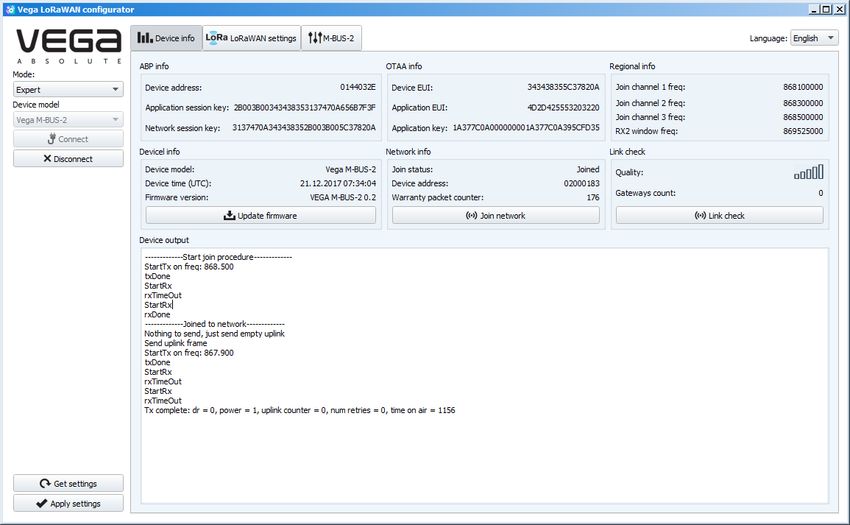
“DEVICE INFO” TAB
The "Device info" tab displays information about the device, its current status, and also
the data needed to register the device in the LoRaWAN network.
ABP info - displays the data necessary to register the device in the LoRaWAN network
with ABP method (Activation By Personalization).
OTAA info - the data required to register the device in the LoRaWAN network with OTAA
method (Over The Air Activation) is displayed.
Key management (not displayed in the "Simple" mode) - allows you to change the
factory keys to register the device on the network and reset the keys back to the factory
settings.
Device info - the configurator reads information about the device model, its firmware
and automatically corrects the device's time when connected to it.
Update firmware - allows you to select the firmware file from your computer's hard
drive and load it into the device. The device will automatically disconnect from the configurator
when the download is complete. The current version of the device firmware can be
downloaded from iotvega.com.
Revision 08 - 03 February 2021 15M-BUS-2 / User Manual
Network info - shows whether the device is connected to the LoRaWAN network and
its network address.
Join network button - launch the LoRaWAN network connection procedure with the
previously selected ABP or OTAA method. If the device is already connected to the network,
reconnection procedure will occur.
Link check (not displayed in the "Simple" mode) - when pressed, the device sends a
special signal to the LoRaWAN network, in response to which the network informs it of the
number of gateways that received this signal and the signal quality. This button only works
when the device is connected to the network.
Device output (not displayed in the "Simple" mode) - monitoring the device status, all
events in real time are displayed.
16 Revision 08 - 03 February 2021M-BUS-2 / User Manual
“LORAWAN SETTINGS” TAB
The "LoRaWAN Settings" tab allows you to configure various parameters of the LoRa
network.
Region - allows you to select one of installed frequency plans or specify a custom
frequency plan. Custom frequency plan is EU-868 based.
The converter supports the following frequency plans:
Frequency plan 1 Channel Frequency Modulation
1 868.1 MultiSF 125 kHz
2 868.3 MultiSF 125 kHz
EU-868
3 868.5 MultiSF 125 kHz
RX2 869.525 SF12 125 kHz
1 868.9 MultiSF 125 kHz
RU-868 2 869.1 MultiSF 125 kHz
RX2 869.1 MultiSF 125 kHz
Custom Set with «Vega LoRaWAN Configurator» application
In the EU_868 and RU_868 frequency plans, only those channels are active by default,
on which sending requests for connection to the network (join channels). The remaining
channels (that the device should use) can be transferring by the LoRaWAN network server
during the device activation procedure (only OTAA).
1
By default, the device supports two frequency plans and the custom, but it is possible to order firmware for
other frequency plans: IN865, AS923, AU915, KR920, US915, KZ865
Revision 08 - 03 February 2021 17M-BUS-2 / User Manual
If you select "Custom" in the "Region" field, you must manually specify the frequencies
that the device will use. To do this, click the "Edit" button, the channel frequency editing
window will appear:
This frequency plan allows you to set up to 16 channels, as well as the frequency and
speed of the second receiving window.
The first three channels and the second receiving window parameters
are mandatory. Without these parameters the custom frequency plan
will be considered empty
Activation type – selecting ABP or OTAA device activation method.
Confirmed uplinks – when you choose "confirmed", the device will retry sending the
packet until it receives the server confirmation, or until the "Uplink number of transmission" is
over (see below).
If you choose to send a packet without confirmation, the modem will
not know whether the packet is delivered or not
ADR – this option activates the Adaptive Data Rate algorithm for automatic control of
the data transfer rate from the LoRaWAN network server side. The higher the quality of the
signal received by the network, the higher the speed will be installed on the device. This option
is recommended only on permanently installed devices.
18 Revision 08 - 03 February 2021M-BUS-2 / User Manual
RX1 offset (not displayed in the "Simple" mode) – specifies the time between end of
packet transmission and first receiving window opening. The second receiving window always
opens after 1 second after the first.
Join accept delay 1 (not displayed in the "Simple" mode) – sets the time that the device
will open the first receiving window to receive confirmation for the join request from the
LoRaWAN network. The second window always opens after 1 second after the first.
Revision 08 - 03 February 2021 19M-BUS-2 / User Manual
Uplink number of transmission (not displayed in the "Simple" mode) – if the "Confirmed
uplinks" function is disabled, the device will simply send each packet as many times as specified
in this option. If "Confirmed uplinks" is enabled, the device will send packets until it receives a
confirmation or until it sends as many packets as specified in this option.
TX power (not displayed in the "Simple" mode) – the device RF transmitter power is
adjusted to this value when sending packets to the LoRaWAN network. This option can be
changed by the network server.
TX datarate (not displayed in the "Simple" mode) – the device transmission datarate at
which it will transfer packets to the LoRaWAN network. This speed can be changed by the
network server if the ADR algorithm is enabled.
20 Revision 08 - 03 February 2021M-BUS-2 / User Manual
«MBUS-2» TAB
The “MBUS-2” tab contains the settings of the connected device.
Current state – displays the current parameters of the device - the internal temperature
of the device and the battery level.
M-BUS settings – allows to setting M-BUS interface, set the model and addresses of
connected heat meters. M-BUS-1 uses the secondary addresses for poll of the connected
devices. The secondary address usually is equal to meter serial number.
Data transmission settings – a group of parameters that allows you to configure the
collection and transmission periods, and the time zone for the internal clock of the device will
be set which. The readings are read from the connected device at 00.00 on the internal clock of
the device if the data collection period is set to 24 hours, at 00.00 and at 12.00, if the period is
12 hours and so on. All readings are stored in the device memory until the next communication
session.
Revision 08 - 03 February 2021 21M-BUS-2 / User Manual
The data transfer period can be adjusted from 5 minutes to 24 hours. Data transfer is
carried out by a random time at the selected period. At the next communication session, the
device starts sending accumulated packets with readings, from the earliest to the latest.
With the "Confirmed uplinks" option turned on, the device will send the next packet only
after receiving a confirmation of the delivery of the previous one. If such confirmation has not
received after the fulfilled in the settings uplink number of transmissions, device completes the
communication session until the next one according to the schedule. In this case, the device
continues to collect data according to the data collection period and store it in memory. Non-
transmitted packets remain in the device memory until the next communication session.
With the "Confirmed uplinks" option turned off, the device just sends all accumulated
packets to the network in order from the earliest to the latest. There are no checks of package
delivery in this mode. There are no non-transmitted messages in the device memory.
Commands – allows transferring the command “Poll connected meters” on the
converter. The converter polls all the connected devices and transfers that data in the LoRaWAN
network just after button pressing.
22 Revision 08 - 03 February 2021M-BUS-2 / User Manual
5 COMMUNICATION PROTOCOL
This part describes the M-BUS-2 data exchange protocol with LoRaWAN network.
In fields consisting of several bytes, the little-endian byte order is used
CONVERTER M-BUS-2 TRANSMITS THE FOLLOWING TYPES OF PACKETS
1. Packet with current readings from connected heat meter, sent regularly or on request
Size in bytes Field description Data type
1 byte Packet type, this packet = 1 uint8
1 byte Battery level, % uint8
1 byte Values of basic settings (bit field) uint8
4 bytes Meter secondary address uint32
4 bytes Time of readings in this packet (unixtime UTC), by the internal uint32
clock of the converter
4 bytes The amount of thermal energy consumed, Wh uint32
4 bytes Total volume of coolant, l uint32
4 bytes Operating time, h uint32
2 bytes Current flow temperature ⁰С*100 uint16
2 bytes Current temperature in the return line ⁰С*100 uint16
2 bytes Current flow of coolant, l/h uint16
The converter has internal clock and calendar; time and date is factory set. When sending
a packet with the current readings, the device uses the data taken at the nearest time, which is
multiple to the interval, set by the switches:
• 1 hour period: the readings of the beginning of the current hour are sent;
• 6 hours period: 00:00, 06:00, 12:00, 18:00 readings are sent;
• 12 hours period: 00:00, 12:00 readings are sent;
• 24 hours period: the readings of 00:00 of the current day are sent.
When transmitting on request the readings are taken in that moment.
A package of this type is transmitted separately for each connected meter. For example,
if 5 metering devices are connected to the converter, 5 packets will be transferred to the next
connection.
"Values of basic settings" bit field decoding
Bits Field description
0 bit Activation type 0 - OTAA, 1 – ABP
1 bit Query for packet confirmation 0 – off, 1 – on
2,3,4 bit Communication period:
Revision 08 - 03 February 2021 23M-BUS-2 / User Manual
|1 == 0|2==0|3==0| - 5 minutes
|1 == 1|2==0|3==0| - 15 minutes
|1 == 0|2==1|3==0|- 30 minutes
|1 == 1|2==1 |3==0|- 1 hour
|1 == 0|2==0|3==1|- 6 hours
|1 == 1|2==0|3==1|- 12 hours
|1 == 0|2==1|3==1|- 24 hours
5 bit reserve
6 bit reserve
7 bit reserve
2. Packet with time correction request, sent every seven days on LoRaWAN port 4
Size in bytes Field description Data type
1 byte Packet type, this packet == 255 uint8
4 bytes Time of the modem at a moment of the packet uint16
transmission (unixtime UTC)
After receiving this type of package, the application can send to modem the packet with
time correction.
3. Settings packet – transmitting on LoRaWAN port 3 when settings request command
received, or device connected to the network
Size in bytes Field description Data type
1 byte Packet type, this packet == 00 uint8
2 bytes ID of parameter uint16
1 byte Data length (len) uint8
len bytes Parameter value -----
2 bytes ID of parameter uint16
1 byte Data length (len) uint8
len bytes Parameter value -----
… … …
2 bytes ID of parameter uint16
1 byte Data length (len) uint8
len bytes Parameter value -----
24 Revision 08 - 03 February 2021M-BUS-2 / User Manual
CONVERTER M-BUS-2 RECEIVES PACKETS OF THE FOLLOWING TYPES
1. Real-time clock adjustment – send by application on LoRaWAN port 4
Size in bytes Field description Data type
1 byte Packet type, this packet = 255 uint8
8 bytes The value in seconds for which you need to adjust the time. int64
Can be positive or negative
2. Packet with request of settings – sent by application on LoRaWAN port 3
Size in bytes Field description Data type
1 byte Packet type, this packet == 1 uint8
Answering that packet, the device sends the packet with settings.
3. Packet with settings is identical to such packet from device
Size in bytes Field description Data type
1 byte Packet type, this packet == 00 uint8
2 bytes ID of parameter uint16
1 byte Data length (len) uint8
len bytes Parameter value -----
2 bytes ID of parameter uint16
1 byte Data length (len) uint8
len bytes Parameter value -----
… … …
2 bytes ID of parameter uint16
1 byte Data length (len) uint8
len bytes Parameter value -----
The package with settings sent to the device may not contain all the settings supported
by the device, but only the part that needs to be changed.
Table of ID of M-BUS-2 parameters and these possible values
ID of Description Data Possible values
parameter length
4 Confirmed uplinks 1 byte 1 – confirmed
2 – unconfirmed
5 ADR (Adaptive Data Rate) 1 байт 1 – enabled
2 – disabled
8 Uplinks number of transmissions 1 byte from 1 to 15
16 Communication period 1 byte 1 – 1 hour
2 – 6 hours
3 – 12 hours
4 – 24 hours
Revision 08 - 03 February 2021 25M-BUS-2 / User Manual
5 – 5 minutes
6 – 15 minutes
7 – 30 minutes
33 External M-BUS device type 1 byte 0 – device type not set
1 – Teplouchet-1
2 – STE 21 «Berill
3 – Danfoss
Sonometer_500
4 – ELF_M
5 – Weser
6 – MULTICAL_801
7 – MULTICAL_402
8–
LANDIS_GYR_COMMON
9 – SHARKY_775
10 – PULSAR
49 Data collection period 1 byte 1 – 1 hour
2 – 6 hours
3 – 12 hours
4 – 24 hours
5 – 5 minutes
6 – 15 minutes
7 – 30 minutes
55 Time zone, in minutes 2 bytes from -720 to 840
26 Revision 08 - 03 February 2021M-BUS-2 / User Manual
6 STORAGE AND TRANSPORTATION REQUIREMENTS
The M-BUS-2 converter shall be stored in the original packaging in heated room at
temperatures +5°С to +40°С and relative humidity less than 85%.
The converter shall be transported in covered freight compartments of all types at any
distance at temperatures -40°C to +85°C.
Revision 08 - 03 February 2021 27M-BUS-2 / User Manual
7 CONTENT OF THE PACKAGE
The M-BUS-2 device is delivered complete with:
Converter M-BUS-2 – 1 pc.
Antenna LoRa – 1 pc.
24-pin bus – 1 pc.
Factory certificate – 1 pc.
28 Revision 08 - 03 February 2021M-BUS-2 / User Manual
8 WARRANTY
The warranty period for the device is 5 years from the date of sale.
The manufacturer is obligated to provide repair services or replace the failed device
during the entire warranty period.
The consumer undertakes to comply with the terms and conditions of transportation,
storage and operation specified in this user manual.
Warranty does not apply to:
- power supplies of devices sending more than 10,000 packets;
- the device with mechanical, electrical and / or other damages and defects caused by
violation of the transportation, storage and operation requirements;
- the device with traces of repair performed not by the manufacturer's service center;
- the device with traces of oxidation or other signs of liquids leaking inside the device.
In the event of a warranty claim, contact the service center:
113/1, Kirova Str., Novosibirsk, 630008, Russia.
Tel.: +7 (383) 206-41-35.
Revision 08 - 03 February 2021 29M-BUS-2 / User Manual
vega-absolute.ru
Operation Manual © Vega-Absolute OOO 2017-2021
30 Revision 08 - 03 February 2021You can also read


