MAKING A DIFFERENCE IN PALLIATIVE CARE - Covenant Health
←
→
Page content transcription
If your browser does not render page correctly, please read the page content below
MAKING A
                                   DIFFERENCE IN
                                   PALLIATIVE CARE
                                    HIGHLIGHTS OF THE COVENANT HEALTH

                                   PALLIATIVE INSTITUTE
                                                      2012-2017
                                   The Palliative Institute is committed to alleviating suffering for
                                   patients and their families by supporting excellence in palliative
                                   and end-of-life care.
ETHICS CENTRE SUMMARY REPORT | 1
MESSAGE FROM
                                   KAREN MACMILLAN
                                   Senior Operating Officer, Acute Services,
                                   Grey Nuns Community Hospital & Executive Lead, Palliative Care
                                   Covenant Health, Alberta, Canada

                                   I am pleased to present to you, the highlights of our work by the Covenant Health
                                   Palliative Institute. Since the Institute’s launch in October 2012 we have made significant
                                   progress in achieving our goals. We will continue our work on improving and advocating
                                   for palliative and end-of-life care, a high priority for Covenant Health. Covenant Health is
                                   a key partner in Alberta’s integrated healthcare system and it is Covenant Health’s mission
                                   to care for vulnerable populations. With more people living longer with life-threatening
                                   illnesses, there is a great need for better palliative care.
                                   Over the last five years and before the Institute was formed, our researchers and clinicians
                                   have made steps forward in pain assessment, pain classification, clinical care pathways,
                                   and advance care planning. Furthermore, the Institute hosts an annual gathering of the
                                   palliative care community to review research and educate practitioners, and has facilitated
                                   and held major conferences that focused nationally and internationally on palliative care
                                   research and advocacy, and advance care planning research and education.
                                   Some of the factors that have contributed to our success have been our strong links
                                   to our partners and our ability to pilot projects and see results in the Covenant Health
                                   environment. We have acquired a deep network, academic expertise, and esteem for
                                   our work on an international level, and we have the capacity to build on the work that is
                                   currently being done. We invite you to contact us to discuss the work we have already
                                   completed and work that we may undertake on your behalf or in collaboration with you.
                                   For contact information please see the outside back cover of this report.

                                   Sincerely,

                                   Karen Macmillan

MESSAGE FROM KAREN MACMILLAN | 2
OUR NETWORK:
ABOUT THE                                                                             SUPPORTERS,
PALLIATIVE INSTITUTE                                                                  PARTNERS,
                                                                                      COLLABORATORS
The Institute supports the Covenant Health strategic objective “We will
be leaders in robust palliative and end-of-life care and advocate for it as           & CLIENTS
an essential part of the health system.”
                                                                                      Covenant Foundation
Our Five Pillars
                                                                                      Covenant Health Palliative Care Services
The Institute focuses on supporting excellence in palliative care through clinical    University of Alberta
support, education, research, policy, and community engagement.
                                                                                      University of Calgary

Our Current Goals                                                                     Provincial Palliative and End-of-Life Care
                                                                                      Steering Committee (Alberta, Canada)
 1     Increase palliative care capacity to address gaps in service
                                                                                      Alberta Hospice Palliative Care
       within Canada
                                                                                      Association
       Supporting clinical tools, development and implementation of care
                                                                                      Alberta Health
       pathways, knowledge translation, and public awareness
                                                                                      Alberta Health Services
 2     Increase the use of Advance Care Planning (ACP) and Goals of
                                                                                      Alberta Innovates – Health Solutions
       Care Designation (GCD)
                                                                                      (AIHS)
       Partnering with ACP CRIO (Collaborative Research & Innovation                    Collaborative Research and Innovation
       Opportunities Program) in identification of barriers, facilitators and           Opportunities (CRIO) program
       performance indicators, supporting change management projects, and
                                                                                        Partnerships for Research and Innovation
       developing tools for the legal community. The Institute supports policy
                                                                                        in the Health System (PRIHS) program
       and education for ACP.
                                                                                      Palliative Care Matters Initiative (Canada):
 3     Advocate for a national robust palliative and end-of-life care system
                                                                                      13 national health organizations, 9 experts
       The Palliative Care Matters Initiative, hosted by Covenant Health and          Catholic Health Alliance of Canada
       collaborative national partners, continues to advocate and support quality
                                                                                      Canadian Hospice Palliative
       palliative care for all Canadians. The Institute, with its collaborators, is
                                                                                      Care Association
       working to translate research into practice by publishing and undertaking
       various knowledge translation approaches.                                      Canadian Virtual Hospice

                                                                                          ABOUT THE PALLIATIVE INSTITUTE | 3
CLINICAL TOOLS
End-of-Life (Last Hours to                     The Edmonton Symptom                         Family Caregiver Satisfaction
Days) Care Pathway                             Assessment System - Revised
                                                                                            In response to Accreditation Canada’s
In response to criticisms of the 1997          The Edmonton Symptom Assessment              recommendation, the Edmonton zone
Liverpool Care Pathway and in order to         System - Revised (ESAS-r) is an              palliative care program and provincial
improve on a 2011 Albertan version of          internationally recognized nine-item         Covenant Health palliative care has
a pathway, the Palliative Institute, and       self-report symptom intensity tool           adopted the FAMCARE-2 tool as a
Edmonton Zone Continuing Care revised          developed for palliative care patients,      measure of family caregiver satisfaction
and re-released the Palliative Care            with the option of adding a 10th             with palliative care services. A process
Pathway as the Care of the Imminently          patient-specific symptom. Three studies      evaluation study of the FAMCARE-2
Dying Pathway. The 2017 Care of the            that gathered validation evidence of         was conducted in Edmonton hospices
Imminently Dying Pathway will be the           the ESAS were completed, which               and the Grey Nuns Community
provincial framework for supporting care       resulted in a revised version: the ESAS-r.   Hospital Tertiary Palliative Care Unit.
in all patients’ last hours to days of life.   A French translation study of the            It was also piloted at the St Michael’s
                                               ESAS-r, including patients’ perspectives,    palliative unit in Lethbridge to test the
The pathway is a set of tools that
                                               has recently been published. Future          appropriateness of the tool in obtaining
enhances the quality of care and
                                               research directions include examining        family satisfaction feedback. The tool
provides comfort for a person in their
                                               the role of the ESAS-r in the symptom        is now utilized by all Edmonton and
last few hours or days of life. It provides
                                               assessment of psychosocial and spiritual     Covenant Health palliative units in
guidance for any member of the health
                                               distress screening including aging,          Alberta, with regular reporting and
care team in any care setting and
                                               cognitively impaired, and non-cancer         posting of family caregiver comments
offers a coordinated approach to care
                                               palliative care patients.                    for the staff.
and communication. It can improve
outcomes, promote safety, increase
satisfaction with care, and optimize the       Edmonton Classification System               Paying Attention to Patient
use of resources.                              for Cancer Pain (ECS-CP)                     Dignity

                                               A classification system for cancer pain      The maintenance of dignity is an
Renal End-Stage Pathway                        identifies patients who may require more     inherent component of the palliative
Conservative Kidney Management (CKM)           complex management. This system              care philosophy, frameworks, and
                                               allows for improved assessment and           clinical care. The Patient Dignity
is a treatment option for managing
                                               management and facilitates appropriate       Question (PDQ) is a novel, brief
advanced chronic kidney disease. This
                                               comparisons of clinical and research         approach for obtaining information
clinical care pathway is a resource for
                                               experience. The classification system        about personhood. Patients and their
patients and healthcare professionals
                                               was created in Edmonton with multiple        families are asked to respond to the
that focuses on quality of life, symptom
                                               collaborators. A series of validation        question: “What should your health
management, and living well without
                                               studies have been conducted in               care providers know about you (your
dialysis. The online pathway is publicly
                                               Edmonton and international sites.            family member) as a person to give
available to patients, families, and health
                                               Findings from this program of research       you (them) the best care possible?”
professionals at www.CKMcare.com.
                                               have been presented and published            The primary objective of this pilot
As a Collaborative Member of the               internationally. Work is underway on         study was to prospectively evaluate
Kidney Supportive Care Research                translations into French, Spanish,           the quality of using the PDQ on the
Group, the Palliative Institute has            and Catalan.                                 Tertiary Palliative Care Unit (TPCU) at
supported the development of this                                                           the Grey Nuns Community Hospital
pathway. The pathway is currently                                                           and two acute care hospitals as part of
moving from research to implementation                                                      an ongoing Division of Palliative Care
in collaboration with Alberta’s Kidney                                                      Medicine Residency project.
Strategic Clinical Network.

CLINICAL TOOLS | 4
CONFERENCES & OTHER ACTIVITIES
The Palliative Institute has hosted        The seminar lead and organized by the        completed in collaboration with the
and continues to host conferences in       Palliative Institute in cooperation with     Catholic Health Alliance of Canada.
the local, national and international      the European Palliative Care Research
spheres in order to share and further      Centre and EAPC Research Network.            Knowledge Translation
the knowledge and practice of              Researchers shared their experiences of      Activities
palliative care:                           conducting collaborative research within
                                           Canada and in both North America             The Palliative Institute utilizes a variety
Annual Palliative Education &              and Europe. The conference provided          of methods to support turning
Research Days Conference                   great opportunities to connect, share        research into clinical practice.
                                           experiences, and discuss approaches          Infographics, on-line learning modules,
This conference held in Edmonton,          to palliative care research.                 world cafés, and change management
Alberta has become well known as a                                                      are some of the techniques beyond
centre of excellence to discuss and        Environmental Scan of                        publishing that encourages utilizing best
further the practice of palliative care.   Canadian Catholic Palliative                 practice. The Institute commonly uses
It has been held for 28 years and brings   Care Services and Innovations                Canadian Institutes for Health Research’s
together people interested in palliative                                                Knowledge to Action approach to
care to network, educate health            The environmental scan describes the         improving best practice.
professionals and share research.          scope of palliative care service delivery
                                           and innovation in Canadian Catholic
European Association                       healthcare. Catholic facilities identified
for Palliative Care                        22 palliative care innovations. Catholic
Research Network                           healthcare organizations completed
                                           a self-assessment on their readiness
This international seminar was held        to promote change. The project was                                     See also ACPEL on pg.6
in December 2016 in Banff, Alberta.                                                                   and Palliative Care Matters on pg.7

                                                                                            ETHICS CENTRE SUMMARY REPORT | 5
ADVANCE CARE PLANNING (ACP) & GOALS
OF CARE DESIGNATION (GCD): KEY PROJECTS
                                                                                        International Society of
                                                                                        Advance Care Planning &
                                                                                        End-of-Life Care Conference

                                                                                        The Palliative Institute hosted the
                                                                                        6th International Society of Advance
                                                                                        Care Planning and End-of-Life Care
                                                                                        conference (ACPEL 2017) in Banff,
                                                                                        Alberta with the support of the
                                                                                        Covenant Foundation and other
                                                                                        sponsors. 200 people from 16 countries
                                                                                        attended. More than 220 research
                                                                                        abstracts provided the international
                                                                                        scientific committee with ample material
                                                                                        to devise a strong conference program
                                                                                        that included poster walks and awards.
                                                                                        Part of the conference outreach included
                                                                                        a national webinar presented by a lay
                                                                                        person and physician. Delegates at
                                                                                        the conference said that seeing the
The Palliative Institute has undertaken    practice of ACP. Both ACP and GCD            webinar and being able to interact
projects to increase the use of Advance    have been shown to lead medical care         with ACP leaders was very helpful in
Care Planning (ACP) and Goals of Care      according to patients’ desires when they     understanding where ACP is
Designation (GCD) in partnership with      cannot speak for themselves. This utilizes   at internationally.
the Advance Care Planning Collaborative    healthcare resources in an effective way.
Research and Innovation Opportunities                                                   ACP in lawyers’ practice
(ACP CRIO) research program:               Barriers and facilitators to
                                           the implementation of ACP                    In collaboration with the Canadian Bar

Integrating performance                    & GCD – application of                       Association, Legal Education Society

indicators in Alberta for                  learnings in two change                      of Alberta and Office of the Public

putting ACP & GCD                          management projects:                         Guardian/Trustee and ACP CRIO, the

into practice                              vascular surgery & fractured                 Palliative Institute undertook a research
                                           hip surgical populations                     study to assess barriers and facilitators
The Palliative Institute chaired a                                                      to the lawyers’ role in ACP. Through
collaborative study to identify ACP        The Palliative Institute is co-leading ACP   numerous focus groups and a survey of
best practice indicators and distributed   & GCD change management projects in          133 Alberta lawyers who practice in Wills
a report to provincial stakeholders        the fractured hip and vascular surgical      and Estates, Elder and Health Law, the
last year. Currently, the province is      populations at two Covenant Health           study identified critical gaps in lawyers’
auditing the use of many indicators        hospitals. For each project, a team of key   knowledge of health care practices and
for implementation into the provincial     health care provider and administrative      documents, and means of equipping
ACP dashboard. A series of reports and     stakeholders, educators, process             lawyers and clients with ACP tools while
academic articles will be published and    improvement specialists and researchers      fostering conversations between lawyers
presented nationally.                      have reviewed barriers and facilitators      and physicians.
                                           (at the patient, health care provider and
Performance indicators provide             system levels) and developed a plan
information about progress and             to implement ACP & GCD into regular
shortcomings in the adoption and           surgical practice.

ADVANCE CARE PLANNING (ACP) & GOALS OF CARE DESIGNATION (GCD): KEY PROJECTS | 6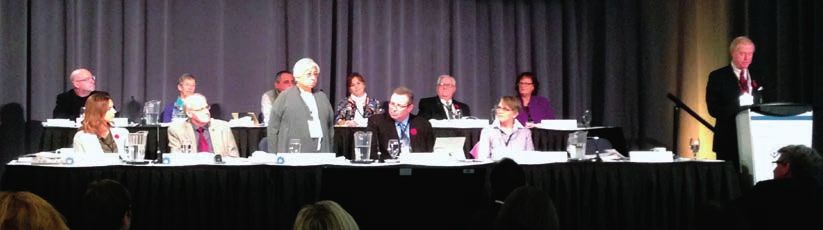
PALLIATIVE CARE MATTERS:
BUILDING CONSENSUS TOGETHER
The Palliative Care Matters (PCM)
initiative is intended to develop a
consensus of Canadians on the
                                                                    Ensuring that the suffering of our fellow
future of palliative care and catalyze                              citizens is alleviated is at the heart of a civil
change in healthcare policy and                                     society…. It isn’t enough to care; Canada
practice. The Palliative Institute
initiated, and hosted Palliative Care                               must turn its caring into commitment that
Matters (PCM) in collaboration with                                 ensures palliative care is a part of the
13 national organizations.
                                                                    Canadian health system and receives the
PCM included an Ipsos survey of 1540
                                                                    attention and resources it needs.
Canadians in the summer of 2016, a
consensus development conference in                                Consensus Statement of the Lay Panel,
Ottawa in November 2016 (touching 1.2
                                                                   Palliative Care Matters Conference, November, 2016
million Canadians), and a Conference
Board of Canada report released in June
2017 (providing recommendations for                       Following the conference, The Conference Board of Canada reviewed the consensus
action and implementation).                               statement and the work to date. The report, “Palliative Care Matters: Fostering Change
At the conference, a lay panel                            in Canadian Health Care,” provided the following insights on how to move forward
of Canadians considered the Ipsos                         implementing the recommendations:
public opinion research, heard the
                                                          • Acknowledge Patients and the Public as Experts in their own care.
presentations, and questioned experts
on how quality palliative care could                      • Develop a Better Understanding of the Landscape - Palliative and end-of-life
be delivered. The lay panel made
                                                            care is evolving. More people are dying outside of hospital settings than in the past,
20 specific recommendations
                                                            and this has implications for care provided in homes, communities, and long-term
addressing national frameworks,
                                                            care settings.
palliative home care, integration
of care, education and training,                          • Move from Organic to Strategic to Implementation - Access to quality care
indicators, and public awareness.                           is uneven within and across jurisdictions, with some populations significantly
                                                            underserved. Strategic frameworks and plans can be effective in addressing
  Phase 1: Talk		                                           quality and access.
  Listening to Canadians
                                                          • Recognize that Workforce Planning Is Essential - The future demand for palliative
  From spring 2016 to fall 2016, we gathered
  information from Canadians about what they know,          and end-of-life care services means governments and other stakeholders must
  how they feel, and what they expect.                      develop workforce capacity.
  Phase 2: Understand
                                                          • Foster Current Opportunities in Home and Community Carel - Canada needs
  Reaching Consensus
                                                            to immediately develop enhanced palliative and end-of-life capacity in home,
  At a conference in Ottawa, November 7-9, 2016,
                                                            community, and long-term care settings.
  a jury (lay panel) of Canadians heard the evidence
  and developed a Canadian consensus around
  what needs to happen.                                   Going Forward
  Phase 3: Do
                                                          The private member’s Bill C-277, “An Act providing for the development of a
  Creating Change
                                                          framework on palliative care in Canada” was enacted in November, 2017. This bill
  The Canadian consensus on palliative care is being
                                                          provides further impetus to move forward on an integrated palliative care strategy.
  brought forward to policy makers, governments and
  the public so we can all act together and make better
                                                          PCM is committed to action, organizing a meeting in February 2018, and utilizing the
  palliative care a reality.                              collaborative impact framework to bring palliative care leaders together in developing
                                                          a national action plan. The Palliative Institute continues to chair and support PCM.

                                                                                   PALLIATIVE CARE MATTERS: BUILDING CONSENSUS TOGETHER | 7
As a society, we need to place as much
emphasis on this critical part of the life journey
as we do on bringing life into the world.

         Don Newman, Chair of the Lay Panel
         Palliative Care Matters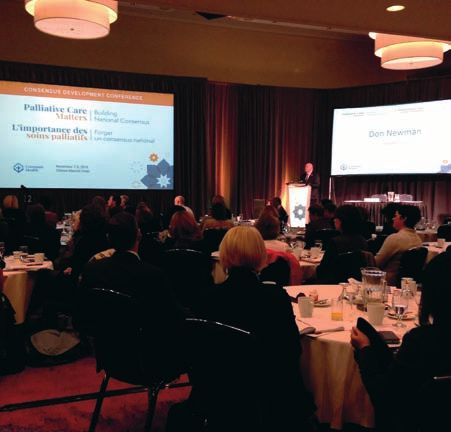
RESEARCH & ACADEMIC PUBLICATIONS
Book Chapters                                                                           Drummond, J., Wiebe, N., So, S., Schnirner, L., Bisanz, J., Williamson, D.,
                                                                                          Mayan, M., Templeton, L., & Fassbender, K. (2016). Service-integration
Fainsinger, R.L. Dehydration and rehydration. (2015). In: E Bruera,.                      approaches for families with low income: a Families First Edmonton,
  Higginson, I.J., von Gunten, C., Morita, T. eds. 2nd Edition Textbook of                community-based, randomized, controlled trial. Trials, 17: 343. doi:
  Palliative Medicine and Supportive Care. Boca Raton, FL: Taylor & Francis               10.1186/s13063- 016-1444-8.
  Group, 13.74:753-7761.
                                                                                        Duggleby, W., Ghosh, S., Struthers-Montford, K., Nekolaichuk, C., Cumming,
Nekolaichuk, C. (2015). Hope in end-of-life care. In: E. Bruera, I. Higginson,
                                                                                          C., Thomas, R., Tonkin, K., & Swindle, J. (2017). Feasibility study of an
  C. F. von Gunten & T. Morita. Textbook of Palliative Medicine and
                                                                                          online intervention to support male spouses of women with breast cancer.
  Supportive Care (2nd ed.) (pp.743-749). Boca Raton, FL: CRC Press, Taylor
                                                                                          Oncology Nursing Forum, 44(6), 765-775. doi: 10.1188/17.ONF.765-775.
  & Francis.
                                                                                        Duggleby, W., Tycholiz, J., Holtslander, L., Hudson, P., Nekolaichuk, C.,
                                                                                          Mirhosseini, N., Parmar, J., Chambers, T., Alook, A., & Swindle, J. (2017).
Edited Volumes                                                                            A metasynthesis study of family caregivers’ transition experiences caring
Palliative Care Matters: Building a National Consensus. Fassbender, K., eds.              for community- dwelling persons with advanced cancer at the end of life.
  Journal of Palliative Medicine, 21(s1). 2017.                                           Palliative Medicine, 31(7): 602-616. doi:10.1177/0269216316673548.

                                                                                        Duggleby, W., Cooper, D., Nekolaichuk, C., Cottrell, L., Swindle, J., &
Academic Publications                                                                     Barkway, K. (2016). The psychosocial experiences of older palliative
                                                                                          patients while participating in a Living with Hope program. Palliative and
Aoun, S.M., Slatyer, S., Deas, K., & Nekolaichuk, C. (2017). Family caregiver
  participation in palliative care research: Challenging the myth. Journal of             Supportive Care, 14: 672-679.
  Pain & Symptom Management, 53(5): 851-861.                                            Duggleby, W., Robinson, C.A., Kaasalainen, S., Pesut, B., Nekolaichuk C.,
Aoun, S.M., & Nekolaichuk, C. (2014). Improving the evidence base in                      MacLeod, R., Keating, N.C., Santos Salas, A., Hallstrom, L.K., Fraser, K.D.,
  palliative care to inform practice and policy: thinking outside the box.                Williams, A., Struthers-Montford, K., & Swindle, J. (2016). Developing
  Journal of Pain & Symptom Management, 48(6):1222-35. doi:10.1016/j.                     Navigation Competencies to Care for Older Rural Adults with Advanced
  jpainsymman.2014.01.007.                                                                Illness. Canadian Journal of Aging, 35(2):206-14. doi: 10.1017/
                                                                                          S0714980816000131.
Barbera, L., Seow, H., Sutradhar, R., Chu, A., Burge, F., Fassbender, K.,
  McGrail, K., Lawson, B., Liu, Y., Pataky, R., & Potapov, A. (2015). Quality           Duggleby, W., Thomas, J., Struthers Montford, K., Thomas, R., Nekolaichuk, C.,
  of End-of-life cancer care in Canada: A four province study. Journal of                 Ghosh, S., Cumming, C., & Tonkin, K. (2015). Transitions of male partners
  Oncology Practice, 22 (5):341-355. doi: 10.3747/co.22.2636.                             of women with breast cancer: Hope, guilt and quality of life. Oncology
                                                                                          Nursing Forum, 42(2):134-141. doi:10.1188/15.ONF.134-141.
Brunelli, C., Bennett, M.I., Kaasa, S., Fainsinger, R., Sjøgren, P., Mercadante,
  S., Løhre, E.T., & Caraceni, A., European Association for Palliative Care             Duggleby, W., Schroeder, D., & Nekolaichuk, C. (2013). Hope and
  (EAPC) Research Network; International Association for the Study of                     connection: The experience of family caregivers of persons with
  Pain (IASP) Cancer Pain Special Interest Group. (2014). Classification                  dementia living in a long term care facility. BMC Geriatrics, 13:112. doi:
  of neuropathic pain in cancer patients: A Delphi expert survey report                   10.1186/1471-2318-13-112.
  and EAPC/IASP proposal of an algorithm for diagnostic criteria. Pain,
                                                                                        Duggleby, W., Hicks, D., Nekolaichuk, C., Holtslander, L., Williams, A.,
  155(12):2707-13. doi: 10.1016/j.pain.2014.09.038.
                                                                                          Chambers, T., & Eby, J. (2012). Hope, older adults, and chronic illness:
Bultz, B.D., Waller, A., Cullum, J., Jones, P., Halland, J., Groff, S.L., Leckie, C.,     a metasynthesis of qualitative research. Journal of Advanced Nursing,
  Shirt, L., Blanchard, S., Lau, H., Easaw, J., Fassbender, K., & Carlson, L.E.           68(6):1211-23. doi: 10.1111/j.1365-2648.2011.05919.x.
  (2013). Implementing routine screening for distress, the sixth vital sign, for
                                                                                        Fainsinger, R.L., Nekolaichuk, C., Fainsinger, L., Muller, V., Fainsinger, L.,
  patients with head and neck and neurologic cancers. Journal of National
                                                                                           Amigo, P., Brisebois, A., Burton-Macleod, S., Ghosh, S., Gilbert, R.,
  Comprehensive Cancer Network, 11(10):1249-61.
                                                                                           Tarumi, Y., Thai, V., & Wolch, G. (2017). What is stable pain control? A
Buttenschoen, D., Stephan, J., Watanabe, S., & Nekolaichuk, C. (2014).                     prospective longitudinal study to assess the clinical value of a personalized
  Health care providers’ use and knowledge of the Edmonton Symptom                         pain goal. Palliative Medicine, http://journals.sagepub.com/doi/
  Assessment System (ESAS): Is there a need to improve information and                     pdf/10.1177/0269216317701891.
  training? Supportive Care in Cancer, 22:201-208. doi: 10.1007/s00520-
  013-1955-8.                                                                           Fainsinger, R.L. (2014). Palliative sedation – still a complex clinical issue!
                                                                                          Current Oncology, 21(2):62-63.
Chan, M., & Fassbender, K. (2017). Evaluating Public Engagement for a
  Consensus Development Conference. Journal of Palliative Medicine,                     Fainsinger, R.L., Nekolaichuk, C., & Muller, V. (2014) Assessing and
  21(S1): S20-S26.                                                                        classifying cancer Pain: Can we develop an internationally accepted
                                                                                          common language? Journal of Palliative Care, 30(4):279-283.
Drummond. J., Schnirer, L., So, S., Mayan, M., Williamson, L.D., Bisanz, J.,
  Fassbender K., & Wiebe, N. (2014). The protocol for the Families First                Fainsinger, R.L. (2012). Growth of palliative care programs - how are we
  Edmonton trial (FFE): a randomized community-based trial to compare                     doing? Annals of Palliative Medicine, 1(3):232-3. doi:10.3978/j.issn.2224-
  four service integration approaches for families with low-income. BMC                   5820.2012.10.08.
  Health Services Research, 14:223. doi: 10.1186/1472-6963-14-223.
                                                                                                                     RESEARCH & ACADEMIC PUBLICATIONS | 9
Fassbender, K. (2018). Consensus Development Conference: Promoting                       Kim, C.A, Chu, Q.S., Fassbender, K., Ghosh, S., & Spratlin, J.L. (2017).
  Access to Quality Palliative Care in Canada. Journal of Palliative Medicine,             Predictive Impact of Clinical Benefit in Chemotherapy-treated Advanced
  21(S1): S1-8.                                                                            Pancreatic Cancer Patients in Northern Alberta. American Journal of
                                                                                           Clinical Oncology. doi:10.1097/COC.0000000000000385.
Fassbender K, & Watanabe, S. (2015). Early Palliative Care and Its
  Translation into Oncology Practice in Canada: Barriers and Challenges.                 Knudsen, A.K., Aass, N., Heitzer, E., Klepstad, P., Hjermstad, M.J.,
  Annals of Palliative Medicine, 4(3):135-149. doi:10.3978/j.issn.2224-                    Schippinger, W., Brenne, E., Kaasa, S., Wasteson, E. Fainsinger RL., On
  5820.2015.06.01.                                                                         behalf of the European Palliative Care Research Collaborative (EPCRC)
                                                                                           (2012). Interviews with patients with advanced cancer--another step
Hagen, N., Howlett, J., Sharma, N.C., Biondo, P., Holroyd-Leduc, J.,
                                                                                           towards an international cancer pain classification system. Support Care
  Fassbender, K., & Simon, J. (2015). Implementing Advance Care Planning
                                                                                           Cancer, 20(10):2491-500.
  across a Health Care System: identifying system-specific barriers and
  facilitators. Current Oncology, 22 (4):e237-e245. doi:10.3747/co.22.2488.              Lau, F., Downing, M., Tayler, C., Fassbender, K., Lesperance, M., & Barnett,
                                                                                           J. (2013). Toward a population-based approach to end-of-life care
Hjermstad, M.J., Aass, N., Aielli, F., Bennett, M., Brunelli, C., Caraceni, A.,
                                                                                           surveillance in Canada: initial efforts and lessons. Journal of Palliative
  Cavanna, L., Fassbender, K., Feio, M., Haugen, D.F., Jakobsen, G., Laird,
                                                                                           Care, 29(1):13-21.
  B., Løhre, E.T., Martinez, M., Nabal, M., Noguera- Tejedor, A., Pardon, K.,
  Pigni, A., Piva, L., Porta-Sales, J., Rizzi, F., Rondini, E., Sjøgren, P., Strasser,   Leonard, M., & Nekolaichuk, C., Meagher, D., Barnes, C., Gaudreau,
  F., Turriziani, A., & Kaasa, S., European Palliative Care Cancer Symptom                 J.D., Watanabe, S., Agar, M., Bush, S.H., & Lawlor, P. (2014). Practical
  study (EPCCS) (2016). Characteristics of the case mix, organisation and                  assessment of delirium in palliative care. Journal of Pain & Symptom
  delivery in cancer palliative care: a challenge for good-quality research.               Management, 48(2);176-190. doi:10.1016/j.jpainsymman.2013.10.024.
  BMJ Supportive & Palliative Care. doi:10.1136/bmjspcare-2015-000997.
                                                                                         Løhre, E.T., Klepstad, P., Bennett, M.l., Brunelli, C.I., Caraceni, A.,
Hjermstad, M.J, Lie, H.C., Caraceni, A., Currow, D.C., Fainsinger, R.L,                    Fainsinger, R., Knudsen, A., Mercadante, Seb., Sjøgren, P., & Kaasa, S.
  Gundersen, O.E, Haugen, D.F., Heitzer, E., Radbruch, L., Stone, P.C.,                    (2016). From “Breakthrough” to “Episodic” Cancer Pain? A European
  Strasser, F., Kaasa, S., & Loge, J.H., & European Palliative Care Research               Association for Palliative Care Research Network Expert Delphi Survey
  Collaborative (EPCRC). (2012). Computer-based symptom assessment is                      Toward a Common Terminology and Classification of Transient Cancer
  feasible in patients with advanced cancer: results from an international                 Pain Exacerbations. Journal of Pain & Symptom Management, 51(6):1013-
  multicenter study, the EPCRC-CSA. Journal of Pain & Symptom                              1019. http//dx.doi.org/10.1016/j.jpainsymman.
  Management, 44(5):639-54. doi: 10.1016/j.jpainsymman.2011.10.025.
                                                                                         Løhre, ET., Klepstad, P., Bennett, M., Brunelli, C., Caraceni, A., Fainsinger, RL.,
Howard, M., Bonham, A.J., Heyland, D.K., Sudore, R., Fassbender, K., Robinson,             Knudsen, A., Mercadante, S., Sjøgren, P., & Kaasa, S. (2016). Authors’
  C.A., McKenzie, M., Elston, D., & You, J.J. (2016). Measuring engagement                 reply to Davies et al re Incorrect Use of the English Language Term
  in advance care planning: a cross-sectional multicentre feasibility study.               “Episodic”. Journal of Pain & Symptom Management, 52(5):e1-e2.
  BMJ Open, 6(6):e010375. doi: 10.1136/bmjopen-2015-01037.
                                                                                         Lowe, S.S., Nekolaichuk, C., Ghosh, S., Fainsinger, L., Quan, H., &
Hui, D., Bansal, S., Strasser, F., Morita, T., Caraceni, A., Davis, M., Cherny, N.,        Fainsinger R. (2016). Clinical characteristics of patients having
  Kaasa, S., Currow, D., Abernethy, A., Nekolaichuk, C., & Bruera, E. (2015).              single versus multiple patient encounters within a palliative care
  Indicators of integration of oncology and palliative care programs: An                   programme. BMJ Supportive & Palliative Care, 0:1-9. doi:10.1136/
  international consensus, Annals of Oncology, 26:1953-1959. doi:10.1093/                  bmjspcare-2015-000985.
  annonc/mdv269.
                                                                                         Nekolaichuk, C., Huot, A., Gratton, V., Bush, S.H., Tarumi, Y., & Watanabe,
Javaheri, P.A., Nekolaichuk, C., Haennel, R., Parliament, M., & McNeely,                   S. (2017). Development of a French version of the Edmonton Symptom
  M. (2015). Feasibility of a pedometer-based walking program for breast                   Assessment System-Revised: A pilot study of palliative care patients’
  and head and neck cancer survivors undergoing radiation therapy.                         experiences. Palliative Medicine, 20(9):966-976. doi:10.1089/
  Physiotherapy Canada, 67(2):205-213 (Special Issue: Oncology).                           jpm.2016.0510.

Kassam, A., Douglas, M., Simon, J.E., Cunningham, S., Fassbender, K., Shaw,              Nekolaichuk, C.L., Fainsinger, R.L., & Lawlor, P. (2013). Challenges of
  M., & Davison, S. Behaviours in Advance Care Planning and ACtions                        conducting research on cancer pain classification: How do we make sense
  Survey (BACPACS): development and validation part 1. (in press). BMC                     of the outcomes? Journal of Palliative Medicine, 16(11):1323-1325.
  Palliative Care. doi:10.1186/s12904-017-0236-6.
                                                                                         Nekolaichuk, C., Fainsinger, R., Aass, N., Hjermstad, M., Knudsen, A. K.,
Kazemi-Bajestani, S.M., Becher, H., Fassbender, K., Chu, Q., & Baracos,                    Klepstad, P., Currow, D., & Kaasa, S. (2013). The Edmonton Classification
  V.E. (2014). Concurrent evolution of cancer cachexia and heart failure:                  System for Cancer Pain: A comparison of pain classification features and
  bilateral effects exist. Journal of Cachexia Sarcopenia Muscle, 5(2):95-104.             pain intensity across diverse palliative care settings in eight countries.
  doi:10.1007/s13539-014-0137.                                                             Journal of Palliative Medicine, 16(5):516-523. doi: 10.1089/jpm.2012.0390.

                                                                                         Nekolaichuk, C., Turner, J., Collie, K., Cumming, C., & Stevenson, A. (2013).
                                                                                           Cancer patients’ experiences of the early phase of individual counseling
                                                                                           in an outpatient psycho-oncology setting. Qualitative Health Research,
                                                                                           23:592-604. doi:10.1177/1049732312470567.

RESEARCH & ACADEMIC PUBLICATIONS | 10
Olsman, E., Duggleby, W., Nekolaichuk, C., Willems, D., Gagnon, Struthers Montford, K., Duggleby, W., Cumming, C., Thomas, R.,
J., Kruizinga, R., & Leget, C. (2014). Improving communication Nekolaichuk, C., Ghosh, S., & Tonkin, K. (2016). ‘All I can do is help’:
on hope in palliative care. A qualitative study of palliative care Transition experiences of male spouse caregivers of women with breast
professionals’ metaphors of hope: grip, source, tune, and vision. cancer. Canadian Oncology Nursing Journal, 26(4):312-317.
Journal of Pain & Symptom Management, 48(5):831-838. doi:10.1016/j.
Sudore, R.L., Heyland, D.K., Barnes, D.E., Howard, M., Fassbender, K.,
jpainsymman.2014.02.008.
Robinson, C.A., Boscardin, J., & You, J.J. (2017). Measuring Advance Care
Pesut, B., Duggleby, W., Warner, G., Fassbender, K., Antifeau, E., Hooper, Planning: Optimizing the Advance Care Planning Engagement Survey.
B., Greig, M., & Sullivan, K. (2017). Volunteer navigation partnerships: Journal of Pain & Symptom Management, 53(4):669-681.e8.
Piloting a compassionate community approach to early palliative care.
Thai, V., Ghosh, S., Tarumi, Y., Wolch, G., Fassbender, K., Lau, F., DeKock, I.,
BMC Palliative Care, 17(2):1-11.
Mirosseini, M., Quan, H., Yang, J., & Mayo, P.R. (2016). Clinical prediction
Rayment, C., Hjermstad, M.J., Aass, N., Kaasa, S., Caraceni, A., Strasser, survival of advanced cancer patients by palliative care: a multi-site study.
F., Heitzer, E., Fainsinger, R., Bennett, M.I., On behalf of the European International Journal of Palliative Nursing, 22(8):380-7. doi:10.12968/
Palliative Care Research Collaborative (EPCRC). (2013). Neuropathic ijpn.2016.22.8.380.
cancer pain: Prevalence, severity, analgesics and impact from the
Thai, V., Lau, F., Wolch, G., Yang, J., Quan, H., & Fassbender, K. (2012).
European Palliative Care Research Collaborative – Computerised
Impact of infections on the survival of hospitalized advanced cancer
Symptom Assessment study. Palliative Medicine, 27(8):714-721.
patients. Journal of Pain & Symptom Management, 43(3):549-57.
Ries, N., Douglas, M., Simon, J., & Fassbender, K. (2018). How Do Lawyers doi:10.1016/j.jpainsymman.2011.04.010.
Assist their Clients with Advance Care Planning? Findings from a Cross-
Vignaroli, E., Bennett, M.I., Nekolaichuk, C., De Lima, L., Wenk, R.,
Sectional Survey of Lawyers in Alberta, Canada. Alberta Law Review, 55(3).
Ripamonti, C.I., & Bruera, E. (2012). Strategic pain management: the
Ries, N.M., Douglas, M., Simon, J., & Fassbender, K. (2016). Doctors, identification and development of the IAHPC opioid essential prescription
Lawyers and Advance Care Planning: Time for Innovation to Work package. Journal of Palliative Medicine, 15(2):186-91. doi:10.1089/
Together to Meet Client Needs. Healthcare Policy, 12(2):12-18. jpm.2011.0296.
Seow, H., Dhaliwal, G., Fassbender, K., Rangrej, J., Brazil, K., & Fainsinger, R. Voeuk, A., Nekolaichuk, C., Fainsinger, R., & Huot, A. (2017). Continuous
(2016). The effect of community-based specialist palliative care teams on palliative sedation for existential distress? A survey of Canadian palliative
place of care. Journal of Palliative Medicine, 19(1):16-21. care physicians’ views. Journal of Palliative Care, 31(1):26-33.
Seow, H., Sutradhar, R., Sutradhar, R., McGrail, K., Fassbender, K., Pataky, Watanabe, S.M., Fairchild, A., Pituskin, E., Borgersen, P., Hanson, J., &
R., Lawson, B., Sussman, J., Burge, F., & Barbera L. (2016). End-of-life Fassbender, K. (2013). Improving access to specialist multidisciplinary
cancer care: Temporal association between homecare nursing and palliative care consultation for rural cancer patients by videoconferencing:
hospitalizations. Journal of Palliative Medicine, 19(3):263-70. doi: report of a pilot project. Support Care Cancer, 21(4):1201-7. doi:10.1007/
10.1089/jpm.2015.0229. s00520-012-1649-7. Epub 2012 Nov 17.
Seow, H., Barbera, L., Pataky, R., Lawson, B., O’Leary, E., Fassbender, K., Watanabe, S.M., Nekolaichuk, C.L, & Beaumont, C. (2012). Palliative care
McGrail, K., Burge, F., Brouwers, M., & Sutradhar, R. (2016). Does providers’ opinions of the Edmonton symptom assessment system revised
increasing home care nursing reduce emergency department visits at (ESAS-r) in clinical practice. Journal of Pain & Symptom Management,
the end of life? A population-based cohort study of cancer decedents. 44(5):e2-3. doi:10.1016/j.jpainsymman.2012.07.008.
Journal of Pain & Symptom Management, 51(2):204-212. doi:10.1016/j.
Watanabe, S.M., Nekolaichuk, C.L., & Beaumont, C. (2012). The Edmonton
jpainsymman.2015.10.008.
Symptom Assessment System, a proposed tool for distress screening in
Seow, H., Pataky, R., Lawson, B., O’Leary, E., Sutradhar, R., Fassbender, K., cancer patients: development and refinement. Psychooncology, 21(9):977-
McGrail, K., Barbera, L., Burge, F., Peacock, S., & Hoch, J. (2016). 85. doi:10.1002/pon.1996.
Temporal association between home nursing and hospital costs at end of
Wilson, K., Dalgleish, T., Chochinov, H., Chary, S., Gagnon, P.R., Macmillan, K.,
life in three provinces. Current Oncology, 23(Suppl 1):S42-51. doi:10.3747/
De Luca, M., O’Shea, F., Kuhl, D., & Fainsinger, R.L. (2016). Mental
co.23.2971.
disorders and the desire for death in patients receiving palliative care for
Simon, J.E., Ghosh, S., Heyland, D., Cooke, T., Davison, S., Holroyd-Leduc, cancer. BMJ Supportive & Palliative Care, 6(2):170-177. doi;10.1136/
J., Wasylenko, E., Howlett, J., & Fassbender, K. Advance Care Planning bmjspcare-2013-000604.
Collaborative Research and Innovation Opportunities Program (ACP
Wolch, G., Ghosh, S., Boyington, C., Watanabe, S., Fainsinger, R., Burton-
CRIO) (2016). Evidence of increasing public participation in advance care
Macleod, S., Thai, V., Thai, J., & Fassbender K. (2017). Impact of Adding a
planning: a comparison of polls in Alberta between 2007 and 2013. BMJ
Pictorial Display to Enhance Recall of Cancer Patient Histories: A Randomized
Supportive & Palliative Care, Published Online First: 27 January 2016.
Trial. Journal of Pain and Symptom Management, 53(1):109-115.
doi:10.1136/bmjspcare-2015-000919.
Wolch, G.R., Fainsinger, R., Wong, C., & Balachandra, B. (2012). Uncertain
Sims, M., & Fassbender, K. (2017). Rapid Review and Synthesis of the
cancer diagnosis: the expanded role of the palliative care consultant.
Palliative Care Matters Scientific Evidence. Journal of Palliative Medicine,
Journal of Palliative Medicine, 15(12):1400-3. doi:0.1089/jpm.2011.0409.
21(S1):S15-S19.
RESEARCH & ACADEMIC PUBLICATIONS | 11Carleen Brenneis, Director 416 St. Marguerite Health Services Centre
Konrad Fassbender, Scientific Director 1090 Youville Drive West
Covenant Health Palliative Institute Edmonton Alberta T6L 0A3
Tel: (780) 735-9637 | palliative.institute@covenanthealth.ca | covenanthealth.ca/innovations/palliative-institute
ETHICS CENTRE SUMMARY REPORT | 12You can also read


