Managing Compliance Aids in Primary Care Guidance for GP Practices & Prescription Clerks - PSNC
←
→
Page content transcription
If your browser does not render page correctly, please read the page content below

Managing Compliance Aids in Primary Care
Guidance for GP Practices & Prescription Clerks
Medication compliance aids (‘MCAs’ e.g blister packs, Dosette® Nomad®, Venalink®, Medidose®) are designed to help
patients remember when to take their medicines. The compliance aid consists of seven daily compartments (Monday to
Sunday) which are divided into multiple sections which correspond to the time of day e.g. breakfast, lunch, dinner and
bedtime.
In general, the use of original packs of medication, along with appropriate support (e.g. reminder charts), is the
preferred option for most patients as there is limited evidence that MCAs actually improve compliance with medicines.
(‘Compliance’ or ‘adherence’ with medicines is when the patient correctly follows the instructions given by the
prescriber and takes the medicine as prescribed).
Patients should be supported to understand their medication and know how to use it safely. Patients who can safely
self-administer their medicines should be encouraged to do so.
Every patient identified as having medicines compliance issues should have a thorough medication review to ensure that
their prescription has been optimised and rationalised as appropriate (The STOPP/START criteria are a useful tool for
prescribers to use). The patient’s dispensing pharmacist should then undertake a robust individual assessment to
identify the best intervention for the patient to improve their compliance based on their needs. Assessment tools to
support pharmacists are available online. Local community services provider pharmacists may be able to provide
support in assessing housebound patients but this varies from area to area.
Pharmacists are contractually obliged to make ‘reasonable adjustments’ for those patients covered by the Equality Act
2010 in order to support patients with a long term disability access their medication as instructed.
As well as MCAs, there are alternative interventions available to support patients in taking their medicines which may be
more appropriate e.g. paper or electronic reminder charts, large print labels, easy open lids etc. The pharmacist will also
assess whether the medicines themselves are suitable to be dispensed in an MCA; light and moisture can affect some
medicines so they aren’t suitable to be put in an MCA and MCAs do not work well for medicines where the dose is not
regular e.g. medicines used only when required such as painkillers or sleeping tablets. Advice for pharmacists is available
from https://www.sps.nhs.uk/articles/usage-of-medicines-in-compliance-aids/
MCAs are not suitable for everyone. Evidence suggests that there are only a few groups of patients who may benefit
from MCAs such as:
Patients who are motivated to take their medicines (i.e. not intentionally non adherent) but who are struggling
to manage a complex medication regimen
Patients with physical impairment affecting the ability to use conventional packaging (who do not have carers
that could support them to use original packs)
People who sometimes forget whether they have taken their medicines and require a visual cue
Patients with cognitive impairment, dementia or memory problems who have carers to support them (although
MCAs can be useful in patients with mild memory problems, the patient still need to be ‘orientated in time’ e.g.
Developed by Bristol, North Somerset and South Gloucestershire CCG Medicines Management Team in collaboration with Avon Local Pharmaceutical Committee,
North Bristol NHS Trust, University Hospitals Bristol NHS Foundation Trust and Weston Area Health NHS Trust.
Approved by BNSSG DTC July 2018. For review July 2020. 1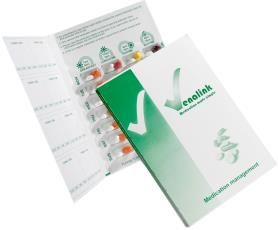
know its lunchtime in order to take your lunchtime doses, so MCAs are unlikely to be beneficial in patients with
more severe cognitive impairment unless they have support from carers)
Patients with learning difficulties
Patients with lower literacy levels who have difficulty reading or following instructions on original packs
Prescription Quantities
The duration of a prescription e.g. 7 days or 28 days is a clinical decision for the prescriber. There are sometimes entirely
appropriate clinical reasons for issuing 7 day prescriptions, including:
concerns about overdose
risk of addiction
patients whose medicines are frequently changing
medicines which are only pharmaceutically stable in the compliance aid for 7 days
If there is no clinical reason for a patient to have 7 day prescriptions then the prescription duration should be 28 days.
7 day prescriptions should only be issued where there is a clinical need for weekly dispensing; this should be
determined by the prescriber.
Prescription duration is a clinical decision for the prescriber, in the same way that the decision around dispensing in a
compliance aid is a decision for the pharmacist. The pharmacy is contractually obliged under the Equality Act 2010 to
make reasonable adjustments to dispensing to support patients with disabilities.
Note: if you issue the next batch of prescriptions before all of the previous ones have been drawn down from the spine
and dispensed, it will cancel any prescriptions that have not yet been drawn down. To avoid this happening, don’t issue
the next batch of prescriptions until all of the previous prescriptions have been drawn down. You can check when the next
prescription is due to be issued by viewing the patient’s ‘Drug History’ page and looking when the next prescription is due
for the patient.
Carers
Even though some care provider organisations insist that medicines should be dispensed in MCAs in order for staff to
provide medicines support, neither the Medicines Act 1968 nor CQC stipulate this as a pre-requisite.
If (following assessment by the pharmacist) patients are not eligible under the Equality Act, the pharmacist may offer to
dispense the medicine in an MCA and charge a fee (which may be paid by the patient or a care agency) or patients may
choose to purchase their own MCA to fill themselves.
Carers may be trained to different levels and provide different levels of support with medicines:
Level 1: The person takes responsibility for their own medication. At this level, the person takes the initiative for
taking their medicines but can be prompted occasionally or assisted physically. If the need for prompting is a regular
occurrence then it is considered a level 2 support.
Level 2: It is considered that the person cannot take responsibility for their medicines and that care staff will need to
do this. At this level, the care staff take the initiative and it may include assisting to physically administer the
medication.
Level 3: Exceptional circumstances where medication needs to be given by specialised techniques e.g. administering
insulin, oxygen. Care workers require extra training to carry out this level of support
NICE has published guidance - Managing medicines for adults receiving social care in the community
https://www.nice.org.uk/guidance/ng67
There is no obligation for the pharmacy to amend what has already been dispensed, mid-way through a course of
treatment. Therefore, if there are any changes to a patient’s prescription a new prescription for all the items which go
into the compliance aid will likely be needed.
Developed by Bristol, North Somerset and South Gloucestershire CCG Medicines Management Team in collaboration with Avon Local Pharmaceutical Committee,
North Bristol NHS Trust, University Hospitals Bristol NHS Foundation Trust and Weston Area Health NHS Trust.
Approved by BNSSG DTC July 2018. For review July 2020. 2Dispensing a separate container of a ‘new’ medicine to be used in conjunction with the previously supplied compliance
aid could cause confusion and could result in the medicines not being taken appropriately. The individual patient
circumstances should therefore be considered carefully.
For further information please see http://psnc.org.uk/contract-it/pharmacy-regulation/dda/the-equality-act-2010-28-
day-prescribing/
You may identify a patient who is struggling with their medicines by noticing:
They are over or under-ordering their medicines
They seem to be ordering ‘at random’ with no pattern to when they request their medicines
You get feedback from their pharmacy (this could be verbal or you might receive a form from the pharmacy
following a medication review that they have carried out)
Pharmacies might tell you when a patient has not collected their medicines or returned lots for disposal
(building a good working relationship with your local pharmacies will be helpful for this and you should
encourage your pharmacies to give you feedback about patients that are not compliant with their medicines)
Or the patient, their friends, family or carers may contact you and tell you
If you suspect a patient is not compliant with their medicines, you should contact the patient at home to find out how
much medicine they have in their cupboards before issuing another prescription.
Your practice could decide that you should process the prescription as a ‘Request Issue’ and use the message to let the
GP know the patient’s stock levels and that they are non-compliant with their medicines. Your practice could also decide
that you should book the patient in for a review appointment with the GP or practice pharmacist and get the patient to
bring all their medicines in with them so that they can be thoroughly reviewed. If medicines can be simplified at an early
stage it may mean that the patient doesn’t need to be referred to the community pharmacist for an assessment and
may not need an MCA at all. You should decide in your practice what the approach to this will be.
Pivotell® Automated Pill Dispensers are sometimes requested by patients or carers. These devices have a
number of features to support patients with their medicines, such as timers, alarms and a self-locking shutter
over the lid opening to prevent access to the medication tray except at the time that medication is
programmed to be available. These devices cannot be prescribed on the NHS; either pharmacies could provide
them if they assess a patient as described above and deem this to be the ‘reasonable adjustment’ needed, or
patients may choose to buy their own. Not all pharmacies are able to fill these devices. Prescriptions should be
issued as for any other compliance aid.
Developed by Bristol, North Somerset and South Gloucestershire CCG Medicines Management Team in collaboration with Avon Local Pharmaceutical Committee,
North Bristol NHS Trust, University Hospitals Bristol NHS Foundation Trust and Weston Area Health NHS Trust.
Approved by BNSSG DTC July 2018. For review July 2020. 3Managing Prescription Request for Compliance Aids – A Summary
Patient presents having difficulty managing their medicines:
Patient presents to:
Community District Nurse, GP or clinical Secondary Care
Pharmacist Health Worker, staff Review medication to optimise
Assess and Carer, Relative Review prescription and rationalise
decide on Refer to medication to medicines
appropriate community optimise Staff member will assess the
compliance pharmacist prescription patient to determine
aid for and appropriate compliance aid
Inform GP assessment rationalise The patient will be discharged
practice medicines with 7-14 days’ supply of
(Some Refer to the medicines on discharge
community community depending on contractual
services pharmacist arrangements with the hospital
providers for an The community pharmacist can
may have assessment accept the hospital’s assessment
pharmacists but may choose to reassess once
that can the patient is settled back at
support in home
assessing The GP will decide on
housebound prescription length for ongoing
patients) supplies i.e. 7 or 28 days
It is the dispensing pharmacist’s responsibility to determine an appropriate aid for the
patient. The dispensing pharmacy may choose to accept an assessment done by
secondary care or community services pharmacists e.g. for housebound patients.
It is the GPs responsibility to prescribe for the patient in an appropriate quantity which is
independent of the aid provided and should be based on the individual patient
requirements.
If a community pharmacist accepts a hospital assessment for an MCA, it is suggested that
they reassess the patient 6 months after discharge as their status may have changed and
an MCA may no longer be necessary
Developed by Bristol, North Somerset and South Gloucestershire CCG Medicines Management Team in collaboration with Avon Local Pharmaceutical Committee,
North Bristol NHS Trust, University Hospitals Bristol NHS Foundation Trust and Weston Area Health NHS Trust.
Approved by BNSSG DTC July 2018. For review July 2020. 4Decision Aid to decide appropriate prescription length:
Review medication regimen and simplify if
appropriate
Is the patient at risk of overdose?
Yes No
GP to determine safe quantity to supply on Are the patient’s medicines likely to change
an individual patient basis4 in the next 4 weeks?
No Yes
7 days’ supply until medication is stable 2,4
3
Is the patient confused or forgetful?
Yes No
Does the patient live alone? 28 days’ supply 4
Yes No
Does the patient have a carer or Is the patient in Residential Care?
relative who can store the boxes
safely until they are needed?
No
Yes
No Yes
28 days’ supply 4
7 days’ supply 4 28 days’ supply 4
Key:
1. This flowchart is not exhaustive and is not intended to replace clinical and personal knowledge of the patient’s circumstances.
2. If the medication is likely to change within the next 4 weeks, supply in 7 day intervals and reassess the patient every 4 weeks. Once the
medication is stable, start the algorithm again. This will reduce possible wastage of medication.
3. Unless they have some help at home, a patient who is forgetful or confused or has certain other clinical conditions may be unable to
manage having 4 boxes (of a week each) delivered at one time.
Developed by Bristol, North Somerset and South Gloucestershire CCG Medicines Management Team in collaboration with Avon Local Pharmaceutical Committee,
North Bristol NHS Trust, University Hospitals Bristol NHS Foundation Trust and Weston Area Health NHS Trust.
Approved by BNSSG DTC July 2018. For review July 2020. 54. The length of supply prescribed will determine how much medicine is delivered and how often. 7 days should result in a weekly delivery.
28 days will likely result in a delivery every 4 weeks (either 4 boxes of 7 days or 1 box of 28 days)
References
East & South East England Specialist Pharmacy Services. Supporting older people in the community to optimise their
medicines including the use of multi compartment compliance aids (MCAs)
A resource to help health and social care organisations to work together to optimise patient care
https://www.sps.nhs.uk/wp-content/uploads/2013/06/MCA20toolkit.pdf
Royal Pharmaceutical Society, Improving patient outcomes The better use of multi-compartment compliance aids. 2013.
http://www.rpharms.com/support-pdfs/rps-mca-july-2013.pdf
RPSGB. The handling of medicines in Social Care.
https://www.rpharms.com/Portals/0/RPS%20document%20library/Open%20access/Support/toolkit/handling-
medicines-socialcare-guidance.pdf?ver=2016-11-17-142751-643
NICE CG76. Medicines adherence: involving patients in decisions about prescribed medicines and supporting adherence.
DoH 2009 https://www.nice.org.uk/guidance/Cg76
NICE CG 67 Managing medicines for adults receiving social care in the community
https://www.nice.org.uk/guidance/ng67
Evidence and tips of the use of medication compliance aids. BMJ 2018;362:k2801 doi: 10.1136/bmj.k2801
Developed by Bristol, North Somerset and South Gloucestershire CCG Medicines Management Team in collaboration with Avon Local Pharmaceutical Committee,
North Bristol NHS Trust, University Hospitals Bristol NHS Foundation Trust and Weston Area Health NHS Trust.
Approved by BNSSG DTC July 2018. For review July 2020. 6You can also read


