Mazda Motor Corporation

      Application for Certification

           Common Section

           2022 Model Year

Light-Duty Vehicles & Light-Duty Trucks
←
→
Page content transcription
If your browser does not render page correctly, please read the page content below

Mazda Motor Corporation
Application for Certification
Common Section
2022 Model Year
Light-Duty Vehicles & Light-Duty Trucks
Mazda Motor Corporation
                              2022 Model Year Application for Certification
                                                INDEX
                                                                                             Common        Individual test
              PART I                                                                          Section   group's application
1             Correspondence and Communications
     1-1                 Liaison Information                                                    x
     1-2                 Certificate Information                                                x
2             Durability Group Description
     2-1                 Description of Durability Group determined per §86.1820-01             x
     2-2                 Format of Durability Group Name                                        x
     2-3                 List of Equivalency Factors                                            x
     2-4                 Durability Vehicle Number and the Configuration Number                 x
3             Evaporative/Refueling Family Description
     3-1                 Description of Evaporative/Refueling Family per §86.1821-01            x
     3-2                 Format of Evaporative/Refueling Family Name                            x
     3-3                 Durability Vehicle Number and the Configuration Number                 x
4             Durability Test Procedure Description
     4-1                 Description of Durability Test Procedure for Exhaust Emission          x
     4-2                 Description of Durability Test Procudure for Evaporative Emission      x
     4-3                 Description of Durability Test Procedure for Refueling Emission        x
     4-4                 List of DF                                                                             x
5             Test Group Description
     5-1                 Description of Test Group per §86.1827-01                                              x
     5-2                 Format of Test Group Name                                              x
6             Test Vehicle Description                                                                          x
7             Test Results                                                                                      x
8             Statements of Compliance                                                          x
9             OBD System Description and Approval Letter                                        x
10            Description of Alternate-Fueled Vehicles                                          x
11            AECD Descriptions                                                                 x
12            Description of Vehicles Covered by Certificate and Test Parameters
     12-1                Vehicle Parameters                                                                     x
     12-2                Test Parameters
     12-2-1                  Test Procedure                                                     x
     12-2-2                  Shift Schedules                                                    x
     12-2-3                  Dyno Loading Information                                           x
     12-2-4                  Evaporative Testing Parameters                                     x
13            Projected Sales
     13-1                Projected Sales                                                        x
     13-2                Final Sales (Final)                                                    x
14            Request for Certification                                                                         x
15            Other Information
     15-1                Engine Oil Information                                                 x
     15-2                Fee Filing Form                                                        x
     15-3                Advanced Technology Systems for CO2 and Fuel Economy Performance       x
     15-4                Battery Performance Determination for PHEVs and EVs                    x
     15-5                Fuel Fired Heater                                                      x
16            Confidential Information                                                          x
17            California ARB Information
     17-1                California Fill Pipe Specifications                                                    x
     17-2                NMOG/NMHC and HCHO/NMHC ratio                                                          x
     17-3                California Warranty Statement                                          x
     17-4                Certification Summary Sheet                                                            x
     17-5                Fuel Evaporative Emission Results                                                      x
     17-6                Vehicle Emission Control Information Label                             x
     17-7                Fuel Economy Label / Environmental Performance Label for BEV                           x
18            Information on Service of Process                                                 x
19            Revisions                                                                         x               x

              PART II
1             Part Numbers                                                                      x
2             Calibration Information                                                           x
3             Description of Vehicles Covered by Certificate and Test Parameters                x
4             Final Sales (Final)                                                               x
5             Service Manuals and Service Bulletins                                             x
1-COM-1

1.       CORRESPONDENCE AND COMMUNICATIONS

1-1.     Liaison Information

U. S. A. Representative Offices:

       EPA Liaisons: David Robertson, Senior Manager
                     Mazda North American Operations
                     1025 Connecticut Ave., Suite 910
                     Washington, DC 20036-5418, U.S.A.
                     Telephone: 202-715-0581, Fax: 202-467-5089
                     E-mail: drobertson@mazdausa.com
                     Industry: Light-Duty Vehicle & Truck
                     Compliance Program: All

                       Hirotsugu Honda, Senior Engineer
                       Mazda North American Operations
                       46976 Magellan Drive
                       Wixom, Michigan 48393, U.S.A.
                       Telephone: 248-295-7864, Fax: 248-295-7857
                       E-mail: hhonda1@mazdausa.com
                       Industry: Light-Duty Vehicle & Truck
                       Compliance Program: All

       ARB Liaison:    Yasuhisa Kadono, Senior Engineer
                       Mazda North American Operations
                       Irvine Office
                       1421 Reynolds Avenue
                       Irvine, California 92614, U. S. A.
                       Telephone: 949-727-6192, Fax: 949-852-7299
                       E-mail: ykadono@mazdausa.com
                       Industry: Light-Duty Vehicle & Truck
                       Compliance Program: All

Home Office in Japan: Mitsuhide Kikkawa, General Manager
                      Environmental & Safety Engineering Department
                      Mazda Motor Corporation
                      3-1 Shinchi, Fuchu-cho, Aki-gun
                      Hiroshima 730-8670, Japan
                      Telephone: 81-82-565-1567, Fax: 81-82-287-5147
                      E-mail: kikkawa.m@mazda.co.jp

1-2.     Certificate Information

The corporate name and address that should appear on the certificate of conformity:

                       Mazda Motor Corporation
                       3-1 Shinchi, Fuchu-cho, Aki-gun
                       Hiroshima 730-8670, Japan

The person and address to whom the certificate of conformity should be mailed:

                       David Robertson, Manager
                       Mazda North American Operations
                       1025 Connecticut Ave., Suite 910
                       Washington, DC 20036-5418, U.S.A.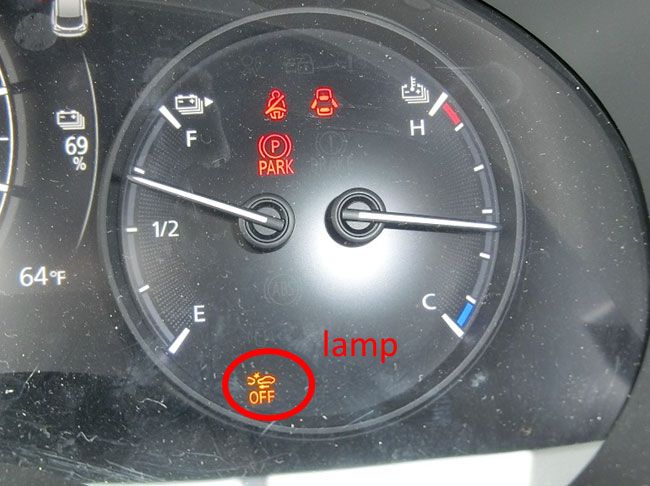
2-COM-1

2.       DURABILITY GROUP DESCRIPTION

2-1.     Description of Durability Group determined per §86.1820-01

 Durability Group        Combustion      Engine Type    Fuel Used      Basic Fuel     Catalyst           Catalyst Code   Grouping     Car Line
 Name                    Cycle                                         Metering       Construction                       Statistic
                                                                       System                                            (g/liter)
NTKXEEVNNKA9             Dedicated       Electric       Electric       N/A            N/A            N/A                 N/A         MX-30
                         Electric

Battery Description for NTKXEEVNNKA9
        Battery Capacity                     : 100 Ah
        Battery Chemistry                    : Li-ion
        Battery Manufacturer                 : Prime Planet Energy & Solutions
        Battery Duty Cycle Usage             : 8 years / 100,000 miles
        Battery Construction                 : 16 Modules (2 x 96 = 192 cells in total)
        Battery Self-Discharge Information   : Less than 2.24% per month @ 25degC, SOC30%
        Definition of end-of-life            : DTC indicates battery capacity/resistance deterioration
        Thermal Management System            : Refrigerant cooling
        Battery Disposal Plan                : Battery is recycled using Mazda contractor

 Durability Group        Combustion      Engine Type    Fuel Used      Basic Fuel     Catalyst           Catalyst Code   Grouping     Car Line
 Name                    Cycle                                         Metering       Construction                       Statistic
                                                                       System                         *1 *2              (g/liter)
 NTKXGPGNNWB7            Otto cycle       Otto Spark       Gasoline    Direct fuel    Monolith       (W) PEJ5            0.6         MX-5 2.0L
                         Four Stroke      Water cooled                 Injection                     (U) PEJ6
                         Piston
  NTKXGPGNNCA7           Otto cycle       Otto Spark       Gasoline     Direct fuel   Monolith        (W) PEDL, PEDR     3.4         MAZDA3 2WD
                         Four Stroke      Water cooled                  Injection                     (U) PEDL, PEDR                 2.0L MT
                         Piston
                         Otto cycle       Otto Spark       Gasoline     Direct fuel   Monolith        (W) PEDL, PEDR     3.6         MAZDA3 2WD
                         Four Stroke      Water cooled                  Injection                     (U) PEDM, PEDS                 2.0L AT
                         Piston
                         Otto cycle       Otto Spark       Gasoline     Direct fuel   Monolith        (W) PEDR           3.6         CX-30 4WD
                         Four Stroke      Water cooled                  Injection                     (U) PEHW                       2.0L AT
                         Piston
*1: For precious metal composition of catalyst, please refer to the Common Section “16-1. Catalyst Information.”
*2: “(W)” means “Warm-up Catalyst”. “(U)” means “Underfloor Catalyst”.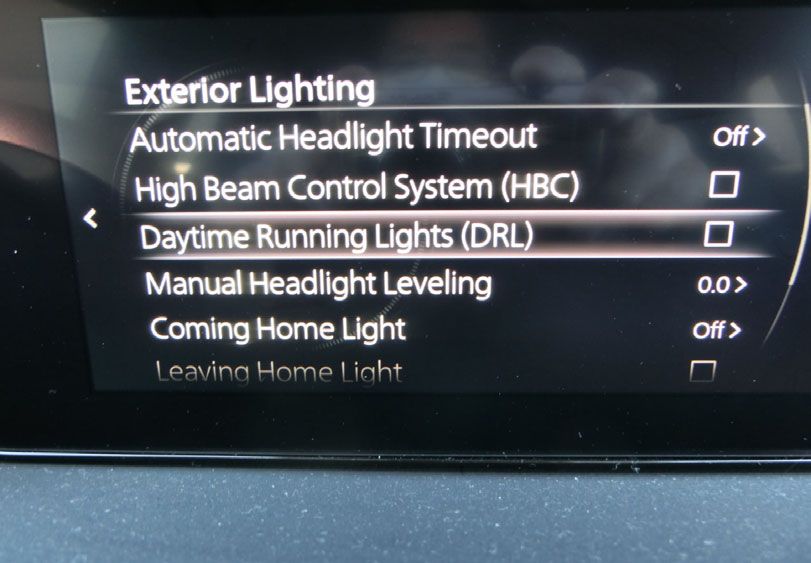
2-COM-2

2-2.   Format of Durability Group Name

【Durability Group】 VPCD-99-06 /CD-15-19 /CD-17-10 Jun. 26, 2017
  N T K X G P G N N V A 8
                                                                                       Enter model code
                                                Character 6 : Engine type
                                                P: Piston   R: Rotary E: Electric
                                                Character 7 : Primary fuel used
                                                G: Gasoline D: Diesel
                                                V: Electric (Power Grid Electricity)
                                                Character 8 : Second fuel used
                                                N: Not Applicable
                                                Character 9 : Third fuel used
                                                N: Not Applicable

                                                  Combustion cycle
                                                  G: Otto Cycle - four stroke
                                  MFR ID Code
                                                  D: Diesel Cycle -four stroke
                                  TKX: Mazda
                                                  E: Dedicated Electric
                     Model Year
                     N: 2022MY
                     P: 2023MY
                     R: 2024MY
                     ・・・
2-COM-3

2-3. List of Equivalency Factors
anufacturer Aging = SRC aging time x Equivalency Factor
*2: 150K
DURABILITY GROUP CERTIFIED WITH MAZDA THERMAL-CHEMICAL BENCH AGING CYCLE
                                                                                                                  Equivalency Factor *1
      Durability Group            Test Group         Engine              Program      Standard      Useful Life
                                                                                                                       ABC/SRC
                                                                                      T3B125          120K/
    NTKXGPGNNWB7               NTKXV02.0FFB           2.0L               MX-5                                             1.0
                                                                                   LEVIII-ULEV125    150K*2
                                                                                       T3B30          120K/
                                                      2.0L               MAZDA3
                                                                                   LEVIII-SULEV30    150K*2
    NTKXGPGNNCA7               NTKXV02.0CDB                                                                               1.9
                                                                                       T3B30          120K/
                                                      2.0L               CX-30
                                                                                   LEVIII-SULEV30    150K*2

*1: Manufacturer Aging = SRC aging time x Equivalency Factor
*2: 150K DFs are used to comply with 150k and 120k emission standards.
2-COM-4

2-4.     Durability Vehicle Number and the Configuration Number

                                                        Configuration
         Durability Group   Durability Vehicle Number                               Durability Data           Applicable Models
                                                          Number

       NTKXEEVNNKA9                    N/A                  N/A         N/A                           MX-30

                                                                        2018MY CX-5 2.0L M6 2WD
       NTKXGPGNNWB7              8DBPEU31-018                0                                        MX-5 2.0L
                                                                        w/o cylinder deactivation

                                                                                                      MAZDA3 2.0L
                                                                        2018MY CX-5 2.5L S6 4WD
       NTKXGPGNNCA7             8DBPYUDG1-001                0                                        CX-30 2.0L
                                                                        w/ cylinder deactivation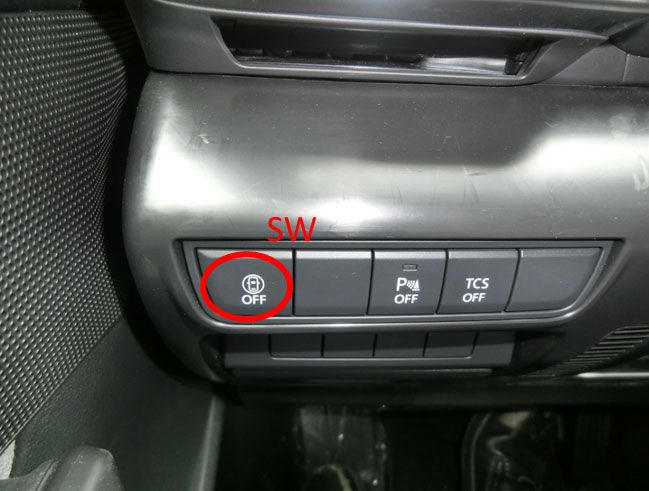
3-COM-1

3.         EVAPORATIVE/REFUELING FAMILY DESCRIPTION

3-1.     Description of Evaporative/Refueling Family per §86.1821-01
 Car Line                                                            Evaporative/Refueling Family Name
 MX-30                                                               N/A
 MX-5 2.0L                                                           NTKXR0095GCP
 MAZDA3 2.0L
                                                                     NTKXR0098GDP
 CX-30 2.0L

3-2.       Format of Evaporative/Refueling Family Name

【Evaporative/Refueling Family】 CISD 07-03 /CD-17-10 Jun. 26, 2017

       N    T K X              R    0 1 1 5                  P P A
                                                                           Character 10 : Fuel system
                                                                           G: Gasoline group1
                                                                           A: Gasoline group2
                      MFR ID Code                                          B: Gasoline group3
                                                                           ・・・
                      TKX: Mazda          Canister working capacity (g)
                                          Total grams in all canisters     Character 11: Fuel tank material
                                                                           A: Metal Tank, No AIS* Carbon Element, Canister
                                                                           B: Plastic Tank, No AIS* Carbon Element, Canister
                                                                           C: Metal Tank, AIS* Carbon Element, Canister
                Model Year               Family Type                       D: Plastic Tank, AIS* Carbon Element, Canister
                N: 2022MY                R: Evaporative/Refueling family   *AIS: Air Intake/Induction System
                P: 2023MY
                                                                           Character 12: Evaporative Emissions Standard
                R: 2024MY                                                  K: Tier2/LEV2 Car
                ・・・                                                        L: Tier2/LEV2 LDT
3-COM-2

3-3.     Durability Vehicle Number and the Configuration Number

                            Configuration
Durability Vehicle Number                   Durability Data                               Applicable Models
                            Number
N/A                               N/A       N/A                                           MX-30
9DBPYUDS1-001                    0, 1       2019MY MAZDA3 2.5L w/ cylinder deactivation
                                                                                          MX-5 2.0L
9DBPYUDS1-002                    0, 1       S6 2WD
4-COM-1

4.       DURABILITY TEST PROCEDURE DESCRIPTION

4-1.     Description of Durability Test Procedure for Exhaust Emission

Please refer to Common Section 16.
Not applicable for dedicated electric models.

4-2.     Description of Durability Test Procedure for Evaporative Emission

Please refer to Common Section 16.
Not applicable for dedicated electric models.

4-3.     Description of Durability Test Procedure for Refueling Emission

Please refer to Common Section 16.
Not applicable for dedicated electric models.
5-COM-1

5.         TEST GROUP DESCRIPTION

5-2.       Format of Test Group Name

【Test Group】 CISD 07-03 /CD-15-19 /CD-17-10 Jun. 26, 2017

       N      T K X                V       0 2     .      5         5 N M
                                             Displacement              Character 10 : EPA Emission Standard
                                             L: (e.g. 02.0, 03.7)       5: Tier2 Bin5
                                                                        A: Tier3 Bin0
                                                                        B: Tier3 Bin20
                                                                        C: Tier3 Bin30
                                                                        D: Tier3 Bin50
                                                                        E: Tier3 Bin70
                                             Family Type                F: Tier3 Bin125
                                             V: LDV test group          G: Tier3 Bin160
                             MFR ID Code     T: LDT test group          N: N/A
                             TKX: Mazda
                                                                       Character 11 : CARB Emission Standard
                                                                        A: LEV2
                                                                        B: ULEV2
                      Model Year                                        C: LEVⅡ SULEV
                      N: 2022MY                                         D: LEVⅢ SULEV30
                                                                        E: LEVⅢ LEV160
                      P: 2023MY
                                                                        F: LEVⅢ ULEV125
                      R: 2024MY                                         G: LEVIII ULEV70
                      ・・・                                               Z: ZEV
                                                                        N: N/A

                                                                       Character 12: Sales Area
                                                                        A - L: 50 states
                                                                        M - Z: Federal
                                                                        1 - 9: California
8-COM-1
8. STATEMENTS OF COMPLIANCE
The following statements are applicable to 2022MY all the Mazda models.
1. Mazda Motor Corporation states that any element of design, system or emission control device installed
on or incorporated in MAZDA’s new motor vehicles or new motor vehicle engines, for the purpose of
complying with standards prescribed under Section 202 of the Clean Air Act, will not, to the best of
MAZDA’s information and belief, cause the emission into the ambient air of pollutants in the operation of
its motor vehicles or motor vehicle engines which cause or contribute to an unreasonable risk to public
health or welfare except as specifically permitted by the standards prescribed under Section 202 of the
Clean Air Act.
We further state that any element of design, system or emission control device installed on or
incorporated in MAZDA’s new motor vehicles or new motor vehicle engines, for the purpose of complying
with standards, will not, to the best of MAZDA’s information and belief, cause or contribute to an
unreasonable risk to public safety.
Such system will not, in their operation, function or malfunction, result in any reasonably foreseeable
unsafe condition endangering the motor vehicle or its occupants, or persons or property in close proximity
to the vehicle, except that any reasonably foreseeable unsafe condition that may occur would result from:
Conditions of abuse, misuse, tampering or malfunction which would sufficiently affect vehicle driveability,
or otherwise put the driver on notice of the condition, so that a driver would be likely to have service
performed according to the Owner’s Manual.
2. We state that the test vehicles with respect to which data are submitted to demonstrate compliance with
40 CFR 86.1811-17, 1812-01, or 86.1813-01 are in all material respects as described in the
manufacturer’s application for certification, have been tested in accordance with the applicable test
procedure utilizing the fuels and equipment described in the application for certifications, and that on the
basis of such tests the vehicles conform to the requirement of the regulation in 40 CFR Part 86.
3. California OBD II
3.1. We state all light-duty vehicles and light-duty trucks comply with the requirements of section 1968-2,
with the exception of issues indicated under section 1968-2(i)(2.14) if applicable, and will comply with the
required deadlines for submission of results/data for production vehicle evaluation testing under section
1968-2(j).
3.2. We state, pursuant to 40 CFR 86.1806-17(a), all light-duty vehicles and light-duty trucks comply with
California OBD II requirements (Title 13 California Code of Regulations Section 1968-2.)
4. Emissions Testing Waiver Statements
All emission testing waiver statements are based on good engineering judgment and development testing.
The emission standards for a compliance statement are listed in the tables of the 8-COM-6.
4.1. HCHO Test
We state, pursuant to 40 CFR 86.1829-15(d)(4), that our gasoline-fueled certification vehicles for
formaldehyde emissions comply with the applicable standards based on our engineering judgment.
4.2. Two-Day Evaporative Test
Pursuant to 40 CFR 86.1829-15(e)(6), based on the manufacturer’s engineering evaluation of
appropriate evaporative emission testing, all Mazda vehicles will comply with the applicable two-day
evaporative emission standard.8-COM-2
8. STATEMENTS OF COMPLIANCE (contd.)
4.3. Spit Back Test
Pursuant to 40 CFR 86.1829-15(e)(5), based on engineering judgment, the refueling system meets the
full intent of the Federal regulations contained in 40 CFR 86.1246-97 Fuel Dispensing spit back
procedure.
4.4. High Altitude Test
We state, pursuant to 40 CFR 86.1829-15(c), and California 2015 and subsequent model criteria pollutant
exhaust emission standards and test procedures and 2017 and subsequent model greenhouse gas
exhaust emission standards and test procedures for passenger cars, light-duty trucks, and medium-duty
vehicles, Part I E.1 and G.3, based on our engineering evaluation of appropriate high-altitude emission
testing, that all light-duty vehicles and light-duty truck comply with the emission standards at high altitude.
4.5. OBD 0.020 Inches Leak Detection Test
For test groups not selected for testing pursuant to 40 CFR 86.1806-17 (b)(1)(i), we state, pursuant to 40
CFR 86.1806-17 (b)(1)(vi), the OBD system of our gasoline-fueled vehicles is capable of detecting a
0.020 inch leak in the evaporative system, illuminating the MIL, and storing the appropriate confirmed
DTC based on our good engineering judgment.
4.6. Bench Leak Rate Test
We state, pursuant to “SPECIFICATIONS FOR FILL PIPES AND OPENINGS OF 2015 AND
SUBSEQUENT MODEL MOTOR VEHICLE FUEL TANKS” adopted on March 22, 2012 and amended on
May 31, 2019, that our gasoline-fueled vehicles comply with the standard based on our engineering
judgment.8-COM-3
8. STATEMENTS OF COMPLIANCE (contd.)
5. 91 RON Fuel Test
We state, pursuant to VPCD-97-01, that the knock sensor is not a defeat device, as “justified” by one or
more of the following:
a. The knock sensor does not activate in any way during the FTP (or the SFTP as applicable) and the
HWFET, and the calibration is designed to operate on 91 RON gasoline without the need for spark
adjustment.
b. The city and highway fuel economy test result differences between comparing 91 RON operation and
96 RON operation is within 3%, and there are no emissions increases (beyond normal test variability)
using 91 RON fuel when tested on the FTP (or SFTP as applicable).
6. Altitude Performance Adjustments
We state that all our motor vehicles within the test groups are exempted from this requirement of 40 CFR
Part 86 Subpart Q. These vehicles are equipped with systems that automatically compensate the engine
fuel metering system for air density change.
a
7. Production Vehicle
The production vehicle which is subject to registration or sale in the state of California will be, in all
material respects, the same in the design as the vehicles which are certified by the California Air
Resources Board, and will meet all the applicable vehicle emission standards which are set forth by the
California Air Resources Board.
8. Label Durability
The label material and adhesives of Mazda Company Vehicle Emission Control Information (VECI) label
have been designed to withstand typical environmental conditions in the area where the label is attached
for the vehicle’s total expected life.
9. Driveability
The vehicles for which certification is requested have driveability and performance characteristics which
satisfy Mazda’s customary driveability and performance requirements for vehicles sold in the United
States.
10. Application Showing Compliance with Fill Pipes Requirements of ARB
The fill pipes installed on all Mazda production models comply with all the requirements specified by the
Air Resources Board’s “SPECIFICATIONS FOR FILL PIPES AND OPENINGS OF 2015 AND
SUBSEQUENT MODEL MOTOR VEHICLE FUEL TANKS” adopted on March 22, 2012 and amended on
May 31, 2019.8-COM-4
8. STATEMENTS OF COMPLIANCE (contd.)
11. 20 °F – 86 °F Emission
We state, pursuant to 40 CFR 86.1809-12 (e), for all Mazda models, Mazda Motor Corporation states that
a discontinuity in emissions of non-methane organic gases, carbon monoxide, carbon dioxide, oxides of
nitrogen, nitrous oxide, methane, and formaldehyde measured on the Federal Test Procedure (40 CFR
Part 86) and on the Highway Fuel Economy Test Procedure (subpart B of 40 CFR part 600) does not
occur in the temperature range of 20 to 86 degrees F.
12. Use of California test fuel and evaporative test procedures in lieu of Federal test fuel and evaporative test
procedures
We state, pursuant to 40 SFR 86.1829-15 (e)(7) and CCD-02-20, that California test data is used to
demonstrate compliance with applicable Federal evaporative emission standards since California
standards and test procedures are more stringent than that for Federal from the viewpoint of the
standards and the useful life.
13. Altitude requirement
We state, pursuant to 40 CFR 86.1811-17(g)(2)(iii) and 86.1818-12(a)(2), that common calibration
approaches are utilized at high altitude except the deviations from low altitude emission control practices
that are included in the AECD descriptions, Section 16.4.
14. ORVR (Onboard Refueling Vapor Recovery) Safety Application Requirements
This section comprises the information to satisfy the requirements in EPA’s Dear Manufacturer Letter
#CCD-05-03 dated February 15, 2005, “Update for ORVR Safety Applications” and #CISD-06-06 dated
on April 6, 2006, “Update for ORVR Safety Applications”. Mazda is using the same fundamental ORVR
systems that have been employed on Mazda products in previous years for the 2022MY products.
Following is a list of 2022MY products with their Evaporative/ORVR families and their most recent
previously certified Evaporative/ORVR families. For detail, please refer to our letter Ref. #LCE-06/73
dated on April 28, 2006.
There have been no in-use problems for Mazda products except that carry-over of the ORVR systems
that have experienced in-use problems have been notified to EPA. (Ref. # LCE-21/020 dated on March 2,
2021.)
Current Evaporative/ ORVR Most Recent Previously Certified
Model
Family Evaporative/ORVR Family
MAZDA3 and CX-30 2.0L and 2.5L w/o
NTKXR0098GDP MTKXR0098GDP
cylinder deactivation
MAZDA3 2.5L w/ turbocharger
NTKXR0098ADP MTKXR0098ADP
CX-30 2.5L w/ turbocharger
CX-5 2.5L w/ turbocharger NTKXR0117GAQ MTKXR0120AAL
CX-9 2.5L w/ turbocharger NTKXR0153GAQ MTKXR0135GAK
CX-5 2.5L w/ and w/o cylinder deactivation NTKXR0117GCQ MTKXR0117GCQ
MX-5 2.0L NTKXR0095GCP MTKXR0095GCP8-COM-5
8. STATEMENTS OF COMPLIANCE (contd.)
15. Leak-free of exhaust system
We state, pursuant to 40 CFR 86.1844-01(d)(16), that all light-duty vehicles and light-duty trucks comply
based on engineering analysis.
16. Lean best torque
We state, pursuant to 40 CFR 86.1811-17 (d)(1), that we do not exceed the LBT+4% for any given speed
and load point over the US06 cycle. The additional enrichment is needed to protect the catalyst
performance and emissions control hardware as stated in the AECD descriptions in Common Section 16.
Lean Best Torque provision is not applied to diesel vehicles.
17. CH4 and N2O compliance for Greenhouse Gas Emission Standards
We state, pursuant to 40 CFR 86.1818-12(f)(1) and/or (f)(3), Mazda will not include the N2O and CH4
emissions in our fleet average calculation. The applied N2O and CH4 standards of each test group per
§86.1818-12(f)(1) and/or (f)(3) are listed in the tables of the 8-COM-6.
18. A/C-on specific calibrations
We state, pursuant to 40 CFR 86.1811-17(d)(3)(i), that we do not incorporate A/C-on specific calibrations
which differ from A/C-off calibrations for given engine operating conditions.
19. “Lean-on-cruise” calibration strategies
We state, pursuant to 40 CFR 86.1811-17(d)(4)(ii),, that “lean-on-cruise” strategies are not incorporated
into the vehicle design. This statement is based on good engineering judgment and development testing.
Lean-on-cruise provision is not applied to diesel vehicles.
20. Adequacy of the OBD system for the performance warranty test
We state that emission control diagnostic systems are adequate for the performance warranty test
described in 40 CFR Part85, subpart W.
21. Tier3 Leak Standard
We state, pursuant to 40 CFR 86.1829-15 (e)(4), our vehicles comply with the leak standard in 40 CFR
86.1813-17 (a)(4) based on engineering analysis.
22. Refueling Emission Standard for Diesel-Fueled Vehicles
We state, pursuant to 40 CFR 86.1829-15 (e)(1), our diesel-fueled vehicles comply with the refueling emission standard based on engineering analysis.
22. Battery Electric Vehicles
We state, pursuant to following regulations, battery electric vehicle is exempted from exhaust durability
requirements.
- 40 CFR 86.1823-08 Durability demonstration procedures for exhaust emissions
- Section D of California Exhaust Emission Standards and Test Procedures for 2018 and Subsequent
Model Zero-Emission Vehicles, and Hybrid Electric Vehicles, in the Passenger Car, Light-Duty Truck
and Medium-Duty Vehicle Classes.
We state, pursuant to following regulations, battery electric vehicle is exempted from exhaust emission
requirements.
- 40 CFR 86.1811-04 (n) Emission standards for light-duty vehicles, light-duty trucks and
medium-duty passenger vehicles.
- Section D of California Exhaust Emission Standards and Test Procesures for 2018 and Subsequent
Model Zero-Emission Vehicles, and Hybrid Electric Vehicles, in the Passenger Car, Light-Duty Truck
and Medium-Duty Vehicle Classes.8-COM-6-Table1
8.STATEMENTS OF COMPLIANCE (contd.)
Waived EM Standards @ Certification Low Altitude
T/G: NTKXV02.0FFB
Tier3 Bin125 LDV Federal Tier3 Evap LDV
SFTP
Procedure FTP HWY Cold 50F Evap Fill Pipe
CREE US06 SC03 SFTP Composite
(Comb)
(g/mile) Mini Rig Bench Leak
NMOG+NOx CO HCHO PM CH4 N2O NMOG+NOx NMHC+NOx CO PM NMHC+NOx CO NMOG+NOx CO PM CO NMHC NMOG+Nox CO HCHO 2Day 3Day R/L ORVR Spitback
EM (BETP, Rate
(g/mile) (g/mile) (g/mile) (g/mile) (g/mile) (g/mile) (g/mile) (g/mile) (g/mile) (g/mile) (g/mile) (g/mile) (g/mile) (g/mile) (g/mile) (g/mile) (g/mile) (g/mile) (g/mile) (g/mile) (g/test) (g/test) (g/mile) (g/gallon) (g/test)
g/test) (L/min)
4K --- --- --- --- --- --- --- --- --- --- --- --- --- --- --- --- --- --- --- --- --- --- --- --- --- --- --- ---
10.0
50K --- --- --- --- --- --- --- --- --- --- --- --- --- --- --- --- --- --- --- --- --- --- --- --- --- --- ---
Useful Life
(LDV)
0.3
120K --- --- --- --- 0.035 0.010 --- --- --- --- --- --- --- --- --- --- --- --- --- --- --- --- --- --- --- --- ---
(FEL)
0.300(FEL) 0.300(FEL)
0.120 0.020
150K 0.125 2.1 0.004 0.003 --- --- 0.125 --- --- --- 0.006 --- --- 4.2 --- --- --- --- --- --- (T3 Evap) (T3 Evap) 0.05 0.20 1.0 ---
(FEL) (T3 Evap)
(LDV) (LDV)
Waived EM Standards --- --- X --- --- --- --- --- --- --- --- --- --- --- --- --- --- --- --- --- --- X --- --- --- --- X ---
T/G: NTKXV02.0FFB
LEVIII ULEV125 PC, California LEVIII Evap PC
SFTP
Procedure FTP HWY Cold 50F Evap Fill Pipe
CREE
(Comb) US06 SC03 SFTP Composite
(g/mile) Mini Rig Bench Leak
NMOG+NOx CO HCHO PM CH4 N2O NMOG+Nox NMHC+NOx CO PM NMHC+NOx CO NMOG+NOx CO PM CO NMHC NMOG+Nox CO HCHO 2Day 3Day R/L ORVR Spitback
EM (BETP, Rate
(g/mile) (g/mile) (g/mile) (g/mile) (g/mile) (g/mile) (g/mile) (g/mile) (g/mile) (g/mile) (g/mile) (g/mile) (g/mile) (g/mile) (g/mile) (g/mile) (g/mile) (g/mile) (g/mile) (g/mile) (g/test) (g/test) (g/mile) (g/gallon) (g/test)
g/test) (L/min)
4K --- --- --- --- --- --- --- --- --- --- --- --- --- --- --- --- --- --- 0.250 2.1 0.016 --- --- --- --- --- --- ---
10.0
50K --- --- --- --- --- --- --- --- --- --- --- --- --- --- --- --- --- --- --- --- --- --- --- --- --- --- ---
(LDV)
Useful Life
0.3
120K --- --- --- --- --- --- --- --- --- --- --- --- --- --- --- --- --- --- --- --- --- --- --- --- --- --- ---
(FEL)
0.300(FEL) 0.300(FEL)
0.120 0.020
150K 0.125 2.1 0.004 0.003 0.035 0.010 0.125 --- --- --- 0.006 --- --- 4.2 --- --- --- --- --- --- (4Z Evap) (4Z Evap) 0.05 0.20 1.0 2.5
(FEL) (4Z Evap)
(PC) (PC)
Waived EM Standards --- --- X --- --- --- --- --- --- --- --- --- --- --- --- --- --- --- X X X X --- --- --- --- X X8-COM-6-Table2
8. STATEMENTS OF COMPLIANCE (contd.)
Waived EM Standards @ Certification High Altitude
T/G: NTKXV02.0FFB
Tier3 Bin125 LDV Federal Tier3 Evap LDV
SFTP
Procedure FTP HWY Cold 50F Evap Fill Pipe
CREE US06 SC03 SFTP Composite
(Comb)
(g/mile) Mini Rig Bench Leak
NMOG+NOx CO HCHO PM CH4 N2O NMOG+NOx NMHC+NOx CO PM NMHC+NOx CO NMOG+NOx CO PM CO NMHC NMOG+Nox CO HCHO 2Day 3Day R/L ORVR Spitback
EM (BETP, Rate
(g/mile) (g/mile) (g/mile) (g/mile) (g/mile) (g/mile) (g/mile) (g/mile) (g/mile) (g/mile) (g/mile) (g/mile) (g/mile) (g/mile) (g/mile) (g/mile) (g/mile) (g/mile) (g/mile) (g/mile) (g/test) (g/test) (g/mile) (g/gallon) (g/test)
g/test) (L/min)
4K --- --- --- --- --- --- --- --- --- --- --- --- --- --- --- --- --- --- --- --- --- --- --- --- --- --- --- ---
10.0
50K --- --- --- --- --- --- --- --- --- --- --- --- --- --- --- --- --- --- --- --- --- --- --- --- --- --- ---
Useful Life
(LDV)
120K --- --- --- --- 0.035 0.010 --- --- --- --- --- --- --- --- --- --- --- --- --- --- --- --- --- --- --- --- --- ---
0.650 0.650
150K 0.160 2.1 0.004 0.003 --- --- 0.160 --- --- --- --- --- --- --- --- --- --- --- --- --- --- (T3 Evap) (T3 Evap) 0.05 --- 0.20 1.0 ---
(LDV) (LDV)
Waived EM
X X X X X X X --- --- --- --- --- --- --- --- --- X --- --- --- --- X X X --- X X ---
Standards
T/G: NTKXV02.0FFB
LEVIII ULEV125 PC, California LEVIII Evap PC
SFTP
Procedure FTP HWY Cold 50F Evap Fill Pipe
CREE
(Comb) US06 SC03 SFTP Composite
(g/mile) Mini Rig Bench Leak
NMOG+NOx CO HCHO PM CH4 N2O NMOG+Nox NMHC+NOx CO PM NMHC+NOx CO NMOG+NOx CO PM CO NMHC NMOG+Nox CO HCHO 2Day 3Day R/L ORVR Spitback
EM (BETP, Rate
(g/mile) (g/mile) (g/mile) (g/mile) (g/mile) (g/mile) (g/mile) (g/mile) (g/mile) (g/mile) (g/mile) (g/mile) (g/mile) (g/mile) (g/mile) (g/mile) (g/mile) (g/mile) (g/mile) (g/mile) (g/test) (g/test) (g/mile) (g/gallon) (g/test)
g/test) (L/min)
4K --- --- --- --- --- --- --- --- --- --- --- --- --- --- --- --- --- --- --- --- --- --- --- --- --- --- --- ---
10.0
50K --- --- --- --- --- --- --- --- --- --- --- --- --- --- --- --- --- --- --- --- --- --- --- --- --- --- ---
(LDV)
Useful Life
120K --- --- --- --- --- --- --- --- --- --- --- --- --- --- --- --- --- --- --- --- --- --- --- --- --- --- --- ---
0.650 0.650
150K 0.160 2.1 0.004 0.003 0.035 0.010 0.160 --- --- --- --- --- --- --- --- --- --- --- --- --- --- (4Z Evap) (4Z Evap) 0.05 --- 0.20 1.0 2.5
(PC) (PC)
Waived EM
X X X X X X X --- --- --- --- --- --- --- --- --- X --- --- --- --- X X X --- X X X
Standards8-COM-6-Table3
8. STATEMENTS OF COMPLIANCE (contd.)
Waived EM Standards @ Certification Low Altitude
T/G: NTKXV02.0CDB
Tier3 Bin30 LDV Federal Tier3 Evap LDV
SFTP
Procedure FTP HWY Cold 50F Evap Fill Pipe
CREE US06 SC03 SFTP Composite
(Comb)
(g/mile) Mini Rig Bench Leak
NMOG+NOx CO HCHO PM CH4 N2O NMOG+NOx NMHC+NOx CO PM NMHC+NOx CO NMOG+NOx CO PM CO NMHC NMOG+Nox CO HCHO 2Day 3Day R/L ORVR Spitback
EM (BETP, Rate
(g/mile) (g/mile) (g/mile) (g/mile) (g/mile) (g/mile) (g/mile) (g/mile) (g/mile) (g/mile) (g/mile) (g/mile) (g/mile) (g/mile) (g/mile) (g/mile) (g/mile) (g/mile) (g/mile) (g/mile) (g/test) (g/test) (g/mile) (g/gallon) (g/test)
g/test) (L/min)
4K --- --- --- --- --- --- --- --- --- --- --- --- --- --- --- --- --- --- --- --- --- --- --- --- --- --- --- ---
50K --- --- --- --- --- --- --- --- --- --- --- --- --- --- --- --- 10.0 --- --- --- --- --- --- --- --- --- --- ---
Useful Life
0.2
120K --- --- --- --- 0.030 0.010 --- --- --- --- --- --- --- --- --- --- --- --- --- --- --- --- --- --- --- --- ---
(FEL)
0.300(FEL) 0.300(FEL)
0.040 0.020
150K 0.030 1.0 0.004 0.003 --- --- 0.030 --- --- --- 0.006 --- --- 4.2 --- --- --- --- --- --- (T3 Evap) (T3 Evap) 0.05 0.20 1.0 ---
(FEL) (T3 Evap)
(LDV) (LDV)
Waived EM Standards --- --- X --- --- --- --- --- --- --- --- --- --- --- --- --- --- --- --- --- --- X --- --- --- --- X ---
T/G: NTKXV02.0CDB
LEVIII SULEV30 PC California LEVIII Evap PC
SFTP
Procedure FTP HWY Cold 50F Evap Fill Pipe
CREE
(Comb) US06 SC03 SFTP Composite
(g/mile) Mini Rig Bench Leak
NMOG+NOx CO HCHO PM CH4 N2O NMOG+Nox NMHC+NOx CO PM NMHC+NOx CO NMOG+NOx CO PM CO NMHC NMOG+Nox CO HCHO 2Day 3Day R/L ORVR Spitback
EM (BETP, Rate
(g/mile) (g/mile) (g/mile) (g/mile) (g/mile) (g/mile) (g/mile) (g/mile) (g/mile) (g/mile) (g/mile) (g/mile) (g/mile) (g/mile) (g/mile) (g/mile) (g/mile) (g/mile) (g/mile) (g/mile) (g/test) (g/test) (g/mile) (g/gallon) (g/test)
g/test) (L/min)
4K --- --- --- --- --- --- --- --- --- --- --- --- --- --- --- --- --- --- 0.060 1.0 0.008 --- --- --- --- --- --- ---
50K --- --- --- --- --- --- --- --- --- --- --- --- --- --- --- --- 10.0 --- --- --- --- --- --- --- --- --- --- ---
Useful Life
0.2
120K --- --- --- --- --- --- --- --- --- --- --- --- --- --- --- --- --- --- --- --- --- --- --- --- --- --- ---
(FEL)
0.300(FEL) 0.300(FEL)
0.040 0.020
150K 0.030 1.0 0.004 0.003 0.030 0.010 0.030 --- --- --- 0.006 --- --- 4.2 --- --- --- --- --- --- (4Z Evap) (4Z Evap) 0.05 0.20 1.0 2.5
(FEL) (4Z Evap)
(PC) (PC)
Waived EM Standards --- --- X --- --- --- --- --- --- --- --- --- --- --- --- --- --- --- X X X X --- --- --- --- X X8-COM-6-Table4
8. STATEMENTS OF COMPLIANCE (contd.)
Waived EM Standards @ Certification High Altitude
T/G: NTKXV02.0CDB
Tier3 Bin30 LDV Federal Tier3 Evap LDV
SFTP
Procedure FTP HWY Cold 50F Evap Fill Pipe
CREE US06 SC03 SFTP Composite
(Comb)
(g/mile) Mini Rig Bench Leak
NMOG+NOx CO HCHO PM CH4 N2O NMOG+NOx NMHC+NOx CO PM NMHC+NOx CO NMOG+NOx CO PM CO NMHC NMOG+Nox CO HCHO 2Day 3Day R/L ORVR Spitback
EM (BETP, Rate
(g/mile) (g/mile) (g/mile) (g/mile) (g/mile) (g/mile) (g/mile) (g/mile) (g/mile) (g/mile) (g/mile) (g/mile) (g/mile) (g/mile) (g/mile) (g/mile) (g/mile) (g/mile) (g/mile) (g/mile) (g/test) (g/test) (g/mile) (g/gallon) (g/test)
g/test) (L/min)
4K --- --- --- --- --- --- --- --- --- --- --- --- --- --- --- --- --- --- --- --- --- --- --- --- --- --- --- ---
50K --- --- --- --- --- --- --- --- --- --- --- --- --- --- --- --- 10.0 --- --- --- --- --- --- --- --- --- --- ---
Useful Life
120K --- --- --- --- 0.030 0.010 --- --- --- --- --- --- --- --- --- --- --- --- --- --- --- --- --- --- --- --- --- ---
0.650 0.650
150K 0.050 1.0 0.004 0.003 --- --- 0.050 --- --- --- --- --- --- --- --- --- --- --- --- --- --- (T3 Evap) (T3 Evap) 0.05 --- 0.20 1.0 ---
(LDV) (LDV)
Waived EM
X X X X X X X --- --- --- --- --- --- --- --- --- X --- --- --- --- X X X --- X X ---
Standards
T/G: NTKXV02.0CDB
LEVIII SULEV30 PC California LEVIII Evap PC
SFTP
Procedure FTP HWY Cold 50F Evap Fill Pipe
CREE
(Comb) US06 SC03 SFTP Composite
(g/mile) Mini Rig Bench Leak
NMOG+NOx CO HCHO PM CH4 N2O NMOG+Nox NMHC+NOx CO PM NMHC+NOx CO NMOG+NOx CO PM CO NMHC NMOG+Nox CO HCHO 2Day 3Day R/L ORVR Spitback
EM (BETP, Rate
(g/mile) (g/mile) (g/mile) (g/mile) (g/mile) (g/mile) (g/mile) (g/mile) (g/mile) (g/mile) (g/mile) (g/mile) (g/mile) (g/mile) (g/mile) (g/mile) (g/mile) (g/mile) (g/mile) (g/mile) (g/test) (g/test) (g/mile) (g/gallon) (g/test)
g/test) (L/min)
4K --- --- --- --- --- --- --- --- --- --- --- --- --- --- --- --- --- --- --- --- --- --- --- --- --- --- --- ---
50K --- --- --- --- --- --- --- --- --- --- --- --- --- --- --- --- 10.0 --- --- --- --- --- --- --- --- --- --- ---
Useful Life
120K --- --- --- --- --- --- --- --- --- --- --- --- --- --- --- --- --- --- --- --- --- --- --- --- --- --- --- ---
0.650 0.650
150K 0.050 1.0 0.004 0.003 0.030 0.010 0.050 --- --- --- --- --- --- --- --- --- --- --- --- --- --- (4Z Evap) (4Z Evap) 0.05 --- 0.20 1.0 2.5
(PC) (PC)
Waived EM
X X X X X X X --- --- --- --- --- --- --- --- --- X --- --- --- --- X X X --- X X X
Standards9-COM-0 9. OBD SYSTEM DESCRIPTION AND APPROVAL LETTER Please refer to Common Section 16. Not applicable for dedicated electric models.
10-COM-1

10.      DESCRIPTION OF ALTERNATE-FUELED VEHICLES

Not Applicable
11-COM-1

11.      AECD DESCRIPTIONS

Please refer to Common Section 16.
Not applicable for dedicated electric models.
12-2-1-COM-1

12.         DESCRIPTION OF VEHICLES COVERED BY CERTIFICATE AND TEST PARAMETERS

12-2.       Test Parameters

12-2-1.     Test Procedure

12-2-1(i)    Engine Starting/Stopping Procedure

A. Recommendation to the Ultimate Purchaser
Refer to the Owner’s Manual.

B. Recommendation for FTP
Based on recommendation to ultimate purchaser and 40 CFR §86.136-90, the starting procedure for FTP is
provided as follows:

        BEFORE STARTING THE ENGINE:
        1. Fasten seat belts.
        2. Make sure the parking brake is applied.
           (Applicable to front-wheel drive vehicles only. For rear-wheel drive vehicles, please skip to 3.)
        3. Manual Transmission – Depress the clutch pedal fully and shift the transmission select lever into
           NEUTRAL. Hold the clutch pedal depressed while cranking the engine.
           Automatic Transmission – Place the transmission select lever in P (Park) or N (Neutral) and depress
           the brake pedal. Hold the brake pedal depressed while cranking the engine.

        BEFORE STARTING THE ENGINE for vehicles equipped with Electric Parking Brake:
        1. Fasten seat belts.
        2. Make sure that electric parking brake is released according to manufacturer’s separate instruction.
        3. Manual Transmission – Depress the clutch pedal fully and shift the transmission select lever into
            NEUTRAL. Hold the clutch pedal depressed while cranking the engine.
           Automatic Transmission – Place the transmission select lever in P (Park) or N (Neutral) and depress
           the brake pedal. Hold the brake pedal depressed while cranking the engine.

        BEFORE Ready ON for dedicated electric vehicles:
        1. Deactivate Auto P Control according to special procedure1 of “16-19.Test procedure for BEV”.
        2. Place the transmission select lever in N.
        3. Push Electric Parking Brake (EPB) switch to release the EPB.
        4. Release the brake pedal.
        5. Holding the EPB switch pushed, push the power button without depressing the brake pedal to enter
           the accessory mode.

        TIPS ON STARTING:
        1. Turn the ignition key to the “START” position and hold it until the engine starts (a maximum of 10
            seconds). Then release the ignition key.
        2. After 15 seconds from engine starting, place the transaxle select lever in gear.
        3. After 20 seconds from engine starting, start to run.

        TIPS ON STARTING for vehicles equipped with Push Start Button:
        1. Push the “Start Stop Engine” Button Once to start the engine (One push = Ignition ON & Engine
            Start) (The starter stops automatically either when engine is started or after 15 seconds of cranking
            without engine start)
        2. After 15 seconds from engine starting, place the transaxle select lever in gear.
        3. After 20 seconds from engine starting, start to run.
        NOTE:
        Whether the engine is warm or cold, it should be started without first depressing of the accelerator pedal.

        TIPS ON STARTING for dedicated electric vehicles:
        1. Cancel the EBBU and PCM Error/Slip monitoring according to special procedure2 of “16-19.Test
           procedure for BEV”.
        2. Deactivate Smart Brake Support according to 12-2-1(xviii).
        3. Push the Power button with depressing the brake pedal to enter the Ready ON mode, start to run.
12-2-1-COM-2
TIPS ON STOPPING for vehicles equipped Push Start Button:
1. Push the “Start Stop Engine” Button Once to stop the engine and to enter the accessory mode.
2. Push the “Start Stop Engine” Button Once again without pressing clutch/brake pedal to completely
shut down the engine.0L
TIPS ON STOPPING for dedicated electric vehicles:
1. Make sure that transmission select lever is in P position.
2. Push Power button to turn the vehicle Ready OFF.
PUSH START BUTTON and ELECTRIC PARKING BRAKE (EPB) SEQUENCE, for vehicle set-up on a
Chassis Dynamometer, w/o Starting Engine
1. KEY FOB must be inside the vehicle.
2. Push the “Start” Button twice for Ignition ON without depressing brake pedal.
One push = Accessory Mode ON
2nd push = Ignition On (No Engine Start)
Warning: If the brake pedal is depressed, the engine will start.
3. Shift the Transaxle select lever into neutral.
4. Push the EPB switch at the center console.
5. Then check the light off in the instrument panel.
6. Set the vehicle on Chassis Dynamometer.
7. Push the “Start” Button once for Ignition OFF without depressing brake pedal
NOTE:
-Please be sure to NOT leave the vehicle in the “accessory mode ON” condition or with any of the lights
ON.
-Please be sure to Ignition ON to activate or release EPB.
C. Recommendation for deactivation procedure of Traction Control System (TCS) or Dynamic Stability Control
(DSC) (Only vehicle with TCS or DSC)
In order to prevent activation of TSC/DSC during testing, following procedures needs to be followed:
Procedure1:
Applicable model: Mazda3, MX-5, MX-30, CX-3 and CX-5 2WD.
Press the DSC off button before the first acceleration to deactivate the DSC system.
Confirm “DSC off light” is illuminating on the instrumental panel.
Please press the DSC off switch again to turn the TCS/DSC back on. The DSC OFF indicator light will turn off.12-2-1-COM-3 Example of the DSC off button and DSC off light Note: Location of the DSC off button and DSC off light may be different for each model. Procedure2: Applicable model: CX-30, CX-5 4WD and CX-9. Pull the ABS fuse out. (See pictures below for which fuse to pull out)
12-2-1-COM-4
2022MY CX-30 fuse position
Fuse No. : F35 50A FUSE (Circled 39)12-2-1-COM-5
12-2-1-COM-6
2022MY CX-5 4WD fuse position
Fuse No. : ABS/DSC M 50A FUSE (Circled 39)12-2-1-COM-7
12-2-1-COM-8
2022MY CX-9 fuse position
Fuse No. : ABS/DSC M 50A FUSE (Circled 39)12-2-1-COM-9
12-2-1-COM-10

12-2-1(ii) Canister Loading Procedure
In order to avoid interfering with canister loading from OBD evaporative system monitoring, a canister must be
loaded at least 60 minutes after engine key off.

12-2-1(iii) Vehicle preparation
A vehicle must run FTP driving cycle as the preconditioning drive from cold start after soaking the vehicle for
more than 6 hours with ambient temperature 68°F to 86°F in order to ensure the long fuel trim learning to be
operated properly.
12-2-1-COM-11

12-2-1(iv) Drive Selection
When a vehicle is tested with the sports mode for the emission tests (i.e. EDV tests), please follow following
steps.
- After engine starting, press the drive selection switch in the center console
- Make sure the indicator light (SPORT) illuminates in the speed meter.
- Please note that the sports mode will be turned off automatically when the ignition switch is turned off.

Drive selection is not applicable for 2022MY MX-30 BEV.
Applicable models with drive selection:
MX-5 2.0L S6
MAZDA3 2.0L S6
CX-30 2.0L S6

Location of drive selection switch:

12-2-1(v) Battery Voltage Check (for i-Eloop vehicle)
Check the battery voltage after the vehicle soak process. Please charge the battery if the battery voltage is
below 12.6V. In order to sufficiently charge the battery, Mazda recommends use a low rate charge.

- BACKGROUND-
The i-Eloop system (Alternator, EDLC (Electric Double-Layer Capacitor) and DC/DC Converter (Voltage
Lowering CircuitCheck)) provides fuel consumption improvement effect through helping the electrical load supply
solely generated by an Alternator for the non-i-Eloop system. When the battery is weak (SOC below 80%, i.e.
voltage conversion of 12.6V at normal ambient temperature), the Alternator excessively generates electric power
in order to maintain the battery performance. The Alternator operation has critical impact to the fuel
consumption performance for the i-Eloop system vehicles as the Alternator operation is less frequent than that of
the non-i-Eloop system.
12-2-1-COM-12

12-2-1(vi) Use of Augmented Braking mode for chassis dynamometer testing
Since Mazda’s chassis dynamometer systems are not equipped with the augmented braking function, all Mazda
certification vehicles are tested WITHOUT the use of augmented braking mode. Likewise, all in-use vehicles
are tested WITHOUT the use of augmented braking mode at Mazda. In order to test the vehicles in the same
condition as Mazda, Mazda requests all Mazda vehicles are tested WITHOUT the use of augmented braking
mode for all EPA confirmatory testing and in-use surveillance program.

12-2-1(vii) Special Instructions for Heater and Defroster Control for Cold FTP Testing
(i)     For Mechanical A/C
    - Change the air intake selector to “outside air”;
    - Select a defrost mode;
    - Set the air conditioning system control to off;
    - Turn the temperature control to the highest setting; and
    - Operate the blower setting in the following steps during the test
    [0 ~ 125 sec] OFF or the lowest setting if OFF switch does not exist
    [125 ~ 505 sec] the highest setting (completed by 130 sec)
    [505 sec ~] the lowest setting (completed by 510 sec)

(ii)    For Auto A/C
    - Operate the same as mechanical A/C for manual operation; except: select vent position ""foot"".
    (Note: vent position of ""foot"" is used because air conditioning cannot be turn off in defrost position)
    - Change the air intake selector to “outside air”;
    - Select ""foot"" mode;
    - Set the air conditioning system control to off;
    - Turn the temperature control to the highest setting (both driver and passenger); and
    - Operate the blower setting in the following steps during the test:
    [0 ~ 125 sec] OFF or the lowest setting if OFF switch does not exist
    [125 ~ 505 sec] the highest setting (completed by 130 sec)
    [505 sec ~] the lowest setting (completed by 510 sec)

12-2-1(viii) Prevent Battery SOC (State of Charge) depletion during fuel draining
In order to prevent the battery SOC depletion during the fuel drain process, please connect an external 12V
power supply to the vehicle during the fuel drain procedure. This is important for all current Mazda vehicles, but
particularly important on vehicles equipped with “i-Eloop” (Electric Power Control System).

12-2-1(ix) Deactivation procedure for BSM (Blind Spot Monitor)
If the vehicle is equipped with “BSM”, always disable the BSM before running the vehicle on a dynamometer. If
the BSM is not disabled, serious reprogramming issues of the BSM module could arise, up to and including,
replacement of the BSM module.

In order to determine whether the vehicle is equipped with BSM: look for the BSM switch on the instrument panel,
to the left of the steering column. No switch = No BSM. If switch is present, then BSM needs to be disabled
before each dynamometer session.

In order to disable the BSM: Key “On”, then push the “BSM OFF” switch on the instrument panel. The “BSM
OFF” lamp will illuminate once the BSM is disabled.
12-2-1-COM-13
12-2-1(x) Deactivation procedure for SCBS (Smart City Brake System)
If the vehicle is equipped with SCBS, always disable the SCBS before running the vehicle on a dynamometer.
In order to disable SCBS, from the home screen, select the gear icon, select the “Safety” tab, then SCBS, and
change the setting to “OFF”.
For vehicles without the home screen, press the SCBS OFF switch to turn off the system. The Smart City Brake
Support (SCBS) OFF indicator light in the instrument cluster will illuminate.
Location of the SCBS OFF switch The SCBS OFF indicator light
Be sure to turn the system back on before operating the vehicle on the road.
In order to determine if a vehicle is equipped with SCBS, check for the presence of a laser transmitter, and
receiver in the windshield, similar to below illustration:
12-2-1(xi) Special Instructions for Testing Vehicles with a Perforated Silencer
When a vehicle repeats a short drive with a low speed in a cold condition, in some case, condensed water
becomes built up in a silencer without being ejected during the drive, causing an engine problem, e.g. engine
stall and/or misfire. When a vehicle experiences this problem, the silencer is replaced with one with drain
holes.
In order for an accurate data collection during the in-use testing, please temporarily plug the drain holes with an
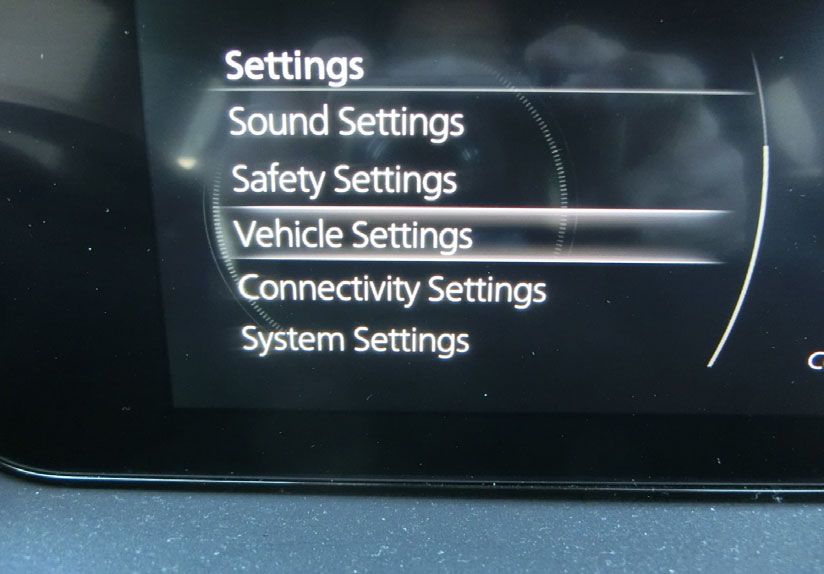
appropriate size screws or a duct tape.12-2-1-COM-14 12-2-1(xii) Procedure to Customize DRL Setting Applicable Model: MX-30, MX-5, MAZDA3, CX-30 Procedure to Customize DRL setting Make sure that Daytime Running Lights (DRL) is unchecked. 1. Select the “Settings”. 2. Select the “Vehicle Settings”. 3. Select the “Exterior Lighting”. 4. Uncheck the Daytime Running Lights (DRL).
12-2-1-COM-15

12-2-1(xiii) Test Fuel for Fuel Economy

Subject Vehicle
All Mazda gasoline models

Use E0 fuel for fuel economy testing in 2022MY based on EPA approval by a letter “Request for Approval
of Special Procedures for MY2022 GHG & Fuel Economy Testing” Ref. No. LCE-21/018 dated February 23,
2021 approved on June 11, 2021.

12-2-1(xiv) Deactivation Procedure for Auto-Light System
If the vehicle is equipped with auto-light system, the head lights may be illuminated during testing in a
laboratory when there isn’t sufficient light around the vehicle. Illumination of head lights could affect fuel
economy or driving distance.

In order to determine whether the vehicle is equipped with auto-light system: look for the “Auto” position
with the head light switch.

In order to disable the auto-light system: apply any kind of external light source such as LED work light of at
least 2600 lx on to the light sensor located in the upper center area of the windshield. Make sure the
battery for the external light is fully charged in case of a rechargeable battery, the external light is turned on
before the testing, and the vehicle head lights are not illuminated during the testing.
(Ref. No. LCE-20/068)

12-2-1(xv) Test Procedure for BEV
Please refer to Common Section 16.

12-2-1(xvii) Recharging procedures for BEV
1. Prepare Mazda genuine charging cable.
2. Make sure the charging timer is not set in Mazda connect in IG-ON state.
3. Make sure there are no warning light (shown below) on the meter in IG-ON state.
4. Turn off the vehicle to IG-off state.
5. Connect the charging connector and check that the indicator turns green.
12-2-1-COM-16

12-2-1(xviii) Deactivate Smart Brake Support
1. Select the “Settings”.

2. Select the “Safety Settings”.

3. Select the “Collision Avoidance”.

4. Push the i-ACTIVESENSE SW.

5. Uncheck the Smart Brake Support.
12-2-1-COM-17

12-2-1(xvii) Information for proper and safe operation of the vehicle, including information on the safe
handling of the battery system and emergency procedures

Pursuant to D. Certification Requirements. 2.8 of the “CALIFORNIA EXHAUST EMISSION STANDARDS
AND TEST PROCEDURES FOR 2018 AND SUBSEQUENT MODEL ZERO-EMISSION VEHICLES AND
HYBRID ELECTRIC VEHICLES, IN THE PASSENGER CAR, LIGHT-DUTY TRUCK AND MEDIUM-DUTY
VEHICLE CLASSES”, the general precautions are described below.
12-2-1-COM-18
12-2-1-COM-19
12-2-2-COM-1

12-2-2.    Shift Schedules

Not applicable for dedicated electric models.
                             Certification
                                                    For Acceleration (mph)                 For Cruising (mph)
                 Shift T/M      Test
  Model    T/M                                                                                                          Schedule No.
                  Mode        Purpose
                                             1-2      2-3    3-4    4-5      5-6    1-2    2-3    3-4    4-5      5-6
                                 (*1)

                                                                                                                        CTY 1006
   MX-5                                      14.1    24.5   32.9   38.5      48.4   7.2    18.8   26.1   34.3    40.6   HWY 2007
           M6       -            FE
  (2.0L)                                                                                                                SC03 4005

                                             14.7    26.4   36.8   46.4      49.3   7.8    18.4   29.8   38.7    43.2   US06   3002
                                                                                                                         CTY   1004
                                             14.7    26.4   36.8   46.4      49.3   7.8    18.4   29.8   38.7    43.2
 MAZDA3                                                                                                                 HWY    2004
           M6       -            FE
  (2.0L)                                                                                                                US06   3003
                                             15.0    25.0   40.0   45.0      50.0   15.0   25.0   40.0   45.0    50.0
                                                                                                                        SC03   4003

*1: “FE” means “for fuel economy test”.
*2: EPA standard shift schedule is used and the shift schedule is not submitted to the v
12-2-3-COM-1
12-2-3. Dyno Loading Information
Target Dynamometer Loading
ETW Coefficient
Model Name T/M Tire Size
(lbs)
a (lbf) b (lbf/mph) c (lbf/(mph)2)
MX-30 A1 215/55 R18 4000 29.970 0.38976 0.020128
195/50 R16
MX-5 M6 2625 31.795 0.23925 0.017549
205/45 R17
Soft Top
195/50 R16
2.0L S6 2750 32.914 0.11588 0.019952
205/45 R17
MX-5 M6 31.795 0.23925 0.017549
RHT 205/45 R17 2750
2.0L S6 32.914 0.11588 0.019952
205/60 R16 24.172 0.23335 0.015891
M6 2WD
MAZDA3 215/45 R18 26.269 0.24197 0.016531
4-Door 3250
2.0L 205/60 R16 25.945 0.13766 0.017696
S6 2WD
215/45 R18 29.070 0.13712 0.018278
205/60 R16 24.172 0.23335 0.017726
M6 2WD 3250
MAZDA3 215/45 R18 26.269 0.24197 0.018366
5-Door
2.0L 205/60 R16 28.506 0.05619 0.019879
S6 2WD 3375
215/45 R18 29.873 0.04660 0.021218
CX-30
S6 4WD 215/65R16 3625
2.0L 33.670 0.19051 0.022314
215/55R1812-2-4-COM-1 12.2.4. Evaporative Testing Parameters Model Name: MX-30 Not applicable.
12-2-4-COM-2

12.2.4. Evaporative Testing Parameters (contd.)

Model Name:                                       MX-5 (2.0L)

Fuel Tank Temperature Profile (FTTP) and Pressure Profile (Track Driving)
Test Vehicle:                  MX-5, 2.0L, AT, 2door
Ambient Temperature:           95.0 ºF at initiation, 95.0 ºF at completion
Track Surface Temperature:     146.7 ºF at initiation, 146.3 ºF at completion
Wind Speed                     Max. 13.3 mph
Weather:                       Clear
Cloud:                         10% - 15%

                                             ’16MY MX-5 Measured and Corrected Profiles
                        150                                                                                   10.0
                                  Corrected Average Fuel Temperature Profile [F]
                                  Measured Average Fuel Temperature Profile [F]                               8.0
                        140
                                  Fuel Tank Pressure [inch Aq]
                                                                                                              6.0

                                                                                                                     Fuel Tank Pressure [inch Aq]
 Fuel Temperature [F]

                        130                                                                                   4.0

                                                                                                              2.0
                        120
                                                                                                              0.0

                        110                                                                                   -2.0

                                                                                                              -4.0
                        100
                                                                                                              -6.0

                        90                                                                                    -8.0
                              0   500        1000       1500       2000      2500   3000   3500   4000    4500
                                                                      Time [s]
12-2-4-COM-3
12-2-4 Evaporative Testing Parameters (contd.)
Model Name: MAZDA3 (2.0L ) CX-30 (2.0L)
Fuel Tank Temperature Profile (FTTP) and Pressure Profile (Track Driving)
Test Vehicle: MAZDA6 2.5L, Automatic transmission, 4-Door Sedan
Ambient Temperature: 99.0 ºF at initiation, 100.6 ºF at completion
Track Surface Temperature: 132.1 ºF at initiation, 142.2ºF at completion
Wind Speed 15 mph
Weather: Clear
Cloud: 10% - 15%
’14MY MAZDA 6 Measured and Corrected Profiles
135 10.0
Corrected Average Fuel Temperature Profile [F]
130 Measured Average Fuel Temperature Profile [F] 8.0
Fuel Tank Pressure [inch Aq]
125 6.0
Fuel Temperature [F]
Fuel Tank Pressure [inch Aq]
120 4.0
115 2.0
110 0.0
105 -2.0
100 -4.0
95 -6.0
90 -8.0
0 500 1000 1500 2000 2500 3000 3500 4000 4500
Time [s]13-COM-1 13. PROJECTED SALES 13-1. Projected Sales Refer to the Common Section “16-5. Projected Sales.” 13-2. Final Sales (Final) Refer to the final submission of the Common Section.
15-COM-1

15.      OTHER INFORMATION

15-1.    Engine Oil Information

Not applicable for dedicated electric models.

Mazda states that it satisfies the set of criteria attached to EPA’s Dear Manufacture Letter#CCD-04-07 dated
March 2, 2004, “Use of GF-4 Engine Oil in Certification and Fuel Economy Test Vehicles”, #CISD-08-11 dated
September 18, 2008, “Use of 0W Multi-grade Engine Oils in Gasoline Fueled EPA Test vehicles” and
#CISD-10-11 dated July 1, 2010, “Use of GF-5 Engine Oil in Gasoline Fueled EPA Test Vehicles”.

Below is a list of engine oils used in emission certification and fuel economy test vehicles of the following
2022MY models.

Engine Oil          Model                       Test Group          Emission Standard
                                                                    Federal Tier3-Bin125
GF-5 0W-20          MX-5 2.0L                   NTKXV02.0FFB
                                                                    California LEVIII-ULEV125
                                                                    Federal Tier3-Bin30
0W-20               MAZDA3 2.0L                 NTKXV02.0CDB
                                                                    California LEVIII-SULEV30
                                                                    Federal Tier3-Bin30
0W-20               CX-30 2.0L                  NTKXV02.0CDB
                                                                    California LEVIII-SULEV30
15-2-COM-1
15-2. Fee Filing Form
Model Test Group Page
MX-30 NTKXV00.0AZA 15-2-COM-2
MX-5 2.0L NTKXV02.0FFB 15-2-COM-3
MAZDA3 2.0L
NTKXV02.0CDB 15-2-COM-4
CX-30 2.0L15-2-COM-2
15-2-COM-3
15-2-COM-4
15-3-COM-1

15-3.    Advanced Technology Systems for CO2 and Fuel Economy Performance

Not Applicable
15-4-COM-1

15-4.    Battery Performance Determination for PHEVs and EVs

Battery performance is determined at Mazda dealer using the diagnostic tool
15-5-COM-1

15-5.    Fuel Fired Heater

Not Applicable
16-COM-0

16.      CONFIDENTIAL INFORMATION

Due to business confidentiality, this section is deleted in FOI Copy.
For Confidential Copy, please refer to the following pages.
17-COM-1

17.     CALIFORNIA ARB INFORMATION

17-3. California Warranty Statement

As indicated in MAC 2021-01 issued on May 27, 2021, Mazda uses $660 as the cost limit for determining
California 7 years/70k mile warranty parts.
17-COM-2

17-3. California Warranty Statement (contd.)

This information is a draft.
This will be updated at Final submission as it becomes finalized.
17-COM-3

17-3. California Warranty Statement (contd.)

This information is a draft.
This will be updated at Final submission as it becomes finalized.
17-COM-4

17-3. California Warranty Statement (contd.)

This information is a draft.
This will be updated at Final submission as it becomes finalized.
17-COM-5

17-3. California Warranty Statement (contd.)

This information is a draft.
This will be updated at Final submission as it becomes finalized.
17-COM-6

17-3. California Warranty Statement (contd.)

This information is a draft.
This will be updated at Final submission as it becomes finalized.
17-COM-7

17-3. California Warranty Statement (contd.)

This information is a draft.
This will be updated at Final submission as it becomes finalized.
17-COM-8

17-6. Vehicle Emission Control Information Label

MX-30 BEV

MX-5 2.0L
17-COM-9

17-6. Vehicle Emission Control Information Label(contd.)

MAZDA3 2.0L and CX-30 2.0L
18-COM-1

18.    Information on Service of Process

      David Robertson, Manager
      Mazda North American Operations
      1025 Connecticut Ave., Suite 910
      Washington, DC 20036-5418, U.S.A.
      Telephone: 202-715-0581, Fax: 202-467-5089
      E-mail: drobertson@mazdausa.com
19-COM-1
19. REVISIONS
No. Date Pages Affected Description
- 05/18/2021 - Issued.
1 07/27/2021 12-2-1-COM-2 to 9 TCS/DSC off procedure is added.
- The information for the following 2022MY models is added.
- MX-5 2.0L
- MAZDA3 2.0L
- CX-30 2.0L
*1: R/C #14-CA/CB-2 on January 31, 2013You can also read


