Modern Slavery Statement - Cbus and Cbus Property December 2020
←
→
Page content transcription
If your browser does not render page correctly, please read the page content below

Cbus and Cbus Property
Modern Slavery Statement
                      December 2020
Cbus and Cbus Property Modern Slavery Statement | December 2020

     This Modern Slavery Statement is jointly issued by United Super Pty Ltd as Trustee for the Construction and Building
     Unions Superannuation Fund (Cbus) and Cbus Property Ltd and its managed entities (Cbus Property), including reporting
     entities Cbus Property Commercial Unit Trust and 1 William Street Unit Trust (Cbus Reporting Entities).1

         This Modern Slavery Statement (Statement or Modern Slavery Statement) is for
         the purpose of reporting under the Australian Modern Slavery Act 2018 (Cth).
         Signed:

         The Hon. Steve Bracks AC
         Fund Chair, Cbus Super
         11 December 2020

Contents
1. Purpose                                                                                                                                             3

2. Our Structure, Operations and Supply Chains                                                                                                         4

3. Our Modern Slavery Risks                                                                                                                            7

4. Our Actions to Address Risk in our Supply Chains                                                                                                  10

5. Next Steps                                                                                                                                        15

6. How We Assess the Effectiveness of our Actions                                                                                                    16

7. Consultation                                                                                                                                      17

Appendix A:
Cbus Superannuation Fund and Cbus Property –
Roadmap of actions – Modern Slavery                                                                                                                  18

1. United Super Pty Ltd ABN 46 006 261 623, AFSL 233792, Registrable Superannuation Licence (RSE L0000604) Construction and Building Unions
   Superannuation Fund (Cbus) ABN 75 493 363 262, registrable superannuation fund (R1000979).
Cbus Property Pty Ltd (Cbus Property) ABN 48 115 826 741. Its managed entities include the reporting entities.
Cbus Property Commercial Unit Trust ABN 71 303 520 778 and 1 William Street Unit Trust ABN 15 759 350 663.

                                                                                                                                               2020 | 2/19
Cbus and Cbus Property Modern Slavery Statement | December 2020

1. Purpose
The purpose of this Modern Slavery Statement (Statement) is to outline our approach to ensuring that we have robust
frameworks and processes in place to minimise the risk of modern slavery in our business operations and supply chains.
This Statement is also for the purpose of reporting under the Australian Modern Slavery Act 2018 (Cth).
For Cbus and its members, occupational health and safety and labour and human rights are an important area of focus.
This aligns with our heritage, our values and the expectations of our key stakeholders. Recent research found that 93% of
Cbus members and 86% of our employers want their superannuation fund to invest in assets and companies that create
meaningful jobs now and into the future2.
Eighty-seven per cent of members and 85% of employers would lose trust in Cbus if they became aware that Cbus had
knowledge of poor workplace practices associated with its investments and did not take appropriate action3.
We recognise that modern slavery can occur in many forms, including slavery, servitude, human trafficking, forced marriage,
forced labour, debt bondage, the worst forms of child labour and deceptive recruiting or services.
Cbus and Cbus Property operate separately but have taken an integrated approach to addressing modern slavery. Together
we are committed to minimising the risk of modern slavery in our operations and supply chains.
Our objective is to build a robust and comprehensive modern slavery framework. We will do this by taking a staged, focused
and systematic approach, which is detailed in our Modern Slavery Roadmap, attached as an Appendix to this Statement.

2. Responsible Investment Research, conducted for Cbus by Essential Research, April 2020.
3. Responsible Investment Research, conducted for Cbus by Essential Research, April 2020.

                                                                                                                      2020 | 3/19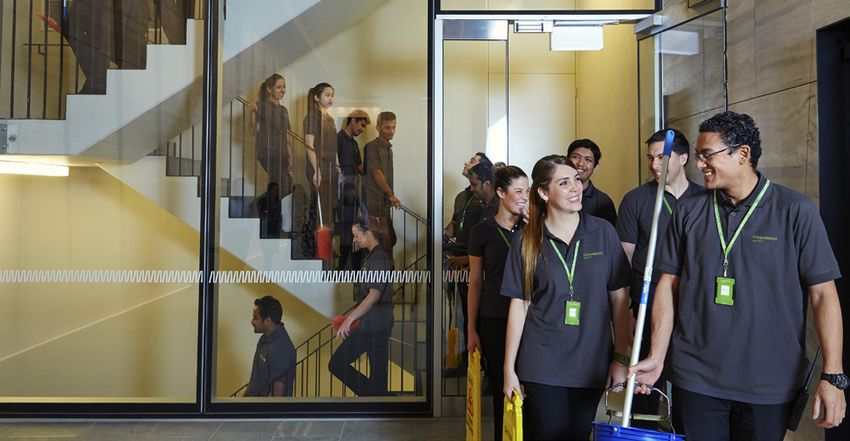
Cbus and Cbus Property Modern Slavery Statement | December 2020

2. Our structure, operations and supply chains

2.1 OUR STRUCTURE AND OPERATIONS
We create value for our members by investing their superannuation contributions, returning
all profits to them and providing solutions that help them achieve a dignified retirement.

                                          United Super Trustee Pty Ltd

                                                                                                Over
     Direct supply chain
     Cbus
                                                                                          774,000
                                                                                          Cbus members
     ■   Fund administrator
     ■   Custodian                         Funds under
         50 fund managers
                                                                                   Products and services
     ■
                                           management
         Professional services
                                                                                   ■   Value-for-money
                                           $54.2 billion
     ■
                                                                                        products to manage
     ■   Consultants                                                     Direct
                                           599 employees                                income in retirement
     ■   Legal services                                                 property   ■   Insurance at an
     ■   Training                          Head office in             investment        affordable price that
     ■   IT services                       Melbourne, with              mandate         caters for hazardous
     ■   Software                          state offices in all                         environments
                                           capital cities                              Investment options that
     ■   Data and research                                                         ■

          providers                                                                     we manage responsibly
     ■   Hospitality                                                                    and for the long term to
                                                                                        deliver strong returns
     ■   Travel
                                                                                        for retirement
     ■   Accommodation                                                             ■   Advice to guide
     ■   Membership service                                                             members and drive
          providers                                                                     better retirement
                                           Gross property portfolio                     outcomes
     Cbus Property                         $4.9 billion                            ■   Easy-to-administer
     ■   Head contractors                                                               products and services
     ■   Property managers
                                           47 employees                                 for employers to help
     ■   Consultants                       Head office in Melbourne,                    them comply with
                                           state offices in Sydney and                  regulations and look
                                           Brisbane                                     after their employees

                                                                                                            2020 | 4/19
Cbus and Cbus Property Modern Slavery Statement | December 2020

Cbus                                                              Cbus Property
As one of Australia’s largest super funds, Cbus provides          Cbus Property operates under an Investment Management
superannuation and income stream accounts and insurance           Agreement to develop and sell, or hold, each of Cbus’ direct
to more than 774,000 members and we manage over $54               property investments under management. The property
billion of our members’ money (as at 30 June 2020).               investments are held via a number of Investment Holding
Cbus’ Trustee, United Super Pty Ltd, is structured as a private   Trusts established to hold our commercial and residential
company and managed by a Board of Directors. The Board            properties (managed entities). All managed entities operate
of Directors are an equal representation of members and           solely in their place of incorporation, being Australia.
employer associations, with two independent Directors. As         A complete list of entities managed by Cbus Property can be
a registrable Australian superannuation fund, Cbus must           found in the financial supplement to the Annual Report, the
comply with an extensive governance framework. The Board          United Super Pty Ltd Annual Report at cbussuper.com.au/
of the Trustee is ultimately responsible for the sound and        about-us/annual-report
prudent management of Cbus’ business operations. Cbus is
an all profit to members industry superannuation fund.            Cbus Property is responsible for the strategic performance
                                                                  and management of all aspects of the Cbus direct property
The types of activities undertaken include:                       investment business, including major commercial office
■    administration of members’ superannuation                    properties and developments in the commercial and
■    investment of its funds under management                     residential sectors. Cbus Property has its own Board
■    the provision and administration of insurance benefits       composed of three independent Directors and four
     for eligible members                                         nominated Directors from United Super Pty Ltd.
■    the provision of membership services, including limited      Cbus Property manages 6.2% of the Cbus investment portfolio
     advice, and                                                  with a total gross value of $4.9 billion (as at June 2020), and has
■    fund operations including marketing, product planning,       a $4.0 billion development pipeline that includes large-scale
     technology.                                                  commercial office and high-rise residential projects across
                                                                  Australia. In FY20, we completed key projects including the
Headquartered in Melbourne, Victoria, Cbus is a national
superannuation fund with offices in each capital city.            $1.25 billion Collins Arch commercial and hotel components,
Cbus’ workforce is comprised of professional staff who            Holme in Collingwood (residential), and stage 1 of Newmarket,
perform specialised skills with respect to financial services,    Randwick (residential).
managerial, or administrative work. Cbus has approximately        As of 30 June 2020, Cbus Property’s commercial office
600 permanent employees who have flexible working                 portfolio comprises nine core assets with a gross value of
arrangements and whose benefits are governed by a                 $3.1 billion (Cbus Property direct ownership). The assets are
Collective Bargaining Agreement 2017.                             located in major capital cities across Australia –Melbourne,
Cbus invests globally through a range of asset classes, using     Sydney, Brisbane, Adelaide and Perth. A number of assets are
different investment strategies to invest in most business        co-owned with other property companies.
sectors directly and indirectly. This means Cbus’ investments     Cbus Property is supported by a corporate function of 47 direct
are exposed to many different parts of the global economy.        employees, 41 full-time, 6 part-time, located at our head office
Cbus can be exposed to the 49 developed and emerging              in Melbourne and at state offices in Sydney and Brisbane.
market countries represented by the MSCI All Country World
Index (MSCI ACWI).
Cbus has 31.5% of its investment portfolio managed
internally. These direct investments include equities,
infrastructure, property and debt investments. The vast
majority of our investments (68.5%) are managed externally
through 50 external fund managers. Our managers are
located in Australia, Bermuda, France, Switzerland, the United
Kingdom (UK) and the United States of America (US).
In relation to our directly managed investments:
■    our debt exposure is in Australia
■    infrastructure assets include minority holdings in
     renewable energy, ports and a toll road in Australia,
     the UK and the US
■    our global direct equities include minority holdings that
     change over time
■    our property exposure is through our wholly owned
     subsidiary Cbus Property, which operates in Australia.
                                                                     Artist Impression: Collins Arch, 447 Collins Street, Melbourne.
                                                                     A Cbus Property commercial development.

                                                                                                                           2020 | 5/19
Cbus and Cbus Property Modern Slavery Statement | December 2020

2.2 OUR SUPPLY CHAINS
We operate in an extensive supply chain framework comprised of a variety of
organisations, ranging from administrators, IT services, investment managers, builders
and property managers.

Cbus                                                                  Cbus Property
As a large industry superannuation fund, Cbus has some                Cbus Property’s direct supply chain is mainly comprised of
large-scale providers of services to administer its benefits          the builders, property managers and consultants that enable
including its fund administrator and custodian, which are both        us to deliver value from our development projects and
located in Australia.                                                 commercial office properties, along with some relatively
                                                                      minor expenditure in operating the corporate function,
Cbus has over 1000 direct suppliers within its supply chain,
                                                                      comparable to the supply chain of Cbus. Cbus Property’s
including: professional services, consultants, legal services,
                                                                      supply chain encompasses the following divisions:
training, IT services, software, data and research providers,
hospitality, travel, accommodation, cleaning services,                Developments
marketing items, utilities and membership service providers.
                                                                      Cbus Property’s development direct supply chain includes
Although the large majority of our direct suppliers are located
                                                                      construction head contractors and consultants operating
in Australia, our initial review of our supply chain indicates that
                                                                      from Australia, which support the design and delivery of our
many of the goods and services supplied to us originate from
                                                                      development projects. Head contractors typically operate
other countries such as India, the UK and the US.
                                                                      under ‘design and construct’ contracts and control the
In relation to our investment supply chain, representing              procurement of the goods and services of Cbus Property’s
the majority of our supply chain are our 50 external fund             indirect supply chains. This includes building materials,
managers who manage the remainder of our investments.                 design consultants, labour services and trades to deliver the
Our managers are headquartered in Australia, Bermuda,                 development under the specification of the contract briefs
France, New Zealand, Switzerland, the UK and the US.                  and requirements.
Cbus Property also provides direct property investment
                                                                      Cbus Property recognises that a large portion of the building
management services to Cbus.
                                                                      materials and equipment providers have supply chains
A summary of our key service providers can be found here:             originating in the Asia-Pacific region.
cbussuper.com.au/content/dam/cbus/files/governance/
reporting/Key-Service-Providers.pdf                                   Commercial Offices
                                                                      Cbus Property outsources the property management of its
                                                                      commercial office properties to specialised service providers,
                                                                      appointed through property management agreements.
                                                                      Management of the asset requires the property management
                                                                      provider to procure a range of goods and services to support
                                                                      the operation and maintenance of the commercial (and/
                                                                      or retail) building, including cleaning, security, landscaping
                                                                      services; building maintenance and repairs; replacement plant
                                                                      and equipment; utility services, waste services and office
                                                                      consumables.
                                                                      The majority of our commercial office suppliers are local,
                                                                      Australian-based companies, while building materials and
                                                                      manufactured equipment are procured both locally and
                                                                      from overseas.

                                                                                                                          2020 | 6/19
Cbus and Cbus Property Modern Slavery Statement | December 2020
3. Our modern slavery risks
We recognise that there are risks of modern slavery in our operations and supply chain given
their reach. We acknowledge that in relation to modern slavery, the term “risk” refers to the
risk of harm to people, and we have taken a people-focused approach to identifying and
assessing risks in our operations and supply chains.
Identifying and addressing modern slavery is a complex issue ■ Cbus’ investments: the risk assessment covered 75% of
that is often hidden and difficult to discover, particularly when assets under management, identified high-level potential
in our indirect supply chains. We are committed to being modern slavery risk exposure in four asset classes for
proactive in identifying and addressing potential modern further prioritisation (Infrastructure, Property, Equities,
slavery risks in our operations and supply chains. Corporate Bonds). Infrastructure and property were
identified as the asset classes potentially most exposed to
We have embarked on a path to better understanding our
high-risk sectors.
modern slavery risks in our supply chains. We have undertaken
initial risks assessments of our separate business entities.
■ Cbus Property: conducted a more focused assessment
Over time, we expect that our supplier-level analysis will cover that traced commodities and services across supply
an extended number of suppliers in our supply chains. chains. This means that the risk rating reflected not only
the generic risk of first tier suppliers, but also second
and third tier suppliers that exist upstream of first tier
3.1 RISK ASSESSMENT suppliers. The results of the risk assessment indicated
that a number of supply categories were areas associated
In 2020, we undertook initial high-level risk assessments to with a high likelihood of modern slavery risk, due to
identify the potential risks of modern slavery in our entire inherent supply chain risk within high-risk sectors, such as
operations and supply chains. building and construction materials.
The Risk Assessment process involved looking at our We outline in greater detail the approach and the results of
operations and supply chains and utilised modern slavery risk our risk assessments of supply chains below.
databases to identify key areas of risk. The methodologies are
based on a number of key principles including the UN Guiding Consistent with our ongoing assessment of modern
Principles on Business and Human Rights. slavery risks in our supply chains, Cbus will enhance its risk
assessments going forward and focus on particular high-risk
Risk assessments were conducted separately for Cbus and suppliers. Further detail is provided in Section 4.3, Enhanced
Cbus Property, as these two businesses operate differently Risk Assessment. Cbus Property is prioritising its efforts
and have distinct and diverse supply chains. The assessments towards the highest potential modern slavery risks and
were conducted with the assistance of expert consultants focusing on areas where we can have the most influence and
to ensure robust methodologies were utilised for assessing promote change.
modern slavery risks.
The risk assessments were conducted as a staged approach
Cbus
to determine areas of our operations and supply chains that CBUS OPERATIONAL AND PROCUREMENT
were inherently exposed to modern slavery risks and establish RISK ASSESSMENT
focus areas or priorities to conduct further analysis.
Operations
Key Findings: We consider that the risk of modern slavery within the staff
Our risk assessments identified the following key findings: of Cbus to be low, based on their location and their workplace
environment.
■ Cbus’ operations: from an operational perspective, the
majority of Cbus’ expenditure is in low risk sectors and low Cbus’ workforce is comprised of professional staff who
risk countries perform specialised skills with respect to financial services,
■ Cbus’ procurement: four high risk categories were managerial, or administrative work. Cbus employees’ benefits
identified, being: housekeeping, Capex Purchases, IT are governed by an enterprise bargaining agreement setting
equipment and Network and Telephony Maintenance. out terms and conditions of employment. In addition, Cbus
has in place a number of policies regarding recruitment, leave
entitlements and support, diversity and inclusion policies that
assist us to ensure that all of our employees are working of
their own free will.
2020 | 7/19Cbus and Cbus Property Modern Slavery Statement | December 2020
Procurement CBUS INVESTMENT RISK ASSESSMENT
Cbus undertook an initial high risk assessment of its supply Cbus’ operations include investments. Some of these
chains from a procurement perspective to understand its investments are direct and the majority are indirect. Based
inherent risk in its supply chains. The initial risk assessment on the nature of Cbus’ investments, Cbus may have modern
identified a list of 144 service providers that were potentially slavery impacts within its investments.
high or medium risk on the basis of their country and sector,
for further review. For Cbus’ investments the risk analysis conducted with the
consultant covered approximately 75% of assets under
To assist Cbus to identify areas of potential risk within its management for the following asset classes:
operations and supply chains, the initial risk assessments ■ Equities (Australian, Global and Emerging Markets)
focused on two high-level risks indicators: country risk and
■ Infrastructure (including listed infrastructure)
sector risk. As part of this process reference was made to a
number of indices: Global Slavery Index top 50 countries by ■ Property (including listed property, and Cbus Property),
order of prevalence for country risk indicator and Verite’s at a high level4
Responsible Sourcing Tool for sector risk. These indices ■ Corporate bonds (where the issuer was a listed company).
indicated countries with higher risk ratings and industries
As noted above, the initial risk assessment focused on two
identified as high risk for human trafficking.
high-level risks indicators: country of domicile or headquarter
Analysing modern slavery risk based on country of and based on a list of 11 industry sectors identified as high risk
headquarters does not provide an indication of the operations for human trafficking. Again, we note that analysing modern
of the company. To overcome this limitation, the assessment slavery risk based on country of headquarters does not
placed greater focus on sector risk rather than country risk to provide an indication of the country of operation of the asset
ensure it captured the potential risk exposure of companies or company. To overcome this limitation, the assessment
or assets in those high-risk sectors that are headquartered placed greater focus on sector risk.
in low risk countries but operate or have supply chains in high
The results of an initial high-level portfolio risk assessment
risk countries. These indicators were complemented by an
identified high-level potential modern slavery risks in the
assessment of Medium and Low risk countries and sectors
asset classes analysed. Further:
based on the consultant’s professional judgement.
■ very few companies/assets are headquartered in high-
The key findings from the risk assessment regarding risk countries. However, from this small number, the only
procurement activities was that there were: asset classes with companies or assets headquartered in
■ 7 medium-risk categories of suppliers (Occupational countries considered high risk under the Global Slavery
Health and Safety, Merchandise, Office supplies, in house Index were equities and infrastructure
catering, fund administration, IT software and agency ■ infrastructure and property were the asset classes with
services), and investments in high-risk sectors.
■ 4 high-risk categories (Capex Purchases, Housekeeping,
While modern slavery risk has formed part of our existing
IT equipment and network and telephony maintenance).
asset/manager due diligence and ongoing monitoring, to
Three of the four high risk categories were considered high enhance our initial analysis (as noted further below) our
risk primarily due to the sourcing of materials and hardware intention is to undertake further deep-dive analysis of our
manufactured offshore in sectors known for their human direct investments in infrastructure. As part of this analysis,
rights and modern slavery risks. Housekeeping was identified we will survey all external fund managers (who are also our
as high risk mainly due to cleaning services being known suppliers) regarding their management of modern slavery
for poor labour practices, use of vulnerable workers and risk covering both operations and investments as a matter
instances of modern slavery in Australia. of priority.
We appreciate that each of our suppliers have their own
supply chains, which may expose Cbus to the risk of modern
slavery in its indirect suppliers. Our review of supply chain
risk focused upon our direct suppliers in year 1 of reporting,
but our industry based risk assessment approach reflected
our understanding that some sectors have inherent risk deep
within their supply chains.
4. Cbus Property have conducted their own more detailed risk assessment.
2020 | 8/19Cbus and Cbus Property Modern Slavery Statement | December 2020
Cbus Property Our initial risk assessment indicated that our supply
categories associated with an inherent supply chain risk
Operations (due to a high likelihood of modern slavery risk within these
sectors) were building and construction, building maintenance
We consider the risk of modern slavery within the direct
and repairs (services and materials), cleaning and security,
employees of Cbus Property to be low based on their location
domestic appliances and electronics, IT equipment and
and their workplace environment. Cbus Property employment
services, furniture, marketing and promotional products,
policies, including our Diversity and Inclusion Policy, set out
office supplies, and catering. Based on market models,
our commitment to the provision of a work environment that
we know that these supply chains have the potential to
is free from discrimination and promotes equal opportunity
be located in countries with a high prevalence of modern
for all. Our Remuneration Committee assists us to ensure
slavery, such as those in the Asia Pacific region. In addition, it
that remuneration is comparable and competitive to the
was identified that there is on-site risk of modern slavery in
industry in which Cbus Property participates, reflects the
the labour provided for construction, cleaning and security
needs of stakeholders and is equitable and consistent with
services.
the principles of good corporate governance.
Focus Areas
Procurement Risk Assessment
The result of our initial risk assessment and prioritisation is
Utilising risk indicators from the Social Hotspot Database,
that our key focus areas throughout the next two- years are:
the risk assessment conducted by Cbus Property analysed 37
procurement categories for risk of child labour; forced labour; ■ on-site labour-based activities, including construction,
wage assessment; excessive working time; exploitation of cleaning, security and other maintenance services; and
migrant labour; freedom of association; gender equality; legal ■ the overseas manufacture of building materials and
systems; and corruption. The risk assessment methodology equipment used in construction and building operations.
relied on market models that trace commodities and services
The modern slavery risks associated with these specific
across supply chains. This means that the modern slavery risk
supply chain categories are in underpayment; indentured
rating of our procurement reflects not only the generic risk of
workers; exploitation of migrants in construction, cleaning
first tier suppliers, but also second and third tier suppliers that
and security services; forced labour; and child labour in the
exist upstream of first tier suppliers.
supply chain of building materials and manufactured building
To further our understanding of modern slavery risk in our plant and equipment. There is also a high risk of modern
operations and supply chains, we: slavery in building materials and products manufactured
■ identified the key drivers for modern slavery risks; overseas, many from countries of origin where modern
■ established a risk rating of our supply chains using industry slavery conditions have been identified.
and international data and research to identify the Supply chains are complex and vary over time. Cbus Property
inherent modern slavery risks in our supply chain; will continue to assess our risks and further investigate our
■ reviewed our procurement practices and governance supply chain, in order to enhance our understanding and
process to establish our relationship to the risk; and improve the transparency of modern slavery risks, to support
■ prioritised the risk areas by proportion of spend, and our risk-based approach.
which areas we can have most influence in, to develop a
plan for addressing these areas.
2020 | 9/19Cbus and Cbus Property Modern Slavery Statement | December 2020
4. Our actions to address modern slavery risk
Our approach to Modern Slavery risks is evolving and we aim to support long term systemic
change throughout our supply chains to reduce the risk of modern slavery practices. We
are aware that addressing modern slavery will take time and change may be incremental;
however, we are committed to taking action now and making improvements over time.
Representatives from Cbus and Cbus Property have formed a Investment Governance
Modern Slavery Working Group to work collaboratively for the Our Investment Governance Framework Policy 2019
purpose of preparing our Statement. Cbus and Cbus Property acknowledges responsible investment as a fundamental
have reported to their respective boards of Cbus and Cbus investment belief where the focus is on ESG issues that
Property regarding the preparation of the Statement and could materially affect investment returns. The Responsible
progress with respect to their Roadmap. Investment Policy (RI Policy) outlines the approach to
managing ESG across the investment portfolio and the Fund
in accordance with the Investment Governance Framework.
4.1 GOVERNANCE AND POLICIES
Responsible investment applies to all of the Fund’s investment
Both Cbus and Cbus Property have policies in place that guide activities including across all geographic locations; all asset
our approach to the appointment and ongoing management classes; direct, mandated and pooled funds; and all styles
of service providers. These policies reflect consideration of including active and passive.
environmental, social and governance (ESG) matters.
The Trustee recognises the Fund should operate in the same
As part of reviewing grievance procedures, Cbus and Cbus manner as it expects of the companies and assets in which it
Property have committed to review and update existing invests. As such, the Fund seeks to identify opportunities to
whistleblower processes and policies to ensure that any incorporate responsible investment across the organisation
concerns about suspected illegal or unethical conduct and influence the entities and stakeholders with whom the
regarding modern slavery has an avenue for reporting. Fund undertakes business. Our activities in relation to modern
slavery will be implemented consistent with this approach.
Cbus
We have a Board governance framework for responsible
As outlined above, Cbus employees’ benefits are governed investment, a key component of which is the measurement
by an enterprise bargaining agreement setting out terms and and monitoring of the effectiveness of the risk measures
conditions of employment. In addition, Cbus has in place a by the Audit and Risk Management Committee. For
number of policies regarding recruitment, leave entitlements further information visit cbussuper.com.au/about-us/
and support, diversity and inclusion policies that assist us to sustainability/board-governance-framework
ensure that all of our employees are working of their own
free will. As a responsible investor, we consider the long-term material
ESG risks and opportunities in investment decisions. These
For Cbus, the policies which guide our approach to are the risks and opportunities likely to have the most
management of suppliers, include the Procurement Policy, significant impact on the value of an investment. We include
Investment Governance Framework, Responsible Investment these when assessing a company or asset or when choosing
Policies, the Outsourcing Policy and the Code of Conduct. We a fund manager. We consider how well the risk is managed
are also developing a Modern Slavery Policy which will outline and, where we can, we try to influence a positive outcome
our approach and ensure that our current policy suite is by engaging with the company or manager or by voting at
adapted for this purpose. annual meetings. We also monitor ESG performance over
time by reviewing company, asset and manager reporting
and disclosures and by conducting review meetings
where appropriate. Modern slavery has formed part of
our assessment and monitoring in recent years; however,
notwithstanding our actions to date there is more to be done
to ensure our focus on risk to people.
2020 | 10/19Cbus and Cbus Property Modern Slavery Statement | December 2020
Cbus is a signatory to the Principles of Responsible Cbus Property
Investment (PRI). Annually we are assessed and benchmarked
against the PRI accountability survey about how well we are As outlined above in relation to the risk of modern slavery in
incorporating responsible investment across the portfolio and its operations, Cbus Property has in place detailed processes
within in each asset class in comparison to our peers. We have to ensure that its employees are working of their own free will.
performed above the median on all measures.
Modern slavery (and responsible supply chains more broadly)
The UN Sustainable Development Goals (SDGs) are an is one of the key focus areas of Cbus Property’s Sustainability
additional lens to inform our investment decisions where we Strategy. Launched in 2018, our three key pillars of Better
invest directly. We’ve identified SDGs where we believe we Buildings, Investing in People and Future Ready address our
can engage, advocate and invest, these include: most material ESG issues, one of which is modern slavery and
■ SDG 5 – achieve gender equality and empower all women broader human rights risks in our supply chain.
and girls, noting that women and girls are significantly The Cbus Property Charter of Selection sets out our
more likely to be enslaved; and expectations for our key suppliers, clients and consultants.
■ SDG 8 – decent work and economic growth, which This includes a commitment to our ESG principles, including
includes the adoption of measures to eradicate adherence to the fundamental rights articulated by the
modern slavery. International Labour Organization, namely:
We continue to build out our direct investment due diligence ■ freedom of association and the effective recognition of
and allocating capital that aligns with the SDGs. the right to collective bargaining
■ the elimination of all forms of forced or compulsory labour;
Other investment activities include stewardship (Engagement
and Voting). The aim of our voting and engagement activities ■ the effective abolition of child labour; and
is to enhance long-term value creation and minimising risk. ■ the elimination of discrimination in respect of
employment and occupation.
In relation to our listed equity portfolios in Australia, the
Australian Council of Superannuation Investors (ACSI)
engages with ASX 300 boards on material ESG issues. ACSI’s 4.2 PROCUREMENT
priorities include workforce issues such as modern slavery
and supply chains. ACSI also monitors companies’ oversight We are expanding our model for the appointment and ongoing
of the labour practices in franchisee operations. Engagement management of service providers to incorporate modern
has resulted in: slavery issues.
■ improved oversight and reporting of employee conditions
in franchising companies;
Cbus
■ supermarket chains setting clear expectations on the use
of labour-hire providers; and Our goal is to embed modern slavery principles into our
■ the introduction of regular auditing and improved business operations and our procurement processes. We will
whistleblowing systems. be doing so by undertaking a range of activities which are set
out in our Roadmap; the outcome being to establish a robust,
For those companies with international operations and supply
effective and sustainable modern slavery program.
chains, engagement has been with companies that have, or
are sourcing from, operations in countries with poor labour Cbus will formalise a Supplier Code of Conduct that builds
conditions or governance. Many of these companies now on principles of sustainable procurement. In addition, it will
publicly disclose the origin of their goods as well as details on set clear expectations for all of Cbus suppliers and service
audits of suppliers and consequences for non-conformance. providers with respect to modern slavery practices in their
supply chains.
Internationally, we use the services of EOS at Federated
Hermes to engage with our global equities on sustainability, Consistent with the Responsible Investment Policy, Cbus
governance, environmental and social concerns. This recognises more broadly its responsibility to consider the ESG
includes a focus on enhancing human rights. They encourage impacts of procurement and will work towards incorporating
companies to apply the UN Guiding Principles and to use these factors with economic considerations over time. The
appropriate technology to create a more transparent supply objective of the Procurement Policy is to provide a sustainable
chain. and consistent Procurement framework with clear sourcing
principles that ensures the Cbus spend is compliant with
In accordance with our voting process we actively consider
relevant internal policies and regulatory obligations whilst
human rights shareholder resolutions.
achieving best value for members and the Fund.
2020 | 11/19Cbus and Cbus Property Modern Slavery Statement | December 2020
Cbus Property Suppliers
Consistent with our ongoing assessment of modern slavery
Cbus Property’s procurement processes include the risks in our supply chains, Cbus will conduct annual risk
requirement for consultation prior to establishing shortlists reviews to identify changes in risks and potential categories of
and evaluation matrixes to ensure a fair and competitive suppliers to further engage. In addition, as part of this process
process. The evaluation matrix and standard contract terms we will undergo a ‘deep dive’ on a small selection of high-risk
assist in communicating our expectations and ensuring suppliers to consider their modern slavery risks and their
compliance with our policies. willingness to collaborate to reduce their risks in their supply
A key part of managing supply chain risks is to ensure we chains.
are engaging with suppliers that have the right policies
Investments
and practices in place to address those risks in their own
businesses and supply chains. In relation to our investments, consistent with the UN Guiding
Principles we are prioritising our efforts towards the highest
potential modern slavery risks and focusing on areas where
Supplier Due Diligence – PCA Platform we can have the most influence and impact change. As such,
Cbus Property has signed up to the innovative Property our immediate focus will be on undertaking an analysis of
Council of Australia’s (PCA) Supplier Platform initiative. potential high-risk direct investment strategies.
The online centralised platform is a joint platform for
In prioritising our direct investments, consideration will
PCA members, used for capturing supplier information
include:
on policies and practices addressing modern slavery
risks. ■ the nature of the asset’s operations;
■ the country of operation of the asset or company;
The platform provides a standard way for our suppliers
to provide information and data to a central database to
■ potential exposure to specific modern slavery risk factors
reduce the burden of multiple companies seeking due such as sub-contracting, low-skilled/migrant workforce,
diligence information. third party recruitment agencies etc;
■ involvement in past controversies; and
Cbus Property signed up to the platform in FY2020 and
■ the nature of their relationship with Cbus, i.e. our ability to
is now working to ‘onboard’ selected key and high-risk
influence.
suppliers. The platform will be integral to how Cbus
Property performs its supplier due diligence and will The risk analysis conducted found that infrastructure and
allow us to monitor improvements in our supplier chain property were the asset classes most exposed to high-risk
over time. sectors. We will prioritise our actions to address potential
impacts according to the severity of harm and whether
Cbus Property has implemented a target for all of our
impacts can be remedied, in other words, the level of risk to
modern slavery priority suppliers to be invited to the
individuals. Based on the criteria above and noting that Cbus
supplier platform by December 2020.
Property as a wholly owned subsidiary is participating in this
joint Modern Slavery Statement, our direct infrastructure
investments will be our first investment sector to be the
4.3 ENHANCE RISK ASSESSMENTS subject of deep-dive assessments.
(CBUS) As reflected in our Roadmap, while prioritising our direct
Cbus’ Modern Slavery monitoring and reporting program is investments we will also take the opportunity to survey all
currently under development. Our goal is to embed modern external fund managers (suppliers) management of modern
slavery principles in line with UN Guiding Principles on slavery risk as a matter of priority. All relevant managers
Business and Human Rights into our business operations. The (whether internal or external) will be engaged on our modern
outcome is to establish a robust, effective and sustainable slavery expectations.
modern slavery program with a range of activities which are Where already not included modern slavery obligations
set out in our Roadmap. will be reflected in key service provider contracts and
Investment Management Agreements, including positive
obligations to report any known exposures to modern slavery
risks. An annual risk review will be conducted to assist our
understanding of our modern slavery exposure.
2020 | 12/19Cbus and Cbus Property Modern Slavery Statement | December 2020
4.4 TRAINING AND EDUCATION 4.5 INDUSTRY ENGAGEMENT
General awareness of modern slavery, and the complexity Prior to the introduction of the Modern Slavery Act, Cbus was
involved in identifying and addressing it, is not widespread one of the first investors to sign the Principles for Responsible
throughout the industry and as part of building this Investment (PRI)-led investor statement in support of a
awareness, Cbus and Cbus Property have adopted some Modern Slavery Act in Australia.
important initiatives.
Cbus has also been an active participant in several
Cbus has communicated to its Board and Committees to collaborative initiatives through participation in:
raise awareness of the requirement of the modern slavery ■ the Responsible Investment Association Australasia
legislation and how the business is building its capability in this (RIAA) Human Rights Working Group (HRWG), aimed
area. During FY20, two education sessions have been held at building asset owner and fund managers capabilities
with our internal investments team to update them about the regarding human rights in investments
introduction of the Modern Slavery Act 2018 and to help the ■ the development of a joint Financial Services Council
teams identify high-risk sectors and geographies that may
(FSC)/ (RIAA) Due Diligence Questionnaire to create
lead to exposure to modern slavery risks.
consistent, streamlined and standardised reporting across
To assist in raising general awareness, in June 2020, Cbus the fund management industry on modern slavery
Property launched a modern slavery training module for its ■ the Australian Sustainable Finance Initiative (ASFI), which
employees. The training was focused on the definition of brings together leaders spanning Australia’s major banks,
modern slavery, the key risks in global supply chains, and superannuation funds, insurance companies, financial
how it can manifest in our operations and supply chains. sector peak bodies and academia to develop a Sustainable
The training was part of Cbus Property’s online compliance Finance Roadmap to help shape an Australian economy
program and was completed by all of their employees. that prioritises human wellbeing, social equity and
As part of its Roadmap, Cbus will be rolling out modern slavery environmental protection, while supporting a stable and
general awareness training for all staff as well as targeted financial system.
training for identified staff in parts of the business likely to Ongoing collaboration will be key to share knowledge and pool
be involved with suppliers. Cbus is also looking to integrate resources to assist in addressing modern slavery.
training into its induction program for new employees.
Cbus Property will continue to collaborate with suppliers and
We will continue to build our knowledge and capacity on industry organisations to systematically address modern
modern slavery and aim to roll out more detailed training slavery throughout our complex and often interconnected
to our Cbus procurement teams and Cbus Property supply chains. Cbus Property will continue to work with:
development and asset management teams; integrate ■ Property Council of Australia (PCA)
training into our induction program for new employees; and
■ Cleaning and Accountability Framework (CAF)
for Cbus Property to broaden the scope of the training to
include third-party property management teams and key
suppliers. See case study over the page
2020 | 13/19Cbus and Cbus Property Modern Slavery Statement | December 2020
Case Study: Cleaning Accountability Framework
Cbus Property’s risk assessment has identified the cleaning industry as a sector where Australian workers are at risk of
exploitation and there is a potential risk of modern slavery practices.
The Cleaning Accountability Framework (CAF) is a multi-stakeholder industry initiative that aims to improve labour
practices in Australia’s cleaning industry through the promotion of ‘decent’ work and employment standards.
The CAF certification program is a way for building owners like Cbus Property to gain assurance that the cleaning
contractors working at our buildings are safe, treated fairly and with respect, and have ‘decent’ work. The CAF
certification standard includes labour conditions, responsible contracting, safe working conditions, financial viability,
worker engagement, issue identification and remediation.
The certification process importantly includes worker engagement, as a key method to identify indicators of modern
slavery conditions, such as debt bondage, coercion and threats related to immigration status.
The CAF is specifically an anti-modern slavery mechanism, addressing the issue of exploitation by ensuring the
promotion of decent work, and is the most advanced and robust program in Australia to address modern slavery risks in
the cleaning industry.
In support of this innovative program, Cbus Property joined the advisory group of the CAF in 2018. In late 2019, we
received 3 Star CAF certification at 720 Bourke Street, Docklands, the first building in our portfolio to achieve this
milestone.
Through this process, we learned that the CAF certification approach promotes positive engagement between the
stakeholders, which then fosters an inclusive and respectful environment that not only benefits our cleaning teams but
also our property management team and our tenants.
Cbus Property has committed to obtain 3 Star CAF certification across our portfolio of assets by 2022, as part of our
anti-modern slavery approach to cleaning services at our buildings. We utilise CAF’s resources, such as their pricing
schedule when tendering for cleaning contracts to ensure decent working conditions.
Cbus Property has a commitment to obtain 3-Star CAF certification at our assets by end of 2022.
2020 | 14/19Cbus and Cbus Property Modern Slavery Statement | December 2020
5. Next steps
While we have taken some important first steps in building our anti-modern slavery
programs, we acknowledge that further work needs to be done to progress our
understanding of modern slavery risks within our supply chains.
As part of undertaking a risk assessment and considering our These improvements have been reflected in our Roadmap,
approach to modern slavery risks, a gap analysis of Cbus and which is outlined in the Appendix.
Cbus Property’s existing policies and practices was conducted
Our approach is to embed these measures into our existing
to identify, manage and mitigate modern slavery risks within
procurement and business processes and deliver a consistent
our operations and supply chains against the UN Guiding
approach across business units.
Principles and the mandatory criteria of the modern slavery
legislation. Key actions were identified: Evaluation and reporting on the implementation of our
■ to develop and formalise a modern slavery framework, action plans will occur annually through our modern slavery
encompassing both operational and investment business statement. At the end of our two-year action plan, we will
operations; assess the overall effectiveness of the plan and identify new
areas to continue to strengthen and build on our policies and
■ ensure procurement policies, and any other relevant
processes.
policies and procedures, reference modern slavery risks
and ensuring modern slavery risks are included within the
risk management framework and system;
■ setting clear expectations for suppliers and service
providers regarding modern slavery risks, including
integration of assessment as part of procurement
activities;
■ enhancing integration of modern slavery risk assessments
into manager selection and performance monitoring
processes; and
■ review and amend our whistle-blower policies and
processes.
2020 | 15/19Cbus and Cbus Property Modern Slavery Statement | December 2020
6. How we assess the effectiveness of our actions
An important part of the program to mitigate the risk of modern slavery in our supply chains
is to ensure that we are continually examining ways to improve its methodology. We aim to
assess the effectiveness of our anti-modern slavery program using a reporting framework
that includes positive performance indicators, key measures and targets to determine the
impact of our actions and outcomes. This framework and the corresponding effectiveness
assessment methodology are in development.
As outlined in our action plan, we are planning to formalise a ■ assessment of the effectiveness of our due diligence
reporting framework in FY21. In order to do so, our modern process for suppliers through tracking compliance,
slavery program will be developed in line with the timelines assessing our suppliers’ modern slavery policies and
set out in the Roadmap. practices, and measuring their improvement over time
Our reporting framework will form part of our modern slavery
■ level of engagement and collaboration with suppliers,
framework and be comprised of: contractors and other key stakeholders, including
gathering external feedback on our progress.
■ identification and reporting of modern slavery risks
within our risk management framework and compliance Progress on implementing our Roadmap and outcomes on
monitoring and reporting mechanisms; a regular basis will be provided to the Modern Slavery
■ regularly updating our risk assessment of modern slavery Working Group and reported to relevant Board Committees
risk using best available and current data in consultation with our Enterprise Risk team.
■ progress on implementing our Roadmap (action plan) Cbus Property will provide reporting on its progress on the
and outcomes; actions in the Roadmap to its board of directors.
■ monitoring the number of grievances raised through
grievance mechanisms and assessing the ability to deliver
a timely remedy and continuously learning to address
root causes;
2020 | 16/19Cbus and Cbus Property Modern Slavery Statement | December 2020
7. Consultation
Cbus and Cbus Property undertook a robust engagement process to implement their
modern slavery approach for the purposes of preparing this Statement.
Representatives from Cbus and Cbus Property participated Cbus Property have addressed the mandatory criteria on
in the Cbus Modern Slavery Steering Committee and Working behalf of all owner entities under management in their
Group formulated to consider obligations under modern engagement with Cbus.
slavery legislation and preparation of the Statement. Through
The Statement is approved by the Board of United Super Pty
regular reporting, the Cbus Property Board has been kept
Ltd on behalf of all Cbus reporting entities. Cbus Property Pty
informed of progress and actions.
Ltd has endorsed sections of the Statement relating to its
All entities managed by Cbus Property are established business and operations.
solely to undertake development of or hold each property
in accordance with the direction of Cbus Property. Owner
entities are subject to Cbus Property policies, systems and
management including oversight by the Cbus Property Board.
Holme, Collingwood.
A Cbus Property residential development.
2020 | 17/19Cbus and Cbus Property Modern Slavery Statement | December 2020
Appendix A:
Cbus Superannuation Fund and Cbus Property –
Roadmap of actions – Modern Slavery
Estimated
Action Commentary
Timeline
1 Integrate Modern Slavery risks into our Cbus and Cbus Property will be reviewing all relevant policies to June 2021
existing corporate and management align with modern slavery.
policies
2 Develop a Supplier Code of Conduct Cbus will develop a Supplier Code of Conduct that builds on March 2021
principles of sustainable procurement. Cbus Property will
update their existing Supplier Code of Conduct (Charter of
Selection) to integrate modern slavery considerations.
3 Develop a Modern Slavery Policy Cbus to formulate a modern slavery framework, which will June 2021
encompass a Modern Slavery Policy to be approved by the
Board of United Super Pty Ltd. Cbus Property will develop their
own policy.
4 Develop a Sustainable Procurement Cbus and Cbus Property will conduct annual risk reviews of June 2022/
Framework modern slavery risks in supply chains to identify changes Annual
in risks and potential categories/sectors to engage and
development of a supplier engagement plan.
Cbus Property’s framework will be a key internal document
that incorporates many actions in our plan to embed modern
slavery risks (and other ESG issues) into our procurement
processes, including development of a supplier engagement
plan.
5 Undertake further analysis into our Cbus and Cbus Property will undertake further assessment of September 2021
priority supply chains our priority supply chains.
6 Update our risk management Cbus and Cbus Property to update their risk management June 2021
framework to further integrate Modern frameworks to include modern slavery.
Slavery Risks
7 Develop a supplier due diligence Cbus Property to formulate a process for evaluating the June 2021
framework for screening and evaluating information gathered through the PCA Supplier Platform. This
existing and potential suppliers for will include development of a supplier engagement plan at a
modern slavery risks later date.
8 Update key standard contracts Cbus and Cbus Property will undertake review processes September 2021/
to integrate anti-modern slavery to ensure key standard contracts integrate requirements in Ongoing
requirements regarding identification relation to identification of modern slavery risks.
of risks
9 Manager Engagement Cbus engage all relevant internal and external managers on June 2021
modern slavery expectations.
10 Factor Strategies Cbus identify and implement strategies and tools to reduce June 2022
exposure to modern slavery risk.
11 Stewardship Cbus actively consider all ASX human rights resolutions. Ongoing
2020 | 18/19Cbus and Cbus Property Modern Slavery Statement | December 2020
Estimated
Action Commentary
Timeline
13 Deliver training to staff around the Cbus to develop a training framework to roll out training to June 2021
implications of Modern Slavery staff and an awareness program for relevant Committees.
Cbus Property has rolled out training but will also be
developing targeted training for development and asset
management teams.
14 Investment Due Diligence Cbus to enhance incorporation of modern slavery risks into December 2020
internal and external investment manager due diligence.
15 Investment Manager Monitoring Cbus incorporate modern slavery reporting requirements into March 2021
investment mandates.
16 Monitoring of investment managers Cbus will incorporate modern slavery monitoring into manager June 2021
reviews and annual strategy reviews.
17 Actively support collaborative initiatives Cbus to identify one collaborative initiative for participation. Ongoing
18 Develop and promote a grievance Cbus and Cbus Property to review and enhance existing June 2021/
mechanism and review our whistleblower mechanisms and related policy. Cbus and Cbus Ongoing
whistleblower policy and develop Property will work towards developing its own remediation
remediation framework framework.
19 Develop a reporting framework Cbus and Cbus Property will develop a reporting framework to June 2021
that evaluates the effectiveness ensure that the actions under this Roadmap are monitored by
of our program internal senior stakeholders and relevant committees and that
the risks of modern slavery are continually updated, addressed
and reported through appropriate channels.
2020 | 19/19Contact Cbus
CB127 11-20
Cbus 1300 361 784 Visit Cbus in person in Adelaide,
Locked Bag 5056 8am to 8pm (AEST/AEDT) cbusenq@cbussuper.com.au Brisbane, Melbourne, Perth and Sydney.
PARRAMATTA NSW 2124 Monday to Friday cbussuper.com.au Details: cbussuper.com.au/contact
Cbus Property Pty Ltd (Cbus Property) ABN 48 115 826 741. Its managed entities include the reporting entities.
Cbus Property Commercial Unit Trust ABN 71 303 520 778 and 1 William Street Unit Trust ABN 15 759 350 663.You can also read


