MONDAY MEMO - Faculty of Arts | University of Calgary
←
→
Page content transcription
If your browser does not render page correctly, please read the page content below

1

MONDAY MEMO
JANUARY 11, 2021

                             DEPARTMENT NEWS
 INSIDE THIS ISSUE:
                             HIGHLIGHTED PUBLICATION
 Department News………..1

 Research Notes and
 Activities…………………….2

 Events..………………..….2-3

 Psychology in the News..4

 Awards and Honourable
 Mentions……………….…….

 Volunteer and Job
 Postings………….…….......4

 Scholarships…………………

 Resources……………..........
                              Sharma, M.J., Lavoie, S., & Callahan, B.L. (2020). A call for research on the validity
                              of the age-of-onset criterion application in older adults being evaluated for ADHD: A
                              review of the literature in clinical and cognitive psychology. American Journal of
                              Geriatric Psychiatry. https://doi.org/10.1016/j.jagp.2020.10.016

                             Roughly 3% of adults aged 50 years or older experience significant symptoms of attention-
                             deficit/hyperactivity disorder (ADHD). They are often diagnosed for the first time in later
                             adulthood, because ADHD is a relatively new diagnosis with only recent awareness of later-life
                             cases, and because many symptomatic adults have high early-life functioning due to supportive
                             environmental and social structures. Current Diagnostic and Statistical Manual of Mental
                             Disorders-5 criteria require evidence of symptom onset prior to age 12, which rests on self-
                             report in older adults for whom ancillary sources are unavailable or unreliable. In this review, we
                             summarize evidence from several bodies of literature which suggest this criterion may be invalid
                             in older adults. The authors hypothesize that demonstrating childhood symptom onset in older
                             adults is not feasible (i.e., no awareness of ADHD prior to 1970; no good current ancillary
                             sources of childhood behaviors), unreliable (i.e., severely flawed retrospective self-report) and
                             unethical (i.e., unreasonable denial of support to people who need it, with demonstrated poor
                             outcomes associated with untreated ADHD in adults). The authors outline additional research
                             that is needed to establish the validity of self-reported childhood symptom onset in this under-
                             studied demographic, including the identification of contextual factors (perhaps unique to late
                             life) that are associated with the emergence of ADHD symptoms in older adulthood; determining
                             the impact of memory biases on recall of childhood symptoms in older adults with ADHD;
                             quantifying self-perception deficits; and investigating the usefulness of executive functioning
                             rating scales to complement diagnostic assessment in older adults.
2

RESEARCH NOTES AND ACTIVITIES
Patton, M., Stokoe, M., Forbes, C., Nwaroh, C., Noel, M., Reynolds, K., Schulte, F. (2020). The intergenerational transmission of chronic pain from
      parents to survivors of childhood cancer. Children, 7(11), 246-258. https://doi.org/10.3390/children7110246

Huang, V., Hogan, D.B., Ismail, Z., Maxwell, C.J., Smith, E.E. & Callahan, B.L. (2020). Evaluating the real-world representativeness of participants
       with mild cognitive impairment in Canadian research protocols: a comparison of the characteristics of a memory clinic patients and research
       samples. Canadian Geriatrics Journal, 23(4):297-328. https://doi.org/10.5770/cgj.23.416

Smith, A. J., Farstad, S. M., & von Ranson, K. M. (2020). Self-reported eating disorder psychopathology prevalence in community-based male
      and female Albertans: Gender and age group comparisons. International Journal of Eating Disorders, 1-7.
      https://dx.doi.org/10.1002/eat.23434

Exner-Cortens, D., Wright, A., Van Bavel, M., Sitter, K., Hurlock, D., Carter, R., & Krause, P. (2020). “To be a guy is to be human”: Outcomes of the
      WiseGuyz program through photo-based evaluation. Health Promotion Practice. Advance online publication.
      https://doi.org/10.1177/1524839920976382

Eggermont, JJ. Sonic methodologies in medicine. Chapter 13, in: Bloomsbury Handbook of sonic methodologies, Michael Bull and Marcel Cobussen
      (eds.). Bloomsbury Academic, New York, NY. Pp. 235–251. ISBN 978-1-5013-3875-5.

Burles, F., & Iaria, G. (2020). Behavioural and cognitive mechanisms of Developmental Topographical Disorientation. Scientific reports, 10(1), 1-11.
        DOI: 10.1038/s41598-020-77759-8

Committeri, G., Fragueiro, A., Campanile, M. M., Lagatta, M., Burles, F., Iaria, G., ... & Tosoni, A. (2020). Egocentric navigation abilities predict
      episodic memory performance. Frontiers in human neuroscience, 14. DOI: 10.3389/fnhum.2020.574224

Tosi, G., Parmar, J., Dhillon, I., Maravita, A., & Iaria, G. (2020). Body illusion and affordances: the influence of body representation on a walking
        imagery task in virtual reality. Experimental Brain Research, 238(10), 2125-2136. DOI: 10.1007/s00221-020-05874-z

EVENTS
WCHRI Learning Session: How to write a lay abstract
Wednesday, January 20, 11:30 AM – 1:00 PM | Zoom

                                                          Effectively communicate your grant application to non-specialists.

                                                          Learning objectives for the session will include:

                                                          •    How to communication your abstract toa group of interdisciplinary peers
                                                          •    How to communicate your abstract to the public
                                                          •    How to write an effective lay abstract for a grant review panel

                                                          Presented by Meghan Riddell, assistant professor in the Departments of Obstetrics and
                                                          Gynecology and Physiology

Register here: https://redcap.ualberta.ca/surveys/?s=GXFXyILBFw%20.

If you have any questions, please contact Tanya Graves-Smith at tanya.graves-smith@ahs.ca .

Peer Beyond Graduate Research Symposium February 25 & 26

The Peer Beyond Graduate Research Conference is back! Attend the Peer Beyond Graduate Research
Conference, UCalgary’s multi-disciplinary graduate research conference, to present your research. This
conference offers UCalgary graduate students a unique opportunity to present your research and to
cultivate interdisciplinary collaborations within the graduate community.

Any graduate student at any stage of their research can present their research.
You can submit an abstract or sign-up to participate in the conference’s events. Postdoctoral fellows,
faculty, undergraduates and staff are welcome to attend. Registration for the conference is free.
Deadline to submit your abstract is January 31, 2021 at 11:59 pm

Register to attend or submit your abstract HERE
3
EVENTS Continued…

Will You Share Your Knowledge with our UR Community?

Are you ready to share your experience with allyship, diversity, equity, inclusion, accessibility, program design & mentoring in UR?

Share, learn, listen, and grow with your community at our virtual Centering Diversity, Equity, +
Inclusion in UR and Creative Activity Conference, June 23-25, 2021.
 This year has been full of twists, turns, and eye-opening conversations. Now is the time to put
together what you have learned, what you are still discovering, and what you have implemented
successfully to help others in the undergraduate research community to listen and grow. CUR
invites all faculty, mentors, administrators, and industry partners to submit an abstract for our
upcoming virtual June conference. You do not need to be a CUR member to present!

Submit an Abstract HERE. Abstract submissions close March 1, 2021.
For questions, please email events@CUR.org

The 10th Annual Interdisciplinary Conference in Psychology: Call for Abstracts
May 13-14, 2021, Online TBD
                                                                    The Interdisciplinary Conference in Psychology (ICP) is an international peer-reviewed
                                                                    academic conference organized each year by graduate and undergraduate students from
                                                                    the School of Psychology at the University of Ottawa. ICP will be celebrating its tenth
                                                                    anniversary on May 13th and 14th, 2021 online. ICP aims to foster reflections and
                                                                    discussions on the different innovative approaches towards interdisciplinary
                                                                    research. The conference is an event for all students, professors, and researchers. It
                                                                    offers a unique opportunity to showcase and discuss innovative research on all topics
                                                                    related to psychology. It provides a forum for interdisciplinary learning and
                                                                    collaboration between students and experts.

                                                                    For more information about ICP, please visit our website: www.icp-cip.com.

We are accepting abstract submissions from students and professors studying topics related to psychology from January 6th and February 15th,
2021. Submission closes February 15th, 2021 at 11:59PM (EST)!

The Social, Personality, and Social Development (SPSD) Psychology Research Group gathers via Zoom every two weeks on Mondays
from 3:00 pm – 4:30 pm. We discuss and learn about research being conducted by faculty, students, and affiliates of the University of Calgary.

Our first session for the Winter 2020 semester will be January 18th, where we will begin with the
traditional organizational aspect, where we will decide on presenters for the rest of the semester, but
we also have the pleasure of having Dr. Deinera Exner-Cortens present on her research titled
“Supporting adolescent development: Healthy relationships promotion and violence
prevention.”

As always, everyone is welcome to attend! You can use the following Zoom link to join the meeting
during the fall semester:
https://ucalgary.zoom.us/j/98917604481, Meeting ID: 989 1760 4481, Password: SPSD

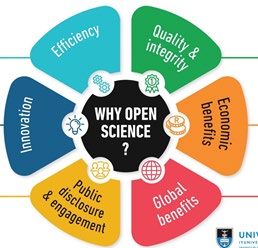
                                      Interested in Open Science?

                                      Join the students in the Open Science Student Support Group (OSSSG) for biweekly sessions where we discuss and
                                      learn about different open science practices and support each other in implementing these practices in our own
                                      research.

                                      The first practice we will discuss is REPRODUCIBLE CODE. We will dive into this topic over two
                                      sessions – the first will be in the week of January 25th.Stay tuned for details!

                                      For more information on the sessions and our group, please join our Slack workspace. For questions, contact Gwen van
                                      der Wijk @ gwen.vanderwijk@ucalgary.ca

Image by Gealen Pinnock (CC BY 4.0)
4

PSYCHOLOGY IN THE NEWS
Dr. Melanie Noel in UofC’s ArtsCast “Episode 6: Unrealistic depictions of pain in children's movies and
TV shows”

VOLUNTEER AND JOB POSTINGS
                                              For Undergraduate/Graduate Students

Research Coordinator Position, Stress and Development Lab, Harvard University

An experienced, independent, and highly-organized individual is sought for a full-time Research Coordinator position in the Stress and Development
Laboratory at Harvard University Psychology Department, run by Katie McLaughlin, PhD. The position will begin in late spring or early summer
2021. Our research examines the impact of environmental experience on children’s development. Most of our studies are focused on identifying
developmental mechanisms linking adverse environmental experiences to the onset of psychopathology. Under the supervision of Dr. McLaughlin, the
individual in this position will be involved in managing an active research lab with several large grants and participate in many aspects of the research
process, including recruitment of children and adolescents into research, preparation of IRB applications, data collection from children and caregivers,
supervision of volunteer research assistants, data management, programming behavioral tasks, and maintenance of a database for participant
recruitment and tracking. These duties will primarily focus on either an intensive repeated-measures fMRI study examining dynamic changes in
emotion, behavior, and brain function following exposure to stress in adolescents. Data collection for this study involves acquisition of psychophysiology
and MRI data in addition to assessments of mental health and exposure to stress and adversity. We strive to provide enriching opportunities for all
trainees, including those from backgrounds traditionally under-represented in psychology. Please see the Join Us page on our lab website
(https://sdlab.fas.harvard.edu/) for more details on our lab’s commitment to Diversity, Inclusion, and Belonging.

Duties and Responsibilities:

     •    Recruitment and screening of participants
     •    Data collection with children, adolescents, and caregivers in multi-modal studies involving psychophysiology, neuroimaging, clinical
          interviews, ecological momentary assessment, passive mobile sensing (e.g. Fitbits, screen time, call/text data) and mental health assessments
     •    Supervise a team of research assistants in data collection and data management
     •    Prepare IRB applications
     •    Program behavioral tasks
     •    Clean and organize data for analysis
     •    Maintain databases for participant recruitment and tracking
     •    General administrative duties to maintain the workings of the laboratory

Qualifications:

     •    Bachelor’s degree in a relevant academic area
     •    Experience working with children and adolescents (e.g. data collection or clinical experience) is preferred
     •     Experience with task presentation software or programming experience (e.g., Psychopy, Eprime, R, Python, Javascript) is preferred but not
          required
     •     Experience in collecting and/or analyzing neuroimaging data (i.e., MRI, fMRI, DTI) and comfort working in a command-line environment
          (e.g., Linux) is preferred but not required

Please click the link to apply: https://harvard.az1.qualtrics.com/jfe/form/SV_aeDQCciaMw0lyW9

If you have any further questions please feel free to reach out to our lab at sdlab@fas.harvard.edu.
5

                      Happy Monday!
     Congratulations to everyone included in the Monday Memo! The department
               recognizes your hard work and dedication. Keep it up!

                                     Department of
                                      Psychology
 Do you have something you would                      https://arts.ucalgary.ca/psychology/news
like to include in the Monday Memo    University of                /monday-memo
                                        Calgary
    newsletter? Please send it to
                                                               Phone: (403) 220-3600
      pnguy@ucalgary.ca before
                                     Administration
          Thursday at noon.            Building,                 Fax: (403) 282-8249
                                      Room AD 255

You can also read


