Treuman Katz Center
                      for Pediatric Bioethics

2017 Year in Review
←
→
Page content transcription
If your browser does not render page correctly, please read the page content below
Treuman Katz Center
for Pediatric Bioethics
2017 Year in Review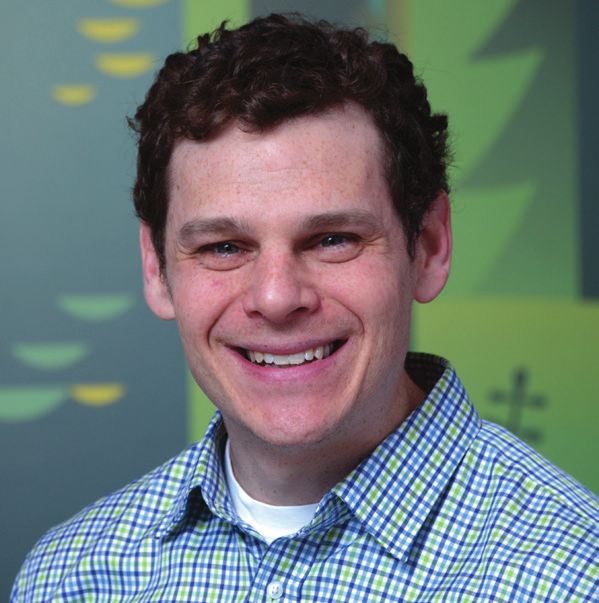
OUR MISSION

                                                To improve the lives of
                                                children and their families
                                                by enhancing the ethical
                                                deliberations in pediatric
                                                healthcare and research.
    Benjamin S. Wilfond, Director,
    Treuman Katz Center for
    Pediatric Bioethics

    The Treuman Katz Center for Pediatric Bioethics had another productive year in 2017.
    Highlights include:

    Stephanie Kraft was appointed acting instructor in the Division of Bioethics and
    joined the Center as faculty. Her research focuses on understanding patients’
    perspective about the role of respect and how to convey this during research
    recruitment in diverse communities.

    Joon-Ho Yu was appointed research assistant professor in the Division of Genetic
    Medicine and joined the Center as faculty. His research focuses on partnering with
    community organizations to support their engagement with genomics researchers.

    With support from Seattle Children’s Guild Association, the Nursing Bioethics Liaison
    Program was established in 2015. The leaders of this program, Kristi Klee, DNP, MSN,
    RN, CPN, and Leah Kroon, MN, RN, CPHON, completed our bioethics fellowship. The
    Nursing Bioethics Liaison Program is now supported by the Department of Nursing
    and 12 bioethics liaisons have been trained who work with their respective units
    providing education and access to consults for challenging cases.

    The Center was training six clinical fellows in 2017, the most ever. Research interests
    range from ethical implications of puberty suppression for transgender adolescents
    to the ethical appropriateness of interventions for sugar-sweetened beverages.

    The information in the 2017 Year in Review provides updated
    information about the efforts of our faculty, fellows and staff
    to improve the lives of children and their families.
2      Treuman Katz Center for Pediatric Bioethics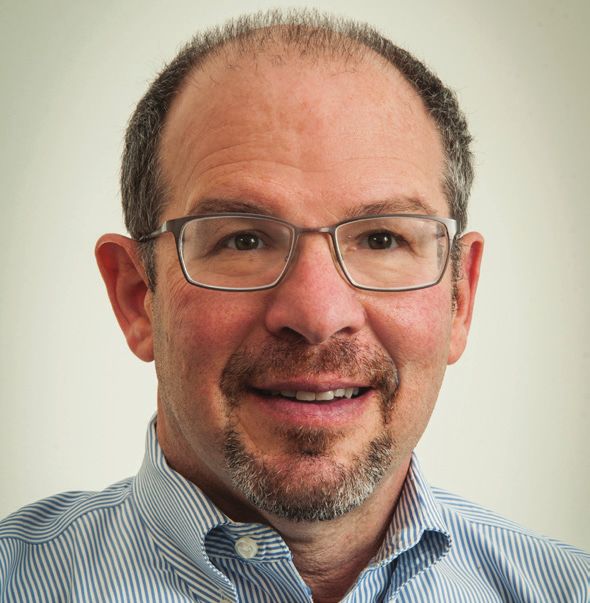
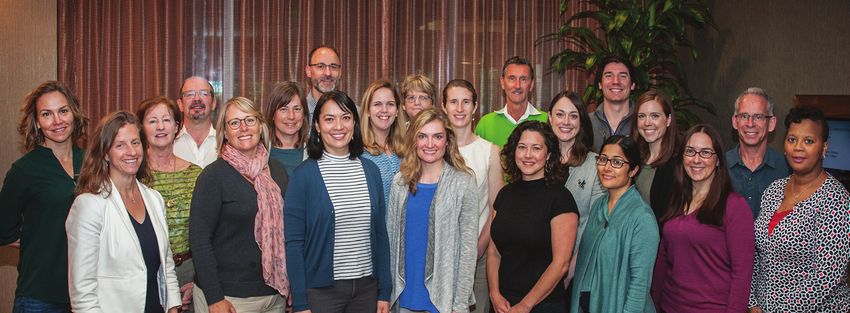
Faculty, affiliates, fellows and staff members continue to advance our understanding of ethical issues through a diverse
collection of projects and studies.

Faculty News
•   Douglas Diekema was elected as a Hastings Center Fellow.

•   Abby Rosenberg received the Early Career Investigator Award from American Academy
    of Hospice and Palliative Medicine.

FACULTY                                                                          AFFILIATES

Jonna Clark, MD, MA                      Seema Shah, JD                          Denise Dudzinski, PhD, MTS
Douglas Diekema, MD, MPH                 Elliott Weiss, MD, MSME                 Kristi Klee, DNP, MSN,
                                                                                 RN, CPN
Nanibaa’ Garrison, PhD                   Aaron Wightman, MD, MA
                                                                                 Leah Kroon, MN, RN,
Katherine Gentry, MD, MA                 Benjamin Wilfond, MD                    CPHON
Ross Hays, MD                            Joon-Ho Yu, PhD, MPH                    Jeff Sconyers, JD
Stephanie Kraft, JD
Mithya Lewis-Newby,
MD, MPH
Douglas Opel, MD, MPH
Abby Rosenberg, MD,
MS, MA

                                                                           seattlechildrens.org/bioethics                 3
PRESENTATION                    Scholarship
    HIGHLIGHTS
                                    55 presentations including 27 at national and
    Douglas Diekema                 international meetings
    Serving International
    Patients With Specialized       79 publications including 54 peer-reviewed papers/
    Medical Care: Exploring         organizational statements and 15 commentaries,
    the Impact on Local             editorials and letters
    Communities and the
    Ethical Obligations of
    Institutions

    American Society of             SELECTED PUBLICATIONS:
    Bioethics and Humanities        Ormond KE, Mortlock DP, Scholes DT, Bombard Y, Brody LC, Faucett WA,
    Annual Meeting, Kansas          Garrison NA, Hercher L, Isasi R, Middleton A, Musunuru K, Shriner D, Virani
    City, MO. October, 2017.        A, Young CE. Human germline genome editing. American Journal of Human
                                    Genetics. 2017;101(2):167-176.

                                    Opel DJ, Schwartz JL, Omer SB, Silverman R, Duchin J, Kodish E, Diekema
    Nanibaa’ Garrison               DS, Marcuse EK, Orenstein W. Achieving an optimal childhood vaccine policy.
    Diversity Matters:              JAMA Pediatrics. 2017;171(9):893-896.
    Scientific and Ethical          Porter KM, Cho MK, Kraft SA, Korngiebel DM, Constantine M, Lee SS, Kelley
    Strategies for Achieving        M, James C, Kuwana E, Meyer A, Diekema D, Capron AM, Magnus D, Wilfond
    Representation in               BS. Research on medical practices (ROMP): Attitudes of IRB personnel
    Genomics                        about randomization and informed consent. IRB: Ethics & Human Research.
                                    2017;39(1):10-16.
    American Society of             Rosenberg AR, Wolfe J. Approaching the third decade of paediatric palliative
    Human Genetics Annual           oncology investigation: Historical progress and future directions. Lancet Child
    Meeting, Orlando, FL.           and Adolescent Health. 2017;1(1):56-67.
    October 2017.
                                    Shah SK, Rosenberg AR, Diekema DS. Charlie Gard and the limits of best
                                    interests. JAMA Pediatrics. 2017;171(10):937-938.

    Stephanie Kraft                 Jecker NS, Wightman AG, Rosenberg AR, Diekema DS. From protection to
    Beyond the Therapeutic          entitlement: Selecting research subjects for early phase clinical trials involving
                                    breakthrough therapies. Journal of Medical Ethics. 2017;43(6):391-400.
    Misconception: The
    Challenges of New               Wightman A. Management dilemmas in pediatric nephrology: Time-limited
    Misconceptions About            trials of dialysis therapy. Pediatric Nephrology. 2017;32(4):615-620.
    Research
                                    Kauffman TL, Wilfond BS, Jarvik GP, Leo MC, Lynch FL, Reiss JA, Richards
                                    CS, McMullen C, Nickerson D, Dorschner MO, Goddard KA. Design of a
    American Society for            randomized controlled trial for genomic carrier screening in healthy patients
    Bioethics and Humanities        seeking preconception genetic testing. Contemporary Clinical Trials
                                                                                                   Trials.
    Annual Meeting, Kansas          2017;53:100-105.
    City, MO. October 2017.

4       Treuman Katz Center for Pediatric Bioethics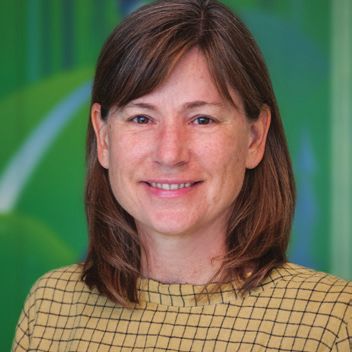
Publications 2013 - 2017                                         PRESENTATION
                                                                 HIGHLIGHTS

                                                                 Douglas Opel
                                                                 Reject or Retain? A
                                                                 Debate on Non-medical
                                                                 Exemptions in Childhood
                                                                 Vaccine Policy

                                                                 Pediatric Academic
                                                                 Societies Annual Meeting,
                                                                 San Francisco, CA. May
                                                                 2017.

                                                                 Seema Shah
                                                                 Ethical Considerations
                                                                 for Zika Virus Human
                                                                 Challenge Trials

                                                                 American Society for
                                                                 Bioethics and Humanities
                                                                 Annual Meeting, Kansas
National Leadership                                              City, MO. October 2017.

SELECTED HIGHLIGHTS:
                                                                 Elliott Weiss
• Douglas Diekema, National Conference and Exhibition            Personalized Decision-
  Planning Committee (Executive Committee Member),               Making in Pediatrics: Who
  American Academy of Pediatrics                                 Should Be at the Center
                                                                 of Medical Decisions?
• Nanibaa’ Garrison, Social Issues Committee, American
  Society of Human Genetics
                                                                 American Society of
• Abby Rosenberg, Bioethics Steering Committee,                  Bioethics and Humanities
  Children’s Oncology Group                                      Annual Meeting, Kansas
                                                                 City, MO. Oct 2017.
• Aaron Wightman, Chair, Bioethics Subcommittee,
  American Society of Pediatric Nephrology
• Benjamin Wilfond
           Wilfond, Standing Committee on Ethics,
  Canadian Institutes for Health Research
• Joon-Ho Yu,, Planning Committee, Ethical, Legal and
  Social Implications (ELSI) Congress, National Human
  Genomic Research Institute

                                                         seattlechildrens.org/bioethics      5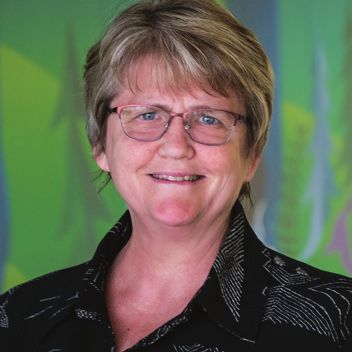
Funded Research Projects

    12 new projects (21 submitted)

    SELECTED HIGHLIGHTS:
    • Nanibaa’ Garrison, Perspectives and Attitudes on Genetic Research in the Navajo Nation
      Center for Clinical and Translational Research Pediatric Pilot Fund
    • Doug Opel, Adolescent Immunization Learning Collaborative
      Public Health Seattle & King County
    • Abby Rosenberg, Resilience Outcomes Among Adolescents and Young Adults With
      Advanced Cancer
      American Cancer Society Research Scholar Grant
    • Seema Shah, A New Ethical and Regulatory Approach for the Use of Human Challenge
      Studies With Emerging Infectious Diseases
      Greenwall Foundation—Making a Difference Grant
    • Elliott Weiss, MD, Parental Attitudes in Neonatal Clinical Trial Enrollment: Decision-Making
      Preferences and Reasoning Among Participants and Non-Participants
      Center for Clinical and Translational Research Clinical Research Scholars Program
    • Benjamin Wilfond, Exome Sequencing in Diverse Populations in Colorado and Oregon
      National Human Genome Research Institute

    Grant Applications 2013 - 2017

6     Treuman Katz Center for Pediatric Bioethics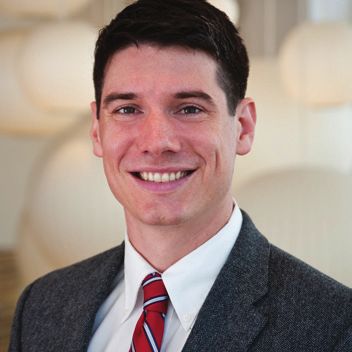
Consultation

Our clinical ethics consultants completed 41 consults in 2017.
 • Most common topics: treatment decisions (19), limitation of life-sustaining treatment (4),
   resource allocation (4), benefit/harm assessment (3), disclosure of results/information to
   patient/family (2), informed consent/parental permission (2), religious beliefs (2)
 • Requesting services include: critical care (6), neonatal intensive care (6), hematology-
   oncology (5), palliative care (4), hospital medicine (3), surgical service line management
   (2)

Our research ethics consultants completed 8 consults in 2017.
 • Most common topics: community considerations (2), recruitment/incentives (2)
 • Requesting services include (1 each): Cystic Fibrosis Therapeutics Development Network,
   pediatric critical care medicine, UW Institute of Translational Health Sciences, UW
   Department of Global Health, UW Institute for Stem Cell and Regenerative Medicine

13th Annual Conference

                                    The Cutting Edge
                                    Ethical Controversies in Pediatric Surgery

                                    13th Annual Pediatric Bioethics Conference

In 2017, 180 clinicians and scholars from the U.S. and worldwide attended
The Cutting Edge: Ethical Controversies in Pediatric Surgery.

QUESTIONS DISCUSSED AT THE CONFERENCE INCLUDED:
 • Should parents be allowed to refuse a solid organ transplant?
 • Are surgical complications different from medical errors?
 • Should surgeons share their success rates prior to surgery?
 • Should babies with Trisomy 18 be eligible for cardiac surgery?
 • Should innovative surgical techniques be subject to regulatory oversight?

                                                             seattlechildrens.org/bioethics     7
Bioethics Fellows
2017 Kristi Klee, DNP, MSN, RN, CPN, is a nursing practice support leader
who completed the bioethics fellowship. She is co-leading the Nursing
Bioethics Liaison program, where she trains other nurses in ethical issues
that commonly arise in clinical care.
2017 Leah Kroon, MN, RN, CPHON, is a clinical nurse specialist who
completed the bioethics fellowship. She is co-leading the Nursing Bioethics
Liaison program, where she trains other nurses in ethical issues that
commonly arise in clinical care.
2017 Tyler Tate, MD, is a pediatrician who completed the bioethics
fellowship and started a fellowship in Hospice & Palliative Medicine at Duke
University School of Medicine.
2016–present Emily Berkman, MD, is a pediatric critical care medicine
fellow in her second year of the bioethics fellowship. Her research focuses
on exploring the impact of recruiting international patients on resource
allocation decisions in pediatric intensive care units in this country.
8 Treuman Katz Center for Pediatric Bioethics2016–present Jessica Jeavons, JD, is in her second year of the bioethics
fellowship. Her research focuses on the ethical appropriateness of public
health interventions to reduce the use of sugar-sweetened beverages.
2016–present Jeanne Krick, MD, is a neonatology fellow in her second
year of the bioethics fellowship. Her research focuses on the parental
experience of uncertainty in neonatal intensive care units.
seattlechildrens.org/bioethics 9Spotlight on Research
Organ Transplants for Children With Profound Intellectual Disabilities:
Examining the Ethical Considerations in Policy Decisions
Prior to the 1990s, children were denied access to solid
organ transplantation due to intellectual disability. Reasons
cited include reduced life expectancy, a lack of cognitive
ability to understand transplantation and comply with the
required post-transplant therapy, a lack of improvement in
quality of life, and the scarcity of available organs.
Since 1995, the American Society of Transplant Physicians
guidelines state that cognitive impairment should be
Aaron Wightman’s research considered a contraindication to transplantation only
focuses on determining relevant when it is so severe as to impair adherence with essential
factors to weigh for children
with intellectual disabilities to medication regimens and no caregiver is available to
guide policy decision for organ
transplants. compensate for the individual’s limitations. Yet a 2006
survey of pediatric transplant centers reported that 56%
of transplant centers would consider an IQ of less than 35
a relative contraindication to solid organ transplantation.
Additionally, 38% of centers reported at least one patient
who had been evaluated and was not listed for transplant
but would have, but for the presence of intellectual
disability.
Pediatric nephrologist and Treuman Katz Center faculty
Aaron Wightman and collaborators analyzed data from
the UNOS database to identify pediatric recipients of heart,
liver or kidney transplant with intellectual disabilities. They
found that children with intellectual disabilities comprise
a significant minority of pediatric transplant recipients
(up to 24% for heart, 15% for liver and 16% for kidney).
These recipients had early (3–5 year) patient and allograft
survival that were no different than the intellectually
typical pediatric recipients. Similarly, for heart and liver
transplantation there was no difference between groups in
10 Treuman Katz Center for Pediatric Bioethicsimprovement in functional status. These studies provided
the first national large-scale description of children
with intellectual disability who underwent solid organ
transplantation.
Solid organ allocation policies represent a clear application of rationing and require a balance of
the principles of utility and justice. Our work seeks to inform and improve the development of
ethical policies for organ allocation for children.”
— Aaron Wightman
Wightman and collaborators, including Treuman Katz
Center faculty Douglas Diekema, have used empirical data
to further explore normative arguments for and against
inclusion of this population in solid organ transplant, along
with other considerations such as donor source, organ
PRIMARY COLLABORATORS
scarcity, quality of life, transition to adulthood, risk to
• Jodi Smith, Douglas
transplant centers, and the consideration of other forms of Diekema, Miranda Bradford,
Evelyn Hsu, Seattle Children’s
renal replacement therapies.
• Heather Bartlett, University
of Wisconsin School of
The team has concluded that there is no evidence to Medicine and Public Health
support assumptions that children with disabilities have • Aviva Goldberg, University of
Manitoba
any lower benefit than any other patient on the wait list.
Fairness requires applying criteria to all in an equal manner
FUNDING
and avoiding discriminating between individuals on morally
• Clinical Research Scholars
irrelevant grounds. Policy decisions to not offer a transplant Program, Center for Clinical
to a child with profound intellectual disabilities, then, and Translational Research,
Seattle Children’s
perhaps reflect social values rather than medical factors
and are in violation of guidelines intended to assure equal
access to care.
seattlechildrens.org/bioethics 11You can also read


