New York State Government Transparency Initiative - AS DIRECTED BY GOVERNOR KATHY HOCHUL
←
→
Page content transcription
If your browser does not render page correctly, please read the page content below
New York State
Government Transparency Initiative
    AS DIRECTED BY GOVERNOR KATHY HOCHUL
        Kathy Hochul, Governor | Basil Seggos, Commissioner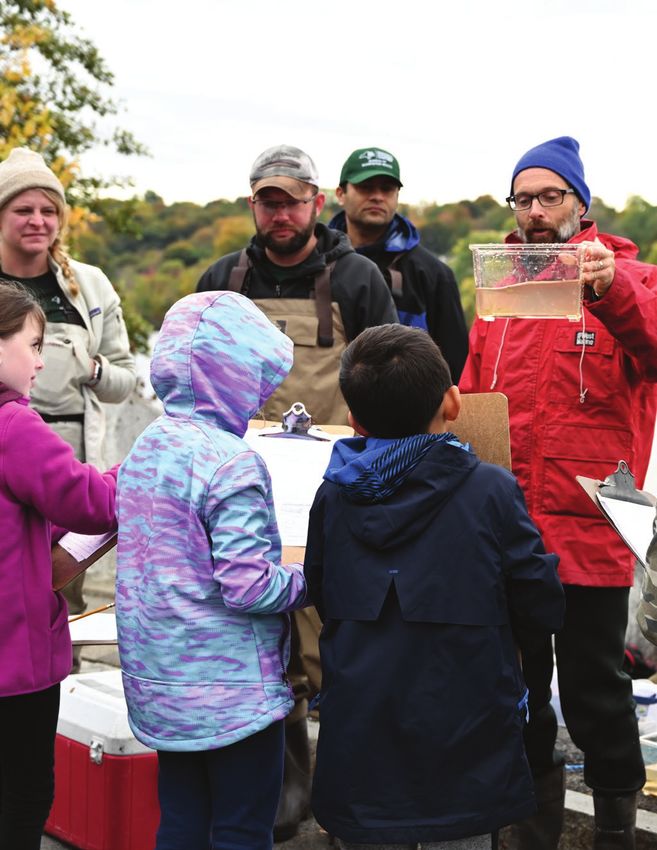
Governor Kathy Hochul
    Secretary Karen Keogh
    Counsel Elizabeth Fine

    October 20, 2021

    Thank you for this opportunity to share a report on the
    New York State Department of Environmental Conser-
    vation’s (DEC) sustained efforts to improve transparency
    and accountability.

    DEC knows how critical it is to be transparent in our
    operations and engages in extensive public outreach to
    provide access to data, information, and reports. Working
    as regulator, environmental steward, and educator, DEC
    fulfills its obligations to not only inform New Yorkers about
    our activities and decision-making, but also to ensure all
    of the state’s communities are engaged in our work.

    In this report, DEC shares efforts already underway to
    enhance communications and outreach, building on an
    already robust set of tools and resources and a wide
    range of engaged audiences. We also propose new initia-
    tives and improvements in technology that would bene-
    fit the public by increasing our reach. Finally, we offer
    recommendations for the Executive Branch to improve
    transparency in New York State government.

    DEC is proud of the quality and volume of information we
    make readily available to the public and our compliance
    with transparency laws. We are committed to working for
    the people and strive every day to maintain their trust as
    we champion an open government and work to protect
    New York’s environment for future generations.

    Sincerely,

    Basil Seggos
    Commissioner

2   |   NEW YORK STATE GOVERNMENT TRANSPARENCY INITIATIVE           NEW YORK STATE DEPARTMENT OF ENVIRONMENTAL CONSERVATION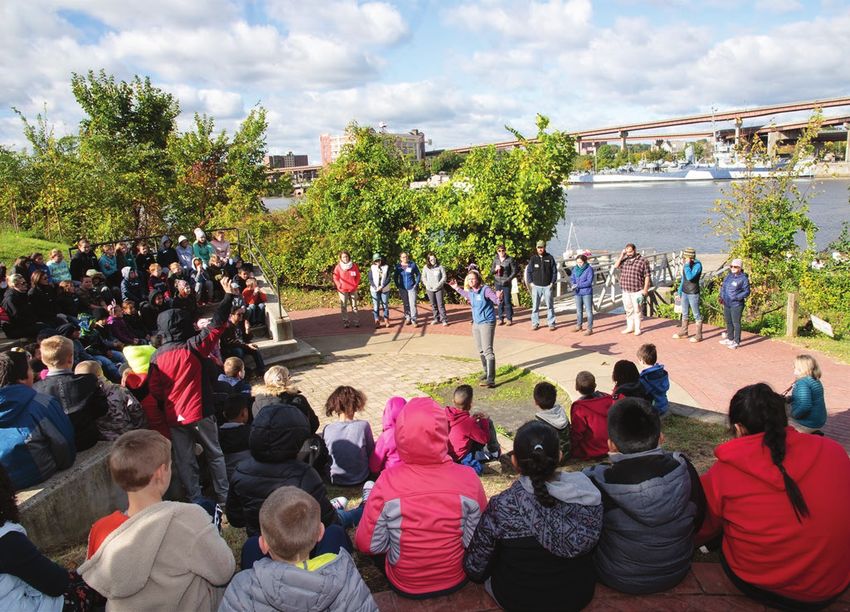
Table of Contents
                                                          I.          Executive
                                                                      Summary of Review  . .  . .  . . 4

                                                          II.         How DEC Provides
                                                                      Public Access to
                                                                      Agency Information  . .  . .  . . 9

                                                          III.        Advancing and
                                                                      Enhancing DEC’s
                                                                      Transparency  . .  . .  . .  . . 21

                                                          IV.         Proposals That Could
                                                                      Further Improve DEC’s
                                                                      Transparency and
                                                                      Accountability . .  . .  . .  . .  27

                                                          V.          Measures of
                                                                      Success and
                                                                      Long-term Monitoring . .  .  30

                                                          VI.         Additional
                                                                      Recommendations to
                                                                      Improve Government
                                                                      Transparency and
                                                                      Accountability in
                                                                      New York State . .  . .  . .  . . 31

                                                          VII.        Conclusion  . .  . .  . .  . .  . . 32

                                                          VIII.       Referenced Resources . . 33

NEW YORK STATE DEPARTMENT OF ENVIRONMENTAL CONSERVATION          NEW YORK STATE GOVERNMENT TRANSPARENCY INITIATIVE   |3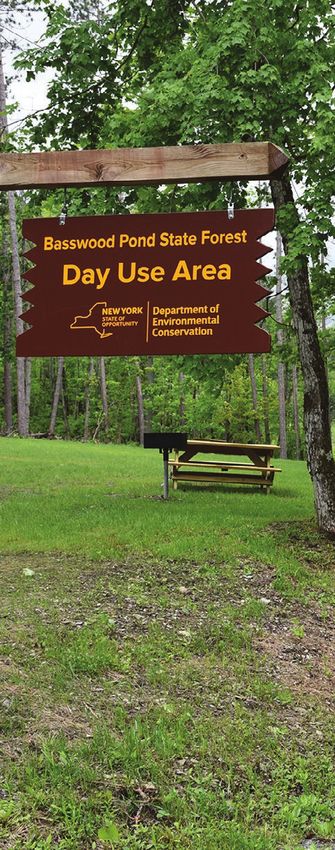
I. Executive
    Summary of Review
    Since its inception more than 50 years ago, the Depart-
    ment of Environmental Conservation (DEC) has strived
    for transparency and sought to involve the public in its
    decision-making. Public involvement and consultation
    are codified in the laws and regulations that give DEC
    its authority.

    DEC’s mission is to protect environmental quality, natural
    resources, public health, economic prosperity, and social
    well-being, while pursuing environmental justice and the
    empowerment of individuals to participate in the envi-
    ronmental decisions that affect their lives. To effectively
    participate in these processes, the public must be aware
    of and able to access key information, including publicly
    available reports.

    In response to Governor Hochul’s August 24, 2021,
    directive to review agency policies and practices, and
    assess ways that agencies can be more transparent, DEC
    surveyed programs to determine the current policies and
    practices that require providing public access to agency
    information. In addition, the agency evaluated plans to
    increase access to available information and provide
    even greater access to agency information in the future.

    DEC's review confirmed that the agency currently
    provides information through a variety of outreach means
    and methods to reach diverse audiences across the state.
    DEC programs, led by the agency’s executive team, fall
    into one of three categories: Natural Resources (forests,
    wildlife, fisheries, habitat and land conservation, outdoor
    recreation); Environmental Quality (air and water qual-
    ity, landfills, oil and chemical containment, mining, and
    permitting); and Support Programs (budget, person-
    nel, legal, operations, communications, etc.). This report
    describes attributes of public access and transparency for
    these three categories.

                                                136,000
          www.dec.ny.gov                         subscribers

                                                 47,000
                                                 subscribers
          40 million
        visitors per year
        (13,000 webpages and                     27,000
          14,000 documents)                      subscribers

4   |   NEW YORK STATE GOVERNMENT TRANSPARENCY INITIATIVE         NEW YORK STATE DEPARTMENT OF ENVIRONMENTAL CONSERVATION
Contemporaneous Access
                                                          to Agency Information
                                                          Website and Online Mapping Tools
                                                          A vast trove of information about DEC’s programs is avail-
                                                          able on the agency’s website. The website is one of the
                                                          agency’s primary communication tools, receiving nearly
                                                          40 million visitors annually to 13,000 pages, and an esti-
                                                          mated 14,000 electronic documents.

                                                          Using GIS technology, the agency provides information
                                                          using mapping and search tools such as the agency’s
                                                          DECinfo Locator tool, which provides more than 75 data
                                                          layers ranging from facility permit information and envi-
                                                          ronmental monitoring to potential environmental justice
                                                          areas and hiking and camping locations.

                                                          In addition, the agency provides permit applicants infor-
                                                          mation on wetland boundaries and sensitive habitats
                                                          through its Environmental Resources Mapper and the
                                                          Environmental Assessment Form Mapper.

                                                          Conventional Media
                                                          DEC’s Office of Media Relations provides a robust
                                                          accounting of agency activities to local, state, and national
                                                          media outlets, via press releases, news conferences,
                                                          responses to press inquiries, radio and television inter-
                                                          views, and direct telephone responses with reporters.

                                                          Social Media
                                                          DEC’s social media channels on Facebook, Instagram,
                                                          and Twitter are some the most popular among those
                                                          offered by state agencies, with nearly a quarter-mil-
                                                          lion followers. The agency provides a myriad of public
                                                          information through this medium on topics such as
                                                          trail closures, public meetings, emergency information,
                                                          public notifications, and hunting and fishing information.
                                                          The agency also uses a variety of other media, such as
                                                          YouTube and Flicker, to provide public access to meet-
                                                          ings, instructional videos, and information on agency
                                                          career opportunities.

                                                          Please see page 9 for details about the reach of DEC's
                                                          social media channels:

                                                             ● Facebook.com/NYSDEC

                                                             ● Twitter: @NYSDEC

                                                             ● Instagram.com/nysdec

                                                             ● YouTube

NEW YORK STATE DEPARTMENT OF ENVIRONMENTAL CONSERVATION           NEW YORK STATE GOVERNMENT TRANSPARENCY INITIATIVE   |5
Print and Digital Subscriptions
    DEC’s Environmental Quality and Natural Resource
    programs provide public information on a variety of topics
    ranging from hunting and fishing information to oil spills
    and sewage discharges. Information on these programs
    can be found through agency listservs that the public can
    subscribe to via DEC Delivers, or through various online
    newsletters, such as the Environmental Justice Newslet-
    ter and Outdoor Discovery Newsletter. DEC also prints
    the popular and widely distributed Conservationist maga-
    zine and Conservationist for Kids magazine. DEC reaches
    an estimated 333,000 New Yorkers via these electronic
    newsletters.

    In-Person Events,
    Public Meetings, and Hearings
    DEC also provides information to the public through
    hundreds of public meetings and hearings, and numerous
    outreach events, including outdoor recreation events and
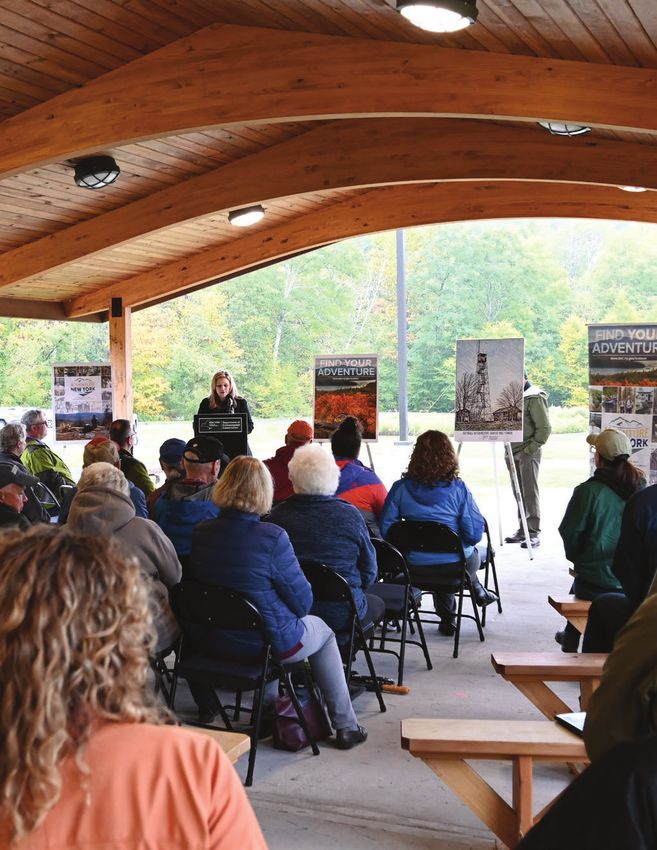
    festivals, State and county fairs, and stewardship events.
    DEC frequently conducts public information sessions about
    potentially contaminated sites and gathers public input on
    proposed regulations. The agency also provides informa-
    tion to the public via dedicated Public Participation Special-
    ists, that work with all agency divisions and programs to
    support outreach and ensure clear communication with
    their communities. These positions are unique to DEC
    and respond to public inquiries in person, via email, and
    by telephone, fielding more than 20,000 public inquiries
    annually. Each of DEC’s nine regions has a Public Partici-
    pation Specialist interacting with the media and the public.

    Submissions to the
    State’s Open Data Website
    The agency currently provides more than 140 datasets to
    the Open Data website, among the most robust in state
    government. These datasets are updated on a periodic
    basis, and DEC reviews agency data regularly to identify
    additional datasets to provide to the public.

    Postal and Online Communications
    DEC provides information to the public via direct mail-
    ings. Mailings are sent to parties potentially affected
    by pollutants, to groups such as hunters, anglers, and
    large forest tract landowners, as well as in response to
    agency enforcement actions and in response to letters
    sent directly to the Commissioner and other agency staff.
    Public notice of proposed regulations, policies, permits,
    and other significant action is also provided weekly with
    the online publication of the Environmental Notice Bulle-
    tin. Individuals can subscribe to receive an e-mail alert of
    each publication, and DEC also offers a subscription to
    the ENB in a printed format.

6   |   NEW YORK STATE GOVERNMENT TRANSPARENCY INITIATIVE            NEW YORK STATE DEPARTMENT OF ENVIRONMENTAL CONSERVATION
Actions to Increase
                                                          Access and Transparency
                                                          In addition to the programs and outreach channels
                                                          currently in place, DEC has several plans to expand
                                                          access to agency data for many programs, including:

                                                            ● Further reducing response time for FOIL requests,
                                                              while maintaining the quality of document produc-
                                                              tion and review;

                                                            ● Making additional data layers available on DECinfo
                                                              Locator, and developing mobile capabilities for this
                                                              application;

                                                            ● Rebuilding the agency’s website on a modern plat-
                                                              form that will include greater search capability and
                                                              mobile device functionality;

                                                            ● Increasing the number of data sets available
                                                              through the State’s Open Data website;

                                                            ● Developing a new permit tracking system (eTrack),
                                                              improving public access to permitting information;

                                                            ● Assessing a public-facing document management
                                                              system for oil and gas facilities that could provide
                                                              public access to view permits and compliance
                                                              documents;

                                                            ● Evaluating a capital project to replace the air emis-
                                                              sions permitting system that would provide public
                                                              to easily access to air permit information;

                                                            ● Updating outdoor signs, such as signage at trail-
                                                              heads and campgrounds, with multiple languages
                                                              to increase understanding in a wide range of
                                                              communities;

                                                            ● Working to create a language assistance location
                                                              on the homepage of DEC’s website that will have
                                                              all 10 required languages listed and linked to the
                                                              language assistance webpage;

                                                            ● Developing guidance on how to procure and use
                                                              interpreters for virtual public hearings and meetings;

                                                            ● Developing new procedures to ensure the public
                                                              knows they can request interpretation for hearings
                                                              and meetings;

                                                            ● Developing instructions for using Microsoft’s real-
                                                              time captions and subtitles in PowerPoint and
                                                              translation services in Word for non-official docu-
                                                              ments, and making staff aware of these options to
                                                              reduce costs; and

                                                            ● Enhancing notification of public participation plans
                                                              as provided for in Commissioner Policy 29, Envi-
                                                              ronmental Justice and Permitting.

NEW YORK STATE DEPARTMENT OF ENVIRONMENTAL CONSERVATION          NEW YORK STATE GOVERNMENT TRANSPARENCY INITIATIVE   |7
In addition to the planned improvements listed above,
    DEC is exploring additional means to further expedite
    and advance efforts to increase overall transparency and
    provide additional information to the public.

    These considerations include:

         ● Acquisition of a digital asset management system;

         ● Proactively posting frequently requested informa-
           tion or completed requests online;

         ● Purchasing software to easily convert responsive
           emails into a reviewable document (PDF) with opti-
           cal character recognition;

         ● Purchasing equipment for bulk scanning of docu-
           ments;

         ● Acquiring tools to identify duplicate electronic
           records to facilitate faster review of potentially
           responsive documents;

         ● Expanding the number of legal and support
           staff who would be dedicated to handling FOIL
           reviews and converting records to electronic
           formats; and

         ● Developing an agency-wide electronic document
           storage, routing, and retrieval system that would
           enhance the DEC’s ability to respond to records
           requests.

8   |   NEW YORK STATE GOVERNMENT TRANSPARENCY INITIATIVE       NEW YORK STATE DEPARTMENT OF ENVIRONMENTAL CONSERVATION
II.  How DEC
                                                          Provides Public
                                                          Access to Agency
                                                          Information
                                                          Website/Social Media
                                                          DEC’s public website is the agency’s top communication
                                                          tool, reaching more than 40 million people a year. With
                                                          more than 13,000 webpages and 14,000 documents, DEC
                                                          prioritizes easy access to information and its website
                                                          content covers both environmental quality and natural
                                                          resource information, including promotion of outdoor
                                                          recreation. DEC has several social media platforms that
                                                          engage directly with the public and provide information
                                                          about DEC and its operations. DEC’s Facebook page has
                                                          136,000 followers, followed by Instagram with 47,000
                                                          followers, and Twitter with 27,000 followers.

                                                          Recent success with this form of information sharing is
                                                          evident in DEC’s “Turtles Crossing the Road Campaign”
                                                          in conjunction with World Turtle Day, which received
                                                          193,700 views on Facebook, 27,600 views on Twitter,
                                                          and 26,200 views on Instagram in May 2021. In addition,
                                                          DEC posts information to multiple social media accounts
                                                          to notify the public about air quality alerts when air qual-
                                                          ity could become dangerous for certain individuals; these
                                                          tools allow the agency to alert the public to potentially
                                                          hazardous conditions in real time, by leveraging outreach
                                                          through multiple, complementary communications chal-
                                                          lenge to reach the largest possible audience.

                                                          DEC’s email subscription service delivered 3,420 emails
                                                          in past year to 333,000 subscribers on more than 100
                                                          topics through DEC Delivers. Content varies from legal
                                                          notices, hunting and fishing information, events, press
                                                          releases, sewage overflow notifications, air quality alerts,
                                                          hazardous waste site cleanup status, and permitting
                                                          updates, to name a few. Subscribers can select emails to
                                                          receive from dozens of program and geographic options.

                                                          DEC’s most popular lists include:

                                                             ● Freshwater Fishing and Boating: 164,551 subscribers

                                                             ● Hunting and Trapping: 139,431 subscribers

                                                             ● Wildlife, Fish and Marine Life: 114,782 subscribers

                                                             ● Forests, Plants, and Land Conservation: 100,000
                                                               subscribers

                                                             ● Invasive Species: 92,000 subscribers

NEW YORK STATE DEPARTMENT OF ENVIRONMENTAL CONSERVATION           NEW YORK STATE GOVERNMENT TRANSPARENCY INITIATIVE   |9
● Making Waves (water information): 63,216 subscribers

         ● Air Mail! (air resources): 44,000 subscribers

         ● RiverNet: 67,000 subscribers

         ● Hudson River Almanac: 30,000 subscribers

 In the past year, DEC posted more than 60 videos to the
 YouTube video platform, informing and educating the
 public on a wide variety of topics in multiple languages,
 such as changes to big game hunting regulations, use of
 minimum risk pesticides, Forest Ranger rescues, how to
 prepare for hikes, bird banding for research, how to set
 up a tent for camping, and a time lapse video of a timber
 rattlesnake den, among other topics.

 Press Releases
 and Media Outreach
 DEC issues more than 400 press releases and responds
 to an estimated 1,500 media inquiries each year,
 announcing enforcement actions, key milestones, educa-
 tional events, and agency initiatives. Staff develop press
 releases, opinion pieces, and other communications and
 outreach products, and host press events to disseminate
 DEC’s messages. Press releases issued in the current
 year and prior two years are available on DEC’s website.

 Public Meetings
 and Hearings
 Prior to the COVID-19 pandemic, DEC typically held
 hundreds of public meetings and hearings each year. In
 the wake of the pandemic, DEC shifted to holding virtual
 public meetings and hearings using the WebEx platform.
 The agency continues to host these virtual meetings as
 authorized by the amended Open Meetings Law.

 To ensure continuation of DEC’s capacity to host public
 meetings, staff quickly became proficient in WebEx,
 allowing the agency to continue to hold public meetings/
 hearings in a completely virtual world, providing internal
 training and developing best practices to ensure a seam-
 less virtual meeting experience for the public. To date,
 DEC has administered more than 100 virtual public meet-
 ings and hearings in 2021.

 Recently, DEC added a specific calendar widget to the
 agency website listing all upcoming meetings and hear-
 ings, which can easily be filtered according to public
 interest. In addition, DEC’s YouTube channel provides live
 broadcasts of public hearings, which are archived and
 can be viewed later. To further enhance public involve-
 ment, DEC offers guides to Permit Hearings, Enforce-
 ment Hearings, and Mediation, all of which are offered in
 English and Spanish.

10   |   NEW YORK STATE GOVERNMENT TRANSPARENCY INITIATIVE        NEW YORK STATE DEPARTMENT OF ENVIRONMENTAL CONSERVATION
Public Comment Periods
As part of statutory requirements for numerous program
areas (permitting of air, solid waste, and wastewater facil-
ities; hazardous waste cleanups; draft regulations; unit
management plans; etc.), DEC holds hundreds of public
comment periods every year, collecting tens of thousands
of comments. The public is notified of comment periods
via the Environmental Notice Bulletin, DEC’s calendar of
site public meetings and comment periods, agency press
releases, social media channels, and DEC Delivers email
messages.
Databases
DEC maintains a downloadable oil, gas, and other regu-
lated well dataset that is updated nightly, an online oil and
gas searchable database, and an online well-mapping
application. The searchable databases provide informa-
tion on well types, locations, and depths, permitting and
drilling history, ownership, and annual production, as well
as information regarding well operators, drillers, pluggers,
and companies that offer financial security services. Open
Data provides additional tools to export these datasets in
a variety of file formats and allows users to create custom
visualizations. Datasets that contain geographic coordi-
nates are also presented as maps. DEC publishes two
well datasets annually, one specific to abandoned wells,
and the other for current and recent oil and gas produc-
tion. DEC also publishes two historic oil and gas produc-
tion datasets.
Additional datasets available through Open Data include:
● Brownfield cleanup program certificates of comple-
tion;
● Breeding bird atlas;
● Waste tire storage maps;
● Biosolids storage/processing maps;
● Landfills;
● Transfer stations;
● Wastewater treatment plants;
● Spill incidents;
● Waterbody classifications;
● Issued Air Title V permits;
● Air monitoring stations;
● Active sporting license issuing agents;
● Amphibian and reptile biodiversity by county;
NEW YORK STATE DEPARTMENT OF ENVIRONMENTAL CONSERVATION NEW YORK STATE GOVERNMENT TRANSPARENCY INITIATIVE | 11● Private and commercial fish hatcheries;
● Forest Ranger wildland fire reporting incident time-
line;
● DEC land acquisition annual reports; and
● Harmful algal bloom (HABs) statewide occurrences
also available on the NYHABs tool on DEC’s website.
The public can also search detailed information on envi-
ronmental permit applications processed by DEC under
the Uniform Procedures Act through a search tool linked
to DEC’s Department Application Review Tracking (DART)
system. As new information is entered into the DART
system, it becomes immediately available. Another data-
set offered to the public contains information from the
Division of Mineral Resources Mined Lands permit files.
DEC's Division of Environmental Remediation (DER) offers
access to its clean-up site and spill data in a searchable
format. The following information is available:
● The Spill Incidents Database Search has records
dating back to 1978 and is updated nightly. This
database contains records of chemical and petro-
leum spill incidents.
● The Remedial Site Database Search contains
records of the sites being addressed under one
of DER's remedial programs—State Superfund,
Brownfield Cleanup, Environmental Restoration,
and Voluntary Cleanup.
● The Bulk Storage Database Search contains
records of facilities that are or have been regulated
under one of the Bulk Storage Programs—Petro-
leum Bulk Storage, Chemical Bulk Storage, and
Major Oil Storage Facility.
DEC also recently created a look-up tool on the agency
website to help the public locate local wildlife rehabilita-
tors to help care for injured/orphaned wildlife.
12 | NEW YORK STATE GOVERNMENT TRANSPARENCY INITIATIVE NEW YORK STATE DEPARTMENT OF ENVIRONMENTAL CONSERVATIONPublic Events
DEC staff interact with tens of thousands of people each
year to promote the work of its programs and educational
messages through numerous outreach events.
Sample outreach events include:
● New York State Fair
● New York International Auto Show
● New York Association of Towns Annual Conference
● National Hunting and Fishing Day events
● NYS Association of Conservation Commissions/
County Environmental Management Councils
● Earth Day events/environmental fairs
● Tree plantings
● Career fairs
● Classroom education events
● Envirothons
● Scouting events
● Wildlife festivals
● Fishing clinics
● NYS Trappers Association meetings
● Outdoor Accessibility Day New York Boat Show
● Sportfishing Federation Show
● First-Time Camper program
● I Love My Parks Day
● First-Day Hikes
NEW YORK STATE DEPARTMENT OF ENVIRONMENTAL CONSERVATION NEW YORK STATE GOVERNMENT TRANSPARENCY INITIATIVE | 13Laws, Regulations, and Total Number of
FOIL Requests Annually
Policies that Guide DEC’s 18,000
Transparency 16,000
14,000
DEC is subject to and complies with the numerous laws 12,000
and regulations that relate to agency transparency and 10,000
accountability. 8,000
6,000
FOIL 4,000
2,000
DEC receives thousands of FOIL requests each year. 0
Recognizing the importance of this public-facing program, 2016 2017 2018 2019 2020 2021
(Jan 1–Sept 30)
DEC applied LEAN principles to its internal process five
years ago. Through that effort and the use of specialized
Percentage of FOIL Requests
software, DEC has since improved its internal coordina-
Completed in 20 Business Days
tion, and helped cut in half the average time to comple- 90%
tion, averaging 17 business days to close requests over 88%
the last five years, and 11 business days for the first three 86%
quarters of 2021. While the majority of requests are 84%
processed within 20 business days, many responses 82%
take longer due to the complexity and scope of the 80%
records requested and the volume of potentially respon- 78%
sive records requiring review. In such cases, the agency 76%
ensures timely updates to requesters to advise them of 74%
the status of the process. Of note, less than 1% of the 72%
agency’s FOIL responses result in an appeal. 70%
2016 2017 2018 2019 2020 2021
(Jan 1–Sept 30)
DEC also endeavors to make many of its records avail-
able online and available without submitting a formal FOIL Percentage of FOIL Requests
request. The DEC FOIL Website advises how to locate Completed in 60 Calendar Days
agency information online, as well as how to submit a 100%
FOIL request. 98%
96%
DEC also proactively discloses various background docu- 94%
ments, including Environmental Impact Statements, Draft 92%
Permits, Responsiveness Summaries, and Final Permits, 90%
on a Notable Projects website for select permit appli- 88%
cations that are in the public interest. If the sought-after 86%
permit application is not listed, the agency provides for a 84%
public search of DEC Permit Applications via DART. 82%
80%
DEC also offers public access to documentation for many 2016 2017 2018 2019 2020 2021
(Jan 1–Sept 30)
remedial cleanup projects in the regional remediation
project listings, including fact sheets on proposed reme-
Average Time to Close FOIL
dial actions, records of decisions, document repositories,
Requests in Business Days
and other useful documents. The public is advised that 30
if the desired site is not listed, a Remedial Site Database
Search is available for access to clean-up site and spill 25
data in a searchable format.
20
To submit a FOIL request, visit dec.ny.gov/public/373.html. 15
10
5
0
2016 2017 2018 2019 2020 2021
(Jan 1–Sept 30)
14 | NEW YORK STATE GOVERNMENT TRANSPARENCY INITIATIVE NEW YORK STATE DEPARTMENT OF ENVIRONMENTAL CONSERVATIONLanguage Access Executive Order 26
Executive Order (EO) 26 established New York’s “State-
wide Language Access Policy.” DEC began implementing
this policy by providing oral interpretation (over the phone
and in person) and written translation to ensure individ-
uals with limited English proficiency (LEP) can access
important information about programs and services in
a cost-effective and efficient manner. To date, DEC has
undertaken several steps to comply with EO 26:
● DEC ensures that LEP individuals have access
to interpretation services when interacting with
agency staff and translation services when review-
ing agency documents.
● Interpretation services are available through a
third-party vendor for phone calls, face-to-face
interactions, and on-site interpretation.
● DEC works continuously to review and identify
important information to ensure vital documents
are translated into the ten most common non-En-
glish languages spoken in the state.
● Language access training is mandated for all DEC
employees.
● Additionally, DEC’s policy goes beyond EO 26 in
that any document, be it a pamphlet, poster, or
sign, will be translated upon request.
Open Data Executive Order 95
EO 95, “Using Technology to Promote Transparency,
Improve Government Performance and Enhance Citizen
Engagement,” created New York State Open Data. The
order directed all covered state entities to identify and
catalog their data and make publishable state data avail-
able on the New York State Open Data website.
Since the creation of Open Data, DEC has contributed
datasets on topics ranging from accessible outdoor recre-
ation destinations to watchable wildlife sites. Currently,
more than 70 DEC topics can be viewed on Open Data,
including tables (datasets), maps, charts, data lenses, and
links—a total of 149 items that are easily accessible and
updated regularly. DEC also has historical datasets that
do not require updating.
Three of DEC’s datasets—Fish Stocking Lists Data Lens,
Composting/Solid Waste Management Facilities Map, and
Current Season Spring Trout Stocking Data Lens—are
some of the most popular datasets on Open Data in the
state. The only New York State dataset with more views is
the New York State Lottery winning numbers.
To help facilitate the identification of potential data for
inclusion, DEC’s Open Data staff review new webpages
posted each month to proactively identify possible data-
set-related updates.
NEW YORK STATE DEPARTMENT OF ENVIRONMENTAL CONSERVATION NEW YORK STATE GOVERNMENT TRANSPARENCY INITIATIVE | 15State Administrative Procedures Act The State Administrative Procedures Act (SAPA) governs the process for the adoption of rules and regulations. DEC keeps the public informed of rulemaking activity in a vari- ety of ways. Each year, pursuant to SAPA, DEC publishes a Regulatory Agenda in the State Register and on its website. This is a listing of the regulations that may be proposed for adoption or amendment within that calen- dar year. Then, throughout the year, the agency presents proposed regulations for public comment, a process that may include public hearings. DEC provides informational material associated with subject of the rulemaking to ensure the public understands the topic and what action DEC is considering. Open Meetings Law In addition to the many public meetings that DEC hosts or attends for a variety of environmental issues, the agency also complies with the State’s Open Meetings Law when hosting meetings of a public body involving a quorum, such as the Invasive Species Council. The agency provides information on its website and conducts outreach via the Environmental Notice Bulletin and DEC public meeting calendar. To further facilitate transparency and access, DEC posts announcements of advisory group meetings it participates in, as well as resulting minutes or reports, on its website, for the Conservation Fund Advisory Board, High Peaks Strategic Planning Advisory Group, and the Catskill Advisory Group. State Environmental Quality Review New York's State Environmental Quality Review Act (SEQR) requires state and local government agen- cies to consider environmental impacts of their actions except where an action is specifically excluded or exempted from review. In many instances, other state or local laws require that such actions be noticed to the public for review and comment. When an Environmen- tal Impact Statement is required under SEQR, the lead agency (the agency or board principally responsible for undertaking, approving, or funding the action) must solicit public comment for at least 30 days on the draft Envi- ronmental Impact Statement. In addition to being subject to and complying with SEQR, DEC educates and informs the public about the purpose of SEQR, and provides on-line references to assist project sponsors, agencies, and the public. These include the SEQR Handbook, which addresses topics, issues, and concerns about SEQR in a “frequently asked questions” format; the SEQR Cook- book, which is an illustrated procedural guide through the SEQR process; and SEQR workbooks that are intended to guide project sponsors, agencies, boards, and the public through conducting environmental analyses. These docu- ments are both available on the DEC website. 16 | NEW YORK STATE GOVERNMENT TRANSPARENCY INITIATIVE NEW YORK STATE DEPARTMENT OF ENVIRONMENTAL CONSERVATION
Sewage Pollution Right to Know Law
                                                          DEC provides the public with information about the
                                                          Sewage Pollution Right to Know Law, what the reported
                                                          data contains, and how to access data and receive alerts
                                                          via the NY Alert system. In addition, DEC provides the
                                                          public with access to the U.S. Environmental Protection
                                                          Agency’s ECHO (Enforcement and Compliance History
                                                          Online) system, where they can view discharge moni-
                                                          toring reports issued by the regulated community, as
                                                          directed in their permits.

                                                          Records Retention Policy
                                                          The scope of DEC’s mission, the sheer volume of docu-
                                                          mentation associated with regulatory activities, and
                                                          legal obligations necessitate a robust records manage-
                                                          ment program. DEC’s Bureau of Records Management,
                                                          overseen by the Records Management Officer, ensures
                                                          DEC records are kept in accordance with the appro-
                                                          priate records retention program, State law, and U.S.
                                                          EPA requirements. DEC coordinates closely with State
                                                          Archives to ensure the timely transfer of records.

                                                          In addition, DEC has designated Records Management
                                                          Coordinators in each division, program, and region
                                                          to facilitate proper records management. The agen-
                                                          cy’s comprehensive Records Management Procedures
                                                          Manual, first issued in 2010, and updated in May 2021, is
                                                          available to all personnel though the agency’s intranet,
                                                          and explains records management, specific responsibili-
                                                          ties, records life cycles, retention periods, storage, disas-
                                                          ter preparedness, and disposition. There are currently
                                                          more than 100 agency records series accessioned by the
                                                          NYS Archive, and over 20,000 boxes of records stored in
                                                          the State’s Record Center pursuant to various retention
                                                          schedules. DEC provides the public with the list of various
                                                          types of records maintained to help facilitate requests for
                                                          information.

                                                          Legally Mandated Reporting
                                                          New York’s Environmental Conservation Law includes
                                                          reporting requirements through which DEC informs the
                                                          Governor and the State Legislature about a variety of
                                                          environmental matters. Recent reports include the Clean
                                                          Vehicle Project, the State Land Acquisition Report, and
                                                          the Hazardous Waste Facility Siting Plan Review. In addi-
                                                          tion, DEC issues an annual report that provides an over-
                                                          view of activities and operations.

                                                          DEC is currently finalizing additional reports for release
                                                          as required by law, including the plan for mitigation and
                                                          remediation of drinking water impairment caused by solid
                                                          waste sites, the water pollution control program report, a
                                                          revised solid waste management plan, and a review of
                                                          state agency environmental audits.

NEW YORK STATE DEPARTMENT OF ENVIRONMENTAL CONSERVATION          NEW YORK STATE GOVERNMENT TRANSPARENCY INITIATIVE   | 17
As part of this review, DEC noted additional reports that
have not yet been submitted for a variety of reasons,
including outdated utility and lack of data and informa-
tion provided by third parties. To ensure better oversight,
and the expeditious completion of reports, the agency
plans to develop a report tracking team that will support
programs and divisions in achieving compliance. Ensur-
ing a centralized approach for the development of reports
will improve performance in this area.
DEC is also obligated to provide notices or reports to the
public for various matters, such as:
● Notification about timber sales on state forests;
● The compendium of laws, rules, and regulations
associated with the management and conserva-
tion of freshwater fisheries and freshwater fish
resources;
● The white-tailed deer and the black bear manage-
ment plans; and
● The Strategic Plan for Forest Management
on Wildlife Management Areas.
DEC makes these reports available to the public on the
agency’s website.
Project Sunlight
(Public Integrity Reform Act of 2011)
The Public Integrity Reform Act of 2011 required the
development of a public database, hosted by the Office
of General Services (OGS), known as “Project Sunlight,”
in which state agencies report certain appearances of
certain individuals and entities before the agency to
provide the public with an opportunity to see who is
interacting with government decision-makers in certain
subject areas (procurement of real property, goods, and
services; rate making; regulatory matters; agency-based
judicial or quasi-judicial proceedings; or the adoption/
repealing of a rule or regulation).
DEC complies with Project Sunlight and reports applica-
ble in-person meetings or video conferences. The agency
has designated a Project Sunlight Liaison who maintains
a list of individuals required to report such meetings,
coordinates their addition to the Project Sunlight appli-
cation with OGS for data entry, and ensures enrollment
in training. In addition, DEC has an internal agency policy
addressing Project Sunlight requirements. For 2021, 15
meetings were recorded for the first three-quarters of the
year.
18 | NEW YORK STATE GOVERNMENT TRANSPARENCY INITIATIVE NEW YORK STATE DEPARTMENT OF ENVIRONMENTAL CONSERVATIONLobbying Act
(Executive Law Section 166)
As a regulatory authority, DEC is required by Section 166
of the Executive Law, also known as the Lobbying Act, to
maintain a record of who appears before it, for a fee as a
third party on behalf of a person or organization subject
to the regulatory jurisdiction of the agency. DEC fulfills
its obligations under the Lobbying Act and provides its
completed forms to JCOPE as required each quarter.
Public Officers Law 73-a
(Financial Disclosure)
DEC has identified personnel subject to the financial
disclosure reporting requirements of Public Officers Law
73-a due to either status as a policymaker, or because of
the statutory salary threshold. DEC’s Ethics Officer coor-
dinates with the Director of Personnel to ensure JCOPE
notifies individuals of their legal obligation to file a finan-
cial disclosure statement and to complete required ethics
training. There are no delinquencies among DEC person-
nel for either financial disclosure filing or training.
Environmental Notice Bulletin
The Environmental Notice Bulletin (ENB) is an official
DEC publication, produced since 1976 as required by
the Environmental Conservation Law. It is published
weekly and includes notices related to:
● Complete applications for environmental permits
administered under the Uniform Procedures Act
(UPA);
● State Environmental Quality Review (SEQR) for
activities that are being reviewed by state and local
agencies;
● DEC hearings;
● Proposed and adopted changes to DEC policy;
● Technical guidance and regulations; and
● An assortment of other environmental notices.
DEC posts approximately 2,500 notices in the ENB
per year, with more than 1,000 pertaining to DEC
permit actions.
NEW YORK STATE DEPARTMENT OF ENVIRONMENTAL CONSERVATION NEW YORK STATE GOVERNMENT TRANSPARENCY INITIATIVE | 19Public Involvement and Transparency Guidance/Information DEC staff adhere to the agency’s Citizen Participation Handbook for remedial programs, which sets forth guide- lines for complying with regulations that require meaning- ful public consultation before and during site classification and cleanup. In addition, Commissioner Policy 29, Envi- ronmental Justice and Permitting, requires applicants for permits covered by the policy to actively seek public participation throughout the permit review process and include a written public participation plan as part of its complete application. The DEC addresses outreach and intergovernmental collaboration with Indian Nations through Commissioner Policy 49, Contact, Cooperation, and Consultation with Indian Nations. Close consultation ensures that the DEC and Indian Nations are better able to adopt and imple- ment environmental and cultural resource protection poli- cies and programs in a manner that is cognizant of shared concerns and interests. Providing Clear and Concise Written Information While many New Yorkers now get their information about DEC from digital sources, DEC produces hundreds of printed public documents, signs, reports, displays, and publications designed to inform and enlighten the public about the many aspects of DEC programs that touch the lives of every New Yorker. This year, DEC’s flagship publication, Conservationist magazine, celebrated its 75th year of continuous publi- cation. The magazine is packed with informative and entertaining articles, first-rate photography, and stunning artwork. Articles cover a broad range of environmental and natural history topics, including fishing, hiking, recre- ation, travel, hunting, and nature studies. It has more than 43,000 paid subscribers. Its complement, Conservationist for Kids, has been published since 2007, and is written to fourth-grade curriculum standards. Published bimonthly, each issue is included as an insert in Conservationist magazine, in addition to being mailed free of charge to every public fourth grade class in New York State. To subscribe to the Conservationist, visit dec.ny.gov. 20 | NEW YORK STATE GOVERNMENT TRANSPARENCY INITIATIVE NEW YORK STATE DEPARTMENT OF ENVIRONMENTAL CONSERVATION
III.  Advancing
                                                          and Enhancing
                                                          DEC’s Transparency
                                                          DEC is committed to implementing several measures that
                                                          would improve the agency’s transparency and account-
                                                          ability. The measures listed below are currently under
                                                          development or recently implemented.

                                                          Improvements to DEC’s
                                                          Digital Communications
                                                          DEC Website (dec.ny.gov)
                                                             ● DEC’s current web content system is outdated
                                                               and unstable, and both the operating system and
                                                               server are in critical need of replacement. Planning
                                                               is underway with the Office of Information Technol-
                                                               ogy Services to move DEC’s web content system
                                                               to a new platform in 2022 that will utilize ITS’s
                                                               recommended cloud hosting solution for website
                                                               stability. The new platform will increase optimiza-
                                                               tion for mobile users, which comprise more than
                                                               60% of DEC’s website traffic. It will also allow
                                                               for greater functionality and engagement on the
                                                               website, improving access to online information.
                                                               As part of this enhancement effort, DEC conducted
                                                               a web content review to identify redundant and
                                                               outdated content, as well as review compliance
                                                               with web standards. For example, DEC’s Division
                                                               of Fish & Wildlife Bureau of Wildlife reviewed over
                                                               600 pages, identifying more than 150 as obsolete
                                                               or superseded by other sites.

                                                             ● Staff are gathering public feedback on DECinfo
                                                               Locator through user surveys to identify usabil-
                                                               ity enhancements and are working with the ITS
                                                               to implement improvements, with the targeted
                                                               completion in June 2022.

                                                             ● As part of the web content system revision, staff
                                                               are working to improve the searchability of reports
                                                               on DEC’s website through search engine optimiza-
                                                               tion methods and better search index settings and
                                                               anticipate public access to this feature in 2022.

                                                             ● State land PDF maps on DEC’s website are being
                                                               georeferenced as they are updated; this is an
                                                               ongoing activity which should be completed in the
                                                               next two years.

NEW YORK STATE DEPARTMENT OF ENVIRONMENTAL CONSERVATION         NEW YORK STATE GOVERNMENT TRANSPARENCY INITIATIVE   | 21
● DEC is planning to include certain work plans in the
Environmental Notice Bulletin for new construction
and expansion of facilities on state lands in 2022.
● Additional website public outreach is planned to
improve the transparency of new land acquisi-
tions, including the posting of new deeds on DEC’s
website in 2022.
● Plans are underway to include land acquisition
data and potentially timber sale notifications
through DEC’s listserv in 2022.
● DEC is planning to simplify and reorganize the
website for publicly released Hudson River Natu-
ral Resource Trustee documents in the Spring of
2022 to make it more user friendly.
● DEC is exploring ways to share trailhead registry
data, including total number of visitors per trail-
head. The agency plans to assess the feasibility
of this data gathering effort in the coming months.
Social Media Channels
● DEC is greatly expanding the use of live broad-
casts using Facebook and Instagram.
● DEC is planning to provide annual training to staff
to improve its live broadcasts. Materials are in
development, with training anticipated in Fall of
2022.
● Staff have added planned live broadcasts to DEC’s
online public events calendar to help reach a wider
audience.
● DEC is developing case studies on the effective-
ness of various digital media platforms and will use
the data collected to better target different audi-
ences with specific messaging.
● Staff are planning to increase the number and
frequency of climate change social media posts
and listserv emails in 2022.
● Air Resources’ social media posts were recently
increased from one every few months to two to
five per month to grow public understanding of
air regulations and increase subscribership to the
Division’s e-newsletter.
● Staff are working to post real-time spill information
to social media to enhance public awareness.
22 | NEW YORK STATE GOVERNMENT TRANSPARENCY INITIATIVE NEW YORK STATE DEPARTMENT OF ENVIRONMENTAL CONSERVATIONTimely Preparation
of Legally Mandated
Reporting and Ways to
Make Useful Information
Available to the Public
● DEC is pursuing a capital project to replace its Air
Facility System permitting structure, which would
allow the uploading of permit applications and
supporting documentation to DEC’s website and
enable the public to more easily access and review
permitting materials. This improvement is expected
to reduce the number of related FOIL requests.
● DEC is working with New York SeaGrant to publish
a story map in the Fall of 2022 to explain the regu-
latory process.
● DEC is currently evaluating reporting requirements
and allocating staffing resources to help ensure
necessary reports are completed in a timely
manner. The agency will also determine whether
proposals for statutory revisions may be necessary.
Improvements
to DEC Databases
● DEC recently established an Open Data email
drop-box to request information and submit data-
sets (Open.Data@dec.ny.gov).
● DEC is working on a procedural manual for its
Open Data process, which will be completed by
the end of the year.
● DEC is adding commercial fishing annual quotas,
limits, and fishing records to Open Data, with publi-
cation targeted for the end of the year.
NEW YORK STATE DEPARTMENT OF ENVIRONMENTAL CONSERVATION NEW YORK STATE GOVERNMENT TRANSPARENCY INITIATIVE | 23Improvements to
DEC’s FOIL program
● DEC plans for future phases of the eTrack system
to improve public accessibility for all aspects of
permit applications, as it will include the ability to
view final issued permits and application materials,
which will reduce need for formal FOIL requests.
This technology development is underway with
enhancements targeted in phases from 2022-
2025.
● DEC plans to begin on-line reporting for organics
facilities in 2022 or 2023, which will ensure the
reporting data is readily available, reducing the
resources needed for FOIL requests.
● Spills has undertaken an ongoing project to
improve and enhance information sharing by
implementing an effort to store all Spills files
electronically, which will help with coordinating
responses to FOIL requests.
Improvements to DEC’s
Compliance with EO 95
The New York State Comptroller’s Office (OSC)
commenced an audit of DEC's compliance with EO95 in
March 2020, at the very beginning of the State’s response
to COVID-19. OSC issued a final audit report in May 2021,
noting that DEC had taken steps to comply with the order,
and concluding that the data DEC posts to Open Data
is generally up-to-date and easily accessible. The audi-
tors had only two recommendations: create a catalog of
publishable data; and develop additional procedures to
ensure data is reliable and usable. Since receiving the
audit report, DEC has taken additional steps by better
incorporating Open Data in DEC core business practices.
DEC is taking the following steps to further improve
compliance with EO 95 over the next year:
● Developing a catalog of publishable data;
● Working to identify datasets when new information
is published on DEC’s website, including the addi-
tion of prohibited and regulated invasive species
list, as well as adding data on forest conservation
easements for land trusts;
● Working to automatically update data sets in real
time;
● Creating a training seminar to educate DEC staff
on the Open Data process; and
● Publicizing new Open Data datasets in DEC’s
online newsletters.
24 | NEW YORK STATE GOVERNMENT TRANSPARENCY INITIATIVE NEW YORK STATE DEPARTMENT OF ENVIRONMENTAL CONSERVATIONTransfer of
Pertinent Records
to the State Archives
● The further development of eTrack in 2022
includes a Document Management Service, which
will help manage and automate some aspects of
records retention.
Participation of Agency
Personnel in Community
Events and Town Meetings,
and Providing New Avenues
for Public Participation in
Government Decision-Making
● DEC is hiring regional contract staff to improve the
agency’s ability to hold climate change meetings
with local governments, and current staff are being
trained in the skills necessary to conduct more
effective public meetings.
● DEC is planning to employ a new approach to its
fisheries public meetings in 2022 that would entail
posting prerecorded YouTube presentations in
advance of an open virtual public meeting. This
will allow interested parties to view the information
in advance, affording more meaningful dialog and
allowing the public to revisit the material if neces-
sary.
Improvements to
Implementation of
Executive Order 26
● DEC is working on ways to provide messages on
outdoor signs, such as at trailheads and camp-
grounds, in multiple languages so they can be
more universally understood.
● DEC is developing instructions for using Microsoft’s
real-time captions and subtitles in PowerPoint and
translation services in Word for non-official docu-
ments and make staff aware of these options to
reduce costs.
● DEC will develop a supplemental list of vendors
outside of the OGS language vendors that can be
used when requested languages are not available
under the contracted vendors.
NEW YORK STATE DEPARTMENT OF ENVIRONMENTAL CONSERVATION NEW YORK STATE GOVERNMENT TRANSPARENCY INITIATIVE | 25● Staff created a language assistance location
on DEC’s homepage in August 2021 with all
ten required languages listed and linked to the
language assistance webpage.
● DEC developed guidance for procuring and using
interpreters for virtual public hearings and meet-
ings.
● Staff are developing new procedures to ensure
that the public knows they can request interpreta-
tion for hearings and meetings.
● Staff are updating internal guidelines for schedul-
ing and conducting virtual meetings and hearings.
● Regional staff are planning role-play training
sessions to act out various scenarios that could be
encountered with individuals with limited English
proficiency.
● DEC is providing access to interpreters for projects
that fall outside of the purview of Language Line.
Providing Clear and Concise
Written Information
● DEC is currently in the process of posting all
publicly accessible trout streams in the state
with signs that clearly explain the management
category and fishing regulations associated
with a particular stream reach. The enhance-
ment measure will provide anglers with a clearer
understanding of the regulations, reduce uninten-
tional violations, and make fishing more accessible.
● DEC is seeking to develop a Saltwater Fishing
Guide, similar to a new Freshwater Guide devel-
oped in 2021.
● DEC is in the process of developing a fisheries
handbook that will contain a set of guiding prin-
ciples for fisheries management so the public can
better understand how DEC manages the fisheries
resource.
● DEC is developing plans to update informational
kiosks at priority sites to better welcome and
educate the public.
26 | NEW YORK STATE GOVERNMENT TRANSPARENCY INITIATIVE NEW YORK STATE DEPARTMENT OF ENVIRONMENTAL CONSERVATIONIV. Proposals
That Could Further
Improve DEC’s
Transparency and
Accountability
To further improve DEC’s transparency and accountability,
particularly its capacity to post reports, updates, and infor-
mation on the agency’s website, resources to support the
website conversion are the agency’s most pressing need.
In the event the agency receives additional funding and
personnel, the following initiatives will be considered for
further action.
Improvements to DEC’s
Digital Communications
● DEC is exploring ways to expand the datasets
available on DECinfo Locator and is investigating
the development of a mobile application to reach
the majority of users who access DEC’s digital
information via a mobile device, including:
Petroleum spills files;
Remediation correspondence and memos
(which are normally subject to FOIL); and
Composting facilities, combustion facili-
ties, recycling handling and recovery facili-
ties, household hazardous waste facilities,
construction and demolition debris facili-
ties, vehicle dismantler facilities, scrap metal
processors, and waste tire handling and
recovery facilities.
● When the DEC website transition to the new Drupal
platform is complete, DEC can identify opportuni-
ties to post and share real-time data collected by
monitors in various locations. To bolster communi-
cations to a wider range of audiences statewide,
DEC could boost its social media channels with
targeted investment of resources.
● Rulemakings are significant undertakings. Current
practices remove all supporting documentation
from DEC’s website after one year. Supporting
documents could be retained on the website in an
electronic repository.
NEW YORK STATE DEPARTMENT OF ENVIRONMENTAL CONSERVATION NEW YORK STATE GOVERNMENT TRANSPARENCY INITIATIVE | 27● Many programs’ document retention schedules
are out-of-date and do not incorporate electronic
filing. Programs should review existing retention
schedules, delete duplicate or obsolete records,
and incorporate electronic filing practices to the
maximum extent possible.
● To improve outreach and communications at
DEC lands and sites, propose to improve internet
access and undertake efforts to increase signal
strength at remote locations.
● To better communicate with visitors, DEC could
take a complete inventory of signage, prioritize
updating signage in high traffic locations and addi-
tional languages as needed, and add QR codes to
signage so the public can easily find more informa-
tion about the notice or other relevant information.
Improvements in
Legally Mandated
Reporting and Ways to
Make Useful Information
Available to the Public
● Review current reporting requirements to eliminate
redundancy and assess their necessity considering
subsequent environmental laws and policies.
● Currently, DEC does not have a means to publicly
share hearings records and documents other than
scanning paper records and posting them to the
agency’s website. DEC could use a publicly acces-
sible electronic document management system,
similar to one the Department of Public Service
uses, to eliminate paper records and make public
access to hearing documents more accessible.
● The purchase of high-volume scanners would facil-
itate the conversion of paper files to electronic.
Improvements to
DEC Databases
● DEC is evaluating a public-facing document
management system for oil and gas facilities that
would allow the public to download permits and
compliance documents. This could be combined
with DECinfo Locator so the public could find
oil and gas documents geospatially. Additional
resources would be needed for such an initiative.
28 | NEW YORK STATE GOVERNMENT TRANSPARENCY INITIATIVE NEW YORK STATE DEPARTMENT OF ENVIRONMENTAL CONSERVATION● DEC’s Title V air facility emissions database could
be updated to provide emissions data annually
to EPA’s National Emissions Inventory for point
sources and could be enhanced through a capital
project to replace the state air facilities database. A
replacement system would make the public report-
ing of data much more efficient and timelier. The
investment in a replacement of the state database
would also improve FOIL processing, as it could
include public facing reports and query tools,
which could work more seamlessly with DECinfo
Locator and Open Data.
Proposals to Improve
DEC’s FOIL Program
● An agency-wide conversion to electronic records
would improve the agency’s ability to respond to
FOIL requests, improve file searchability, and allow
for many documents to be uploaded directly to
DEC’s website, significantly reducing the quantity
of FOIL requests.
● To improve efficiencies and expedite requests,
DEC could purchase software that could easily
convert responsive email into a reviewable
document (PDF) with optical character recogni-
tion, purchase equipment for bulk scanning of
documents; and purchase a tool to de-duplicate
non-email electronic records to facilitate faster
review of potentially responsive documents.
Participation of Agency
Personnel in Community
Events and Town Meetings,
and Providing New Avenues
for Public Participation in
Government Decision-Making
● To make virtual meetings and hearings more acces-
sible to people of all abilities, DEC could assess
additional outreach including YouTube broadcasts
of live events and distribution of outreach materials
via USPS Every Door Direct Mail service.
● To streamline DEC’s communication process, the
agency is investigating development of an elec-
tronic comment software system to collect public
input during open public comment periods. This
public comment system would unify the way DEC
accepts comments by using one online comment
form and would greatly reduce the public’s need
to search for the appropriate email or address to
send comments.
NEW YORK STATE DEPARTMENT OF ENVIRONMENTAL CONSERVATION NEW YORK STATE GOVERNMENT TRANSPARENCY INITIATIVE | 29V. Measures of Success and Long- term Monitoring As evidenced in this report, DEC is committed to public access and information sharing, and has concrete plans to further enhance its performance, as well as propos- als that may be feasible with additional resources. The agency will gauge its success with continued use of website analytics tools to assess number of visitors, dura- tion of visit, unique users, and repeat visits. DEC will also measure access to the various database tools offered on the website to gauge public use. This will drive our awareness of public interest and help determine addi- tional information or outreach that may be needed. DEC will monitor the activity of followers on social media chan- nels, and their references to the agency or distribution of agency resources. DEC will also track public comments for references to the usability of the agency’s website, as well as conduct usability testing after the new website implementation. In addition, the agency will measure attendance at public meetings and hearings. DEC also plans to continue to track FOIL request volume, to see if the anticipated increase in available public infor- mation impacts the number of requests; a measure of success will be a decrease in FOIL requests because of additional information posted online. 30 | NEW YORK STATE GOVERNMENT TRANSPARENCY INITIATIVE NEW YORK STATE DEPARTMENT OF ENVIRONMENTAL CONSERVATION
You can also read


