Nordic Stakeholder reference group meeting - Arlanda Airport May 21th 2019
←
→
Page content transcription
If your browser does not render page correctly, please read the page content below

Nordic Stakeholder reference group meeting

Arlanda Airport May 21th 2019
Agenda
#    Topic                                                                                        Time
1    Opening the meeting, role and tasks of the reference group, introductions and expectations   09:30
                                                                                                  (80min)
2    Competition Act                                                                               10:50
                                                                                                  (10min)
3    What is Nordic Balancing Model and what are the dependencies between NBM and Higher           11:00
     Time Resolution (HTR)
                                                                                                  (45min)
4    Lunch                                                                                        11.45

                                                                                                  (45min)
5    Results from the reference group members’ pre-assignment                                      12.30
                                                                                                  (45min)
6    NBM and HTR Roadmap                                                                           13.15
                                                                                                  (30min)
7    Coffee break                                                                                  13.45
                                                                                                  (30min)
8    Roadmap for stakeholder cooperation                                                           14.15
                                                                                                  (30min)
9    Next meeting and assignment for participants                                                  14.45
                                                                                                  (15min)
10   AOB                                                                                           15:00

                                                                                                            2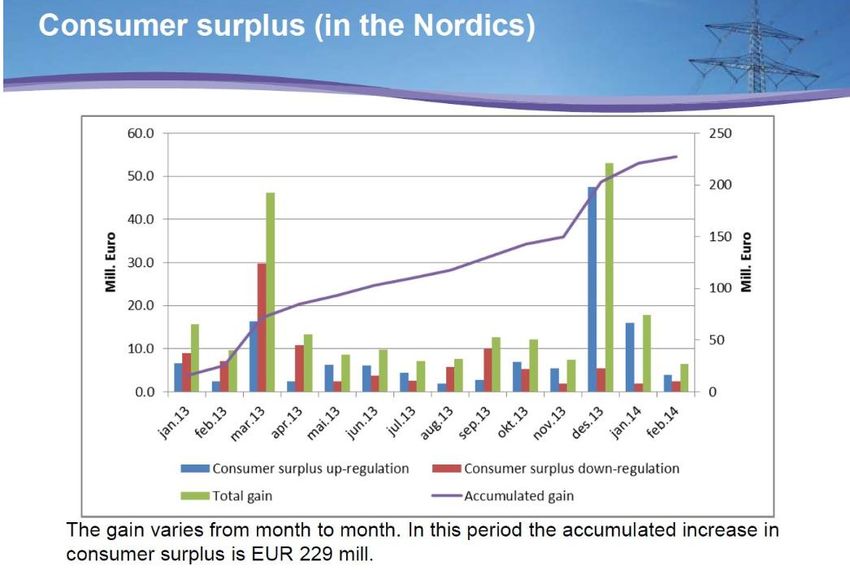
#1
Opening the meeting, role and tasks of the reference
group, introductions and expectations

                                                       3
• Implementation of NBM Programme will apear as variety of tasks
  and changes in TSOs' and market participants' systems

• Need for a dialogue and knowledge – both ways from TSO's to
  market participants and the other way around

• Combining national projects
                                                                   4
Role and task of the Nordic stakeholder reference
group
• contribute to the planning of the common Nordic NBM Roadmap
• follow the implementation phase
• identify risks and propose ways to mitigate them
• increase stakeholder awareness of the NBM project especially Higher
  Time Resolution (HTR)

• contribute to ensure a wide and good flow of information to all
  stakeholders
                                                                        5
What are your expectations?

                              6
#2
Competition Act
Rules to be taken into account in Nordic cooperation

                                                       7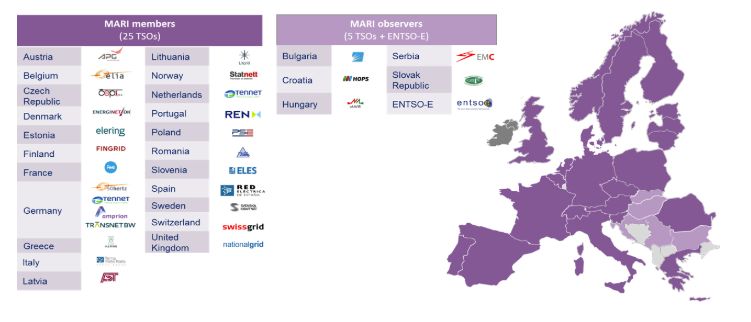
Prohibited restrictive measures
The following is prohibited                 Examples of prohibited arrangements

     • all agreements between                 • directly or indirectly fix purchase
       undertakings, decisions by               or selling prices or any other
       associations of undertakings and         trading conditions
       concerted practices which may
                                              • limit or control production,
       affect trade, and
                                                markets, technical development,
     • which have as their object or            or investment
       effect the prevention, restriction
                                              • share markets or sources of
       or distortion of competition
                                                supply ...
                                                                                      8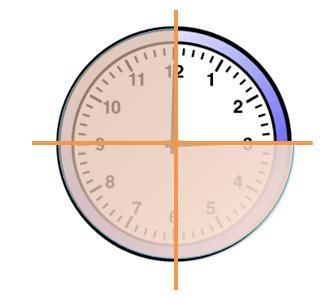
Meeting practices for ensuring the compliance

• Must have: an agenda & minutes.
• Materials of the meetings are published.
• Sharing business sensitive information must be avoided.
  − topical information which is not available from public sources
  − information that may affect other parties market behavior, e.g. information on future
    prices or quantities

• If concerns regarding the compliance arises, the handling of the
  matter must be stopped.
                                                                                        9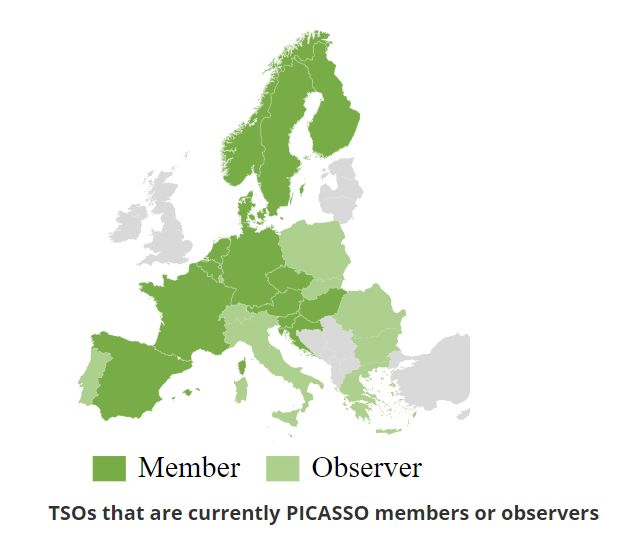
#3
What is Nordic Balancing Model and what are the
dependencies between NBM and Higher Time Resolution
(HTR)

                                                      10
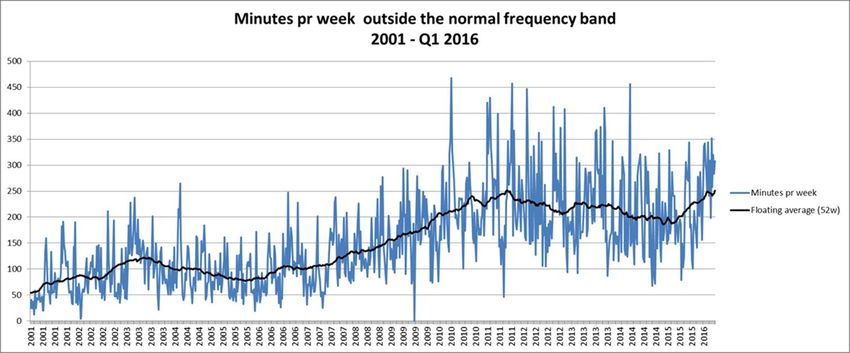
The common Nordic Balancing Market is very efficient
• For more than 15 years the Nordic TSO’s has
operated a cross border balancing energy market.
• Nordic consumer benefits have several times been
calculated to be in the range of +200 mEUR per year
• This welfare should be maintained also in the new
world with 15 min ISP, smaller bid size etc....
• Hence the transition towards the new world should
be carefully planned
• Next step for the Nordic Balancing Market is to
harvest welfare from common capacity markets
1115 minutes imbalance settlement period (ISP)
Same
Phasing out of coal power plants main
Increasing share of wind and other intermittent energy resources
drivers
as NBM
Phasing out of Swedish nuclear power plants
More interconnectors out of the Nordic synchronous area
• EB GL 53.1: By three years after the entry into force of this Regulation,
all TSOs shall apply the imbalance settlement period of 15 minutes (...)
15 minutes imbalanse 15 minutes 15 minutes
settlement period Intraday markets balaning markets
12Development for balancing philosophy
ACE in each country Frequency control mACE
~0
~0 ~0
~0
~0 ~0 ~0 ~0 ~0 ~0
~0 ~0
~0
~0
~0 Nordic
~0 AOF
More efficient use of resources Digitalization of balancing
Netting of imbalances Better control with flows
Merit order bid list Clearer responsibilities
13Automatic optimization function (AOF)
efficient trade and netting
Imbalances and available reserves in each bid-area are optimized in a
central algorithm. This secures:
• optimized use of grid capacity
• efficient exchange of balancing products
• fair settlement between buyers and sellers
14Now: Integrated into one comprehensive program
From manual processes based on operator knowledge and experience to
automated processes. Necessary due to increase in complexity, and
requires:
• Extensive change of control room processes
• Formalization of knowledge and routines
• Considerable IT-investments
• Significant improvement in data quality
Transition to control based balancing within each bidding-area
• Smaller building blocks a prerequisite for automated
processes
• Provides consistency between authority and responsibility
between TSOs
• Basis for correct settlement and proper incentives
• Depending on regulatory approvals
From an ambitious roadmap in parallel with other major development in
15 min Time 1.Generation 2.Generation system operation – to an ambitious and realistic plan for implementation.
Resolution NBM NBM
15Digital support needed with 15 minute markets –
Operational planning period changes from 1 hour to 15 minute
T T+1 T+2
Q2 Q3 Q4 Q1 Q2 Q3 Q4 Q1
1 hour operational
planning period For T+1 For T+2
For T+1 For T+0 For T+2
For T0 For T+1 For T+2
For T+1 Q1 For T0 Q3
For T+1 Q1 For T0 Q4
For T+1 Q2
For T+1 Q1
15 min operational For T+1 Q2
planning period For T+1 Q3 For T+1 Q2
For T+1 Q3
For T+1 Q4
For T+1 Q4
For T+2 Q1
For T+2 Q1
For T Q3 For T Q4 For T+1 Q1 For T+1 Q2 For T+1 Q3 For T+1 Q4
Proactive congestion handling and balancing Monitoring and continues balancing and congestion handling
Periode shift planning – Smooth production changes Determine price
Label: "T+1 Q1" is operational planning for hour t+1 and quarter 1 16
161 MW bid size and more standardized bids
• In the proposals for the implementation
of the European platforms for an aFRR
and mFRR market, the minimum bid
size is 1 MW
− Lower entry barriers, more bids (mFRR: 10
MW => 1 MW, aFRR: 5 MW => 1 MW)
− Standard activation time and ramping vs
more flexible Nordic approach
17Not possible to implement 15 minutes settlement
without changes to the Nordic balancing
• Today's balancing of the Nordic system is already at its limit. If we add
more complexity, the operational risk is unacceptable without new
solutions and automation
• As long as 15 minutes
imbalances are visible to
market actors, we risk moving
into a 15 minutes world – any
implementation of 15 minutes
settlement requires new
solutions and automation
18The regulations require that 15 minutes settlement, 15 minutes ID market
and 15 minutes balancing markets are implemented simultanously
• EBGL and the Clean Energy Package (CEP) put the following requirements on compliance concerning 15
minutes ISP:
− The ISP within a bidding zone shall be 15 minutes
− The market time unit within a bidding zone shall be equal to the ISP.
− The cross border market time unit shall be equal the highest market time unit of the adjacent bidding
zones.
− The TSOs shall calculate an imbalance price for each ISP
− The Clean Energy Package puts an obligation on the NEMOs to offer products at least as short as the
ISP in both the day-ahead and intraday markets.
A comprehensive program covering the new balancing
model and markets, 15 minutes ISP, and 15 minutes market
time unit in the intraday and possibly day ahead markets
1915 minutes ISP and the new imbalance settlement model
• The NRAs are currently assessing the all TSO
proposal to proposal to specify and harmonize the
imbalance settlement in Europe
• When approved TSO must implement
• Not full harmonization, but the main change is from
dual imbalance position to single imbalance position
One position?
New
NRA assessment Amendment Implementration 18 months 15 min
imbalance
6 months 4 months? ISP
price
2019 2020 2021 2022
20What will the delay of 15 minutes settlement imply for
the datahubs?
• For elhub in Norway the delay means more time to implement
• Originally 15 minutes ISP was expected to go live before the
datahubs in Finland and Sweden
• What is the impact of the delay? Are there new dependencies?
2019 2020 2021 2022
21The Clean Energy Package gives the NEMOs an obligation to
offer 15 minutes trading in day-ahead and intraday
• Energy regulation article 8.2: NEMOs shall provide market participants
with the opportunity to trade in energy in time intervals which are at
least as short as the imbalance settlement period for both day-ahead
and intraday markets.
• With the delay it is more likely that 15 minutes intraday and day ahead
trading will go live will be closer in time
• How to handle different market time units in an auction?
22#4
Lunch (45 min)
23#5
Results from the reference group members’ pre-
assignment
24Background
• The pre-questionnaire was sent to the Nordic stakeholder reference
group members
− Both multiple choice and open questions included
• Altogether 13 participants answered
• The results help the Nordic TSOs to create an overall picture about
the prepardness and will of the Nordic stakeholders regarding NBM
− This guides and supports the decision-making
25RESULTS
26Role(s)
BRP
BSP
Consumers
DSO
Industry associations
NEMO
RE
0 1 2 3 4 5 6 7 8 9 10
27In which countries your company is operating?
Denmark
Finland
Norway
Sweden
0 1 2 3 4 5 6 7 8 9
28How well the national energy industy in your country is
prepared for the implementation of 15 min ISP?
1=very poorly
2=poorly
3=somewhat
4=well
5=very well
0 1 2 3 4 5 6 7 8
29How well the national energy industy in your country is
prepared for the implementation of 15 min markets?
1=very poorly
2=poorly
3=somewhat
4=well
5=very well
0 1 2 3 4 5 6 7
30Do you prefer that the change to one-position (one
price) balance is implemented:
after 15 min ISP
does not have an influence on the business of the company
EBGL schedule 12/2020
simultaneously with 15 min ISP
0 1 2 3 4 5 6 7 8
31What are the necessary preconditions in order to
enable implementation of 15 min ISP?
• Trading possibilities with 15 min products
− 15 min intraday market to trade away imbalances; additionally 15 min day-ahead market mentioned
• 15 min balancing markets and balancing power calculation rules defined
• Sufficient number of metering points in 15 min resolution
− Large consumption, production units, MGA exchange metering and TSO grid measurements
• Definition of profiling methods and principles
• Datahubs in operation and tested
• Realistic and transparent roadmap with clarified scope and freezed specs
− System vendors do not start the modifications until the details and timetable are known
• Enough time to execute and test ICT systems
32What are the necessary preconditions in order to
enable participation in to 15 min markets?
• Adequate coverage of 15 min metering to support market participation
• Sufficient (real-time) market data transparency available for market participants
• Intraday and balancing market gate closures should be closer to real-time, preferrably the
markets should close 0 min before the start of an ISP
• Data transfer protocols between market participants and market places must work in 15 min
cycles without delays and bottlenecks
• A clear definition of market rules and specifications well in advance to enable ICT-system
development and implementation
− Orders to system vendors will be done only after the details and schedules are known
• Enough time for ICT-system modifications and testing
− Production planning, trading and balance management systems need to be updated
− New routines and automation of processes required
33What are the greatest risks in implementing Nordic
Balancing Model / 15 min ISP?
• The governance around NBM & Fifty is not transparent and simple enough, which harms
efficient delivery and prioritization
• Lack of communication with industry stakeholders
• Unclear details and scope, uncertainty on timetables and too tight deadlines for ICT projects
• Legislation and regulation are not defined early enough
• Project is postponed in very late phase, which brings additional costs
• Linking too many different changes to one "big bang" results in unnecessary dependencies so
that a delay of one part delays everything else
• Low market liquidity and too complex markets, for instance due to different requirements
• Data quality and system capacity to handle increasing data volumes
• Nordic countries do not implement 15 min ISP simultaneously
34What are the changes regarding the Nordic balancing
that have the greatest positive impacts on your business?
• New business opportunities and possibilities for new services
• Shortened gate closure and improved trading possibilities closer to ISP
• One position and one price model simplifies and eases operations
• Smaller balancing costs than in hourly world
• Better use of existing infrastructure and more efficient use of resources on Nordic level
• Enables participation to European market – harmonization of products and ISP with Central
Europe increases power system efficiency and improves resource utilization
• Allowing BRPs to self-balance on 15 min basis and up-to-delivery improves the frequency quality
• Automatisation of processes creates a path to smaller bid sizes and shorter waiting periods
• No positive impacts on DSOs
35What are the topics and themes you want to get more
information about and to discuss in the NBM reference group?
• Changes and development of market places and future of day-ahead and intraday markets
− e.g. when 15 min day-ahead market is implemented and how to secure high liquidity in the day-ahead market
• The overall timeframe for all market changes and the cooperation between the different markets
and the connection to the settlement
• Open discussion on situations of different countries, other on-going projects and dependencies
• Understanding the big picture and details: timetable, dependencies, profiling principle hour to 15
min, reporting MW or MWh, day ahead 15 min implementation etc.
• Single imbalance elements and structure, imbalance price formation principles and transparency
of price formation
• How to ensure that the markets will remain competitive and equal for all the market participants
• How metering should support 15 min ISP and markets in socioeconomically advantageous way
and what are the implementation phases for 15 min metering
36#6
NBM and HTR Roadmap
37DISCLAIMER
This presentation illustrates draft work in NBM roadmap update process
Presented timelines are indicative
Final roadmap will be presented after stakeholder feedback, further
detailing is also required from TSO side
38NBM roadmap update process
First
meeting of
NBM TSO replanning
reference
group 21.5.
Updated
New TSO NBM Roadmap
proposal for considering the
NBM roadmap Stakeholder stakeholder
29.5. consultation feedback
Stakeholder open until early August (tbc)
NRA process
webinar End of (exemption of 15 min
September (tbc) ISP)
39The focus of the roadmap
ACE based
balancing
15 min ISP
2019
go-live European
platforms
MARI &
PICASSO
401. Nordic aFRR capacity market
2. Nordic mFRR capacity market
Main building blocks of roadmap
3. One price – one balance model
4. Nordic mFRR energy activation market
• New mFRR processes for TSOs
• New mFRR standard product
• Congestion management
5. 15 min time resolution
• National remarks (datahubs, metering)
6. Data and transparency
41DISCLAIMER
Represents current TSO work in
1. New Nordic aFRR Capacity May 2019
market go-live Q1/2020 Timelines subject to change
2. New Nordic MFRR Capacity market
go-live Q3/2021
3. One Price – One Balance model
Go-live Q1/2021
4. New Nordic mFRR energy activation market
Go-live Q4/2022
5. 15 min market resolution
Go-live Q4/2022
6. Market transparency
European platforms MARI (mFRR) & PICASSO (aFRR)
Legal deadlines as requested by EBGL ~Q4/2021
Q1 Q2 Q3 Q4 Q1 Q2 Q3 Q4 Q1 Q2 Q3 Q4 Q1 Q2 Q3 Q4 Q1 Q2 Q3 Q4
2019 2020 2021 2022 2023
421. Nordic aFRR capacity market
• Legal proposals submitted to NRA approval on 12th of April
• NordREG currently consulting on proposals – Consultation open until
3rd of June1
• Implementation of market platform (IT) well advanced
• Expected go-live Q1/2020
• aFRR volume needs to be increased in the Nordic system as shorter
market time unit (15 min) is implemented
1 https://www.nordicenergyregulators.org/2019/05/consultation-on-proposals-for-nordic-afrr-capacity-market-and-cross-zonal-
capacity-allocation-methodology/
432. Nordic mFRR capacity market
• The Nordic mFRR capacity market design is planned to be based
mainly on the same principles as the Nordic aFRR capacity market
− Thus there's a connection to aFRR regulatory approval process
• Implementation of mFRR capacity market has low impact on other
milestones of NBM roadmap
• Expected go-live Q3/2021
443. One price – One balance model
• Part of European harmonization process. Electricity Balancing
Guidelines requires European harmonization of imbalance settlement
• NRA approval of proposal made by All EU TSOs is ongoing
− Needs to be implemented latest 18 months after the NRA approval
• Main options for implementation: Implementation as requested by
EBGL (~Q1/2021) or together with 15 min ISP (~Q4/2022)
454. Nordic mFRR energy activation market 1/2
• New mFRR process for TSOs:
− Better decision support for TSO control room operators. The demand for mFRR is determined
per bidding zone based on forecasted imbalances
− Scheduled and direct activation of mFRR
• First phase only scheduled activations are planned to be part of Nordic optimization
• New European mFRR standard product
− Partly implemented on go-live of Nordic mFRR energy market
• Congestion management
− mFRR is relevant product for congestion management. Bid filtering functionality to be developed.
− The need and extent of congestion management interventions varies a lot among the Nordic
TSOs
464. Nordic mFRR energy activation market 2/2
• Features will be aligned with European MARI platform when possible
− For example: 15 min validity period for mFRR bids: separate volume and price for
each quarter
• Requires major IT development
• Implementation of mFRR energy market has high impact on other
milestones of NBM roadmap – especially 15 min time resolution
• Expected go-live Q4/2022
475. 15 min time resolution
• Imbalance settlement in 15 min is a prerequisite for 15 min markets
− NEMOs may/should implement 15 min products on intraday and day-ahead
markets
− TSOs expect that 15 min intraday products are implemented at the same time as
shorter imbalance settlement period
• NMB road map will look closer national dependencies:
− Datahubs, metering, national regulations etc
• Expected go-live Q4/2022
486. Market transparency
• Mainly part of European harmonization process. Electricity Balancing
Guidelines requires market and balancing data to be published on
ENTSO-E transparency platform
• Data quality important also for operation of the power system:
− The ability to automatize operational processes requires consistent delivery of
reliable data. Improving data maturity and quality is crucial for succeeding with the
transformation to increased automation of the balancing process.
• Expected go-live (EBGL data): Q4/2019
− further developed as NBM program proceeds
49DISCLAIMER
Represents current TSO work in
1. New Nordic aFRR Capacity May 2019
market go-live Q1/2020 Timelines subject to change
2. New Nordic MFRR Capacity market
go-live Q3/2021
3. One Price – One Balance model
Go-live Q1/2021
4. New Nordic mFRR energy activation market
Go-live Q4/2022
5. 15 min market resolution
Go-live Q4/2022
6. Market transparency
European platforms MARI (mFRR) & PICASSO (aFRR)
Legal deadlines as requested by EBGL ~Q4/2021
Q1 Q2 Q3 Q4 Q1 Q2 Q3 Q4 Q1 Q2 Q3 Q4 Q1 Q2 Q3 Q4 Q1 Q2 Q3 Q4
2019 2020 2021 2022 2023
50#7
Coffee break (30 min)
51#8
Roadmap for stakeholder cooperation
52DRAFT
Consultation period
Nordic
Stakeholder
reference
New TSO group
proposal for stakeholder Consultation end
meeting
early august
NBM consultation September
(tbc)
roadmap
29.5. Updated
Stakeholder NBM Roadmap
TSO review considering the
webinar Fingrid
national period stakeholder
reference
group 5.6 feedback
Svenska
kraftnät End of
Energinet Webinar for Statnett
national Finnish
national national September NRA process
reference reference reference
stakeholders (tbc)
group 6.6 group 19.6 group 18.6
14.6
NRA meetings, common Nordic and national
53Plan for Stakeholder reference group meetings
• May 21th, Stockholm (Arlanda)
• September, Helsinki
• December (early), Copenhagen or Oslo
54Nordic and national reference groups
Nordic National
Language English Nordic languages
Few representing on sector level Broader representation and a higher
Participation
number
Overall design, common Nordic processes In addition to Nordic topics:
and methodologies, common solutions Detailed local implementation, datahub,
Topics (balancing energy and capacity markets), metering, local balancing market solution
eSett, Transparency, Nordic regulatory interfaces, national regulatory processes,
processes and coordination, Intra-day and update of national terms and conditions
Day-ahead market
55#9
Next meeting and assignment for participants
56# 10
AOB
57You can also read


