NRL Sporting Schools Program.
←
→
Page content transcription
If your browser does not render page correctly, please read the page content below
NRL Sporting
                     Schools Program.

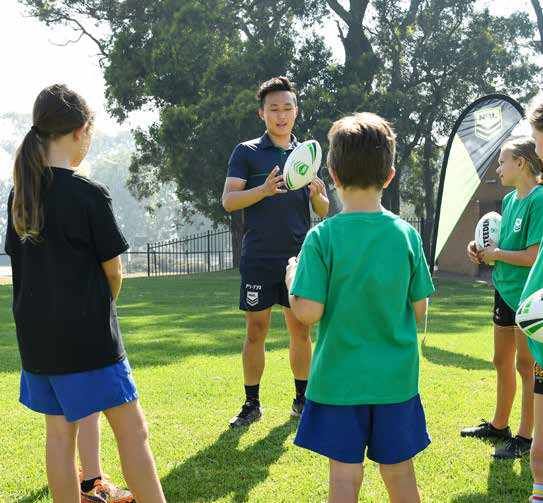
The NRL School Program is an exciting series of activities
utilising Learning Intentions to introduce students to
Rugby League in a safe, non-competitive and fun environment.
The program equips students and teachers with the tools to play a modified version
of Rugby League, the greatest game of all, in any setting while delivering important
education, health and welfare messages. The NRL School Program program has
been developed according to an age-appropriate learning approach.

Foundation – Year 2 activities use story based learning to assist young
students to grasp the skills and concepts of Rugby League. Lessons have been
designed alongside a story that builds on students’ fundamental movement
skills where they learn through active play and minor games in a fun and safe
environment.

Year 3 - Year 6 activities, developed in partnership with Dr Greg Forrest from
the University of Wollongong, are underpinned by an innovative games and sports
teaching approach. Research findings suggest there is strong evidence that the
PlayNRL In-School program improves game play understanding and is closely linked
to higher levels of motivation, increased participation and more positive attitudes
towards playing games and sports.

For more information on the NRL Sporting Schools program visit:
www.playrugbyleague.com/schools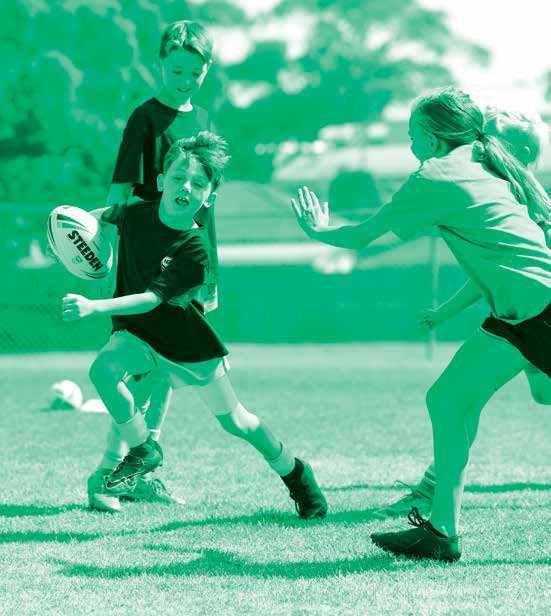
Unit Plans                                                                                                                              ACTIVITY FOCUS
Foundation – Year 2
Australian Curriculum Links                                                        LESSON                           WARM UP             SKILL DEVELOPMENT            GAME CONCEPTS
This Foundation – Year 2 PlayNRL unit is aligned to the Movement and physical
activity strand of the Health and Physical Education learning area. By covering
the content on each activity card, students will work towards the following                                         Buzzy Bees
achievement standards and explore the following focus areas.
                                                                                   Lesson 1                         (Activity 1)
                                                                                   Skill focus:                                           Get past the Farmer
Achievement Standards                                                                                          Farmer chases the Dog           (Activity 3)
By the end of Foundation year, students are able to perform fundamental            Locomotor movement
movement skills and solve movement challenges. By the end of Year 2, students                                       (Activity 2)
can demonstrate fundamental movement skills in a variety of movement
sequences and situations and test alternatives to solve movement challenges.       Lesson 2
They perform movement sequences that incorporate the elements of movement.
                                                                                   Skill focus:                Farmer chases the Dog
Focus Areas
- Fundamental movement skills                                                      Locomotor movement,              (Activity 2)       You’re stuck, play the ball   Pass the Biscuit
- Active play and minor games                                                      teamwork, throwing,           Stuck in the mud             (Activity 5)             (Activity 6)
Curriculum Content Descriptions                                                    catching, tagging
Content descriptions are listed below and content description codes are included
                                                                                                                    (Activity 4)
on each activity card.
FOUNDATION:
Sub-Strand: Moving our Body                                                        Lesson 3
ACPMP008 – P  ractice fundamental movement skills and movement sequences          Skill focus:
                                                                                                                 Stuck in the mud        Kick from the Kennel        Pass the Biscuit
             using different body parts.                                           Running, tagging,
                                                                                                                    (Activity 4)              (Activity 7)             (Activity 6)
ACPMP009 – Participate in games with and without equipment.                        teamwork, kicking,
Sub-Strand: Understanding movement                                                 throwing, catching
ACPMP011 – Identify and describe how their body moves in relation to effort,
              space, time, objects and people.
Sub-Strand: Learning through movement                                              Lesson 4
                                                                                                                 League Channels
ACPMP012 – Cooperate with others when participating in physical activities.        Skill focus:                                              Kick & Score            Beat the Defender
                                                                                                                    Warm Up
YEARS 1 & 2:                                                                       Locomotor movement,                                        (Activity 8)             (Activity 15)
                                                                                                                   (Activity 12)
Sub-Strand: Moving our Body                                                        kicking, dodging, tagging
ACPMP025 – P  erform fundamental movement skills in a variety of movement
             sequences and situations.
                                                                                   Lesson 5
ACPMP027 – Create and participate in games with and without equipment.
                                                                                   Skill focus:                                              Here/There/
Sub-Strand: Understanding movement                                                                               Maroons & Blues                                     Beat the Defender
                                                                                   Locomotor movement,                                       Everywhere
ACPMP029 – Incorporate elements of effort, space, time, objects and people in                                    (Activity 14)                                        (Activity 15)
             performing simple movement sequences.                                 tagging, dodging, spatial                                 (Activity 13)
Sub-Strand: Learning through movement                                              awareness
ACPMP030 – U  se strategies to work in group situations when participating in
             physical activities.

PLAYRUGBYLEAGUE.COM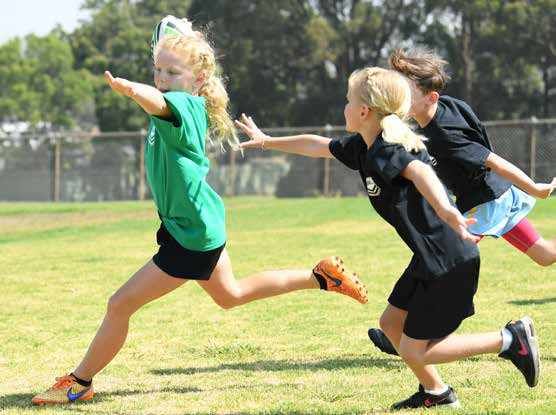
Unit Plans                                                                                                                         ACTIVITY FOCUS
Years 3 & 4
Australian Curriculum Links                                                       LESSON                       WARM UP             SKILL DEVELOPMENT         GAME CONCEPTS
This year 3 & 4 PlayNRL unit is aligned to the Movement and physical activity
strand of the Health and Physical Education learning area. By covering            LESSON 1                  League Channels
the content on each activity card, students will work towards the following
                                                                                  Skill focus: Locomotor       Warm Up:                 Try Scoring               Scramble
achievement standards and explore the following focus areas.
                                                                                  movement, kicking,          Try Scoring              (Activity 11)             (Activity 9)
Achievement Standards                                                             attacking, defending        (Activity 12)
By the end of Year 4, students refine fundamental movement skills and apply
movement concepts and strategies in a variety of physical activities and to
solve movement challenges. They create and perform movement sequences             LESSON 2
using fundamental movement skills and the elements of movement.                   Skill focus:              League Channels
                                                                                                                                    Partner Activities -    Pulyugge Traditional
Focus Areas                                                                       Locomotor movement,          Warm Up:
                                                                                                                                          Pass               Indigenous Game
- Fundamental movement skills                                                     throwing, catching,           Passing
                                                                                                                                       (Activity 16)            (Activity 17)
- Active play and minor games                                                     kicking, teamwork,          (Activity 12)
- Games and sports                                                                defending
Curriculum Content Descriptions
Content descriptions are listed below and content description codes are           LESSON 3                  League Channels        Try Scoring with Kicks
included on each activity card.                                                   Skill focus: Locomotor        Warm Up:               (Activity 10)        Buroinjin Traditional
                                                                                  movement, throwing,      Play the ball & kicks    Partner Activities -     Indigenous Game
YEARS 3 & 4 :
                                                                                  catching, kicking,        League Channels            Play the Ball            (Activity 18)
Sub-Strand: Moving our Body
                                                                                  teamwork, tagging           (Activity 12)            (Activity 16)
ACPMP043 – Practice and refine fundamental movement skills in a variety of
           movement sequences and situations.
                                                                                  LESSON 4
ACPMP045 – Practice and apply movement concepts and strategies with and                                     League Channels
                                                                                  Skill focus: Locomotor
           without equipment.                                                                                  Warm Up:               Pass the Biscuit      Kangaroos & Jillaroos
                                                                                  movement, throwing,
Sub-Strand: Learning through movement                                                                       Practice all skills         (Activity 6)            (Activity 19)
                                                                                  catching, teamwork,
ACPMP048 – Adopt inclusive practices when participating in physical activities.                               (Activity 12)
                                                                                  defending

* Optional: O
             ther activities that can be substituted for activities listed
            on the Year 3 & 4 unit plan include Here/There/Everywhere             LESSON 5
                                                                                                            League Channels
            (Skill Development) Maroons & Blues (Warm Up/Skill Development)       Skill focus: Locomotor                            Buroinjin Traditional
                                                                                                               Warm Up:                                     Kangaroos & Jillaroos
            or Beat the Defender (Skill Development/Game concepts).               movement, throwing,                                Indigenous Game
                                                                                                            Practice all skills                                 (Activity 19)
                                                                                  catching, teamwork,                                  (Activity 18)
                                                                                                              (Activity 12)
                                                                                  defending

PLAYRUGBYLEAGUE.COM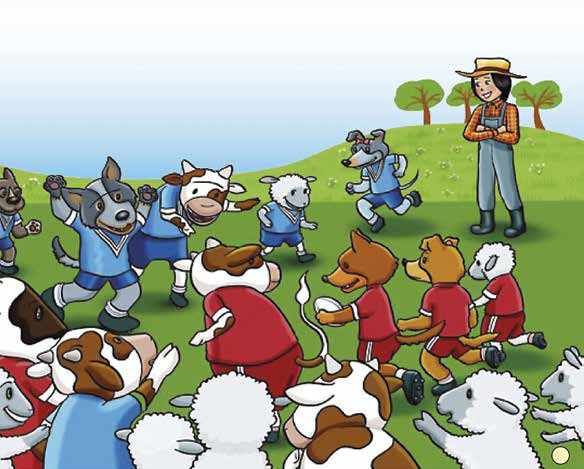
Unit Plans                                                                                                                              ACTIVITY FOCUS
Years 5 & 6
Australian Curriculum Links                                                            LESSON                       WARM UP             SKILL DEVELOPMENT         GAME CONCEPTS
This year 5 & 6 PlayNRL unit is aligned to the Movement and physical activity
strand of the Health and Physical Education learning area. By covering
                                                                                       LESSON 1
the content on each activity card, students will work towards the following                                     League Channels
                                                                                       Skill focus: Locomotor                                Try Scoring               Scramble
achievement standards and explore the following focus areas.                                                      Try Scoring
                                                                                       movement, attacking,                                 (Activity 11)             (Activity 9)
Achievement Standards
                                                                                                                   (Activity 12)
                                                                                       defending, try scoring
By the end of Year 6, students perform specialised movement skills and
sequences and propose and combine movement concepts and strategies to
achieve movement outcomes and solve movement challenges. They apply the                LESSON 2                                           Partner activities
elements of movement when composing and performing movement sequences.                                           League Channels
                                                                                       Skill focus: Locomotor                                                    Pulyugge Traditional
                                                                                                                – Passing, play the
Focus Areas                                                                            movement, kicking,                               Try scoring with kicks    Indigenous Game
                                                                                                                    ball & kicks
- Fundamental movement skills                                                          passing, teamwork,                                   (Activity 10)            (Activity 17)
- Games and sports                                                                                                 (Activity 12)
                                                                                       defending, try scoring
Curriculum Content Descriptions
Content descriptions are listed below and content description codes are included
on each activity card.                                                                 LESSON 3
                                                                                                                League Channels
                                                                                       Skill focus: Locomotor                                 Scramble           Kangaroos & Jillaroos
YEARS 5 & 6 :                                                                                                   – practise all skills
                                                                                       movement, attacking                                   (Activity 9)            (Activity 19)
Sub-Strand: Moving our Body                                                                                        (Activity 12)
                                                                                       and defending
ACPMP061 – P
            ractice specialised movement skills and apply them in a variety
           of movement sequences and situations.
ACPMP063 – P  ropose and apply movement concepts and strategies with and              LESSON 4
                                                                                                                League Channels          Pulyugge traditional
             without equipment.                                                        Skill focus: Locomotor                                                       Play NRL game
                                                                                                                – practise all skills     indigenous game
Sub-Strand: Learning through movement                                                  movement, attacking                                                           (Activity 20)
                                                                                                                   (Activity 12)            (Activity 17)
ACPMP069 – D  emonstrate ethical behaviour and fair play that aligns with rules       and defending
             when participating in a range of physical activities.

* Optional: M
             aroons & Blues (Warm Up/Skill Development) can be substituted            LESSON 5
            for any of the activities listed in the warm up column of the Year 5 & 6                            League Channels          Buroinjin traditional
                                                                                       Skill focus: Locomotor                                                       Play NRL game
            unit plan.                                                                                          – practise all skills     indigenous game
                                                                                       movement, attacking                                                           (Activity 20)
                                                                                                                   (Activity 12)            (Activity 18)
                                                                                       and defending

PLAYRUGBYLEAGUE.COM
Rugby League
                      Coaching Points

                      Grip & Carry
                      1. 	The ball should be carried in two hands.
                           This gives you options. (run, pass, kick or dummy)

                      2. 	Use finger tips to grip the ball, not the palm of your hands.
                           This provides more ball security and control.

                      3. Spread fingers and thumbs wide and try to cover the four panels of the ball.

                      4. 	If you need to fend an opponent, keep the ball in the middle of your chest,
                           maintaining good grip, and get two hands back on the ball.

                      5.	When going into contact, bring the ball in tight to your body, and try and
                          land on your front.

PLAYRUGBYLEAGUE.COM
Rugby League
                      Coaching Points

                      Catch & Pass
                      Catch
                      1.	Put your hands up high around chin level, with your palms facing your team
                          mate with the ball.
                      2. Spread your fingers and thumbs wide to make a big target.
                      3.	Try to keep the ball off your chest as the ball lands in your hands, releasing
                          the ball when hands are in line with the catcher.
                      4.	Ensure you have a good grip on the ball.

                      Pass
                      1. Holding the ball in two hands, point the top of the ball at the ground.
                      2.	Step forward with foot furthest from the catcher so your hips turn towards
                          your target.
                      3.	Swing the ball across your body, releasing the ball when your hands are in
                          line with the catcher.
                      4. Try to throw a soft pass to make it easier for your teammate to catch.
                      5. Make sure the ball travels backwards!

PLAYRUGBYLEAGUE.COM
Rugby League
                      Coaching Points

                      Play the Ball
                      1.	When getting tackled, try and land on your front so you can play the ball
                          quickly.

                      2.	Try and get to your feet as quickly as possible, ensuring to pick the ball
                          up securely with two hands. The ball must leave the ground before you
                          play it.

                      3.	Place the ball on the ground in front of you, with the points of the ball
                          pointing laterally (East to West).

                      4.	Roll the ball backward, gently to the dummy half, with your foot from
                          heel to toe.

PLAYRUGBYLEAGUE.COM
Rugby League
                      Coaching Points

                      Evasion
                      1. Side Step - As you approach the defensive line, shorten your steps
                      to engage the defender, drawing them to the side to create space for
                      you to run through. Transfer your weight from one foot to the other, and
                      accelerate through the space left by the defender.
                      2. Fend - Start the same way as a side step, but as you step into the
                      space, using a good grip transfer the ball into the hand furthest from the
                      tackler, using your free hand to push yourself away from the would-be
                      tackler with a flat palm.
                      Remember to ensure that contact is made under the armpits for players
                      aged 15 years and under.
                      3. Dummy Pass - Holding the ball in two hands, shape to pass the ball to
                      a teammate. When in range pretend to pass the ball. If the defender falls
                      for the dummy pass, side step into the space they leave open, using a
                      fend if required.

PLAYRUGBYLEAGUE.COM
Rugby League
                      Coaching Points

                      Scoring a Try
                      To score a try:
                      1.	You must place the ball on the ground with downward pressure in the
                          in-goal area.
                      2.	You can also fall on the ball (in the in-goal area) and ground the ball with
                          the front part of your torso (below the neck and above the waist).
                      3.	The in-goal area is the area between on/over the try line through to
                          (but not including) the dead ball line.
                      4.	It is recommended that you hold the ball in two hands when attempting
                          to ground the ball.
                      5. A try is worth four points in a game of Rugby League.

PLAYRUGBYLEAGUE.COM
Rugby League
                                               Coaching Points

                      Kicking (punt, grubber, place)
                      Punt
                      1.	Hold ball in two hands, with the bottom point of the ball pointing towards the ground over the kicking foot.
                      2. Point hips toward the target, and lean over the ball.
                      3.	Step forward, and as the kicking foot swings forward, point toes toward the ground, drop the ball onto the foot and
                          kick the bottom of the ball, making contact with the boot laces so that the ball travels through the air.
                      4. Follow through with kicking leg and chase the kick.

                      Grubber
                      1. Hold ball in two hands, with the bottom point of the ball pointing towards the ground over the kicking foot.
                      2. Point hips toward the target, and lean over the ball.
                      3.	Step forward, and as the kicking foot swings forward, point toes toward the ground, drop the ball onto the foot and
                          kick the bottom of the ball, making contact with the boot laces so that the ball rolls end over end across
                          the ground.
                      4. Follow through and chase the kick.

                      Place Kick
                      1. Stand the ball upright on the kicking tee.
                      2.	Place the non-kicking foot beside the ball and the kicking foot behind it, then take approximately five steps straight
                          back and two to the side of the non-kicking foot. (This will vary for each player, everyone needs to find a position
                          comfortable for them.)
                      3.	Move towards the ball, place the non-kicking foot back beside the ball where it started. Keep your head down
                          looking at the ball, with the non-kicking side arm out horizontally for balance. Extend the kicking leg through the
                          ball, pointing at the target on the follow through.

PLAYRUGBYLEAGUE.COM
Rugby League
Coaching Points
Defensive Principles & Positions
1. Before each play the ball, the defending team should form one solid line, in line with the referee,
and one or two players (depending on age of players) should stand in the marker(s) position.
2. The marker(s) stand directly in front of their opponent playing the ball.
3. When the attacking team have played the ball and begun their attack (Dummy Half or First
Receiver runs, or there have been two passes), the markers can move, and the defensive line can
progress forwards and attempt a tackle.
4. The aim for the defending team is to maintain a solid line, taking space away from the attacking
team whilst ensuring there are no gaps in the line for their opponents to run through. If one player
moves forward quicker or slower than their team mates, it creates a gap in the defensive line.
5. To ensure a solid line, it’s important for the players to communicate, and be disciplined in staying
in the line.
6. If an attacking player attempts to run through the line, the closest players effect a tackle.
When the tackle is complete, the non-tackling players retreat to the referee, and the tackler(s)
get to their feet to fill the marker(s) position.
7. This process is repeated until the set is complete.
PLAYRUGBYLEAGUE.COMRugby League
Coaching Points
Attacking Principles & Positions
1. The main attacking principles that should be taught to players are:
- Role of the Dummy Half & First Receiver
- Passing Backwards (toward own try line)
- Running forward (toward oppositions try line)
- Supporting the ball carrier (being ready to receive the ball)
- Identifying space (in the defensive line)
- Running into space (evading defenders)
The above principles are achieved by performing a series of technical core skills (grip, carry, evasion,
catch, pass, play the ball etc.)
2. In the attacking team there are two key positions:
- D
ummy Half (DH). This can be any player that positions themselves behind their team mate
playing the ball, whose job it is to identify space in the defensive line, and decide whether to
run with the ball or pass to a team mate.
- F
irst Receiver (FR). This can be any player that positions themselves to receive the ball directly
from the DH. Once they receive the ball, they need to identify space and decide if they should run
or pass the ball.
- In Mini & Modified Games football, there are specific rules whereby the attacking team lose
possession of the ball if they are tackled before passing unless there are wearing a
DH or FR bib (Modified Games only.)
PLAYRUGBYLEAGUE.COMACTIVITY
ACTIVITY FOCUS Play Rugby League 1
Warm Up Foundation - Year 2
› Skill Focus
Buzzy Bees. Locomotor movement.
› Learning Intention › Players › Equipment
Students will practise locomotor movement skills while moving around ou can split the class into two groups
Y
and have two grids set-up, OR have the
Use a minimum of 4 markers,
a playing area. Students will learn to be aware of space and game
whole class inside the one grid. preferably use a large number
boundaries, and practise personal safety by avoiding running into
TEAM 1 of markers around the
other players. TEAM 2
perimeter/grid boundary so
the area is clearly marked out.
If possible have a football for
each student
OR
Whistle Stopwatch
WHOLE CLASS
Curriculum content descriptions:
PLAYRUGBYLEAGUE.COM Foundation: ACPMP008, ACPMP011 Year 1 & 2: ACPMP025, ACPMP029ACTIVITY
Play Rugby League 1
Foundation - Year 2
› Modifications
Buzzy Bees. Have students all pick up a football, and
explain to the students how to hold a
Rugby League ball correctly.
Rugby League ball skills –
› Playing Area › Game Play › Scoring
Farmer wants his ball back
To start this activity, have students practise
object control using a Rugby League ball,
Use a designated area approximately Sit the students down in a small area and There is no scoring in this game but
students can practise the following skills:
15m x 15m or larger per grid. read the first chapter of the story (Rugby praise students that are performing
League “Bluey & Red’s new game”) and ask the skills learnt. tudent throws up in the air and attempting
S
some questions about the first chapter. to catch the ball.
15m Student throws up in the air with a clap and
› Questions
Show the class the grid, and explain to the
students where the boundaries are. attempting to catch the ball.
The game starts with students walking Have students practising running with the
quickly inside the grid, changing direction 1. What was the easiest movement to use in ball and attempting to throw the ball in the air
and making sure they do not bump into any this activity? (possibly give options such as and catch whilst running.
other students. running, skipping or hopping).
Student kicks by placing the ball on the
Have students then perform other Why was this easy?
ground and attempting a small kick.
locomotor skills whilst inside the grid eg. 2. Could you move faster when you were
armer wants his ball back game
F
Running, hopping, skipping and galloping. skipping or hopping?
15m
Tell students the Farmer wants his ball back.
Practise a movement like your favourite Why?
Nominate a student to be the Farmer, who
NRL player 3. Did you find one foot easier to hop on than will roam around the playing space without a
Explain to the students that NRL players the other? ball. The farm then tries to knock the ball out
always practise their skills, ask students if they 4. What did you do to avoid running into of students hands. If the students drop the
can name an NRL player that performs one of others? ball, they had better get it back quick before
the following skills: side step or swerve. the Farmer takes it.
PLAYRUGBYLEAGUE.COM Refer to Rugby League Coaching Points for more information.ACTIVITY
ACTIVITY FOCUS Play Rugby League 2
Warm Up Foundation - Year 2
› Skill focus
Farmer Chases the Dog. Locomotor movement.
› Learning Intention › Players › Equipment
Students will practice running and moving around a playing area within You can split the class into two groups and
Use a minimum of 4 markers,
a game that focuses on avoiding being touched or tagged and running have two grids set-up, or have the whole
preferably use a large number
into others. class inside the one grid.
of markers around the
FARMER perimeter/grid boundary so
the area is clearly marked out.
If possible have a football for
each student
DOGS
Whistle Stopwatch
Curriculum content descriptions:
PLAYRUGBYLEAGUE.COM Foundation: ACPMP008, ACPMP009 Year 1 & 2: ACPMP025, ACPMP027ACTIVITY
Play Rugby League 2
Foundation - Year 2
Farmer Chases the Dog.
› Playing Area › Game Play › Modifications › Questions
or taggers.
Use a designated area approximately Have all students inside the grid without The teacher starts by demonstrating
15m x 15m or larger per grid. 1. W
as it easier to balance when you
their footballs. The “Farmer” (teacher or “playing the ball” by putting the ball on
were standing still (stuck in the
nominated student) has the ball in hand the ground and rolling it backwards
mud), or when you had a ball under
with their foot. Explain that in Rugby
15m or a bib/vest on. your foot? Why?
League, this happens after a “tackle”.
Explain to the students that the Farmer is Give each student a ball and take 2. How did the game change when
going to attempt to touch or tag the dogs the ball away from the “Farmer”. Ask we added more Farmers/touchers
with the football and if they are touched students “Instead of being stuck in or taggers? Did you have to move
the mud, what movement can you do more? Was it harder to avoid being
or tagged, the student stops as if they
using your ball when you are touched touched or tagged? Why?
are “stuck in the mud”. The student then or tagged?”
counts to 5 or 10 and then continues in
The desired response is to “play the
15m
the game.
ball”. This can be modified to having
The “Farmer” can not throw the ball at the students put the ball on the
students, they must be holding the ball ground and hold it under their foot for
when touching. 5-10 seconds and then continue the
game.
If the students run outside the grid they
Farmer’s helpers:
are also “stuck in the mud.”
That student stops, counts to Teachers to ask students “How can
we change this game so that it is
5 or 10 and then continues in
easier for the Farmer to catch the
the game. dogs, and harder for the dogs to avoid
being touched or tagged?”
Desired response is to add more
Farmers because they need help.
The Farmer can then choose three or
more students to be their helpers. The
Farmer’s helpers place their footballs
outside the grid and become touchers
PLAYRUGBYLEAGUE.COM Refer to Rugby League Coaching Points for more information.ACTIVITY
ACTIVITY FOCUS Play Rugby League 3
Skill Development Foundation - Year 2
› Players › Skill Focus
Get past the Farmer. Split the class in to two teams –
Blue and Red teams.
Locomotor movement.
› Learning Intention TEAM (BLUE) › Equipment
Markers - 4 blue, 4 red,
On a command, students will perform locomotor movement skills with
8-10 coloured markers for
the goal of moving to the end of the playing space. Students will also
sidelines (min. 4 coloured
engage strategies to avoid being touched or tagged.
markers for sidelines).
4-6 green markers
for try line.
TEAM (RED)
If possible have a
football for each
student
Whistle Stopwatch
Curriculum content descriptions:
PLAYRUGBYLEAGUE.COM Foundation: ACPMP008 Year 1 & 2: ACPMP025ACTIVITY
Play Rugby League 3
Foundation - Year 2
Get past the Farmer.
› Playing Area › Game Play › These skills can be performed by the
students before they start moving through
Farmer’s helpers:
This is a progression where the Farmer
the playing space. The teacher will need (teacher or student) needs some helpers
Use a designated area approximately Organise students into red and blue dogs to call a different command for each to catch the dogs (students). The Farmer
15m x 15m or larger per grid. (Red & Blue lines for students) and line them skill to perform at the start as well as the chooses 3 or more students to be the
15m up evenly behind a relevant marker. Each locomotor movement to use, for example Farmers helpers. The Farmer’s helpers
student should have a Rugby League ball. “Go Blue - throw and catch, then run” or “Go place their footballs outside the grid and
There should be no more than four students in Red - throw, clap, catch then swerve.” become touchers or taggers with the
› Scoring
each line to ensure high levels of activity. Farmer.
When the teacher calls “Go Red” or “Go Blue”
the first student in line of the corresponding One point is awarded for each try
coloured marker runs to the green grass
markers and scores a try. A try is scored by the
successfully scored.
› Questions
student/player running across the try line at
the end of the playing area and placing the ball
› Modifications 1. W
hat type of movement allowed
you to get to the try line/green
on the ground with downward pressure. Get Past the Farmer:-
grass the quickest?
epeat so all students get numerous turns of
R he Farmer (Teacher or student) starts in
T
the middle of the grid and as the Farmer 2. Where did you have to look when
scoring a try.
15m
calls a colour, they run and try to touch or you were throwing the ball in the air
The teacher can change the locomotor and catching it?
tag the dogs before they reach the other
movement used, by calling the movement after
side and score a try. 3. Did you change the way you moved
the team name i.e. “ Go red - side step”.
when a Farmer was trying to touch
Use any locomotor movements already learnt. Get past the Farmer, tagged & tap:-
eg. Side step, Swerve. you? How?
If a dog is tagged, they place the ball
Try Line
Extra skills can also be introduced into the on the ground under their foot for 3-5
1m
game. The teacher can demonstrate skills seconds, then tap the football with their
such as: foot, pick the ball up and continue in the
• Throw the ball into the air and catch it. game and attempt to score a try (teacher
• Throw the ball into the air, clap once and then to demonstrate this skill). Repeat so all
catch it. students get numerous turns of scoring
a try.
• Place the ball on the ground at the start line,
perform a small kick forward then pick the
ball up.
PLAYRUGBYLEAGUE.COM Refer to Rugby League Coaching Points for more information.ACTIVITY
ACTIVITY FOCUS Play Rugby League 4
Warm Up Foundation - Year 2
› Skill Focus
Stuck in the Mud. Running, touching and
team work
› Learning Intention › Players › Equipment
Students will run around a playing space, trying to avoid being touched or ou can split the class into two groups
Y
tagged and work cooperatively in pairs to perform the Rugby League skill and have two grids set-up, OR have the Use a minimum of 4 markers,
of playing the ball. Students will also practise the skill of touching. whole class inside the one grid. preferably use a large number
TEAM 1 of markers around the
TEAM 2
perimeter/grid boundary so
the area is clearly marked out.
If possible have a football for
each student
OR
Whistle Stopwatch
WHOLE CLASS
Curriculum content descriptions:
PLAYRUGBYLEAGUE.COM Foundation: ACPMP008, ACPMP012 Year 1 & 2: ACPMP025, ACPMP030ACTIVITY
Play Rugby League 4
Foundation - Year 2
Stuck in the Mud.
› Playing Area › Game Play The leader then plays the
Use a designated area approximately Sit the students down in a small area
ball by placing the ball on the
ground and rolling it back with › Questions
15 - 20m x 10m or larger per grid. and read the second chapter of the their foot to the tail who picks
1. H
ow did you and your partner work
story (Rugby League “Bluey & Red’s up the ball and becomes the
together when playing the ball?
new game”) and ask some questions new leader, whilst the partner
about the chapter. now becomes the tail. 2. Why is it important to talk to your partner
when you are working in pairs?
Show the class the grid, and explain
› Modifications
3. When you were the tail and following your
to the students where the
leader, how did you stay close to them?
boundaries are.
Did you say anything if they got too far
Set up Stuck in the mud with
Have students find a partner and away from you?
explain they are going to play a the Farmers helpers:
4. When you were tagging, how did you
touch or tag game. This is a progression where the
15-20m 15-20m decide who to chase?
TAIL Farmer (teacher or student)
LEADER
xplain to the students the person
E Did the farmers work together to tag
PAIR
WHEN needs some helpers to catch
TAGGED
with the ball is the leader and their someone?
SWAP the dogs (students). In order
LEADER TAIL buddy is their tail. Remind the tail to increase the intensity of
to stay behind the leader and follow the game an extra pair can be
them wherever they go. chosen to place the ball outside
he teacher chooses two students
T the playing area and become
to be the “Farmers”. Farmers do not Farmers.
have a ball. Explain to the students
that the Farmer is going to attempt
10m
to touch or tag the dogs with the
football. If they are touched or
tagged, the student stops as if they
are “stuck in the mud”.
hen the Farmer touches the leader
W
the tail yells out “You’re stuck, play
the ball.”
PLAYRUGBYLEAGUE.COM Refer to Rugby League Coaching Points for more information.ACTIVITY
ACTIVITY FOCUS Play Rugby League 5
Warm Up & Skill Development Foundation - Year 2
› Skill Focus
You’re Stuck Play the Ball. Running and team work
› Learning Intention › Players › Equipment
Students will run through a playing space in pairs with a goal of getting to Split the class in to two teams – Markers - 4 blue, 4 red,
the other end of the field without being touched or tagged. Blue and Red teams.
8-10 coloured markers for
TEAM 1 (BLUE) sidelines (min. 4 coloured
markers for sidelines). 4-6
coloured markers for try line.
TEAM 2 (RED)
If possible have a
football for each
student
Whistle Stopwatch
Curriculum content descriptions:
PLAYRUGBYLEAGUE.COM Foundation: ACPMP008, ACPMP012 Year 1 & 2: ACPMP025, ACPMP030ACTIVITY
Play Rugby League 5
Foundation - Year 2
You’re Stuck Play the Ball.
› Playing Area › Game Play › Scoring
If a player is able to run past the
› Questions
Use a designated area approximately Organise students into red and blue dogs (Red & Blue 1. W
hen you were the tail, how
15 - 20m x 10m or larger per grid. lines for students) and line them up evenly behind a try line and place the ball down
did you communicate with
relevant marker. with downward pressure, one
your partner to let them know
In each line put students in pairs, and have them point is awarded to their team.
where you were when you
lined up one behind the other. Give each pair a played the ball?
football with the front person with the ball. No more
2. When you were the leader,
› Modifications
than two pairs behind each marker.
did you do anything to make
Explain to the students the person with the football
it easier for your tail to follow
is the leader and their buddy is their tail. Remind
the tail to stay behind the leader and follow them You’re stuck play the ball with you?
wherever they go. The teacher will call a command the Farmers helpers:
for each team, eg. “Go Red” or “Go Blue”. On this This is a progression where the
command, the first pair in the corresponding colour Farmer (teacher or student)
team aims to run across the try line at the other end needs some helpers to catch
of the playing area without the leader being tagged. the dogs (students). The Farmer
15-20m 15-20m They then score a try by placing the ball on the chooses 2 or more students to
ground with downward pressure. be the Farmer’s helpers. The
Explain to the students that the Farmer is going to Farmer’s helpers place their
attempt to touch or tag the dogs with the football footballs outside the grid and
and if they are touched or tagged, the student stops become touchers or taggers with
as if they are “stuck in the mud”. The teacher can the Farmer. If the Farmer calls
TRY LINE substitute being a toucher or tagger by blowing a go without saying a team colour,
whistle.
every pair at the start of the line
10m
When the Farmer touches the leader, the tail yells must run to the try line.
out, “You’re stuck play the ball.” Or if the teacher is
using a whistle, when the teacher blows the whistle,
the tail yells out “You’re stuck, play the ball.”
TAIL LEADER
WHEN The leader then places the ball on the ground and
PAIR TAGGED rolls it back with their foot to the tail, who picks
SWAP
LEADER TAIL up the ball and becomes the new leader, whilst the
partner now becomes the tail.
PLAYRUGBYLEAGUE.COM Refer to Rugby League Coaching Points for more information.ACTIVITY
ACTIVITY FOCUS Play Rugby League 6
Skill Development & Game Concepts Foundation - Year 4
› Skill Focus
Pass the Biscuit. Throwing, catching, touching
and team work.
› Learning Intention › Players › Equipment
Students will use throwing and catching skills and work as a team to create ave 6 players in each square.
H
opportunities to touch or tag opposition players with the ball. Use a minimum of 4 markers
4 attacking players and 2 defenders.
Approximately five squares for a class of per grid.
30 students.
TEAM (DEFENDERS)
1 x football per grid.
5 x Bibs for each team
TEAM (ATTACKERS)
Whistle Stopwatch
Curriculum content descriptions:
PLAYRUGBYLEAGUE.COM Foundation: ACPMP008, ACPMP012 Year 1 & 2: ACPMP025, ACPMP030 Year 3 & 4: ACPMP043, ACPMP045ACTIVITY
Play Rugby League 6
Foundation - Year 4
Pass the Biscuit.
› Playing Area › Game Play › Questions › Scoring
Use a designated area approximately Divide the class up into groups, within each A team scores when an attacking
1. How did you communicate
10m x 10m or larger per grid. square have e.g. 4 attackers vs 2 defenders. player touches or tags one of the
with your partner/ team
opposing players, the opposing
10m he aim of this game is for the attacking
T mates when you wanted
player is then out of the game (and
players to touch or tag players from the them to pass you the ball?
can stand on the outside of the grid)
opposite team with the football. The attacking 2. If you wanted your team or the attacking team receives a
team needs to work together to pass the ball mate to pass you the ball, score once tagging a player who
to teammates and attempt to touch or tag the where did you position then remains in the game.
defenders with the ball. yourself to give your team
The attacking player who has the ball can run the best chance to tag or
› Modifications
10m
with the ball. touch a defender?
The opposing team have to attempt to avoid 3. Was the game harder when The attacking player with the ball
being tagged. you had to do a running can only take a limited amount of
If an attacking player touches or tags one of pass? What did you do steps and then has to pass the ball
the opposing players they are out of the game differently when passing the e.g. 5 steps and then pass. This
(and can stand on the outside of the grid) or the ball from the standing pass encourages more players in the
attacking team receives a score, the tagged to a running pass? team to get involved.
player than remains in the game. 4. How did you work as a he attacking player with the ball
T
layers of the opposing (defending) team
P team to try to tag or touch a cannot run with the ball, once they
cannot intercept or knock down the ball. defender? catch the ball they have to pass to
another player in their team. All
o physical contact is allowed and the ball
N
players without the ball can still run
should not be punched (safety rule).
around the grid.
If the ball is dropped or knocked to the ground
it can be picked up by the attacking team
and play continues. Nb. The defending team
cannot pick up the ball if it is on the ground.
There is no diving on the ball, on the ground or
contacting it with any part of the body.
ave all games going at once. Rotate one
H
team from each field after an allocated time.
PLAYRUGBYLEAGUE.COM Refer to Rugby League Coaching Points for more information.ACTIVITY
ACTIVITY FOCUS Play Rugby League 7
Skill Development Foundation - Year 2
› Players › Skill Focus
Kick from the Kennel. There will need to be one ball per line, and only
the students first in the line will kick on the
Kicking.
› Learning Intention
Farmer’s first cue. No more than four students
per line. › Equipment
Students will practise the skill of kicking and retrieving the ball in a
Rugby League setting.
› Playing Area Use a minimum of 4 markers,
preferably use a large number
Use a designated area approximately
of markers around the
15m x 20m or larger per grid.
perimeter/grid boundary so
KENNEL the area is clearly marked out.
If possible have a football for
each student
KICK BALL Kicking Tee or
Marker
Whistle Stopwatch
RUN TO BALL,
PICK UP, RUN BACK
Farmer
TRY LINE
Curriculum content descriptions:
PLAYRUGBYLEAGUE.COM Foundation: ACPMP008 Year 1 & 2: ACPMP025ACTIVITY
Play Rugby League 7
Foundation - Year 2
Kick from the Kennel.
› Game Play › Modifications The Farmer can chase them as they try to get back
to the kennel.
Explain a “place kick” and demonstrate Grubber Kick Scoring a Try
kicking off the marker (refer to Coaching Points Explain and demonstrate what a “grubber” kick is Once children have kicked their football into the
Cards). Place the ball on the marker with one (refer to Coaching Points Cards). paddock, they then retrieve the football and attempt
point of the football in the centre of the marker, On the Farmer’s (Teacher’s) cue, “GO”, children kick the to score a try at the other end of the paddock. A try is
with the football facing upright. Students take ball out of the kennel and on the Farmer’s instruction scored by running past the try line and placing the ball
three to five steps back from the marker and (maybe a whistle), children collect the ball and run it on the ground with downward pressure.
slowly jog in and attempt to kick the ball high back to the kennel for another kick. Adding a Tail
into the Farmer’s paddock (rectangle playing In their lines, put the students in pairs with the front
area). When the Farmer blows the whistle, partner being the leader and the back partner being the
students collect their ball and run it back to the tail. The leader kicks their football into the paddock,
marker for another kick. the leader and the tail run into the paddock with the tail
The Farmer can try to touch or tag the retrieving the ball, who then attempts to score a try at
students when they are inside the paddock. the other end of the paddock. Students swap roles for
their next turn.
After a few turns, the Farmer can choose one
or two students to become Farmers.
› Questions
1. W
here should you be looking as you kick
the ball?
2. What do you do differently with your
kicking leg when you want the ball to go
high compared to when you want it to
go along the ground? Possibly choose a
student to demonstrate this.
PLAYRUGBYLEAGUE.COM Refer to Rugby League Coaching Points for more information.ACTIVITY
ACTIVITY FOCUS Play Rugby League 8
Skill Development Foundation - Year 2
› Skill Focus
Kick & Score. Kicking.
› Learning Intention › Players › Equipment
Students will practise kicking a ball with techniques used in Rugby League Split the class into two teams – Have a marker for each student
with the aim of landing it in a playing area. Blue and Red teams. to kick off. For the grid use 5 x
Blue markers, 5 x Red markers
TEAM 1 (BLUE) plus blue and red markers for try
lines.
Markers x 5 Blue
Markers x 5 Red
TEAM 2 (RED)
Whistle Stopwatch
PLAYRUGBYLEAGUE.COM Curriculum content descriptions:
Foundation: ACPMP008 Year 1 & 2: ACPMP025ACTIVITY
Play Rugby League 8
Foundation - Year 2
Kick & Score.
› Playing Area › Game Play › Questions › Modifications
Use a designated area approximately Mark out one line of ‘blue’ markers across 1. Is it easier to kick the ball when Grubber Kick
15m x 15m or larger per grid. the “paddock” and one line of ‘red’ markers it’s on a marker or when you Explain and demonstrate what
about 5 metres apart. Split the children into drop it onto your foot? Why? a “grubber” kick is . Students
Blue Try Line 2 teams (red team and blue team). Have the can then perform a grubber
2. If you want to kick a long way,
blue team sit at the blue markers with a ball, kick instead of a place kick
do you need to swing your leg
and the red team sit at the red markers with when kicking the ball into the
more or less?
a ball. paddock.
Explain and demonstrate a “place kick” by
placing the ball on the marker with one point
of the football in the centre of the marker and
the football facing upright (refer to Coaching
Points cards). Take three to five steps
5 metres
back from the marker and slowly jog in and
attempt to kick the ball high into the Farmers
paddock (square playing area).
On the teacher’s call, both teams stand up,
place their balls on their markers, and take
3 steps backwards. When the teacher says
“GO”, both teams kick their footballs, trying to
keep them within the ‘paddock’. They must
then chase and find their ball, pick it up and
race to their coloured try line to score a try.
A try is scored when the student runs across
Red Try Line the try line at the end of the “paddock” and
places the ball on the ground with downward
pressure.
When they have scored a try, they must run
back to their middle markers and hand the
ball over to someone on their team who
move forward to the markers, and repeat.
PLAYRUGBYLEAGUE.COM Refer to Rugby League Coaching Points for more information.ACTIVITY
ACTIVITY FOCUS Play Rugby League 9
Skill Development & Game Concepts Year 3 - Year 6
› Skill Focus
Scramble. Running, touching, attacking
and defending.
› Learning Intention › Players › Equipment
Students will practise Rugby League attacking and defending skills. Two teams, 2-20 players in each team. 16 x markers
Attackers will be able to retrieve a ball and attempt to score a try while
TEAM (DEFENDERS) (4 markers minimum)
avoiding being touched or tagged by defenders.
TEAM (ATTACKERS)
4 x footballs per grid
Whistle Stopwatch
PLAYRUGBYLEAGUE.COM Curriculum content descriptions:
Year 3 & 4: ACPMP043, ACPMP045 Year 5 & 6: ACPMP061ACTIVITY
Play Rugby League 9
Year 3 - Year 6
Scramble. › Game Play › Scoring
Divide the class up into 8 equal groups and have the If a player is able to run past the try line and
› Playing Area
groups line up behind the 8 markers place the ball down with downward pressure,
(eg. 4 Blue markers, 4 Red markers). one point is awarded.
Use a designated area approximately
20m x 20m or larger per grid.
Nominate a name/colour for the two
teams eg. “Red Team/Blue Team or
Blues/Maroons”
› Modifications
To make this a team activity, place only one
20m Number each group 1 – 4 in the Red Team and 1 – ball at the bottom markers. When the teacher
Try Line 4 in the Blue Team calls the number, eg. “Number 1”, all number
1s from the attacking team run to the bottom
Teacher calls out a number eg. No. 1, all the number
gates and the number 1s from the defending
ones in the blue team run down to the bottom
team run to the try line. One attacking player
markers “gates” and pick up a football with two
picks up the ball. All 4 attacking players aim
hands. At the same time all the number ones in
to score a try without the person holding the
the red team run to the try-line to be ready to be a
1 4 ball getting touched or tagged.
(PLAYERS 1) (PLAYERS 4) defender.
The defending side work as a team to touch
2 3 The blue number ones then run and attempt to
or tag the player holding the ball before the
score a try. A try is scored by a player running
20m
(PLAYERS 2) (PLAYERS 3)
attacking team can score a try. The teacher
3 2 across the try line and placing the ball down with
can state how many passes the attacking
(PLAYERS 3) (PLAYERS 2)
downward pressure. At the same time, the red
team must pass.
4 1 number ones have to try and stop them from
scoring by touching a blue player.
› Questions
(PLAYERS 4) (PLAYERS 1)
Repeat for all the numbers so that all players have
the opportunity to attempt to score a try
1. Why should you pick up the ball with
Once all blue players have had an opportunity to two hands?
score a try and the red team members have had
2. What did you do to avoid being
the chance to defend, swap roles and allow the
touched or tagged?
red team the opportunity to score a try and
the blue team to become defenders. 3. How did you work as a team to create
opportunities to score a try?
4. How did you work as a team to stop
the other team scoring a try?
PLAYRUGBYLEAGUE.COM Refer to Rugby League Coaching Points for more information.ACTIVITY
ACTIVITY FOCUS Play Rugby League 10
Skill Development Year 3 - Year 6
› Skill Focus
Try Scoring with Kicks. Kicking, running and try
scoring.
› Learning Intention › Players › Equipment
Students will be able to perform Rugby League skills including kicking Two teams, 2-20 players in each team. 16 x markers if possible
and try scoring.
TEAM (DEFENDERS) (4 markers minimum)
TEAM (ATTACKERS)
8 x footballs per grid
Whistle Stopwatch
PLAYRUGBYLEAGUE.COM Curriculum content descriptions:
Year 3 & 4: ACPMP043 Year 5 & 6: ACPMP061ACTIVITY
Play Rugby League 10
Year 3 - Year 6
Try Scoring with Kicks. › Questions
1. How was your body positioned for your grubber
› Playing Area › Game Play
kick?
2. What did you have to do to get your grubber
Use a designated area approximately Divide the class up into 8 equal groups kick to land in the field?
20m x 20m or larger per grid. and have the groups line up behind the 3. What movements did you use to chase your
8 markers (eg. 4 Blue markers, 4 Red grubber kick?
20m
Try Line markers).
Nominate a name/colour for the two
teams eg. “Red Team/Blue Team or
Blues/Maroons” › Scoring
Number each group 1 – 4 in the Red Team If a player is able to run past the try line and place
1 1 and 1 – 4 in the Blue Team the ball down with downward pressure, one point
(PLAYERS 1) (PLAYERS 1)
is awarded.
When the teacher calls out a number eg.
› Modifications
2 2 “Number 1”, all the number ones run down
20m
(PLAYERS 2) (PLAYERS 2)
to the bottom markers, pick up a football
(PLAYERS 3)
3 3
(PLAYERS 3)
with two hands and attempt a grubber kick Teacher calls out a number eg. Number 1 all the
towards the try line (refer to Coaching Points number 1’s run down to the bottom markers and
4 4 cards for grubber kick). Students then pick pick up a football with two hands. The students
(PLAYERS 4) (PLAYERS 4)
up the ball, run to the end of the grid and then run and attempt a nominated kick from the
score a try over the try line by placing the list below, they then score a try.
ball down with downward pressure.
› T he students can perform a punt kick instead
Repeat for all the numbers. of a grubber kick (refer to Coaching Points
cards for punt and grubber kicks) then score a
try.
› H ave only one football per group. When the
teacher calls out a number, eg. “Number 1”,
all the number 1’s run down to the bottom
markers. One person picks up the football and
kicks it down the field, all the other students
chase the ball and the first person to pick up
the football scores the try.
PLAYRUGBYLEAGUE.COM Refer to Rugby League Coaching Points for more information.ACTIVITY
ACTIVITY FOCUS Play Rugby League 11
Skill Development Year 3 - Year 6
› Skill Focus
Try Scoring. Locomotor movement and
try scoring.
› Learning Intention › Players › Equipment
On a command, students will practise different Rugby League Two teams,2-20 players in each team.
attacking skills including locomotor movement and ball control skills 16 x markers
while moving through a playing area towards the try line. TEAM (DEFENDERS) (4 markers minimum)
TEAM (ATTACKERS) 8 x footballs per grid
Whistle Stopwatch
PLAYRUGBYLEAGUE.COM Curriculum content descriptions:
Year 3 & 4: ACPMP043 Year 5 & 6: ACPMP061ACTIVITY
Play Rugby League 11
Year 3 - Year 6
Try Scoring.
› Playing Area › Game Play › Modifications
Use a designated area approximately Divide the class up into 8 equal groups To further challenge the students, the teacher can
20m x 20m or larger per grid. and have the groups line up behind the call out a number followed by one of the skills
8 markers (eg. 4 Blue markers, 4 Red listed below. Students will then run to the bottom
20m markers). markers, pick up the ball with two hands, and
Try Line perform this skill before they can score a try.
Nominate a name/colour for the two
The teacher will need to demonstrate each
teams eg. “Red Team/Blue Team or
individual skill as they introduce them (refer to
Blues/Maroons”
Coaching Points cards).
Number each group 1 – 4 in the Red Team › Side step and then score a try
and 1 – 4 in the Blue Team › Hit and spin, then score a try
(PLAYERS 1)
1 1
(PLAYERS 1)
Teacher calls out a number eg. “Number 1”, › Dummy pass then score a try
all the number ones run down to the bottom › Fend and then score a try
›
2 2
markers and pick up a football with two Roll then score a try
20m
(PLAYERS 2) (PLAYERS 2)
hands, run to the opposite end of the grid › Obstacle course then score a try
›
3 3
(PLAYERS 3) (PLAYERS 3) and score a try over the try line. Try with a celebration
4 4 Repeat for all the numbers so that all players › Roll a ball then score a try
have the opportunity to score.
(PLAYERS 4) (PLAYERS 4)
› Questions
› Scoring 1. How did you carry the ball while
running down the field?
If a player is able to run past the try line
and place the ball down with downward 2. What are the benefits of carrying the
pressure, one point is awarded for each try ball in two hands?
successfully scored. 3. What other movements or
skills could you use on the
way to scoring a try?
PLAYRUGBYLEAGUE.COM Refer to Rugby League Coaching Points for more information.ACTIVITY
ACTIVITY FOCUS Play Rugby League 12
Warm Up Foundation - Year 6
› Skill Focus
League Channels. Locomotor movement.
› Learning Intention › Players › Equipment
Students will be able to perform different locomotor movements while Approximately four teams for a class
holding a Rugby League ball with the aim of moving to the end of a playing of 32 students. 8 players in each team
depending on size of class/group of 20 x markers per grid
area to score a try.
students.
1 x football per channel
ibs for
B
each team
Whistle Stopwatch
PLAYRUGBYLEAGUE.COM Curriculum content descriptions:
Foundation: ACPMP008 Year 1 & 2: ACPMP025 Year 3 & 4: ACPMP043 Year 5 & 6: ACPMP061ACTIVITY
Play Rugby League 12
Foundation - Year 6
› Warm Up & Game Play
League Channels. (Players G) Divide the class up into equal groups.Within each grid have 4 teams with
8 players per team/channel.
In each channel have 4 team members lining up in one straight line at
› Playing Area (Players E) each end of the channel.
There is one football per team, with the warm up activity similar to a
Use a designated area approximately (Players C) shuttle relay.
15m x 15m or larger per grid. Divide Explain to the class that a Rugby League Ball is held correctly when you
the grid into 4 channels per grid (15m use 2 hands and a try is scored by running over the try line and placing
(Players A)
x 3.75m per channel). the ball on the ground with downward pressure.
The player (Player A) with the ball starts by running with the ball up to
3.75m 3.75m 3.75m 3.75m the other end of the channel and scores a try by placing the ball down
correctly.
Player A joins the end of the line behind Player H. Player B picks up the
ball, begins to run to the other end of the channel and scores a try.
Player B joins the end of the line behind player G. All players repeat steps.
Teachers can challenge the students within this activity eg. the teacher
15m times the activity for 2 minutes, each teams aim is to score as many tries
in the 2 minutes as possible. Give teams another 2 minutes to see if they
can beat their score.
› Modifications
Using the existing grid setup, have players perform different locomotor
skills while moving through the channel including side stepping, swerving
and dodging (explain each skill).
To further challenge students, introduce skills listed below into the activity
(Players B)
(explanation of each skill is required, refer to Coaching Points cards);
- Passing and catching
(Players D) - Kicking - chip kicks and grubber kicks
- Play the Ball
(Players F) -D efenders - you can start to introduce a defender and have players
attempt to score a try using the above skills to evade a defender.
(Players H) Defenders have to attempt to touch or tag the attacking player
(one defender per two grids).
PLAYRUGBYLEAGUE.COM Refer to Rugby League Coaching Points for more information.ACTIVITY
ACTIVITY FOCUS Play Rugby League 13
Skill Development Foundation - Year 4
› Skill Focus
Here/There/Everywhere. Locomotor movement,
spatial awareness.
› Learning Intention › Players › Equipment
Students will learn about spatial awareness, how to hold a football correctly, Approximately four groups for a class of 4 sets of 8 different coloured
and how to score a Rugby League try. 32 students. 8 players in grid depending on markers eg. 8 blue, 8 green,
size of class/group of students. 8 yellow and 8 red markers
TEAM 1
TEAM 2
1 x football per student
Whistle Stopwatch
PLAYRUGBYLEAGUE.COM Curriculum content descriptions:
Foundation: ACPMP008 Year 1 & 2: ACPMP025 Year 3 & 4: ACPMP043ACTIVITY
Play Rugby League 13
Foundation - Year 4
Here/There/Everywhere.
› Playing Area › Game Play Students can perform different
locomotor skills as they move
› Questions
Use a designated area approximately Sit the students down in a small area and around the space eg. side
15m x 15m or larger per grid. read the third chapter of the story (Rugby stepping and skipping. 1. What did you do to avoid
League “Bluey & Red’s new game”) and running into others as you
15m
ask some questions about the chapter.
(Foundation – Year 2 students only.)
› Modifications were moving around the
space?
Here There/Everywhere with 2. Choose a student to
Show the class the grid, and explain to
touch or tag demonstrate how to
the students where the boundaries are.
ave one student as a
H correctly hold a Rugby
Show students how to hold a football “defender” in each grid, all other League ball.
correctly and how to run around in the students are still “attackers”. How does holding a ball
square using space. A Rugby League ball
15m
Have all students running/ like this make it easier to
is held correctly when you use 2 hands jogging inside their grid, score a try?
(refer to Coaching Points cards). dodging and stepping other
emonstrate how to score a try. A try
D students. When the teacher
is scored when students run across the calls out a colour eg. “blue” the
try line and place the ball down with attackers have to try and score
downward pressure (refer to Coaching over and between the (blue)
Points cards). In this game, there are four markers whilst the
try lines, one along each boundary, these defender attempts to touch
are marked out by the red, yellow, blue or tag as many attackers as
and green cones. they can.
To start the game, students run/jog To progress the game, you can
inside their grid, dodging other students add more defenders to increase
inside the grid. The teachers call out a the difficulty for attackers
colour e.g. “Blue” attempting to score.
Students all run and attempt to score
a try over and between the nominated
(blue) coloured markers. Repeat many
times calling one of the four colours at
random.
PLAYRUGBYLEAGUE.COM Refer to Rugby League Coaching Points for more information.You can also read


