Ocean Transportation 2019 - Cargill
←
→
Page content transcription
If your browser does not render page correctly, please read the page content below
Ocean
Sustainability Report

2019
                        Transportation
Contents
Published April 2020

1 Stakeholders’ letter                17 Our sustainability priorities
                                      19 People, safety and well-being
3 Our business
                                      23 Climate change and health
4   Ocean transportation at Cargill
                                      35 Inclusion and diversity in our workforce
8   About Cargill
                                      39 Ocean health and biodiversity

                                      44 Ethical business conduct and compliance
9 Our approach to sustainability
                                      48 Ship recycling
10 Sustainability governance

12 Alignment with SDGs
                                      51 Statement of fact
13 Our stakeholders

14 Our partners                       52 Sources
15 Material relevance

                                                                 Cargill | Ocean Transportation | 2019 Sustainability Report   iii
Stakeholders’ letter
Dear reader,
This is the third edition of our annual corporate responsibility   At Cargill, 2019 was a year of incremental progress and              comparison with the previous reporting period (due to                  on awareness about safety and well-being. This included            our industry evolve and attract new, different and more
report for our ocean transportation business and, with             efforts to sow seeds for the future. We launched new                 a change in our fleet portfolio and audit of our carbon                participating in Cargill’s first Global Safety Week, a week-long   diverse talent.
each edition, we learn more. We learn that we are on a             initiatives; we formed strategic partnerships; and we led            accounting procedures), we launched a number of                        program of activities to promote knowledge and practical
sustainability journey that sees us explore the new and the        constructive discussions with our industry peers to advocate         significant strategic initiatives to help us transition to the         understanding of the importance of safety.                         To conclude, we are on a long journey, but time will fly,
unknown. We learn that progress on results is not always           for new and improved standards to make global shipping               next phase. You can read more about these as you navigate                                                                                 and we are working hard to accelerate progress. Nobody
linear and that we must be agile and continually adapt.            more responsible, sustainable and a safer and more                   through this report.                                                   We appointed a Safety Officer and have set up new and              can achieve this alone, however, and we are encouraged by
And we learn – and understand - that in order to fulfil our        appealing place to work.                                                                                                                    improved ways of tracking and monitoring vessel incidents.         the collaborative spirit that we see across our industry. Last
long term goals, we must act with urgency.                                                                                              In our second phase, we will explore new solutions that                At industry level, we continue to advocate for higher safety       year we formed new partnerships, we continued to explore
                                                                                                                                        could be technically and economically viable to bring further          standards and improved crew welfare through our work with          and innovate, we brought the outside in and we developed
Last year our industry was again marked by geopolitical            Decarbonizing shipping                                               reductions; we will continue to work with partners to bring            RightShip. Cargill has been a shareholder of RightShip since       new talent. We now enter a decade that will be filled with
events, trade tensions, disruption to supply chains                                                                                     over-the-shelf solutions to market; and we will optimize our           2006 and today we hold two non-executive seats on                  uncertainty and change, the year 2020 in particular. We hope
and increasing concern about climate change and the                Last year, we increased our focus on decarbonizing the               end-to-end supply chains. This will keep CO2 reductions                the Board.                                                         that together, we can make this change positive, profitable
environment. For the maritime industry, continued uncertainty      maritime industry. In September, we signed the Global                progressing in the medium term whilst the industry prepares                                                                               and sustainable.
about the U.S.-China trade deal, a mining disaster in Brazil       Maritime Forum’s (GMF) Getting To Zero Coalition, joining            for a more radical energy transformation in the future - the
and preparation for the International Maritime Organization’s      fellow maritime leaders and influencers in a collective              third phase of our pathway. These efforts will be enabled by           Attracting different talent                                        We look forward to working with you as we continue on our
(IMO) 2020 Global Sulphur Cap drove volatility in freight rates    commitment to get zero emission vessels powered by net               accurate and transparent emissions reporting, so we are                                                                                   sustainability journey.
and impacted trade flows and patterns.                             zero emission fuels onto the water by 2030. At Cargill, we are       actively supporting the GMF’s Charterers’ Charter                      Across our company, we believe in the fundamental need
                                                                   working hard to accelerate the reduction of CO2 emissions            workstream that has been tasked with defining an industry              for a balanced workforce, bringing together the expertise
In 2019, the discussion about decarbonization intensified:         from shipping – both in the short term and as part of our            standard process for reporting on emissions.                           and experience of people from different backgrounds and
how can the maritime industry meet the IMO’s targets of            longer term pathway towards fulfilling the IMO’s 2050 target.                                                                               genders. We know that more diverse teams perform better;
reducing the carbon intensity of shipping by at least 40%          We see this as a three-phase pathway comprising the “now”,                                                                                  we also know that our current workforce needs to be more
by 2030 and total GHG from global shipping by at least 50%         the medium term, and the necessary energy transition that            Safety first                                                           diverse. Inclusion and diversity is a priority and last year we
by 2050? In the near term, the industry continues to discuss       lies ahead.                                                                                                                                 conducted a “pulse check” to see how we are doing against
ways to accelerate towards achieving these goals and the                                                                                Safety remains our priority at all times, both the safety of our       our industry peers. Whilst the results were encouraging,
IMO has been presented with a selection of approaches, for         In 2019, we continued to modernize our fleet, we leveraged           employees and all of those involved in our business. Last              the maritime industry still lags behind on this topic, so
which a decision is expected to be taken during 2020. In the       existing CO2-reducing technologies and we optimized vessel           year, we are pleased to report that - once again - there was           we continue to challenge ourselves and pursue higher               Jan Dieleman
long term, we believe that a comprehensive energy transition       efficiency. This has taken us into our first phase and, whilst       no loss of life or major incident impacting the safety of our          aspirational goals. At the same time, through our work with        Business Leader
will be required.                                                  we did not reduce our CO2 emissions on a year-on-year                ocean transportation employees and we continued to work                the GMF and other organizations, we are pushing to help            Cargill Ocean Transportation

                                                                                                                                    Cargill | Ocean Transportation | 2019 Sustainability Report            1                                                                                                                                       Cargill | Ocean Transportation | 2019 Sustainability Report   2
Ocean transportation at Cargill

                                                                                                                             In 2000, Cargill strategically divested from vessel                the Netherlands) and our specialist teams combine their
                                                                                 Cargill’s ocean transportation business
                                                                                                                             ownership and shifted to a chartering model, enabling              maritime and trading expertise with the global reach,
                                                                                 was formed in 1965 in response to growing   us to focus our ocean transportation business on core              diversification and expert capabilities that the Cargill
                                                                                 demand for shipping services from the       logistics, freight trading and risk management. Since then,        corporation provides. India and Bulgaria function
                                                                                 Cargill corporation. In 1990, we expanded   we continue to invest and trade vessel assets, both directly       principally as operations centers, while Switzerland,
                                                                                                                             and through joint venture initiatives.                             Singapore and the U.S. serve as our main trading hubs.
                                                                                 our customer portfolio to serve companies
                                                                                                                                                                                                As a vessel charterer, we neither employ nor contract
                                                                                 other than Cargill, and today around 75%    We strive to operate a leading freight-handling and                any seafarers.
                                                                                 of our ocean transportation customers       trading business that provides best-in-class bulk shipping
                                                                                 are external.                               services to customers around the globe. In the dry                 Cargill charters more than 600 vessels at any one time,
                                                                                                                             bulk market, we maintain a 5% market share in a highly             operated by some of the world’s leading ship-management
                                                                                                                             fragmented industry.                                               companies. Our internal teams oversee the routing and
                                                                                                                                                                                                efficiency of their operations.

Our business
                                                                                                                             The global headquarters of our ocean transportation
                                                                                                                             business are in Geneva, Switzerland. We employ more                More than 90% of our chartered vessels are dry bulk ships,
                                                                                                                             than 280 people in eight offices (Bulgaria, China, India,          while the remainder are clean product tankers.
                                                                                                                             Japan, Singapore, Switzerland, the U.S. and

               Cargill | Ocean Transportation | 2019 Sustainability Report   3                                                                                                              Cargill | Ocean Transportation | 2019 Sustainability Report      4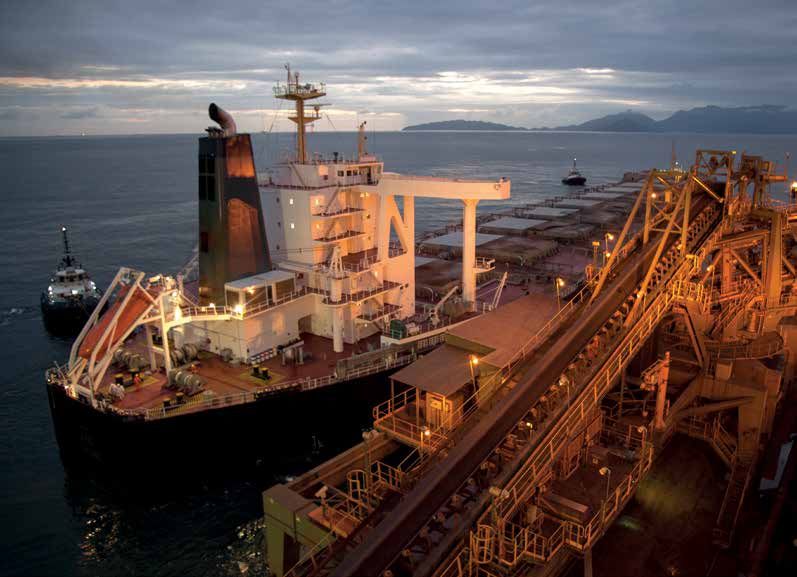
A fleet of around 600 chartered vessels More than 200 million tons of cargo transported each year
Cargill’s chartered fleet in 2019 During the reporting period, we carried almost 210 million to create economic opportunity, raise living standards
Our fleet evolves with our business tons of cargo, including iron ore, coal, grain, sugar and and sustainably nourish the world. We support the World
Operating in more
fertilizers. Our highly specialized product tankers transport Trade Organization and its mission to help nations prosper
strategy; since 2017 we have increased edible oils, “clean” petroleum products, liquefied petroleum through rules-based trade, and we work every day to than 70 countries.
the number of smaller size vessels. gas, caustic soda, fertilizers and biodiesels. Cargill does
not transport any “dirty” petroleum products (crude oils or
ensure that the pathways of trade remain open, because
our collective prosperity depends on it.
residual fuels).
This report covers the activities and commitments of We support an open,
Evolution of Cargill’s fleet 2017-2019 In addition to the origins and destinations of the main trade
flows identified in the chart on the following page, we do
Cargill’s ocean transportation business. It does not
address any other businesses under the management rules-based international
700
business in 70 countries. Our customer base includes the
world’s largest mining and agriculture companies; our
or ownership of Cargill, Incorporated. trading system.
Cape 71 suppliers are predominantly shipowners, fuel oil producers The report covers our operations during calendar year
600 and port agencies. 2019 except where otherwise noted.
Average number of vessels
Panamax 217
500
2019
Trade and economic development are vital to our business.
Supramax 125 400 An open, rules-based international trading system helps
Handy 155 300
200
Tankers 48
100
Total 616
0
2017 2018 2019
Cargill | Ocean Transportation | 2019 Sustainability Report 5 Cargill | Ocean Transportation | 2019 Sustainability Report 6
Our global commodity flows
About Cargill Our purpose is to nourish the world in a safe,
responsible and sustainable way.
160K
Working in With more than Delivering for Supporting We aim to be the
70 150
customers in communities with most trusted partner
350
more than for food, agriculture,
125
employees financial and industrial
countries years of customers.
experience Cargill Cares
countries Councils
Our business How we work Our Guiding Principles
Every day, Cargill connects farmers with markets, customers with ingredients, Cargill’s integrated operating approach Doing business ethically is key to our long-
and people and animals with the food they need to thrive. enables our businesses to provide industry- term strategy and relationships. Our seven
leading products and services in their specific Guiding Principles make up the core of our
sectors while also drawing on the full world of Code of Conduct. We require all employees
We provide insights Cargill’s expertise. We deliver this expertise and contractors to follow them, and expect
to our partners Data Market Risk Financial
locally, quickly and reliably through world- our suppliers to do the same.
class capabilities and operations everywhere
analytics expertise management solutions
1. We obey the law.
Iron Ore: 60 million tons per year we do business. Our global functions equip our
2019 figures for time-charted and
Coal: 40voyage-chartered
million tons per year vessels on key flows: We transform businesses to do this effectively and efficiently 2. We conduct our business with integrity.
by providing process governance and deep
Grains: 54 million tons per year raw materials into subject matter expertise on issues that affect
3. We keep accurate and honest records.
Sugar: 7 million tons
Iron per60year
ore: M tons finished goods Animal
nutrition
Food
ingredients
Animal
protein
Branded
foods
Bioindustrials
us, our customers and other partners. 4. We honor our business obligations.
Coal: 40 M tons Insights
Grains: 54 M tons Our Executive Team is responsible for the 5. We treat people with dignity and respect.
We move products
Insights Insights
Sugar: 7 M tons company’s strategic direction, talent
6. We protect Cargill’s information, assets
Transform Insights
around the world Insights Insights
Roads Rail Transform Rivers Transform Oceans development and overall financial
and interests.
2019 figures for total cargo shipped: Move Transform
performance. Led by Chairman and CEO
Transform Transform
Move Move David MacLennan, members of the Executive 7. We are committed to being a responsible
Dry: 198 M tons Team represent all of Cargill’s enterprises, as global citizen.
Insights
For farmers For customers
Farmers Move
Wet: 9 M tons We supply feeds, other
Move Move
We deliver finished goods to Farmers Farmers
well as major global functions. They use a
Total: 207 M tons diverse set of experiences from both inside
Transform
Customers
inputs and expertise to customers in the foodservice, Farmers
farmers, and buy crops retail, consumer packaged
Farmers Farmers
Customers Customers
and outside of the company to lead and
and livestock from them Move
goods and industrial sectors
achieve results.
Customers
Customers Customers
Farmers
sremotsuC
mrofsnarT
sremraF
sthgisnI
Cargill | Ocean Transportation | 2019 Sustainability Report 7 Cargill | Ocean Transportation | 2019 Sustainability Report 8
evoM
Customers
Sustainability governance

                                                                                     Cargill has a corporate sustainability hub with   This hub harnesses the full power of Cargill to aid the
                                                                                     experts on climate science, water, land use       company’s businesses as they drive sustainability efforts                                  Ruth Kimmelshue
                                                                                                                                       across their respective industries. It includes leadership
                                                                                     and more. The hub is led by Ruth Kimmelshue,      and expertise from key functions including operations and                                  Chief Sustainability Officer,
                                                                                     a member of Cargill’s Executive Team, who         supply chain management, corporate affairs and law, among                                  Corporate Vice President
                                                                                     is responsible for global business operations     others, to advance sustainability priorities around climate                                for Business Operations
                                                                                     and supply chain, as well as her role of Global   change, water resources, land use, farmer prosperity, and                                  and Supply Chain
                                                                                                                                       food loss.
                                                                                     Sustainability Officer.
                                                                                                                                       Our ocean transportation business is part of Cargill’s
                                                                                                                                       agricultural supply chain enterprise which is led by Joe
                                                                                     As a company, we are uniquely

Our approach
                                                                                                                                       Stone. Joe is a member of Cargill’s Executive Team and was

                                                                                     positioned to connect people and                  appointed to the Cargill Board of Directors in 2016. He has                                Joe Stone
                                                                                                                                       more than 30 years of experience with the company across
                                                                                     to make a positive impact on the                  numerous businesses and took on his current role on June
                                                                                                                                       1, 2019. Previously, he served as Chief Risk Officer and
                                                                                                                                                                                                                                  Executive Vice President,
                                                                                                                                                                                                                                  Cargill Agricultural Supply Chain
                                                                                     planet through the products and

to sustainabilty
                                                                                                                                       led Cargill’s animal nutrition businesses. Joe is passionate

                                                                                     services we provide.                              about sustainability and, outside of Cargill, sits on the Board
                                                                                                                                       of the World Food Program USA where he supports the
                                                                                                                                       lifesaving work of the United Nations World Food Program.

                   Cargill | Ocean Transportation | 2019 Sustainability Report   9                                                                                                                   Cargill | Ocean Transportation | 2019 Sustainability Report      10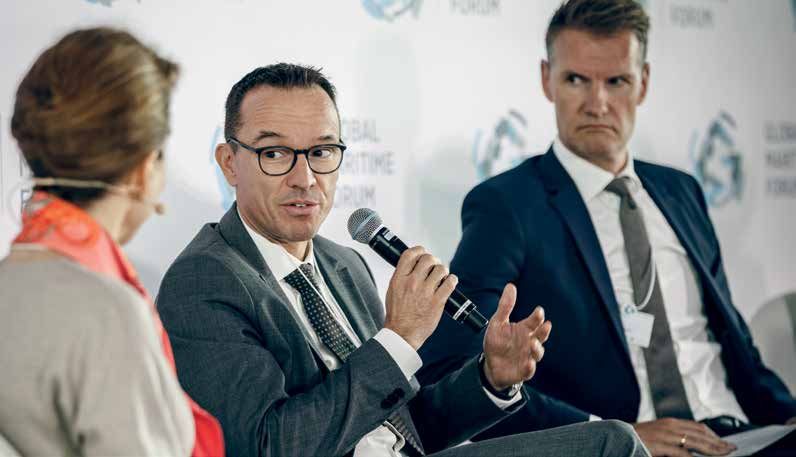
Alignment with the SDGs
                                                                                                     Cargill’s ocean transportation
                               Jan Dieleman has led Cargill’s ocean transportation                   sustainability hub comprises:
                               business since May 2016. Jan has been with Cargill for
Jan Dieleman                   more than 20 years and led businesses in both the U.S.
                               and Europe, including Cargill’s energy business from 2012            Jan Dieleman
Business Leader,               to 2016. He has made sustainable shipping a priority,                Business Leader
Cargill Ocean Transportation   ensuring that Cargill actively drives progress across the
                               maritime industry. As part of this, he became an Advisory            Andrew Barker
                               Board Member of the Global Maritime Forum in 2018. He is             Head of Operations and Sustainability Lead
                               also a Non-Executive Director of RightShip, the industry’s
                               reference for safety and environmental efficiency, where he          Stanislav Mateev
                               advocates for higher efficiency standards and practices in           Operations Manager
                               shipping.
                                                                                                    Nikolay Stoev                                               We know that the private sector has
                               Andrew Barker is a member of Jan’s leadership team                   Safety Officer                                              an important role role to play in helping
                               and serves as the sustainability lead for our ocean
Andrew Barker                  transportation business. This involves overseeing all                George Wells
                                                                                                                                                                the world achieve the United Nations
                               business activities, industry partnerships and initiatives           Head of Assets and Structuring                              Sustainable Development Goals (SDGs).
Global Head of Operations      related to our sustainable shipping strategy. Andrew is
and Sustainability Lead,       our Head of Operations and is responsible for managing               James Lewis
Cargill Ocean Transportation   Cargill’s fleet of more than 600 vessels.                            Long Term Tonnage Lead                                      For our ocean transportation business, each of our
                                                                                                                                                                sustainability priorities aligns with at least one of
                               Andrew is supported by a sustainability hub that includes            Ann Shazell                                                 the SDGs.
                               key leaders from across our business. In 2019, we also               Lead Lawyer
                               created a new role of Safety Officer to further strengthen
                               our efforts to improve industry safety standards and ensure          Heidi Farr
                               that the vessels we charter operate safely.                          Communications Director

                                                                                                    Jan-Willem van den Dijssel
                                                                                                    Americas Lead
                               Cargill has made sustainable
                                                                                                    Ying Ying Lim
                               shipping a priority and we are                                       APAC Lead
                               driving progress across the                                          Olivier Josse
                               maritime industry.                                                   Head of Tankers

                                                                                             Cargill | Ocean Transportation | 2019 Sustainability Report   11                                                           Cargill | Ocean Transportation | 2019 Sustainability Report   12
Our stakeholders                                                                                                                                Our partners
We consider our stakeholders to comprise the following:                                                                                         In 2019, our ocean transportation business was a member of - or partnered with - the following
                                                                                                                                                associations and organizations:

                                                                                                                                                                                                                                 RBON
                                                                                                                                                                                                                               CA
                                                                                                                                                                Aluminium
                                                                                                                                                                Stewardship
                                                                                                                                                                Initiative
                                                                                                                                                                                                                           W
                                                                                                                                                                                                                               AR         M
                                                                                                                                                                                                                                    ROO

    Customers        Governments       Communities           Employees               Industry and trade                  Financial
                                                                                        associations                    institutions

     Academic          Potential        Suppliers         Non-governmental          Consumers and the                  Shareholders             We also leverage key global relationships that are maintained at the corporate level:
    institutions      candidates                            organizations             general public
                                                               (NGOs)

                                                                             Cargill | Ocean Transportation | 2019 Sustainability Report   13                                                                                                 Cargill | Ocean Transportation | 2019 Sustainability Report   14
Material relevance
In 2017, we completed our first materiality   Since conducting the initial assessment, we continue to          As a vessel charterer, however, we have have limited ability
assessment specifically for our ocean         engage regularly with our stakeholders, both internally and      to control or influence certain material aspects. Seafarer
                                              externally. These exchanges have led us to believe that the      well-being and ship recycling are notable examples, and
transportation business. This assessment      topics identified in the original assessment remain highly       stand out in the chart on the following page. But as a leading
has served as the basis for our first three   relevant to our business today.                                  global organization with a strong sense of responsibility,
corporate responsibility reports and 2020                                                                      we make it our business to continue to advocate for and
sustainability targets.                       We conducted our assessment in line with recognized              influence – where possible - all of the aspects identified in
                                              practices. This started with a horizon scan of the relevant      our materiality assessment.

                                                                                                                                                                                Business interest
                                              industry topics and challenges, including a review of the
                                              pertinent and persistent media topics, as well as report-        In 2020, we will conduct a new materiality assessment
                                              based and anecdotal evidence from our senior leadership          and use this as guidance when setting our next set of
                                              team. This was followed by a stakeholder outreach and            sustainability targets and actions. We will also look to
                                              engagement initiative with strategic customers, business         expand the scope of stakeholder engagement and invite
                                              leadership and employees. Feedback was gathered through          more feedback from suppliers and NGO partners.
                                              online surveys.

                                              The 2017 materiality assessment identified that the aspects
                                              most material to our business are:                               As a leading global organization
                                                                                                               with a strong sense of
                                                     Emissions                                                 responsibility we continue
                                                     Safety and well-being                                     to advocate for and influence                                          0                                                              Stakeholder interest

                                                     Anti-corruption                                           – where possible - all of the                                                        Waste                 Security                                   Biodiversity                                    Emissions

                                                     Inclusion and diversity
                                                                                                               aspects identified in our                                                            Partnerships          Anti-corruption                            Seafarers wellbeing
                                                                                                               materiality assessment.                                                                                                                                                                        Note: The axes illustrate the level of
                                                     Ship recycling                                                                                                                                 Water scarcity        Trade & economic development               Safety                                   stakeholder or business interest; the
                                                                                                                                                                                                                                                                                                              bubble size indicates Cargill’s ability
                                                                                                                                                                                                    Employee engagement   Inclusion and diversity                    Ship recycling                           to influence the issue.

                                                                                                            Cargill | Ocean Transportation | 2019 Sustainability Report    15                                                                                                              Cargill | Ocean Transportation | 2019 Sustainability Report   16
1 2 3 4 5 6
Send our employees Reduce GHG Recruit, develop Protect ocean health Conduct our business Support the maritime
home safely and emissions across and retain a diverse and biodiversity ethnically and industry’s efforts to
Our sustainability
improve safety our fleet and lead the workforce and build and minimize our responsibly, honor make ship recycling
standards across the maritime industry to a more balanced and impact on the marine our obligations and more transparent
maritime industry. a more sustainable inclusive culture. ecosystem. treat everyone with and responsible.
future. dignity and respect.
priorities
Cargill | Ocean Transportation | 2019 Sustainability Report 17 Cargill | Ocean Transportation | 2019 Sustainability Report 181
2020 targets
People, safety and well-being Progress
Maintain
current share of 4- and 5-star rated vessels
Cargill is committed to sending our employees home safely at the end of each according to RightShip
Better quality and higher rated ships
day. We are also striving to improve safety standards across the maritime industry.
100%
100%
of fleet RightShip approved We know from experience that better quality ships improve
crew safety. Last year, all of our vessels received RightShip
100%
approval (or the necessary waiver). The RightShip Qi
Seafaring is widely recognized as one of Why is it important to our Why is it important to Cargill? index (quality index) is a vetting tool that uses big data and
the most dangerous jobs that exist. Crews
spend months away from their families, stakeholders? As a charterer, Cargill is not responsible for the management, of supplier contracts with a duration of one year of
predictive analytics to determine the likelihood of a vessel
having an incident within the next 12 months. Vessels are of our vessels approved
suffering from isolation, anxiety and other maintenance or crewing of the fleet we operate - this is more reference our Supplier Code of Conduct rated from 1-star (high probability) to 5-star (low probability) by RightShip.
mental health issues, including suicide. In 2019, there were around 1.65 million seafarers serving managed instead by our shipowner partners. Nonetheless, and Cargill prioritizes vessels rated 3-star and above.
Establish
on merchant vessels5. Living and working conditions we try to influence our partners and encourage safe In 2019, the majority of the vessels in our long term time-
They endure violent storms, accidents,
onboard are typically basic, particularly on older or poorly practices and ethical treatment of their crews in three charted fleet were rated 4- and 5-stars and we increased
flooding, explosions, even pirate attacks, maintained vessels, and payment of crew salaries remains ways: by selecting owners of modern and well-maintained the average individual vessel rating.
and the risk of abandonment is still a reality. an issue - in some cases, salaries are still not paid on time. vessels; by partnering with owners to encourage best a shipowner benchmarking tool to rate suppliers
practices; and by setting clear expectations through our on their fleet operations and safety performance In addition to RightShip, we conducted more than 130
Crew safety is often endangered by simple human Supplier Code of Conduct. more reference our Supplier Code of Conduct inspections to continually check the safety standards,
error. Fatigue, stress and access to training are certification, classification and registration of the vessels
Achieve
frequently considered below acceptable – all are issues For our 280 employees, whose safety at the workplace is our we charter. We also continue to verify that that our fleet
that, if attributed sufficient time and resources, could be priority, we emphasize the importance of safety every single complies with International Labor Organization standards.
significantly improved. day and strive to foster a work environment that is both
physically and psychologically safe. zero injuries within our offices
Onboard security was a particular concern in 2019, a year
which saw a series of attacks on tankers in the Strait of
Crews spend months
Hormuz. Crew safety was put at high risk, with vessels
requiring military escorts for an extended period and a
We emphasize the importance
away from home and their British-flagged vessel seized for more than two months. of safety every single day.
mental well-being is a
constant concern.
Cargill | Ocean Transportation | 2019 Sustainability Report 19 Cargill | Ocean Transportation | 2019 Sustainability Report 20Next steps
Installing Cargill safety standards across our partners Newly appointed Safety Officer Driving improved safety standards Improve safety by increasing the percentage of
across the maritime industry RightShip 4- and 5-star rated vessels in our fleet.
Ensure that 100% of our fleet is RightShip
Safety is Cargill’s number one priority and we endeavor to Last year, we appointed a Safety Officer dedicated to our At industry level, as a shareholder of RightShip since 2006 approved and compliant with ILO standards.
install the same rigor amongst our long term partners. Last ocean transportation business. In addition to working (where we hold two non-executive seats on the RightShip
year, we incorporated the Cargill Supplier Code of Conduct closely with our shipowner partners to drive higher industry Board) we continue to push for higher safety standards Trial tools that drive transparency and
into all contracts with a duration of one year or more and we standards, he is liaising with Cargill’s corporate health and better crew welfare across the industry. Through collaboration with our long term partners, with
expect our partners to adhere to high standards of safety and safety team to evaluate and identify best practices our membership of the Global Maritime Forum, we are the long term goal of implementing some of them
and crew welfare at all times. We monitor and track this inside and outside the company that can be applied to participating in the “Together in Safety” workstream, and to our long term fleet.
through our internal incident tracker and, in 2019, we created our business. By doing so, we are improving awareness of this was one of the four lead themes at the GMF Annual
a special tool that captures, reports and grades incidents safety and well-being amongst our ocean transportation Summit in October 2019. Monitor and track incidents using our internal
on a severity scale that enables us to benchmark shipowner personnel and last year participated in Cargill’s first internal incident tracker and further develop our shipowner
performance. As the tool evolves, we will start to share it Global Safety Week. The intention is to repeat this week- We also continue to work with organizations dedicated to performance benchmarking tool and introduce it
with shipowners. long campaign, which is rich in activities and learning improving seafarer well-being, such as the Seamen’s Church to shipowner partners.
opportunities for employees across the company, in 2020. Institute (SCI) in North America and Cargill was proud to be
We are also trialing different tools that drive transparency the lead sponsor once again of the SCI Mountain Challenge Improve awareness of office safety and well-being
and collaboration with our long term partners, with the aim in 2019. Over the years, this partnership has helped to amongst our employees, including the importance
of selecting one of these tools to be rolled-out to our long raise significant funds for the SCI to drive awareness and of psychological health.
term fleet in 2020. In 2019, Cargill organized its first initiatives that improve the lives of seafarers.
internal Global Safety Week. Work closely with RightShip and support the GMF
to keep pushing for higher safety standards and
improved crew well-being across the industry.
We created a specialized tool
that captures, reports and
grades incidents on a severity
scale to benchmark shipowner
performance.
Cargill | Ocean Transportation | 2019 Sustainability Report 21 Cargill | Ocean Transportation | 2019 Sustainability Report 22Last year, we changed our fleet portfolio and increased the before that, we have made encouraging progress.
2
2020 targets
Climate change and health
number of smaller sized vessels to align with our business We have reduced the carbon intensity across all vessel
strategy (as illustrated by the charts on page 5). At the same segments (with the exception of cape size) and have
15%
time, we carried almost the same volume of cargo, which made notable reductions on the smaller size vessels,
meant more voyages on smaller size ships than in 2018. handy size in particular.
All of these factors meant that in 2019, our CO2 emissions
reduction in CO2 emissions per cargo-ton-mile per cargo-ton-mile increased by 2.3% against the previous In 2019, our gross CO2 emissions and fuel consumption
Cargill is committed to reducing GHG emissions across our fleet in our time chartered fleet against 2016 baseline reporting period. also increased by just 0.8% to 7,317,000 metric tons,
despite increasing our total number of voyages by as
and to leading the maritime industry to a more sustainable future.
80%
When analyzed per vessel size, however, comparing much as 4% (the higher number of voyages explained
emissions against both the previous year and the year again by the change in fleet portfolio).
of our fleet will be rated A through D by RightShip
Why is it important to our
100%
The IMO set a target in 2018 to reduce total traditional maritime fuel (high sulphur fuel HSFO), and producing
GHG emissions from shipping by at least sulphur oxides (SOx), nitrous oxides (NOx) and microscopic
50% by 2050 against a 2008 baseline. To stakeholders? particulate matter (black carbon) as a result. These are all
harmful to human health, and have been shown to contribute compliance with the IMO’s Global Sulphur
achieve this, radical changes are required
Global economic growth dipped during 2018-19, global to respiratory and heart disease, as well as lung cancer. As part Cap in 2020
and the maritime industry must prioritize industrial production (a leading indicator of demand for of its efforts to fight against this, the IMO introduced a sulphur
working towards a carbon-neutral future. maritime transport) decelerated and global merchandise regulation that reduces the authorized level of sulphur in marine
New 2030 target
4% 0.8%
trade growth fell1. Nonetheless, maritime transport remains fuel from 3.5% to 0.5%, effective January 1, 2020. Last year was
the backbone of globalized trade, with more than four fifths marked by extensive preparations as the global shipping
30%
of the world’s merchandise trade (by volume) carried by sea. industry prepared to comply.
Whilst down on the previous year’s figure, UNCTAD projected
that international maritime trade growth would still increase
by 2.6% and will continue to rise at a compound annual growth Why is it important to Cargill? reduction in GHG per ton of product across increase in voyages increase CO2 emissions
rate of 3.4% over 2019-242. The total world fleet of 95,402 ships
(of which 71% were bulk carriers and tankers) remains high; Climate change and health are the areas identified as highest
Cargill’s global supply chains by 2030 against
a 2017 baseline. in 2019 and fuel consumption
but so too do their emissions3. In 2019, shipping’s contribution material relevance to Cargill’s ocean transportation business.
Shipping must reduce its to global GHG emissions remained at around 2.5%4. As a charterer and vessel operator, we have four ways to Since last year’s report was published, Cargill has
influence our environmental performance: the type of vessels adopted a Scope 3 target of reducing greenhouse
GHG emissions by 50% by To combat this, the IMO set a target in 2018 to reduce total we charter; the way we operate them; the energy efficiency gas emissions across the company in its global
2050 – a task comparable GHG emissions from shipping by at least 50% by 2050
(compared to a 2008 baseline). This includes reducing the
optimization of ships we charter in the future; and our
parceling business.
supply chains by 30% per ton of product by 2030.
with halving the emissions carbon intensity of ships by at least 40% by 2030. To achieve
this, industry leaders believe that zero-emission vessels need Cargill also has a commitment to reduce GHG across its
of a country the size of to be operational and on the water by 2030. supply chains, which includes our ocean transportation
Germany. business. At a global level, the corporation has aligned with In 2019, we reduced the carbon intensity across all vessels,
with notable progress on the smaller sizes.
In 2019, the maritime industry prepared for the IMO’S Global the Paris Agreement and we have set science based targets
Sulphur Cap. Until the end of last year, vessels were burning to guide our progress.
Cargill | Ocean Transportation | 2019 Sustainability Report 23 Cargill | Ocean Transportation | 2019 Sustainability Report 24Progress
In 2017, 2018 and 2019, the volume of cargo we Of particular interest is the increased number of time-
transported has remained steady at 170 million metric chartered voyages in 2019. Despite the significantly higher Over the last 2 years we have
tons (time chartered voyages only). Yet each year we have
decreased our fuel consumption against our fuel
number of voyages last year, the reduction in fuel
consumption and CO2 emissions between 2019 and 2017
saved around 800,000 metric
consumption in 2017, and our respective gross CO2 remains comparable to the reduction between 2018 and tons of gross CO2 emissions.
emissions as a result. This means that our aggregated 2017, thus demonstrating the impact of our continued efforts
gross CO2 savings over the last 2 years amounts to to operate a more energy-efficient fleet, whilst exploring the
around 800,000 metric tons. use of energy-saving devices onboard some of our vessels.
Optimizing vessel efficiency and voyage operations
Gross CO2 emmisions and time chartered voyages 2017 - 2019
2,860 Throughout the year we continued to build a more energy- launched in October 2019) we are testing the business
Retrofitting energy-saving
7,800
efficient fleet, especially with our long term time chartered case for retrofitting these devices, with a long term aim
fleet, and we worked with shipowners to improve the to offer turn-key CO2-reducing solutions to the wider
7,700
2,840 efficiency of their vessels, either through retrofitting energy- maritime market. devices that reduce CO2
saving devices or by improving voyage operations. We are
also implementing a data-sharing clause to enhance the Through our digital vessel performance project, we
emissions by 5 to 10%.
2,820
7,600 level and availability of vessel information, allowing us to improved the way we operate vessels and tested a range
Gross CO2 emmisions (thousand metic tons)
2017 2018 2019 make better decisions. of performance management and voyage optimization
2,800
TC voyages 2,756 2,735 2,845 Retrofitting energy-saving devices, such as the use of
tools. Optimization includes reducing the time spent in port
and in 2019 we ran a trial with selected vessels to monitor
Reducing fuel consumption
7,500
specialized hull paints, LED lights or installation of stern and reduce their fuel consumption and emissions whilst and emissions by minimizing
Time chartered voyages
2,780 appendages in front of a ship’s propeller, can reduce CO2 in port. We also reviewed our overall time spent in key
7,400 emissions by 5 to 10%. Last year, we worked with our ports, with a view to further optimizing vessel turnaround time spent in port.
Volume of cargo 174.6 172.5 171 shipowner partners to retrofit such devices on our long term where possible.
2,760
transported time chartered fleet and have already completed six vessels.
To date, we have invested – or committed to invest - more In addition to optimizing existing vessels and improving
Improving our vessel efficiency
7,300 (million metric tons)
2,740 than 2.5 million USD on energy-saving equipment and are operations, we are working on cross-industry projects to
7,200
Fuel
consumption
2,481 2,342 2,361 looking to do more of this. Through our partnership with
Maersk Tankers and Mitsui & Co. (“Project Njord” –
explore new vessel designs that use technologies that aim
to fulfil the IMO’s targets.
through performance
2,720 (thousand metric tons) management and voyage
7,100 2,700
Gross CO2 7,740 7,309 7,371 optimization tools.
emissions
(thousand metric tons)
7,000 2,680
2017 2018 2019
Gross CO2 emmisions Time chartered voyages Volume of cargo transported (illustrative line)
Cargill | Ocean Transportation | 2019 Sustainability Report 25 Cargill | Ocean Transportation | 2019 Sustainability Report 26Solutions for customers to reduce their CO2 emissions Modern vessels that have
been verified by RightShip
Last year, our parceling business continued to grow and We continue to modernize and improve the efficiency of our
we shipped around 1.25 million metric tons of dry bulk. fleet by prioritizing the highest rated vessels according to the
Parceling allows customers shipping small volumes to RightShip GHG Emissions Rating system. We also minimize
favor larger sized vessels, significantly reducing emissions the use of ships that are more than 15 years old.
as a result. Customers can save 20 to 40% in CO2 emissions
81%
per voyage and we have seen an increasing demand for Last year, 81% of our vessels were rated A through D by
this service. RightShip and all of our vessels were rated by RightShip
before finalizing contracts. As new, more modern vessels
enter the market, however, existing ships may be
Parceling allows customers
downgraded in the RightShip ratings and this can
impact reporting. of our vessels were
shipping smaller volumes We also maintained the average age of our fleet below 7
rated A through D by
to save 20 to 40% in CO2 years as we know that younger, more modern vessels offer RightShip, surpassing
emissions per voyage.
improved technologies that optimize efficiency and reduce
fuel consumption and emissions. our 2020 target.
We are working closely with our customers across the globe
to better understand their sustainability objectives and
propose greener shipping solutions that reduce their carbon
footprint. In 2019, we saw particular interest from aluminum
producers and, through our membership of the Aluminum
Stewardship Initiative, we are exploring new opportunities
to further develop this.
Cargill | Ocean Transportation | 2019 Sustainability Report 27 Cargill | Ocean Transportation | 2019 Sustainability Report 28Collaboration to drive initiatives across the maritime industry A three-phase journey to 2050
In 2018, Cargill became a founding member of the Global Cargill believes that the scale and complexity required the water by 2030, significant change and innovation will
Maritime Forum (an international not-for-profit organization
that convenes leaders from across the maritime sector) and
We are working with the to fulfil the IMO’s 2050 target will require a series of
incremental changes as shipping – and the energy sector
be necessary. Simultaneously we will continue to reduce
our emissions by further exploiting existing technologies,
our Business Leader sits on the GMF Advisory Board. Last Global Maritime Forum to – transitions to carbon-neutral. We see this as a journey increasing partnerships and optimizing end-to-end
year, we actively participated in the GMF’s Decarbonization
Taskforce and a took lead role in drafting the Poseidon establish a common emissions comprising three phases. supply chains.
Principles (launched in June 2019) and co-chaired the
Fuels, Technologies and Transitions Pathways workstream.
reporting framework for Up until now (and during phase one), we have been
reducing our GHG emissions by optimizing vessel efficiency
Beyond that, we will be looking to support market-based
measures that define solutions that are commercially
the shipping industry. and operations using existing energy-saving technologies viable for the long term, and we will align with the maritime
We participated in the GMF Annual Summit in Singapore, and industry collaboration. In phase two, we will explore industry’s energy transformation and improve our fleet to
signed the GMF’s Getting To Zero Coalition, and have new technologies: if zero-emission vessels are to be on meet new industry standards.
committed to leading the Charterers’ Response to the
Poseidon Principles – an initiative that will look to establish
a common reporting framework or methodology for
reporting on emissions. The GMF continues to explore
carbon pricing for the maritime industry and, through our Fulfilling the IMO’s 2050 target will require
membership, we are following and supporting progress.
a series of incremental changes.
We see this as a three-phase journey towards
zero emissions.
Cargill’s Jan Dieleman participating in a panel discussion about
decarbonization at the 2019 Global Maritime Forum Annual Summit
in Singapore. Image: Global Maritime Forum/Wilson Santinelli
Cargill | Ocean Transportation | 2019 Sustainability Report 29 Cargill | Ocean Transportation | 2019 Sustainability Report 30Improve and Improve vessel
modernize
our fleet
operations using
Continue our work with the GMF
Our 2050 pathway to ZERO
digital vessel
and other industry associations Our pathway is aligned with our commitment to the
performance tools
Global Maritime Forum’s Getting to Zero Coalition. The
coalition aims to have commercially viable zero emissions
Explore Continue to optimize vessel efficiency
vessels (ZEVs) operating along deep sea trade routes by
optimization and exploit existing technologies
2030, supported by the necessary infrastructure
of wind for scalable zero-carbon energy sources including
propulsion production, distribution, storage and bunkering. Reporting and measurement of emissions
Retrofit energy-saving devices on
vessels to build a more energy-efficient fleet
CO2 intensity of global shipping emissions
We continue to track voyages and emissions using the We use a series of indicators that track vessel selection
Explore new energy-saving solutions that
IMO’s standard energy and efficiency operational indicator and design, operations, logistics and technical details
could be technically and commercially viable
methodology (EEOI). In our 2018 report, we stated that and continue to challenge our system to ensure the most The more we work on
CO2 Challenge to
find and scale new Partnership with Maersk Tankers
by improving the composition of our fleet and optimizing
vessel efficiency, we were able to reduce CO2 emissions
accurate, transparent and stable methodology possible.
this, the more we learn.
technologies and Mitsui & Co. to bring “over-
the-shelf” solutions to market
per-cargo-ton-mile across all vessel sizes by 12.1% against
our 2016 baseline. Since publishing that report, we have
We conclude by advocating for the need for a standard
GHG emissions reporting process that will become the
We are on a sustainability
Align with the maritime (and energy)
audited our carbon accounting procedures and found industry norm. We are therefore pleased to be contributing journey and still have
Work with
industry’s fuel transformation
some data source issues. This explains in part why our
aggregated reduction in CO2 emissions since 2016 has
to the GMF’s Charterers’ Response to the Poseidon
Principles workstream that has been tasked with designing much distance to cover.
Prioritize better rated shipowners decreased to 4.8%, with the rest explained mainly by a and developing such a process. We will work with our
ships by RightShip to improve the change in our fleet portfolio (less cape size vessels), as industry peers throughout 2020 to bring this to life and,
Support market-based
efficiency of their explained earlier. as of next year, will look to align our reporting with the
measures to define
vessels. new GMF standard.
Partner with solutions that are
The more we work on this, the more we learn, and the
Rainmaking in commercially viable
more we realize that emissions reporting is a complex
Singapore to unite tech for the long-term
process. It is also essential that data is collected and Last year, DNV GL once again independently reviewed
startups with industry leaders analyzed consistently from one report to another. and approved our methodology.
Improve our
fleet to meet
new industry
standards
Leverage existing
Optimize end-to
CO2 reduction
-end supply chains
technologies
2019 2030 2050
Cargill | Ocean Transportation | 2019 Sustainability Report 31 Cargill | Ocean Transportation | 2019 Sustainability Report 32Next steps
Full compliance with the IMO’s 2020 Global Sulphur Cap Reducing emissions Vessel efficiency Industry collaboration
and advocacy
100%
Throughout 2019 we continued to prepare rigorously for the For the last two years, Cargill has advocated for strict Ensure 100% compliance with the IMO’ Global Promote energy-saving solutions on our long term Support the need for carbon pricing – preferably
IMO’s Global Sulphur Cap which came into force on January enforcement of the regulation. We have manifested our support Sulphur Cap. time chartered fleet. an IMO-led scheme - through our work with the GMF
1, 2020. To do so, we took a collaborative approach with at leading industry events and publicly shared our support in Decarbonization workstream.
our shipowner partners and suppliers, including individual both the maritime and broader business media. Throughout Work with customers to develop joint solutions Use our digital vessel performance tool to improve
implementation plans for each of our vessels, to make sure
that our fleet was ready and 100% compliant.
all of our external – and internal – communications, we have
continually reiterated our commitment to full compliance.
compliance through rigorous that reduce their CO2 emissions. decision-making on fleet selection and operations. Define and start delivering on the key goals and
activities of the GMF’s Fuels, Technologies and
preparation and a collaborative Create an annual statement for selected bauxite Grow our parceling business and standardize parcel Transitions workstream.
Our in-house bunker procurement desk ran a fuel testing Through our membership of the Trident Alliance, where we and iron ore customers to show their yearly freight for certain flows and customers.
program with key bunker suppliers to keep informed about the became part of the Steering Committee in 2019, we have approach with our shipowner carbon footprint alongside a commodity benchmark. Follow the global trend for carbon offsetting and
latest progress and learn about the new compliant fuels. We
also secured contracts in major bunkering ports to minimize
called for strict enforcement. It is our belief that enforcement
is critical to ensuring a level playing field across the industry,
partners and suppliers. Monitor and reduce emissions in port through
Prioritize the use of highest RightShip rated vessels
and a younger, more modern fleet.
evaluate whether suitable as a short term and temporary
solution for our business, whilst advocating for an
delays and disruptions during the transition period. and we continue to advocate for this. trials with selected vessels that continue to optimize industry fund to support decarbonization research
time spent in port. Verify 100% of our fleet’s RightShip ratings before and development.
finalizing contracts
Start work on a project for a new wind-assisted MR
product tanker.
Cargill | Ocean Transportation | 2019 Sustainability Report 33 Cargill | Ocean Transportation | 2019 Sustainability Report 343
2020 aspirational goal
Inclusion and diversity Progress
10%
in our workforce increase in female representation in leadership
roles by 2020 compared to a 2015 baseline.
In 2016, Cargill signed the Paradigm for Parity℠
coalition, an organization committed to achieving
More balanced recruitment process
Cargill is committed to recruiting, developing and retaining a diverse workforce gender parity across all levels of corporate
leadership by 2030. Since 2015, we have increased the number of females
across the company. We are building a more balanced and inclusive culture, in leadership roles by 3%. Last year, we continued our
efforts to ensure a more balanced recruitment process
whilst also driving progress across the maritime industry. when acquiring talent for our ocean transportation business.
From a gender perspective, we are now tracking the
percentage of positions with a 50% or more diverse slate
of candidates at first interview stage, and we are increasing
the diversity of our interview panels. In all cases, we remain
committed to hiring the most qualified candidate for the role.
The maritime industry is undergoing
several changes and such disruption Why is it important to our automation in the transportation sector is likely to lead
to a significant shift (as opposed to a reduction) in the
will certainly affect its workforce. From stakeholders? global workforce8. Specifically for shipping, this is expected
automation to employee diversity to skilled to create demand for new types of jobs, such as remote
workers, shipping is shaping its workforce Two in five – or 40% - of the world’s 3.5 billion workforce operators, worldwide operating maintenance crews and
of the future, and increasing the number are women6, yet women represent just 2% of the mobility-as-a-service providers.
maritime industry7. Despite progress in recent years, with
of females needs to be a part of that.
an increased number or females obtaining access to
education and training for maritime studies, fundamental Why is it important to Cargill?
imbalances remain. These include lack of inclusion, sub-
standard feelings of personal safety, gender stereotyping, Cargill believes that diverse and agile teams make a
3%
low numbers of women occupying senior or management stronger organization, one that better understands and
roles, and distinct differences in pay - a survey conducted serves our customers and the communities where we
by the Maritime HR Association in 2018 revealed that operate. We strive to create a safe and inclusive environment
Just 2% of the maritime
women working in shipping are still earning an average for our employees, one that incorporates a broad range
of 45% less than men occupying similar positions. of backgrounds, experiences and perspectives. This is
industry is currently In parallel, the world is moving towards increased
crucial to our ability to attract and retain the very best
people, and to our continued success in the market.
increase in females
represented by females. automation. Initial industry reports indicate that in leadership roles.
Ying Ying Lim, APAC Lead, Cargill Ocean Transportation
Cargill | Ocean Transportation | 2019 Sustainability Report 35 Cargill | Ocean Transportation | 2019 Sustainability Report 36Next steps
Industry benchmarking Mentoring Foster a positive work environment to attract and
retain an increasingly diverse workforce.
Focus on providing career development
In 2019, we decided to compare ourselves to our industry Meanwhile, we continue to mentor our existing talent opportunities.
peers for the first time on this and partnered with the
Diversity Study Group (DSG). DSG is the first organization
and consider this an important development opportunity
opportunity for our staff. We regularly review talent and use
We mentor and review talent Actively participate in and promote Cargill’s Global
dedicated to championing diversity and inclusion across the gender as a filter to see how diverse our talent pipeline is regularly to ensure that high- Day of Inclusion.
performing employees develop
shipping industry, and we commissioned them to provide and what we are doing to develop and accelerate this.
detailed analysis of diversity and inclusion statistics and Actively recruit a more diverse slate of candidates
opinion data to help us gain a better understanding of where
we are today with our efforts to progress.
Through our internal mentoring program, we identify and
support high-performing candidates and prepare and
into Cargill leaders. when interviewing for open positions.
promote talented individuals to grow towards becoming Mentor and promote qualified internal talent.
As part of this, we participated in a customized version of future leaders of Cargill.
the DSG Diversity in Shipping Survey. The study looks at
employee engagement and how to foster an inclusive and
diverse environment. We were pleased to see more than
60% of our employees take part on a voluntary basis and
are now reviewing and evaluating the results, with a view
to establishing an action plan based on these.
We undertook a comprehensive
survey to understand what we
need to do to progress.
Joanna Letcheva, Cape Desk Trader, Cargill Ocean Transportation
Cargill | Ocean Transportation | 2019 Sustainability Report 37 Cargill | Ocean Transportation | 2019 Sustainability Report 384 Ocean health and biodiversity
Cargill is committed to protecting ocean health and biodiversity by working closely
with our suppliers to minimize the impact of our operations on the marine ecosystem.
Oceans play a critical role in stabilizing
climate and supporting life and human Why is it important to our sulphur oxides from the ship’s engine and boiler exhaust
gases. In doing so, they create wash water that contains
well-being. They are a resource that needs stakeholders? trace amounts of sulphates which is discharged into the sea.
ZERO
to be protected and supported, yet the During the scrubbing process any decrease in the pH of the
continually growing global population The majority of ocean pollution (around 80%) still comes wash-water is largely neutralized by the natural alkalinity
increases the impact of harmful stressors. from land-based sources9. That said, shipping still found in seawater, ensuring that the pH of the discharged
contributes to the level of pollution, water quality and marine water complies with guidelines established by the IMO.
This includes marine pollution from
activities related to ocean transportation.
life through standard industry practices. These include
ballast water discharge; waste discharge from ships, with In 2019, leading environment studies, including those
oil spills of 10m3
growing concern about pollution caused by plastics and published by Japan’s Ministry of Land, Infrastructure, or more in 2019
microplastics, as well as the disposal of hazardous and Transport and Tourism (MLIT)10, CE Delft and Deltares11,
noxious substances; oil spills and spills of other matters; and a 3-year study by the Clean Shipping Alliance (CSA
and acidification. 2020)12, alongside the IMO’s and EU’s own guidance,
concluded that scrubbers are safe and compliant and have
The IMO and other industry regulations address many of a minimal impact on the seawater concentration of sulphates.
these issues. The Ballast Water Management Convention
(enforced since 2017), for example, specifies where and in Why is it important to Cargill?
what manner ships can discharge ballast water, reducing
the risk of invasive species being transported into new As a charterer and vessel operator, Cargill does not own
Oceans must be ecosystems. or crew its vessels. We therefore work with our shipowner
partners and other suppliers to reduce the environmental
protected, supported The IMO’s 2020 Global Sulphur Cap will see an increase
in the number of vessels fitted with exhaust gas cleaning
impact of our operations within the scope of our ability. We
focus on influencing control over accidents and spills, waste
and maintained. systems, also known as scrubbers. Scrubbers remove the management, and the use of scrubbers.
Cargill | Ocean Transportation | 2019 Sustainability Report 39 Cargill | Ocean Transportation | 2019 Sustainability Report 40You can also read


