One SAS 2020 Vision SAS EC - Society For Applied Spectroscopy
←
→
Page content transcription
If your browser does not render page correctly, please read the page content below
SAS Office

SAS Journal

SAS EC             One SAS
                    2020
                    Vision
SAS Sections

  SAS Committees
September 2015 SAS Equity
Focus Benefits
Reason to Be What will we work to Reasons to Believe
The essence of SAS How will we achieve our goals? How we will know we have been successful?
accomplish
Strategies to deliver the
The mission The Objectives The Measures
benefits.
The Society for • To advance • To accomplish the objectives, the
• Monthly issues of both Applied Spectroscopy
and the Newsletter continue to be published.
Applied knowledge Society shall publish a journal known
• Discounts for members for other publications,
as Applied Spectroscopy.
Spectroscopy is concerning the • The Society will publish a regular
like JAAS.
Newsletter. • Free color pages in Appl. Spec. for Members.
a nonprofit, art and science • Free web access-Appl. Spec Journal to 1948.
global of spectroscopy • The Society Members may join or SAS offers Members:
form Regional, Technical or Student • 21 Regional Sections,
organization and other allied sections, according to their
• 13 Technical and
availability and interests.
formed to sciences. • 10 Student Sections
advance and • To disseminate • SAS members regularly organize at least
• The Society and/or Regional and
two sessions at PittCon, plus a student
disseminate knowledge and Technical Sections may conduct
event and booth.
conferences or symposia on
knowledge and information scientific subjects. • At the SciX Conference, SAS’s Annual
information concerning the Conference, networking events, sessions
and other benefits:
concerning the art and science • Discounted Conference Registration.
art and science of spectroscopy • SAS Member Event
of spectroscopy, • Member-welcoming Booth presence.
and other allied • SAS Poster Session
and other allied sciences. • SAS Wine and Cheese
sciences, to • To advance the • SAS student event
• Three+ SAS-sponsored Technical Sessions.
advance the professional • Free Student Memberships on Student night.
professional standing and • Open GB meeting, for Member input.
standing and growth of the • In addition to the organized sessions and
events, SAS is active in FACSS.
growth of the Society and its • The Society and/or Regional and
Society and its members. Technical Sections may publish or
Regional, Technical and Student Sections
give financial support for the
members, to • To coordinate publication of other scientifically continue to support a range of publications and
coordinate useful information pertaining to financial contributions.
cooperative spectroscopy.
cooperative endeavors of • The Society will encourage the SAS Members sponsor:
development of science through
endeavors of its • Meggers Award
its individual awards of recognition.
• Lippincott Award (w/Coblentz/OSA)
individual members and • Lester Strock Award (w/NE Section)
members and • Kowalski Award
sections, and • Fateley Award (w/ Coblentz)
sections, and to • To promote • Fellows Awards
promote and and maintain a • SAS Honorary Awards
maintain a close • SAS Distinguished Service Awards.
close bond • SAS Emeritus Awards.
bond among its among its • SAS Graduate Student Award
members. • SAS Undergraduate Student Award..
members. • The Charter, Constitution and The Society Communicates its work at:
Bylaws, as well as the work of the https://www.s-a-s.org
Society, will be shared on a web-site. The website provides:
• A searchable Membership Directory to help
Members connect.
• A Job search connection
• Journal and Newsletter access
• Sponsorship opportunities.
• SAS also has presence at LinkedIn,
Facebook, and Twitter.
• In addition to the benefits listed Other Member services, like:
above, additional Member benefits • Discount memberships to other organizations,
are maintained and managed by the like OSA.
National Office.
• Tour Speaker
• Student Ambassador Program
• Undergraduate Student Grant Program
• Job Search Connections (via website).
• Spectroscopist Certification (new).
• Sponsor/Donor Opportunities
• Professional Certification OpportunitiesEvolving Our Equity Into A Vision
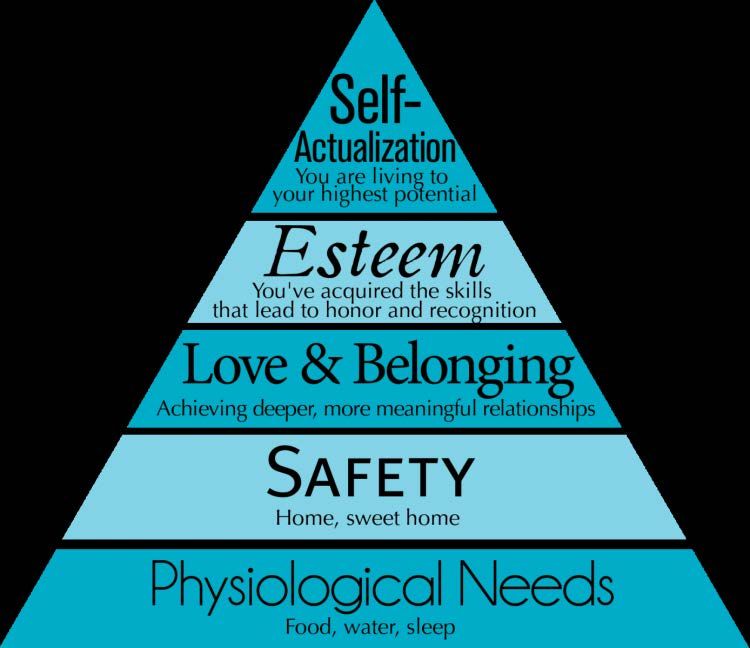
Maslow’s Hierarchy of Needs SAS’ Hierarchy of Needs
Self-
Actualization
Society fosters
SAS has this achievement
hierarchy Esteem
Honors and Recognition
Love & Belonging
Strong Network, Science Family
SAFETY
Solid Funding, Clear Plans, Employment
Physiological Needs
Members, Great ScienceEvolving Our Equity Into A Vision
Current Equity, summarized in Maslow’s terms:
Self-
Actualization Self-Actualization – SAS provides opportunity to lead peers and
Society fosters
achievement influence direction of science.
Esteem Esteem – SAS supports awards, presentation of work through
Honors and Recognition conferences and the Journal.
Love & Belonging Love and Belonging – SAS provides a science family and a
Strong Network, Science Family strong network. The SAS Office knows its members.
SAFETY Safety – SAS will be there to help throughout a
Solid Funding, Clear Plans, Employment member’s career, adapting to the member’s needs.
Physiological Needs Physiological Needs – SAS attracts talented,
Members, Great Science active members pursuing great science.Evolving our Equity into a Vision Maslow’s hierarchy applied to SAS already sounds reasonable. Do we really need to change? Yes, because nothing stays the same. For example, the financial challenges we fought to address last year occurred because of a lack of long-term planning.
Strategies for Meeting SAS’s
          Physiological Need for Members
Membership should completely turn over every 30-40 years. Not all new members stick
with the Society. We need to attract ~80-150 new members a year, every year, to stay the
current size. Annual strategies used by the Society may include:
• Adding new/expanding/updating Technical Sections, with a target of ~100
    members/section (needed to stay healthy – Technical Section newsletters should help).
• Rejuvenating or adding Regional Sections and Student Sections.
• Adding conference participation, with specific goals of attracting new members at each.
• Adding cyber-sections for regions with low population density. This might help reach
    students in small colleges, etc. Maybe use a newsletter to share discussion topics/seek
    input.
• Sponsorship of membership by local companies
• Provide benefits (e.g. childcare) that enable member participation in SAS events.
• Holding “generation” meetings at SciX, to talk SAS member needs and make sure needs
    are being met.
• Global expansion (e.g. Mainland China)
Every year, the Regional and Technical Section Committee, with the Office, need to develop
a plan for attracting at least 80 new members. This plan should be reviewed with the GB.
Adding new Technical Sections will also help keep the Society’s science on the cutting edge.
A budget line item to support the 80 member plan needs to be set up.

Enhancement to member retention will reduce the number of new members necessary.
Strategies for Meeting SAS’s Safety
Need for Funding
Industry uses a rule of thumb that 4% profit increases are needed every year to
manage inflation. Applying the same rule to the Society, at least a 4% growth in
income is needed every year to remain stable. SAS should target a minimum of
~$50,000 per year in new income, on top of a balanced budget. Strategies to avoid
dues increases include:
• New member benefit initiatives, which can also bring in funding, like Certification,
development of Spectroscopy Kickstarter, new communication formats, like
additional newsletters, or speaker videos and more events like Ian’s beard.
• Sharing the costs across the Society, e.g. asking Coblentz and other self-funding
Technical Sections for help with the cost of Journal pages, Administrative support
and TPM efforts on their behalf.
• Reducing costs of existing services, e.g. the effort in 2015 to restructure the Office,
the Website and the Journal costs. These changes should protect member
benefits.
The EC needs to align on the annual $50,000 income building strategy, when they align
on the next year’s budget. Noting that some ideas will take time to plan and pay out,
the previous year’s plans may be expected to pay out in the following year. This
doesn’t change the need for annual planning for a $50,000 income increase.
SAS should also provide employment and career development opportunities for
members, which can include networking, mentoring, training, etc.Strategies for Meeting SAS’s Love and
Belonging Needs
SAS has over 1600 members. Psychologists estimate that it takes 8 communications of a new
idea for most people to consider the communication a fact. To insure that every member
feels the love, whether they attend conferences or not, SAS should strive to connect with
them in at least 8 ways. Some strategies for these connections include:
• All Networking sessions – with new ideas like “Family Feud” between e.g. Vibrational and
Atomic groups.
• Receiving the Journal
• Surveys seeking their input
• Invitations to join Regional or Technical Section meetings (which means SAS knows where
each member fits).
• Invitations to leverage their talents with SAS at a local or national level.
• Adding a program to connect academics with people in government and industry.
• Re-broadcast of talks already available from suppliers (donated by companies to SAS?)
• Conference travel grants (program to be designed)
• Personal contact from the SAS Office.
Every year, the Membership and Publicity Committees should develop a clear strategy to
make at least eight contacts with each member.
Additional strategies to optimize networking events should also be prepared.Strategies for Meetings SAS’s Esteem
Needs
• Dollar amounts for Awards/Honoraria in SAS have not kept pace with inflation. These
should also grow an average of 4% per year. Strategies suggested include a one-time
catch up, followed by regularly budgeted step increases, so that awards double in size
about every 17 years.
• Deliberate advertising of the awardees needs to continue through all available outlets
(Journal, Website, Social Media, etc). This is a real opportunity to improve the
recognition of the Society.
• Create titles for members that have achieved different levels of service to the Society
(ala American Academy of Forensic Sciences). Sustaining membership could be part of
this.
• With Sage, reviewers earn 3 months free access to the Journal.
• New Awards should deliberately be sought, as new Technical Sections are introduced.
Possibly, we need to add an award that SAS Technical and Student Sections can achieve.
These new awards may or may not replace older recognitions.
• Awards need to be reviewed to make sure they stay prestigious (e.g Fellows). By
awarding only ~2% of the Society every year, with a 5% rate for Students, all members
have a good opportunity to receive strong recognition from SAS during their careers.Strategies for Meeting SAS’s Self-
Actualization Needs
This is a broad area, because Self-Actualization is defined by each individual
for themselves. However, considering the range and types of skills exhibited
by current members, existing and potential strategies for meeting these SAS
needs include:
• Continuing to provide opportunities within the Society to demonstrate
talents like leadership.
• Development of new initiatives that appeal to broad groups of members
(e.g. Leveraging skills to ease world poverty, Spectroscopy Kickstarter to
enable entrepreneurs, etc.) Ideally, these new initiatives will benefit both
the individual and the Society’s income.
• Fostering of certain members’ work for recognition as new areas of
science, via formation of new Technical Sections.
Every year, the EC should actively discuss plans for development of specific
Self-Actualization opportunities. It may be appropriate for some
development efforts to span multiple years. The goal for each effort would
be for it to become self-sustaining.Turning Our Equity Into a Vision
Need Vision Priorities
Self-Actualization – SAS provides opportunity to lead • SAS leadership continues to pull new members into society
peers and influence direction of science. involvement.
• New efforts are created to influence the direction of
science.
Esteem – SAS supports awards, presentation of work • Awards Committee efforts continue and are appropriately
through conferences and the Journal. presented and funded.
• Conferences should provide recognition for SAS members.
• The Journal should provide recognition for SAS members.
Love and Belonging – SAS provides a science family • Membership Committee stays closely in touch with
and a strong network. members and provides essential networking
opportunities.
• The SAS Office regularly connects with members.
• Communications (e.g. Website and Publicity Committees)
celebrate connections between members.
Safety – SAS will be there to help throughout a • SAS must remain financially viable.
member’s career, adapting to the member’s needs. • SAS must provide employment leads.
• SAS must provide career guidance.
Physiological Needs – SAS must attract talented, • The Regional and Technical Section Committee needs to
active members pursuing great science. continuously identify, attract and retain members working
in developing areas of science.
• SAS needs to continuously attract student members.Everyone’s Busy. How Do We Eat This Elephant-sized Collection of Work? • Beginning next year, we agree to update Committee and EC assignments, as listed in this presentation, and let the Committees and EC get started. • The GB decides on 1-3 priority work areas per year (e.g. Employment and Entrepreneurial help in 2017?) • We start tracking our progress with metrics, especially on member growth and finances.
You can also read


