Oxford law news 2013 - University of Oxford
←
→
Page content transcription
If your browser does not render page correctly, please read the page content below

oxford law news    2013
                                                                                                                                      N o.17

                                                                                                 oxford law news
Benefactors 2012–2013

Chancellor’s Court of Benefactors               Senior Foundation Benefactors

Allen & Overy LLP                               Sir Frank Berman KCMG QC
Barclays Bank PLC                               The Brunsfield Foundation
Frau Anneliese Brost                            Open Society Institute Youth Initiative
Clifford Chance LLP                             Volkswagen Foundation
Deutscher Akademischer Austauschdienst (DAAD)
Andrew W. Mellon Foundation                     Foundation Benefactors
Norton Rose Fulbright LLP
Travers Smith LLP                               3 Verulam Buildings
                                                John Collis
Vice Chancellor’s Circle                        Fountain Court Chambers
                                                The Morris Trust
John Adams                                      Planethood Foundation
Baker & McKenzie LLP                            Ragnar Söderbergs Stiftelse
CMS Cameron McKenna LLP                         Torsten Söderbergs Stiftelse
Paul Dodyk
The European Justice Forum
Freshfields Bruckhaus Deringer LLP
                                                Weil, Gotshal & Manges LLP

                                                GOLDs
                                                                                                                   St Petersburg
Herbert Smith Freehills LLP
Hogan Lovells LLP                               4 New Square
                                                                                                                   International
Sir David Lewis DL, Alderman
Linklaters LLP
                                                8 New Square
                                                Amarchand & Mangaldas & Suresh A. Shroff & Co                      Legal Forum
Allan Myers AO QC                               Banking & Financial Services Law Association
Pinsent Masons LLP                              Kofi Adjepong-Boateng
Shell International BV
Shearman & Sterling LLP
Slaughter and May
                                                The Crescent Trust
                                                Essex Court Chambers
                                                Foundation for Excellence in Higher Education
                                                                                                                   Breakthroughs
Daniel Slifkin
White & Case LLP
                                                Gide Loyrette Nouel LLP
                                                Professor Sir Roy Goode CBE QC
                                                                                                                   in support of
                                                Stephen Leonard
                                                Mayer Brown LLP
                                                Genevieve Muinzer and Nick Segal
                                                                                                                   Oxford Law
                                                                                                 2013 • No.17

                                                The David and Jayne Paterson Educational Trust
                                                Paul Hastings LLP
                                                Pump Court Tax Chambers
                                                Sidley Austin LLP
                                                                                                                   Focus on Public
                                                The Sigrid Rausing Trust
                                                South Square
                                                                                                                   International
                                                                                                                   Law at Oxford
                                                                                                                                     FACULTY OF
                                                UK Foundation for International Uniform Law                                          L AW
                                                Volterra Fietta
www.law.ox.ac.uk

Editor: Kate Whetter

Design: Steve Allen

Printing: Oxuniprint

Editorial enquiries:
publications@law.ox.ac.uk

Alumni enquiries:
For further information on
Oxford Law alumni events and
to discuss ways to support
Oxford Law please contact
the Law Faculty’s Director of
Development, Maureen O’Neill.
maureen.oneill@law.ox.ac.uk

Do we have your correct name
and address? If not please let us
know by writing to us at:

Oxford Law News,
Faculty of Law,
St Cross Building,
St Cross Road,
Oxford OX1 3UL

or emailing us at
publications@law.ox.ac.uk

The Oxford Law News is
published annually by the
Faculty of Law.

Cover photo
Autumn in Oxford
© Rob Judges Photography

Inside back cover
Punts at Magdalen Bridge
© Steve Allen
Issue 17        Contents
Autumn 2013
                Features................................................................2
                News and Events.............................................. 10
                Centre News.......................................................18
                College News.....................................................38
                Research and Grants.........................................39
                Honours..............................................................46
                Publications.......................................................47
                Student News.....................................................50
                Mooting .............................................................52
                People News.......................................................56
                Alumni News and Events.................................66
                Benefactors News..............................................71

From the Dean   Academic freedom

                The mind                   boggles at the variety and the scale of
                                           the happenings and the innovations
                and the milestones and the new appointments that are
                reported in the Oxford Law News. We have had to change a
                newsletter into a magazine to report them.
                  And the Law News does not even report on the steady hum of
                the engine room –the reading and the writing, the marking of
                Mods and Finals papers, graduate exams and doctoral theses,
                admissions decisions, and the work of a tutor in marking up the
                students’ essays (often after the tutor has put his or her children
                to bed). I want to pay tribute to the work that people do in this
                University, to sustain a topsy-turvy teaching model in which
                the teacher gives a personal response to the student’s effort to
                explain the distinction between murder and manslaughter,
                or between a tax and a fine, or between rules and principles.
                  In exchange, the University offers good students, good
                colleagues, and a precious measure of freedom. Ask any
                practitioner who has found rewarding work, as a legal advisor
                or an advocate or a judge, and you will find that they have
                found ways of focusing on tasks that merit the perseverance
                that good lawyering involves. It can be a battle, hard-won over
                years, in developing the capacity to choose which files to take
                on, or in building a good team, or in finding a sustainable way
                to provide legal services that the market does not reward. For all
                the demands of admissions and teaching and marking, this is
                a great thing that a university has to offer to a lawyer: freedom
                to work on the interesting problems. Like the other aspects of
                academic freedom, we cannot take this one for granted, and
                we have to work to uphold it in the 21st century.
                  I recommend it very highly to those of you in practice, who
                may have the opportunity in the days to come to work with
                students and the academics in this law school, and in many
                others around the world.
features

‘Everything we do in the Law Faculty
is focused on the central purpose of
understanding the law – as it is and as it
ought to be. One of the most remarkable
ways in which Oxford achieves that
purpose is through the advanced

                                                                    Post-Doctoral
training of legal scholars in the doctoral
programme. Like our other students
they pursue diverse careers, but in
one particular pursuit they are hugely
influential: there are more than 120 law                            Career Paths
professors pursuing understanding in
more than 70 law schools around the

                                                                    (potholes
world, who have studied here, in the
largest doctoral programme in law the
English-speaking world.’
Timothy Endicott,
Dean of the Faculty of Law
                                                                    included)
Successful
                                              completion          to leave Oxford and all that it had to offer, but part of my
                                              of a n O x ford     education at Oxford was also about the realization that I must
                                              DPhil in Law is     use my privileged education to address, in however small a
a testament to a robust intellect, disciplined work ethic,        measure, the tragic levels of deprivation and marginalisation
and considerable ambition and drive. Graduates from the           back home.’
programme have gone to a variety of careers around the               Since completing her thesis in April 2010, Dr Einat Albin
world, with many noteworthy achievements in jobs ranging          has been writing and teaching at the Hebrew University of
from legal academia to legal practice to consulting and           Jerusalem, where she holds posts as a lecturer and as the
governmental work. Here, we highlight the work of five recent     Academic Director of the Clinical Legal Education Centre.
graduates whose activities attest to the increasingly global      Her main areas of interest are in labour law, welfare, and
scope of the Law DPhil.                                           social rights, and her research has particularly focused on
   Even before handing in his thesis, focused on issues           domestic and migrant workers, segmentation theory, and
of internal differentiation amongst beneficiary groups            the labour market. Einat has published numerous articles in
in the context of quotas in higher education and public           leading law journals, including the Modern Law Review and
employment in India, Dr Anup Surendranath was already             the Industrial Law Journal, and has won various prestigious
working as an Assistant Professor of Law at the National Law      prizes and awards, including the British Academy Visiting
University in New Delhi (NLUD). There, he has continued           Award (2011) and the Wedderburn Prize (2011). Einat has also
his focus on constitutional law and human rights, teaching        previously litigated leading labour and social rights cases in
const itut iona l law a nd of fering a semina r course on         the Israeli Supreme Court.
comparative constitutional law. Apart from his teaching              As Director of the University’s Clinical Legal Education
responsibilities at NLU, Anup is involved in various advocacy     Centre, Einat works to teach at-risk youth that they have
and research initiatives on human rights issues in India. He      rights, assists clients with housing, employment, welfare,
is currently heading India’s first-ever empirical study on the    and health entitlements, and promotes the human rights
death penalty, which involves interviewing all of India’s death   of Palestinians residing in East Jerusalem, particularly the
row prisoners, their families, and lawyers in the trial court.    disabled and asylum-seekers; each year, the centre serves the
Anup is also involved in legislative attempts to decriminalize    legal needs of between 200 and 300 people from disadvantaged
beggary in Delhi, and in drafting national legislation to         communities in Israel. As well as helping secure justice for
protect the rights of street vendors. He has published various    the marginalized, the centre routinely has a large impact on
articles on a range of issues in The Hindu, where they have       its law students – survey results indicate that 85 percent of
regularly featured as lead op-ed pieces.                          the clinic’s graduates continue to be involved in civil work
   A nup’s academic work a nd advocac y were direct ly            and perform pro-bono work as practising lawyers. ‘I perceive
inf luenced by his thesis, written under the supervision          the law as a public resource that should be enjoyed by every
of Professor Sandra Fredman. ‘Five years in Oxford was            person in society. Therefore, I believe that legal education
a t remendous intel lectua l jour ney for me. W hi le my          should put emphasis on sensitizing the future generation
undergraduate law degree at NALSAR (India) helped me              of lawyers to use their professional knowledge and skills to
identify fundamental aspects of my politics, Oxford helped        aid those who cannot access the legal system. This is what
me develop the intellectual rigour to test those political        clinical legal education is all about. Personally, I feel extremely
commitments. Professor Fredman was a wonderful supervisor         privileged to have the opportunity to combine my research
who has deeply influenced the manner in which I think about       and teaching in the field of labour law and social rights
and understand human rights. It was a difficult decision

2
Oxford Law News 2013
Main picture: Rosara Joseph, inset (l-r): Anup Surendranath, Einat Albin, Talal Al-Emadi.
together with promoting this idea through the Clinical Legal her partake in the major Oregon Enduro Series and the Big
Education Center at the Hebrew University of Jerusalem’. Mountain Enduro series, and she will also be participating in
Dr Sindiso Mnisi holds a position as Senior Lecturer in the the World Series events in Italy later this year. She has worked
Department of Private Law at the University of Cape Town, in the litigation department of a New Zealand law firm, has
co-teaching African customary caw and acting as a senior acted as a legal and policy consultant for the New Zealand
researcher in the Law, Race, and Gender Research Unit. Productivity Commission, and is publishing her DPhil thesis
Her research focuses on traditional courts and vernacular as a monograph through Oxford University Press. ‘I don’t have
dispute resolution forums in South Africa, and she has written a set career plan or path, but I do know that I am particularly
extensively on women’s rights and traditional authorities in interested in topics which involve difficult issues of law and
Africa. policy: such as security and intelligence policy, interactions
As an Assistant Professor at the College of Law of Qatar between governmental institutions, and relationships
University, Dr Talal Al-Emadi is the convenor for the College’s between government and people. My work at Oxford reflected
Oil and Gas Law and Health Law courses. His research has that interest, drawing together law, history, and politics in an
focused on the role of the law in petroleum investment, where examination of the power to go to war.’
he explores the long-term relationship between countries Stephen Weatherill, the Director of Graduate Studies for
like Qatar and international oil and gas companies. He is Research Degrees, observes, ‘I have come into close contact
also looking into publishing his DPhil thesis as a monograph, with dozens of Oxford DPhil students over the years in my
one which would address questions of both theoretical and own areas of expertise, broadly concerned with European
practical significance in the Qatari gas industry – namely, law, and they are a magnificent bunch of scholars who
why companies consistently prefer joint venture agreements have done much to improve the quality of my life. But it
when working with a host state. In addition to his academic is only since taking over administrative responsibility for
occupations, Talal has worked as a legal counsellor for the all the Faculty’s graduate research students in the Spring
Minister of State for the Council of Ministers’ Affairs, and has of 2011 that I have been able to grasp that across the whole
been commissioned to conduct a comprehensive review of sweep of legal scholarship the Faculty is lavishly blessed
national and international mental health laws by the Qatari by being able to host an astonishingly lively, energetic and
Minister of Health, with the aim to produce not only what intellectually superb group of diverse people. Common law,
would be Qatar’s first Mental Health Act, but one that might comparative law, transnational and international law, civil
serve as a model for the Arab region. ‘This initiative has been law, legal philosophy, black-letter analysis, law-in-context,
very overwhelming. Drafting legislation is a huge task. But criminology... we really can say: you name it, and Oxford is
it is very rewarding that we are realizing the importance of home to it, “it” being near enough every legal discipline and
having a Mental Health Act in Qatar. I am also lucky to have methodology under the sun. Each and every student has a
been able to work with colleagues from Qatar University, and wonderful story to tell, and though we certainly hope that the
to have been able to secure two renowned individuals in the Oxford Law Faculty has enriched their personal narratives,
field from the Oxford and Harvard law faculties who would we know for sure that our graduate research students have
act as external reviewers for the draft.’ collectively and individually done a huge amount to enhance
Since attending Oxford as a Rhodes Scholar and graduating our own profile as a globally acclaimed Law School. We thank
from both the BCL and DPhil in Law, Dr Rosara Joseph has them all.’
gone on to become a full-time cyclist in Wellington, New
Zealand, where she works with the Yeti Factory Race team Maria Lacayo
to train in Enduro mountain bike racing. This year has seen Merton College
3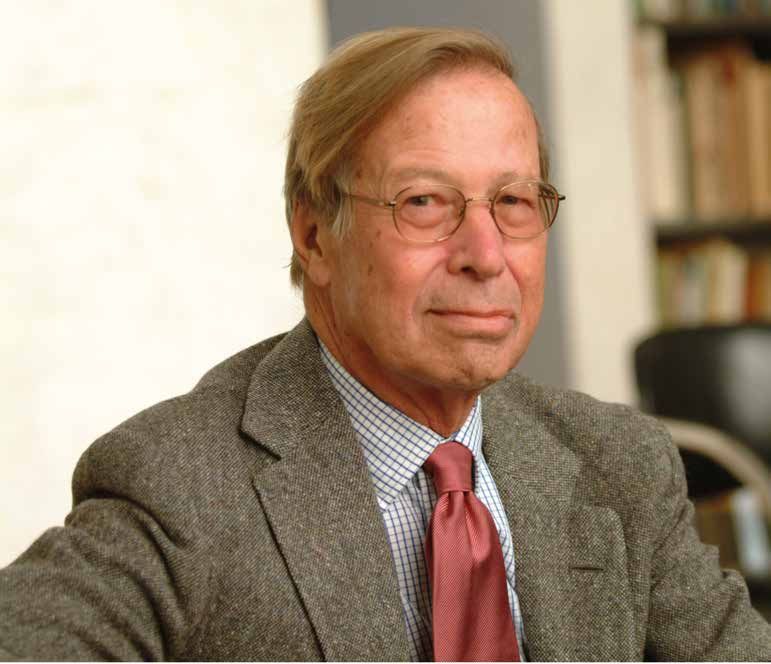
features

                                  Australian Judges
                                        and Law at
                                            Oxford

The Australian judiciary and
                         ha s de ep
                             varied
                                                                   Oxford is proud to have been a proving ground for so much
                                                                 Australian legal talent over the years, and welcomes Australian
connections with Oxford University and the Oxford Law            judges even if they may have studied their law elsewhere:
Faculty. A good number of graduates of the Oxford BA, BCL,       Chief Justice James Allsop, Justice William Gummow, Justice
BPhil, and DPhil degrees have gone on to give distinguished      Susan Kiefel, Chief Justice James Spigelman, and many others
service in the federal and state courts. Amongst our judicial    have been highly valued visitors and speakers in recent years.
alumni we may count Justices Kenneth Hayne, Patrick Keane,       Australian lawyers continue to contribute sizeable numbers
and the recently retired Dyson Heydon, of the High Court;        to Oxford’s teaching faculty and graduate student bodies,
Justices Susan Kenny, John Middleton, Nye Perram, and            with especially strong representation among the Bachelor of
the recently retired Peter Gray and Ross Sundberg, of the        Civil Law students and the doctoral researchers. It is difficult
Federal Court; President Chris Maxwell, and Justices Pamela      to imagine Oxford Law today without its Australians; and
Tate, Mark Weinberg, and Geoffrey Nettle, of the Victorian       together with other common lawyers from abroad – Canada,
Supreme Court; Justices John Basten, Julie Ward, the recently    India, New Zealand and South Africa in particular – the
retired Justices Robert Austin, Terence Buddin, Murray           Brits sometimes seem almost overwhelmed! The Australian
Tobias, and the late Justice David Hodgson (a distinguished      contribution to the study of the law at Oxford is highly prized
philosopher), of the New South Wales Supreme Court;              on both sides: in the past year alone some six deans of the
Justice Peter Applegarth of the Queensland Supreme Court;        leading Australian law schools have visited to nurture this
President Carmel McLure, and Justices Andrew Beech and           important nexus, and scholarships and exchanges are actively
James Edelman (like Dyson Heydon, formerly a law fellow          promoted to cement the bonds.
at Keble College), of the Western Australian Supreme Court.        Two fresh Australian connections are worthy of note from
No fewer than four Australian judges have won the Vinerian       the 2012–2013 academic year. On 20 November 2012 Justice
Scholarship for the best performance in the Bachelor of Civil    Patrick A Keane, then Chief Justice of the Federal Court of
Law: they are Dyson Heydon, Patrick Keane, Ross Sundberg,        Australia, was appointed to the High Court of Australia.
and Mark Weinberg.                                               Justice Keane was a graduate law student at Magdalen College,
  Beyond this imposing list of eminent judges, the roll-call     Oxford, and read for the BCL in 1977, graduating as Vinerian
of barristers, solicitors and legal academics in Australia       Scholar. He was formerly a judge of the Queensland Court of
with an Oxford education is long indeed. One Australian          Appeal, and also served as Solicitor-General for Queensland.
Vinerian Scholar with a distinguished non-judicial career        Justice Keane’s academic bent was shown to strong effect in
in the law deserves special mention – the late Sir Zelman        his influential WA Lee Lecture of 2009 on “The Conscience
Cowen. His life and achievements will be the subject of a        of Equity”, where he gently rebutted Justice Michael Kirby’s
conference in Melbourne in March 2014, jointly promoted by       arguments for intensified fusion of equitable and common
the Universities of Melbourne and Oxford to which Sir Zelman     law doctrines, as forwarded in the WA Lee Lecture of 2008. We
gave so much of his energies before and after his period as      look forward to Justice Keane’s return to Oxford where he will
Governor-General of the Commonwealth of Australia. Many          have an opportunity to discuss his anti-fusionist sentiments
other Australian Oxonians have gone on to serve in high          with the pugnacious Oxford private lawyers.
political and legal office, including numerous law officers of     Justice Keane took the High Court place vacated by Justice
the Crown at State and Federal level.                            J Dyson Heydon on his retirement from the court in March

4
Oxford Law News 2013
Heydon photo: Steve Allen.
© Hayne and Keane photos: High Court of Australia.
(l-r): Justice Kenneth Hayne, Justice Patrick A Keane, Justice J Dyson Heydon (at left) with Lord Sumption.
2013. Dyson Heydon’s links to Oxford are particularly strong. ‘I think it forces a critical situation in our (Dominion) relation
He read for his first law degree at University College, taking the to the judicial authority as precedents of decisions in England.
Martin Wronker Prize for first place in his graduation in 1966; Hitherto I have thought that we ought to follow decisions of
he was then the Vinerian Scholar for 1967. He was appointed the House of Lords, at the expense of our own opinions and
to a fellowship in law at Keble College, and his well-known cases decided here, but having carefully studied Smith’s Case
treatise on The Restraint of Trade Doctrine soon followed. He I think that we cannot adhere to that view or policy. There are
then served as Dean and Professor of Law at Sydney, writing propositions laid down in the judgment which I believe to be
benchmark works in evidence and equity and trusts before misconceived and wrong. They are fundamental and they
commencing his distinguished career at bar and bench. As a are propositions which I could never bring myself to accept.’
judge, first in the New South Wales Court of Appeal and then Heydon J went on to add his own powerful observations
in the High Court, his work has been closely followed, debated, on what this parting of the ways on a point of doctrine really
and admired for his fiercely independent positions and for meant:
the scholarly and literary qualities of his judicial arguments. ‘Dixon CJ then said that Smith’s case “should not be used as
Throughout his time as a judge he continued to play a powerful authority in Australia at all”. Those were terrible words. They
role as a legal scholar in Oxford and in Australia. In Oxford he were brooding, sombre and unusually passionate. In them
has given lectures over the past decade examining decision- the aged Chief Justice revealed that at the end of his career
making within collegiate courts, authority and appellate he had plumbed the depths of an intolerable nightmare. His
jurisdiction, the codification of evidence law in India, issues reaction shows the Court being provoked by a retrospective
of proof and evidence, and most recently the place of human judicial expansion of criminal liability in England into a
rights in common law systems, as well as contributing to determination to preserve crucial common law principles in
seminars in the BCL on equity and trusts. In May 2013 came Australia, not applaud or foster their destruction. This Court
the welcome news that Dyson Heydon had been appointed had changed its own rules of stare decisis in order to preserve
as Visiting Professor to the Oxford Law Faculty commencing Australian law. Those rules are fundamental to the judicial
in the academic year 2013–2014. He will be contributing method. The change was very substantial. Though the High
advanced teaching in equity, trusts, and evidence at Oxford, Court continued to be bound by Privy Council decisions, on
notably in the BCL. most points of law there was much more authority from the
Justice Heydon, writing from a secure knowledge of both House of Lords and the English Court of Appeal than the Privy
English and Australian law, has not been afraid to explore and Council. For those reasons Parker v The Queen astonished the
confront the tensions between these two great systems of the Australian legal profession. But its repudiation of the thinking
common law. In his judgment in PGA v The Queen [2012] HCA underlying Director of Public Prosecutions v Smith accorded
21 at [154]–[155]; (2012) 245 CLR 355 he noted how a rupture with the ideas of the Australian legal profession.’
between the two systems had been fomented by the House We are delighted to welcome Dyson Heydon once again
of Lords decision in Director of Public Prosecutions v Smith to study and propound the common law as a member of the
[1961] AC 290, which applied an objective test for the mens Oxford Law Faculty.
rea of murder. Heydon J recalled Chief Justice Owen Dixon’s
reaction to Smith in Parker v The Queen [1963] HCA 14; (1963) Joshua Getzler
111 CLR 610, 632, where Dixon CJ wrote: Professor of Law and Legal History
5
features

Learning from Each Other’s Mistakes
St Petersburg International
Legal Forum
Professor Timothy Endicott spoke at the third annual St Petersburg International Legal Forum, on 15
May 2013, at the Plenary session on “Competition and Cooperation between Legal Systems”. He
shared the platform in the new Mariinsky Theatre with a panel of speakers that included Peter Tomka
(President of the International Court of Justice), Valery Zorkin (Chairman of the Constitutional Court of
the Russian Federation), Michael Reynolds (President of the International Bar Association), Alexander
Konovalov (Minister of Justice of the Russian Federation), and Dmitry Medvedev (Prime Minister of the
Russian Federation).

                                                                                       Event images courtesy of St. Petersburg International Legal Forum

A law teacher                         has the job of giving lessons,
                                      but how presumptuous it
seems to offer lessons to the leaders, in legal practice and in
                                                                       century, for whom the law of England or the law of New York
                                                                       has great attractions. English contract law is undoubtedly an
                                                                       excellent export product for the UK. But there is no guarantee
public service, participating in the St Petersburg Forum. Yet          that the judges will always get it right, in striking the balance
I am so glad to have been invited, because it is the hope of           between flexibility and stability. In fact, if you come to a
every teacher to have gifted students. In Oxford, we are               lecture on contract law in my university, I guarantee that you
fortunate to have gifted students from this city and from all of       will hear the professor criticizing the judges’ latest decisions.
your countries. What’s more, I know that from Mr Medvedev,             This criticism is the stock in trade of law teachers in the
and from many others in this beautiful room, I will receive            common law world – the work of pointing out to students
the tolerance that one teacher accords to another.                     how the judges have got it wrong, and what they ought to do
   Mr Medvedev is a teacher of Roman Law, and that subject             in the next decision.
is compulsory for the law students in my university. We want              So our students learn from failures as well as successes.
our students to learn from the very roots of the civil law             Not only in commercial law. Even the story of the famous
tradition. They learn, for example, what justice is, from the          writ of habeas corpus involves a failure in the common law.
Institutes of Justinian – a textbook for students written 1,500        The early common law judges invented a process for getting
years ago. Justice is ‘the steady and lasting willingness to give      people into court as defendants and witnesses. They started
to everyone his or her due’.                                           using this process to order prisoners to be brought into
   If the law yers of the common law world have a great                court, so that the judge could investigate their detention. But,
deal to learn from the civil law of the Byzantine Empire,              as we tell our students in Oxford, at the crucial point, 400 years
we have all the more to learn from the civil law today. We             ago, the judges failed. The king could not raise enough money
can learn from each other across time, across linguistic               from the parliament for his wars, so he imprisoned noblemen
and jurisdictional boundaries, across culture gaps, and across         who refused to lend him money. When the prisoners asked for
gulfs of geography and of geopolitics.                                 habeas corpus, the judges said that the process only applied to
   We can learn from each other’s wisdom. But I am sorry               lesser officials, and was not available if the king imprisoned
to say that we can also learn from each other’s mistakes. I            a man for reasons of state. It took an act of Parliament to
expect that those of you from Russia and from around the               make habeas corpus useful for controlling the decisions of
civil law world can learn from the successes and the mistakes          the state itself. The common law will not achieve its potential,
of the common law, and from the benefits and the drawbacks             if the judges do not make good use of the power that it gives
of our forms of legal education.                                       them. This is not just an historical problem, it is a current
   The distinctive success of the common law lies in the facility      and pressing challenge for every common law country with
that it gives judges to develop the law flexibly, while also using     which I am familiar, in habeas corpus as in commercial
the doctrine of precedent to give a due measure of stability           law: the challenge is to sustain a legal and political culture
to the law. The benefits of the stability of the common law            in which the judges carry out their role fearlessly, yet with
are ref lected very clearly in the behaviour of parties to             humility.
international commercial transactions in the twenty-first

6
© Yuri Molodkovets Oxford Law News 2013
This page: Angels around the dome of St Isaac’s Cathedral in St Petersburg.
Opposite page (l-r): Timothy Endicott adresses the Forum, an attentive audience,
introductions, outside the Forum venue.
From education in the common law world, too, lawyers of law), the rule of law is essential for doing the best we can to
the civil law world may be able to learn from drawbacks as give to everyone his or her due. But if you want the good things
well as from successes. We teach students the law backwards about it, you have to accept the bad things about it. If you want
– by starting with a dispute and asking how to resolve it. We expert lawyers, you will have to give them the equipment to
have to focus on dispute resolution, because of the way in make bad arguments sound plausible. If a murderer has a
which the common law has developed over centuries, through good defence lawyer and a fair trial, the lawyer may prevent
the decisions of judges in trials and appeals. Students need justice from being done, and yet our country is worse off if a
to read the decisions of the judges, and they need to read murderer cannot get a good lawyer.
them closely. And they read especially closely when the Because the rule of law has to be purchased at a high cost, I
judges are disagreeing with each other. The result is that don’t suppose that any country gets it right – your country, my
the student’s attitude to the law is shaped by common law country, have too much legalism, and arrogant judges and
dispute resolution. lawyers, and waste and high fees, or they have too little
That attitude supports independence of mind. It supports responsible government and too little access to justice. Our
judicial independence, among those of our students who country may have all of these things at the same time. So here
become judges. It also supports independence of mind in the is the lesson that we can all learn from the mistakes of the
practising professions of solicitors and advocates. It is good common law, and from the disadvantages of common law
to teach students that the law is controversial, that strong legal education: if you want the rule of law, you had better be
arguments can be made for unpopular or apparently hopeless ready to face the drawbacks, and to pay the price.
causes, and that the lawyer herself or himself must decide Teachers give report cards to their students, and if we gave
what to think. In a good law school in the common law world, report cards to legal systems, there is one line that could go
the student learns not to agree with what the professor says, on every single report card, for every single legal system: ‘You
just because the professor is an authority. The student learns could do better.’
to make up her or his own mind. That is not the whole report card. Some legal systems
But there are drawbacks to a common law legal education – deserve gold stars for making life in a community more
even to a good one. We never put this on our university publicity bearable, and for acting with justice toward citizens and even
materials, but let’s face the facts: we teach students how to toward outsiders. Over the coming days, ask yourselves what
make bad arguments sound plausible. We run the risk of report card your legal system deserves. Ask the same about
encouraging arrogance in the legal profession. We equip the developing systems of international legal cooperation
students to become part of an industry in which they can and dispute resolution. I do expect that every single report
charge high fees for legal services in support of claims that card will include this one line: ‘You could do better’. So a
should not be brought, and in making defences against claims system that deserves a failing grade has no excuse, because
that should not be resisted. This form of education supports it actually could do better. And if your system deserves gold
the rule of law. But the rule of law is not altogether a good thing. stars, you have no cause for arrogance. You could do better.
Don’t m isu ndersta nd me : it is essent ia l. In ever y
country in the twenty-first century (and also in international Timothy Endicott
7
© Leo Sorel
              features

              The first time                     I met Rona ld, li ke t he
                                                 last, he was in bed. It was
              a chilly day in October 1968; and as a Fellow of University
                                                                                 jurisprudence. But, despite the inauspicious beginning,
                                                                                 Gillian and I became friends with Betsy and Ronald. We
                                                                                 enjoyed their charm and the sparkle of their conversation; we
              College I went to pay a courtesy call on the newly arrived         shared their taste in jokes, especially about the occasionally
              Professor of Jurisprudence. Ronald and Betsy had taken,            bizarre behaviour of the English. For several years, as two
              sight unseen, a little house near the Bodleian Law Library         families living in England but come from abroad, we took
              opposite St Cross Church. The location was delightful but          Christmas dinner together. Ronnie introduced me to word-
              the house itself was small and Spartan; more like a council        processing in the early 1980s with a remorseless program he
              house in Blackbird Leys than the residence of the Professor        said he had got from Harvard – no menus or rodents, you had
              of Jurisprudence. Betsy received me at the door, making            to know exactly what each key meant. And I must confess that
              it clear that these were not the surroundings in which she         I was rather star-struck by the brilliance of their social life
              was accustomed to receive visits. Ronald had taken to his          at Chester Row, where we were very much the country mice
              bed with a cold. There was of course no central heating            come up from Oxford to town. We visited them at Martha’s
              but they had installed various electric heaters to bring the       Vineyard, where Ronald demonstrated his skill in sailing his
              little bedroom upstairs to the temperature of the orchid           Sunfish on the pond, and in Italy, where I have a vision of Betsy
              house in the Botanical Gardens. They soon moved to an old          on a bright morning on the terrace, setting out for Rome in a
              manor house at Hinton Waldrist in rural Oxfordshire, after         fashionable camouflage battle dress covered in zip pouches
              which Betsy decided that neither the city nor the county           to protect her possessions from the Roman thieves.
              of Oxford were to her taste, and they bought the house                The second phase of our relationship began when Ronald
              in Belgravia, which, after suitable improvements by Rick           published Law’s Empire. From my point of view, it could not
              Mather, remained their permanent home.                             have come at a better time, because I had just been appointed
                 I mention these domestic details because my relationship        a judge and it gave a clear and, to me, convincing explanation
              with Ronald had two distinct phases. In the first 16 years or so   of what I was supposed to be doing. It explained what scope I
              it was almost entirely social. The philosophers at Univ were       had for making choices; when I was constrained by the need
              always the intellectual aristocracy of the college and I would     for fidelity to the language of the statute or to the past, to the
              listen at lunch to conversations between Ronnie and Gareth         long history of the common law; and when I was free to choose
              Evans, Peter Strawson, John McDowell, John Mackie, or John         the way forward. It explained how I should make that choice,
              Finnis with awe and admiration but little participation. My        by interpreting the rule in a way I thought best calculated to
              own work teaching and practising law was at a much more            promote the values of the British society in which I lived. I
              pedestrian level and I knew little of Ronald’s thinking on

              8
Oxford Law News 2013
Ronald Dworkin
Lord Hoffmann gave the
following tribute in St John’s
Smith Square on 5 June 2013
at a memorial for Professor
Ronald Dworkin, who died on 14
February 2013, at the age of 81.
felt comfortable with that description of my role. It seemed The only problem was that the laws were extremely unjust.
a noble aspiration. What was the role of a judge when law’s empire was a wicked
Ronnie’s further argument, that in those cases in which empire? This was 1988, two years before the release of Nelson
the judge’s answer was not constrained by language or Mandela. Ronnie had the idea of organizing a conference
precedent, there was nevertheless always a right answer, at Nuneham Courtenay, outside Oxford (I think he got
has been more controversial. People have said: how can you funding from the Ford Foundation) where some of the more
say there was a right answer if five or seven or nine perfectly adventurous South African judges could meet exiled members
respectable judges have differed on the point, and if justice of the banned ANC: politicians and lawyers who went on to
X had been sitting instead of justice Y, the result would have become leaders of the new South Africa. It began dramatically
been otherwise? But the obvious truth of Ronald’s proposition with the South African judges receiving a message from
was only borne in upon me when I began to sit in multi-judge the Minister of Justice telling them that they were on no
courts, in the Court of Appeal, and then in the House of Lords. account to take part in a meeting with the ANC and were to
There we had difficult cases in which the judges sometimes return at once. They went into a huddle and, to their great
took different views. But when colleagues disagreed with me, I credit, sent an answer that they were not employees of the
didn’t think their views were equally valid. I thought they were Minister and would make their own decision. It was their first
wrong. Our job was to find the right answer and obviously opportunity to have a serious discussion with anyone from
each thought we had done so. Although there was no divine the future government of South Africa. It was a remarkable
arbiter to say which of us was right, it was an important part occasion, carried through with style, with Ronald guiding the
of the description of what we were doing to say that the one discussions. My principal memory is of having a long, rather
point on which we were unanimous was that there was only drunken, and altogether delightful conversation in the early
one right answer. hours with Thabo Mbeki, then the ANC representative in New
Thereafter, I was able to talk to Ronald about his work, as York. He was afterwards President of South Africa, but in 1988
well as more frivolous matters. When we had a case about I had never heard of him.
termination of life support after the Hillsborough football Ronald has had a huge influence on my life, as he must
disaster, he was just about to publish Life’s Dominion and he have had upon many people out there in the world of law and
lent the manuscript to me and my colleagues on the court. But philosophy who did not all have the privilege of his personal
his last contribution I want to mention was his intervention friendship. I mourn him deeply, as a lawyer, a colleague, and
in the affairs of South Africa. It was a place that interested a friend.
him jurisprudentially, as it had a legal system, judges for the
most part independent and incorruptible, and the rule of law. The Rt Hon the Lord Hoffmann
9features
Oxford Law in Beijing
From top: Timothy Endicott with academics from
China University of Political Science and Law, Timothy
Endicott giving a talk at Tsinghua University, Timothy
Endicott, Nick Barber and Ellen Moilanen with Oxford
alumni, Timothy Endicott with the Dean of the
School of Law (Professor WANG Zhen-min), Tsinghua
University at Tsinghua University.
In September 2012 the Dean of the Faculty
of L aw, Ti mot hy End icott,
Oxford China Office’s series of lectures, “Oxford Academics in
China”. Our alumni joined Professor Endicott, Jeremy Woodall
attended the Second Joint Conference of Sino–EU Law (Director of the Oxford China Office), Ellen Moilanen and
School Deans, organized by Renmin University, Beijing. Nick Barber (Senior Law Fellow at Trinity College), for dinner.
The title of the conference was ‘100 Years of Legal Education In April, the Faculty followed up on the discussions by
Exchange between China and Europe: A view of Past, Present giving a two-day intensive lecture programme in three
and Future.’ Law School deans from Portugal to Finland Beijing universities. Five Faculty members gave “An Oxford
participated in the event, along with representatives of Introduction to the Common Law” to students at Peking
19 Chinese universities. The conference addressed the University, Tsinghua University, and Renmin University. The
developing internationalization of legal education, and the Oxford lawyers used some specific issues in constitutional
potential for cooperation between European and Chinese law and in contract and employment law, to introduce Beijing
universities. students to the common law approach to problems in public
Most of the European heads of law schools were from and private law that every legal system must address. Mr Nick
Germany, where the law schools are building on long-standing Barber and Professor Timothy Endicott gave classes on public
links with China, which arise from the enduring influence in law, focussing on constitutional law, and Professor Mark
Chinese law of the German Civil Code since the nineteenth Freedland, Dr Jeremias Prassl, and Herbert Smith Freehills
century. Today, law schools of the common law world have Professor Robert Stevens gave classes on private law focussing
great opportunities to recruit excellent Chinese students, and on contracts, employment law, and vicarious liability. These
to develop the study of law in China, and of the Chinese role lectures were a major step forward in the Faculty’s strategy
in international and transnational law. But we have much to to increase understanding and interaction between Oxford
do to make something of those opportunities. academics and Chinese academics, and to provide an
As part of the Faculty’s strategy to develop cooperation with Oxford learning experience to students from some of the top
the academic community in China, the Dean visited four universities in China. The international law firm Norton Rose
leading law schools in Beijing: Peking University Law School, Fulbright gave crucial financial support for the programme.
the Chinese University of Political Science and Law, Renmin On this occasion too, the Faculty took advantage of the visit
University of China Law School, and the School of Law, to host a reception for Law alumni based in China, and for
Tsinghua University. At two events, hosted by Renmin and students who had recently been made offers to study Law at
Tsinghua universities, the Dean gave lectures on the theme undergraduate and graduate level to start in October 2013.
‘A Crisis in Human Rights Adjudication in Europe’. Ellen These visits are instances of the improving connections
Moilanen, Courses and Exchanges Administrator, visited the between the Faculty of Law at Oxford and law schools in
law schools with the Dean, to discuss concrete possibilities for China. The Faculty will be pursuing opportunities for
exchange and collaboration with Chinese colleagues. deeper connections in future in collaboration with the legal
A highlight of the week was the Alumni Dinner at the Grand profession, and with our community of alumni in China.
Millennium Hotel in Beijing, which included the first in the
10Oxford Law News 2013
NEWS & events
Gathering to Honour Donald Harris High Sheriff’s
Law Lecture
© Mauren O’Neill
© Timothy Endicott
(From back to front):
Neil Rickman, Alastair Gray, John Eekelaar,
Dave Campbell, Jenny Skilbeck, Anthony Ogus, Alan Paterson, Genevra Richardson, David Hughes The High Sheriff’s Law Lecture took
Robert Dingwall, Linda Mulcahy, Roger Bowles, Alastair McGuire, Pat Simpson, Hazel Genn, Paul Fenn, place on 9 October 2012. The event was
Rob Baldwin, hosted this year by the High Sheriff of
Bill Bradshaw, Bridget Hutter, Keith Hawkins, Sally Lloyd-Bostock, Don Harris, Eve Rodgers, Noel Blatchford,
Jacek Kurczewski, Peter Bartrip, Jenny Dix, Emily Jackson, Ross Cranston, Matthew Weait. Oxfordshire, William Alden MBE, DL at
the University Examination Schools. The
lecture “Out of His Shadow – The Long
Struggle of Wives under English Law“
was given by the Rt Hon Lord Wilson
of Culworth PC, Justice of the Supreme
Thirty former members of the Centre for
Socio-Legal Studies met for a reunion
British Academy and Court.
The High Sheriff’s Law Lecture is an
lunch at New College in late February to
celebrate the 21 years that Donald Harris All Souls Forum on annual event and traditionally takes
place on the second Tuesday of October,
was its Director.
After lunch, Keith Hawkins emphasized Imprisonment just before the Glove Ceremony and
Court Sermon, which mark the start of
Don’s huge contribution to the founding the judicial year in Oxford. Dating back
of the Centre in Oxford and the On Thursday 29 November 2012 a Forum to at least the sixteenth century, it has
development of socio-legal studies in on Imprisonment took place at the been the tradition in Oxford for white
Britain. Socio-legal work was no longer British Academy in London. gloves to be presented to the Judge in
unusual in law schools, but an orthodoxy. It was co-sponsored by All Souls Commission by the Vice Chancellor on
From its founding in 1972 through the College and by the British Academy Policy behalf of the University and by the Lord
retrenchment and uncertainties of the Centre, which is currently conducting Mayor on behalf of the City in the Dean’s
1980s, Don led a highly productive a study of ‘Crime, Punishment and the Drawing Room at Christ Church. After the
Centre until his retirement in 1993 with Prison’. The Forum was invitation-only, presentation of the gloves those present
characteristic optimism, fairness, decency, and included several members of All process to Christ Church Cathedral for the
and integrity, while not seeking any kind Souls, several members of the House of Court Sermon, where a college chaplain is
of personal recognition. The numbers Lords, representatives of various relevant usually appointed to preach. This year the
attending were evidence of the enormous organizations, and senior civil servants Court Sermon was made in the presence of
respect and affection everyone had for from England and from Scotland. The The Honorable Mr Justice Fulford.
Don. In reply, Don noted that his approach focus of the discussion was on measures
had always been to treat the Centre’s staff for reducing the prison population from
as a family. He expressed his pleasure its current level, which was argued to be
at the extraordinary success enjoyed by very high by comparison with countries
former members of the Centre, noting that such as Germany, France, and particularly
among the 26 academics present were 20 the Nordic countries. Members of the
professors, one Lord, one Dame, one High Law Faculty who took part included
Court judge, at least four FBAs, four CBEs, Nicola Lacey, Roger Hood, Julian Roberts,
and an OBE. Sir Jeremy Lever, Andrew Burrows, and
Andrew Ashworth. The British Academy
Professor Keith Hawkins Study Group, of which Andrew Ashworth
and Nicola Lacey are members, is expected
to publish a report in the new year.
11news
Clarendon Law Cape Town Convention
Lectures 2012 Conference
In November 2012 Lord Collins of The first annual conference of the Cape a joint project between the University of
Mapesbury delivered three lectures Town Convention Academic Project took Oxford and the University of Washington
on “Justiciability in National and place on 5 and 6 September 2012 and to facilitate the study and assessment of
International Law“ as this year’s was a great success. the Cape Town Convention and to advance
Clarendon Law Lectures. Taking the Fifty-five people attended, including its aims. Many of the papers discussed
audience on a journey through domestic academics, industry leaders, and at the conference were published in the
and international law across five financiers, practitioners from leading law first volume of the Cape Town Convention
continents and three centuries, Lord firms, regulators, and representatives Journal, which will shortly be available on
Collins addressed the general question from Aviareto, which runs the registry the project website. The project includes
of which issues are appropriate for of international interests in aircraft. The the compilation of a database of materials
resolution by judges. The extraordinary attendees came from all over the world, relating to the preparatory work on the
range of the lectures is indicated in the including Mexico, Japan, Malta, Germany, Convention and its implementation in
titles of the three Lectures: “The Concept the Netherlands, and Ireland, as well as the national law, the preparation of teaching
of Justiciability: From Richard Duke of US and the UK. materials based on the Convention and its
York to President George W Bush”, “Acts Papers ranged from detailed discussion operation and academic study concerning
of State and the Relationship between of provisions of the Convention, such the wider context of international private
National and International Law”, and as the insolvency provisions, and the law conventions and other related issues
“Political Questions and War and provision for interim relief, to discussion within transnational commercial law.
National Security”. The Clarendon Law of wider issues, such as the process of The conference was kindly sponsored by
Lectures are an annual series of lectures, economic assessment in commercial law Abagados Sierra y Vazquez, Blake, Cassels
which are published in a special series by treaty formation. & Graydon, Clifford Chance, Holland &
Oxford University Press. The conference is part of the Cape Town Knight and Kaye Scholer.
Convention Academic Project, which is
Pathways to Law
From October 2013, 35 state school Indeed, Oxford is the selective university through workshops, visits to Oxford
students from across the local region from which the professions recruit most colleges and departments, interaction
will become the first participants in the disproportionately. The Bar Council with current students, Law tutors and
Pathways to Law programme at Oxford, and the Bar Standards Board’s second legal professionals. They will also have
which aims to widen access to the legal annual Bar Barometer report shows the opportunity to visit and explore other
profession. The students, who will be in that 20 percent of those who registered universities taking part in the Pathways
Year 12 when the programme begins, are pupillages in 2010–2011 studied at Oxford. to Law programme. Other activities will
being selected based on their predicted As for solicitors, Chambers Student Guide include: attending the High Sheriff of
grades and on criteria relating to socio- recently published findings on which Oxfordshire’s Law Lecture; e-mentoring
economic and educational disadvantage. universities produce successful training from undergraduate law students; a trip
Pathways to Law was set up in 2006 by contract applicants: here too, Oxford to the Inner Temple and Royal Courts of
the Sutton Trust and the College of Law graduates secured the highest number of Justice; a residential conference in the
(now the Legal Education Foundation), training contracts in top London firms. summer between Year 12 and Year 13; and
following research that showed that In committing to run the Pathways to a work experience placement in the legal
the top echelons of the profession Law programme Oxford aspires to use its sector.
were drawn from a narrow range of resources and connections to ensure that The programme coordinators would
social backgrounds. This continues to as many talented students as possible be delighted to hear from any alumni in
be true, with the Sutton Trust recently attend a university that gives them the the region who might wish to be involved
observing that ‘Law firms continue to best possible chance of achieving a with the programme in any capacity: email
recruit disproportionately from selective career in law, and to become a conduit for sian.renwick@admin.ox.ac.uk or call
universities. Ensuring wider access to these diversity in the professions. 01865 270123 for more details.
universities is therefore one of the “best During their time on the programme,
bets” in terms of transforming the socio- participants will be introduced to the
economic make-up of the profession.’ vast range of different topics within Law
12Oxford Law News 2013
Andrew Ashworth Lecture by Mr
Justice Hogan of
the High Court
Festschrift of Ireland
Over a hundred colleagues and students criminalization, the criminal process, and The Faculty of Law was delighted to
came together in November 2012 in sentencing, Andrew’s contribution to welcome Mr Justice Gerard Hogan of the
a celebration for Professor Andrew the field has been immense. The book High Court of Ireland on 1 February 2013.
Ashworth CBE QC FBA, Vinerian celebrates his achievements over 40 years Justice Hogan’s lecture was entitled
Professor of English Law at All Souls of scholarship, his important influence “Declarations of Incompatibility,
College and the Faculty of Law. on criminal justice practice, and his more Inapplicability and Invalidity: Rights,
Professor Ashworth, who has held the recent, authoritative work in human Remedies and the Aftermath“ and
Vinerian Chair since 1997, will retire at the rights law. Together the contributors, spanned an impressive array of
end of 2013. During the half-day seminar, all leading international scholars, seek jurisdictions including Ireland, the UK,
invited speakers presented papers on to advance the Ashworthian project of Germany, the US and the EU. The lecture
various aspects of his scholarship, all of normative engagement with issues in was followed by a lively questions and
which provoked lively debate, no doubt criminal law and criminal justice, penal answers session, which focused in
fuelled by the presence of many of the theory, sentencing and human rights. As particular on the role of consequences
leading criminal lawyers and sentencing the editors noted in the Introduction, it is in judicial reasoning. Justice Hogan
specialists in the country. The fact that surely ‘telling that 20 leading academics offered the judge’s perspective on when
other attendees had flown in from several tackle only some of the topics that a single legislation should be nullified and when
countries in Europe, North America, and individual has written upon with such judges should use alternative ways of
even from New Zealand is testament to easy authority and accomplishment’. It remedying a constitutional violation
the very high esteem and warm regard in was even more telling that Andrew, with falling short of the ‘nuclear option’ of
which Andrew is held. characteristic modesty, described the immediate nullification.
The event was also a book launch for a event as ‘overwhelming’ and declared Mr Justice Gerard Hogan was called
collection of essays entitled Principles and himself to be gratified and ‘amazed at how to the Bar in 1984 and was nominated
Values in Criminal Law and Criminal Justice: many people had travelled such a distance to the High Court in 2010. Justice Hogan
Essays in Honour of Andrew Ashworth (2012) to be there’. is both a scholar and judge. He was a
edited by Oxford colleagues Lucia Zedner This splendid celebration was kindly distinguished academic at Trinity College
and Julian Roberts and published by sponsored by the Faculty of Law, the Dublin, specializing in constitutional and
Oxford University Press. The Press kindly Centre for Criminology, and Oxford administrative law. He is co-author of
produced a special, leather-bound volume University Press. the leading textbooks in both of those
that was presented to Andrew on the day. More information about the book can subjects, including JM Kelly: The Irish
World-renowned for elaborating a body of be found at ukcatalogue.oup.com/ Constitution now in its fourth edition.
principles and values that should underpin product/9780199696796.do. This provides an Oxford link, since
John Kelly was a Fellow (later Honorary
Fellow) at Trinity College, Oxford and
Kelly’s monumental work on the Irish
Constitution began life as an Oxford DPhil
The Roger Hood Public Lecture 23 May 2013 thesis. Mr Justice Hogan carries on this
tradition of scholarship.
Criminology has had a home in Oxford Hood and his particular contribution to
for over 50 years and has thrived under Oxford Criminology. Previous speakers
the leadership of Professor Roger Hood included Professor David Garland of New
since 1973, first as an independent unit York University, Professor John Braithwaite
within the University and, since 1991, as of the Australian National University and
an integral department of the Faculty of Professor Nils Christie of the University
Law. Professor Hood retired in September of Oslo, among other distinguished
2003 and Professor Ian Loader took up academics.
the Directorship in 2005, establishing a This year, the lecture took place on 23
year later the Annual Roger Hood Public May in the Manor Road Social Sciences
Lecture Series. Building Lecture Theatre. For the first time,
This Annual Public Lecture, an important the Series honoured the contribution to
event in the calendar of the Centre for Oxford Criminology and Criminal Law of
Criminology, honours and celebrates the an Oxford academic, Professor Andrew
long and distinguished career of Professor Ashworth.
13You can also read


