Phonak NaídaTM P User Guide
←
→
Page content transcription
If your browser does not render page correctly, please read the page content below
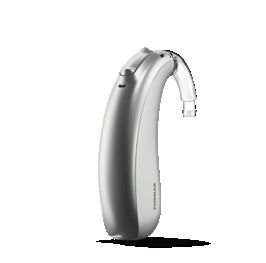
Phonak Naída P            TM

User Guide

Phonak Naída P-UP
Phonak Naída P-UP Trial
This user guide is valid for:

Models                          CE mark applied
Phonak Naída P90-UP             2021
Phonak Naída P70-UP             2021
Phonak Naída P50-UP             2021
Phonak Naída P30-UP             2021
Phonak Naída P-UP Trial         2021
Your hearing aid details

    If no box is checked and you do not know the
    model of your hearing aid, please ask your hearing
    care professional.
    Your hearing aids operate between 2.4 GHz–
    2.48 GHz frequency range. When flying please check
    if flight operator requires devices to be switched
    into flight mode, see chapter 12.

Model                                 Battery size
c Naída P-UP (P90/P70/P50/P30)        675
c Naída P-UP Trial                    675

Earpiece
c Classic earmold
c Universal eartip

                                                         3
4
Your hearing aids have been developed by
Phonak – the world leader in hearing solutions based
in Zurich, Switzerland.

These premium products are the result of decades
of research and expertise and are designed to keep you
connected to the beauty of sound! We thank you for
making such a great choice and wish you many years of
listening pleasure.

Please read the user guide carefully to make sure that
you understand and get the best out of your hearing aids.
For more information regarding features, benefits, setup,
use and maintenance or repairs of your hearing aid and
accessories – contact your hearing care professional or
manufacturer representative. Additional information can
be found in the data sheet of your product.

Phonak – life is on
www.phonak.com

                                                         5
Contents Your hearing aid 1. Quick guide 8 2. Parts of the hearing aid 10 Using the hearing aid 3. Left & right hearing aid markings 12 4. On/Off 13 5. Batteries 14 6. Putting on the hearing aid 17 7. Removing the hearing aid 18 8. Multi-function button 19 9. Connectivity overview 20 10. Initial pairing 21 11. Phone calls 24 12. Flight mode 28 6
Further information
13.   Join our hearing loss community!              30
14.   Operating, transport and storage conditions   31
15.   Care and maintenance                          32
16.   Exchanging the earpiece                       35
17.   Service and warranty                          36
18.   Compliance information                        38
19.   Information and description of symbols        44
20.   Troubleshooting                               48
21.   Important safety information                  50
1. Quick guide
Left & right hearing aid markings

Blue marking for left hearing aid.
Red marking for right hearing aid.

Changing batteries

1.                   2.              3.
Remove the        Open the           Place battery in
sticker from the  battery door.      the battery door
new battery and                      with the “+”
wait two minutes.                    symbol facing
                                     upwards.

8
On/Off
On Off
Multi-function button
The button has several functions. It
functions as a volume control and/or a
program change depending on the hearing
aid programming. This is indicated in your
individual instructions. If paired with a
Bluetooth® enabled phone, a short press
will accept and a long press will reject an
incoming call.
Flight mode
To enter flight mode press the lower part
of the button for 7 seconds while closing
the battery door. To exit flight mode, simply
open and close the battery door again.
92. Parts of the hearing aid The following pictures show the possible earpieces and hearing aid model described in this user guide. Possible earpieces Classic Universal earmold eartip 10
Naída P-UP / Naída P-UP Trial

   Hook / sound output                       Multi-function
                                             button

                                               Battery door

              Classic earmold (detachable)

                                                              11
3. Left & right hearing aid markings There is a red or blue marking to tell you if it is a left or a right hearing aid. Blue marking for left hearing aid. Red marking for right hearing aid. 12
4. On/Off
The battery door is also the on/off switch.

1.
Closed battery door =
hearing aid is on

2.
Open battery door =
hearing aid is off

     When you switch on the hearing aid you may hear a
     start-up melody.

                                                         13
5. Batteries
5.1 Insert battery (standard battery doors)
1. 2. 3.
Remove the Open the Place battery in
sticker from battery door. the battery door
the new battery with the “+”
and wait two symbol facing
minutes. upwards.
If it is difficult to close the battery door: Check that
the battery is inserted correctly and the “+” symbol is
facing upwards. If the battery is not inserted correctly,
the hearing aid will not work and the battery door can
be damaged.
14Low power: You will hear two beeps when the battery is
low. You will have approximately 30 minutes to change
the battery (this can vary, depending on the hearing aid
settings and battery). We recommend that you always
have a new battery on hand.
Replacement battery
This hearing aid requires a size 675 zinc-air battery.
Model Zinc-air Color IEC ANSI
battery marking on code code
size package
Phonak Naída
P-UP / P-UP Trial 675 blue PR44 7003ZD
Please ensure you use the correct type of battery in
your hearing aids (zinc-air). Please also read chapter
21.2 for further information on product safety.
155.2 Insert battery with a secured battery door
This hearing aid can be fitted with a secured battery door
if needed for safety reasons.
1. 2.
Place the tip of the tool in Use the tool as a lever
the small hole at the to open the battery door
bottom of the hearing aid. with force in the
direction of the green
arrow.
166. Putting on the hearing aid
Putting on the hearing aid with classic earmold
1.
Take the earmold up to your ear
and place the ear canal part into
your ear canal.
2.
Place the hearing aid behind
your ear.
3.
Insert the upper part of the
earmold into the upper part of
the bowl of your ear.
177. Removing the hearing aid
Removing the hearing aid with classic earmold
1.
Lift the hearing aid above the
upper part of your ear.
2.
Grasp the earmold with your
fingers and gently remove it.
Please try to avoid gripping the tube to remove the
hearing aid.
188. Multi-function button
The multi-function button has several functions.
It functions as a volume
control and/or a program
change depending on the
hearing aid programming.
This is indicated in your
individual “Hearing aid
instructions”. Please ask
your hearing care professional
for a printout.
If the hearing aid is paired with a Bluetooth® enabled
phone, a short press on the upper or lower part of the
button will accept an incoming call and a long press will
reject an incoming call – refer to chapter 11.
199. Connectivity overview
The illustration below shows the connectivity options
available for your hearing aid.
Bluetooth enabled
devices
TV Connector
connected to TV*
Phonak RemoteControl
Roger microphone**
* The TV Connector can be connected to any audio source such as a TV, PC or hi-fi system.
** Roger wireless microphones can be connected to your hearing aids as well.
2010. Initial pairing
10.1 Initial pairing to Bluetooth® enabled device
It is only necessary to perform the pairing procedure
once with each device featuring Bluetooth wireless
technology. After the initial pairing, your hearing aids
will connect automatically to the device. The initial
pairing process can take up to 2 minutes.
1.
On your device (e.g. a phone), ensure that Bluetooth
wireless technology is enabled and search for Bluetooth
enabled devices in the connectivity setting menu.
2.
Switch on both hearing aids.
You now have 3 minutes to
pair your hearing aids with
your device.
213.
Your device shows a list of Bluetooth enabled devices.
Select the hearing aid from the list to simultaneously pair
both hearing aids. A beep confirms successful pairing.
For more information about pairing instructions for
Bluetooth wireless technology, specific to some of the
most popular phone manufacturers, go to:
https://www.phonak.com/com/en/support.html
2210.2 Connecting to the device
After your hearing aids have been paired to your device,
they will automatically connect again when switched on.
The connection will be maintained as long as the
device remains ON and within range.
Your hearing aids can be connected to up to two
devices and paired to up to eight devices.
2311. Phone calls
Your hearing aids connect directly with Bluetooth®
enabled phones. When paired and connected to your
phone, you will hear the caller’s voice directly in your
hearing aids. Your hearing aids pick up and transmit
your voice to the phone.
Your voice
Caller’s voice
Bluetooth® is a registered trademark owned by the Bluetooth SIG, Inc.
2411.1 Making a call
Enter the phone number and press the dial button.
You will hear the ring tone through your hearing aids.
Your hearing aids pick up and transmit your voice to the
phone.
11.2 Accepting a call
When receiving a call, a calling notification will be heard
in the hearing aids.
The call can be accepted by a short press on the upper or
lower part of the multi-function button on the hearing
aid (less than 2 seconds) or directly on your phone.
Short press
< 2 sec
2511.3 Ending a call
A call can be ended by a long press on the upper or
lower part of the multi-function button on the hearing
aid (more than 2 seconds) or directly on your phone.
Long press
> 2 sec
2611.4 Rejecting a call
An incoming call can be rejected by a long press on
the upper or lower part of the multi-function button
on the hearing aid (more than 2 seconds) or directly
on your phone.
Long press
> 2 sec
2712. Flight mode Your hearing aid operates between 2.4 GHz–2.48 GHz frequency range. When flying some operators require all devices to be switched into flight mode. Entering flight mode will not disable normal hearing aid functionality, only the Bluetooth connectivity functions. 12.1 Enter flight mode To disable the wireless function and enter flight mode in each hearing aid: 1. Open battery door. 2. Hold down the lower part of the multi-function button on the hearing aid for 7 seconds while closing the battery door. In flight mode, your hearing aid cannot connect directly to your phone. 28
12.2 Exit flight mode

To enable the wireless function and exit flight mode in
each hearing aid:

1.
Open battery door.

2.
Close the battery door again.

                                                          29
13. Join our hearing loss community! On HearingLikeMe.com you will find: • Living with Hearing Loss A set of interesting articles on how to live with hearing loss. • Forum A forum to meet and engage with a growing number of people who face the same challenges. • Blog A blog to keep up-to-date with the latest news on anything hearing. 30
14. Operating, transport and storage
    conditions
The product is designed such that it functions without
problems or restrictions if used as intended, unless
otherwise noted in this user guide.

Please ensure to use, transport and store the hearing aid
according to the following conditions:
              Use               Transport         Storage
Temperature   +5° to +40°C      -20° to +60°C     -20° to +60°C
              (41° to 104°F)    (-4° to 140°F)    (-4° to 140°F)
Humidity      30% to 85% (non   0% to 90% (non    0% to 70% (non
              condensing)       condensing)       condensing)
Atmospheric
pressure      500 to 1060 hPa   500 to 1060 hPa   500 to 1060 hPa

These hearing aids are classified IP68 (depth of 1 meter
for 60 minutes) and designed to be used in all daily life
situations. Therefore you do not have to worry about
exposing the hearing aids to rain shower or sweat.
However, these hearing aids are not intended to be used
in water activities that includes chlorinated water, soap,
salt water or other liquids with a chemical content.

                                                                    31
15. Care and maintenance Diligent and routine care of your hearing aid contributes to outstanding performance and a long service life. To ensure a long service life, Sonova AG provides a minimum of a five year service period after phase out of the respective hearing aid. Please use the following specifications as a guideline. For further information regarding product safety, see chapter 21.2. General information Before using hair spray or applying cosmetics, you should remove your hearing aid from your ear, because these products may damage it. When you are not using your hearing aid, leave the battery door open so that any moisture can evaporate. Make sure that you always completely dry your hearing aid after use. Store the hearing aid in a safe, dry and clean place. 32
Your hearing aids are resistant to water, sweat and dust
under the following conditions:
• The battery door is fully closed. Ensure that no foreign
  object such as hair is caught in the battery door when it
  is closed.
• After exposure to water, sweat or dust, the hearing aid
  is cleaned and dried.
• The hearing aid is used and maintained as described in
  this user guide.

   Use of your hearing aid around water can restrict air
   flow to the batteries causing it to stop working. Should
   your hearing aid stop working after coming into
   contact with water, refer to the troubleshooting steps
   in chapter 20.

                                                          33
Daily Inspect the earpiece and tube for earwax and moisture deposits. Clean the surfaces with a lint-free cloth. Never use cleaning agents such as household detergents, soap, etc. for cleaning your hearing aid. It is not recommended to rinse these parts with water. If you need to clean your hearing aid intensively, ask your hearing care professional for advice. Weekly Clean the earpiece with a soft, damp cloth or with a special cleaning cloth for hearing aids. For more in depth maintenance instructions or for more than basic cleaning, please see your hearing care professional. Monthly Inspect your hearing tube for color changes, hardening, or cracks. In the case of such changes, the hearing tube has to be replaced. Please see your hearing care professional. 34
16. Exchanging the earpiece
Please check the earpiece regularly and exchange or clean
it if it looks dirty or if the hearing aid volume or sound
quality is reduced.

                                                        35
17. Service and warranty Local warranty Please ask the hearing care professional, where you purchased your hearing aid, about the terms of the local warranty. International warranty Sonova AG offers a one year limited international warranty, valid starting from the date of purchase. This limited warranty covers manufacturing and material defects in the hearing aid itself, but not accessories such as batteries, tubes and earmolds. The warranty only comes into force if a proof of purchase is shown. The international warranty does not affect any legal rights that you might have under applicable national legislation governing sale of consumer goods. 36
Warranty limitation
This warranty does not cover damage from improper
handling or care, exposure to chemicals or undue stress.
Damage caused by third parties or non-authorized service
centers renders the warranty null and void. This warranty
does not include any services performed by a hearing care
professional in their office.

Serial number (left side):

Serial number (right side):

Date of purchase:

Authorized hearing care professional (stamp/signature):

                                                            37
18. Compliance information
Europe:
Declaration of Conformity
Hereby Sonova AG declares that this product meets the
requirements of the Medical Devices Directive 93/42/EEC
as well as the Radio Equipment Directive 2014/53/EU. The
full text of the EU Declaration of Conformity can be
obtained from the manufacturer or the local Phonak
representative whose address can be taken from the list
on www.phonak.com/us/en/certificates (Phonak
worldwide locations).
Australia/New Zealand:
Indicates a device’s compliance with applicable
Radio Spectrum Management’s (RSM) and
Australian Communications and Media Authority
(ACMA) regulatory arrangements for the legal sale
in New Zealand and Australia.
The compliance label R-NZ is for radio products
supplied in the New Zealand market under
conformity level A1.
38The models listed on page 2 are certified under:
Phonak Naída P-UP (P90/P70/P50/P30)
Phonak Naída P-UP Trial
USA FCC ID: KWC-BPZ
Canada IC: 2262A-BPZ
39Notice 1: This device complies with Part 15 of the FCC Rules and with RSS-210 of Industry Canada. Operation is subject to the following two conditions: 1) this device may not cause harmful interference, and 2) this device must accept any interference received, including interference that may cause undesired operation. Notice 2: Changes or modifications made to this device not expressly approved by Sonova AG may void the FCC authorization to operate this device. Notice 3: This device has been tested and found to comply with the limits for a Class B digital device, pursuant to Part 15 of the FCC Rules and ICES-003 of Industry Canada. These limits are designed to provide reasonable protection against harmful interference in a residential installation. This device generates, uses and can radiate radio frequency energy and, if not installed and used in accordance with the instructions, may cause harmful interference to radio communications. However, there is 40
no guarantee that interference will not occur in a
particular installation. If this device does cause harmful
interference to radio or television reception, which can be
determined by turning the equipment off and on, the user
is encouraged to try to correct the interference by one or
more of the following measures:
• Reorient or relocate the receiving antenna.
• Increase the separation between the device
   and receiver.
• Connect the device into an outlet on a circuit
   different from that to which the receiver is connected.
• Consult the dealer or an experienced radio/TV
   technician for help.

                                                         41
Radio information of your hearing aid
Antenna type Resonant loop antenna
Operation frequency 2.4 GHz – 2.48 GHz
Modulation GFSK, Pi/4 DPSK, GMSK
Radiated power < 1 mW
Bluetooth®
Range ~1m
Bluetooth 4.2 Dual-Mode
Profiles supported HFP (Hands-free profile), A2DP
Compliance with emission and immunity standards
Emission standards EN 60601–1-2:2015
IEC 60601–1-2:2014
EN 55011:2009+A1
CISPR11:2009/AMD1:2010
CISPR22:1997
CISPR32:2012
ISO 7637-2:2011
CISPR25:2016
EN 55025:2017
42Immunity standards EN 60601-1-2:2015
IEC 60601-1-2:2014
EN 61000-4-2:2009
IEC 61000-4-2:2008
EN 61000-4-3:2006+A1+A2
IEC 61000-4-3:2006+A1+A2
EN 61000-4-4:2012
IEC 61000-4-4:2012
EN 61000-4-5:2014
IEC 61000-4-5:2014
EN 61000-4-6:2014
IEC 61000-4-6:2013
EN 61000-4-8:2010
IEC 61000-4-8:2009
EN 61000-4-11:2004
IEC 61000-4-11:2004
IEC 60601-1 (§ 4.10.2):2005
ISO 7637-2:2011
4319. Information and description of
symbols
With the CE symbol, Sonova AG confirms that
this product – including accessories – meets the
requirements of the Medical Devices Directive
93/42/EEC as well as the Radio Equipment
Directive 2014/53/EU. The numbers after the
CE symbol correspond to the code of certified
institutions that were consulted under the
above-mentioned directives.
This symbol indicates that the products
described in these user instructions adhere to
the requirements for an applied part of Type B
of EN 60601-1. The surface of the hearing aid
is specified as an applied part of Type B.
Indicates the medical device manufacturer, as
defined in EU Directive 93/42/EEC.
44This symbol indicates that it is important
for the user to read and take into account the
relevant information in these user guides.
This symbol indicates that it is important
for the user to pay attention to the relevant
warning notices in these user guides.
Important information for handling and
product safety.
During transportation keep dry.
The Bluetooth® word mark and logos are
registered trademarks owned by Bluetooth SIG,
Inc. and any use of such marks by Sonova AG
is under license. Other trademarks and trade
names are those of their respective owners.
Japanese symbol for certified radio devices.
45Indicates the manufacturer’s serial number so that
a specific medical device can be identified.
Indicates the manufacturer’s catalogue number so
that the medical device can be identified.
Indicates the date when the medical device was
manufactured.
Temperature during transportation and storage:
–20° to +60° Celsius (–4° to +140° Fahrenheit).
Humidity during transportation: Up to 90% (non
condensing).
Humidity during storage: 0% to 70%, if not in use.
See instruction in chapter 21.2 regarding drying
the hearing aid after use.
46Atmospheric pressure: 500 hPa to 1060 hPa
The symbol with the crossed-out garbage
bin is to make you aware that this hearing
aid may not be thrown away as normal household
waste. Please dispose of old or unused hearing
aids, at waste disposal sites intended for electronic
waste, or give your hearing aid to your hearing
care professional for disposal. Proper disposal
protects the environment and health.
4720. Troubleshooting
Problem Causes
Hearing aid not functioning Dead battery
Earpiece blocked
Battery not inserted correctly
Hearing aid switched off
Hearing aid whistles Hearing aid not inserted correctly
Earwax in ear canal
Hearing aid too loud Volume too loud
Hearing aid not loud enough Low battery
or distorted Earpiece blocked
Volume too low
Hearing has changed
Hearing aid plays two beeps Indication for low battery
Hearing aid switches on and off Moisture on battery or
(intermittent) hearing aid
Phone call function does not work Hearing aid is in flight mode
Hearing aid not paired to the phone
If the problem persists, contact your hearing care
professional for assistance.
Please check https://www.phonak.com/com/en/support.html
for further information.
48What to do
Change battery (chapter 5)
Clean earpiece (chapter 15)
Insert battery correctly (chapter 5)
Switch hearing aid on by completely closing battery door (chapter 4)
Insert hearing aid correctly (chapter 6)
Contact your hearing care professional
Decrease volume if volume control available (chapter 8)
Change battery (chapter 5)
Clean earpiece (chapter 15)
Turn volume up if volume control available (chapter 8)
Contact you hearing care professional
Change battery within the next 30 minutes (chapter 5)
Wipe battery and hearing aid with dry cloth
Open and close battery door (chapter 12.2)
Pair it to the phone (chapter 10)
4921. Important safety information Please read the information on the following pages before using your hearing aid and charger. Intended use The hearing aid is intended to amplify and transmit sound to the ear and thereby compensate for impaired hearing. The Phonak Tinnitus Balance software feature is intended for use by people with tinnitus who also desire amplification. It provides supplementary noise stimulation which can help defocus the user`s attention from their tinnitus. Indications Presence of hearing loss. Presence of hearing loss in combination with tinnitus. Contraindications Evidence of active or chronic middle or outer ear pathology, evidence of chronic inflammation. 50
A hearing aid will not restore normal hearing and will not
prevent or improve a hearing impairment resulting from
organic conditions. Infrequent use of a hearing aid does
not permit a user to attain full benefit from it. The use of
a hearing aid is only part of hearing habilitation and may
need to be supplemented by auditory training and
instruction in lipreading.

The hearing aids are suitable for the home healthcare
environment and due to their portability it may happen that
they are used in professional healthcare facility
environments like physician offices, dental offices etc.

Target population
The target population is primarily the adult population over
18 years of age. This product may also be used with children
36 months of age or older. Individuals with cognitive
impairment should be supervised at all times to ensure their
safety.

The target group for the Phonak Tinnitus Balance software
feature are adults 18 years of age or older with tinnitus who
also desire amplification.

                                                               51
21.1 Hazard warnings
Your hearing aids operate between 2.4 GHz–2.48 GHz
frequency range. When flying please check if flight operator
requires devices to be switched into flight mode, see
chapter 12.
The hearing aids (specially programmed for each hearing loss)
must only be used by the intended person. They should not be
used by any other person as they could damage hearing.
Changes or modifications to the hearing aid that were not
explicitly approved by Sonova AG are not permitted. Such
changes may damage your ear or the hearing aid.
Do not use the hearing aids in explosive areas (mines
or industrial areas with danger of explosions, oxygen rich
environments or areas where flammable anesthetics
are handled). The device is not ATEX certified.
52Hearing aid batteries are toxic if they are swallowed!
Keep out of the reach of children, individuals with cognitive
impairment, and pets. If batteries are swallowed, consult your
physician immediately!
If you feel pain in or behind your ear, if it is inflamed or if skin
irritation and accelerated accumulations of earwax occur,
please check with your hearing care professional or physician.
Hearing programs in the directional microphone mode reduce
background noises. Please be aware that warning signals or
noises coming from behind, e. g. cars, are partially or entirely
suppressed.
This hearing aid is not for children below 36 months. The
usage of this device by children and individuals with cognitive
impairment should be supervised at all times to ensure their
safety. The hearing aid is a small device and contains small
parts. Do not leave children and individuals with cognitive
impairment unsupervised with this hearing aid. If swallowed,
consult a physician or hospital immediately as the hearing aid
or its parts can cause choking!
53The following is only applicable for persons with active
implantable medical devices (i.e. pacemakers, defibrillators, etc.):
Keep the hearing aid at least 15 cm (6 inches) away from
the active implant. If you experience any interference, do not
use the hearing aids and contact the manufacturer of the
active implant. Please, note that interference can also be
caused by power lines, electrostatic discharge, airport metal
detectors etc.
Keep magnets (i.e. battery handling tool, EasyPhone magnet,
etc.) at least 15 cm (6 inches) away from the active implant.
If using a Phonak wireless accessory, consult the chapter
“Important safety information” in your wireless accessory
user guide.
Use of accessories, transducers and cables other than those
specified or provided by the manufacturer of this equipment
could result in increased electromagnetic emissions or
decreased electromagnetic immunity of this equipment and
result in improper operation.
54Portable RF communications equipment (including peripherals
such as antenna cables and external antennas) should be used
no closer than 30 cm (12 inches) to any part of the hearing
aids, including cables specified by the manufacturer.
Otherwise, degradation of the performance of this equipment
could result.
Avoid strong physical impacts to the ear when wearing
a hearing aid with customized earpiece. The stability of
customized earpieces is designed for normal use. A strong
physical impact to the ear (e.g. during sports) may cause the
customized earpiece to break. This may lead to perforation
of the ear canal or eardrum.
After mechanical stress or shock to the customized earpiece,
please ensure that it is intact before placing it in the ear.
Use of this equipment adjacent to or stacked with other
equipment should be avoided because it could result in
improper operation. If such use is necessary, this equipment
and the other equipment should be observed to verify that
they are operating normally.
5521.2 Information on product safety
These hearing aids are water resistant and not waterproof.
They are designed to withstand normal activities and
occasional accidental exposure to extreme conditions. Never
immerse your hearing aid in water! These hearing aids are
not specifically designed for extended periods of water
submersion on a continual basis, that is worn in activities
such as swimming or bathing. Always remove your hearing
aid before these activities, as the hearing aid contains
sensitive electronic parts.
Never wash the microphone inputs. Doing so could cause it
to lose its special acoustic features.
Protect your hearing aid from heat (never leave near a window
or in the car). Never use a microwave or other heating devices
to dry your hearing aid. Ask your hearing care professional
about suitable drying methods.
56When you are not using your hearing aid, leave the battery
door open so that any moisture can evaporate. Make sure that
you always completely dry your hearing aid after use. Store
the hearing aid in a safe, dry and clean place.
Do not drop your hearing aid! Dropping onto a hard surface
can damage your hearing aid.
Always use new batteries for your hearing aid. In case a
battery is leaking, replace it immediately with a new one to
avoid any skin irritation. You can return used batteries
to your hearing care professional.
The batteries used in these hearing aids should not exceed
1.5 Volts. Please do not use silver-zinc or Li-ion (lithium-ion)
rechargeable batteries as these may cause severe damage
to your hearing aids. The table in chapter 5 explains exactly
which type of battery your particular hearing aids require.
57Remove the battery if you are not using your hearing aid for a
long period of time.
Special medical or dental examination including radiation
described below, may adversely affect the correct functioning
of your hearing aids. Remove and keep them outside the
examination room/area before undergoing:
Medical or dental examination with X-ray (also CT scan).
Medical examinations with MRI/NMRI scans, generating
magnetic fields.
Hearing aids don’t need to be removed when passing security
gates (airports etc.). If X-ray is used at all, it will be in very low
doses, and will not affect the hearing aids.
Do not use your hearing aid in areas where electronic
equipment is prohibited.
58Notes
59029-0873-02/V1.00/2020-11/YB/NLG © 2020 Sonova AG All rights reserved Your hearing care professional: Manufacturer: Sonova AG Laubisrütistrasse 28 CH-8712 Stäfa Switzerland www.phonak.com
You can also read


