PLASTIC POLLUTION IN SOIL - Institute for European Environmental Policy
←
→
Page content transcription
If your browser does not render page correctly, please read the page content below
PLASTIC POLLUTION
IN SOIL
SUSANNA GIONFRA

MAY 2018

   KEY MESSAGES

   • More than 80% of plastics found in marine environments
     has been produced, consumed and disposed of on land.
   • Microplastic contamination on land is estimated to be
     between 4 to 32 times higher than in the oceans.
   • In addition to inadequate end-of-life treatment of plastic
     waste, plastics reaches our soils through increasing use
     for agricultural purposes.
   • Yearly inputs of microplastics in European and North
     American farmlands are estimated to be 63,000-43,000
     and 44,000-300,000 tonnes respectively.
   • A greater consideration of the issue of plastic pollution
     in soil and its implications is needed in policies and
     legislation.
Contents
    The issue                                            4
    Sources and pathways                                 6
    Challenges                                           10
    Policies and regulations to address the challenges   12
    Conclusions and way forward                          15
    References                                           16

2     Plastic pollution in soil
Plastic pollution in soil
May 2018

Susanna Gionfra

                            Plastic pollution in soil   3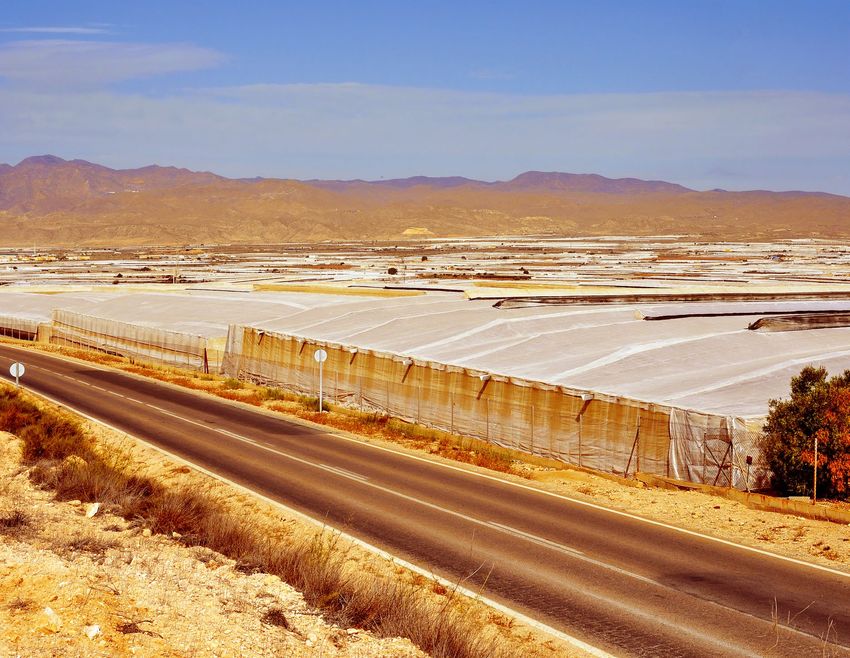
The issue
    Since its rise in the 1950s, the plastics sector has increased significantly and today represents one of
    the largest and most economically important sectors to our society. The properties of this material,
    such as its durability, malleability, light weight and low costs, have contributed to the growth of the
    sector and its multiple applications. For instance, plastics are extensively used in packaging, car man-
    ufacturing, building and construction, and agriculture.

    Despite the multiple benefits that the material offers, plastics are associated with high levels of waste
    and leakage to the environment. This is the result of single-use plastics applications, inadequate end-
    of-life treatment, low recyclability and reusability rates and high potential of disintegration into mi-
    croplastics (Geyer et al., 2017).

    Global plastic production has reached unprecedented levels, with 322 million tonnes of plastics pro-
    duced globally in 2015 (Plastics Europe, 2016). In 2015, 6,300 million tonnes of plastic waste were
    generated, 9% of which was recycled, 12% incinerated and the remaining 79% sent to landfills or leaked
    to the environment.

    The accumulation of plastics in the environment is a global issue which will increase if current produc-
    tion, consumption and waste management practices remain unchanged. An estimated 12,000 million
    tonnes of plastics waste are expected to accumulate in landfills or in the environment by 2050 if action
    is not taken (Geyer et al., 2017).

        Microplastics

        Microplastics are small plastic particles, of less than 5 mm in size. Microplastics are
        found in both the terrestrial and aquatic environment and can be of two types – primary
        and secondary.

        Primary microplastics are intentionally manufactured in small sizes (less than 5 mm).
        These generally leak to the environment through drainage systems and wastewater
        treatment streams. Examples include production pellets, microbeads used in cosmetics,
        household cleaners and other products.

        Secondary microplastics are formed from the fragmentation of meso and macroplastic
        waste due to weathering degradation (GESAMP, 2016).

4      Plastic pollution in soil
The presence of plastics in the environment, whether as macroplastic debris or as microplastics, has
widely been recognised as a global issue. It represents one of the most challenging anthropogenic
phenomenon that affects our planet and is among the major threats to biodiversity due to potential
entanglement and ingestion.

While the issue of plastic and microplastic pollution in aquatic environments (marine and freshwater)
has been gaining increasing attention, the problem of plastic contamination in the terrestrial environ-
ment has remained widely unexplored. Plastic and micro plastic pollution may be more dramatically
seen in the oceans; however, more than 80% of the plastics found in marine environments has been
produced, consumed and disposed of on land. Therefore, plastic pollution on land is a problem both of
contamination and damage to terrestrial environments and of transfer to aquatic systems. High levels
of microplastics contamination on land have been observed – an estimated 4 to 23 times larger than
in the oceans (Machado et al., 2017, Horton et al., 2017).

                                                                              Plastic pollution in soil   5
Sources and pathways
    As is the case for marine litter, plastics find their way to terrestrial environments through different
    sources and as a result of certain trends and practices. A distinction of sources and pathways can
    be made based on the type of plastic particles found in the environment – whether as intentionally
    manufactured microplastics leaking to the environment (primary microplastics), fragments of mac-
    roplastics already present in the environment, or plastics disintegrating into microplastics prior to
    reaching the environment (secondary microplastics).

    While primary microplastics represent an important source of marine and freshwater litter, these
    have also been identified in terrestrial environments as a result of sewage sludge containing micro
    fibres and microplastics being applied to agricultural land (Horton et al., 2017).

    Sewage sludge – A widespread practice which is an important source of primary microplastics con-
    tamination in soil is the application of sewage sludge from municipal wastewater treatment plants
    as a fertiliser for agricultural land. The practice is common in many developed regions, with Europe
    and North America processing approximately 50% of sewage sludge for agricultural use. It is esti-
    mated that annual additions of microplastics to agricultural land in Europe are between 125 and 850
    tonnes of microplastics/million inhabitants. This translates into a yearly input of microplastics in
    European and North American farmlands of 63,000-43,000 and 44,000-300,000 tonnes respectively
    (Nizzetto et al., 2017).

    Controlled-release fertilisers (CRF) – CRF is a fertilization technology which provides a system to
    reduce both the quantity of fertiliser needed per unit of area and manages the time of application.
    The N, P and K nutrient combinations are encapsulated within a nutrient pill, a coating made with a
    polymer. The coating allows the fertiliser to diffuse into the soil over a given time period. While the
    technology offers a number of benefits for agriculture, it also represents an important source of mi-
    croplastics contamination. The nutrient pill does not degrade after the nutrients have been released
    (GESAMP, 2016).

    Secondary microplastics are released during municipal solid waste collection, processing, trans-
    portation and landfilling. In addition, wind contributes to the dissemination of microplastics, either
    across land, or from land to water and vice versa. On land, secondary microplastic contamination is
    also linked to the use of agricultural plastics, such as polytunnels, silage bailing and plastic mulch-
    es. Additional plastic items used for agricultural purposes and which therefore represent potential
    sources of microplastic contamination in soil are containers, packaging and netting. Fragmentation
    on land is then enhanced through sunlight, which has a greater impact on these plastics than it does
    on those in the water (Horton et al., 2017).

    Plastic mulching – Plastic mulching is the use of plastic films on crops acting as insulation to protect
    seedlings and shoots. This technique is widely used due to the economic benefits its application of-
    fers, including increased crop yields, better crop quality, prevention of soil erosion and reduced pest
    pressure. Nevertheless, while the plastic mulches create the ideal microclimatic conditions to increase
    productivity, they also have a number of limitations. Plastic mulches are generally made of polyethyl-
    ene (PE) which does not degrade well in the soil and therefore is associated with discharges of plastic
    residues. The use of PE also adds to the problem of recovering and recycling used mulching films
    (Steinmetz et al., 2016). In some cases, plastic mulches are made with oxo-plastics. When used for this
    purpose, littering may increase as oxo-plastics are sold to farmers as products not to be collected after
    use. However, research shows that the biodegradability potential of oxo-plastics is limited, therefore
    the use of oxo-plastic mulches contributes to plastic pollution in soil (European Commission, 2018b).

6      Plastic pollution in soil
According to the European Commission (SWD/2016/64 final), the EU the market for plastic mulch
is estimated to be 100,000 tonnes per year. However only 32% of plastic is collected at the end of
use, with the rest either landfilled, left in soils or burnt. In addition, 3000 tons/year of plastic mulch
current on the EU market are biodegradable, of which only 2000 tons/year meet the highest degra-
dability criteria. Only France and Italy have standards for biodegradability of plastics in soil, whilst
Spain, the UK and Germany do not.

The use of plastic mulch is particularly common in China. A four-fold increase was reported between
1991 and 2011, from 319 to 1,245 million tonnes (Steinmetz et al., 2016).

    China – From white revolution to white pollution

    Plastic mulching is a common practice in China playing a key role for Chinese food
    security. Its use has significantly increased, from 0.032 million tonnes in 1991 to 1.5
    million tonnes of plastic film covering 20 million hectares of arable land in 2016. An
    estimated 2 million tonnes of plastic films are expected to cover 22 million hectares of
    farmland in 2025. The use of plastic mulching films in China has contributed to improved
    dryland agricultural production and crop water use efficiency. However, its use has been
    found to contribute to reduced soil fertility and soil pollution from film residues. Pollution
    from plastic residues, known as white pollution, has increased significantly – between
    60 and 300 kg/ha in some provinces. In addition to generating aesthetic pollution, plastic
    residues directly affect soil properties, retarding crop growth, affecting field operations,
    and potentially harming wildlife through ingestion.

    While action is being undertaken from the Chinese Government to tackle white
    pollution, removing and recycling plastic residues is associated with high levels of
    water and energy consumption, making new plastic films a more affordable alternative
    (Liu et al., 2014) (Tiglu, 2017).

    The introduction of biodegradable films for mulching as an alternative to PE films
    is recently being explored in China. Solutions of this kind have been developed by
    international and domestic companies. Despite their success for certain crops, the
    application of biofilms comes with drawbacks as their complete breakdown is not
    ensured in all types of soil. Partial breakdown of biofilms can lead plastic fragments to
    accumulate in the soil (Tiglu, 2017) (Sintim and Flury, 2017).

                                                                                  Plastic pollution in soil   7
Almeria’s plastic sea

     The Spanish region of Almeria is often called “Mar del plastico” (Plastics Sea) due to the
     wide surface covered by plastic greenhouses. These currently cover 30,000 hectares of
     land – 2.7% of the province’s land surface.

     The EU represents Spain’s main export partner of agricultural products (99.8%). 40% of
     all Spanish exports of vegetables are produced in the greenhouses in Almeria. In the last
     decades, Almeria has witnessed a complete transformation from what used to be one of
     the poorest, driest and least inhabited areas in Spain and the most arid region in Europe,
     to what is now known as “Europe’s garden”.

     While such intensive agriculture has contributed to the growth of what used to be
     Spain’s poorest province, the practice is associated with environmentally and socially
     damaging impacts. These include intense fresh water use and desertification, aquifer
     contamination, soil degradation, biodiversity loss as well as poor labour force conditions.
     In addition, the use of plastic greenhouses is an important source of plastic litter in soil.
     When the plastics covering the greenhouses is replaced, the used plastic covers are
     rarely recycled or incinerated and are often left on the land, leaving high temperatures
     to disintegrate plastic debris in the soil or strong winds to transfer residues into the sea.
     In some cases, plastic residues are illegally burnt, contributing to soil contamination
     (Gómez, 2008) (Balaguer Rosillo, 2014) (Husarova, 2016).

8   Plastic pollution in soil
Plastic greenhouses – Among the plastics used for agricultural purposes, plastics covering green-
houses have been identified as a source of plastic litter on land. The application of plastic green-
houses is a particularly intense practice in the Spanish province of Almeria.

Plastics in compost – Organic fertilisers obtained from household and industry recycled bio-waste
are increasingly being applied on agricultural land and considered as an environmentally sound prac-
tice with several beneficial effects on soil. Nevertheless, recent studies have shown that the use
of bio-waste as a source of fertiliser represents a potential source of microplastics contamination
in terrestrial environments. This is due to the fact most bio-waste from households and industry
contains plastics (Weithmann et al., 2018). For instance, an investigation carried out by the Italian
Composting Council showed that organic waste collected in Italy had an average contamination of
4.9%, with non-compostable plastics representing the principal material found (Novamont, 2018).

Procedures such as sieving and sifting can help reduce the amount of plastics in fertilisers. How-
ever, small plastic particles are more challenging and are rarely removed completely (Weithmann et
al., 2018).

                                                                            Plastic pollution in soil   9
Challenges
     Harmful substances and chemicals – Additive substances such as chemicals are commonly added
     to plastics and are therefore likely to be present in microplastics in the environment, representing a
     potential harm. Examples of these substances include polybrominated diphenyl ethers (PBDEs) and
     other brominated flame retardants as well as Bisphenol A (BPA). Several EU risk assessments for
     phthalates show that plastics accumulated in the natural environment are one of the main sources of
     phthalates releases to the environment (Lassen et al., 2015).

     Biodegradability concerns – Plastics are widely used in agriculture and all present differences in their rate
     and level of degradability in the soil, depending on the main polymer component (Adhikari et al., 2016).
     What makes plastics a pervasive environmental pollutant is the fact that biodegradation may not be
     achieved under normal conditions in the natural environment (Horton et al., 2017). For instance, degrada-
     tion of PE, which is a common polymer in agricultural plastics, is a very slow process under environmen-
     tal conditions (Steinmetz et al., 2016). The International Organisation for Standardisation (ISO) technical
     committee on plastics (TC 61) is in the process of developing new standards for biodegradability and the
     composting of plastics under its current work programme on “plastics and the environment”1.

          Bioplastics

           The term bioplastics refers to plastics which are bio-based, biodegradable or both
           (European Bioplastics, 2017).

           Bio-based plastics are polymers derived from biomass resources such as starch or sugar.
           While bio-plastics can in certain cases be biodegradable and recyclable if the appropriate
           infrastructure is available, they do not always have these properties (GESAMP, 2016)
           (Surfrider Foundation et al., 2017).

           Bioplastics are increasingly being used in common products which, even though do
           not come into direct contact with soil, might be mismanaged leading to littering. This
           is because often bioplastics present complex design, making collection and recycling
           processes more challenging (Surfrider Foundation et al., 2017). Moreover, bioplastics
           often create perverse incentives and can lead to increased littering as they are generally
           associated by consumers to items which can easily biodegrade (EPA Network, 2017,
           Surfrider Foundation et al., 2017).

           Oxo-plastics

           Oxo-plastics, or oxo-fragmenting plastics, are conventional plastics containing chemical
           additives aimed at accelerating their fragmentation under the action of UV light and/or
           heat, and oxygen. A faster fragmentation would then allow and accelerate biodegradation
           of the material.

           Thanks to these properties, oxo-plastics are often presented as a potential solution
           to the plastic litter problem. However, concerns over the biodegradability rate of oxo-
           plastics under uncontrolled conditions in the natural environment question the efficacy
           of the material to provide a solution to the plastic litter issue. If biodegradation does not
           happen within a reasonable time-frame, oxo-plastics can be significant contributors to
           microplastic contamination in both soil and water in addition to potentially misleading
           consumers and leading to increased littering trends (European Commission, 2018b).

     1 https://www.iso.org/committee/6578018/x/catalogue/p/0/u/1/w/0/d/0

10       Plastic pollution in soil
Ingestion – Microplastics could enter the food chain and therefore potentially contaminate food for
human consumption, inevitably leading to ingestion. The health impacts of microplastic particles
ingestion are still widely unknown and research on the topic is increasing (Weithmann et al., 2018).
Plastic pollution in soil 11Policies and regulations to
address the challenges
A range of measures are implemented throughout the plastics value chain which can either directly or
indirectly reduce the leakage of plastics into soils and the wider environment.
Product design – Upstream measures affect the production of plastics, aiming at increasing its reus-
ability and recyclability.
Extended Producer Responsibility (EPR) schemes and the modulation of fees based on criteria of reus-
ability, durability and recyclability play an important role. The aim of EPR schemes is to create incen-
tives for producers to improve the design of their products so that their environmental performance
is optimised and their end-of-life management costs minimised. Examples include the French EPR
scheme CITEO and the Italian CONAI (Zero Waste Europe, 2017, Watkins et al., 2017). In addition, sev-
eral Member States have implemented EPR schemes for agricultural films (Belgium, Finland, France,
Germany, Ireland, Italy, Sweden, Spain) (European Commission, 2014).
From January 2018, CONAI’s new systems includes three different rates established for recyclable
industrial packaging (179 EUR/tonne), recyclable domestic packaging (208 EUR/tonne) and unrecycla-
ble packaging (228 EUR/tonne) (CONAI, 2017). The aim of modulating fees is to encourage producers
to design easily recyclable packaging, and to support the market for secondary plastics.
Bans and phase-outs – Bans and phase-outs are widely applied to plastic products or even specific
uses (e.g. cosmetics) due to the increasing concern over the health and environmental risks of certain
plastics applications.
Ban on microbeads in cosmetics: Microbeads are small plastics particles often used in cosmetic prod-
ucts. The presence of such particles in the environment (both terrestrial and aquatic) has given rise
to a number of national restrictions and bans. A ban on microbeads in cosmetic products has been
adopted in several countries including the Netherlands, the US, Canada, Australia, and most recently in
the UK. A similar ban is expected to become effective in 2018/2019 in Ireland, New Zealand and Italy
(Beat the Microbead, 2018). A ban of this kind has the potential to reduce the presence of microplas-
tics in sewage sludge which is then applied in agricultural land.
Bans on single-use and/or non-biodegradable plastic bags: Several regulations have been introduced to
regulate the use and sale of plastic bags. For instance, a ban on single use plastic bag exists in several
countries and municipalities: 132 cities in the US, the city of São Paulo in Brazil (2007), the city of Paris
(2007), France (2017) and Australia (with the exception of New South Wales). France has introduced
a ban on ultrathin (less than 50 microns) single-use plastic bags2. Italy has adopted a regulation on
non-biodegradable plastic bags3.
In addition to reducing litter, regulations of this kind can reduce the contamination of plastics in
compost.
Restrictions on the use of oxo-plastics: Due to the concerns over the use of oxo-plastics, EU-wide meas-
ures to restrict the use of this material are being considered. Under the EU Strategy for Plastics, a pro-
cess to restrict the use of oxo-plastics via REACH in the EU is ongoing (European Commission, 2018a).
In addition, over 150 organizations worldwide, including NGOs, business, scientists, industry asso-
2 https://www.planete-energies.com/en/medias/close/france-s-single-use-plastic-bag-regulation
3 From 1st January 2018, plastic bags allowed for commercialisation (intended as free of charge or with a fee applied) are biodegradable, com-
postable or lightweight bags with a minimum of 40% renewable raw materials (percentage to be increased in following years). See: http://www.
minambiente.it/comunicati/shopper-ecco-la-circolare-ministeriale-intepretativa.
12 Plastic pollution in soilciations and elected officials have signed a statement4 Ellen MacArthur Foundation’s New Plastics
Economy initiative that proposes a ban on oxo-plastic packaging (Ellen MacArthur Foundation, 2017).
Taxes and charges – Taxes and charges are market-based instruments which provide incentives to
reduce the use of certain materials, products or specific applications.
Landfill tax: 20 EU Member States currently have landfill taxes on waste disposal encourages alterna-
tive waste management strategies such as recycling, composting and reuse (CEWEP, 2017). In Poland,
a tax is applied on the landfilling of selectively collected plastics waste (OECD, 2018).
Waste legislations – As part of the Circular Economy package (COM/2015/0614 final) adopted in
2015, legislative proposals have been put forward to revise the Waste Framework Directive (2008/98/
EC), the Landfill Directive (1999/31/EC) and the Packaging and Packaging Waste Directive (94/62/EC)
– these proposals include revised waste management targets.
Increased recycling and re-use targets for plastic packaging encourage better management of plas-
tics, reducing leakage to the environment.
The EU Strategy for Plastics aims to improve the economics and quality of plastics recycling, one of
the objectives being all plastic packaging to be reusable and recyclable by 2030. Ambitious targets
of this kind have an important impact on future investments in waste management infrastructure
(European Commission, 2018c).
Regulations on fertilisers – Regulations can help to determine how fertilisers are manufactured,
handled and applied. The European Regulation (EC) No 2003/2003 relating to fertilisers ensures a
common market for mineral fertilisers in the EU, however it does not address specific contaminants
(such as plastics) or waste-based fertilisers in general. National legislation in some cases provide
specific guidelines on contaminants. For example, Germany has one of the stricter regulations on
fertiliser quality allowing a maximum of 0.1 weight % of plastics. Yet, particles smaller than 2mm are
not taken into account (Weithmann et al., 2018).
The proposed revision of the EU Fertiliser Regulation (COM(2016) 157 final) aims at addressing the
issue of contamination by fertilisers of soil as well as of inland waters, sea waters and food but also
aims at facilitating the use of organic fertilizers in the spirit of circular economy. The regulation intro-
duces new harmonised requirements for all CE marked fertilizing products on the quality, labelling and
safety, including limits for heavy metals such as cadmium, for microbial contaminants and impurities
specific to each fertiliser category (European Commission, 2016). The Annexes5 to the Communica-
tion provides the detailed requirements for the 11 Component Material Categories (CMC), 3 of these
specifically refer to plastics in their requirements:
• CMC 3: Compost
• CMC 5: Other digestate than energy crop digestate
• CMC 10: Other polymers than nutrient polymers
For CMC 3 and 5 a limit of “no more than 5g/kg of dry matter of macroscopic impurities in the form
of glass, metal and plastics above 2mm”. For CMC 10, this refers to the biodegradability of polymers
included as well as a testing procedure (p.29). The Staff Working Document and Impact Assessment
for the proposal (SWD/2016/64) refers to plastics in some detail. It proposes limit values for plastics
in organic fertilisers of 0.5% (per kg of dry matter). It also refers to the benefits and risks associated
with plastic mulching and their current use in the EU (p.19).
4 https://newplasticseconomy.org/assets/doc/Oxo-paper-13.03.18.pdf
5 https://ec.europa.eu/docsroom/documents/15949/attachments/3/translations/en/renditions/native
Plastic pollution in soil 13Regulations on sewage sludge applications to land – Sewage sludge is commonly used as a fertiliser
on agricultural land; however, concerns over the potential environmental and human health impacts
has led to the introduction of regulations. While these regulations include limits on pollutants, mi-
croplastics contamination is hardly taken into account.
The EU Directive (EU 86/278/EEC) on the protection of the environment, and in particular of the soil,
when sewage sludge is used in agriculture sets rule on how sewage sludge can be used by farmers. In
particular, limits are set on the concentration allowances for 7 heavy metals. Microplastic concentra-
tions are not mentioned.
The 40 Code of Federal regulations (CFR), part 503 “Standards for the Use or Disposal of Sewage Sludge”,
promulgated by the US EPA, set the general requirements, including pollutant limits, applied to the use
of sewage sludge on land (US EPA, 1994).
The Common Agricultural Policy (CAP) – The use of plastics in agriculture is not addressed explicitly
by the CAP, it does offer considerable opportunities to influence farming practices. These can take a
variety of forms including conditions farmers must comply with in order to receive direct payments
(cross compliance and greening), as well as the more flexible tools available through rural develop-
ment Regulation (EU 1305/2013) that can be used to provide training and capacity building, test and
develop new approaches, and enable a transition to alternative and more sustainable farming practic-
es, amongst others. Providing such support requires sufficient financial and operational resources to
be made available at the EU, national and regional level, and well as effective accounting and moni-
toring frameworks. In addition, it requires the will and commitment of Member States to enable these
changes in their territories.
The Communication on the future CAP (COM(2017) 713 final) and its upcoming legislative proposals
insist on the need for the future policy to increase environmental ambition’s levels and focus on results.
It additionally highlights the need for the whole policy to support a transition to sustainable agriculture.
14 Plastic pollution in soilConclusions and way
forward
The problem of plastic pollution in terrestrial environments and more specifically in the soil has only
recently been receiving attention. In addition to representing an important source of marine litter, plas-
tics are produced, consumed and disposed of on land, highlighting the presence of plastics in the
terrestrial environment as well.
Moreover, research shows that plastics are increasingly being used for agricultural purposes, further
evidencing the potential of plastics contamination in the soil. While a number of measures are being
implemented with the aim of tackling marine plastic litter, further emphasis is needed to address the
inadequate treatment of plastics and the leakage of both macro and micro plastics on land.
In order to include this within the current policy mix on plastics, a greater knowledge and consideration
of the issue of land-based plastic pollution is necessary. In addition, current trends in plastics applica-
tions in agriculture and the associated environmental risks explored so far call for further investigation
on the potential harms to humans and the environment as well as possible solutions.
In order to directly tackle plastic pollution in soil, a greater consideration of the issue and its implications
is needed in the policies and regulations already addressing or with unexplored potential to address the
use of agricultural plastics, limits to soil contaminants and fertiliser quality. In the context of circular
economy transition, the evidence discussed here demonstrates that discussions around ensuring the
quality and purity of secondary materials are as relevant to biological loops as to technical ones.
Plastic pollution in soil 15References
Adhikari, D., Mukai, M., Kubota, K., Kai, T., Kaneko, N., Araki, K. S. and Kubo, M. (2016) ‘Degradation of bioastics in
sol and their degradation effects on environmental microorganisms’, Journal of Agricultural Chemistry and
Environment, 5, pp. 23-34.
Balaguer Rosillo, X. 2014. Desert of flows: The ecological and economical impact of the intensive agriculture in
Almeria (Spain) and its connections to political ecology and economic theory. Humboldt Univerity Berlin,
University of Sheffield.
Beat the Microbead (2018) Results so far. Amsterdam: Plastic Soup Foundation. Available at: http://www.beat
themicrobead.org/results-so-far/ (Accessed: 06-03-2018).
CEWEP (2017) Landfill taxes & bans, May 2017. Available at: http://www.cewep.eu/media/www.cewep.eu/org/
med_557/1552_2017-05-16_cewep_-landfill_inctaxesbans.pdf.
CONAI (2017) Technical Guide - Contribution Diversification for Plastic Packaging, Rome: CONAI - Consorzio
Nazionale Imballaggi. Available at: http://www.conai.org/wp-content/uploads/2017/02/Technical_Guide_
Contribution_diversification_for_plastic_packaging.pdf (Accessed: 11/10/2017).
Ellen MacArthur Foundation 2017. Over 150 organizations back call to ban oxo-degradable plastic packaging. Ellen
MacArthur Foundation.
EPA Network (2017) Recommendations towards the EU Plastics Strategy - Discussion paper from the Interest
Group Plastics of the EPA Network: European Network of Environmental Protection Agencies.
European Bioplastics (2017) What are bioplastics? Berlin: European Bioplastics.
European Commission (2014) Development of Guidance on Extended Producer Responsibility (EPR) - Final Report,
Brussels: European Commission.
European Commission 2016. Circular Economy: new regulation to boost the use of organic and waste-based fertil
isers. European Commission.
European Commission (2018a) ANNEXES to the Communication from the Commission to the European Parlia
ment, the Council, the European Economic and Social Committee and the Committee of the Regions A Euro
pean Strategy for Plastics in a Circular Economy, BrusselsCOM(2018) 28 final). Available at: http://ec.europa.
eu/environment/circular-economy/pdf/plastics-strategy-annex.pdf.
European Commission (2018b) COMM(2018)35 REPORT FROM THE COMMISSION TO THE EUROPEAN PARLIA
MENT AND THE COUNCIL on the impact of the use of oxo-degradable, including oxo-degradable plastic
carrier bags, on the environment, Brussels: European Commission. Available at: http://ec.europa.eu/environ
ment/circular-economy/pdf/oxo-plastics.pdf (Accessed: 27/04/2018).
European Commission (2018c) COMMUNICATION FROM THE COMMISSION TO THE EUROPEAN PARLIAMENT,
THE COUNCIL, THE EUROPEAN ECONOMIC AND SOCIAL COMMITTEE AND THE COMMITTEE OF THE
REGIONS A European Strategy for Plastics in a Circular Economy COM/2018/028 final). Available at: http://
eur-lex.europa.eu/legal-content/EN/TXT/?qid=1516265440535&uri=COM:2018:28:FIN.
GESAMP (2016) Sources, fate and effects of microplastics in the marine environment: part two of a global as
sessment, London, UK: International Maritime Organization93). Available at: http://www.gesamp.org/site/
assets/files/1275/sources-fate-and-effects-of-microplastics-in-the-marine-environment-part-2-of-a-global-as
sessment-en.pdf (Accessed: 25/05/2018).
Geyer, R., Jambeck, J. R. and Law, K. L. (2017) ‘Production, use, and fate of all plastics ever made’, Science Advanc
es, 3(7).
Gómez, J. E. (2008) ‘Contaminacion e invernaderos’, Waste Magazine.
Horton, A. A., Walton, A., Spurgeon, P. J., Lahive, E. and Svendsen, C. (2017) ‘Microplastics in fresh water and
terrestrial environments - evaluating the current understanding to identify the knowledge gaps and future
research priorities’, Science of the Total Environment.
Husarova, K. (2016) ‘The “plastic sea” in Almeria’, Environmental Issues at faculty of International Relations.
Lassen, C., Hansen, S. F., Magnusson, K., Hartmann, N. B., Rehne Jensen, P., Nielsen, T. G. and Brinch, A. (2015)
‘Microplastics - occurrence, effects and sources of releases to the environment in Denmark’, Danish Environ
mental Protection Agency.
Liu, E. K., He, W. Q. and Yan, C. R. (2014) ‘”White Revolution” to “White Pollution” - agricultural plastic mulch film in
China’, Environmental Research Letters, 9.
Machado, A., Kloas, W., Zarfl, C., Hempel, S. and Rilling, M. C. (2017) ‘Microplastics as an emerging threat to terres
trial ecosystems’, Global Change Biology.
16 Plastic pollution in soilNizzetto, L., Futter, M. and Langaas, S. (2017) ‘Are agricultural soils dumps for microplastics of urban origins?’,
Environmental Science & Technology.
Novamont 2018. Novamont: Increasing amounts of bioplastics found in bio-waste. PR Newswire.
OECD (2018) Database on Policy Instruments for the Environment [Database]. Available at: https://pinedatabase.
oecd.org/ (Accessed: 05/03/18.
Plastics Europe (2016) Plastics - the Facts 2016 An analysis of European plastics production, demand
and waste data, Brussels: Plastics Europe. Available at: http://www.plasticseurope.org/documents/docu
ment/20161014113313-plastics_the_facts_2016_final_version.pdf.
Sintim, H. Y. and Flury, M. (2017) ‘Is biodegradable plastic mulch the solution to agriculture’s plastic problem?’,
Environmental Science & Technology.
Steinmetz, Z., Wollmann, C., Schaefer, M., Buchmann, C., David, J., Troger, J., Mu ñoz, K., Fror, O. and Schaumann,
G. (2016) ‘Plastic mulching in agriculture. Trading short-term agronomic benefits for long-term soil degrada
tion?’, Science of the Total Environment.
Surfrider Foundation, Friends of the Earth Europe, Zero Waste Europe, Ecos and EEB (2017) Joint position paper-
Bioplastics in a Circular Economy - The need to focus on waste reduction and prevention to avoid false solu
tions.
Tiglu, F. 2017. Effects of plastic mulching on crop yield and soil quality - Case study in Loess Plateau. 3rd iSQAPER
Plenary Meeting. Bejing, China: Dryland Agriculture institute.
US EPA (1994) Land application of sewage sludge - A guide for land appliers on the requirements of the Federal
Standards for the use or disposal of sewage sludge, 40 CFR Part 503, Washington: Environmental Protection
Agency. Available at: https://www3.epa.gov/npdes/pubs/sludge.pdf (Accessed: 25/05/2018).
Watkins, E., Gionfra, S., Schweitzer, J.-P., Pantzar, M., Janssens, C. and ten Brink, P. (2017) EPR in the EU Plastics
Strategy and the Circular Economy: A focus on plastic packaging, Brussels: Institute for European Environ
mental Policy. Available at: https://ieep.eu/uploads/articles/attachments/95369718-a733-
473b-aa6b-153c1341f581/EPR%20and%20plastics%20report%20IEEP%209%20Nov%202017%20final.
pdf?v=63677462324 (Accessed: 13/11/2017).
Weithmann, N., Moller, J. N., Loder, M. G. J., Piehl, S., Laforsch, C. and Freitag, R. (2018) ‘Organic fertilizer as a
vehicle for the entry of microplastics into the environment’, Science Advances.
Zero Waste Europe (2017) Extended Producer Responsibility - Creating the frame for circular products, Brussels:
Zero Waste Europe.
Plastic pollution in soil 17Plastic pollution in soil
SUSANNA GIONFRA
MAY 2018
www.isqaper-is.eu This project has received funding from:
@iSQAPER
Chinese Academy of Agricultural Swiss State Secretariat for The European Union's Horizon
facebook.com/groups/ Sciences and the Chinese Education, Research and 2020 research and innovation
Academy of Sciences. Agreement Innovation Contract: 15.0170-1. programme under grant
745546628896366 No. 2016YFE0112700. agreement No 635750.You can also read


