Porsche Engineering Next level - Magazine
←
→
Page content transcription
If your browser does not render page correctly, please read the page content below
Porsche Engineering                          Magazine
                                             Issue
                                             1/2021

                                             www.porsche-engineering.com

        AUTOMOTIVE DEVELOPMENT ON THE MOVE

            Next level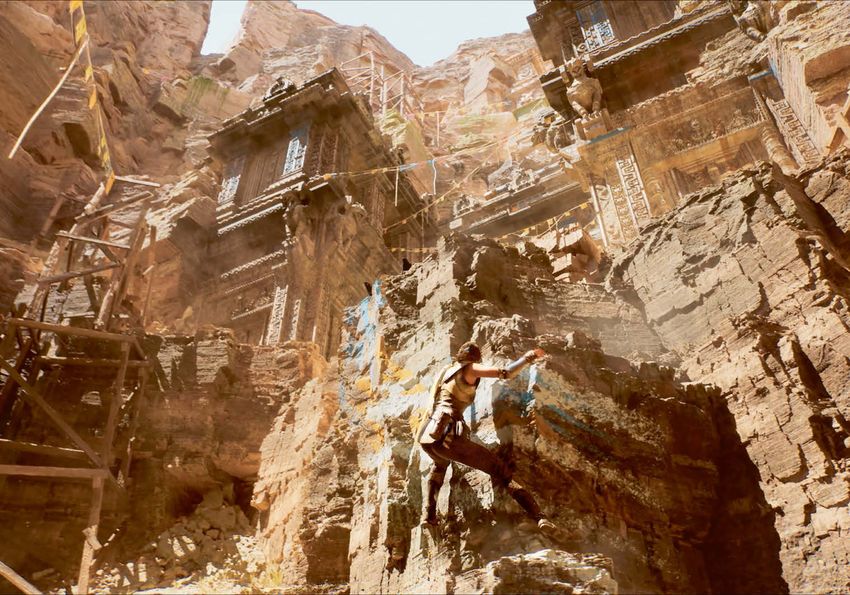
As always, our strongest motivation:
our own standards.
The new Panamera 4S E-Hybrid. Drive defines us.
How can you measure progress? The new Panamera and its numbers make for a good start.
Its 2.9-litre twin-turbo V6 engine combines with the electric motor to produce a system
output of 412kW (560PS). And this new power is backed with an increased electric range.
Only the best to drive your next project forward. Discover more at www.porsche.com/Panamera

Fuel consumption (in l/100km) combined 2.2–2.0; CO₂ emissions (in g/km) combined 51–47;
electricity consumption (in kWh/100km) combined 18.1–17.4
Porsche Engineering Magazine 1/2021                                     EDITORIAL                                                                            3

                                                                        Dear Reader,

                                                                        “Next level”—scarcely any other expression sums the situation in
                                                                        which we currently find ourselves more succinctly: In many fields,
                                                                        we simply have to reach the next level. We are familiar with the term
                                                                        from the worlds of computer games and sports. Those who have
                                                                        reached a certain level there often move on to the next level right
                                                                        away. This also applies to our work in automotive development: We
                                                                        cannot rest on our laurels.

                                                                        We see this in trends such as artificial intelligence, the use of game
                                                                        engines in vehicle development and future E/E architectures,
                                                                        which we examine in the title series. They exemplify the increasing
                                                                        complexity of our work. We also have to reach the next level in our
                                                                        methods. In his article, Marius Mihailovici, Managing Director of our
                                                                        digital branch in Cluj, explains what this looks like in the software
                                                                        development sector.

                                                                        The coronavirus pandemic has greatly accelerated the demand for
                                                                        digital topics. New forms of work, for example, have found their way
                                                                        into development more quickly than anyone would have thought
                                                                        possible. The working world has changed for good. Completely new
                                                                        work and leadership concepts are now needed.

                                                                        Sports, computer games, and work are most fun when the challenge
                                                                        of the next level and one’s own abilities are in balance. That’s why we
                            Dirk Lappe
               Managing Director Porsche Engineering
                                                                        continually usher our employees into the new era, train them early
                                                                        in future fields of activity and promote lifelong learning. In this way,
                                                                        we enrich what we love—the development of automobiles—with
                                                                        the next level of digital acumen. And in doing so, we are continuing a
                                                                        tradition that Ferdinand Porsche cultivated almost 90 years ago: the
                                                                        joy of tinkering and continuous further development—in short, the
                                                                        joy of the next level.

                                                                        I hope you enjoy reading this issue of our magazine.

                                                                        Best regards,
                                                                        Dirk Lappe

ABOUT PORSCHE ENGINEERING: Creating forward-looking solutions was the standard set by Ferdinand Porsche when he started his design office in 1931.
In doing so, he laid the foundation for today’s Porsche customer developments. We renew our commitment to that example with each new project that we
carry out for customers. Porsche Engineering combines expertise from vehicle and system development with the latest innovations from function and software
development and validates these using comprehensive simulation and testing facilities.
46    On the way to the future: The Nardò Technical Center is dedicated
                                                         to megatrends such as autonomous driving and e-mobility

56   Command center: The Porsche
     Home Energy Manager ensures that
     recharging electric vehicles at home
     does not overload the system

                                                                                                                                           16

                                                                                                                                           Expert talk: Dirk
                                                                                                                                           Lappe (left) and Dr.
                                                                                                                                           Oliver Seifert talking
                                                                                                                                           about the future of
                                                                                                                                           E/E development

                                                                                                                                   DOSSIER

                                                                                                                                    08 – 33

10   Mastering complexity: Reinforcement Learning
     as a tool in calibration

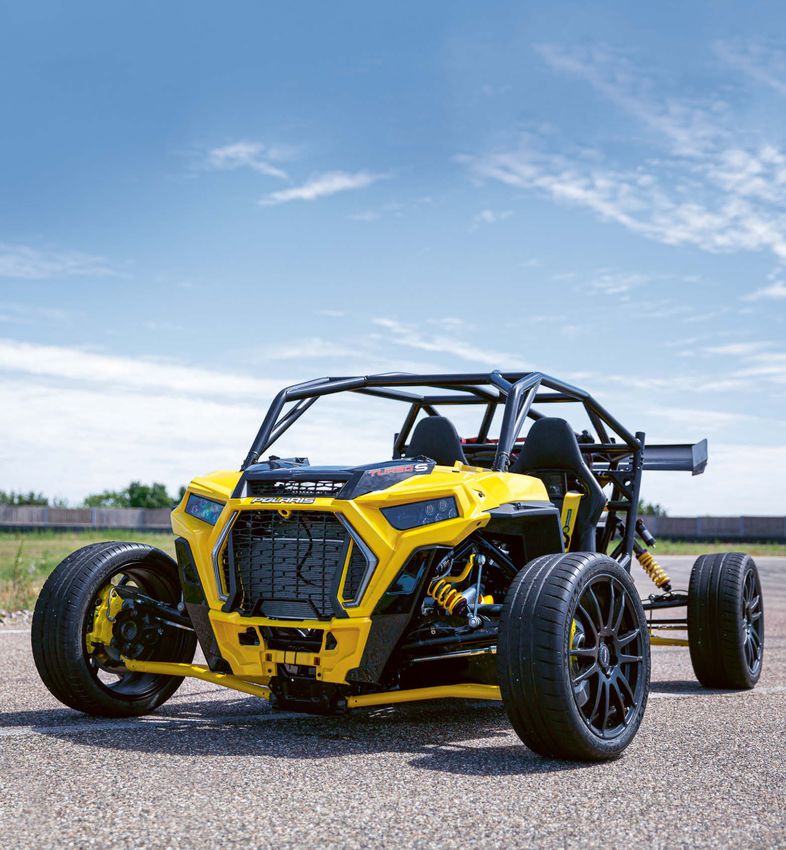
42   Taking the low road: How Polaris rapidly turned an off-road
     vehicle into a demonstration vehicle for a track variant
                                                                                                34    End of an era: Moore’s Law will soon reach its limits.
                                                                                                      Time for new ideas in microelectronics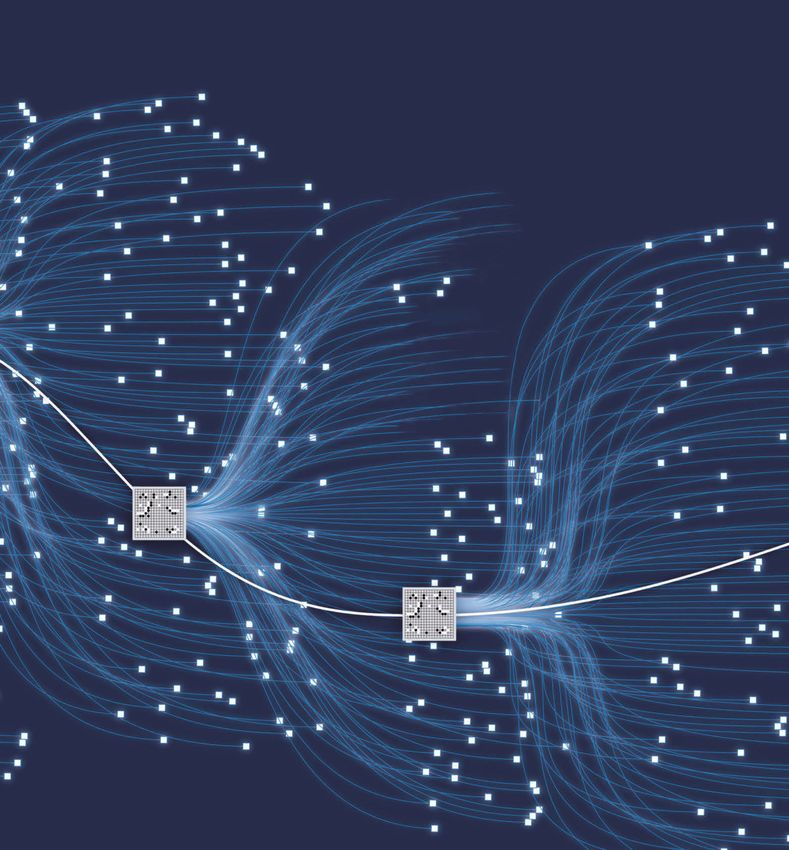
Porsche Engineering                                                              Magazine
                                                                                                   Issue
                                                                                                   1/2021

                                                 03    Editorial
                                                 04    Contents
                                                 06    News

DOSSIER:
NEXT LEVEL                                  08         Next level
                                                       Dossier overview

                                            10         Success strategy courtesy of the AI agent
                                                       With Deep Reinforcement Learning, Porsche Engineering significantly reduces
                                                        calibration workload

                                            16         “There are no limits to your imagination”
                                                       A conversation about the future of E/E development

                                            23         E³: End-2-End Electronics architecture
                                                       Open E/E platform for the vehicles of tomorrow

                                            24         When software writes software
                                                       Will software development eventually get along without people?

                                            28         Game engines
                                                       Tools from the computer games industry prove themselves in vehicle development

TRENDS AND
TECHNOLOGIES                                34         More than Moore
                                                       How the performance of chips will continue to increase in the future

VISION
                                            40         Hello, human!
                                                       AI expert Prof. Dr. Kristian Kersting on the future of artificial intelligence

PERFORMANCE
AND EXPERTISE                               42         End of the off-road
                                                       Porsche Engineering turns an off-roader into a road race car

                                            46         Intelligent, connected, Nardò.
                                                       The Nardò Technical Center is preparing for the future

MISSION                                     52         Brains for autonomous driving
                                                       Nvidia: from manufacturer of graphics processors to partner of the
                                                        automotive industry

PORSCHE AND
PRODUCT                                     56         Charging master for electric vehicles
                                                       The Porsche Home Energy Manager controls charging at home

                                            60         Best in class with performance plus
                                                       The new Porsche Panamera now covers an even wider range

OUTSIDE THE BOX                             64         Outside the box
                                                       Recommendations for thinkers, tinkerers, and geeks

TRADITION                                   66         Dual reality
                                                       The Porsche dual-clutch transmission combines the best of two worlds

                                                 67    Imprint

Authors           34   Christian Buck is a science           01    Totto Renna (“Supertotto”) is            46   Theodor Barth is a freelance
                       journalist from Berlin with                 an illustrator and runs a one-man             photographer from Cologne who
                       a focus on IT/AI, energy, and               pixelart design studio based in               works in the fields of automotive,
                       mobility.                                   Naples and Berlin.                            reportage, and portraiture.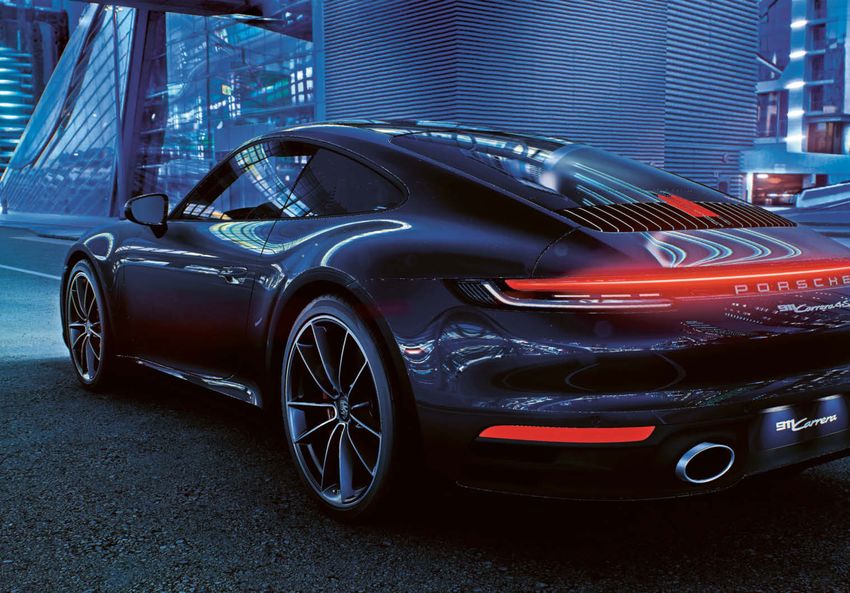
6                                                                News

Long-term collaboration with Tongji University

Close cooperation between industry and science
Porsche Engineering is continuing its            An essential part of the cooperation with        dialog between business and science. The
long-standing commitment and traditional         Tongji University is the collaboration           latest result of the collaboration is a new
collaboration with Tongji University in Shang-   between instruction and business. In             professorship at the School of Automotive
hai. One component of this is supporting         November, for example, 80 Tongji students        Studies (SAS) at Tongji University. It is ded-
the Tongji DIAN Racing Team in its Formula       took part in the Porsche Engineering Short       icated to the topic of Intelligent Connected
Student Electric campaign. In October, the       Courses, in which Porsche Engineering engi-      Vehicles (ICV) and is intended to provide
new race car was presented at the Porsche        neers passed on their knowledge of vehicle       students the optimal training for this topic
Experience Center in the presence of Dr. Jens    dynamics, brake systems, electric motors,        of the future. The professorship was created
Puttfarcken, Managing Director of Porsche        suspension design, batteries, and other          in cooperation with Porsche China, Porsche
China, and Kurt Schwaiger, Managing              topics. These events are intended to con-        Engineering and the Chinese German
Director of Porsche Engineering Shanghai.        tribute to further expanding and intensifying    Graduate School (CDHK). The agreement
In mid-August, a driving training course for     the exchange between science, research,          began on September 1, 2020 and will end
twelve team members was held by Porsche          testing, and engineering. In addition, Porsche   on August 31, 2025.
experts at the Porsche Experience Center         Engineering and the university are organizing
Shanghai. The Tongji DIAN Racing Team has        the Tongji Porsche Engineering Symposium
been in existence since 2013 and has about       in Shanghai—an international conference
100 members.                                     featuring 100 experts for a professional

                                                                              Growing team and new R&D office

                                                                              Porsche Engineering continues
                                                                              expansion in Ostrava
                                                                              The Czech branch of Porsche Engineering in Ostrava has moved
                                                                              to a new research and development office in the Science and
                                                                              Technology Park. The 1,000 m2 of office, laboratory, and work-
                                                                              shop space are designed to meet the requirements of a growing
                                                                              team of experts. By moving directly to the university campus,
                                                                              Porsche Engineering is also aiming to intensify its collaboration
                                                                              with the Technical University of Ostrava.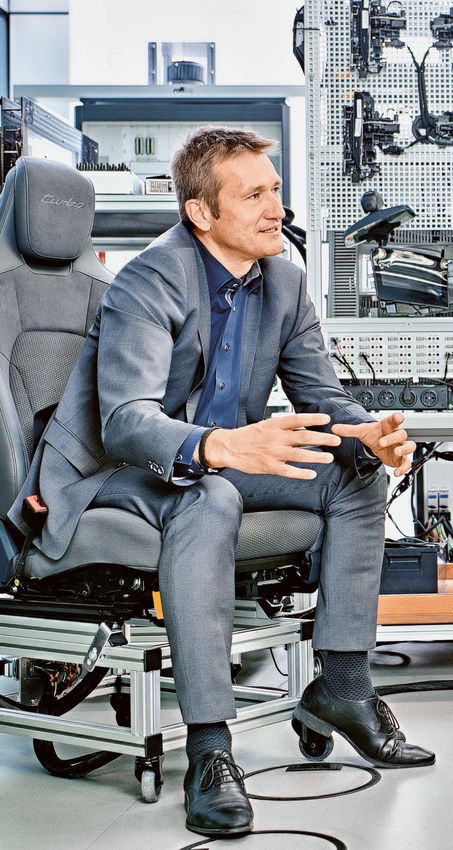
Porsche Engineering Magazine 1/2021 7
Meeting needs in the time of the coronavirus
Company and staff step up to offer help
Porsche Engineering and Porsche AG are committed to helping those affected by the
coronavirus pandemic. The Nardò Technical Center, for example, has donated almost
10,000 euros to the Italian Department of Civil Protection (for respirators and protective
equipment). The Cluj location donated around 9,000 euros to the Beard Brothers aid
organization (for medical equipment) and another 4,500 euros to the CERT Transilvania
aid organization (for laptops and tablets for children). Furthermore, the AI team at
Porsche Engineering has created a model to predict infection behavior, and employees
from the Prague and Ostrava locations have supported the development of open-source
medical ventilators. Porsche AG has launched a platform called “Porsche hilft” (“Porsche
helps”) to find institutions, companies, and organizations that need support. In addition,
the company has increased its donation volume by five million euros, and hundreds of
employees have volunteered, for example by going shopping for older neighbors.
90 years of engineering
services by Porsche,
50 years of R&D Center Weissach
Two great reasons
to celebrate in 2021
BEFORE THE OUTBREAK OF THE CORONAVIRUS PANDEMIC.
Next year it will be 90 years since
PLEASE NOTE THAT THE PHOTOGRAPH WAS TAKEN
Ferdinand Porsche founded his
engineering office. On July 25, "Dr. Ing.
h.c. F. Porsche GmbH, Konstruktionen
und Beratungen für Motoren und
Fahrzeugbau" was entered in the
Stuttgart commercial register in 1931.
The tradition lives on: development on
behalf of customers continues under
the name Porsche Engineering to this
day. 50 years ago the construction,
testing, design, and racing depart-
ments moved from Zuffenhausen to
Weissach. The Porsche Development
Dual study program at Porsche Engineering Center in Weissach started operations
on October 1, 1971. Construction of
Shaping the future of automotive development the test track had already begun there
ten years earlier: the ground-breaking
Acquire theoretical knowledge and apply it in practice: this is what a dual study ceremony for the Skid Pad was
program at Porsche Engineering offers. It starts in October, lasts six semesters and performed by Ferry Porsche. Just one
includes alternating three-month blocks of theory at the Baden-Wuerttemberg year later, a Porsche 356 drove on the
Cooperative State University in Stuttgart and three months of practical training at test track for the first time.
one of the engineering service provider’s locations. Twelve students are currently
studying mechanical engineering, mechatronics, and computer science at Porsche
Engineering. The Computer Science with a major in IT Automotive program has
been offered since 2018, and Computer Science with a major in Computational
Data Science since 2020. Students immerse themselves in the world of computer
science, help shape future IT systems, and drive key technologies such as AI.
8       D OSSIER

    Next level
Porsche Engineering Magazine 1/2021                         NE X T LE VEL                                                       9

                                 Automotive development is entering a new phase. Increasingly,
                              digitalization is shaping the work of engineers—through the advent
                             of innovative tools and methods and to enable new vehicle functions.
                               Today, not only artificial intelligence is part of the everyday life of
                              developers, but also technology from the field of computer games.

                                                       10         Success strategy courtesy of the AI agent
                                                                  PERL considerably reduces the calibration workload

                                                       16         “There are no limits to your imagination”
                                                                  Dr. Oliver Seifert and Dirk Lappe on E/E development

                                                       23         E³: End-2-End Electronics architecture
                                                                  Open E/E platform for the vehicles of tomorrow

                                                       24         When software writes software
                                                                  Marius Mihailovici on the future of software development

                                                       28         Game engines
                                                                  Computer game tools prove themselves in vehicle development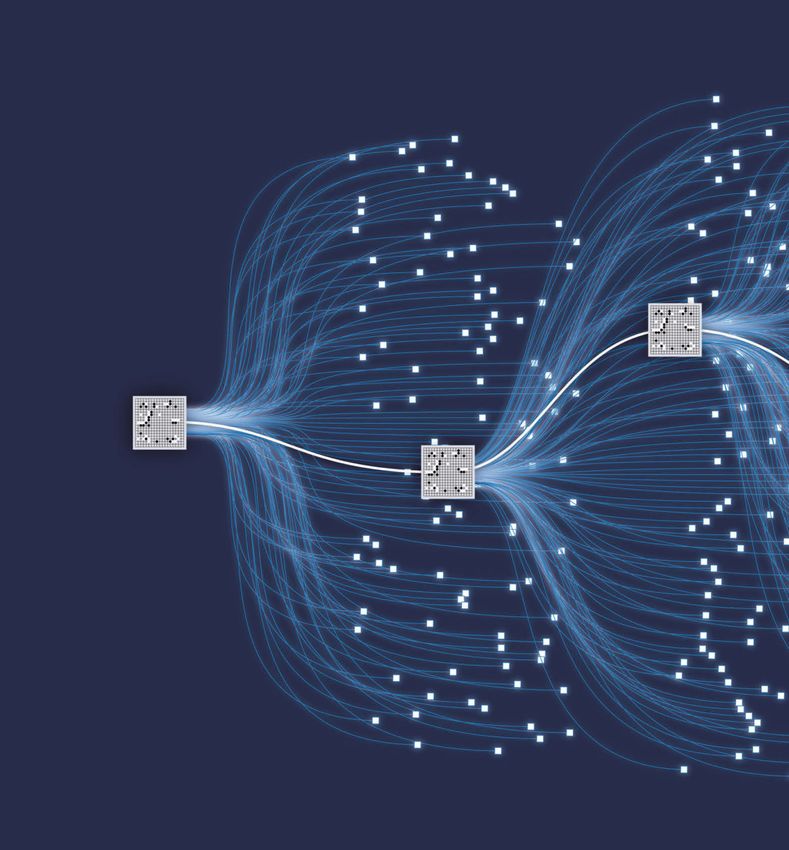
10                  NE X T LE VEL

Chronicle of a milestone:
  The graphic shows the
   progression of the go
      game between Lee
   Sedol and AlphaGo in
     2016 (big squares).
       The small squares
    represent alternative
    courses of the game.
Porsche Engineering Magazine 1/2021 SUCCESS STR ATEGY COURTESY OF THE AI AGENT 11
Success strategy
courtesy
of the AI agent
Text: Richard Backhaus Contributors: Matteo Skull, Dr. Matthias Bach
As the scope of functions in modern vehicles
expands, so too does the calibration work
involved. This is why Porsche Engineering has
developed PERL: the innovative calibration
methodology is based on deep reinforcement
learning and considerably reduces the time
and cost of the calibration.12 NE X T LE VEL
How PERL learns the
best calibration strategy
PERL uses two neural networks to determine the best calibration
strategy: the policy network and the value network. An algorithm
(the “agent”) interacts with the environment to iteratively improve the
weighting factors of the two networks. At the end of the training,
the optimal calibration methodology is found—even for engines with
varying designs, charging systems, and displacement.
AGENT
E
1
Policy network
xperts regard 2016 as a milestone in the
history of artificial intelligence (AI). Largely unnoticed
by the general public in Europe and the USA, the com-
puter program AlphaGo competed against the South
Korean world-class player Lee Sedol in the board
game go and won four of the five games. This was
the first time that a computer was dominant in the
traditional Asian strategy game. Until then, it had not
been possible to teach software the complex strategy
of the board game—the required computing power
and computing time would have been too great. The
turning point came when the AI in the go computer
was trained using deep reinforcement learning.
One of the superlative disciplines of AI
Deep reinforcement learning, still a relatively new
methodology, is considered one of the supreme
disciplines of AI. New, powerful hardware in recent
years has made it possible to use it more widely and
to gain practical experience in applications. Deep
reinforcement learning is a self-learning AI method 4
that combines the classic methods of deep learning
with those of reinforcement learning. The basic idea is Value network
V
that the algorithm (known as an “agent” in the jargon)
interacts with its environment and is rewarded with
bonus points for actions that lead to a good result and
penalized with deductions in case of failure. The goal
is to receive as many rewards as possible.
To achieve this, the agent develops its own strate-
gy during the training phase. The training template
provides the system with start and target parameters
for different situations or states. The system initially
uses trial and error to search for a way to get from
the actual state to the target state. At each step,
the system uses a value network to approximate the
sum of expected rewards the agent will get from the
actual state onwards if it behaves as it is currently
behaving. Based on the value network, a second
network—known as the policy network—outputs the
action probability that will lead to the maximum sumPorsche Engineering Magazine 1/2021 SUCCESS STR ATEGY COURTESY OF THE AI AGENT 13
ENVIRONMENT
2
Characteristic map
Normalized
torque [%]
60
50
40 Agent on a mission
30 The aim of the calibration
task is to minimize the
20 deviation betwen the
ACTION 10
target measured values
(black curve in the graph
0
below) and the one with
the default calibration
Increase or
-10 (blue curve). To do this,
decrease the
the agent uses the policy
values in the map
network (1) to change
80
the values in the map (2).
Based on the resulting
60 deviation (3) the agent
gets positive rewards if
40
Load [%] it further reduced the
2000
deviation, negative
4000
rewards if the deviation
6000 20 increased. The value
Engine speed [rpm]
8000
network (4) is used to
approximate a value
function, on the basis of
which the agent plans the
next possible action. The
calibration task is finished
once the deviation has
been minimized to within
a certain range.
3
Measured engine torque at the test bench [Nm]
Torque [Nm]
350,00
300,00
Positive or negative
rewards depending on
250,00
the resulting deviation
from the target value 200,00
150,00
100,00
50,00
Spark advance
[degCA]
40 30 20 10 5 0
Measured values with default calibration
Measured target values14 NE X T LE VEL
of expected rewards. This then results in its method- Use in engine calibration
ology, known as the “policy,” which it applies to other
calculations after completing the learning phase. The performance of deep reinforcement learning in a
board game gave the experts at Porsche Engineering
In contrast to other types of AI, such as supervised the idea of using the method for complex calibration
learning, in which learning takes place based on pairs tasks in the automotive sector. “Here, too, the best
of input and output data, or unsupervised learning, strategy for success is required to achieve optimal
which aims at pattern recognition, deep reinforcement system tuning,” says Matteo Skull, Engineer at Porsche
“PERL is highly learning trains long-term strategies. This is because Engineering. The result is a completely new calibra-
flexible because the system also allows for short-term setbacks if this tion approach: Porsche Engineering Reinforcement
parameters such increases the chances for future success. In the end, Learning (PERL). “With the help of Deep Reinforcement
even a master of the stature of Sedol had no chance Learning, we train the algorithm not only to optimize
as the engine against the computer program AlphaGo, which was individual parameters, but to work out the strategy
design, displace- trained in this way. with which it can achieve an optimal overall calibration
ment or charging
system have no
influence on learn-
ing success.”
Matteo Skull,
Engineer at Porsche
Engineering
Unimaginable complexity
Go is among the classic strategy board games. The goal is to occupy more squares on the board with your
stones than your opponent. In contrast to chess, for example, there are only two types of pieces in go—black
and white pieces—and only one type of move, namely placing a stone. The high complexity of the game of
go results from the large number—10¹⁷⁰—of possible constellations on the 19 by 19 board—a sum that is
beyond all training possibilities for human go players. Since the success of the game is highly dependent on
human intuition during the game and chance has no influence on the course of the game, go is predestined
for the use of artificial intelligence, as AlphaGo impressively proved with its game against Lee Sedol. By the
way, the former go champion has drawn his own conclusions from the superiority of AI: in late 2019, Sedol
announced his retirement from competing professionally in go.Porsche Engineering Magazine 1/2021 SUCCESS STR ATEGY COURTESY OF THE AI AGENT 15
result for an entire function,” says Skull. “The advan- In the future, the performance of PERL should help
tages are the high efficiency of the methodology due to to cope with the rapidly increasing effort associated
its self-learning capability and its universal applicabili- with calibration work as one of the greatest challeng-
ty to many calibration topics in vehicle development.” es in the development of new vehicles. Prof. Michael
Bargende, holder of the Chair of Vehicle Drives at the
The application of the PERL methodology can basically Institute of Automotive Engineering at the University
be divided into two phases: the training phase is of Stuttgart and Director of the Research Institute of
followed by real time calibration on engine dyno or in Automotive Engineering and Vehicle Engines Stuttgart
vehicle. As an example, Skull cites the torque model (FKFS), explains the problem using the example of the
with which the engine management system calculates drive system: “The trend towards hybridization and the
the current torque at the crankshaft for each operat- more demanding exhaust emission tests have led to a
ing point. In the training phase, the only input PERL further increase in the number of calibration param-
requires is the measurement dataset from an existing eters. The diversification of powertrains and markets
project, such as a predecessor engine. “PERL is highly and the changes in the certification process have also
flexible here, because parameters such as engine increased the number of calibration that need to be
design, displacement or charging system have no created.” Bargende is convinced of the potential of the
influence on the training success. The only important new methodology: “Reinforcement learning will be a
thing is that both the training and later target calibra- key factor in engine and powertrain calbrations.”
tion use the same control logic so that the algorithm
implements the results correctly,” says Skull. Significantly reduced calibration effort
During training, the system learns the optimal cali- With today’s conventional tools, such as model-based
bration methodology for calibrating the given torque calibrations, the automated generation of parameter
model. At critical points in the characteristic map, it data—such as the control maps in engine manage-
compares the calibrated value with the value from ment—is generally not optimal and must be manually
the measurement dataset and approximates a value “With PERL, revised by the calibration engineer. In addition, every
function using neural networks based on the result- we improve hardware variation in the engine during development
ing rewards. Using the first neural network, rewards makes it necessary to adapt the calibration, even
calibration
for previously unknown states can be estimated. A though the software has not changed. The quality and
second neural network, known as policy network, then robustness with duration of calibration therefore depend heavily on the
predicts which action will probably bring the greatest regards to the skill and experience of the calibration engineer. “The
benefit in a given state. current calibration process involves considerable time
influences of
and cost. Nowadays, the map-dependent calculation of
Continuous verification of the results manufacturing a single parameter, for example the air charge model,
tolerances or requires a development time of about four to six weeks,
On this basis, PERL works out the strategy that will wear of engine combined with high test-bench costs,” said Bach. For
best lead from the actual to the target value. Once the overall calibration of an engine variant, this results
training is complete, PERL is ready for the actual components over in a correspondingly high expenditure of time and
calibration task on the engine. During testing, PERL engine lifetime.” money. “With PERL, we can significantly reduce this
applies under real-time conditions the best cali- effort,” says Bach, with an eye to the future.
bration policy to the torque model. In the course of Dr. Matthias Bach,
the calibration process, the system checks its own Senior Manager Engine
results and adjusts them, for example if the parameter Calibration and
Mechanics at Porsche
variation at one point in the map has repercussions Engineering
for another. “In addition, PERL allows us to specify
both the calculation accuracy of the torque curve
and a smoothing factor for interpolating the values IN BRIEF
between the calculated interpolation points. In this
way, we improve calibration robustness with regards The innovative PERL methodology from Porsche Engineering
uses deep reinforcement learning to develop optimal strat-
to influences of manufacturing tolerances or wear of egies for engine calibration (the “policy”). Experts regard
engine components over engine lifetime.” explains the new AI-based approach as a key factor in mastering the
Dr. Matthias Bach, Senior Manager Engine Calibration increasing complexity in the field of engines and powertrain
and Mechanics at Porsche Engineering. systems in the future.16 NE X T LE VEL
“There are
no limits
to your
imagination”
Interview: Richard Backhaus
Photos: Steffen Jahn
New functional scopes are increasingly
represented by the overall system
networking within the electrics/
electronics (E/E) architecture of the
vehicle. Dr. Oliver Seifert, Vice President
Electrics/Electronics Development at
Porsche AG, and Dirk Lappe, Managing
Director of Porsche Engineering,
will discuss the effects this has on
E/E development, the opportunities
it offers, and what the E/E platform
of the future will look like.Porsche Engineering Magazine 1/2021 INTERVIE W 17
A conversation with electrics/electronics experts: Dr. Oliver Seifert (left) and Dirk Lappe.18 NE X T LE VEL
Looking ahead: E/E architectures must be flexible enough to meet all future requirements.
What are the central trends in E/E development, very dynamically. We must optimize our processes
and what are the challenges? so that we can react quickly to new market needs.
DR. OLIVER SEIFERT: The first trend is the further It is therefore a combination of new tasks and short
development of the battery electric vehicle, driven timeframes that will shape future developments.
by the requirements of legislation and the mar-
kets—but also by our own claim at Porsche to make What will the E/E architecture of the
electric driving even more attractive, for example in future look like?
terms of range and charging performance. The sec- SEIFERT: Future E/E architecture must perform a
ond trend is the seamless integration of the vehicle difficult balancing act. On the one hand, it must
into the customer’s digital ecosystem. The result- offer a high degree of flexibility in order to be able
ing challenges affect the development processes to cover the requirements of the future—although
of the E/E system architecture in particular. This is they have not yet been defined in detail, of course.
because the demands placed on us are changing In doing so, we must not lose sight of aspects suchPorsche Engineering Magazine 1/2021 INTERVIE W 19
“Future E/E architecture must
perform a difficult balancing act.
On the one hand, it must offer a high
degree of flexibility and, on the other
hand, we must guarantee a high
degree of functional stability.”
Dr. Oliver Seifert
as costs and the vehicle package. On the other vehicle onto the market, it must still be capable of
hand, we have to guarantee a high level of function- being updated after ten or 15 years. The E/E de-
al stability of the E/E system so that the system velopment has the important cross-sectional task
E³
developers have a valid platform on which to pres- of keeping the vehicle’s functions safe and running
ent the new functional scopes. With our current E/E throughout the vehicle’s service life.
architectures we have created a good basis for this.
The core of future architecture concepts is the E³ To what extent do functions and software charac-
is the approach for future
approach. The vehicle functions run on a few highly E/E architecture concepts, terize the Porsche of the future?
complex control units, the HCPs (High Performance a combination of HCPs SEIFERT: Software is already the backbone of our
Computing Platforms). In addition, there are a and simple controllers. vehicles today. No modern car can drive without
large number of simple controllers for controlling bits and bytes. And it is precisely this software that
the mechatronic sensors and actuators in the E/E gives us the opportunity to design Porsche-spe-
network. We will probably have as many electronic cific vehicle characteristics that would previously
and mechatronic components in the vehicle as we HCP have been impossible or difficult to implement via
have today, but the intelligence and complexity will High Performance mechanics. One example is the matrix light, which
be distributed differently. Computing Platforms has turned yesterday’s simple headlights into a
DIRK LAPPE: In the practical implementation of the (HCPs) are powerful modern assistance system. In the past, headlights
E/E architecture, we will have to comply with strict computers that perform were only used to illuminate the road. Today’s
the tasks of many of
legal requirements in the automotive sector, for matrix system does the same, but controls the light
today’s control units.
example with regard to cyber security. This gives intensity so intelligently that oncoming traffic is not
us a clear framework for designing future system dazzled and disturbing reflections from road signs
architectures. Compared to consumer electronics at the edge of the road are avoided. And if a person
products, we therefore face completely different is standing at the side of the road, the matrix light
tasks. Another point is product life. A smartphone illuminates this area in particular to draw attention
is considered obsolete after six years at the latest, to the potential hazard situation. We create the
at which point software updates for the operating preconditions for integrating new features into the
system are no longer offered. When we bring a vehicle through the underlying E/E architecture.20 NE X T LE VEL
“We see ourselves as
a complete vehicle
developer that implements
new functions holistically,
including the software.”
Dirk Lappe
It must therefore be designed with the future in
mind, so that we can react to requirements that we
cannot even foresee today.
What does Porsche Engineering do in the area of
function and software development?
LAPPE: We see ourselves as a complete vehi-
cle developer that implements new functions
holistically, including the software. This is a big
difference to competitors who can only create
software and have no know-how about vehicle
development. Software gives us the opportunity to
optimally implement the potential of a hardware
component. For example, an air suspension system engineers there can do both: software and cars.
can be applied with a standard set-up, or you can LAPPE: One of our most important efforts in re-
take advantage of the scope for design and use Dr. Oliver Seifert has been cent years and decades has been to support the
the same hardware to create a chassis that glides Vice President Electrics/ development of E/E competence within Porsche
over potholes in a highly comfortable manner and, Electronics Development at AG. The result is a symbiosis that continues to this
at the touch of a button, offers dynamic cornering Porsche AG since the begin- day. Today we work as a strategic partner on larger
ning of 2020. Seifert, who
ability typical of a sports car. We are car freaks software scopes and other E/E topics.
holds a doctorate in physics,
who also love to program. previously worked for Porsche
as Director of Integration, How important are local E/E solutions
How does the E/E collaboration between Porsche Maturity & Quality and in for different markets?
and Porsche Engineering work? other management positions, SEIFERT: In regions like Asia or North America,
SEIFERT: Porsche Engineering is a constant in our in particular in Integration customers today demand their own specific
E/E development. I assume that this collaboration Management. Before joining solutions. While there are similarities, there are
the sports car manufacturer,
will be much more intensive in the coming years. he was Managing Director
also major differences due to the respective
This is particularly true for developments in the of a medical technology cultural backgrounds, digital ecosystems and legal
future fields of connectivity and e-mobility. The company and Quality requirements. The ever-increasing diversification of
nice thing about Porsche Engineering is that the Engineer E/E at Daimler AG. the markets poses great challenges for the entirePorsche Engineering Magazine 1/2021 INTERVIE W 21
Perfect context:
Dirk Lappe and Dr. Oliver Seifert met for
talks at Porsche’s Electrical Integration
Center (EIZ) in Weissach.
blood, but who also have a local connection. During
development, they work closely with their Chinese
colleagues from Porsche China and Porsche Digital,
but of course also with our experts in Germany.
What role does E/E development at Porsche play
compared to other development areas such as body,
powertrain, or chassis?
SEIFERT: Today’s functions are no longer developed
by one department alone. Our task is to ensure that
the infrastructure for all development areas involved
is uniform. This includes scopes such as control
units, basic software, diagnostic functions, and the
industry. The variants must be taken into account entire electronic architecture. With the electronics
throughout the entire development process, right platform, we create the stable foundation, so to
up to the functional validation, which can only take speak, on which colleagues from the other develop-
place locally in the respective markets. To do this, Dirk Lappe has been ment areas can then implement the functions.
we need development partners such as Porsche the Managing Director
Engineering that understand the special charac- of Porsche Engineering How are Porsche and Porsche Engineering dealing
since 2009. The electrical
teristics of the individual regions and the cultural with the transformation in automotive development?
engineer joined the
background there. company in 2002, where
LAPPE: The importance of software and the exper-
LAPPE: We have found that you have to be on site he initially took over as tise to develop it grows with the transformation.
in China in order to understand the market there Director of the Electrics/ We have set up a change process to integrate
and to be able to implement certain developments Electronics department. experts from the classic trades more closely into
quickly and purposefully. For around four years Prior to that he worked for the software development area. We have a large
now, we have therefore been using our capaci- Harman Becker and Bosch. number of engineers with 20 or more years of pro-
ties in China to develop and verify locally specific fessional experience on board who are prepared to
solutions for Porsche, among other activities. Our leave their original fields of work and contribute to
team in China consists primarily of local colleagues the further development of our software capabili-
who, like us, have gasoline and electrons in their ty. The employees are particularly valuable to the22 NE X T LE VEL
company after the transformation, as they bring
both mechanical and electronic understanding to
“We pursue the idea
the function development discipline.
SEIFERT: It is important to actively pursue a trans- of sustainability
formation process and not to wait until you are
forced to do so by external factors. We don’t want
to chase the proverbial carrot, but rather lead the
throughout the entire
race. And as you know, we feel very comfortable on
the race track. However, we do not have the aspi-
value chain.”
ration to follow every trend as a matter of course.
You always need a stable basis as the starting point Dr. Oliver Seifert
for a successful transformation into new worlds of
working, processes, and products. And we must
never forget that there are people behind every
transformation. We see ourselves as one family and
make sure that we do not overburden our employ-
ees, but give them the necessary support. that the available energy in the vehicle is always
used as efficiently as possible. Another point is to
What role does sustainability play in the E/E devel- ensure that the vehicles in the field last as long as
opment of the future? possible. Our flexible electronics architecture can
SEIFERT: A very big role. We pursue the idea of be upgraded to the latest state of the art over the
sustainability throughout the entire value chain. years, so that customers can and want to use their
In component development, we take these re- vehicles for a long time.
quirements into account, for example, in material
selection and component design. But with our Is there a Porsche feature that you would not
E/E architecture and our functions, we also digitalize or electrify?
contribute to sustainability in terms of vehicle SEIFERT: The design of our vehicles is an emotional
operation. For example, we design the system so experience and certainly something that cannot be
digitalized per se. Otherwise, there are no limits to
one’s imagination. However, it is important that the
result feels typical for Porsche; otherwise digitali-
zation makes no sense. We have already shown how
typical Porsche electrification works in a variety
“We need the of areas: whether it’s steering, brakes, powertrain
units or other systems, regardless of the model
creativity of series. And I can only recommend it to anyone
who has not yet experienced these characteristics
our engineers. Taycan 4S
T
themselves: Try them out in the Porsche Taycan!
LAPPE: We will not be able to replace humans with
Power consumption (combined) computers in the development process. We need
This is an (Performance Battery):
26.2 kWh/100 km
Power consumption (combined)
the creativity of our engineers to improve individ-
ual functions and develop new features. This is an
innovation (Performance Battery Plus):
27.0 kWh/100 km
CO₂ emissions (combined):
innovation process that can never be digitalized.
0 g/km Which E/E project outside of automotive develop-
process that Energy efficiency class: A+
ment would you like to dedicate yourself to?
T
Taycan Turbo LAPPE: It would be fascinating to develop a transla-
can never be Power consumption (combined):
28.0 kWh/100 km
tion tool that works in real time and allows you to
communicate with everyone around the world in
CO₂ emissions (combined):
digitalized.” 0 g/km
Energy efficiency class: A+
their native language. By communicating together,
many misunderstandings could be cleared up and
T
Taycan Turbo S some of the current global challenges could be
Dirk Lappe Power consumption (combined): overcome more easily.
28.5 kWh/100 km SEIFERT: I can only agree with that. Communi-
CO₂ emissions (combined):
0 g/km
cation is the be-all and end-all. This is the case
Energy efficiency class: A+ with people—and also with vehicles.Porsche Engineering Magazine 1/2021 INFO GR APHIC 23
E³: End-2-End Electronics architecture
The vehicles of the future will have revolutionary holistic approach of an end-to-end architecture concepts, the E³ architecture also focuses on the
functions. In addition to current trends such as with a vehicle backend as an integral component. consideration of corresponding changes in the en-
electromobility, connectivity and autonomous It comprises several levels: the sensor-actuator vironment of associated development processes
driving, the need to network the vehicle with the level includes functions such as sound, light, and collaboration models.
environment will increasingly become the focus heating, and ambient lighting. The basic services The trend towards shifting functions from the ve-
of future architectures. Applications in subject and customer functions such as navigation, hicle to the vehicle backend requires a consistent
areas such as remote update and diagnosis, remote diagnosis, or the aquaplaning warner and service-oriented software architecture—both
car-2-infrastructure and big-data and cloud run on the computing level. The final level is the in the vehicle and in the backend. It enables the
functions will play an increasingly important cloud level: this level contains information that cross-domain interoperability of all services and
role in the future. In order to implement modern is stored in the cloud, such as weather or friction the seamless usability of powerful cloud services.
functions in the vehicle and thus keep it up- coefficient data. With the help of the E³ architecture, the vehicle is
to-date and maximally useful for the customer, In addition to new demands on the technical integrated into an overall ecosystem of services,
Porsche is continuously developing a new E³ infrastructure, such as high-performance central which will provide the customer with a variety of
architecture (End-2-End Electronics architecture). processing units, high-speed networking, new new functions in the future—and enable a new
Its structure is open and modular—based on a diagnostic concepts, and adequate security level of comfort and mobility.
Weather data Cloud
Coefficient of friction data
Cloud level
information
Charging infra-
OTA update data structure data
.. ...
Memory Navigation
Remote Aquaplaning functions ...
Customer warner ...
diagnosis
function
Base service Service- Online Calcula-
License Time
oriented data ...
diagnosis
manager master
collector tion level
Software platform
Hardware platform Hardware platform Hardware platform Hardware platform
Heated seats
Light
Sensor-
actuator
Control units /
level
HV charging Climate
sensor /
actuator Friction coefficient detection Ambient lighting24 NE X T LE VEL
FIGURE: M.C. ESCHER’S “DRAWING HANDS” © 2020 THE M.C. ESCHER COMPANY—THE NETHERLANDS. ALL RIGHTS RESERVED WWW.MCESCHER.COM
When software
writes software
Text: Marius Mihailovici
Software is increasingly becoming the determining factor in
automotive development. In his article, Marius Mihailovici,
Managing Director of Porsche Engineering Romania, takes a look
into the future of software development and explains why the job of
a programmer could change completely in the next 20 years.Porsche Engineering Magazine 1/2021 WHEN SOF T WARE WRITES SOF T WARE 25
There are 100 million lines
of code in a modern car.
A Boeing 787 Dreamliner
boasts a mere 14 million lines.
E ven today, cars are very much rolling computers.
They contain a network of dozens of computing units:
between 70 and 100 of these electronic control units
(ECUs) are installed in modern vehicles. ECUs control
fuel injection, regulate braking behavior, and monitor
the air conditioning system. The next step will be HCPs
(High Performance Computing Platforms), which will
enable significantly more computing power to be inte-
grated into an ECU.
The higher computing power and integration are
necessary because the number of lines of code and
the complexity of the functions in the vehicle are Added to this are the official approval processes
increasing year by year. One number may make this known as homologation. For example, it stipulates that
clear: 100 million. This is the number of lines of vehicles not be brought to market until they have been
code in a modern car. By comparison: a Boeing 787 built and accepted in a certain quantity. In the end, the
Dreamliner only has 14 million lines of code.
There are also many lines of code behind the enter-
100
electronic control units
industry is always about moving from one “finished”
state to the next.
tainment system and navigation. Added to this is can be located in a modern All these different challenges mean that fast and
the possibility of connecting smartphones and other vehicle to control central flexible work is required. Targets are often set at short
functions such as fuel injec-
devices to the car, which is also only possible with notice and change quickly. One might say that soft-
tion or brakes.
complex software. And it doesn’t stop there. Software ware is developed in a results-driven process.
is taking over more and more important tasks in the
car. The most important functions today and in the Agility and continuous integration
future include data exchange with other road users
and the infrastructure, updating vehicles from the In Cluj our software developers work with tools that
cloud, and eventually even autonomous driving. have proven themselves in software development for
20 years. We use agile methods wherever possible.
The balancing act in development They are based on small development steps whose
results are checked in daily feedback rounds. The in-
The development of automotive software has become dividual teams have a great deal of freedom and work
a rather tricky balancing act. Safety regulations and directly with each other to support each other with
customer requirements in the form of voluminous their respective capabilities. They flexibly set their own
specifications need to be fulfilled. The conventional goals each day. Team leaders often have only a moder-
development processes in the industry are usual- ating function here and keep an eye on the big picture.
ly time-driven: there is a predefined schedule that
defines certain milestones. Our clients expect regular Another current paradigm of software development is
results at predetermined dates. “continuous integration.” This is a highly automated26 NE X T LE VEL
Moderator: Marius Mihailovici’s teams have great freedom and set their own goals.
The use of agile methods
and continuous integration process in which software elements are checked at
ensures greater efficiency the end of a working day to see if they are ready to run
and integrated into the overall system. In this way, we
can quickly identify and eliminate errors and problems.
and also offers our customers The use of agile methods and continuous integration
ensures greater efficiency and also offers our customers
added value. added value: it makes it easier to present interim results
and gives them the opportunity for quick feedback.
For the next five years, I expect to see an increasing
use of the methods described above. Our work will
be even more results-driven than time-driven. Team
hierarchies are likely to become less important, and
I foresee a higher degree of flat and self-organizing
teams with clear responsibilities. Moreover, it will
become much more prevalent to work flexibly from
different locations, based on the idea of putting people
to work where the expertise exists. We will also see
increasing automation in the coming years. More and
more often, software is tested by software and not by
people. Manual testing will disappear completely.Porsche Engineering Magazine 1/2021 WHEN SOF T WARE WRITES SOF T WARE 27
The software is no longer
developed and installed
just once, but is constantly
further developed, even
when the car is already in
the customer’s hands.
The boundaries between car and
environment are blurring
Developments outside the automotive industry will
also force us to rethink things, as cars are increasingly
integrated into the digital lives of their drivers. For A future without software developers?
example, the smartphone automatically connects to
the vehicle when getting in. Media use, navigation, and The question is by no means absurd: will there still
communication merge seamlessly. be software developers in the future? Some experts
It is use scenarios like these that will change the con-
tent of our software developers’ work—for the simple
reason that the boundaries between pure “automotive
software” and other applications are becoming blurred.
AI
could take over some
software development
assume that artificial intelligence (AI) will take over
software development completely in the next two
decades—even in the automotive industry. Opinions
differ on this, however. Personally, I can imagine that
we will continue to set the framework and that AI
tasks over the
Incidentally, this also requires a certain mindset on the will then implement it. We will still need software
next two decades.
part of our developers: we employ people who live the Software engineers will architects, requirements engineers, and software
digital lifestyle themselves. They not only know what still be needed. engineers to define what AI or neural networks will
our clients demand, but also what vehicle users expect do: generate software functions based on the defined
from their cars. requirements, test them automatically, and correct
them continuously until the software quality is at the
ECUs of the future influence expected level.
software development
The developers of the future must therefore be able to
New ECU architectures are also changing the way think in terms of complete systems. They must know
automotive software is developed. I assume that in how end customers use their vehicles. Their work is
the car of the future there will be a few central, very not only determined by the specifications of the OEMs,
powerful computers of the HCP type, which, together but increasingly by the consumers. There is one thing,
with subordinate, simpler units, will control the entire however, that I cannot imagine: a software completely
vehicle. These central units will also run all applications without “bugs.” There will always be mistakes. We
that go beyond basic functions, such as entertainment, just don’t have to find and fix them ourselves; the
data traffic, or passenger communication applications. future new system will do that, monitored by human
These central computers with a real operating system software experts.
truly turn the car into a PC on four wheels.
For developers, this means that the methods of their
work do not change that much. What changes are the
systems they are dealing with: they are more hierar-
chical, have fewer components, and are controlled by
one overall software. And this—like any software—will
Marius Mihailovici has been Managing Director of Porsche En-
receive regular updates. So the software of a car is not gineering Romania since 2016. Previously, he headed research
developed and installed once, but is constantly being and development at Alcatel-Lucent S.A./Nokia Oyj, where he
further developed, even when the car is already in the also worked as a software manager for 2G and 3G projects.
customer’s hands. At World Telecom he worked as a communications engineer.28 NE X T LE VEL
Deceptively real: Game engines create fascinating landscapes for computer games...
Game
Text: Constantin Gillies Contributors: Frank Sayer, Tobias Watzl, Ionut Tripon, Sebastian Oebels
Game engines generate the images of computer game hits like
Fortnite and Cyberpunk 2077. In the meantime, however, these
software packages have also become an integral part of automotive
development. For example, game engines generate the images
used to train driver assistance systems or enable customers
to configure their new vehicle on the computer or with VR glasses.Porsche Engineering Magazine 1/2021 GAME ENGINES 29
...and make computer-generated views of a Porsche 911 Carrera 4S look like photos.
Engines
W hen Tobias Watzl comes home from work,
he occasionally sits down in front of the Playstation to
relax. However, the 28-year-old sees the games with
It is no coincidence that the digital road looks like
a computer game. This is because Watzl uses the
software Unreal in his work, a game engine that
different eyes to most players. “Sometimes I wonder, generates the images in the computer game Fortnite,
for example, how the developers managed to get a for example. What otherwise brings virtual battles to
certain reflection or texture—instead of defeating my the screen is an everyday tool at Porsche Engineer-
enemies,” says Watzl with a chuckle. There’s a reason he ing: game engines teach assistance systems or help
looks so closely: as an engineer at Porsche Engineering, designers to visualize components. Thanks to game
he too creates virtual worlds every day. For example, technology, customers will soon be able to take a
Watzl uses the computer to recreate parts of highways virtual seat in the vehicle they have just ordered,
in order to train driver assistance systems. long before it leaves the assembly line.30 NE X T LE VEL
“Game engines provide the technology to create the part of the team that builds the digital test tracks and
necessary environment for simulating driver assis- is one of the new types of developers entering the au-
tance systems as a standard feature,” explains Frank tomotive industry: software developers with a gaming
Sayer, Senior Manager Virtual Vehicle Development at background and an understanding of the automotive
Porsche Engineering. The background: the algorithms industry are shaping the future of mobility every bit
of Advanced Driver Assistance Systems (ADAS) need as much as AI experts and mechanical engineers.
a lot of training and validation. For example, they have “Here, passion for video games and their development
to learn how to detect a traffic situation at lightning is combined with conventional skills—this is highly
speed using various sensors and react appropriately motivating, exciting, and of immediate relevance for
over a number of test kilometers. This would require our projects,” confirms Tudor Ziman, who heads up
many real test drives—and by no means every event function development in Cluj.
necessary for training would occur. “What takes
The drives simulated with the help of game engines
hours in reality have the advantage that they can be repeated as
Every eventuality can be played out
can be reduced often as required and can be controlled down to the
This is why Porsche Engineering is moving training into to seconds.” smallest detail. They also take less time than real
the virtual world: game engines simulate the drives ones. “What takes hours in reality can be reduced to
with which the algorithm practices. Every scenario and Ionut Tripon, seconds,” says Tripon. The only limiting factor here is
every eventuality can be played out in this way—even Head of the team for the computing power of the hardware used.
those that cannot be rehearsed in real life for safety the digital test tracks at
reasons: The car in front brakes unexpectedly; an ani- Porsche Engineering Cluj But even this limit is diminishing. Porsche Engineering
mal jumps onto the road; the sun blinds the on-board has started to move virtual development to the cloud:
cameras. Mixed operation is also conceivable: a real the driving simulations are outsourced to the data cen-
vehicle reacts to virtual objects. ter of service providers such as Amazon Web Services,
where they run in parallel on dozens of machines. When
Some of the virtual test tracks have real-life models, thousands of simulated cars (called instances) do their
for example the A8 autobahn near Stuttgart Airport. laps, the development time is drastically reduced.
“Our colleagues know every exit and every sign – even
though they’ve never been there before,” smiles Ionut Virtual tests instead of real prototypes
Tripon of Porsche Engineering Romania in Cluj. He’s
Game engines are used in design to make visible
what does not yet exist. Current example: During the
development of the Cayenne Coupé, consideration was
given to reducing the black frit band on the glass roof.
This area at the edge of the glass prevents the track of
the sunblind from being visible underneath. But how
wide must the frit band be? Until now, welding and
sawing have been used in such cases: One prepares a
vehicle and tries out several glass roofs with different
frit band widths. The virtual test, by contrast, for which
Porsche Engineering used the Visual Engineering Tool
Engine of a computer game (VET) developed in-house and based on the Unity game
engine, was much faster and more cost-effective.
Using the original CAD data, the engineers virtually
reconstructed the vehicle including the glass roof. After
The game engine is literally the engine the image is called rendering. The physics
of a computer game. It is a whole range engine ensures that things in the game a few hours they were able to view the model from all
of programs. At the core is the graphics behave as they do in the real world. It sides using VR glasses. The result was that the black
engine, which generates the actual image: calculates, for example, how often a thrown edge was correctly dimensioned. “To do a real-life
it first takes the 3D model of an object to rock skips over the ground before it stops. modification, we would have needed considerably more
be depicted (in its original state it consists To make the developers’ work easier, a kind time and money,” sums up engineer Watzl.
only of grid lines) and covers it with a digital of editor is also included with which new
surface. This texture, as it is known, can simulations can be created without having
look like wood or metal, for example. Then it to program them from scratch. Millions of
The images generated by game engines are so good
is calculated where light falls, which parts designers worldwide use these modular sys- nowadays that even professionals have to look closely
of an object are in the shade and where tems to create digital worlds—from mobile to see the difference to reality. This should soon en-
something is reflected. The calculation of phone games to Hollywood action movies. able a completely new customer experience in sales:You can also read


