Preparing for Science in the Exascale Era - Argonne ...
←
→
Page content transcription
If your browser does not render page correctly, please read the page content below
ADVANCI NG SCI E NCE WITH H PC

Preparing for Science in the
Exascale Era
As the future home to Aurora, the ALCF has been ramping
up efforts to ready researchers and developers for science
at exascale.

Science on day one. That’s the goal for each new              Aurora’s innovative design will be based on Intel’s Xeon
supercomputer introduced at the ALCF, including its           Scalable processors, high-performance Intel Xe GPU
upcoming exascale system, Aurora. But how do you              compute accelerators, and Optane DC persistent memory.
prepare for a machine before it is even built?                The system will rely on HPE’s Shasta exascale-class
                                                              architecture and Slingshot interconnect technology, which
With Aurora’s arrival drawing closer, the ALCF has been
                                                              can provide concurrent support for advanced simulation
ramping up its efforts to lay the groundwork for science in
                                                              and modeling, AI, and analytics workflows. Aurora will
the exascale era.
                                                              leverage historical advances in software investments
The facility’s preparatory activities include continued       along with increased application portability via Intel’s
collaborations with Aurora vendors Intel and HPE on the       oneAPI. The supercomputer will also be equipped with a
testing and development of various components to              new I/O platform called Distributed Asynchronous Object
ensure they meet the requirements of the ALCF user            Storage (DAOS) to meet the needs of exascale workloads.
community; partnering with DOE’s Exascale Computing
                                                              Exascale Collaborations
Project (ECP) to develop a robust exascale computing
                                                              The process of planning and preparing for new
ecosystem; facilitating the Aurora Early Science Program
                                                              leadership-class supercomputers takes years of
(ESP) to prepare key applications and software for the
                                                              collaboration and coordination. It requires partnerships
system; deploying early hardware and software tools to
                                                              with vendors and the broader HPC community to develop
provide an environment for exascale code development;
                                                              hardware, software, and storage technologies, as well as
and hosting training events to educate the research
                                                              making facility enhancements to ensure the infrastructure
community on various exascale tools and technologies.
                                                              is in place to power and cool the massive systems.
The Aurora system’s exaflop of performance combined
                                                              With Aurora, the ALCF has also benefitted from a close
with an ability to handle both traditional HPC and
                                                              collaboration with the ECP, which has opened the door to
emerging AI workloads will enable researchers to address
                                                              working with a broader software portfolio and more
some of the world’s most challenging scientific problems.
                                                              extensive partnerships with other DOE labs than have
Early science projects range from mapping the brain to
                                                              been afforded in the past. Launched in 2016, the ECP is a
simulating the universe at extreme scales to accelerating
                                                              multi-lab initiative aimed at accelerating the delivery of a
the discovery of new drugs and functional materials.
                                                              capable exascale computing ecosystem that

20       A LC F. A N L . G OV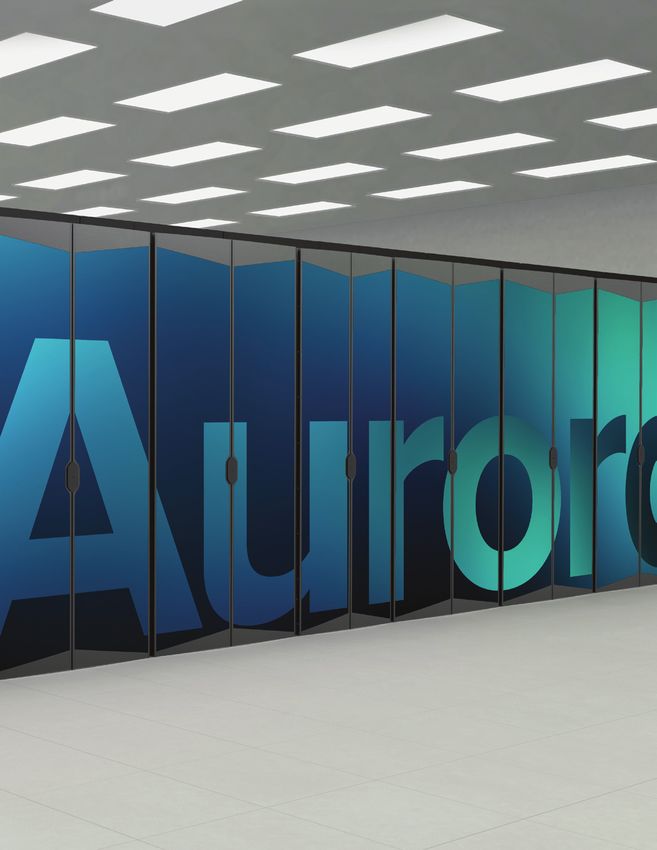
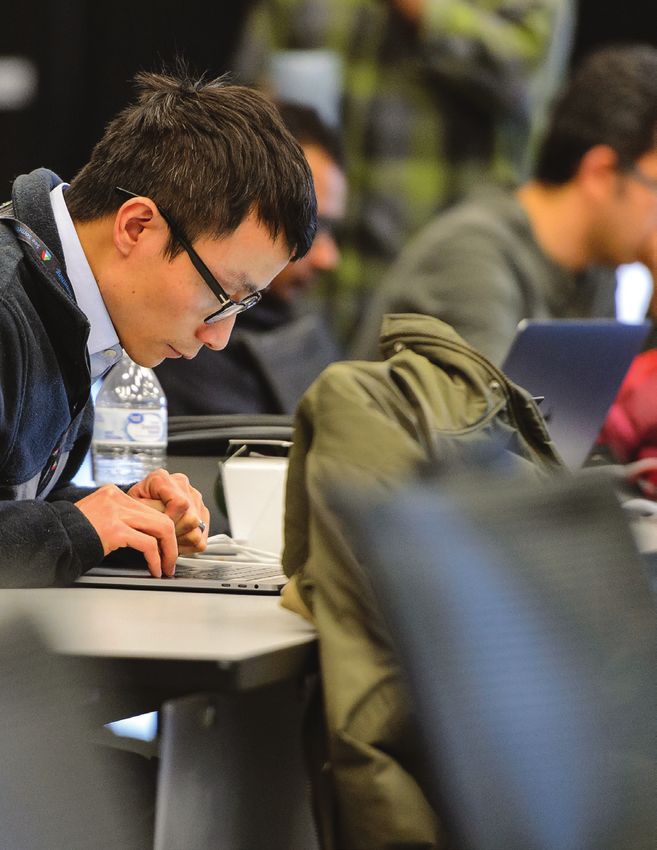
The Argonne-Intel Center of Excellence (COE)
has held multiple workshops to provide details
and instruction on various aspects of the Aurora
hardware and software environment.                 ALCF 2020 SCIENCE REPORT   21
ADVANCING SCIE NCE WITH HPC

encompasses applications, system software, hardware             models (OpenMP, SYCL, Kokkos, Raja), language standards
technologies, architectures, and workforce development.         (C++), and compilers (Clang/LLVM) that are critical to
Argonne—one of the six ECP core labs—has a strong               developing efficient and portable exascale applications.
presence on the ECP leadership team and has several
                                                                Furthermore, the ALCF continues to work closely with Intel
researchers engaged in ECP projects and working groups in
                                                                and HPE on the testing and development of various
the areas of application development, software development,
                                                                components to ensure they can be leveraged effectively
and hardware technology.
                                                                by the scientific computing community. By analyzing
ALCF staff members are working closely with more than 20        the performance of key benchmarks and applications on
ECP application and software projects to prepare a diverse      early hardware, ALCF researchers are developing
set of scientific applications to run on Aurora. Efforts have   a broad understanding of the system’s architecture and
focused on porting various codes, mini-apps, frameworks,        capabilities. This effort helps to identify best practices
and libraries to Intel Gen9, DG1, and XeHP GPU hardware         for optimizing codes, and, ultimately, a roadmap for future
to evaluate and optimize performance. ALCF researchers are      users to adapt and tune their software for the new system.
also developing algorithms, benchmarking tools, and             In addition, the team is providing feedback to Intel about
use cases to help ensure applications can leverage the full     the alpha/beta compilers and software stack for Aurora,
potential of Aurora.                                            including the gold release of its oneAPI toolkits.
Another area of collaboration involves deploying and            Early Science
integrating ECP software, vendor software, and                  The Aurora Early Science Program (ESP), an ALCF initiative
facility-based software environments to ensure exascale         dedicated to preparing key applications for the scale
software stacks meet application requirements while             and architecture of the exascale machine, is another critical
allowing for optimal facility operations. Activities include    piece of the puzzle. Through open calls for proposals, the
developing a common Continuous Integration strategy             ESP awarded pre-production computing time and resources
to drive automation of recurring building and testing across    to a diverse set of projects that are employing emerging
DOE’s exascale site environments; using the Spack               data science and machine learning approaches alongside
package manager as a tool for build automation and final        traditional modeling and simulation-based research.
deployment of software; managing the ECP allocation             The research teams also field-test compilers and other
program that awards time at DOE computing facilities for        software, helping to pave the way for other production
the testing and development of new features and                 applications to run on the system.
functionality at scale; exploring and potentially enhancing
                                                                ESP research teams are investigating a wide range
the installation, upgrade, and monitoring capabilities
                                                                of computational research areas that will help prepare
of HPE’s Shasta software stack; and enabling container
                                                                Aurora for primetime. This includes mapping and
support and tools on Aurora and other exascale systems.
                                                                optimizing complex workflows; exploring new machine
Working in concert with the ECP, Argonne researchers are        learning methodologies; stress testing I/O hardware
also contributing to the advancement of programming             and other exascale technologies; and enabling connections

22       A LC F. A N L . G OV
AURORA/EX ASCALE
TRAINING EVENTS

Aurora Hackathons                                         Aurora Workshops
06/22–06/23                                               02/25–02/27
High-Fidelity Simulation of Fusion Reactor Boundary       Aurora COE Workshop 2: Aurora Software Development
Plasmas                                                   Kit and Hardware Overview
08/17–08/18                                               10/21–10/22
Exascale Computational Catalysis                          Aurora COE Workshop 3: Intel Hardware Update and
                                                          Pre-Aurora GPU Development
09/17–09/18
Metascalable Layered Materials Genome
09/25 AND 09/28
Many-Body Perturbation Theory Meets Machine Learning
to Discover Singlet Fission Materials
                                                          Additional Events
12/07                                                     07/15–07/17
Simulating and Learning in the ATLAS Detector at the      ALCF-ECP CMake Workshop
Exascale
                                                          09/01–09/02
12/08–12/10                                               2020 Performance, Portability, and Productivity at HPC
Aurora COE Dungeon Session 1: Intensive Development       Forum
on Pre-Aurora GPUs (Four Simulation Applications)
                                                          10/13–10/16
                                                          Intel eXtreme Performance Users Group (IXPUG) Annual
                                                          Meeting

Aurora Webinars
03/25
DAOS: Next-Generation Data Management for Exascale

06/02
Preparing Applications for Aurora Using the Intel DPC++
Compatibility Tool
06/24
OpenMP Offload Capabilities in the oneAPI HPC Toolkit
09/30
Overview of the New Intel oneAPI Math Kernel Library

                                                                              ALCF 202
                                                                                     1 90 SSCCI IEENNCCEE RREEPPOORRTT   23
ADVANCI NG SCI E NCE WITH H PC
Scheduled to arrive at Argonne in 2022, Aurora
will provide researchers with a powerful tool for
2advancing
4 A LC F. A
scientific N L . G Oand
discovery V innovation.to large-scale experimental data sources, such as CERN’s In October, the COE held a virtual Aurora workshop for ESP
Large Hadron Collider, for analysis and guidance. and ECP teams, providing another opportunity for researchers
to receive updates on the latest Aurora hardware and
With access to the early Aurora software development kit
software developments, connect with ALCF and Intel staff
(a frequently updated version of the publicly available
for assistance in developing and testing their codes,
oneAPI toolkit) and Intel Gen9, DG1, and XeHP GPUs through
and share their experiences working with various exascale
Argonne’s Joint Laboratory for System Evaluation,
tools and programming models.
researchers participating in the ESP are able to test code
performance and functionality using the programming models The COE also continued to host its series of intensive,
that will be supported on Aurora. hands-on sessions called “hackathons.” These multi-day
collaborative events, held virtually this year due to the
User Training
COVID-19 pandemic, pair individual ESP teams with Argonne
From workshops to webinars, the ALCF has hosted hundreds
and Intel researchers to help advance their application
of researchers for a multitude of training opportunities
development efforts using the Aurora software
designed to help them prepare for Aurora.
development kit.
The facility launched its new Aurora Early Adopter webinar
As part of a broader effort to groom a new generation
series late last year to introduce attendees to programming
of supercomputer users, ALCF staff members organize and
models, exascale technologies, and other tools available
manage the annual Argonne Training Program on
for testing and development work. Open to the public, the
Extreme-Scale Computing (ATPESC). Supported by the ECP,
quarterly webinars have covered topics like Aurora’s
this intensive, two-week program teaches attendees the
DAOS I/O platform, oneAPI’s OpenMP offload capabilities, and
key skills, approaches, and tools needed to design, implement,
the new oneAPI Math Kernel Library (oneMKL).
and execute computational science and engineering
The Argonne-Intel Center of Excellence (COE) hosted two applications on current supercomputers and the exascale
Aurora workshops this year aimed at ESP and ECP research systems of the future. ATPESC has hosted more than 500
teams. In February, around 100 attendees visited the participants since it began in 2013.
ALCF for a three-day workshop focused on applications and
software development for Aurora. The event included
substantial hands-on time for attendees to work with ALCF
and Intel experts on developing, testing, and profiling their
codes, as well as presentations on the Aurora software
development kit, the system’s memory model, and available
machine learning tools and frameworks. Attendees also
had the opportunity to share programming progress, best
practices, and lessons learned.
ALCF 2020 SCIENCE REPORT 25You can also read


