Prevalence Study: Young Adult Experiences of Substance-Related Harm - Scottish Families Affected by Alcohol & Drugs
←
→
Page content transcription
If your browser does not render page correctly, please read the page content below
Prevalence Study: Young Adult
Experiences of Substance-Related Harm
1
Prepared by:
John Holleran & Cara Durnie
Published date:
August 2015
Action plan review date:
August 2016
Action plan reviewer(s):
John Holleran & Cara Durnie
Dissemination arrangements:
NHS Ayrshire and Arran Addiction Services
Ayrshire College
Scottish Families Affected by Alcohol & Drugs
Relevant partner agencies
1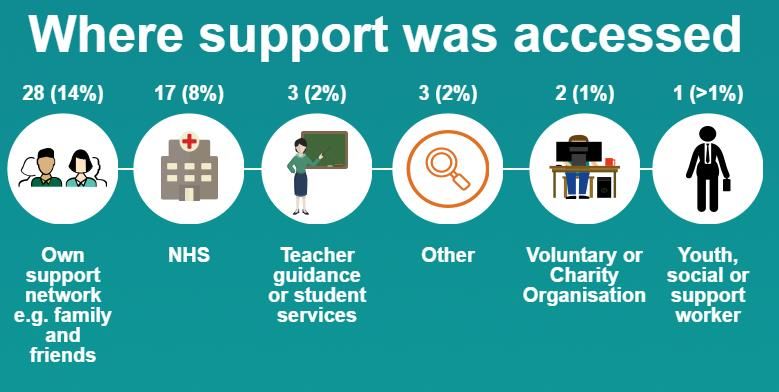
OVERVIEW

Scottish Families Affected by Alcohol & Drugs

Scottish Families affected by Alcohol and Drugs is one of the national organisations
commissioned by the Scottish Government to deliver its drug and alcohol strategies,
‘The Road to Recovery’1 and ‘Changing Scotland’s Relationship with Alcohol’2.
In both strategies the importance of families in the recovery process is recognised.
The ‘Road to Recovery’3 states, “families play an important role in the treatment,
care and support for those using drugs,” and that “families can contribute to the
assessment process and provide support, from attending appointments to helping
loved ones turn their lives around”. It also recognises that “the level of intensive
commitment can come at a heavy price for the family” and that “ongoing support for
families is vital”.

We use a broad, inclusive and sensitive definition of ‘family’ – Anyone who may be
affected by or concerned about someone else’s substance use or Concerned
Significant Other (CSO).

Ayrshire College & NHS Ayrshire and Arran

Ayrshire College aims to inspire learners to achieve their full potential by playing a
lead role in the development of skills, economy and community life. In support of
Ayrshire College vision of Raising Aspirations, Inspiring Achievement, and
Increasing Opportunities4, the college prides itself on providing sector leading
learning opportunities and support services which meet the needs of our students
and the wider community including the most vulnerable groups.

The college considers student wellbeing as a key aspect of successful outcomes and
Student Services offer a holistic approach to support, enabling students to make
good life choices which enhance their wellbeing. Partnership working allows for
further enhancement of this support and education for students, including the joint
post between Ayrshire College and NHS Ayrshire and Arran’s Addiction Services.
This role allows for the development of education on topics such as alcohol, drugs
and mental health, as well as the provision of specialised support to students, for
enhancing the range of support.

Information gathered from the survey will be used to inform future health and
wellbeing initiatives, partnership working with external agencies, education and
support provisions available within Ayrshire College as well as contributing to NHS
Ayrshire and Arran’s vision of working together to achieve the healthiest life possible
for everyone in Ayrshire and Arran.

1
  Scottish Government (2008) The Road to Recovery: A New Approach to Tackling Scotland's Drug Problem.
2
  Scottish Government (2009) Changing Scotland’s Relationship with Alcohol: A Framework for Action.
3
  Scottish Government (2008) The Road to Recovery: A New Approach to Tackling Scotland's Drug Problem.
4
  Ayrshire College (2014) Ayrshire College Strategic Plan 2014-17.

2
INTRODUCTION
In recent years there has been a definitive shift in recognising the need for adopting
family inclusive practices. Scottish Families Affected by Alcohol and Drugs (Scottish
Families) mission is to support families impacted by alcohol and drug use across
Scotland, raise awareness of their needs and ensure that these needs are widely
recognised and addressed.
Through the work carried out by Scottish Families we know that the evidence-base is
still relatively limited in Scotland in relation to the experiences of young adults (those
of post-compulsory school age,16-25) when it comes to the impact of another’s
drinking and/or drug use. Many young people, living with someone who uses alcohol
to problematic levels, take on additional caring responsibilities within the family unit
which can often be detrimental to their life opportunities and choices for the future.
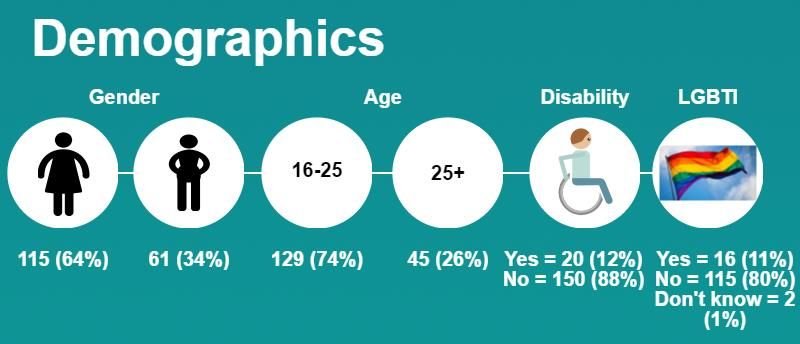
This is often under-reported or undisclosed to those outside the home.
Anecdotally, we know that young people (16-25) may not always recognise that they
themselves have been affected by another’s alcohol misuse therefore this study will
seek to identify the scope and reach of harms experienced, if any.
THE EVIDENCE
At a conservative estimate approximately 134,000 adults in Scotland are significantly
affected by substance use in their family. Recent evidence published by Alcohol
Focus Scotland suggests that 1 in 3 people know a heavy drinker with 1 in 2 being
negatively affected5. It has been widely acknowledged that families/concerned
significant others (CSOs) can be impacted in a number of ways as a direct result of a
significant other’s alcohol use. These can include:
Experiencing anxiety/depression;
Guilt or feelings of responsibility for another’s behaviour;
Shame and isolation;
Breakdown in relationships with support networks; and
Financial difficulties.
When accessing appropriate help and support in their own right, family
members/CSOs participating in evidence-based interventions are instrumental in
their loved one’s recovery. Families/CSOs have a crucial role to play in the recovery
journey which is recognised in existing alcohol and drug frameworks and more
recently in the Quality Principles: Standard Expectations of Care and Support in
Drug and Alcohol Services6.
5
Alcohol Focus Scotland (2013). Unrecognised and under-reported: the impact of alcohol on people other than
the drinker in Scotland.
6
Scottish Government (2014) The Quality Principles - Standard Expectations of Care and Support in Drug and
Alcohol Services.
3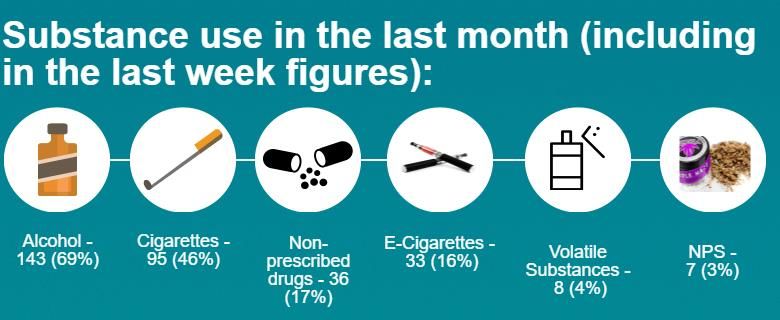
AIMS
To provide an insight into students’ experiences of the harms associated with a
significant other’s alcohol & drug use.
Engage with the student population to examine the impact of significant other’s
substance use.
Develop our understanding of students’ own substance use.
OBJECTIVES
Identify the number of students affected by a significant other’s substance use.
Recognise the extent, frequency and context of harms experienced.
Determine the number of young people (16-25) accessing support,in their own right,
to cope with another’s substance use.
Explore the impact of another’s substance use on a young person’s opportunities.
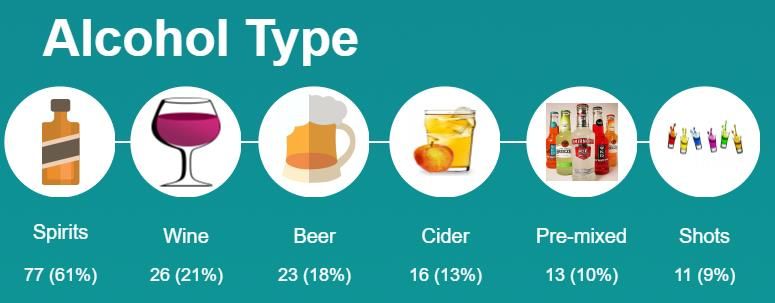
Recognise the variety, frequency and range of substances used by students across
Ayrshire College networks.
METHODOLOGY
The scope for student engagement provided a potential reach of up to 14,000
students across 8 college campuses as such a survey format was identified as the
most appropriate method for the prevalence study in keeping with the following
constraints:
Resources and staff available to support the study;
Timescales available to gather evidence; and
Method available to engage with the student population.
The survey was available electronically via Survey Monkey with paper-based copies
available to prospectively engage with a representative sample of the whole student
population. Confidentiality was crucial due to concerns expressed in eliciting open
and honest responses, in keeping with the potentially sensitive nature of the survey
contents. Sample demographic monitoring information provided was optional in
order to respect participants’ right to anonymity.
The survey was promoted across campuses using Alcohol and Drug Officer’s links
throughout the college network including the Student Association, Learning
Resource Centre staff and Student Services. Posters were designed with a
participation incentive offered in the form of Amazon vouchers. A day of action was
also hosted at one of the busiest campuses in the final week of the survey with paper
copies available to all participants on the day. This was supported by Alcohol and
Drug Officer (Ayrshire college/NHS Ayrshire & Arran) and Alcohol Liaison Officer
(Scottish Families)
4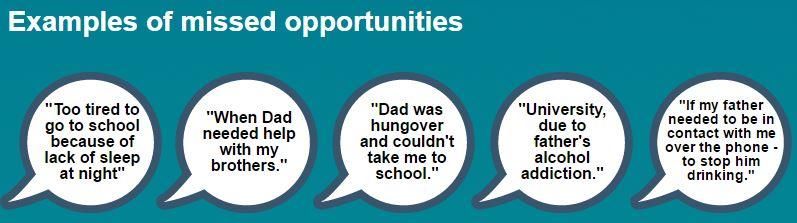
IMPACT

The whole-population approach to this study is a testament to Ayrshire College’s
commitment to ensuring that everyone recognises the need for wider discussion and
action to reduce substance-related harm and demonstrates the progressive attitudes
towards challenging stigma, involving families in the recovery process and reducing
harms in a whole-systems approach to recovery.

Having engaged with over 200 people across Ayrshire College networks to conduct
this study (inclusive of staff and students), there has already been an initial impact of
increased awareness of the challenges associated with substance misuse for those
who have participated or promoted this survey. This has already brought the issues
raised into scope for the first time for many who had never considered these
previously. For many however this study will reinforce existing awareness of how
problematic substance use can impact children, families and young people –
perhaps giving hope that progress is being made to recognise, tackle and reduce the
negative effects.

RESULTS

5
Harms Experienced as a result of another’s substance use

Have you ever experienced any of the following due to someone else’s alcohol or
drug use?

6
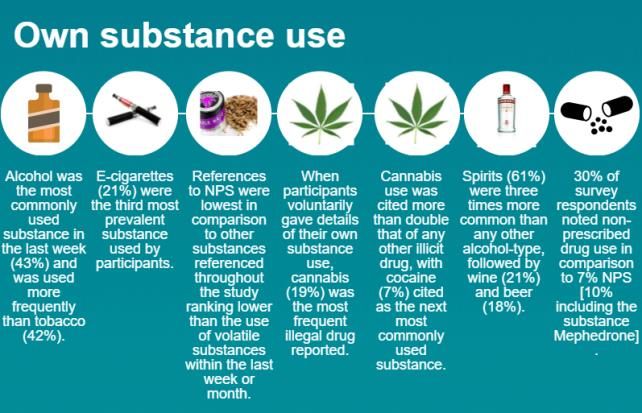
OWN SUBSTANCE USE

                                                          Student Substance Use
    250

                                                          192
    200                              183                                                                                     183
                                                                          159
    150                                                                                                           131
                                                                                      114
    100                                                                                       85
                                                                                                           61
                                                                    44
     50
                              15                                                                                                        19
                                                 9
        0
                                   NPS            Volatile        E-Cigarettes         Cigarettes        Non-prescribed       Alcohol
                                                Substances                                                   drugs

                                                          At some point in the last 3 years         Never

                                                Last Occasion of Substance Use
                                         100
                                          90
     Number of Students

                                          80
                                          70
                                          60
                                          50
                                          40
                                          30
                                          20
                                          10
                                           0
                                                                   Non-
                                                                                                  E-              Volatile
                                                 Alcohol        prescribed    Cigarettes                                           NPS
                                                                                              Cigarettes        Substances
                                                                  drugs
                          In the last 3 years        8              12            9                 1               0               4
                          In the last year           32             13            10                10              1               4
                          In the last month          55             19            9                 12              4               4
                          In the last week           88             17            86                21              4               3

7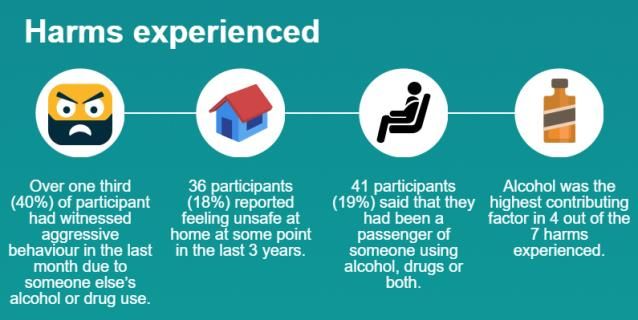
TYPES AND BRANDS OF SUBSTANCES USED

Alcohol

8
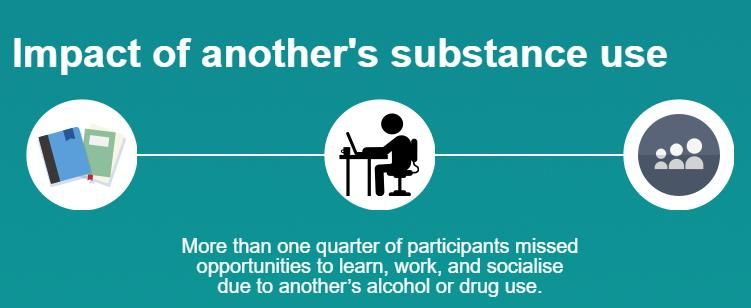
NON-PRESCRIBED /NEW PSYCHOACTIVE SUBSTANCES (NPS)

9
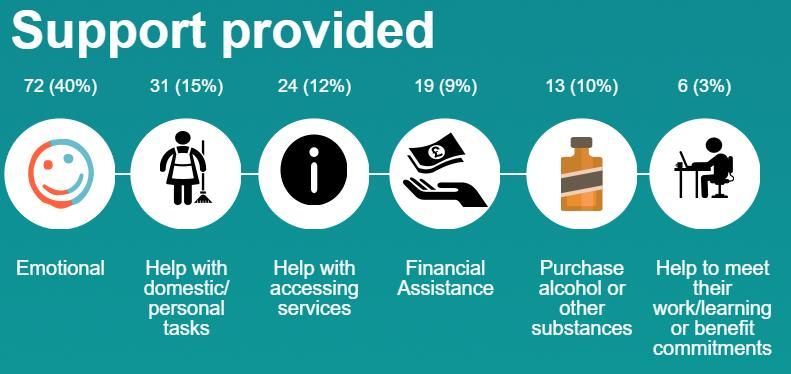
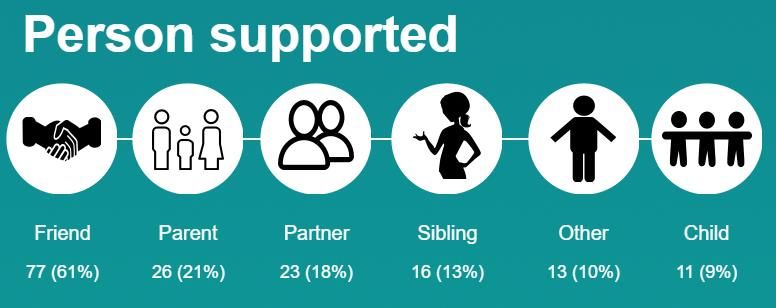
SUPPORTING OTHERS

10
YOUNG ADULTS ACCESSING SUPPORT TO COPE

11
OVERALL FINDINGS

12
13
MOVING FORWARD
College Actions
Development of a Cannabis Awareness Week for students which promotes support
services and challenges the normalisation of this drug, explore attitudes and educate
on short and long-term effects.
Promotion of family support services such as Scottish Families national helpline for
those affected by another’s alcohol and substance use.
Development of e-learning modules for college staff which include support services
information and the effects of alcohol and drug use on significant others as well as
individuals.
Focus groups to be considered by the PLO in order to establish public safety aspects
of others’ substance use. This was identified as a major issue in this report in relation
to young people.
Use aspects of this report’s findings to inform future Respect Week campaign
planning e.g. drink driving.
SFAD and Ayrshire College Student Association to consider the development of peer
support groups for those affected by significant others substance use as well as the
promotion of diversionary activities available for young people throughout Ayrshire.
ACROSS AYRSHIRE
The East7, North8 and South9 Ayrshire Alcohol and Drug Partnership’s (ADPs)
identify common key priorities outlined in their strategy documents. These include:
A whole population approach to education and prevention;
Improving community safety: enforcement, availability and safer
environments;
Promoting recovery: Recovery Orientated System of Care;
Children and Families affected by substance use; and
Workforce development.
7
East Ayrshire Alcohol and Drug Partnership (2011) Commissioning Strategy 2011-2015.
8
North Ayrshire Alcohol and Drug Partnership (2011) A Strategy for the Future 2011 – 2015.
9
South Ayrshire Alcohol and Drug Partnership (2015) Strategic Commissioning & Delivery Plan..
14RECOMENDATIONS
1. The prevalence of substance-related harm suggests that a whole population
approach to harm reduction should be considered for future areas of work.
2. Promote a wider strengths-based approach drawing on social capital, lived
experience and local knowledge and assets to continue to reduce alcohol-
related harm in keeping with regional ADP priorities.
3. Significant trends have emerged suggesting public safety is a significant
concern amongst the student population. Joint action between student
campus/community police could explore crime rate vs public perception as
well as public safety initiatives and keeping safe initiatives.
4. Health-promotion in relation to substance use should highlight the wider
benefits of physical, mental health & well-being. Diversionary activities should
be encouraged working with partners/stakeholders to negotiate and secure
subsidised rates/membership for activities. Incentivise a wider range of
outdoors activities/social opportunities that do not involve substance use.
5. Emerging evidence should be used to inform suitable training opportunities for
college staff, young people and the wider workforce to raise awareness of
substance-related harm demonstrating the prevalence and limiting impact his
may have on life opportunities.
6. Scottish Families welcomes the opportunity to replicate this study to build
understanding of student experiences of substance-related harm and support
needs to develop a collective response. Variations of this study have already
been extended to Argyll & Bute, Forth Valley, and Highlands and across
Young Adult Carers networks nationally with plans to publish full a combined
report later in 2016.
Copies of the full study including survey data can be accessed at:
http://www.sfad.org.uk/policy/reports
1516
You can also read


