Prevention of Drowning - Maine AAP
←
→
Page content transcription
If your browser does not render page correctly, please read the page content below
TECHNICAL REPORT

                          Prevention of Drowning
                           Sarah A. Denny, MD, FAAP,a Linda Quan, MD, FAAP,b Julie Gilchrist, MD, FAAP,c Tracy McCallin, MD, FAAP,d,e
                           Rohit Shenoi, MD, FAAP,f Shabana Yusuf, MD, Med, FAAP,f Jeffrey Weiss, MD, FAAP,g,h Benjamin Hoffman, MD, FAAP,i
                           COUNCIL ON INJURY, VIOLENCE, AND POISON PREVENTION

Drowning is a leading cause of injury-related death in children. In 2018,                   abstract
almost 900 US children younger than 20 years died of drowning. A                            a
                                                                                             Nationwide Children’s Hospital and College of Medicine, The Ohio State
number of strategies are available to prevent these tragedies. As                           University, Columbus, Ohio; bPediatric Emergency Medicine, Seattle
                                                                                            Children's Hospital, University of Washington School of Medicine,
educators and advocates, pediatricians can play an important role in                        Seattle, Washington; cUS Public Health Service (Retired); dChildren’s
prevention of drowning.                                                                     Hospital of San Antonio, San Antonio, Texas; eBaylor College of
                                                                                            Medicine, Houston, Texas; fSection of Emergency Medicine, Department
                                                                                            of Pediatrics, Baylor College of Medicine, Houston, Texas; gPhoenix
                                                                                            Children's Hospital Medicine, Phoenix Children's Hospital, Phoenix,
                                                                                            Arizona; hUniversity of Arizona College of Medicine-Phoenix, Phoenix,
INTRODUCTION                                                                                Arizona; and iDoernbecher Children’s Hospital and Oregon Health and
                                                                                            Science University, Portland, Oregon
Background
                                                                                            This document is copyrighted and is property of the American
Drowning is the leading cause of unintentional injury–related death in                      Academy of Pediatrics and its Board of Directors. All authors have
                                                                                            filed conflict of interest statements with the American Academy of
US children 1 through 4 years of age and, as of 2018, has surpassed                         Pediatrics. Any conflicts have been resolved through a process
birth defects as the most common cause of death among this age group.                       approved by the Board of Directors. The American Academy of
                                                                                            Pediatrics has neither solicited nor accepted any commercial
Drowning is the third leading cause of unintentional injury–related                         involvement in the development of the content of this publication.
death among US children and adolescents 5 through 19 years of age.1                         Technical reports from the American Academy of Pediatrics
In 2018, almost 900 US children and youth under 20 years died of                            benefit from expertise and resources of liaisons and internal
                                                                                            (AAP) and external reviewers. However, technical reports from the
drowning and more than 7200 were seen at a hospital emergency                               American Academy of Pediatrics may not reflect the views of the
department (ED) for a drowning event, with 35% of those children                            liaisons or the organizations or government agencies that they
                                                                                            represent.
either hospitalized or transferred for further care.1 Rates of drowning
                                                                                            The guidance in this report does not indicate an exclusive course
death vary with age, sex, and race; those at greatest risk are toddlers                     of treatment or serve as a standard of medical care. Variations,
and male adolescents. Underlying medical conditions, such as seizures                       taking into account individual circumstances, may be appropriate.
and autism, also increase risk. Fortunately, childhood unintentional                        All technical reports from the American Academy of Pediatrics
drowning fatality rates have decreased steadily from 2.68 per 100 000                       automatically expire 5 years after publication unless reaffirmed,
                                                                                            revised, or retired at or before that time.
in 1985 to 1.09 per 100 000 in 2018. Most victims of nonfatal drowning
                                                                                            DOI: https://doi.org/10.1542/peds.2021-052227
do well, but severe long-term neurologic deficits are seen with
                                                                                            Address correspondence to Sarah Denny, MD, FAAP. E-mail:
extended submersion times, prolonged resuscitation efforts, and lack of                     sarah.denny@nationwidechildrens.org
early bystander-initiated cardiopulmonary resuscitation (CPR).2–4                           PEDIATRICS (ISSN Numbers: Print, 0031-4005; Online, 1098-4275).
                                                                                            Copyright © 2021 by the American Academy of Pediatrics
The American Academy of Pediatrics (AAP) has revised this technical
                                                                                            FINANCIAL DISCLOSURE: The authors have indicated they have no
report because of new information and research regarding (1)                                financial relationships relevant to this article to disclose.
populations at increased risk; (2) racial and sociodemographic
disparities in drowning rates; (3) water competency (water safety
knowledge and attitudes, basic swim skills, and response to a swimmer                           To cite: Denny S A, Quan L, Gilchrist J, et al; AAP Council on
                                                                                                Injury, Violence, and Poison Prevention. Prevention of
in trouble)5,6; (4) the need for close, constant, attentive, and capable                        Drowning. Pediatrics. 2021;148(2):e2021052227
adult supervision when children are in and around water as well as life

                                   Downloaded from www.aappublications.org/news by guest on July 19, 2021
PEDIATRICS Volume 148, number 2, August 2021:e2021052227                               FROM THE AMERICAN                    ACADEMY OF PEDIATRICS
jacket use among children and                           group (2.26 per 100 000                         individuals have the lowest
adults; (5) the importance of                           population), with children aged 12              drowning risk of all races and
physical barriers to prevent access                     to 36 months being at highest risk              ethnicities in swimming pools but
to water when children are not                          (3.38 per 100 000). There is a                  the highest in natural water settings
expected to be around water; and                        second peak incidence in                        (1.22 per 100 000 among AI and AN
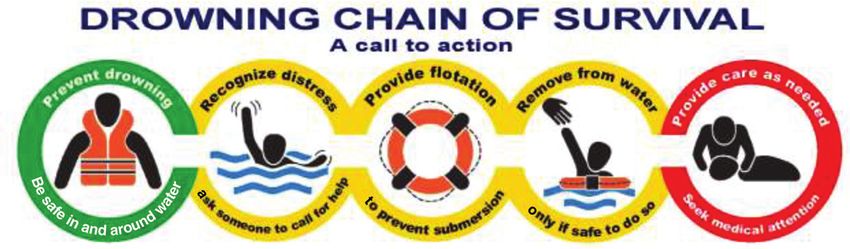
(6) the Drowning Chain of Survival                      adolescence (1.90 per 100 000                   versus 0.63 per 100 000 among
and importance of bystander CPR                         among boys aged 15 to 19 years),                Black and 0.42 per 100 000 among
(Table 1).                                              attributable largely to a high                  white individuals). AI and AN
                                                        number of male drowning deaths.                 individuals could not be included in
In 2002, the World Congress on                          Approximately 75% of childhood                  additional analyses of race and
Drowning and the World Health                           drowning victims are boys,1 and,                ethnicity (eg, white, Black, Hispanic)
Organization revised the definition                     after the first year of life (during            by single year of age because of
of drowning to be “the process of                       which risks are often similar), boys            small numbers. When considering
experiencing respiratory impairment                     are at greater risk of drowning than            race and ethnicity as a risk factor,
from submersion/immersion in                            are girls at each age. Among                    age dramatically influences
liquid.” Drowning outcomes are                          children and preteens, drowning                 drowning disparities. The highest
classified as death, no morbidity, or                   death is roughly twice as common in             rates were among children aged 1
morbidity (further divided into                         boys as in girls, but among                     year, with rates for white children
moderately disabled, severely                           adolescents, the rate is almost 10              (5.22 per 100 000) higher than
disabled, vegetative state/coma, and                    times higher among boys (Table 2).1             those for Hispanic (4.14 per
brain death). Terms such as wet,                        The higher drowning rate for boys               100 000) and Black (2.98 per
dry, near, secondary, active, passive,                  has been explained by greater                   100 000) children. Between the ages
and silent drowning should not be                       exposure to aquatic environments,               of 1 and 5 years, drowning rates
used. The 2002 revised definition                       overestimation of swimming ability,             decreased significantly for each
and classification is more consistent                   higher risk taking, and greater                 racial and ethnic group but
with other medical conditions and                       alcohol use.9,10                                decreased less among Black
injuries and should help in                                                                             children. However, the drowning
drowning surveillance and collection                    Among children aged 0 to 19 years               rates for Black children were
of more reliable and comprehensive                      overall, drowning rates from 2014               significantly higher than those for
epidemiological information.7                           to 2018 are highest among Black
                                                                                                        white and Hispanic children at every
                                                        (1.79 per 100 000) and American
Sociodemographic Factors                                                                                age from 5 years to 18 years, and
                                                        Indian (AI) and Alaska native (AN)
                                                                                                        this difference persisted when
Rates of drowning vary by                               (1.49 per 100 000) individuals;
                                                                                                        examining drowning in swimming
sociodemographic factors, such as                       drowning rates are lower among
                                                                                                        pools and natural water settings. An
age, sex, race and ethnicity, and the                   white (1.06 per 100 000), Asian
                                                                                                        analysis that was focused
presence of neurodevelopmental                          American and Pacific Islander (0.85
                                                                                                        specifically on swimming pool
disorders such as epilepsy, autism                      per 100 000), and Hispanic (0.82 per
                                                                                                        drowning deaths in the 5- to 24-
spectrum disorder (ASD), and                            100 000) individuals.1 One analysis
                                                                                                        year age group demonstrated that
intellectual disability. Drowning                       of 11 years of fatal drowning data
                                                                                                        Black males had higher drowning
rates are reported on the basis of                      among people younger than 30
                                                                                                        rates than either white or Hispanic
the population under examination,                       years reveals that AI and AN
                                                                                                        males, even when adjustments were
not on the basis of the group’s                         individuals have the highest rates of
                                                                                                        made for income. Although the
exposure; exposure-based rates                          fatal drowning (2.57 per 100 000),
                                                                                                        majority of white children drowned
might increase disparities among                        higher than both Black (1.90 per
                                                                                                        in residential pools, Black children
groups.8 The highest rate of                            100 000) and white (1.32 per
                                                                                                        were more likely to die in a public
drowning is in the 0- to 4-year age                     100 000) individuals. AI and AN
                                                                                                        pool, often at a motel or hotel.11 In
                                                                                                        swimming pools, Black children
TABLE 1 Key Evidence-Based Strategies
                                                                                                        aged 5 to 19 years were 5.5 times
    Assess all children for drowning risk on the basis of risk and age, and prioritize evidence-based
       strategies:
                                                                                                        more likely to drown than white
     Barriers                                                                                          children of the same age.12 With no
     Supervision                                                                                       physiologic differences to explain
     Swim lessons                                                                                      the difference in drowning risk, race
     Life jackets
                                                                                                        and ethnicity are likely a proxy for
     CPR
                                                                                                        social and cultural differences

                                         Downloaded from www.aappublications.org/news by guest on July 19, 2021
2                                                                                                           FROM THE AMERICAN ACADEMY OF PEDIATRICS
TABLE 2 Unintentional Drowning Deaths, United States, 2014–2018 The role of socioeconomic status
Average Annual (Crude Rate No. Deaths Per 100 000) and income on drowning rates,
independent of race, is not well
Age Group, y Boys Girls Totala
known. Worldwide, drowning ratesoccurring between noon and 9 PM.27 occurred in bathtubs, and 8% were (rivers, creeks, lakes, ponds, canals,
In another report, approximately unspecified.32 and quarries).29 In children younger
one-half of drownings occurred than 5 years, the largest numbers of
between 4 PM and 6 PM, coinciding Most infant drowning deaths occur natural water drownings occur in
with the busiest swim times as well in bathtubs (62%–71%) and large ponds, whereas older children more
as distractions secondary to meal buckets (16%).25,29 Almost all commonly drown in lakes.39
preparation.28 parents report believing a child
should be at least 6 years old before Although children aged 5 to 14
For the period 2014–2018, the 3 US being allowed to bathe alone.33 years are slightly more likely to
states with the highest number of However, approximately 15% to drown in a natural body of water
drowning deaths in the 0- to 19- 30% of caregivers have reported than in a swimming pool, a high
year age group were California (419 leaving their children younger than proportion (69%) of adolescents
2 years unsupervised in the bath for aged 15 to 19 years drowned in
per 100 000), Florida (489 per
a period ranging from 1 minute to natural bodies of water.29 More than
100 000), and Texas (516 per
slightly over 5 minutes.34,35 In fact, one-half of natural water drownings
100 000). For the same age group,
in this study, 33% of parents occur in children younger than 14
the states with the highest rates of
reported leaving children younger years, and a greater proportion of
drowning deaths per 100 000
than 2 years for a little over 1 these occur in urban settings with
population aged 0 to 19 years were
minute and 24% for more than 2 populations of more than 1
Louisiana (2.3), Florida (2.1), and minutes but less than 5 minutes.34 million.39
Mississippi (2.0). The lowest The caregivers were distracted by a
drowning death rates were reported phone, getting diapers or clothes for In-ground Pools
in some of the New England and the child, or completing household As opposed to open bodies of water,
mid-Atlantic states.25 chores.34 Of note, first-time parents swimming pools have fewer
were less likely to leave children in drowning hazards, such as unknown
Setting
the bathtub when compared with depths, undefined areas, and
Age is an important determinant of parents with an older child.36 The presence of currents and waves.12
drowning location. Most infants association of unsupervised bathtub However, swimming pools can pose
drown in bathtubs and buckets, drowning deaths with the use of a serious risk to toddlers and young
whereas the majority of preschool- bathtub seats and rings was children and older children who do
aged children drown in swimming recognized more than 2 decades not know how to swim. There are
pools. Older children and ago.37 The bath seat and ring are an estimated 6700 pool- or spa-
adolescents are more likely to designed to position the infant in a related, hospital ED-treated, nonfatal
drown in natural bodies of water. In sitting position with 3 to 4 legs and drowning injuries and 379 pool- or
a large national study of 1420 suction cups at their base. Three spa-related fatal drownings each
drowning deaths in children hazard scenarios have been year involving US children younger
younger than 20 years, 47% of described with these devices: (1) than 15 years.40 Of these, 75%
drownings in all age groups the seat tipping over from suction involve children younger than 5
occurred in fresh water, 32% in cup failure, (2) the child becoming years. The recurring drowning
artificial pools, 9% in the home entrapped in leg openings that are scenario in pools and spas for young
(bathtubs, buckets), and 4% in salt too big, and (3) the child climbing children includes unexpected,
out of the seat.37 Additionally, infant unsupervised access to the water.
water.29 In a study from Washington
tubs pose another risk contributing Only 17% had been last seen in or
state, natural bodies of water were
to bathtub drownings. Between near the pool or spa before the
the setting in 35% of drownings in
January 2004 and December 2015, a incident and 10% had compromised
the 0- to 4-year age group, 69% of
total of 247 incidents were reported or circumvented a pool or spa
the drownings in the 5- to 14-year
to the Consumer Product Safety barrier.40
age group, and 95% of the
Commission (CPSC) involving infant
drownings of adolescents.30 Similar tubs, 31 fatal and 216 nonfatal.38 Pediatric swimming pool drownings
findings were found in another occur in single-family and
study conducted in Massachusetts.31 In a national study, 56% of multifamily residences or public
In contrast, for nonfatal drowning drownings in children aged 0 to 4 pools. Pediatric swimming pool
involving children and adults, 57% years occurred in swimming pools, drownings in single-family and
occurred in pools, 25% occurred in but a sizable portion (26%) multifamily residences are best
natural bodies of water, 9% occurred in fresh bodies of water predicted by the number of pools by
Downloaded from www.aappublications.org/news by guest on July 19, 2021
4 FROM THE AMERICAN ACADEMY OF PEDIATRICShousing type and the number of surrounded by a barrier to prevent Drain Entrapment
children aged 0 to 17 years by access when the pool is not in use.42 Entrapment and hair entanglement
housing type.41 The risk of a The American Society for Testing remain causes of injury and
submersion is 2.7 times higher for a and Materials (ASTM) has published drowning in the pediatric
child at a multifamily than a single- a standard (F 2666-16) for population. The CPSC reported 11
family residence and 28 times more aboveground pools for residential victims of circulation entrapment
likely in a swimming pool at a use that addresses structural from 2014 to 2018 (4 pool and 7
multifamily property than a pool at integrity, sanitation, electrical safety, spa), including 2 fatalities, all in
a single-family residence.41 and safety message labeling.44
children aged 0 to 14 years, with the
Fixed and Portable Aboveground peak in the 5- to 9-year age group.48
Unfortunately, many parents do not
Pools A circulation entrapment is defined
consider fencing for an inflatable or
as an entrapment involving the
Aboveground pools can be fixed or portable pool, and such pools often
water circulation system of the
portable. Aboveground pools can fall outside of local building codes
product. Hair entanglement typically
vary in size and height from small that require pool fencing. Because
involves girls with long hair who are
inflatable pools to larger versions they contain such large amounts of
water, these pools are often left underwater near a suction outlet.
that can hold thousands of gallons of
The water flow into the drain
water.42 A portable pool is any filled for weeks at a time, presenting
a continuous danger. The soft sides sweeps the hair into and around the
movable structure intended for
of some models allow children to drain cover, where it becomes
swimming or other water
lean over and easily fall into the entangled in the holes and
recreation, including wading pools,
protrusions of the cover. Other
inflatable pools, and “soft-sided, self- pool headfirst. Ladders supplied
with inexpensive aboveground pools types of entrapment involve a limb
rising” pools. Portable pools are
generally cannot be locked to block or body part. This scenario often
increasingly popular compared with
fixed aboveground pools because access and are cumbersome to involves a child playing with an
they can be set up and taken down remove from the pools. Whether open drain, inserting a hand or foot
or moved to another location with portable or fixed, children may be into the pipe, and then becoming
relative ease. Portable pools in able to gain access to the water trapped by increasing suction and
residential settings also pose a risk more easily than parents and resulting tissue swelling. Deaths
of submersion-related morbidity and caregivers intend. Children can enter occur from drowning.
mortality to children. the pool using the pool ladder
(68%) or by climbing on a nearby Entrapment and entanglement can
From 2014 to 2016, there were, on object (20%).45 In a study of be prevented by the use of special
average, 363 fatalities each year aboveground pools, children drain covers, safety vacuum release
associated with pool or spa between 42 and 54 months of age systems (SVRSs), filter pumps with
drownings involving children were shown to be able to climb into multiple drains, and a variety of
younger than 15 years. a pool with a 48-inch wall, even if other pressure-venting filter
Aboveground pools accounted for the ladder was removed.46 construction techniques.49
19% and portable pools accounted Unfortunately, many parents and
for 5% of these fatalities.43 It is important to stress that no pool and spa owners are not aware
single intervention is fully protective. of the risk of entrapment and
The CPSC recommends that all Rather, multiple layers of protection entanglement; only 15% have
pools, in-ground and aboveground, are recommended. Industry is installed antivortex drain covers,
have a barrier, optimally 4-sided advised to develop affordable and only 14% have multiple drain
isolation fencing. The pool structure effective products that include systems, and only 12% have SVRSs
can serve as a barrier if the walls of isolation fencing, safety covers, and in their pools or spas.50 In 2007,
the pool are high enough to meet alarms for portable pools. Extensive Congress passed the Virginia
the recommended 4-foot height for public education should stress that Graeme Baker Pool and Spa Safety
barrier fencing. Alternatively, a children can drown in portable pools. Act, which requires drain covers,
barrier can be mounted onto the top These efforts should be combined unblockable drains, and SVRSs for
of the pool structure. The CPSC also with strategies that reduce drowning all public pools and spas in the
recommends that, if the pool walls risk, such as close supervision, CPR United States.51 The act markedly
are not high enough, the steps or education, and methods to prevent reduced the number of injuries and
ladder leading to the pool be unsupervised children from gaining deaths attributable to drain
secured, locked, or removed or access to these pools.47 entrapment.52 Although the act does
PEDIATRICS Volume 148, number 2, August 2021 from www.aappublications.org/news by guest on July 19, 2021
Downloaded 5not apply to private pools, children compared with matched, over 8 months, as parents’
residential pool owners can protect alive children.22 Among 127 perceptions of their child’s swim
against entrapment by implementing drowning deaths in children skill increased, their belief in the
the recommendations reflected in examined by a state’s child death child’s ability to keep themselves
the legislation. review teams, 38 (30%) were not in safe in the water increased and their
the care of an adult (4% perception regarding the need for
Lapses in Adult Supervision unsupervised entirely, 25% with parental supervision decreased.59
Although poor supervision is often other children or friends, 4% at a The sociocultural norms and
cited as a contributing factor for location with lifeguards present). In environment of a community can
childhood drowning, especially for deaths occurring among children also influence parental perceptions
younger children,18,53,54 an accepted younger than 5 years, teams and resultant supervisory behavior
definition for adequate supervision identified inadequate supervision that is deemed appropriate.60
is lacking.55 Supervisory behavior and isolated neglect as a factor in
has been described as being 68% (21 of 31) of cases.18 When Alcohol
composed of 3 components: responding to an online Alcohol plays a significant role in
proximity, attention, and questionnaire, parents admitted that drowning risk related to boating,
continuity.56 Attention and they talked to others (38%), read swimming, and supervision. A meta-
continuity are related to awareness, (18%), ate (17%), and talked on the analysis found that 30% to 70% of
and proximity is related to the phone (11%) while supervising their swimming and boating fatal
ability to intervene if needed. child near water.57 In a study of 496 drowning victims had a measurable
Proximity might be particularly drowning deaths in children blood alcohol concentration (BAC)
important for young children and/or younger than 14 years that were and that 10% to 30% of these
nonswimmers. For beginning reviewed by state child death deaths could be attributed
swimmers, adequate supervision review teams, only 10% were specifically to alcohol use.61 In
should include “touch supervision” completely unsupervised at the time boating, there is evidence that the
in which the supervising adult is of the drowning.57 A more recent relative risk of drowning death is
within arm’s reach of the child so examination of national child death directly related to BAC, with a 16-
they can pull the child from the review data found that supervision fold greater risk when BAC was
water if the child’s head becomes was assessed to be lacking in 49% greater than 0.10 (100 mg/dL).62
submerged. High levels of all 3 of incidents involving children Boat passengers are at risk for
components are likely necessary to drowning in pools. Caregivers often alcohol-related drowning regardless
keep children safe when around provided inadequate supervision of the alcohol use of the boat
water. When children are not because of drug or alcohol operator.63 Most drownings
intended to be in or around the impairment, injury or illness, or associated with alcohol occur during
water, differing levels of the distraction. Necessary supervision recreational periods, over weekends,
components may be appropriate, was noted to be lacking more often and in the afternoon. A longitudinal
but the inevitable decreases in among drowning deaths involving study showed that a decrease in
attention and proximity and lapses younger children compared with regional unintentional drowning
in continuity highlight the need for older children.54 Similarly, in an rates was associated with a decrease
barriers to prevent water entry. It is Australian study of 339 in deaths attributable to alcohol
important to note that supervision unintentional drowning deaths use.64,65
cannot replace barriers, and barriers among children aged 0 to 14 years,
cannot eliminate the need for coroners identified lack of Alcohol may increase the risk of
supervision; they should work in supervision as a contributory factor drowning not only by impairing
conjunction with each other. in 72% of cases.53 judgment and performance but also
through physiologic effects (eg, poor
Drowning most often occurs quickly Parental perceptions regarding balance, impaired orientation,
and quietly during periods of necessary levels of supervision hypothermia) that affect survival
inadequate supervision. In change as children progress through once submersion occurs.62 Alcohol
Bangladesh, a case-control study of swim training, potentially to the use while boating is also
unintentional injury deaths among detriment of the child’s safety.58,59 significantly associated with low or
children younger than 5 years found In a survey of parents of children no life jacket use.66 Little
that fatalities were 3 times more aged 2 to 5 years enrolled in information is available regarding
likely to occur in unsupervised community swim lessons 4 times the association of drug use and
Downloaded from www.aappublications.org/news by guest on July 19, 2021
6 FROM THE AMERICAN ACADEMY OF PEDIATRICSdrowning. In a 10-year retrospective 10 to 18 months can climb into a contributing to 30% to 70% of
study from Ohio, researchers found bathtub.70 recreational water deaths among US
that only 3% of 141 accidental adolescents and adults.76 Providing
drowning deaths were associated Therefore, the primary problem for drowning prevention anticipatory
with illicit drugs.67 this young age group is lack of guidance to adolescents and their
barriers to prevent unanticipated, caregivers, especially relating to
Studies examining the relationship unsupervised access to water, alcohol use, can help address
of caregiver alcohol use and including swimming pools, hot tubs reported low rates of water safety
unintentional childhood injury and spas, bathtubs, natural bodies of knowledge in this age group.77
indicate that caregiver-reported water, and standing water in homes
number of drinks predicted (buckets, tubs, and toilets). The Boaters
decreased caregiver supervision and CPSC found that 69% of children In 2019, the US Coast Guard
a higher likelihood of children younger than 5 years were not reported 46 boating deaths in
sustaining injury.68,69 Avoidance of expected to be at or in the pool at individuals aged 19 years and
alcohol and drug intake positively the time of a drowning incident.71 younger, with 59% attributed to
affects caregivers’ prevention of and drowning; the remainder were
Adolescents
recognition and response to a child mostly attributable to trauma. The
struggling to swim in water, Older adolescents (aged 15 to 19 majority (78%) of the boating
resulting in better drowning years) have the second-highest fatal deaths in this age group occurred
surveillance. Alcohol and other drug drowning rates. In this age group, while riding in an open motorboat
use should be avoided when approximately one-half of all (39%) or canoe or kayak (39%).
swimming, boating, or supervising drownings occur in natural water Analysis of all fatal boating incidents
children in and around the water. settings.72 In 2016, SafeKids revealed that 70% of the operators
Boaters should be educated about Worldwide reported that the natural had not had boating safety
water fatal drowning rate for instruction, and 23% of the
the dangers of consuming alcohol
adolescents aged 15 to 17 years was incidents cited alcohol as a leading
when operating or riding in a
watercraft, and authorities should
more than 3 times higher than that factor.78
for children aged 5 to 9 years and
enforce local Boating Under the
twice the rate for children younger Most boating-related drowning
Influence legislation.
than 5 years.54 Adolescence is a deaths (86%) occur among
At-Risk Populations formative period, often involving individuals who are not wearing a
seeking high-intensity and exciting life jacket.78 In children younger
Certain populations are at increased
experiences and sensations.73 than 14 years, nearly 45% of those
risk of drowning because of
During this time, adolescents are who died in a boating-related
behavioral, skill, or environmental
especially vulnerable to the incident were not wearing a life
factors as well as underlying
presence of peers. The mere jacket.57 Federal law requires life
medical conditions.
presence of peers promotes risk- jacket use for children younger than
Toddlers taking activity, especially if the 13 years on recreational boats in the
adolescent has experienced previous United States. In an observational
For the period 2014–2018, the social isolation.74 This behavioral study of small boats, researchers
highest rate of drowning occurred in psychology plays a role in found that 90% of children younger
the 0- to 4-year age group (2.26 per vulnerable teenagers, especially than 5 years wore life vests, but
100 000 population), with children adolescent boys of racial and ethnic only 13% among those aged 14
aged 12 to 36 months being at minorities, in social aquatic years or older wore life vests.79
highest risk (3.38 per 100 000). activities. The increased risk for Trends in life jacket use from 1999
Most infants drown in bathtubs and fatal drowning in adolescents can be to 2010 showed an increase in life
buckets, whereas the majority of attributed to several factors, jacket use across all pediatric age
preschool-aged children drown in including overestimation of skills, groups in all boat types, but only an
swimming pools.29 These children underestimation of dangerous increase among adult boaters in
are developmentally curious and situations, engagement in high-risk sailboats.80 Another observational
drawn to water but lack the and impulsive behaviors, and study of swimmers and waders in
awareness of its dangers. For substance use.75 Alcohol remains a designated swim areas revealed that
instance, as many as 35% of leading factor in drowning deaths life jacket and other flotation device
typically developing children aged among adolescents and adults, use decreased with increasing age,
PEDIATRICS Volume 148, number 2, August 2021 from www.aappublications.org/news by guest on July 19, 2021
Downloaded 7with 50% of children younger than Autism increased risk of drowning related
6 years using a life jacket compared Children with ASD are at increased to increased risk taking and
with 3% of adults.81 risk of drowning. A 2017 study impulsivity. Studies suggest a strong
revealed that unintentional injury association between ADHD and risk
deaths were nearly 3 times as likely of all unintentional injuries.91,92
Underlying Medical Conditions
for all individuals with ASD Studies have demonstrated a
Epilepsy compared with the general reduction in unintentional injury
Epilepsy is a known risk factor in population.86 This excess risk was risk among those children diagnosed
drowning, and drowning is the most particularly high for children with with ADHD who are being treated
common cause of death from greater degrees of intellectual with medication.92,93
unintentional injury for people with disability87 and for those younger
Other Neurologic Diagnoses
epilepsy, most commonly in than 15 years, who were reportedly
bathtubs.82 Children with epilepsy 40 times more likely to die of For children with neuromuscular
have a relative risk for fatal and injury.86 Drowning, specifically, is a junction and muscle diseases or
nonfatal drowning 7.5-fold to 10- leading cause of unintentional injury peripheral neuropathies, risk of
fold higher than children without deaths among children with ASD.86 participation in water-based
Wandering was the most commonly activities may depend on the degree
seizures.83,84 Drowning risk is
reported behavior leading to of fatigability and whether the
dependent on such factors as age,
drowning, accounting for nearly disease is rapidly degenerative. If
severity of illness, degree of
74% of fatal drowning incidents engaging in water-based activities,
exposure to water, and level of
among children with ASD.88 It has consultation with the child’s
supervision.83–85
been proposed that swimming neurologist and one-to-one adult
Despite this drowning risk, water- lessons be provided to children after supervision (ie, constantly attentive
based activities such as swimming the diagnosis of ASD is made.86 A and ready to quickly intervene) is
small pilot study of an 8-hour advised. Children with movement
can be safe for children with
aquatic group therapy program disorders, hemiplegia or diplegia
epilepsy, especially for those with
demonstrated a statistically (eg, cerebral palsy, stroke), white
well-controlled seizures (as defined
significant increase in water safety matter diseases (eg,
by the child’s neurologist). Many
skills among children with ASD.89 adrenoleukodystrophy), and
children with epilepsy learn to swim
However, swimming instruction neuroimmunological disorders (eg,
(and can do so safely), and some multiple sclerosis), have varied
alone may not confer the necessary
children with epilepsy swim effects of the diseases on water
ability to transfer learned skills from
competitively. Children with poorly safety and may have individualized
one water setting to another.
controlled seizures (as defined by Supervision and barriers with capabilities. Therefore, consultation
the child’s neurologist) might be alarms are critical layers of with a child’s neurologist is advised
safest with one-to-one direct protection against drowning for regarding participation in water-
supervision (ie, constantly attentive children with ASD and other based activities. Children with
and ready to quickly intervene) disabilities. Additionally, removal of implantable devices (eg,
during water-based activities. enticing toys from the pool area ventriculoperitoneal shunts, vagus
Bathtubs and shallow water can when the pool is not in use is nerve stimulators) are also advised
present a hazard for any child with advised. The National Autism to consult their neurosurgeon about
epilepsy, and showers are preferred Association’s Big Red Safety Box90 is water safety.
over baths when age appropriate.17 a resource that aids in development
of a safety plan for public places Cardiac Arrhythmias
Parents of children with poorly where there is a handoff of Exertion while swimming can
controlled seizure disorders should supervision so that children with trigger arrhythmia among
have a discussion with their child’s ASD and other disabilities do not individuals with long QT
neurologist or pediatrician before wander off. syndrome.94 Although the condition
any swim activity. Whenever is rare and such cases represent a
possible, children with epilepsy Attention-Deficit/Hyperactivity Disorder small percentage of drownings, long
should also consider swimming only Although it has not been specifically QT syndrome should be considered
at locations where there is a examined, children with a diagnosis as a possible cause for unexplained
lifeguard to add a layer of protection of attention-deficit/hyperactivity submersion injuries among
to their one-to-one supervision. disorder (ADHD) may have an proficient swimmers in low-risk
Downloaded from www.aappublications.org/news by guest on July 19, 2021
8 FROM THE AMERICAN ACADEMY OF PEDIATRICSsettings. Additionally, Brugada capable of recognizing and in Melbourne, Australia. At
syndrome and catecholaminergic responding appropriately to a intervention pools, researchers
polymorphic ventricular tachycardia swimmer in distress. Diligent observed improved attention,
may also lead to increased risk.95 supervision, along with other proximity, and preparedness among
This increased drowning risk measures, may be increasingly parents of children aged 6 to 10
underscores the need to counsel on important among children with years but no significant changes
the importance of close supervision conditions that increase drowning among parents of younger or older
for any child or adolescent with risks, such as ASD or seizures, as swimmers.98
these conditions when in or around noted above. Additionally,
water. supervision is paramount in Appropriate adult supervision for
environments where barrier fencing children around water is close,
Interventions is not possible. constant, competent, and attentive.
In the Haddon matrix of injury In addition, supervisors need to
prevention, safety interventions are Unfortunately, parents and know what a distressed swimmer
aimed at changing the environment, caregivers may have misperceptions looks like and how to safely
the individual at risk, or the agent of about what drowning looks like and intervene if needed. Development
injury (in this case, water). For how to appropriately supervise and evaluation of effective water
drowning prevention, the children.54,97 In a survey of 1003 safety education for parents are still
environment and the individual are parents of children aged 0 to 12 needed.
the prime targets (Table 3). Experts years with access to a pool,
researchers found that 48% of Antientrapment and
generally recommend multiple
parents mistakenly believed they Antientanglement Measures
layers of protection be used to
would be able to hear splashing or Entrapment and entanglement
prevent drowning because no single
crying if their child was in trouble in prevention measures include use of
strategy is likely to prevent all
the water, 56% believed that a special drain covers, SVRSs, filter
submersion deaths and injuries.
lifeguard, if present, is the primary pumps with multiple drains, and a
Such layers might include
person responsible for supervising variety of other pressure-venting
environmental changes, such as
their child, and 32% reported filter construction techniques.49
adult supervision, antientrapment
leaving their child entirely
and antientanglement measures, Although such devices are required
unsupervised in a pool for 2
pool fencing, pool covers, water in commercial pools, they are often
minutes or longer.54
entry alarms, lifeguards, and CPR not required in residential pools.47
training. Additional prevention Residential pool owners should be
Because young children who fall
layers focused on the individual into water often make no noise and educated to include these effective
would include strategies such as can be hard to see below the water safety measures.
swimming and survival skills surface, proper care of a young Pool Fencing
training and use of life jackets. A nonswimmer or beginning swimmer
concise list of recommendations can requires the supervising adult to be Pool fencing is one of the most
be found in the AAP policy constantly attentive, in close important prevention strategies to
statement “Prevention of proximity (ie, within arm’s reach) decrease the risk of drowning in
Drowning.”96 and prepared to intervene. To stress swimming pools when children are
the importance of supervision, as not supposed to have access to the
Adult Supervision water. Compared with no fencing,
part of a water safety program,
Close, attentive, and constant some communities promote “water installation of 4-sided fencing that
supervision of young children when watchers,” encouraging a designated isolates the pool from the house and
they are in or around any body of adult (identified with a hat or yard has been demonstrated to
water is an essential preventive lanyard) to be responsible for decrease the number of pool
strategy.18,53 Appropriate constant supervision without immersion injuries among young
supervision also includes engaging in any distracting children by more than 50%.99–101 A
examination of any unfamiliar activities.39 However, these Cochrane meta-analysis of available
environment for water hazards (eg, programs have not been evaluated. studies found that the odds ratio for
unfenced pool or pond) and In an attempt to improve parental a drowning in a fenced versus an
prevention measures (eg, doors supervisory behaviors at public unfenced pool was 0.27 (95%
locked, gates closed). Adequate pools, an educational program (Keep confidence interval [CI]: 0.16–0.47).
supervision should include being Watch @ Public Pools) was piloted In this analysis, 4-sided fencing
PEDIATRICS Volume 148, number 2, August 2021 from www.aappublications.org/news by guest on July 19, 2021
Downloaded 9TABLE 3 Haddon Matrix for Drowning Prevention Strategies With Associated Levels of Evidence
Personal Equipment Physical Environment Social Environment
Pre-event Provide close, constant, Install 4-sided fencing that Swim where there are Mandate 4-sided
attentive supervision of completely isolates the lifeguardsa residential pool fencingb
children and poor pool from the house and
swimmersa yardb
Evaluate preexisting health Install self-closing and Attend to warning signagec Mandate life jacket wearb
conditionc latching gatesb
Develop water competency, Wear life jacketsb Swim at designated swim Adopt the Model Aquatic
including swim abilitya sitesc Health Codec
Know how to choose and fit Install compliant pool Remove toys from pools Increase availability of
a life jacketc drainsa when not in use to lifeguardsa
reduce temptation for
children to enter the
poolc
Avoid substance usea Install door locksc Empty water buckets and Increase access to
wading poolsc affordable and
culturally compatible
swim lessonsc
Know the water’s hazards Enclosures for natural Lakefront slope gradientd Close high-risk waters
and conditionsc bodies of waterc during high-risk timesd
Swim at a designated swim Promote life jacket loaner Develop designated natural
sited programsc water swim sitesd
Learn CPRb Role model life jacket use by Enforce Boating Under the
adultsa Influence lawsb
Take a boater education Make rescue devices
coursec available at swim sitesc
— Provide ability to call for
helpb
— Ensure functional
watercraftc
Event Water survival skillsc Rescue device availablec Lifeguard or bystander Emergency Medical
responseb Systemb
Postevent — AEDc Early bystander CPRb Advanced medical carec
— Rescue equipmentc EMS responseb
a
Trials or diagnostic studies with minor limitations; consistent findings from multiple observational studies.
b
Well-designed and conducted trials, meta-analyses on applicable populations.
c
Expert opinion, case reports, reasoning from first principles.
d
Single or few observational studies or multiple studies with inconsistent findings or major limitations.
(which isolates the pool from the by barriers to entry that will compliance with pool fencing laws
house and yard) was superior to 3- effectively prevent small children from approximately 50% to 97%.102
sided fencing (which allows direct from gaining unsupervised and Another study from Australia
access to the pool from the house) unfettered access to the pool or revealed that in the 5 years after
with an odds ratio of 0.17 (95% CI: spa.”51 Three-sided fencing with enactment of legislation to improve
0.07–0.44).101 In an Australian self-locking or alarming doors the effectiveness of pool fencing, the
study, researchers found that the between the house and pool area number of private swimming pool
risk of a child drowning in a pool are often considered acceptable, drowning deaths halved.103
with 3-sided fencing was almost and, in some locales, pool covers can
twice that seen in pools with 4- substitute for a fence. Often, a fence Children’s ability to climb fences
sided fencing (incidence rate ratio, law pertains only to new pool varies with the type of fence. In one
1.78; 95% CI: 1.40–1.79).28 construction or to homes in which a study, chain-link fences were easily
young child is actually living at the scaled by children, whereas
Unfortunately, laws and ordinances time of the pool installation. ornamental iron bar fences proved
regarding pool fencing may have Furthermore, in the United States, more difficult to climb.104 Fences
dangerous loopholes. The Virginia pool fences are rarely inspected and should be at least 4 feet high, and
Graeme Baker Pool and Spa Safety ordinances are often not enforced. no opening under the fence should
Act defined minimum state law In a recent Australian study, be more than 4 inches (some
requirements as “the enclosure of all researchers found that government building codes require a 5-foot fence
outdoor residential pools and spas inspections raised the rate of and a maximum fence-to-ground
Downloaded from www.aappublications.org/news by guest on July 19, 2021
10 FROM THE AMERICAN ACADEMY OF PEDIATRICSdistance of only 2 inches). Vertical they cannot be recommended as a feature.42 Effectiveness of door
members of the fence should be less substitute for isolation fencing. alarms has not been studied, and
than 4 inches apart to keep a child they should only be used as an
from squeezing through, and there On the contrary, some types of pool adjunct to other proven layers of
should be no foot- or handholds that covers actually present a hazard for protection against drowning.
could help a young child climb the children. In 1980, the CPSC issued a
warning about solar pool covers that Lifeguards
fence. The fence should not prevent
a clear view of the pool. Gates are designed to keep the water Although no formal scientific study
should be self-closing and self- warm and minimize pool chemical has quantified the value of
and water evaporation. When lifeguards, anecdotal reports
latching, with the latch placed at
children try to walk on or remove indicate that drowning rates are
least 54 inches above the bottom of
these thin sheets of plastic, they can lower when lifeguards are
the gate. The gate should open away
drown when they become entangled present.109 The United States
from the pool (so that it will not
in the cover or hidden from view.107 Lifesaving Association (USLA)
open if leaned on) and should be
Additionally, even weight-bearing reports that more than 75% of
checked often to ensure good
pool covers can make it difficult to drownings at USLA sites occurred at
working order. Pool gate alarms
see beneath them, potentially times when the beaches were
may provide additional protection,
concealing a drowning victim. unguarded, and the estimate that a
but no research exists on their
efficacy. Detailed guidelines for Alarms person will die by drowning while
safety barriers for home pools are protected by USLA-affiliated
Pool Alarms lifeguards is 1 in 18 million.110 In
available online from the CPSC,42
The CPSC has evaluated the addition to rescue efforts, lifeguards
but homeowners must also be
performance of surface, subsurface, serve to make beaches safer by
aware of local laws and building
and wristband pool alarms. Several monitoring the aquatic environment,
codes regarding pool fence
of these alarms functioned properly; enforcing rules and regulations, and
construction and after installation
however, the report concluded that educating beachgoers about safety
continue to check the fence and
alarms “should not be relied on as a and injury prevention. Lifeguards
gate’s integrity.
substitute for supervision or a most often perform prevention
Pool Covers barrier completely surrounding the activities (54.8%), with rescues
pool.” No study has demonstrated representing only 1.9% of lifeguard
Retractable pool covers and pool
whether pool alarms prevent interventions.111 Studies indicate
nets capable of holding the weight
drowning.108 Additional research is that lifeguards are cost-
of a child have been advertised as
needed to evaluate the efficacy of effective112,113 and reduce situations
effective barriers for drowning
pool alarms, door alarms, and pool likely to end in injury or
prevention. Because these covers
covers in the prevention of drowning.109 Those choosing to
must be removed and replaced each drowning. swim in natural bodies of water or
time the pool is used, they are less
other sites accessible to the public
likely to be effective. Active Door Alarms should swim in designated swim
interventions requiring an action
Many homes with pools, including areas with lifeguards present.
each time they are to be used are
private residences and homes used
proven to be less effective than as vacation rentals, have doors that Although lifeguards are an
passive interventions, which are open directly into the pool area. It is important layer of protection
always in effect.105,106 The CPSC important that all homes with pools against drowning, they are only one
states that power safety covers can have security measures in place so part of a multilayered approach. A
be installed on pools to serve as a that children cannot enter the pool study examining fatalities in
security barrier, especially if the area unsupervised. Door alarms are lifeguarded US swimming pools
pool is not completely separated one way to alert that the child has found that, in fatal incidents,
from the house and the yard by a gained access to the pool area. The swimmers and pool bystanders
fence.42 However, there is currently CPSC recommends that door alarms were twice as likely to identify the
no evidence to support this sound for at least 30 seconds within submersion victim as were
recommendation, and pool covers 7 seconds of the door opening, that lifeguards.114 A survey found that
may impart a false sense of security. the alarm be loud and distinct from 20% of parents interviewed thought
Because there are no studies other sounds in the house, and that that the lifeguard was the main
regarding the efficacy of pool covers, the alarm have an automatic reset person responsible for supervising
PEDIATRICS Volume 148, number 2, August 2021 from www.aappublications.org/news by guest on July 19, 2021
Downloaded 11their child while in the water, continuum (ie, after a witnessed or Swimming Lessons, Water Survival
leading to a false sense of security brief submersion), rescue breathing Training, and Water Competency
and a resultant lack of parental to provide effective ventilation of All children should eventually learn
supervision.57 Nevertheless, trained, the victim may be sufficient if to swim. Swim skill and water
professional lifeguards provide a circulation remains intact. As the competency may be the most
significant layer of protection to drowning victim progresses from important drowning prevention
swimmers, especially through respiratory arrest to cardiac arrest (no measures in natural water settings
trained rescue and resuscitation in palpable pulse), resuscitation using the because fencing and lifeguarding
the event of a significant compressions-airway-breathing may be impractical in these settings.
submersion. However, lifeguards do sequence is initiated. “Hands-only” The position of the AAP has focused
not take the place of caregiver CPR is not appropriate for drowning on the child being “developmentally
supervision. victims because hypoxia is almost ready” for formal swimming lessons.
exclusively the cause of cardiac arrest Developmental readiness for swim
Bystander CPR
resulting from drowning.118 In a lessons is multifaceted; the
Immediate resuscitation at the recent study on bystander CPR after determinant of readiness is not the
submersion site, even before the drowning, resuscitation of victims aged child’s age but the confluence of
arrival of emergency medical 5 to15 years using compression and physical, social, behavioral and
services (EMS) personnel, is the ventilation CPR was statistically emotional, and cognitive skills
most effective means to improve significantly associated with balanced against the environmental
outcomes in the event of a neurologically favorable survival and risks of drowning.
submersion incident.2,3 Prompt survival to hospital discharge
initiation of bystander CPR and compared with compression-only It has been demonstrated that
activation of prehospital advanced CPR.119 children aged 2–4 years can acquire
cardiac life support for the pediatric
the motor skills for swimming and
submersion victim have the greatest Automated external defibrillator that most children aged 4.5 years
effects on survival and significantly (AED) use may not be beneficial in are developmentally ready to do so;
improved neurologic prognosis.4,115 resuscitation of the drowning victim by 5 or 6 years of age, most can
as opposed to other etiologies of master the front crawl.121–123
Although the Centers for Disease
cardiac arrest. In a recent study, Subsequently, Brenner et al revealed
Control and Prevention recommends
application of an AED before the the preschool age group experienced
all caregivers and supervisors of
arrival of EMS, even for patients a reduction in fatal drowning risk if
children be trained in CPR,32 several
found to have a shockable rhythm, they had had swim lessons,124 as
strategies can increase first response
was associated with decreased did Yang et al in a study of Chinese
skills, including rescue and infant and
likelihood of favorable neurologic preschoolers.125 School-aged
child CPR training for caregivers of at-
outcome.115 Authors postulated that children in the Bangladesh SwimSafe
risk drowning populations. A video on
lay rescuers may have prioritized Program were demonstrated to have
drowning risk, pool fencing, and CPR
AED application over ventilation significantly decreased drowning
shown to pregnant pool owners
provided by CPR or had prolonged rates.126
increased their likelihood of obtaining
CPR instruction compared with those resuscitation duration until arrival of
not shown the video.116 Another study, EMS.115 The Heimlich maneuver is Before a case-control study of
the American Heart Association’s not recommended because positive- swimming lessons,124 concerns
“Child CPR Anytime,” a 25-minute CPR pressure ventilation by mouth or about early swim lessons were
instruction given to parents while their mask will accomplish adequate based on the fear that swim lessons
children were in a community swim oxygenation without the delay caused might increase drowning risk,127
lesson, led to significant sustained by performing the Heimlich with the premise that parents whose
improvement in parental knowledge maneuver.108 Current American Heart children were in swim programs
and confidence in performing CPR.117 Association guidelines recommend would have a false sense of security,
that drowning victims who require resulting in inadequate supervision
Drowning can be described as a any form of resuscitation (including around water. Several studies have
continuum, with an initial phase of only rescue breaths) be transported shown that parents of small children
respiratory arrest but intact to the ED for evaluation and enrolled in swimming lessons were
circulation that will progress to monitoring, even if they appear alert more likely to endorse the
cardiac arrest if hypoxia persists. In with effective cardiopulmonary statements “swimming lessons are
the first stage of the drowning function at the scene.120 the best way to prevent drowning,”
Downloaded from www.aappublications.org/news by guest on July 19, 2021
12 FROM THE AMERICAN ACADEMY OF PEDIATRICS“toddlers can learn to save The international drowning deliver water safety classes, and
themselves if they fall into water,” prevention community has begun to working with health care clinics and
and “it is better to develop expand the concept of water places of worship to refer families to
swimming ability rather than rely competency to include needed skills, swim programs.17,132
on adult supervision.”128,129 When knowledge, and behaviors.5 In
these parents were given a targeted addition to basic swim skills, water Although early instruction may be
educational program to reverse competency should include beneficial, there are currently no
misconceptions about toddler water knowledge of local hazards in the data to support a recommendation
safety or given feedback about their aquatic environment, risk judgment for infant swim lessons. Aquatic
child’s progress or stories of close and self-assessment of abilities, and programs for young children
calls, they were more likely to agree recognition and response to a (especially those younger than 1
that their child required more, not person in distress in the water, year) pose some medical concerns,
less, supervision and more likely to including safe rescue and CPR.5 and initiation of a swim program
disagree that swimming lessons Thus, acquisition of water should be discussed between an
were the best way to prevent competency is a protracted process infant’s caregiver and pediatrician.
drowning.58,128 Thus, swim lessons that involves learning in conjunction These include the risk of
gastrointestinal tract infections,
should include parental training to with developmental maturation and
dermatitis, and acute respiratory
improve the parents’ understanding physical skill sets by the child.
illness that result from exposure to
of their child’s actual swimming
Barriers to swim lessons and water infectious agents and pool
abilities and continued risk.
competency are more commonly chemicals. Hyponatremia from
The American Red Cross Scientific based in cultural norms, economics, ingesting water and hypothermia
Advisory Council defines basic swim and access. Black communities have are also health risks to the infant.133
skills as the following: ability to reported a legacy of reluctance to Fortunately, medical problems from
enter the water, surface, turn engage in swimming related to long- swimming are rare, treatable, and
around, propel oneself for at least standing segregation and exclusion preventable events.134,135 The World
Aquatic Babies and Children
25 yards, and then exit the water.129 from public pools.130 Vietnamese
Network has published guidelines
It is important to recognize that immigrant families reported that
for the operation of aquatic
performance of these water survival pool environments are alien and
programs for children younger than
skills, usually learned in a pool, is cold and recreational swimming is
3 years. The guidelines recommend
affected by the aquatic environment not valued.131 Clothing that protects
(1) required parental involvement,
(water temperature, movement, modesty may not be allowed in
(2) a fun atmosphere with one-on-
depth, clothing, distance), for which some pools, and, for some religious
one teaching, (3) qualified teachers,
a person may be unprepared. and ethnic groups, single-sex aquatic
(4) warm water to prevent
Demonstration of skills in one settings are required.17 In addition,
hypothermia, (5) maintenance of
aquatic environment may not the multiple swim sessions required
water purity, and (6) a limited
transfer to another. Effective swim to achieve basic water competency
number of submersions to prevent
lessons should provide repeated and can be costly, and access to
water ingestion and
progressively more experiential affordable, convenient, and hyponatremia.136 The American Red
training, including swimming in culturally appropriate swim lessons Cross has resources for choosing a
clothes, swimming in life jackets, may be limited. Moreover, decreased swim program.137
falling in, and self-rescue. municipal funding for swimming
Consequently, achieving basic swim pools and lifeguards has worsened Multiple studies have found that
skills requires multiple sessions of access to swimming lessons and safe exposure to chlorination byproducts
lessons. Thus, parents need to be water recreation in many in swimming pools can damage
aware of their child’s progress and communities. These barriers can, respiratory epithelium and can
keep their child in lessons until and should, be addressed through result in a child’s predisposition to
basic water competency skills are community-based programs asthma and bronchitis and other
achieved. More research is needed targeting high-risk groups by allergic conditions.138–142 However,
to determine which types of swim providing free or low-cost swim a longitudinal study of children from
instruction and water survival skills lessons, developing special birth to age 7 to 10 years revealed
training are most effective in programs and changing pool no increased risk of respiratory
preventing drowning in children of policies, using language and symptoms, allergy, or asthma among
all ages. culturally appropriate instructors to those with chronic but
PEDIATRICS Volume 148, number 2, August 2021 from www.aappublications.org/news by guest on July 19, 2021
Downloaded 13You can also read


