PROMOTING OPTIMAL OMEGA-3 FATTY ACID STATUS IN ATHLETES
←
→
Page content transcription
If your browser does not render page correctly, please read the page content below
SS
                                                                                                                                                                         E#
                                                                                                                                                                          21
                                                                                                                  Sports Science Exchange (2021) Vol. 29, No. 212, 1-7

                                                                                                                                                                            2
                  PROMOTING OPTIMAL OMEGA-3 FATTY ACID STATUS
                  IN ATHLETES
                  Peter Ritz MS, RD, CSSD | Football Dietitian, Northwestern University Department of Athletics and Recreation, Evanston, IL
                  Michelle Rockwell PhD, RD, CSSD | Research Assistant Professor, Fralin Life Sciences Institute, Virginia Tech, Blacksburg, VA

•    Omega-3 fatty acids (O3FA) have been shown to impact the health and performance of athletes in numerous ways, including the management of
     inflammation, enhancement of muscle recovery, and protection of brain health and function.
•    Dietary recommendations for O3FA are highly variable, which creates a particular challenge in determining athlete-specific needs. Low O3FA
     status has been observed among multiple athletic populations.
•    Dietary sources of O3FA include eicosapentaenoic acid (EPA), docosahexaenoic acid (DHA) and alpha-linolenic acid (ALA). Sources of EPA and
     DHA are limited in the food supply, with fatty fish and seafood being the predominant sources. Dietary sources of ALA are more common, but
     endogenous conversion of ALA to EPA and DHA is generally believed to be modest at best, emphasizing the value of incorporating fish and seafood
     into an athlete’s diet.
•    EPA and DHA supplementation may be required for athletes to achieve optimal O3FA status. An intake of 1–3 g of EPA + DHA daily, including
     both dietary sources and supplements, is a reasonable goal that could provide benefits to athletes with low risk of undesirable side effects. When
     selecting an O3FA supplement, the O3FA source, form, dose, as well as a variety of athlete-specific factors should be considered.
•    Further research is needed to better understand the role of O3FA in the health and performance of athletes, and to identify athlete-specific O3FA
     recommendations.

INTRODUCTION                                                                     OMEGA-3 FATTY ACIDS IN THE HEALTH AND
Omega-3 fatty acids (O3FA) are a group of unsaturated fats                       PERFORMANCE OF ATHLETES
characterized by a third-carbon double bond within their biochemical             As a component of cell membrane phospholipids, O3FA may influence
structure. Although there are several different O3FA, eicosapentaenoic           the composition and function of many tissues throughout the body,
acid (EPA), docosahexaenoic acid (DHA) and alpha-linolenic acid (ALA)            including cardiovascular, brain, skeletal muscle and immune tissue
are most prominent and most thoroughly researched in terms of human              (Witard and Davis (2021) SSE#211; Gerling et al., 2019; Shahidi &
physiology and metabolism. The majority of health and performance                Ambigaipalan, 2018). O3FA are also known to mitigate inflammation
benefits related to consumption of O3FA have been associated with                (Heaton et al., 2017). Associations between O3FA status and risk of
EPA and DHA. While it is possible for ALA (found primarily in plant-             cardiovascular disease, type 2 diabetes, cancer, arthritis and cognitive
based sources) to be converted to EPA and DHA in the body, the rate of           decline exist, although not all studies show benefits of supplementation
conversion is modest, at best (Arterburn et al., 2006; Metherel &                for individuals with these conditions (Nichols et al., 2014; Shahidi &
Bazinet, 2019). Thus, direct consumption of EPA and DHA (found                   Ambigaipalan, 2018).
primarily in marine-based sources) is the best strategy for attaining            There is also evidence linking O3FA status to health and performance
these nutrients.                                                                 benefits for athletes. A recent systematic review identified 32 studies
Based on dietary analysis (Ritz et al., 2020; Wilson & Madrigal, 2016)           related to O3FA supplementation and various markers of physiology
and assessment of blood O3FA concentrations (Anzalone et al., 2019;              and performance in athletes (Lewis et al., 2020). Overall, a positive
Davinelli et al., 2019; Ritz et al., 2020), a high proportion of athletes        association between O3FA supplementation and reaction time, skeletal
appear to have low O3FA status. Opportunities to improve athletes’               muscle recovery, inflammatory markers and cardiovascular dynamics
O3FA status through dietary sources and supplements exist. One                   was reported (Lewis et al., 2020). Supplementation has also been
barrier to supplementation in sport was overturned in 2019 when O3FA             shown to influence muscle protein synthesis, especially in conditions
supplements were reclassified by the National Collegiate Athletic                such as immobilization and energy restriction, or when consumed with
Association (NCAA) as permissible for Division I athletic departments to         other nutrients (Black et al., 2018; McGlory et al., 2016). Finally, a role
provide to student-athletes. Nevertheless, making decisions related to           for O3FA (particularly DHA) in the prevention and treatment of traumatic
O3FA for athletes is complicated by the lack of athlete-specific O3FA            brain injury/concussion has been identified, and continues to be
guidelines, numerous factors related to dietary sources and                      investigated (Barrett et al., 2014; Oliver et al., 2016).
supplements, inconsistencies in the literature, and evolving research.           One mechanism by which O3FA can impact health and performance
The purpose of this Sports Science Exchange article is to discuss                relates to the balance between omega-6 fatty acids (O6FA) and O3FA
practical issues related to the promotion of optimal O3FA status in              in the body. Although both are essential nutrients, a high O6FA:O3FA
athletes.

                                                                                                                                                                    1
Sports Science Exchange (2021) Vol. 29, No. 212, 1-7

ratio has been associated with increased inflammation, thrombosis and       reported. However, a recent systematic review did not identify surgery-
dysregulation of metabolic health (McGlory et al., 2019). Sources of        related bleeding risk in healthy individuals taking O3FA supplements
O6FA include plant oils such as soybean and corn, many highly               (Begtrup et al., 2017). Other potential consequences of excessive O3FA
processed foods (e.g., salad dressings, margarines, snack foods), some      intake include elevated low density lipoprotein (LDL)-cholesterol and
nuts and seeds, and grain-fed meat and dairy products. Modern diets,        various gastrointestinal symptoms (Bradberry & Hilleman, 2013).
particularly in North America, have evolved to contain substantially        Overall, up to 5 g of EPA+DHA daily has been described as generally
more O6FA than O3FA. An average O6FA:O3FA ratio of ~15:1 has                well-tolerated and not associated with adverse complications (European
been reported in the American diet, whereas a ratio of 4:1 or less is       Food Safety Authority, 2012).
often recommended (Simopoulos, 2002). Worth noting, the arachidonic
acid (AA):EPA ratio has been suggested as a potentially more relevant       Do Athletes Consume Optimal Levels of O3FA?
indicator of balance between O6FA and O3FA in the diet since AA and         Athletes’ diets have been shown to contain sub-optimal levels of O3FA.
EPA compete metabolically for eicosanoid production (Davinelli et al.,      Based on dietary assessment (targeted food-frequency questionnaire)
2020).                                                                      of more than 1,500 athletes from nine NCAA Division I athletic
The reader is referred to a complementary Sports Science Exchange           programs, Ritz et al., (2020) observed that less than 40% of athletes
(SSE) article by Witard and Davis (2021), Oliver et al., (2018), Philpott   met recommendations to consume fish or seafood at least twice weekly
et al., (2019) and Mickleborough (2013), for further reading on the role    and less than 10% of athletes met the Academy of Nutrition and
of O3FA in the health and performance of athletes.                          Dietetics’ recommendation to consume >0.5 g EPA + DHA daily.
                                                                            Wilson and Madrigal (2016) reported similar findings in collegiate
                                                                            athletes.
DAILY REQUIREMENTS FOR OMEGA-3 FATTY ACIDS:
MINIMUM, OPTIMAL AND MAXIMUM                                                O3FA status can also be determined via assessment of blood
Interestingly, no Recommended Dietary Allowance (RDA) or Daily Value        biomarkers. In general, plasma and serum fatty acids are uncommonly
(DV) guidelines for O3FA have been established. However, several            used to evaluate O3FA status since concentrations are influenced by
dietary recommendations exist. The Academy of Nutrition and Dietetics       recent dietary consumption. Omega-3 Index (O3i) has been increasingly
and Dietitians of Canada, for example, recommend consumption of 0.5         used in research, clinical and practical settings as a biomarker of long-
g EPA + DHA daily, whereas the European Food Safety Authority               term O3FA status. The O3i reflects the EPA + DHA content of red blood
recommends 0.25 g EPA + DHA daily (European Food Safety Authority,          cell (RBC) membranes, expressed as a percentage of total RBC fatty
2012; Omega-3 Global Intake Recommendations by Country, 2014;               acids. Benefits of this biomarker are that it corresponds with dietary
Vannice & Rasmussen, 2014). The American Heart Association                  intake and tissue content, requires a minimal amount of blood (i.e.,
recommends that healthy individuals meet O3FA needs through eating          finger stick blood spot sample), and has low biological variability (Harris
two > 3.5-ounce servings of fish weekly, but that individuals with          & Thomas, 2010). An O3i of > 8% is associated with the lowest risk of
coronary heart disease target 1 g EPA + DHA daily and those with            cardiovascular disease (Harris, 2007). There is also some evidence
elevated serum triglycerides aim for 2-4 g EPA + DHA each day               supporting an association between O3i and cognitive function in non-
(Siscovick et al., 2017).                                                   athletes (Cook et al., 2019). Multiple studies have identified an average
                                                                            O3i of 3-4% in athletes (Anzalone et al., 2019; Davinelli et al., 2019;
Of note, none of the above recommendations are athlete-specific and         Ritz et al., 2020; von Schacky et al., 2014; Wilson & Madrigal, 2016).
many are based on a potential relationship between O3FA and coronary        Assessment of O3i may be valuable in screening for sub-optimal O3FA
heart disease. Athletes likely require more O3FA than the general           status, designing individualized treatment protocols, and evaluating
population with factors such as sex, body weight, energy metabolism,        responses to treatment.
training volume and the inflammatory response to exercise all influencing
needs (Davinelli et al., 2019; Drobnic et al., 2017; Flock et al., 2013;
Tepsic et al., 2009; Walker et al., 2019b). Furthermore, the minimum        DIETARY SOURCES OF OMEGA-3 FATTY ACIDS
effective level of O3FA for health and performance may differ from the      EPA and DHA
optimal level. Therapeutic and ergogenic benefits have commonly been        Algae, phytoplankton and other marine microorganisms are natural
associated with higher doses obtained through supplements, since            producers of EPA and DHA. In turn, fish and seafood that consume
achieving high levels from diet alone is difficult.                         these microorganisms are the richest sources in the food supply.
Recommendations concerning the maximum amount of O3FA                       However, there is substantial variation in O3FA content of these food
appropriate for daily consumption are also variable. The U.S. National      sources (Table 1). For example, fatty fish such as salmon, sardines and
Academy of Medicine and European Food Safety Authority have not             bluefin tuna have at least 1 g of EPA + DHA per 3-oz serving. Popular
established an upper intake level for O3FA (Global Organization for EPA     sources such as shrimp, scallops and canned tuna, on the other hand,
& DHA, 2014). As O3FA are known to play a role in thrombosis, concern       contain far less (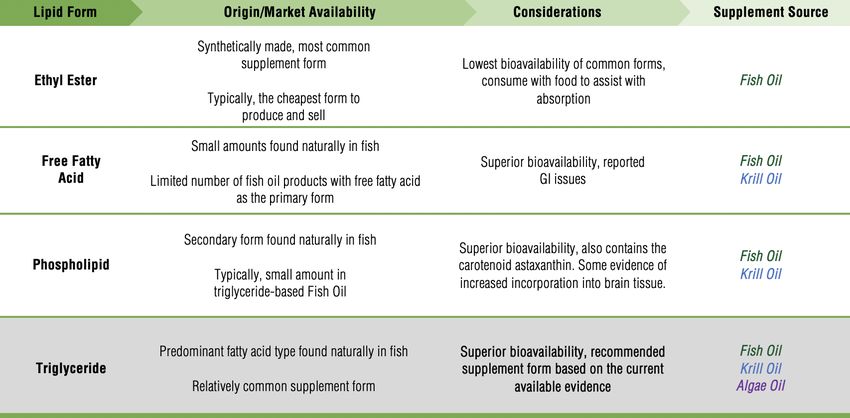
Sports Science Exchange (2021) Vol. 29, No. 212, 1-7

                                           SOURCE                   SERVING                  EPA            DHA           ALA              TOTAL O3
                           Salmon- fresh                      3 ounces (85 g)                1.2 g          0.5 g            -                 1.7 g
                           Herring                            3 ounces (85 g)                0.9 g          0.8 g            -                 1.7 g
                           Sardines                           3 ounces (85 g)                0.7 g          0.5 g            -                 1.2 g
                           Tuna (bluefin)- fresh              3 ounces (85 g)                0.8 g          0.2 g            -                 1.0 g
                           Salmon- canned                     3 ounces (85 g)                0.6 g          0.3 g            -                 0.9 g
                           Cod liver oil                      1 teaspoon (5 ml)              0.3 g          0.5 g            -                 0.8 g
                           Trout                              3 ounces (85 g)                0.4 g          0.4 g            -                 0.8 g
                           Sea bass                           3 ounces (85 g)                0.5 g          0.2 g            -                 0.7 g
                           Oysters                            3 ounces (85 g)                0.2 g          0.3 g            -                 0.5 g
                           Tuna- canned in water              3 ounces (85 g)                0.2 g          0.1 g            -                 0.3 g
         EPA & DHA
                   Tuna (yellowfin)- fresh                    3 ounces (85 g)                0.2 g          0.2 g            -                 0.4 g
          SOURCES
                           Scallops                           3 ounces (85 g)                0.1 g          0.1 g            -                 0.2 g
                           Seaweed, kelp                      1 ounce (28 g)                 0.1 g          0.05 g           -                 0.2 g
                           Shrimp                             3 ounces (85 g)                0.1 g          0.1 g            -                 0.2 g
                           Lobster                            3 ounces (85 g)                0.1 g          0.1 g            -                 0.2 g
                           Spirulina/chlorella/algae(powdered) 1 Tablespoon (15 ml)          0.1 g          0.1 g            -                 0.2 g
                           Crab                               3 ounces (85 g)                0.1 g            -              -                 0.1 g
                           Mahi Mahi                          3 ounces (85 g)                0.1 g            -              -                 0.1 g
                           Tilapia                            3 ounces (85 g)                0.1 g            -              -                 0.1 g
                           Omega-3 milk                       8 ounces (240 ml)             0.03 g          0.02 g           -                0.05 g
                           Omega-3 peanut butter              2 tablespoons (30 ml)         0.03 g          0.02 g           -                0.05 g
                           Chia seeds                         1 ounce (28 g)                   -              -           5.0 g                5.0 g
                           Walnuts                            1 ounce (28 g)                   -              -           2.6 g                2.6 g
                           Flaxseed oil                       1 teaspoon (5 ml)                -              -           2.4 g                2.4 g
                           Flax seeds                         1 ounce (28 g)                   -              -           2.4 g                2.4 g
                           Omega-3 egg                        1                                -            0.1 g         0.4 g                0.5 g
            ALA
                           Canola oil                         1 teaspoon (5 ml)                -              -           0.4 g                0.4 g
          SOURCES
                           Omega-3 margarine                  1 tablespoon (15 ml)             -              -           0.3 g                0.3 g
                           Edamame                            ½ cup (64 g)                     -              -           0.3 g                0.3 g
                           Avocado                            ½ cup (64 g)                     -              -           0.2 g                0.2 g
                           Grass-fed beef                     3 ounces (85 g)                  -              -            0.1 g               0.1 g
                           Olive oil                          1 tablespoon (15 ml)             -              -            0.1 g               0.1 g
       Table 1: Dietary sources of Omega-3 fatty acids.

ALA                                                                                   Cunnane, 2007), although some recent evidence suggests conversion
Food sources of ALA include walnuts, chia and flax, and vegetable/                    rates may be higher than previously estimated (Metherel & Bazinet,
seed oils (Table 1). Grass-fed meats and eggs also contain ALA as a                   2019). It is also possible that individuals who do not consume fish or
byproduct of animals’ diets. Although these food sources are often                    seafood experience a greater ALA conversion, though this is not
recommended as a means of enhancing dietary O3FA, they do not                         conclusive in the literature. Athletes who follow a vegetarian diet, have
contain EPA or DHA (the O3FA most associated with health and                          fish or seafood allergies, or prefer not to consume fish or seafood may
performance benefits) and the capacity to convert ALA to EPA and DHA                  benefit from consumption of seaweed, kelp, algae, fortified foods, or
is relatively low in human physiology (Arterburn et al., 2006; Plourde &              from O3FA supplementation (algae-based).

                                                                                                                                                                         3
Sports Science Exchange (2021) Vol. 29, No. 212, 1-7
oil originates directly from the tissue of oily fish and contains less than
30% O3FA. The majority of available products are non-concentrates,
Canned sardines (3 ounces, 85 g)
while others undergo more rigorous processing designated as O3FA
Catfish filet or fish sticks (12 ounces, 340 g) concentrates. Fish oil supplements most often include O3FA in the ethyl
Fish tacos (made with 10 ounces of cod, 284 g) ester form, and sometimes, in the triglyceride, phospholipid and free
Grilled or fried shrimp (8 ounces, 227 g) fatty acid forms. Krill oil supplements, which contain oil extracted from
Grilled salmon (2 ounces, 56 g) Antarctic krill, have become increasingly popular due to their higher
concentrations of phospholipid and free fatty acid forms. Krill oil also
Lobster roll (containing 7 ounces of lobster, 198 g)
contains an antioxidant called astaxanthin, which prevents the oxidation
Oysters (8 ounces, 227 g) of O3FA and is associated with optimal structure and function of the
Salmon burger or patty (5 ounces, 142 g) eyes (Barros et al., 2014). Algae oil is a plant-based alternative, in the
Seafood pasta (with 9 ounces shrimp and scallops, 255 g) triglyceride form and may particularly appeal to vegetarian athletes.
Seaweed salad (3 ounces, 85 g) Bioavailability and Tissue Incorporation
Smoothie prepared with spirulina (2.5 Tablespoons, 37 ml)
Different lipid forms (ethyl ester, free fatty acid, phospholipid and
Sushi – spicy tuna roll (4 pieces) triglyceride) vary in terms of bioavailability and incorporation into target
Tuna salad sub (containing 6 ounces of canned tuna, 170 g) tissues (Table 3). Several studies suggest that the bioavailability of ethyl
ester is inferior to other forms, observed to be less effective at both
Table 2: EPA + DHA-rich (0.5 - 1 g) portions of popular foods.
increasing O3i and reducing triglyceride levels (Ghasemifard et al.,
2014; Neubronner et al., 2011; Schuchardt et al., 2011). Using animal
models, there is some evidence that a phospholipid form may be
OMEGA-3 SUPPLEMENTATION preferentially incorporated into tissues like the eyes and brain (Liu et al.,
Dietary supplementation is another approach to improving O3FA status. 2014), but there is insufficient data available to make conclusions in
In addition to the recommendation to use third-party tested products for humans. Based on the available evidence, a triglyceride-based
purity and safety purposes, several additional factors may be supplement derived from fish oil or algae oil may be the best
considered. recommendation for many athletes at this time, as those in the free fatty
Product Types acid form are highly susceptible to oxidation and phospholipid products
come in comparatively smaller dosages, increasing the cost per serving
O3FA supplements come from a variety of sources (fish, krill and algae (Schuchardt & Hahn, 2013). Consumers should also be instructed to
being the most common) and contain a variety of lipid forms (ethyl take supplements with food, as improved absorption has been observed
ester, triglyceride, phospholipid and free fatty acid) that practitioners when supplements are taken with a fat-containing meal (Lawson &
should be familiar with when evaluating products (Table 3). Crude fish Hughes, 1988).
Table 3: Omega-3 fatty acid supplements: common sources and forms.
4Sports Science Exchange (2021) Vol. 29, No. 212, 1-7
Active Ingredient vs. Total Ingredients
When evaluating the cost efficiency of products, it is imperative to
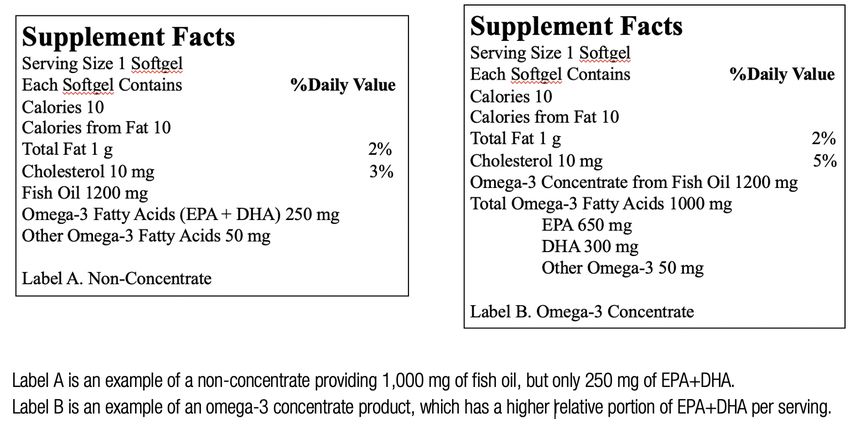
consider the product’s EPA + DHA content rather than “fish oil” or
“O3FA” content and differentiate between a concentrate and a non-
concentrate supplement (Figure 1). An omega-3 concentrate typically
provides a larger dose of EPA and DHA per serving to provide a more
cost-effective intervention.
Determining Dosage Specific to the Individual
There are many factors and approaches to consider in determining an
O3FA supplement dose specific to the athlete. Factors such as habitual
diet, sex, age, body weight, training load, smoking status and others Figure 1: Omega-3 fatty acid supplements. Look for the EPA + DHA dose rather
may all influence recommendations. Figure 2 outlines an approach to than the total “fish oil” or “omega-3” dose.
dosing based on screening and classification of risk.
Figure 2: Omega-3 Fatty Acids Practitioner Decision Tree.
5Sports Science Exchange (2021) Vol. 29, No. 212, 1-7
One approach for supplementation is to aim for an O3i of 8% or greater. 7. Assessing O3FA status via measurement of the RBC omega-3
Assuming an O3i baseline near the American average of 4-5%, a 1 g/ index (O3i) may be useful in screening athletes, tailoring
day dose of EPA + DHA for 20 weeks (Flock et al., 2013) or a 2 g/day supplement recommendations and evaluating dose response. If
dose of EPA + DHA for 13 weeks (Walker et al., 2019a) has been O3i measurement is not possible, practitioners may consider
observed to achieve an O3i of >8% in healthy adult subjects. While using validated dietary assessment tools to evaluate typical O3FA
more research is needed to assess athlete-specific dose response, a intake.
preliminary study observed that Olympic athletes required 1.5-2 g/day
of EPA + DHA for at least 16 weeks to accomplish the O3i benchmark The views expressed are those of the authors and do not necessarily reflect the position or policy
of >8% (Drobnic et al., 2017). Once the goal O3i has been achieved, a of PepsiCo, Inc.
smaller maintenance dose may be considered.
Another approach is to select a dose specific to the goal of REFERENCES
Anzalone, A., A. Carbuhn, L. Jones, A. Gallop, A. Smith, P. Johnson, L. Swearingen, C. Moore, E.
supplementation. For example, 1 g EPA + 2 g DHA daily is a common
Rimer, J. McBeth, W. Harris, K.M. Kirk, D. Gable, A. Askow, W. Jennings, and J.M. Oliver
recommendation for athletes when neuroprotection is the primary goal, (2019). The Omega-3 Index in National Collegiate Athletic Association division I collegiate
given the near maximal plasma response seen observed with a 2 g/day football athletes. J. Athl. Train. 54:7–11.
DHA dose (Arterburn et al., 2006; Oliver et al., 2018). Body weight- Arterburn, L.M., E.B. Hall, and H. Oken (2006). Distribution, interconversion, and dose response of
n-3 fatty acids in humans. Am. J. Clin. Nutr. 83(6 Suppl):1467S-1476S.
based dosing, using up to 40 mg/kg as a reference, has also been Barrett, E.C., M.I. McBurney, and E.D. Ciappio (2014). ω-3 fatty acid supplementation as a potential
recommended, based on effective doses in animal research (Flock et therapeutic aid for the recovery from mild traumatic brain injury/concussion. Adv. Nutr.
al., 2013; Mills et al., 2011). Overall, it is important to note that 5:268–277.
Barros, M.P., S.C. Poppe, and E.F. Bondan (2014). Neuroprotective properties of the marine
significant variation in individual dose response exists (Walker et al., carotenoid astaxanthin and omega-3 fatty acids, and perspectives for the natural combination
2019a). of both in krill oil. Nutrients 6:1293–1317.
Begtrup, K.M., A.E. Krag, and A.-M. Hvas (2017). No impact of fish oil supplements on bleeding
risk: A systematic review. Danish Med. J. 64:5.
SUMMARY AND ACTION STEPS Black, K.E., O.C. Witard, D. Baker, P. Healey, V. Lewis, F. Tavares, S. Christensen, T. Pease, and B.
1. Although O3FA are known to influence athletes’ health and Smith (2018). Adding omega-3 fatty acids to a protein-based supplement during pre-season
training results in reduced muscle soreness and the better maintenance of explosive power
performance, much remains to be learned. Practitioners should in professional Rugby Union players. Eur. J. Sport Sc. 18:1357–1367.
commit to staying up to date with research and athlete-specific Bradberry, J.C., and D.E. Hilleman (2013). Overview of omega-3 fatty acid therapies. Pharmacy
recommendations, and ideally, participating in applied research. and therapeutics. 38:681–691.
Cook, R.L., H.M. Parker, C.E. Donges, N.J. O’Dwyer, H.L. Cheng, K.S. Steinbeck, E.P. Cox, J.L.
2. Consistent athlete-specific recommendations for dietary or Franklin, M.L. Garg, and H.T. O’Connor (2019). Omega-3 polyunsaturated fatty acids status
supplemental O3FA are not available. The minimal intake required and cognitive function in young women. Lipids Health Dis. 18:194.
Davinelli, S., G. Corbi, S. Righetti, E. Casiraghi, F. Chiappero, S. Martegani, R. Pina, L. De Vivo, A.P.
to support health of the general population may differ substantially
Simopoulos, and G. Scapagnini (2019). Relationship between distance run per week,
from the optimal intake required for athletes seeking to enhance omega-3 index, and arachidonic acid (AA)/eicosapentaenoic acid (EPA) ratio: An
health and performance. observational retrospective study in non-elite runners. Front. Physiol. 10:487.
Davinelli, S., M. Intrieri, G. Corbi, and G. Scapagnini (2020). Metabolic indices of polyunsaturated
3. As most athletes have been shown to consume sub-optimal O3FA, fatty acids: Current evidence, research controversies, and clinical utility. Crit. Rev. Food Sci.
numerous opportunities to improve athletes’ O3FA status exist. Nutr. 1–16.
Drobnic, F., F. Rueda, V. Pons, M. Banquells, B. Cordobilla, and J.C. Domingo (2017). Erythrocyte
Incorporating menu planning strategies to promote frequent
omega-3 fatty acid content in elite athletes in response to omega-3 supplementation: A
consumption of EPA + DHA-rich foods while negotiating budget dose-response pilot study. J. Lipids. 1472719.
limitations, individual preferences and food availability is an European Food Safety Authority (2012). Scientific opinion on the tolerable upper intake level of
important role for the nutrition practitioner eicosapentaenoic acid (EPA), docosahexaenoic acid (DHA) and docosapentaenoic acid
(DPA). EFSA J. 10:2815.
4. Achieving optimal O3FA status may require supplementation. Flock, M.R., A.C. Skulas‐Ray, W.S. Harris, T.D. Etherton, J.A. Fleming, and P.M. Kris‐Etherton
(2013). Determinants of erythrocyte omega‐3 fatty acid content in response to fish oil
Available O3FA supplements vary in source, form and dosage.
supplementation: A dose–response randomized controlled trial. J. Am. Heart Assoc:
Given the available evidence to date, a concentrated triglyceride- Cardiovascular and Cerebrovascular Disease. 2:6.
based fish oil or algae oil supplement may be the best option for Gerling, C.J., K. Mukai, A. Chabowski, G.J.F. Heigenhauser, G.P. Holloway, L.L. Spriet, and S.
many athletes. Jannas-Vela (2019). Incorporation of omega-3 fatty acids into human skeletal muscle
sarcolemmal and mitochondrial membranes following 12 weeks of fish oil supplementation.
5. Since numerous factors influence O3FA status and response to Front. Physiol. 10:348.
supplementation, individualized supplement dosing is Ghasemifard, S., G.M. Turchini, and A.J. Sinclair (2014). Omega-3 long chain fatty acid
“bioavailability”: A review of evidence and methodological considerations. Progr. Lipid Res.
recommended whenever possible. Figure 2 highlights one 56:92–108.
approach to individualizing supplement recommendations. Global Organization for EPA and DHA (2014). Omega-3 global intake recommendations by country.
https://goedomega3.com/intake-recommendations.
6. In the situation when a standardized protocol is more practical Harris, W.S. (2007). Omega-3 fatty acids and cardiovascular disease: A case for omega-3 index as
than individualized recommendations, a daily dose of 1-3 g EPA + a new risk factor. Pharmacol. Res. 55:217–223.
DHA may be appropriate. Some may consider a higher dose for Harris, W.S., and R.M. Thomas (2010). Biological variability of blood omega-3 biomarkers. Clin.
Biochem. 43:338–340.
higher body weight athletes, during intense training periods, or
when neuroprotection is the primary goal.
6Sports Science Exchange (2021) Vol. 29, No. 212, 1-7
Heaton, L.E., J.K. Davis, E.S. Rawson, R.P. Nuccio, O.C. Witard, K.W. Stein, K. Baar, J.M. Carter, Walker, A.J., B.A. McFadden, D.J. Sanders, M.M. Rabideau, M.L. Hofacker, and S.M. Arent
and L.B. Baker (2017). Selected in-season nutritional strategies to enhance recovery for (2019a). Biomarker response to a competitive season in division i female soccer players. J.
team sport athletes: A practical overview. Sports Med. 47:2201–2218. Strength Cond. Res. 33:2622-2628.
Lawson, L.D., and B.G. Hughes (1988). Absorption of eicosapentaenoic acid and docosahexaenoic Walker, R.E., K.H. Jackson, N.L. Tintle, G.C. Shearer, A. Bernasconi, S. Masson, R. Latini, B.
acid from fish oil triacylglycerols or fish oil ethyl esters co-ingested with a high-fat meal. Heydari, R.Y. Kwong, M. Flock, P.M. Kris-Etherton, A. Hedengran, R.M. Carney, A. Skulas-
Biochem. Biophys, Res. Commun. 156:960–963. Ray, S.S. Gidding, A. Dewell, C.D. Gardner, S.M. Grenon, B. Sarter, J.W. Newman, T.L.
Lewis, N.A., D. Daniels, P.C. Calder, L.M. Castell, and C.R. Pedlar (2020). Are there benefits from Pederson, M.K. Larson, and W.S. Harris. (2019b). Predicting the effects of supplemental EPA
the use of fish oil supplements in athletes? A systematic review. Adv. Nutr. 11:1300-1314. and DHA on the omega-3 index. Am. J. Clin. Nutr. 110:1034-1040.
Liu, L., N. Bartke, H. Van Daele, P. Lawrence, X. Qin, H.G. Park, K. Kothapalli, A. Windust, J. Wilson, P.B., and L.A. Madrigal (2016). Associations between whole blood and dietary omega-3
Bindels, Z. Wang, and J.T. Brenna (2014). Higher efficacy of dietary DHA provided as a polyunsaturated fatty acid levels in collegiate athletes. Int. J. Sport Nutr. Exerc. Metab.
phospholipid than as a triglyceride for brain DHA accretion in neonatal piglets. J. Lipid Res. 26:497–505.
55:531–539. Witard, O.C., and Davis J.K. (2021). Omega-3 fatty acids for training adaptation and exercise
McGlory, C., S.L. Wardle, L.S. Macnaughton, O.C. Witard, F. Scott, J. Dick, J.G. Bell, S.M. Phillips, recovery: a muscle-centric perspective in athletes. SSE #211
S.D.R. Galloway, D.L. Hamilton, and K.D. Tipton (2016). Fish oil supplementation suppresses
resistance exercise and feeding-induced increases in anabolic signaling without affecting
myofibrillar protein synthesis in young men. Physiol. Rep. 4:6.
McGlory, C., P.C. Calder, and E.A. Nunes (2019). The influence of omega-3 fatty acids on skeletal
muscle protein turnover in health, disuse, and disease. Front. Nutr. 6:144.
Metherel, A.H., and R.P. Bazinet (2019). Updates to the n-3 polyunsaturated fatty acid biosynthesis
pathway: DHA synthesis rates, tetracosahexaenoic acid and (minimal) retroconversion. Progr.
Lipid Res. 76:101008.
Mickleborough, T.D. (2013). Omega-3 polyunsaturated fatty acids in physical performance
optimization. Int. J. Sport Nutr Exerc. Metab. 23:83–96.
Mills, J.D., K. Hadley, and J.E. Bailes (2011). Dietary supplementation with the omega-3 fatty acid
docosahexaenoic acid in traumatic brain injury. Neurosurgery 68:474–481.
Neubronner, J., J.P. Schuchardt, G. Kressel, M. Merkel, C. von Schacky, and A. Hahn (2011).
Enhanced increase of omega-3 index in response to long-term n-3 fatty acid supplementation
from triacylglycerides versus ethyl esters. Eur. J. Clin. Nutr. 65:247–254.
Nichols, P.D., A. McManus, K. Krail, A.J. Sinclair, and M. Miller (2014). Recent advances in
omega-3: health benefits, sources, products and bioavailability. Nutrients 6:3727–3733.
Oliver, J.M., K.M. Kirk, D.A. Gable, J.T. Repshas, T.A. Johnson, U. Andreasson, N. Norgren, K.
Blennow, and H. Zetterberg (2016). Effect of docosahexaenoic acid on a biomarker of head
trauma in american football. Med. Sci. Sports Exerc. 48:974–982.
Oliver, J.M., A.J. Anzalone, and S.M. Turner (2018). Protection before impact: The potential
neuroprotective role of nutritional supplementation in sports-related head trauma. Sports
Med. 48:39–52.
Philpott, J.D., O.C. Witard, and S.D.R. Galloway (2019). Applications of omega-3 polyunsaturated
fatty acid supplementation for sport performance. Res. Sports Med. 27:219–237.
Plourde, M., and S.C. Cunnane (2007). Extremely limited synthesis of long chain polyunsaturates
in adults: Implications for their dietary essentiality and use as supplements. Appl. Physiol.
Nutr. Metab. 32:619–634.
Ritz, P.P., M.B. Rogers, J.S. Zabinsky, V.E. Hedrick, J.A. Rockwell, E.G. Rimer, S.B. Kostelnik, M.W.
Hulver, and M.S. Rockwell (2020). Dietary and biological assessment of the omega-3 status
of collegiate athletes: a cross-sectional analysis. PLoS One. 15:e0228834.
Schuchardt, J.P., J. Neubronner, G. Kressel, M. Merkel, C. von Schacky, and A. Hahn (2011).
Moderate doses of EPA and DHA from re-esterified triacylglycerols but not from ethyl-esters
lower fasting serum triacylglycerols in statin-treated dyslipidemic subjects: Results from a six
month randomized controlled trial. Prostaglandins Leukotrienes and Essential Fatty Acids.
85:381–386.
Schuchardt, J.P., and A. Hahn (2013). Bioavailability of long-chain omega-3 fatty acids.
Prostaglandins, Leukotrienes and Essential Fatty Acids. 89:1–8.
Shahidi, F., and P. Ambigaipalan (2018). Omega-3 polyunsaturated fatty acids and their health
benefits. Ann. Rev. Food Sci. Techn. 9:345–381.
Simopoulos, A.P. (2002). The importance of the ratio of omega-6/omega-3 essential fatty acids.
Biomed. Pharmacother. 56:365–379.
Siscovick D.S., T.A. Barringer, A.M. Fretts, J.H.Y. Wu, A.H. Lichtenstein, R.B. Costello, P.M. Kris-
Etherton, T.A. Jacobson, M.B. Engler, H.M. Alger, L.J. Appel, and D. Mozaffarian (2017).
Omega-3 polyunsaturated fatty acid (fish oil) supplementation and the prevention of clinical
cardiovascular disease. Circulation 135:e867–e884.
Tepsic, J., V. Vucic, A. Arsic, V. Blazencic-Mladenovic, S. Mazic, and M. Glibetic (2009). Plasma
and erythrocyte phospholipid fatty acid profile in professional basketball and football players.
Eur. J. Appl. Physiol. 107:359–365.
Vannice, G., and H. Rasmussen (2014). Position of the Academy of Nutrition and Dietetics: Dietary
fatty acids for healthy adults. journal of the academy of nutrition and dietetics. 114:136–153.
von Schacky, C., M. Kemper, R. Haslbauer, and M. Halle (2014). Low Omega-3 Index in 106
German elite winter endurance athletes: A pilot study. Int. J. Sport Nutr. Exerc. Metab.
24:559–564.
7You can also read


