Quality Improvement - combining digital technology with innovative learning - Nikki Davey Dominique Le Touze Quality Improvement Clinic Bristol ...
←
→
Page content transcription
If your browser does not render page correctly, please read the page content below
www.qiclearn.com

Quality Improvement - combining digital
  technology with innovative learning
                  Nikki Davey
              Dominique Le Touze
          Quality Improvement Clinic
    Bristol Patient Safety Conference 2018
We all have 2 jobs!

                       Improvement champion, Don Berwick, maintains that we have
                       two jobs:

                       1. To deliver the best care we can

                       2. To constantly improve the care we deliver

But where do we start, how do we get started and how do we keep going?

•   Introducing you to a change model that will help you continuously improve
    throughout your career

•   Choosing ‘small’

•   Getting started

•   Digital support for workplace learning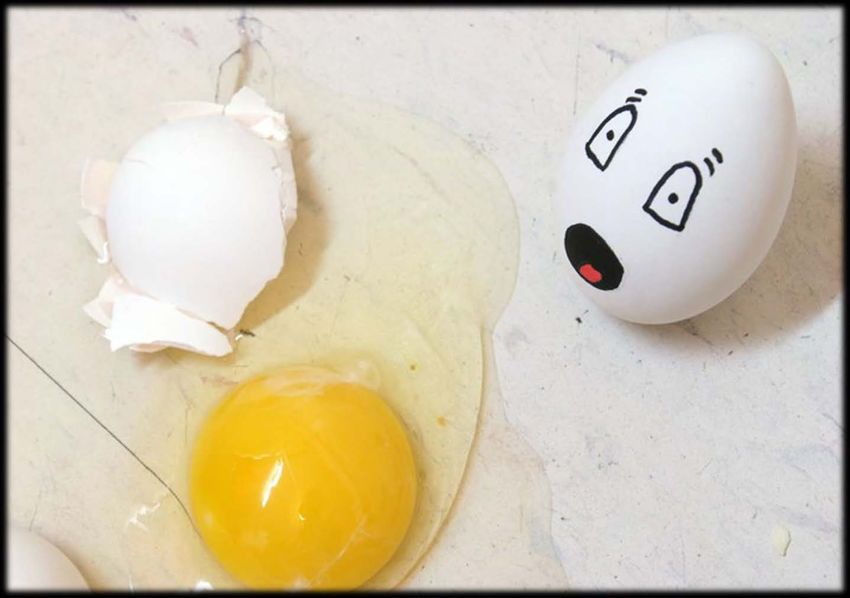
What do you know about this change method?

                           How could
                            I find out
                               really
                               fast?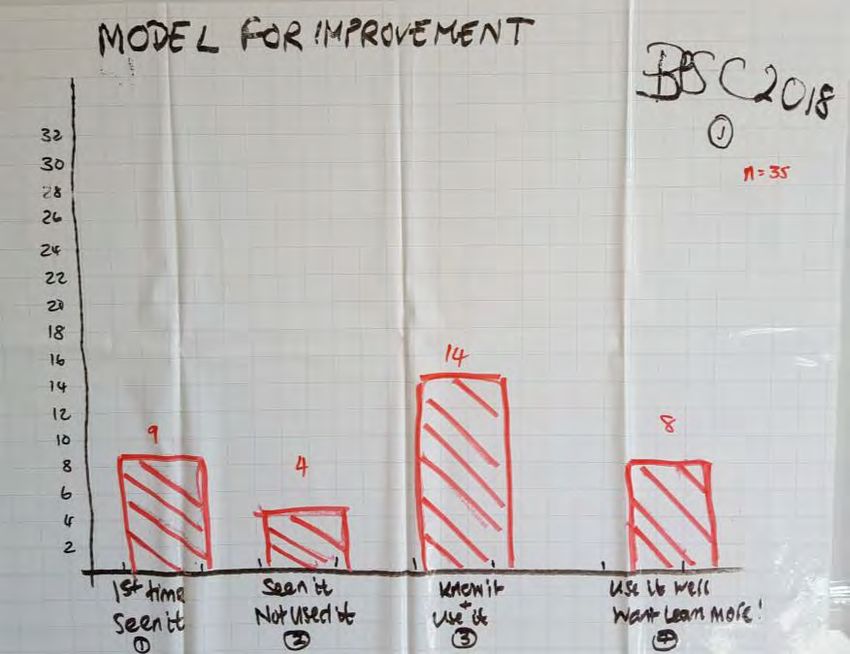
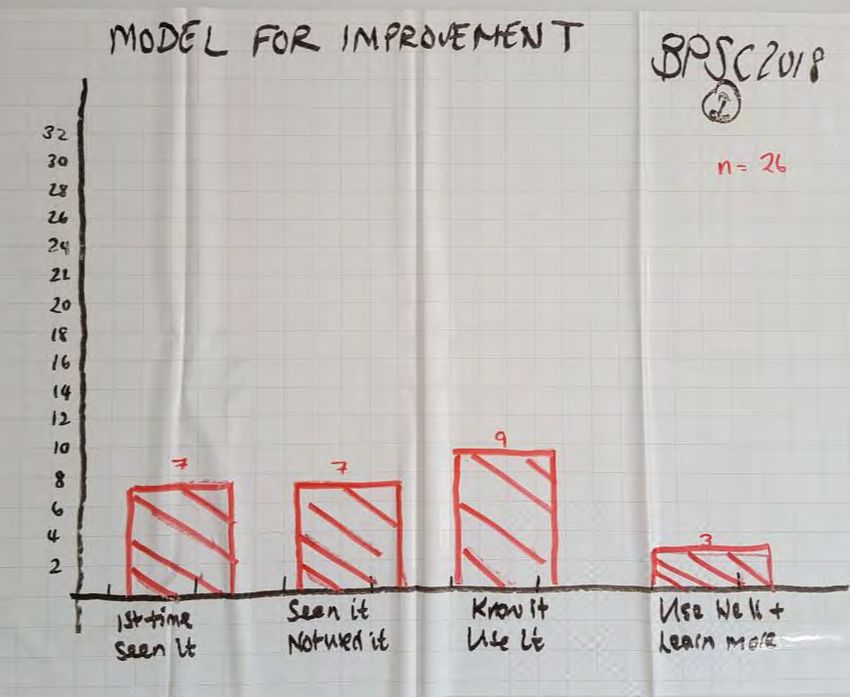
Experience in the room

  BPSC 2016         A shift in audience understanding of MfI   BPSC 2018

The Model for Improvement (MfI)                                            4
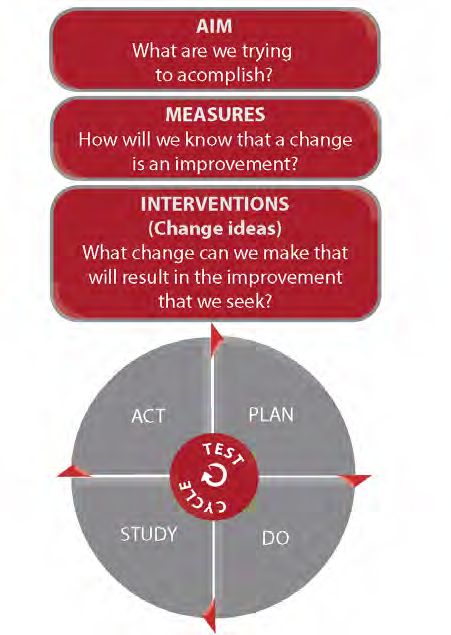
The model for improvement

                                                             What do I want to achieve?
                          AIM
                                                              This will depend on your problem!
                                                             How will I know that I’ve achieved it?
                     MEASURES                                 This will be shaped by your aim!

                                                             What ideas have I got to help me achieve it?
                  CHANGE IDEAS
                                                              This will only be constrained by your
                                                              imagination!

                                                             How do I test my idea?
                                                              By investing time in PLANning your small scale
                                                              tests of change to learn as much as you can, as
                                                              quickly and easily as you can!
The Model for Improvement. Langley, Nolan, Nolan, Norman &
     Provost. The Improvement Guide, Josse Bass, 1996
The model for improvement

                                                             What do I want to achieve?
                          AIM
                                                              I want to get to work on time every time
                                                             How will I know that I’ve achieved it?
                     MEASURES                                 My clinic will start on time

                                                             What ideas have I got to help me achieve it?
                  CHANGE IDEAS
                                                              Take a different route, leave for work earlier, or
                                                              take a boat

                                                             How do I test my idea?
                                                              Start with the idea that’s easiest to test first –
                                                              and then, if that doesn’t deliver the change you
                                                              are seeking learn what you can and amend
                                                              your test or try another idea
The Model for Improvement. Langley, Nolan, Nolan, Norman &
     Provost. The Improvement Guide, Josse Bass, 1996
PDSA      ≠    Audit

                                  Implement     Set
                                                criteria &
                                    change      standards

                                 Compare
                                 performance
                                 with             Collect
                                 standards        data

 Rapid cycles, many changes,    Slow cycles, some changes,
measurement informs the next   measurement informs the next
             step                          cycle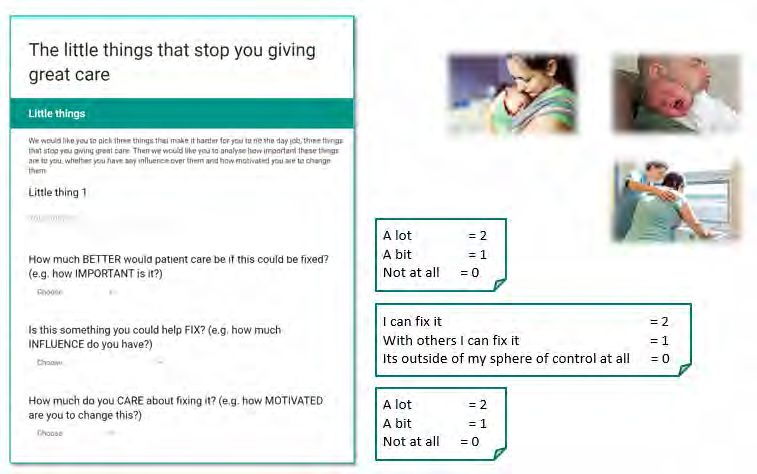
QIClearn team
Online support

                 www.qiclearn.com
Choose ONE thing

                   Multiply the three scores
                   Score = 0 = unadvisable for your 1st QI project
Exploring ONE thing
On-line conversations from London School of Paediatrics
Senior Trainees QI programme, May 2018
I have scored the same for
all 3 of my projects. I always
Recently I have realised that simple
thought big changes make
things can be so time consuming but
the most difference.
occur so frequently on a daily basis
that actually, fixing this would make a
big difference and ultimately patient
care.
You're right! The small things can
take up just as much time, and
they also wear us down with their Some of these might also be in your
frequency 'not again' feeling. control to fix - and this is a great place to
start when learning how to use and master
the improvement tools and techniques
that we share with you on this programme.A few small things on my list!
On-line conversations from London School of Paediatrics
Senior Trainees QI programme, May 2018
1) Centralised bank application system for departments
across London to post their vacant shifts on the site in
one place.
2) Portal for parents to directly feedback about healthcare
professionals and the service as a whole
3) A postnatal version of antenatal classes for parents of
premature babies who may have missed these sessions
due to their child's prematurity.
This is a really interesting list and I'm
wondering about 'sphere of control’ with
this. What we mean here is that YOU can
make the changes to deliver the
improvements yourself.
Thanks a lot - that's really helpful.
The NICU idea is probably a bit too ambitious
then. The other 2 projects are quite heavily reliant
on tech and, although this is an area where i do
have some experience, maybe i need to have
another think about my 'little thing'...Explore your ONE thing (1/2) Describe the ONE thing you want to work on Reflect on what you have seen happening. What have you SEEN or HEARD that tells a story about why this is a problem worth working on? How would your patients describe how this affects their care? Describe and share your observations by making a note or drawing a picture that captures your ONE thing
Explore your ONE thing (2/2)

Is it a BIG problem? Does it happen hourly, daily, weekly, monthly, rarely?

Is it a problem that exists elsewhere? (i.e. ask your colleagues, check the evidence base or
local audit findings)
Next steps

1. Your Problem Statement

 On-line conversations from at
 London School of Paediatrics Senior
 Trainees, May 2018
Make failure your friend
Innovation in learning….

                           www.qiclearn.com
www.qiclearn.com
Quality Improvement - combining digital
technology with innovative learning
Nikki Davey
Dominique Le Touze
Quality Improvement Clinic
Bristol Patient Safety Conference 2018You can also read


