RECOGNISE, REPORT, RESOLVE - Gate Herts
←
→
Page content transcription
If your browser does not render page correctly, please read the page content below
RECOGNISE,
REPORT,
RESOLVE

             "I HOPE THE RIVER FLOODS"
             EVERYDAY HATRED AGAINST
             GYPSY, ROMA AND TRAVELLER
             COMMUNITIES

             An evaluation of the Report
             Racism GRT website submissions
             July 2016 – February 2018
             Naomi Thompson and David Woodger,
             Goldsmiths, University of London
             For GATE Hertfordshire

                                                 1
2 An evaluation of the Report Racism GRT website submissions July 2016 – February 2018
CONTENTS

04    FOREWORD
06    INTRODUCTION
07    NATURE OF REPORTING
      Numbers of reports over time
      Location of reports
08    Reporting to police and other agencies
10    NATURE OF THE ABUSE
      Type of incidents reported
      Thematic analysis of the incidents
 11   SOCIAL MEDIA ABUSE
12    Case Study: Takeover of the ‘Travellers Buy and Sell’ group on Facebook
14    MEDIA INCITEMENT
 17   Case Study: Incitement by the Yorkshire Evening Post
19    REINFORCING NEGATIVE STEREOTYPES
19    Reference to GRT communities not paying taxes
20    Reference to theft, crime and anti-social behaviour
21    Reference to leaving mess
22    Reference to human faeces
23    INTIMIDATION, HARASSMENT AND VIOLENCE
24    EXCLUSION AND DISCRIMINATION FROM AND WITHIN SERVICES
26    Case Study: Response to an encampment on a Selby playing field
28    BULLYING AT SCHOOL AND WORK
29    RECOMMENDATIONS
      Responding to those reporting incidents
      Awareness-raising
      Website development
30    Targeting key agencies for developing responsive partnerships
      Wider policy and practice
 31   Funding

Please note this report contains strong and potentially offensive language.

                                                                                3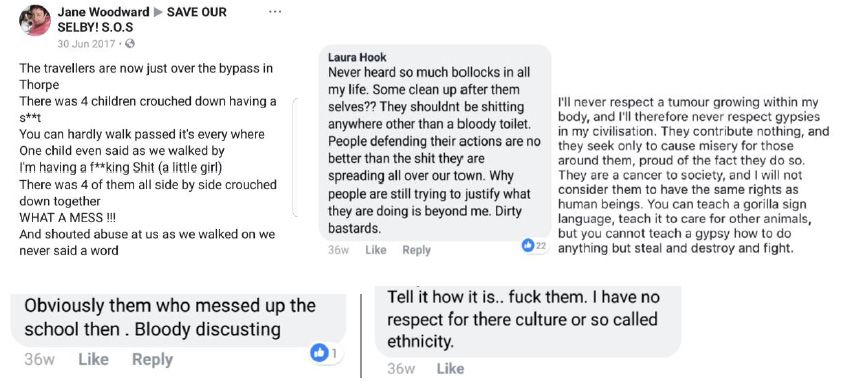
FOREWORD

                                               Foreword by Josie O Driscoll
                                               Chief Officer GATE Herts

                                               Gypsy, Roma and Travellers are among
                                               the most disenfranchised and discriminated
                                               against in society.

                                       Racist language, prejudicial images and
                                       stereotyped portrayals of Gypsy Roma
                                       and Travellers endorse the principle of
                                       prejudice and may suggest that racist
                                       attitudes to others are acceptable.
                                       Stereotypes are an invention, a pretence,
                                       they divide people into groups, based on
    certain perceived characteristics, and they are propagating prejudice
    against my people.

    The work that GATE Hertfordshires/ Report Racism GRT are doing to
    record hate crime and discrimination against Gypsy, Roma and Traveller
    (GRT) communities is highly important.

    We already know that my people face significant barriers in engaging
    with systems and services. Statistics consistently show extremely low
    levels of school retention and attainment, and a lack of progression into
    higher education for young people from GRT communities.

    In terms of health outcomes, GRT individuals have a lower life expectancy
    than the general population, and higher rates of physical and mental health
    problems throughout their adult lives.

    This report on the data gathered by GATEHertfordshire through the Report
    Racism GRT website sheds light on some of the everyday challenges that
    people from GRT communities face that inevitably impact on their wider
    lives including engagement with education, health and other services, and
    their mental and physical health.

    The report finds that GRT individuals face everyday discrimination and
    hatred. This occurs in their engagement with public and private services,
    in the streets and even at their homes. A significant amount of hate speech
    is also directed at them online, with threats of serious violence levelled
    against them on a daily basis. GRT communities are deliberately targeted
    for such hate both online and offline, and it is a pervasive reality of
    their lives.

    Through this report, GATE Hertfordshire in conjunction with Goldsmiths,
    University of London, highlight the extent of the problem and the response
    needed is clear. Public and private services, the media, politicians, online
    social networking platforms, and those regulating communication via all
    these organisations and individuals, must urgently act to speak out against
    the hatred and discrimination faced by GRT individuals and communities,
    and refrain from perpetuating it.

4   An evaluation of the Report Racism GRT website submissions July 2016 – February 2018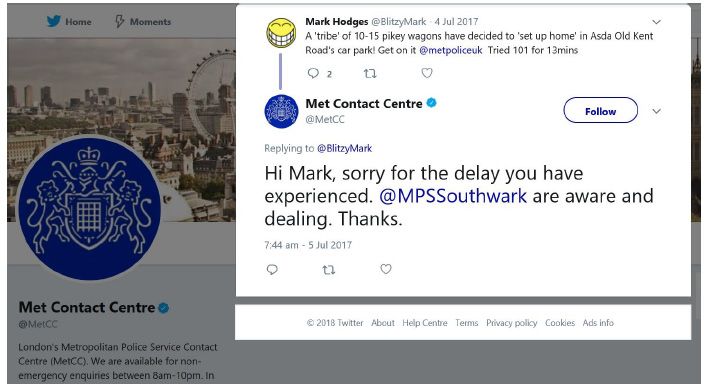
Sadiq Khan
Mayor of London

As you will be aware, in his Police and Crime Plan for London
(2017-21), the Mayor has committed to tackling hate crime in
all its forms and has pledged to take a zero tolerance approach
to hate crime anywhere in London, be it on public transport,
on our streets or online. We know that hate crime is
under-reported, and particularly so amongst Gypsy, Roma
and Traveller communities, so I commend the work that you
are doing to support communities in seeking and accessing
advice and support.

Dr Zoë James
Associate Professor (Senior Lecturer) in Criminology
and Criminal Justice

School of Law, Criminology and Government
(Faculty of Business)

Supporting Gypsies and Travellers to report hate is important
and essential work. The hateful rhetoric, incidents and crimes
that Gypsies and Travellers experience every day is harmful in
multiple ways: they suffer effects that are physical, psychologi-
cal and impact on the wider community. Providing a reporting
mechanism that works to engage and empower Gypsies and
Travellers ensures their needs are recognised and their
rights respected.

                                                                    5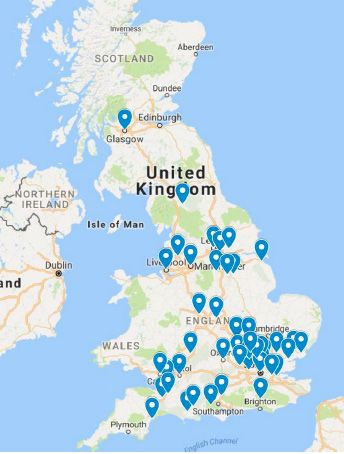
INTRODUCTION
    This evaluation has analysed the cases of hate incidents and discrimination
    crime towards Gypsy, Roma and Traveller (GRT) communities in the UK that
    have been reported to the Report Racism GRT website since its inception in
    July 2016. The evaluation took place in early February 2018 and considered
    all cases reported to the site that were from the UK, removing any spam,
    duplicates and cases outside the UK. In total, 115 cases were analysed. These
    were subject to both quantitative analysis of the nature of reporting and abuse,
    as well as qualitative analysis to identify key themes and examples. As many of
    the reports stated that the incidents affected all three key group categories;
    Gypsy, Roma and Traveller - or did not state which they related to specifically,
    the evaluation has not made a specific distinction between these groups in the
    analysis of cases. A small number of follow-up interviews took place with some
    reporters who had given permission to be contacted, where more information
    on particular cases was needed.

                         Of the 115 cases, 89 (77%) of incidents were reported by
                         people from GRT groups and 26 (23%) by third parties.

                         20% of the incidents reported to Report Racism GRT
                         were also reported to police.

                         18% of the incidents reported to the site by people from GRT
                         groups were reported to police compared with 27% of third
                         parties reporting to police.

                         The most common reason for not reporting to police was a
                         lack of confidence that the police would act. 57% of people
                         who did not report to police gave this reason.

                         People reporting to the site chose the type of incident they were reporting
                         from several categories (they could choose multiple categories per incident).

                         The most common type of incident reported to Report
                         Racism GRT was online hate (67%).

                         Despite the focus of Report Racism GRT on hate incidents
                         crime in particular, the second most common category
                         chosen was discrimination (30%).
    The themes identified in the qualitative analysis of the cases were: social
    media abuse; media incitement; reinforcing negative stereotypes; harassment,
    intimidation and violence; discrimination and exclusion from services; and
    bullying at school or work.

    This report outlines the quantitative and qualitative findings including both
    online and offline examples of abuse and discrimination.

6   An evaluation of the Report Racism GRT website submissions July 2016 – February 2018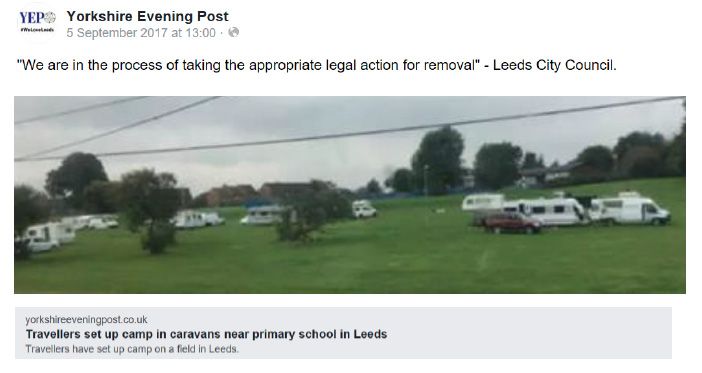
NATURE OF REPORTING
This section outlines the nature of the reporting to the Report Racism GRT
website including numbers and locations of reports from its first reports in
July 2016 until the data was analysed in early February 2018. It also outlines
the low levels of reporting to police by those reporting to the website and
what they have said about why they didn’t report.

Numbers of reports over time

Between July 2016 and early February 2018, there were 115 independent
reports to the site from the UK. Over this period, the overall pattern is of
growth in the number of reports. In both 2016 and 2017 the number of
reports reduces to almost zero in the November and December period.
Numbers of reports to the site also dipped somewhat in July and August
2017 before picking up again in September. These periods of low reports
are likely to reflect how easily people have access to the internet in these
periods rather than necessarily a lack of incidents.

The graph below shows the overall pattern in numbers of reports from July
2016 until October 2017. This graph stops before the low period of reporting
in November and December 2017 in order to demonstrate the overall pattern
of growth over time.

The large spike in reports in February 2017 represents a particularly abusive
takeover of a ‘Travellers buy and sell’ Facebook group by trolls which received
24 independent reports in one month.

Location of reports

Not all reported incidents included a geographical location. Of those that did,
it is apparent that the Report Racism GRT website is known about and being
used across England. It is not yet being used in any significant way by the
rest of the UK with one report from Scotland, one from Wales and none from
Northern Ireland. The map below shows the locations of UK reports.

                                                                                  7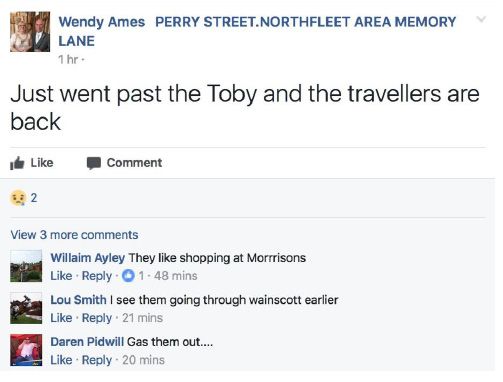
It should be noted here that this is an
    indication not necessarily of where incidents
    are prevalent but where the Report Racism
    GRT website is known about and being used.
    There is a need for some awareness raising in
    the UK nations beyond England.

    Whilst this evaluation has focused on UK
    reports to the site, it is worth noting that
    Report Racism GRT is beginning to be
    used internationally with reports coming
    from countries including Ireland, Italy,
    Russia, Ukraine, Norway, Spain and the USA.

    Reporting to police and other agencies

    Only 20% (23 of 115) of those reporting
    incidents to Report Racism GRT had also
    reported the incident to the police. When
    the incidents reported by third parties not
    from GRT communities are removed, this is
    even lower with 18% of incidents reported by
    people from GRT groups having also been
    reported to police. 27% of people from non-
    GRT groups who reported incidents had also
    reported to the police.

    The low levels of reporting to police demonstrates low levels of trust between
    GRT communities and the police. Whilst non-GRT third parties were more likely
    to report incidents to the police, it is clear that these third parties also did not
    trust an appropriate police response would be made to incidents perpetrated
    against people from GRT groups.

    The graph below illustrates the reasons that people gave for not reporting
    incidents to police. (People could choose multiple categories).

8   An evaluation of the Report Racism GRT website submissions July 2016 – February 2018
The most common reason for not reporting is the belief that
the police won’t act on the incident. 57% of people who did not
report the incidents to police stated police inaction as a reason
for not reporting.

The second most common reason was that people felt that such
incidents were ‘too common an occurrence’ with 41% of those
who did not report incidents to police stating this as a reason.
This often coincided with reporters feeling the incident was
‘not serious enough’ and/or ‘too much trouble to report’. The
choosing of these categories indicates how discrimination and
abuse against GRT communities is normalised and seen as a
pervasive reality of their lives. It is recognised as something
that is socially acceptable and unlikely to change, even by the
communities themselves. Around one quarter of the incidents
reported to Report Racism GRT were part of an ongoing issue
the victims were facing rather than being one-off incidents.

In a follow-up interview, one person who had reported to the
website on a number of occasions shared that:

“If I reported everything I came across I would do nothing else…
I have tried to report and respond to the abuse which is often
targeted at our animals and children but there is too many and
you just can’t win”

She said she had reported incidents to police in the past but
because nothing was ever done she just ‘stopped bothering’
to do this. She was encouraged by a GRT organisation to
report to the Report Racism GRT site.

Where people reporting to the site indicate that they did report
incidents to police or to other agencies, there is little evidence
of any action or change. Some of these incidents demonstrate
bias against GRT groups by police and other agencies.

Some of the online incidents were reported to the social
media platforms (Facebook in particular) or to the admins
of the groups in which they occurred. In most cases the
reporters indicated that this was not acted upon. However,
when following up some of these online posts it did appear
that some had been later removed. However, a significant
amount of online hate and discrimination remains online on
news and social media sites several months later.

The fact that the people reporting incidents to Report Racism
GRT did so despite not reporting to the police or other
authorities suggests that the lack of official reporting is not
because the incidents are not seen as worthy of reporting by
victims and observers. Some further work is needed to explore
why people will report incidents to the website when they
won’t report via official channels and what their expectations
are for a response. There are implications for Report Racism
GRT to ensure they are following up on reports and are not
another forum for inaction.

                                                                     9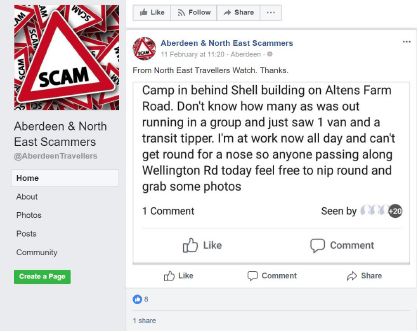
NATURE OF THE ABUSE
     People reporting incidents to the Report Racism GRT site are asked what
     type of incident they are reporting from a number of different categories.
     They are able to choose more than one of these categories.

     Type of incidents reported
     Online hate was the most common type of incident with 67% of reporters
     choosing this category. There is clearly a high rate of online abuse towards
     GRT groups. The high levels of reporting of online incidents is likely to also
     reflect to an extent the fact that Report Racism GRT is an online reporting
     system. It also demonstrates the reach of online abuse. For example, some
     abuse taking place online is reported independently by multiple people
     demonstrating a level of impact not experienced in offline incidents which
     tend to be reported by one person once and to affect only one individual or
     a small number of people.

     Discrimination was the second most common type of incident reported with
     30% of reporters choosing this category. It is also possible that some incidents
     of discrimination may not be reported because the site is framed as hate
     incidents.

     Verbal abuse was the third most common type of incident at 21%. Some people
     ticked verbal abuse alongside online hate suggesting that in some cases online
     hate speech is seen as the equivalent of offline verbal threats.

     Thematic analysis of the incident

     All of the 115 incidents were subject to qualitative thematic analysis to identify
     themes that cut across the different categories of incident reported to the
     Report Racism GRT site. The key themes that emerged from this analysis are:
     – Social media abuse
     – Media incitement
     – Reinforcing negative stereotypes
     – Intimidation, harassment and violence
     – Exclusion and discrimination from and within services
     – Bullying at school and work
     These qualitative themes are explored in detail below.

10   An evaluation of the Report Racism GRT website submissions July 2016 – February 2018
SOCIAL MEDIA ABUSE
Abuse of Gypsy, Roma and Traveller groups on social media was the most
common theme that emerged from the analysis of hate incidents reported on
the website. The prevalence of this type of report may reflect, to an extent, that
the method of reporting to Report Racism GRT is also online and therefore is
an easy and perhaps preferred mode of reporting for those individuals who are
active online. These forms of online incident which lack a specific location may
also be ones that victims are particularly unsure about the appropriateness of
reporting to local police, especially given the low confidence in the police
overall. However, given that 67% of the incidents reported were classed as
online hate and the majority of these relate to social media, it is clearly a
pervasive form of abuse towards Gypsy, Roma and Traveller communities.
Facebook was the most common site of reported abuse.
This may reflect the age demographic of those reporting as well as the ease
of the site for such abuse on social media took various forms. One of these was
the targeting of an individual or group’s own page or account to perpetuate
hate. On Facebook, individuals’ profiles were targeted as well as groups or
pages created by Gypsy and Traveller groups for their own communities.
For example, one person reported that someone had observed from a badge
on their Facebook profile picture that they were of Gypsy heritage and left the
extremely offensive comment, ‘pikey cunt’ on the photo. In other cases,
people reported that perpetrators had shared the personal accounts of
Gypsy, Roma or Traveller individuals on other pages or sites with derogatory
commentary. For example, one victim’s YouTube videos were shared on
Facebook in this way. These invasions of people’s personal profiles are a
particularly intimidating form of online harassment for victims.
11Case Study: Takeover of the ‘Travellers Buy and Sell’
group on Facebook
In February 2017, there were 24 independent reports to the Report Racism
GRT website about abuse happening on a ‘buy and sell’ group on Facebook
set up by and for, and used by Travellers. This page was targeted by a number
of ‘trolls’ using fake accounts to level some horrific abuse towards GRT groups
and individuals. As well as general insults and hatred towards Traveller commu-
nities, the trolls moved on to taking the pictures of children and dead relatives
from the personal Facebook accounts of group members and posting them
to the group with abuse and threats towards these individuals. People who
responded to the original, more general threats were particular targets for this
type of abuse. The comments reported, many alongside personal photos from
group members’ profiles, included.
“Go and commit suicide”
“I wish this was all Travellers” (alongside a picture of a burning caravan)
“Go hang yourselves”
“You need to wash”
“Learn to read”
“Half dead travelling baby for sale”
“Retards”
This case study is a clear example of the reach and impact of online abuse,
leading to so many reports. It also highlights how perpetrators can protect
their own anonymity online (through the use of fake accounts) and yet access
personal information about those they target to harass and intimidate. The
level of personal invasion and intimidation was significant in this case as well
as that the perpetrators hijacked the communities’ own group to perpetuate
this abuse.
Another common form reported of perpetuating hatred on Facebook was
through local groups that were set up as community groups specific to local
areas such as ‘Spotted: Grimsby’, ‘Stubbington Matters’, ‘Crossgates Leeds’,
‘Dunmow Residents’, ‘Exmouth Community UK’ and ‘Spotted Hoddesdon’,
and even on official pages of some publicly funded authorities. These groups
were not set up by Gypsy, Roma and Traveller groups but were more general
community forums used by local residents to discuss the area. There were also
local pages and groups set up by residents specifically to monitor the arrival or
presence of Travellers and Gypsies in the area. The creation and existence of
such pages appears to be tolerated by Facebook although there is some
evidence of particular posts being removed from these and other groups, even
in some cases where reporters to the Report Racism GRT website said they
had not been removed after being reported to Facebook. The example below
‘Aberdeen and North East Scammers’ is similar to one reported that appeared
to have been closed and reflects a common theme in the name of these
groups, the word ‘scammers’. It can be observed that the handle of this
particular group is ‘@Aberdeentravellers’ demonstrating the particular
targeting of Travellers and the direct association being made between
‘Travellers’ and the description of them as ‘scammers’.
12 An evaluation of the Report Racism GRT website submissions July 2016 – February 2018The fact that Facebook tolerates the existence of whole pages explicitly
dedicated to monitoring Travellers demonstrates that they are not afforded
the same protections online as other minority groups.
A significant aspect of incidents on social media is just how horrific the
nature of the abuse could be. Extreme hate speech towards Gypsy and Roma
Traveller communities is prevalent and it appears, in many cases, tolerated.
Terms such as ‘gas’, ‘cull’, ‘bomb’, ‘drone’, ‘drown’ and other threats of violence
were common in the reports made to Report Racism GRT. In the example
below, this can be observed in one person’s response to Travellers arriving
in the local area where he states ‘Gas them out’.
Overall, it appears that social media is an easy forum to perpetuate abuse in
a variety of forms, even for threats of quite serious violence. There is further
evidence of this is the next section on media incitement.
13MEDIA INCITEMENT
This theme overlaps with social media abuse as much of the incitement takes
place on social media sites but not exclusively so. It is a theme in its own right
because of the prevalence of the pattern where a media outlet publish an article
or social media post about GRT groups in a way that incites some serious levels
of online hate speech and inference of violence. This takes place both in the
direct comments on the media article on their own website as well as where the
article or post is shared on social media by the media outlet. Whilst the articles
themselves do not perpetuate the hatred directly, they are a frequent forum for
incitement of hate. Some extreme comments perpetuating hatred and violence
remain on their own websites and on their social media pages several months
after they are made, demonstrating that these media outlets are not doing
enough to moderate the comments their publishing incites. Responsible
reporting is a key issue here.
The pattern of incitement typically involves one of three types of incident
being reported by the media:
– The arrival of a new encampment
–N
egative comments about GRT groups
by someone in public life, usually
a politician (for example, an MP, local
councillor, or Mayor)
– An incident of anti-social behaviour or crime
involving Gypsies or Travellers
These reports prompt a torrent of abuse and
attacks on GRT communities
online by individuals. Even where people
reporting these incidents to Report Racism
GRT indicate they have also reported to the
publisher and/or social media platform, the
comments are often not removed.
The regional press in local areas is the most
common publisher of such stories. Regional
press implicated in these reports include, for
example, the Yorkshire Evening Post, the
Bucks Free Press and the Express and Star.
There were also some examples from the
national press as in the one below, an example
of reporting about crime and anti-social
behaviour, from the Express which led
to comments inciting hate on the
website comments.
14 An evaluation of the Report Racism GRT website submissions July 2016 – February 2018Reports about politicians’ comments produce similar hatred and, arguably,
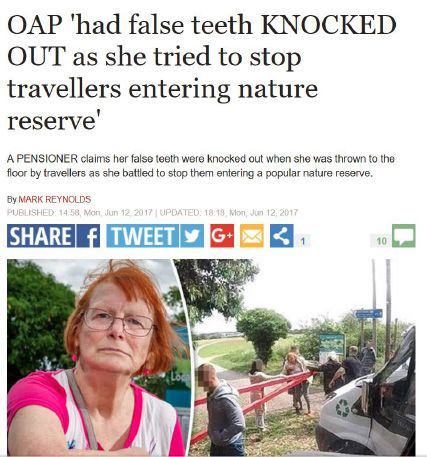
add legitimacy to such prejudice. The example below from regional publisher,
the Express and Star, which published a story about an MP’s comments about
Travellers was similar with the example comment below, among many others,
still on their website several months later:
It is significant here that the perpetrator has ‘starred out’ letters in the words
‘crap’ and ‘shit’ but not ‘Pikeys’. This indicates that the commenter sees the
‘starred out’ words as more offensive and/or that they think only the first two
words would prevent the comment making it through a filter for swear words
on the newspaper’s website. Either way, the fact that the publisher finds it
acceptable to have the word ‘Pikey’ on their website even several months
later indicates the lack of response given to racism against GRT groups.
15In another example of comments made by a politician, the Bucks Free Press
reported on the local Mayor’s apology for problematic comments about
‘culling’ Travellers. Whilst reporting this kind of story could be viewed as more
sympathetic to GRT groups, again hateful and abusive comments that support
the Mayor and demonise GRT communities are left on their website several
months later, indicative of inaction and even collusion.
An inappropriate and divisive response to comments that claims to come from
the Mayor himself is also left on the website.
It is worth noting here that it is not possible to determine whether this
comment actually came from the Mayor but the Bucks Free Press’s collusion
in leaving these comments online is the key issue.
16 An evaluation of the Report Racism GRT website submissions July 2016 – February 2018Case Study: Incitement by the Yorkshire Evening Post
This case study demonstrates how media incitement overlaps with the themes
of social media abuse, the reinforcement of negative stereotypes, intimidation
and violence and clear discrimination by the press against GRT groups. The
Yorkshire Evening Post was reported twice to Report Racism GRT for inciting
hatred through its Facebook page. On both these occasions, it posted an image
with a comment about Travellers arriving in the area, one example of which
is below.
These posts incited vast numbers of negative comments, more than any other
examples reported to Report Racism GRT. Many of the comments appear to
be posted by people who genuinely believe the message created by this type
of reporting that Travellers are a problem to be feared. For example, one such
response to the above reacts to the field being near a school.
Other comments reinforced negative stereotypes about GRT communities
such as those around not paying taxes, being thieves, and leaving mess behind.
Some examples of this are included in the section of this report on reinforcing
negative stereotypes.
In response to both posts by the Yorkshire Evening Post of this nature, there
were also significant numbers of extremely hateful comments including those
inciting violence.
17There is evidence that some extreme violent comments have been removed as
one commenter states to another: “I notice your picture of the gas used to kill
millions in concentration camps was quickly removed. That is evil”. However,
given the other posts remain, it can be assumed that this one relating to the
Holocaust was removed because it is also offensive to other groups beyond
GRT communities.
When people defended GRT communities against the hateful comments, the
response they received was either further hatred targeted at GRT people or
insults directed at the person defending them, as in the examples below.
As well as the examples of hatred exemplified in this section, the media reports
about GRT groups also incited comments that reinforce negative stereotypes
(as demonstrated in the next section) and comments suggesting that GRT
groups are given freedoms and allowances others are not, due to political
correctness and human rights legislation. The very fact that such hatred is
allowed to remain on these sites suggests the direct opposite. There is arguably
a need for a more serious response to hate speech against GRT communities
both by the media outlets themselves as well as by social media platforms.
There were also a number of offline examples reported of incitement including
through TV, radio, newspapers and local publicity for events.
18 An evaluation of the Report Racism GRT website submissions July 2016 – February 2018REINFORCING NEGATIVE STEREOTYPES
Much of the abuse reported involved derogatory comments that reinforce
problematic negative stereotypes about GRT communities. This theme overlaps
with the themes of social media abuse and media incitement and is prevalent
across the online examples of hate reported to Report Racism GRT. It is also a
feature of the offline incidents of verbal abuse and discrimination including, for
example, by health services, media and the general public. Some of these offline
incidents are outlined in later sections.
The negative stereotypes that are most commonly referred to are outlined
below with examples of some of the online comments made by commenta-
tors in incidents reported to Report Racism GRT. These range from
stereotypes about GRT communities avoiding taxes and committing crime
to accusations of animal cruelty. A stereotype reinforced about GRT communities
leaving mess behind as they travel also often evolves into extremely derogatory
accusations about their toilet habits. The particularly nasty comments about
human faeces reinforce both these stereotypes around mess as well as
belittling their status as civilised human beings. Discussions of such online
led to GRT groups being referred to as ‘scrotes’, ‘scum’, ‘dirty’, ‘filthy’
and ‘savages’.
Reference to GRT communities not paying taxes
“They should pay taxes and council tax water rates
then no one would object like everyone else”
“Firstly you cant be Racist in law about Travelers as they are
not a race. So are you saying they in general. They all pay tax.
They don’t overcharge old ladies and the weak. If you are you
are deluded. I wish I could afford a brand new van and a New
Merc every year. They need some where to stay so the police
can find them when someone has ripped off an old lady. Pay
in to society and you get some thing out. don’t and don’t
expect the same as others.”
“they could always get a house and contribute
to society rather than just taking from it”
“And the fact they expect to live for free, the
rest of us pay….”
19“I don’t have a problem with people who want to spend their
lives travelling but they have to pay tax otherwise they have
no right to services provided by government.”
“They don’t pay any tax, no tv license majority make a mess
where ever they go, I’m not even sure how the hell they tax
and insure their cars with no fixed address. It costs the tax
payer for the council to put portable loo’s up for them, clean
up the mess and give them skips.”
“They want to travel not live in houses and want land to set
up camp on ??? Yet fail to pay tax like the rest of us and want
us to feel sorry for them ??”
“They wont settle on camp sites because they have to pay
council tax, we had them on Brooklands ave every car was
a 17 plate there was a BMW x5 in white 67 plate fresh out of
the wrapper”
“Same old garbage from the council it’s time you chased
these gypsy for money to pay for the damaged and court
cost. I bet you have not reclaimed one single penny from any
illegal gypsy set up at all You are supposed to be the tax pay-
ers servants not the gypsy servants. Start doing your jobs.”
Reference to theft, crime and anti-social behaviour
“If these ‘travellers’ didn’t commit crime or send there urchin children out
stealing, or stop doing bogus burglaries purporting to be the gas man etc.
Then when they went they tidied up and took their own waste with them,
then maybe it would be more acceptable. the only people to create this issue
is the travellers themselves. Also to try and pretend to be some race or have
some ethnic link is utter rubbish.”
20 An evaluation of the Report Racism GRT website submissions July 2016 – February 2018“There is an increas in anti-social noise when they turn up
when they race around the local area in bikes and quads. I’ve
witnessed them racing each other in cars at life threatening
speeds. They have a total disregard for the land they rest on
and the local community.”
“If i break the law i get arrested immediately or if I’m causing an obstruction
I’m moved on immediately…so why the hell does it take the council and plod
an absolute age to move these pikeys on ??”
“Threating behaviour, leave rubbish and break the law but
yet have to wait for eviction notice and you wonder why
members of public take action into there own hands?”
“To be honest of those that I have met, their kids seem way more sexualised.
Being winked at and called ‘big boy’ by 12 year olds it’s pretty disconcerting!”
“All they have to do is obey the law like everyone else. But nooooo”
“poor kids cant play there as gypsy kids are pushing the kids
off the swings. discusting”
Reference to leaving mess
“it’s against the law to fly tip, most people use a bin… Most of them not only
leave a mess, they commit crimes like shop lifting, they fight amongst each
other, intimidate others and stay up until all hours shouting and carrying on.”
“Have you seen the land when they leave it though? Horse
and dog muck, rubbish absolutely everywhere and no effort
by the travellers to clean up their mess. They never look after
the land.”
“For everyone saying leave them to it. I take it you’re all
going to be going here and cleaning up all the mess that
will be left… oh wait no it will be left to the council to clean
it. If they wanna stay there they should at least clean up
after themselves.”
“They were down in headingley the other week! I’ve seen
them a good few times! Absolute menace! Leave the place
a state when they leave too!”
21“Travellers left farnley park in a terrible state a few years ago
churned all the grass up dog poo everywhere kids shouting
and swearing. It was disgraceful. And us the tax payer pays
for the clean up. If they leave it in the same state they found
it that would be acceptable.”
“Now watch them turn the place into a Dump and Thousands
of £’s have to paid to Clear up their trash, sewage waste etc
etc etc of Local Tax payers money to get rid of them!!! Why is
it they are allowed to come over from Ireland and the Irish do
NOTHING to stop them!!! This is a Joke of which the left wing
eagerly permit it to continue !!! ;( ”
Reference to human faeces
“They find it dirty to shit in the caravans.
Surely its more dirty to shit outside!”
“one of them climbed a tree an had a dump
out of it showing off”
"I don’t care who they are! Traveller’s or
not. It’s dam right disgusting behaviour!!!!!!
Leaving human shit!!!!!”
“They should set up camp at the police
station or council offices and shit all around
them useless wankers…i wouldnt mind that
so much!!!”
“totally agree allowing kids to s**t any where
other than a toilet is totally unacceptable”
“It is disgusting but the saddest part of it is
those children won’t know any different, it
must be normal to them to behave like that.”
“travellers don’t exactly make themselves
welcome when threatening local residents
and allowing their kids to s**t on the grass
like animals!”
“I clean up after my dog maybe they
should do the same if they keep on
doing it outdoors.”
“They shat on jolleys car park last week”
“As a young boy I witnessed my first ‘travelers’ a 4 caravan
of ‘travelers’ parked up on beautiful common land. They left
it with toilet paper and human waste behind every bush…old
washing machines etc etc etc were dumped all around…the
place was utterly disgusting afterwards…..there is no smoke
without fire.”
22 An evaluation of the Report Racism GRT website submissions July 2016 – February 2018INTIMIDATION, HARASSMENT AND VIOLENCE
This theme overlaps with the online incidents of intimidation and harassment
reported earlier in the social media and incitement sections of this report. The
incidents that follow are a sample of those that took place offline. They include
individual and collective verbal and physical abuse, attacks and protests,
targeted at GRT communities without provocation.
Those people setting up camps or sites or living in camps were particularly
targeted for violence, intimidation and harassment. In one incident, a group of
Gypsies arrived at a camp and shortly after, the police turned up to let them
know they had to move on. During this time, those people living in the houses
nearby came out shouting “Gypsy scum, Gypsy bastards”, letting their dogs
loose to attack the community who had just arrived. These residents then
blocked the exit from the camp refusing to let the caravans leave, forcing the
families to find another route off the camp. Despite all the abuse and
intimidation from the residents towards the Gypsy families and the physical
blocking of the exit, the police made no interventions and watched on silently.
Another encampment attack involved a group of vigilantes who approached
a child and a woman threatening them with knives and slashing their caravan
tyres. In Weston Super Mare, it was reported that hundreds of the local com-
munity converged around an encampment, demonstrated and shouted at the
Travellers. This kind of large group mobilisation to harass and intimidate people
on temporary encampments was common.
People from GRT groups who live in houses were also targets for harassment
and intimidation at home. One third party report came from a community
centre about a family of Irish travellers who had experienced ongoing racism
within their neighbourhood. In one particular incident they had graffiti daubed
onto their front door saying ‘dirty pigs’.
One woman shared her anger and a sense of resignation about trying to live in
a council house, lacking support, and with constant harassment from children’s
services and the police. She had been issued with an anti-social behaviour
because of her 6-year old son’s behaviour and a community support order but
not offered any positive support. In addition, her neighbours were regularly
calling the RSPCA to check on her dogs, without reason. She felt isolated and
that no-one wanted her to live in a house because she is a Traveller. There were
numerous other cases where the RSPCA were called unnecessarily and in one
case they were called over twenty times as part of an ongoing campaign of
harassment and intimidation.
There were cases of people being attacked without any provocation. One
woman in a supermarket car park was hit and knocked to the ground. Another
young woman was attacked outside a tube station where she was scratched,
her front tooth knocked out and her clothes wrenched and pulled, with alcohol
thrown over her. It would have been worse if a passer-by had not stopped the
assailant. This incident was reported to the police.
A young man reported his experience of entering a pub and being challenged
soon after arriving by the bar tender asking him if he was a Traveller and saying
“that she did not want any trouble in here”’. This conversation must have been
overheard as he then faced abusive singing from a large group of people for
the rest of the evening.
23EXCLUSION AND DISCRIMINATION
FROM AND WITHIN SERVICES
Discrimination was the second most common type of incident reported to
Report Racism GRT. Within this, discrimination within and exclusion from
services emerged as a prevalent form in which such discrimination takes
place offline. This form of discrimination occurs in a range of services, both
public and private.
The issue of identifying as Gypsy or Traveller emerged in a few cases. One
woman shared that she was encouraged to identify her ethnicity as Gypsy in
the application process for admission to schools. Her experience was this had
worked against her, with her child facing a series of rejections. She spent
considerable time fighting for a place in the local schools and eventually got
one. Subsequently, when her son needed Special Educational Needs support
in the school, which she also had to fight for, she constantly experienced the
feeling that the school wished she would ‘move on’. Several parents reported
that they have been challenged to hide their child’s ethnicity. Another parent
shared that her child’s school were penalising Gypsy and Traveller children on
attendance as they were not accepting that certain cultural events should be
classed as an authorised absence.
Other people reported discrimination in various other public services including
health centres and hospitals and when seeking welfare support. A woman in
a lot of pain was spoken to rudely by a GP receptionist, with a derogatory
reference to “your kind of people”. A Traveller without a fixed address
reported that they were unable to get a Personal Independent Payment form
as they were required to show a passport and proof of address as well as other
documents. Another person reported being denied an early repeat prescription
(by 6 days) before going travelling.
One report outlines the charity work a Gypsy group has embarked on each
year in the New Forest. This is arranged each year in advance working with the
Police and Forest Commission and is a family day for the community. As part
of the day they stop at two or three pubs primarily to give the horses a rest
and families take the opportunity to have a picnic and sometimes a drink. In
2017, without discussion, it was reported that the local police force contacted
the landlords of the pubs warning them if they allowed access to the Gypsies
they would revoke their licences. They requested the pubs to close or refuse
entry to anyone involved with the event. The reporter stated that there had
been no previous difficulties with this event which raises money for charity.
In another case involving the police, it was reported that the police respond
to complaints about GRT people rather than to the abuse the communities
themselves face. This example of a Tweet response by the Metropolitan
Police to someone referring to ‘pikey wagons’ features in The Traveller
Movement’s recent ‘Acceptable Racism’ report but was also reported to
Report Racism GRT site.
24 An evaluation of the Report Racism GRT website submissions July 2016 – February 2018Feeling discriminated against by police emerged across the cases, often even
where it wasn’t the main focus of the incident being reported.
There were also several cases where people were denied access to or
discriminated against by private businesses. One person reported a sign
outside a pub/clubhouse stating ‘no travellers’. Another third party reporter
outlined how a pub they were in was closed after a small group of Travellers
came in, despite there being no problems. An Irish Traveller young woman was
asked to pay in a nail bar before she got her nails done when normal practice
was to collect money after the nails were manicured.
A third party reported that he witnessed discrimination when three young
women were denied access to a national cinema chain. A security guard
approached the cashiers and told them not to serve the three girls who were
behind him in the queue because they were Travellers. He shared that the
three girls had not been causing any problems but were barred from buying
tickets purely because of how they looked and dressed.
25Case Study: Response to an encampment
on a Selby playing field
This case study highlights how the themes of discrimination, social media abuse
and incitement all inter-connect within certain incidents. It demonstrates the
speed in which social media can be used to drive hatred and racism as well as
being an example of discrimination by the police. This incident was reported by
a non-GRT third party to the police. She reported not just a lack of action but
considerable resistance. She reported that an encampment of Travellers arrived
on a local playing field. Members of the local community began posting to a
Facebook group with 10,000 members to raise their concerns and annoyance
about the camp. This quickly descended into accusations about the spreading
of human and animal faeces, and litter, calling Gypsies and Travellers ‘disgust-
ing’. Anyone who defended them was quickly vilified.
Shortly after the camp arrived, the local school playground suffered some dam-
age. This was adjacent to the encampment. The two primary schools responded
by sending children home for their safety. This closure without any clarification
of the reason served to stir up a frenzy of online and offline hate. The person
reporting the case said she visited the encampment and that it was clean and
free of litter, and that she wasn’t the only person who observed this. She stated
that after the schools closed:
“Then the hate became out right shameful racial hate of ‘pikey no likey’,
‘pikey watch’ instead of ‘spring watch’, travellers are all the same, don’t pay
taxes, steal, commit crime, filth, tumours like cancer, not worthy of life, worse
than immigrants, all the same, Irish the worst, new age the worse.”
She reported one extreme perpetrator of the online hate speech to the police
and was told by one officer that it was nothing to do with the police. She stated:
“I think they aren’t even going to investigate to save paperwork and will say
it’s the travellers… I put in a complaint against one person whose comments
were filled with hate and racism that incited the community. The officer didn’t
even come to take a statement off me as I made it clear I wanted to complain.
Instead he went to the lad and gave him a telling off. He then phoned me and
said it was a child, his parents were mortified, I asked what age and he again
said he’s a child his parents are good people, pro police which is rare”.
26 An evaluation of the Report Racism GRT website submissions July 2016 – February 2018She continued insisting that she wanted to file a complaint. The officer
responded by saying that the CPS are unlikely to take this forward. At this
stage, the officer had still not seen the posts or taken a statement from the
person reporting this hate incident. The posts were still not removed the
next day and the reporter contacted the police again. In this conversation, it
emerged that the ‘child’ referred to was a 17-year-old male. The woman felt
“This officer tried to diminish responsibility for this man by inferring several
times he was a child. I feel this officer also has prejudices”.
27BULLYING AT SCHOOL AND WORK
Cases of bullying at school or work were common among the incidents
reported. For young people, these took place at school or college. For adults,
there were incidents reported at work from colleagues and managers, and for
mothers at the school gates.
Whilst there were only a few reports to the site that appeared to come directly
from young people, there were a small number that reported incidents of
bullying and abuse from school friends on their ‘snapchat’ or ‘instagram’
conversations as well as some offline cases of bullying at school or college.
One young woman shared how she was having an argument on snapchat
and her school-friend responded by calling her a “fuckin gypo”. Another
young woman, also in an argument with a school-friend, was asked “do you
live with the goats?”. Another child was told at school that “gypsies sleep with
their families and they are horrible people”. In one college, 16 students circled
one Gypsy student, verbally abusing and calling him “dirty gypo”. Another two
young Roma students reported how a group of 12 young people surrounded
them singing, “You’re sleeping with your sister, sleeping with your sister-you
inbreds”. They shared how they felt scared and intimidated by this collective
verbal attack.
Another case reported was by the mother of a boy who experienced bullying
in multiple schools due to his Gypsy heritage. He changed schools several times
to try to escape the bullying and even changed his name. The schools did not
respond to the mother’s concerns and she felt dismissed by them. Even after
changing his name to disguise his ethnicity, his mother reported that things
have not changed and he has experienced “5 years of misery”.
Another mother (who did not live on a site) reported that her son attends
a school where half of the pupils are Gypsy children. She reported the
ongoing hostility towards the mothers living on site from non-gypsy mums,
saying “there’s often a lot of verbal abuse and arguments between mums”.
She shared how bad the treatment of those living on site was compared to
those who now lived in houses.
Other people reported being bullied by colleagues and managers at work.
Three sisters working in a hospital for the housekeeping service reported
how, after new managers were brought in, they became regularly bullied
and threatened with dismissal. They faced ongoing harassment from both
supervisors and colleagues that even spilled outside of the workplace. On
one occasion, a relative of one of their work colleagues saw one of the women
in a GP surgery and taunted her, shouting and swearing, saying “you and your
sisters are going to all get the sack”. This was reported to the police. The
senior managers then actively sought out people to try and discredit them,
saying they were disruptive. At the time of reporting, this had been ongoing
for a year.
28 An evaluation of the Report Racism GRT website submissions July 2016 – February 2018RECOMMENDATIONS
RECOMMENDATIONS
This evaluation was commissioned by GATE Herts to explore the implications
of reports to the Report Racism GRT website. As such, whilst recognising there
are significant wider implications for policy and practice with GRT groups, the
recommendations outlined here are focused primarily on the implications for
GATE Herts to develop their work as they move forward into the next stage of
the Report Racism GRT project.
Responding to those reporting incidents
Given the nature of the hate crime there is an urgent need for someone to
respond to the cases and incidents reported to the site; giving advice, support-
ing interventions or in some cases advocating and directly getting involved. At
least, this should involve contacting the person reporting, where they request a
response, and referring them to appropriate agencies.
Awareness-raising
• There is a need to further publicise the website, particularly beyond England.
• T
he website itself needs to make clear it is a national (or international)
reporting centre and not simply local to Hertfordshire.
• T
here is a need to consider how to target young people to report hate crime
as most of the reports appear to come from adults – perhaps via an ‘app’
version of the site. There may also be a similar need to think about engaging
older people.
Website development
• A
contact form or email address is needed to ensure for people who want
to make contact to ask a question or similar are able to do so. There are
some examples of people using the report form to do this at present. This
would need to be monitored and responded to.
• T
here is a need for some means of verbal rather than written reporting for
people who struggle to articulate cases in written form. A phone number
email or way to get in touch to indicate they wish to share a verbal report
or message is needed.
• A
n upload function is needed for pictures, screenshots and videos - and
an encouragement to those reporting to upload any evidence they have.
• T
he ‘Describe the incident’ section needs to ask for as much detail
as possible.
• R
eporters need to receive confirmation of submission, to avoid
duplicate reports and assure them that their report is received.
29• T
he website front-page could make more explicit mention of the fact the site
can be used to report more general discrimination and exclusion rather than
just hate crime.
• T
he report form itself could be amended in a few other minor ways, for
example: ask for reporter’s geographical location even where reporting
online incidents; consider whether the categories of incident need any
amendments/additions; reduce categories for reasons for not reporting
to police as some are very similar; ask whether incident is a one-off or
ongoing; ask if they require a response
Targeting key agencies for developing
responsive partnerships
It would be useful for GATE Herts to work with a range of agencies to respond
to the evaluation findings and develop proactive action to reduce incitement
and tackle discrimination. Good practice examples could be highlighted such as
the ‘negotiated stopping’ developed with Leeds City Council. Agencies or part-
ners that GATE Herts might approach include:
• M
edia agencies including local media outlets and media regulators such
as OFCOM.
• F
acebook and other social media sites where online abuse against
GRT groups is prevalent.
• P
olice – local, national, and the IPCC.
• C
ouncillors, other local politicians and local authorities.
Wider policy and practice
There are a number of wider implications for policy and practice. Some of these
may be possible through the awareness raising and development of responsive
partnerships outlined above. However, it is key that public and private services,
and the bodies they are accountable to, begin to take responsibility for ensur-
ing GRT communities are not discriminated against or subject to harassment
or intimidation. The implications for wider responsibility beyond GATE Herts
include:
• R
esponsible reporting – media outlets, social media platforms, and regulating
bodies such as OFCOM, IPSO and Hacked Off, need to respond to incitement
and hate relating to GRT communities. Media platforms need to more
effectively monitor and moderate hate speech left as comments on their
sites. Within this, local police need to be a legitimate place for people to
report hate incidents that occur online as the evaluation suggests that such
reports are not taken seriously or acted upon.
30 An evaluation of the Report Racism GRT website submissions July 2016 – February 2018• T
ackling racism – public services and figures such as police, politicians
and health services need to speak out against racism and discrimination
towards GRT communities and ensure they are afforded the same rights
and respect as other ethnic groups. Within this, local authorities can
implement more widely strategies such as transit sites, negotiated
stopping, permanent sites with sufficient space to avoid long waiting
lists, and policies that work for GRT groups, in order to ease wider
tensions around unauthorised encampments.
• R
epresentation – GRT communities need to be represented on key
strategy groups in order to inform policy and practice that affects them,
at local and national level. This includes representation on national advisory
groups around hate crime including that currently hosted by the Ministry
of Justice.
Funding
GATE Herts has recently received funding and support from the Ministry for
Housing, Communities and Local Government. However, it is recognised that
in order to sustain Report Racism GRT, effectively respond to the number of
incidents reported, and to implement the recommendations above that further,
long-term funding and support is needed.
31You can also read


