Recreational Fishing Regulations for Gulf of Mexico Federal Waters - For Species Managed by the Gulf of Mexico Fishery Management Council
←
→
Page content transcription
If your browser does not render page correctly, please read the page content below
Recreational Fishing Regulations
for Gulf of Mexico Federal Waters
For Species Managed by the Gulf of Mexico
Fishery Management Council
                                   October 2, 2015
This publication was prepared for general informational purposes and has no legal force or effect.
Fishing regulations are subject to change. Check for updates by visiting www.gulfcouncil.org.

Gulf of Mexico Fishery Management Council
2203 North Lois Avenue
Suite 1100
Tampa, Florida 33607

A publication of the Gulf of Mexico Fishery Management Council Pursuant to National Oceanic and
Atmospheric Administration Award No. NA05NMF4410011.
For more information call 888-833-1844.
Gulf of Mexico Fishery Management Council
2203 N. Lois Avenue
Suite 1100
Tampa, Florida 33607

          Table of Contents
          About Us                                 2
          Recreational Regulations
            Reef Fish                              3
            Coastal Migratory Pelagics             6   1

            Shellfish, Coral, and Other Species    7
          Recreational Permit Requirements		       8
          Additional Rules                         9
          Highly Migratory Species                10
          Species Identification                  12
          Measurement Guidelines                  14
          Marine Sanctuaries & Closures           15
          Gulf of Mexico Federal Waters           22
          Important Phone Numbers                 23
          Regulation Changes and Updates          25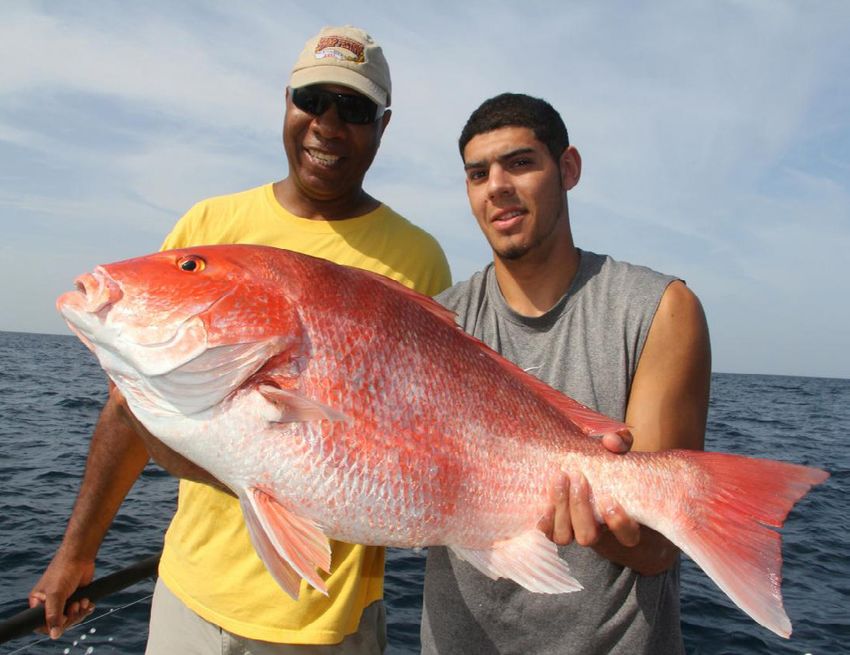
About the

               Gulf of Mexico Fishery Management Council

    The Gulf of Mexico Fishery Management Council is one of eight regional Fishery Management
    Councils established by the Fishery Conservation and Management Act of 1976. The Council prepares fishery
    management plans, which are designed to manage fishery resources within the federal waters of the Gulf of
    Mexico.

    The Council consists of 17 voting members: the Southeast Regional Administrator of the National Marine
    Fisheries Service (NMFS) Southeast Regional Office (or his designee), the directors of the five Gulf state marine
2
    resource management agencies (or their designees), and 11 members who are nominated by the state governors
    and appointed by the Secretary of Commerce. There are also four non-voting members representing the U.S.
    Coast Guard, U.S. Fish and Wildlife Service, Department of State, and the Gulf States Marine Fisheries Commission.

    The Council meets five times a year at various locations around the Gulf coast. When reviewing potential rule
    changes, the Council draws upon the services of knowledgeable people from other state and federal agencies,
    universities, and the public to balance competing interests and achieve the greatest overall benefit to the nation.

    Scoping workshops and public hearings are also held throughout the Gulf coast, and virtual meetings are
    available online. Testimony, oral or written, is considered by the Council before it takes final action on proposed
    rule changes. Public testimony is also heard during each Council meeting. Proposed rule changes are then
    submitted to National Marine Fisheries Service for further review and approval before implementation by the
    Secretary of Commerce.
Recreational Fishing Regulations
Reef Fish
                                                                                                              3
Snappers

Species               Minimum Size Limit   Season                         Daily Bag/Possession Limit
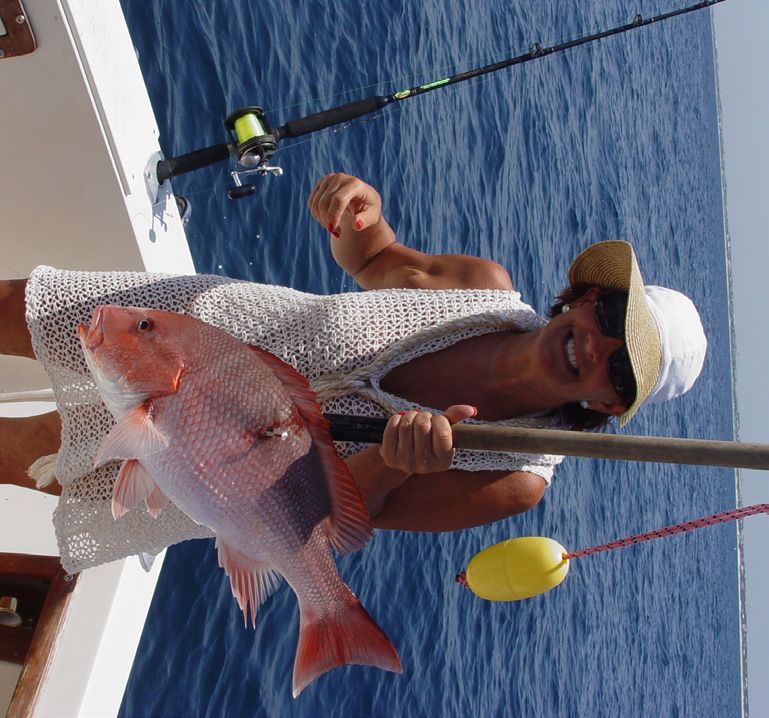
 Red Snapper          16” total length     Opens June 1                   2 per person
                                           Private Angler season closes
                                                                          Captain & crew may not retain a
                                           12:01 am local time June 11
                                                                          bag limit
                                           Federal CFH season closes
                                           12:01 am local time July 15
Vermilion             10” total length     Year round                     10 per person within the 20-reef
                                                                          fish combined total
Lane                  8” total length      Year round                     20 per person within the 20-reef
                                                                          fish combined total
Gray (Mangrove)       12” total length     Year round                     10 per person within the
Mutton                16” total length     Year round                     10-snapper combined total
Yellowtail & Cubera   12” total length     Year round
Queen                 none                 Year round                     Includes all snappers except red,
Blackfin              none                 Year round                     vermilion, and lane
Silk                  none                 Year round
Wenchman              none                 Year round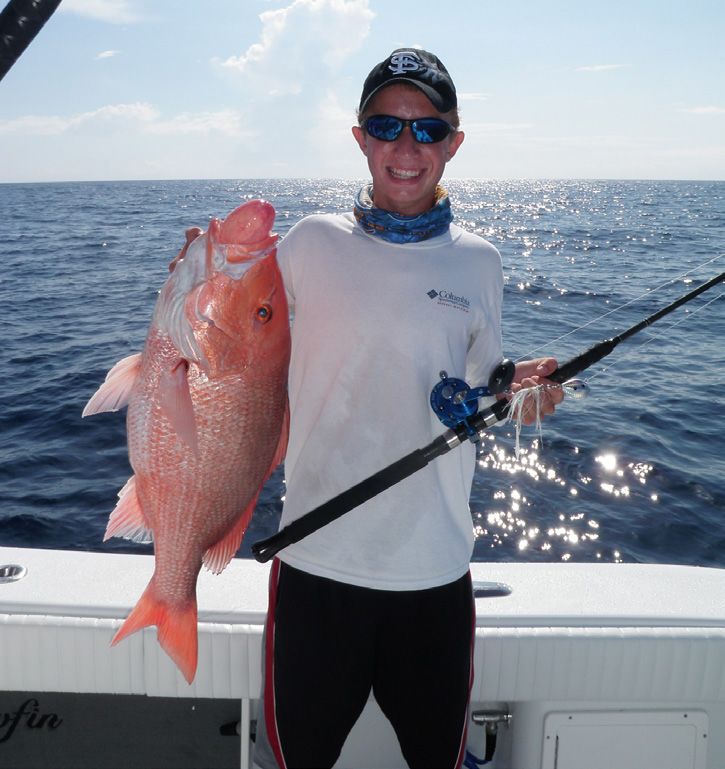
Reef Fish
    Groupers
                                                                                                   Daily Bag/Possession
    Species                     Minimum Size Limit Season
                                                                                                   Limit
    Shallow-water Groupers
    Black                       22” total length                 All Shallow-water                 4 per person combined
    Yellowfin                   20” total length                 grouper closed 2/1 - 3/31         4-grouper total
    Scamp                       16” total length                 when fishing beyond the
    Yellowmouth                 none                             20-fathom break.
                                                                 See Map next page.
    Red                         20” total length                                                   2 per person within 4- grouper
                                                                 NOTE: When fishing in state
                                                                                                   total NOTE: Red Grouper in-
                                                                 waters off Monroe County, South
                                                                                                   season closure effective Oct 8 -
                                                                 Atlantic regulations apply.
                                                                                                   Dec 31.
    Gag                          22” total length                July 1 - December 2               2 per person within the 4-fish
                                                                 Subject to in-season              combined grouper total
                                                                 closure
    Deep-water Groupers
4
    Yellowedge                  none                             Year round                        4 per person combined grouper
    Snowy                       none                             Year round                        total
    Speckled Hind               none                             Year round                        1 per vessel, included in the
    Warsaw                      none                             Year round                        4-fish combined grouper total
    Protected Groupers: Goliath (Jewfish) harvest and possession is prohibited.
    Other Reef Fish
                                                                                                   Daily Bag/Possession
    Species                  Minimum Size Limit                  Season
                                                                                                   Limit
    Hogfish                  12” fork length                     Year round                        5 per person
    Gray Triggerfish         14” fork length                     Closed June 1 - July 31           2 per person within the 20-reef
                                                                 NOTE: In-season Closure           fish combined total
                                                                 effective Feb 7 - Dec 31.
    Greater Amberjack        30” fork length                     Closed June 1 - July 31           1 per person
                             (34” size limit increase pending)   NOTE: In-season Closure           Captain & crew may not retain a
                                                                 effective Sept 28 - Dec 31.       bag limit

    Lesser Amberjack         14” - 22” fork length               Year round                        5-fish combined total
    Banded Rudderfish        14” - 22” fork length               Year round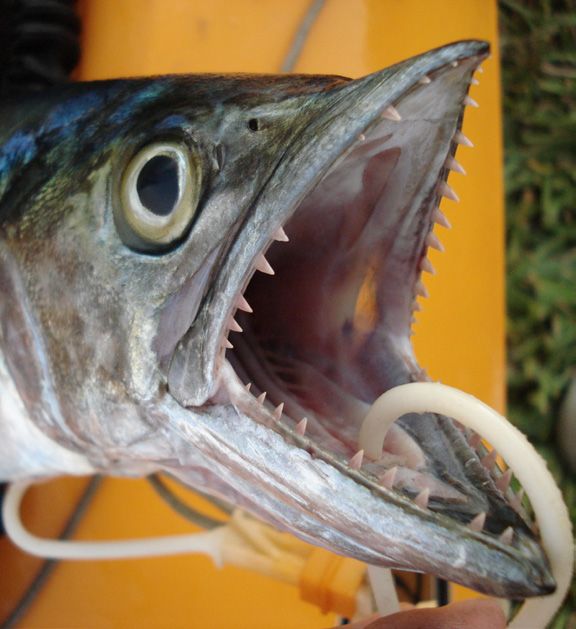
Map of the 20-fathom break

                                                                                                                     5

Species that are part of the 20-reef fish aggregate bag limit include:
Vermilion Snapper		 Tilefish (Golden)
Lane Snapper			Goldface Tilefish
Almaco Jack			Blueline Tilefish
Gray Triggerfish

NOTES:
For-hire captains and crew are prohibited from retaining bag limits of any grouper, greater amberjack, or red
snapper while under charter.
Federally permitted for-hire reef fish vessels must comply with the more restrictive of federal or state reef fish
regulations when fishing for reef fish in state waters.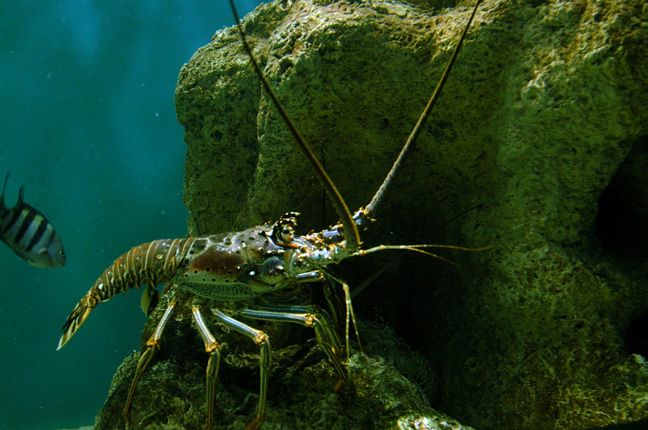
6    Coastal Migratory Pelagics

     Species                  Minimum Size Limit          Season                    Daily Bag/Possession Limit

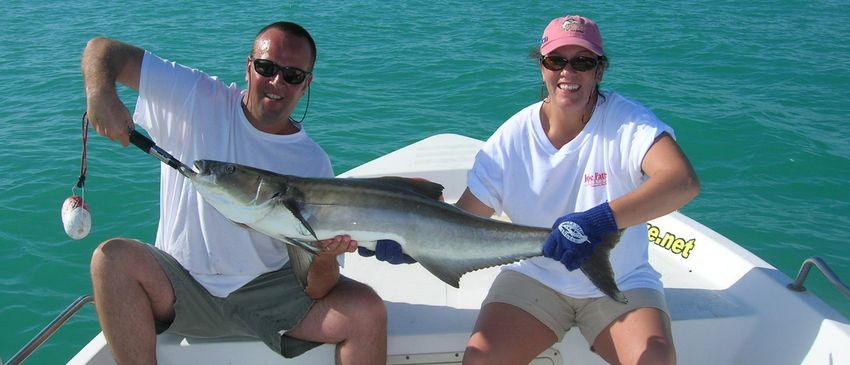
     Cobia (ling)*            33” fork length             Year round                2 per person

     King Mackerel            24” fork length             Year round                2 per person

     Spanish Mackerel         12” fork length             Year round                15 per person

    *The 2-day bag limit allowance for qualified charter vessels and headboats on a trip in excess of 24 hours does
    not apply to cobia.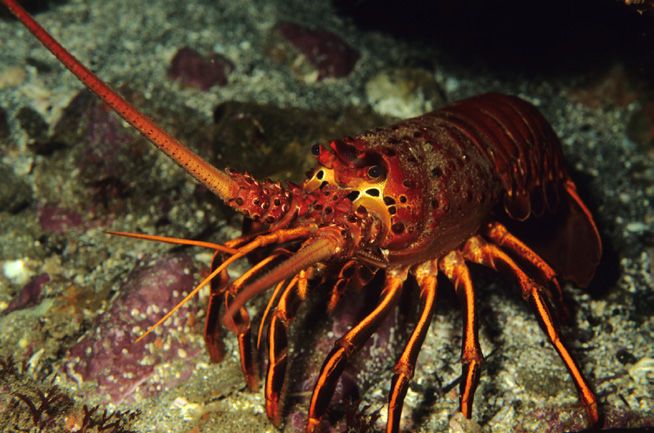
Shellfish

 Species                  Minimum Size Limit            Season                    Daily Bag/Possession Limit
 Spiny Lobster*           More than 3” carapace.        8/6 - 3/31                6 per person, no transfer at
                          Divers must measure in        A special 2-day,          sea between boats. During the
                          water.                        non-trap recreational     2-day special season - 12 per
                                                        season opens the          person off Florida, except 6
                                                        last consecutive          per person for Monroe County,
                                                        Wednesday and             Florida Keys.
                                                        Thursday in July

*Removal of tail prohibited at sea. See commercial regulations for trap use. No spears, hooks, or piercing devices.
No taking of egg-bearing spiny or slipper lobsters.

                                                                                                                      7

 Coral and Other Species

 Species                  Notes
 Live Rock                Harvest and possession of live rock is prohibited, except for permitted aquaculture
                          operations. Call 727-824-5763.
 Other Marine Life        Marine life organisms from the EEZ harvested or possessed by Florida residents or
 Organisms                landed in Florida are subject to Florida’s Marine Life Rule. Contact the Florida Fish and
                          Wildlife Commission for more information at 850-487-3122.
 Other Species

 Red Drum                 Illegal to harvest or possess in federal waters.
Recreational Permit Requirements
    Permit                                            Required for:

    Charter vessel/headboat coastal pelagics permit   Charter vessel and headboats fishing for mackerels, cobia,
                                                      little tunny, cero, dolphin, bluefish. NOTE: Issuance of new
                                                      permits is under a moratorium effective 6/16/2003.
    Charter vessel/headboat reef fish permit          Charter vessels and headboats fishing for snappers,
                                                      groupers, amberjack, tilefish, hogfish, and gray triggerfish.
                                                      NOTE: Issuance of new permits is under a moratorium
                                                      effective 6/16/2003.
    Highly migratory species (HMS) charter/headboat   All charter or headboats that fish for or possess highly
    permit                                            migratory species.

    HMS recreational angling permit                   Owners of vessels used to fish recreationally for Atlantic
                                                      HMS - Atlantic tunas (other than blackfin), billfish, sharks,
                                                      and swordfish.
8
Additional Rules
Two-Day Bag Limit Persons on qualified charter vessels or headboats with two captains for trips in excess
of 24 hours may possess a 2-day bag limit of reef fish, king mackerel, and Spanish
mackerel. One-day bag limits apply to all other species and trips, regardless of length.
Head & Fins Attached All fish, except for bait and oceanic migratory species, taken from federal waters must
have heads and fins intact through landing. Up to 1.5 pounds of finfish per person is
exempt from this rule for personal consumption, provided the vessel is equipped to
cook such finfish.
For-Hire Captains and For-hire captains and crew are prohibited from retaining bag limits of any grouper, red
Crew snapper, or greater amberjack while under charter.
Federally Permitted Federally permitted for-hire reef fish vessels must comply with the more restrictive of
For-Hire Reef Fish federal or state reef fish regulations when fishing for reef fish in state waters.
Vessels
Reef Fish as Bait The use of federally managed reef fish as bait is prohibited.
Non-Stainless Steel Non-stainless steel circle hooks, along with dehooking devices, are required when 9
Circle Hooks angling for reef fish in federal waters.
Gear Reef fish gear is limited to no more than 3 hooks in a special management zone off
of Alabama. Nonconforming gear is restricted to bag limit. For reef fish without a bag
limit, nonconforming gear is restricted to 5% by weight of all fish onboard.
Stressed Areas Use of roller trawls and power heads is prohibited in designated stressed areas.
Stressed areas for reef fish begin at the shoreward boundary of federal waters and
generally follow the 10 fathom contour from the Dry Tortugas to Sanibel Island; the
20 fathom contour to Tarpon Springs; the 10 fathom contour to Cape San Blas; the
25 fathom contour to south of Mobile Bay; the 13 fathom contour to Ship Island,
Mississippi; the 10 fathom contour off Louisiana; and the 30 fathom contour off Texas.
Sale of Recreationally Reef fish taken under the recreational bag limit may not be sold.
Caught Reef Fish
Care and Release of Operators of vessels with Gulf of Mexico reef fish commercial or charter vessel/head-
Incidental Catch of boat permits must comply with guidelines for proper care and release of incidentally
Smalltooth Sawfish caught smalltooth sawfish and sea turtles and must possess onboard specific gear to
and Sea Turtles ensure proper release of such species.Highly Migratory Species
All HMS species, except blackfin tuna, require an HMS Angling Category permit from NOAA Fisheries. Permits
are available by calling 888-872-8862, or by visiting www.nmfspermits.com. No sale permitted for HMS species
caught under an angling permit. Additional recreational reporting requirements apply for swordfish, billfish,
and Atlantic bluefin tuna. For complete HMS regulations contact NOAA Fisheries HMS Management Division at
301-713-2347, or visit www.nmfspermits.com.
For updates on tuna quota monitoring and tuna retention limit adjustments, anglers may call the Atlantic
Tunas Information Line at 888-872-8862 or visit www.nmfspermits.com. For more information on tunas,
contact the HMS Management Division at 978-281-9260. Recreational swordfish and billfish landings should
be reported to 800-984-5528.
Species Minimum Size Limit Season Daily Bag/Possession Limit
Tuna
Bluefin 27” curved fork length Bag limits are subject to sub-
quotas by size and permit
categories, change seasonally,
10
and are reduced to zero when
subquotas are filled
Bigeye 27” curved fork length Year round None
Yellowfin 27” curved fork length Year round 3 per person
Albacore None Year round None
Skipjack None Year round None
Blackfin None Year round None
Billfish Minimum size lower jaw to fork
Blue Marlin 99” lower jaw Year round None
White Marlin 66” fork length Year round None
Sailfish 63” fork length Year round None
Longbill Spearfish HARVEST PROHIBITED
Swordfish Whole fish: 47” lower jaw Year round 1 per person; max 4 per vessel (6
to tail per vessel for charter boats; 15
per vessel for headboats)Highly Migratory Species continued
Species Minimum Size Limit Season Daily Bag/Possession Limit
Sharks
All regulated sharks* 54” fork length Year round 1 per vessel per trip (any authorized
species)
*Exceptions:
Hammerhead (smooth, 78” fork length Year round 1 per vessel per trip (any authorized
great, & scalloped) species)
Atlantic sharpnose None Year round 1 per person
Bonnethead None Year round 1 per person
Prohibited Sharks-Recreational Harvest
Atlantic angel Bignose Longfin mako Sevengill
Basking Caribbean reef Narrowtooth Sixgill
Bigeye sand tiger Caribbean sharpnose Night Smalltail
Bigeye sixgill Dusky Sandbar Whale 11
Bigeye thresher Galapagos Sand tiger WhiteSpecies Identification
Artwork © Diane Rome Peebles
Red Snapper Silk Snapper
Vermilion Snapper Yellowtail Snapper
Lane Snapper Blackfin Snapper
12
Gray (Mangrove) Mutton Snapper
Snapper
Cubera Snapper Queen Snapper
HogfishSpecies Identification continued
Artwork © Diane Rome Peebles
Black Grouper Greater Amberjack
Gag Grouper Lesser Amberjack
Red Grouper Banded Rudderfish
13
Yellowmouth Cobia (ling)
Yellowfin Spanish Mackerel
Scamp King MackerelMeasurement Guidelines
Fork length: the straight-line distance from the tip of the head (snout) to the rear center edge of the tail
(caudal fin).
Total length: the straight-line distance from the tip of the snout to the tip of the tail (caudal fin), excluding any
caudal filament, while the fish is lying on its side. The mouth of the fish may be closed and/or the tail may be
squeezed together to give the greatest overall measurement.
Curved fork length: the tip of the jaw to form of tail measured along the contour of the middle of the body.
Carcass length: the curved measure from posterior edge of gill opening to anterior portion of caudal keel.
14Marine Sanctuaries and Area Closures
Flower Garden Banks National Marine Sanctuary
Below is a summary of regulated activity within the FGBNMS. For the full text, contact the Sanctuary office at
409-621-5151 or visit www.flowergarden.noaa.gov.
Fishing and Related Activities
The following activities are generally prohibited:
• Injuring, catching, harvesting, collecting or feeding, or attempting to injure, catch, harvest, collect or feed,
any fish within the sanctuary by use of any gear, device, equipment or means (e.g. spear guns, nets) except
by use of conventional hook and line gear.
• Possessing (except while passing through the sanctuary without interruption) any fishing gear, device,
equipment, or means except conventional hook and line gear.
• Possessing or using explosives or releasing electrical charges within the sanctuary.
Conventional hook and line gear means any fishing apparatus operated aboard a vessel and composed of a single line terminated by a
combination of sinkers and hooks or lures and spooled upon a reel that may be hand or electrically operated, hand-held or mounted.
Anchoring and Mooring
The following activities are prohibited:
• Anchoring any vessel within the Sanctuary. 15
• Mooring a vessel over 100 feet in registered length on a Sanctuary mooring buoy.
Discharges
Discharging or depositing any material or other matter within the Sanctuary is prohibited, with the following
exceptions:
• Fish, fish parts, chumming materials or bait used in or resulting from fishing with conventional hook and
line gear in the sanctuary.
• Clean effluent from an operable Type I or Type II marine sanitation devise (MSD).
• Clean water generated by routine vessel operations (e.g. engine exhaust, cooling water, deck wash down,
and gray water), excluding oily wastes from bilge pumping.
Injury to or Possession of Sanctuary Resources
The following activities are generally prohibited:
• Injuring or removing, or attempting to injure or remove, any coral or other bottom formation, coralline
algae or other plant, marine invertebrate (e.g., spiny lobster, queen conch, shell, sea urchin) brine-seep biota
or carbonate rock.
• Possessing within the Sanctuary (regardless of where collected), any coral or other bottom formation,
coralline algae or other plant, or fish (except for fish caught by use of conventional hook and line gear).
• Drilling into, dredging, or otherwise altering the seabed of the sanctuary; or constructing, placing, or
abandoning any structure, material, or other matter on the seabed of the Sanctuary.Marine Sanctuaries and Area Closures continued
Flower Garden Banks National Marine Sanctuary Boundary Coordinates (NAD)
East Flower Garden Bank Boundary Coordinates:
Position Latitude Longitude
A 27°59’14.4” N 93°38’58.2” W
B 27°59’14.4” N 93°34’03.5” W
C 27°52’36.5” N 93°34’03.5” W
D 27°52’36.5” N 93°38’58.2” W
A 27°59’14.4” N 93°38’58.2” W
16
West Flower Garden Bank Boundary Coordinates:
Position Latitude Longitude
A 27°55’22.8” N 93°53’09.6” W
B 27°55’22.8” N 93°46’46.0” W
C 27°49’03.0” N 93°46’46.0” W
D 27°49’03.0” N 93°53’09.6” W
A 27°55’22.8” N 93°53’09.6” WMarine Sanctuaries and Area Closures continued
Florida Keys National Marine Sanctuary
The following locations are closed to all fishing. Anchoring of fishing vessels is also not allowed. The boundaries
of the areas are as follows:
Tortugas North Ecological Reserve
Point Latitude Longitude
A 24°46’00” N 83°06’00” W
B 24°46’00” N 82°54’00” W
C 24°45’80” N 82°48’00” W
D 24°43’53” N 82°48’00” W
E 24°43’53” N 82°52’00” W
17
F 24°43’00” N 82°54’00” W
G 24°39’00” N 82°58’00” W
H 24°39’00” N 83°06’00” W
A 24°46’00” N 83°06’00” W
Tortugas South Ecological Reserve
Point Latitude Longitude
A 24°33’00” N 83°09’00 W
B 24°33’00” N 83°05’00” W
C 24°18’00” N 83°05’00” W
D 24°18’00” N 83°09’00” W
A 24°33’00” N 83°09’00” WMarine Sanctuaries and Area Closures continued
Florida Keys National Marine Sanctuary (FKNMS)
Tortugas North and South Ecological Reserves
83°10'W 83°8'W 83°6'W 83°4'W 83°2'W 83°0'W 82°58'W 82°56'W 82°54'W 82°52'W 82°50'W 82°48'W 82°46'W 82°44'W 82°42'W 82°40'W 82°38'W
¯
24°50'N
24°48'N
24°46'N
24°44'N
24°42'N
24°40'N
24°38'N
18
24°36'N
24°34'N
24°32'N
24°30'N
24°28'N
24°26'N
24°24'N
GMFMC HAPCs
Florida State waters boundary
24°22'N
Tortugas Ecological Reserves (2001)
24°20'N FKNMS Boundary
GMFMC Jurisdiction
24°18'N Land
0 5 10
24°16'N
M. Mueller 2014-02-27
Nautical MilesMarine Sanctuaries and Area Closures continued
The following locations off the west-central coast of Florida are closed to reef-fish fishing year round. Surface
trolling for species other than reef fish is allowed May 1 through October 31.
Madison-Swanson Marine Reserve:
Position Latitude Longitude
A 29°17’ N 85°50’ W
B 29°17’ N 85°38’ W
C 29°06’ N 85°38’ W
D 29°06’ N 85°50’ W
A 29°17’ N 85°50’ W
Steamboat Lumps Marine Reserve: 19
Position Latitude Longitude
A 28°14’ N 84°48’ W
B 28°14’ N 84°37’ W
C 28°03’ N 84°37’ W
D 28°03’ N 84°48’ W
A 28°14’ N 84°48’ WMarine Sanctuaries and Area Closures continued
The Edges 40 fathom contour is closed January 1 through April 30 to all fishing. The Edges is a 390 nautical
square mile region northwest of Steamboat Lumps.
The Edges Coordinates:
Position Latitude Longitude
A 28°51’00” N 85°16’00” W
B 28°51’00” N 85°04’00” W
C 28°14’00” N 84°42’00”W
D 28°14’00” N 84°54’00” W
A 28°51’00” N 85°16’00” W
20
Fishing with a bottom longline, bottom trawl, dredge, pot, or trap is prohibited year-round.
Middle Grounds
Position Latitude Longitude
A 28°42.5’ N 84°24.8’ W
B 28°42.5’ N 84°16.3’ W
C 28°11.0’ N 84°00.0’W
D 28°11.0’ N 84°07.0’ W
E 28°26.6’ N 84°24.8’ W
A 28°42.5’ N 84°24.8’ WMarine Sanctuaries and Area Closures continued
Fishing with a bottom longline, bottom trawl, buoy gear, pot, or trap and bottom anchoring by fishing vessels
are prohibited year-round.
Pulley Ridge
Position Latitude Longitude
A 24°58’18” N 83°38’33” W
B 24°58’18” N 83°37’00” W
C 24°41’11” N 83°37’00”W
D 24°40’00” N 83°41’22” W
E 24°43’55” N 83°47’15” W
A 24°58’18” N 83°38’33” W
McGrail Bank
Position Latitude Longitude 21
A 27°59’06.0”N 92°37’19.2” W
B 27°59’06.0” N 92°32’17.4” W
C 27°55’55.5” N 92°32’17.4”W
D 27°55’55.5” N 92°37’19.2” W
A 27°59’06.0” N 92°37’19.2” W
Stetson Bank Boundary Coordinates:
Position Latitude Longitude
A 28°10’38.3” N 94°18’36.5” W
B 28°10’38.3” N 94°17’06.3” W
C 28°09’18.6” N 94°17’06.3” W
D 28°09’18.6” N 94°18’36.5” W
A 28°10’38.3” N 94°18’36.5” WGulf of Mexico Federal Waters
The Gulf of Mexico Fishery Management Council manages fisheries in the federal waters of the Gulf of Mexico
Exclusive Economic Zone. From Texas and Florida, federal waters begin nine nautical miles out, and from
Mississippi, Louisiana and Alabama, federal waters begin three nautical miles out. Federal waters extend to the
200-mile limit of the Gulf of Mexico.
Title 50: Wildlife and Fisheries
Part 600 - Magnuson-Stevens Act Provisions
Subpart B - Regional Fishery Management Councils
§ 600.105 Intercouncil boundaries.
(c) South Atlantic and Gulf of Mexico Councils. The Boundary coincides with the line of demarcation between
the Atlantic Ocean and the Gulf of Mexico, which begins at the intersection of the outer boundary of the EEZ,
as specified in the Magnuson-Stevens Act, and 83°00’ W long., proceeds northward along that meridian to
24° 35’ N lat., (near the Dry Tortugas Islands), thence eastward along that parallel, through Rebecca Shoal and the
Quicksand Shoal, to the Marquesas Keys, and then through the Florida Keys to the mainland at the eastern end of
22
Florida Bay, the line so running that the narrow waters within the Dry Tortugas Islands, the Marquesas Keys and
the Florida Keys, and between the Florida Keys and the mainland are within the Gulf of Mexico.
State Authority in Federal Waters
A state may regulate vessels that are registered in that state and fishing in federal waters for species for which
there are no federal fishery management plans or applicable federal regulations, or for which the appropriate
fishery management plan has delegated management of the state and the state rules are consistent with federal
regulations.
NOTE: Federally permitted for-hire reef fish vessels must comply with the more restrictive of federal or state reef
fish regulations when fishing for reef fish in state waters.Important Phone Numbers
NMFS Operations Branch 727-824-5305
NMFS Permits and Regulations Branch 877-376-4877
(see below for tuna permit applications)
To apply for permits online visit www.nmfspermits.com
NMFS nationwide federal fishing violations hotline 800-853-1964
NMFS 24-hour tuna information line (also for tuna permits) 888-872-8862
NMFS Highly Migratory Species Division 301-713-2347
NMFS Swordfish/Billfish Recreational Reporting 800-894-5528
Flower Garden Banks National Marine Sanctuary 409-621-5151
Florida Keys National Marine Sanctuary 305-809-4700
23
South Atlantic Fishery Management Council 843-571-4366
Gulf States Marine Fisheries Commission 228-875-5912
U.S. Coast Guard, 7th District (Florida east of St. Marks) 305-415-6781
U.S. Coast Guard, 8th District (St. Marks, Florida to Texas) 504-671-2245
Regional NMFS Office for Law Enforcement 727-824-5344
NMFS Enforcement Field Offices:
St. Petersburg, Florida 727-824-5344
Marathon, Florida 305-743-3110
Niceville, Florida 850-729-8628
Slidell, Louisiana 985-643-6232
Galveston, Texas 409-770-0812
Harlingen, Texas 956-423-3450Important Phone Numbers continued
State Agencies
Alabama Department of Conservation & Marine Resources 251-861-2882
Information or to report state fishing violations 251-986-7576
24-Hour voice mail to report state fishing violations 251-476-1256
Florida Fish & Wildlife Conservation Commission Information 850-488-4676
To report state fishing violations 850-488-9924
888-404-3922
Cellular phone *FWC
Louisiana Department of Wildlife & Fisheries Information 225-765-2800
To report state fishing violations 800-442-2511
24 Mississippi Department of Marine Resources Information and 228-374-5000
to report state fishing violations
Texas Parks & Wildlife Department Information 800-792-1112
To report state fishing violations 800-792-gameRegulation Changes and Updates
Supplemental “update sheets” will be published periodically to reflect changes in fishing
regulations implemented since this pamphlet was published. For up-to-date regulations visit
www.gulfcouncil.org or download our free regulations app. Just visit the Android Market or
iTunes and search for “Gulf Council”.
NOTE: The Official Electronic Code of Federal Regulations for 50 CFR 622 for Fisheries of the
Caribbean, Gulf of Mexico and South Atlantic is available online. Please visit www.gpoaccess.
gov/cfr/index.html.
25
Photos courtesy of: Jeff Berman, Mark Braxton, Ben Leininger, Mark Miller, Emily Muehlstein,
Florida Sea Grant, NOAA Photo Library, iStock PhotoNOTES: ___________________________________________________________________________ ___________________________________________________________________________ ___________________________________________________________________________ ___________________________________________________________________________ ___________________________________________________________________________ ___________________________________________________________________________ ___________________________________________________________________________ ___________________________________________________________________________ ___________________________________________________________________________ ___________________________________________________________________________ ___________________________________________________________________________ ___________________________________________________________________________ ___________________________________________________________________________ ___________________________________________________________________________ ___________________________________________________________________________ ___________________________________________________________________________ ___________________________________________________________________________ ___________________________________________________________________________
NOTES:
___________________________________________________________________________
___________________________________________________________________________
___________________________________________________________________________
___________________________________________________________________________
___________________________________________________________________________
___________________________________________________________________________
___________________________________________________________________________
___________________________________________________________________________
___________________________________________________________________________
___________________________________________________________________________
___________________________________________________________________________
___________________________________________________________________________
___________________________________________________________________________
___________________________________________________________________________
___________________________________________________________________________
___________________________________________________________________________
___________________________________________________________________________
___________________________________________________________________________
NOTES:
___________________________________________________________________________
___________________________________________________________________________
___________________________________________________________________________
___________________________________________________________________________
___________________________________________________________________________
___________________________________________________________________________
___________________________________________________________________________
___________________________________________________________________________
___________________________________________________________________________
___________________________________________________________________________
___________________________________________________________________________
___________________________________________________________________________
___________________________________________________________________________
___________________________________________________________________________
___________________________________________________________________________
___________________________________________________________________________
___________________________________________________________________________
___________________________________________________________________________
p | 813-348-1630 e | gulfcouncil@gulfcouncil.org w | www.gulfcouncil.org
You can also read


