RESEARCH ON GEOTECHNICAL EARTHQUAKE IN THE HUMAN SETTLEMENT OF LIMA-PERU - RICARDO PALMA UNIVERSITY
←
→
Page content transcription
If your browser does not render page correctly, please read the page content below
RICARDO PALMA UNIVERSITY
 FACULTY OF ENGINEERING

 CIVIL ENGINEERING
 RESEARCH INSTITITUTE

   RESEARCH ON
  GEOTECHNICAL
EARTHQUAKE IN THE
HUMAN SETTLEMENT
   OF LIMA-PERU
RESEARCH ON
GEOTECHNICAL
EARTHQUAKE IN
THE “HUMAN
SETTLEMENTS”
OF LIMA-PERU

ADVISERS:
Dr. ARNALDO CARRILLO GIL
Ing. OSCAR DONAYRE CORDOVA
1. INTRODUCTION
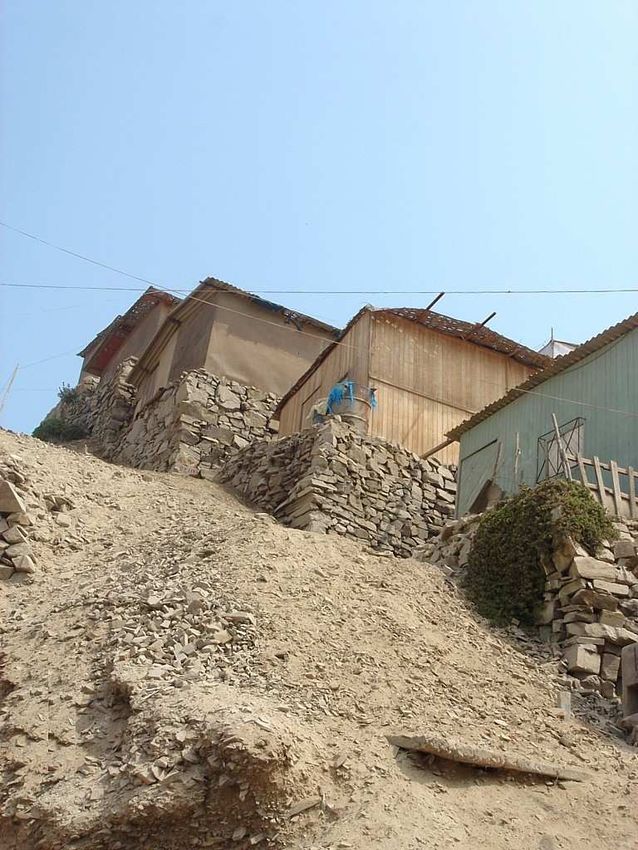
With field explorations and the
obtained information from surveys
made by the students, many places
were    identified   where      common
construction of “pircas” were used. A
model was developed in order to
analyze their static and seismic
conditions, considering the earthquake
magnitude according to the site
seismic recurrence and building
characteristics as well as their risk and
vulnerability due to more common
disasters.

                                                      Geotechnical model

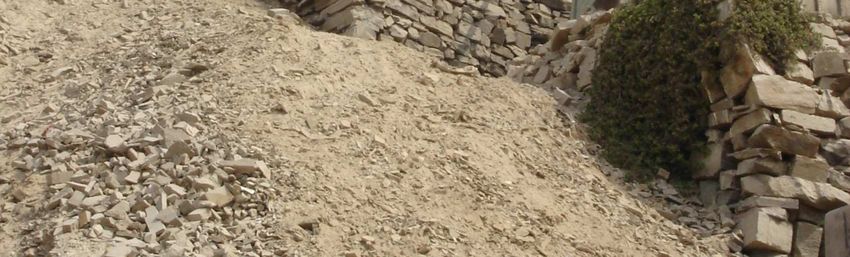
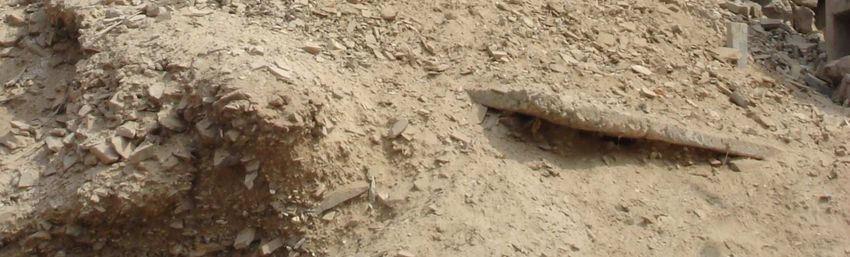
     Typical foundations on “pircas”           In situ model of “pircas” foundation

A typical case of slope failure was         2. GEOTHECNICAL CONDITIONS
considered in order to determine            In the field were made penetration
through back analysis and test in situ,     tests and exploration pits and then
the resistance average parameters to        tested in the laboratory each soil
shear strength. Data was evaluated on       sample extracted.
laboratory, in a real scale prototype       From a statistical standpoint, the
with the geotechnical site conditions. In   survey of a sample of the population of
addition, geological characteristics of     the area to evaluate the situation and /
the site were also considered.              or condition of building their homes
                                            and the behavior of people in an
                                            earthquake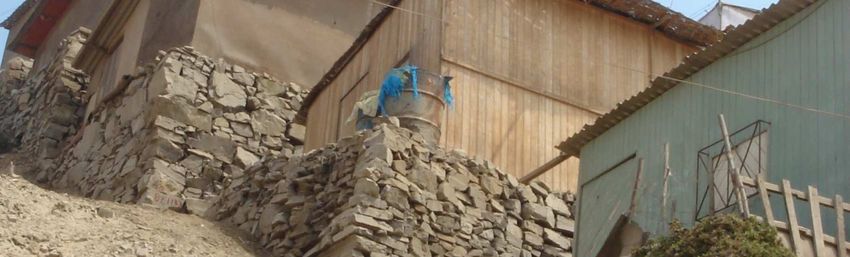
It   took     the    dimensions    and
                                           characteristics of the house collapsed
                                           as shown in the following figure.

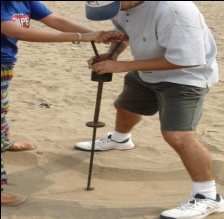
                Field Works

3. METHODS        FOR GEOTHECNICAL
DESIGN

3.1 Slide 5.0
Slide 5.0 is a 2D program Slope
stability to evaluate the stability of
circular or no circular failure surfaces
of soil or rock slopes. You can create          Measurements of the collapse
complex models, modeling external
loads, groundwater and supports a
variety of ways.                           5. CALCULATION OF THE
                                           PARAMETERS OF SHEAR STRENGTH
                                           OF SOILS
3.2 Slope/W                                In this study the calculation of these
El software Slope/W is a product tha       parameters was made by the Method
use the balance limit to calculate the     of retro Analysis because there was no
security factor on earth and rock          such information at the moment of the
slopes. Slope/W has an application for     collapse.
the analysis and geothecnical, civil
design,    and  projects    of    mine
engineering.

3.3 MacStar 2000
The program MacStar 2000 has been
developed to verify the stability of
reinforced soil, which are structures
that provide stability on a slope using
units of reinforcements that can absorb
tensile stress.

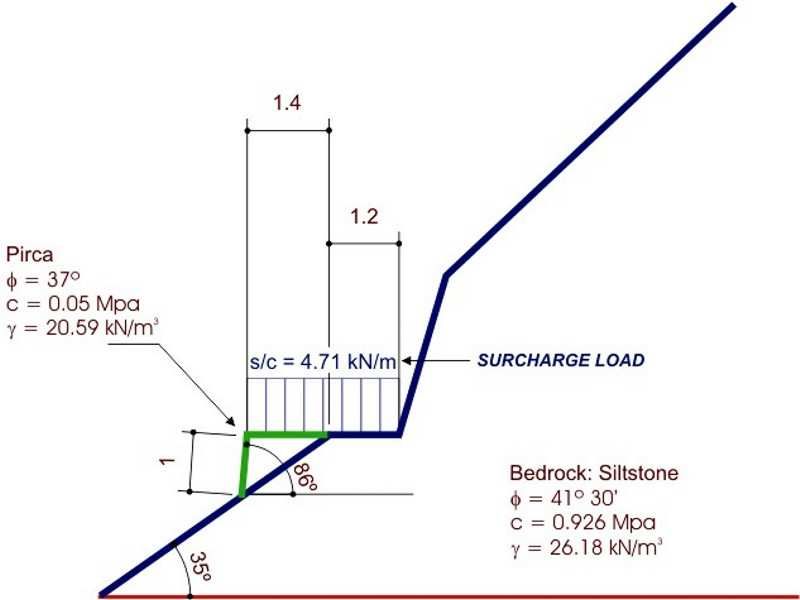
4. MODELING OF THE COLLAPSE
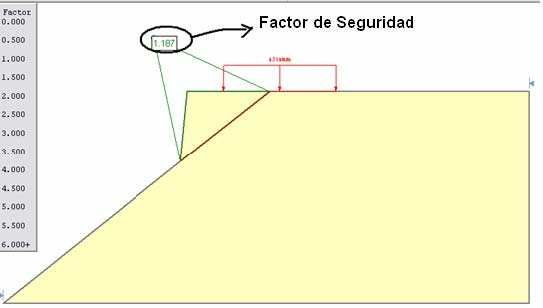
AREA                                        Screen of Slide 5.0 showing one of the
                                                         safety factors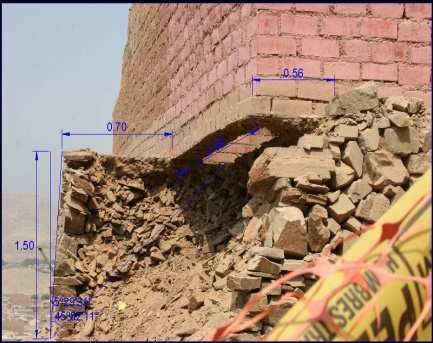
6. SEISMIC ACCELERATION                     8. CONCLUSSIONS AND
COEFFICIENTS                                RECOMMENDATIONS
For the particular case of the software     1.   The failure rate of housing
you need to have additional data                 construction in these settlements is
seismic    acceleration     coefficients,        really alarming because of the lack
horizontal and vertical, especially for          of supervision or technical criteria.
the analysis of the model under             2.   The vulnerability of households in
dynamic condition.                               most human settlements because
                                                 they are located on hill slopes, with
    Seismic acceleration coefficients            a foundation inappropriate, a very
                                                 steep slope and with materials that
   Horizontal               0.15                 do not guarantee static and
                                                 dynamic stability of the building.
     Vertical              0.072            3.   This vulnerability is directly related
                                                 to the safety factors calculated by
                                                 different methods that have been
                                                 presented,       the     same       as
                                                 determining whether an area is
                                                 stable or not.
7. DISCUSSION RESULTS
                                            4.   “Human Settlements” those are
                                                 most vulnerable due to the high
Results show safety factors that are             recurrence of the use of stone
lower than 1, and significantly lower in         walls.
case of an earthquake of shallow            5.   The survey techniques found in
acceleration of 0.30g and magnitude of           each field work demonstrate the
7.5Mw, values which point out that it is         absence of information to the
not necessary an earthquake to cause             residents of these sectors has on
slides on the foundation. Because of             the direct or indirect damages that
these results, it is essential to check          result in a collapse.
for practical and economical solutions      6.   This paper has complied with its
in order to avoid material and human             commitment to demonstrate the
losses (Figure 8). The progress of               vulnerability of this type of existing
these studies allows us to establish the         foundations type Pirca.
construction     process    in    walls,
platforms, and foundations.

             Factor of Safety               REFERENCES
   Factor of           Condition            – Braja M. Das, “Principles of
     Safety                                   Foundation Engineering”, Fourth
Method            Static        Seismic
                                              Edition.
 Slide 5.0        0.913          0.755      – Carrillo Gil, Arnaldo “Geotecnia de
                                              los Suelos Peruanos” Instituto
 Slope/W          0.847          0.712        Peruano de Ingeniería Geotécnica y
                                              Geoambiental, Lima, Perú.
 McStar                                     – Carrillo Gil, Arnaldo, “Peligro
                  0.911          0.701
 2000                                         sísmico en los Barrios Marginales
                                              del Sur”, Conferencia Instituto
                                              Peruano de Ingeniería Geotécnica y
Geoambiental, CIP, CDL, Lima,          – Sandoval,      Israel,   “Evaluación
    Perú.                                    Geotécnica y Sísmica de los
–   Carrillo Gil, Arnaldo “Education and     Asentamientos Humanos del Norte
    Practice: The Peruvian experience”       de Lima Metropolitana”, Tesis de
    17th International Conference on         Grado Universidad Ricardo Palma.
    Soil Mechanics and Geotechnical        – Slide 5.0, “2D Limit Equilibrium
    Engineering, Alexandria, Egypt.          Slope Stability for Soil and Rock
–   Donayre, Oscar, “Evaluación del          Slopes”, Manual de Usuario, Cap. 1
    Comportamiento de los Suelos             y 2, Rocscience Inc.Slope/W, User’s
    Granulares Finos del Sur de Lima         Guide.
    Metropolitana”, Tesis de Grado         – Torres, César, “Valoración del
    Universidad Ricardo Palma.               Riesgo en Deslizamientos”, Tesis
–   Hoek, Evert, “Hoek – Brown Failure       de Grado Universidad Ricardo
    Criterion”, Edición 2002, pag. 1-7.      Palma..
–   Juárez Badillo, Rico Rodríguez,        – Whitman, Robert V., “Dynamic
    “Mecánica de Suelos”, Tomo 1             Behavior of Soils and its Application
    Editorial Limusa S.A.                    to Civil Engineering Projects”, Sixth
–   Kramer, Steven L., “Geothecnical         Panamerican Conference on Soil
    Earthquake Engineering”, University      Mechanics        and      Foundation
    of Washington, Prentice Hall, New        Engineering, Lima – Perú.
    Jersey, Cap. 11, pags. 466 – 505.      – Whitman, Robert V., “Limiting Cases
–   RocLab, User’s Guide, pags. 1 – 27.      for Distribution of Lateral Stress,
                                             Sixth Panamerican Conference on
                                             Soil Mechanics and Foundation
                                             Engineering, Lima – Perú.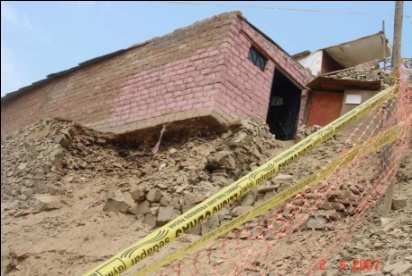
You can also read


