Reviewing your assessment policies and practices
←
→
Page content transcription
If your browser does not render page correctly, please read the page content below

Reviewing your assessment
policies and practices
Nau mai, haere mai. Afio mai. Welcome to our webinar.
While you are waiting, think about:
why schools and teachers should review their assessment
practices.
During the webinar please mute your sound:
We plan to record the session. Go to www.nzai.org.nz/knowledge-
centre/webinars next week.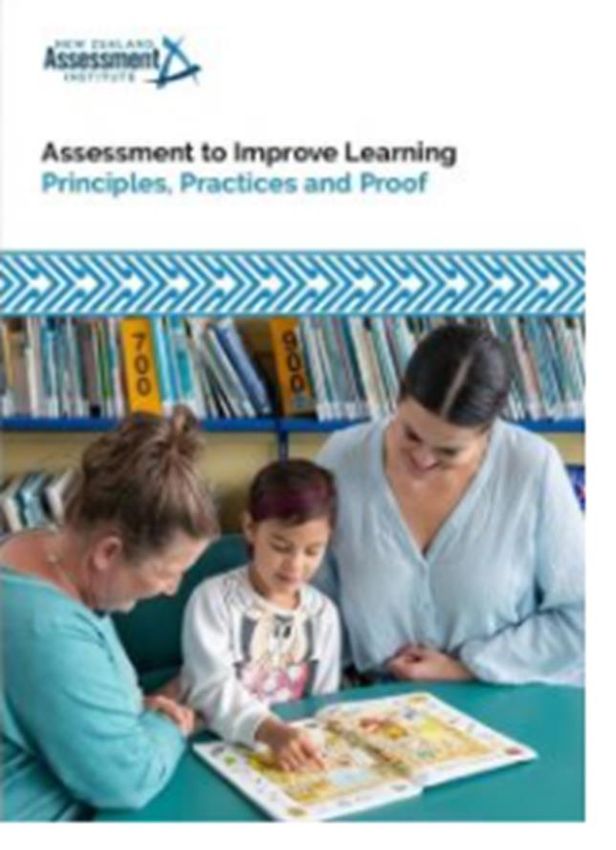
Reviewing your assessment policies and practices
NZAI Executive Members: Dr Jenny Poskitt and Adrienne Carlisle, 29 July, 2021

Session overview
What do we mean by assessment?
Guiding documents – Assessment
PPP and Companion Guide
Reviewing your assessment
practices – who?
Reviewing your assessment
practices – how?
Group discussions
What do we mean by assessment?
All those activities by which teachers and students are
able to measure progress and achievement in order to
improve learning and teaching
Teacher observations
Learning conversations
Assessment of class work and feedback
Self and peer assessment against established criteria
Informal teacher-made tests, quizzes
More formal assessment, such as e-asTTle and PAT
NCEA internal and external assessment
What are the Assessment PPP and its
Companion Guide?
The documents have been published by NZAI to assist schools by
defining the principles, practices and proofs of good educational
assessment.
Two copies were sent to all schools earlier this year.
Online access is available at https://www.nzai.org.nz/knowledge-
centre/assessment-ppp/
They help schools to evaluate the extent to which their classroom and
organisational assessment practices do actually support teaching and
learning.
They are based on the fundamental belief that assessment goes hand in
hand with learning and teaching to improve student progress and
achievement.
Assessment principles
1.   Assessment guides improvement in learning and teaching.
2.   Assessment builds student agency.
3.   Necessary and sufficient evidence of progress and
     achievement is gathered using a range of assessment
     approaches.
4.   Curriculum is interconnected with learning, teaching and
     assessment.
5.   Assessment is fair and serves the learning of all students.
6.   Assessment information is dependable.
7.   Assessment information is essential at all tiers of the
     education system.
There’s so
much here.
Where to
start?

A basic suggestion for introducing the Assessment
PPP to your staff
Leaders introduce the Assessment PPP in
a staff meeting.
Form into groups of between three to
five people.
Give each group a copy of one of the
principles. (Principle 7 can be discussed
by more than one group. It’s very long!)
Groups have ten minutes to read about
their principle, highlight, take notes,
discuss and prepare for general
presentation.
A presenter chosen from the group has 90
seconds to present key information.
Helpful accessories!
Timers
https://www.online-
stopwatch.com/classroom-timers/
Rocket timer - https://www.online-
stopwatch.com/rocket-timer/
Random name and number pickers
https://www.online-
stopwatch.com/random-name-
pickers/
Fishing random name or number picker
https://www.online-
stopwatch.com/random-name-
pickers/fishing-name-picker/
Where to from here?
Preferred groupings can then dive further
into a review of their assessment practices.
Examples of groupings are:
Individual reflection
Departmental or syndicate meetings
Further whole staff meetings
Leadership meetings
What do you think? How can you
organise to make it happen?Now that you’ve chosen groups, where to
start? You can’t do everything at once!
Take a careful look at the principles in the Assessment
PPP. What needs most attention? Student agency?
Relationships with parents and whānau? Use of assessment
information to improve learning and teaching?
Choose a section.
Start there!
Let’s give it a go, working in breakout groups!Review of Principle 1: Assessment guides
improvement in learning and teaching
These are just a couple of the questions you could ask about
Principle 1. They are deceptively simple! (Books have been
written about the topics.)
How do we use assessment information to improve learning?
How much do students know about where they are in their
learning and what they need to do next? How do we know?
You have 10 minutes to work with your breakout group to discuss
these questions.Thoughts? Who wants to talk?
Do we have time for another discussion? Let’s take one of the discussion starters from the PPP Companion Guide. It feels very straightforward, but answers can illuminate fundamental misunderstandings and possible gaps in policies and practices. What worries me/us about assessment? You have 10 minutes to work with your breakout group to discuss this question, if we have time. If not, it’s a good starter for group discussions back in your work place.
To recap...
The vision of the Assessment PPP and its Companion
Guide is to help unleash the power of assessment to
transform the lives of our learners.
Dive into the documents! There’s no right way to do
it. Use them to generate discussion and
improvements in your policies and practices.You can also read


