ROME - SAPIENZA UNIVERSITY - PATIENTS CENTERED MEDICINES DEVELOPMENT: 20TH INTERNATIONAL CONFERENCE ON PHARMACEUTICAL MEDICINE - SWAPP ...
←
→
Page content transcription
If your browser does not render page correctly, please read the page content below

ROME - Sapienza University
20th International Conference on Pharmaceutical Medicine
Patients Centered Medicines Development: 25/26
                                            March
             Facts and Expectations         2020
1st National SIMeF Conference 27 March 2020

                                                                                                            1
                                       20th International   Conference
                                                     20th International    on Pharmaceutical
                                                                        Conference on PharmaceuticalMedicine
                                                                                                     Medicine

                                       Patients Centered   Medicines
                                                  Patients Centered    Development:
                                                                    Medicines Development:
                                       Facts and Expectations
                                                            Facts and Expectations
                                       1st National SIMeF Conference
PARTNERS

                                                                         ASSOBIOTEC
                                                                         Associazione nazionale per lo sviluppo
                                                                         delle biotecnologie

                                                                                                                  THE FACULTY OF PHARMACEUTICAL MEDICINE

              With the unconditioned support of
              PLATINUM SPONSOR

              GOLD SPONSOR

              SILVER SPONSOR

                                                                ®
partners/sponsors

            2
              20th International Conference on Pharmaceutical Medicine
              Patients Centered Medicines Development:
              Facts and Expectations
              1st National SIMeF Conference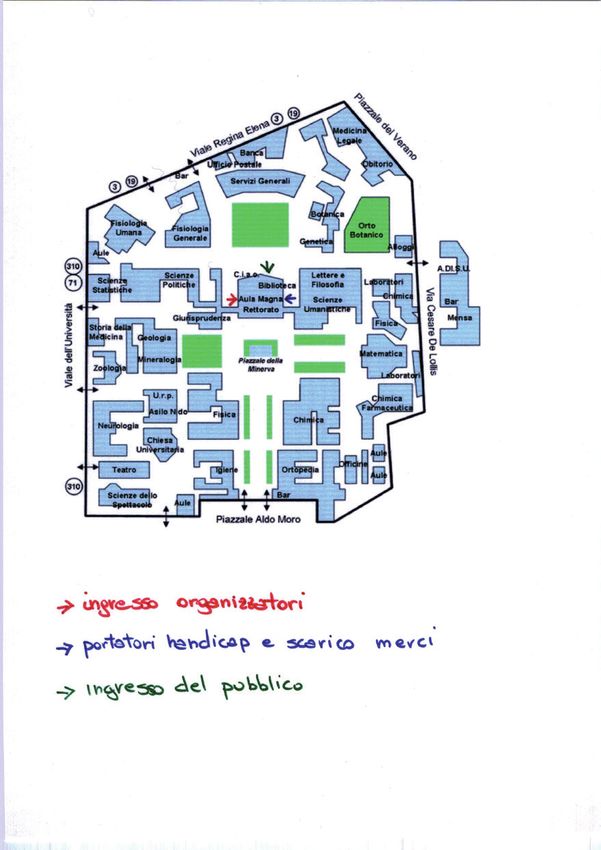
XX ICPM and I SIMeF Conference
IFAPP (the International Federation of Associations of Pharmaceutical Physicians and
Pharmaceutical Medicine) and SIMeF (the Italian Association of Pharmaceutical Medici-
ne) are proud to announce the forthcoming XX ICPM (International Conference on Phar-
maceutical Medicine) and the I SIMeF National Conference, which are jointly organized in
March 2020 in Rome.
Please mark in your calendar the dates of March 25-26-27, 2020: we do hope to see many
of you at the Conference Center of Sapienza University in Rome.
The Conference title is “Patients Centered Medicines Development: Facts and Expecta-
tions”: in commenting this event, IFAPP President Dr. Kyoko Imamura said “ICPM has been
the important opportunity of scientific update for us as professionals in pharmaceutical
medicine and we are delighted to develop it in Rome, where decades long efforts have
generated dedicated pharmaceutical physicians and medicines development scientists”.
Dr. Marco Romano, SIMeF President and IFAPP President Elect added “I have the privilege
and the pleasure to host both the XX ICPM and the I SIMeF Conference in Rome: it is a uni-
que opportunity for my country and especially for my Italian colleagues who may meet
international speakers and collaborators”.
The International part of the Conference will cover the first two days, with 2 keynote
speeches (CIOMS Secretary and Telethon Director), a round table of education in Phar-
maceutical Medicine, 2 plenary sessions on the role of patients in drug development and
the modern vision of Medical Affairs, and 8 parallel sessions during the two afternoons.
The National part of the Conference will be held on the third day, March 27, and will have
a morning session devoted to a round table on the status of clinical research in Italy. In
the afternoon the General Assembly will take place and then a session devoted to Medical
Devices.
The final program has been distributed to all National Associations of Pharmaceutical
Medicine.
Enjoy Rome in March 2020!

                Kyoko Imamura                                Marco Romano
               (IFAPP President)                            (SIMeF President)

                                                                                                                          3
                                                                   20th International Conference on Pharmaceutical Medicine
                                                                   Patients Centered Medicines Development:
                                                                   Facts and Expectations
                                                                   1st National SIMeF Conference
SESSION CHAIRS

                          Alessandra Aloe                              Giuseppe Assogna     Marie-Georges Besse

                       Salvatore Bianco                                Domenico Criscuolo   Gianni De Crescenzo

                       Brigitte Franke-Bray                             Kyoko Imamura       Sandor Kerpel-Fronius
Session Chairs

                       Gustavo Kesselring                                Xavier Luria       Kotone Matsuyama

          4
            20th International Conference on Pharmaceutical Medicine
            Patients Centered Medicines Development:
            Facts and Expectations
            1st National SIMeF Conference
Cosimo Paga       Anna Piccolboni                  Betty Polikar

 Elisabetta Riva    Marco Romano                Johanna Schenk

Honorio Silva       Peter Stonier         Pol Vandenbroucke                                 Session Chairs

                                                                                            5
                                     20th International Conference on Pharmaceutical Medicine
                                     Patients Centered Medicines Development:
                                     Facts and Expectations
                                     1st National SIMeF Conference
SCIENTIFIC COMMITTEE                                     ORGANIZING COMMITTEE
                                                      Marie-Georges Besse                                      Giuseppe Assogna
                                                      Salvatore Bianco                                         Rossana Benetti
                                                      Roberto Braguti                                          Alberto Boffi
                                                      Sergio Caroli                                            Domenico Criscuolo
                                                      Domenico Criscuolo                                       Gianni De Crescenzo
                                                      Gianni De Crescenzo                                      Brigitte Franke-Bray
                                                      Dominique Dubois                                         Kyoko Imamura
                                                      Mike Hardman                                             Anna Jurczynska
                                                      Kyoko Imamura                                            Gustavo Kesselring
                                                      Sandor Kerpel-Fronius                                    Anna Piccolboni
                                                      Gustavo Kesselring                                       Marco Romano
                                                      Xavier Luria                                             Honorio Silva
                                                      Rory O’Connor
                                                      Betty Polikar
                                                      Marco Romano
                                                      Beate Schmidt
                                                      Honorio Silva
                                                      Peter Stonier
                                                      Tamas Suto
                                                      Pol Vandenbroucke
Scientific Committee / Organizing Committee

                                                                                                      NOTES

                                                                                                ORGANIZING SECRETARIAT

                                6
                                     20th International Conference on Pharmaceutical Medicine
                                      Patients Centered Medicines Development:
                                      Facts and Expectations
                                     1st National SIMeF Conference
FACULTY
Alessandro Aiuti – Italy                    Sergio Liberatore – Italy
Alessandra Aloe – Italy                     Xavier Luria – Spain
Simona Aloe – Italy
Giuseppe Assogna – Italy                    Paolo Marchetti – Italy
                                            Chiara Marchiori – Italy
Loredana Bergamini – Italy                  Kotone Matsuyama – Japan
Richard Bergström – Switzerland             Sylvie Menard – Italy
Marie-Georges Besse – Italy                 Silvia Michelagnoli – Italy
Salvatore Bianco – Italy                    Stefan Mühlebach – Switzerland
Alan Boyd – United Kingdom
                                            Pierluigi Navarra – Italy
Domenico Criscuolo – Italy                  Alfonso Negri – Italy
                                            Nicola Normanno – Italy
Gianni De Crescenzo – Italy
Isabelle De Zegher – Belgium                Cosimo Paga – Italy
                                            Francesca Pasinelli – Italy
Hans-Georg Eichler – The Netherlands        Anna Piccolboni - Italy
                                            Betty Polikar – Italy
Giovanni Fiori – Italy
Brigitte Franke-Bray – Switzerland          Lembit Rägo – Switzerland
Francois Xavier Frapaise – France           Friedrich Rippmann – Germany
                                            Elisabetta Riva – Italy
Stefano Gambardella – Italy                 Marco Romano – Italy
Andrew Gray – United Kingdom
Vanesa Gregorc – Italy                      Alberto Sanna – Italy
                                            Massimo Scaccabarozzi – Italy
Michael Hennig – Germany                    Roberto Scalamogna – Italy
Tim Higenbottam – United Kingdom            Johanna Schenk – Germany
                                            Honorio Silva – United States of America
Kyoko Imamura – Japan                       Peter Stonier – United Kingdom
                                            Tamas Suto – France
Kenneth Kaitin – United States of America
Sandor Kerpel-Fronius – Hungary             Pol Vandenbroucke – United States of America
Gustavo Kesselring – Brazil
Ingrid Klingmann – Belgium                  Entela Xoxi – Italy
Otmar Kloiber – Switzerland
Charlotte Kremer – The Netherlands
Paola Krüger – Italy
                                                                                                                         Faculty

                                                                                                                         7
                                                                  20th International Conference on Pharmaceutical Medicine
                                                                  Patients Centered Medicines Development:
                                                                  Facts and Expectations
                                                                  1st National SIMeF Conference
March 25 AM: Plenary Session in Aula Magna
    9,00 - 9,45                  Official opening by Kyoko Imamura and Marco Romano, the Dean of Sapienza
    		                           University, the President of Farmindustria and the AIFA Director
    9,45 – 10,15 Patients involvement in drug development
    		 Lembit Rägo (CIOMS secretary)
    10,15 – 10,45                A new role for patients
    		                           Francesca Pasinelli (Telethon Director)
    10,45 – 11,15                Coffee

    11,15 – 13,00                Round Table: Education in Medicines Development: the stakeholders’ perspective
                                 Chairs: Honorio Silva (IFAPP) and Peter Stonier (Faculty of Pharmaceutical Medicine)

    13,00 - 14,00 Buffet lunch

    March 25 PM: 2 Parallel Sessions

    Aula Magna
    14,00 – 15,45                Role of precision medicine in clinical trials and clinical practice
                                 Domenico Criscuolo (IFAPP)
    		                           Betty Polikar (SIMeF)
    15,45 – 16,15                Coffee

    16,15 –16,45                 Guided tour to posters by Kyoko Imamura and Marco Romano
    16,45 – 18,30               Biomarkers and translational medicine
                                Sandor Kerpel-Fronius (IFAPP)
    		                          Cosimo Paga (SIMeF)

    Aula Rettorato (downstairs)
    14,00 – 15,45 Ethical challenges in medicines development: e-consent and genetic research
                  Kotone Matsuyama (IFAPP)
    		 Elisabetta Riva (SIMeF)
    15,45 – 16,15 Coffee

    16,15 – 16,45                Guided tour to posters by Kyoko Imamura and Marco Romano
    16,45 – 18,30
       Access to medicines
       Kyoko Imamura (IFAPP)
    		 Giuseppe Assogna (SIMeF)

8
20th International Conference on Pharmaceutical Medicine
Patients Centered Medicines Development:
Facts and Expectations
1st National SIMeF Conference
March 26 AM: Plenary Session in Aula Magna
       9,00     IFAPP General Assembly

9,00 – 11,00    Patients centered clinical development
                Pol Vandenbroucke (IFAPP)
		              Gianni De Crescenzo (SIMeF)
11,00 – 11,30   Coffee

11,30 – 13,30   The modern vision of Medical Affairs
                Gustavo Kesselring (IFAPP)
		              Marie-Georges Besse (SIMeF)
13,30 – 14,30   Buffet lunch

March 26 PM: 2 Parallel Sessions

Aula Magna
14,30 – 16,00   Continuous education in Pharmaceutical Medicine
                Honorio Silva (IFAPP)
                Marco Romano (SIMeF)
16,00 – 16,20   Coffee
16,20 – 17,50   Artificial Intelligence - the new pathway to healthcare innovation?
                Brigitte Franke-Bray (IFAPP)
                Anna Piccolboni (SIMeF)

Aula Rettorato (downstairs)
14,30 – 16,00   Is RWE adding findings to drug safety?
                Xavier Luria (IFAPP)
		              Alessandra Aloe (SIMeF)
16,00 – 16,20   Coffee
16,20 – 17,50   New clinical trial protocol designs/master protocols
                Johanna Schenk (IFAPP)
		              Salvatore Bianco (SIMeF)

Aula Magna
       18,00    Awards ceremony; (SMD, Posters, IFAPP Academy, Heroes in PhM);
                Nomination of President Elect and Location of ICPM2022
       18,30    End of ICPM2020

                                                                                                                                9
                                                                         20th International Conference on Pharmaceutical Medicine
                                                                         Patients Centered Medicines Development:
                                                                         Facts and Expectations
                                                                         1st National SIMeF Conference
Round table - March 25
               Aula Magna
               from 11,15 to 13,00

               Education In Medicines Development: The Stakeholders’ Perspective
               Chairs: Honorio Silva (IFAPP) and Peter Stonier (Faculty of Pharmaceutical Medicine)

               Participants:
                    • Tim Higenbottam (Faculty of Pharmaceutical Medicine)
                    • Otmar Kloiber (World Medical Association)
                    • Kenneth Kaitin (Tufts University Center for Studies in Drug Development)
                    • Ingrid Klingmann (EUPATI-PharmaTrain)
                    • Francesca Pasinelli (Telethon)
                    • Lembit Rägo (CIOMS Secretary-General)
                    • Marco Romano (IFAPP/SIMeF)
                    • Massimo Scaccabarozzi (Farmindustria )
                    • Tamas Suto (Sanofi)

               Session background:
               It is generally agreed that modern drug therapy must become available more widely
               for the efficient and cost-effective treatment of communicable and non-communicable
               diseases. In order to achieve this goal, the personal competence working in medicines
               development, regulation and clinical research needs to be ensured. The early involvement
               of patients suffering the disease(s) is also necessary. Proper education and training
               of all stakeholders is fundamental to creating a receptive environment for medicines
               development. However, this is far from being achieved. Effective cooperation involving the
               biopharmaceutical industry, professional associations, academic institutions, healthcare
               providers and governments is essential.

               Learning objectives:
                   - Introduce the various educational initiatives developed by the respective institutions
                   - Identify the helping and hindering factors to advancing education in medicines de-
                   velopment
                   - Consider areas for possible collaboration

10
20th International Conference on Pharmaceutical Medicine
Patients Centered Medicines Development:
Facts and Expectations
1st National SIMeF Conference
Session 1 - March 25
Aula Magna
from 14,00 to 15,45
Role of precision medicine in clinical trials and clinical practice
Chairs: Domenico Criscuolo (IFAPP) and Betty Polikar (SIMeF)
Topics and speakers:
• Alliance against cancer, precision medicine: opportunities and pitfalls
Vanesa Gregorc (San Raffaele Hospital)
• An integrated approach to precision oncology
Roberto Scalamogna (Roche)
• From somatic mutations to personalized medicine
Paolo Marchetti (Sant’Andrea Hospital)
Session background:
Clinical trials, especially in oncology, but also in rare diseases and other pathological con-
ditions, have now a solid rationale, and address a specific target. This new approach has
significantly increased the success rate and also the speed to make new targeted thera-
pies available to patients. The speakers will illustate their experiences in different areas,
and will suggest the way to go in future clinical trial protocols generation.
Learning objectives:
- The importance of markers in early phases of clinical development
- New biomarkers-based clinical trials designs
- Review the progress made in the identification and validation of biomarkers
11
20th International Conference on Pharmaceutical Medicine
Patients Centered Medicines Development:
Facts and Expectations
1st National SIMeF ConferenceSession 2 - March 25
Aula Rettorato (downstairs)
from 14,00 to 15,45
Ethical challenges in medicines development: e-consent and genetic research
Chairs: Kotone Matsuyama (IFAPP) and Elisabetta Riva (SIMeF)
Topics and speakers:
• Ethical issues with using e-consent
Silvia Michelagnoli (Sanofi)
• Ethical issues with genetic clinical trials
Alessandro Aiuti (San Raffaele University)
• Ethical issues in research protocols testing/dealing with emerging technologies
Alberto Sanna (San Raffaele Hospital)
• Ethical issues with orphan drug development
Sandor Kerpel-Fronius (Semmelweis University)
Session background:
In the clinical development of new medicines, we are facing ethical issues to be solved,
such as e-consent, genetic analysis research, and – in recent years - the emergence of new
trial designs accompanying the use of new electronic tools. In addition, in the drug de-
velopment for rare diseases, although mechanisms for promoting clinical development
such as priority review have been established in many countries, several ethical issues
have emerged such as patients who should be prioritized must suffer the real questions
of development. In this session, we will discuss these issues raised by our experts in phar-
maceutical medicine from various points of view.
Learning objectives:
- Introduce the various situations of current clinical trials facing with the implemta-
tion of new technologies from the viewpoints of bioethIcs
- Identify the current issues with ethics in medicines development
- Consider areas for possible collaboration
12
20th International Conference on Pharmaceutical Medicine
Patients Centered Medicines Development:
Facts and Expectations
1st National SIMeF ConferenceSession 3 - March 25
Aula Magna
from 16,45 to 18,30
Biomarkers and translational medicine
Chairs: Sandor Kerpel-Fronius (Semmelweis University) and Cosimo Paga (SIMeF)
Topics and speakers:
• The development of new gene therapy products
Alan Boyd (Boyd Consultant)
• Non-clinical and clinical development of non-biological complex drugs
Stefan Mühlebach (University of Basel)
• Biomarker-dependent complex basket and umbrella clinical trials
Nicola Normanno (National Cancer Institute)
Session background:
The lecturers will discuss the innovative development strategies of new types of drugs
playing increasing roles in various fields of medical practice.
Learning objectives:
- To understand the impact of the principles of translational medicine on the rational
development of new types of medicines: gene therapy medicinal products and non-
biological complex drugs
- The application of biomarkers for developing new types of complex target orien-
ted clinical trials in oncology
- To appreciate the possible importance of translational medicine and biomarkers
in evaluating the emergence and mechanism of drug resistance
13
20th International Conference on Pharmaceutical Medicine
Patients Centered Medicines Development:
Facts and Expectations
1st National SIMeF ConferenceSession 4 - March 25
Aula Rettorato (downstairs)
from 16,45 to 18,30
Access to medicines
Chairs: Kyoko Imamura (IFAPP) and Giuseppe Assogna (SIMeF)
Topics and speakers:
• Access, innovation and MEA (Managed Entry Agreements): how to leverage
Entela Xoxi (ALTEMS)
• Biosimilars: a need to increase access? Actual and future trends
Sergio Liberatore (IQVIA)
• Access to medicines: is there the right perspective?
Kenneth Kaitin (Tufts University)
Session background:
We have an increasing demand for health and there are (or will soon be available) many
new drugs, particularly the so-called innovative ones, which allow and will allow us in the
future to obtain clinical results that years ago were absolutely not conceivable.
In this context, however, the common thread lies in the importance of taking into due the
best therapeutic opportunity for patients, in terms of efficacy and safety.
In addition to this, some well-known variables must be considered such as the aging of
the population and chronic diseases, the need to guarantee the right to health, the eco-
nomic and social sustainability of the various welfare models, and, last but not least, the
long-term strategies to ensure access, appropriateness and sustainability to care.
Learning objectives:
- To understand current issues with the development of innovative medicines from
economic sustainability to therapeutic opportunity
- To identify social and ethical variables related to access to medicines
- To discuss and consider long-term strategies ensuring access, appropriateness and
sustainability of care
14
20th International Conference on Pharmaceutical Medicine
Patients Centered Medicines Development:
Facts and Expectations
1st National SIMeF ConferenceSession 5 - March 26
Aula Magna
from 9,00 to 11,00
Patients centered clinical development
Chairs: Pol Vandenbroucke (IFAPP) and Gianni De Crescenzo (SIMeF)
Topics and speakers:
• The role of Patient Expert in the evaluation and in the implementation of clinical
trials
Paola Krüger (EUPATI)
• The role of patient organizations in clinical research
Stefano Gambardella (EUPATI)
• Clinical research in the life of patients
Sylvie Menard (Clinical oncologist )
• Pharma companies and patients organizations: working togheter for the same
purpose
Simona Aloe (Novartis)
• Patients perspectives on biosimilars
Francois Xavier Frapaise (AMMIS)
Session background:
In the last years patients and patient associations have become more and more important
in the world of clinical trials, in growing partnership with pharma companies, regulators
and Ethics Committees. Patients want to play an important role in clinical development
to further increase medical knowledge, and to understand research policies, ethical is-
sues, and access problems that can significantly impact their use of innovative drugs.
Learning objectives:
- What is the role of patients in developing new drugs?
- What is the right interactions among patients and pharma companies?
- What is the added value having patients in the Clinical Trials evaluation?
15
20th International Conference on Pharmaceutical Medicine
Patients Centered Medicines Development:
Facts and Expectations
1st National SIMeF ConferenceSession 6 - March 26
Aula Magna
from 11,30 to 13,30
The modern vision of Medical Affairs
Chairs: Gustavo Kesselring (IFAPP) and Marie-Georges Besse (SIMeF)
Topics and speakers:
• Medical Affairs and leadership in biopharma organizations:
Charlotte Kremer (Astellas)
• Governance of Global MA from a US pharma company:
Pol Vandenbroucke (Pfizer )
• Governance of Global MA from a European pharma company:
Tamas Suto (Sanofi)
• Governance of European Local MA from a US pharma company:
Loredana Bergamini (Janssen)
Session background:
The medicines development process is undergoing a shift. Vast volumes of real world data
and clinical research are being used to communicate evidence and create value. The Me-
dical Affairs related functions are considered as a suitable interface with key stakeholders
to link the scientific and clinical results to patient outcomes, adding value during the en-
tire product lifecycle. This session will focus on the helping and hindering factors to esta-
blish Medical Affairs as a key business unit in biopharmaceutical companies from different
perspectives.
Learning objectives:
- Contrast the current and projected business circumstances impacting the various
Medical Affairs function in pharmaceutical companies
- Identify the different responsibilities and output from Global and Local MA
- Summarize the contributions of the various MA functions to the business success
- Consider the need for the MA professional to assume a leadership role within the
organization
- Discuss the complex role and stakeholders’ expectations for the field medical
function
16
20th International Conference on Pharmaceutical Medicine
Patients Centered Medicines Development:
Facts and Expectations
1st National SIMeF ConferenceSession 7 - March 26
Aula Magna
from 14,30 to 16,00
Symposium:Continuing Education in Pharmaceutical Medicine
Chairs: Honorio Silva (IFAPP Academy) and Marco Romano (IFAPP-SIMeF)
Topics and speakers:
• Pierluigi Navarra (Catholic University)
• Alfonso Negri (Global Alliance for Medical Education)
• Peter Stonier (King’s College)
• Tamas Suto (Sanofi)
Session background:
Continuing professional development (CPD) is important because it ensures the biomedi-
cal professionals to continue being competent in the profession. It is an ongoing process
and continues throughout their professional career. At its core it is a personal responsibi-
lity to keep their knowledge and skills current so that they can deliver the high quality of
service that safeguards the patients and meets the expectations of stakeholders and the
requirements of their profession.
The question which has exercised many over the past decade relates to the effectiveness
(or otherwise) of CPD. It is important for participants to use their time and other resources
wisely if they wish to maintain and develop their knowledge and skills. It is critical to CPD
providers that opportunities meet the needs of participants. Finally, it is pertinent for re-
gulatory bodies to consider how the effectiveness of CPD may be measured and the im-
pact or otherwise of CPD on the attitudes and behaviors of participants.
Learning objectives:
At the end of this session the participants would be able to:
- Describe the current challenges in the conduct of CPD activities
- Contrast the approaches to performance improvement and its assessment
- Describe the best practices in the pharmaceutical industry
- Discuss the perspectives in e-learning for adult education
- Analyze the perspectives for the emerging capabilities in Pharmaceutical Medicine
to foster education and professional identity.
17
20th International Conference on Pharmaceutical Medicine
Patients Centered Medicines Development:
Facts and Expectations
1st National SIMeF ConferenceSession 8 - March 26
Aula Rettorato (downstairs)
from 14,30 to 16,00
Is RWE adding findings to drug safety?
Chairs: Xavier Luria (IFAPP) and Alessandra Aloe (SIMeF)
Topics and speakers:
• How is Real World Evidence (RWE) relevant for the medicines regulatory
reimbursement and systems?
Hans-Georg Eichler (EMA)
• How industry faces planning, designing and conducting Real World Evidence (RWE)
regarding drug safety?
Giovanni Fiori (SIMeF)
• Is Real World Evidence (RWE) relevant to patient organizations?
Ingrid Klingmann (EFGCP)
Session background:
Real World Evidence (RWE) in medicine means evidence obtained from real world data
(RWD), which are normally obtained outside the context of randomized controlled trials
and generated during routine clinical practice and/or observational studies. Various at-
tempts to provide a common definition are reported and, for instance the FDA has expan-
ded the initial definition used by the Congress in the The 21st Century Cures Act, passed
in 2016, in the following terms: “Real-world evidence is the clinical evidence regarding the
usage and potential benefits or risks of a medical product derived from analysis of RWD.
RWE can be generated by different study designs or analyses, including but not limited
to, randomized trials, including large simple trials, pragmatic trials, and observational
studies (prospective and/or retrospective)”.
The data generated through registries and observational studies, particularly to further
support drug safety information, has been used for a while. However, a more systematic
and comprehensive approach to the concept of RWE and the various ways to integrate
RWD is changing, among other, the paradigm of drug safety in the post-marketing setting.
The session will intend to provide an integrated view from regulators, payors, industry
and patients to better understand the current approach to RWE and envisage future im-
provement of the drug safety through the appropriate use of RWD.
Learning objectives:
- Understand main concepts related to RWE and drug safety
- Identify regulatory, industry and patient view on RWE and drug safety
- Integrate various approaches to use RWE on improving drug safety
18
20th International Conference on Pharmaceutical Medicine
Patients Centered Medicines Development:
Facts and Expectations
1st National SIMeF ConferenceSession 9 - March 26
Aula Magna
from 16,20 to 17,50
Artificial Intelligence – the new pathway to healthcare innovation?
Chairs: Brigitte Franke-Bray (IFAPP) and Anna Piccolboni (SIMeF)
Topics and speakers:
• Achievement and promises of AI in the pharma sector
Richard Bergström (Life Sciences, CH)
• Practical applications of AI and machine learning in early drug discovery
Friedrich Rippmann (Merck)
• Artificial intelligence is transforming drug development – myths and reality
Isabelle de Zegher (BeeLoba)
Session background:
The introduction of automation and Artificial Intelligence (AI) into diagnostics, medicines
development and healthcare will be a must in the very near future as resources will beco-
me scarce and healthcare costs are already rising almost uncontrollably.
This session will provide an understanding on how AI will be applied in many areas of
Pharmaceutical Medicine in general.
Learning objectives:
- Attendees will learn how different AI tools and machine learning will help with the
discovery of new medicines and how their use will be unavoidable with regard to
manpower, efficiency and costs
19
20th International Conference on Pharmaceutical Medicine
Patients Centered Medicines Development:
Facts and Expectations
1st National SIMeF ConferenceSession 10 - March 26
Aula Rettorato (downstairs)
from 16,20 to 17,50
New clinical trial protocol designs/master protocols
Chairs: Johanna Schenk (IFAPP) and Salvatore Bianco (SIMeF)
Topics and speakers:
• International schemes, exchange of information and mutual recognition.
(GLP, GCP and GMP)
Andrew Gray (MHRA).
• Modern study designs - Statistical considerations and pitfalls to avoid
Michael Hennig (GlaxoSmithKline).
• The new perspective of trial designs: What is the impact on the operational mana-
gement of clinical trial protocols?
Betty Polikar (SIMeF)
Session background:
New experimental designs such as studies based on master protocols are an important
tool to speed up development timelines and to reduce costs. The idea to have master
protocols is not new, but only recently some progress was achieved.
Learning objectives:
- To understand the basics of the regulatory framework of studies based on new ex-
perimental designs
- To comprehend the statistical and methodological principles of various new clini-
cal study designs and the related provisos
- To understand the main issues of the management in practice of clinical trials ba-
sed on new experimental designs
20
20th International Conference on Pharmaceutical Medicine
Patients Centered Medicines Development:
Facts and Expectations
1st National SIMeF ConferenceROME - Sapienza University
1 AULA MAGNA ENTRANCE
2 STAFF ONLY
3 ENTRANCE FOR WHEEL CHAIRS
AND EXHIBITORS
Viale dell’Università
Via
le
1
1
Reg
Piazzale Aldo Mor
i
na
2
2
E
len
3
3
a
o
Via Cesare
De Lollis
21
20th International Conference on Pharmaceutical Medicine
Patients Centered Medicines Development:
Facts and Expectations
1st National SIMeF ConferenceI Congresso Nazionale SIMeF
27 Marzo 2020 Aula Magna
9,00 - 9,15 Introduzione e apertura lavori: Marco Romano
9,15 - 9,50 La ricerca clinica in Italia: Luca Li Bassi (AIFA - in attesa di conferma)
9,50 -10,30 Lettura Magistrale: Integrare ricerca e assistenza: la sfida che ha portato al successo
l’ematologia italiana
Marco Vignetti (GIMEMA)
10,30-11,00 Caffè
11,00-13,00 Tavola Rotonda: Ruolo dell’Italia nella sperimentazione clinica rispetto agli altri Paesi
Europei e alla luce delle nuove autonomie regionali.
Moderatori: Gianni De Crescenzo e Marie-Georges Besse
Relatori: Achille Caputi (Università di Messina)
Alessandro Chinellato (Regione Veneto);
Fabrizio Forini (IQVIA);
Ermelinda Graziano (Celgene);
Sandra Petraglia (AIFA - in attesa di conferma)
Giorgio Racagni (SIF);
Massimo Scaccabarozzi (Farmindustria);
Paola Trogu (Bayer);
13,00-13,45 Colazione di lavoro
13,45-15,00 Assemblea dei Soci
15,00-16,30 Tavola Rotonda: Nuove sfide della medicina farmaceutica:
sostenibilità, innovazione e digitalizzazione della ricerca clinica.
Moderatori: Giuseppe Assogna e Domenico Criscuolo
Relatori: Alessandra Aloe (SIMeF);
Donato Bonifazi (AICRO)
Donatella Gramaglia (AIFA - in attesa di conferma)
Gualberto Gussoni (FADOI);
Betty Polikar (SIMeF);
16,30-18,00 Tavola Rotonda: Dispositivi medici e integratori alimentari.
Moderatori: Salvatore Bianco e Sergio Caroli
Relatori: Luca Bucchini (SIMeF);
Cristiana Giussani (SIMeF);
Carolina Gualtieri (SIMeF);
Bruno Scarpa (Ministero Salute)
18,00 Conclusioni a cura di Marie-Georges Besse e Marco Romano
RELATORI MODERATORI
Alessandra Aloe (SIMeF) Gualberto Gussoni (FADOI) Giuseppe Assogna
Donato Bonifazi (AICRO) Luca Li Bassi (AIFA - in attesa di conferma) Marie-Georges Besse
Luca Bucchini (SIMeF) Sandra Petraglia (AIFA - in attesa di conferma) Salvatore Bianco
Achille Caputi (Università di Messina) Betty Polikar (SIMeF) Sergio Caroli
Alessandro Chinellato (Regione Veneto) Giorgio Racagni (SIF) Domenico Criscuolo
Fabrizio Forini (IQVIA) Massimo Scaccabarozzi (Farmindustria) Gianni De Crescenzo
Cristiana Giussani (SIMeF) Bruno Scarpa (Ministero Salute) Marco Romano
Donatella Gramaglia (AIFA - in attesa di conferma) Paola Trogu (Bayer)
Ermelinda Graziano (Celgene) Marco Vignetti (GIMEMA)
Carolina Gualtieri (SIMeF)
22
20th International Conference on Pharmaceutical Medicine
Patients Centered Medicines Development:
Facts and Expectations
1st National SIMeF ConferenceTavola Rotonda A - Aula Magna dalle 11,00 alle 13,00
Ruolo dell’Italia nella sperimentazione clinica rispetto agli altri Paesi Europei ed alla luce delle nuove autonomie regionali
Moderatori: Marie-Georges Besse (SIMeF) e Gianni De Crescenzo (SIMeF)
Relatori: Achille Caputi (Università di Messina), Alessandro Chinellato (regione Veneto), Fabrizio Forini (IQVIA),
Ermelinda Graziano (Celgene), Sandra Petraglia (AIFA), Giorgio Racagni (SIF), Massimo Scaccabarozzi (Farmindustria),
Paola Trogu (Bayer).
Scenario di riferimento
Gli studi clinici rappresentano una crescente sfida scientifica, economica e politica per lo sviluppo di nuove entità chimiche o biolo-
giche. Le aziende farmaceutiche internazionali prestano particolare attenzione nella scelta dei Paesi in cui attuare i loro programmi
di sperimentazione.
La recente pubblicazione del Rapporto AIFA sulle Sperimentazioni Cliniche del 2018 vede l’Italia in ripresa, rispetto al resto d’Euro-
pa, che invece registra una continua contrazione degli investimenti in ricerca clinica.
Tale dato è maggiormente evidente in alcune Regioni del Paese, dove già da tempo si sono attuate delle politiche che hanno favo-
rito gli investimenti delle aziende farmaceutiche.
Obiettivi di apprendimento
La tavola rotonda sarà un momento di condivisione con ciascuno degli stakeholder della propria realtà e visione che ci aiuterà a
capire quanto e come tutto il sistema Paese possa competere con le altre Nazioni in previsioni della futura applicazione del Rego-
lamento (UE) 536/2014.
Tavola Rotonda B - Aula Magna dalle 15,00 alle 16,30
Nuove sfide della Medicina Farmaceutica: sostenibilità, innovazione e digitalizzazione della ricerca clinica.
Moderatori: Giuseppe Assogna (SIMeF) e Domenico Criscuolo (SIMeF)
Relatori: Alessandra Aloe (SIMeF), Donato Bonifazi (AICRO), Gualberto Gussoni (FADOI), Betty Polikar (SIMeF).
Scenario di riferimento
La continua innovazione, portata dagli strumenti informatici che oramai fanno parte della nostra vita quotidiana, ha anche rivolu-
zionato il modo di fare ricerca clinica: cartelle elettroniche, diari compilati dai pazienti con l’uso del telefono cellulare, ed altre im-
portanti innovazioni, hanno il merito di migliorare la qualità dei dati, ed anche di legare i pazienti allo studio, evitando abbandoni
prematuri. La ricerca clinica sta affrontando poi nuove frontiere, ma questo comporta anche costi molto elevati, ed il problema
della sostenibilità delle nuove terapie è ormai una questione globale.
Obiettivi di apprendimento
Questa tavola rotonda farà il punto sulle innovazioni già attuate, ed anche darà uno sguardo a quelle che arriveranno nel prossimo
futuro. Inoltre verrà affrontato il dilemma della sostenibilità delle nuove terapie, con un orizzonte sulle soluzioni adottate dai
diversi Paesi.
Tavola Rotonda C - Aula Magna dalle 16,30 alle 18,00
Dispositivi medici e integratori alimentari.
Moderatori: Salvatore Bianco (SIMeF) e Sergio Caroli (SIMeF)
Relatori: Luca Bucchini (SIMeF), Cristiana Giussani (SIMeF), Carolina Gualtieri (SIMeF), Bruno Scarpa (Ministero Salute)
Scenario di riferimento
Nel nostro Paese i Dispositivi Medici e gli Integratori Alimentari rappresentano una parte sempre più rilevante dei prodotti per la
salute cui corrisponde una fetta di mercato assai consistente e tuttora in forte crescita. Sebbene differenti per natura e regolamen-
tazione, queste due importanti categorie di prodotti condividono alcuni temi di grande rilievo: necessità di più complete e rigorose
valutazioni cliniche, necessità di formazione degli operatori sanitari, crescente rispetto dei requisiti di qualità ed informazione al
pubblico. Inoltre, le industrie italiane operanti in questi settori hanno di fronte sfide analoghe nei confronti del contesto europeo e
internazionale. La nostra tavola rotonda affronterà i temi sopra descritti dando informazioni e spunti di riflessione.
Obiettivi di apprendimento
I partecipanti acquisiranno una conoscenza del panorama generale del mondo dei Dispositivi Medici e degli Integratori Alimentari,
nonché delle principali novità nei campi della ricerca clinica e dello sviluppo degli stessi.
23
20th International Conference on Pharmaceutical Medicine
Patients Centered Medicines Development:
Facts and Expectations
1st National SIMeF ConferenceORGANIZING SECRETARIAT 20th International Conference on Pharmaceutical Medicine Patients Centered Medicines Development: Facts and Expectations 1st National SIMeF Conference
You can also read


