SANAC NEWS - ALSO IN THIS ISSUE - World AIDS Day 2018 - Men pledge to be champions of change - South Africa at AIDS 2018 - South African National ...
←
→
Page content transcription
If your browser does not render page correctly, please read the page content below
SANAC NEWS
The official newsletter of the South African National AIDS Council • Issue 23

  ALSO IN THIS ISSUE
  - World AIDS Day 2018
  - Men pledge to be champions of
    change
  - South Africa at AIDS 2018

SANAC NEWS													                                                         ISSUE 23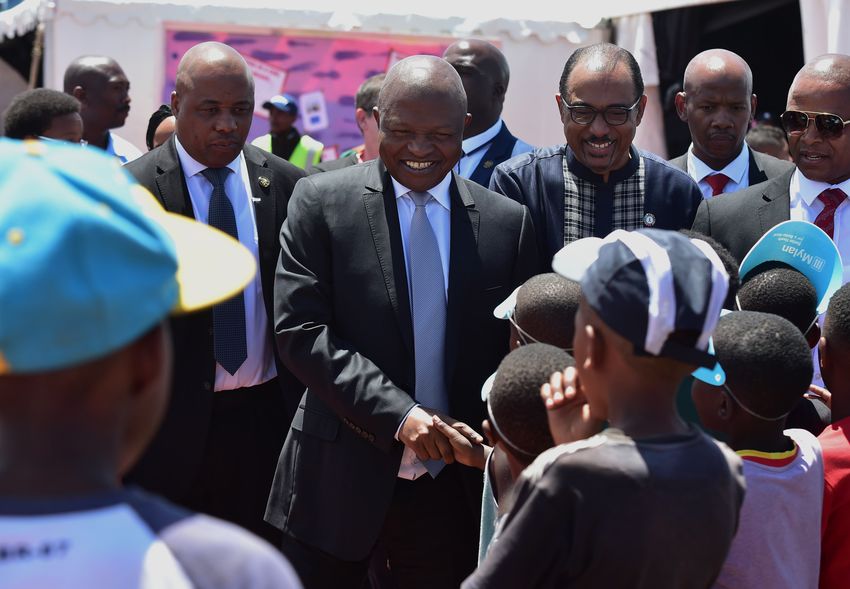
World AIDS Day 2018:
SANAC NEWS                                                                                                Cheka Impilo!
                                                                                                          - Nelson Dlamini

IN THIS ISSUE
World AIDS Day 2018: Cheka Impilo!................................................. 2
- Nelson Dlamini

SANAC discusses the power of sport in tackling HIV........................... 4
- Kanya Ndaki

Champions for an AIDS-Free Generation call for increased domestic
funding for AIDS.................................................................................... 5
- Kanya Ndaki

Why the SANAC Plenary Convened Two Special Sittings ................... 6
- Nelson Dlamini

Men pledge to be champions of change............................................... 7
- Nelson Dlamini

The Boys Assembly: Transforming the Boy Child................................... 8                       SANAC Chairperson, Deputy President David Mabuza led
- Nelson Dlamini                                                                                         the public launch of Cheka Impilo campaign during this
                                                                                                         year’s commemoration of World AIDS Day in Soweto, south
                                                                                                         of Johannesburg. He had officially launched the campaign
SANAC and DSD’s bold mission for a better South Africa .................. 9
                                                                                                         at the Presidential Health Summit held in October where
- Nelson Dlamini
                                                                                                         various constituencies in the health sector had gathered to
                                                                                                         deliberate and seek solutions to health challenges facing
Provincial Implementation Plans Progress Update: Limpopo .............. 11                               the country. The public launch during World AIDS DAY
- Nelson Dlamini                                                                                         2018 was a call to all South Africans to adopt a culture
                                                                                                         of monitoring one’s health and seek medical attention
South Africa at AIDS 2018 ................................................................ 12            timeously in order to prevent and treat diseases successfully.
- Nelson Dlamini
                                                                                                         The Cheka Impilo campaign aims to accelerate screening
                                                                                                         and testing for HIV, tuberculosis (TB), sexually transmitted
‘Manguzi Gijima’ – A fun-filled Fitness Day for Paraplegics.............. 14
                                                                                                         infections (STIs) and non-communicable diseases such as
- Nelson Dlamini
                                                                                                         hypertension and diabetes. The campaign is a direct response
                                                                                                         to the call by the President of South Africa, Cyril Ramaphosa,
The National Wellness Campaign: Cheka Impilo!.............................. 15                           during his first State of the Nation address in February 2018
- Nelson Dlamini                                                                                         to initiate an additional 2 million people on HIV treatment
                                                                                                         by 2020, find 88 000 missing TB cases annually and screen 7
                                                                                                         million people for non-communicable diseases in the first year.

                                                                                                         South Africa has made considerable progress in its AIDS
                                                                                                         response in the past decade and reported that there were
                             FIND US ON FACEBOOK AT:                                                     more than 4.5 million people on life-saving antiretroviral
                             www.facebook.com/                                                           therapy by the end of June 2018—20% of all people on
                             SANationalAIDSCouncil                                                       treatment worldwide. UNAIDS estimates show that as a
                                                                                                         result the number of AIDS-related deaths in South Africa
                                                                                                         has dropped significantly, from 200 000 in 2010 to 110 000
                                                                                                         in 2017. However, there were 270 000 new HIV infections
                           FIND US ON TWITTER AT:                                                        in 2017, including approximately 77 000 among adolescent
                           @SA_AIDSCOUNCIL                                                               girls and young women aged 15–24 years.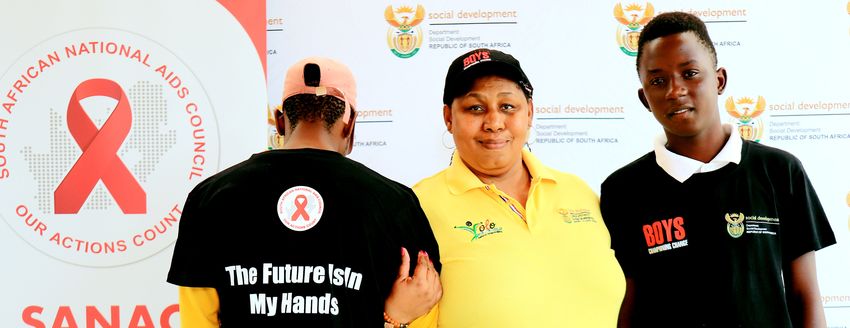
Continued from page 1

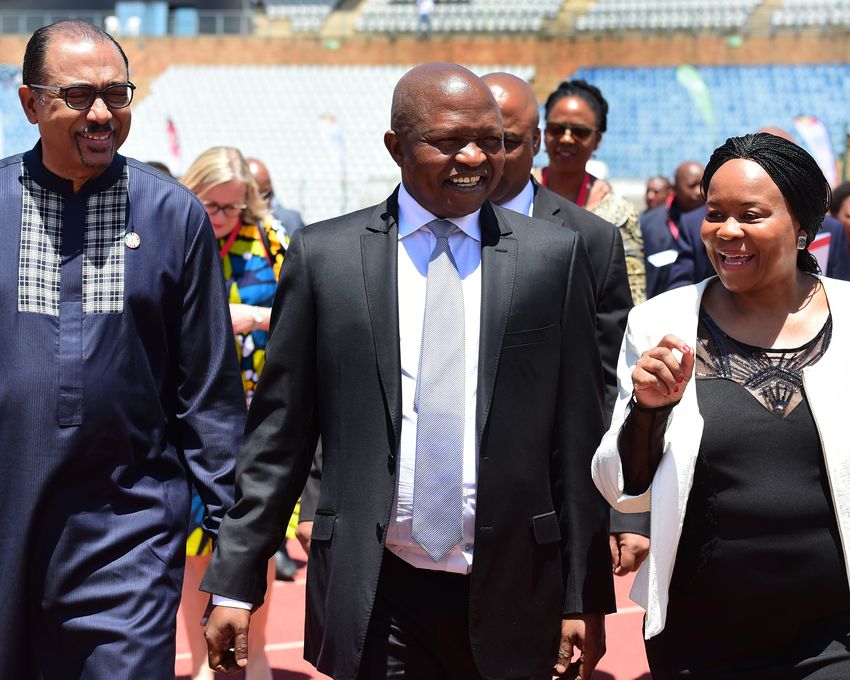
                            SANAC Chairperson Deputy President David Mabuza doing a meet-and-greet during his
                        arrival for the official commemoration of World AIDS Day 2018. He is accompanied by UNAIDS
                                        Executive Director Michel Sidibé (3rd from left) and other officials.

Deputy President David Mabuza urged all South Africans to             books. Our girls and young women deserve a chance to live in
end gender-based violence and get tested for HIV and seek             a world with dignity and respect and free from violence and
treatment if HIV-positive. “We will not walk alone. We have           HIV,” said Mr Sidibé.
always had partners like UNAIDS, the Global Fund and PEPFAR
walking with us, side by side, shoulders to the grindstone. We        Aaron Motsoaledi, South Africa’s Minister of Health, thanked
know what unity and struggle is. The public launch during             Mr Sidibé for inspiring South Africa almost a decade ago to
World AIDS Day 2018 was a call to all South Africans take             turn its AIDS response into a success story, characterized by a
responsibility for their health.                                      journey from despair to hope, and from denial to acceptance
                                                                      and to ownership.
Michel Sidibé, UNAIDS Executive Director, attended the
commemoration of the 30th anniversary of World AIDS Day               Steve Letsike, Deputy Chairperson of SANAC and Chairperson
in South Africa to show his support for the launch of the             of the SANAC Civil Society Forum, said, “Enough is enough.
Cheka Impilo campaign. “Oppression and power imbalances               Patriarchy, sexism, misogyny, homophobia, transphobia and
must be reversed. Women and girls must be empowered                   stigma and discrimination must end. We can do better for our
and harmful masculinities must be consigned to the history            people because they matter.”

  SANAC NEWS • ISSUE 23                                                 3
SANAC discusses the power of
sport in tackling HIV
- Kanya Ndaki

       Top: Sports broadcaster and commentator,
       Lebo Motsoeli was the programme director.
      Right: Some of the participants who attended
               the A Re Dlale Safe dialogue.

 Ahead of World AIDS Day 2018, the South African National
 AIDS Council (SANAC) on Thursday 29 November 2018 hosted
 a fun and interactive dialogue on sport and its impact, role
 and opportunity for HIV prevention.
 SANAC used World AIDS Day 2018 as an opportunity to harness
 the power of sport to reduce stigma and discrimination,
 increase education and empower young people to adopt
 healthy behaviours to prevent HIV in South Africa.
 “Millions of sports fans take part or watch sport every week in
 South Africa. Sport stimulates passion and has the capacity to
 unite us. It is also a powerful force for change and information
 sharing on issues such as HIV and tuberculosis (TB)” said
                                                                                 The highlight of the evening, however, was the
 Dr. Nevilene Slingers, SANAC Executive Manager for Resource
                                                                    National Strategic Plan Goal scoring challenge, where sports
 Mobilisation, who delivered they keynote address at the event.
                                                                    presenter Lebo Motsoeli invited the “Dream Team” consisting
 In recent years an increasing array of projects have been          of partners
 leveraging the power of sport to promote inclusion, life skills,
                                                                    from LoveLife, the Department of Health and UNAIDS to each
 health, and educational messaging, to accelerate progress
                                                                    shoot one of the NSP goals into the net. Cheered on by an
 towards the sustainable development goals.
                                                                    enthusiastic crowd of supporters waving foam fingers, the
 Global development partners, including the Global Fund to          team members could not afford to miss the mark.
 Fight AIDS, Tuberculosis and Malaria attended the dialogue,
 acknowledging the potential of sport as an impact booster for      “More than ever, sport can be a catalyst in our society to
 wider development interventions, particularly with vulnerable      improve quality of life and human well-being and help us
 youth.                                                             move closer to ending HIV and TB,” concluded SANAC’s Dr
                                                                    Nevilene Slingers.
 Soccer player Thandani “Bibo” Ntshumayelo also participated
 in the dialogue, raising awareness about substance abuse and
 sharing his story of turning his life around. “Soccer changed
 my life, and I almost watched it slip away because of my bad
 decisions,” Ntshumayelo commented.

  SANAC NEWS • ISSUE 23                                              4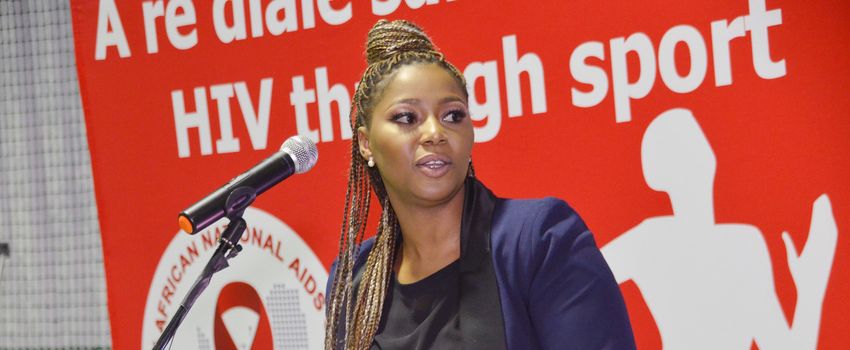
Champions for an AIDS-Free Generation call for
 increased domestic funding for AIDS
 - Kanya Ndaki

    Top: Chairperson of the Champions His Excellency Festus Mogae;
     Chairperson of the Portfolio Committee on Health Ms Lindelwa
    Dunjwa and Champion Prof Miriam Were. Bottom: Patrick Brenny,
      Director, Regional Support Team for West and Central Africa.

 At a recent high-level political dialogue convened by the             In Western and Central Africa, only US$ 2.1 billion was available
 Champions for an AIDS-Free Generation, UNAIDS and SANAC,              for the AIDS response in 2017, with domestic resources
 participants gathered to engage and interrogate the current           accounting for one-third. This is not sufficient to meet the Fast-
 AIDS financing environment and discuss options for building           Track targets by 2020.
 sustainable domestic investments for not only the AIDS
                                                                       “Shared responsibility and global solidarity means a shift from
 response, but also the sexual and reproductive and sexual and
                                                                       the concept of ‘charity’ to country ownership of the HIV and
 gender-based violence responses in the African region.
                                                                       health response; from fragmented planning to prioritization
 “AIDS remains our priority because keeping our people alive is        of programmes for maximum impact; from unpredictable to
 our priority,” said Festus Mogae, Chairperson of the AIDS-Free        sustainable and long-term financing; inclusive governance
 Generation and Former President of Botswana. “Either we pay           and leaving no one behind in the AIDS response,” remarked
 now or we pay forever,” he added.                                     Catherine Sozi, Director for the UNAIDS Regional Support
                                                                       Team for Eastern and Southern Africa.
 The fragile gains that have been made in the AIDS response
 have led to complacency and shifts in financing priorities are
 threatening to reverse these gains.
 “We cannot treat ourselves out of this epidemic . We must
 increase our spending on HIV prevention. Quality, localized
 services, using local people are key factors in delivering
 relevant, effective solutions for the AIDS response,” noted
 Steve Letsike, SANAC Deputy Chairperson.
 Globally, external donor funding for the AIDS response is
 stagnating. In 2017, it amounted to US$ 8.1 billion, similar
 to levels of investment in 2008 (US$ 7.8 million). In Eastern
 and Southern Africa, available resources for AIDS financing
 reached US$ 10.6 billion, 42% of which was provided by
 domestic resources. UNAIDS estimates that these may be
 sufficient to reach the Fast-Track targets provided countries
 do more to increase efficiencies and effectiveness of spending.

SANAC NEWS • ISSUE 23                                              5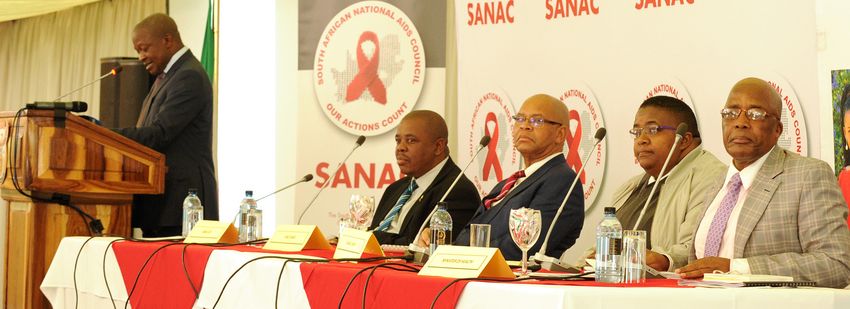
Why the SANAC Plenary Convened
 Two Special Sittings
  - Nelson Dlamini

  On the podium: Deputy President David Mabuza addressing the SANAC Plenary for the first time since
assuming the role of SANAC Chairperson Seated, left to right: SANAC CEO, Dr Sandile Buthelezi; Premier of
  Limpopo, Stanley Mathabatha; SANAC Co-Chair, Steve Letsike and Health Minister, Dr Aaron Motsoaledi.

 SANAC Plenary, the highest decision-making body of the                    “Congratulations to SANAC and all our social partners
 Council, convened two special sittings to mark significant                for recently hosting a successful TB Conference in
 events and emergent priorities for the organisation. The first            Durban. At that conference, we agreed to act urgently,
 sitting was an extended plenary held to officially welcome the            decisively and collaboratively in ensuring that no one
 new SANAC Chairperson, Deputy President David Mabuza. The                 is left behind from being cured from TB infection.
 second special sitting was to discuss the United Nations High
                                                                           “By working together and relentlessly to implement our
 Level Meeting on TB.
                                                                           National Strategic Plan, South Africans will be healthier; they
 In addition to the normal SANAC structure, an Extended                    will live longer; and they stand a better chance to accelerate
 SANAC Plenary includes all provincial premiers to provide a               the development of our country,” said the deputy president.
 comprehensive feedback on progress made with regards to
                                                                           The United Nations High Level Meeting on Tuberculosis
 HIV, TB and STIs response in their respective provinces; as well
                                                                           (UNHLM-TB)
 as to raise and discuss other pertinent issues concerning the
 three epidemics.                                                          The second SANAC plenary was to discuss the all critical
                                                                           United Nations High Level Meeting on Tuberculosis held on 26
 Deputy President Mabuza assumed his role by hitting the
                                                                           September. The plenary had to chart key priorities to focus on
 ground running – immediately after beginning his term, the
                                                                           at the UN gathering. “Team South Africa” was led by President
 country hosted the World TB Day event and the National
                                                                           Cyril Ramaphosa, the former chairperson of SANAC.
 TB Conference in March and June respectively. The deputy
 president was then charged with the responsibility of delivering          Speaking at the UN meeting, President Ramaphosa pledged
 keynote addresses at both events as Chairperson of SANAC.                 South Africa’s commitment to act decisively against TB: “TB
 The extended plenary therefore, was convened not only to                  has killed more people than AIDS, Malaria, Smallpox, Plague
 officiate his role as Chair, but most importantly, to bring him           and Ebola combined. We will do everything in our power to
 up to speed with the work of the Council.                                 end TB by 2030, if not earlier!” Ramaphosa declared.

 Speaking at the first sitting, the extended SANAC plenary held            The President was accompanied by Health Minister, Dr Aaron
 in Limpopo, Deputy President Mabuza said“In my capacity as                Motsoaledi who was instrumental in getting the UN High Level
 Chairperson of the South African AIDS Council (SANAC), I wish             Meeting convened. SANAC CEO, Dr Sandile Buthelezi and other
 to convey my gratitude to all of you for the critical work you            stakeholders were also in attendance.
 have been doing in building much needed networks to ensure                The UN General Assembly periodically convenes “High Level
 that our beloved country is counted as one of the leading and             Meeting/s” with heads of states to discuss high priority matters
 visionary countries in the fight against HIV, TB and STIs globally.       that require accelerated interventions. These include non-
 Deputy President Mabuza also added that, through the                      communicable diseases, unprecedented disease outbreaks
 Council’s patriotism, vigour and commitment, South Africa’s               and international conflicts among other things. Following a
 fight against HIV, TB and STIs has resulted in the slowing down           thorough consultation, a declaration is then signed at the
 of these epidemics, albeit not at a pace we as a country aspire           meeting to demonstrate commitment by world leaders to
 to. Mabuza also commended SANAC and its stakeholders for a                respond to the issue at hand.
 successful TB Conference.

SANAC NEWS
   SANAC   • ISSUE
         NEWS      23 23
              • ISSUE                                                  6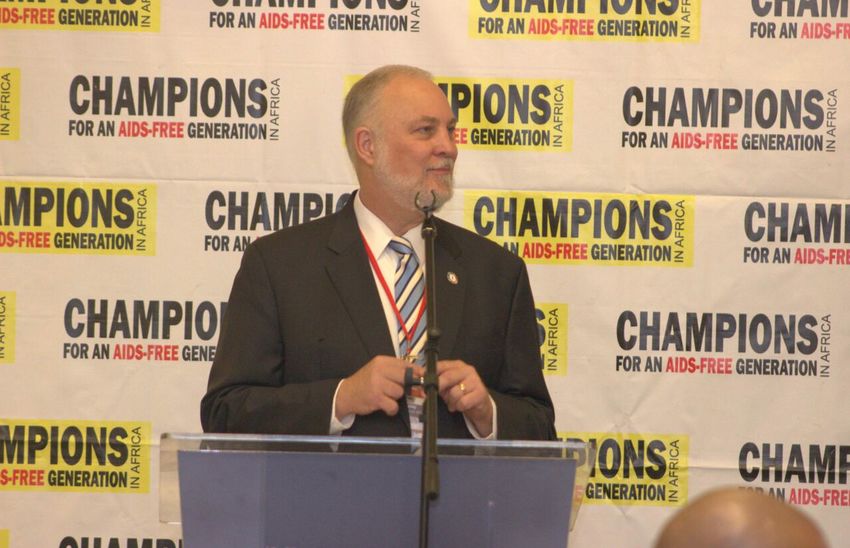
Men pledge to be champions of change
 - Nelson Dlamini

                                                                             Men pledging to be champions of change
                                                                               through powerful placard messages.

 The Men’s Sector of the SANAC Civil Society Forum held a 3-day            Men’s Expo
 Men’s Summit from 24 to 26 August 2018 in Ballito, north of               During the summit, there was also a Men’s Expo which brought
 Durban. The Summit brought together men and boys from                     together various exhibitors to expose men to a range of
 across the country to seek lasting solutions to various social            available products, services and programmes that could help
 challenges such as gender-based violence, femicide, toxic                 improve their personal and professional lives. The Men’s Expo
 masculinity, sexuality and the spread of HIV.                             is a programme that has been running in Durban for the past 3
 The summit was organised under the banner of ‘Takuwani Riime’             years; this year they joined the Takuwani Riime Movement led
 (a TshiVenda expression meaning ‘let’s stand up together’),               by the SANAC Men’s Sector to deliver the 3-day summit. Well-
 an initiative that aims to consolidate all organisations, men’s           known Radio Dj, Vukile Nongcebo McKenzie of Ukhozi FM is the
 movements and individuals working with men in South Africa.               brains behind the Men’s Expo initiative.
 Takuwani Riime was launched by the former chairperson of                  “It has been often argued that when men aren’t employed or
 SANAC, President Cyril Ramaphosa in 2015.                                 exposed to economic opportunities, they tend to be violent,
 To ensure that all community initiatives and movements                    that was the main motivation behind the Men’s Expo – to
 aimed at men and boys are sustainable, the summit also had                expose them to products, services and opportunities available
 an objective to solidify the institutionalisation of provincial and       out there and how to access them,” said McKenzie.
 national men’s parliaments. The institutionalisation will then            Men Championing Change
 monitor the reach and impact of activities aimed at men boys
 to establish whether they are achieving the ultimate objective            On the first day of the summit, SANAC Chairperson, Deputy
 of creating a better society.                                             President David Mabuza joined the Deputy Minister of Social
                                                                           Development, Hendrietta Bogopane-Zulu in launching the
 The summit was also organised in response to the ongoing                  Men Championing Change programme which is a social and
 scourge of violent crimes perpetrated by men against women,               behaviour change initiative targeting men and boys with the
 children and vulnerable people such as the elderly.                       goal to address the social and structural drivers of HIV, TB and
 “We want to create better men who are agents of change                    STIs.
 in communities, not perpetrators of violent crimes against                “I am truly humbled and grateful, as a man, to gather and have
 women and children. The dialogues we had with men and boys                the opportunity to speak frankly amongst ourselves, to sit,
 at the summit were extremely helpful in figuring out some of              discuss and to question our role as men in society,” Deputy
 the issues affecting men and what drives some of them to                  President Mabuza during his keynote address to officiate the
 commit crimes,” said Archbishop Mbulelo Dyasi, SANAC Men’s                summit.
 Sector.
                                                                           The programme is the brainchild of Deputy Minister Hendrietta
 Some of the interventions coming out strongly from the                    Bogopane-Zulu who remained in attendance for all three days
 summit were how to improve the socialisation of the boy child;            of the summit. The Deputy Minister said her Department is
 assistance for fatherless boys and intergenerational dialogues.           committed to rally behind the Takuwani Riime movement in
 The ultimate outcome of the summit however, was to inspire                order to create a healthier society where all South Africans live
 positive values among men and boys. The subsequent                        in harmony.
 provincial and men’s parliaments are earmarked to assist in
 the implementation, monitoring and evaluation of adopted                  As part of the Men Championing Change launch, a pledge by
 men’s programmes at community level across the country.                   men was also signed at the summit. The said pledge laid out
                                                                           strong assertions by men that they will use their strength to
                                                                           love, protect and provide for their loved ones; that they will be
                                                                           agents of change and stand against any form of abuse.

SANAC NEWS
   SANAC   • ISSUE
         NEWS      23 23
              • ISSUE                                                  7
The Boys Assembly: Transforming
 the Boy Child
 - Nelson Dlamini

            Deputy Minister of Social Development, Hendrietta Bogopane-Zulu with
                  some of the boys who participated in the Boys Assembly.

 The Department of Social Development in partnership                 A representative
 with SANAC hosted the first Boys Assembly which brought             from UNICEF,
 together 500 boys from all provinces with an aim to mobilise        Gloria Khoza said
 them to be part of the solution in transforming existing            it is important
 gender imbalances, put an end to the spread of HIV and              to focus on the
 gender-based violence.                                              upliftment of the
                                                                     boy child.
 The initiative was primarily informed by Goal 4 of the
 National Strategic Plan for HIV, TB and STIs (2017-2022)            “We’ve
 which speaks to address social and structural drivers of            focused so much
 HIV. The initiative also formed part of the ongoing social          on empowering the girl child with
 behaviour change programmes run by DSD and SANAC                    aim to address gender inequalities that we’ve
 across the country.                                                 indirectly ignored the boy child. This is problematic because
                                                                     the two co-exist so you cannot empower the one without the
 The boys engaged in holistic dialogues to interrogate issues        other. I want to say to all boys gathered here today ‘you are
 that affect them and the communities they represent. They           gathered here so that you can return to your communities
                            gathered under the theme ‘Boys           as champions of change’.”
                            Championing Change’.
                                                                     High on the agenda was the issue of substance abuse – a
                            Deputy Minister of Social                19-year-old boy from Mpumalanga shared his harrowing
                            Development, Hendrietta                  experience of using nyaope and KAT, two potent drugs
                            Bogopane-Zulu said it is                 known to lead to psychosis, panic attacks and depression
                            important to include boys in             that could lead to suicide. Other boys disclosed that they
                            the fight against gender-based           were already fathers with many battling for access to their
                             violence, gender inequalities and       children.
                             the spread of HIV.
                                                                     “These are some of the dynamics the boy child has to
                               “What is the contribution of          navigate, that is why this Boys Assembly is important. We
                               boys in making South Africa a         need to ensure that the boy child is heard and socialised
                                better place? We want to leave       appropriately so that he becomes a better man tomorrow,”
                                this country in the hands of         said Rev. Zwo Nevhutalu from SANAC.
                              men that won’t beat their wives,
 of men that won’t spread HIV, of men that won’t be addicted         The Boys Assembly follows the Men’s Summit which was
 to drugs, of men that will take care of their children,” said       held earlier in the year in Durban. That gathering also
 Bogopane-Zulu.                                                      centred around a similar format but targeting older men.

SANAC NEWS • ISSUE 23                                            8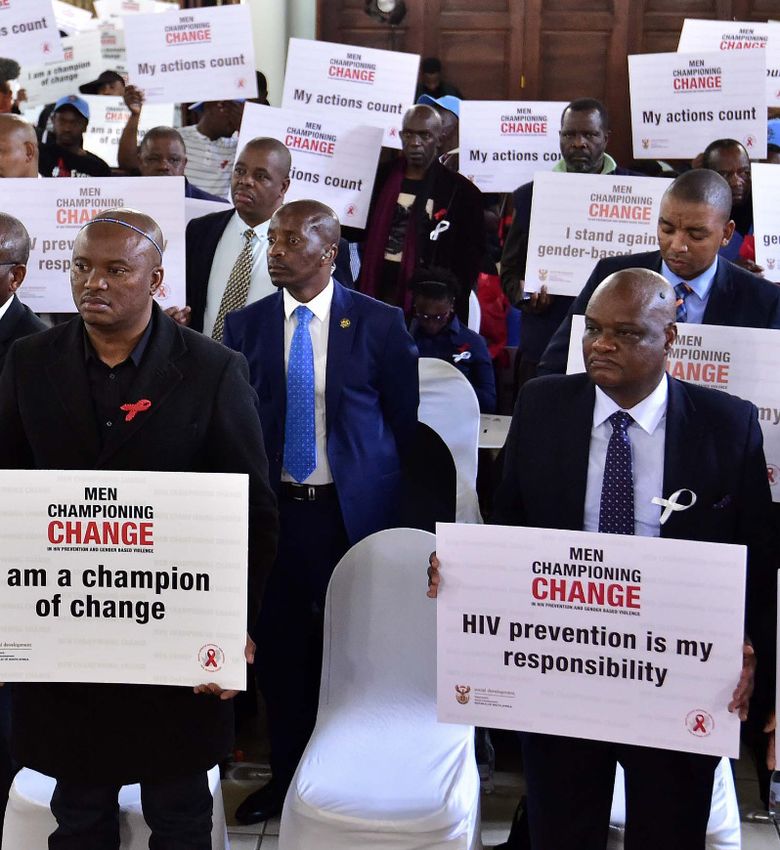
SANAC and DSD’s bold mission for a
better South Africa
- Nelson Dlamini

           Deputy Minister of Social Development, Hendrietta Bogopane-Zulu (centre) seated with representatives
                     from men’s movements, the labour sector and the National House of Traditional
                                         Leaders during the National Men’s Summit.

The National Department of Social Development has             Community based non-profit organisations were invited to
partnered with SANAC to rollout bold and ambitious social     apply to be implementers of the SBCC programmes in their
behaviour change communication (SBCC) programmes              communities in all provinces. Following a selection process,
across South Africa in response to the myriad of social       organisations were awarded funds and asked to recruit
challenges such as the spread of HIV, STIs, teenage           local unemployed social workers and young people to be
pregnancy, substance abuse, toxic masculinity and gender-     facilitators of the various SBCC programmes.
based violence.
                                                              Each organisation has an average of 30 trained facilitators
South Africa is currently faced with the unacceptably high    who are charged with the responsibility of conducting
HIV infection rate among young women and girls. Two           dialogues in carefully selected sites. These include schools,
thousand new HIV infections are reported among adolescent     community halls and correctional facilities.
girls and young women between the ages of 16 and 24. This
                                                              The SBCC project has also led to other notable secondary
calls for targeted interventions as outlined in the current
                                                              benefits for the organisations and the communities. Some
National Strategic Plan (NSP) for HIV, TB and STIs: 2017-
                                                              organisations had financial challenges to fulfil their mandate
2022. The SBCC programmes by DSD and SANAC are a direct
                                                              however, through this project, they are now able to expand
response to this.
                                                              and do much more for their communities. The recruitment
                                                              of facilitators has also brought about much-needed relief to
                                                              the many unemployed youths and social workers across the
                                                              country.

 SANAC NEWS • ISSUE 23                                          9
Continued from page 9

The SBCC Programmes

The SBCC project is divided into five tailored programmes                •   CCE (Community Capacity Enhancement) – At
that deliver a targeted intervention to address a particular                 times, social unrests are caused by disgruntled
social challenge. They are as follows:                                       community members who do not necessarily know
                                                                             how to access certain services or how to air their
     •    YOLO (You Only Live Once) – This programme                         grievances. Through dialogues with community
          targets in-school and out-of-school youths and                     leaders, religious leaders and ordinary community-
          ‘seeks to create a safe and enabling environment in                members, this programme aims to capacitate
          which young people can safely engage in discussion                 communities so they know how to confront or
          about HIV prevention, teenage pregnancy and                        respond to issues affecting their existence within
          where positive values and good decisions relating                  that given community.
          to sex and sexuality can emerge.’ The programme
          also aims to build a youth populace that is resilient,                                        - Deputy President Mabuza
          thriving and with increased autonomy, self-esteem              •   “Ke Moja” (A colloquial SeSotho expression used
          and minimise risky behaviours that exposes them to                 to refuse something you don’t need) – Ke Moja is
          HIV, teenage pregnancy and other social challenges.                a substance abuse programme that works with drug
                                                                             users to help them get “clean” and rehabilitated.
                                                                             The lack of economic opportunities, peer pressure
     •    MCC (Men Championing Change) –MCC is another                       and depression may lead some people to substance
          direct response to the social and structural drivers               abuse. Ke Moja aims to change that narrative and
          of HIV targeting men and boys. The upsurge of                      give hope to such people.
          gender-based violence and femicide wreaking havoc
          across South Africa, there was an undeniable need        An initiative to document the progress, successes and good
          to target men and boys in the solution. The MCC          stories emerging from these programmes is also underway.
          dialogues seek to unearth underlying issues that         These ambitions programmes by DSD and SANAC will
          contribute to creating men who are perpetuators          hopefully go a long way in forging a positive transformation
          of violence crimes against women, children, the          of South Africa’s social fabric.
          elderly and other vulnerable people. It also aims
          to capacitate them on how to be better beings and        “Our country is faced with many challenges from gender-
          agents of change in their communities.                   based violence, femicide to substance abuse. All these
                                                                   issues are centred on behavioural imbalance. These SBCC
                                                                   programmes aim to correct that and create a society where
     •    FMP (Families Matter Programme) – This                   all live in harmony,” said the SBCC Programme Manager,
          programme is geared towards creating happy               Nomfundo Mbuli.
          and healthy families where everyone is valued,
          respected and heard. South Africa has many broken
          families where single parents battle with raising
          children without a support system. There are also
          many child-headed households where a child has
          to assume a parental role at a very young age whilst
          they still need guidance themselves. FMP therefore,
          aims to create a harmony within families, no matter
          what the dynamics.

  SANAC NEWS • ISSUE 23                                             10
Provincial Implementation Plans Progress
Update: Limpopo
Following the launch of the National Strategic Plan (NSP) for HIV, TB and STIs: 2017-2022, provinces had to draft Provincial
Implementation Plans (PIPs) adapted from the NSP and tailored to their needs.In this issue Nelson Dlamini zooms in on
Limpopo with Connie Raphahlelo, head of the Provincial Council on AIDS (PCA) in the province.
Premier of Limpopo, Stanley Mathabatha.
How far is Limpopo with its PIP and what challenges - Youth development by implementing programmes
have you had to contend with, if any? targeting young people, such as She Conquers, YOLO,
Zazi, and Ke Moja etc.
It was finalised and approved in February. The Focus for
Impact data is critical in order to tailor the PIP, however, - To reduce the maternal and child mortality rate and,
there were challenges with accessing Focus for Impact
information from SANAC. - To increase TB cure rate
How did you deal with these challenges? What is the next step for the province now?
We made use of the available data from DHIS to determine We also need to mobilise funding for printing of the Plan
high burden areas. The province also embarked on a three- and popularise it to ensure that all stakeholders implement
day consultation with districts and we later distributed it well. We want to continue to strengthen partnerships with
the private sector as well as organised labour as equal and
output indicators to them in order to maximise impact.
strategic partners in order to reduce the burden of HIV and
Any highlights worth noting during the PIP development TB.
process?
Any lessons or pointers you’d like to share with other
It is worth noting that the PIP is perfectly aligned with the provinces?
provincial development plan. There is also a strong political It is important to understand that no government
and buy-in and support. The stakeholder engagements department is less important in the fight against HIV, TB and
at district level assisted in highlighting the importance of STIs!
a multisectoral approach in our response efforts. We can
confidently say our PIP is multisectoral and implementable! Is there something you’d like to add?
Developing this PIP has shown the importance of a bottom
What were some of the priorities for Limpopo in this
up approach which should be followed in the next cycle.
PIP?
The process of developing the NSP should commence a
There are 12 priorities we have and they are aligned with the year before the end of the current one. There should be
clear guidelines on what is expected from the districts and
NSP and the Limpopo Development Plan. Notable among
provinces to avoid delays experienced. SANAC is requested
them are as follows:
to develop an investment case for the multisectoral
- To reduce HIV and TB incidence by focusing on high response of HIV TB and STIs to influence the funding of the
plans at local, district and provincial levels. This investment
burden areas
case should be submitted to National Treasury for
- To reduce AIDS and TB deaths consideration.
- To intensify HIV, TB and STIs prevention programmes so
that we can improve the life expectancy of our
population.
SANAC NEWS
SANAC • ISSUE
NEWS 23 23
• ISSUE 11South Africa at AIDS 2018
- Nelson Dlamini
Constitutional Court Judge, Edwin Cameron
during a SANAC-led satellite session on ‘HIV
and Key Population in Africa
South Africa’s exhibition stand
Dubbed Vilakazi Street, the exhibition stand honoured the
contribution by Nelson Mandela and Albertina Sisulu against
HIV and TB. Vilakazi Street was Nelson Mandela’s residence in
Soweto and the only street in the world where two Nobel Prize
laureates lived – Nelson Mandela and Desmond Tutu.
The stand featured South Africa’s progress in response
to HIV and TB, as well as the country’s plans to address
challenges facing key and vulnerable populations such as sex
Team South Africa, coordinated workers, young women & girls and the LGBTI community.
by SANAC, made a strong impression during the 22nd
SANAC-led Satellite Sessions aligned
International AIDS Conference (AIDS 2018) held in Amsterdam with AIDS 2018 Prominent Themes
from 23 to 27 July under the theme ‘Breaking Barriers, Building
SANAC led three satellite sessions focusing on issues many
Bridges’. Apart from boasting one of the most prominent
other countries are grappling with in response to HIV, TB and
exhibition stands, the country also led a special session held in
STIs. One session focused on HIV prevention for young women
honour of the late Prudence Mabele.
and girls; the other focused on HIV and Key Populations in the
Since the conference coincided with the BRICS Summit held in African continent and the last session focused on Stigma.
Johannesburg, SANAC Chairperson, Deputy President David
These satellite sessions aligned perfectly with the “buzz
Mabuza had to remain in the country – he then delegated Health
words” at AIDS 2018. The issue of prevention, youth-focused
Minister, Dr Aaron Motsoaledi to lead Team SA. More than 500
interventions, reaching key and vulnerable populations and,
delegates consisting of civil society, researchers, scientists,
combating stigma and discrimination, were some of the
government officials and private sector representatives
themes emerging prominently from the conference highlights.
attended the conference.
These themes also align with South Africa’s current National
South Africa’s Ambassador to the Netherlands, Bruce Koloane Strategic Plan for HIV, TB and STIs: 2017-2022.
welcomed the delegation to Amsterdam and urged everyone
Talking about ‘take home’ messages from some of the satellite
to be positive ambassadors and make SA proud. “As a South
sessions, especially the ones focused on key populations, Kerry
African, I am proud to welcome such a big delegation to this
Mangold from SANAC said, “There is a lot of research, a lot of
significant gathering. I urge you all to be ambassadorial in
programme learnings, a lot of progressive policy but more
conduct and fly the South African flag high,” said Ambassador
is required to bring in boys; to strengthen coordination and
Koloane.
management; to bring in all government departments and to
hold people accountable, especially on issues of gender-based
violence and economic empowerment programmes.”
SANAC NEWS • ISSUE 23 12South Africa at AIDS 2018
The acclaimed exhibition stand built around the centenary KwaZulu Natal Premier Willies Mchunu addressing Team
celebration of Nelson Mandela and Albertina Sisulu. South Africa during the welcome assembly hosted by the SA
Ambassador to the Netherlands, Bruce Koloane.
The special session held in honour of the late Prudence
Mabele where the inaugural Prudence Mabele Award was
launched. Dudu Dlamini (centre) was the first recipient of
the revered award. She is an advocate for the rights and
SA Ambassador to the Netherlands Bruce Koloane
health of sex workers and a founding member of Mothers
welcoming Team South Africa to the AIDS 2018 Conference.
for the Future (M4F)
SANAC NEWS • ISSUE 23 13‘Manguzi Gijima’ – A fun-filled Fitness Day
for Paraplegics
- Nelson Dlamini About four years ago, a group of health workers from Manguzi Hospital, north
of KwaZulu Natal came together to establish the annual Manguzi Gijima, a
health and fitness day with a specific focus on people living with disabilities to
encourage physical activity and good nutrition. This year, SANAC partnered
with the medics to deliver an exciting event on 6 October.
According to Rael Sanzul, one of the organisers, Manguzi Gijima has been
growing from strength to strength.
“As doctors, nurses and physiologists working with the community of
Manguzi, we felt we needed something to keep them motivated and fit
whilst having fun in the process. Manguzi Gijima gives them just that and
it is heart-warming to witness. This an extremely rural community and
most of our patients don’t have much to do or look forward to,” said
Rael who is a nutrition and dietician at the hospital.
During this year’s event, SANAC came on board to make the event
even more memorable for the participants. In previous years, the
organisers could not procure certain services due to limited funds.
They had been funding the event from their own pockets.
“SANAC’s support was a major gain for Manguzi Gijima. For the first time we were
able to feed everyone attending and also book disability-friendly ablution facilities on the
day. There was also a heightened focus on HIV testing and other health services in general,”
said Rael.
Activities on the day included aerobics, wheelchair races tailored to the
ability of participants, buggy, walking and running. About seventy percent
of all participants at Manguzi Gijima were people living with disabilities. The
organisers said they ensured that all prizes won across the various categories
were items that participants will find useful in their homes; such as gardening
tools, wheelbarrows and water storage containers.
The day was a fun-filled affair that included entertainment by a DJ and board
games.
Maryke Bezuidenhout, one of the organisers, said the highlight for her was when
one of the participants who won a prize could not understand why they are being
rewarded.
“He was so confused by the prize giving and kept asking ‘but why’…that for me was
just priceless. It just goes to show that these guys are committed to their well-being.
They would come here to compete even if there is nothing materialistic to gain,”
Maryke said.
The SANAC team who attended the event engaged with some of the participants to
establish what motivates them to be part of Manguzi Gijima.
Sithembiso Magudulela (42) who was born with cerebral palsy and has been
wheelchair-bound all his life, said this event gives him something to look forward
to.
“There is nothing for us to do around here. Other events don’t cater for and we
always feel left out. Manguzi Gijima makes us feel valued and recognised that
we are also normal people who enjoy the same things enjoyed by able-bodied folks
in life,” said Sithembiso.The organisers hope for an even bigger event next year with more
sponsors
Participants who took part
in the annual Manguzi Gijima.
SANAC NEWS • ISSUE 23 14The National Wellness Campaign:
Cheka Impilo!
- Nelson Dlamini
SANAC Chairperson, Deputy President David Mabuza launching
Cheka Impilo during the Presidential Health Summit.
During the Presidential Health Summit recently held in all relevant stakeholders and structures in respect to planning,
Johannesburg, SANAC Chairperson Deputy President David implementation and monitoring.
Mabuza officially launched the ‘Cheka Impilo’, an accelerated
“We call upon all our social partners to join us in implementing
national wellness campaign that will focus on testing and
this programme. As various stakeholders, we are committing
treating people with HIV, TB, STIs and non-communicable
to take services to the people. Within 24 months, we must
diseases such as hypertension and diabetes.
have found and put two million more people on ARVs,” Deputy
As part of the package of services for the Cheka Impilo President Mabuza said.
campaign, there will be an increased focus on information,
The Deputy President also said that the public launch of the
education, communication activities, HIV testing, accelerated
campaign will take place during the commemoration of World
distribution of condoms and the provision of pre and post-
AIDS Day on 1 December at Dobsonville Stadium in Soweto,
exposure prophylaxis (PrEP and PEP).
Gauteng.
Speaking during the launch, Deputy President Mabuza said a
campaign of this magnitude will largely depend on coordinated Cheka Impilo campaign targets:
collaboration among
1. Find and put two million more people on antiretrovirals;
2. Find and put at least 80 000 more people with TB and
drug- resistant TB on treatment;
3. Identify and treat thousands more with diabetes,
hypertension and cancer
The Deputy President urged all South Africans to go out in their
great numbers to get tested for HIV, screen for STIs, TB and
non-communicable diseases.
Basically, Cheka Impilo encourages everyone to make healthy
lifestyle choices and seek medical attention timeously so that
the vision of a South Africa that is free from the burden of
disease can be realised.
SANAC NEWS • ISSUE 23 15Contact info:
www.sanac.org.za
FIND US ON FACEBOOK AT: FIND US ON TWITTER AT:
012 748 1000 www.facebook.com/ @SA_AIDSCOUNCIL
333 Grosvenor St, Hatfield, Pretoria SANationalAIDSCouncilYou can also read


