SAS 9.4 Web Applications - Tuning for Performance and Scalability - SAS Documentation
←
→
Page content transcription
If your browser does not render page correctly, please read the page content below

SAS 9.4 Web Applications
    ®

Tuning for Performance and
Scalability

                        SAS® Documentation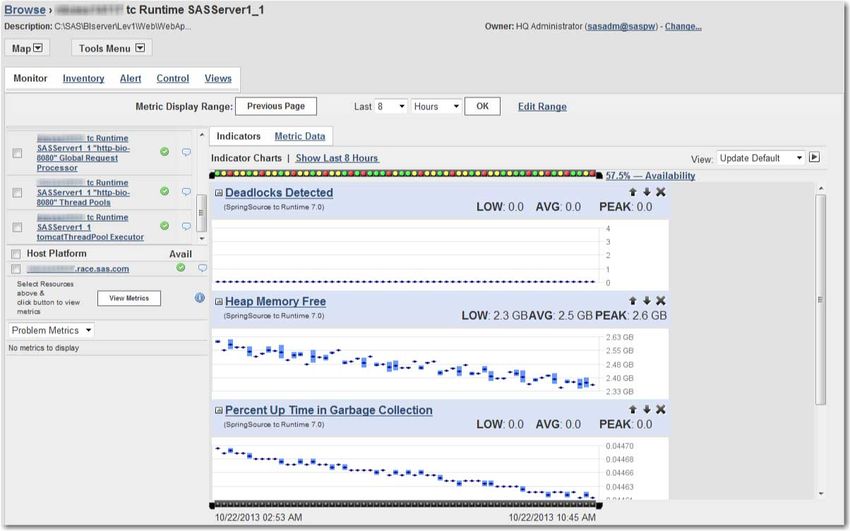
The correct bibliographic citation for this manual is as follows: SAS Institute Inc. 2014. SAS® 9.4 Web Applications: Tuning for Performance and
Scalability. Cary, NC: SAS Institute Inc.
SAS® 9.4 Web Applications: Tuning for Performance and Scalability
Copyright © 2014, SAS Institute Inc., Cary, NC, USA
All rights reserved. Produced in the United States of America.
For a hard-copy book: No part of this publication may be reproduced, stored in a retrieval system, or transmitted, in any form or by any means,
electronic, mechanical, photocopying, or otherwise, without the prior written permission of the publisher, SAS Institute Inc.
For a web download or e-book: Your use of this publication shall be governed by the terms established by the vendor at the time you acquire this
publication.
The scanning, uploading, and distribution of this book via the Internet or any other means without the permission of the publisher is illegal and
punishable by law. Please purchase only authorized electronic editions and do not participate in or encourage electronic piracy of copyrighted
materials. Your support of others' rights is appreciated.
U.S. Government License Rights; Restricted Rights: The Software and its documentation is commercial computer software developed at private
expense and is provided with RESTRICTED RIGHTS to the United States Government. Use, duplication or disclosure of the Software by the
United States Government is subject to the license terms of this Agreement pursuant to, as applicable, FAR 12.212, DFAR 227.7202-1(a), DFAR
227.7202-3(a) and DFAR 227.7202-4 and, to the extent required under U.S. federal law, the minimum restricted rights as set out in FAR 52.227-19
(DEC 2007). If FAR 52.227-19 is applicable, this provision serves as notice under clause (c) thereof and no other notice is required to be affixed to
the Software or documentation. The Government's rights in Software and documentation shall be only those set forth in this Agreement.
SAS Institute Inc., SAS Campus Drive, Cary, North Carolina 27513-2414.
August 2014
SAS provides a complete selection of books and electronic products to help customers use SAS® software to its fullest potential. For more
information about our offerings, visit support.sas.com/bookstore or call 1-800-727-3228.
SAS® and all other SAS Institute Inc. product or service names are registered trademarks or trademarks of SAS Institute Inc. in the USA and other
countries. ® indicates USA registration.
Other brand and product names are trademarks of their respective companies.

Contents

                               About This Document . . . . . . . . . . . . . . . . . . . . . . . . . . . . . . . . . . . . . . . . . . . . . . . . . . . vii
                               Accessibility . . . . . . . . . . . . . . . . . . . . . . . . . . . . . . . . . . . . . . . . . . . . . . . . . . . . . . . . . . . ix
                               Recommended Reading . . . . . . . . . . . . . . . . . . . . . . . . . . . . . . . . . . . . . . . . . . . . . . . . . . xi

Chapter 1 • Overview . . . . . . . . . . . . . . . . . . . . . . . . . . . . . . . . . . . . . . . . . . . . . . . . . . . . . . . . . . . . 1
                  Overview . . . . . . . . . . . . . . . . . . . . . . . . . . . . . . . . . . . . . . . . . . . . . . . . . . . . . . . . . . . . . . 1
                  Enhancing the Performance of SAS Web Applications . . . . . . . . . . . . . . . . . . . . . . . . . . 1

Chapter 2 • Clustering SAS Web Application Servers . . . . . . . . . . . . . . . . . . . . . . . . . . . . . . . . . 3
                   About Clustering SAS Web Application Servers . . . . . . . . . . . . . . . . . . . . . . . . . . . . . . . 3
                   Types of Supported Clusters . . . . . . . . . . . . . . . . . . . . . . . . . . . . . . . . . . . . . . . . . . . . . . . 4
                   Cluster Configurations . . . . . . . . . . . . . . . . . . . . . . . . . . . . . . . . . . . . . . . . . . . . . . . . . . . 5

Chapter 3 • Tuning SAS Web Application Server . . . . . . . . . . . . . . . . . . . . . . . . . . . . . . . . . . . . . 7
                  About Tuning SAS Web Application Server . . . . . . . . . . . . . . . . . . . . . . . . . . . . . . . . . . 7
                  Tuning Recommendations for SAS Web Application Server . . . . . . . . . . . . . . . . . . . . . 7

Chapter 4 • Tuning the Java Virtual Machine . . . . . . . . . . . . . . . . . . . . . . . . . . . . . . . . . . . . . . . . . 9
                  About Tuning the Java Virtual Machine . . . . . . . . . . . . . . . . . . . . . . . . . . . . . . . . . . . . . 9
                  JVM Tuning Options . . . . . . . . . . . . . . . . . . . . . . . . . . . . . . . . . . . . . . . . . . . . . . . . . . . . 9
                  JVM Tuning Guidelines . . . . . . . . . . . . . . . . . . . . . . . . . . . . . . . . . . . . . . . . . . . . . . . . . 12

Chapter 5 • Tuning the Operating System . . . . . . . . . . . . . . . . . . . . . . . . . . . . . . . . . . . . . . . . . . 13
                  About Tuning the Operating System . . . . . . . . . . . . . . . . . . . . . . . . . . . . . . . . . . . . . . . 13
                  Operating Systems . . . . . . . . . . . . . . . . . . . . . . . . . . . . . . . . . . . . . . . . . . . . . . . . . . . . . 13

Chapter 6 • Tuning SAS Web Infrastructure Platform Data Server . . . . . . . . . . . . . . . . . . . . . . 19
                  About the Server . . . . . . . . . . . . . . . . . . . . . . . . . . . . . . . . . . . . . . . . . . . . . . . . . . . . . . . 19
                  Tuning Recommendations for the Server . . . . . . . . . . . . . . . . . . . . . . . . . . . . . . . . . . . . 20
                  Initial Configuration Recommendations . . . . . . . . . . . . . . . . . . . . . . . . . . . . . . . . . . . . . 21
                  Moving the Write-Ahead Log (WAL) . . . . . . . . . . . . . . . . . . . . . . . . . . . . . . . . . . . . . . 23
                  Monitoring Performance . . . . . . . . . . . . . . . . . . . . . . . . . . . . . . . . . . . . . . . . . . . . . . . . . 23
                  Configuring Standby Database Performance . . . . . . . . . . . . . . . . . . . . . . . . . . . . . . . . . 25

Chapter 7 • Monitoring and Troubleshooting . . . . . . . . . . . . . . . . . . . . . . . . . . . . . . . . . . . . . . . . 27
                  Monitoring and Troubleshooting . . . . . . . . . . . . . . . . . . . . . . . . . . . . . . . . . . . . . . . . . . 27

Appendix 1 • Initial Sizing and Tuning Configuration Options for Deployments . . . . . . . . . . . 29
                    About the Configuration Options . . . . . . . . . . . . . . . . . . . . . . . . . . . . . . . . . . . . . . . . . . 29
                    SAS Web Application Server Single Server Settings . . . . . . . . . . . . . . . . . . . . . . . . . . . 30
                    SAS Web Application Server Multiple Server Settings . . . . . . . . . . . . . . . . . . . . . . . . . 31
                    SAS Web Server Settings . . . . . . . . . . . . . . . . . . . . . . . . . . . . . . . . . . . . . . . . . . . . . . . . 37

                               Index . . . . . . . . . . . . . . . . . . . . . . . . . . . . . . . . . . . . . . . . . . . . . . . . . . . . . . . . . 39
vi Contents
vii

About This Document

Audience

           This document helps SAS administrators optimize the performance of the web
           application servers running in the middle-tier environment.
           This document is organized as follows:
           •   A brief overview of the web applications in the middle tier
           •   Information about the types of SAS Web Application Server clusters
           •   Tuning information for the following applications and servers:
               •   SAS Web Server
               •   SAS Web Application Server
               •   Supported Operating Systems

Requirements
           This guide contains tasks that are tested and proven. SAS recommends that you properly
           test all planned configurations in a testing environment before applying them to a
           production environment. You should also back up all your data and pre-tuning
           configurations.
viii About This Document
ix

Accessibility

         For information about the accessibility of any of the products mentioned in this
         document, see the usage documentation for that product.
x About This Document
xi

Recommended Reading

      Here is the recommended reading list for this document:
      •   SAS Intelligence Platform: Overview
      •   SAS Intelligence Platform: System Administration Guide
      •   SAS Intelligence Platform: Security Administration Guide
      •   SAS Intelligence Platform: Middle-Tier Administration Guide
      •   SAS offers instructor-led training and self-paced e-learning courses to help you
          administer the SAS Intelligence Platform. For more information about the courses
          available, see support.sas.com/admintraining.

      For a complete list of SAS books, go to support.sas.com/bookstore. If you have
      questions about which titles you need, please contact a SAS Book Sales Representative:
      SAS Books
      SAS Campus Drive
      Cary, NC 27513-2414
      Phone: 1-800-727-3228
      Fax: 1-919-677-8166
      E-mail: sasbook@sas.com
      Web address: support.sas.com/bookstore
xii Recommended Reading
1

Chapter 1
Overview

            Overview . . . . . . . . . . . . . . . . . . . . . . . . . . . . . . . . . . . . . . . . . . . . . . . . . . . . . . . . . . . . . 1
            Enhancing the Performance of SAS Web Applications . . . . . . . . . . . . . . . . . . . . . . . 1

Overview
            The SAS 9.4 middle-tier environment provides an execution environment for SAS web
            applications that are used to perform business analytics. The SAS 9.4 release has added
            functionality that enables you to automatically configure a clustered environment for the
            SAS web applications. As a result of this added functionality, optimizing the middle tier
            and SAS web applications for scalability and performance is greatly simplified.
            The purpose of this document is to walk through the SAS 9.4 tuning for performance
            and scalability. This document includes the tuning methodology and tuning parameters
            for SAS web applications, SAS Web Application Server, Java Virtual Machine (JVM),
            and the supported operating systems.

Enhancing the Performance of SAS Web
Applications
            Performance requirements are usually identified in terms of transaction response time,
            number of transactions per second, throughput, resource utilization, total cost per
            transaction, availability, and more. Scalability often refers to the ability of a component
            to adapt readily to a greater or lesser intensity of use, volume, or demand while meeting
            integral business objectives. The common objective of scaling a component or system is
            to increase the capacity for growth, increase the speed of the component, improve the
            efficiency, or shift or reduce the load on the component.
            In order to provide greater performance, scalability, and availability, SAS Web
            Application Server supports vertical clustering, horizontal clustering, and a combination
            of both. Vertical clusters are multiple web application instances that run on the same
            machine. Horizontal clusters are multiple server instances that run on a group of middle-
            tier server machines. The SAS Deployment Wizard can be used to automatically
            configure a vertical or horizontal cluster.
            When clustering is configured for the SAS Web Application Server, a load-balancing
            process distributes requests among the server instances. Load balancing is automatically
2 Chapter 1 • Overview
handled by the SAS Web Server. This helps ensure the availability of the SAS web
applications if hardware or software failure occurs. For more information, see “About
Clustering SAS Web Application Servers” on page 3.3
Chapter 2
Clustering SAS Web Application
Servers
About Clustering SAS Web Application Servers . . . . . . . . . . . . . . . . . . . . . . . . . . . . 3
Types of Supported Clusters . . . . . . . . . . . . . . . . . . . . . . . . . . . . . . . . . . . . . . . . . . . . . 4
Vertical Clusters . . . . . . . . . . . . . . . . . . . . . . . . . . . . . . . . . . . . . . . . . . . . . . . . . . . . . 4
Horizontal Clusters . . . . . . . . . . . . . . . . . . . . . . . . . . . . . . . . . . . . . . . . . . . . . . . . . . . 5
Cluster Configurations . . . . . . . . . . . . . . . . . . . . . . . . . . . . . . . . . . . . . . . . . . . . . . . . . . 5
About Clustering SAS Web Application Servers
The SAS web applications can be clustered to improve performance and provide high
availability. In a clustered environment, multiple server instances are used to handle
client requests and transactions, thus improving performance. Performance can also be
improved by deploying servers on to additional hardware. Clustering can also provide
high availability by ensuring that the server will continue to operate if a server host
machine fails.
The server instances in a cluster can coexist on the same machine (vertical clustering), or
the server instances can run on a group of middle-tier server machines (horizontal
clustering). The web applications can be deployed on vertical clusters, horizontal
clusters, and a combination of both.
SAS Web Server is used to provide load balancing by distributing HTTP requests to
SAS Web Application Server instances. The web server is the unique access point for
customers to access all SAS web applications. The server detects when an application
server in the cluster is down and routes requests to other nodes. However, SAS Web
Server does not monitor the availability of individual web applications, nor does it
monitor the health of an application server that is running.4 Chapter 2 • Clustering SAS Web Application Servers
The following figure illustrates multiple web applications that are deployed across a
SAS Web Application Server cluster.
Figure 2.1 Clustered Web Application Servers
Clients HTTP Server Middle Tier SAS Servers
Web Browser SAS Web Infrastructure
SAS Web Server SAS Web Application Server Platform Data Server
SAS Web Infrastructure Platform
SAS Content Server SAS Environment
SAS Environment SAS Stored Process Manager Agent
Manager Agent SAS Package Viewer
SAS Web Application Themes
SAS Themes for Flex
Applications
SAS Information Delivery Portal
SAS BI Portlets
SAS Web Report Studio
SAS BI Dashboard
SAS Help Viewer for the Web
SAS Workflow
Protocol Domain SAS Web Administration SAS Workspace Server
Firewall Firewall
Console SAS Pooled Workspace Server
SAS Shared Web Assets SAS OLAP Server
SAS Theme Designer for Flex SAS Stored Process Server
SAS Environment
Manager Agent
Cache Locator
JMS Broker
SAS Metadata Server
SAS Environment Manager
Cache Locator
SAS Environment
SAS Environment
Manager Agent Manager Agent
For more information about clustering, contact Technical Support.
Types of Supported Clusters
Vertical Clusters
Vertical clustering is the practice of deploying multiple identically configured web
application server instances on a single machine. This can assist with improving
performance as long as the hardware is sufficiently powerful to run additional server
instances. It can also offer some improvement for availability. In the event that one web
application server instance crashes (or an application on one server instance stops), the
applications remain available on the other web application server instances.Cluster Configurations 5
Horizontal Clusters
Horizontal clustering is the practice of deploying SAS Web Application Server instances
on multiple machines. This can assist with improving performance and provide greater
availability to guard against hardware failure. In the event that one machine or web
application server instance crashes (or an application on one server instance stops), the
applications remain available on the other machines.
Cluster Configurations
There are two general deployment topologies for the middle tier of the SAS Intelligence
Platform: single server (which results in a homogeneous cluster) and multiple server
(which results in a heterogeneous cluster). Many deployments default to single server
topology, unless the default is overridden in the corresponding SAS Deployment Wizard
custom prompting level. By default, some SAS products trigger the multiple server
topology when they are included in the plan.
Single server topology results in clustered nodes that all contain the same applications
that can be clustered. Conversely, multiple server topology results in specific
applications being deployed to different server instances. Each server instance can be
clustered independently, providing the ability to allocate additional resources to the
applications and application groups that are more heavily used.
Note: Whether the single or multiple server topology is selected, both vertical and
horizontal clusters are still possible, as is a combination of both clustering
techniques. The only difference is the manner in which the applications are
distributed to the server instances.6 Chapter 2 • Clustering SAS Web Application Servers
7

Chapter 3
Tuning SAS Web Application
Server

            About Tuning SAS Web Application Server . . . . . . . . . . . . . . . . . . . . . . . . . . . . . . . . 7
            Tuning Recommendations for SAS Web Application Server . . . . . . . . . . . . . . . . . . . 7

About Tuning SAS Web Application Server
            You can improve the performance of SAS web applications by configuring other aspects
            of the behavior of the web application server. For example, to improve the performance
            of any web application, make sure that the server can create sufficient threads to service
            incoming requests and limit the frequency with which servers check for updated
            JavaServer Pages and servlets.

Tuning Recommendations for SAS Web
Application Server
            You can specify application server options to improve the performance of SAS web
            applications. This chapter provides a set of application server options that are relevant to
            the SAS 9.4 middle tier. A description is provided for each option to help you decide
            whether modifying a value is appropriate for your deployment.
            The following options can be modified in the SAS-configuration-directory
            \Levn\Web\WebAppServer\SASServer1_n\conf\server.xml file:
            maxThreads Option
               Component: tomcatThreadPool Executor
                Default Value: 300
                Recommended Value: 300–1024
                Description: Specifies the number of threads in the executor thread pool that is used
                to process incoming requests. If you have multiple instances of SAS Web
                Application Server, make the same changes in each of the files for all the servers that
                you want to tune.
                Additional Information: The thread pool utilization can be monitored using SAS
                Environment Manager. For more information, see “Monitoring and
                Troubleshooting” on page 27. If the number of active threads approaches the
                maximum value (within 5–10 percent), the value should be increased.
8 Chapter 3 • Tuning SAS Web Application Server
maxPoolSize Option
Component: Various JDBC Resources, such as sas/jdbc/SharedServices
Default Value: 100
Recommended Value: 50–512
Description: Specifies the maximum number of pooled connections to the database
that is associated with a given data source reference.
Additional Information: When the pool becomes exhausted, the SAS web
applications log files (for example, SASWIPServices9.4.log and
SASPrincipalServices9.4.log) might contain messages like the following example:
Could not get JDBC Connection;
nested exception is com.atomikos.jdbc.AtomikosSQLException:
Connection pool exhausted - try increasing 'maxPoolSize'
and/or 'borrowConnectionTimeout' on the DataSourceBean.
Also, the configuration of the database server might need to be modified, along with
this setting. For example, the default configuration of the SAS Web Infrastructure
Platform Data Server allows a maximum of 256 connections. You can change the
max_connections setting to be the same value as the sum of the maxPoolSize option
value across all data sources on all server instances. If you change the value, a
system restart is required. For more information about the max_connections setting,
see “Initial Configuration Recommendations” on page 21.
The following option can be added to the SAS-configuration-directory\Levn
\Web\WebAppServer\SASServer1_n\lib\jta.properties file:
com.atomikos.icatch.checkpoint_interval Option
Component: Atomikos transaction manager
Default Value: 500
Recommended Value: 50
Description: Specifies the interval between transaction manager checkpoints. During
checkpoints, completed transactions are removed from the recovery log. More
frequent checkpoints can reduce the contention on the log file across threads in high
volume usage scenarios.9
Chapter 4
Tuning the Java Virtual Machine
About Tuning the Java Virtual Machine . . . . . . . . . . . . . . . . . . . . . . . . . . . . . . . . . . . 9
JVM Tuning Options . . . . . . . . . . . . . . . . . . . . . . . . . . . . . . . . . . . . . . . . . . . . . . . . . . . 9
JVM Option Descriptions . . . . . . . . . . . . . . . . . . . . . . . . . . . . . . . . . . . . . . . . . . . . . . 9
JVM Tuning Options . . . . . . . . . . . . . . . . . . . . . . . . . . . . . . . . . . . . . . . . . . . . . . . . 10
JVM Tuning Options for SAS Web Applications . . . . . . . . . . . . . . . . . . . . . . . . . . 11
JVM Tuning Options for SAS Web Application Server . . . . . . . . . . . . . . . . . . . . . 11
JVM Tuning Guidelines . . . . . . . . . . . . . . . . . . . . . . . . . . . . . . . . . . . . . . . . . . . . . . . . 12
JVM Tuning Guidelines for HP-UX, Linux, Solaris, and Windows Platforms . . . . 12
JVM Tuning Guidelines for AIX . . . . . . . . . . . . . . . . . . . . . . . . . . . . . . . . . . . . . . . 12
About Tuning the Java Virtual Machine
The goal of Java Virtual Machine (JVM) tuning is to improve performance in production
servers, particularly in the area of memory usage and garbage collection cycles. The goal
is to also maximize the number of clients that the SAS web applications can support.
JVM Tuning Options
JVM Option Descriptions
The following table provides descriptions of the JVM options that you will tune in the
SAS 9.4 middle-tier environment.
Table 4.1 JVM Tuning Descriptions
JVM Option Description
-Xms Specifies the minimum heap size.
-Xmx Specifies the maximum heap size.10 Chapter 4 • Tuning the Java Virtual Machine
JVM Option Description
-XX:PermSize Specifies the initial permanent generation
storage size. Applies only to the Java Virtual
Machine on HP-UX, Linux, Solaris, and
Windows platforms.
-XX:MaxPermSize Specifies the maximum permanent generation
size. Applies only to the Java Virtual Machine
on HP-UX, Linux, Solaris, and Windows
platforms.
JVM Tuning Options
The following table summarizes the general guidelines for tuning JVM options. These
values are recommended initial settings for the tunable arguments. However, individual
usage patterns vary and might benefit from additional tuning.
Table 4.2 JVM Tuning Options
JVM Option and
Deployment Topology Server Platform Recommended Value
Single Server All HP-UX, Linux, Solaris, and -Xms4096m
Windows
-Xmx4096m
-XX:PermSize:1280m
-XX:MaxPermSize:
1280m
Single Server All AIX -Xms2048m
-Xmx4096m
Multiple Server SASServer1 Instances HP-UX, Linux, Solaris, and -Xms4096m
Windows
-Xmx4096m
-XX:PermSize:768m
-XX:MaxPermSize:768m
Multiple Server Other Server Instances HP-UX, Linux, Solaris, and -Xms2048m
Windows
-Xmx2048m
-XX:PermSize:512m
-XX:MaxPermSize:512m
Multiple Server SASServer1 Instances AIX -Xms2048m
-Xmx4096m
Multiple Server Other Server Instances AIX -Xms1024m
-Xmx2048mJVM Tuning Options 11
Monitoring the server data can be combined with the recommended settings to further
fine-tune the servers. For more information, see “Monitoring and Troubleshooting” on
page 27.
JVM Tuning Options for SAS Web Applications
The following table provides JVM options that are used to configure the SAS web
applications. A description is provided for each option to help you decide whether
modifying a value is appropriate for your deployment.
Table 4.3 JVM Tuning Parameters
JVM Option Recommended Value Description
-Dhttp.proxyHost Proxy server host name. For example: The HTTP proxy options are used
by the SAS Information Delivery
-Dhttp.proxyHost=hostname
Portal to access document type
definitions (DTDs) over the
-Dhttp.proxyPort Proxy server port. For example: Internet. Use these options only
-Dhttp.proxyPort=80 when a proxy server for Internet
connections exists. If you use a
proxy server, make sure that the
-Dhttp.nonProxyHosts Non-proxy host (exclude list). For example:
local domain, within the network
-Dhttp.nonProxyHosts=
boundary, is included in the
“*.example.com|localhost”
exclude list.
-Djgroups.bind_addr Host name or IP address. For example: Use this option on a system that
has multiple network interfaces
-Djgroups.bind_addr=hostname
(physical or virtual). When this
option is used and an IP address is
specified for the bind_addr value,
you can also specify:
-Dresolve.dns=false
-Dmulticast_udp_ip_ttl 1 (default value is 64) Use this option to restrict multicast
traffic to a single subnet, based on
your network topology.
JVM Tuning Options for SAS Web Application Server
In order to help ensure that you do not encounter problems with JVM memory for some
advanced configuration procedures, you might need to change the JVM options for the
server.
When SAS Web Application Server is deployed on UNIX, the JVM options are
specified in the JVM_OPTS environment variable, which is specified in the SAS-
configuration-directory/Levn/Web/WebAppServer/
SASServer1_n/bin/setenv.sh file. If you have multiple instances of SAS Web
Application Server, make the appropriate changes in each of the files.
For Windows deployments, the JVM options can be executed from a script or deployed
as a service. When executed from a script, the JVM options are specified in the
JAVA_OPTS environment variable, in the SAS-configuration-directory\Levn
\Web\WebAppServer\SASServer1_n\bin\setenv.bat file. For Windows
deployments that are deployed as a service, the JVM options are specified in the SAS-12 Chapter 4 • Tuning the Java Virtual Machine
configuration-directory\Levn\Web\WebAppServer\SASServer1_n
\conf\wrapper.conf file. Create a new entry for any new JVM options. The
following example shows a few lines from the file:
# Java Additional Parameters
wrapper.java.additional.7=-Xmx4096m
wrapper.java.additional.8=-Xss256k
wrapper.java.additional.8=-Xms1024m
wrapper.java.additional.9=-XX:PermSize=768m
wrapper.java.additional.10=-XX:MaxPermSize=1280m
If you have multiple instances of SAS Web Application Server, make the same changes
in each of the files.
JVM Tuning Guidelines
JVM Tuning Guidelines for HP-UX, Linux, Solaris, and Windows
Platforms
The following tuning guidelines apply to HP-UX, Linux, Solaris, and Windows
platforms:
• Increase the value of the -Xms option to equal that of the -Xmx option. These values
can be increased if there is enough demand, but ideally they should be set to the
same value to avoid the overhead of expansion and contraction. Depending on the
usage patterns observed, try to ensure that there is at least 500 MB heap free.
• Identify the amount of permanent generation that is required, and set the -
XX:PermSize and -XX:MaxPermSize options to equal values sufficient for the needs
of the environment. Permanent Generation should be sized as small as possible,
leaving approximately 200–300 MB of unused space for class loading and
unloading.
Some of these metrics are available in SAS Environment Manager. For more
information, see “Monitoring and Troubleshooting” on page 27.
JVM Tuning Guidelines for AIX
Generally, for the AIX platform, set the value of the -Xms option to be no larger than
50% of the value of the -Xmx option, to avoid fragmentation from pinned objects. The -
Xmx option might need to be increased in heavily used environments.13
Chapter 5
Tuning the Operating System
About Tuning the Operating System . . . . . . . . . . . . . . . . . . . . . . . . . . . . . . . . . . . . . 13
Operating Systems . . . . . . . . . . . . . . . . . . . . . . . . . . . . . . . . . . . . . . . . . . . . . . . . . . . . 13
AIX . . . . . . . . . . . . . . . . . . . . . . . . . . . . . . . . . . . . . . . . . . . . . . . . . . . . . . . . . . . . . . 13
HP-UX . . . . . . . . . . . . . . . . . . . . . . . . . . . . . . . . . . . . . . . . . . . . . . . . . . . . . . . . . . . 14
Linux . . . . . . . . . . . . . . . . . . . . . . . . . . . . . . . . . . . . . . . . . . . . . . . . . . . . . . . . . . . . . 15
Solaris SPARC and Solaris x86-64 . . . . . . . . . . . . . . . . . . . . . . . . . . . . . . . . . . . . . 16
Windows . . . . . . . . . . . . . . . . . . . . . . . . . . . . . . . . . . . . . . . . . . . . . . . . . . . . . . . . . . 16
Additional Windows System Configurations . . . . . . . . . . . . . . . . . . . . . . . . . . . . . . 17
About Tuning the Operating System
There are a number of configuration changes and variables that you can set to tune the
SAS 9.4 middle tier for your performance and scalability needs. The following sections
show how to configure the settings that are relevant to the SAS 9.4 middle tier and SAS
Web Application Server.
Note: For UNIX and Linux operating environments, you must confirm that the ulimit
resource limit for open file descriptors is set to at least 20480.
Operating Systems
AIX
Use the following commands to set the SAS recommended TCP/IP settings:
/usr/sbin/no -o tcp_timewait =1
/usr/sbin/no -o tcp_keepidle=600
/usr/sbin/no -o tcp_keepintvl=10
/usr/sbin/no -o tcp_keepinit=40
In some environments, the maximum number of user processes might need to be
increased, particularly on the system running the SAS Web Infrastructure Platform Data
Server when the max_connections value is increased. The default value is 128.
To increase the max_connections value, run the following command:
chdev -l sys0 -a maxuproc=new_value14 Chapter 5 • Tuning the Operating System
A new value of 1024 or 2048 (or higher) might be appropriate, depending on how many
processes and connections are configured.
HP-UX
Use the following commands to set the SAS recommended TCP/IP settings:
ndd -set /dev/tcp tcp_conn_request_max 8192
ndd -set /dev/tcp tcp_keepalive_interval 7200000
ndd -set /dev/tcp tcp_keepalives_kill 1
In addition, SAS recommends tuning the following kernel parameters by using the SAM
utility or the kctune utility.
Table 5.1 Recommended Kernel Parameters to Tune
Kernel Parameter Recommended Value
swchunk 8192
shmseg 512
maxdsiz 3221225472
maxdsiz_64bit 64424509440
maxfiles_lim 10000
Note: Change this value before changing
maxfiles.
maxfiles 8192
semume 512
semmsl 3072
msgssz 512
Note: Change this value before changing
msgmax.
nkthread 10000
nproc 10240
Note: Change this value before changing
maxuprc.
maxuprc 4096
nflocks 11585
ninode 8110
msgmap 13109Operating Systems 15
Kernel Parameter Recommended Value
msgseg 32767
Note: Change this value before changing
msgmax.
msgmnb 65535 (0x10000)
Note: Change this value before changing
msgmax.
msgmnb 131070
Note: Set when running multiple JVMs on the
same system.
msgmax 65535 (0x10000)
msgmax 131070
Note: Set when running multiple JVMs on the
same system.
msgmni 4634
semmns 11586
semmni 8192
semmnu 8180
shmmax 1.85514E+11
shmmni 8192
STRMSGSZ 65535
dbc_max_pc 10
nstrpty 60
cmc_plat_poll 15
msgtql 13107
Linux
Use the following commands to set the SAS recommended TCP/IP settings:
echo 30 > /proc/sys/net/ipv4/tcp_fin_timeout
echo 3000 > /proc/sys/net/core/netdev_max_backlog
echo 3000 > /proc/sys/net/core/somaxconn
echo 15 > /proc/sys/net/ipv4/tcp_keepalive_intvl
echo 5 > /proc/sys/net/ipv4/tcp_keepalive_probes16 Chapter 5 • Tuning the Operating System
Set the operation system limits by accessing the /etc/security/limits.conf file.
Add or change the values, based on the following information:
Table 5.2 Linux System Limits
Recommended
Domain Type Item Value
* — nproc 10240
* — stack 10240
* — nofile 20480
Some Linux distributions include additional settings in *.conf files in the /etc/
security/limits.d directory. The values specified in the files in this directory
override the limits specified in the limits.conf file. For example, some distributions set
an explicit soft limit for the nproc ulimit value. This is specified in the /etc/
security/limits.d/90-nproc.conf file. In this file, change the nproc value to
correspond to the value specified in the preceding table.
Solaris SPARC and Solaris x86-64
Use the following commands to set the SAS recommended TCP/IP settings:
ndd -set /dev/tcp tcp_keepalive_interval 300000
ndd -set /dev/tcp tcp_time_wait_interval 60000
ndd -set /dev/tcp tcp_conn_req_max_q 256
ndd -set /dev/tcp tcp_conn_req_max_q 2500
ndd -set /dev/tcp tcp_max_buf 4000000
Windows
The Windows registry must be updated. Microsoft recommends performing a system
backup before editing the registry. To set the SAS recommended parameters, use the
REGEDIT command as follows:
1. Access the HKEY_LOCAL_MACHINE\SYSTEM\CurrentControlSet\services
\Tcpip\Parameters registry subkey. Add the DWORD value with a name of
TcpTimedWaitDelay and a value of 30 (0xle).
2. Access the HKEY_LOCAL_MACHINE\SYSTEM\CurrentControlSet\services
\AFD\Parameters registry subkey. Add the following DWORD values:
Table 5.3 AFD Service Parameters
Name Recommended Value
EnableDynamicBacklog 1 decimal
MinimumDynamicBacklog 20 decimal
MaximumDynamicBacklog 1000 decimalOperating Systems 17
Name Recommended Value
DynamicBacklogGrowthDelta 10 decimal
The recommended values specify the number of connections that you want to be
available. These values request a minimum of 20 and a maximum of 1000 available
connections. The number of available connections is increased by 10 each time there
are fewer than the minimum number of available connections.
3. In addition, the user port range should be updated. From a command prompt, run the
following commands, based on the version of your Internet protocol:
netsh int ipvn set dynamicport tcp start=32768 num=32767
netsh int ipvn set dynamicport udp start=32768 num=32767
where n indicates the version of your Internet protocol and is either 4 or 6.
4. Restart Windows.
Additional Windows System Configurations
The following list includes general recommendations for configuring Windows systems:
• Disable Windows indexing on any directories that are used by SAS software.
• Set Windows performance settings so that background processes are favored.
• Set the maximum power profile in the system BIOS for all systems, except Intel
Sandy Bridge.
• Disable the C1E BIOS setting on Dell systems.18 Chapter 5 • Tuning the Operating System
19

Chapter 6
Tuning SAS Web Infrastructure
Platform Data Server

            About the Server . . . . . . . . . . . . . . . . . . . . . . . . . . . . . . . . . . . . . . . . . . . . . . . . . . . . . . 19
            Tuning Recommendations for the Server . . . . . . . . . . . . . . . . . . . . . . . . . . . . . . . . . . 20
              Database Sizes . . . . . . . . . . . . . . . . . . . . . . . . . . . . . . . . . . . . . . . . . . . . . . . . . . . . . 20
              Tuning a Database . . . . . . . . . . . . . . . . . . . . . . . . . . . . . . . . . . . . . . . . . . . . . . . . . . 20
            Initial Configuration Recommendations . . . . . . . . . . . . . . . . . . . . . . . . . . . . . . . . . .                  21
                Recommendations Based on the Database Size . . . . . . . . . . . . . . . . . . . . . . . . . . . .                     21
                Recommendations for Special Considerations . . . . . . . . . . . . . . . . . . . . . . . . . . . . .                   22
                Large Database Considerations . . . . . . . . . . . . . . . . . . . . . . . . . . . . . . . . . . . . . . . .          22
            Moving the Write-Ahead Log (WAL) . . . . . . . . . . . . . . . . . . . . . . . . . . . . . . . . . . . . . 23
            Monitoring Performance . . . . . . . . . . . . . . . . . . . . . . . . . . . . . . . . . . . . . . . . . . . . . . . 23
              About Performance Views . . . . . . . . . . . . . . . . . . . . . . . . . . . . . . . . . . . . . . . . . . . . 23
              Resetting the Data . . . . . . . . . . . . . . . . . . . . . . . . . . . . . . . . . . . . . . . . . . . . . . . . . . . 23
              Displaying the Cache Hit Ratio . . . . . . . . . . . . . . . . . . . . . . . . . . . . . . . . . . . . . . . . 24
              Finding Missing Indexes . . . . . . . . . . . . . . . . . . . . . . . . . . . . . . . . . . . . . . . . . . . . . . 24
              Showing How the Database Executes a Query . . . . . . . . . . . . . . . . . . . . . . . . . . . . . 24
              Logging All Statements That Take More Than 100 Milliseconds . . . . . . . . . . . . . . 24
              Seeing All Indexes in Your Tables . . . . . . . . . . . . . . . . . . . . . . . . . . . . . . . . . . . . . . 24
              Determining the Last Time Vacuum and Analyze Were Run . . . . . . . . . . . . . . . . . 25
              Identifying Currently Running Queries . . . . . . . . . . . . . . . . . . . . . . . . . . . . . . . . . . 25
            Configuring Standby Database Performance . . . . . . . . . . . . . . . . . . . . . . . . . . . . . . 25

About the Server
            SAS Web Infrastructure Platform Data Server provides a transactional store that is used
            by SAS middle-tier software. The server is based on PostgreSQL 9.1.9. SAS configures
            a single server instance, and SAS Web Application Server instances are configured with
            JDBC data sources that access the server.
20 Chapter 6 • Tuning SAS Web Infrastructure Platform Data Server
Tuning Recommendations for the Server
Database Sizes
The suggested configurations in this chapter are based on the following database size
definitions:
• A small database is less than 50 GB, seldom receives more than one concurrent
query or update, and creates hundreds of records daily.
• A medium database is between 50 GB and 1 TB, receives several concurrent queries
or updates (most of which use indexes), and creates thousands of records per hour.
• A large database is more than 500 GB, receives many concurrent queries or updates,
creates thousands of records per minute, receives many queries to scan tables, and
processes complex queries and regular bulk loads.
Tuning a Database
To tune a database:
1. Tune the system and operating system that supports the database.
The SAS Web Infrastructure Platform Data Server benefits from the same system
tuning as SAS. A fast disk resource, sufficient memory for caching, and a sufficient
number of cores with good single thread performance are crucial. Operating system
tuning should favor input/output.
2. Tune the database configuration.
The SAS Web Infrastructure Platform Data Server automatically uses available
hardware efficiently. In many cases, there is little to be gained by trying to tune the
server configuration parameters. The default tuning handles a wide variety of use
cases. In very few cases, configuration tuning makes a significant difference, but in
most cases, configuration tuning does not change performance.
3. Tune the database schema design.
This includes the following tasks: database normalizing or de-normalizing; creating
artificial keys, where appropriate; creating indexes on frequent access paths,
including foreign key; defining index types (expression index and multiple column
versus multiple single column); and partitioning tables.
4. Tune the queries or access.
This includes the following tasks: configuring connection pooling, using indexed
paths and prepared statements, setting fetch size, and running batch updates and
analysis to update statistics.
For more information, see “Monitoring Performance” on page 23.Initial Configuration Recommendations 21
Initial Configuration Recommendations
Recommendations Based on the Database Size
To implement the recommended configurations, the default postgresql.conf file (which
resides in the data directory) must be updated. After updating the file, a system restart is
required. The following configuration values must be updated, based on the database
size. Most databases are in the medium database category. Therefore, these are the
recommended values. However, if the database is small or large, use the small database
or large database recommendations, respectively. For more information about how to
determine the database size, see “Database Sizes” on page 20.
Table 6.1 Recommended Configuration Based on Database Size
Database Size Setting Recommended Value
Small shared_buffers 32 MB
work_mem 1 MB
maintenance_work_mem 16 MB
wal_buffers not applicable
checkpoint_segments 8
effective_cache_size 128 MB
checkpoint_completion_target 0.5
max_connections 100
Medium shared_buffers 256MB
work_mem 2MB
maintenance_work_mem 64 MB
wal_buffers 16 MB
checkpoint_segments 16
effective_cache_size 2 GB
checkpoint_completion_target 0.9
max_connections 25622 Chapter 6 • Tuning SAS Web Infrastructure Platform Data Server
Database Size Setting Recommended Value
Large shared_buffers 4 GB
Note: For additional
parameters to consider, see work_mem 16 GB
“Large Database
Considerations” on page 22. maintenance_work_mem 128 MB
wal_buffers 16 MB
checkpoint_segments 32
effective_cache_size 4 GB
checkpoint_completion_target 0.9
max_connections 512
Recommendations for Special Considerations
Specialized solutions or use cases might require further configuration tuning. If you need
to experiment with the parameters for your optimized system performance, the most
important parameters are:
shared_buffers
Specifies the amount of memory to be used for caching data. PostgreSQL also
benefits from the file system cache, so shared_buffers should not be so large that it
interferes with the file system cache. For a large database, set this parameter between
1 GB and up to 25% of the total system memory.
work_mem
Specifies the amount of memory to be used for sorts, hashing, and materialization,
before writing to temporary disk files. Several running sessions can perform
operations concurrently. Therefore, the total memory used might be many times the
value of work_mem. Keep this in mind when choosing the value for this parameter.
Set this parameter between 16 MB and 64 MB or more, for a specialized use case
(for example, frequent very large sorts).
maintenance_work_mem
Specifies the maximum amount of memory to be used for vacuuming (reclaiming
storage used by rows marked for delete) and index builds. For a large database, set
this parameter to 256 MB or more.
If your application can tolerate losing a transaction if the computer or storage crashes,
you can set the synchronous_commit parameter to Off for faster updates.
Large Database Considerations
For a large database, also consider the following parameters:
effective_cache_size
Specifies to the query optimizer how much memory is used by the file cache. Set this
parameter to 50% of the physical memory.Monitoring Performance 23
checkpoint_segments
Specifies how many 16 MB write-ahead log (WAL) segments are buffered on disk
before writing permanently to database tables. Set this parameter to 64 MB or more.
synchronous_commit
Specifies whether transaction commits wait for WAL records to be written to disk
before the command returns a successful indication to the client. If you have an
application that can tolerate losing a transaction if the computer or storage crashes,
this parameter can be set to Off for faster updates.
Moving the Write-Ahead Log (WAL)
By default, the SAS Web Infrastructure Platform Data Server confirms each transaction
is written to the WAL before a commit is complete. When you have a high volume of
insert, update, or delete statements, consider moving the WAL to a separate disk
resource, especially a solid-state drive (SSD) or other fast storage device.
To move the WAL directory to a separate drive or device, use symbolic links to point to
the new location. The following example shows the commands to execute on a UNIX
system:
pg_ctl stop $PGDATA
mkdir -p /mountpoint2/.../pg_xlog
mv /mountpoint1/.../pg_xlog/* /mountpoint2/.../pg_xlog/
rmdir /mountpoint1/.../pg_xlog
ln -s /mountpoint2/.../pg_xlog/ /mountpoint1/.../pg_xlog
pg_ctl start $PGDATA
where mountpoint1 is the link name and mountpoint2 is the new physical directory.
The following example shows the commands to execute on a Windows system:
pg_ctl stop $PGDATA
mkdir -p /mountpoint2/.../pg_xlog
mv /mountpoint1/.../pg_xlog/* /mountpoint2/.../pg_xlog/
rmdir /mountpoint1/.../pg_xlog
mklink /J C:\PostgreSQL\8.3\data\pg_xlog Z:\pg_xlog
pg_ctl start $PGDATA
Monitoring Performance
About Performance Views
There are several helpful performance views. The performance views display statistics
that are gathered as your database is used. These views are helpful when a characteristic
load has been applied to your database for a reasonable period.
Resetting the Data
You can reset the data in the performance views. To reset all statistics in the database:
SELECT pg_stat_reset();24 Chapter 6 • Tuning SAS Web Infrastructure Platform Data Server
To reset statistics for a single table:
SELECT pg_stat_reset_single_table_counters(oid);
Displaying the Cache Hit Ratio
The buffer cache hit ratio should be about 99%. If it is not, you might need to increase
its size. To see the cache hit ratio for tables:
SELECT sum(heap_blks_read) as heap_blks_read, sum(heap_blks_hit) as heap_blks_hit,
(sum(heap_blks_hit) - sum(heap_blks_read)) / sum(heap_blks_hit) as hit_ratio
FROM pg_statio_user_tables;
To see the cache hit ration for indexes:
SELECT sum(idx_blks_read) as idx_blks_read, sum(idx_blks_hit) as idx_blks_hit,
(sum(idx_blks_hit) - sum(idx_blks_read)) / sum(idx_blks_hit) as hit_ratio
FROM pg_statio_user_indexes;
Finding Missing Indexes
For any table over several thousand rows, the percent of time the index is used to access
it should typically be near 99%. To find the missing indexes:
SELECT relname, 100 * idx_scan / (seq_scan + idx_scan) percent_of_times_index_used,
n_live_tup rows_in_table
FROM pg_stat_user_tables WHERE seq_scan + idx_scan > 0 ORDER BY n_live_tup DESC;
Showing How the Database Executes a Query
You can see whether a particular query does a sequential scan instead of using an index
by using the EXPLAIN command. For details about reading EXPLAIN output, see
http://www.postgresql.org/docs/.
Logging All Statements That Take More Than 100 Milliseconds
Edit the postgresql.conf file and reload the server. A server reload does not
terminate existing sessions, whereas a restart does. Make the following changes to the
postgresql.conf file and issue the pg_ctl reload command:
log_min_duration_statement = 100
log_line_prefix = '%t [%p]: [%l-1] '
Next, run a characteristic load to generate information in the log. You can view the log
manually or use a tool like pgBadger. For more information about pgBadger, see
http://dalibo.github.com/pgbadger/. To log fewer statements, increase the
value of log_min_duration_statement. To log all statements, set the value to 0.
To turn off logging, set the value to -1.
Seeing All Indexes in Your Tables
To see the indexes in your tables:
SELECT n.nspname as "Schema" , t.relname as "Table",c.relname as "Index"
FROM pg_catalog.pg_class c
JOIN pg_catalog.pg_namespace n on n.oid = c.relnamespace
JOIN pg_catalog.pg_index i on i.indexrelid = c.oidConfiguring Standby Database Performance 25
JOIN pg_catalog.pg_class t on i.indrelid = t.oid
WHERE c.relkind = 'i' and n.nspname not in ('pg_catalog', 'pg_toast') and
pg_catalog.pg_table_is_visible(c.oid)
ORDER BY n.nspname,t.relname,c.relname;
Determining the Last Time Vacuum and Analyze Were Run
Vacuuming removes rows marked for delete and analyze updates the statistics on the
table used by the query optimizer. These operations should be run automatically at
appropriate times. If any index is not being used, or you observe unusual slowness, you
should check that they have been run recently.
SELECT relname, last_vacuum, last_autovacuum, last_analyze, last_autoanalyze
FROM pg_stat_user_tables ORDER BY relname;
Identifying Currently Running Queries
To see how long a query has been running:
SELECT procpid, current_timestamp - xact_start AS xact_runtime, current_query
FROM pg_stat_activity where xact_start is not null
ORDER BY xact_start;
To see the most common currently running queries:
SELECT count(*) as cnt, current_query FROM pg_stat_activity
GROUP BY current_query
ORDER BY cnt DESC;
Configuring Standby Database Performance
For reliability, the SAS Web Infrastructure Platform Data Server supports several types
of database replication. The simplest form of replication is a standby database, and it has
the least impact on database performance. A standby database is an exact copy of the
Data Server database and of the supported types of replication, To support standby, the
Data Server database functions by writing to the transaction log. Sending the logs might
consume resources on the same host as the database, but normal database operations
should not be slowed if hardware resources are sufficient.
You can have either a warm standby instance or a hot standby instance of the SAS Web
Infrastructure Platform Data Server. A warm standby instance can quickly be enabled as
a production database. A hot standby instance allows read-only queries even while in
standby mode. It is simple to set up log shipping in a warm standby. A hot standby can
use log shipping, but is kept more up-to-date with streaming replication. In either case,
you should set the size of the wal_keep_segments parameter sufficiently high so that
data is not lost before changes can be sent to the standby.
The following values are recommended for the wal_keep_segments parameter,
which is defined in the postgresql.conf file:
• medium database: 32
• large database: 128
For more information about warm standby and hot standby with streaming replication,
see http://www.postgresql.org/docs/.26 Chapter 6 • Tuning SAS Web Infrastructure Platform Data Server
27

Chapter 7
Monitoring and Troubleshooting

            Monitoring and Troubleshooting . . . . . . . . . . . . . . . . . . . . . . . . . . . . . . . . . . . . . . . . 27

Monitoring and Troubleshooting
            Monitoring data can be obtained from SAS Environment Manager. The data can then be
            evaluated for tuning purposes.
            To monitor the metrics for a server, log on to SAS Environment Manager and click
            Resources ð Browse ð Servers . From the list of servers, select the SAS Web
            Application Server that you want to monitor. The server type should be displayed as
            SpringSource tc Runtime 7.0.
            The following display shows a sample of the window and monitoring data that is
            available. For each SAS Web Application Server instance, metrics can be analyzed and
28 Chapter 7 • Monitoring and Troubleshooting
used to tune the server instance. The metrics can be obtained by selecting the highlighted
links:
Figure 7.1 SAS Environment Manager Resource Monitoring
1
2
1 Metric Data shows current committed heap size, free heap, max heap, and heap in
use.
2 server-name tc Runtime SASServer1_n tomcatThreadPool Executor shows
current committed heap size, free heap, max heap, and heap in use.
For more information, see “Monitoring Resources” in Chapter 5 of SAS Environment
Manager: User's Guide.29
Appendix 1
Initial Sizing and Tuning
Configuration Options for
Deployments
About the Configuration Options . . . . . . . . . . . . . . . . . . . . . . . . . . . . . . . . . . . . . . . . 29
SAS Web Application Server Single Server Settings . . . . . . . . . . . . . . . . . . . . . . . . 30
SAS Web Application Server Multiple Server Settings . . . . . . . . . . . . . . . . . . . . . . 31
SAS Web Application Server SASServer1 Settings . . . . . . . . . . . . . . . . . . . . . . . . 31
SAS Web Application Server SASServer2 Settings . . . . . . . . . . . . . . . . . . . . . . . . 33
SAS Web Application Server SASServer6 Settings . . . . . . . . . . . . . . . . . . . . . . . . 34
SAS Web Application Server SASServer12 Settings . . . . . . . . . . . . . . . . . . . . . . . 35
SAS Web Server Settings . . . . . . . . . . . . . . . . . . . . . . . . . . . . . . . . . . . . . . . . . . . . . . . 37
About the Configuration Options
The following sections provide information about the initial tunable parameters for SAS
Web Application Server and SAS Web Server, based on the deployment size. The
parameters include Java Virtual Machine (JVM), database, and web server configuration
options.
Note: The initial configuration options that are documented in this appendix are
available for the second maintenance release of SAS 9.4. This tuning profile feature
is supported in single server mode and in multiple server mode for SASServers 1, 2,
6, and 12. During the installation process, you can choose a small, medium, or large
deployment. The installation process automatically configures the JVM settings
shown in the following tables. For the first maintenance release of SAS 9.4 and
earlier, you must manually update your configuration with these settings.30 Appendix 1 • Initial Sizing and Tuning Configuration Options for Deployments
SAS Web Application Server Single Server
Settings
The following table contains the SAS Web Application Server single server general
concepts and settings:
Table A1.1 Single Server Settings
Recommended
Platform Server Size Option Value
HP-UX, Linux, Solaris, and Small -Xms 1024m
Windows
-Xmx 3072m
-XX:PermSize 768m
-XX:MaxPermSize 1280m
Medium -Xms 1024m
-Xmx 4096m
-XX:PermSize 768m
-XX:MaxPermSize 1280m
Large -Xms 8192m
-Xmx 8192m
-XX:PermSize 1536m
-XX:MaxPermSize 1536m
AIX Small -Xms 1024m
-Xmx 3072m
Medium -Xms 1024m
-Xmx 4096m
Large -Xms 4096m
-Xmx 8192m
Additional JVM Args (all Small not applicable not applicable
platforms)
Medium not applicable not applicable
Large -Dsas.svcs.http.max.total.connections 512
-Dsas.svcs.http.max.connections 512SAS Web Application Server Multiple Server Settings 31
Recommended
Platform Server Size Option Value
SharedServices JDBC Small maxPoolSize 35
Resource
Medium maxPoolSize 100
Large maxPoolSize 256
Tomcat Executor Thread Pool Small maxThreads 150
Medium maxThreads 300
Large maxThreads 1024
SAS Web Application Server Multiple Server
Settings
SAS Web Application Server SASServer1 Settings
The following table contains the SAS Web Application Server general concepts and
settings for SASServer1:
Table A1.2 SASServer1 Settings
Recommended
Platform Server Size Option Value
HP-UX, Linux, Solaris, and Small -Xms 1024m
Windows
-Xmx 3072m
-XX:PermSize 384m
-XX:MaxPermSize 768m
Medium -Xms 1024m
-Xmx 4096m
-XX:PermSize 512m
-XX:MaxPermSize 768m
Large -Xms 4096m
-Xmx 4096m
-XX:PermSize 768m
-XX:MaxPermSize 768m32 Appendix 1 • Initial Sizing and Tuning Configuration Options for Deployments
Recommended
Platform Server Size Option Value
AIX Small -Xms 1024m
-Xmx 3072m
Medium -Xms 1024m
-Xmx 4096m
Large -Xms 2048m
-Xmx 4096m
Additional JVM Args (all Small not applicable not applicable
platforms)
Medium not applicable not applicable
Large -Dsas.svcs.http.max.total.connections 512
-Dsas.svcs.http.max.connections 512
SharedServices JDBC Small maxPoolSize 35
Resource
Medium maxPoolSize 100
Large maxPoolSize 256
Tomcat Executor Thread Pool Small maxThreads 150
Medium maxThreads 300
Large maxThreads 1024SAS Web Application Server Multiple Server Settings 33
SAS Web Application Server SASServer2 Settings
The following table contains the SAS Web Application Server general concepts and
settings for SASServer2:
Table A1.3 SASServer2 Settings
Recommended
Platform Server Size Option Value
HP-UX, Linux, Solaris, and Small -Xms 768m
Windows
-Xmx 1536m
-XX:PermSize 384m
-XX:MaxPermSize 768m
Medium -Xms 1024m
-Xmx 2048m
-XX:PermSize 512m
-XX:MaxPermSize 768m
Large -Xms 2048m
-Xmx 2048m
-XX:PermSize 768m
-XX:MaxPermSize 768m
AIX Small -Xms 768m
-Xmx 1536m
Medium -Xms 1024m
-Xmx 2048m
Large -Xms 1024m
-Xmx 2048m
Additional JVM Args (all Small not applicable not applicable
platforms)
Medium not applicable not applicable
Large -Dsas.svcs.http.max.total.connections 512
-Dsas.svcs.http.max.connections 512
SharedServices JDBC Small maxPoolSize 35
Resource
Medium maxPoolSize 35
Large maxPoolSize 10034 Appendix 1 • Initial Sizing and Tuning Configuration Options for Deployments
Recommended
Platform Server Size Option Value
Tomcat Executor Thread Pool Small maxThreads 150
Medium maxThreads 300
Large maxThreads 1024
SAS Web Application Server SASServer6 Settings
The following table contains the SAS Web Application Server general concepts and
settings for SASServer6:
Table A1.4 SASServer6 Settings
Recommended
Platform Server Size Option Value
HP-UX, Linux, Solaris, and Small -Xms 768m
Windows
-Xmx 1536m
-XX:PermSize 384m
-XX:MaxPermSize 768m
Medium -Xms 1024m
-Xmx 2048m
-XX:PermSize 512m
-XX:MaxPermSize 768m
Large -Xms 2048m
-Xmx 2048m
-XX:PermSize 768m
-XX:MaxPermSize 768m
AIX Small -Xms 768m
-Xmx 1536m
Medium -Xms 1024m
-Xmx 2048m
Large -Xms 1024m
-Xmx 2048mSAS Web Application Server Multiple Server Settings 35
Recommended
Platform Server Size Option Value
Additional JVM Args (all Small not applicable not applicable
platforms)
Medium not applicable not applicable
Large -Dsas.svcs.http.max.total.connections 512
-Dsas.svcs.http.max.connections 512
SharedServices JDBC Small maxPoolSize 35
Resource
Medium maxPoolSize 35
Large maxPoolSize 100
Tomcat Executor Thread Pool Small maxThreads 150
Medium maxThreads 300
Large maxThreads 1024
SAS Web Application Server SASServer12 Settings
The following table contains the SAS Web Application Server general concepts and
settings for SASServer12:
Table A1.5 SASServer12 Settings
Recommended
Platform Server Size Option Value
HP-UX, Linux, Solaris, and Small -Xms 1024m
Windows
-Xmx 1536m
-XX:PermSize 384m
-XX:MaxPermSize 768m
Medium -Xms 1024m
-Xmx 2048m
-XX:PermSize 512m
-XX:MaxPermSize 768m
Large -Xms 8192m
-Xmx 8192m
-XX:PermSize 768m
-XX:MaxPermSize 768m36 Appendix 1 • Initial Sizing and Tuning Configuration Options for Deployments
Recommended
Platform Server Size Option Value
AIX Small -Xms 1024m
-Xmx 1536m
Medium -Xms 1024m
-Xmx 2048m
Large -Xms 4096m
-Xmx 8192m
Additional JVM Args (all Small not applicable not applicable
platforms)
Medium not applicable not applicable
Large -Dsas.svcs.http.max.total.connections 512
-Dsas.svcs.http.max.connections 512
SharedServices JDBC Small maxPoolSize 35
Resource
Medium maxPoolSize 35
Large maxPoolSize 100
Tomcat Executor Thread Pool Small maxThreads 150
Medium maxThreads 300
Large maxThreads 1024SAS Web Server Settings 37
SAS Web Server Settings
The following table contains the SAS Web Server settings:
Table A1.6 SAS Web Server Settings
Server Recommended
Platform Size Option Value Filename
Windows Small ThreadsPerChild 512 conf\extra
(mpm_winnt_module) \httpd-
mpm.conf
Medium ThreadsPerChild 1024 conf\extra
\httpd-
mpm.conf
Large ThreadLimit 3072 conf\extra
\httpd-
mpm.conf
ThreadsPerChild 3072 conf\extra
\httpd-
mpm.conf
MaxKeepAliveRequests 0 conf\extra
\httpd-
default.conf38 Appendix 1 • Initial Sizing and Tuning Configuration Options for Deployments
Server Recommended
Platform Size Option Value Filename
UNIX and Linux Small ServerLimit 16 conf/extra/
(mpm_worker_module) httpd-mpm.conf
MaxClients 512 conf/extra/
httpd-mpm.conf
ThreadsPerChild 32 conf/extra/
httpd-mpm.conf
Medium ServerLimit 32 conf/extra/
httpd-mpm.conf
MaxClients 1024 conf/extra/
httpd-mpm.conf
ThreadsPerChild 32 conf/extra/
httpd-mpm.conf
Large ServerLimit 96 conf/extra/
httpd-mpm.conf
MaxClients 3072 conf/extra/
httpd-mpm.conf
ThreadsPerChild 32 conf/extra/
httpd-mpm.conf
MaxKeepAliveRequests 0 conf/extra/
httpd-
default.confYou can also read


