Altivar 212 Variable speed drives for asynchronous motors - Modbus communication manual
←
→
Page content transcription
If your browser does not render page correctly, please read the page content below
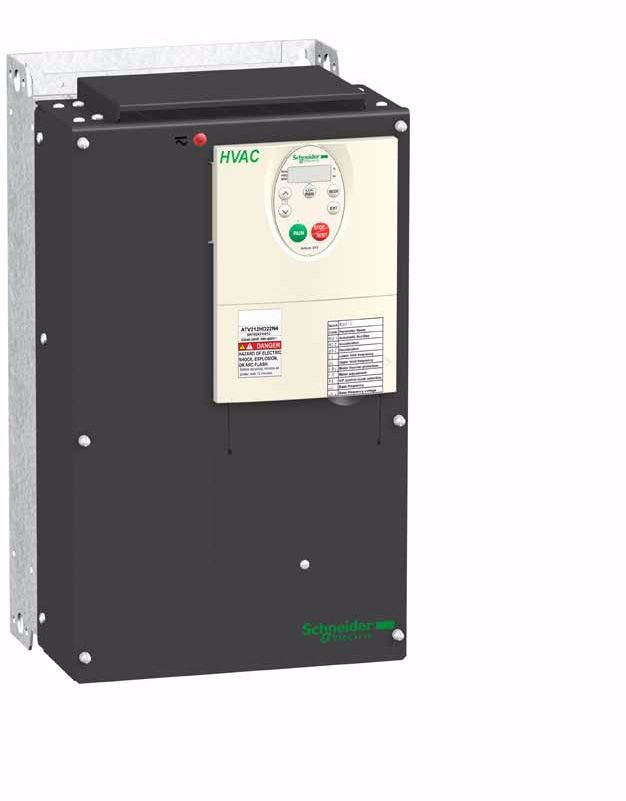
Altivar 212
           Variable speed drives for asynchronous motors

           Modbus communication manual
           09/2012
S1A53844

           www.schneider-electric.com
The information provided in this documentation contains general descriptions and/or technical characteristics
of the performance of the products contained herein. This documentation is not intended as a substitute for
and is not to be used for determining suitability or reliability of these products for specific user applications. It
is the duty of any such user or integrator to perform the appropriate and complete risk analysis, evaluation and
testing of the products with respect to the relevant specific application or use thereof. Neither Schneider
Electric nor any of its affiliates or subsidiaries shall be responsible or liable for misuse of the information
contained herein. If you have any suggestions for improvements or amendments or have found errors in this
publication, please notify us.
No part of this document may be reproduced in any form or by any means, electronic or mechanical, including
photocopying, without express written permission of Schneider Electric.
All pertinent state, regional, and local safety regulations must be observed when installing and using this
product. For reasons of safety and to help ensure compliance with documented system data, only the
manufacturer should perform repairs to components.
When devices are used for applications with technical safety requirements, the relevant instructions must be
followed.
Failure to use Schneider Electric software or approved software with our hardware products may result in
injury, harm, or improper operating results.
Failure to observe this information can result in injury or equipment damage.
© 2012 Schneider Electric. All rights reserved.
2 S1A53844 06/2012Table of Contents
Table of Contents
Safety Information . . . . . . . . . . . . . . . . . . . . . . . . . . . . . . . . . . . . . . . . . . . . . . . . . . . . 5
About the Book . . . . . . . . . . . . . . . . . . . . . . . . . . . . . . . . . . . . . . . . . . . . . . . . . . . . . . . 6
Chapter 1 Introduction. . . . . . . . . . . . . . . . . . . . . . . . . . . . . . . . . . . . . . . . . . . . . . . . . . . . . . . . . . . 9
Chapter 2 Hardware setup. . . . . . . . . . . . . . . . . . . . . . . . . . . . . . . . . . . . . . . . . . . . . . . . . . . . . . . 11
Pin out of the Open Style Modbus connector . . . . . . . . . . . . . . . . . . . . . . . . . . . . . . . . 12
Connection via Open Style wiring system . . . . . . . . . . . . . . . . . . . . . . . . . . . . . . . . . . 13
Open Style Reference . . . . . . . . . . . . . . . . . . . . . . . . . . . . . . . . . . . . . . . . . . . . . . . . . 13
Pin out of the RJ45 Modbus connector . . . . . . . . . . . . . . . . . . . . . . . . . . . . . . . . . . . . 13
Connection via RJ45 wiring system . . . . . . . . . . . . . . . . . . . . . . . . . . . . . . . . . . . . . . . 14
RJ45 Reference . . . . . . . . . . . . . . . . . . . . . . . . . . . . . . . . . . . . . . . . . . . . . . . . . . . . . . 14
Protection Against Interference . . . . . . . . . . . . . . . . . . . . . . . . . . . . . . . . . . . . . . . . . . 15
Description of terminals . . . . . . . . . . . . . . . . . . . . . . . . . . . . . . . . . . . . . . . . . . . . . . . . 16
Chapter 3 Configuration . . . . . . . . . . . . . . . . . . . . . . . . . . . . . . . . . . . . . . . . . . . . . . . . . . . . . . . . 19
Configuration of the communication parameters . . . . . . . . . . . . . . . . . . . . . . . . . . . . . 20
Configuration of the control source. . . . . . . . . . . . . . . . . . . . . . . . . . . . . . . . . . . . . . . . 21
Configuration of the indirect blocks . . . . . . . . . . . . . . . . . . . . . . . . . . . . . . . . . . . . . . . 27
Configuration of the communication interruption . . . . . . . . . . . . . . . . . . . . . . . . . . . . . 28
Chapter 4 Modbus services . . . . . . . . . . . . . . . . . . . . . . . . . . . . . . . . . . . . . . . . . . . . . . . . . . . . . 31
Principle of the Modbus protocol . . . . . . . . . . . . . . . . . . . . . . . . . . . . . . . . . . . . . . . . . 32
RTU mode . . . . . . . . . . . . . . . . . . . . . . . . . . . . . . . . . . . . . . . . . . . . . . . . . . . . . . . . . . 32
Modbus functions available . . . . . . . . . . . . . . . . . . . . . . . . . . . . . . . . . . . . . . . . . . . . . 33
Read one word (03) . . . . . . . . . . . . . . . . . . . . . . . . . . . . . . . . . . . . . . . . . . . . . . . . . . . 33
Read indirect block (3) . . . . . . . . . . . . . . . . . . . . . . . . . . . . . . . . . . . . . . . . . . . . . . . . . 34
Write Single Register (6) . . . . . . . . . . . . . . . . . . . . . . . . . . . . . . . . . . . . . . . . . . . . . . . 36
Write multiple registers (16) . . . . . . . . . . . . . . . . . . . . . . . . . . . . . . . . . . . . . . . . . . . . . 37
Write indirect block (16) . . . . . . . . . . . . . . . . . . . . . . . . . . . . . . . . . . . . . . . . . . . . . . . . 38
Read Device Identification (43/14) . . . . . . . . . . . . . . . . . . . . . . . . . . . . . . . . . . . . . . . . 40
Error response . . . . . . . . . . . . . . . . . . . . . . . . . . . . . . . . . . . . . . . . . . . . . . . . . . . . . . . 41
Chapter 5 Parameter list . . . . . . . . . . . . . . . . . . . . . . . . . . . . . . . . . . . . . . . . . . . . . . . . . . . . . . . . 43
Referring to the Altivar 212 programming manual . . . . . . . . . . . . . . . . . . . . . . . . . . . . 44
List of control parameters . . . . . . . . . . . . . . . . . . . . . . . . . . . . . . . . . . . . . . . . . . . . . . . 45
List of monitoring parameters . . . . . . . . . . . . . . . . . . . . . . . . . . . . . . . . . . . . . . . . . . . . 46
Commands . . . . . . . . . . . . . . . . . . . . . . . . . . . . . . . . . . . . . . . . . . . . . . . . . . . . . . . . . . 48
Setpoints. . . . . . . . . . . . . . . . . . . . . . . . . . . . . . . . . . . . . . . . . . . . . . . . . . . . . . . . . . . . 50
Status . . . . . . . . . . . . . . . . . . . . . . . . . . . . . . . . . . . . . . . . . . . . . . . . . . . . . . . . . . . . . . 51
Trip and alarm codes . . . . . . . . . . . . . . . . . . . . . . . . . . . . . . . . . . . . . . . . . . . . . . . . . . 53
Monitoring and control of I/O from communication . . . . . . . . . . . . . . . . . . . . . . . . . . . . 55
Chapter 6 Appendix . . . . . . . . . . . . . . . . . . . . . . . . . . . . . . . . . . . . . . . . . . . . . . . . . . . . . . . . . . . . 61
RS485 standard . . . . . . . . . . . . . . . . . . . . . . . . . . . . . . . . . . . . . . . . . . . . . . . . . . . . . . 62
Modbus 2-wire standard schematic . . . . . . . . . . . . . . . . . . . . . . . . . . . . . . . . . . . . . . . 62
Chapter 7 Migration . . . . . . . . . . . . . . . . . . . . . . . . . . . . . . . . . . . . . . . . . . . . . . . . . . . . . . . . . . . . 63
Migration ATV21 - ATV212. . . . . . . . . . . . . . . . . . . . . . . . . . . . . . . . . . . . . . . . . . . . . . 64
S1A53844 06/2012 3Table of Contents 4 S1A53844 06/2012
Safety Information
                                                                                                                            §

Important Information

NOTICE
                   Read these instructions carefully, and look at the equipment to become familiar with the device before trying
                   to install, operate, or maintain it. The following special messages may appear throughout this documentation
                   or on the equipment to warn of potential hazards or to call attention to information that clarifies or simplifies a
                   procedure.

                             The addition of this symbol to a Danger or Warning safety label indicates that an electrical hazard
                             exists, which will result in personal injury if the instructions are not followed.

                             This is the safety alert symbol. It is used to alert you to potential personal injury hazards. Obey all
                             safety message that follow this symbol to avoid possible injury or death.

                                                                      DANGER
                   DANGER indicates an imminently hazardous situation, which, if not avoided, will result in death or serious
                   injury.

                                                                     WARNING
                   WARNING indicates a potentially hazardous situation, which, if not avoided, can result in death, serious
                   injury or equipment damage.

                                                                      CAUTION
                   CAUTION indicates a potentially hazardous situation, which, if not avoided, can result in injury or equipment
                   damage.

                                                                   CAUTION
                   CAUTION, used without the safety alert symbol, indicates a potentially hazardous situation which, if not
                   avoided, can result in equipment damage.

PLEASE NOTE
                   The word “drive” as used in this manual refers to the controller portion of the adjustable speed drive as defined
                   by NEC.
                   Electrical equipment should be installed, operated, serviced, and maintained only by qualified personnel. No
                   responsibility is assumed by Schneider Electric for any consequences arising out of the use of this material.

S1A53844 06/2012                                                                                                                       5
About the Book
At a Glance
Document Scope
The purpose of this document is to show you how to configure the Altivar 212 to use Modbus for monitoring
and control.
NOTE: Read and understand this document and all related documents (see below) before installing,
operating, or maintaining your ATV212.
Validity Note
This documentation is valid for the Altivar 212 Modbus fieldbus.
Related Documents
Title of Documentation Reference Number
ATV212 Quick Start S1A53825
ATV212 Installation manual S1A53832
ATV212 Programming manual S1A53838
ATV212 BACnet manual S1A53845
ATV212 Metasys N2 manual S1A53846
ATV212 Apogée FLN P1 manual S1A53847
ATV212 LonWorks manual S1A53848
ATV212 other option manuals: see www.schneider-electric.com
You can download the latest versions of these technical publications and other technical information from our
website at www.schneider-electric.com.
Product Related Information
DANGER
UNINTENDED EQUIPMENT OPERATION
• Read and understand this manual before installing or operating the Altivar 212 drive.
• Any changes made to the parameter settings must be performed by qualified personnel.
Failure to follow these instructions will result in death or serious injury.
6 S1A53844 06/2012DANGER
HAZARD OF ELECTRIC SHOCK, EXPLOSION OR ARC FLASH
• Read and understand this manual before installing or operating the drive. Installation, adjustment, repair,
and maintenance must be performed by qualified personnel.
• The user is responsible for compliance with all international and national electrical code requirements with
respect to grounding of all equipment.
• Many parts of this drive, including the printed circuit boards, operate at the line voltage. DO NOT TOUCH.
Use only electrically insulated tools.
• DO NOT touch unshielded components or terminal strip screw connections with voltage present.
• DO NOT short across terminals PA/+ and PC/– or across the DC bus capacitors.
• Before servicing the drive:
- Disconnect all power, including external control power that may be present.
- Place a “DO NOT TURN ON” label on all power disconnects.
- Lock all power disconnects in the open position.
- WAIT 15 MINUTES to allow the DC bus capacitors to discharge.
- Measure the voltage of the DC bus between the PA/+ and PC/– terminals to ensure that the voltage is
less than 42 Vdc.
- If the DC bus capacitors do not discharge completely, contact your local Schneider Electric
representative. Do not repair or operate the drive
• Install and close all covers before applying power or starting and stopping the drive.
Failure to follow these instructions will result in death or serious injury.
WARNING
DAMAGE DRIVE EQUIPMENT
Do not operate or install any drive or drive accessory that appears damaged.
Failure to follow these instructions can result in death, serious injury, or equipment damage.
WARNING
LOSS OF CONTROL
• The designer of any control scheme must consider the potential failure modes of control paths and, for
certain critical control functions, provide a means to achieve a safe state during and after a path failure.
Examples of critical control functions are emergency stop and overtravel stop.
• Separate or redundant control paths must be provided for critical control functions.
• System control paths may include communication links. Consideration must be given to the implications
of unanticipated transmission delays or failures of the link (1).
Failure to follow these instructions can result in death, serious injury, or equipment damage.
(1) For additional information, refer to NEMA ICS 1.1 (latest edition), “Safety Guidelines for the Application, Installation, and
Maintenance of Solid State Control” and to NEMA ICS 7.1 (latest edition), “Safety Standards for Construction and Guide
for Selection, Installation and Operation of Adjustable-Speed Drive Systems.”
S1A53844 06/2012 78 S1A53844 06/2012
Introduction

                   Introduction

                                                                                                                        1
                   Data exchanges give access to all Altivar 212 functions:
                   •   Control (start, stop, reset, setpoint),
                   •   Monitoring (status, current, voltage, thermal state...),
                   •   Diagnostics (alarms),
                   •   Settings,
                   •   Configuration.

                   The communication port has an RJ45 and an open style connector for the connection to the network. At the
                   physical layer, it supports 2-wire RS485 and transmission speed at 9600 or 19200 bps.

                   4 Modbus functions are available:
                   •   3 (16#03) Read Holding Registers
                   •   6 (16#06) Write Single Register
                   •   16 (16#10) Write Multiple Registers
                   •   43/14 (16#2B/0E) Read Device Identification

                   Function 3 has a restricted implementation:
                   • with length 1 it permits to read any parameter of the drive, one by one, see page 33.
                   • with lengths 1 to 5 it permits to read a particular block of 1 to 5 indirect parameters. These 5 parameters
                       can be configured through the operation panel to relevant monitoring parameters, see page 34.

                   Function 16 has a restricted implementation:
                   • with length 1 it permits to write any writable parameter of the drive, one by one, see page 37.
                   • with length 1 to 2 it permits to write a particular block of 1 to 2 indirect parameters. These 2 parameters can
                       be configured through the operation panel to relevant control parameters, see page 38.

S1A53844 09/2012                                                                                                                   9
Introduction 10 S1A53844 09/2012
Hardware setup

                   Hardware setup

                                                                         2

What's in this Chapter?
                   This chapter contains the following topics:
                                                                 Topic   Page
                    Pin out of the Open Style Modbus connector            12
                    Connection via Open Style wiring system               13
                    Open Style Reference                                  13
                    Pin out of the RJ45 Modbus connector                  13
                    Connection via RJ45 wiring system                     14
                    RJ45 Reference                                        14
                    Protection Against Interference                       15
                    Description of terminals                              16

S1A53844 09/2012                                                                11
Hardware setup
Pin out of the Open Style Modbus connector
Open Style Connector (screwcage plug style)
B +
A –
Line termination switch GND Common
SCR Shield
FLA FLB FLC RYA RYC
PLC FM Note: It is possible to connect two wires
I U Term
Sink Source
inside one cage in order to be compliant to
SW101 SW103
SW102
daisy chain requirements.
F R RES PLC P24 CC FM
Cross section:
0.2 - 2.5 mm² / AWG 24-12
VIA U I
Diagnostic DELs VIB U PTC
SW100 Tightening torque:
B A GND SCR PP VIA VIB CC
0.5-0.6 Nm / 4.4-5.3 lb/In.
RJ45
Open Style Connector
DANGER
UNINTENDED EQUIPMENT OPERATION
• Modify only the setting of the switches when the product is switched off.
• Do not change the setting of the SW102 unless your system is wired for SINK logic.
Failure to follow these instructions will result in death or serious injury.
CAUTION
RISK OF BODY INJURY
Use a screwdriver to change the position of the switches.
Failure to follow these instructions will result in death or serious injury.
12 S1A53844 09/2012Hardware setup
Connection via Open Style wiring system
1 Modbus cable depending on the type of master
Master
2 RS 485 double shielded twisted pair cable
1
2 2
ATV 212
Open Style Reference
Modbus serial link connection is carried out using RS 485 double shielded twisted pair cables, supplied without
connector (reference: TSX CSA 100). Maximum length is 100 m (328 ft). The ATV212 drive includes a line
termination as standard. Set switch SW103 to Term to connect the internal 120 Ω termination resistor.
Pin out of the RJ45 Modbus connector
View from underneath The following table describes the pin out of the ATV212 RJ45 connector.
Pin Signal
1 Not connected
2 Common (common of the signal and power supply)
3 Not connected
4 D1 (Modbus name) or B (EIA / TIA485 name)
5 D0 (Modbus name) or A (EIA / TIA485 name)
6 Not connected
8........................1 7 VP, 10 Vdc (supply for RS232/RS485 converter or graphic display option)
8 Common (common of the signal and power supply)
CAUTION
RISK OF DAMAGE TO THE DRIVE
Use wiring cables or taps that connect only signals D0, D1 and common.
Failure to follow this instruction can result in injury or equipment damage.
S1A53844 09/2012 13Hardware setup
Connection via RJ45 wiring system
1 Modbus cable depending on the type of master
Master
2 Modbus splitter box
1 3 4 3 4 5
2 3 Modbus drop cables
4 Modbus T-junction box
5 5 Line terminators
3 3 3 3
ATV 212
Description
RJ45 is factory set to connect the graphic display option.
Use the open style connector to connect the drive to Modbus fieldbus.
Using RJ45 to connect Modbus fieldbus is still possible but requires to modify parameter [Com channel choice]
F807 value. Set F807 to 0 [RJ45].
RJ45 Reference
Connection accessories
Description Reference
Modbus splitter block 10 RJ45 connectors and 1 screw terminal LU9 GC3
Modbus T-junction boxes With integrated cable (0.3 m) VW3 A8 306 TF03
With integrated cable (1 m) VW3 A8 306 TF10
Line For RJ45 connector R = 120 Ω, C = 1 nF VW3 A8 306 RC
terminators
R = 150 Ω VW3 A8 306 R
Connecting cables
Description Length Connectors Reference
m
Cables for 3 1 RJ45 connector and 1 stripped end VW3 A8 306 D30
Modbus bus
0.3 2 RJ45 connectors VW3 A8 306 R03
1 2 RJ45 connectors VW3 A8 306 R10
3 2 RJ45 connectors VW3 A8 306 R30
RS 485 double 100 Supplied without connector TSX CSA 100
shielded twisted pair
200 Supplied without connector TSX CSA 200
cables
500 Supplied without connector TSX CSA 500
Type of master Master interface Modbus connection accessories for RJ45 wiring system
Description Reference
Twido PLC Adaptor or mini-DIN RS485 3 m cable fitted with a mini-DIN connector and an RJ45 TWD XCA RJ030
interface module connector
Adaptor or screw terminal 3 m cable fitted with an RJ45 connector and stripped at the other VW3 A8 306 D30
RS485 interface module end
TSX Premium PLC TSX SCY 11601 or Cable fitted with a SUB-D 25 connector and stripped at the other TSX SCY CM 6030
TSX SCY 21601 module end (for connection to the screw terminals of the LU9GC3 splitter
(SUB-D 25 socket) block)
PCMCIA card (TSX SCP114) Stripped cable TSX SCP CM 4030
14 S1A53844 09/2012Hardware setup
Ethernet bridge Screw terminal RS485 3 m cable fitted with an RJ45 connector and stripped at the other VW3 A8 306 D30
(TSX ETG 100) end
Serial port PC Male SUB-D 9 RS232 serial RS232/RS485 converter and TSX SCA 72 and
port PC 3 m cable fitted with an RJ45 connector and stripped at the other VW3 A8 306 D30
end (for connection to the screw terminals of the LU9GC3 splitter
block)
Protection Against Interference
• Use the Schneider Electric cable with 2 pairs of shielded twisted conductors (reference: TSXCSA100,
TSXCSA200, TSXCSA500).
• Keep the Modbus cable separated from the power cables (30 cm (11.8 in.) minimum).
• Make any crossovers of the Modbus cable and the power cables at right-angles, if necessary.
For more information, please refer to the TSX DG KBL E manual: “Electromagnetic compatibility of industrial
networks and fieldbuses”.
S1A53844 09/2012 15Hardware setup
Description of terminals
Terminal
Function Electrical specifications Internal circuits
symbol
Multifunctional programmable logic input.
It has forward rotation function in default setting.
R G 5V
F SINK 650 Ω
ON: forward rotation drive 650 Ω
SOURCE
OFF: slowdown and stop Input for voltage-free contact 0V
24 Vdc, 5 mA or less.
D1
120 Ω 120 Ω
Multifunctional programmable logic input. SINK/SOURCE can be selected with
R
1n F 1n F
D0
It has Preset speed command input 1 in default setting. SW102.
Common
Multifunctional programmable logic input.
RES It has Fault Reset in default setting R
G
R
G
+24V
Voltage: 10 Vdc PP (1)
PP Voltage supply for reference potentiometer. Max current: 10 mA
Protected against short circuits.
Switch-configurable voltage or current analog input using 15k 300k
SW100.
Voltage: 10 Vdc
It has speed setpoint function in the default setting. (0 to 50 U
VIA Internal impedance: 30 kΩ VIA 15k
Hz frequency with 0 to 10 Vdc in voltage or with 0 to 20 mA I
Current: 0 - 20 mA
in current input). In addition,This analog input is also
configurable as a logic input. 250k
Multifunction programmable analog input.
It has speed setpoint function in the default setting
(0 to 50 Hz frequency with 0 to 10 Vdc input). In addition, Voltage: 10 Vdc
VIB
this terminal can be used as PTC (2) input by setting switch Internal impedance: 30 kΩ
SW100 and the parameters [Mot PTC selection] F645
and [PTC resistor value] F646.
CC Control circuit equipotential terminal -
This terminal is only active when the switch (SINK-
SOURCE) is on PLC position. It allow to manage external
PLC sink or source with static outputs. PLC shall be connected Max. voltage: 50 Vdc
to 0V (CC terminal) or +24V according to the type of
outputs
(2)
P24 24 Vdc power supply output Voltage: 24 Vdc, 50 mA
Voltage analog output: 0...10 Vdc
Switch-configurable voltage or current analog output using Minimum load impedance: 470 Ω
FM
SW101. Current analog output: 0...20 mA
Maximum load impedance: 550 Ω
RYA
FLA Multifunctional programmable relay contact outputs. Voltage: 30 Vdc, 0.5 A
RYC
FLB Default setting is set to detect the activation of the drive 250 Vac, 1A
FLC protection function. (cos ϕ = 1) FLA
RYA Contact across FLA-FLC is closed and FLB-FLC is open Voltage: 250 Vac, 0.5A
RYC during normal operation. RYA -RYC is open. (cos ϕ = 0.4) FLB
FLC
(1) Voltage conversion
(2) PTC (Positive Temperature Coefficient): Resettable thermal fuse resistor for over current protection.
16 S1A53844 09/2012Hardware setup
4.7k 47 k
B
RS485 transmission data, reception B
A BACnet open style connector
data. A
GND 4.7k 47 k
BACnet communication shield terminal. TERM
SCR This terminal is not connected to other circuits in the board. GND
120
Ground this terminal in a location separated from the ground of the power line. SCR SW103
S1A53844 09/2012 17Hardware setup 18 S1A53844 09/2012
Configuration

                   Configuration

                                                                                                                        3

What's in this Chapter?
                   This chapter contains the following topics:
                                                                      Topic                                                Page
                    Configuration of the communication parameters                                                           20
                    Configuration of the control source                                                                     21
                    Configuration of the indirect blocks                                                                    27
                    Configuration of the communication interruption                                                         28

                   The settings of communication-related parameters can be changed from the operation panel or from Modbus
                   (PLC, computer or controller) or from graphic display option.

                   Note that there are two types of parameters: parameters whose settings take effect immediately after the
                   setting and parameters whose settings do not take effect until the drive is turned back on or reset. In the table
                   below, these 2 types are mentioned in the column "valid" by "After setting" and "After power cycle".

S1A53844 09/2012                                                                                                                  19
Configuration
Configuration of the communication parameters
Access to the parameters
All parameters are accessible in the [COMMUNICATION MENU] COM submenu of [PROGRAMMING
MENU] Programming mode.
DANGER
UNINTENDED EQUIPMENT OPERATION
Refer to «Serial communication parameters» in the Altivar 212 Programming manual, for more information
on how to set these serial communication parameters.
Failure to follow these instructions will result in death or serious injury.
Description
Parameters Modbus Adjustment range Default Valid
address setting after
[Mdb RJ45 baud] (F800) 2048 0 [9600 bps] 1 Power cycle
Communication Modbus RJ45 Baud rate 16#800 1 [19200 bps]
[Mdb RJ45 parity] (F801) 2049 0 [No] (No parity) 1 Power cycle
Communication Modbus RJ45 Parity 16#801 1 [Even] (Even parity)
2 [Odd] (Odd parity)
[Modbus address] (F802) 2050 0 ... 247 1 Setting
This address is used whatever the port used. 16#802
[Com. time out] (F803) 2051 0 or 3 Setting
Communication time out 16#803 1 ... 100 seconds
[Com channel choice] (F807) 2055 0 [RJ45] 1 Setting
Communication channel choice 16#807 1 [Open style]
[Mdb network baud] (F820) 2080 0 [9600 bps] 1 Power cycle
Modbus network baud rate 16#820 1 [19200 bps]
[Mdb network parity] (F821) 2081 0 [No] (No parity) 1 Power cycle
Modbus network parity 16#821 1 [Even] (Even parity)
2 [Odd] (Odd parity)
[Network protocol] (F829) 2089 1 ... 5 1 Power cycle
Communication Network protocol selection 16#829 1 [Mdb RTU]
Notes:
• Baud rate and parity bit should be uniform inside the same network.
• Modbus address should not be duplicate inside the same network.
• Stop bit isn't configurable. ATV212 Tx is 2 stop bit, Rx is 1 or 2 stop bits. This permits a good comunication
with Master in 1 and 2 stop bits.
• F800 and F801 parameters are used to define the baudrate and parity of RJ45 port.
• F820 and F821 parameters are used to define the baudrate and parity of Open style connector port.
• F802 and F803 parameters are used to define the modbus address and communication time out for
both ports (RJ45 et Open style connector). Set F802 between 1 to 247 (address 0 is not active).
• F807 parameter enables to select the communication command channel: RJ45 or Open style connector.
The port not set as the communication command channel may be used for monitoring purposes to check
that the setting change on F807 was effectively taken into account.
20 S1A53844 09/2012Configuration
Configuration of the control source
The Altivar 212 can receive commands and setpoint from the Modbus network or from the terminals (F, R,
RES, VIA, VIB). In the default configuration, both commands and setpoint come from the terminals.
The LOC/REM key of the operation panel is available to switch the control to the operation panel. The inputs
F, R or RES can be configured to switch the control from the Modbus network to the terminals.
Different usual possibilities are described in the chapters below:
• Control from the Modbus network,
• Control from the terminals, monitoring from the Modbus network,
• Control from the Modbus network or the terminals, switched via Modbus,
• Command from the Modbus network, setpoint from the Modbus network or the terminals switched to by a
logic input.
Refer to these examples.
Control by the Modbus network
The commands and the setpoint come from the Modbus network. The signals wired on the terminals are
ignored. The LOC/REM key is valid.
Below is the list of parameters that must be configured.
Access to the parameters
Parameters Location
[Command mode sel] (CMOd) [PROGRAMMING MENU] Programming mode
[Frequency mode sel] (FMOd)
Other parameters [COMMUNICATION MENU] COM submenu of
[PROGRAMMING MENU] Programming mode.
Description
Parameters Modbus Setting Default Valid
address setting after
[Command mode sel] (CMOd) 3 2 [Communication] 0 Setting
Remote mode start/stop control 16#3 Serial communication
[Frequency mode sel] (FMOd) 4 4 [Serial com ref.] 1 Setting
Remote mode primary speed reference source 16#4 Serial communication
[Com channel choice] (F807) 2055 0 [RJ45] or 1 Setting
Communication channel selection 16#807 1 [Open style]
[Network protocol] (F829) 2089 1 [Modbus-RTU protocol] 1 Power
Communication Network protocol selection 16#829 cycle
Bit 15 of
command word FA00
Serial com. command priority bit LOC
Commands CMOd ON REM
Terminals
Modbus commands
0 REM
Commands
Operation panel 1
OFF Operation
Modbus 2 LOC
panel
commands
Setpoint FMOd
VIA 1 ON
VIB Modbus setpoint
2 REM
Setpoint
Operation panel 3
Modbus OFF Operation
setpoint 4 panel LOC
UP/DOWN Communication Bit 14 of
5 command word FA00
F807
Serial com. setpoint priority bit
RJ45 channel: Modbus 0
Network channel:
Paremeter F829 1
S1A53844 09/2012 21Configuration
Control by the terminals, monitoring by the Modbus network
The commands and the setpoint come from the terminals.
The Altivar 212 is monitored via the Modbus network.
The LOC/REM key is valid.
Below is the list of parameters that must be configured.
Access to the parameters
Parameters Location
[Command mode sel] (CMOd) [PROGRAMMING MENU] Programming mode
[Frequency mode sel] (FMOd)
[Com channel choice] (F807) [COMMUNICATION MENU] COM submenu of
[PROGRAMMING MENU] Programming mode.
Description
Parameters Modbus Setting Default Valid
address setting after
[Command mode sel] (CMOd) 3 0 [Logic inputs] 0 Setting
Remote mode start/stop control 16#3 Control terminal logic inputs
[Frequency mode sel] (FMOd) 4 1 [Ref source VIA] 1 Setting
Remote mode primary speed reference source 16#4 The source of the drive’s
speed reference is VIA.
[Com channel choice] (F807) 2055 0 [RJ45] or 1 Setting
Communication channel selection 16#807 1 [Open style]
Bit 15 of
command word FA00
Serial com. command priority bit LOC
Commands CMOd ON
REM
Modbus commands
Terminals 0 REM
Commands
Operation panel 1
OFF Operation
Modbus 2 LOC
panel
commands
Setpoint FMOd
VIA 1 ON
VIB Modbus setpoint
2 REM
Setpoint
Operation panel 3
Modbus OFF Operation
setpoint 4 panel LOC
UP/DOWN Communication Bit 14 of
5 command word FA00
F807
Serial com. setpoint priority bit
RJ45 channel: Modbus 0
Network channel:
Paremeter F829 1
22 S1A53844 09/2012Configuration
Control by the Modbus network or the terminals, switched via Modbus
The commands come from the terminals if bit 15 of the command word [Command from serial communication]
(FA00) is "OFF" (value 0).
The commands come from the Modbus network if bit 15 of the command word (FA00) is "enabled" (value 1).
The setpoint comes from the terminals if bit 14 of the command word (FA00) is "OFF" (value 0).
The setpoint comes from the Modbus network if bit 14 of the command word (FA00) is "enabled" (value 1).
The LOC/REM key is valid.
Below is the list of parameters that must be configured.
Access to the parameters
Parameters Location
[Command mode sel] (CMOd) [PROGRAMMING MENU] Programming mode
[Frequency mode sel] (FMOd)
[Com channel choice] (F807) [COMMUNICATION MENU] COM submenu of
[PROGRAMMING MENU] Programming mode.
Description
Parameters Modbus Setting Default Valid
address setting after
[Command mode sel] (CMOd) 3 0 [Logic inputs] 0 Setting
Remote mode start/stop control 16#3 Control terminal logic inputs
[Frequency mode sel] (FMOd) 4 1 [Ref source VIA] 1 Setting
Remote mode primary speed reference source 16#4 The source of the drive’s
speed reference is VIA.
[Com channel choice] (F807) 2055 0 [RJ45] or 1 Setting
Selection of Communication channel: via RJ45 or 16#807 1 [Open style]
Open style connector port
Bit 15 of
command word FA00
Terminals
Serial com. command
LOC
Commands CMOd priority bit
ON
REM
Modbus commands
Terminals 0 REM
Commands
Operation panel 1
OFF
Modbus 2 LOC
commands
Operation
Setpoint FMOd panel
VIA 1 ON
VIB Modbus setpoint
2 REM
Setpoint
Operation panel 3
OFF
Modbus setpoint Bit 14 of
4 LOC
command word FA00
UP/DOWN 5 Communication Serial com. setpoint Operation
F807 priority bit panel
RJ45 channel: Modbus 0
Network channel: 1
Paremeter F829
S1A53844 09/2012 23Configuration
Control by the Modbus network or the terminals switched to by a logic input
The commands and the setpoint come from the Modbus network if logic input R is OFF.
The commands and the setpoint come from the terminals if logic input R is ON.
The function 48 [Forced local] is assigned to the logic input R, F112 = 48.
The LOC/REM key is valid.
Below is the list of parameters that must be configured.
Access to the parameters
Parameters Location
[Command mode sel] (CMOd) [PROGRAMMING MENU] Programming mode
[Frequency mode sel] (FMOd)
[Com channel choice] (F112) [I/O MENU] IO submenu of [PROGRAMMING MENU] Programming mode.
[Com channel choice] (F807) [COMMUNICATION MENU] COM submenu
of [PROGRAMMING MENU] Programming mode.
Description
Parameters Modbus Setting Default Valid
address setting after
[Command mode sel] (CMOd) 3 0 [Logic inputs] 0 Setting
Remote mode start/stop control 16#3 Control terminal logic inputs
[Frequency mode sel] (FMOd) 4 1 [Ref source VIA] 1 Setting
Remote mode primary speed reference source 16#4 The source of the drive’s speed
reference is VIA.
[LI R selection] (F112) 274 48 [Forced local]: configured to 6 Setting
R logic input function 16#112 Forced switching from remote to
local control
[Com channel choice] (F807) 2055 0 [RJ45] or 1 Setting
Selection of Communication channel: via RJ45 or 16#807 1 [Open style]
Open style connector port
Bit 15 of
command word FA00 Logic input R
[LI R selection]
Serial com. command F112 set to
ON
priority bit 48 [Forced local] LOC
Commands CMOd REM
Modbus OFF
commands
Terminals 0 REM
OFF Commands
Operation panel 1
ON
Operation
Modbus commands 2 panel LOC
Setpoint FMOd
ON
VIA 1 Modbus OFF
setpoint
VIB 2 REM
OFF Setpoint
Operation panel 3
Bit 14 of ON Operation
Modbus setpoint 4 command word FA00 LOC
panel
Serial com. setpoint
UP/DOWN 5
priority bit
24 S1A53844 09/2012Configuration
Command by the Modbus network, setpoint by the Modbus network or the terminals switched to by a logic input
The commands come from the Modbus network.
The setpoint comes from the Modbus network if logic input R is OFF.
The setpoint comes from the terminals if logic input R is ON.
The function 38 [Frequency source] is assigned to the logic input R, F112 = 38.
The LOC/REM key is valid.
Below is the list of parameters that must be configured.
Access to the parameters
Parameters Location
[Command mode sel] (CMOd) [PROGRAMMING MENU] Programming mode
[Frequency mode sel] (FMOd)
[Com channel choice] (F112) [I/O MENU] IO submenu of [PROGRAMMING MENU]
Programming mode.
[Remote spd ref 2] (F207) [EXTENDED MENU] F--- submenu of [PROGRAMMING
MENU] Programming mode.
[Com channel choice] (F807) [COMMUNICATION MENU] COM submenu
of [PROGRAMMING MENU] Programming mode.
Description
Parameters Modbus Setting Default Valid
address setting after
[Command mode sel] (CMOd) 3 2 [Communication] 0 Setting
Remote mode start/stop control 16#3 Serial communication
[Frequency mode sel] (FMOd) 4 4 [Serial com ref.] 1 Setting
Remote mode primary speed reference source 16#4 Serial communication
[LI R selection] (F112) 274 38 [Frequency source] 6 Setting
R logic input function 16#112 Configured to Frequency reference
source switching
[Remote spd ref 2] (F207) 519 1 [VIA]: VIA 2 Setting
Remote mode secondary speed reference source 16#207
that may override the source selected by FMOd
[Com channel choice] (F807) 2055 0 [RJ45] or 1 Setting
Selection of Communication channel: via RJ45 or 16#807 1 [Open style]
Open style connector port
S1A53844 09/2012 25Configuration
Bit 15 of
command word FA00
Serial com. command
priority bit LOC
Commands CMOd REM
ON
Modbus
Terminals 0 commands
REM
Operation panel 1
OFF
Modbus Command
2 LOC
commands
Logic input R Operation
Bit 14 of [LI R selection] panel
command word FA00 F112 set to
Setpoint FMOd Serial com. setpoint 38 [Frequency source] or
priority bit F200 [Auto/man speed ref]
VIA 1 ON
Modbus OFF
VIB 2 setpoint
REM
Operation panel 3 OFF
ON
Modbus 4
setpoint
LOC Setpoint
UP/DOWN 5 Operation
panel
Setpoint F207 Bit 14 of
Modbus
setpoint command word FA00
VIA 1 Serial com. setpoint
ON
priority bit
VIB 2
F807 [Com channel choice]
Operation panel 3
Modbus
OFF RJ45 channel: Modbus 0
setpoint
4
Network channel: 1
UP/DOWN 5
parameter F829 [Network protocol]
Complete control diagram
Modbus Bit 15 of Logic input F, R or RES
Commands CMOd commands command word FA00 F111 ... F113 LOC
ON Serial com. command configured to 48
Terminals priority bit [Forced local] REM
0
REM
Operation REM
panel 1 LOC Commands
OFF
Modbus 2
commands
LOC
Modbus Bit 14 of Logic input F, R or RES
Setpoint FMOd F111 ... F113 Operation
setpoint command word FA00 panel
ON Serial com. setpoint configured to38
VIA 1 priority bit [Frequency source]
VIB OFF
2 REM
Operation REM
panel 3 OFF ON Setpoint
Modbus
setpoint 4 LOC
LOC
UP/DOWN 5
Operation
panel
Modbus Bit 14 of
Setpoint F207 command word FA00
setpoint
VIA ON Serial com. setpoint
1 priority bit
VIB 2
Operation
panel 3 OFF F807 [Com channel choice]
Modbus RJ45 channel: Modbus
setpoint 4 0
UP/DOWN 5 Network channel: 1
parameter F829 [Network protocol]
26 S1A53844 09/2012Configuration
Configuration of the indirect blocks
Configuration
These parameters configure the Modbus functions "Read indirect block (3)", page 34 and "Write indirect block
(16)", page 38.
Access to the parameters
All parameters are accessible in the [COMMUNICATION MENU] COM submenu of [PROGRAMMING
MENU] Programming mode.
Description
Parameters Modbus Adjustment range Default Valid
address setting after
[Block write data 1] (F870) 2160 0 [No select]: No selection
16#870 1 [Command word 1]
2 [Command word 2]
Power
3 [Frequency Setpoint] 0
[Block write data 2] (F871) 2161 cycle
4 [Relay command]: Ouput data on the terminal board
16#871 5 [FM command]: Analog output for communication
6 [Speed Setpoint]
[Block read data 1] (F875) 2165
0 [No select]: No selection
16#875
1 [Status info]
[Block read data 2] (F876) 2166 2 [Freq. out]: Output frequency
16#876 3 [Motor current]: Ouput current
4 [Ouput volt]: Ouput voltage
[Block read data 3] (F877) 2167 5 [Alarm info]: Alarm information Power
0
16#877 6 [PID feedback value] cycle
7 [Input term. mon]: Input terminal board monitor
[Block read data 4] (F878) 2168
8 [Out term. mon]: Output terminal board monitor
16#878 9 [VIA monitor]: VIA terminal board monitor
[Block read data 5] (F879) 2169 10 [VIB monitor]: VIB terminal board monitor
16#879 11 [Mot speed mon.]: Ouput motor speed monitor
S1A53844 09/2012 27Configuration
Configuration of the communication interruption
Configure the Modbus time out
A communication detected fault (Err5 and Err8) is triggered if the Altivar 212 does not receive any valid
Modbus requests at its address within a predefined time period (time out) set in the [Com. time out] (F803)
parameter. The timer starts when the communication has been established for the first time (valid frame, drive
address matches). Any Modbus request function is taken into account to reactivated the timer (read, write and
identification).
Access to the parameter
This parameter is accessible in the [COMMUNICATION MENU] COM submenu of [PROGRAMMING MENU]
Programming mode.
Description
Parameter Modbus Setting Unit Default Valid
address setting after
[Com. time out] (F803) 2051 0: Communication detection disabled s 3 Setting
Communication time out 16#803 1 ... 100: 1 to 100 seconds
WARNING
LOSS OF CONTROL
• If F803 is set to 0, communication control will be inhibited.
• For safety reasons, inhibiting the communication interruption detection should be restricted to the debug
phase or to special applications.
Failure to follow these instructions can result in death, serious injury, or equipment damage.
Monitoring the Modbus communication status
Modbus communication status are displayed in Monitoring mode. This parameter enables to check the
modbus communication on RJ45 and OpenStyle port.
On the embedded display terminal
Display Display on graphic Description
example display option
Mb [Mdb com stat] ON:
Modbus OFF:
communication status
OpenStyle Tx
RJ45 Rx OpenStyle Rx
RJ45 Tx
On the graphic display terminal
Without Communication
When Rx and/or Tx are B-A-COM:
displayed in this row Mdb com stat Mb activity
their state is inactive on OpenStyle port
RJ45 B - A - COM
Rx Tx Rx Tx
RJ45: Switch between local to remote
Mb activity on RJ45 port mode using the F4 button on the
Rem Loc/Rem display terminal
Example: With Communication on RJ45 port
Mdb com stat Mdb com stat
RJ45 B - A - COM RJ45 B - A - COM
Tx Rx Tx Rx Rx Tx
Rx Tx
Rem Loc/Rem Rem Loc/Rem
28 S1A53844 09/2012Configuration
Configure the drive behaviour
The drive trips in Err5 [Com RJ45 fault] or Err8 [Network error fault] if the communication was
established and the card no longer receives messages from the network.
The response of the drive in the event of a BACnet communication interruption can be configured by the
parameter [Com. fault setting] F851.
Access to the parameter
This parameter is accessible in the [COMMUNICATION MENU] COM submenu of [PROGRAMMING MENU]
Programming mode.
Description
Parameter Modbus Setting Default Valid
address setting after
[Com. fault setting] (F851) 2129 0 [Ramp stp (F/Cmod)] 4 Setting
Communication detected fault 16#851 1 [No active]
setting 2 [Ramp stop]
3 [Freewheel]
4 [Err5 or Err8]
WARNING
LOSS OF CONTROL
If F851 is set to 1, communication control will be inhibited.
For safety reasons, inhibiting the communication interruption detection should be restricted to the debug
phase or to special application.
Failure to follow these instructions can result in death, serious injury, or equipment damage.
WARNING
LOSS OF CONTROL
Know and understand the setting of parameter F851. This parameter controls the behavior of the drive in
the event of a network communication loss. If the value of F851 is 0, 1, 2, or 3, the drive will not trip on
an Err8.
Failure to follow these instructions can result in death, serious injury, or equipment damage.
S1A53844 09/2012 29Configuration 30 S1A53844 09/2012
Modbus services

                   Modbus services

                                                                         4

What's in this Chapter?
                   This chapter contains the following topics:
                                                                 Topic   Page
                    Principle of the Modbus protocol                      32
                    RTU mode                                              32
                    Modbus functions available                            33
                    Read one word (03)                                    33
                    Read indirect block (3)                               34
                    Write Single Register (6)                             36
                    Write multiple registers (16)                         37
                    Write indirect block (16)                             38
                    Read Device Identification (43/14)                    40
                    Error response                                        41

S1A53844 09/2012                                                                31
Modbus services
Principle of the Modbus protocol
The Modbus protocol is a master-slave protocol.
Only one device can transmit on the line at any one time.
The master manages the exchanges and only it can take the initiative.
It interrogates each of the slaves in succession.
No slave can send a message unless it is invited to do so.
Master
In the event of an error during data exchange, the master repeats the question and
declares the interrogated slave absent if no response is received within a given time
period.
If a slave does not understand a message, it sends an error response to the master. The
master may or may not repeat the request.
Slave j
Slave i Slave k
Two types of dialog are possible between master and slaves:
• The master sends a request to a slave and waits for it to respond. The request contains the slave address
(1 ... 247).
• Broadcast: the master sends a request to all slaves. Slaves do not answer. The value of the slave address
is 0.
Direct slave-to-slave communications are not possible.
For slave-to-slave communication, the master’s application software must therefore be designed to interrogate
one slave and send back data received to the other slave.
RTU mode
ATV212 supports RTU mode.
The Modbus RTU frame contains no message header byte, nor end of message bytes.
It is defined as follows:
Slave address Function code Data CRC16
The data is transmitted in binary code.
CRC16: Cyclic redundancy check parameter.
The end of the frame is detected on a silence greater than or equal to 3 characters.
The master must not introduce a space of more than 3.5 characters in a frame; otherwise the drive may
recognize it as a start of new frame.
32 S1A53844 09/2012Modbus services
Modbus functions available
The following table indicates which Modbus functions are managed by the Altivar 212 and specifies their limits.
The "read" and "write" functions are defined from the point of view of the master.
Code Function name Size of data Altivar 212 function name Broadcast
3 = 16#03 Read Holding Registers 1 object Read one word Yes
1 ... 5 objects Read indirect block Yes
6 = 16#06 Write Single Register 1 objects Yes
16 = 16#10 Write Multiple Registers 1 object Write one word Yes
2 objects Write indirect block Yes
43/14 = 16#2B/0E Read Device Identification 3 objects No
Read one word (03)
Function 3, quantity = 1
One word function permits to read one parameter value. All parameter of the Altivar 212 can be read.
Request:
Slave no. Function code Starting address Quantity of registers CRC16
(fixed)
03 Hi Lo 00 01 Lo Hi
1 byte 1 byte 2 bytes 2 bytes 2 bytes
Response:
Slave no. Function code Byte count Register value CRC16
03 Hi Lo Lo Hi
1 byte 1 byte 1 byte 2 bytes 2 bytes
Error response:
Slave no. Function code Exception CRC16
83 code Lo Hi
1 byte 1 byte 1 byte 1 byte 1 byte
Example: Read [Output frequency] (Fd00) on Altivar 212 at slave address 1
Request:
01 03 FD 00 00 01 B5 A6
Response:
01 03 02 17 70 B6 50
Example: Invalid read of 2 words
Request:
01 03 FD 00 00 02 F5 A7
Error response:
01 83 03 01 31
S1A53844 09/2012 33Modbus services
Read indirect block (3)
Function 3, quantity = 1 ... 5
The Read indirect block function permits to read 1 to 5 parameters. These parameters can be chosen by
parameters F875 ... F879 (refer to "Configuration of the indirect blocks", page 27)
Access to the parameter
This parameter is accessible in the [COMMUNICATION MENU] COM submenu of [PROGRAMMING MENU]
Programming mode.
Description
Parameters Modbus Adjustment range Default Valid
address setting after
[Block read data 1] (F875) 2165 0 [No select]: No selection
16#875 1 [Status info]
2 [Freq. out]: Output frequency
[Block read data 2] (F876) 2166
3 [Motor current]: Ouput current
16#876
4 [Ouput volt]: Ouput voltage
[Block read data 3] (F877) 2167 5 [Alarm info]: Alarm information Power
0
16#877 6 [PID feedback value] cycle
7 [Input term. mon]: Input terminal board monitor
[Block read data 4] (F878) 2168
8 [Out term. mon]: Output terminal board monitor
16#878 9 [VIA monitor]: VIA terminal board monitor
[Block read data 5] (F879) 2169 10 [VIB monitor]: VIB terminal board monitor
16#879 11 [Mot speed mon.]: Ouput motor speed monitor
Request:
Slave no. Function code Starting address Quantity of registers CRC16
Hi Lo Hi Lo Lo Hi
03
18 (fixed) 75 (fixed) 00 02 to 05
1 byte 1 byte 2 bytes 2 bytes 2 bytes
Response:
Slave no. Function code Byte count First register value ------- Last register value CRC16
03 Hi Lo Hi Lo Lo Hi
1 byte 1 byte 1 byte 2 bytes 2 bytes 2 bytes
Error response:
Slave no. Function code Exception code CRC16
83 Lo Hi
1 byte 1 byte 1 byte 1 byte
Example: Read indirect block in an drive with slave address 1.
Configuration parameters:
[Block read data 1] (F875) = 1: [drive Status] (Fd01)
[Block read data 2] (F876) = 2: [Output frequency] (Fd00)
[Block read data 3] (F877) = 3: [Output current] (FE03)
[Block read data 4] (F878) = 4: [Output voltage] (FE05)
[Block read data 5] (F879) = 5: [Alarm code] (FC91)
• Read indirect block of 5 parameters:
Request: 01 03 18 75 00 05 92 B3
Response: 01 03 0A 64 04 17 70 00 00 26 FB 00 80 1E 29
34 S1A53844 09/2012Modbus services
• Read indirect block of 2 parameters:
Request: 01 03 18 75 00 02 D3 71
Response: 01 03 04 64 04 17 70 AA D6
• Error response on invalid starting address:
Request: 01 03 18 76 00 02 23 71
Response: 01 83 03 01 31
• Error response on invalid quantity of registers:
Request: 01 03 18 75 00 06 D2 B2
Response: 01 83 03 01 31
Note: Reading values of parameters F875 to F879. Value of parameter F87p can be read by reading the address
187p.
Example for parameter F875:
0875: parameter assignment
1875: parameter value
S1A53844 09/2012 35Modbus services
Write Single Register (6)
The Write Single Register function permits to write value of one parameter. Not all Altivar 212 parameters can
be written.
Request and response:
Slave no. Function code Register address Register value CRC16
06 Hi Lo Hi Lo Lo Hi
1 byte 1 byte 2 bytes 2 bytes 2 bytes
Error response:
CRC16
Slave no. 86 Exception code Lo Hi
1 byte 1 byte 1 byte 1 byte
Example: Write value 60 Hz to the parameter [Frequency reference from serial comm.] (FA01) in Altivar
212 slave 1.
Request and response:
01 06 FA01 1770 E6C6
Example: Error response due to invalid register address.
Request:
01 06 FFFF 0000 89EE
Error response:
01 86 02 C3A1
36 S1A53844 09/2012Modbus services
Write multiple registers (16)
Function 16 = 16#10, quantity =1
This function code is used to write a block of contiguous registers (1 to approx. 120 registers). Read only
parameters can't be written.
Request:
Slave no. Function Starting Quantity of register Byte count First register value ------- CRC16
code address
00 01
10 02 (fixed)
(fixed) (fixed)
1 byte 1 byte 2 bytes 2 bytes 1 byte 2 bytes 2 bytes
Response:
Slave no. Function code Starting address Quantity of register CRC16
10 00 (fixed) 01 (fixed)
1 byte 1 byte 2 bytes 2 bytes 2 bytes
Error response:
CRC16
Slave no. Function code Exception code
90
1 byte 1 byte 1 byte 2 bytes
Refer to "Error response", page 41.
Example: Write value 60Hz in the parameter [Frequency reference from serial comm.] (FA01) in Altivar 212
slave 1.
Request:
01 10 FA 01 00 01 02 17 70 F3 9A
Response:
01 10 FA 01 00 01 60 D1
S1A53844 09/2012 37Modbus services
Write indirect block (16)
Function 16 = 16#10, quantity = 2
The Write indirect block function permits to write 2 parameters. These parameters can be chosen by
parameters [Block write data 1] (F870) and [Block write data 2] (F871) (refer to "Configuration of the
indirect blocks", page 27).
Access to the parameter
This parameter is accessible in the [COMMUNICATION MENU] COM submenu of [PROGRAMMING MENU]
Programming mode.
Description
Parameters Modbus Adjustment range Default Valid
address setting after
[Block write data 1] (F870) 2160 0 [No select]: No selection
16#870 1 [Command word 1]
2 [Command word 2]
Power
3 [Frequency Setpoint] 0
[Block write data 2] (F871) 2161 cycle
4 [Relay command]: Ouput data on the terminal board
16#871 5 [FM command]: Analog output for communication
6 [Speed Setpoint]
Request:
Slave no. Function Starting address Quantity of register Byte First register value ------- CRC16
code count
10 18 70 00 02 04 (fixed)
(fixed) (fixed) (fixed) (fixed)
1 byte 1 byte 2 bytes 2 bytes 1 byte 2 bytes 2 bytes
Response:
Slave no. Function code Starting address Quantity of register CRC16
10 18 (fixed) 70 (fixed) 00 (fixed) 02 (fixed)
1 byte 1 byte 2 bytes 2 bytes 2 bytes
Error response:
Function code CRC16
Slave no. 90 Exception code
1 byte 1 byte 1 byte 2 bytes
Refer to "Error response", page 41.
Example: Write value 60Hz in the parameter [Frequency Command] (FA01) and run forward command in
Altivar 212 slave 1.
Configuration:
[Block write data 1] (F870) = 1: [Command word 1] (FA00)
[Block write data 2] (F871) = 3: [Frequency reference from serial comm.] (FA01)
• The Altivar 212 accepts the request:
Request: 01 10 18 70 00 02 04 C4 00 17 70 6D AF
Response: 01 10 18 70 00 02 43 B3
• The Altivar 212 rejects the request because it is busy or F870 is 0:
Request: 01 10 18 70 00 02 04 C4 00 17 70 6D AF
Response: 01 90 04 4D C3
38 S1A53844 09/2012Modbus services
• The Altivar 212 rejects the request because of an invalid starting address:
Request: 01 10 18 71 00 02 04 C4 00 17 70 AC 63
Response: 01 90 03 0C 01
• The Altivar 212 rejects the request because of an invalid quantity of registers:
Request: 01 10 18 70 00 03 04 C4 00 17 70 6C 7E
Response: 01 90 03 0C 01
• · The Altivar 212 rejects the request because of an invalid byte count:
Request: 01 10 18 70 00 02 03 C4 00 17 70 D8 6F
Response: 01 90 03 0C 01
Note: Reading values of parameters F870 and F871. Value of parameter F87p can be read by reading the address
187p.
Example for parameter F870:
0870: parameter assignment
1870: parameter value
S1A53844 09/2012 39Modbus services
Read Device Identification (43/14)
Function 43/14 = 16#2B/0E
Request:
MEI type Read Device Id Object Id CRC16
Function code
Slave no. code
2B 0E 01 ... 03 00 Lo Hi
1 byte 1 byte 1 byte 1 byte 1 byte 2 bytes
Response:
Function code MEI type Read Device Id code Conformity level -------
Slave no.
2B 0E 01 ... 03 01
1 byte 1 byte 1 byte 1 byte 1 byte
------- More follows Next object Id Number of objects -------
00 00 03
1 byte 1 byte 1 byte
------- Id of object no. 1 Length of object no. 1 Value of object no. 1 -------
00 0D “Télémécanique”
1 byte 1 byte 13 bytes
------- Id of object no. 2 Length of object no. 2 Value of object no. 2 -------
01 0D “ATV212H075M3X”
1 byte 1 byte 13 bytes
------- Id of object no. 3 Length of object no. 3 Value of object no. 3 -------
02 04 “0182”
1 byte 1 byte 04 bytes
------- CRC16
Lo Hi
1 byte 1 byte
The total response size given in this example equals 46 bytes.
The response contains the following four objects:
• Object no. 1: Manufacturer name (always "Télémécanique", i.e., 13 bytes).
• Object no. 2: Device catalog number (ASCII string; for example: “ATV212H075M3X”, i.e., 13 bytes).
The length of this object varies according to drive type. Use the “Length of object no. 2” field to
determine the length.
• Object no. 3: Control version, in "MMmm" format where "MM" represents the major revision and "mm" the
minor revision (4-byte ASCII string; for example: "0182" for version 1.82).
Error response:
CRC16
Slave no. Function code Exception code Lo Hi
AB
1 byte 1 byte 1 byte 1 byte 1 byte
Refer to "Error response", page 41.
40 S1A53844 09/2012Modbus services
Error response
An error response is returned by the Altivar 212 when it is unable to perform the request.
Format of an error response:
Slave Function code Exception code CRC16
no. Lo Hi
1 byte 1 byte 1 byte 2 bytes
Function code: request code + H’80.
Exception code:
Exception Code Description
01 Unknown function:
The function code received in the query is not an allowable action for the drive.
- The function is not supported by the drive error.
- Function code 43 but MEI Type not equal: to 14.
02 Illegal data address:The data address received in the query is not an allowable address for the drive.
- Modbus address is not supported.
- Request to write a read only parameter.
03 Illegal data value:
A value contained in the query data field is not an allowable value for the drive.
- Data range not allowed.
- Fixed data not allowed.
- Function code 43 and MEI Type 14 but invalid Read Device ID Code (Read Dev ID code > 3).
04 Unable to execute:
The request commands an operation that the Altivar 212 is not able to execute due to another task or
condition.
- Request to write in a parameter that cannot be changed during running.
- Request to write during executing "tyP" (return to factory setting ...).
- Interruption occurs during writing data.
S1A53844 09/2012 41Modbus services 42 S1A53844 09/2012
Parameter list

                   Parameter list

                                                                               5

What's in this Chapter?
                   This chapter contains the following topics:
                                                                       Topic   Page
                    Referring to the Altivar 212 programming manual             44
                    List of control parameters                                  45
                    List of monitoring parameters                               46
                    Commands                                                    48
                    Setpoints                                                   50
                    Status                                                      51
                    Trip and alarm codes                                        53
                    Monitoring and control of I/O from communication            55
                    Identification                                              58

S1A53844 09/2012                                                                      43
Parameter list
Referring to the Altivar 212 programming manual
General
Parameters are decribed in the Altivar 212 programming manual.
For communication purposes, the section "Table of parameter and data" references Modbus address, unit,
range... The table below is an abstract, just for example.
Additionnal parameter, not listed in the Altivar 212 programming manual, are described in the present section.
Submenu or parameter Modbus Setting Unit Default
description address setting
[5 LAST PARAM CHANGE] (AUH) Operation panels parameters in groups of five in - -
History function the reverse order to that in which their settings
were changed (possible to edit).
[Quick menu] (AUF) The AUF submenu provides ready access to - -
Wizard function the ten basic parameters commonly used in
programming the drive.
In many cases, programming the ATV212 drive
is complete when these 10 parameters and
motor parameters have been properly set.
[Auto ramp] (AUI) 0 0 [Disabled]: Manual - 1
Automatic acceleration/ deceleration 16#0 1 [Enable]: [Acceleration time 1] (ACC) and
[Deceleration time 1] (dEC)
2 [ACC only]: [Acceleration time 1] (ACC) only
[Acceleration time 1] (ACC) 9 0.0 to 3200 s According
Slope of the acceleration ramp and 16#9 to drive
the time it takes for the output model
frequency of the
drive to increase from 0 Hz to the
setting of [Max frequency] (FH)
• "Modbus address" identifies the parameter for communication.
In Modbus protocol, it is also called "register address" or "Parameter address".
• "Adjusment range" or "Range" means the data cannot be written outside the range.
The data is expressed in the decimal notation. For writing the data through the communication function,
take the minimum setting unit into consideration, and use hexadecimal notation.
• "Minimum setting unit" is the unit of a single data.
For example, the "Minimum setting unit" of [Acceleration time 1] (ACC) is 0.1. 1 corresponds to 0.1s. For
setting the ACC to 10 seconds, transmit 16#03E8 by communication [10÷0.01=1000=16#03E8].
44 S1A53844 09/2012Parameter list
List of control parameters
These parameters are only in the RAM and not in the EEPROM, they return to initial values when the power
is turned off, after the drive has been reseted, or when factory setting is done.
Commands from serial communication
Parameter Modbus Range Min. Initial Write during EEPROM
description address setting unit value operation
Command word 1 (FA00) 64000 0 to 65535 - 0 Yes None
from serial communication 16#FA00
Command word 2 (FA20) 64032 0 to 65535 - 0 Yes None
from serial communication 16#FA20
Setpoints from serial communication
Parameter Modbus Range Min. Initial Write during EEPROM
description address setting unit value operation
Frequency reference from serial comm. 64001 0 to Max. 0.01 Hz 0 Yes None
(FA01) 16#FA01 frequency
(FH)
Speed reference from network (FA13) 64019 0 to 24000 1 min -1 0 Yes None
16#FA13 (1 rpm)
Outputs control from serial communication
Parameter Modbus Range Min. Initial Write during EEPROM
description address setting unit value operation
Terminal output data from comm. (FA50) 64080 0 to 255 0 0 Yes None
16#FA50
Analog output data from comm. (FA51) 64081 0 to 1023 0 0 Yes None
16#FA51 (10-bit
resolution)
S1A53844 09/2012 45You can also read


