VMware's BC-FJA (Bouncy Castle FIPS Java - API) - NIST
←
→
Page content transcription
If your browser does not render page correctly, please read the page content below
VMware, Inc.
3401 Hillview Ave
Palo Alto, CA 94304, USA
Tel: 877-486-9273
Email: info@vmware.com
http://www.vmware.com

     VMware's BC-FJA
     (Bouncy Castle FIPS Java
     API)
     Software Version: 1.0.2.1

     FIPS 140-2 Non-Proprietary Security Policy
     FIPS Security Level: 1
     Document Version: 0.1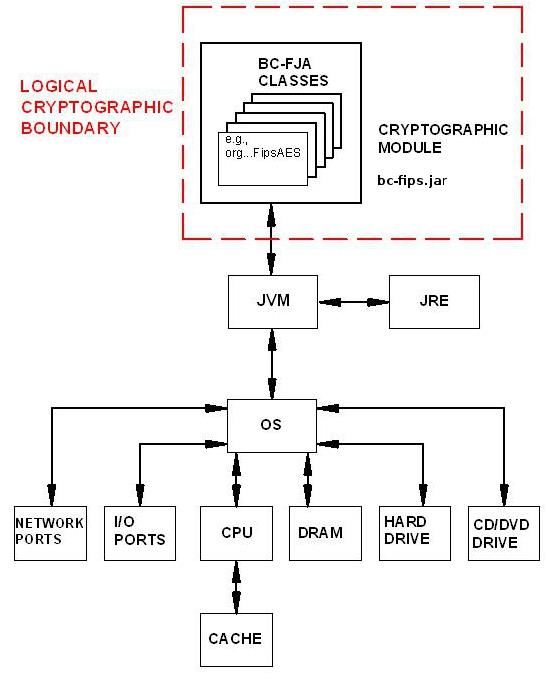
Security Policy, Version 0.1                                                                               VMware's BC-FJA (Bouncy Castle FIPS Java API)

TABLE OF CONTENTS
1      INTRODUCTION ......................................................................................................................................... 4
    1.1    Purpose.........................................................................................................................................................4
    1.2    Reference .....................................................................................................................................................4
2       VMware’s BC-FJA (Bouncy Castle FIPS Java API) Module ............................................................................ 5
    2.1     Introduction ..................................................................................................................................................5
       2.1.1 VMware's BC-FJA (Bouncy Castle FIPS Java API) ......................................................................................5
    2.2     Module Specification ....................................................................................................................................5
       2.2.1 Physical Cryptographic Boundary ............................................................................................................6
       2.2.2 Logical Cryptographic Boundary ..............................................................................................................7
       2.2.3 Modes of Operation.................................................................................................................................7
       2.2.4 Module Configuration..............................................................................................................................8
    2.3     Roles, Authentication and Services ..............................................................................................................9
       2.3.1 Assumption of Roles ................................................................................................................................9
       2.3.2 Services ....................................................................................................................................................9
    2.4     Physical Security .........................................................................................................................................12
    2.5     Operational Environment ...........................................................................................................................12
       2.5.1 Use of External RNG...............................................................................................................................14
    2.6     Cryptographic Key Management ...............................................................................................................14
       2.6.1 Critical Security Parameters...................................................................................................................19
       2.6.2 Public Keys .............................................................................................................................................21
    2.7     Self-Tests ....................................................................................................................................................21
    2.8     Mitigation of Other Attacks Policy .............................................................................................................23
3      Secure Operation ......................................................................................................................................24
    3.1     Basic Enforcement ......................................................................................................................................24
    3.2     Additional Enforcement with a Java SecurityManager ..............................................................................24
    3.3     Basic Guidance ...........................................................................................................................................24
    3.4     Enforcement and Guidance for GCM IVs ....................................................................................................25
    3.5     Enforcement and Guidance for use of the Approved PBKDF ......................................................................25
    3.6     Rules for setting the N and the S String in cSHAKE.....................................................................................25
    3.7     Guidance for the use of DRBGs and Configuring the JVM's Entropy Source ..............................................26
4       References and Acronyms .........................................................................................................................27

April 20, 2021                                                                                                                                              Page 2 of 30

                                                         © 2021 VMware, Inc.
                  This document may be freely reproduced and distributed whole and intact including this copyright notice.
Security Policy, Version 0.1 VMware's BC-FJA (Bouncy Castle FIPS Java API)
LIST OF FIGURES
Figure 1 – Hardware Block Diagram ......................................................................................................... 6
Figure 2 – Module’s Logical Cryptographic Boundary ........................................................................... 7
LIST OF TABLES
Table 1 – Security Level Per FIPS 140-2 Section ........................................................................................ 5
Table 2 – FIPS 140-2 Logical Interfaces....................................................................................................... 7
Table 3 – Available Java Permissions .......................................................................................................... 8
Table 4 – Roles Description .......................................................................................................................... 9
Table 5 – Services ........................................................................................................................................ 9
Table 6 – CSP Access Rights within Services ............................................................................................ 11
Table 7 – Tested Configuration ................................................................................................................... 12
Table 8 – Approved and CAVP Validated Cryptographic Functions .......................................................... 15
Table 9 – Approved Cryptographic Functions Tested with Vendor Affirmation .......................................... 17
Table 10 – Non-Approved but Allowed Cryptographic Functions ............................................................... 18
Table 11 – Non-Approved Cryptographic Functions for use in non-FIPS mode only ................................. 18
Table 12 – Critical Security Parameters (CSPs) ......................................................................................... 20
Table 13 – Public Keys ............................................................................................................................... 21
Table 14 – Power Up Self-tests .................................................................................................................. 22
Table 15 – Conditional Self-tests ................................................................................................................ 23
Table 16 – References ................................................................................................................................ 27
Table 17 – Acronyms .................................................................................................................................. 28
April 20, 2021 Page 3 of 30
© 2021 VMware, Inc.
This document may be freely reproduced and distributed whole and intact including this copyright notice.Security Policy, Version 0.1 VMware's BC-FJA (Bouncy Castle FIPS Java API)
1 INTRODUCTION
1.1 Purpose
This is a non-proprietary Cryptographic Module Security Policy for the VMware's BC-FJA (Bouncy Castle
FIPS Java API) Module from VMware, Inc. This Security Policy describes how the VMware's BC-FJA
(Bouncy Castle FIPS Java API) Module meets the security requirements of Federal Information Processing
Standards (FIPS) Publication 140-2, which details the U.S. and Canadian Government requirements for
cryptographic modules. More information about the FIPS 140-2 standard and validation program is
available on the National Institute of Standards and Technology (NIST) and the Canadian Centre for Cyber
Security (CCCS), a branch of the Communications Security Establishment (CSE), Cryptographic Module
Validation Program (CMVP) website at https://csrc.nist.gov/projects/cryptographic-module-validation-
program.
This document also describes how to run the module in a secure FIPS-Approved mode of operation. The
VMware's BC-FJA (Bouncy Castle FIPS Java API) Module is also referred to in this document as “BC-FJA
Module”, or “the module”.
1.2 Reference
This document deals only with operations and capabilities of the composite module in the technical terms
of a FIPS 140-2 cryptographic module security policy. More information is available on the module from the
following sources:
• The VMware website (http://www.vmware.com) contains information on the full line of products
from VMware.
• The CMVP website (https://csrc.nist.gov/Projects/Cryptographic-Module-Validation-
Program/Validated-Modules/Search) contains options to get contact information for individuals to
answer technical or sales-related questions for the module.
April 20, 2021 Page 4 of 30
© 2021 VMware, Inc.
This document may be freely reproduced and distributed whole and intact including this copyright notice.Security Policy, Version 0.1 VMware's BC-FJA (Bouncy Castle FIPS Java API)
2 VMWARE’S BC-FJA (BOUNCY CASTLE FIPS JAVA API) MODULE
2.1 Introduction
VMware, Inc., a global leader in virtualization, cloud infrastructure, and business mobility, delivers
customer-proven solutions that accelerate Information Technology (IT) by reducing complexity and
enabling more flexible, agile service delivery. With VMware solutions, organizations are creating
exceptional experiences by mobilizing everything, responding faster to opportunities with modern data and
apps hosted across hybrid clouds, and safeguarding customer trust with a defense-in-depth approach to
cybersecurity. VMware enables enterprises to adopt an IT model that addresses their unique business
challenges. VMware’s approach accelerates the transition to solutional-computing while preserving existing
investments and improving security and control.
2.1.1 VMware's BC-FJA (Bouncy Castle FIPS Java API)
The VMware's BC-FJA (Bouncy Castle FIPS Java API) is a software cryptographic module based on the
Legion of the Bouncy Castle Inc. FIPS Java API (BC-FJA) Module (SW Version 1.0.2.1). The module is a
software library that provides cryptographic functions to various VMware applications via a well-defined
Java-language application program interface (API). The module only performs communications with the
calling application (the process that invokes the module services).
The VMware's BC-FJA (Bouncy Castle FIPS Java API) is validated at the FIPS 140-2 Section levels shown
in Table 1:
Table 1 – Security Level Per FIPS 140-2 Section
Section Section Title Level
1 Cryptographic Module Specification 1
2 Cryptographic Module Ports and Interfaces 1
3 Roles, Services, and Authentication 1
4 Finite State Model 1
5 Physical Security N/A1
6 Operational Environment 1
7 Cryptographic Key Management 1
8 EMI/EMC2 1
9 Self-tests 1
10 Design Assurance 1
11 Mitigation of Other Attacks 1
2.2 Module Specification
The VMware's BC-FJA (Bouncy Castle FIPS Java API) is a software cryptographic module with a multiple-
chip standalone embodiment. The overall security level of the module is 1. The software version of the
module is 1.0.2.1, using the 1.0.2.1 SW version of the Legion of the Bouncy Castle Inc. BC-FJA (Bouncy
Castle FIPS Java API) Module.
1
N/A – Not Applicable
2
EMI/EMC – Electromagnetic Interference/Electromagnetic Compatibility
April 20, 2021 Page 5 of 30
© 2021 VMware, Inc.
This document may be freely reproduced and distributed whole and intact including this copyright notice.Security Policy, Version 0.1 VMware's BC-FJA (Bouncy Castle FIPS Java API)
2.2.1 Physical Cryptographic Boundary
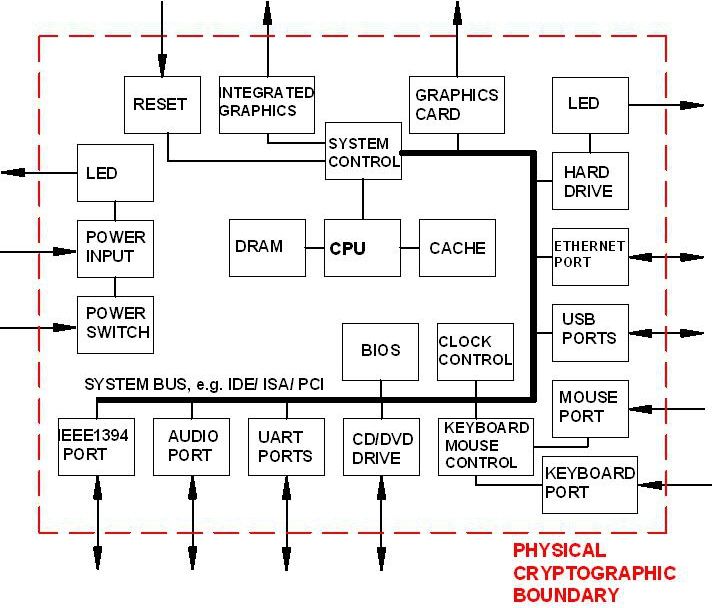
As a software module, there are no physical protection mechanisms implemented. Therefore, the module
must rely on the physical characteristics of the host system. The BC-FJA Module runs on a General-
Purpose Computer (GPC) and the physical boundary of the cryptographic module is defined by the hard
enclosure around the host system on which it runs. The module supports the physical interfaces of the
GPC. See Figure 1 below for a block diagram of the typical GPC and the ports or interfaces across the
physical cryptographic boundary marked with red dotted line.
Abbreviations introduced in Figure 1 are: Basic I/O System (BIOS), Integrated Device Electronics (IDE),
Institute of Electrical and Electronic Engineers (IEEE), Instruction Set Architecture (ISA), Peripheral
Component Interconnect (PCI), Universal Asynchronous Receiver/Transmitter (UART) and Universal Serial
Bus (USB). Input or output ports are designated by arrows with single heads, while I/O ports are indicated
by bidirectional arrows.
Figure 1 – Hardware Block Diagram
For FIPS 140-2 purposes, the BC-FJA Module is defined as a “multi-chip standalone module”, therefore,
the module’s physical ports or interfaces are defined as those for the hardware of the GPC. These physical
ports are separated into the logical interfaces defined by FIPS 140-2, as shown in Table 2.
The BC-FJA Module is a software module only, and, therefore, control of the physical ports is outside of
the module’s scope. The module does provide a set of logical interfaces which are mapped to the following
FIPS 140-2 defined logical interfaces: data input, data output, control input, status output, and power. When
the module performs self-tests, is in an error state, is generating keys, or performing zeroization, the module
prevents all output on the logical data output interface as only the thread performing the operation has
access to the data. The module is single-threaded, and in an error state, the module does not return any
output data, only an error value.
April 20, 2021 Page 6 of 30
© 2021 VMware, Inc.
This document may be freely reproduced and distributed whole and intact including this copyright notice.Security Policy, Version 0.1 VMware's BC-FJA (Bouncy Castle FIPS Java API)
Table 2 – FIPS 140-2 Logical Interfaces
Interface Module Equivalent
Data Input API input parameters – plaintext and/or ciphertext data.
Data Output API output parameters and return values – plaintext and/or ciphertext data.
Control Input API method calls – method calls, or input parameters, that specify
commands and/or control data used to control the operation of the module.
Status Output API output parameters and return/error codes that provide status
information used to indicate the state of the module.
Power Startup/Shutdown of a process containing the module.
2.2.2 Logical Cryptographic Boundary
The executable for VMware's BC-FJA (Bouncy Castle FIPS Java API) Module is a Java Archive (JAR) file
which is: bc-fips-1.0.2.1.jar. This module is the only software component within the Logical Cryptographic
Boundary and the only software component that carries out cryptographic functions covered by FIPS 140-
2. Figure 2 shows the logical relationship of the cryptographic module to the other software and hardware
components of the computer. The BC classes are executed on the Java Virtual Machine (JVM) using the
classes of the Java Runtime Environment (JRE). The JVM is the interface to the computer’s Operating
System (OS) that is the interface to the various physical components of the computer.
Figure 2 – Module’s Logical Cryptographic Boundary
2.2.3 Modes of Operation
There will be two modes of operation: Approved and Non-approved. The module will be in FIPS-approved
mode when the appropriate transition method is called. To verify that the module is in the Approved Mode
of operation, the user can call a FIPS-approved mode status method
(CryptoServicesRegistrar.isInApprovedOnlyMode()). If the module is configured to allow approved and non-
approved mode operation, a call to CryptoServicesRegistrar.setApprovedMode(true) will switch the current
thread of user control into approved mode.
April 20, 2021 Page 7 of 30
© 2021 VMware, Inc.
This document may be freely reproduced and distributed whole and intact including this copyright notice.Security Policy, Version 0.1 VMware's BC-FJA (Bouncy Castle FIPS Java API)
In FIPS-approved mode, the module will not provide non-approved algorithms, therefore, exceptions will
be called if the user tries to access non-approved algorithms in the Approved Mode.
2.2.4 Module Configuration
In default operation the module will start with both approved and non-approved mode enabled.
If the module detects that the system property org.bouncycastle.fips.approved_only is set to true the module
will start in approved mode and non-approved mode functionality will not be available.
If the underlying JVM is running with a Java Security Manager installed the module will be running in
approved mode with secret and private key export disabled.
Use of the module with a Java Security manager requires the setting of some basic permissions to allow
the module HMAC-SHA-256 software integrity test to take place as well as to allow the module itself to
examine secret and private keys. The basic permissions required for the module to operate correctly with
a Java Security manager are indicated by a Y in the Req column of Table 3.
Table 3 – Available Java Permissions
Permission Settings Req Usage
RuntimePermission “getProtectionDomain” Y Allows checksum to be carried out
on jar.
RuntimePermission “accessDeclaredMembers” Y Allows use of reflection API within
the provider.
PropertyPermission “java.runtime.name”, “read” N Only if configuration properties are
used.
SecurityPermission "putProviderProperty.BCFIPS" N Only if provider installed during
execution.
CryptoServicesPermission “unapprovedModeEnabled” N Only if unapproved mode
algorithms required.
CryptoServicesPermission “changeToApprovedModeEnabled” N Only if threads allowed to change
modes.
CryptoServicesPermission “exportSecretKey” N To allow export of secret keys only.
CryptoServicesPermission “exportPrivateKey” N To allow export of private keys only.
CryptoServicesPermission “exportKeys” Y Required to be applied for the
module itself. Optional for any other
codebase.
CryptoServicesPermission “tlsNullDigestEnabled” N Only required for TLS digest
calculations.
CryptoServicesPermission “tlsPKCS15KeyWrapEnabled” N Only required if TLS is used with
RSA encryption.
CryptoServicesPermission “tlsAlgorithmsEnabled” N Enables both NullDigest and
PKCS15KeyWrap.
CryptoServicesPermission “defaultRandomConfig” N Allows setting of default
SecureRandom.
CryptoServicesPermission “threadLocalConfig” N Required to set a thread local
property in the
CryptoServicesRegistrar
April 20, 2021 Page 8 of 30
© 2021 VMware, Inc.
This document may be freely reproduced and distributed whole and intact including this copyright notice.Security Policy, Version 0.1 VMware's BC-FJA (Bouncy Castle FIPS Java API)
Permission Settings Req Usage
CryptoServicesPermission “globalConfig” N Required to set a global property in
the CryptoServicesRegistrar.
2.3 Roles, Authentication and Services
2.3.1 Assumption of Roles
The module supports two distinct operator roles, User and Cryptographic Officer (CO). The cryptographic
module implicitly maps the two roles to the services. A user is considered the owner of the thread that
instantiates the module and, therefore, only one concurrent user is allowed.
Table 4 lists all operator roles supported by the module. The module does not support a maintenance role
and/or bypass capability. The module does not support authentication.
Table 4 – Roles Description
Role ID Role Description Authentication Type
CO Cryptographic Officer – Powers on and off N/A – Authentication not required for
the module. Level 1
User User – The user of the complete API. N/A – Authentication not required for
Level 1
2.3.2 Services
All services implemented by the Module are listed in Table 5 below, and Table 6 describes all usage of
CSPs by the service.
Table 5 lists the services. The second column provides a description of each service and availability to the
Cryptographic Officer and User, in columns 3 and 4, respectively.
Table 5 – Services
Service Description CO U
Initialize Module and Run The JRE will call the static constructor for self-tests on module
X
Self-Tests on Demand initialization.
Show Status A user can call FipsStatus.IsReady() at any time to determine if the
module is ready.
X
CryptoServicesRegistrar.IsInApprovedOnlyMode() can be called to
determine the FIPS mode of operation.
Zeroize / Power-off The module uses the JVM garbage collector on thread termination. X
Data Encryption Used to encrypt data. X
Data Decryption Used to decrypt data. X
MAC Calculation Used to calculate data integrity codes with CMAC. X
Signature Authentication Used to generate signatures (DSA, ECDSA, RSA). X
Signature Verification Used to verify digital signatures. X
DRBG (SP800-90A) output Used for random number, IV and key generation. X
Message Hashing Used to generate a SHA-1, SHA-2, or SHA-3 message digest,
X
SHAKE output.
Keyed Message Hashing Used to calculate data integrity codes with HMAC. X
April 20, 2021 Page 9 of 30
© 2021 VMware, Inc.
This document may be freely reproduced and distributed whole and intact including this copyright notice.Security Policy, Version 0.1 VMware's BC-FJA (Bouncy Castle FIPS Java API)
Service Description CO U
TLS Key Derivation (secret input) (outputs secret) Used to calculate a value suitable to
Function be used for a master secret in TLS from a pre-master secret and X
additional input.
SP 800-108 KDF (secret input) (outputs secret) Used to calculate a value suitable to
X
be used for a secret key from an input secret and additional input.
SSH Derivation Function (secret input) (outputs secret) Used to calculate a value suitable to
X
be used for a secret key from an input secret and additional input.
X9.63 Derivation Function (secret input) (outputs secret) Used to calculate a value suitable to
X
be used for a secret key from an input secret and additional input.
SP 800-56C Concatenation (secret input) (outputs secret) Used to calculate a value suitable to
X
Derivation Function (KDM) be used for a secret key from an input secret and additional input.
IKEv2 Derivation Function (secret input) (outputs secret) Used to calculate a value suitable to
X
be used for a secret key from an input secret and additional input.
SRTP Derivation Function (secret input) (outputs secret) Used to calculate a value suitable to
X
be used for a secret key from an input secret and additional input.
PBKDF (secret input) (outputs secret) Used to generate a key using an
encoding of a password and an additional function such as a X
message hash.
Key Agreement Schemes Used to calculate key agreement values (SP 800-56Arev3, Diffie-
X
Hellman).
Key Wrapping Used to encrypt a key value. (RSA, AES, Triple-DES) X
Key Unwrapping Used to decrypt a key value. (RSA, AES, Triple-DES) X
NDRNG Callback Gathers entropy in a passive manner from a user-provided function X
Utility Miscellaneous utility functions, does not access CSPs X
Note: The module services are the same in the approved and non-approved modes of operation. The only
difference is the function(s) used (approved/allowed or non-approved/non-allowed).
Services in the module are accessed via the public APIs of the Jar file. The ability of a thread to invoke non-
approved services depends on whether it has been registered with the module as approved mode only. In
approved only mode no non-approved services are accessible. In the presence of a Java SecurityManager
approved mode services specific to a context, such as DSA and ECDSA for use in TLS, require specific
permissions to be configured in the JVM configuration by the Cryptographic Officer or User.
In the absence of a Java SecurityManager specific services related to protocols such as TLS are available,
however must only be used in relation to those protocols.
Table 6 defines the relationship between access to CSPs and the different module services. The modes of
access shown in the table are defined as:
• G = Generate: The module generates the CSP.
• R = Read: The module reads the CSP. The read access is typically performed before the module
uses the CSP.
• E = Execute: The module executes using the CSP.
• W = Write: The module writes the CSP. The write access is typically performed after a CSP is
imported into the module, when the module generates a CSP, or when the module overwrites an
existing CSP.
• Z = Zeroize: The module zeroizes the CSP.
April 20, 2021 Page 10 of 30
© 2021 VMware, Inc.
This document may be freely reproduced and distributed whole and intact including this copyright notice.Security Policy, Version 0.1 VMware's BC-FJA (Bouncy Castle FIPS Java API)
Table 6 – CSP Access Rights within Services
CSPs
Triple-DES Authentication Key
SP 800-56A Concat. DF Secret
Triple-DES Encryption Key
Triple-DES Decryption Key
HMAC Authentication Key
Triple-DES Wrapping Key
DRBG (CTR Triple-DES)
AES Authentication Key
RSA Key Transport Key
SP 800-108 KDF Secret
AES Encryption Key
AES Decryption Key
DH Agreement Key
AES Wrapping Key
EC Agreement Key
X9.63 KDF Secret
DRBG (CTR AES)
DSA Signing Key
RSA Signing Key
IKEv2 DF Secret
SRTP DF Secret
TLS KDF Secret
EC Signing Key
SSH DF Secret
DRBG (HMAC)
PBKDF Secret
DRBG (Hash)
Service
Initialize Module and Run
Self-Tests on Demand
Show Status
Zeroize / Power-off Z Z Z Z Z Z Z Z Z Z Z Z Z Z Z Z Z Z Z Z Z Z Z Z Z Z Z
Data Encryption R R
Data Decryption R R
MAC Calculation R R R
Signature Generation R R R
Signature Verification R R R
DRBG (SP800-90A) output G G G G G G G G G G G G G G G G G G G
R R R R
Message Hashing
Keyed Message Hashing R
TLS Key Derivation R
Function
SP 800-108 KBKDF R
SSH Derivation Function R
X9.63 Derivation Function G G G R
SP 800-56C Concatenation G G G R
Derivation Function (KDM)
IKEv2 Derivation Function R
SRTP Derivation Function R
PBKDF G R
R
Key Agreement Schemes G G G G R R G R G G G G
Key Wrapping/Transport R R R R
(RSA, AES, Triple-DES)
Key Unwrapping (RSA, R R R R
AES, Triple-DES)
NDRNG Callback G G G G
Utility
April 20, 2021 Page 11 of 30
© 2021 VMware, Inc.
This document may be freely reproduced and distributed whole and intact including this copyright notice.Security Policy, Version 0.1 VMware's BC-FJA (Bouncy Castle FIPS Java API)
2.4 Physical Security
The VMware's BC-FJA (Bouncy Castle FIPS Java API) is a software module, which FIPS defines as a
multi-chip standalone cryptographic module. As such, it does not include physical security mechanisms.
Thus, the FIPS 140-2 requirements for physical security are not applicable.
2.5 Operational Environment
The module operates in a modifiable operational environment under the FIPS 140-2 definitions.
The module runs on a GPC running one of the operating systems specified in the approved operational
environment list. Each approved operating system manages processes and threads in a logically separated
manner. The Module’s user is considered the owner of the calling application that instantiates the Module
within the process space of the Java Virtual Machine.
The module optionally uses the Java Security Manager and starts in FIPS-approved mode by default when
used with the Java Security Manager. When the module is not used within the context of the Java Security
Manager, it will start by default in the non-FIPS-approved mode.
The cryptographic module was tested on the following operational environment on the general-purpose
computer (GPC) platforms detailed in Table 7 below:
Table 7 – Tested Configuration
Operational Environment Java SE Runtime Processor
# GPC Platforms
(on ESXi 7.0) Environment Family
1 Dell PowerEdge R740 Photon OS 2.0 Java SE Runtime Intel Xeon
with Intel Xeon Gold Environment v8 Gold 6126
Processor (1.8.0), single-user Series
mode
2 Photon OS 2.0 Java SE Runtime Intel Xeon
Environment v11 Gold 6126
(1.11.0), single-user Series
mode
3 Photon OS 3.0 Java SE Runtime Intel Xeon
Environment v8 Gold 6126
(1.8.0), single-user Series
mode
4 Photon OS 3.0 Java SE Runtime Intel Xeon
Environment v11 Gold 6126
(1.11.0), single-user Series
mode
5 Ubuntu OS 16.04 Java SE Runtime Intel Xeon
Environment v8 Gold 6126
(1.8.0), single-user Series
mode
6 Ubuntu OS 16.04 Java SE Runtime Intel Xeon
Environment v11 Gold 6126
(1.11.0), single-user Series
mode
7 Ubuntu 18.04 Java SE Runtime Intel Xeon
Environment v8 Gold 6126
(1.8.0), single-user Series
mode
April 20, 2021 Page 12 of 30
© 2021 VMware, Inc.
This document may be freely reproduced and distributed whole and intact including this copyright notice.Security Policy, Version 0.1 VMware's BC-FJA (Bouncy Castle FIPS Java API)
Operational Environment Java SE Runtime Processor
# GPC Platforms
(on ESXi 7.0) Environment Family
8 Ubuntu 18.04 Java SE Runtime Intel Xeon
Environment v11 Gold 6126
(1.11.0), single-user Series
mode
9 Windows Server 2019 Java SE Runtime Intel Xeon
Environment v11 Gold 6126
(1.11.0), single-user Series
mode
10 Windows Server 2016 Java SE Runtime Intel Xeon
Environment v8 Gold 6126
(1.8.0), single-user Series
mode
11 Windows Server 2016 Java SE Runtime Intel Xeon
Environment v11 Gold 6126
(1.11.0), single-user Series
mode
12 CentOS 8 Java SE Runtime Intel Xeon
Environment v11 Gold 6126
(1.11.0), single-user Series
mode
13 SUSE Linux Enterprise Server Java SE Runtime Intel Xeon
15 Environment v11 Gold 6126
(1.11.0), single-user Series
mode
Java SE Runtime Processor
# GPC Platforms Operational Environment
Environment Family
14 Dell Latitude E7470 Ubuntu 18.04 Java SE Runtime Core i5
with Intel Core i5 Environment v11 Processor
(1.11.0), single-user
mode
15 Windows 10 Java SE Runtime Core i5
Environment v11 Processor
(1.11.0), single-user
mode
As per FIPS 140-2 Implementation Guidance G.5, the cryptographic module will remain compliant with
FIPS 140-2 validation when operating on Intel Xeon Gold 6230R Processor running ESXi 7.0 with,
• Ubuntu 16.04/ 18.04/ 20.04 with JDK 8 or 11
• Photon 4.0 with JDK 8 or 11
• CentOS 7/8 with JDK 8 or 11
• RHEL 7/8 with JDK 8 or 11
Or, any general-purpose computer (GPC) provided that:
1) No source code has been modified.
2) The GPC uses the specified single-user platform, or another compatible single-user platform such
as one of the Java SE Runtime Environments listed on any of the following:
HP-UX
Linux CentOS
Linux Debian
Linux Oracle RHC
Linux Oracle UEK
April 20, 2021 Page 13 of 30
© 2021 VMware, Inc.
This document may be freely reproduced and distributed whole and intact including this copyright notice.Security Policy, Version 0.1 VMware's BC-FJA (Bouncy Castle FIPS Java API)
Linux SUSE
Linux Ubuntu
Mac OS X
Microsoft Windows
Microsoft Windows Server
Microsoft Windows XP
RedHat Enterprise Linux
VMware ESXi
VMware Photon OS
BLUX
Further, VMware, Inc. affirms that the VMware's BC-FJA (Bouncy Castle FIPS Java API) Module runs in its
configured, Approved mode of operation on the following binary compatible platforms executing VMware
ESXi 6.0, ESXi 6.5, ESXi 6.7, or ESXi 7.0 and Java SE Runtime Environment 7, 8, or 11 with any of the
above listed OS:
• Dell PowerEdge R740 with Intel Xeon Gold 6230R Processor
• Dell PowerEdge R340, R530, R730, R740, R830 with Intel Xeon Processor
• Dell PowerEdge T320, T430 with Intel Xeon Processor
• Dell PowerEdge FC640 with Intel Xeon Processor
• HPE ProLiant DL380 Gen9 with Intel Xeon Processor
• HPE ProLiant DL38P Gen8 with AMD Opteron Processor
• Cisco UCS – B22 M Series Blade Servers with Intel Processor
• Cisco UCS – C24 M3 Series Rackmount with Intel Xeon Processor
• A general-purpose computer platform with an Intel Core i/Intel Xeon/AMD Opteron Processor
executing VMware ESXi and any OS (including Apple OS (OS X, macOS, iOS), Android OS,
and others) with single user mode.
• A general-purpose computer platform with Intel Core i/Intel Xeon/AMD Opteron Processor
executing any OS (including Apple OS (OS X, macOS, iOS), Android OS, and others) in single
user mode with JDK 7, 8, or 11.
• A cloud computing environment composed of a general-purpose computing platform executing
VMware ESXi or a VMware cloud solution that is executing VMware ESXi.
For the avoidance of doubt, it is hereby stated that the CMVP makes no statement as to the correct
operation of the module or the security strengths of the generated keys when so ported if the specific
operational environment is not listed on the validation certificate.
The Module is intended for use by US Federal agencies and other markets that require a FIPS 140-2
validated Cryptographic Library. The Module is a software-only embodiment; the cryptographic boundary
is the Java Archive (JAR) file, bc-fips-1.0.2.1.jar.
2.5.1 Use of External RNG
The module makes use of the JVM's configured SecureRandom entropy source to provide entropy when
required. The module will request entropy as appropriate to the security strength and seeding configuration
for the DRBG that is using it and for the default DRBG will request a minimum of 256 bits of entropy. In
approved mode the minimum amount of entropy that can be requested by a DRBG is 112 bits. The module
will wait until the SecureRandom.generateSeed() returns the requested amount of entropy, blocking if
necessary.
2.6 Cryptographic Key Management
The Module implements the FIPS Approved and Non-Approved but Allowed cryptographic functions listed
in Table 8 to Table 10 below.
April 20, 2021 Page 14 of 30
© 2021 VMware, Inc.
This document may be freely reproduced and distributed whole and intact including this copyright notice.Security Policy, Version 0.1 VMware's BC-FJA (Bouncy Castle FIPS Java API)
Table 8 – Approved and CAVP Validated Cryptographic Functions
Algorithm Description Cert #
AES [FIPS 197, SP 800-38A] C2205
Functions: Encryption, Decryption
Modes: ECB, CBC, OFB, CFB8, CFB128, CTR
Key sizes: 128, 192, 256 bits
CCM [SP 800-38C] C2205
Functions: Generation, Authentication
Key sizes: 128, 192, 256 bits
CMAC [SP 800-38B] C2205
Functions: Generation, Authentication
Key sizes: AES with 128, 192, 256 bits and Triple-DES with 2-
key3,4, 3-key
GCM/GMAC5 [SP 800-38D] C2205
Functions: Generation, Authentication
Key sizes: 128, 192, 256 bits
DRBG [SP 800-90A] C2205
Functions: Hash DRBG, HMAC DRBG, AES-CTR DRBG, Triple-
DES-CTR DRBG.
Security Strengths: 112, 128, 192, and 256 bits
DSA6 [FIPS 186-4] C2205
Functions: PQG Generation, PQG Verification, Key Pair
Generation, Signature Generation, Signature Verification
Key sizes: 1024, 2048, 3072 bits (1024 only for SigVer)
ECDSA [FIPS 186-4] C2205
Functions: Signature Generation Component, Public Key
Generation, Signature Generation, Signature Verification, Public
Key Validation
Curves/Key sizes: P-192*, P-224, P-256, P-384, P-521, K-163*, K-
233, K-283, K-409, K-571, B-163*, B-233, B-283, B-409, B-571
* Curves only used for Signature Verification and Public Key
Validation
3
2^20 block limit is enforced by module.
4
In approved mode of operation, the use of 2-key Triple-DES to generate MACs for anything other than
verification purposes is non-compliant.
5
GCM encryption with an internally generated IV, see section 3.4 concerning external IVs. IV generation is
compliant with IG A.5.
6
DSA signature generation with SHA-1 is only for use with protocols.
April 20, 2021 Page 15 of 30
© 2021 VMware, Inc.
This document may be freely reproduced and distributed whole and intact including this copyright notice.Security Policy, Version 0.1 VMware's BC-FJA (Bouncy Castle FIPS Java API)
Algorithm Description Cert #
HMAC [FIPS 198-1] C2205
Functions: Generation, Authentication
SHA sizes: SHA-1, SHA-224, SHA-256, SHA-384, SHA-512, SHA-
512/224, SHA-512/256, SHA3-224, SHA3-256, SHA3-384, SHA3-
512
KDF, Existing [SP 800-135] C2205
Application- Functions: TLS v1.0/1.1 KDF, TLS 1.2 KDF, SSH KDF, X9.63 KDF,
Specific7 IKEv2 KDF, SRTP KDF.
KBKDF, using [SP 800-108] C2205
Pseudorandom Modes: Counter Mode, Feedback Mode, Double-Pipeline Iteration
Functions8 Mode
Functions: CMAC-based KBKDF with AES, 3-key Triple-DES or
HMAC-based KBKDF with SHA-1, SHA-224, SHA-256, SHA-384,
SHA-512
Key Wrapping [SP 800-38F] C2205
Using Block Modes: AES KW, KWP
Ciphers9
Key sizes: 128, 192, 256 bits (provides between 128 and 256 bits
of strength)
[SP 800-38F] C2205
Mode: Triple-DES TKW
Key size: 3-key (provides 112 bits of strength)
RSA [FIPS 186-4, FIPS 186-2, ANSI X9.31-1998 and PKCS #1 v2.1 C2205
(PSS and PKCS1.5)]
Functions: Key Pair Generation (2048 and 3072 bits) Signature
Generation, Signature Verification, Component Test
Key sizes: 2048, 3072 bits (1024, 1536, 4096 only for SigVer)
SP 800-56B Section 7.1.2 RSA Decryption Primitive
SHS [FIPS 180-4], C2205
Functions: Digital Signature Generation, Digital Signature
Verification, non-Digital Signature Applications
SHA sizes: SHA-1, SHA-224, SHA-256, SHA-384, SHA-512, SHA-
512/224, SHA-512/256
SHA-3, SHAKE [FIPS 202] C2205
SHA3-224, SHA3-256, SHA3-384, SHA3-512, SHAKE128,
SHAKE256
7
These protocols have not been reviewed or tested by the CAVP and CMVP.
8
Note: CAVP testing is not provided for use of the PRFs SHA-512/224 and SHA-512/256. These must not
be used in approved mode.
9
Keys are not established directly into the module using key unwrapping.
April 20, 2021 Page 16 of 30
© 2021 VMware, Inc.
This document may be freely reproduced and distributed whole and intact including this copyright notice.Security Policy, Version 0.1 VMware's BC-FJA (Bouncy Castle FIPS Java API)
Algorithm Description Cert #
Triple-DES (Triple- [SP 800-67] C2205
DES) Functions: Encryption, Decryption
Modes: TECB, TCBC, TCFB64, TCFB8, TOFB, CTR
Key sizes: 2-key (Decryption only)10, 3-key11
Table 9 – Approved Cryptographic Functions Tested with Vendor Affirmation
Algorithm Description IG Ref.
AES-CBC [Addendum to SP 800-38A, Oct 2010] Vendor
Ciphertext Stealing Functions: Encryption, Decryption Affirmed IG
(CS) A.12
Modes: CBC-CS1, CBC-CS2, CBC-CS3
Key sizes: 128, 192, 256 bits
CKG using output [SP 800-133] Vendor
from DRBG12 Section 6.1 (Asymmetric from DRBG) Affirmed IG
D.12
Section 7.1 (Symmetric from DRBG)
Using C2205 (DRBG)
cSHAKE128, [SP 800-185] Vendor
cSHAKE256 Section 3, cSHAKE Affirmed IG
A.15
Using C2205 (SHA3, SHAKE)
KAS-SSC13 [SP 800-56A-rev3] Vendor
Section 5.6.2.3.1 (Finite Field Cryptography (FFC) Full Affirmed IG D.1
rev 3
Public Key Validation Routine)
Section 5.6.2.3.2 (Elliptic Curve Cryptography (ECC)
Full Public Key Validation Routine)
Section 5.7 (DLC Primitive)
Section 5.8 (Key Derivation Functions for Key
Agreement Schemes)
Section 5.9 (Key Confirmation)
Section 6 (Key Agreement)
Parameter sets/Key sizes:
ECC: Approved P, B, K Curves per Appendix D
FFC: Safe primes per Appendix D
10
2^20 block limit is enforced by the module, 2-key encryption is disabled.
11
3-key Triple-DES encryption must not be used for more than 2^20 blocks for any given key.
12
The resulting key or a generated seed is an unmodified output from a DRBG.
13
Keys are not directly established into the module using key agreement or transport techniques.
April 20, 2021 Page 17 of 30
© 2021 VMware, Inc.
This document may be freely reproduced and distributed whole and intact including this copyright notice.Security Policy, Version 0.1 VMware's BC-FJA (Bouncy Castle FIPS Java API)
Algorithm Description IG Ref.
KDF, Password- [SP 800-132] Vendor
Based Options: PBKDF with Option 1a Affirmed IG D.6
Functions: HMAC-based KDF using SHA-1, SHA-224, SHA-256,
SHA-384, SHA-512
Using C2205 (HMAC)
Key Wrapping [SP 800-56B, Section 7.2.3] Vendor
Using RSA14 RSA-KEMS-KWS with, and without, key confirmation. Affirmed IG D.4
Key sizes: 2048, 3072 bits
Key Transport [SP 800-56B, Section 7.2.2] Vendor
Using RSA15 RSA-OAEP with, and without, key confirmation. Affirmed IG D.4
Key sizes: 2048, 3072 bits
RSA [SP 800-131 rev2] Vendor
Section 3 Affirmed IG
A.14
Key sizes: 4096 up to 16384 bits
Using mechanism tested in C2205
Table 10 – Non-Approved but Allowed Cryptographic Functions
Algorithm Description
NDRNG [IG 7.15]
Non-deterministic random number generator.
Non‐SP 800‐56B [IG D.9] RSA May be used by a calling application as part of a key encapsulation
compliant RSA Key scheme.
Transport Key sizes: 4096 up to 16384 bits.
MD5 within TLS [IG D.2]
Table 11 – Non-Approved Cryptographic Functions for use in non-FIPS mode only
AES (non-compliant16) KAS20 using SHA-512/224 or SHA-512/256
ARC4 (RC4) KBKDF using SHA-512/224 or SHA-
Blowfish 512/256 (non-compliant)
14
Keys are not directly established into the module using key agreement or, transport
techniques.
15
Keys are not directly established into the module using key agreement or, transport
techniques.
16
Support for additional modes of operation.
20
Keys are not directly established into the module using key agreement or transport techniques.
April 20, 2021 Page 18 of 30
© 2021 VMware, Inc.
This document may be freely reproduced and distributed whole and intact including this copyright notice.Security Policy, Version 0.1 VMware's BC-FJA (Bouncy Castle FIPS Java API)
Camellia MD5
CAST5 OpenSSL PBKDF (non-compliant)
DES PKCS#12 PBKDF (non-compliant)
Diffie-Hellman KAS (non-compliant ) 17
PKCS#5 Scheme 1 PBKDF (non-compliant)
DSA (non-compliant18) PRNG X9.31
DSTU4145 RC2
ECDSA (non-compliant ) 19
RIPEMD128
EdDSA RIPEMD160
ElGamal RIPEMD256
GOST28147 RIPEMD320
GOST3410-1994 RSA (non-compliant21)
GOST3410-2001 RSA KTS (non-compliant22)
GOST3411 SCrypt
HMAC-GOST3411 SEED
HMAC-MD5 Serpent
HMAC-RIPEMD128 SipHash
HMAC-RIPEMD160 SHACAL-2
HMAC-RIPEMD256 TIGER
HMAC-RIPEMD320 Triple-DES (non-compliant23)
HMAC-TIGER Twofish
HMAC-WHIRLPOOL WHIRLPOOL
IDEA XDH
2.6.1 Critical Security Parameters
All CSPs used by the Module are described in this section in Table 12. All usage of these CSPs by the
Module (including all CSP lifecycle states) is described in the services detailed in section 2.3.2.
17
Support for additional key sizes and the establishment of keys of less than 112 bits of security strength.
18
Deterministic signature calculation, support for additional digests, and key sizes.
19
Deterministic signature calculation, support for additional digests, and key sizes.
21
Support for additional digests and signature formats, PKCS#1 1.5 key wrapping, support for additional
key sizes.
22
Support for additional key sizes and the establishment of keys of less than 112 bits of security strength.
23
Support for additional modes of operation.
April 20, 2021 Page 19 of 30
© 2021 VMware, Inc.
This document may be freely reproduced and distributed whole and intact including this copyright notice.Security Policy, Version 0.1 VMware's BC-FJA (Bouncy Castle FIPS Java API)
Table 12 – Critical Security Parameters (CSPs)
CSP Description / Usage
[FIPS-197, SP 800-38A, SP 800-38C, SP 800-38D, Addendum to SP 800-
AES Encryption Key
38A] AES (128/192/256) encrypt key24
[FIPS-197, SP 800-38A, SP 800-38C, SP 800-38D, Addendum to SP 800-
AES Decryption Key
38A] AES (128/192/256) decrypt key
AES Authentication Key [FIPS-197] AES (128/192/256) CMAC/GMAC key
AES Wrapping Key [SP 800-38F] AES (128/192/256) key wrapping key
DH Agreement key [SP 800-56A-rev3] Diffie-Hellman (160 - 512 bits) private key agreement key
V (128 bits) and AES key (128/192/256), entropy input (length dependent on
DRBG(CTR AES)
security strength)
V (64 bits) and Triple-DES key (192), entropy input (length dependent on
DRBG(CTR Triple-DES)
security strength)
V (440/888 bits) and C (440/888 bits), entropy input (length dependent on
DRBG(Hash)
security strength)
V (160/224/256/384/512 bits) and Key (160/224/256/384/512 bits), entropy
DRBG(HMAC)
input (length dependent on security strength)
DSA Signing Key [FIPS 186-4] DSA (2048/3072) signature generation key
[SP 800-56A-rev3] EC (P-224, P-256, P-384, P-521, K-233, K-283, K-409,
EC Agreement Key
K-571, B-233, B-283, B-409 and B-571) private key agreement key
[FIPS 186-4] ECDSA (P-224, P-256, P-384, P-521, K-233, K-283, K-409, K-
EC Signing Key
571, B-233, B-283, B-409 and B-571) signature generation key.
HMAC Authentication [FIPS 198-1] Keyed-Hash key (SHA-1, SHA-2). Key size determined by
Key security strength required (>= 112 bits)
IKEv2 Derivation [SP 800-135] Secret value used in construction of key for the specified IKEv2
Function Secret Value PRF.
[SP 800-132] Secret value used in construction of Keyed-Hash key for the
PBKDF Secret Value specified PRF.
RSA Signing Key [FIPS 186-4] RSA (2048 up to 16384 bits) signature generation key
RSA Key Transport Key [SP 800-56B] RSA (2048 up to 16384 bits) key transport (decryption) key
SP 800-56C [SP 800-56C] Secret value used in construction of key for underlying PRF.
Concatenation
Derivation Function
Secret Value
SP 800-108 KDF Secret [SP 800-108] Secret value used in construction of key for the specified PRF.
Value
24
The AES-GCM key and IV is generated randomly per IG A.5, and the Initialization Vector (IV) is a minimum
of 96 bits. In the event module power is lost and restored, the consuming application must ensure that
any of its AES-GCM keys used for encryption or decryption are re-distributed.
April 20, 2021 Page 20 of 30
© 2021 VMware, Inc.
This document may be freely reproduced and distributed whole and intact including this copyright notice.Security Policy, Version 0.1 VMware's BC-FJA (Bouncy Castle FIPS Java API)
CSP Description / Usage
SRTP Derivation [SP 800-135] Secret value used in construction of key for the specified SRTP
Function Secret Value PRF.
SSH Derivation Function [SP 800-135] Secret value used in construction of key for the specified SSH
Secret Value PRF.
[SP 800-135] Secret value used in construction of Keyed-Hash key for the
TLS KDF Secret Value specified TLS PRF.
Triple-DES [SP 800-67] Triple-DES (128/192) CMAC key
Authentication Key
Triple-DES Encryption [SP 800-67] Triple-DES (192) encryption key
Key
Triple-DES Decryption [SP 800-67] Triple-DES (128/192) decryption key
Key
Triple-DES Wrapping [SP 800-38F] Triple-DES (192 bits) key wrapping/unwrapping key, (128
Key unwrapping only).
[SP 800-135] Secret value used in construction of Keyed-Hash key for the
X9.63 KDF Secret Value specified X9.63 PRF.
2.6.2 Public Keys
Table 13 – Public Keys
CSP Description / Usage
[SP 800-56A-rev3] Diffie-Hellman (2048 and 3072) public key agreement
DH Agreement Key
key
DSA Verification Key [FIPS 186-4] DSA (1024/2048/3072) signature verification key
[SP 800-56A-rev3] EC (P-224, P-256, P-384, P-521, K-233, K-283, K-
EC Agreement Key
409, K-571, B-233, B-283, B-409 and B-571) public key agreement key
[FIPS 186-4] ECDSA (P-224, P-256, P-384, P-521, K-233, K-283, K-409,
EC Verification Key
K-571, B-233, B-283, B-409 and B-571) signature verification key
RSA Key Transport Key [SP 800-56B] RSA (2048-16384) key transport (encryption) key.
RSA Verification Key [FIPS 186-4] RSA (1024-16384) signature verification key
2.7 Self-Tests
Each time the module is powered up, it tests that the cryptographic algorithms still operate correctly, and
that sensitive data have not been damaged. Power-up self–tests are available on demand by power cycling
the module.
On power-up or reset, the module performs the self-tests that are described in Table 14 below. All KATs
must be completed successfully prior to any other use of cryptography by the Module. If one of the KATs
fails, the module enters the Self-Test Failure error state. The module will output a detailed error message
when FipsStatus.isReady() is called. The error state can only be cleared by reloading the module and
calling FipsStatus.isReady() again to confirm successful completion of the KATs.
April 20, 2021 Page 21 of 30
© 2021 VMware, Inc.
This document may be freely reproduced and distributed whole and intact including this copyright notice.Security Policy, Version 0.1 VMware's BC-FJA (Bouncy Castle FIPS Java API)
Table 14 – Power Up Self-tests
Test Target Description
Software Integrity HMAC-SHA256
AES KATs: Encryption, Decryption
Modes: ECB
Key sizes: 128 bits
CCM KATs: Generation, Verification
Key sizes: 128 bits
AES-CMAC KATs: Generation, Verification
Key sizes: AES with 128 bits
FFC KAS25 KATs: Per IG 9.6 – Primitive “Z” Computation
Parameter Sets/Key sizes: FB
DRBG KATs: HASH_DRBG, HMAC_DRBG, CTR_DRBG
Security Strengths: 256 bits
DSA KAT: Signature Generation, Signature Verification
Key sizes: 2048 bits
ECDSA KAT: Signature Generation, Signature Verification
Curves/Key sizes: P-256
GCM/GMAC KATs: Generation, Verification
Key sizes: 128 bits
HMAC KATs: Generation, Verification
SHA sizes: SHA-256, SHA-512, SHA3-256
ECC KAS26 KATs: Per IG 9.6 – Primitive “Z” Computation
Parameter Sets/Key sizes: EC
SP 800-108 KATs: Per IG 9.4 – Output Verification
KBKDF Modes: Counter, Feedback, Double Pipeline
PRFs: AES-CMAC, Triple-DES-CMAC, SHA-1, SHA-224, SHA-256, SHA-384, SHA-
512, SHA-512/224, SHA-512/256
RSA KATs: Signature Generation, Signature Verification
Key sizes: 2048 bits
SHS KATs: Output Verification
SHA sizes: SHA-1, SHA-256, SHA-512
Triple-DES KATs: Encryption, Decryption
Mode: TECB
Key sizes: 3-Key
Triple-DES-CMAC KATs: Generation, Verification
Key sizes: 3-Key
Extendable-Output KATs: Output Verification
functions (XOF) XOFs: SHAKE256
Key Wrapping KATs: SP 800-56B specific KATs per IG D.4
Using RSA Key sizes: 2048 bits
Key KATs: SP 800-56B specific KATs per IG D.4
TransportUsing Key sizes: 2048 bits
RSA
25
Implemented by the module, though not required per IG D.1rev3 due to vendor affirmation to SP 800-
56Arev3.
26
Implemented by the module, though not required per IG D.1rev3 due to vendor affirmation to SP 800-
56Arev3.
April 20, 2021 Page 22 of 30
© 2021 VMware, Inc.
This document may be freely reproduced and distributed whole and intact including this copyright notice.Security Policy, Version 0.1 VMware's BC-FJA (Bouncy Castle FIPS Java API)
Table 15 – Conditional Self-tests
Test Target Description
NDRNG NDRNG Continuous Test performed when a random value is requested from the
NDRNG.
DH DH Pairwise Consistency Test performed on every DH key pair generation.
DRBG DRBG Continuous Test performed when a random value is requested from the DRBG.
DSA DSA Pairwise Consistency Test performed on every DSA key pair generation.
ECDH/ECCDH EC DH Pairwise Consistency Test performed on every DH key pair generation.
ECDSA ECDSA Pairwise Consistency Test performed on every EC key pair generation.
RSA RSA Pairwise Consistency Test performed on every RSA key pair generation.
DRBG Health Performed conditionally on DRBG, per SP 800-90A Section 11.3.
Checks
SP 800-56A Performed conditionally per SP 800-56A Sections 5.5.2, 5.6.2, and/or 5.6.3. Required
Assurances27 per IG 9.6.
2.8 Mitigation of Other Attacks Policy
The Module implements basic protections to mitigate against timing-based attacks against its internal
implementations. There are two countermeasures used.
The first is Constant Time Comparisons, which protect the digest and integrity algorithms by strictly avoiding
“fast fail” comparison of MACs, signatures, and digests so the time taken to compare a MAC, signature, or
digest is constant regardless of whether the comparison passes or fails.
The second is made up of Numeric Blinding and decryption/signing verification which both protect the RSA
algorithm.
Numeric Blinding prevents timing attacks against RSA decryption and signing by providing a random input
into the operation which is subsequently eliminated when the result is produced. The random input makes
it impossible for a third party observing the private key operation to attempt a timing attack on the operation
as they do not have knowledge of the random input and consequently the time taken for the operation tells
them nothing about the private value of the RSA key.
Decryption/signing verification is carried out by calculating a primitive encryption or signature verification
operation after a corresponding decryption or signing operation before the result of the decryption or signing
operation is returned. The purpose of this is to protect against Lenstra's CRT attack by verifying the
correctness the private key calculations involved. Lenstra's CRT attack takes advantage of undetected
errors in the use of RSA private keys with CRT values and, if exploitable, can be used to discover the
private value of the RSA key.
27
Implemented by the module, though not required per IG D.1rev3 due to vendor affirmation to SP 800-
56Arev3.
April 20, 2021 Page 23 of 30
© 2021 VMware, Inc.
This document may be freely reproduced and distributed whole and intact including this copyright notice.Security Policy, Version 0.1 VMware's BC-FJA (Bouncy Castle FIPS Java API)
3 SECURE OPERATION
The VMware's BC-FJA (Bouncy Castle FIPS Java API) Module meets Level 1 requirements for FIPS 140-
2. The sections below describe how to install, use, and keep the module in FIPS-Approved mode of
operation.
3.1 Basic Enforcement
The module design corresponds to the Module security rules. This section documents the security rules
enforced by the cryptographic module to implement the security requirements of this FIPS 140-2 Level 1
module.
1. The module shall provide two distinct operator roles: User and Cryptographic Officer.
2. The module does not provide authentication.
3. The operator shall be capable of commanding the module to perform the power up self-tests by
cycling power or resetting the module.
4. Power up self-tests do not require any operator action.
5. Data output shall be inhibited during key generation, self-tests, zeroization, and error states.
6. Status information does not contain CSPs or sensitive data that if misused could lead to a
compromise of the module.
7. There are no restrictions on which keys or CSPs are zeroized by the zeroization service.
8. The module does not support concurrent operators.
9. The module does not have any external input/output devices used for entry/output of data.
10. The module does not enter or output plaintext CSPs from the module’s physical boundary.
11. The module does not output intermediate key values.
3.2 Additional Enforcement with a Java SecurityManager
In the presence of a Java SecurityManager approved mode services specific to a context, such as DSA
and ECDSA for use in TLS, require specific policy permissions to be configured in the JVM configuration
by the Cryptographic Officer or User. The SecurityManager can also be used to restrict the ability of
particular code bases to examine CSPs. See section 2.2.4 Module Configuration for further advice on this.
In the absence of a Java SecurityManager specific services related to protocols such as TLS are available,
however must only be used in relation to those protocols.
3.3 Basic Guidance
The jar file representing the module needs to be installed in a JVM's class path in a manner appropriate to
its use in applications running on the JVM.
Functionality in the module is provided in two ways. At the lowest level there are distinct classes that provide
access to the FIPS approved and non-FIPS approved services provided by the module. A more abstract
level of access can also be gained through the use of strings providing operation names passed into the
module's Java cryptography provider through the APIs described in the Java Cryptography Architecture
(JCA) and the Java Cryptography Extension (JCE).
When the module is being used in FIPS approved-only mode, classes providing implementations of
algorithms which are not FIPS approved, or allowed, are explicitly disabled.
April 20, 2021 Page 24 of 30
© 2021 VMware, Inc.
This document may be freely reproduced and distributed whole and intact including this copyright notice.You can also read


