Senior Secondary 2021 - Curriculum Booklet Year 10 - www.proserpineshs.eq.edu.au - Proserpine State High ...
←
→
Page content transcription
If your browser does not render page correctly, please read the page content below
Senior Secondary 2021

  Curriculum Booklet
        Year 10

    www.proserpineshs.eq.edu.au
Version updated July 2020
Proserpine State High School YEAR 10 CURRICULUM BOOKLET

Principal’s Message

Proserpine State High School embraces the need to provide young people with a challenging education that develops
critical thinkers, effective communicators and aspirational learners who will contribute positively to our school
community and beyond. I believe we can offer an education that will equip our leaders of tomorrow with 21st Century
skills and attributes enabling them to thrive in their chosen career.

Senior Secondary is a phase of education for students in Years 10, 11 and 12, which ensures the seamless transition
between school and the workforce or further study. Senior Secondary focuses on individual career pathways and
support for students’ wellbeing. Our senior school curriculum program has been developed to consider our students’
future aspirations through a number of diverse learning pathways. By providing unique and flexible pathways we meet
the various needs of our students wishing to access the full variety of opportunities in the workforce or further study. It
is our goal to support young people to select a meaningful educational pathway and to establish the foundation for
achieving their individual careers goals, while developing the personal and social skills required for success beyond
school.

This booklet has been developed to assist students and their parents in making informed choices about senior
subjects by providing general information about the Senior Phase of Learning as well as subject descriptors and
prerequisites for study throughout Senior Secondary at Proserpine State High School. When choosing subjects,
consider your career aspirations and interests, but most importantly subjects that will allow you to challenge yourself
and achieve personal excellence.

In Senior Secondary, your final phase of schooling, it is important that you become an active participant in your own
learning and take responsibility for your own progress. Read this handbook very carefully and discuss your options
with your parents, caregivers, teachers and/or Guidance Officer so that you can make well-informed decisions.

You have been provided with curriculum choice allowing you to create a distinctive pathway to employability or further
education and training. Your commitment to your studies over the next three years will influence the opportunities
open to you beyond school. This emphasises the importance of developing positive learning habits which will deliver
success within your program of study and provide you with skills to become an active participant within your
community.

I look forward to working alongside every one of you as you develop your potential and achieve to the best of your
ability.

Don McDermid
Principal

                                                        2|P a g e
Proserpine State High School YEAR 10 CURRICULUM BOOKLET
                                                               Table of Contents
INTRODUCTION ............................................................................................................................................................... 4
   Education and Training Reforms for the Future (ETRF) ............................................................................................... 4
   Senior Education and Training (SET) Plan ................................................................................................................... 4
   Year 10 Subject Information.......................................................................................................................................... 5
2021 CURRICULUM OFFERINGS ................................................................................................................................... 6
SUBJECT SELECTIONS ................................................................................................................................................. 8
   Senior Subject Choice ................................................................................................................................................... 8
   Recommendations for Success in Year 11/12 Subjects ............................................................................................... 8
   Senior Studies ............................................................................................................................................................... 9
   Process of Subject Selection ...................................................................................................................................... 12
   Biological Sciences ................................................................................................................................................. 13
   Business Studies ..................................................................................................................................................... 13
   Certificate I in AgriFood Operations (AHC10216) RTO No. 30338 ..................................................................... 14
   Certificate I in Business (BSB10115) RTO No. 30338 ........................................................................................ 14
   Certificate I in Information, Digital Media and Technology (ICT10115) RTO No. 30338 ..................................... 15
   Chemistry ................................................................................................................................................................ 15
   Dance ...................................................................................................................................................................... 16
   Digital Technologies ................................................................................................................................................ 17
   Drama ...................................................................................................................................................................... 18
   Early Childhood Studies .......................................................................................................................................... 18
   Economics and Business ........................................................................................................................................ 19
   English ..................................................................................................................................................................... 19
   English Extension .................................................................................................................................................... 20
   Film, Television and New Media ............................................................................................................................. 20
   Food Specialisations ............................................................................................................................................... 21
   Geography............................................................................................................................................................... 22
   Graphics .................................................................................................................................................................. 22
   Health and Physical Education ............................................................................................................................... 23
   Health and Physical Education Extension .............................................................................................................. 23
   History ..................................................................................................................................................................... 24
   Japanese ................................................................................................................................................................. 24
   Legal Studies........................................................................................................................................................... 25
   Mathematics ............................................................................................................................................................ 25
   Mathematics Extension ........................................................................................................................................... 26
   Metal Technology .................................................................................................................................................... 26
   Music ....................................................................................................................................................................... 27
   Physics .................................................................................................................................................................... 27
   Recreation Studies .................................................................................................................................................. 28
   Science in Practice .................................................................................................................................................. 28
   Social and Community Studies ............................................................................................................................... 29
   Visual Art ................................................................................................................................................................. 29
   Wood Technology ................................................................................................................................................... 30
ADDITIONAL LEARNING OPPORTUNITIES ................................................................................................................ 31
   School of Distance Education ..................................................................................................................................... 31
   Other External Courses ............................................................................................................................................... 31
   Tertiary Subjects in Year 10 ........................................................................................................................................ 31
   School-based Traineeships & Apprenticeships .......................................................................................................... 31
   Structured Work Placement ........................................................................................................................................ 32
   Work Experience ......................................................................................................................................................... 32
APPENDIX ...................................................................................................................................................................... 33

                                                                                 3|P a g e
Proserpine State High School YEAR 10 CURRICULUM BOOKLET
INTRODUCTION
The Year 10 curriculum provides a link between Junior Secondary and assisting students succeed in Years 11 and 12.
Year 10 is designed to provide students with a solid foundation for the knowledge, understanding and ways of working
required for Year 11 and 12 subjects. The Year 10 curriculum has been designed as a preparatory course for Year 11
and 12 subjects, as well as foundational courses for VET certificates. Student achievement in Year 10 subjects
provides a platform for entry into Years 11 and 12, with subjects chosen influenced by Year 10 results. It is imperative
students understand that, to avoid compromising course completion in Years 11 and 12, subject changes in those
years need to be kept to a minimum. This is why it is important students actively engage in the Year 10 curriculum
offerings with purpose so that they can select subjects that contribute to a meaningful pathway and establish the
foundations for a successful future.
This Year 10 Curriculum Booklet is for parents/carers and students who will complete Year 10 in 2021. The Year 10
curriculum booklet will provide you with important information regarding the initial phase of your senior secondary
schooling including legislative requirements regarding senior secondary schooling and subject selection.
Taking time to familiarise yourself with the Year 10 Curriculum Booklet is an important first step in planning your senior
education. Subject selection should align to possible career pathways and any tertiary entrance requirements where
applicable. You will need to base your career considerations on a good understanding of yourself, as well as on what
you hope to gain from your desired pathway.
During Year 10 of schooling you will have the opportunity to sample some of the subjects available in Years 11 and
12. The purpose of this preparation year is to assist you in deciding on what subjects you would most like to pursue in
your final two years of schooling. The information provided in this booklet will help you in making this decision. Some
questions you may ask yourself now and over the next year include:
What are my short and long term goals in life?
Do I know what career I would like to have? If not, how can I keep my options open?
Which Year 11 and 12 subjects will I need as prerequisites for any tertiary courses I am interested in?
Are my grades in Year 10 good enough for me to be able to cope with the work in my chosen Year 11 and 12
subjects?
The subjects you study in Years 10, 11 and 12 will provide one of the bases for your career and study directions after
you leave school.
Education and Training Reforms for the Future (ETRF)
Queensland legislation (Youth Participation in Education and Training Act 2003) requires every young Queenslander
to be registered with the Queensland Curriculum and Assessment Authority (QCAA) in Year 10 or in the year before
they turn 16. Young people must stay at school until they finish Year 10 or turn 16, whichever comes first. After this
time, young people are expected to be learning or earning. Learning means staying in education or training for a
further two years, attaining a Queensland Certificate of Education, attaining a minimum Certificate III qualification or
turning 17, whichever comes first. If young people are not learning then they must be earning (earning means working
a minimum of 25 hours per week). A combination of learning and earning to a minimum of 25 hours per week will also
meet legislative requirements.
Senior Education and Training (SET) Plan
The Queensland Government requires that Year 10 students complete a Senior Education and Training (SET) Plan.
The purpose of the SET Plan is to assist students in structuring their senior phase of learning around their abilities,
interests and ambitions. As part of the planning process, students think about their future, consider their abilities and
investigate their options for careers and further education. The SET Plan then helps students plan their pathway from
schooling to further study or employment. The importance of this process cannot be underestimated and is crucial in
aiding students to make good choices about what, where and when to study and so ensuring a foundation for success
throughout the senior phase. At Proserpine State High School students document their SET Plan in the latter part of
Term 3 Year 10 at a meeting with the student, parent/carer and a member of staff.
More information on the SET planning process can be found at:
https://www.qcaa.qld.edu.au/p-10/transition-senior-secondary.
4|P a g e
Proserpine State High School YEAR 10 CURRICULUM BOOKLET
Year 10 Subject Information
Year 10 is a time when students make choices about post-compulsory schooling options. Students are expected to
embrace the work ethic and study patterns of senior secondary education. During Year 10, students begin to think
seriously about career pathways, work and study options. They begin to form understandings about their strengths,
weaknesses, aptitudes, interests and abilities. The senior phase of learning is designed to meet the different needs of
students.
Curriculum offered at Proserpine State High School are:
Mandatory These subjects are required to be studied by all students:
subjects English for the entire year (3 x 70 minute lessons)
Mathematics for the entire year (3 x 70 minute lessons)
Science for at least one semester (3 x 70 minute lessons)
Humanities for at least one semester (3 x 70 minute lessons)
Health and Physical Education / Career Education for the entire year (2 x 70 minute lessons)
Elective These subjects are chosen by students for each semester of Year 10. An elective subject can only be
subjects taken for one semester (3 x 70 minute lessons).
VET Successful completion of selected certificates will contribute towards a student’s Queensland
Certificates Certificate of Education (QCE).
NOTE: Students need to thoroughly read the descriptions of all subject offerings before completing the
subject selection form. Particular note should be taken of the Year 11/12 subject recommendations at the
bottom of each subject description and as listed in the section regarding ‘Subject Selections’.
SUBJECTS OFFERED
Mandatory Subjects Elective Subjects
English: Business Studies
English Certificate I in AgriFood Operations
Certificate I in Business
Students may be invited to study English Certificate I in Information, Digital Media and
Extension based on results. Technology
Dance
Mathematics:
Digital Technologies
Mathematics
Drama
Students may be invited to study Maths Early Childhood Studies
Extension based on results. Film, Television and New Media
Graphics
Science – choose ONE or more of:
Biological Sciences Health and Physical Education Extension
Chemistry Hospitality
Physics Japanese
Science in Practice
Metal Technology
Music
Humanities – choose ONE or more of:
Economics and Business Recreational Studies
Geography Wood Technology
History Visual Art
Legal Studies
Social and Community Studies
*Refer to Additional Learning Opportunities
Health & Physical Education / Career Education information on page 31.
5|P a g e
Proserpine State High School YEAR 10 CURRICULUM BOOKLET
2021 CURRICULUM OFFERINGS
Transition into the Senior Phase of Learning begins in Year 10 and includes the two years after Year 10. Year 10 is part of Senior Secondary Schooling and is a preparation year
for the senior years of 11 and 12. This sets Year 10 as an important juncture in a young person’s schooling life. Year 10, 11 and 12 curriculum is set for students to obtain a
Queensland Certificate of Education (QCE) by the completion of Year 12.
Subjects offered in Year 11 and 12:
General subjects are suited to students who are interested in pathways beyond senior secondary schooling that lead primarily to tertiary studies, vocational education
and training or work. General subjects may contribute up to four credits towards the QCE. Results in General subjects may contribute to a student’s ATAR.
Applied subjects are suited to students who are primarily interested in pathways beyond senior secondary schooling that lead to vocational education and training or
work. Applied subjects may contribute up to four credits towards the QCE. Results from one Applied subject may contribute to a student’s ATAR when combined with
four General subjects.
VET courses provide pathways for students seeking further education and training, and employment-specific skills. They are nationally recognised qualifications.
YEAR 11 & 12 SUBJECTS
YEAR 10 SUBJECTS SENIOR STUDIES
(Note: subject to change)
General Subjects Applied Subjects VET Courses
English
ENGLISH English Essential English
English Extension
General Mathematics
Mathematics
MATHEMATICS Mathematical Methods Essential Mathematics
Mathematics Extension
Specialist Mathematics
Biological Sciences Biology
Certificate II in Maritime
Chemistry Chemistry Aquatic Practices
SCIENCE Operations (Coxswain Grade 1
Physics Marine Science Science in Practice
Near Costal) (E Marine Courses)
Science in Practice Physics
Economics and Business
Economics
Geography
HUMANITIES & SOCIAL Geography
History Social and Community Studies
SCIENCES Legal Studies
Legal Studies
Modern History
Social and Community Studies
Certificate III in Fitness
(incorporating Certificate II in
Health and Physical Education Sport and Recreation)
HEALTH & PHYSICAL Health and Physical Education Certificate III in Health Services
Physical Education Sport and Recreation
EDUCAITON Extension Assistance (incorporating
Recreational Studies Certificate II in Health Support
Services and Community
Services)
Dance
Drama Drama
Music in Practice
THE ARTS Film, Television and New Media Film, Television and New Media
Visual Arts in Practice
Music Visual Art
Visual Art
Business Studies Certificate II in Business
Digital Technologies Accounting (2021 only)
BUSINESS & TECHNOLOGY Certificate I in Business Business Certificate II in Information,
Certificate I in Information, Digital Solutions Digital Media & Technology
Digital Media and Technology (2021 only)
Certificate II in Tourism (TAFE)
INDUSTRIAL TECHNOLOGY & Early Childhood Studies Certificate III in Early Childhood
Hospitality Practices Certificate II in Kitchen
DESIGN Food Specialisations Education and Care
Operations (TAFE)
6|P a g e
Proserpine State High School YEAR 10 CURRICULUM BOOKLET
Certificate II in Engineering
Pathways (TAFE)
Certificate II in Automotive
Graphics Engineering Skills Vocational Preparation (TAFE)
Metal Technology Furnishing Skills Certificate II in Marine
Wood Technology Industrial Graphics Skills Mechanical Technology (TAFE)
Certificate II in
Electrotechnology (TAFE)
Certificate II in Plumbing (TAFE)
Certificate I in AgriFood
Certificate II in Agriculture (TAFE)
Operations
LANGUAGES Japanese Japanese
Certificate II in Logistics (TAFE)
Certificate II in Resources and
Infrastructure (TBC)
Certificate II in Skills for Work
OTHER and Vocational Pathways (PSHS
Alternative learning options available through external providers by school application – see Senior Schooling Deputy Principal or Guidance Officer.
7|P a g e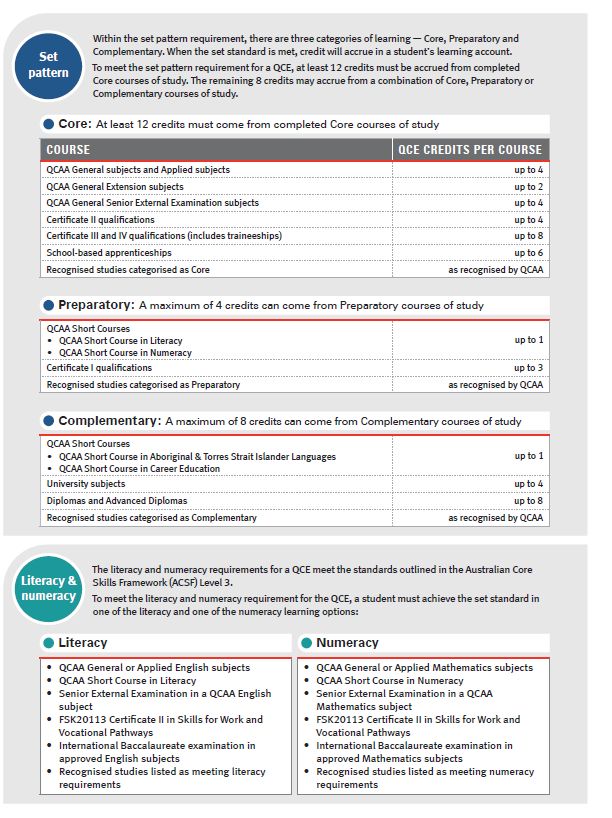
Proserpine State High School YEAR 10 CURRICULUM BOOKLET
SUBJECT SELECTIONS
Senior Subject Choice
Students need to consider the guideline below in Recommendations for Success in Year 11/12 Subjects which
gives minimum standards of achievement that have been set by each faculty area for the successful completion
of senior subjects. The school strongly recommends that students use them as minimum requirements for
success in their chosen subjects.
Students also need to be aware of the Curriculum Offerings that gives a suggested progression from Year 10 to
Year 12. The offerings are designed to help students examine a suggested pathway from subjects in Year 10 to
final Year 11 and 12 subject choices. The information does not show all possible pathways but gives students
an outline.
Students should consider the subjects they enjoyed in Year 8 and Year 9 within each department. After reading
the Year 10 descriptors, students can get an initial indication if this is a subject they would like to explore.
An outline of the Year 11 and 12 subjects is available on Proserpine State High School’s website. This
document contains a greater depth of information. https://proserpineshs.eq.edu.au/
Students and parents/carers can get more information about the New QCE system in the ppendix or by visiting
www.qcaa.qld.edu.au
Recommendations for Success in Year 11/12 Subjects
These recommendations are important for Year 9 students selecting Year 10 subjects. You should choose the subjects
that are required for your course of study in Year 11 and 12. Success in Year 10 will provide more study options for
Year 11 and 12.
GENERAL SUBJECTS
Year 11/12 Subject Recommended Year 10 results
Accounting B achievement in English and Business Studies
Biology B achievement in English and Biological Sciences
Business B achievement in English and Business Studies or Economics and Business
B achievement in English, Chemistry and Mathematics or C achievement in Mathematics Extension.
Chemistry
It is also suggested that students undertake Mathematical Methods in Senior.
Digital Solutions B achievement in English, Digital Technologies and Mathematics
Drama B achievement in English and Drama
Economics B achievement in English and a Humanities subject
English B achievement in English or C achievement in English Extension
Film, Television and New Media B achievement in English and Film, Television and New Media
B achievement in Mathematics or C achievement in Extension Mathematics and a B achievement in
General Mathematics
English
Geography B achievement in English and a Humanities subject
Japanese B achievement in English and Japanese
Legal Studies B achievement in English and a Humanities subject
Marine Science B achievement in English and Biological Sciences, Chemistry or Physics
Mathematical Methods B achievement in Mathematics Extension or teacher recommendation
Modern History B achievement in English and a Humanities subject
Physical Education B achievement in English and Health and Physical Education Extension
B achievement in English, Physics and Mathematics or C achievement in Mathematics Extension.
Physics
It is also suggested that students undertake Mathematical Methods in Senior.
Specialist Mathematics B achievement in Mathematics Extension or teacher recommendation
Visual Art B achievement in English and Visual Art
APPLIED SUBJECTS
Year 11/12 Subject Recommended Year 10 results
Aquatic Practices No recommendations
Engineering Skills Year 10 Metal Technology
Essential English No recommendations
Essential Mathematics No recommendations
Furnishing Skills Year 10 Wood Technology
Hospitality Practices Year 10 Food Specialisations
Industrial Graphics Skills Year 10 Graphics
Music in Practice Must be able to play instrument or sing at performance level.
Science in Practice No recommendations
Social and Community Studies No recommendations
Sport and Recreation No recommendations
Visual Arts in Practice Year 9 and 10 Visual Art
8|P a g e
Proserpine State High School YEAR 10 CURRICULUM BOOKLET
VET COURSES
Year 11/12 Course Recommended Year 10 results
Certificate II in Business (BSB20115) No recommendations
C achievement in English.
Certificate III in Early Childhood Education and There needs to be a commitment to working in BOTH theoretical & practical (work placement of
Care (CHC30113) 120+ hours) aspects of the course. (NOTE: externally provided so additional costs – see subject
description for further information).
Certificate III in Fitness (SIS30313) incorporating C achievement in English and B achievement in Health & Physical Education or C achievement in
Certificate II in Sport and Recreation (SIS20115) Health and Physical Education Extension.
Certificate III in Health Services Assistance
(HLT30-3115) incorporating Certificate II in Health
C achievement in English and Health and Physical Education.
Support Services and Community Services
(HLT23215 & CHC22015)
Certificate II in Information, Digital Media and
No recommendations
Technology (ICT20115)
Senior Studies
The Senior Studies program for Years 11 & 12 aims to supplement the development of individual skill sets to meet
future career aspirations regardless of the career pathway chosen.
The program’s main purpose is to support students with their chosen curriculum studies or provide additional learning
opportunities for students to gain industry specific knowledge and skills in fields of particular interest to build entry level
competence for immediate employment upon exit of senior schooling.
The program will also combine support for the ‘learner’ in the form of essential knowledge development of senior
processes such as senior schooling polices and rules around the new QCE system. Support for student ‘wellbeing’ also
features in this program in the form of pastoral care to assist building a positive learning culture to optimise student
learning.
Before selecting a supplementary learning program, students need to reflect upon their chosen curriculum subjects and
their desired career destination at this point in time to determine what senior studies program will add value to their
selected learnings.
Please note, only one (1) VET course can be undertaken at the subsidised rate under the VET in School (VETiS)
guidelines. Additional course/s are full fee for service courses. It is important to note the following courses are also
VETiS funded:
Certificate III in Early Childhood;
Certificate III in Fitness (incorporating Certificate II in Sport and Recreation); and
Certificate III in Health Services Assistance (incorporating Certificate II in Health Support Services and
Certificate II in Community Services).
Students need to choose carefully as once a student has used their VETiS funding there is generally no second offering.
Students who wish to engage in the above mentioned courses and also wish to take on another VETiS funded course,
should see the Senior Schooling Deputy Principal to discuss alternative costing options prior to commencing any
course.
As spaces are limited in the VET qualifications on offer, it is important that students choose a course that they will
commit to for the duration of the course.
9|P a g eProserpine State High School YEAR 10 CURRICULUM BOOKLET
SUPPLEMENTARY LEARNING OPTIONS in Senior Studies
Program Duration Timing QCE Credits Additional Information
ATAR Eligible Monday P2
Years 11 & 12 Students engage in specialised subject skill development with specialised
N/A
ATAR eligible curriculum teachers/leaders.
Skill Development Friday P3
SAT (School-based 1 or 2 years
Dependable Dependable
Apprentice or Official registration of apprenticeship or traineeship must be completed.
on the SAT on the SAT
Trainee) Years 11 & 12
Learning option sourced and funded by individual student.
1 or 2 years
Alternative Learning Dependable Dependable
Must provide confirmation of enrolment.
Option (ALO) on the ALO on the ALO
Years 11 & 12
Senior Schooling Deputy Principal approval required.
Certificate III in Early VETiS funded course.
Childhood Additional course costs + First Aid ($) required for course – refer to course
2 years Monday P2
(CHC30113) letter.
Up to 8 credits
Years 11 & 12 Friday P3
RTO: Cairns Training Students enrolled in this qualification on the general curriculum lines have
Academy access to additional learning opportunities to meet demands of the course.
Certificate III in
Fitness (SIS30315) VETiS funded course.
(incorporating
Certificate II in
2 years Monday P2 Additional course costs + First Aid ($) required for course – refer to course
Sport and Recreation Up to 8 credits letter.
(SIS20115)) Years 11 & 12 Friday P3
Students enrolled in this qualification on the general curriculum lines have
RTO: Binnacle access to additional learning opportunities to meet demands of the course.
Training
Certificate III in Health
Services Assistance
(HLT33115)
(incorporating
VETiS funded course.
Certificate II in Health
Support Services 2 years Monday P2
Additional course costs required for course – refer to course letter.
(HLT23215) and Up to 8 credits
Certificate II in Years 11 & 12 Friday P3
Students enrolled in this qualification on the general curriculum lines have
Community Services
access to additional learning opportunities to meet demands of the course.
(CHC22015))
RTO: Connect ‘n’
Grow
VETiS funded course.
Cannonvale TAFE campus.
Certificate II in
Electrotechnology 1 year All day PPE required.
(UEE22011) Up to 4 credits
Years 11 or 12 Wednesday Application and selection process required.
RTO: TAFE
Must meet literacy standard – literacy assessment.
See Mrs Porter for further information.
VETiS funded course.
Cannonvale TAFE campus.
Certificate II in
1 year All day PPE required.
Plumbing (52700WA)
Up to 4 credits
Years 11 or 12 Wednesday Application and selection process required.
RTO: TAFE
Must meet literacy standard – literacy assessment.
See Mrs Porter for further information.
VETiS funded course.
Certificate II in
Proserpine SHS & school Agricultural Farm.
Agriculture 2 years
(AHC20116) All day Friday Up to 4 credits
PPE required.
Years 11 & 12
Application and selection process required.
RTO: TAFE
See Mr Whybird or Mr Lane for further information.
10 | P a g eProserpine State High School YEAR 10 CURRICULUM BOOKLET
VETiS funded course.
Certificate II in
Proserpine SHS Trade Training Centre.
Engineering
1 year
Pathways
All day Friday Up to 4 credits PPE required.
(MEM20413)
Years 11 or 12
Application and selection process required.
RTO: TAFE
See Mrs Porter for further information.
VETiS funded course.
Certificate II in
Automotive Cannonvale TAFE campus.
Vocational 1 year
Preparation All day Friday Up to 4 credits PPE required.
(AUR20716) Years 11 or 12
Application and selection process required.
RTO: TAFE
See Mrs Porter for further information.
VETiS funded course.
Certificate II in Marine
Cannonvale TAFE campus.
Mechanical
1 year
Technology
All day Friday Up to 4 credits PPE required.
(AUR20616)
Years 11 or 12
Application and selection process required.
RTO: TAFE
See Mrs Porter for further information.
VETiS funded course.
Certificate II in Cannonvale TAFE campus.
Kitchen Operations 1 year
(SIT20416) All day Friday Up to 4 credits Closed in shoes; Black pants and a smart black shirt.
Years 11 or 12
RTO: TAFE Application and selection process required.
See Mrs Porter for further information.
Can be a second VETiS funded course.
Certificate II in
1 year Cannonvale TAFE campus.
Tourism (SIT20116)
All day Friday Up to 4 credits
Years 11 or 12 Application and selection process required.
RTO: TAFE
See Mrs Jolley or Mrs Porter for further information.
VETiS funded course.
Certificate II in
Cannonvale TAFE campus & other locations as determined.
Logistics
10 days Wk 10, T2
Up to 4 credits Dress requirements to be determined.
(TLI21815)
Years 11 or 12 Wk 5, T3
Application and selection process required.
RTO: TAFE
See Mrs Porter for further information.
VETiS funded course.
Certificate II in
1 or 2 years Monday P2 Proserpine SHS + mining camp in Charters Towers
Resources and
Infrastructure
5 day camp Friday P3 & Up to 4 credits Camp details and costs to be determined.
(RII20115)
Years 11 & 12 Wk 10, T2 Application and selection process required.
RTO: TBC
See Mrs Porter for further information.
Certificate II in
VETiS funded course.
Maritime Operations
(Coxswain Grade 1
Terms 2 & 3 Friday Proserpine SHS & other locations as determined.
Near Coastal) Up to 4 credits
(MAR20318)
Years 11 or 12 P2 & P3 Application and selection process required.
RTO: E Marine
See Mrs Porter for further information.
Courses
School-based course
Certificate II in Skills
for Work & Vocational
1 or 2 years Monday P2 Proserpine SHS
Preparation
Up to 4 credits
(FSK20113)
Years 11 & 12 Friday P3 Work experience component – at least 5 days
RTO: Proserpine SHS
See Mr Jolley for further information.
11 | P a g eProserpine State High School YEAR 10 CURRICULUM BOOKLET
Process of Subject Selection
1. Students will receive this curriculum booklet. Subject curriculum booklets will also be available from the school
website.
2. Students may seek professional advice from teachers, Administration members and counselling from our
Guidance Officer to ensure they create a ‘balanced’ program of study that maximises future options.
3. The subject selection form must be returned to the Administration Office as soon as possible. Note: Placements
will be considered on the number allocation of individual returns.
4. Course availability will depend on the balance of student demand, teacher availability and resource availability.
Key contacts for any queries regarding subject selection are:
Mr Don McDermid Principal
Miss Shirley Holcombe Deputy Principal – Senior Schooling
Ms Sharon Rudinski Guidance Officer
Mr Stan Larkin
Mr Andrew Jolley Acting Head of Department – Senior Schooling
Mrs Bernadette Porter Senior Schooling Officer / Industry Liaison
School Based Traineeships / Apprenticeships
Work Experience & Distance Education Coordinator
Mrs Nicole Jolley Marketing & Communications Officer / Industry Liaison
Mrs Corinne Raiteri Head of Department – English and LOTE (Japanese)
Mr Rod Wecker Head of Department – Mathematics
Mr Lukas Sabo Acting Head of Department – Science Term 3 2020
Mrs Michelle Sothmann Head of Department – Science Term 4 2020 onwards
Mrs Glynis Nicolson Head of Department – Humanities and Social Sciences
Mr Andrew Cox Head of Department – Health & Physical Education
Mr Ben Whybird Head of Department – Industrial, Technology & Design
Mrs Deb Brown Head of Department – Business and Technology
Mrs Jenny Napier Head of Department – The Arts
Ms Andrea Tavener Head of Inclusive Education Centre
12 | P a g eBiological Sciences
Subject Description
Biology is the study of life and its processes. This course is designed to prepare students for studying senior Biology. Content and assessment
will be based on the senior Biology syllabus and the course will explicitly teach students the numeracy, literacy and practical skills required to
succeed in their senior studies.
Course Content Assessment Summary
Students will cover content linked to Unit 1 of the senior Biology Assessment in year 10 Biology will based on the senior Biology
syllabus. In particular, the concept of cells & cell processes will be the syllabus. Types of assessment will include:
focus.
Examination
Scientific skills will also be a major focus of the subject: Student experiment
Scientific research & writing
Experimental design & evaluation
Collecting, presenting and interpreting data
Homework Requirements Resources/Stationery Requirements
Students will have set activities related to classwork and assessment See Resource/Stationery Requirement List
to complete. Laptop needed for assessment and classwork
Career Paths/Employment Opportunities Recommended Studies
A course of study in Biological Sciences can establish a basis for Pass (C) in Year 9 Science
further education and employment in the fields of nursing, teaching,
marine biology, environmental and conservation studies, pathology,
medical, veterinary-agricultural studies, and pharmacy.
Business Studies
Subject Description
This course assists in preparing students for Year 11 Accounting and Business subjects. Part of this course will cover basic accounting concepts
including: accounts classification, recording transactions, ledger and trial balance preparation and interpretation of financial statements.
The students will also be involved in conducting their own small business enterprise, ultimately selling a product and making a profit. This event
will follow the life cycle of a business from seed stage to start up.
Course Content Assessment Summary
In this unit students will cover: Examination – Introduction to accounting (financial procedures)
Business Enterprise - Business plans, working within a department and Business Report – Business enterprise
creating annual reports.
Introduction to Accounting - Accounting concepts include: account
classification, transactions journals, ledgers, trial balance and financial
statements.
Homework Requirements Resources/Stationery Requirements
Some of the practical aspects of this course will require work at home. Access to a computer at school and home is essential
External drive (i.e. USB/HDD), Document Wallet
Career Paths/Employment Opportunities Recommended Studies
This unit covers preliminary concepts of the current Year 11 Business At least 1 year 8/9 Business Studies unit is advisable.
and Accounting courses.
Career paths from this course include – Accounting, Consulting, Small
Business, Finance, Human Resources, Marketing, Real Estate, Retail
and Sales.
13 | P a g eCertificate I in AgriFood Operations (AHC10216) RTO No. 30338
Subject Description
This course will teach students a range of practical skills involved in modern farming. Based both at school and at the school farm, students will
learn to propagate and grow seedlings for use in a market garden, in both garden beds and using aquaponics. Students will also have the
opportunity to rear and work with chickens, sheep and pigs, and larger scale horticulture such as sugar cane. This course has a practical basis
and so requires regular trips to the School Farm and Community Nursery, both on Kelsey Creek Road. We will generally use the school bus and
occasionally use other bus companies. Any excursions which go outside our normal class times will require a permission form to be signed.
Course Content Assessment Summary
AHCWHS101 – Work safety, AHCWRK101 – Maintain the Workplace, Competency based assessment, workbook completion, assignments,
MEM18001C – Use hand tools, AHCNSY101 – Support Nursery Work, observation checklists, log/diary, project/portfolio, exams.
AHCPGD101 – Support Gardening Work, AHCBAC101 – Support The completion of Certificate I in Business may provide two credit
Agricultural Crop Work points towards a student’s Queensland Certificate of Education.
Homework Requirements Resources/Stationery Requirements
Varies with modules being taught General Stationery, full brim hat, sunglasses
A4 48 page exercise book, Plastic document wallet
Laptop needed for assessment and classwork
Career Paths/Employment Opportunities Recommended Studies
Further training pathways from this qualification include Certificate II in No recommendations
This certificate course will only
Agriculture, Certificate II in Horticulture, Certificate II in Production Students choosing not to supply a USI be offered if both human and
Horticulture and Certificate II in Rural Operations physical facilities are available.
will not receive AQF certification and will
not have their results appear and be
accessible through the Commonwealth USI Registry.
*Offered subject to approval being granted by QCAA
Certificate I in Business (BSB10115) RTO No. 30338
Subject Description
The Certificate I in Business qualification offers students introductory skills relevant to administration and clerical roles in a variety of industry
settings. This course prepares students for life in a business environment or can be used as a foundation for further studies in business. Certificate
I in Business will provide students with introductory level skills in core competencies such as computer operations and keyboard skills, using
business equipment, applying basic communication and workplace, health and safety procedures.
Course Content Assessment Summary
This self-paced course allows students to develop the skills and Competency based assessment – 6 units required (1 core and 5
knowledge to function at a basic level of business competency. electives).
One Core Unit The completion of Certificate I in Business may provide two credit points
towards a student’s Queensland Certificate of Education.
BSBWHS201 Contribute to health and safety of self and others
Five Elective Units (possible offerings)
BSBADM101 Use business equipment and resources
BSBIND201 Work effectively in a business environment
Resources/Stationery Requirements
BSBCMM101 Apply basic communication skills
BSBITU111 Operate a personal digital device Access to a computer in school is essential.
BSBITU112 Develop keyboard skills External drive (eg USB/HDD)
BSBLED101 Plan skills development Access to the internet and a computer at home may be required.
BSBWOR202 Organise and complete daily work activities
Recommended Studies
Career Paths/Employment Opportunities No recommendations
Certificate I in Business is ideal for people who are entering the
workforce. Further training pathways from this qualification include Homework Requirements
Certificate II in Business. Parts of the course may be completed at home
Employability skills include: communication, teamwork, problem solving, Students choosing not to supply a USI will This certificate course will only
initiative and enterprise, planning and organising, self-management, be offered if both human and
not receive AQF certification and will not physical facilities are available.
learning and technology. have their results appear and be
accessible through the Commonwealth
USI Registry.
14 | P a g eCertificate I in Information, Digital Media and Technology
(ICT10115) RTO No. 30338
Subject Description
This self-paced course allows students to develop the skills and knowledge to function at a basic level of ICT competency in an IDMT environment.
It will enable a student to undertake basic ICT functions using a personal computer and to engage in fundamental online activities. Students should
gain skills which could assist them in working in a small business organisation. It provides the basic computer skills necessary for working across
many industries.
Course Content Assessment Summary
Four Core Units: Competency based assessment – 6 units required (4 core and 2
ICTICT101 Operate a personal computer elective)
ICTICT102 Operate a word processing application The completion of Certificate I in IDMT may provide two credit points
ICTICT103 Use, communicate and search securely on the Internet towards a student’s Queensland Certificate of Education.
ICTICT104 Use digital devices
Select Two Elective Units: either Resources/Stationery Requirements
ICTICT105 Operate a spreadsheet application Access to a computer in school is essential.
ICTICT106 Operate a presentation package External drive (i.e. USB/HDD).
or
Access to the internet and a computer at home may be required.
BSBWHS201 Contribute to the health and safety of self and others
BSBSUS201 Participate in environmentally sustainable work
practices
Career Paths/Employment Opportunities Recommended Studies
Further training pathways from this qualification include Certificate II in No recommendations
Information Digital Media and Technology.
Homework Requirements
Employability skills include: communication, teamwork, problem This certificate course will only
Parts of the course material must be be offered if both human and
solving, initiative and enterprise, planning and organising, self-
competed at home. physical facilities are available.
management, learning and technology.
Students choosing not to supply a USI
will not receive AQF certification and will not have their results appear and be
accessible through the Commonwealth USI Registry.
Chemistry
Subject Description
Chemistry is the study of matter and its reactions. This course is designed to prepare students for studying senior Chemistry. Content and
assessment will be based on the senior Chemistry syllabus and the course will explicitly teach students the numeracy, literacy and practical skills
required to succeed in their senior studies.
Course Content Assessment Summary
Students will cover content linked to Unit 1 of the senior Chemistry Assessment in year 10 Chemistry will based on the senior
syllabus. In particular Foundation Chemistry concepts will be the focus. Chemistry syllabus. Types of assessment will include:
Scientific skills will also be a major focus of the subject: Examination
Student experiment
Scientific research & writing
Experimental design & evaluation
Collecting, presenting and interpreting data
Homework Requirements Resources/Stationery Requirements
Students will have set activities related to classwork and assessment to See Resource/Stationery Requirement List
complete. Laptop needed for assessment and classwork
Career Paths/Employment Opportunities Recommended Studies
Careers include science, pharmacy, environmental science, medicine, vet Pass (C) in year 9 Science
science, biochemistry.
15 | P a g eDance
Subject Description
Dance involves students exploring elements, skills and processes through the integrated practices of choreography, performance and appreciation.
The body is the instrument of expression and uses combinations of the elements of dance (space, time, dynamics and relationships) to
communicate and express meaning through expressive and purposeful movement. Making in Dance involves improvising, choreographing,
comparing and contrasting, refining, interpreting, practising, rehearsing and performing. Responding in Dance involves students appreciating their
own and others’ dance works by viewing, describing, reflecting on, analysing, appreciating and evaluating.
Students engage with the elements of dance by learning the processes of choreography, performance and appreciation. They also learn to use
safe dance practices. With an understanding of the body’s capabilities applied to their own body, students develop kinaesthetic intelligence, critical
thinking and awareness of how the body moves in dance. The elements of dance work together and underpin all dance activity as students learn to
make dance using their developing movement vocabulary with the body. With increasing experience of making and responding, students develop
analytical skills and aesthetic understanding. They engage with different types of dance and examine dance from diverse viewpoints to build their
knowledge and understanding. Dance skills, techniques and processes are developed through students’ engagement with dance practices that use
the body and movement as the materials of dance with the addition of production components.
Course Content Assessment Summary
The students engage in a unit titled “Dance Fusions” where they used 1. Responding – Collection of work
dance to respond, choreograph and perform dances that 2. Making – Choreographing a fusion dance.
communication the intent of a fusion of dance. ITEM 1 3. Making – Performing a teacher-devised fusion dance.
Students respond to dance that communicates intent using fusion to
analyse and evaluate choices and influences that impact on a dance
to communicate choreographic intent. Students will also justify and
evaluate choices and influences in their choreographic work.
ITEM 2
Students choreograph a dance fusion that communicates intent to
manipulate and combine the elements of dance, choreographic
devices, form and production elements to communicate a
choreographic intent with fused aspects.
ITEM 3
Students perform dance styles and communicate intent using a
teacher-devised dance that fuses styles. They will communicate
intent using technical and expressive skills.
Homework Requirements Resources/Stationery Requirements
Research Black dance clothes.
1 x Document Wallet
Collaborative choreography Laptop
Learning dances Device for listening to music
Collection of props and costumes
Assignment work
Career Paths/Employment Opportunities Recommended Studies
A course of study in Dance can establish a basis for further education It is recommended that students are achieving a minimum of a sound
and employment in dance education, dance teaching, choreography, level (C) of achievement in Grade 9/10 English to be successful in dance.
performance and event production.
16 | P a g eDigital Technologies
Subject Description
This course is based on the Australian Curriculum in the Digital Technologies strand.
In this course, students will develop their ability to define, design, implement and evaluate a computer-based project. Projects will involve developing an
object-oriented application and products involving security, privacy useability, innovation and sustainability concepts. This includes use of a programming
or scripting language, problem-solving methodology, security implications, data collection, and use of collaborative and iterative processes.
Course Content Assessment Summary
In this unit, students will: MORPHEUS PROJECT
Model how the data is related, identifying any risks, including Students collaborate to complete a UML design, a crypto-challenge,
privacy or security considerations. create a design for a prototype security system and implement python
Collaborate with others to create and manage a project plan. coding to encrypt, decrypt, compress and uncompress data sent to and
Define security requirements and cryptography strategies. from a database or virtual clipboard. Tasks will be in the form of a
Design encryption and decryption algorithms for secure data project journal and project folio.
transmission, as part of a back-end cryptosystem.
Synthesise useable products using a raspberry pi kit, and
object-orientated code, including use of input data from the RASBERRY PI PROJECT
environment. Students will use a raspberry Pi Hardware kit to produce a group and
Evaluate the useability, innovation and sustainability of an individual product on a Sense Hat Interface. Comprehension,
analysis and evaluation of projects is presented in a multimedia
solutions.
presentation.
Software used within this unit will be a combination of:
An object-oriented programming language
Database software or virtual clipboard
Windows and Raspberrian OS
Homework Requirements Resources/Stationery Requirements
Students will be required to complete homework and unfinished tasks Access to a computer in school is essential.
outside of class time. Some assessment tasks will require additional External drive (eg USB/HDD); document wallet
time at home in order for the student to succeed
Access to the internet and a computer at home will be required
Career Paths/Employment Opportunities Recommended Studies
This course leads into Year 11 and 12 Digital Solutions subject. Year 9 Digital Technologies is highly advisable. A ‘C’ standard or better
Career paths from this course include – information technology, in maths is required.
information systems, software engineer, computer science, computer
systems engineering and media design.
17 | P a g eDrama
Subject Description
Drama has the capacity to engage, inspire and enrich all students, exciting the imagination and encouraging them to reach their creative and
expressive potential. Drama provides opportunities for students to learn how to create, design, represent, communicate and share their imagined
and conceptual ideas, emotions, observations and experiences.
In drama students acquire knowledge, skills and understanding and develop critical understanding that informs decision-making and aesthetic
choices. Drama entertains, challenges, provokes responses and enriches our knowledge of self, communities, world cultures and histories.
Drama contributes to the development of confident and creative individuals, nurturing and challenging active and informed citizens. Learning in
drama is based on cognitive, affective and sensory/kinaesthetic response to drama practices as students revisit increasingly complex content,
skills and processes with developing confidence and sophistication across their years of learning.
Course Content Assessment Summary
The students engage in a unit called “Living Newspapers” where they 1. Responding – Play review
use drama to empathise, empower and share understandings of those 2. Making – Dramatic concept
who are marginalised in our society. 3. Making – Performance of a scripted play.
Part A
Students engage in drama activities to retell the stories in the
newspaper/ media. The students view a recorded live performance of
a play in the style of “Living Newspapers” and respond to it.
Part B
Students research their own newspaper article on a topic that interests
them and has an impact on society. From this students create a
dramatic concept for a play in the style of “Living Newspapers”.
Part C
The students read and perform a play in the style of Living
Newspapers using the technique of transformation to create their
dramatic environment.
Homework Requirements Resources/Stationery Requirements
Research Theatre Black clothes.
Collaborative script writing online 1* Document Wallet
Designing A4 96 page exercise book
Learning lines Access to a computer in school is essential.
Collection of props and costumes
Assignment work
Career Paths/Employment Opportunities Recommended Studies
Playwright, theatre entertainment/ events administrator, director, actor, It is recommended that students are achieving a minimum of a sound
drama teacher, theatre technician in set design, live sound level (C) of achievement in Grade 9/10 English to be successful in
engineer/designer/editor, lighting designer / technician, front of house drama.
management, theatre management, producer.
Early Childhood Studies
Subject Description
The focus of this subject is to promote the wellbeing of young children and a greater awareness of the importance of quality practices in the wider
community. Throughout the course, students are encouraged to develop knowledge and understanding including human development, the needs
and rights of children, the value of play, concepts of childhood, the role of parents, the importance of families and workplace health and safety.
Course Content Assessment Summary
This unit functions as an introduction to Early Childhood Studies and Assignment
Certificate III in Early Childhood & Education & Care (CHC30113) in Written test/s
years 11 and 12. The first focus of this unit is the development of Practical food task
children from birth to 6 yrs of age. The second focus of this unit is food
and nutritional needs of children from 2 years onwards. It involves
practical food preparation, the theory of nutrition and child development.
Homework Requirements Resources/Stationery Requirements
Set activities related to classwork and assessment See Resource/Stationery Requirement List
Career Paths/Employment Opportunities Recommended Studies
Nanny, Childcare worker, family day care, nursing, early childhood No recommendations
teacher, children’s services.
18 | P a g eYou can also read


