OF THE FUTURE FUTURE-PROOF YOUR BUSINESS NOW TO WIN WITH SHOPPERS IN 2025 - IGD.com
←
→
Page content transcription
If your browser does not render page correctly, please read the page content below

SHOPPERS
OF THE FUTURE
 FUTURE-PROOF YOUR BUSINESS NOW
  TO WIN WITH SHOPPERS IN 2025

Introduction
Grocery retail is undergoing a revolution, driven
by mergers and acquisitions, as well as evolving
shopper expectations. This is sure to continue over            Contents
the coming years. Our sector is built around shoppers
                                                               Executive summary p4
and their ever-changing habits, attitudes, tastes and
preferences — they sit at the heart of the industry            Follow the new rules of the game, unlock
after all.                                                     growth p6-9

                                                               How will shopper behaviour evolve? p10-21
Shoppers are more time-pressed, health and socially
conscious and digitally engaged than ever before.              Consideration checklist p22-23
The industry has an increasing responsibility to stay          Our approach p24-25
ahead of their future needs and then fulfil them to
                                                               Next steps p26
stay relevant.

But to serve the shopper of the future we must first
understand them, which is why we have dedicated
our next instalment of the IGD Futures series to           In this report, we offer our view of UK shoppers in the
this topic.                                                future and provide an action plan to help you start
                                                           preparing now.
Combining IGD’s extensive shopper insight and
feedback from immersive shopper groups, we                 We answer three main questions:
have identified the five mega-trends we anticipate
defining shoppers of the future and highlighted the        1. What will be the key shopper trends?
ways businesses can capitalise on these insights to
                                                           2. What will this mean for retailers and manufacturers?
engage better with their customers.
                                                           3. How can you capitalise on the opportunities?
Encouragingly, most shoppers are hopeful about
the future — 72% hope their lives will be better than it   This research focuses on British grocery shoppers,
is today.                                                  although we believe it resonates internationally.

                   Adopting a future-focused mindset
                   is essential for any retailer and
                   manufacturer and IGD will always
                   support them on their journey.

Joanne Denney-Finch OBE
Chief Executive, IGD

2                                                                                                     Introduction
Picking out the mega-trends

     We formulated a framework to identify and validate
     trends. This included developing hypotheses,
     examining historical data, reviewing forces of change
     and testing our ideas with shoppers.

     We pooled the thinking of subject experts across
     IGD to consider the implications of these trends for
     manufacturers and retailers.

     IGD Shopper Trend Framework

       Hypothesis            What future        Tipping points      What shopper?                 The trend
                               need?              or enablers
     A statement about                                                 What shopper                 Does the
        how shoppers        What would drive    Are there strong     group / segment          hypothesis emerge
      might be different     shoppers to seek   reasons to expect   will this most apply        as a front-runner
         in the future       change in these     this to happen?     to / apply to first?      from these tests?
                                  areas?

          Our top 5 shopper
           trends for 2025
                          Time optimisers                           Research sources:
                         Health conscious                           Immersive shopper groups
                             Individual                             In-depth qualitative workshops with 40 shoppers

                           Experimental                             Future-focused survey
                                                                    Among almost 2,000 British grocery shoppers
                         Socially conscious
                                                                    ShopperVista
                                                                    IGD’s shopper tracker with over 2,000 British
                                                                    grocery shoppers every month

Introduction                                                                                                          3
Executive summary
Here’s how you can future-proof your business today
to win with shoppers of tomorrow.

The shoppers of the future will:

          Be time optimisers
          The grocery shopping experience will have

                                                          71%
                                                                of 18-24-year-old shoppers claim their
          to work harder so shoppers can optimise
                                                                lives will be busier in 5-10 years’ time
          and make the most of their time

          Be more health conscious
          Health and wellbeing will grow in

                                                          42%
          importance with subtle differences owing              of 18-24-year-old shoppers claim in

          to individual motivations                             the next 5-10 years they will be more
                                                                likely to eat healthily to look good vs
                                                                24% of all shoppers

          Be more individual
          Shoppers in the future will be open to

                                                          50%
          a more personalised food and grocery                  of pre-family shoppers claim they

          experience, but only if there is a clear              will be prepared to share data with

          benefit to them with minimal effort                   supermarkets, specifically so they can
                                                                tailor their food and grocery shopping

          Be more experimental
          Shoppers in the future will increasingly

                                                          80%
          experiment with their shopping and meal               of shoppers claim they are open to

          preparation to broaden their repertoires              trying new and different food and non-
                                                                food products, services and experiences

          Be more socially conscious
          Shoppers will want to make sustainable

                                                          60%
          and ethical choices, but only if other needs          of under 35s claim concern for the

          are also satisfied (e.g. price, availability,         environment will be more important

          quality). Companies will have to respond              to them in the next 5-10 years

          on shoppers’ terms, as they redefine the
          rules of the game

4                                                                                  Executive summary
There are significant opportunities to engage with
shoppers immediately to drive longer-term loyalty.

Consider the following today

  1
            Develop shopper experiences that drive emotional engagement

  2
            Invest and collaborate with others on shopper data and insight

  3
            Help shoppers to optimise their shopping time

  4
            Develop products for different consumption occasions

  5
            Experiment via online and digital platforms

  6
            Target your shopper messaging and communication

  7
            Support shoppers’ ethical aspirations

  8
            Trial new initiatives with the most influential shoppers

Executive summary                                                            5
Follow the
new rules of
 the game,
   unlock
   growth
Evolving shopper needs                                 Drivers of change
Before considering how shoppers will change, it        To track the future factors that will influence shopper
is worth reviewing what will remain constant. The      expectations, needs and confidence, IGD developed a
foundation of shopper needs is confidence in the       STAR framework. It categorises four forces of change.
safety and legitimacy of the products they buy.
                                                       Societal Shifts                        Transformative
Other needs are also fundamental and universal,        Ageing population,                          Technology
across time and geographies.                           urbanisation, time               Artificial intelligence,
                                                       poverty, health and               big data, Internet of
These include:                                         wellbeing                         Things and robotics

•   Value (price/quality)

•   Choice (range/availability)

•   Convenience (ease of shop)                                            STAR model

These will always remain vital to shoppers even
though the balance of priorities may change and
expectations for what companies can deliver in these   Altering                                      Resource
areas definitely will.                                 Authorities                                  Resilience
                                                       Data regulation,                      Efficiency, future
For instance:                                          big business and                        workforce and
                                                       start-ups                                    skills gaps
•   The availability of information online raises
    expectations for greater traceability              All these factors influence shopper behaviour
•   The emergence of price comparison platforms        individually and in combination.
    helps shoppers to be savvier

•   Endless online shelves raises expectations about
    availability and ranges

•   The introduction of rapid home delivery services
    encourages people to expect more immediate
    gratification

Follow the new rules of the game, unlock growth                                                               7
The next generation
                                                              INFLUENCER SHOPPERS
IGD has identified a new, emerging group of
shoppers. This group has a different outlook and              Who are they?
attitude, influenced by their digital lifestyles, and are
more vocal with their opinions.

They will replace the baby boomers as the generation
with the most purchasing power, the strongest voice
                                                              Younger shoppers
and biggest influence on the food chain.
                                                              Younger families
We call these Influencer Shoppers. We believe they            Larger households
will be the main drivers in delivering the five mega-
trends we have identified.                                    ABC1 shoppers

                                                              Online reviewers

                                                              High-engagement social media users

                                                              Positive outlook

                                                              How will they change?

                                                              Eat healthily to look good

                                                              Be more experimental

                                                              Embrace personalisation

                                                              Spend more time grocery shopping

                                                              Aspire to be socially conscious

                                                              Through this report, we pick out
                                                              how this group in particular will
                                                              shape the trends for tomorrow.

8                                                           Follow the new rules of the game, unlock growth
How will
shopper
behaviour
evolve?
We have identified five mega-trends.
Shoppers will be more: time-selective,
health conscious, individual, experimental,
and socially conscious.Trend 1
Time optimisers
“
Shoppers today
I like cooking and
Social changes are putting pressure on shoppers to going out shopping
optimise their time.
looking for my
“
recipes. If it was a
It’s hard juggling nicer experience I
would stay for longer.
“
work, exercise,
running a house in (Young family, North)
terms of washing,
cooking and cleaning,
and shopping.
“
However, people don’t want to spend any more time
shopping for functional items than they really need to.
(Pre-family, North)
44% of shoppers say they are placing more emphasis
on experiences — e.g. travelling, concerts, family time
etc. — rather than buying things.
Technology is creating an always-on culture, which A priority for retailers, with the help of manufacturers,
also means work seeps into non-work time. is to make shopping as simple as possible, so people
feel they’re making the best possible use of their time.
Shoppers in the future
average weekly hours spent
35 online among 16-24-year-olds
vs 23 hours for all adults
By 2025, the grocery shopping experience will have
to work even harder to justify the time people spend
shopping.
Source: Ofcom, 2017
We have an increasing choice of leisure activities and a
growing desire to make the most of these. This erodes of 18-24 year old shoppers say
what time we have left for more traditional things like
grocery shopping.
71% their lives will be busier in 5-10
years’ time
the value of the UK leisure People will be less tolerant about the chore element of
market in 2016, growing 5% shopping, which includes picking up those products
£117bn annually since 2010 bought on a regular basis.
Source: Deloitte
Where this can be automated, with the help of smart
homes, AI and home deliveries, some people will opt
The last recession encouraged people to hunt for for this service.
value by investing more time in their food and
grocery shopping.
How will shopper behaviour evolve? 1128% of shoppers can imagine food and grocery What are the tipping points?
shopping being more automated in future as they
expect most of it will be online in the next 5-10 years. • Continued industry investment in new
concessions and services creating additional
However, when done well, food shopping can be a reasons to visit larger stores
source of enjoyment. Therefore optimising shoppers’
time will not only be about making food and grocery • Investment in the presentation and quality of
shopping more efficient but also about making it ranges to make stores more appealing
more enjoyable. • Responding decisively to shoppers’ openness
to experiment — which is particularly important
for younger shoppers (18-24s) and Influencer
Shoppers
of main shoppers quite enjoy
56%
• Developments in technology that shorten the
food and grocery shopping vs time spent shopping or enhance the experience
41% who don’t enjoy it
Robotics and technology in-store could help to free
up space that could be used to excite shoppers
and drive footfall. This could allow more focus on “ Change the layout
so you can get things
easily, with recipes
grouped together.
“
fresh food, mission-focused fixtures and convenient
meal options. 28% of shoppers hope that food and (Post-family, South)
grocery shopping will be more interesting in the next
5-10 years.
GIINFLUENCER SHOPPERS
of Influencer Shoppers
say they will dedicate
54% more time to food and
grocery shopping in
the future because they
enjoy it vs 48% of all
shoppers
12 How will shopper behaviour evolve?“
Manufacturer implications
The format of
Prepare for the divide supermarkets is very
It will become increasingly clear which products are tired. They could
best suited to online and which to buying in stores. change it to be more
Consider which of your products are suited for
like a market feel.
“
automatic re-ordering and work with partners, to be
pioneers in testing this new form of shopping. (Young family, South)
For other products, plan for how they can bring
excitement and differentiation to physical stores of
the future. Digital test and learn
Invest in shopper marketing Technology that can help to optimise time when
grocery shopping will create shopper loyalty. If
Increase your marketing spend nearer to the point of retailers can help shoppers to make the best use of
purchase. Demonstrate how your products meet the their time, it could make the shopper experience
needs of shoppers with clear and engaging POS. Test more enjoyable and engaging.
and learn with new digital solutions to communicate
messaging to shoppers. Test and learn with new digital solutions to understand
which could gain mass appeal. The online channel can
Explore different consumption occasions be a useful platform to test ideas that might transfer to
physical stores.
Don’t let your products be typecast for a specific
occasion only. Using NPD or re-positioning your
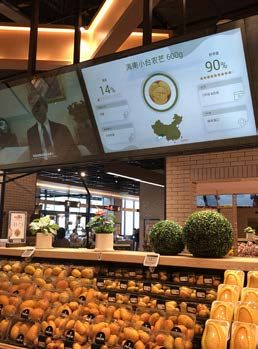
existing ranges, consider how you can tap into JD.com has launched
currently unmet consumption occasions. an offline supermarket,
7Fresh, utilising smart
logistics technology to
Retailer implications drive engagement and
efficiency in-store. The
retailer has introduced
Balance shoppers’ time
sensor-activated product
information images,
Collect data on the flow of shoppers through your automated suspension
stores, categorise this into missions and consider rails, payment via
facial recognition and
how to optimise your layouts to speed up shopping smart shopping carts
trips. For those who want to linger, devise new ways to to offer shoppers an
make shopping more of a sensory experience. efficient and interactive
7Fresh, Beijing experience.
Reconsider store ranges
An element in creating an engaging store will be in
adapting and evolving the range that they carry. The
aim will be to offer what ecommerce cannot. More of
shoppers’ regular purchases will have shifted online,
so store ranges will need to be unique, flexible and
relevant to sustain footfall.
How will shopper behaviour evolve? 13Trend 2
Health conscious
Shoppers today of 18-24-year-old shoppers
claim that in the future they will
42%
Most shoppers aspire to eat and live well. Rising be more likely to eat healthily in
obesity levels, increased awareness, government order to look good rather than
campaigns, media interest and an ageing population just feel good vs 24% for all
keep health and wellbeing on the radar. grocery shoppers
of pre-families claim they will
85% of shoppers are actively trying
to improve their diet
72% exercise more in the future
to help them lead healthier
lifestyles vs 56% of all shoppers
“ Now it’s in the news
about children being
obese, so I do think
our generation
INFLUENCER SHOPPERS
of Influencer Shoppers
say they will use online
sources such as blogs,
as parents will be
making a lot more
54% social media and
websites to find out
more about healthy
conscious choices eating in the future vs
“
than our parents did. 39% of all shoppers
(Young family, South)
The desire to exercise to maintain weight, get into
shape and showcase results on social media really
However, aspirations do not always translate into sets Influencer Shoppers apart from the rest.
action. Ingrained habits, insufficient motivation,
perceived lack of value for money of healthier foods, What are the tipping points?
insufficient knowledge and a lack of time are all cited
by shoppers in our ShopperVista surveys as barriers • Social media and the growth of health and fitness
to them eating healthily. advice online
• Health-tracking devices, increasingly linked with
Shoppers in the future dietary advice
Tomorrow’s shoppers will be at least as motivated as • Government legislation to combat obesity
today to eat healthier and they’ll have the benefit of • Investment by the industry in healthier products,
more help to make this easier. intensifying competition
Younger, pre-family and Influencer Shoppers in • Growing rate (or perception) of intolerances and
particular will link healthy lifestyles with looking good. allergies
14 How will shopper behaviour evolve?“
Don’t sit on the fence
I follow quite a few
Most people see health as a matter of balance, still
fitness people on leaving room for indulgence in their life. The products
social media and at risk of being left behind are those seen neither as
that is influencing healthy nor as a special treat.
quite a lot of the Retailer implications
“
food that I buy.
Make health a priority
(Young family, South)
Ensure your ranging, pricing, promotional and
merchandising strategies are each viewed through
the lens of promoting good health. Our Eating
Supporting shoppers both to look and feel good
Well and Eating Out research shows there’s a high
will be a major priority for both retailers and their
demand for healthier food on the move, so
suppliers in 2025.
capitalise on that opportunity.
Manufacturer implications Take a lead on healthy product reformulation, new
product development and responsible portion sizing.
Provide inspiration
Make it simple
70% of shoppers would like more information from
UK food and grocery companies to inspire them to
As with manufacturers, keep your messages as
make healthier choices.
simple and as consistent as possible without losing
their meaning. Help shoppers make healthy choices
Just making a health claim on the product isn’t enough.
by providing the clearest possible labelling and
Develop ways to add excitement to your healthier
signposting.
products, e.g. by showing how they can form part of
imaginative recipes or by featuring the properties of
Inspire and educate shoppers to live well
super ingredients.
Diet is important but so are keeping fit and mental
Tailor messages
wellbeing. Retailers might play a much bigger role in
these areas in the future. Consider offering a menu-
The diversity of media channels gives you an
planning app with inbuilt dietary targets and make
opportunity to tailor your health messages by life-
it easy for people to buy the products they select
stage. Shoppers’ health priorities evolve considerably
from this.
over time so be clear about how your portfolio of
products can meet a range of these.
Kesko and Oriola have
Keep it simple partnered to open a
new nationwide chain
Shoppers get confused by the complexity of nutritional of stores specialising in
products and services
information so keep your messages as simple and that promote health,
consistent as possible. Hehku, Finland beauty and wellness
How will shopper behaviour evolve? 15Trend 3
Individual
Shoppers today Product personalisation will lend itself to some
categories more than others, e.g. health and beauty.
Personalisation along the whole shopper journey,
from ordering online to shopping in-store, is a hot Younger shoppers will be at the forefront of this.
topic within the industry. It can range from targeted Having grown up in the information age, they are
loyalty schemes, tailored pricing and promotion more comfortable about sharing their data.
communication, through to personalised products.
When executed well it can drive better conversion
rates, improve customer retention and create lots of
INFLUENCER SHOPPERS
valuable data.
of Influencer Shoppers
However, personalisation remains relatively niche in
are prepared to share
the UK food and grocery market, as far as shoppers
data with supermarkets,
are concerned. Reasons for this include:
• The challenge of executing personalisation cost-
56% so they can receive
personalised
recommendations
effectively in a fast-moving mass market such
and experiences vs
as this
39% of all shoppers
• The volume of data to process, and at the same
time, not enough specific data to profile each
shopper precisely
What are the tipping points?
• Reluctance among some shoppers to share their
personal data • More examples of personalised experiences
• The challenge of treating every customer fairly across other sectors, e.g. foodservice, finance or
and the risk of causing offence travel industry
• More personalisation experiments in grocery to
assess what works
Shoppers in the future
• More investment in personalisation to deliver
clearer shopper benefits
As technology improves and data becomes better
integrated, personalisation will become increasingly • Effective regulation to alleviate shopper concerns
viable and expected by shoppers, both online and in with data sharing (GDPR should help)
stores, and in some cases for physical products.
• Advances in Artificial Intelligence (AI)
Smartphone technology is likely to be key to • Advances in flexible production technology, such
unlocking personalisation in the store environment. as 3D printing
Relevant, tailored and timely notifications sent to
shoppers’ mobile devices could help them to find
what they want, discover new products and achieve
best value in-store.
Online stores will learn how to adapt their displays and
offers around the needs of each user. Some products
purchased online will be tailorable to an individual’s
specification.
16 How will shopper behaviour evolve?Manufacturer implications
of online grocery shoppers
61%
Invest in data say they would like it if online
retailers personalised special
Greater data collaboration is required to understand offers based on what they
shoppers in depth. Combine your data with trading buy regularly
partners and external sources. Use social media
activity, geolocation data, app use and purchase data
to create a single view of your shoppers.
US-based Habit.com
will take and analyse
Reassure shoppers your blood samples
and create a specific
nutritional plan bespoke
Providing personal data for unspecified and open-
to you
ended reasons makes people nervous. Being Habit.com
completely open about how you will use the data and
spelling out the shopper benefits will alleviate this.
Test product personalisation Demonstrate the benefits
Although currently niche, product personalisation is Personalisation is a big step for shoppers and raises
set to play a bigger role in the future, so now is a good concerns about privacy and so to encourage adoption,
time to experiment to gain vital experience. Do this on it’s important to offer and demonstrate some really
a small scale first to manage costs and risks. Bear in tangible benefits, e.g. time gained, money saved.
mind where personalisation is most likely to add value
for shoppers. Once you have experimented, consider If almost all the benefits of collecting data go to
investing in new flexible production technologies and the company, you should expect this to become
routes to market. increasingly contentious over time.
Retailer implications Build excitement around personsalisation in-store
Make data work better Features such as a 3D printer or a mix-your-own drink
station are a good way to add excitement to your
Data is the bedrock of personsalisation so make flagship stores. They may not deliver a high sales
sure yours is as accurate and up to date as possible. return immediately but they help to differentiate,
Synchronise with your suppliers’ product data to create chatter and make your store a destination.
create a single view of shoppers.
Learn from other industries
Test and learn online
Learning from industries already executing
The challenge for most grocery businesses is to personalisation well is important. Curated ranges and
provide a personalised approach consistently and at recommendation algorithms used by online retailers
scale. The online channel offers a way to experiment are good examples of personalisation. Timely and
with a more manageable subset of shoppers before hyper-relevant product suggestions are a proven way
scaling up through physical stores. to drive conversion and impulse purchasing online.
How will shopper behaviour evolve? 17Trend 4
Experimental
Shoppers today Unilever’s Knorr
stock cube brand has
Shoppers can be creatures of habit. Product familiarity introduced the ‘Eat Your
Feed’ tool, created by
is one of the top drivers of product choice. Older
digital agency, Analog
shoppers, in particular, are most likely to stick to what folk. This can analyse data
they know and trust (50% of over 65s buy familiar food on Instagram using an
vs 42% of all shoppers). AI algorithm to provide
personalised recipes
Unilever Knorr based on users’ activiy
However, shoppers are also experimenting more.
Extensive travel, sophisticated foodservice, access to
more information online and changes to the ethnic mix
all promote demand for new and different products.
Shoppers in the future
Shoppers in 2025 will be significantly more
experimental with their shopping, cooking and eating.
Number of holiday visits
abroad by UK residents in 2016
45m (up from 26.8m in 1996)
of grocery shoppers agree that
they are open to trying new
Source: ONS, 2017
80% and different food and non-
food products, services and
experiences in the future vs
only 3% who disagree
Number of people living in the
UK who were born outside in For the large group of shoppers who do like to
2017 (up from 6.4m in 2007) experiment, our research shows they are also more
9.3m Source: ONS, 2017
eager to spend time on leisurely food shopping and
more open to personalisation.
In response, retailers have invested in expanded
world foods, with many stores dedicating substantial INFLUENCER SHOPPERS
shelf space to these.
of Influencer Shoppers
of grocery shoppers welcome 65% say in the future they
73%
will always try new
new food and grocery products meals and recipes vs
vs 58% in 2010 58% of all shoppers
Some categories have exploded in choice over the
last decade.
18 How will shopper behaviour evolve?However, this won’t apply to everyone. Some will Manufacturer implications
want to stick with what is familiar. It will be important
to ensure you also continue meeting this group of Learn from foodservice
shoppers’ needs.
Help shoppers replicate the eating out experience
What are the tipping points? with cook-at-home and food to go alternatives. Inspire
your shoppers with meal solutions that showcase
• Continuing growth in specialist, often local authentic tastes and flavours from around the world,
producers, extending the choice for shoppers and provide more recipe ideas.
• Growth in online shopping, providing a platform Invest in NPD
for these niche producers
Ensure your innovation pipeline is closely aligned to
• Changes to immigration policy after Brexit which changing shopper preferences, e.g. the healthy eating
could involve more people from beyond Europe trend and specific consumption occasions. Create
moving to the UK, affecting ethnic diversity stronger points of difference within your categories
• Further urbanisation introducing more people to to maximise the likelihood of product listings and
a city lifestyle successful launches.
Offer exclusivity
Support retail customers by providing exclusive
product variants targeted at their shopper
89% of the UK population will
live in urban areas by 2050
demographic. Extend your range by offering some
products exclusively online.
Source: United Nations
Retailer Implications
• More investment in own brands as retailers use Curate ranges
them to differentiate and pick up on the latest Continue to refresh your range to provide variety for
culinary trends shoppers and create excitement and intrigue.
• Burgeoning publicity for new products and
cuisines through social media, vloggers, Encourage and showcase innovation
celebrities, TV cookery programmes etc. Ensure new products have prominence by giving
them special treatment in-store. Run events that
“
celebrate particular cuisines and the changing of
the seasons with new products and recipes. Crowd-
There will be more source ideas from shoppers.
events such as French
or Greek weeks in Don’t disregard the traditionalists
supermarkets. It gives The baby boom generation will become less
influential and a younger demographic will set
you a chance to try the pace but this doesn’t mean everyone wants to
new products.
“
experiment. For a substantial segment of the market,
heritage, consistency and continuity will be important
(Older family, North)
selling points. In some cases, retro-products can be
one successful form of innovation.
How will shopper behaviour evolve? 19Trend 5
Socially conscious
Shoppers today
INFLUENCER SHOPPERS
Post-2008 recession, many people expected shoppers
to jettison their ethical shopping concerns but this
of Influencer Shoppers
didn’t happen. Instead people sought out value,
say they will always
holding true to their main concerns while also seeking
out a competitive price.
38% buy environmentally
sustainable food and
grocery products in
Ethical issues have remained prominent, supported
the future vs 33% of all
by NGO campaigns, media coverage, social media
shoppers
and ethical innovation by companies.
Most recently, plastic has been in the spotlight
prompting high consumer awareness.
In support of these shoppers, more online services
will be available to signpost ethical choices and a
greater range of products with ethical credentials will
of British grocery shoppers say be available to buy.
they have become more aware
74%
“
of the environmental impact of
plastic packaging over the last
12 months I think it’s more and
more about the
planet and future
54% of shoppers say recent TV shows, especially
David Attenborough’s Blue Planet, have inspired them
generations. We’ve
to make changes to support the environment. been a throw-away
“
society for too long.
However, there are some barriers that constrain ethical
shopping:
• Basic needs come first for most shoppers and
many still face a squeeze on real incomes
• Ethical decisions are often complex, confusing
and time-consuming of under 35s say concern for
• Ethical shopping is often associated with
compromise which creates a tension for shoppers 60% the environment will be more
important to them in the next
5-10 years
Shoppers in the future
The desire to do the right thing is strongly ingrained
in most people. Provided the economy stays on track,
shoppers will be finding more ways to express this
through their shopping in the future.
20 How will shopper behaviour evolve?What are the tipping points? Look to embrace this and celebrate the provenance of
your ingredients. Make sure every step of your supply
• Growing buying power of a new generation, more chains will stand up to the closest scrutiny.
attuned to sustainability
Create emotional connections
• Further use of social media to share ethical
concerns and recommendations Ethics is not just about facts and figures. Stories can be
• Smart devices, applying AI, scrutinising products even more influential. Make sure your brands connect
and providing advice in a compelling way with the aspirations of a younger
generation. Don’t overclaim though because you are
• Greater transparency and traceability, helping
almost certain to be found out.
shoppers to make ethical choices
• Continuing media coverage of food-related ethics Retailer implications
• Government interventions, e.g. to incentivise
Help shoppers make ethical choices
more sustainable packaging
• Industry investment in sustainable products and Manufacturers can make the ethics behind each of
practices their brands clear but it is the job of retailers to help
shoppers navigate through the choices available.
Manufacturer implications
Make this as simple as possible to avoid information
Take a lead on sustainable packaging overload but bear in mind that different people
are passionate about different issues. Use the
Packaging is facing significant scrutiny so make sure conventional mechanics effectively such as
you position your brand as highly responsive to this. advertising, merchandising, signage and customer
There are some evidence gaps as to which materials magazines. Then consider how to use the full power
really are the most sustainable but there are some of online services, such as social media and shopping
quick wins, such as switching to recyclable or apps to inform and guide shoppers. Make sure your
compostable plastics. Always make sure your own company’s principles stand out through all this.
packaging remains fully functional. Shoppers will want
solutions that don’t involve any trade-offs with quality, Audit your ethical standards
price, shelf life or ease of use.
In tomorrow’s world, it will be increasingly difficult for
retailers to offload responsibility for ethical standards
to their suppliers, just as manufacturers will be unable
L’Oreal has recently
launched a new range to do this for ingredient suppliers.
of beauty products
which are packaged in Use the latest in traceability technologies to ensure
shower-friendly paper
that is both recyclable your suppliers have ethical standards that you would
L’Oreal and compostable be proud of.
Make recycling seamless
Deliver full traceability
Stores are natural points to promote and enable
Although it’s early days, it appears that Blockchain- recycling. Refill stations, packaging deposit and
based technology could deliver a step change in the re-use schemes could appeal to a growing number
detail and accuracy of traceability. of shoppers.
How will shopper behaviour evolve? 21Consideration checklist What can you, as retailers and manufacturers, start doing differently right away to prepare for the shoppers of the future? Here are seven ideas: Develop shopper experiences that drive Invest and collaborate with others on shopper emotional engagement data and insight To ensure food and grocery shopping gets a good Data and insight will form the bedrock of fulfilling share of people’s time. Provide more engaging shopper needs. Retailers and suppliers will need shopper experiences but also analyse your layouts, to to work collaboratively to maximise the benefits of help shoppers get in and out of stores more efficiently shopper data Help shoppers to optimise their Develop products for different consumption shopping time occasions Time spent food and grocery shopping can be Don’t let your products be typecast for a specific enjoyable but also frustrating. Ensure you make occasion only. Using NPD or repositioning your shopping as easy and efficient as possible for your existing ranges, consider how you can tap into customers currently unmet consumption occasions 22 Consideration checklist
Experiment via online and                               Target your shopper messaging and
digital platforms                                       communication

This is a cost-effective way to test new initiatives,   A one-size-fits-all approach no longer works. Target
e.g. personalisation or time-optimising activities,     your communication to ensure your messages
before migrating the biggest successes to a physical    cut through
store environment

Support shoppers’ ethical                               Trial new initiatives with the most influential
aspirations                                             shoppers

There are a number of tipping points which will mean    To test shopper appetite for new initiatives, conduct
ethical aspirations will rise up the shopper agenda.    trials with specific shopper groups and particularly
Support shoppers with increased choice, convenience     Influencer Shoppers who are receptive to change and
and value of ranges                                     strong ambassadors

                                    Trial new initiatives with Influencer Shoppers

                                    These shoppers will be pivotal to the adoption of the five mega-
                                    trends. Identify who they are and use them to land your initiatives

Consideration checklist                                                                                   23
Our approach In researching for this report, we used a variety of sources to develop our view. These included: Our regular insight solution which tracks the views of over 2,000 British grocery shoppers every month. Immersive shopper groups — our team of shopper experts conducted in-depth shopper workshops to gain first-hand views on what shoppers imagine will be important to them in future. Future-focused survey — using projective techniques to understanding future behaviour, we validated our qualitative research with a questionnaire among nearly 2,000 British grocery shoppers. We used this data to test a series of hypotheses about future shopper behaviour before reaching our conclusions on the five biggest mega-trends to follow. Finally, we drew on IGD’s global team and experts in retail and shopper insight, economics and supply chain in order to assess the implications. 24 Our approach
Next steps
IGD Services Limited provides a range of commercial
services including research and insight on the food
and grocery industry.

Here are five ways in which you can
follow up on the report:

1 WE DELIVER
     Why not commission us to present the Shoppers
     of the Future report at your workplace? We can
     tailor the briefing to correspond to your needs.

2 KNOWLEDGE
     For regular insights from IGD, sign up to your
     choice of free digital newsletters from a wide
     range of topics.

     igd.com/newsletters

3 PERSONALISATION
     Interested in commissioning specific research for   So, take the next steps
     your business? Why not speak to us?
                                                         with us today at...
4 TRAINING
     We can help you prepare for the future through      igd.com/nextsteps
     our workshops or bespoke training.

5 EVENTS
     Our Trade Briefings for major retailers and our
     research-led conferences attract delegates from
     around the world. Browse upcoming events and
     sign-up in the link below.

     igd.com/events

26                                                                         Next steps
Want to know more? IGD regularly publishes research on strategic challenges and opportunities for the food and grocery sector. For instance, our Online Store of the Future and our Evolution of the Physical Store reports present a shopper-centric view of how grocery retailing is set to change. Our Bridging the Skills Gap report assesses current and future skills gaps in our industry and recommends solutions. Our Eating Well and Eating Out research explores the commercial opportunities arising from the growing consumer demand for healthier choices when eating out of home. To access these reports and all our recent free content visit: igd.com/igdfutures Coming soon is our Supply Chains for Growth report and early in 2019, our view on Developing the Digital Skills of the Future. Sign up to be the first to receive these reports... igd.com/igdfutures Next steps 27
IGD is a training and research charity. IGD has a
                                         trading subsidiary (IGD Services Limited) which
                                         provides a range of commercial services including
                                         research and insight on the food and grocery
                                         industry. The net profits from these commercial
                                         services help fund IGD the charity.

                                         www.igd.com               Registered Charity No. 309939

© IGD 2018. IGD owns all intellectual property rights in the report including know how and copyright and no part of this report may be
reproduced or transmitted without the prior permission of IGD. Whilst every effort has been made to ensure that the information contained in
this report is correct, neither IGD nor any of its employees shall be liable for errors or omissions however caused.
You can also read


